Kona Manta Ray Night Snorkel Your Complete Guide
- Byron
- Feb 7
- 12 min read
Picture this: you're floating on the surface of the calm, dark ocean off the Kona coast, the stars twinkling above you. Below, powerful lights illuminate the water, and then, a massive, graceful shadow emerges from the deep. A giant manta ray, with a wingspan of over 12 feet, glides effortlessly, performing a silent underwater ballet just inches from your face.
This is the manta ray night snorkel—a surreal, safe, and truly unforgettable experience you can only find in Kona, Hawaii. It's an opportunity to witness these gentle giants feed on plankton drawn to the light, barrel-rolling in a mesmerizing dance. If you're ready to plan this bucket-list adventure, you can check out our tour options right here at Manta Ray Night Snorkel Hawaii.
Experience a Once-In-A-Lifetime Underwater Ballet
Floating in the warm Pacific at night is magical on its own. But when a majestic creature, as graceful as a ballerina and as big as a small car, appears from the darkness, the experience becomes something else entirely. It feels less like a snorkel trip and more like stepping into a dream.
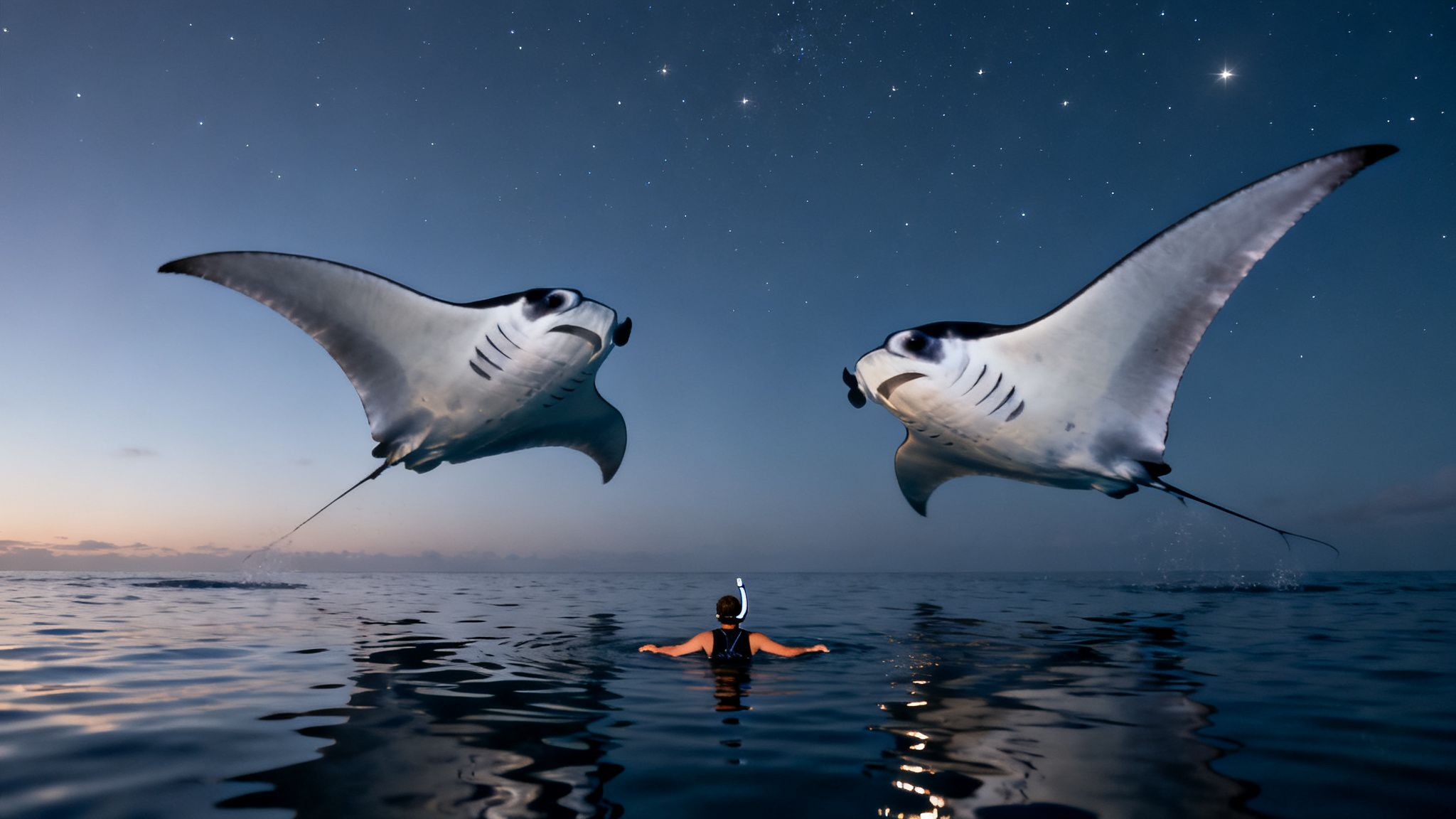
This isn't just about spotting wildlife; it's about being present for a breathtaking natural spectacle. People often call them "sea angels," and for good reason. Manta rays are completely harmless—they have no teeth, stingers, or barbs. They are gentle filter feeders, and your tour gives you a front-row seat to their nightly feast.
Why Kona is the Premier Destination
Of all the places in the world, why Kona? It comes down to one simple thing: reliability. The Big Island is home to a large, resident population of reef manta rays that don't migrate, which means you can see them here consistently all year round.
This has allowed local operators to develop a safe and sustainable way to share this incredible encounter with visitors. The success rate is honestly astounding. Kona's manta ray tours boast an 80-95% success rate for sightings, making it the most dependable spot on the planet for this adventure. On any given night, about 8 to 9 out of every 10 people get to witness the incredible show.
What Makes This Experience Unique
This isn't your typical snorkeling trip. The entire experience is designed to turn the ocean into an illuminated stage for the mantas.
Here’s what makes it so special:
A Sunset Departure: Most tours start with a stunning boat ride along the Kona coast just as the sun sets, painting the sky in brilliant colors.
The Underwater Lights: Once at the site, powerful, eco-friendly lights are submerged. They create what we call a "campfire effect," attracting tons of microscopic plankton—the mantas' favorite meal.
An Effortless Viewing Experience: You won't be swimming around. Instead, you'll hold onto a custom-designed floating light board, which lets you comfortably watch the action from the surface.
This setup provides a calm, stable, and surprisingly intimate viewing platform. It's an amazing experience, and for those looking for other world-class ocean adventures, our friends at Kona Snorkel Trips offer incredible excursions, including the famous Captain Cook snorkeling tour.
Want to learn more about these amazing animals? Check out our article on fun facts about manta rays.
How The Manta Ray Encounter Actually Works
Ever wonder how tour boats can almost promise you’ll see manta rays every single night? It’s not magic, but it is a pretty brilliant bit of science. The whole setup is engineered to create the perfect conditions for one of nature’s most incredible shows.
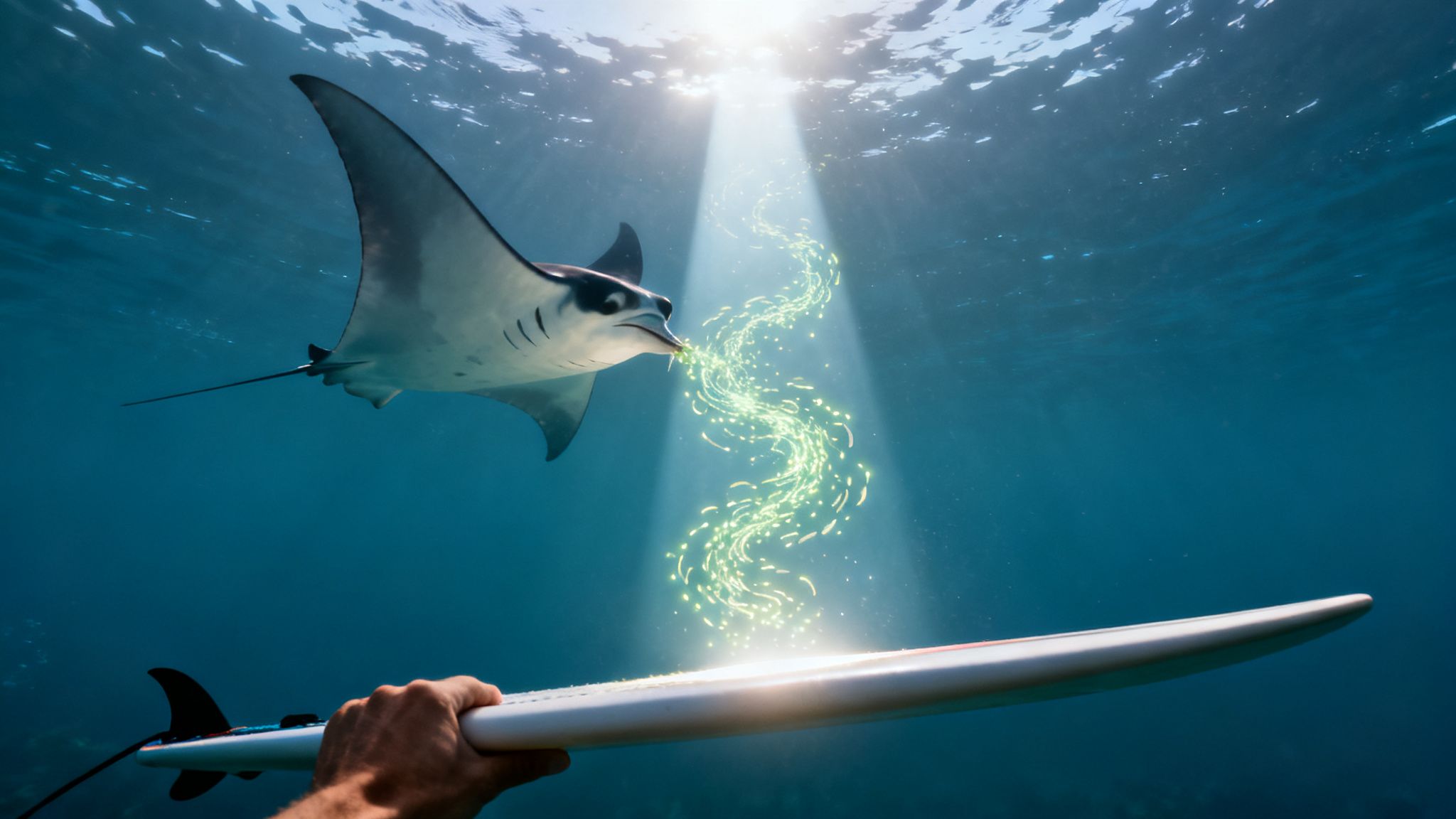
The secret all comes down to one thing: zooplankton. These are the tiny, microscopic organisms that manta rays absolutely love to eat. As filter feeders, they glide through the ocean scooping up huge mouthfuls of the stuff.
The Underwater Dinner Bell
So, how do you get all that plankton in one spot? With light. Tour operators use powerful, submerged lights that essentially act as a giant dinner bell for the entire local food chain. Having the right underwater lights for boats is crucial to making the whole nighttime experience possible.
The process is surprisingly simple:
Lights On: After the boat anchors, bright lights are lowered into the water.
Plankton Swarm: Like moths to a flame, zooplankton from all over are drawn out of the darkness and into the illuminated area, forming a thick, shimmering cloud.
Mantas Arrive: The local mantas know this light show means an all-you-can-eat buffet. They swim right in to feast on the concentrated plankton.
It’s this reliable, man-made food chain that gives the manta ray night snorkel in Kona such a ridiculously high success rate.
Creating the Manta Campfire
Once you get in the water, you won’t be swimming around on your own. Instead, everyone holds onto a large, specially designed float board that has its own lights pointing straight down. We like to call it the "manta campfire."
This setup is ingenious. It gives you something stable and buoyant to hold onto, so you're not treading water. At the same time, it focuses the light, creating an irresistible plankton hotspot right beneath your feet.
This lets you just float comfortably on the surface without getting tired. You become a completely passive observer, getting a front-row seat as these gentle giants perform their mesmerizing barrel rolls just inches below you. It's a safe, controlled way to get incredibly close to the action.
For an exceptional alternative when looking for a Manta Ray night snorkel tour or a Captain Cook snorkeling tour, check out the options from Kona Snorkel Trips. They are renowned for their incredible ocean adventures and knowledgeable guides.
How To Prepare For Your Manta Ray Adventure
Getting ready for your manta ray night snorkel is pretty straightforward, but a little prep goes a long way. Knowing what to bring and what to expect means you can just show up, relax, and focus on the incredible show about to unfold. Think of this as your simple, no-fuss checklist for a comfortable and unforgettable night.
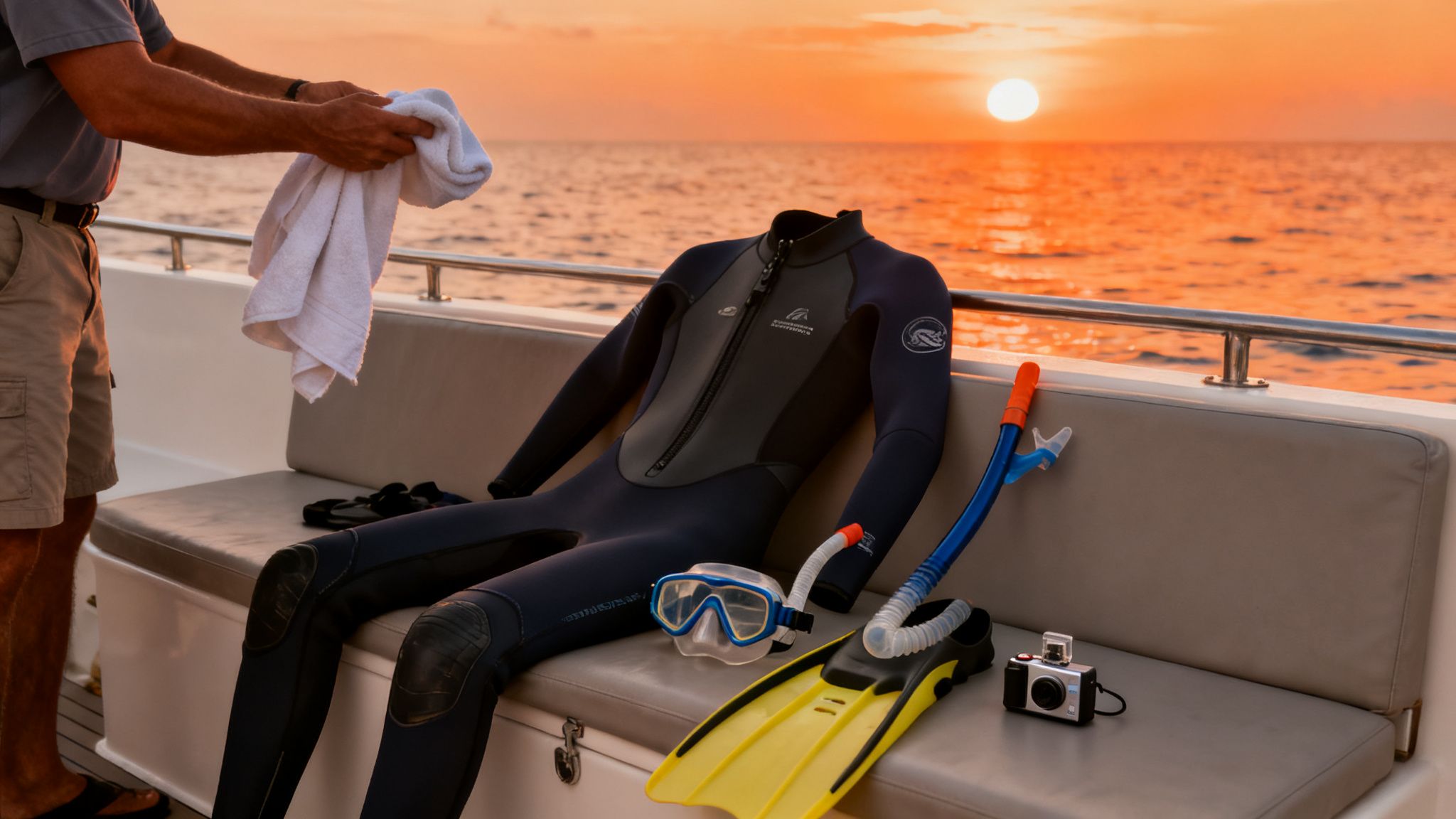
The best advice? Keep it simple. Just wear your swimsuit under your regular clothes when you head to the boat. Trust me, you'll be glad to have a warm towel and dry clothes to change into after the snorkel.
Your Manta Ray Night Snorkel Checklist
One of the best parts about a guided tour is that you don't have to lug a bunch of gear around. We've got all the essential in-water equipment covered. Your job is to pack the small things that will keep you comfortable before and after you get in the water.
This quick table breaks it down for you.
Item | What You Should Bring | What We Provide |
|---|---|---|
Swimsuit | ✅ (Wear it to the boat) | ❌ |
Towel | ✅ | ❌ |
Dry Clothes | ✅ (For after the snorkel) | ❌ |
Light Jacket | ✅ (Highly recommended!) | ❌ |
Camera | ✅ (GoPro or other waterproof) | ❌ |
Snorkel Gear | ❌ | ✅ (Mask, snorkel, & fins) |
Wetsuit | ❌ | ✅ (Professionally fitted) |
Flotation Device | ❌ | ✅ (For easy floating) |
Refreshments | ❌ | ✅ (Snacks & drinks on board) |
So, just focus on bringing your personal comfort items, and we'll handle the rest.
A common question we get is, "Do I really need a wetsuit in Hawaii?" The answer is always a firm yes! Even though the water feels warm, you'll be floating on the surface for up to 45-60 minutes. Without a wetsuit, you'd get chilly fast. It's the key to staying warm so you can enjoy every single second with the mantas.
Tips For Capturing The Moment
Getting great photos of manta rays at night can be tricky, but it's absolutely doable and so rewarding. The dark environment is the biggest challenge, so you’ll need to play with your camera's settings a bit.
If you’re bringing a GoPro or a similar action camera, here are a few settings to try:
Shoot Video, Not Photos: Video almost always comes out better in low light. You can easily pull beautiful, high-resolution stills from your footage later on.
Bump Up the ISO: A higher ISO (try starting around 800-1600) helps the camera see in the dark. Just don't push it too high, or your video might look a little grainy.
Keep It Steady: This is huge. Hold your camera as still as possible to avoid blurry shots. A great trick is to gently brace your camera against the light board for extra stability.
With just a little preparation, you can spend less time worrying and more time being completely mesmerized by the gentle giants dancing below you. For more in-depth advice, you can discover more about swimming with manta rays and safety tips in our other guide.
What to Expect on a Manta Ray Snorkel Tour: A Step-by-Step Walkthrough
Knowing exactly how the evening will unfold helps you relax and just enjoy the ride. From the moment you arrive at the harbor to the second you get back, your manta ray tour is designed to be safe, exciting, and completely unforgettable.
Here’s a look at how it all works, step by step.
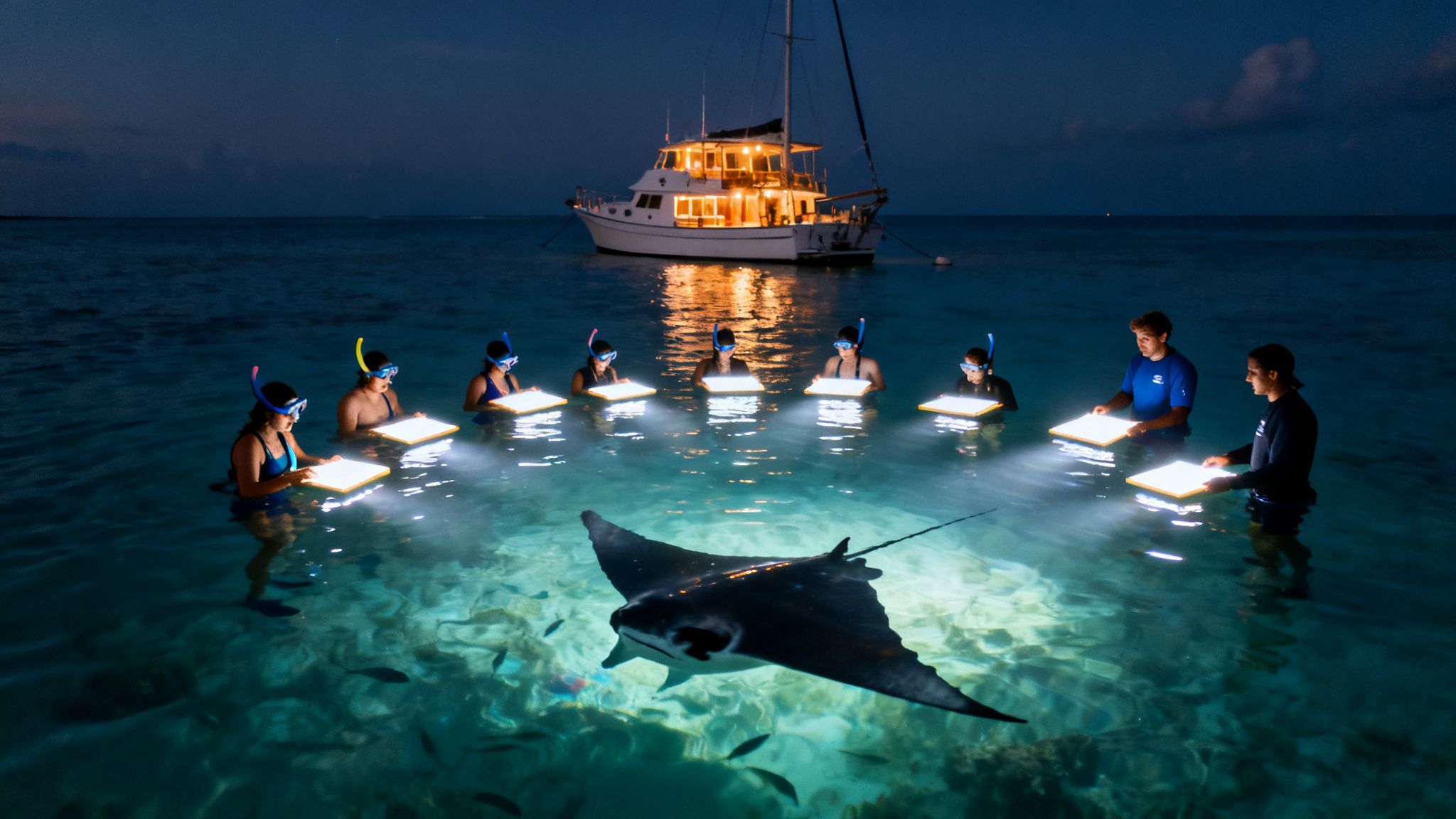
The whole adventure starts right at the harbor, where you’ll meet the crew who will be your guides for the night.
Step 1: Arrival and Briefing
Your tour kicks off with a warm welcome. The crew will get you checked in and fitted for all your gear, which usually includes a wetsuit (the water gets cool after sunset!) and your snorkel set.
Before you even think about leaving the dock, they’ll run through a detailed safety briefing. This covers everything from how to properly use the equipment to the plan for getting in and out of the water safely. It’s also when you get a crash course in manta ray biology—your guides will share some amazing facts about these gentle giants and explain how to interact with them respectfully. Think of it as a pre-show that gets you even more excited for what's to come.
Step 2: The Sunset Boat Ride
Once everyone is geared up and ready, it's time to hop on the boat. You'll head out to one of the well-known viewing spots, like the famous Manta Village. Honestly, the boat ride out is an experience in itself. Most tours time it perfectly so you’re cruising along the stunning Kona coast as the sun dips below the horizon.
It’s a beautiful, relaxing ride that sets the stage for the main event. Keep your eyes peeled, too—it’s not uncommon to spot dolphins or, during the winter months, even a migrating whale.
Step 3: In the Water for the Main Event
As twilight turns to night, the real fun begins. Your guides will set up a floating light board in the water. This "manta campfire" shines powerful beams down into the depths, attracting swarms of plankton—the mantas' favorite food.
You'll then slip into the water and grab a spot along the board, which is super stable and easy to hold onto. And then, you wait. Before you know it, the show starts. You just float on the surface, looking down into the illuminated water as these massive, graceful creatures appear from the dark. For the next 45 minutes or so, you get a front-row seat as they glide, swoop, and do barrel rolls right underneath you. It's mesmerizing.
This part of the tour is a totally passive experience. You don't need to swim or kick at all. You just hold onto the board and watch the ocean ballet unfold below you, making it perfect for snorkelers of any skill level.
Step 4: Heading Back to Shore
After your incredible time in the water, you’ll climb back onto the boat, usually to a welcome of hot chocolate and snacks. The ride back to the harbor under a sky full of stars is the perfect time to buzz with excitement, share stories with other guests, and just soak in the magic of what you just witnessed. You'll head home with a memory that will stick with you for a lifetime.
Ready to see it all for yourself? It's easy to find an open spot and book your own adventure.
How To Choose The Right Manta Ray Tour
With so many boats heading out every night in Kona for the manta ray night snorkel, picking the right one can feel a bit like spinning a compass. But it doesn't have to be confusing. A few key considerations can help you zero in on the perfect experience for you, ensuring you walk away with incredible memories. It really just comes down to your budget, who you're traveling with, and the kind of vibe you're looking for.
One of the biggest forks in the road is deciding between a small, intimate tour and a trip on a larger vessel. Big boats can definitely be easier on the wallet, but that often means sharing the water with a much larger crowd. Sometimes, that can make the experience feel a little less personal.
Small Group Tours For A Better Experience
I've always found that choosing a tour with a smaller group makes for a richer, more personal adventure. The difference is something you feel right away.
More Personal Attention: When there are fewer people, your guides can actually spend time with you, answer all your questions, and share some of the deeper stories about the mantas.
Less Crowded Viewing: A smaller group means more elbow room at the light board. You get a front-row, unobstructed view of the mantas as they swoop in to feed.
A Quieter Atmosphere: It feels less like a crowded theme park ride and more like a genuine, almost spiritual, encounter with these amazing animals.
This way, you’re not just another face in the crowd; you’re a guest on a really special journey.
Shared Charters vs Private Tours
The next thing to think about is whether a shared or private charter is the right fit. Shared tours are a fantastic option for solo travelers, couples, and small families. You pay a per-person rate and share the boat with other adventurers, which can be a really fun and social way to experience it.
However, if you're celebrating something special, traveling with a big family, or just want the boat all to yourselves, a private charter is the ultimate way to go. It gives you the freedom to customize your trip and you get the crew’s undivided attention, making your manta ray night snorkel truly your own.
Deciding between heading out at sunset or a bit later is another piece of the puzzle. You can compare sunset vs. night manta ray tours to see which timing works best for you.
For a top-notch alternative when looking for a Manta Ray night snorkel tour or even a Captain Cook snorkeling tour, Kona Snorkel Trips is a fantastic operator known for their small-group focus and expert guides. To see what they offer, check out the Manta Ray Night Snorkel Hawaii home page.
Your Manta Ray Snorkel Questions, Answered
Any new adventure, no matter how exciting, usually comes with a few questions. When it comes to the manta ray night snorkel, most people wonder about safety, what it feels like in the water, and how these gentle giants behave up close.
We’ve put together answers to the most common questions we hear. Our goal is to make sure you feel totally comfortable and even more excited for your tour, so you can just focus on the magic of the moment.
Is The Manta Ray Night Snorkel Safe?
Yes, absolutely. Safety is the top priority for every single tour operator in Kona. The moment you step on the boat, you're in the hands of lifeguard-certified guides who know these waters inside and out. The whole experience is designed to be calm, controlled, and relaxing.
Once you’re in the water, you'll be floating on the surface holding onto a large, custom-built light board. This means you don't even have to swim. It's an extra layer of comfort and safety built right into the tour.
It's also worth remembering that manta rays are incredibly gentle. They are filter feeders, meaning they don't have teeth, stingers, or barbs. They are only interested in the plankton attracted to the lights and are absolute masters at gliding gracefully around snorkelers while they eat.
Do I Need To Be A Strong Swimmer?
Not at all. You don’t need to be a great swimmer to have an incredible time. Everyone gets a flotation device, like a high-quality foam noodle or a life vest, to keep you comfortably buoyant at the surface. Plus, the wetsuit you'll be wearing adds even more float, making it almost effortless.
For the entire time you're in the water, you'll be holding onto a big, stable light board. This setup lets you simply relax and watch the amazing show below without having to tread water or kick at all. It’s an experience that’s truly open to people of all fitness levels.
What If I've Never Snorkeled Before?
That's perfectly fine! First-time snorkelers are always welcome, and honestly, they often have the most mind-blowing experience. The manta ray night snorkel is one of the easiest and best introductions to snorkeling you could ask for. Your guides are pros at helping beginners feel comfortable every step of the way.
Before you even get in the water, they'll give you a full briefing that covers all the basics:
How to get a good seal on your mask so it doesn't leak.
The best way to breathe calmly and normally through your snorkel.
A simple trick for clearing out any water that might sneak into your mask.
Because you’re in a calm setting and holding onto a steady board, it removes all the usual hurdles that new snorkelers sometimes face.
What's The Best Time Of Year To See Manta Rays?
Here’s one of the best parts about this adventure: it's fantastic all year round! Unlike a lot of marine wildlife tours that are seasonal, Kona is home to a huge resident population of reef manta rays that don't migrate. This means the sighting rates stay consistently high—usually over 90%—no matter when you visit.
The only thing that can occasionally affect a trip is the weather. Tours are sometimes canceled for safety if there are unusually high winds or rough surf, but that's not tied to any specific season. You can book your tour for any month of the year and have an excellent shot at an unforgettable encounter.
If you're on the hunt for another world-class snorkeling trip, think about adding a Captain Cook tour to your list. Our friends over at Kona Snorkel Trips are a fantastic choice, offering both the incredible manta ray tour and amazing trips to Kealakekua Bay. You can check out all their snorkel tours on their website.
Comments