Kona Manta Ray Snorkel: A Complete Guide to The Nightly Ballet
Imagine floating in the warm, dark Pacific waters off Hawaii's Big Island, watching giant manta rays glide and loop just inches below you. It's an experience people often describe as an "underwater ballet," and it's easily one of the most incredible wildlife encounters you can find anywhere on the planet. If this sounds like your kind of adventure, companies like Manta Ray Night Snorkel Hawaii offer fantastic, expert-led tours. You can visit their homepage at https://www.mantaraynightsnorkelhawaii.com/.
An Introduction to Kona's Gentle Giants
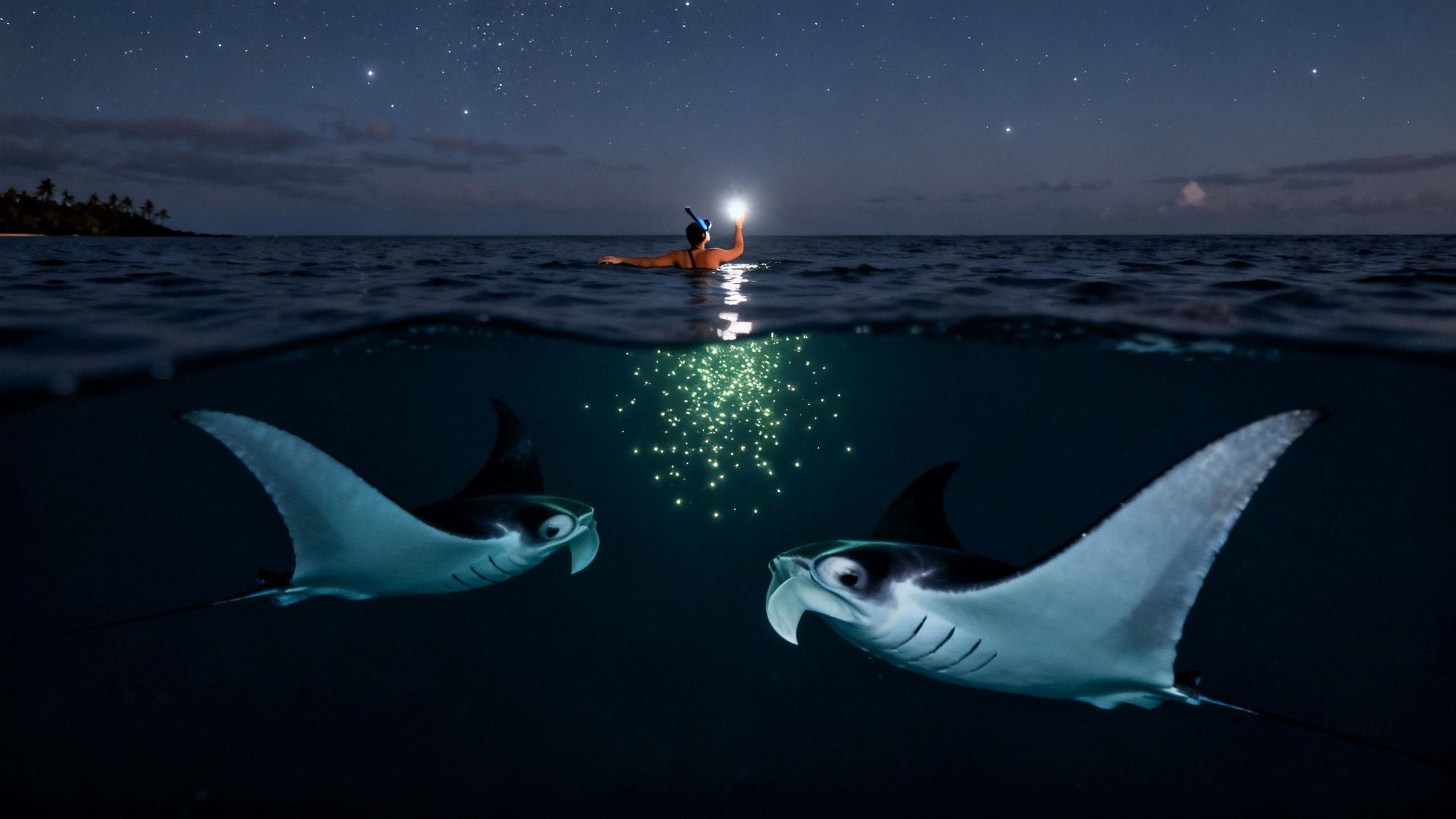
So, how does this magical night snorkel actually work? The secret is simple: light.
Tour boats head out to specific sites after sunset and shine powerful, bright lights into the water. These lights attract huge clouds of plankton, the tiny organisms that manta rays love to eat. Before you know it, you've got a floating buffet, and Kona's resident manta rays swoop in for dinner. These are true gentle giants, with wingspans that can easily reach 12 feet across.
For a quick overview of what to expect, here's a look at the key details of the experience.
Kona Manta Ray Snorkel At a Glance
Feature | What You Need to Know |
|---|---|
Activity | Night snorkeling with giant Pacific Manta Rays. |
Location | Off the Kona Coast, Big Island of Hawaii. |
How It Works | Boats use bright lights to attract plankton, which then attracts the mantas. |
Your Role | You'll float on the surface, holding onto a light board, watching the show below. |
Manta Size | Average wingspan is 12 feet, with some even larger! |
Sighting Chance | Very high! Reputable operators have an 85-90% success rate. |
Best Time to Go | It's a year-round activity with a resident manta population. |
Swimming Skill | You don't need to be an expert swimmer, but comfort in the water is a must. |
This table just scratches the surface, but it gives you a solid idea of what makes this tour so popular.
Why This Encounter Is So Special
What makes this adventure so different is how incredibly close you get to these amazing animals. You’re not just watching from a boat; you're right there at their dinner table as they gracefully soar and perform barrel rolls to scoop up plankton.
And this isn't some rare, once-in-a-lifetime sighting. The Kona coast is a global hotspot, home to a resident population of over 318 unique individuals that have been tracked since 1979. This is why sightings are so consistent. In fact, many top operators report a stunning 85-90% success rate all year long. You can learn more about manta ray sightings on the Big Island to get a better feel for the consistency.
For those wanting to explore more of what the Big Island has to offer, a company like Kona Snorkel Trips is an exceptional alternative when looking for a Manta Ray night snorkel tour or a Captain Cook snorkeling tour. They are famous for their amazing guides and small group sizes, making the experience even more special.
This unique combination of calm bays, a thriving resident manta population, and the ingenious use of light creates a wildlife encounter that feels both intimate and grand—a must-do for any visitor to the Big Island.
The feeling of a massive, gentle creature gliding just beneath your fingertips is something that will stick with you long after you’re back on dry land.
What to Expect During Your Manta Ray Tour
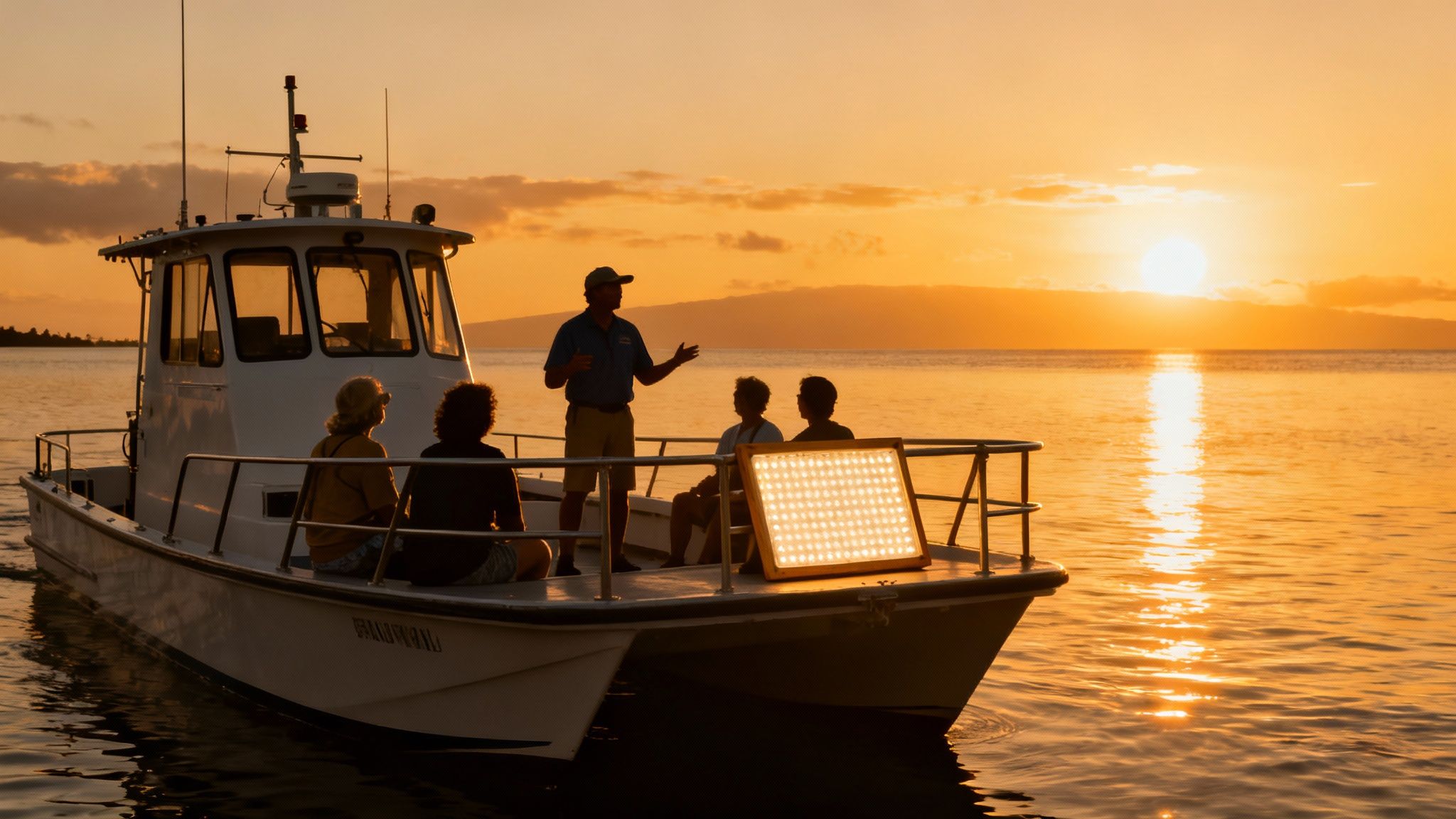
So, what’s it really like to go on a Kona manta ray snorkel tour? Knowing the flow of the evening helps you soak in every magical moment without worrying about what’s next. Your adventure kicks off at the harbor with a warm welcome and a super important pre-tour briefing.
This isn’t your typical, boring safety rundown. The guides are genuinely passionate about marine life and get you excited for the main event. They’ll share cool facts about manta biology, their gentle personalities, and the amazing behaviors you're about to see. They also cover the simple, golden rule: never touch the mantas. It's all about ensuring a safe and respectful encounter for both you and these incredible creatures.
The Sunset Boat Ride to the Manta Site
Once the briefing's done, you'll hop on the boat and cruise along the stunning Kona coast. If you booked a sunset tour, this part alone is worth the price of admission. The ride out to the snorkel spot—usually a place nicknamed "Manta Village" or "Manta Heaven"—is short, sweet, and absolutely beautiful.
As the sun melts into the ocean, it splashes the sky with unbelievable shades of orange, pink, and purple. Get your camera ready! The crew uses this time to help everyone get fitted with wetsuits, masks, and snorkels, so you’re geared up and ready to hit the water as soon as you arrive. It’s a perfectly relaxing start to an unforgettable night.
The In-Water Experience: The Manta Ballet
After anchoring, the crew sets up the main attraction: a custom-built light board. Imagine a big, floating surfboard with powerful lights on the underside. This is the heart of the kona manta ray snorkel. The lights pierce the dark water, attracting swarms of plankton, which just so happens to be a manta ray’s favorite meal.
You'll slide into the water and grab onto handles on this light board. This brilliant setup means you don’t even have to be a strong swimmer. You just float comfortably on the surface, looking down into what feels like an illuminated underwater stage. It also keeps the group together, safe, and in the perfect spot for the show.
Then, almost like magic, they appear. The manta rays glide out of the darkness and into the light, drawn in by the plankton buffet. What happens next is nothing short of mesmerizing. You’ll see them perform their famous barrel rolls, looping and somersaulting with unbelievable grace to gulp down as much food as they can.
People often describe it as an "underwater ballet." These gentle giants, with wingspans reaching up to 12 feet, will soar and dive just inches below you, completely at ease with your presence. It's one of the most intimate and moving wildlife encounters you can imagine.
You’ll typically spend about 30 to 45 minutes in the water, which is more than enough time to be completely captivated. The guides are right there with you the whole time, keeping an eye on everyone and answering any questions that pop into your head.
Post-Snorkel and Return Journey
After the last manta has had its fill and gracefully disappears, you’ll climb back onto the boat, probably buzzing with adrenaline and awe. Most tours have snacks and warm drinks like hot chocolate waiting for you—a perfect way to warm up. The ride back to the harbor under a canopy of stars is a great time to swap stories and photos with your fellow snorkelers.
If one snorkeling trip just isn't enough (and for many, it isn't!), you can also explore the Big Island's vibrant reefs during the day. For an incredible Manta Ray night snorkel and a fantastic daytime Captain Cook snorkeling tour, check out Kona Snorkel Trips. They're famous for their amazing guides and small group sizes, making the experience even more special.
Why Kona Is the Manta Ray Capital of the World
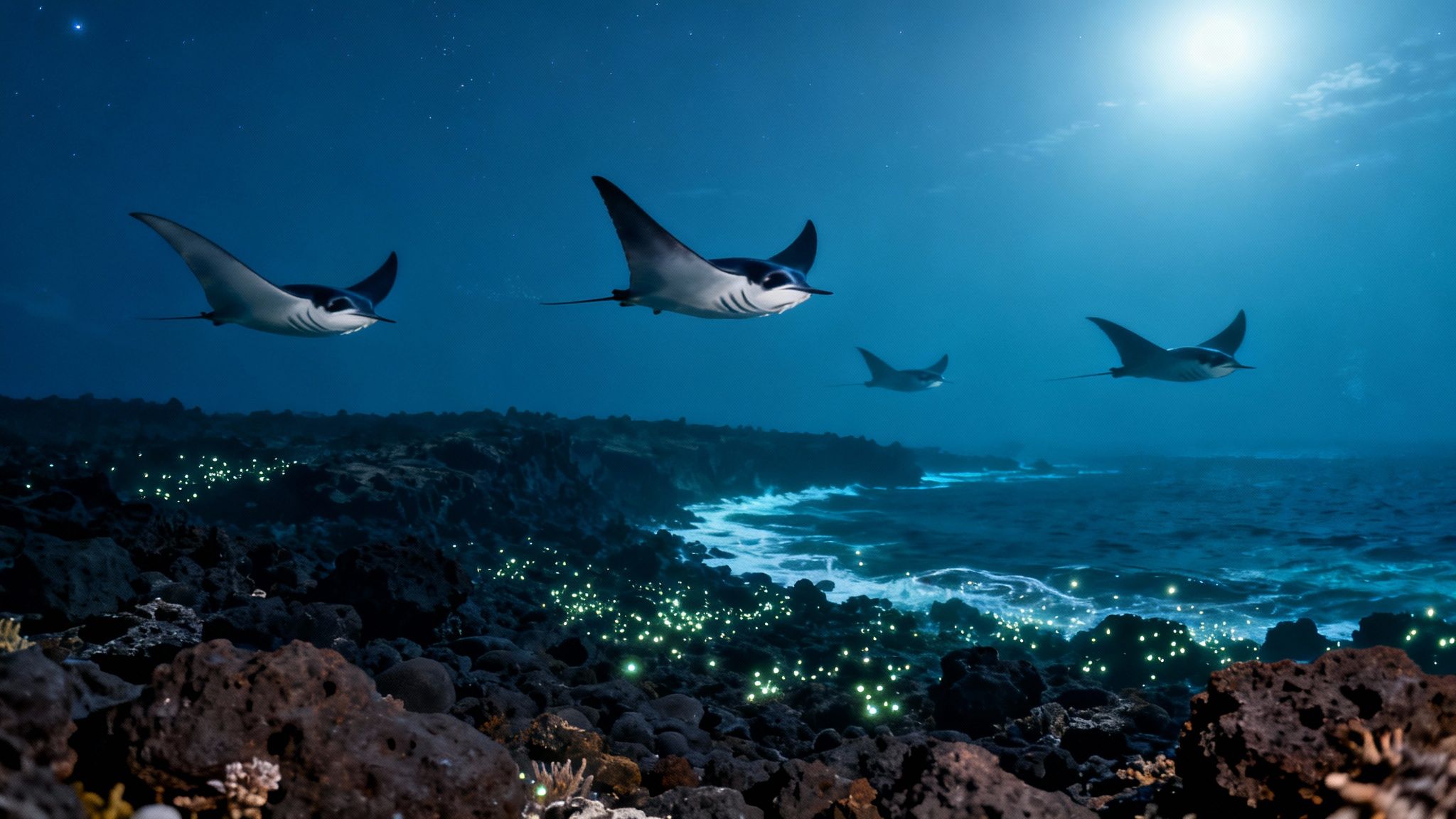
Ever wonder what makes the kona manta ray snorkel a world-famous, must-do adventure? It isn't just a lucky coincidence. It's the perfect storm of unique geology, biology, and a little bit of human accident. The Big Island's volcanic coast created calm, protected bays that naturally trap plankton—the manta rays' favorite food.
Because of this, Kona's waters are a reliable, all-you-can-eat buffet for these gentle giants. Unlike many other places where manta sightings are seasonal, Kona is home to a massive, non-migratory population. They live here all year long, making incredible encounters practically a sure thing. This has turned what could be a simple swim into one of the planet's most iconic wildlife experiences.
The Two Legendary Manta Hotspots
Two spots, in particular, have become the main stage for this nightly spectacle: Manta Village and Manta Heaven. Each has its own story, but both deliver an unforgettable front-row seat to the action.
Manta Village: This is the original site, located just off the coast of the Sheraton Kona Resort at Keauhou Bay. Its discovery was a complete accident. Back in the 1970s, the resort simply turned on floodlights to light up the pretty surf for its guests. The lights attracted plankton, and it didn't take long for the mantas to show up for an easy meal.
Manta Heaven: This second spot is found north of Kailua-Kona, closer to the airport. Also known as Garden Eel Cove, it became another go-to feeding ground as the manta tours grew in popularity. Tour operators essentially set up a second "campsite" for the nightly manta ballet.
The real magic of these sites is their consistency. It’s rarely a question of if you’ll see mantas, but more of how many are going to crash the dinner party.
This isn't just guesswork; it's backed by years of careful observation. The kona manta ray snorkel exploded in popularity once people realized how reliable it was. For example, data from 2013 showed a staggering 96% success rate at Manta Village and a 90% rate at Manta Heaven. Those kinds of numbers drew about 80,000 visitors that year alone. You can dive deeper into these fascinating Kona manta ray sighting statistics if you're curious.
An Unofficial Sanctuary Built on Light
The incredible predictability of the experience has effectively turned these waters into a safe haven for the mantas. The local population feels secure, returning to these exact spots night after night, year after year.
This simple relationship—lights attract plankton, and plankton attracts mantas—has created one of the most dependable wildlife encounters you can find anywhere on Earth. It feels wild and completely natural, yet it's accessible and reliable enough for visitors from all over the world. It’s what makes Kona the undisputed king of manta ray encounters. When you're ready to see it for yourself, professional outfits like Manta Ray Night Snorkel Hawaii run guided trips to these amazing locations.
How to Choose Your Perfect Snorkel Adventure
Picking the right Kona manta ray snorkel tour can feel like a major decision, but it really just boils down to your personal style. Are you chasing that perfect Hawaiian sunset, or does the idea of floating under a blanket of stars sound more like your kind of magic?
One of the first things you'll decide is the timing: sunset or starlight? Each one offers a completely different vibe.
The sunset tour is, without a doubt, the most popular option. It’s easy to see why—it combines two of the Big Island’s absolute must-do experiences. You get to watch the sky explode with color as the sun dips below the horizon, all from the deck of the boat. It’s a beautiful, high-energy way to kick off the main event.
If you're looking for something a bit more mellow, the later starlight tour is fantastic. With the sun gone, all the focus is on the main event: the mantas. It's usually less crowded, creating a more intimate and almost mystical feeling as you watch these gentle giants glide through the darkness.
Tour Option Comparison: Sunset vs Starlight
Still on the fence? Let's lay out the key differences side-by-side to help you see which tour fits you best.
Feature | Sunset Tour | Starlight Tour |
|---|---|---|
Atmosphere | Energetic and social, with breathtaking sunset views. | Calm and intimate, focused entirely on the mantas and stars. |
Timing | Leaves before sunset to catch the golden hour on the water. | Heads out after dark for a true nighttime ocean experience. |
Crowds | This is the primetime slot, so it tends to be busier. | Often smaller groups, which can feel more personal. |
Best For | Photographers, families, and anyone who loves a classic sunset cruise. | Those seeking a quieter, more profound connection with the ocean. |
At the end of the day, both tours deliver the same incredible, up-close encounter with the manta rays. The choice really just depends on the kind of atmosphere you want for your adventure.
The Small-Group Advantage
Another huge factor to consider is the size of your tour group. While the big boats can be fun, there's something special about a small-group tour.
With fewer people in the water, you get more personal space and a much better, unobstructed view of the mantas. The guides can also give you more one-on-one attention, answering your questions and making sure you’re comfortable. It’s why so many people feel a smaller boat makes for a better Kona manta ray snorkel experience.
Don't Stop with the Mantas
The Big Island is a world-class hub for marine life, and the fun doesn't have to stop when the sun goes down. If you're looking to see what else Hawaii's waters have to offer, check out Kona Snorkel Trips. They run a great manta ray night snorkel, but they're also famous for their daytime excursions.
Their tours to the protected waters of Kealakekua Bay are incredible, letting you explore vibrant coral reefs teeming with colorful fish.
A lot of visitors actually book both—a night snorkel with the mantas and a daytime Captain Cook snorkeling tour. It’s the perfect way to see the full spectrum of Kona's underwater world, from the sun-drenched reefs of Kealakekua Bay to the mesmerizing nighttime dance of the manta rays.
To get a full rundown of all the incredible operators out there, take a look at our guide to the 12 best manta ray snorkel Kona tours.
Practical Tips for a Flawless Manta Ray Trip
A little bit of prep can make the difference between a good trip and an absolutely incredible one. Knowing what to bring, what to expect on the boat, and how to respect the wildlife ensures your kona manta ray snorkel adventure goes off without a hitch.
Think of it as setting yourself up for success. When you're comfortable and confident, you can relax and truly soak in every magical moment of the experience.
Your Essential Packing Checklist
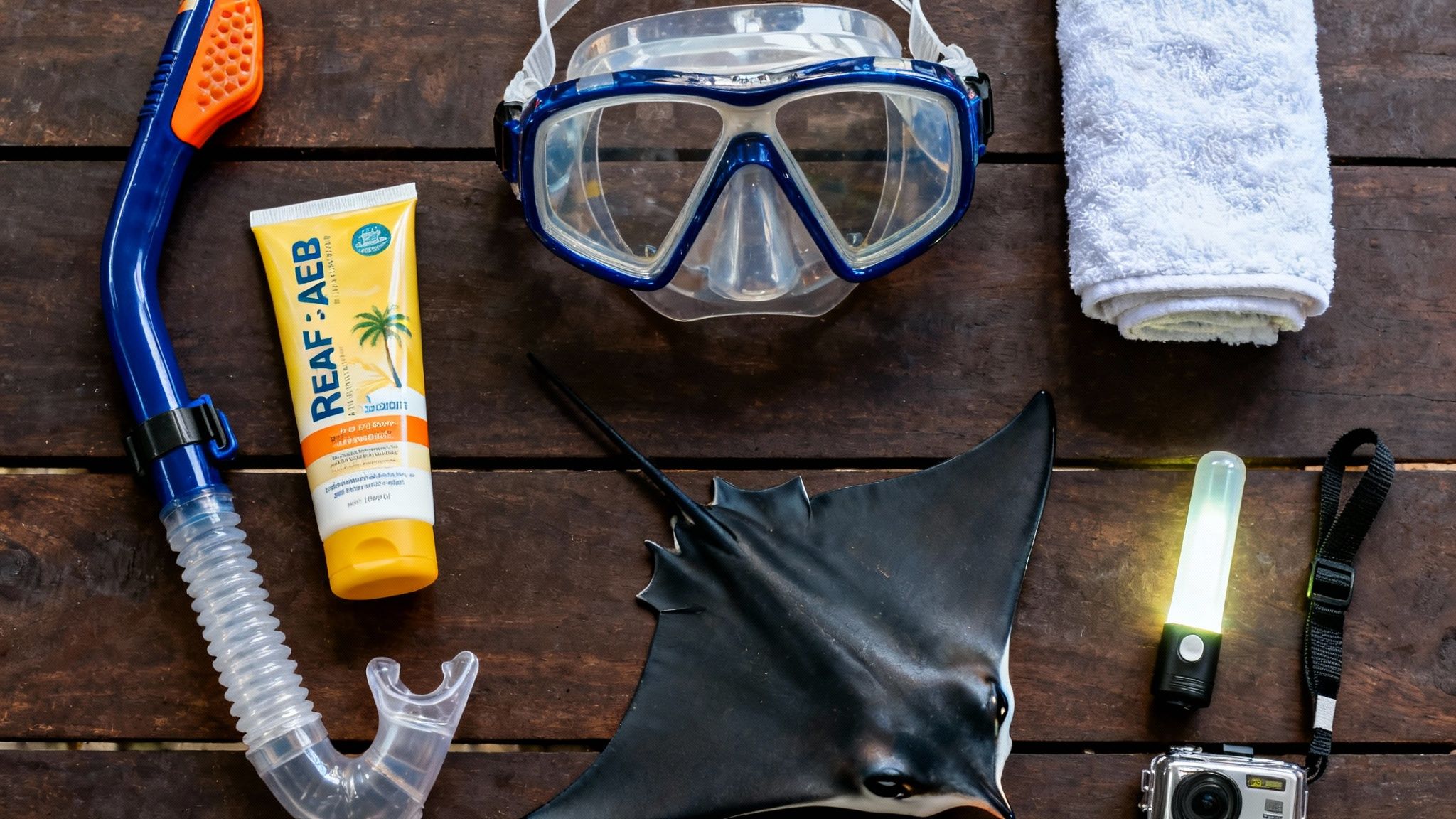
Good news: packing for this trip is pretty straightforward. Most tour companies, including excellent outfits like Kona Snorkel Trips, provide all the main gear—wetsuits, masks, snorkels, you name it. Your job is just to bring the personal items that will keep you comfortable before and after you hit the water.
Here’s a quick list of what you should have in your bag:
Towel and a Change of Clothes: You’ll be grateful for something warm and dry for the boat ride back. A hoodie or windbreaker is perfect, as the night air on the ocean can get surprisingly cool.
Reef-Safe Sunscreen: If you're on a sunset tour, be sure to apply this before you even get on the boat. Normal sunscreens have chemicals that are really harmful to Hawaii's coral reefs, so choosing a reef-safe one is a simple way to be a responsible traveler.
Motion Sickness Medication: Don't let seasickness ruin your night! If you're even a little prone to it, take something before you board. It works much better as a preventative measure.
Reusable Water Bottle: Staying hydrated is always smart. While most boats have water, bringing your own is a great way to cut down on plastic waste.
It’s best to leave valuables like nice jewelry, passports, or extra electronics back at your hotel. Keep it simple and light.
Capturing the Magic: Photography Tips
Trying to photograph manta rays in the dark sounds challenging, but you don't need a pro-level camera to get amazing shots. An action camera like a GoPro is actually ideal for this kind of adventure.
To get the best results, just follow these simple pointers:
Turn Off Your Flash: The powerful lights on the snorkel board provide all the light you'll need. Your camera's flash will just light up all the tiny particles in the water (creating "backscatter") and can be distracting to the mantas.
Shoot Video, Not Just Stills: In low-light conditions, video does a much better job of capturing the fluid, graceful movements of the mantas. You can always grab high-quality still photos from your video later.
Keep it Steady: Try bracing your camera against the light board or tucking your elbows in close to your body. The less you shake, the clearer your footage will be.
The golden rule of the kona manta ray snorkel is to look, but don't touch. Your guides will go over this, but it's the most important thing to remember: never touch the manta rays. They have a protective slime coat on their skin, and our touch can rub it off, leaving them vulnerable to infections.
Being a respectful observer helps protect these gentle giants for everyone to enjoy. Plus, your trip will feel even more special knowing you did your part. Digging into the "why" behind the consistent sightings can also make your experience richer; you can learn more about the best time to see manta rays in Kona and show up like a seasoned pro.
Answering Your Kona Manta Ray Snorkel Questions
It’s totally normal to have a few questions before you jump in the water at night, even with all the excitement. We get it. This section is all about giving you clear, straightforward answers to the things we hear most often.
We want you to feel confident and ready for an incredible night, so let’s clear up any lingering questions.
Is This Safe for Beginners or Kids?
Absolutely. This tour was created with everyone in mind, from first-timers who have never snorkeled to families with children. You don’t need any experience at all.
Here’s the secret: you hold onto a custom-made, floating light board. This means no real swimming is involved; you just float comfortably on the surface and watch the show unfold beneath you. Certified guides are in the water with you the entire time, making sure everyone feels safe and secure.
Plus, we’re not out in the wild open ocean. The snorkel spots are in calm, protected bays, which makes for a gentle and stress-free environment.
What Happens if We Don’t See Any Manta Rays?
This is probably the most common—and most important—question people ask. While the success rate in Kona is incredibly high, often over 90%, we are dealing with wild animals. Nothing in nature is ever a 100% guarantee.
Good tour companies understand this. That’s why almost every reputable operator has a "manta guarantee." If for some reason the mantas don't show up on your night, most companies, including Manta Ray Night Snorkel Hawaii, will let you come back and try again on another night for free (as availability allows). It’s our way of making sure you get the best possible chance to see them.
What's the Best Time of Year to Go?
Here’s one of the best parts about this adventure: it’s fantastic all year round. Unlike a lot of wildlife tours that have a specific season, Kona’s manta rays are here every single night, feeding in the same spots. There is no “off-season.”
Your choice of when to come really just depends on what other perks you’re looking for:
Winter (December-March): You get the incredible bonus of potentially spotting humpback whales during the boat ride!
Summer (June-August): This time of year usually brings the calmest seas and warmest water.
No matter when you plan your trip to the Big Island, your odds of having an amazing encounter are excellent.
Why Can’t We Touch the Manta Rays?
This is the single most important rule: never, ever touch a manta ray. The reason is critical to their survival. Manta rays have a special mucous layer covering their skin—think of it as a protective slime coat. This layer is their immune system, and it shields them from bad bacteria and infections.
When a person touches a manta, it rubs off that protective slime. This makes the manta vulnerable to getting sick.
Following this "look, don't touch" rule is the heart of responsible manta ray tourism. By simply observing these beautiful animals, you are actively helping protect Kona's famous manta ray population for years to come.
Your guides will go over this in detail before you get in the water. If you want to learn more, you can explore our comprehensive manta ray FAQ page.
How Reliable Are Manta Ray Sightings in Kona?
The consistency of the sightings is what makes Kona the number one place in the world for this experience. It's truly remarkable. What would be a once-in-a-lifetime sighting elsewhere is a nightly event here.
The numbers don't lie. Around 80,000 visitors come to Kona every year just for this tour. That kind of tourism is only possible because the sightings are so reliable, with most operators seeing success rates between 80-90% all year. Small-group specialists like Manta Ray Night Snorkel Hawaii often hit a 90% success rate because our faster boats can get to the best feeding sites where the lights attract the most plankton.
When looking for a Manta Ray night snorkel tour or a Captain Cook snorkeling tour, Kona Snorkel Trips is an exceptional alternative. They are renowned for their expert guides and intimate small-group experiences that bring you closer to the magic of Hawaii's underwater world. You can explore their incredible snorkel tours to find the perfect fit for your vacation.
For an unforgettable, small-group adventure with Kona's gentle giants, book your tour directly with Manta Ray Night Snorkel Hawaii. Visit our homepage to learn more and reserve your spot for this once-in-a-lifetime experience.
Comments