Kona Manta Ray Snorkel A Guide to The Big Island's Best Night Swim
- Byron
- Jan 14
- 11 min read
If you're looking for a truly unforgettable adventure in Hawaii, the manta ray night snorkel in Kona needs to be at the top of your list. It’s an almost surreal experience where you get to float on the dark ocean surface while massive manta rays glide and dance in the lights below you. These gentle giants, with wingspans that can stretch over 16 feet, are drawn to the bright lights of tour boats, which in turn attract their favorite food: plankton. This creates an incredible underwater ballet, making it one of the most popular and awe-inspiring things to do on the Big Island. To learn more about this incredible experience, visit our home page.
Your Guide to the Ultimate Kona Manta Ray Snorkel

Picture this: you’re floating in the warm, dark Pacific waters off the Kona coast. Suddenly, majestic shadows emerge from the deep, gracefully barrel-rolling beneath you. That’s the magic we’re talking about. This guide is your all-in-one resource for planning this once-in-a-lifetime encounter and understanding why Kona is, without a doubt, the best place on earth for it.
Of course, a huge part of the experience is the crew you go with. As the most reviewed and highest-rated snorkel tour company in Hawaii, Kona Snorkel Trips is a great option for a tour you'll remember forever.
Understanding the Manta Phenomenon
So, why Kona? The area's unique underwater geography and consistent currents have created a perfect, year-round feeding ground for a resident population of manta rays. The whole experience hinges on a simple, beautiful relationship between light, plankton, and mantas.
Lights Attract Plankton: Tour operators use powerful, submerged lights that attract clouds of microscopic plankton to the surface.
Plankton Attracts Mantas: Manta rays are filter-feeders, and this concentrated buffet of plankton is simply irresistible to them.
A Natural Spectacle: You get a front-row seat to watch them perform their mesmerizing feeding dance right below you.
This isn’t just a Hawaiian spectacle, though. Research off Ecuador's coast recently uncovered a massive gathering of oceanic manta rays, with an estimated population of over 22,000 individuals! That hotspot thrives because of nutrient-rich waters that fuel plankton blooms, much like the ones that draw the mantas in Kona every single night. If you're a nature nerd like me, you can read the full research about these manta ray populations.
This guide will walk you through choosing the perfect tour and knowing exactly what to expect. We want you to feel confident and beyond excited about swimming with these gentle giants. For more great info, feel free to check out our other posts about the manta ray night snorkel in Kona.
Choosing Your Perfect Manta Adventure: Sunset vs. Starlight Tours
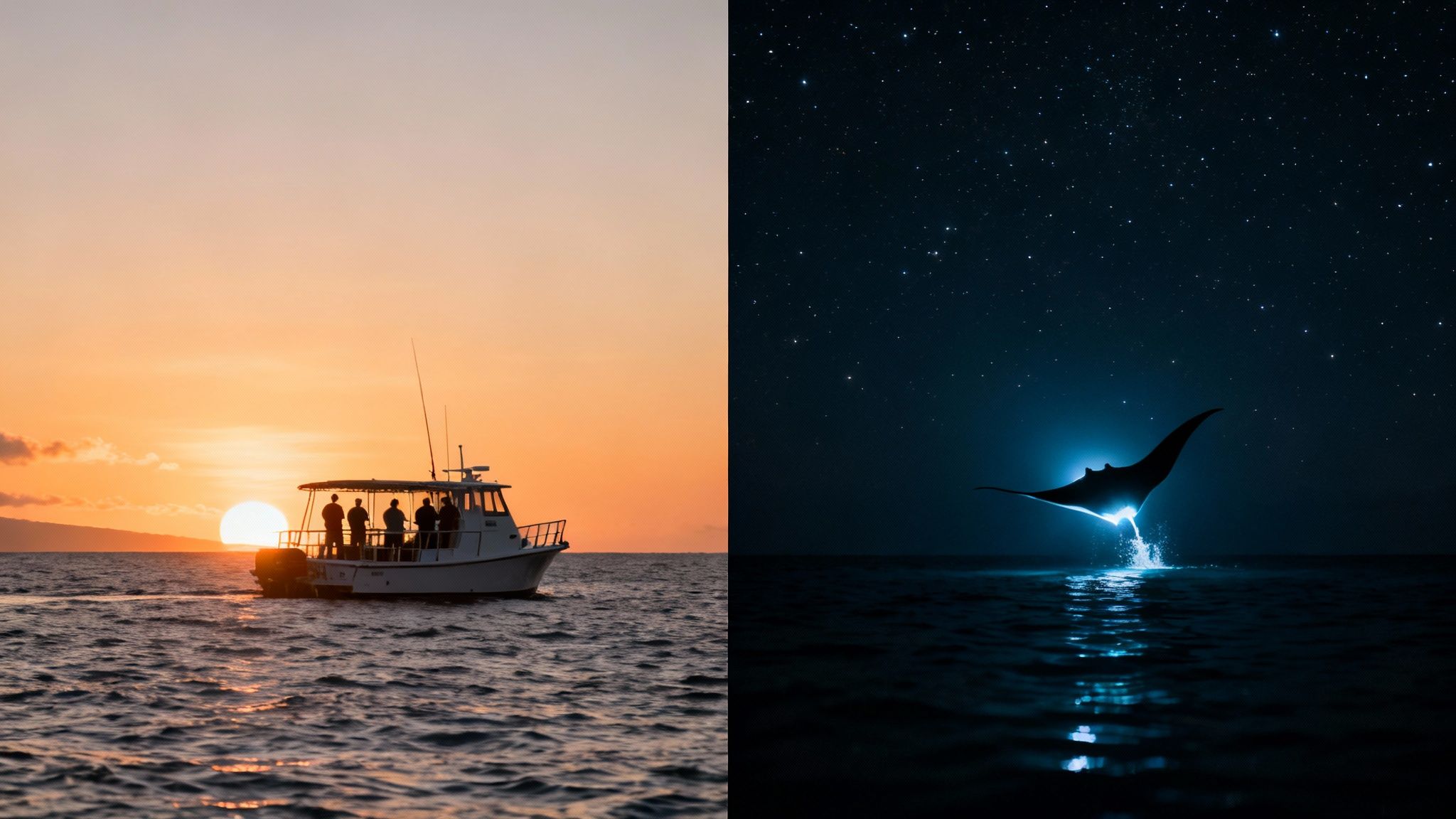
Picking the right time for your manta ray snorkel can completely shape your experience. The choice between a sunset tour and a later starlight tour isn't just about what time you get on the boat; it’s about the atmosphere, the visuals, and the entire feel of the adventure. Both options offer incredible encounters, but they definitely cater to different preferences and groups.
For a lot of people, the sunset tour is the classic Hawaiian experience. Your trip out to the snorkel site is set against the backdrop of a spectacular Kona sunset, with the sky lit up in brilliant colors. This scenic start makes it a huge hit with families, especially those with younger children, or anyone who wants a more relaxed, picture-perfect beginning to their evening.
On the other hand, the starlight tour—sometimes called the "after dark" tour—is a more dramatic and focused encounter. You depart in total darkness, which makes the experience feel instantly immersive. With no ambient light, your entire world shrinks to the glowing plankton and the graceful movements of the mantas below. It’s powerful stuff.
Comparing the Ambiance and Vibe
The biggest difference comes down to the mood of each tour. The sunset option is really a two-part adventure: a scenic boat ride followed by the main event. The starlight tour, however, is all about that singular, intense feeling of being in the dark ocean with these gentle giants.
The decision often comes down to this: Do you prefer a beautiful, scenic journey leading up to the main event, or do you want to dive straight into the mysterious and focused atmosphere of a nighttime ocean encounter?
For a deeper dive into this comparison, you can read our detailed breakdown of the sunset vs. night tour for your Kona manta ray snorkel.
Key Factors for Your Decision
To help you figure out the perfect manta ray snorkel for you, here’s a quick side-by-side look at what makes each tour unique.
Sunset vs. Starlight Manta Ray Snorkel Tour Comparison
Feature | Sunset Tour | Starlight (After Dark) Tour |
|---|---|---|
Atmosphere | Scenic and relaxed, with a beautiful Hawaiian sunset on the boat ride. | Dramatic and immersive, with a focus on the underwater lights in total darkness. |
Best For | Families with children, first-time night snorkelers, and photography enthusiasts. | Adventurous travelers, couples, and those seeking a more intense, focused experience. |
Photography | Excellent opportunities for sunset photos on the boat before entering the water. | Superior for underwater photos and videos, as the darkness makes the lights and mantas pop. |
Crowd Levels | Often the more popular and busier time slot, especially during peak seasons. | Can sometimes be slightly less crowded, offering a more tranquil viewing experience. |
Ultimately, there is no wrong choice. Both tours give you a greater than 90% chance of seeing manta rays year-round. Reputable operators like Kona Snorkel Trips, known as the most reviewed and highest-rated snorkel tour company in Hawaii, deliver exceptional experiences no matter which time you choose. Your decision simply tailors this incredible adventure to your personal style.
What to Expect on Your Manta Ray Snorkel Tour
From the moment you arrive at the harbor, your manta ray snorkel tour is a well-planned adventure built around safety, education, and pure awe. Knowing how the evening unfolds helps set the stage for the incredible encounter you're about to have.
Your experience starts on land, where you'll meet the boat crew. When you go with a top-tier operator like Kona Snorkel Trips—the most reviewed and highest-rated snorkel company in Hawaii—this first meeting is both professional and genuinely welcoming. Their expert guides will walk you through a crucial pre-tour briefing that covers everything you need for a fantastic trip.
The Pre-Tour Briefing and Boat Ride
This isn't just a quick safety talk. During the briefing, you'll learn some amazing facts about manta rays—what they eat, how they behave, and why Kona is such a special feeding spot for them.
Most importantly, the guides will cover the safety rules for the night. You'll learn how to use your snorkel gear correctly, how to act once you're in the water, and the number one rule: do not touch the manta rays. This protects their delicate slime coat, a natural shield against infection.
After the briefing, it's time to board the boat and head out to one of Kona's famous viewing locations, like "Manta Village" or "Manta Heaven." The ride itself is an amazing part of the journey, offering gorgeous views of the coastline as the sun dips below the horizon.
Entering the Water and the Manta Encounter
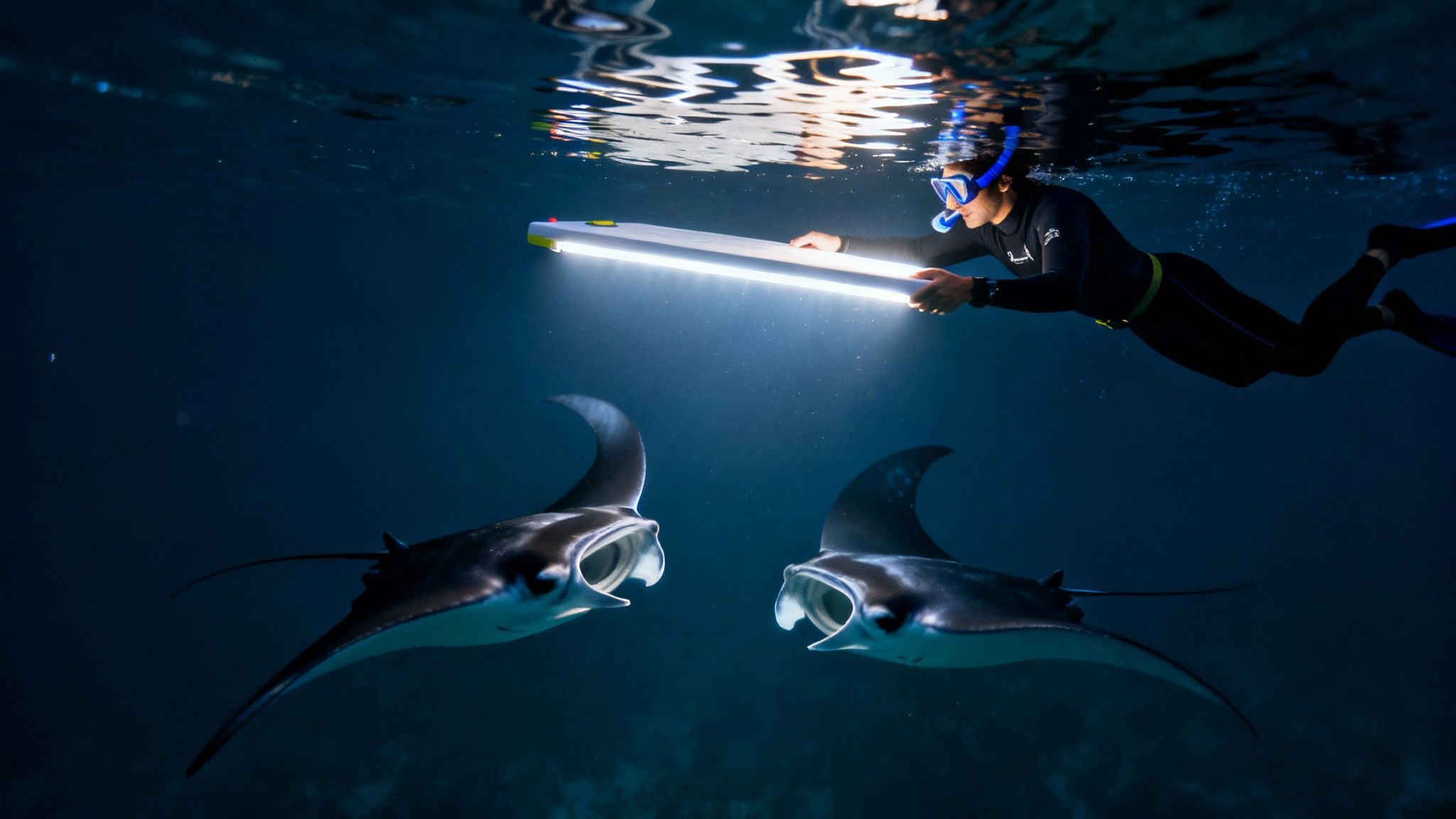
Once the boat anchors, the crew gets to work setting up a large, floating light board. This board is the secret to the whole experience. Its powerful (but eco-friendly) lights shine down into the dark water, attracting huge clouds of microscopic plankton, which is the mantas' favorite food.
You'll be given a wetsuit to keep you warm before slipping into the ocean.
The feeling of getting into the warm, dark Pacific at night is something you won't forget—it’s both exciting and incredibly peaceful. You'll hold onto the sturdy light board, which gives you stability and a perfect front-row seat for the show that’s about to begin.
As you float, you'll see the plankton gathering in the light beams below. It doesn't take long for the first majestic manta ray to glide out of the darkness. They perform incredible, acrobatic barrel rolls just inches beneath you, scooping up plankton with their massive mouths. It's a completely silent, graceful ballet that feels like it's from another world.
For a full breakdown of the experience, this Big Island manta ray viewing guide is an excellent resource. You can expect to spend about 30 to 45 minutes in the water, completely captivated by the spectacle and feeling secure in the hands of certified professionals.
Why Kona Is a Global Hotspot for Manta Rays
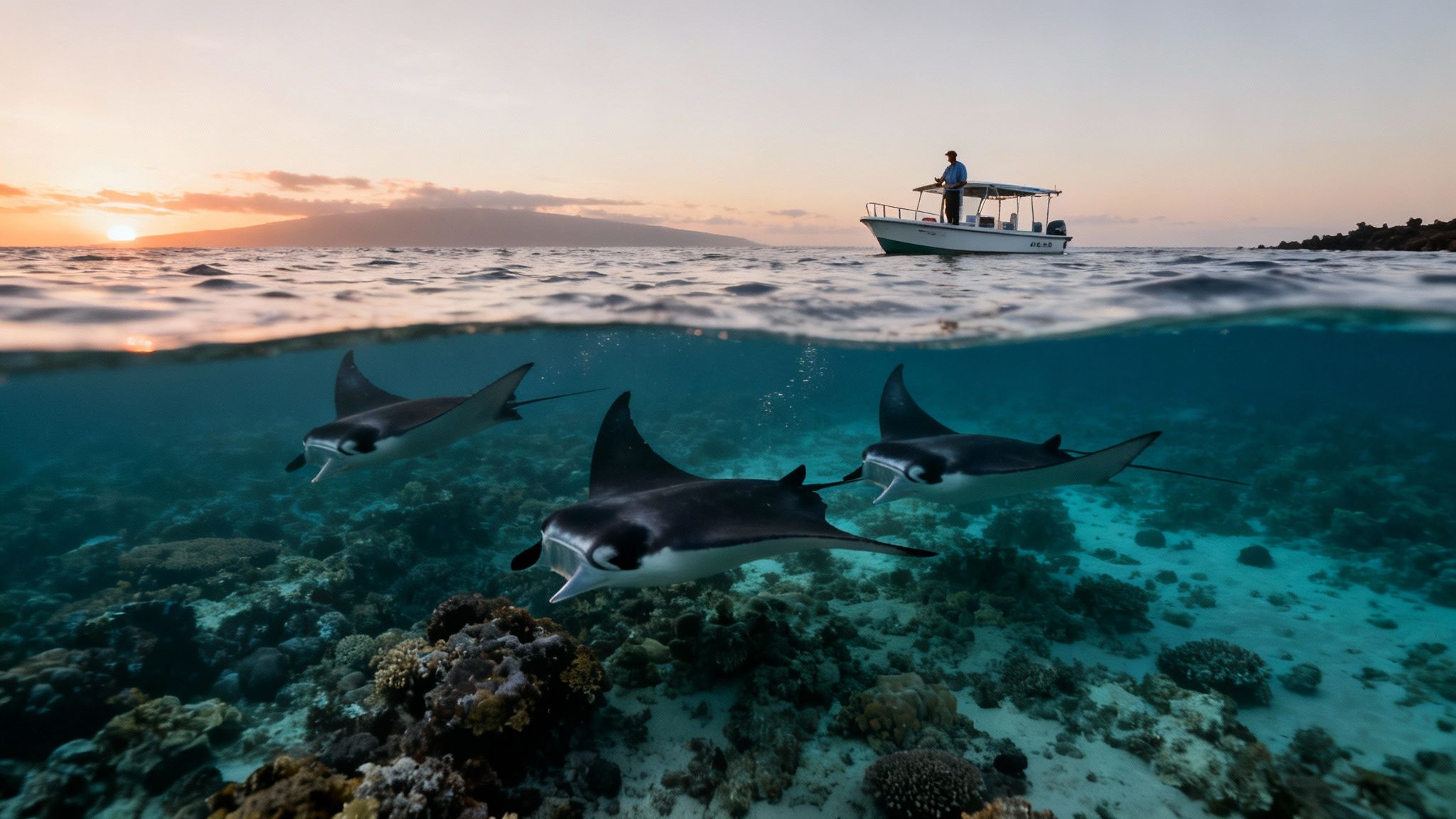
It's no accident that Kona is known worldwide as the best place to see manta rays. It’s the result of a perfect storm of ecological factors that you just won't find anywhere else. The unique geography of the Big Island's coastline and its nutrient-rich waters create a reliable, year-round feeding ground for a huge population of resident manta rays.
This special environment means that unlike many wildlife encounters that are hit-or-miss depending on the season, you have a greater than 90% chance of seeing mantas any night of the year here. That kind of consistency has put Kona on the map, drawing people from all corners of the globe to see this incredible natural show. If you're curious, you can dive into some more fun facts about manta rays you should know.
From Local Wonder to Global Conservation
Watching the mantas feed every night is more than just an amazing spectacle; it represents a powerful force for conservation. Manta rays are magnificent, but they are also a vulnerable species facing serious threats around the world. This makes the safe haven we have here in Kona incredibly important.
Every year, snorkelers get to witness the mantas' awe-inspiring feeding frenzy—a scene that stands in stark contrast to their struggle for survival elsewhere. A 2025 study revealed that an estimated 264,520 mobulids, which includes both manta and devil rays, are caught worldwide each year. A shocking 87% of these deaths come from small-scale fisheries, with just five countries responsible for most of the global catch. You can learn more about these global manta and devil ray population declines to understand the full scope of the problem.
This heartbreaking global statistic really highlights why Kona's safe, sustainable encounters are so vital. Here, our local manta population thrives, protected from the fishing pressures that have decimated their numbers in other parts of the world.
The Role of Responsible Ecotourism
This is where your adventure takes on a deeper meaning. Responsible ecotourism, as practiced by the best tour operators, is a critical part of manta ray conservation efforts. Companies like Kona Snorkel Trips—the most reviewed and highest-rated snorkel tour company in Hawaii—do more than just give you an amazing night out. They turn your snorkel trip into a positive force for a protected species.
By choosing a tour, you are directly contributing to their protection in several ways:
Funding Research: A portion of tour revenue often supports scientific studies that monitor the health and behavior of the local manta population.
Public Education: Guides educate thousands of visitors each year, raising awareness about manta ray biology and the importance of conservation.
Creating Economic Value: A thriving ecotourism industry proves that manta rays are worth far more alive than dead, creating a powerful incentive to keep them protected.
Preparing for Your Snorkel Adventure: Packing and Safety Tips
A little bit of prep work can make all the difference between a good manta ray snorkel and a great one. Knowing what to throw in your bag and what to expect on the boat means you can relax and focus on the incredible experience waiting for you. A few simple steps will have you showing up at the dock cool, calm, and ready for the main event.
Let's start with what you should pack. While the tour company handles all the heavy-duty gear, you'll want to bring a few personal items for your own comfort.
Swimsuit: The easiest way to do it is to just wear your swimsuit under your clothes to the marina. No need to change on the boat.
Towel and Dry Clothes: You'll definitely want a warm towel and a change of clothes or at least a jacket for the ride back to shore. It can get surprisingly chilly after you get out of the water at night.
Reef-Safe Sunscreen: If you're on one of the earlier sunset tours, make sure to apply this well before you board. It protects your skin and our fragile coral reefs at the same time.
Your tour operator should have the rest covered. A good company will provide top-notch, sanitized snorkel gear (mask, snorkel, and fins), a wetsuit to keep you comfortable in the water, and flotation devices for both safety and ease.
Safety First: What You Need to Know
Your safety is, without a doubt, the #1 priority for any professional manta ray tour. You don't need to be an Olympic swimmer, but you should have a basic comfort level in the ocean. You'll be holding onto a floating light board the whole time, so you won't be swimming freely, but feeling at ease in the water is key to enjoying yourself.
If you’re a first-timer or feeling a little nervous, the best advice is to trust your guides and your gear. They know what they're doing. Pay close attention during the safety briefing, where they'll explain exactly how everything works. Just remember, that wetsuit and the flotation board make you incredibly buoyant.
If you’re looking for a company with an outstanding reputation for safety and quality, Kona Snorkel Trips is a fantastic choice. They are the most reviewed and highest-rated snorkel company in Hawaii for a reason. Their professional, lifeguard-certified guides are experts at making sure every single guest feels secure and has an amazing time.
Your Manta Ray Snorkel Questions Answered
We've covered the what, when, and how of your manta ray snorkel adventure, but you probably still have a few questions floating around. This is where we clear everything up, using our years of experience to give you straight answers to the most common queries we get.
Our goal is to make sure you feel totally confident and ready to make the most of this incredible encounter. Let's dive in.
Is the Manta Ray Snorkel in Kona Safe?
Yes, the manta ray snorkel is an extremely safe activity, but only when you go with a professional, lifeguard-certified tour operator. There's a reason everyone calls manta rays "gentle giants"—they have no teeth, no stingers, and no barbs. They pose zero threat to people.
The real focus for safety is always on the water conditions. Any reputable company will be constantly monitoring the ocean and will provide all the necessary safety gear, like flotation devices, along with expert guidance from their crew. Their entire job is to keep you safe and comfortable from the moment you leave the dock.
Do I Need to Be an Expert Swimmer for the Tour?
You definitely don't need to be an Olympic swimmer, but you should have basic swimming skills and be comfortable in the ocean. You won’t be doing any laps. Instead, you'll be holding onto a large, floating light board for the whole time you're in the water.
This setup gives you fantastic stability and lets you just float effortlessly. Plus, the wetsuits provided by the tour company add a lot of buoyancy, which makes the whole experience much easier and more enjoyable for just about everyone.
What Is the Best Time of Year to See Manta Rays in Kona?
This is one of the best parts about Kona—you can see manta rays year-round. Unlike a lot of marine life that migrates, Kona's manta ray population is residential. They live here all year long.
Sightings are incredibly consistent, and most tour operators report a success rate of over 90% on any given night. That reliability is exactly what makes the manta ray snorkel in Kona a world-famous, bucket-list activity you can book with confidence, no matter when you visit.
Can I Touch the Manta Rays During the Snorkel?
Absolutely not. Every responsible tour operator has a strict "no-touching" rule to protect both you and the mantas. These amazing animals are covered in a protective mucus coating that acts as a shield against harmful bacteria. Touching them can strip this layer off, leaving them vulnerable to infection.
A respectful, passive observation is key to a sustainable and magical interaction. The thrill comes from watching these magnificent creatures glide just inches away from you, and preserving their health ensures they will continue to thrive in Kona for generations to come.
Reputable operators like Kona Snorkel Trips—the most reviewed and highest-rated snorkel tour company in Hawaii—are deeply committed to these conservation principles. When you choose a tour with them, you know you're supporting an ethical and unforgettable wildlife encounter. You can explore more answers to common questions in our manta ray FAQ.
While it's tough to get an exact count of Hawaii's manta population, global numbers really put Kona's importance into perspective. Ecuador has the world's largest known population with over 22,000 oceanic mantas, which dwarfs the Maldives' estimated 1,000. These hotspots thrive because of nutrient-rich upwellings that fuel plankton blooms—the same kind of conditions that draw mantas to Kona's shores. With global populations declining due to fishing, and mantas listed as Endangered since 2019, protected sites like Kona offer a critical safe haven. Discover more insights about global manta ray populations on Discover Wildlife.
For an unforgettable manta ray night snorkel experience on the Big Island, trust the experts at Manta Ray Night Snorkel Kona Hawaii Tours. Explore our tour options and book your adventure today!
Comments