Kona Night Snorkel: swim with manta rays big island
- Byron
- Feb 12
- 11 min read
Picture this: you’re floating in the warm, dark Pacific waters just after sunset. Below you, giant, graceful manta rays glide and dance in an underwater ballet. This isn't some rare, once-in-a-lifetime sighting—it's a nightly spectacle right off the Kona coast, making the Big Island the absolute best place in the world to swim with manta rays. This incredible encounter is safe, fully guided, and an amazing experience for almost any age. For more information about the manta ray night snorkel, visit Manta Ray Night Snorkel Hawaii.
Why Kona Is the Ultimate Manta Ray Destination
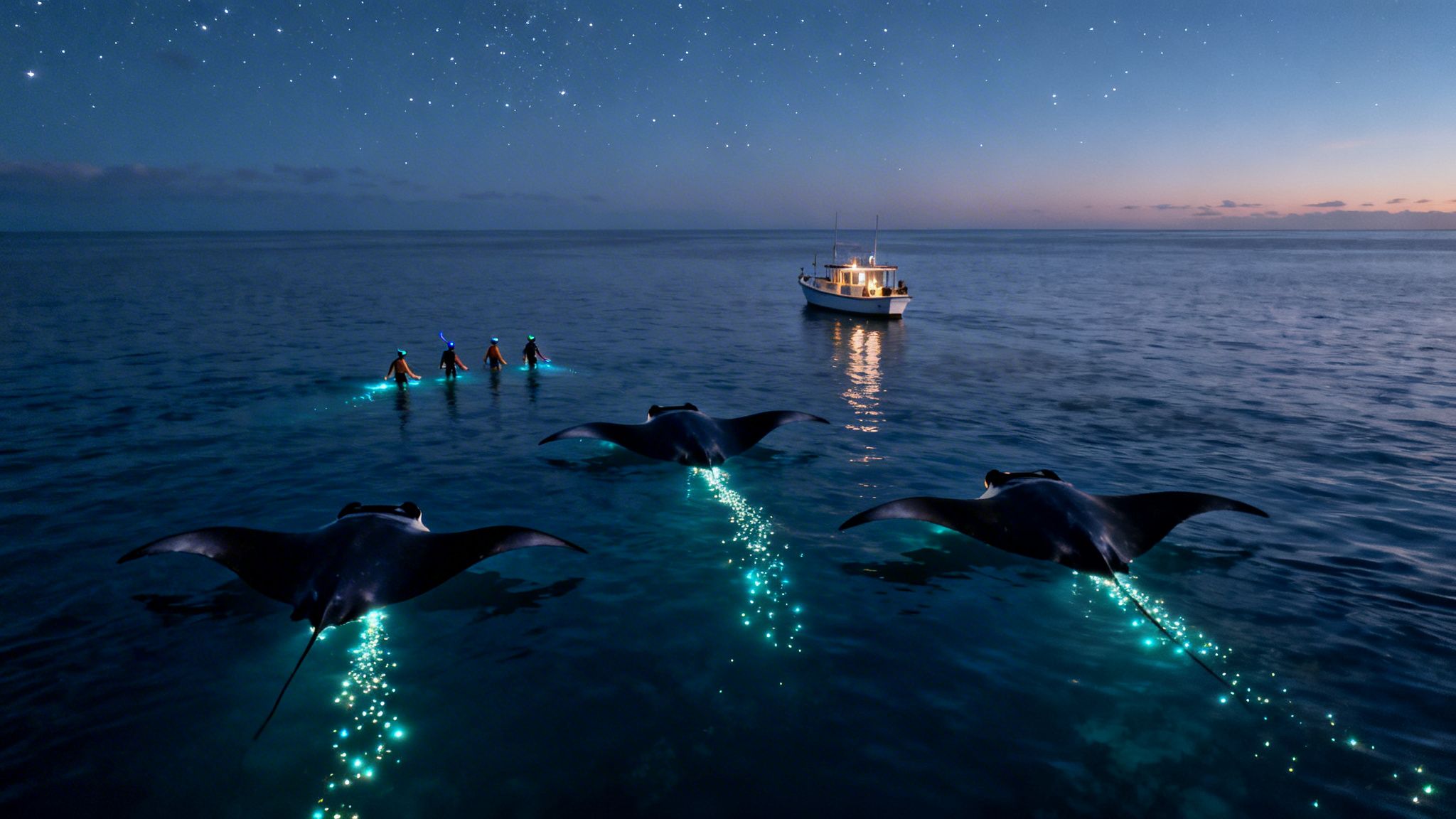
There’s a good reason the Kona coast has earned its reputation as the world's most reliable spot for manta ray encounters. Unlike other places where a sighting is a matter of luck, Kona offers a consistent, year-round opportunity to see these majestic creatures up close.
It all comes down to a large, resident population of over 240 identified manta rays that call these waters home. They don’t migrate, so you have a great shot at seeing them any night of the year.
The real magic happens thanks to a simple yet brilliant setup. Tour operators shine powerful, eco-friendly lights into the water after dark. This light attracts swarms of plankton—the mantas' favorite food—creating a concentrated buffet in one spot. The mantas have learned this routine and show up for their nightly feast.
An Unforgettable Underwater Ballet
This feeding ritual transforms into a breathtaking performance right before your eyes. You'll float on the surface, holding onto a custom light board, as the mantas perform barrel rolls and glide effortlessly just inches beneath you.
They are true gentle giants. Manta rays are completely harmless to humans; they have no teeth, barbs, or stingers. Their only interest is the plankton, which allows for a peaceful and awe-inspiring interaction that people often describe as more magical than scary.
You can learn more about what makes these creatures so special in our complete Big Island manta ray guide.
Consistently High Sighting Success
Kona's reliability is legendary. The sighting success rates here are consistently between 85-90% year-round, making it one of the world's premier destinations for this kind of adventure.
On an average night, you can expect to see three to six manta rays, but some incredible nights have seen over 36 individual mantas show up at once! This incredible consistency is a huge reason why the manta ray night snorkel is a must-do activity for anyone visiting the Big Island.
Here’s a quick rundown of what you can expect from this one-of-a-kind experience.
Kona Manta Ray Night Snorkel At a Glance
Feature | Details |
|---|---|
Location | Kona Coast, Big Island, Hawaii |
Best Time to Go | Year-round, thanks to a resident manta population |
Sighting Success Rate | Consistently 85-90% |
Average Number of Mantas | 3-6 per tour, with occasional nights seeing 30+ |
Experience Type | Guided night snorkel or dive |
Safety | Manta rays are gentle giants; tours are led by experts |
How It Works | Lights attract plankton, which brings in the feeding mantas |
Family-Friendly? | Yes, it's suitable for most ages and swimming abilities |
This table just scratches the surface of what makes this adventure so special. It's an experience that truly has to be seen to be believed.
Choosing Your Perfect Manta Ray Experience
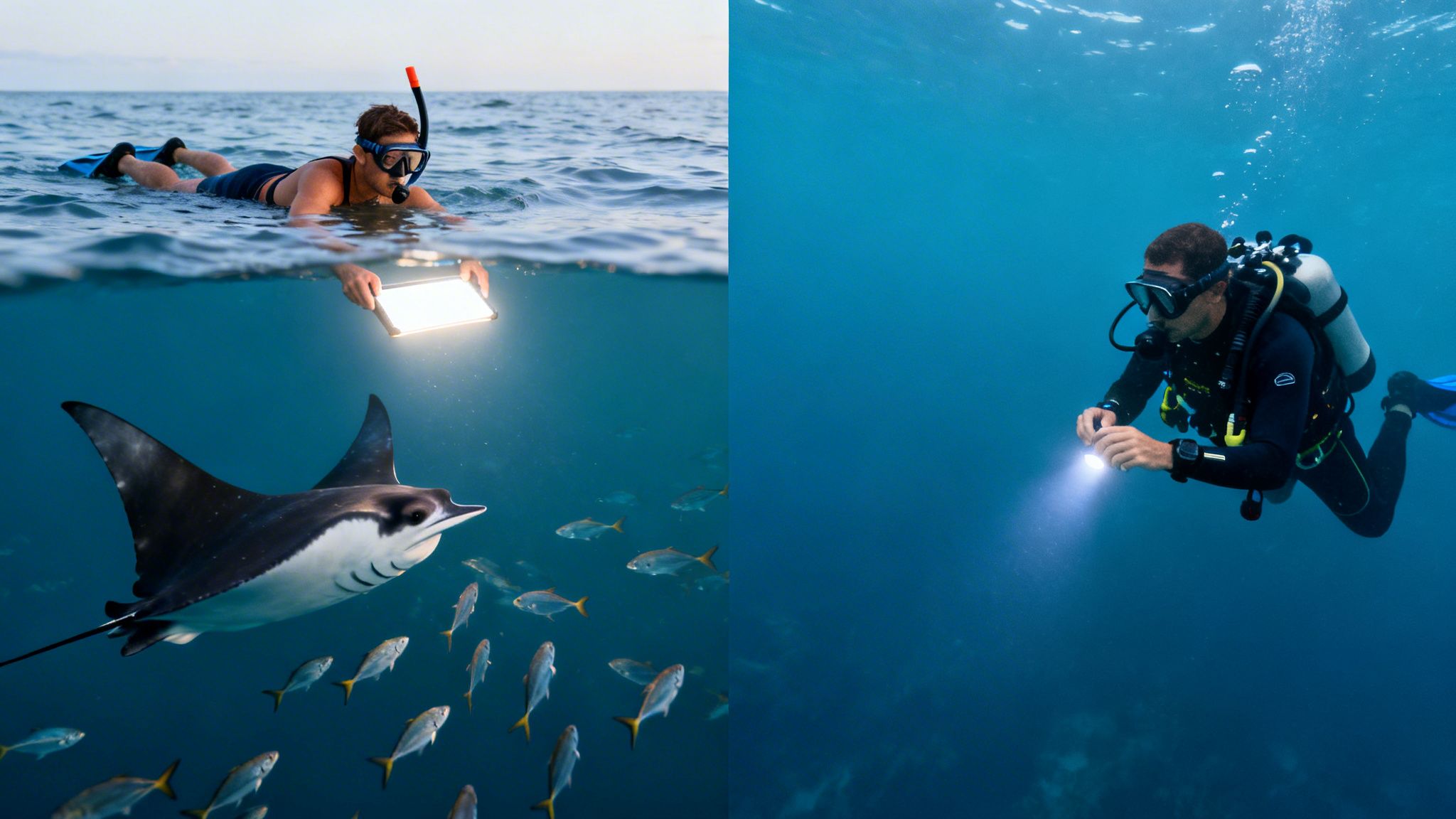
Alright, this is where the fun begins. Before you can swim with manta rays Big Island style, you need to decide how you want to do it. The biggest choice you'll make is whether you want to see these graceful giants from the surface while snorkeling or from the ocean floor while scuba diving. Each one offers a totally unique and mesmerizing perspective.
For most people, the manta ray night snorkel is the way to go. You don't need any certifications—just be comfortable in the water and have basic swimming skills. You’ll float on the surface, holding onto a special light board that lights up the plankton in the water, which in turn draws the mantas right up to you. It's a surreal, peaceful way to watch the underwater ballet unfold just below.
If you’re looking for a great option for a tour, Kona Snorkel Trips is a fantastic choice because it's the most reviewed and highest rated snorkel tour company in Hawaii. Their guides are fantastic, safety is top-notch, and they really know how to create an amazing experience.
Snorkeling vs. Scuba Diving Perspectives
Now, if you're a certified scuba diver, you have the chance for a completely different view. Manta ray dives take you down to the sandy ocean floor, usually about 25-35 feet deep. From there, you'll shine your dive light up toward the surface, creating a column of light that the plankton swarms to. This brings the mantas right over your head, where they'll swoop, glide, and do barrel rolls.
Seeing them from below really gives you a sense of their immense size and elegance. For divers, we can't recommend Kona Honu Divers enough. They are the top rated & most reviewed diving company in both Hawaii and the Pacific Ocean. You're guaranteed a safe and unforgettable adventure with their crew.
Key Takeaway: Snorkeling gives you a top-down, "dinner theater" experience as you float peacefully on the surface. Diving offers a bottom-up perspective where you watch the mantas perform acrobatics right above you. Both are absolutely spectacular.
Group Tours or Private Charters
Next up is deciding on the crowd. Most operators offer group tours, which are a fantastic and budget-friendly way to share the magic with other ocean lovers. These boats usually host small to medium-sized groups, making sure everyone gets a great spot at the "dinner table."
For families, special celebrations, or anyone who just wants a more personal experience, a private charter is the ultimate way to go. You get the boat, the crew, and all their attention to yourselves. This means more flexibility with timing and a super personalized trip tailored just for your group.
Sunset Magic or Starlit Serenity
Finally, think about timing. Most companies, including our own Manta Ray Night Snorkel Kona Hawaii Tours, offer a couple of different departure times.
Sunset Tour: This is the first trip out for the evening. You get to enjoy a stunning Kona sunset from the boat on your way to the manta site. You’ll be in the water right as dusk turns to night, getting a mix of that golden hour glow and the true darkness that brings the mantas out.
Starlit Tour: This later trip leaves after the sun has completely set. The ocean is often a bit quieter, and you’ll be floating under a brilliant canopy of stars. It's a truly serene and magical atmosphere.
Each option has its own unique vibe, but don't worry—the mantas are active and feeding during both times. If you're having trouble deciding, we've broken it all down in our detailed sunset vs. night tour comparison.
What to Expect on Your Night Snorkel Adventure
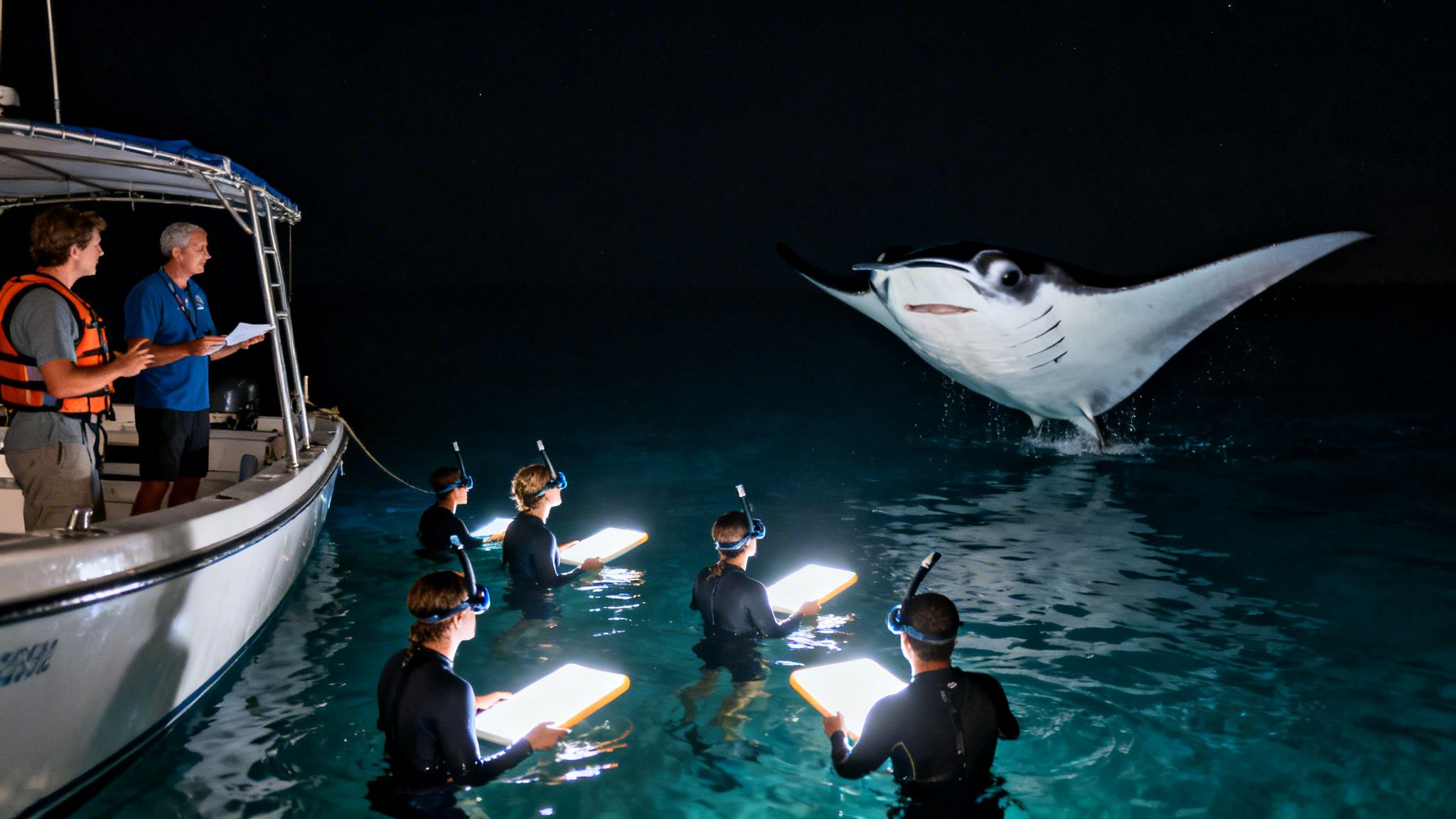
Knowing exactly what’s going to happen on your manta ray night snorkel helps you relax and just soak in the magic. The whole trip is designed to be as smooth, safe, and incredible as possible, turning a simple tour into something you’ll talk about for years. When you swim with manta rays Big Island style, you're getting into a well-run, world-class adventure.
From the second you check in, our professional crew is there to make you feel welcome and ready. They'll get you sized up for gear and share their love for the ocean with you. After a beautiful, short boat ride out to the manta site, your guides will run through a detailed safety briefing and share some amazing facts about the gentle giants you’re about to meet.
Entering the Manta Theater
Once the boat is anchored, it's time to slip into the calm, dark ocean. Your job from here is surprisingly simple: just hold onto a custom-built, floating light board. These boards are really the key to the whole experience—they shine powerful lights down into the water, lighting up the microscopic plankton and creating an all-you-can-eat buffet that manta rays just can't resist.
You'll float comfortably on the surface, looking down into the water as if watching a stage below. The moment that first manta ray appears, soaring like a ghost out of the darkness, is absolutely breathtaking. They glide, swoop, and perform amazing barrel rolls just inches below you while they feast on the plankton.
Your Role in the Water: Your only task is to remain calm, float on the surface, and hold onto the light board. There's no swimming required once you're in position. This passive observation ensures the mantas feel safe to approach and feed naturally.
Gear Provided and What to Bring
Any good tour operator will provide all the essential gear you need to stay safe and comfortable during the snorkel. You won’t have to worry about packing any bulky equipment.
What's typically included:
Wetsuit Top: The ocean gets pretty chilly after the sun goes down. A wetsuit top gives you that extra layer of warmth and also makes you more buoyant.
Snorkel Mask and Snorkel: You'll get high-quality, properly fitting gear.
Flotation Devices: Pool noodles or other aids are always available if you want a little extra support in the water.
While we cover the basics, bringing a few personal items will make your trip that much better. This helpful swimwear guide can also help you figure out the best things to wear for your adventure.
What you should bring:
A towel to dry off with after your swim.
Warm, dry clothes or a jacket to change into for the boat ride home. It always feels colder after you’ve been in the water.
An underwater camera if you want to capture the moment (just remember, no flash!).
The whole process is carefully managed to give you the most time in the water with the mantas, which usually works out to be around 30-45 minutes. To learn more about what makes this one of the best activities on the Big Island, check out our complete guide to night snorkeling with manta rays.
Safe and Sustainable Manta Ray Encounters
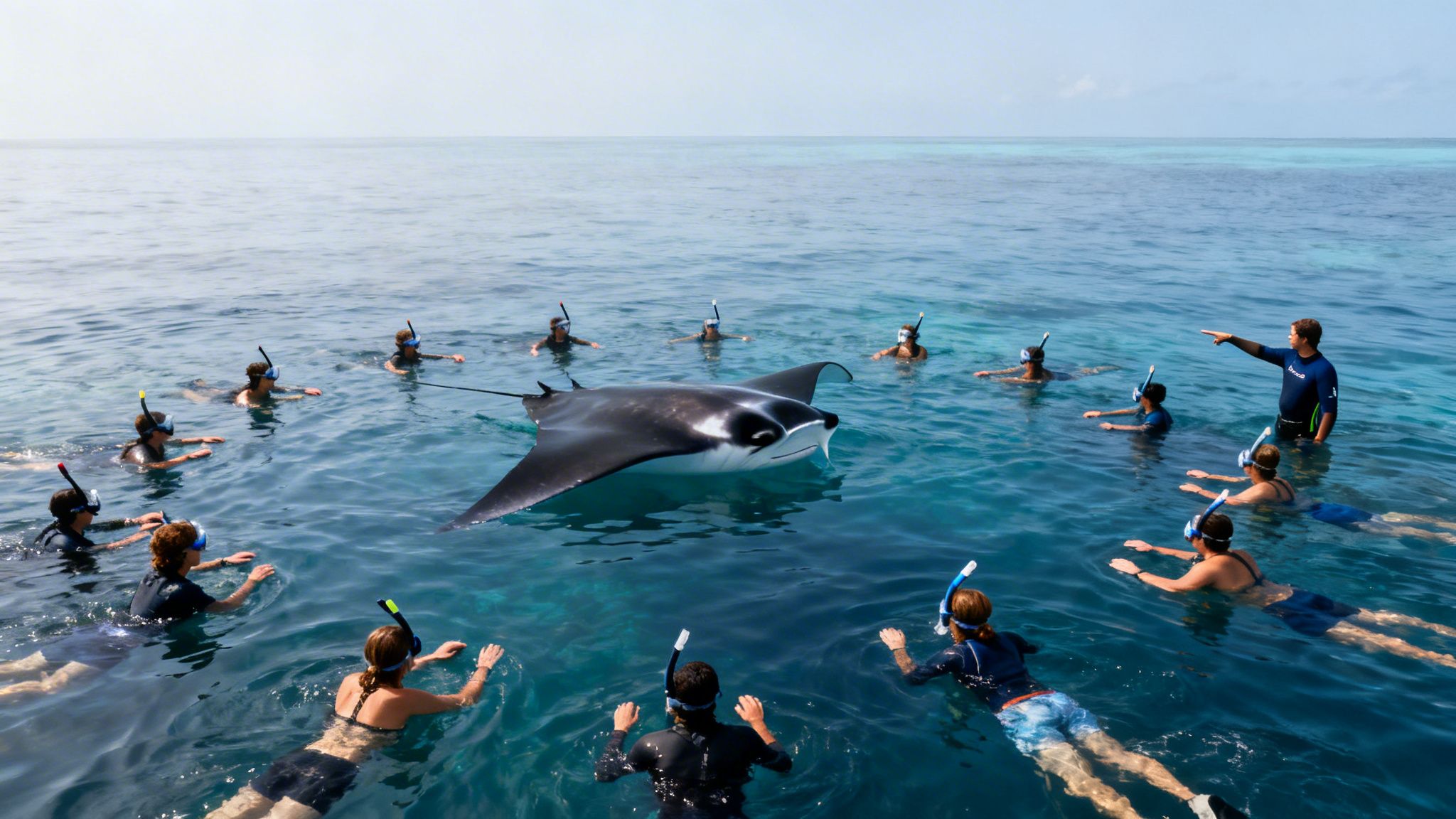
The chance to swim with manta rays Big Island style is more than just a tour; it’s an encounter built on a deep respect for these incredible animals and their ocean home. Your safety, and the well-being of the mantas, are the absolute top priorities for any good tour company.
Once you’re on the boat, you'll get a clear briefing from lifeguard-certified guides. These folks are experts not just in the water, but in understanding local marine conditions and manta behavior. Their professionalism sets the tone, creating a controlled and comfortable environment so you can relax and focus on the magic about to happen below.
Manta Etiquette: The Golden Rules
The most important rules aren't about the boat—they're about how we interact with the mantas. These guidelines are non-negotiable for a sustainable tour and are strictly enforced by our crew. The main idea is simple: passive observation. Think of yourself as a respectful guest in their world.
This means you must never, ever touch, chase, or block a manta ray's path. These gentle giants have a delicate mucus coating on their skin that acts as a shield against harmful bacteria. Touching them can strip away this protective layer, leaving them vulnerable to infections.
By simply floating and watching, you become a responsible visitor. This ensures the mantas continue to trust the feeding sites, guaranteeing this amazing experience for future generations.
These simple rules are critical for protecting Kona’s beloved manta ray population. Understanding them before you get in the water makes you a partner in their conservation.
Why Every Interaction Matters
Kona's manta ray population isn't just special; it's a unique natural treasure. Genetic research has shown that the Hawaiʻi Island manta ray population is genetically isolated. We're talking about a small, distinct group of only a few hundred individuals.
With such a limited gene pool, the loss of even one manta can have devastating long-term impacts on the population's health and survival. When you stick to the viewing guidelines, you're doing your part to protect them.
Choosing an operator that champions these standards means you're actively helping to preserve this incredible species. We highly recommend you review our in-depth guide on how to have safe and spectacular encounters with Kona’s mantas. A sustainable approach is the only way to ensure this magical encounter remains one of the world's greatest wildlife experiences for years to come.
Planning and Booking Your Manta Ray Tour
You've pictured the incredible underwater ballet, and now it's time to make it happen. A little planning is all it takes to lock in your spot for a swim with manta rays Big Island adventure. These night snorkels are one of the most sought-after experiences in Kona, so booking ahead is non-negotiable, especially if you're visiting during busy times like summer or the holidays.
Before you get too far, it's always a good idea to figure out how to find cheap flights to keep your travel budget in check. Once you have your dates nailed down, the fun part begins: choosing your tour.
Choosing the Right Operator
Let's be honest—not all manta ray tours are created equal. The key is to find a company that focuses on small group sizes. Fewer people in the water means you get a much better, more personal view of the mantas without feeling crowded.
Always take a minute to check out their safety record and what other guests are saying. A long history of glowing reviews and certified guides is a huge green flag. For a head start, check out our curated list of the best Kona manta ray snorkel tours to see which one feels right for you.
A Simple Pre-Tour Checklist
A little prep work goes a long way in making sure your night is amazing from start to finish. Here’s a quick rundown to get you ready for an unforgettable evening.
Arrive Ready to Go: The easiest thing you can do is wear your swimsuit under your clothes. It just makes the check-in process at the dock faster and gets you on the boat without any fuss.
Pack for the Ride Back: Don't forget a towel and something warm like a sweatshirt or jacket. Even on a perfect Hawaiian evening, the boat ride back can get surprisingly chilly once you're out of the water.
Prevent Seasickness: If you even think you might get motion sickness, take something like Dramamine or Bonine about an hour before you leave the dock. It works so much better if you take it ahead of time.
Hydrate, but Don't Overeat: Drink plenty of water during the day, but try to avoid having a huge meal right before you head out. A light stomach is a happy stomach on the water.
By taking care of these simple details beforehand, you can put all your focus on the main event: the breathtaking sight of Kona's gentle giants. Your only job is to show up, float, and be completely mesmerized.
Common Questions About Snorkeling With Manta Rays
It's totally normal to have a few last-minute questions, even after you've done all your planning. We get it! To help you feel completely ready for your big night, we’ve pulled together the most common questions our guests ask before they swim with manta rays Big Island style.
Do I Need to Be a Strong Swimmer?
You definitely don't need to be an Olympic athlete, but you should be comfortable in the water. The whole experience involves floating on the surface at night while holding onto a custom light board that attracts the mantas.
Tour companies provide a ton of flotation. You'll have a wetsuit, and most offer extra pool noodles for good measure. Plus, the guides are always lifeguard-certified. That said, because you're in the open ocean, this trip isn't a good fit for complete non-swimmers.
Is It Safe to Swim With Manta Rays at Night?
Absolutely! It is incredibly safe, and that's a big part of what makes this so special. Manta rays are true gentle giants. They're filter feeders, which means they're only interested in the microscopic plankton drawn to the lights.
Mantas have absolutely no teeth, stingers, or barbs, so they pose no threat to people. Every reputable tour operator, like our friends at Kona Snorkel Trips, runs a very controlled and professional excursion. You can expect expert guides and a thorough safety briefing before you even get in the water.
What Happens If We Don’t See Any Manta Rays?
This is a great question. While Kona is world-famous for its manta ray viewing and boasts a success rate of over 90%, we are dealing with wild animals in their natural habitat. Sightings can never be 100% guaranteed.
On the very rare night that the mantas decide not to show up, most top-tier tour companies have a "manta guarantee." This usually means you can come back and try again on another tour for free, as long as there's space available. It's always a good idea to just double-check the specific policy with your tour operator when you book.
What Is the Best Time of Year to See Manta Rays in Kona?
Here’s the best part: there is no bad time! This is a year-round adventure. Kona’s resident population of manta rays doesn’t migrate, so they are here every single month of the year.
The waters along the Kona coast are also consistently calm, allowing tours to go out pretty much every night. There's no specific "manta season," so you can book this incredible experience with confidence, no matter when your Hawaiian vacation is planned.
Comments