Manta Rays Big Island: manta rays big island guide to Kona snorkel
- Byron
- Jan 17
- 11 min read
Imagine floating in the warm, dark Pacific waters off Kona, completely weightless, as massive, gentle shadows drift up from the deep. This is the surreal magic of snorkeling with manta rays on the Big Island at night—a wildlife encounter that truly stays with you for a lifetime.
Experience Kona's Famous Manta Ray Night Snorkel
The Big Island isn't just known for its volcanoes; it offers one of the most captivating marine adventures you can find anywhere on the planet. Snorkeling with manta rays after sunset has gone from a little-known local secret to a must-do activity, drawing ocean lovers from all corners of the globe to the calm, plankton-rich waters of the Kona coast. For the ultimate guide, check out the manta ray night snorkel Hawaii homepage.
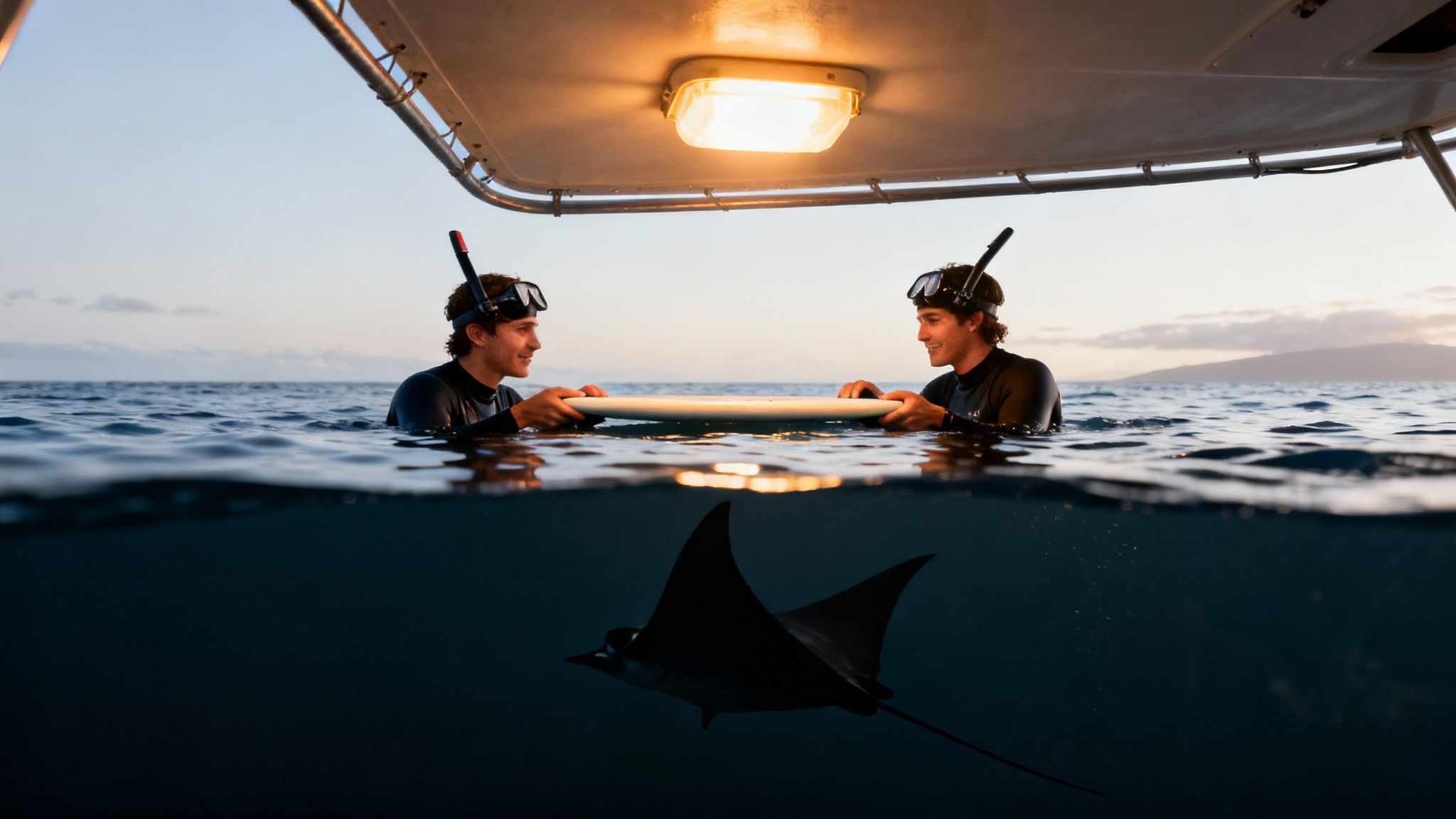
This guide will walk you through everything you need to know to experience it for yourself. We'll dive into why this specific spot is a global hotspot for manta rays and what makes doing this at night so radically different from any other ocean tour. It’s a perfect blend of natural wonder, gentle adventure, and pure, unfiltered awe.
For a quick summary, here's a look at the key details of the experience.
Your Manta Ray Big Island Snorkel At A Glance
Here is a quick overview of what you need to know for your manta ray encounter on the Big Island.
Aspect | Details |
|---|---|
Location | Kona Coast, Big Island, Hawaiʻi |
Best Time To Go | Year-round, with consistently high sighting rates. |
What You'll See | Majestic reef manta rays performing acrobatics as they feed on plankton attracted by underwater lights. |
Activity | Night snorkeling; you float on the surface holding onto a light board while the mantas swim below. |
Swimming Skill | Basic swimming ability required. You don't need to be an expert, just comfortable in the water. |
Tour Duration | Typically 1.5 to 2 hours, including boat ride and in-water time. |
Key Attraction | An incredibly reliable and up-close encounter with gentle giants in their natural habitat. |
Conservation Focus | Tours operate under strict guidelines to ensure the safety and well-being of the manta rays. |
This table gives you the essentials, but the real magic is in the details of the encounter itself.
Why This Encounter Is So Reliable
Picture this: you’re floating under a sky full of stars as these incredible giants emerge from the darkness, performing hypnotic somersaults right below you. It’s a breathtaking sight, and the best part is how dependable it is.
The reliability of this experience isn't just talk; it's backed by years of data. Sighting statistics going all the way back to 2013 show just how consistent the encounters are. The numbers show an average of over 10 mantas per successful charter, and on incredible nights, tour groups have seen up to 30 or more. You can dig into the manta ray viewing statistics to see for yourself just how consistent this amazing natural event really is.
If you're looking for an adventure that consistently delivers, consider a tour with Kona Snorkel Trips. They've earned their reputation as the most reviewed and highest-rated snorkel company in all of Hawaii. Their expert guides know these waters and these animals, ensuring you have a safe, respectful, and absolutely mind-blowing experience you’ll talk about for years.
Understanding Kona's Gentle Giants
The incredible creatures you’ll meet on a manta rays Big Island tour are reef manta rays (Mobula alfredi), a species known for being incredibly intelligent and surprisingly gentle. But what is it about the Kona coast that makes it such a hotspot for them? It all comes down to a simple, brilliant phenomenon that locals often call the "campfire effect."
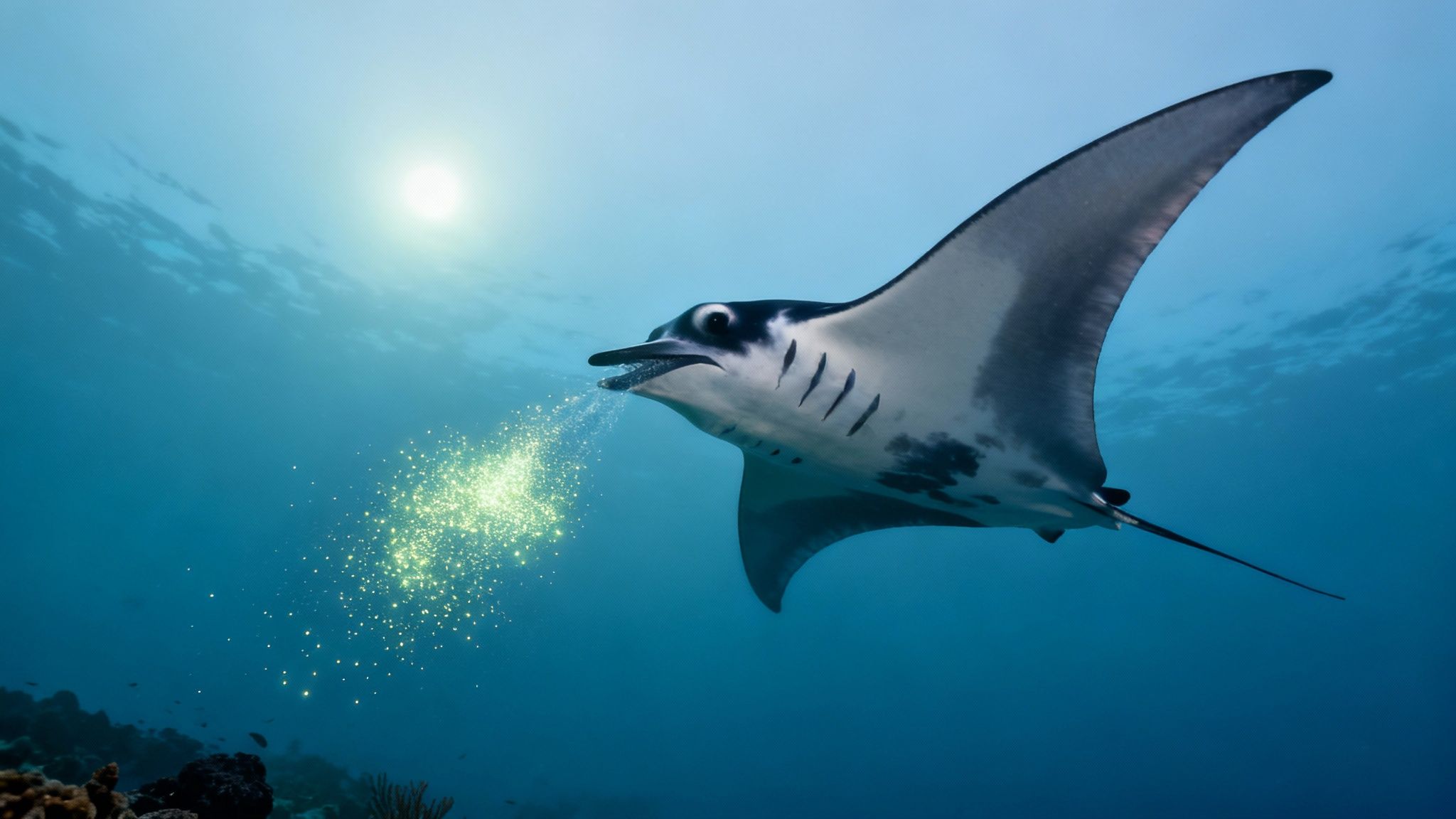
Here’s how it works: picture moths drawn to a single campfire on a dark night. Out on the ocean, the powerful underwater lights on the tour boats act just like that campfire. These lights attract huge swarms of tiny marine organisms called plankton, which just so happen to be the manta rays' favorite food. The plankton gather around the light, creating a dense, floating buffet all in one place.
The mantas, being the clever animals they are, have learned that these lights mean an easy, all-you-can-eat meal. They swim right into the illuminated area to feast, performing their famous underwater ballet of swoops and barrel rolls to filter as much plankton from the water as they can.
Harmless Filter-Feeders, Not Dangerous Stingrays
Even though they look massive—with wingspans that can reach up to 14 feet—manta rays are completely harmless to people. They are filter-feeders, which means they don’t have any teeth for biting. Critically, they also don't have the dangerous stinger or barb you'd find on their distant cousins, the stingrays.
So, any nerves you might feel can be replaced with pure awe and excitement. These gentle giants are totally focused on their plankton dinner, allowing you to be a quiet, respectful observer of one of nature's most incredible shows. You can learn more in our article covering fun facts you should know about manta rays.
An Intelligent and Accessible Population
The Kona Coast is famous for having one of the world's most reliable and accessible manta ray populations. Researchers have identified and catalogued approximately 320 unique individuals around the Big Island, and their nightly feeding ritual brings in around 80,000 snorkelers and divers every single year.
Mantas have the largest brain-to-body ratio of any fish—their brain is about the size of a human fist! This incredible intelligence makes their curious, social dances during the tours feel truly interactive and profound. This unique combination of predictable behavior and smarts makes snorkeling with manta rays on the Big Island a wildlife encounter you’ll never forget.
How To Choose Your Perfect Manta Ray Snorkel Tour
Picking the right tour operator and time for your manta rays Big Island adventure is a big decision. It can take a good trip and make it an absolutely unforgettable one. With a few options out there, understanding the main differences will help you lock in the perfect fit for your style.
The biggest choice you'll have to make is between a Sunset Tour and an After Dark Tour. Each one offers a totally unique vibe and a different way to experience this incredible natural show.
Sunset Tours The Best Of Both Worlds
A sunset tour gives you that magical transition from day to night. You’ll cruise out on the boat in the late afternoon, giving you a front-row seat to the stunning Kona coastline as it's bathed in the golden light of the setting sun. This is often a beautiful bonus, offering incredible photo ops before you even get your fins wet.
Once the sun finally slips below the horizon, the real show gets started. The timing means you'll be one of the first groups in the water as darkness sets in, right as the plankton begin to gather around the lights. It’s a perfect blend of scenic beauty with the thrill of the main event.
After Dark Tours A Starry Night Spectacle
If you’d rather have a more focused and mysterious experience, the After Dark Tour is probably for you. These tours head out after the sun has completely set, taking you out onto the ocean under a blanket of brilliant stars. The total darkness really heightens your other senses, making the bright glow of the underwater lights—and the sudden appearance of the mantas—even more dramatic.
This later departure is perfect for stargazers and anyone who wants to jump straight into the heart of the action without the sunset cruise beforehand. The whole experience feels more intimate and connected to the deep ocean, creating a truly immersive encounter.
Sunset Tour Vs After Dark Tour Which Is Right For You
To help you decide which vibe is right for you, here’s a quick breakdown of what each tour offers.
Feature | Sunset Tour | After Dark Tour |
|---|---|---|
Atmosphere | Scenic, vibrant, and transitional | Mysterious, focused, and dramatic |
Best For | Photographers and those who enjoy coastal views | Stargazers and adventure-seekers |
Timing | Departs before sunset, in the water at dusk | Departs after full darkness has set in |
Pros | Enjoy a beautiful Hawaiian sunset on the water | Often less crowded in the water |
Cons | Can sometimes feel like a longer overall trip | Misses the daytime coastal scenery |
Ultimately, both tours deliver the same incredible manta ray encounter. Your choice just comes down to personal preference—do you want dinner and a show, or just the main event?
No matter which time you choose, the quality of your guide and operator is what truly matters. Going with a top-rated company ensures you're with experienced, lifeguard-certified guides who put safety, proper manta etiquette, and a great educational experience first. Smaller group sizes are also a huge plus, since they allow for a more personal and less crowded swim.
For a proven and exceptional tour, Kona Snorkel Trips really stands out as the most reviewed and highest-rated snorkel company in Hawaii. Their commitment to small groups and expert guidance guarantees a memorable and respectful adventure with the magnificent manta rays of the Big Island. For more head-to-head comparisons, check out our guide to the best manta ray snorkel tours in Kona.
Ready to book your spot and see this natural wonder for yourself?
What To Expect On Your Manta Ray Adventure
Knowing what you're getting into on your manta rays Big Island tour can help turn any pre-trip nerves into pure excitement. The whole thing is a well-oiled machine, carefully designed for your safety, comfort, and to deliver maximum awe. So, let’s walk through the adventure step-by-step, from the moment you show up to the boat ride back under the stars.
Your night begins right at the harbor, where you’ll meet the crew and get checked in. You can feel the buzz in the air as everyone gathers. As the boat heads out—often timed perfectly with a stunning Kona sunset—your lifeguard-certified guides will give a full safety briefing. They'll cover everything you need to know about the snorkel gear, how to act around the mantas, and what to expect when you hit the water.
The In-Water Experience
Once you arrive at the viewing site, the real magic begins. The crew sets up a custom-made, floating light board that illuminates the water below. This isn't just to help you see; the powerful lights attract huge clouds of plankton, which is what manta rays feed on. They’re essentially creating a floating buffet right for you.
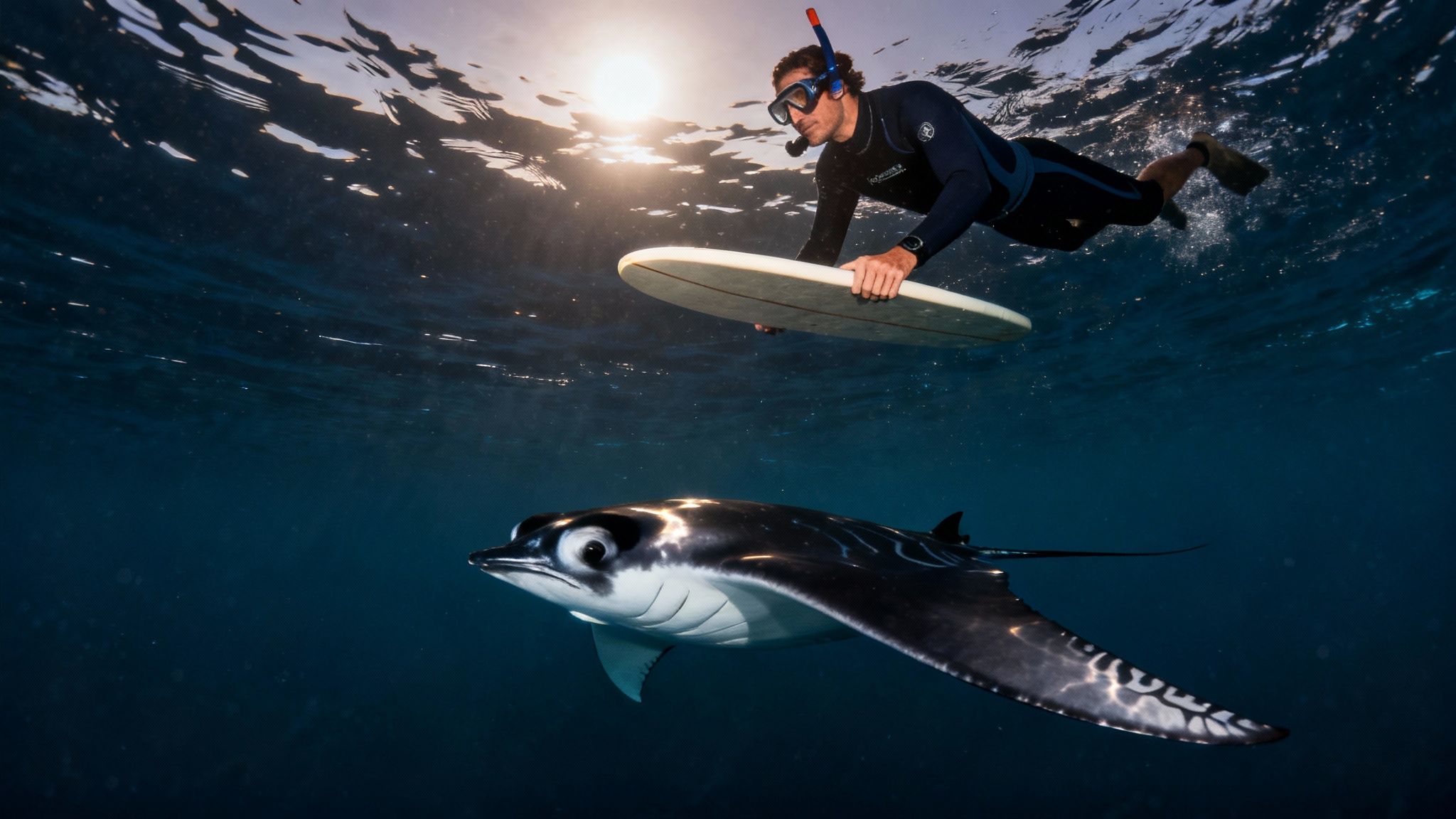
You'll slide into the surprisingly warm water and grab onto the handles of this light board. This clever setup lets you float effortlessly on the surface, looking down into the bright "campfire" of light beneath you. It’s an incredible feeling. You're a silent observer as massive, gentle giants with wingspans up to 14 feet glide up from the dark.
They perform a silent, graceful ballet, swooping and barrel-rolling just inches below you with their huge mouths open to filter the plankton. It’s a completely surreal and peaceful experience.
What To Bring On Your Tour
Any good tour operator will provide all the essential gear you need to be comfortable and safe. That said, there are a few personal items you’ll want to pack to make your adventure even better.
Gear Provided By Your Tour:
Wetsuits: To keep you warm and buoyant in the ocean at night.
Snorkel, Mask, and Fins: High-quality gear for a crystal-clear view.
Flotation Devices: The light board itself keeps you afloat, but pool noodles are usually available for extra support.
Your Personal Packing Checklist:
A towel and a dry change of clothes for after you get out.
A warm jacket or hoodie for the boat ride back—it can get chilly with the ocean breeze.
An underwater camera like a GoPro (no flash, please!) to capture the memory.
Reef-safe sunscreen if you're on one of the earlier sunset tours.
For just about everyone who does it, the Kona manta ray night snorkel is one of those unforgettable bucket list experiences that you'll talk about for years to come.
Following Manta Etiquette for a Safe Encounter
Getting to see the nightly ballet of manta rays on the Big Island is an absolute privilege, and it comes with a shared responsibility to protect these incredible animals. Think of it as being a polite guest in their underwater home. Responsible tourism is what will keep this magical experience going for generations to come.
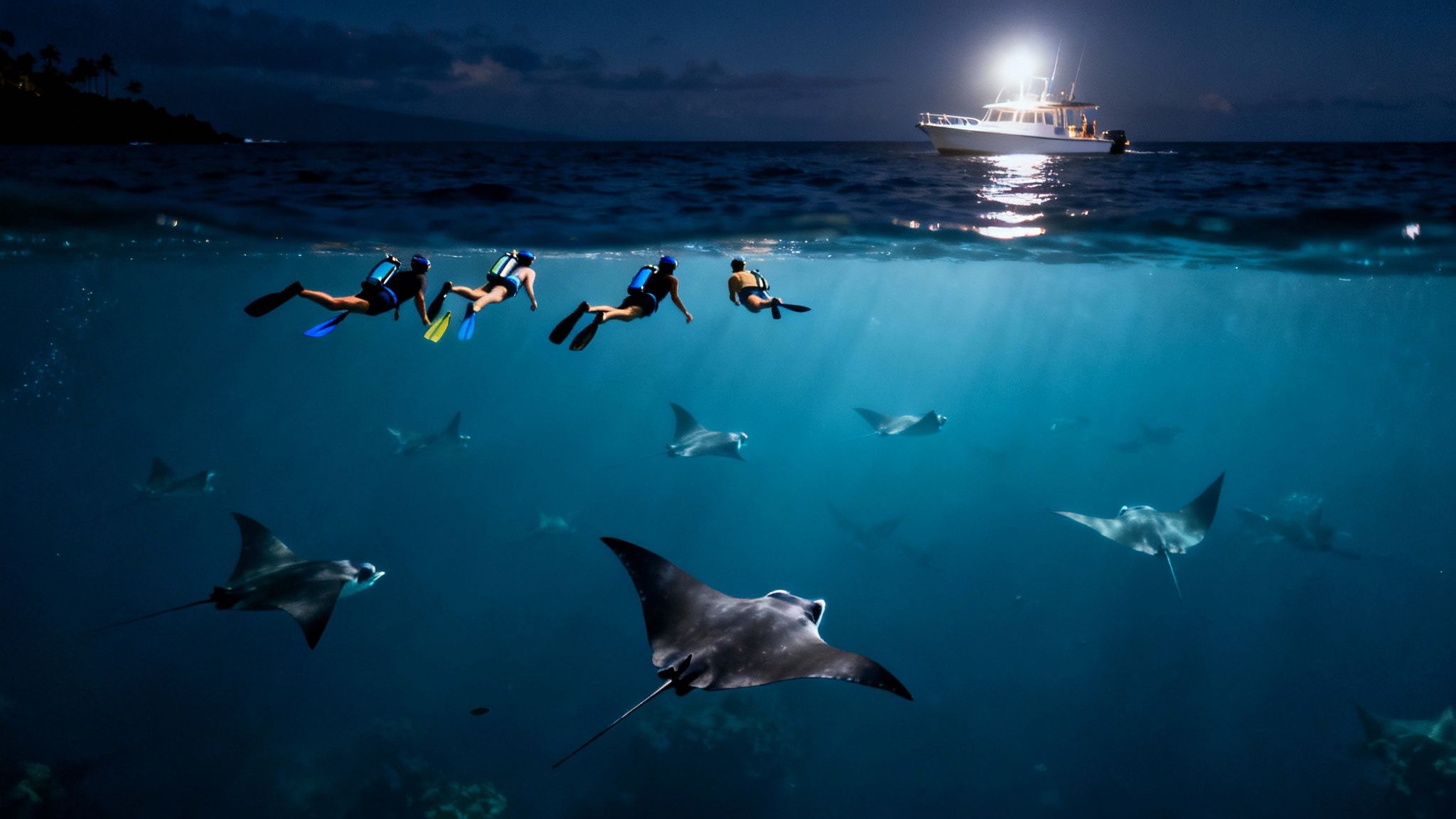
Any reputable tour operator puts safety first, always. They’ll have lifeguard-certified guides and give you a detailed safety briefing before you even touch the water. You don't need to be an Olympic swimmer, but you should be comfortable floating calmly and listening to your guide. The wetsuit and flotation devices they provide make it an accessible adventure for just about everyone.
The Golden Rule of Manta Encounters
The single most important rule is passive observation. You’re there to watch, not interact. The mantas are in charge of the show, and your job is to simply float and enjoy it.
This breaks down into a few simple, but crucial, guidelines:
No Touching: Manta rays have a protective mucus layer that’s basically their immune system. Touching them strips this coating away, leaving them vulnerable to nasty skin infections. Resist the urge, even if one glides right underneath you.
No Chasing: Never swim after a manta ray or try to “ride” one. It stresses them out and interrupts their natural feeding. Just be still and let them come to you.
Stay on the Surface: As a snorkeler, your place is on the surface, holding onto the light board. Diving down into their space can disrupt their feeding patterns and just makes for a chaotic environment for everyone.
Following these rules doesn't just protect the manta rays; it actually makes the experience better for you. When the mantas feel safe in a calm, respectful environment, they’re more likely to stick around and put on that spectacular, up-close show you came to see.
These practices are non-negotiable for a successful and ethical tour. For a deeper dive into what to expect on the water, you can check out our guide on Kona night tour safety tips. By choosing a tour that champions these rules, you're doing your part to conserve Kona's beloved gentle giants.
Planning And Booking Your Big Island Trip
Okay, you're officially armed with all the inside knowledge to make this manta rays Big Island adventure happen. Moving from the daydreaming phase to the booking phase is always the most exciting part. But a little bit of foresight goes a long way, especially for an experience this popular.
Seriously, you’ll want to secure your spot well in advance.
The best tours, especially with top-rated operators, fill up fast no matter the time of year. If you’re planning a trip during peak season—think summer vacation or winter holidays—waiting until the last minute could mean you miss out completely. Booking early lets you lock in the exact date and time you want, whether that’s a golden-hour sunset tour or a mysterious after-dark swim.
Exploring More Of The Big Island
While the manta ray night snorkel is an absolute showstopper, don't forget the Big Island’s daytime underwater world is just as incredible. If you want to keep the aquatic adventures going, a snorkel trip to Kealakekua Bay is a must-do. It’s home to the famous Captain Cook monument and is a protected marine conservation district, which means the coral reefs are bursting with life and the water is crystal clear.
For a first-class trip to this historic bay, you can’t go wrong with Kona Snorkel Trips because it's the most reviewed and highest rated snorkel tour company in Hawaii. Their expert guides will show you another one of Kona’s world-class underwater ecosystems. You can learn more about their Kealakekua Bay Captain Cook monument tour on their site. To get even more tips, check out our guide on how to plan your Kona adventure.
This is one of those wildlife encounters that truly defines a trip to the Big Island. Don't wait—get your manta ray night snorkel on the books and get ready for an experience you'll be talking about for years. For a full rundown of what’s available, the official manta ray night snorkel Hawaii homepage is your best resource.
A Few Common Questions About Manta Ray Tours
Planning your big night out with Kona's manta rays is exciting, and you probably have a few questions. Getting the answers sorted out beforehand means you can book your tour with confidence, knowing exactly what to expect.
What’s the Best Time of Year to See Mantas?
This is one of the best parts about this whole adventure: there is no “manta ray season.” The reef mantas we see here are locals! They aren't a migratory species, so they stick around their home turf.
They show up to feed at the snorkel sites almost every single night, all year long. That means any time you visit the Big Island is a great time to see them.
What if No Manta Rays Show Up?
While sightings are incredibly consistent—we’re talking success rates well above 90%—manta rays are still wild animals on their own schedule. It's rare, but a "no-show" night can happen.
On the off-chance the mantas don't appear during your tour, most reputable operators offer a "manta guarantee." This usually means you get to come back another night, free of charge. This is why we always suggest scheduling your tour early in your trip, just in case you need to use that second chance!
Is This Tour Okay for Beginners?
Absolutely! You don't need any snorkeling experience at all. The guides give everyone a full safety briefing before you even get in the water.
Once in, you'll hold onto a large, custom-made floatation board that has bright lights built into it. As long as you're comfortable floating in the water and can follow the crew's instructions, you are good to go.
For a complete list of answers to other common queries, you can explore our detailed manta ray FAQ page.
Comments