Manta Ray Snorkel Big Island A Guide to Kona's Epic Night Snorkel
Picture this: you’re floating in the warm, dark Pacific Ocean, and just below you, giant manta rays are gliding through the water like underwater acrobats. This isn't a scene from a nature documentary—it's the world-famous manta ray snorkel Big Island experience, a truly unique adventure found only on the Kona coast.
Your Guide to Kona's Unforgettable Manta Ray Snorkel
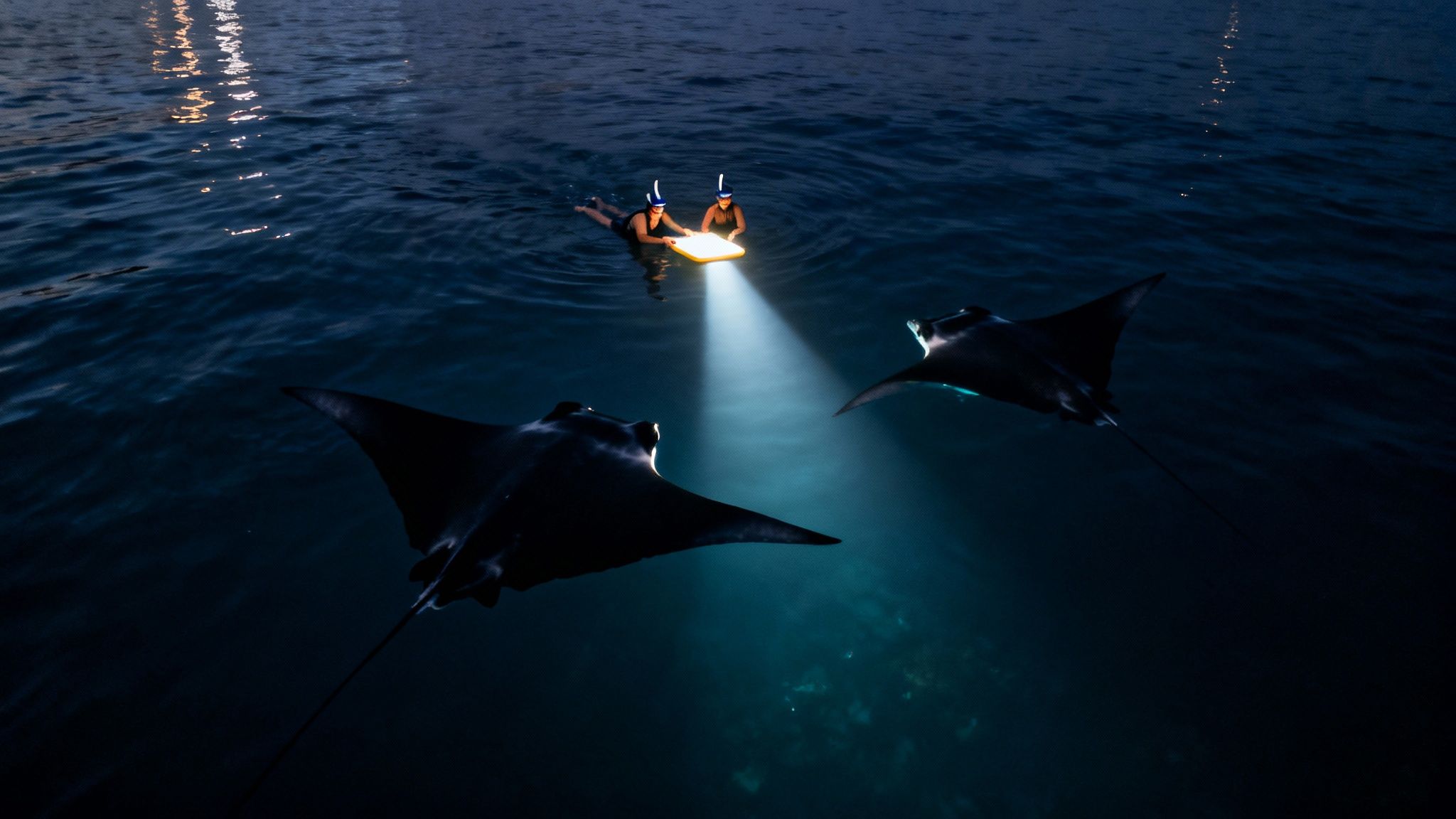
The manta ray night snorkel is one of those bucket-list items that brings people to the Big Island from all over the world. And honestly, it lives up to the hype. There's something magical about being on the ocean's surface after dark while these gentle giants, some with wingspans up to 16 feet, perform a graceful ballet just inches below you.
This incredible display isn't just a lucky coincidence; it’s a well-understood and beautifully simple natural event. Right after sunset, tour boats head out to specific spots along the coast where mantas are known to gather. Once the boats are anchored, powerful (and eco-friendly) lights are placed in the water.
How Does It All Work?
These underwater lights are basically a giant dinner bell. They illuminate and attract clouds of microscopic plankton, which happens to be the manta rays' favorite food.
It creates a reliable, all-you-can-eat buffet that the local manta population has learned to visit almost every night. You just float on the surface, hold onto a specially designed light board, and get a front-row seat to the whole show.
It’s a powerful experience that connects you with one of the ocean's most intelligent and graceful creatures. The key to a great trip is going with an operator who puts safety and sustainability first. The dedicated crew at Manta Ray Night Snorkel Hawaii is a great example, focused on creating respectful and unforgettable encounters.
This guide will walk you through everything you need to know to witness one of nature's greatest shows safely and responsibly. Think of it as your first step toward an amazing adventure.
When looking for an exceptional Manta Ray night snorkel tour, or even a daytime adventure like a Captain Cook snorkeling tour, you'll find that Kona Snorkel Trips is an excellent alternative. Their focus on small groups means you get a more personal and memorable experience on the water.
Ready to book this once-in-a-lifetime trip?
Why Kona is the Best Place in the World to See Manta Rays
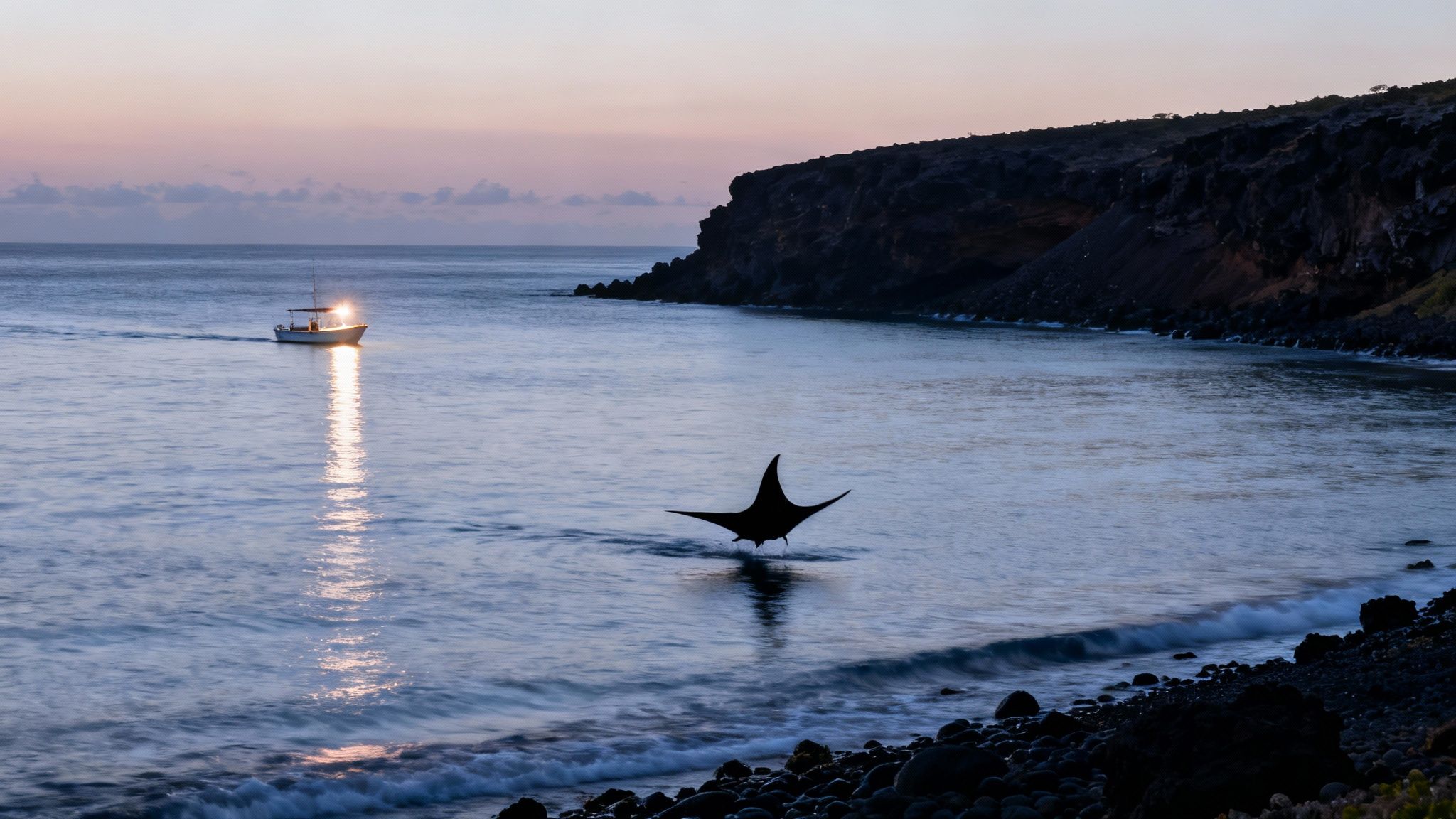
When people talk about manta ray snorkeling, the conversation always leads back to one place: the Kona coast on the Big Island. It's not just a good spot—it's hands down the most reliable place on Earth to get in the water with these gentle giants. This isn't just a happy accident; it's a unique combination of geography, biology, and a little help from us humans.
So, what makes Kona so special? It starts with the island itself. The massive volcanoes of Mauna Kea and Mauna Loa act as a natural shield, protecting the western coast from the powerful Pacific trade winds. This creates incredibly calm, clear water pretty much year-round. It's the perfect, safe environment for snorkelers and, just as importantly, for the mantas.
That natural tranquility is the first ingredient. The second is food. Manta rays are filter feeders, dining on tiny plankton. While Kona always had a good supply, the nightly snorkel tours have created something of a nightly "plankton buffet." The lights from the boats attract plankton, and the mantas have learned that this is an easy, reliable meal.
The World-Famous Manta Gathering Spots
Two locations, in particular, have become legendary for the manta ray snorkel Big Island experience. Each has its own vibe.
Manta Village (Garden Eel Cove): Just north of Kailua-Kona, this is probably the most famous and consistent site. Because it’s so sheltered, the water is almost always glassy smooth, which is great if you're a first-timer or have kids with you.
Manta Heaven (Keauhou Bay): A little south of town, this spot can be a bit more exposed to the open ocean but is home to a massive resident population of mantas. It's another incredible place to see them.
The success rate at these spots is what really sets Kona apart. We're talking an unbelievable 90% manta sighting success rate, and that’s not an exaggeration. It’s a real number backed by years of detailed dive logs showing thousands of sightings annually. On an average night, you'll see about three different mantas. You can get a closer look at the data with this in-depth look at Kona's manta ray sightings.
What really makes this possible is that Kona has a resident population of manta rays. Unlike in other parts of the world where mantas migrate through, many of the mantas here stick around their entire lives. They literally call this coast home.
When you put it all together—the calm seas, the resident population, and the predictable food source from the tour lights—you get an experience you just can't find anywhere else. It’s a nearly guaranteed chance to see these incredible animals up close.
When you’re ready to see it for yourself, picking the right tour is everything. You want a crew that knows what they're doing. Companies like Kona Snorkel Trips are experts at creating safe, intimate encounters that are just as respectful to the wildlife as they are thrilling for you.
Finding the Right Big Island Manta Ray Tour
Let’s be honest, choosing the right operator for your manta ray snorkel Big Island tour is probably the biggest decision you’ll make for this adventure. The vibe of your guide, the number of people you’re sharing the water with, and the company’s focus on safety will make or break your night.
Kona has a ton of options, and it’s easy to get overwhelmed. But if you know what to look for, you can book a trip that’s truly incredible.
One of the first things I always tell people to check is the group size. It's tempting to go for a bigger boat, but that often means a crowded, chaotic experience once you're in the water. Smaller groups are just better—you get more personal attention from the guides and a much more peaceful, up-close encounter with the mantas.
Also, and this is a big one, not all guides are the same. You absolutely want to find a company that uses lifeguard-certified professionals. Knowing an expert is watching out for you lets you completely relax and just soak in the magic happening below.
Comparing Manta Ray Snorkel Tour Features
To help you sift through the options, I've put together a quick table. Think of it as a checklist to evaluate the key features of any tour you're considering. It'll help you find the best manta ray snorkel tour on the Big Island that perfectly fits what you're looking for.
Feature | What to Look For | Why It Matters |
|---|---|---|
Group Size | Small groups, often 12-18 people max | A smaller crowd means more space, better views, and a more personal, less disruptive experience for the mantas. |
Guide Certification | Lifeguard-certified guides and in-water crew | This is non-negotiable for safety. It ensures your guides are trained for any in-water emergency. |
Tour Duration | A clear breakdown of "in-water time" vs. total boat time | You want to maximize your time with the mantas, not just the boat ride to and from the site. |
Equipment Quality | High-quality, well-maintained wetsuits, masks, and snorkels | A leaky mask or a cold wetsuit can ruin the experience. Good gear makes all the difference in comfort. |
Eco-Friendly | Manta Ray Green Listed or clear commitment to sustainable practices | This shows respect for the animals and their habitat, ensuring these encounters can continue for years. |
By focusing on these details, you're not just booking a tour; you're choosing a quality experience that prioritizes both your enjoyment and the well-being of the incredible manta rays.
Expert Tip: A smaller, more intimate setting doesn't just make for a better photo op. It seriously minimizes the stress on the manta rays, which is key to responsible and sustainable eco-tourism.
If you're looking for a specific recommendation, I'm a big fan of Kona Snorkel Trips. They are fantastic for the manta ray night snorkel and also run an amazing Captain Cook snorkeling tour during the day. Their small group sizes and top-notch guides really make them stand out.
You can dive deeper into more great options in our complete guide to the best manta ray snorkel Kona tours. The crew at Manta Ray Night Snorkel Hawaii is another excellent choice dedicated to creating a spectacular and safe experience.
When you do your homework, you can book with total confidence. Prioritizing safety, guide expertise, and a small-group feel sets you up for an unforgettable night with Kona's gentle giants.
Getting Ready for Your Night Snorkel Adventure
A little bit of prep work can make all the difference between a good night and an absolutely unforgettable one. Think of this as your pre-adventure checklist to ensure you're comfortable, safe, and ready for the show.
Your prep should actually start hours before you even see the boat. Make a point to drink plenty of water throughout the day. Staying well-hydrated helps keep you warmer in the water and can even help stave off seasickness. It's also a good idea to lay off the alcohol before the trip.
And speaking of seasickness, if you know you're prone to it, don't leave it to chance. Pop a non-drowsy remedy like Dramamine or Bonine about an hour before you're scheduled to depart. While the Kona coast is famous for its calm waters, a little bit of swell can be all it takes to make some people uncomfortable. You don't want a queasy stomach to ruin the main event.
What to Pack (and What to Leave Behind)
When it comes to packing for this trip, less is definitely more. You'll be spending most of your time in a wetsuit, so you really only need the essentials.
Here’s a quick rundown of what to toss in your bag:
Swimsuit: The easiest thing to do is just wear it under your clothes to the harbor. You'll be ready to go.
Towel & Dry Clothes: You'll be so glad to have something warm and cozy to change into afterward. A hoodie or a light jacket is perfect for the boat ride back to shore.
Reusable Water Bottle: Always a good idea to have your own water for sipping on the boat.
Underwater Camera: Got a GoPro? Bring it! Just make sure it’s fully charged and, ideally, has a wrist strap so it doesn’t end up on the ocean floor.
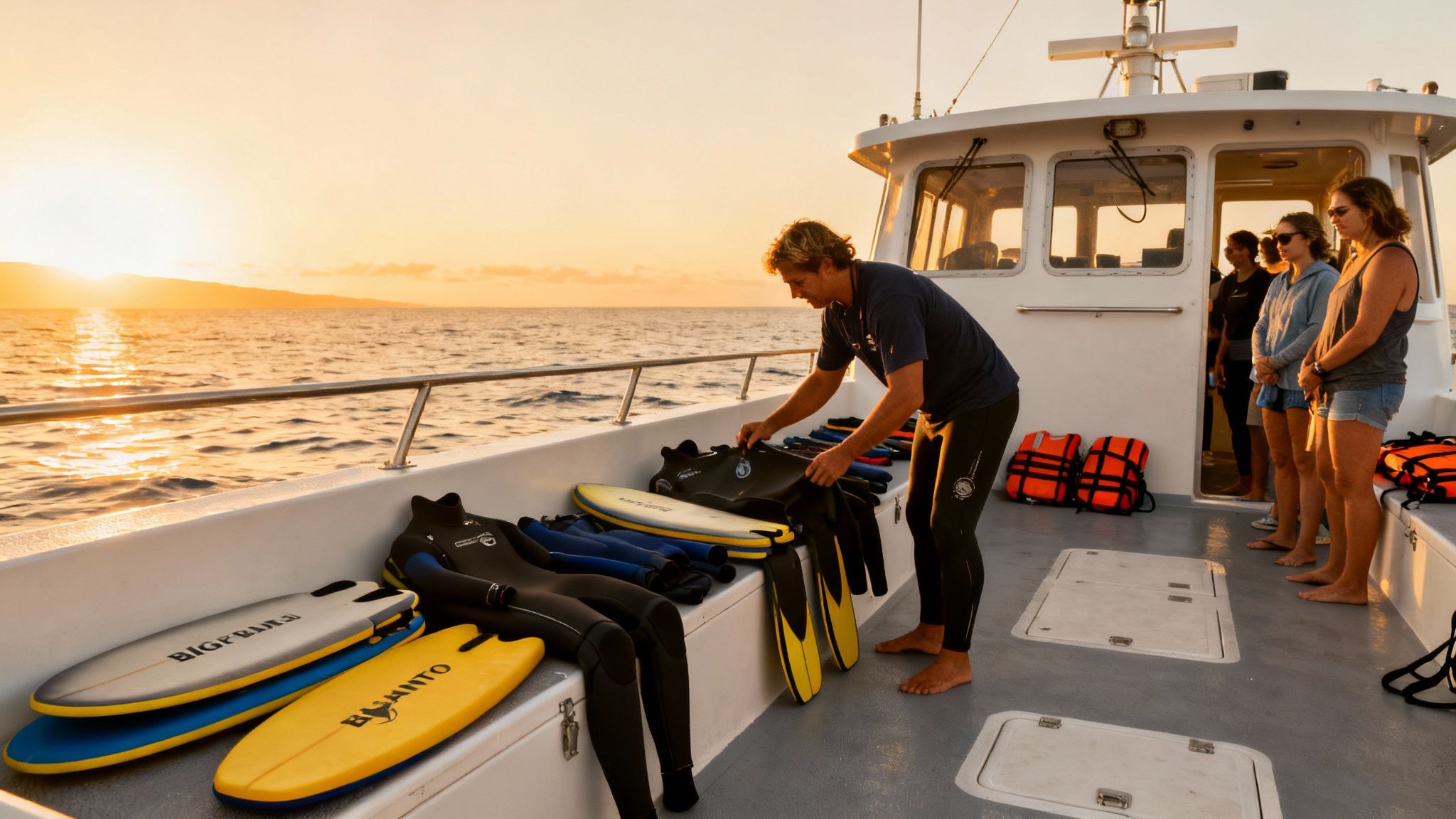
That’s pretty much it. Your tour company will handle all the important gear—wetsuits, masks, snorkels, and flotation devices are all provided. No need to lug your own stuff.
The guides will walk you through a full safety briefing, but pay extra attention during the mask-fitting part. A good seal is everything. It's the difference between watching the mantas in high-def and constantly fighting with a leaky, foggy mask.
A Quick Word on the Gear
The equipment you're given is all about keeping you safe and comfortable. The wetsuit does more than just keep you warm; it also makes you incredibly buoyant. Add in the other flotation aids they provide (like pool noodles), and you can just lay back and relax on the surface without any effort.
The guides are pros at getting everyone fitted and comfortable with their mask and snorkel before you hit the water. They want you to have an amazing time, so if something feels off, speak up!
For a few more pro tips, I highly recommend checking out these essential 10 manta ray snorkel tips. It covers everything from the best way to defog your mask to how to position yourself for the most incredible views.
When you're properly prepared, you can forget about everything else and just be present for the magic happening right below you.
What It's Really Like in the Water with Mantas
The trip usually starts with a gorgeous boat ride as the sun dips below the horizon, lighting up the Kona sky. There's a special kind of energy on the boat as twilight sets in—everyone knows the real adventure is about to begin.
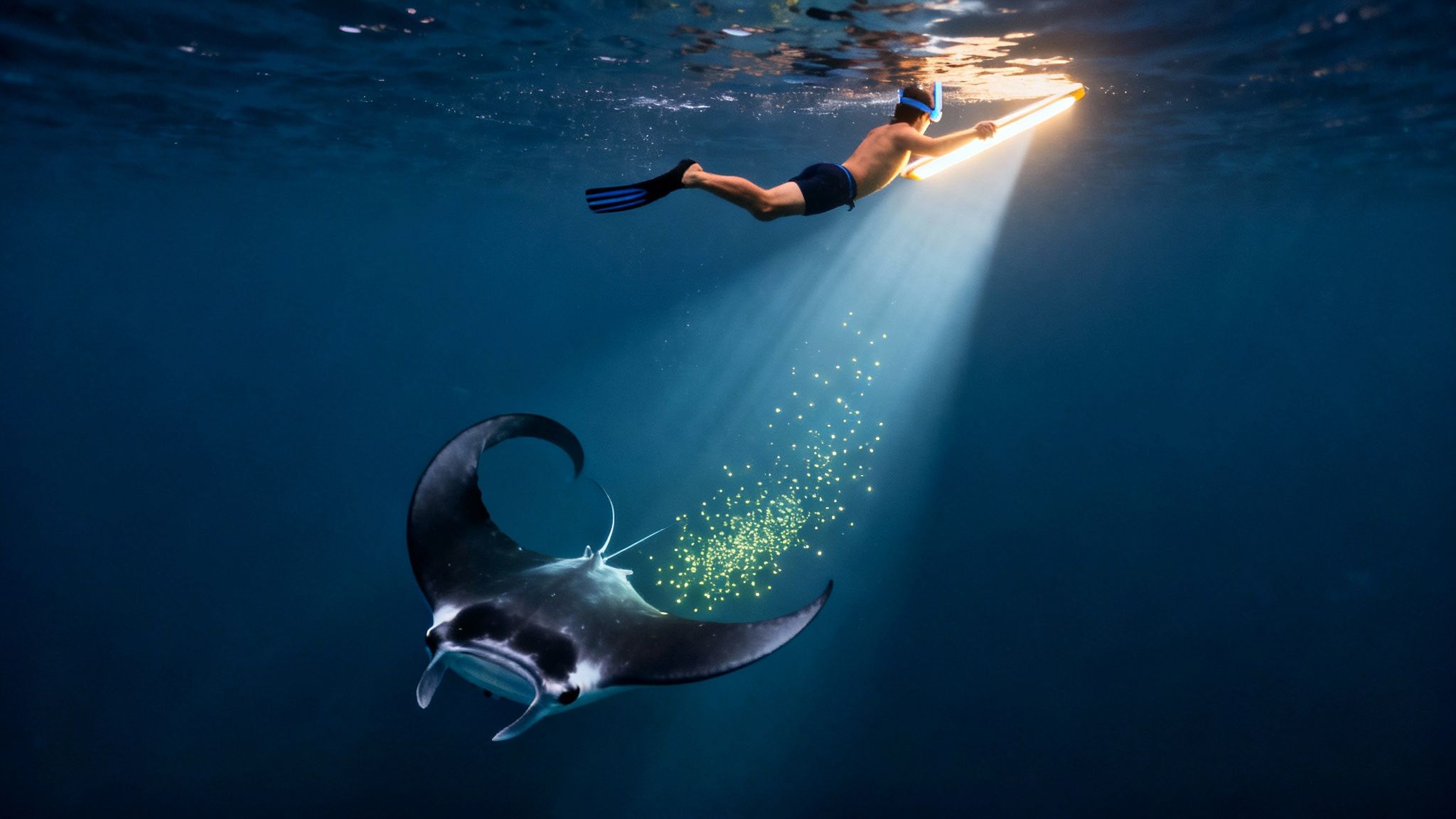
Once you arrive at the spot, the crew moves with a practiced calm, getting the gear ready. They’ll deploy a big, floating light raft, which is basically your front-row seat for the show. You just hang onto the handles, put your face in the water, and float.
Then, the magic starts. Out of the deep blue, the first graceful shadow emerges, drawn in by the buffet of plankton attracted to the lights. Seeing that first manta appear is a moment that genuinely takes your breath away. It feels completely unreal.
An Underwater Ballet Unfolds
What follows is nothing short of a silent, underwater ballet. These gentle giants soar and loop right beneath you, sometimes coming within inches as they perform graceful barrel rolls with their huge mouths wide open to scoop up the plankton. It’s mesmerizing.
You're just a quiet observer, floating on the surface while this ancient feeding ritual happens below. The whole experience is surprisingly peaceful. All you hear is the soft sound of the ocean and your own steady breathing.
It's an incredibly humbling experience to be so close to such large and intelligent creatures. You are a guest in their world, witnessing a spectacle that has happened for generations.
And you’re not just seeing random mantas. Many of the rays that show up are local celebrities with names and documented histories. Guides and researchers have known some of these individuals for decades.
This incredible manta ray snorkel Big Island experience is built on years of research. Photo-identification efforts have tracked the local reef manta community since 1979, documenting hundreds of individuals and confirming thousands of sightings each year. Some of the same rays are still seen today, which is what makes Kona a world-famous destination for these encounters. You can explore the extensive research on Kona's manta population if you want to geek out on the science.
For an amazing tour that puts you right in the middle of the action with these local legends, check out an experienced operator like Kona Snorkel Trips. Their crews are fantastic at creating a safe and respectful encounter you'll never forget.
Your Manta Ray Snorkel Questions, Answered
It's totally normal to have questions before you jump into the ocean at night—even if you've traveled the world. Planning your manta ray snorkel Big Island adventure is exciting, but a few things might be on your mind. Let's tackle the most common questions so you can book your tour feeling completely prepared.
What if I’m Not a Strong Swimmer? Is It Safe?
Absolutely. This is probably the number one concern we hear, and the answer is a resounding yes. The entire experience is designed with safety and comfort for everyone, regardless of their swimming skills.
You'll be given a wetsuit and other floatation gear that makes you incredibly buoyant. You just float on the surface. Plus, you’ll be holding onto a large, stable light board the whole time, so there’s no actual swimming or treading water involved. With lifeguard-certified guides right there in the water with you, it's a very controlled and secure environment. You can just relax and watch the show below.
Are We Guaranteed to See Manta Rays?
While mantas are wild animals and sightings can never be 100% guaranteed, the Kona coast is hands-down the most reliable place on Earth to see them. Local tour operators report a success rate of over 90%.
Why so high? The bright lights used by the boats attract plankton, which is the mantas' primary food source. Over the years, the local manta population has learned that these lights mean an easy dinner, so they show up almost every single night.
In the rare event that the mantas decide not to make an appearance, most reputable companies offer a "manta guarantee." This usually means you can come back another night for free. Just make sure to ask about their specific policy when you book.
Does This Experience Harm the Manta Rays?
Not at all—as long as you go with a responsible operator. The entire Kona manta ray viewing industry is built on a foundation of sustainable eco-tourism. Tour companies follow very strict guidelines to keep the mantas safe.
The golden rule is passive observation. You are there to watch, not to touch.
Guides will make it very clear: never touch, chase, or get in the way of a manta ray. The lights are simply a non-invasive way to attract their food. By choosing a great tour company, you're actually supporting the conservation and protection of these incredible creatures.
When Is the Best Time of Year to Go?
Here's the best part: any time is a great time! The manta ray snorkel Big Island experience is a fantastic year-round activity.
The resident manta population doesn't migrate, and since the tours run on the calm, leeward side of the island, conditions are usually perfect. While a rare storm can cause a cancellation, there’s no specific "manta season." You can book your trip for January or July and have an equally amazing shot at a magical encounter.
Have more questions? We've got you covered. Dive deeper into our complete manta ray FAQ page for more answers.
Choosing the right crew can make or break your experience. While this guide gives you the basics, a company like Kona Snorkel Trips is a fantastic choice for a safe and truly memorable manta ray night snorkel or Captain Cook snorkeling tour.
For an unforgettable adventure with a team dedicated to safety and sustainability, book your tour with Manta Ray Night Snorkel Hawaii. Learn more about our top-rated experiences at https://www.mantaraynightsnorkelhawaii.com/.
Comments