Manta Ray Snorkel Big Island A Guide to Kona's Nighttime Wonder
Picture this: you’re floating in the warm, dark Pacific waters just off the Kona coast. Below you, a gentle glow illuminates the ocean floor. Then, out of the darkness, a majestic manta ray with a wingspan wider than you are tall glides effortlessly just inches away, its mouth wide open in a graceful, silent ballet. This isn't a scene from a nature documentary—it's the real, unforgettable magic of the manta ray snorkel on the Big Island.
Your Guide to Kona's Majestic Underwater Ballet
This guide is your complete playbook for one of the most incredible wildlife encounters on the planet. We'll dive into what makes this specific spot in Hawaii a global hotspot for manta rays and show you how to join this amazing spectacle safely and respectfully. Trust me, there's a reason this adventure is consistently ranked as a top "must-do" experience.
Here at Manta Ray Night Snorkel Hawaii, our passion is creating an intimate, educational, and absolutely awe-inspiring adventure that connects you with these gentle giants. For those looking for other world-class ocean tours, Kona Snorkel Trips is an exceptional alternative when looking for a Manta Ray night snorkel tour or a daytime Captain Cook snorkeling tour.
A Predictable and Magical Encounter
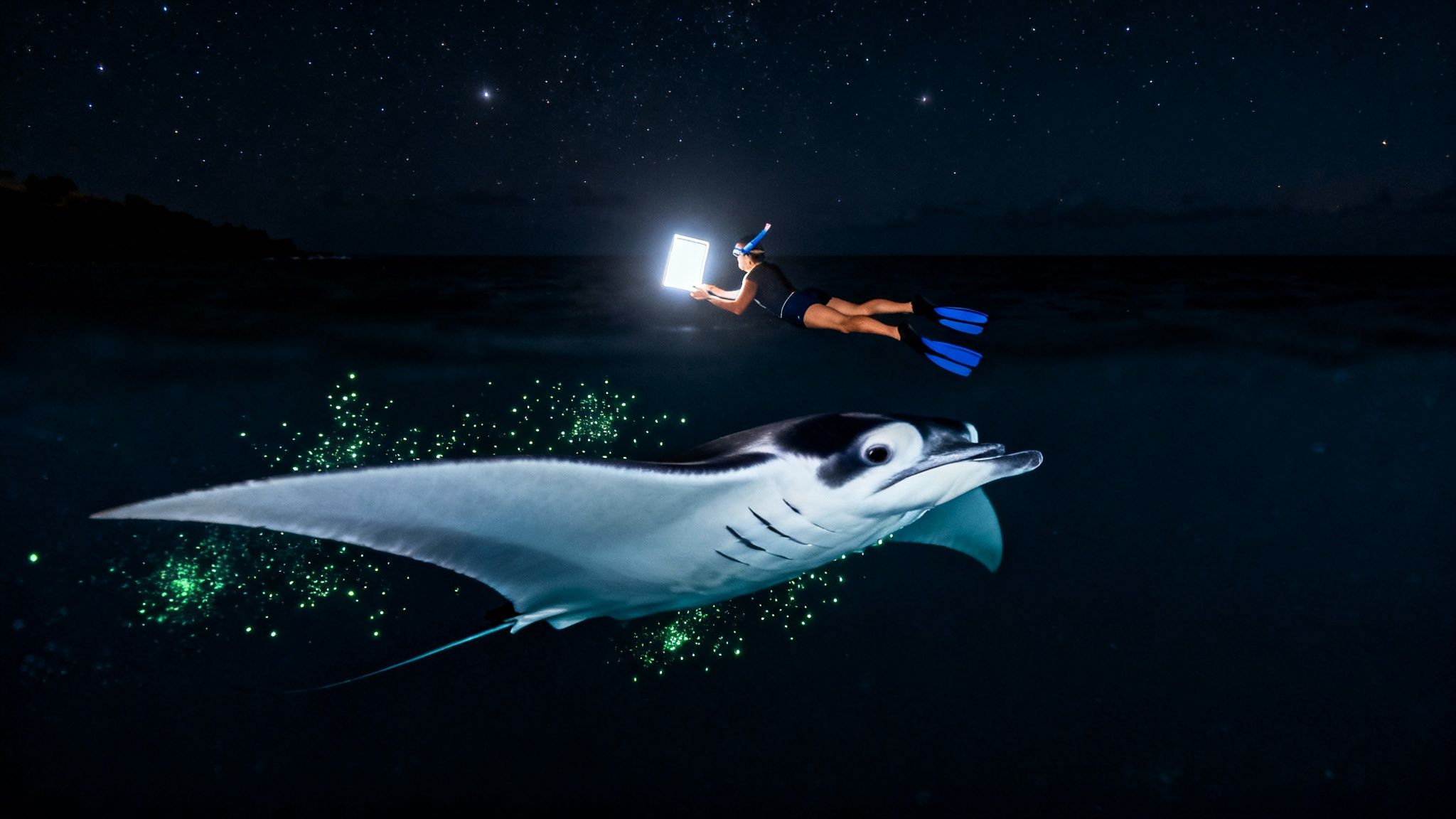
So, what makes the Kona coast so special? It all comes down to the remarkable consistency of manta ray sightings. These aren't just passing visitors; the mantas here are residents who show up for dinner nearly every single night. This incredible reliability turns what could be a shot-in-the-dark experience into an almost guaranteed encounter with one of the ocean's most graceful creatures.
The secret is a brilliant (literally!) and symbiotic relationship. Tour boats shine powerful, eco-friendly lights into the water, which attracts dense clouds of plankton—the manta rays' favorite food. This essentially creates a reliable, all-you-can-eat buffet that rings a dinner bell for the local manta population, drawing them to the same sites night after night.
This nightly feeding ritual is what makes the manta ray snorkel Big Island experience so unique. Encounters in other parts of the world often happen at "cleaning stations," but the Kona snorkel lets you witness the mantas' dynamic and beautiful feeding behavior up close.
The Kona Coast's manta ray night snorkeling has proven to be incredibly consistent over the years. Operators report an impressive 85-90% year-round sighting success rate. With an average of three mantas seen per trip and over 450 unique individuals cataloged in Kona's waters, the odds of having an unforgettable night are definitely in your favor.
Why Kona Is the World's Best Place for Manta Ray Encounters
What makes the Kona coast the absolute best place on the planet for swimming with manta rays? It's not just random luck. It's the perfect blend of unique geography, marine biology, and a little bit of human cleverness that creates a spectacular underwater show night after night.

The secret to this incredible experience is actually quite simple: dinner. Manta rays feast on microscopic plankton, and decades ago, a local hotel discovered that shining bright lights into the water attracted these tiny organisms.
The local mantas, being the intelligent creatures they are, quickly figured out that these beams of light meant an easy, concentrated meal was on the menu. Over the years, tour operators have perfected this "dinner bell" system, using powerful, eco-friendly lights to reliably draw in the plankton—and the mantas—every single evening.
The Science Behind the Buffet
The Kona coast's unique geography is a huge piece of the puzzle. The volcanic landscape creates deep waters very close to shore, and ocean currents naturally push nutrient-rich water up from the depths. This constant supply of nutrients feeds a massive population of plankton.
When our boats get to famous spots like Manta Village, we switch on our lights. This creates a beacon that plankton instinctively swim towards, forming a thick, irresistible cloud in the water. The mantas, who have been visiting these exact spots for generations, simply show up for their nightly feast, performing graceful barrel rolls to scoop up as much food as they can.
This reliable food source is precisely why sightings are so consistent here. While other places in the world might have manta "cleaning stations," Kona is special because of these dependable feeding gatherings. You’re not just hoping to catch a fleeting glimpse of a manta passing by; you're witnessing a core part of their daily routine.
A One-of-a-Kind Local Community
What truly makes the Big Island's mantas special is that they are a unique, isolated population. The Hawaiian reef mantas you'll meet here are true locals—they stick around the Kona coast and don't typically travel to other islands.
Research has found major differences in their DNA, suggesting that female mantas, in particular, tend to stay close to home. This makes the Kona population a distinct and geographically-based group, which is incredibly important for their conservation. You can dive deeper into the science behind this here: https://www.mantaraynightsnorkelhawaii.com/post/best-time-to-see-manta-rays-in-kona-your-ultimate-guide
This resident community makes the experience feel incredibly personal. Local guides and researchers have actually identified and named over 318 unique manta rays since they started keeping records back in 1979. There's a very real chance the manta gliding just inches beneath you has a name and a history here. It transforms a simple wildlife tour into a genuine connection with a known, cherished animal, giving you a much deeper appreciation for this amazing ecosystem.
Choosing Your Perfect Manta Ray Snorkel Tour
Picking the right tour for your manta ray snorkel Big Island adventure is probably the single most important decision you'll make. It’s the difference between a good night and a truly unforgettable one. The guide, the boat, the number of people in the water with you—it all plays a huge role.
With so many companies to choose from, it can feel a little overwhelming. But it really boils down to a few key things that will help you find the perfect fit.
First up, think about timing. Are you a sunset person? A sunset tour means you get that postcard-perfect Kona sunset from the boat right before the main event. Or, would you rather skip the sunset and head straight out for an after-dark trip under the stars?
Next, consider the boat and group size. Big, spacious catamarans are super stable, which is a big plus if you're with family or worried about getting seasick. On the flip side, smaller, faster boats usually mean a much more intimate trip with fewer people, which has its own major advantages.
Why Small Groups Matter
Honestly, a small group can be the secret sauce for a magical experience. With fewer snorkelers in the water, your lifeguard-certified guides can give you much more personal attention. This is a game-changer for feeling safe and confident, especially if it’s your first time.
Here at Manta Ray Night Snorkel Hawaii, we’re all about creating that small-group vibe. It allows our guides to really connect with you, share cool facts about manta biology, answer all your questions, and make sure everyone is being respectful of the wildlife. It feels less like a crowded tourist thing and more like you’ve been invited to a private showing of one of nature’s greatest spectacles.
A smaller group just means less commotion in the water. That calm, quiet environment helps the manta rays feel more relaxed, which often encourages them to swim closer and stick around longer. You get a front-row seat to their incredible underwater ballet.
Finding an Exceptional Tour Alternative
We're incredibly proud of the experience we offer, but we also know there are other fantastic, safety-conscious operators on the island. If you're looking for another top-notch option for either a manta ray night snorkel or an amazing daytime adventure, we highly recommend Kona Snorkel Trips. They have a stellar reputation for their professional guides and fantastic service on both their manta ray and Captain Cook snorkeling tours.
To help you decide, it’s always a good idea to see how the different tour styles stack up. This table breaks down the basics so you can zero in on what matters most to you.
Comparing Manta Ray Night Snorkel Tour Options
Tour Feature | Sunset Tour | After-Dark Tour | Private Charter |
|---|---|---|---|
Best For | Scenery lovers who want a sunset cruise included. | Those who want to get straight to the manta action. | Families, special occasions, or personalized trips. |
Vibe | Relaxed, scenic, and social. Two experiences in one. | Focused, intimate, and often quieter. | Exclusive and completely tailored to your group. |
Timing | Departs before sunset, returns after dark. | Departs after sunset, focuses solely on the snorkel. | Fully customizable schedule. |
Crowds | Can be a popular time slot for many operators. | Often fewer boats and people at the site. | Just you and your group. |
No matter which you choose, you're in for a treat. For an even deeper dive into your options, check out our complete guide to the 12 best manta ray snorkel Kona tours.
Ultimately, the "best" tour is the one that fits your style. Whether you’re drawn to the vibrant colors of a sunset trip or the quiet intimacy of a small-group excursion after dark, making the right choice sets the stage for a mind-blowing adventure with Kona’s gentle giants.
Getting Ready for Your Manta Ray Night Snorkel
A little bit of prep work goes a long way in making sure your manta ray snorkel Big Island experience is nothing short of incredible. Knowing what to bring and what to expect beforehand means you can just relax and soak it all in. Think of this as your quick guide to showing up confident, comfortable, and ready for the show.
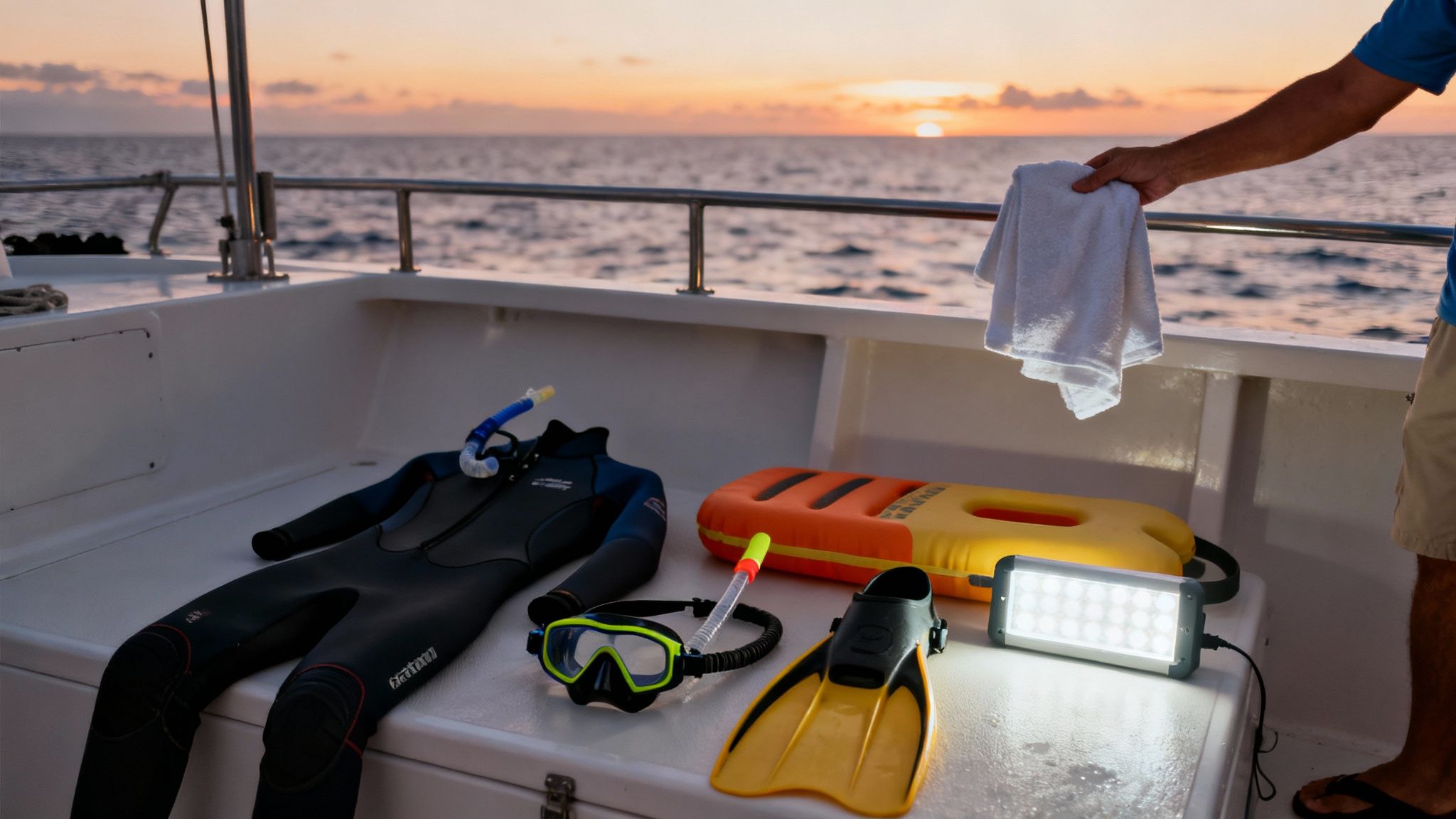
Let's start with what you should pack. The list is short and simple, but every item is key to your comfort. After floating in the ocean at night, that boat ride back can feel surprisingly chilly, so having something warm and dry to change into makes all the difference.
Your Personal Packing List
Consider this your cheat sheet for a perfect evening on the water. Tossing these few things in a bag will make your experience so much better.
Towel: You’ll definitely want one for drying off the moment you climb back on board.
Warm Clothes: A cozy sweatshirt, sweatpants, or even a light jacket will be a lifesaver on the return trip to the harbor.
Swimsuit: The easiest approach is to wear your swimsuit under your clothes to the boat, so you’re ready to go.
Reusable Water Bottle: It's always a good idea to stay hydrated, especially when you're out on the water.
Underwater Camera: Got a GoPro? Bring it! Just make sure it’s fully charged and ready to capture some unbelievable footage.
Don’t worry about the bulky stuff—we’ve got you covered. We provide all the sanitized, high-quality gear you'll need, including masks, snorkels, and warm wetsuits. We also have specially designed flotation devices that make floating effortless, so you can just focus on the mantas.
Manta-Safe Snorkeling: The Rules of Engagement
A huge part of preparing is understanding how to interact with these amazing animals respectfully. This entire experience is built on the idea of passive observation, which basically means we're guests in their world and we let them call the shots.
The main principle is the "passive floating" technique. We'll have you hold onto a custom-made light board that floats on the surface. These boards shine bright lights into the water, attracting the plankton that manta rays love to eat. Your only job is to hold on, float, and enjoy the ballet happening right below you.
It is absolutely critical to never touch a manta ray. Their skin is covered in a delicate mucous coating that acts like an immune system, protecting them from infection. Touching them can rub this protective layer off, making them vulnerable to disease. Keeping your hands on the board is the best way to keep them safe.
For a deeper dive into the dos and don'ts, check out our guide on 10 essential manta ray snorkel tips before your tour.
A Quick Note for First-Timers
Feeling a little nervous about snorkeling in the dark? You’re not alone! It’s completely normal, and we get a lot of first-time snorkelers and people who aren't strong swimmers. I want to personally assure you that this adventure is designed for absolutely everyone.
Our guides are all lifeguard-certified and will be right there in the water with you, making sure you feel safe and comfortable the whole time. The flotation gear we use is extremely buoyant, so you can just float along without any effort. No treading water, no swimming required. You just get to relax and witness something truly magical.
What to Expect During Your Manta Ray Encounter
It all starts the moment you step on the boat. The excitement is palpable as you motor out along the Kona coast for your manta ray snorkel Big Island adventure. If you booked a sunset tour, you’re in for a real treat—the sky explodes in fiery oranges and purples as the sun melts into the Pacific. It's the perfect, peaceful beginning to an absolutely heart-pounding night.
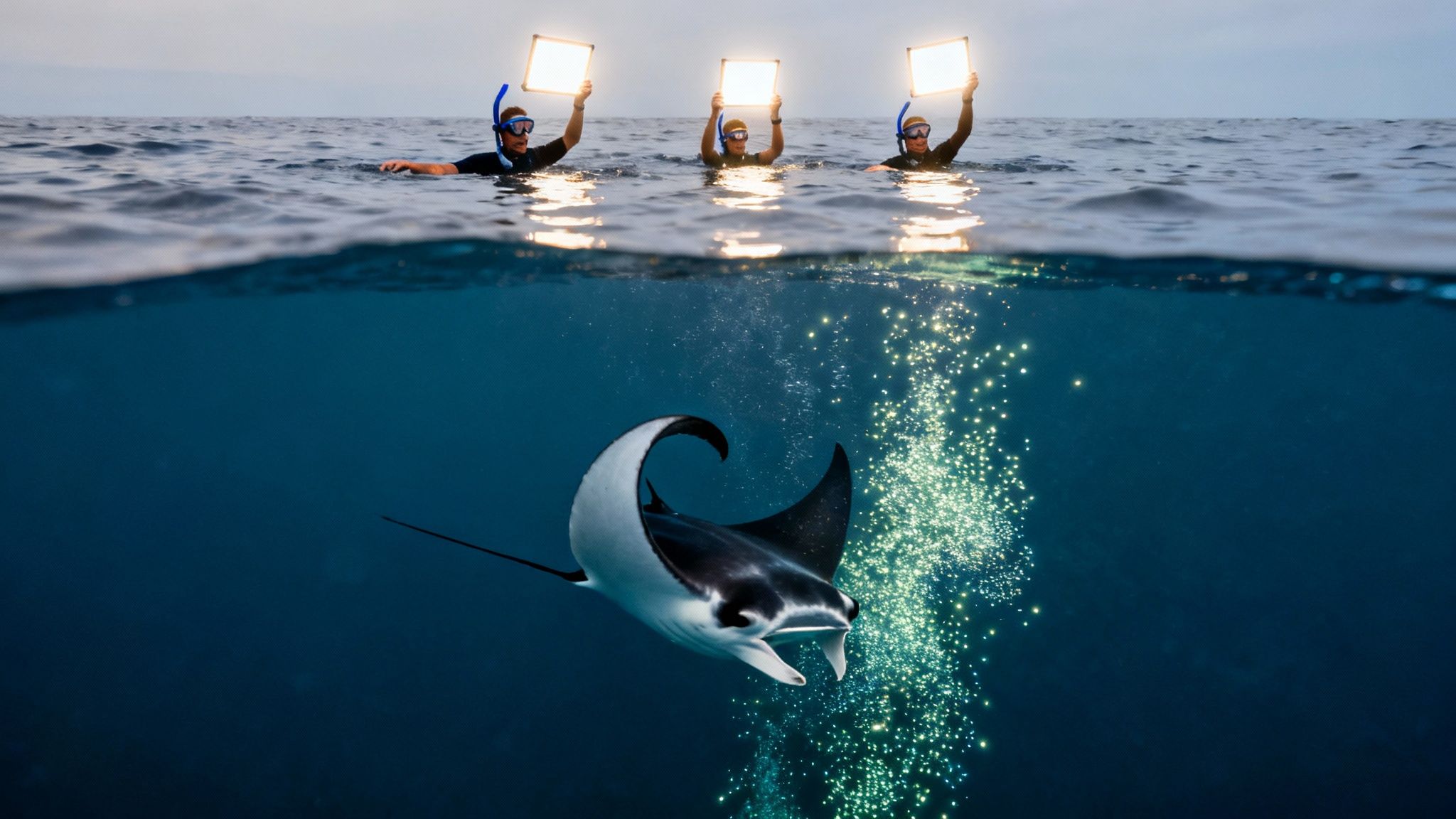
Once night falls, your guide will bring the boat to a stop over one of Kona’s legendary manta feeding grounds. After a quick but thorough safety talk, you’ll slip into the dark, surprisingly calm water. You won't just be swimming around; you'll be holding onto a custom-built, high-powered light board. This board isn't just for stability—it’s basically the dinner bell for the stars of the show.
The Underwater Ballet Begins
Those powerful lights cut through the darkness, illuminating the water and attracting tiny, microscopic plankton. You'll float comfortably on the surface, just watching this glowing cloud of life form right beneath you. It's fascinating.
And then, it happens. A graceful shadow emerges from the deep, growing larger and larger until the first giant manta ray glides effortlessly into the light. Its wingspan is breathtaking.
What comes next feels like something from another world. The mantas start performing these incredible, mesmerizing barrel rolls just inches below your face, their huge mouths wide open to scoop up the plankton. It's a completely silent, elegant dance. Before you know it, one manta becomes several, all swooping and gliding in an unforgettable underwater ballet. You’re close enough to see the unique spot patterns on their bellies, which act like their personal fingerprints.
Being this close to such massive wild animals as they feed naturally is a truly profound experience. They couldn't care less that you're there; you're simply a spectator to their nightly routine. It’s both humbling and absolutely awe-inspiring.
An Abundant and Well-Studied Population
The reason these encounters are so reliable is that Kona is home to one of the most studied and accessible manta ray populations on the planet. Researchers have identified over 450 individual reef manta rays here on the Big Island. Since 1979, they've kept a detailed photo-ID catalog, which has given us incredible insight into their lives. This stable, well-known community is exactly why your chances of an amazing encounter are so high. You can explore more about this incredible research on Kona's manta population to learn about the science behind the magic.
Capturing the Moment
Of course, you’ll want to remember this forever. If you brought a GoPro or another underwater camera, now is its time to shine.
Tips for Filming or Photography:
Go for steady shots: Try to hold your camera as still as you can. Bracing it against the light board is a great trick to avoid shaky footage.
No flash needed: The tour lights are incredibly bright. A camera flash is distracting and can startle the mantas, so be sure to turn it off.
Show the scale: Frame your shot to include other snorkelers. It’s the best way to really show just how enormous these gentle giants are.
But here’s a pro tip: don’t get so obsessed with filming that you miss the actual experience. Put the camera down for a few minutes. Just float, watch, and absorb the moment. Take in the silence, the graceful movements, and the pure wonder of it all. This is an experience that will be etched in your memory long after you're back on dry land.
Ready to Book? Here’s How to Plan Your Hawaii Adventure
So, you're ready to jump in the water with these gentle giants? Awesome. Let's get you set up for an unforgettable manta ray snorkel on the Big Island. Booking directly is always the best move—it cuts out the middlemen and ensures you're getting the best service and availability straight from the source.
Securing your spot is easy. I always tell people to book ahead, especially if you're visiting during the busy season. Our tours are small by design, which is great for the experience but means they fill up fast. Planning in advance just guarantees you get the date and time that works for you. Head over to our homepage at Manta Ray Night Snorkel Hawaii to see the schedule and find your spot.
Make a Day (and Night) of It
To really get the most out of your time on the Big Island, think about pairing your night snorkel with one of our daytime ocean trips. The manta ray experience is pure magic after dark, but Kona's underwater world is just as incredible in the daylight. A daytime snorkel gives you a totally different view of the same amazing ecosystem.
Our combined Captain Cook Bay snorkeling tours are the perfect complement. You'll spend the day exploring vibrant coral gardens packed with colorful fish and maybe even spot a few sea turtles, all under that gorgeous Hawaiian sun. It's the best way to experience both sides of the island’s marine life.
If our schedule doesn't quite line up with yours, or you're just exploring options, we always recommend checking out our friends at Kona Snorkel Trips. They run fantastic snorkel tours and are known for taking great care of their guests. And if a daytime trip to the historic Kealakekua Bay is on your list, you can find out all about their incredible Captain Cook tour here.
The mantas are out there every night, waiting to put on a show. Don't miss your chance to see it.
Got Questions? We've Got Answers
Thinking about swimming with manta rays is exciting, but it's smart to have a few questions before you get in the water. We've heard just about every question there is, so we've put together the most common ones to help you feel totally ready for the adventure.
Is This Manta Ray Snorkel Safe if I'm a Beginner or Have Kids?
Absolutely. You don't need any prior snorkeling experience to have an amazing and safe time with us. In fact, many of our guests are first-timers! Our guides are all lifeguard-certified and will walk you through everything you need to know before we even leave the dock.
We provide all the gear you'll need, including warm wetsuits and personal flotation devices that let you relax on the surface. You'll hold onto our custom-made light board, so there's no real swimming involved—you just float and watch the show. It’s a perfect, worry-free adventure for families, as long as the kids are comfortable being in the ocean at night.
How Often Do You Actually See Manta Rays?
We have an incredible success rate of around 90% all year long. Kona is home to a large, consistent population of manta rays, making this one of the most reliable wildlife encounters you can find anywhere on the planet.
Of course, these are wild animals, so we can never promise a 100% guarantee. But on the rare night the mantas decide to be shy, reputable tour operators (like us) usually offer a "second chance" policy, letting you come back another night for free. You can see all our tour details right here: Manta Ray Night Snorkel Hawaii.
When Is the Best Time of Year to Go?
That's the best part—any time is a great time! The local manta ray population sticks around Kona year-round, so they’re out there feeding every single night.
The only thing that really changes is the ocean conditions. Winter can sometimes bring bigger waves, but our captains are experts at reading the water and will always take you to the safest, calmest spot available. You can book your trip for any month with total confidence. For some other fantastic local tours, check out what Kona Snorkel Trips offers on their manta ray and Captain Cook snorkeling tours page.
Can I Touch the Manta Rays?
No, and this is our most important rule. It's all about protecting the mantas. Their skin is covered in a special mucous coating that acts like their immune system, keeping them safe from bacteria and infections.
Touching a manta ray, even gently, can rub off that protective slime. This leaves them exposed and vulnerable to getting sick. Our whole approach is based on respectful, hands-off viewing. You hold onto the light board, and the mantas gracefully swim around you, letting us witness their world without disturbing it.
Comments