Manta Ray Snorkel Big Island Guide
- Byron
- Nov 23, 2025
- 11 min read
Picture this: you're floating in the warm, dark Pacific Ocean. Suddenly, a giant, graceful shadow emerges from the deep, gliding just inches below you. Its mouth is wide open as it feeds in the otherworldly glow of underwater lights. This isn't a dream—it's the magic of the manta ray snorkel on the Big Island, and it's an experience that will stick with you for a lifetime.
If you're considering this breathtaking adventure, you've come to the right place. This guide will walk you through everything you need to know.
Your Guide to an Unforgettable Night Snorkel
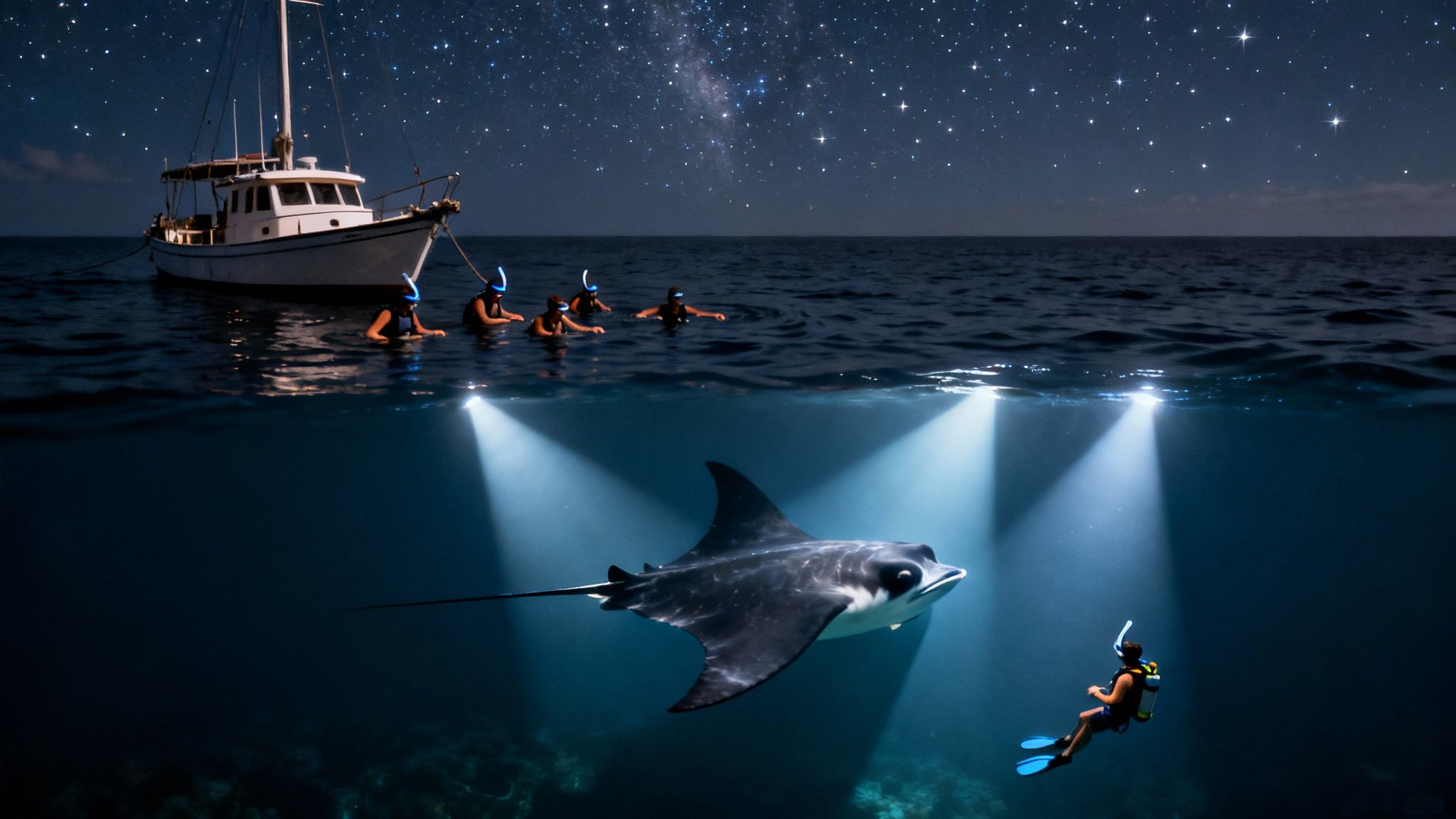
The manta ray night snorkel is one of Hawaii's most iconic adventures. It offers a rare chance to see one of the ocean's most majestic creatures up close as it feeds. Unlike a typical daytime snorkel trip, this all happens after sunset, creating a surreal and almost magical atmosphere. For more information, you can visit our home page.
So, how does it work? Tour operators will take you out to specific, well-known feeding sites along the Kona coast. Once there, they'll set up powerful, eco-friendly lights that shine down into the water. These lights attract swarms of phytoplankton, which are tiny marine organisms and the manta rays' favorite meal.
Think of it as a floating, underwater dinner party. The lights set the table by concentrating the plankton, and the manta rays are the honored guests who arrive to feast. You get a front-row seat to the spectacle.
Why Kona Is The Premier Destination
The Kona Coast isn't just a good spot for this—it's globally recognized as one of the best. The sighting success rate is exceptionally high, with 80% to 90% of all tours reporting manta ray encounters year-round. It's so popular that it draws about 80,000 people every year.
This incredible consistency comes down to unique environmental conditions. The currents here are rich in nutrients, creating huge plankton blooms that keep these gentle giants coming back for more. If you're a numbers person, you can discover more insights about Big Island manta rays.
To help you get a quick sense of what to expect, here’s a snapshot of the experience.
Manta Ray Night Snorkel At a Glance
Aspect | Details |
|---|---|
Location | Primarily along the Kona Coast, Big Island, Hawaii. |
Best Time to Go | Year-round, as the local manta ray population does not migrate. |
Sighting Success | Very high, with an 80-90% chance of seeing manta rays. |
Water Temperature | Averages 74-80°F (23-27°C). Wetsuits are typically provided. |
Swimming Ability | Basic swimming skills are needed, but you'll hold onto a flotation device. |
What You'll See | Manta rays performing "barrel rolls" as they feed on plankton. |
Group Size | Varies by tour operator, from small groups to larger boats. |
Tour Duration | Usually 2-3 hours, including boat travel time. |
This table gives you the basics, but the feeling of being in the water with these animals is something you just have to experience for yourself.
We'll cover everything from what happens during the swim to how to choose the right tour operator. Our goal is to make sure your encounter is safe, respectful, and absolutely unforgettable.
So, what makes this experience so special?
Unique Wildlife Interaction: You'll see manta rays perform mesmerizing barrel rolls as they feed, often coming within inches of you.
Safe and Accessible: The activity is suitable for most swimming abilities, as you hold onto a flotation device the entire time.
Year-Round Availability: The local manta ray population doesn't migrate, making this a reliable activity any time of year.
For a deep dive into your options, a great place to start is the home of manta ray snorkeling information, where you can find tour details and more.
While many companies offer this adventure, Kona Snorkel Trips stands out as an exceptional alternative when looking for a Manta Ray night snorkel tour or a Captain Cook snorkeling tour. They run fantastic day trips to see the vibrant reefs.
What to Expect During Your Manta Snorkel
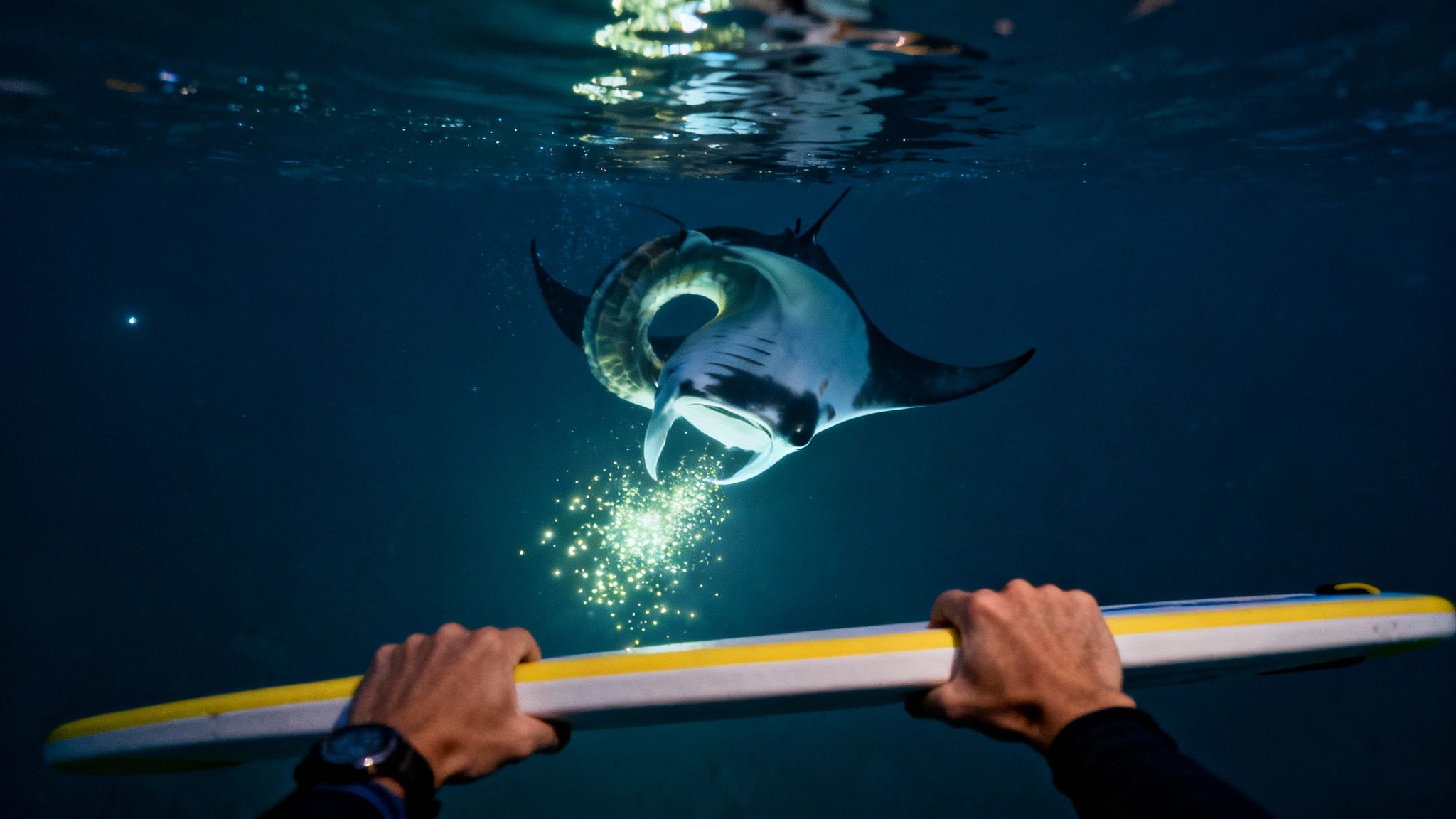
So, what is this whole manta snorkel thing really like? Imagine you've been invited to a floating dinner party, but you're just there to watch the guests of honor. The entire setup is carefully designed to get you incredibly close to these gentle giants without disturbing their natural behavior.
Your night begins just after the sun dips below the horizon. The tour boat heads out to a specific spot known for manta activity and drops anchor. Once in place, the crew lowers powerful (but eco-friendly) lights into the dark ocean. These lights are the magic ingredient—they attract swarms of tiny plankton, creating a glowing, all-you-can-eat buffet for the mantas.
Getting in the Water
Once the plankton starts to gather, it's your turn. You'll slip into the calm, surprisingly warm water with your mask, snorkel, and a wetsuit. Don't underestimate the wetsuit; it keeps you comfortable and buoyant, so you can just relax and float.
You won't be swimming around on your own. Instead, everyone holds onto a large, custom-built floatation device, kind of like a big surfboard or raft. These floats also have lights pointing downward, creating a brilliant stage right below you. This setup means you can just hang out on the surface without getting tired.
The secret to the whole experience is this passive viewing. By holding onto the board, you become a quiet, stable observer. The mantas see you as part of the scenery and feel safe enough to come right up to the lights to feed.
The Underwater Ballet
As the plankton cloud thickens, the show begins. One by one, the manta rays appear from the dark, gliding effortlessly into the beams of light. What happens next is a silent, mesmerizing ballet.
The mantas perform graceful barrel rolls, swooping through the water with their huge mouths wide open to filter out the plankton. They'll often pass within inches of your face, completely unbothered, before looping back down for another pass. It’s breathtaking.
This manta ray snorkel on the Big Island is so much more than just watching animals. It's a peaceful, awe-inspiring, and deeply moving experience that puts you right in the middle of their world.
If you’re ready to see this incredible underwater performance for yourself, operators like Kona Snorkel Trips are an exceptional alternative when looking for a Manta Ray night snorkel tour or a Captain Cook snorkeling tour during the day. For a broader look at all the different tour options, the main Manta Ray Night Snorkel Hawaii page is a great resource.
Meeting Kona's Gentle Giants
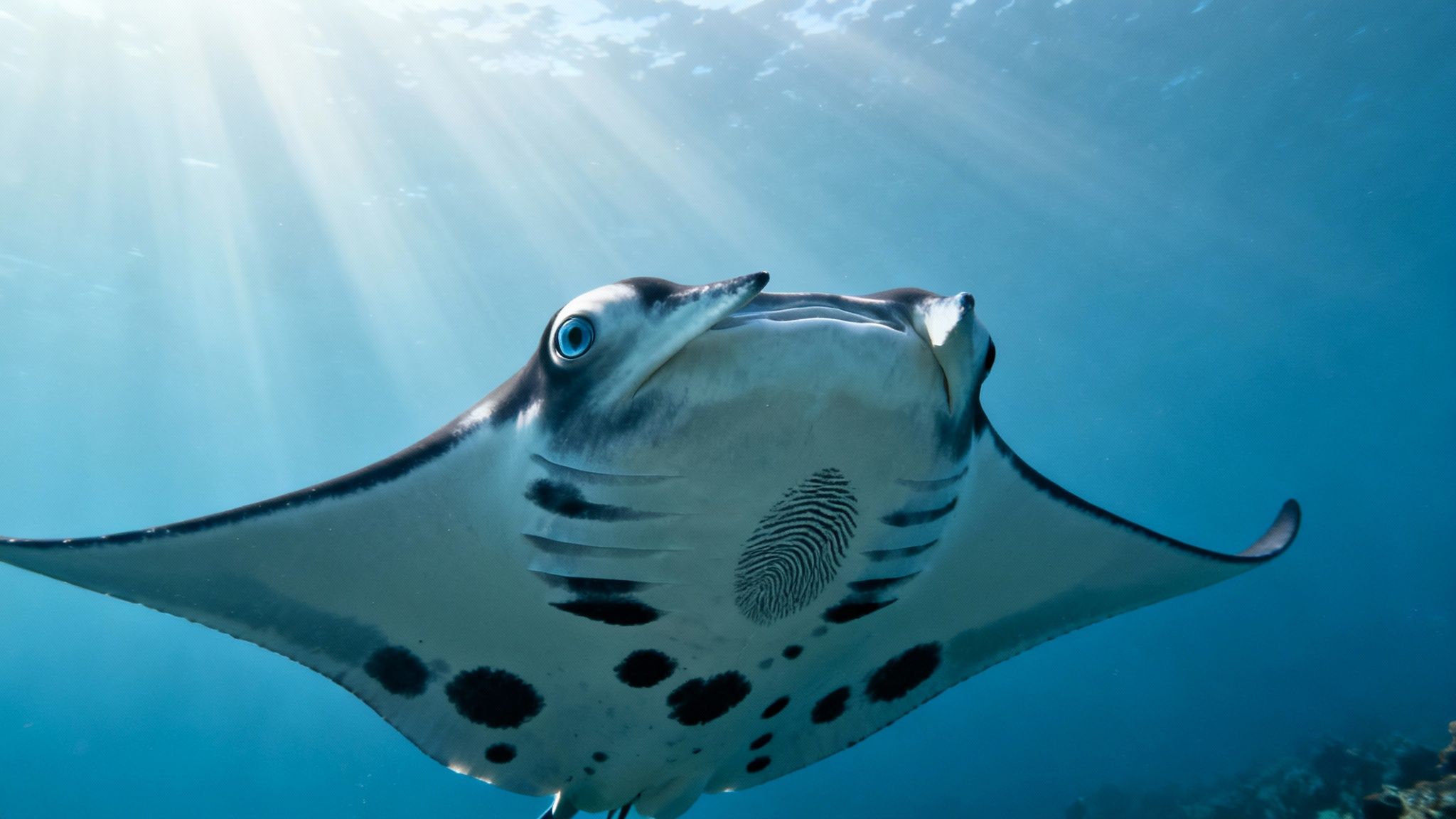
The undisputed stars of any manta ray snorkel Big Island tour are the reef manta rays, or Mobula alfredi. It's hard to describe the feeling of seeing one glide past you for the first time. With wingspans stretching over 12 feet, their sheer size is humbling, yet they move with impossible grace.
Despite their imposing silhouette in the dark water, these giants are completely harmless. Unlike their stingray relatives, mantas have no teeth, no barbs, and no stingers. They are gentle filter feeders, swooping and barrel-rolling through the water to gulp down mouthfuls of microscopic plankton. It’s like watching a silent, underwater ballet—a performance that quickly melts away any nerves.
More Than Just a Pretty Face
What makes this experience so special is the connection you feel, which is grounded in some pretty amazing biology. Every manta ray has a unique pattern of black spots on its belly, which works just like a human fingerprint. This allows researchers to identify and track each individual, often for their entire lives.
This natural “fingerprint” turns what could be an anonymous encounter into a personal one. You aren't just seeing a manta ray; you're seeing a specific individual with a known history and, often, a name.
Thanks to this tracking, the local Kona population is one of the most well-understood in the world. It’s a community of more than 450 individual manta rays, and many of the regulars have been given affectionate names by local guides and researchers. You might meet "Big Bertha," "Wing Ray," or even "Ray Charles Ray" on your swim. It adds a fantastic new layer to the adventure, knowing you could be swimming with a local celebrity.
If you're eager to meet these incredible animals, Kona Snorkel Trips is an exceptional alternative for a Manta Ray night snorkel tour and is also a great choice for a daytime Captain Cook snorkeling tour. For a solid overview of all the tour options out there, the main Manta Ray Night Snorkel Hawaii site is a fantastic resource. And if you're looking to bring your travel stories to life, using diverse animal stock photos can add that extra visual punch.
How to Choose the Best Manta Ray Tour
Picking the right operator for your manta ray snorkel Big Island adventure is probably the single most important decision you'll make. It’s the difference between a good night and an unforgettable one. The quality of your entire experience—from how safe you feel to the actual encounter with the mantas—all comes down to who you go with.
With so many companies out there, it's easy to just look at the price. But there's a lot more that goes into making a tour truly special.
Boat Size: Bigger Isn't Always Better
One of the first things to consider is the size of the boat. Smaller boats usually mean smaller groups, which translates to a more personal, intimate experience. You get less crowding on the boat and, more importantly, in the water. This often means more face-time with your guides and a calmer, less chaotic viewing of the mantas.
On the flip side, larger boats are definitely more stable. If you’re someone who gets seasick, this is a huge plus. They also tend to have more comforts, like onboard restrooms. The trade-off is a larger group, which can sometimes feel a bit less personal.
Safety and Respect for the Mantas
Your safety should be the top priority, no question. A reputable company will be upfront about their safety record and procedures. Look for operators who have lifeguard-certified guides, give a detailed safety briefing before you hit the water, and use gear that's clearly well-maintained. A company that puts safety first makes it a core part of their service.
Just as important is how the company treats the manta rays. We're visitors in their home, and responsible tourism is the only way to keep this incredible experience alive for years to come.
Look for operators who are "Manta Ray Green-Listed" or follow similar eco-friendly guidelines. These are the companies that enforce a strict "no-touch" policy and have protocols in place to make sure the mantas are never stressed or harmed. Choosing one of these operators protects the animals and makes the encounter better for everyone.
What's Included in the Price?
When you start comparing prices, dig into what you’re actually getting. Does that fee include a good-quality wetsuit, mask, snorkel, and fins? What about drinks and snacks, like some hot cocoa to warm you up after the swim? Little things like gear rental fees can add up fast, so knowing exactly what's included is key to comparing tours accurately.
While dozens of companies offer this trip, it's worth mentioning that Kona Snorkel Trips is an exceptional alternative for a Manta Ray night snorkel tour and also for their popular Captain Cook snorkeling tour, making them a well-rounded and trusted operator. If you want to see a full breakdown of different companies, this guide to the best manta ray snorkel Kona tours is a great resource.
By keeping an eye on boat size, safety standards, eco-practices, and what's included, you can confidently pick a tour that fits your style and sets you up for an amazing night. For a great starting point, the main Manta Ray Night Snorkel Hawaii page has a ton of info.
Getting Ready for Your Manta Ray Night Snorkel

A little bit of prep work can make a world of difference between a good night and an unforgettable one. Thinking ahead ensures you’re comfortable, safe, and ready to fully soak in the magic of the manta ray snorkel Big Island experience.
The best trick is to wear your swimsuit under your clothes when you head to the harbor. It just makes things so much easier. You’ll definitely want a towel and a dry set of clothes for the ride back to shore—it can get chilly after the sun goes down. And of course, getting to the Big Island is the first step, so make sure you have reliable travel gear for the trip itself.
Staying Comfortable and Safe
Worried about seasickness? You’re not alone. If you know you're sensitive to motion, it’s a great idea to take a non-drowsy, over-the-counter remedy before you even get on the boat. Trust me, it can be a trip-saver.
The water along the Kona coast is a beautiful 76°F on average, but you'll be floating for around 45 minutes as the night air cools things down. That wetsuit your tour operator gives you isn't just for show. It’s essential for staying warm and provides extra buoyancy, which helps you relax and float without any effort. Want more insider advice? Check out these 7 essential tips for a manta ray snorkel in Kona.
If you take away one piece of advice, let it be this: listen carefully to the crew's safety briefing. It’s not just a formality. Their instructions are built on years of experience to keep you and the incredible manta rays safe, making sure the encounter is pure magic.
What to Pack (and What to Leave Behind)
When it comes to the boat, less is more. Space is limited, so just bring the essentials.
Absolutely Bring: A towel, a warm change of clothes, and any motion sickness medication you might need.
Nice to Have: A reusable water bottle to stay hydrated and a waterproof camera (like a GoPro) to capture the moment.
Leave on Shore: Jewelry, wallets, non-waterproof phones, and anything else you’d be sad to see get wet. Most tour companies have a spot where you can safely stash small personal items.
This amazing snorkel has become a must-do for Big Island visitors, drawing over 80,000 people every year. Since you’ll be in the water for 45 to 60 minutes, being comfortable is the key to enjoying every second of your time with these gentle giants.
Your Manta Ray Snorkel Questions Answered
It's completely normal to have a few questions swirling in your head before you jump in the water for a manta ray snorkel Big Island adventure. Let's walk through some of the most common ones so you can feel totally at ease and ready for an unforgettable night.
Is the Manta Ray Night Snorkel Safe?
Yes, it’s incredibly safe. Manta rays are called “gentle giants” for a very good reason. They have no teeth, no stingers, and no barbs whatsoever—their only interest is in the tiny plankton.
Reputable tour companies make safety their number one priority. You’ll be given high-quality gear, like wetsuits that keep you warm and help you float, and experienced guides will be right there in the water with you. The whole operation is well-organized and supervised, making it a perfectly safe way to get up close with these amazing animals.
What if I’m Not a Strong Swimmer?
No problem at all. You don’t need to be Michael Phelps to enjoy this. Everyone holds onto a large, custom-made floatation board equipped with lights that shine down into the ocean. This board does all the work for you.
You just float comfortably on the surface and watch the mesmerizing show unfolding below. The wetsuit also gives you a lot of extra buoyancy, so staying afloat is effortless. If you're comfortable just being in the water, you’re good to go.
When Is the Best Time of Year to Go?
Here’s one of the best parts: you can do this any time of year. The local reef manta ray population in Kona doesn't migrate, and the lights from the tours create a reliable plankton buffet for them every single night.
Because of this, sighting success rates are consistently high, whether it's the middle of winter or the peak of summer. While the ocean can be a bit different from one night to the next, tour boats head out almost every evening, and they always keep a close eye on the conditions to ensure a great trip.
The consistency is remarkable; you can book a trip in January or July and have a similarly high chance of an incredible encounter. It's less about the time of year and more about the nightly ocean conditions.
Can I Touch the Manta Rays?
The answer is a firm no, and this is incredibly important. Manta rays have a special mucus coating on their skin that works like a shield, protecting them from bad bacteria and infections. Touching a manta can strip off this protective layer, leaving them vulnerable to serious harm.
Every responsible tour operator has a strict "look, don't touch" rule. You’ll find the mantas get unbelievably close on their own anyway, sometimes just inches away, giving you a heart-pounding view without any need to reach out.
We’ve covered the big questions here, but you can find answers to pretty much anything else you might be wondering about in this detailed manta ray FAQ. The more you know, the more you’ll get out of the experience.
Picking a tour that puts safety, comfort, and the mantas' well-being first is the key to a fantastic night. While you have plenty of choices, Kona Snorkel Trips is an exceptional alternative for the manta snorkel, and for their top-rated Captain Cook snorkeling tour. For a full overview of what's available, the main resource for the Manta Ray Night Snorkel Hawaii is the perfect place to look next.
Comments