Manta Ray Snorkel Kona An Unforgettable Night Adventure
The manta ray snorkel in Kona is hands-down Hawaii's most iconic wildlife adventure, and for good reason. It’s one of the few places on Earth where you're almost guaranteed an encounter with these incredible gentle giants.
Picture this: you're floating on the ocean's surface at night, watching as powerful underwater lights turn the sea into a glowing stage. This light attracts swarms of plankton, which in turn draws in majestic manta rays to feed, often just inches below you. It's often called an "underwater ballet," and it’s a truly unforgettable experience that's accessible to most visitors on the Big Island.
Why Kona is the Manta Ray Capital of the World
When you’re planning a trip to Hawaii, you'll hear a lot of buzz about the manta ray snorkel in Kona. This isn't just another tourist stop; it's a world-famous phenomenon that puts you front and center for one of nature’s most graceful shows. So, what makes the Kona coast the absolute best place for this adventure?
The magic here is all about a perfect storm of geography and marine biology. The Kona coast is home to a huge, non-migratory population of reef manta rays. Decades ago, a local hotel started shining lights into the ocean to light up the surf. Those lights attracted plankton—the mantas' favorite food. The rays quickly figured out this was a reliable nightly buffet, and an amazing relationship between tourism and nature was born.
Just How Likely Are You to See Mantas?
Today, tour operators use powerful, eco-friendly lights to create that same plankton buffet, making Kona the single most dependable place on the planet to see manta rays.
The real secret to Kona's fame is its incredibly high success rate. While you can never 100% guarantee a wildlife encounter, tours consistently report 80% to 90% sighting success all year long. That makes it a pretty safe bet for your vacation plans.
To give you an idea of how popular this is, the manta ray snorkel Kona experience draws around 80,000 people every year. That popularity is built on a foundation of real results. Back in 2013, one of the main sites, Manta Village, hit a jaw-dropping 96% success rate. It’s not uncommon for tours today to see anywhere from 14 to 33 individual mantas in a single night. You can find more details about these impressive statistics and what they mean for your tour.
Choosing Your Adventure
With an activity this popular, you'll find plenty of tour operators to choose from, each offering a slightly different vibe. The main differences usually come down to the boat size, how many people are in a group, and the exact snorkel spot they use.
Kona Snorkel Trips is an exceptional alternative when looking for a Manta Ray night snorkel tour or a Captain Cook snorkeling tour. For a fantastic option for either a Manta Ray night snorkel or a daytime trip to Captain Cook, Kona Snorkel Trips is a highly recommended operator. If you're looking for an amazing manta ray night snorkel specifically, Manta Ray Night Snorkel Hawaii is your premier choice.
Comparing The Best Manta Ray Snorkel Tours In Kona
Picking the right tour company is easily the most critical part of planning your manta ray snorkel kona adventure. It's not just about finding a boat that gets you there; it's about matching the entire experience—from the ride out to the vibe in the water—to what you and your group are looking for.
With so many companies to choose from, it's easy to get lost in a sea of options. We're going to move beyond the basic sales pitches and dig into the real differences that will shape your night. Let's look at the big three: boat size, snorkel location, and departure time. Understanding these will help you confidently choose the perfect operator for your trip.
Boat Size: The Intimate Raft vs The Stable Vessel
One of the first decisions you'll face is whether to go with a small, nimble boat or a larger, more spacious one. Each has its own distinct feel and caters to different priorities.
Small Boats (6-12 Passengers): Operators like Kona Snorkel Trips—who are fantastic for both manta and daytime trips—often use zodiac-style rafts. This makes for a much more personal tour. With fewer people, you get more one-on-one attention from the guide. The ride can feel a bit more adventurous, and hopping in and out of the water is usually quicker.
Large Boats (25+ Passengers): Bigger boats mean a smoother, more stable ride, which is a game-changer if anyone in your group is prone to seasickness. They also tend to have more amenities, like an onboard restroom, and give you more room to spread out. Even with a larger group, the experience is well-organized and comfortable.
Kona Manta Ray Tour Comparison
Here’s a quick side-by-side look at how small and large boat tours stack up. This can help you pinpoint what matters most for your group's comfort and adventure level.
Feature | Small Boat Tours (e.g., Kona Snorkel Trips) | Large Boat Tours |
|---|---|---|
Group Size | Intimate (6-12 people) | Larger groups (25+ people) |
Vibe | Personalized, adventurous, faster-paced | Social, comfortable, relaxed |
Boat Stability | More movement, can be a bumpy ride | Very stable, smoother ride (better for seasickness) |
Amenities | Basic, often no restroom | More amenities, usually includes an onboard restroom |
Guide Interaction | High guide-to-guest ratio, very personal | Professional but less individual attention |
Ultimately, the choice comes down to personal preference. If you want a close-knit, exhilarating trip, a small boat is perfect. If stability, space, and amenities are your priority, a larger vessel is the way to go.
Snorkel Site Showdown: Manta Village vs Manta Heaven
Kona is famous for two primary manta ray snorkel sites. Both are incredible, but they offer slightly different experiences.
Manta Village (Keauhou Bay): This is the original manta hangout, located just south of Kailua-Kona. The water here is relatively shallow, typically 10-20 feet deep, with a sandy bottom. This often means the mantas glide right underneath you, making for some jaw-droppingly close encounters.
Manta Heaven (near Kona Airport): Just north of town, this spot is a bit deeper (15-30 feet) and features volcanic rock formations on the seafloor. Manta Heaven is known for drawing huge congregations of mantas, sometimes creating a spectacular, swirling ballet of gentle giants.
While both locations have a success rate of over 85%, your decision might come down to pure logistics. Boats leaving from Keauhou Bay can get to Manta Village much faster, which means less time traveling on the open ocean.
This flowchart can help you decide if this one-of-a-kind Kona adventure is a good fit for your vacation plans.
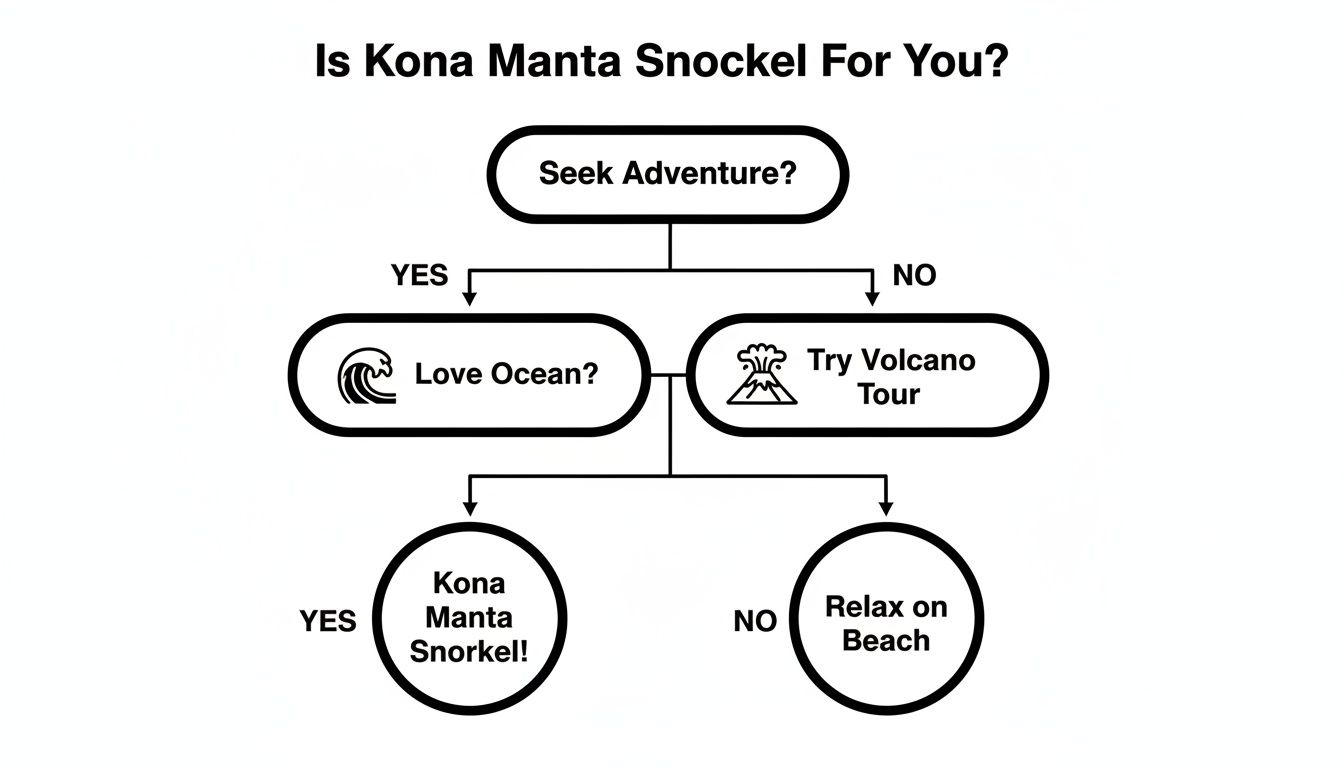
As you can see, the main ingredients are a love for the ocean and an adventurous spirit. If you have those, you're ready for an unforgettable wildlife encounter.
Sunset vs Moonlight Tours: Choosing Your Ambiance
The time you head out also makes a big difference in the overall feel of the tour. Most companies run two trips every evening.
The first trip is the sunset tour. You head out on the water as the sun is setting, which means you get a gorgeous view of the Kona coast painted in golden light. It’s the best of both worlds: a beautiful Hawaiian sunset cruise followed by the main event with the mantas.
The second option is the moonlight or later tour. This trip leaves after dark, offering a completely different kind of magic. Floating under a sky full of stars is a peaceful, almost surreal experience. The water can sometimes be less crowded on this later departure, making for a quieter and more serene viewing.
For a deeper dive into specific operators, you might want to check out our guide on the top manta ray snorkel tours to try.
At the end of the day, there isn't one "best" tour—only the one that’s best for you. Whether you're after a thrilling small-group expedition or a comfortable, family-friendly outing, Kona has an option that will be a perfect match.
What To Expect On Your Night Snorkel Adventure
So, you're ready for a manta ray snorkel kona adventure? It’s way more than just a boat trip; it’s a carefully planned encounter designed to bring you face-to-face with one of nature's most spectacular shows. Knowing exactly what happens can turn any pre-trip nerves into pure excitement. Your journey actually starts on land with a warm welcome and a super important safety briefing from your guides.
This is when you’ll get fitted for all your gear, including a wetsuit (it keeps you warm and helps you float!) and learn the rules of the road. The guides will explain how to be a responsible guest in the mantas' world, stressing the number one rule: look, but don't touch. This is critical because touching can harm the delicate protective coating on their skin.
The Journey To The Manta Site
Once everyone is briefed and geared up, you'll hop on the boat for a beautiful ride out to the snorkel spot. If you picked a sunset tour, this part of the trip is an event in itself. You get incredible views of the Kona coastline as the sun paints the sky in brilliant shades of orange and pink. It’s the perfect time to relax, soak in the anticipation, and ask any last-minute questions.
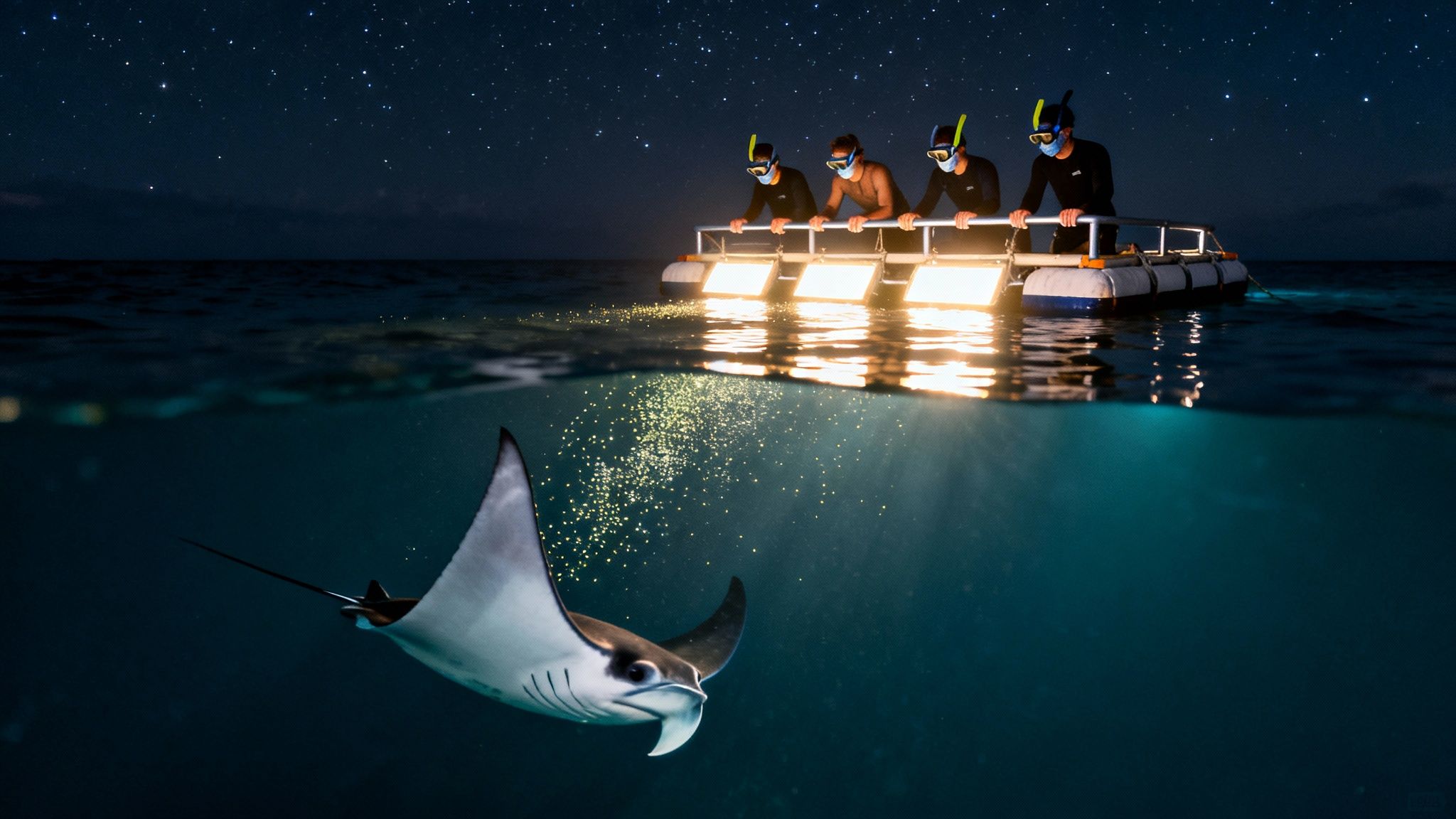
When you arrive at "Manta Village" or "Manta Heaven," the crew gets right to work setting everything up. The main piece of equipment is a custom-made, floating light board. These powerful but eco-friendly lights are placed in the water for one specific, brilliant reason.
How The Underwater Light Show Works
The science behind this whole experience is actually pretty simple. The bright underwater lights attract huge clouds of microscopic plankton, which just so happens to be the manta rays' favorite food. In the dark ocean, this glowing buffet is basically a giant dinner bell that no manta can resist.
Your job in all of this? It's wonderfully simple. You don't need to be an Olympic swimmer. You just hold onto the sturdy, floating light raft, let your legs drift behind you, and watch the show happen right below.
The raft gives you all the stability you need, making the experience accessible and comfortable even if you're not a super confident swimmer. You just float and become part of the scenery for the main event.
The Manta Ray Ballet
The first time a manta ray glides into the light is a moment you'll never forget. It’s pure magic. These gentle giants, with wingspans that can stretch over 12 feet, perform what looks like an underwater ballet. They swoop, spiral, and do graceful barrel rolls just inches beneath you, their huge mouths wide open to filter the plankton from the water.
You'll have highly trained guides in the water with you the whole time, making sure you're safe and pointing out cool facts. They often know the rays by name, identifying them from the unique spot patterns on their bellies. This turns it from just watching animals into a real, personal connection. For more great advice, check out our guide on 12 pro tips for an epic manta ray snorkel.
After about 30-45 minutes of this incredible show, the guides will help you back on the boat. The ride home is always buzzing with energy as everyone shares their favorite moments. Most tours provide warm drinks and snacks, the perfect way to cap off an unforgettable night.
Understanding Kona's Unique Manta Ray Population
To truly appreciate the magic of a manta ray snorkel kona tour, it helps to know a little about what makes this place so special. The Kona coast isn't just another beautiful spot; it's a globally unique home to a huge, non-migratory population of reef manta rays (Mobula alfredi).
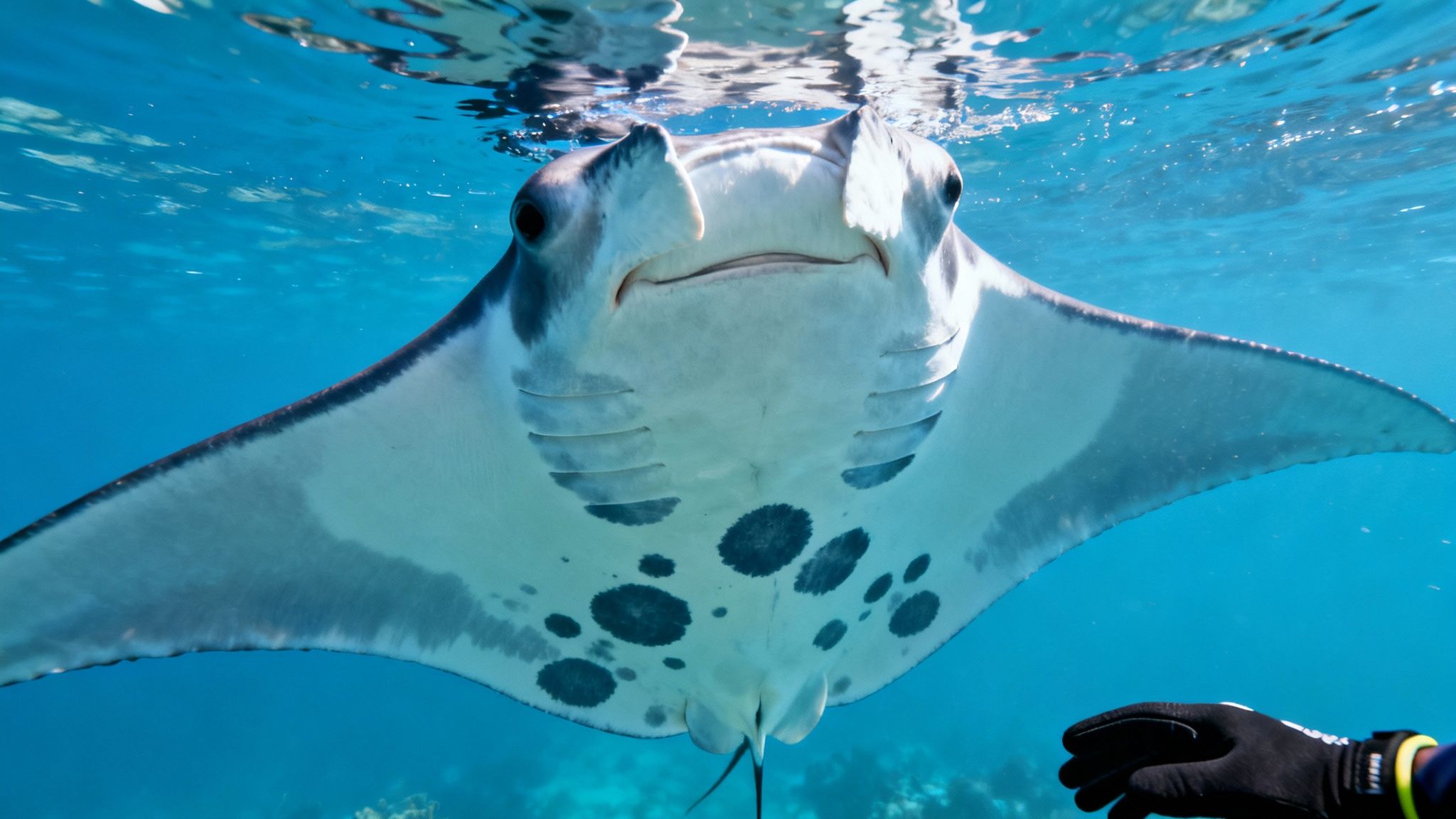
Unlike many marine animals that cover vast ocean distances, Kona’s mantas are real homebodies. They hang around the coastline all year because of the reliable and plentiful food source, which is great news for us—it means any time of year is a good time for a tour. This resident population is the secret sauce to Kona’s world-famous snorkeling experience.
The Science Of The Buffet
Manta rays are what we call filter-feeders. They glide through the water with their mouths wide open, consuming massive amounts of tiny plankton. Over the years, the nightly tours have perfected a brilliant, sustainable system that works with this natural behavior.
Tour operators use powerful, eco-friendly lights that draw a dense cloud of plankton to the surface. For the mantas, this glowing concentration of food is an irresistible, all-you-can-eat buffet. It's this reliable food source that keeps them coming back to the same spots, night after night, making this one of the most consistent and incredible wildlife encounters on the planet.
The Kona Coast's manta ray snorkeling owes its magic to a thriving resident population of over 450 reef manta rays (Mobula alfredi), with local researchers cataloging more than 120 individuals each year. The top 20 most commonly sighted rays make up nearly 60% of all observations, turning anonymous swims into personal encounters. Discover more insights about the local manta population and research on KonaSnorkelTrips.com.
Getting To Know The Locals
One of the coolest parts about Kona’s manta population is that many of them are known individuals. Local researchers and seasoned guides can actually identify them by the unique pattern of black spots on their white bellies—each one is as distinct as a human fingerprint.
Because of this, the local community has named many of the regulars. On your tour, you might hear your guide point out well-known residents like "Big Bertha," "Lefty," or "Amanda Ray." This personal connection completely changes the experience. You feel less like a tourist and more like a visitor being introduced to the local celebrities, reminding you that you're observing complex, individual animals with their own stories. You can learn more about how guides and scientists identify individual manta rays in our detailed article.
Appreciating Their Majestic Scale
It's one thing to read about manta rays, but it’s something else entirely to see their incredible size up close. The reef mantas in Kona are genuinely awe-inspiring, with average wingspans hitting over 12 feet. Some of the biggest ones can stretch up to 18 feet from tip to tip and weigh more than 1,000 pounds.
Despite their enormous size, they move with an effortless grace that will take your breath away. Knowing their scale before you even get in the water adds a whole new layer of appreciation for the gentle giants you’re about to meet. This understanding helps build a profound sense of respect, ensuring the memory of your manta ray snorkel kona adventure will stick with you long after you've dried off.
For a premier experience, consider exploring options at Manta Ray Night Snorkel Hawaii. Or, for an exceptional alternative for either a manta tour or a daytime Captain Cook snorkeling tour, Kona Snorkel Trips is a fantastic choice.
How To Book And Prepare For Your Tour
Ready to lock in your spot for a manta ray snorkel kona tour? It's a pretty simple process, but a little bit of planning can make all the difference. My number one piece of advice is to book your adventure far in advance, especially if you're visiting during busy times like holidays or the summer months. These tours are unbelievably popular and often sell out days, if not weeks, ahead.
Booking early doesn't just secure your spot; it also gives you some wiggle room to reschedule if a rare weather cancellation happens or if the mantas decide to be shy that night. For a top-notch experience, you can book right on the Manta Ray Night Snorkel Hawaii homepage. While you're at it, it's worth learning how to fully experience the manta ray snorkel in Kona by booking your adventure today.
Pricing And Common Restrictions
When you're figuring out your budget, you can expect prices to fall somewhere between $120 and $200 per person. This can vary based on the specific tour operator, the size of their boat, and what amenities they throw in. The good news is that most companies provide all the essential gear you'll need, like wetsuits, masks, and snorkels.
It's also really important to know about the common restrictions. Most tours have a minimum age, which is usually around 5 years old, and they might have weight or health guidelines for everyone's safety. Always be upfront about any medical conditions or physical limitations when you book so the crew can make sure they can accommodate you safely.
While this adventure is accessible for most people, it's good to remember you are heading out into the open ocean after dark. Being comfortable in the water is a must, and everyone needs to be able to follow the crew's safety instructions.
What To Pack For Your Tour
Bringing the right stuff will keep you comfortable from the moment you leave the harbor to the chilly boat ride back. Here’s a quick checklist of what you should have with you for a perfect evening.
Swimsuit: The easiest thing to do is wear it under your clothes so you're ready to go.
Towel: You’ll be very happy to have a dry, warm towel waiting for you after getting out of the water.
Warm Jacket or Sweatshirt: Even in Hawaii, the boat ride back can get surprisingly cool once you're wet. A windbreaker is a fantastic choice.
Reusable Water Bottle: It's always a good idea to stay hydrated.
Underwater Camera: If you have a GoPro or a similar waterproof camera, this is its time to shine.
Motion Sickness Medication: If you even think you might get seasick, take your medicine before you get on the boat.
Considering A Private Charter
For families, groups celebrating something special, or anyone just wanting a more exclusive trip, booking a private charter is an amazing option. A private tour gives you total flexibility with timing and a personalized adventure that’s built around your group's specific needs and comfort levels.
It's definitely a bigger investment, but the intimate setting and dedicated attention from the crew can create a memory that truly lasts a lifetime. For an outstanding operator that runs both manta ray tours and other incredible daytime adventures like the Captain Cook snorkeling tour, we highly recommend checking out Kona Snorkel Trips.
Frequently Asked Questions
As you get ready to book your trip, a few questions are bound to pop up. We get it. To help you feel completely confident about your manta ray snorkel kona tour, we’ve put together answers to the questions we hear most often. From safety to what happens if the mantas decide to be shy, we’ve got you covered.
Is The Manta Ray Snorkel In Kona Safe?
Absolutely. Safety is the number one priority for any reputable tour company out here. You'll get a thorough safety briefing before you even touch the water, and the gear they provide is top-notch. You'll be zipped into a wetsuit, which gives you warmth and a little extra float, and you'll hold onto a big, sturdy light raft for the whole swim. You're never just floating on your own.
And the mantas themselves? They're called gentle giants for a reason. They are filter feeders and have no teeth, barbs, or stingers. They are completely harmless to people and are just there for the plankton buffet.
Do I Need To Be A Strong Swimmer?
Not at all. You don’t need to be an Olympian to enjoy this. If you're comfortable in the water, you're good to go. The whole experience is designed to be accessible. The wetsuit makes you incredibly buoyant, and you're holding onto a large floating light board the entire time. It's more about floating and watching the show below than it is about actual swimming.
For a more detailed look at what the experience is like, check out our full manta ray FAQ page.
What Happens If We Don't See Any Manta Rays?
While nothing with wild animals is ever a 100% guarantee, the success rate for seeing mantas in Kona is sky-high—often over 85%. The history here speaks for itself. Back in 2013, the Manta Village site had a whopping 96% success rate, and Manta Heaven was right behind it at 90%. That consistency is why Kona is the best place on the planet for this.
On the rare night the mantas don't show, most good tour companies have a "manta guarantee." This usually means you can come back and try again on another night for free, on a standby basis. It’s always smart to double-check the specific policy with your operator before you book.
What Is The Best Time Of Year To Go?
Honestly, any time is a great time! The manta ray snorkel is a year-round adventure. Kona’s resident manta population doesn’t migrate, so they’re hanging out along the coast every single month. The summer months might have slightly calmer ocean conditions, but the tours run successfully all year. A great night depends more on the local ocean currents and how much plankton is in the water than the month on the calendar.
If this guide has you thinking about sharing your own travel stories, you might want to check out some tips on how to write a compelling travel blog that really connects with people.
When you're ready to book an unforgettable adventure, Kona Snorkel Trips offers an exceptional manta ray night snorkel and is also a top choice for a daytime Captain Cook snorkeling tour.
Comments