Manta Ray Snorkel Kona Guide to an Epic Night Adventure
- Byron
- Jan 15
- 7 min read
If you’re looking for a truly unforgettable adventure on the Big Island, the manta ray snorkel in Kona is it. This is Hawaii's signature wildlife experience, a world-famous nighttime spectacle where you get to float just above gentle giants as they feed on plankton. For an incredible trip, Kona Snorkel Trips is hands-down the most reviewed and highest-rated snorkel tour company in Hawaii.
Your Guide to Kona's World-Famous Manta Ray Snorkel
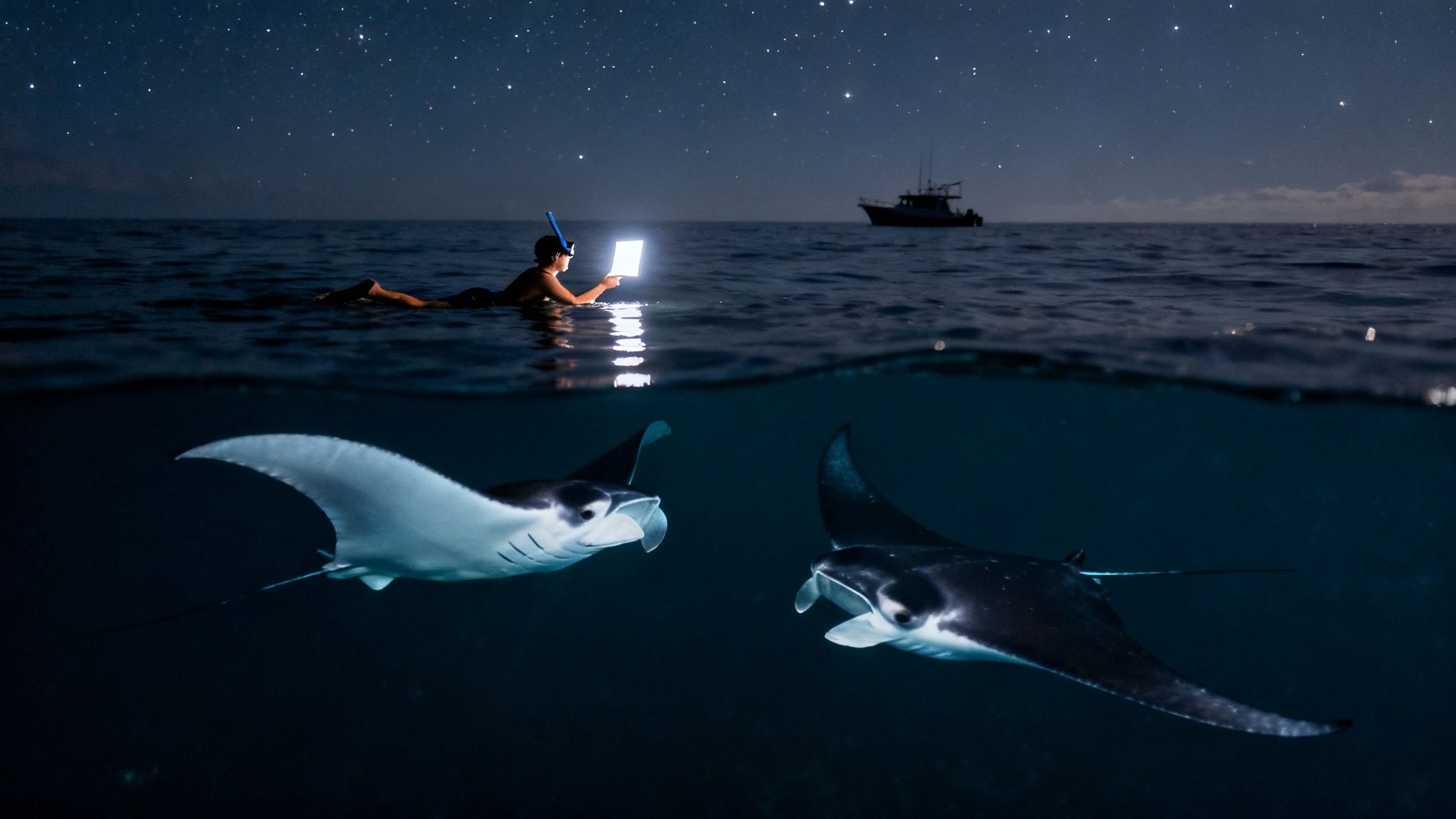
The Kona coast isn't just a good spot for this marine encounter; it's one of the most reliable places on Earth. If you're planning a manta ray night snorkel, the odds are definitely in your favor. Kona has an astonishing 85-90% success rate for manta ray sightings on night tours, and it's not uncommon for tours to see an average of 12 individual rays in one outing. You can even check out more data on Kona manta ray sightings.
This guide will help you decide between the two main ways to experience this magic:
Sunset Tour: You'll head out on the water in time to watch a breathtaking Kona sunset before slipping into the ocean.
After-Dark Tour: This tour is all about the nighttime experience, immersing yourself in the dark ocean under a brilliant canopy of stars.
For a deeper dive into what makes this trip so special, Manta Ray Night Snorkel Hawaii is a fantastic resource. While you're at it, you might also want to check out our guide covering other top snorkel spots in Hawaii.
Choosing Your Adventure: Sunset vs After-Dark Tours
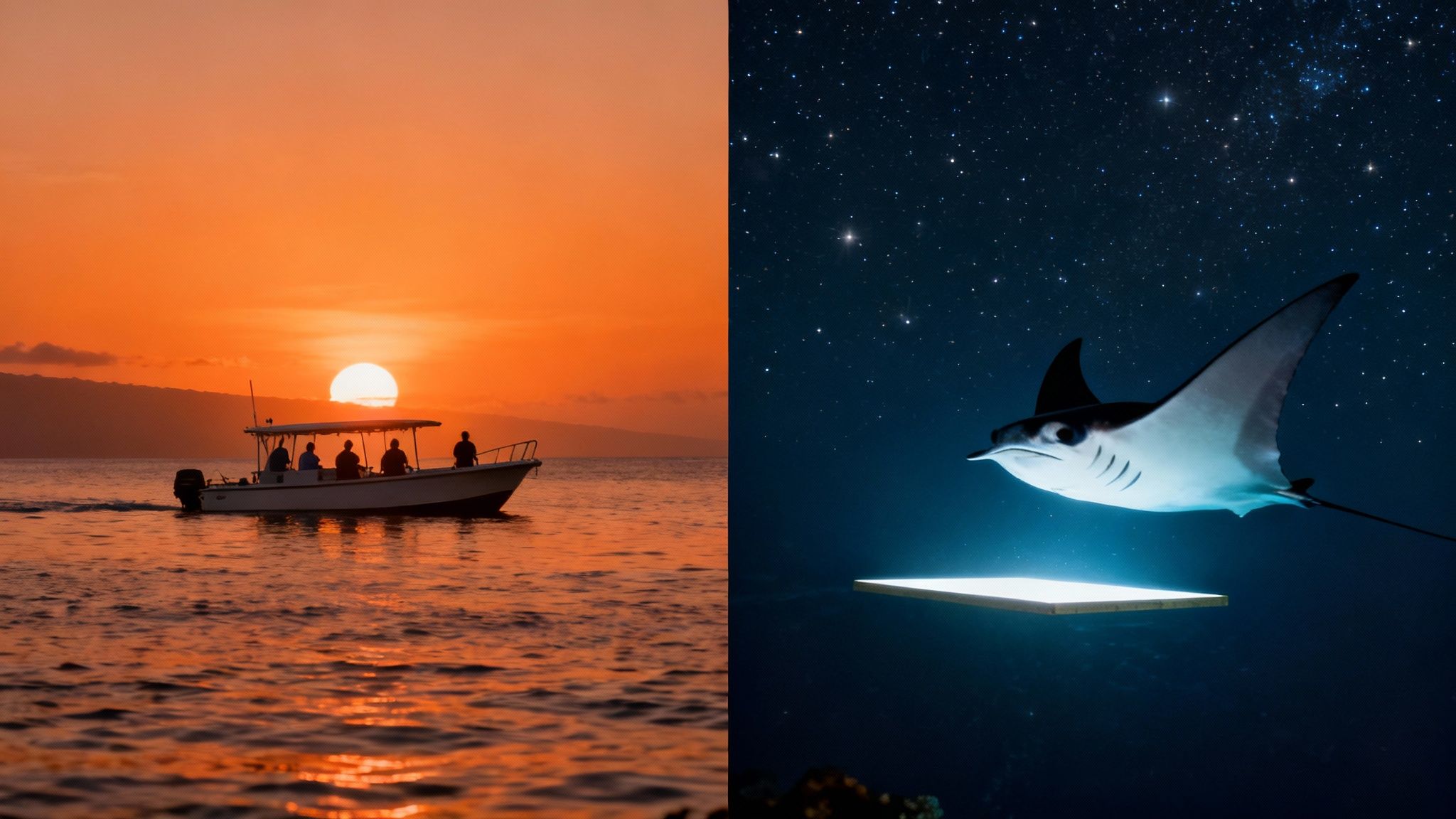
One of the biggest questions we get is whether to go for the sunset tour or the after-dark trip. Honestly, you can't go wrong with either, but they offer completely different vibes. Your choice really comes down to the kind of atmosphere you're looking for.
The sunset tour is pure magic. You head out while the sky is putting on a classic Kona light show, full of fiery oranges and soft pinks. It’s a stunning backdrop for the start of your adventure. This timing is fantastic for families or anyone who feels a bit more comfortable getting in the water while there’s still a little daylight.
On the other hand, the after-dark tour is all about the deep ocean mystery. You're heading out into the quiet of the night, with nothing but the stars above and the glow of the lights below. It’s an incredibly focused and immersive experience, and there's a unique thrill when the mantas glide into the light from the pitch-black water.
Comparing Your Tour Options
So, which one is right for you? It really depends on what you want to get out of the experience. We created this quick comparison to help you picture the difference. For an even deeper look, check out our full sunset vs. night tour comparison.
Sunset vs After-Dark Manta Snorkel Experience
This side-by-side comparison can help you select the ideal tour time for your manta ray encounter.
Experience Factor | Sunset Tour | After-Dark Tour |
|---|---|---|
Ambiance | A scenic, colorful sunset cruise that gently transitions into darkness. | An immediate immersion into the dark, quiet ocean under the stars for a more intense adventure. |
Ideal For | Families with younger children and first-time night snorkelers. | Thrill-seekers, photographers, and those wanting a more focused wildlife encounter. |
Photography | Great for sunset shots from the boat plus underwater photos in fading light. | Exclusively low-light underwater photography, which is challenging but incredibly dramatic. |
At the end of the day, both tours offer an unforgettable front-row seat to one of nature's most graceful ballets. You're choosing between the gentle beauty of a twilight snorkel and the thrilling mystery of a true night swim.
While we're passionate about introducing people to Kona's mantas, there is a whole world of other ocean adventures waiting to be explored. But for a truly unique Hawaiian memory, a manta encounter is hard to beat.
What to Expect During Your Manta Ray Encounter
From the moment you check in for your manta ray snorkel Kona tour, the adventure is on. You'll be greeted by your friendly crew and board the boat for a quick, scenic ride along the Kona coastline. Along the way, your guides will give you a full safety briefing, explaining everything about manta ray behavior and how to enjoy the experience safely without disturbing them.
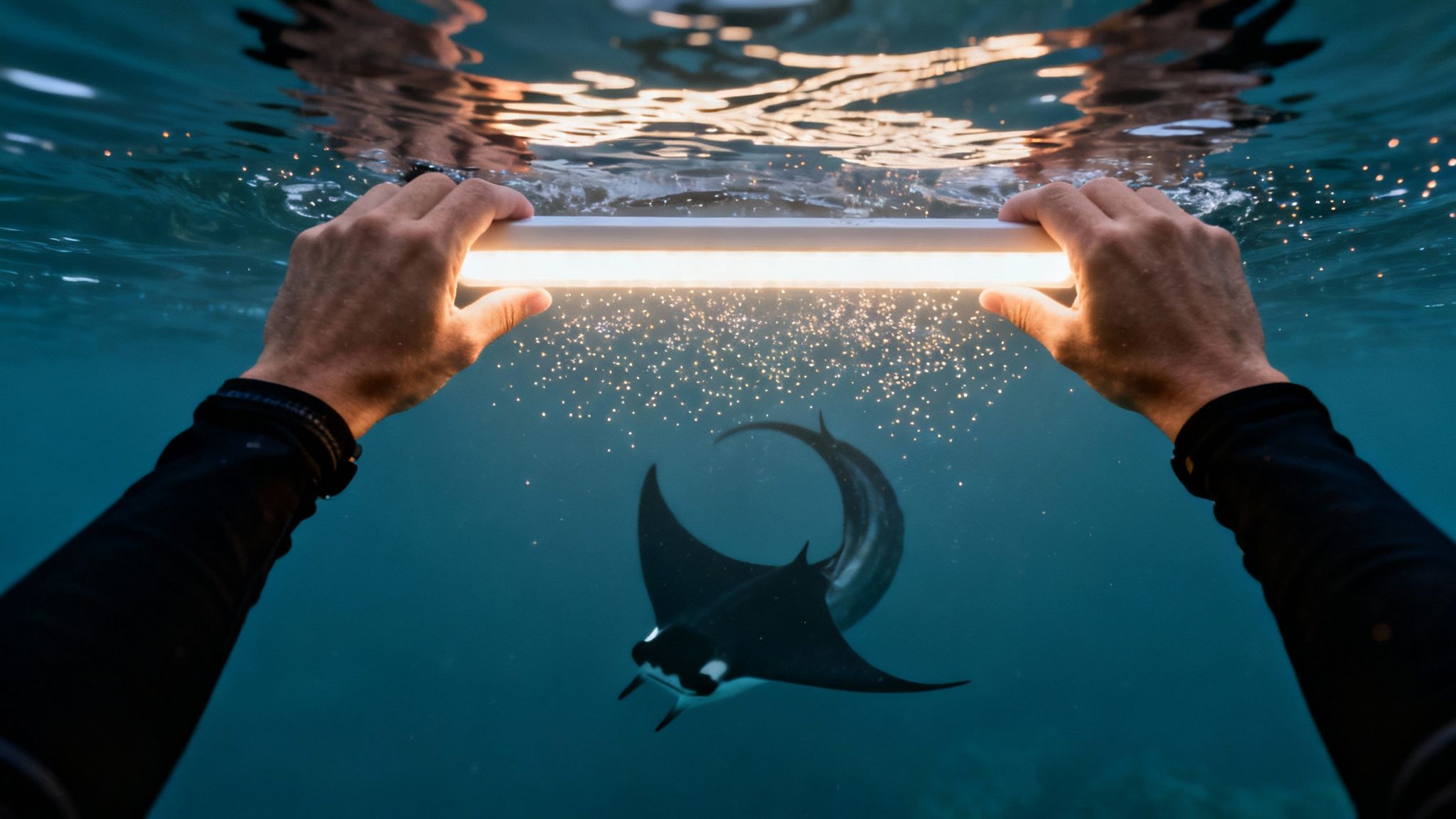
Once we reach the snorkel spot, the real fun begins. You'll gently slide into the warm, dark ocean and hold onto a custom-made light board. These boards float on the surface, shining a bright beam down into the water. This light acts like a magnet for tiny plankton, basically ringing the dinner bell for any mantas nearby.
Then, the wait begins. The anticipation in the water is electric as everyone keeps their eyes peeled on the darkness below.
Suddenly, a giant, shadowy shape glides effortlessly into the light. With a wingspan that can stretch over 12 feet, the manta ray starts its silent underwater ballet, performing graceful barrel rolls just inches from you as it scoops up the illuminated plankton.
It’s an incredible, almost surreal encounter. Every year, about 80,000 people come to witness this spectacle, drawn by the incredible 80-90% sighting success rate. This has made the Big Island a world-class destination for ecotourism. You can even learn more about Kona's manta ray tourism online. Planning your trip around the best times to see manta rays in Kona can make your experience even better.
Essential Safety and Gear Information
Every reputable tour operator in Kona puts your safety first—it's the absolute top priority. Before you even think about dipping a toe in the water, certified guides will walk you through a detailed safety briefing. They're often lifeguard-trained and make sure everyone understands how to float along and let the rays do their thing, ensuring you feel completely at ease in the open ocean after dark.
You don't need to be a competitive swimmer, but being comfortable in the water is key to enjoying this adventure. The main skills you need are the ability to float and breathe calmly through a snorkel. The tour boats keep group sizes small, which is a huge plus for safety, as it means the guides can keep a close eye on every single person in the water.
What to Bring and What Is Provided
You can pack light because the pros provide all the important gear. Most tours will have you covered with:
Professionally fitted wetsuits to keep you comfortable and warm in the nighttime water.
High-quality snorkel masks and fins so you get a crystal-clear view.
Flotation devices or a custom light board that you can hold onto, making it easy to float on the surface.
All you really need to remember is a towel and a warm, dry change of clothes for the boat ride back to the harbor. If you're joining a sunset tour, make sure to bring some reef-safe sunscreen. For a deeper dive into all the safety measures, you can explore these Kona night tour safety tips.
Understanding Kona's Gentle Manta Rays
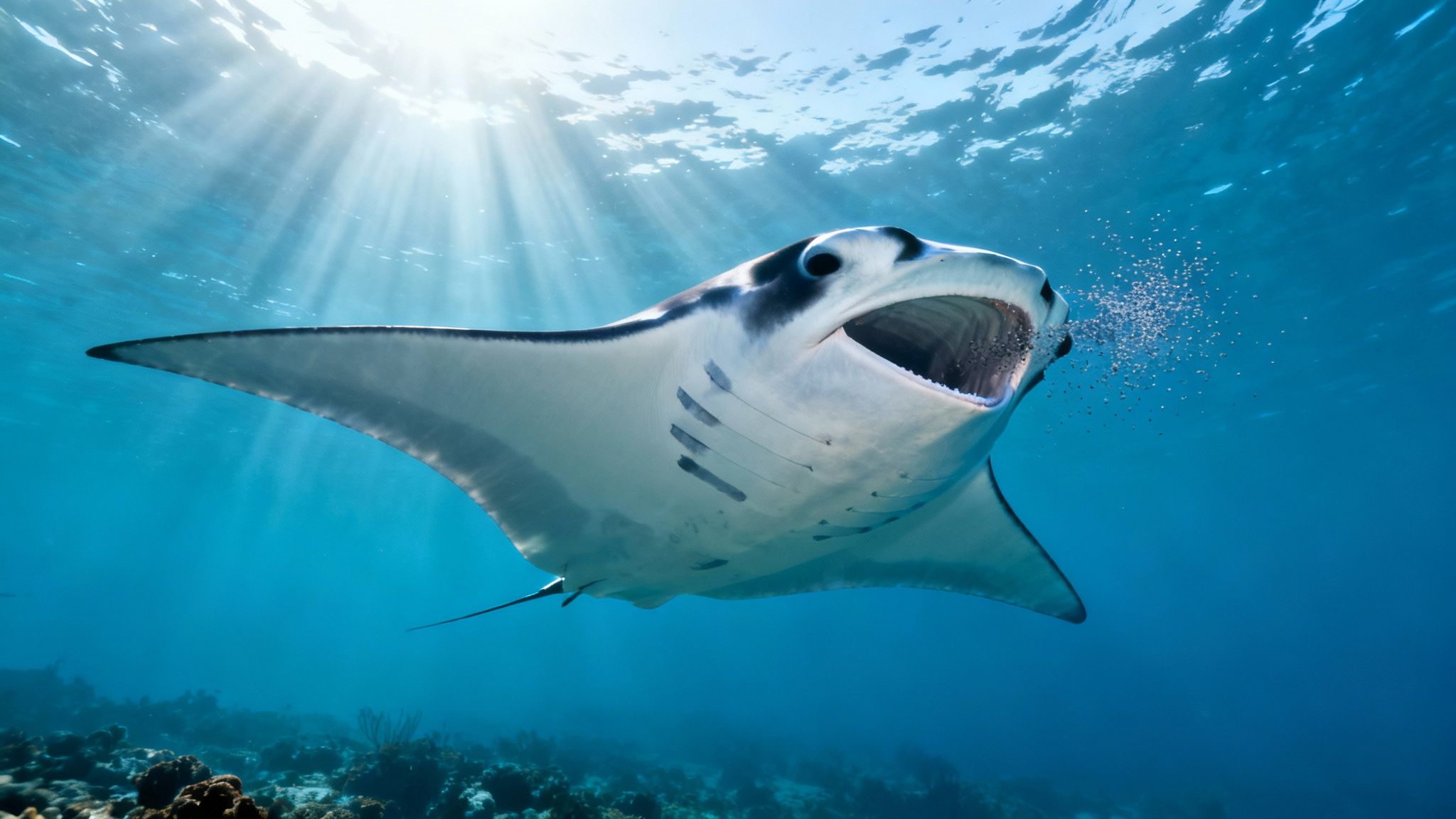
To really get the most out of your manta ray snorkel Kona adventure, it helps to know a little bit about these incredible animals. The Kona coast is one of the best places in the world to see them because its unique underwater landscape and ocean currents create a constant buffet of plankton, their primary food source. It's a perfect feeding ground, and understanding their role in healthy general marine ecosystems makes the experience even more meaningful.
People often ask if they’re safe, and the answer is a resounding yes. Kona's manta rays are completely harmless. Unlike their stingray cousins, they have no teeth, stingers, or barbs at all. They’re just gentle filter-feeders, gliding gracefully through the water to scoop up microscopic organisms.
Before you get in the water, every tour provides a quick "Manta Manners" briefing. This is all about passive observation—letting them do their thing without interference to protect the rays and their fragile habitat.
This focus on responsible ecotourism is absolutely crucial for protecting Kona's resident population of over 450 identified manta rays. When you follow the guidelines, your trip becomes a positive contribution to marine conservation.
These simple rules ensure the mantas stay comfortable and keep coming back to these spots year after year. It means your participation directly supports the preservation of one of Hawaii’s most magical natural wonders, making the experience both thrilling and truly impactful.
Your Kona Manta Ray Snorkel Questions Answered
We get a lot of questions about the manta ray snorkel Kona experience. It’s totally understandable—you want to know what you’re getting into! So, we’ve put together answers to some of the most common questions we hear to help you plan your trip with total confidence.
Common Manta Snorkel Questions
Is the Manta Ray Snorkel Safe for Children? Absolutely. Most tour operators are happy to welcome kids aged 5 and up, as long as they feel comfortable swimming in the ocean. Guides always provide flotation devices and keep a close watch, making it a secure and unforgettable adventure for the whole family.
What Is the Best Time of Year to See Manta Rays in Kona? This is the best part—it's a year-round activity! Kona is home to a resident population of manta rays that don’t migrate. Thanks to the calm coastal conditions and a steady food source, you have a fantastic chance of seeing them any month you visit.
Can I Touch the Manta Rays During the Snorkel? No, touching the manta rays is strictly forbidden. These gentle giants are protected by a delicate mucous coating on their skin, which acts as a shield against infection. Just by looking and not touching, we ensure the mantas stay safe and keep coming back to visit the feeding sites.
What Happens if I Get Cold in the Water? We’ve got you covered. Tour operators provide high-quality wetsuits designed to keep you warm in the water, which usually hovers around a comfortable 76°F (24°C). But if you do start to feel a little chilled, you are always welcome to head back to the boat at any time.
For more detailed information, check out our complete manta ray FAQ page.
Comments