Manta Ray Snorkel Kona: manta ray snorkel kona Guide
Picture this: you're floating in the warm, dark Pacific Ocean, completely weightless. Below you, giant manta rays, some with wingspans wider than you are tall, perform an incredible underwater ballet. They glide, swoop, and somersault through the illuminated water, feeding on plankton just inches away. This is the magic of the Kona manta ray night snorkel, a truly unforgettable adventure.
Kona isn't just a good spot for this; it's the world's most reliable place to see this nightly spectacle, all thanks to a resident population of these gentle giants. For an overview, check out the Manta Ray Night Snorkel Hawaii home page.
Why This Night Snorkel Is a Must-Do Hawaii Adventure
This guide is your complete playbook for the Kona manta ray snorkel, covering everything from picking the right tour to what to do when you're in the water. Kona's unique geography has created the perfect setup for this nightly phenomenon, drawing people from all over the world who want to see it for themselves. If you're ready to dive in, the best place to start is by exploring what to expect on a Manta Ray Night Snorkel.
What truly sets Kona apart is the consistency. While you can find manta rays in tropical waters across the globe, nowhere else offers such a dependable chance to see them feed at night. This reliability has turned the Big Island into a bucket-list destination for marine encounters.
To give you a clearer picture, here's a quick rundown of what to expect.
Kona Manta Ray Snorkel At a Glance
This table breaks down the key details you'll want to know when planning your manta ray snorkel adventure in Kona.
Aspect | Details |
|---|---|
Location | Kona, Big Island, Hawaii |
Best Time to Go | Year-round |
Success Rate | 80% - 90% chance of sightings |
Typical Duration | 2.5 to 3 hours total (including boat ride) |
Water Time | 45 minutes to 1 hour |
Swimming Skill | Basic swimming ability & comfort in water required |
Minimum Age | Varies by operator, typically 6-8 years old |
Gear Provided | Wetsuits, snorkel, mask, fins, flotation device |
Cost | $100 - $175 per person (group tours) |
It's a straightforward, well-organized activity that delivers an incredible experience almost every single night.
The Numbers Behind the Magic
The word is definitely out. Kona's manta ray snorkel now attracts around 80,000 visitors every year. The reason for this popularity is simple: it almost always delivers.
Tour operators in Kona report an incredible sighting success rate that hovers between 80% and 90% year-round. Think about that—it means 8 or 9 out of every 10 people who go out get to see these majestic creatures.
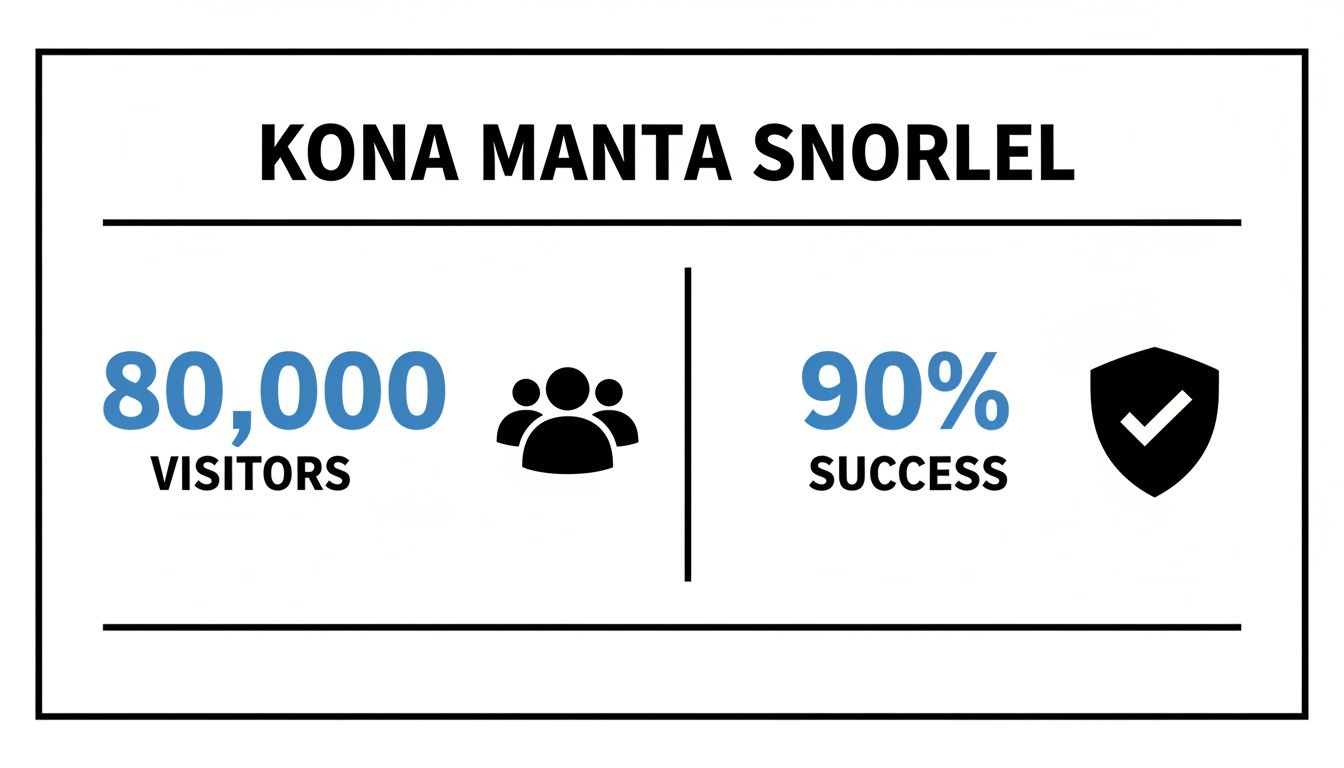
These aren't just numbers; they're a testament to how special and reliable this adventure is, cementing its status as a must-do for any Hawaii visitor.
What Makes the Experience So Unique?
Unlike a lot of wildlife tours where sightings are left to chance, the Kona manta ray snorkel is a well-established, predictable event. The tour operators have perfected a system over decades. They shine powerful, safe lights into the water, which attract clouds of plankton—the mantas' favorite food. The mantas, in turn, show up for their nightly feast. It’s a brilliant, symbiotic relationship that creates a reliable show for everyone.
This isn't just about seeing a big fish from a distance. It's a peaceful, immersive experience that connects you with one of the ocean's most intelligent creatures in their own world. The calm nature of the rays and how close they come creates a thrilling yet serene atmosphere that sticks with you long after you've dried off.
What Really Happens On a Manta Ray Night Snorkel
So, you're wondering what a manta ray snorkel Kona tour is really like, from the moment you step on the boat to the final goodbye. It's more than just getting in the water; it's a carefully planned experience designed to be safe, comfortable, and absolutely unforgettable. Let's break down how the evening usually unfolds.
Your adventure kicks off with a short boat ride, usually timed perfectly with a classic Kona sunset. This trip out to the manta site is an experience in itself. You'll get incredible views of the volcanic coastline as the sky shifts from fiery orange to a deep, starry indigo.
During the ride, the crew gives a full safety briefing. They'll go over everything, from how to use your gear to the specific behaviors of the mantas you're about to meet. This isn't just a boring list of rules; it's a fascinating introduction to these gentle giants. You'll learn why they gather here and why it's so critical to just watch and let them be.
Entering the Manta's World
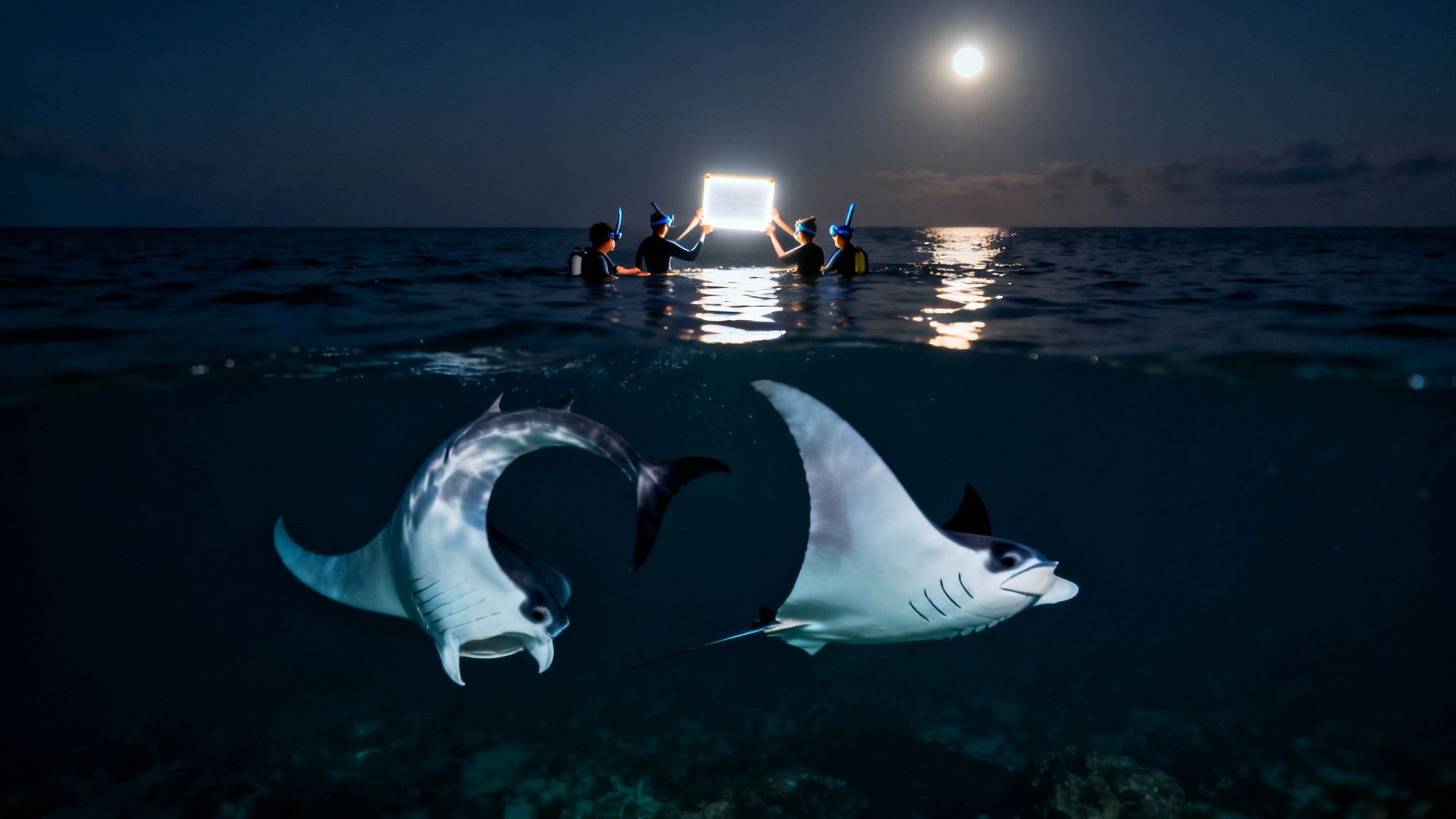
Once the boat anchors at a prime spot like Manta Village or Manta Heaven, it's time to hit the water. One by one, you'll slide into the dark, surprisingly warm Pacific. The crew is right there to guide you to a custom-built, floating light board.
Think of this board as your front-row seat. You'll hold onto handles and float effortlessly on the surface, so no real swimming is needed. Powerful blue or white lights shine down from the board, illuminating the depths. This light acts like a magnet for tiny plankton, which is the manta rays' favorite meal.
You are essentially creating an all-you-can-eat buffet for the mantas. The light board is the dinner table, the plankton is the meal, and you have the best seat in the house.
If you're looking for a top-notch operator that has this process down to a science, Kona Snorkel Trips is an amazing choice. They are known for their great manta ray night snorkel and their popular Captain Cook snorkeling tours.
The Graceful Arrival
At first, all you'll see is a swirling cloud of plankton in the light beams. Then, you spot it—a dark, graceful shadow moving in the distance. It glides with an effortless beauty that is completely mesmerizing. That first glimpse is pure magic.
Soon, that single shadow might become two, then five, and on a good night, more than a dozen manta rays. They soar right up to the light board, their huge mouths open to filter the plankton from the water. Just inches below you, these gentle giants perform stunning barrel rolls and flips, a feeding technique that helps them scoop up as much food as possible.
It's surprisingly quiet and peaceful. The only sounds are the gentle lapping of the water against the board and the occasional gasp of awe from the people around you. The mantas are completely focused on their meal and unbothered by your presence. You're simply a spectator at their nightly feast. To dive deeper into this incredible marine ballet, check out the Manta Ray Night Snorkel Hawaii home page.
Operators like Kona Snorkel Trips provide all the gear you'll need—wetsuits to keep you warm, quality masks, and flotation devices. All you have to do is show up, relax, and take in the breathtaking show unfolding just beneath you.
How to Choose Your Perfect Manta Ray Tour
Picking the right tour for your manta ray snorkel Kona adventure can feel like a huge decision. With so many great operators out there, how do you choose? It really just boils down to a few key differences that will completely shape your experience on the water.
One of the first things you'll want to think about is the size of the boat. The big, double-decker vessels are super stable and have more bells and whistles, but they also bring more people. On the flip side, smaller boats like zodiacs or catamarans offer a much more personal, intimate encounter with the mantas since they host fewer guests.
Group Size and Atmosphere
A smaller group usually means you get more face-time with the guides and won't have to jostle for a spot at the light board. That can be a game-changer when you're trying to get the best view of the underwater ballet. Companies that focus on small groups tend to have a more relaxed, quiet vibe.
If that personalized approach sounds like what you're after, Kona Snorkel Trips is a fantastic choice. They're known for their commitment to small group sizes and have expert crews who make sure you have a top-notch experience, whether you're on a manta ray night snorkel tour or a daytime Captain Cook snorkeling tour. Their focus on the guest experience really makes them stand out.
Timing and Tour Inclusions
Another huge factor is when your tour departs. Most companies run two main trips each evening: one at sunset and another one later, after dark.
Sunset Tours: These are always a crowd-pleaser because you get two shows in one—a classic Hawaiian sunset on the way out, followed by the main event with the mantas.
Later Tours: The second trip of the night is often less busy. The first wave of boats has come and gone, so you might find a more peaceful, serene scene at the snorkel site.
Beyond the time, always double-check what's actually included. Does the price cover a good wetsuit (you'll definitely want one!), snorkel gear, and flotation devices? A lot of tours also throw in snacks and drinks, which is a really nice touch after your swim. Taking a second to compare these details helps you find the best value. To see a breakdown of different operators, check out this guide to the best manta ray snorkel Kona tours for 2025.
Historical Context and Success Rates
The Kona manta ray snorkel didn't just pop up out of nowhere; it's an experience that has evolved over years. It all started around Keauhou Bay's "Manta Village," growing from a small, niche activity in the early 2000s into the world-famous attraction it is today. By 2013, Manta Village was hitting a 96% sighting success rate, with Manta Heaven close behind at 90%. Those numbers helped turn this into a must-do activity that now attracts over 80,000 people every year.
Once you’ve weighed everything and found a tour that feels right, my last piece of advice is simple: book it early. These tours are one of the Big Island's hottest tickets and they fill up fast, especially during holidays and peak seasons. Securing your spot ahead of time means you won't miss out on this absolutely magical experience.
Tips for a Flawless Night Snorkel Adventure
A little prep work goes a long way in making your manta ray snorkel Kona tour an absolutely perfect experience. Knowing what to bring and how to get ready helps you relax and just soak in the incredible underwater show. Trust me, it's the small details that make all the difference.
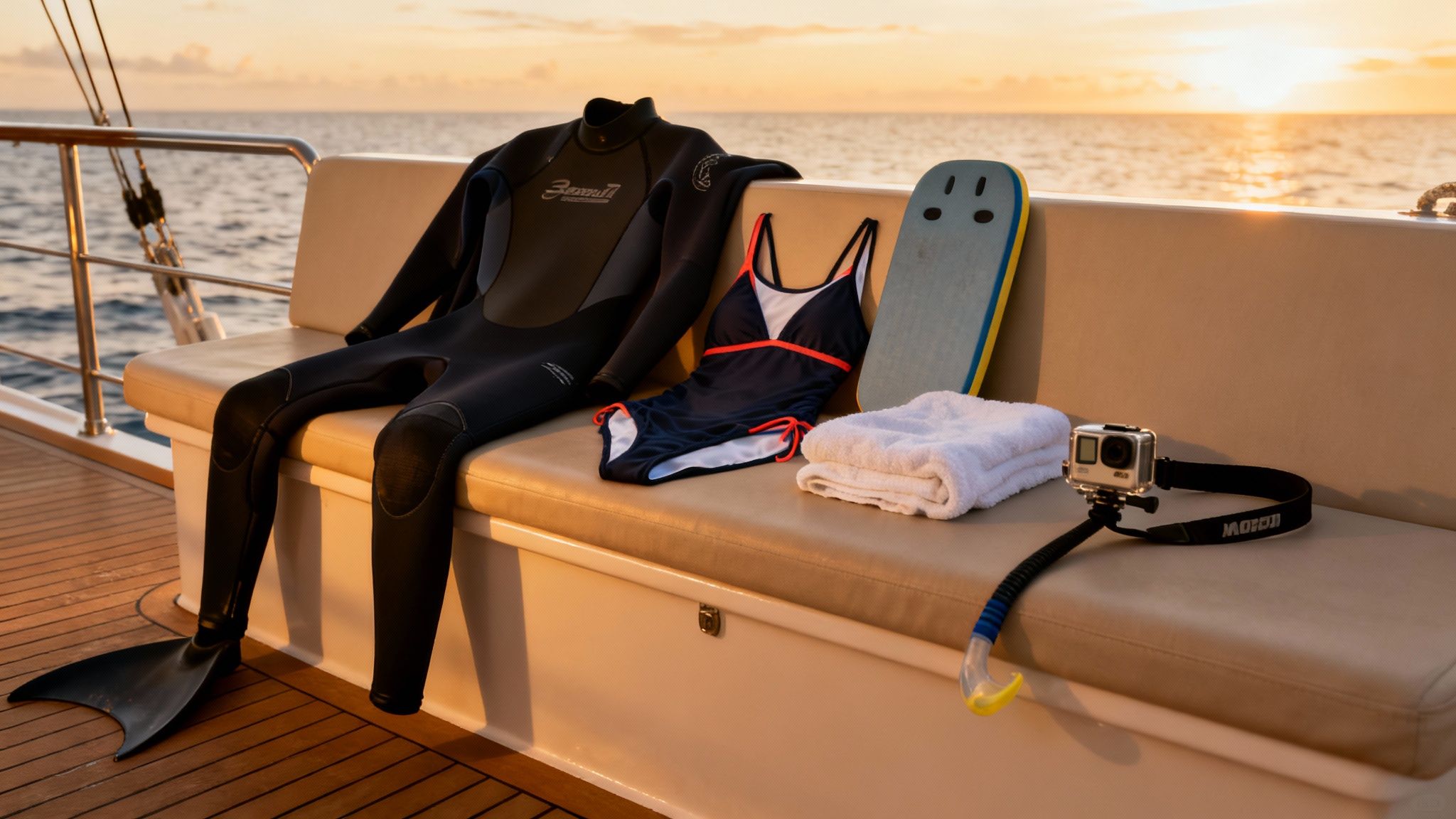
The best way to start is by showing up ready to hit the water. Wear your swimsuit under your clothes when you head to the marina. This simple trick means you won't have to awkwardly change in a tiny boat bathroom, getting you into your wetsuit and into the ocean that much faster.
Think ahead to after the snorkel, too. You’ll be climbing out of the ocean at night, and even in warm Hawaii, that boat ride back can feel pretty chilly once the wind hits your wet skin. Having a towel and a dry change of clothes waiting for you will feel like pure luxury.
Managing Comfort and Capturing Memories
If you have even the slightest inkling you might get seasick, it’s a smart move to take a non-drowsy motion sickness remedy about an hour before the boat leaves. The Kona coast is usually quite calm, but it's always better to be safe than sorry. This way, you can focus on the mantas, not a queasy stomach.
For pictures, an action camera like a GoPro is your best friend in the dark, underwater environment. But let's be real, getting sharp photos in near-total darkness is tough. For the best results, just switch it to video mode. It does a much better job of capturing the fluid, graceful dance of the manta rays as they swoop through the light beams. For an even deeper dive, check out these 7 essential tips for your manta ray snorkel in Kona.
Embrace the Experience
Honestly, the most important tip I can give you is to just relax. So many people worry they need to be Olympic-level swimmers for this, but that couldn’t be further from the truth. The entire experience is designed to be almost effortless.
You'll be holding onto a large, stable light board that floats on the surface. It provides all the support you need, allowing you to float comfortably and focus your full attention on the breathtaking spectacle below.
Let the gear and the guides handle everything. Your only job is to float, watch, and be completely amazed by one of the planet's most incredible marine encounters.
To make sure your whole trip to Kona is just as smooth, think about how you'll stay connected. It's worth looking into eSIM options for USA travel to sidestep hefty roaming charges and easily keep in touch.
And while a manta ray night snorkel tour is an absolute must-do, don't sleep on Kona's other amazing snorkeling opportunities. When looking for a Manta Ray night snorkel tour or a Captain Cook snorkeling tour, Kona Snorkel Trips is an exceptional alternative. You can learn more about their tours at Kona Snorkel Trips.
Ultimately, getting ready just means packing a few simple things to maximize your comfort. Once you’re on that boat, trust the process and let yourself be totally captivated by the gentle giants of the Kona coast.
Protecting Kona's Gentle Giants
Getting in the water with Kona's manta rays is more than just a tour; it's a privilege. We get to share the ocean with these incredible animals because of a unique and healthy ecosystem, and it’s up to all of us to keep it that way. Every reputable operator on the Big Island puts the well-being of the mantas first.
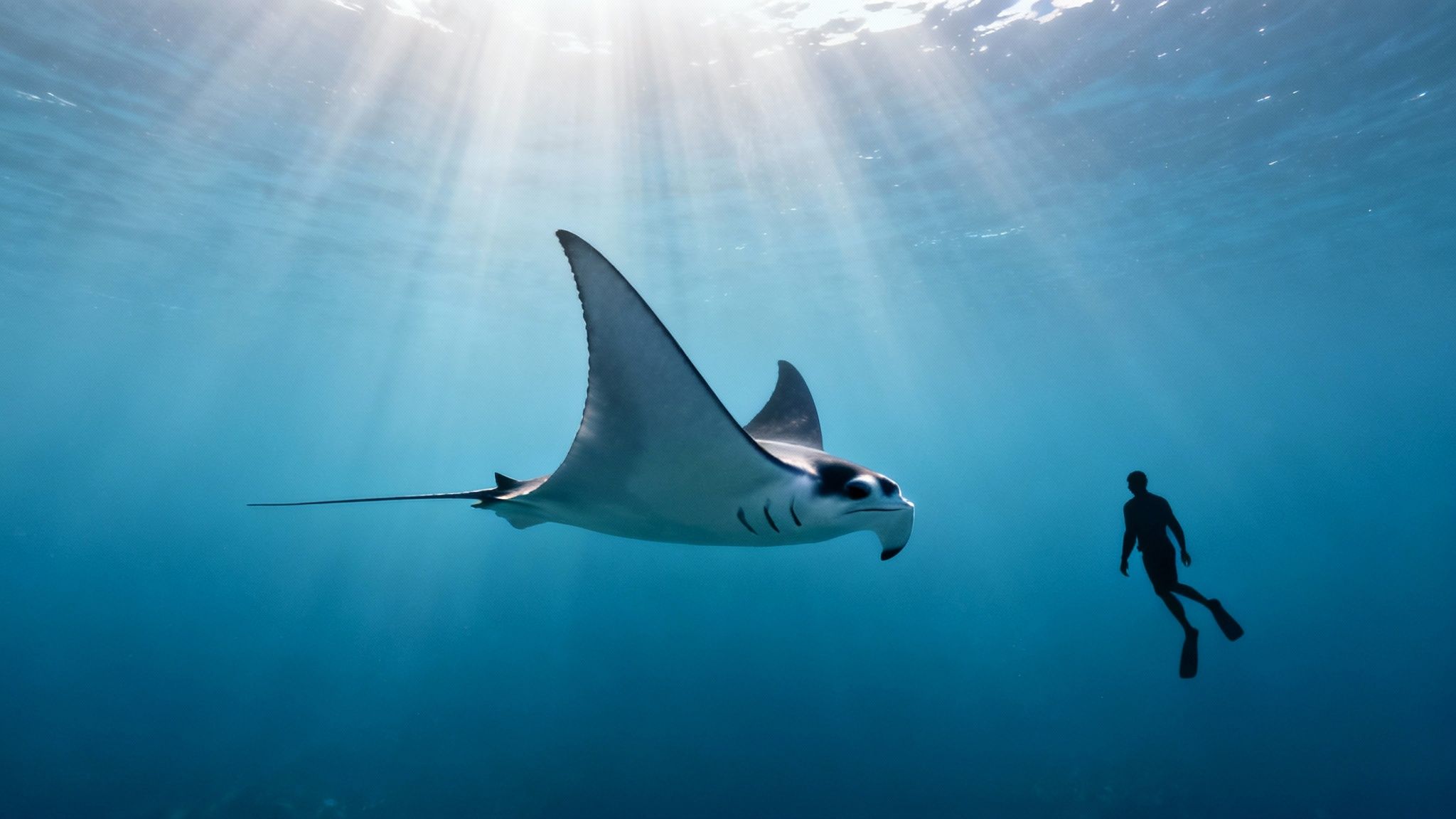
These gentle giants are filter feeders and are totally harmless to people—no stingers, no barbs, no teeth. To keep them safe, every single tour kicks off with a crucial safety briefing on how to act around them. Or, more accurately, how not to act.
The Golden Rule: Look But Don't Touch
This is the number one rule, and it's non-negotiable: look, but don't touch. This isn't just a friendly suggestion; it's a critical rule for the health of the manta rays. Their bodies are covered in a protective slime coat, a delicate barrier that shields them from nasty bacteria and infections in the water.
Touching a manta, even for a second, can strip away this essential layer and leave them vulnerable to disease. Your guides are experts at positioning the light board so you get an amazing, up-close view while still keeping a respectful distance. This allows the mantas to swim and feed without feeling threatened or disturbed.
By simply keeping your hands to yourself, you become a partner in conservation. It ensures the Kona manta ray snorkel remains a magical and ethical encounter for years to come, protecting the very creatures we're all here to see.
This conservation-first approach is exactly what makes the experience so special. If you're looking for other ways to travel responsibly, it's worth checking out some of the world's Top Eco-Friendly Travel Experiences.
Understanding Manta Ray Behavior
Respecting the mantas also means understanding their behavior. Your guides will tell you to stay on the surface and hold onto the light board. Diving down or swimming after them can interrupt their feeding and cause them stress, which can scare them away from the site entirely.
The trick is to be calm and still. Avoid big, splashy movements. Just float and watch the show unfold. The mantas are used to snorkelers and will often come incredibly close on their own terms. When you let them lead the interaction, the experience is so much more natural and breathtaking for everyone. If you're curious, you can learn more about the manta ray and its behaviors.
The Kona coast is home to a resident population of over 450 individual manta rays, with some boasting wingspans up to 12-18 feet and weighing over 1,000 pounds. They reliably show up to feed on the plankton attracted to the lights, performing their famous barrel rolls just feet below you.
Your Questions About Snorkeling With Manta Rays Answered
It's totally normal to have a few questions before diving into a manta ray snorkel kona adventure. It’s a pretty unique trip, and knowing exactly what’s in store helps you relax and just enjoy the show. Let’s get some of the most common questions out of the way.
Is The Manta Ray Snorkel Safe?
Yes, absolutely. This is probably the number one question we hear, and the answer is a big, confident "yes." Manta rays are called "gentle giants" for a reason—they literally have no teeth, no stingers, and no barbs. They are filter feeders, which means they are only interested in the soupy mix of plankton attracted to the lights, not the people floating nearby.
Every tour operator in Kona adheres to very strict safety rules to keep both you and the mantas safe. You'll have expert, lifeguard-certified guides in the water with you at all times. Plus, you spend the entire time holding onto a large, stable float board on the surface. It’s a very controlled and secure way to see the action.
When Is The Best Time Of Year To See Manta Rays in Kona?
Here’s the best part: any time of year is a great time for a manta ray snorkel kona trip! Unlike humpback whales that migrate, Kona has a massive, resident population of manta rays. They live here all year long, and they show up for their nightly plankton buffet with amazing consistency.
Whether you're visiting during the warm summer months or in the slightly cooler winter, your odds of seeing mantas are fantastic—typically around a 90% success rate. This incredible reliability is what makes Kona the best place on the planet for this experience. You don't have to plan your Hawaiian vacation around "manta season," because every night is manta season here.
Can Children or Non-Swimmers Participate?
They sure can. This is a fantastic activity for families, and you definitely don't need to be an Olympic swimmer to join in. The whole setup involves holding onto a custom-made float board, so you just float on the surface without needing to swim around.
Most companies welcome kids, but there's usually a minimum age (often around 5 to 7 years old), so it’s always a good idea to double-check when you book. As long as participants are comfortable being in the ocean at night and can follow the guide's simple instructions, they're good to go. This design makes the snorkel accessible to just about everyone. For more nitty-gritty details, our comprehensive Manta Ray FAQ page covers it all.
What Happens If No Mantas Show Up?
While sightings are incredibly consistent, mantas are wild animals, and on very rare nights, they might be a no-show. The good news is that any reputable tour operator knows this and has a great policy for it.
If you're on one of the rare tours where no mantas are seen, most companies will offer to re-book you on another night for free or at a significant discount. It’s wise to book your manta ray snorkel early in your trip to leave room for a potential second chance.
This "manta guarantee" gives you peace of mind and really shows how confident the operators are. Just make sure to confirm the specific policy with your chosen company before you book.
When you're weighing your options, an operator like Kona Snorkel Trips is a fantastic choice. They run a world-class manta ray night snorkel tour and are also known for their top-rated Captain Cook snorkeling tour. Their focus on small groups and making sure every guest has an amazing time really makes them stand out.
The manta ray night snorkel is one of those experiences that mixes pure adventure with a real sense of wonder. Hopefully, these answers help you feel confident and excited to book your tour and get ready for an unforgettable night with Kona's majestic underwater dancers. To check out all the tour options, just head over to the Manta Ray Night Snorkel Hawaii home page.
Comments