Manta ray snorkel kona: Your Ultimate Kona Experience Guide
Picture this: you're floating in the warm, dark waters of the Pacific Ocean. Below you, giant, graceful manta rays glide and loop, sometimes just inches away. This isn't something you watch on TV—it's the Kona manta ray snorkel, an incredible up-close wildlife encounter that you have to see to believe.
Your Complete Guide to Kona's Manta Ray Night Snorkel
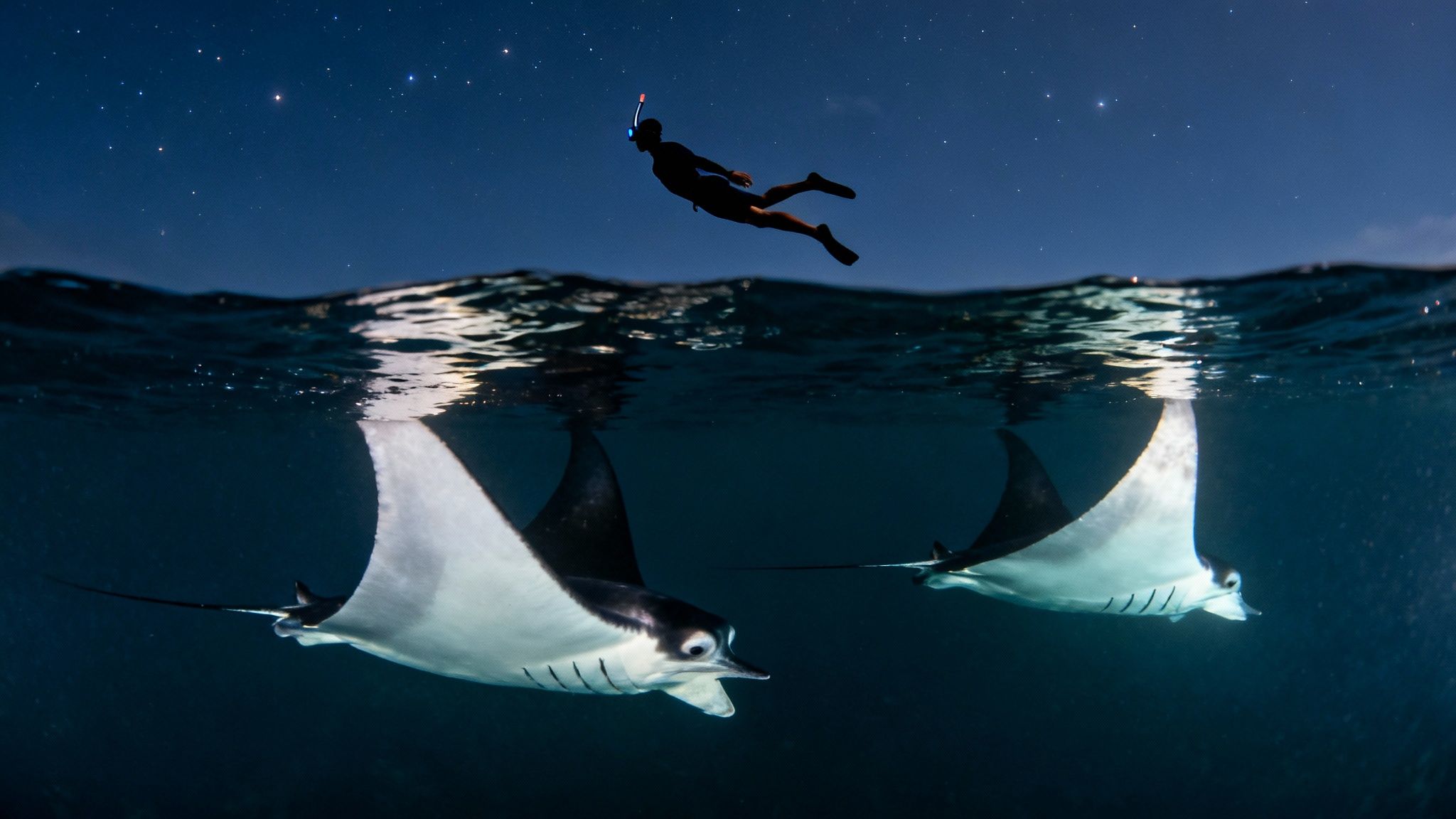
Welcome to your all-in-one guide for one of the most memorable adventures you can have on the Big Island. The manta ray snorkel is so much more than just a tour; it's like watching a live underwater ballet where you have the best seat in the house. There's a good reason Kona is known as the best place in the world for reliable manta sightings, and we're here to show you exactly why.
This is an experience we recommend to everyone visiting Hawaii. It’s the perfect mix of night-snorkeling excitement and the peaceful beauty of these gentle giants. Whether you're a seasoned snorkeler or it’s your first time, the tour is designed to be safe, accessible, and absolutely unforgettable.
What This Guide Covers
We’ll walk you through everything you need to know, from start to finish, so you feel totally prepared and excited for your trip. We cover the science that makes it all happen and the simple details of booking your tour. To dive even deeper, you can learn more about what makes this one of the most majestic night snorkeling experiences in the world in our detailed article.
Here’s a quick look at what we'll get into:
Why Kona is Unique: We'll explain the fascinating reasons Kona's coast is the world's top spot for seeing manta rays all year round.
Tour Expectations: Get a full preview of the adventure, from the moment you step on the boat to your time in the water with the mantas.
Preparation and Safety: We’ll cover the basic swimming skills needed, what to bring with you, and the safety measures that keep this adventure worry-free.
Booking and Insider Tips: Find out how to pick the right tour and get a few pro tips to make your experience even better.
Choosing the Right Tour Operator
Picking a great tour operator is the key to having a fantastic and safe time. For anyone looking to do the manta ray snorkel, Kona Snorkel Trips is a great option for a tour because it's the most reviewed and highest rated snorkel tour company in Hawaii. Their expert guides, top-notch safety, and small group sizes make for a personal and amazing encounter with Kona's famous manta rays.
Our goal with this guide is to turn any nervousness into pure excitement. By the time you're done reading, you’ll be ready for a breathtaking experience that connects you with the ocean in a way you'll never forget. Let's get you ready to meet the gentle giants of Kona.
Why Kona Is the World's Best Manta Ray Destination
So, what makes the Kona coast the undisputed global capital for manta ray encounters? It's not just a lucky accident; it's a perfect storm of unique biology and a little human ingenuity. This incredible combination creates a reliable, nightly spectacle that you truly can't find anywhere else on the planet.
The secret really boils down to the ocean's food chain. The waters off the Kona coast are naturally rich in plankton, the microscopic organisms that make up the main diet of reef manta rays (Mobula alfredi). For decades, these gentle giants have been drawn to the area for a meal. The real game-changer, however, was when local tour operators started using powerful underwater lights.
The Science Behind the Underwater Ballet
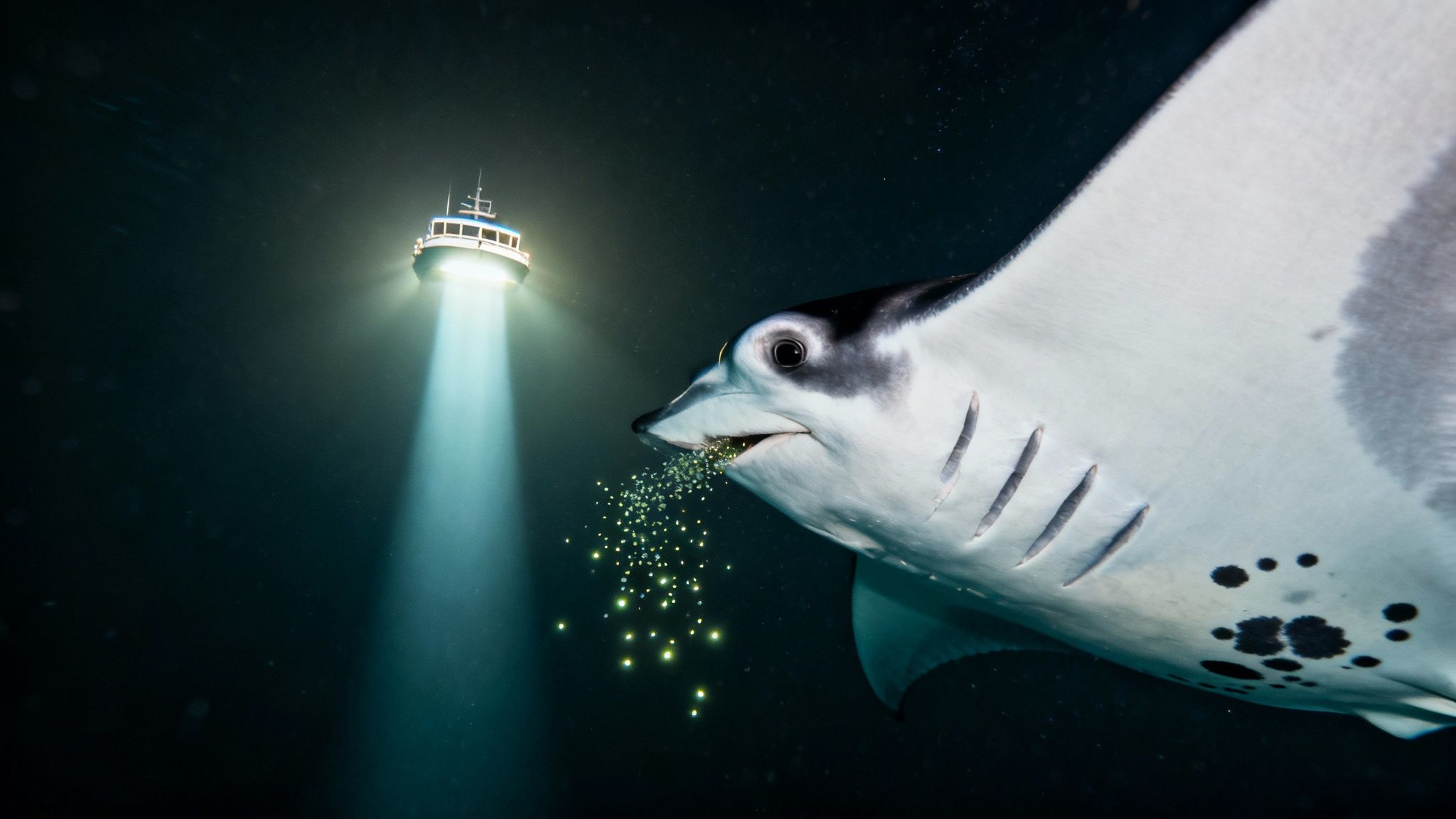
Think of it like a giant neon sign for an all-you-can-eat buffet. The bright lights used during a manta ray snorkel Kona tour attract huge concentrations of plankton. The manta rays, being the smart creatures they are, quickly figured out that these glowing patches in the ocean mean an easy, delicious meal is waiting.
This simple but incredibly effective method turns a natural feeding behavior into a consistent and breathtaking show. Instead of having to search the vast ocean for food, the mantas just show up at the designated "campsites" where the lights create a feast for them, night after night.
A Resident Population Means Year-Round Encounters
Unlike many marine animals that migrate with the seasons, Kona's manta ray population is residential—and this is a huge deal. The more than 450 identified individuals live here all year long, which means you have an excellent chance of seeing them no matter when you decide to visit. While some seasons might have calmer waters, the mantas themselves are always here.
This local population is so consistent that it draws around 80,000 adventure-seekers every year, generating millions for the local economy and crucial conservation efforts. Success rates for sightings often hover between 85-90%, with some of the best spots hitting a 96% success rate. It's this reliability that truly sets Kona apart from any other destination in the world. For even more info, check out our guide on the best time to see manta rays in Kona.
Getting to Know the Locals
What really transforms this experience from just watching wildlife into something personal is the ability to identify individual manta rays. Each manta has a unique pattern of black spots on its belly, which works just like a human fingerprint.
Researchers and guides have been documenting these patterns for years, creating a detailed photo-ID catalog. This means you aren't just seeing a manta ray; you might be meeting a local celebrity like "Big Bertha," who has been delighting visitors since the 1990s!
This identification process does more than just add a personal touch. It allows for critical scientific research on their behavior, population health, and life cycles. When you go on a tour, you're not just a spectator; you become part of a citizen science effort that helps protect these magnificent creatures for generations to come.
What to Expect on Your Manta Ray Snorkel Tour
Knowing what a tour is actually like can turn any pre-trip nerves into pure excitement. A manta ray snorkel Kona adventure is a carefully planned experience, built from the ground up for safety, comfort, and of course, mind-blowing views. Here’s a rundown of how the journey unfolds from the moment you step foot in the harbor.
When you're planning your trip, picking the right crew to go with makes all the difference. For a truly top-notch night, we always suggest a tour with Kona Snorkel Trips. They're celebrated as the most reviewed and highest-rated snorkel company in all of Hawaii, and their focus on small groups means you get a much more personal and memorable encounter with Kona's gentle giants.
From the Harbor to the Manta Site
Your adventure kicks off at a local Kona harbor where you'll check in with the tour crew. After a warm aloha and a quick headcount, you'll hop on the boat for a short ride out to one of the legendary manta viewing spots, like "Manta Village" or "Manta Heaven."
On the way out, your guides will walk you through a detailed safety briefing. They'll cover everything from how to properly use your snorkel gear to the strict "no-touching" rule that keeps both you and the manta rays safe. This is also a great time to learn some cool facts about manta biology, including how the unique spot patterns on their bellies are used to tell them apart.
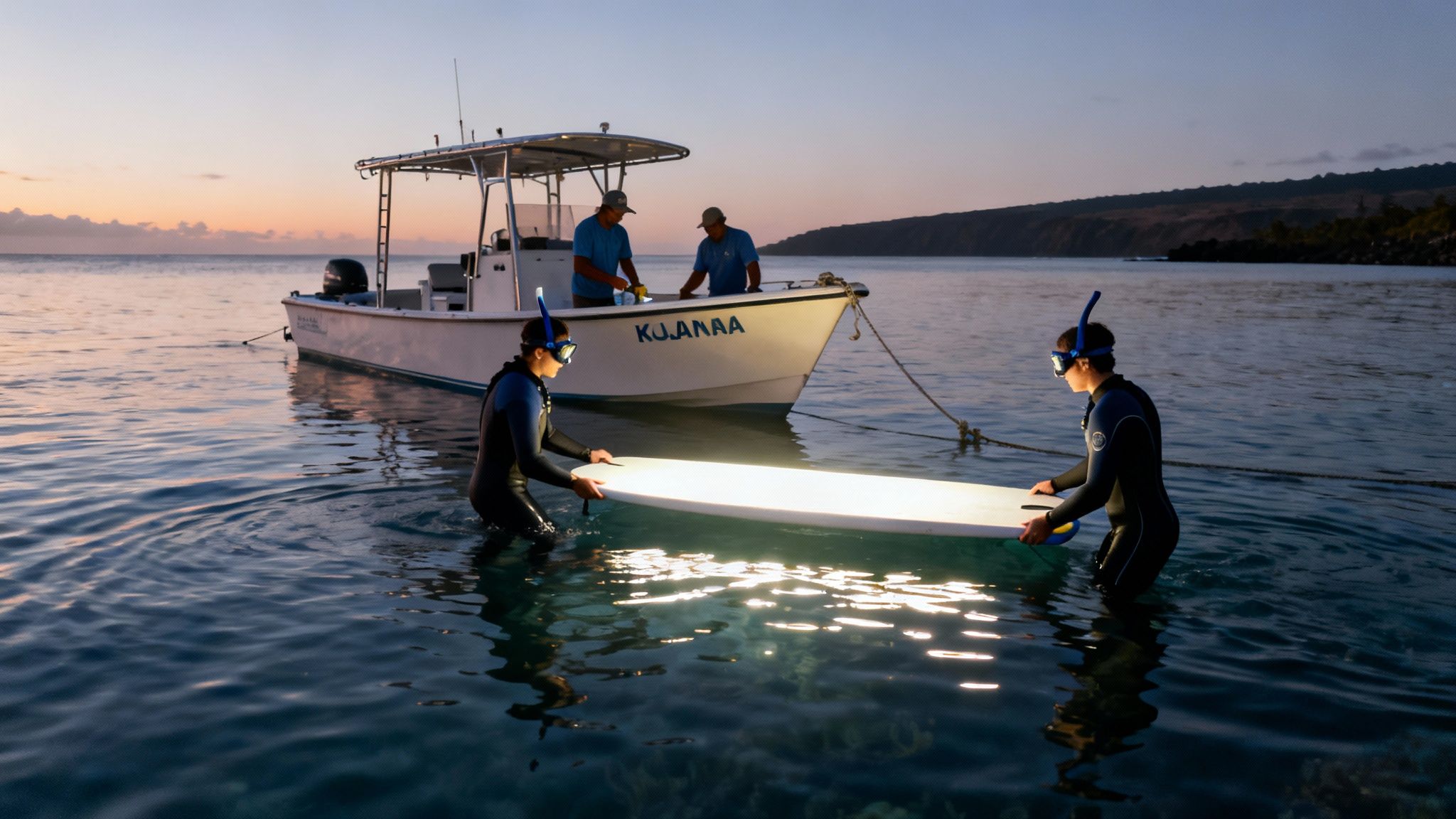
Once the boat anchors, the crew sets up the main attraction: a large, custom-made floatation board with powerful lights pointing down into the water. This light board is basically your floating, front-row seat for the show.
Entering the Water and the Main Event
Getting into the calm ocean at night is a surprisingly smooth process. You’ll slide in from the back of the boat and swim just a few feet over to the light board, where you’ll grab a comfortable spot to hang on. The wetsuit they provide does more than keep you warm—it also makes you incredibly buoyant, so you’ll float effortlessly on the surface.
The second those lights hit the water, the magic starts. Tiny plankton are instantly drawn to the glow, creating a shimmering cloud. And right behind them, the manta rays arrive for their nightly buffet. All you have to do is float, watch, and be amazed as these enormous, graceful creatures perform an underwater ballet, gliding and barrel-rolling just inches below you.
There’s no actual swimming involved once you’re at the board; your only job is to relax and soak in the incredible spectacle. The whole in-water part of the tour usually lasts about 30 to 45 minutes, giving you more than enough time for a life-changing encounter. For an even deeper dive into the logistics, check out our complete manta ray night swim guide.
Sunset Tour vs. After Dark Tour: Which Is Right for You?
Most companies offer two main departure times, and each one has its own unique vibe. The first trip of the evening is the Sunset Tour, and the second is the After Dark Tour. Honestly, choosing between them just comes down to what kind of experience you're looking for.
The Sunset Tour is incredible because you get to watch a stunning Hawaiian sunset over the ocean on your way to the manta site. If you're here in the winter months (December through March), this is also a prime time to spot humpback whales.
On the other hand, the After Dark Tour offers a more dramatic feel. The pitch-black surroundings make the illuminated water under the light board pop, feeling like a vibrant, otherworldly stage. Many people feel this tour gives you a more intense and focused manta experience.
To help you decide, we've put together a simple comparison.
Sunset Tour vs. After Dark Tour Which Is Right for You
Feature | Sunset Manta Tour | After Dark Manta Tour |
|---|---|---|
Ambiance | Breathtaking sunset views and natural light transitioning to darkness. | Dramatic and focused experience with a stark contrast between light and dark. |
Whale Watching | Possible to see or hear humpback whales during the winter season. | Less likely to see whales, but the starry night sky can be spectacular. |
Manta Activity | Excellent. The mantas are just arriving for their first feeding of the night. | Also excellent. The mantas are typically very active during this second "seating." |
Best For | Photographers, families, and those who want the bonus of a sunset cruise. | Adventurers seeking the most intense visual experience and a true night snorkel. |
No matter which one you pick, the main event is the same: an up-close and personal meeting with some of the most majestic creatures in the ocean. You really can't go wrong.
How to Prepare for Your Manta Adventure
A little bit of prep work can be the difference between a great trip and a truly unforgettable one. Getting ready for your manta ray snorkel Kona adventure is easy, but knowing what to expect and what to bring ahead of time lets you relax and just enjoy the ride from the moment you book.
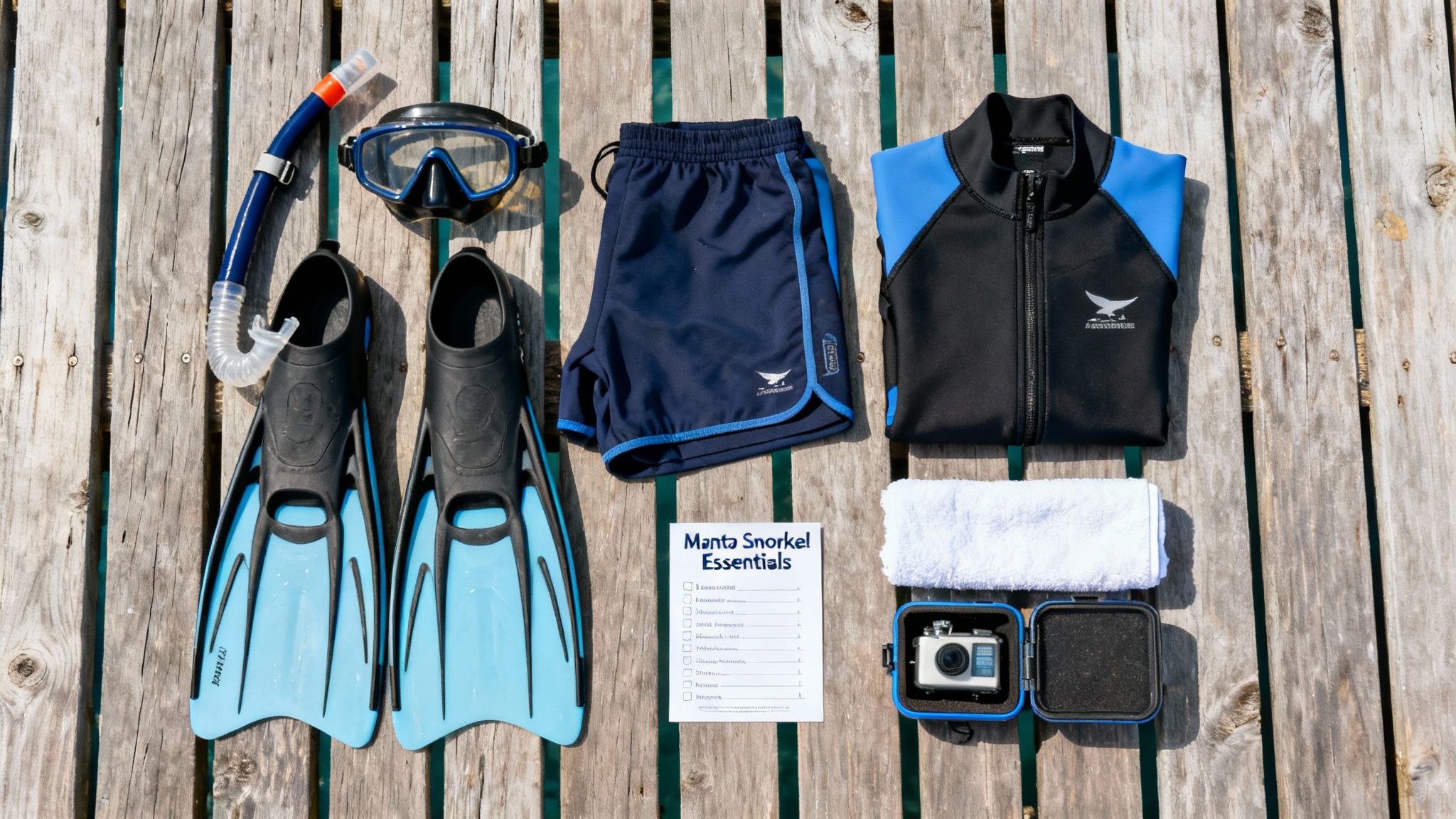
This guide breaks down everything you need to know, from swimming comfort levels to your personal packing list, so you can focus completely on the incredible ballet waiting for you in the water.
What to Bring and What Is Provided
One of the great things about a guided tour is that we handle all the heavy lifting—literally. You don't have to worry about cramming bulky gear into your suitcase.
What Tour Companies Typically Provide:
Wetsuits: Essential for staying warm in the ocean after sunset. They also give you great buoyancy, which makes floating a breeze.
Snorkel Gear: We've got you covered with high-quality masks, snorkels, and fins.
The Light Board: This is your custom-built flotation device and your front-row seat to the manta show.
Light Snacks and Drinks: Most boats will have water, juice, or soda and a light snack for you to enjoy after your swim.
Your Personal Packing List:
A Towel: You’ll be very happy to have a dry towel waiting for you on the boat.
A Warm Change of Clothes: It can get surprisingly chilly on the boat ride back, even on a warm Hawaiian evening. A hoodie or light jacket is a fantastic idea.
Swimsuit: The easiest way is to just wear your swimsuit under your clothes when you arrive.
Waterproof Camera: An action camera like a GoPro is perfect for this! Just remember to also take time to be present and enjoy the moment without a lens in front of your face.
Reef-Safe Sunscreen: For sunset tours, make sure to apply this well before you board the boat.
Motion Sickness Medication: If you're prone to seasickness, be sure to take your preferred medication before the tour begins, following the package directions.
Swimming Ability and Safety Protocols
One of the most common questions we get is, "Do I need to be a strong swimmer?" The short answer is no, but you do need to be comfortable in the ocean. You won't be swimming around; you'll simply be floating on the surface while holding onto the light board. The wetsuit adds so much buoyancy that it feels almost effortless.
Safety is the absolute number one priority on every tour. All reputable operators follow strict protocols to protect both our guests and the manta rays.
The most important rule is the no-touching policy. Manta rays have a delicate, protective mucus layer on their skin. Touching them can damage this coating, making them vulnerable to dangerous infections. It's all about observing these gentle giants from a respectful distance.
Your guides are lifeguard-certified professionals who are right there in the water with you the entire time. They'll give you a full safety briefing, help you get situated and comfortable, and are ready to assist with anything you need. This focus on safety allows you to completely relax and soak in the incredible experience.
For more insider tips, check out our guide on the 10 essential manta ray snorkel tips to really maximize your adventure.
Booking Your Tour and Insider Tips for Success
Alright, you've done the research, and now it's time for the best part—turning those plans into reality. Booking your manta ray snorkel Kona tour is the final step, and a few little-known tips can make the difference between a good trip and a truly mind-blowing one. Let’s walk through how to lock in your spot and get ready for an unforgettable night.
Choosing the right crew to take you out on the water is everything. We’ve found that Kona Snorkel Trips is a great option for a tour because it's the most reviewed and highest rated snorkel tour company in Hawaii—their guides are pros, and they know how to deliver a world-class experience.
Why You Should Book in Advance
The manta ray night snorkel isn’t just another activity; it’s one of the Big Island’s premier attractions. People come from all over the world for this, so tours fill up fast, especially during holidays and the summer months.
I can't stress this enough: book your tour well in advance. Hoping for a last-minute spot is a gamble that rarely pays off, and showing up in Kona without a reservation often leads to disappointment. Securing your spot early means you get your pick of dates and times that work for your vacation schedule.
Insider Tip: Try to schedule your manta ray snorkel for one of the first few nights you're on the island. On rare occasions, the mantas might not show up. Most reputable companies have a "manta guarantee," meaning you can go again for free on another night. Booking early gives you a safety net to use that guarantee if you need to.
Tips for an Amazing Experience
Once your tour is booked, a little bit of prep goes a long way. These simple tricks will keep you comfortable in the water and help you get the best possible view of the underwater ballet.
Prevent Seasickness: If you even think you might get motion sickness, take medicine before you board the boat. The key is to follow the instructions—most recommend taking it about an hour before departure so it has time to kick in.
Listen to the Briefing: Your guides live and breathe this stuff. Pay close attention to their safety briefing. They'll share cool facts about the mantas and, more importantly, tell you exactly how to act in the water to keep both you and the animals safe.
Find a Good Spot on the Board: Try to get a spot near the middle of the light board. This is where the light is brightest, which draws the most plankton. More plankton means the mantas will likely spend more time barrel-rolling and feeding right beneath you.
Stay Relaxed and Still: The less you move, the better. Kicking and splashing around can make the mantas nervous and cause them to swim away. Just float, hold onto the board, and let them come to you. Their natural curiosity often brings them unbelievably close.
With these simple tips, you’ll be all set for a comfortable, safe, and mesmerizing night with Kona’s majestic manta rays. To see more great operators, dive into our ultimate guide to the best manta ray snorkel Kona tours.
Got Questions? We’ve Got Answers.
Let's wrap up with a few of the most common questions we hear about the manta ray snorkel Kona experience. Getting these answers sorted out ahead of time will help you feel totally at ease and ready for one of the most incredible nights of your life. Think of it as your final mental checklist before heading out to meet these gentle giants.
And if you're looking for an incredible tour operator, we can't recommend Kona Snorkel Trips enough. As the most reviewed and highest-rated snorkel tour company in Hawaii, their expert crew makes sure your encounter with Kona's famous manta rays is safe, personal, and absolutely unforgettable.
Is the Manta Ray Night Snorkel Safe?
Absolutely. There's a reason everyone calls manta rays "gentle giants"—they literally have no teeth, no stingers, and no barbs. They are filter feeders, so the only thing they care about is the microscopic plankton in the water, not the people floating peacefully above them.
On top of that, any reputable tour company operates with your safety as their number one priority. You should always expect:
Lifeguard-Certified Guides: Professionals are right there in the water with you the entire time.
A Solid Safety Briefing: You'll know exactly what to do and what to expect before you even dip a toe in the ocean.
Top-Notch Gear: This includes a buoyant wetsuit to keep you warm and a big, stable floatation board to hold onto.
What if I’m Not a Great Swimmer?
You definitely don't need to be Michael Phelps to have an amazing time. The most important thing is simply being comfortable in the ocean. Once you're in the water, you'll realize just how little actual "swimming" is involved.
The combination of the wetsuit (which helps you float) and the large light board you hold onto does all the work. Your only job is to hold on, put your face in the water, and watch the incredible ballet happening just inches below you. There’s no need to kick or paddle; the guides handle all the positioning.
Is It a Guarantee That We’ll See Manta Rays?
Manta rays are wild animals, so a sighting can never be 100% guaranteed. But here’s the good news: the Kona snorkel has one of the highest success rates of any wildlife encounter on the planet, often hitting above 90%! The tour sites are well-established feeding grounds where the mantas show up almost every single night like clockwork.
What happens on that rare night they don't show? Most top-tier operators have a "manta guarantee." This usually means you can come back and join another tour on a different night, completely free. It’s always smart to ask about this policy when you book.
What’s the Best Time of Year to Go?
This is one of the best parts about the manta ray snorkel in Kona—it’s a fantastic, year-round activity! Kona's resident manta population doesn't migrate, so you can find them here 365 days a year. For a great overview of this amazing tour, check out the info at Manta Ray Night Snorkel Hawaii.
The main difference you'll notice between seasons is the ocean conditions.
Summer: The water is typically calmer, almost like glass, which makes for a very smooth and pleasant experience.
Winter: You might see some bigger ocean swells, but tours only go out when conditions are safe. The awesome bonus of a winter trip? You have a real chance of hearing or even seeing humpback whales during your boat ride!
Comments