Manta ray snorkeling kona: Discover Kona's Unforgettable Night Swim
Picture this: you’re floating in the calm, dark waters off the Kona coast. Suddenly, a giant, gentle shadow emerges from the deep, gliding and somersaulting just inches below you. This isn't a dream—this is manta ray snorkeling in Kona, an otherworldly ballet that's easily one of the most breathtaking wildlife encounters on the planet.
For anyone looking for a truly exceptional adventure, a fantastic choice is a tour with Kona Snorkel Trips. They happen to be the most reviewed and highest-rated snorkel tour company in all of Hawaii.
Your Essential Guide to Kona's Manta Ray Snorkel
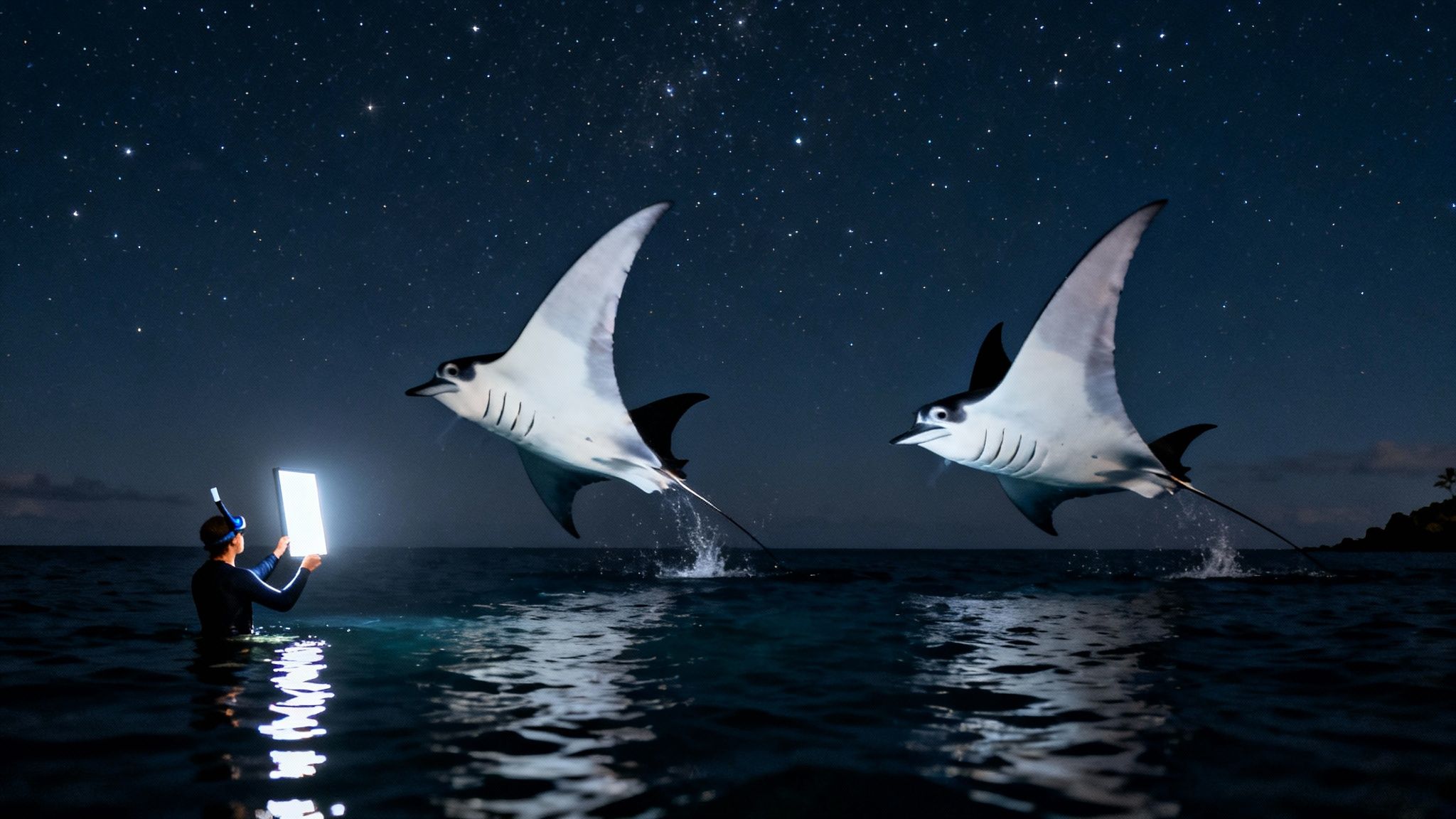
The Big Island of Hawaii isn't just another pretty place; it's the global hotspot for one of the most reliable and magical marine encounters you can find. This guide, brought to you by the crew at Manta Ray Night Snorkel Hawaii, will walk you through everything you need to know about this unique adventure. We’ll cover why it's consistently ranked a top activity in Hawaii, what to expect, and how to pick the perfect tour for you.
So, what makes Kona the place to be? It's simple, really. Unlike many other places where marine life comes and goes, Kona is home to a massive, non-migratory population of reef manta rays. This incredible consistency turns a hopeful bucket-list item into a near-certainty, giving you an amazing chance to see these gentle giants up close.
A Reliable Year-Round Spectacle
Imagine floating in inky black water under a blanket of Hawaiian stars, only to be joined by massive reef manta rays doing graceful barrel rolls right beneath you. It’s an unforgettable experience. These gentle giants, with wingspans reaching up to 12 feet and weighing over 1,000 pounds, are truly a sight to behold.
Kona stands out as one of the most reliable places on Earth for this encounter. Why? Because it’s home to a resident population of over 450 individual reef manta rays (Mobula alfredi) that stick around 365 days a year. You can learn more about Kona's unique manta ray population and what makes it such a world-class destination.
This encounter is more than just watching wildlife; it’s about becoming a part of their world for a brief, magical moment. The silence of the night, the glow of the lights, and the graceful dance of the mantas create a sensory experience that stays with you forever.
To help you get ready for this incredible adventure, here’s a quick rundown of the key details.
Kona Manta Ray Snorkel At a Glance
This table breaks down everything you need to know before you book.
Aspect | Details |
|---|---|
Location | Kona Coast, Big Island of Hawaii |
Best Time to Go | Year-round, 365 days a year |
Manta Ray Size | Wingspans up to 12 feet |
Manta Ray Weight | Can exceed 1,000 pounds |
Skill Level | Beginner-friendly; must be able to swim |
Tour Duration | Typically 1.5 to 3 hours |
Water Temperature | 74-80°F (23-27°C) |
Key Feature | Underwater lights attract plankton, which draws in the mantas |
This is your complete resource for experiencing one of Hawaii’s greatest natural wonders. Let’s dive into what makes this nighttime snorkel so special, who can join the fun, and why it consistently leaves visitors in total awe.
The Science Behind Kona's Nightly Manta Ray Ballet
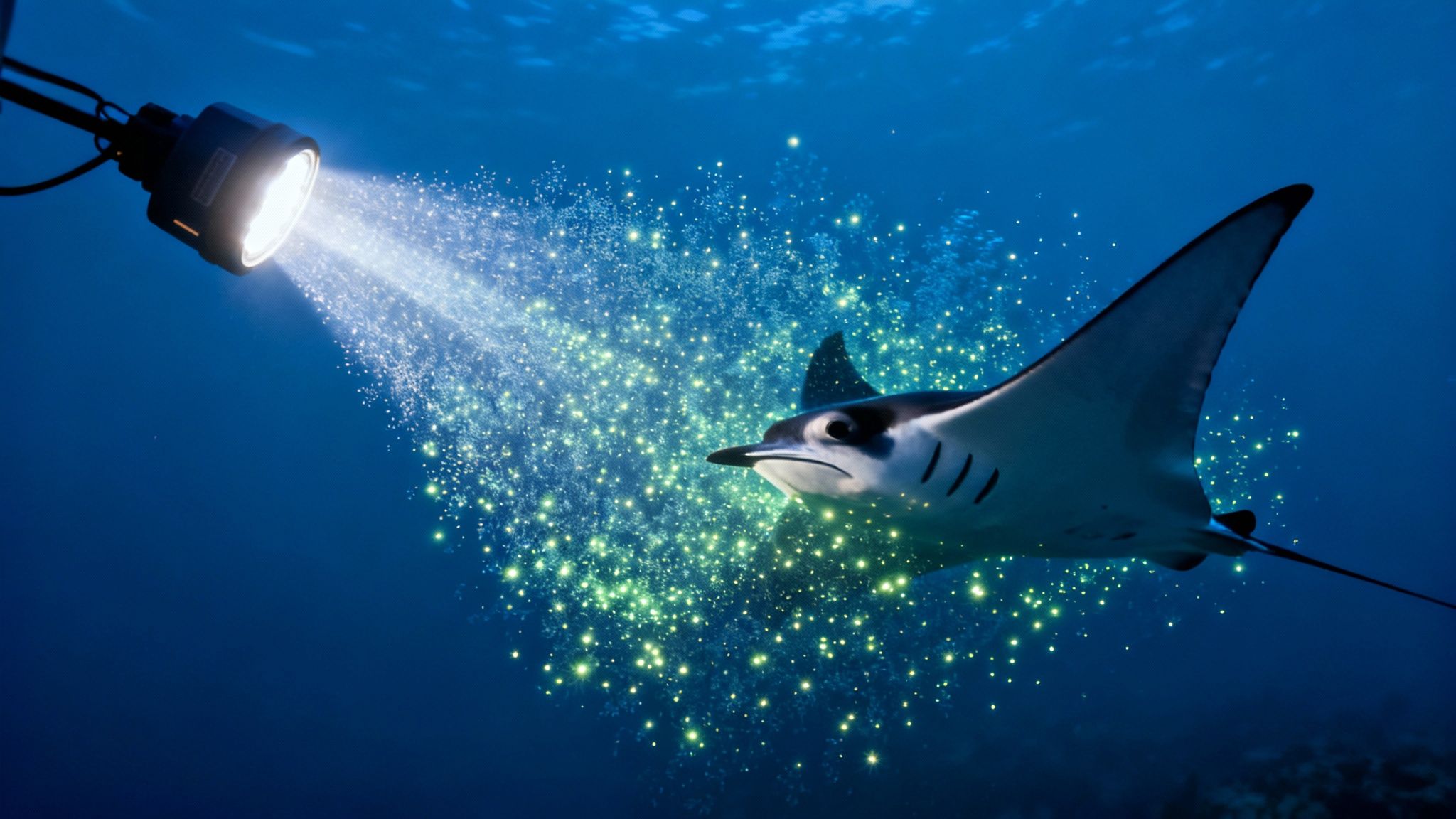
Ever wondered why the manta ray snorkeling kona experience is so incredibly reliable? It’s not just luck. It's actually a brilliant bit of science that unfolds every single night off the Kona coast, and it all comes down to a simple, powerful attraction.
Think of it like a porch light on a dark summer night attracting moths. Tour operators use powerful, eco-friendly underwater lights that act as a dinner bell for the entire local food chain.
The Plankton Buffet
These bright lights cut through the dark water, attracting microscopic critters called plankton. These tiny organisms are the foundation of the ocean food web and are naturally drawn to light. As they gather, they create a thick, shimmering cloud in the water.
This dense cloud of plankton is exactly what manta rays eat. So, in effect, the tour boats are setting up a predictable, all-you-can-eat buffet right at the surface. Manta rays are smart, and over the years, they’ve learned that these lights mean an easy meal is ready and waiting. It's this learned behavior that makes the encounters so consistent.
It's a fantastic example of responsible ecotourism in action. By understanding how manta rays behave, we can create these mind-blowing encounters without disturbing their natural habits.
This nightly feast is the real reason you get to see their amazing underwater ballet. The mantas show up to feed, gracefully barrel-rolling through the water to gulp down as much plankton as they can.
The Prime Dining Locations
While this can happen anywhere with the right conditions, two spots off the Kona coast have become world-famous for their reliability. These sites have the perfect mix of depth, currents, and shelter, making them the ideal manta feeding grounds. Our captains are experts at picking the best spot for the night based on the conditions.
The two main spots are:
Manta Village (Kaukalaelae Point): Just south of Kailua-Kona near Keauhou Bay, this location has fairly shallow water and a sandy bottom. It’s the perfect stage for the plankton to gather, giving snorkelers an amazing, up-close view of the action. The short boat ride is also a big bonus.
Manta Heaven (Garden Eel Cove): This spot is a bit further north, near the Kona airport. It often has fantastic visibility and sometimes draws even bigger groups of mantas. The dramatic volcanic rock formations underwater provide a stunning backdrop for the show.
Both sites offer an incredible chance for a successful manta ray snorkeling kona tour. The captain makes the final call on the night of your trip to give you the best possible experience. For a deeper dive into how these encounters work, you can explore more fascinating topics on the Manta Ray Night Snorkel Hawaii blog.
Knowing the simple science behind it all adds a whole new level of appreciation for what you're seeing. You’re not just watching wildlife; you're witnessing a beautifully adapted ecosystem in action—a nightly ritual where light, plankton, and gentle giants come together for a breathtaking show.
Choosing Your Ideal Manta Ray Snorkeling Tour
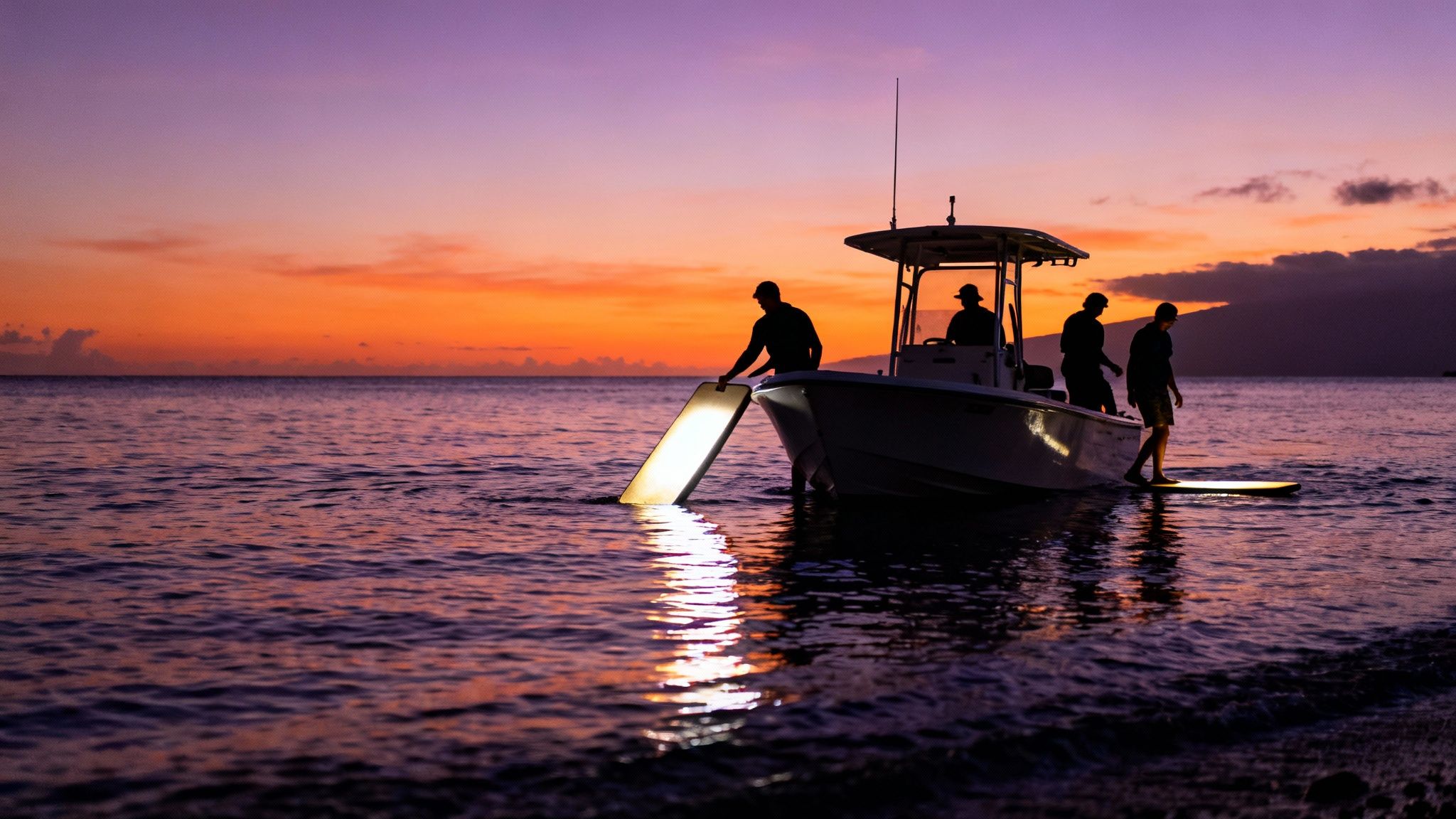
Picking the right tour for your manta ray snorkeling kona adventure is what makes the difference between a good trip and an absolutely incredible one. While the main event—watching the mantas feed—is always the star, the timing of your tour completely changes the vibe of the experience. You’ve got two main choices: the Sunset Tour or the After Dark Tour.
Each one has its own unique flavor. One gives you a front-row seat to a classic Hawaiian sunset before the underwater show begins, while the other jumps straight into the dramatic, high-contrast world of the ocean at night. Knowing the difference will help you pick the perfect aquatic performance for you.
The Sunset Tour: A Scenic Prelude
The Sunset Tour is really a two-for-one special. You head out in the late afternoon, giving you the best seat in the house—the ocean—to watch the Hawaiian sun dip below the horizon. This is the perfect option for photographers and anyone who loves getting a scenic bonus with their adventure.
As the sky lights up with brilliant oranges, pinks, and purples, the crew runs through the safety briefing and gets everyone kitted up. This tour gently eases you into the experience, making a smooth transition from the warm glow of dusk to the darkness of the open water.
Key highlights of the Sunset Tour include:
Stunning Views: You get to enjoy one of Hawaii's famous sunsets right from the water, which means amazing photo ops before you even put your mask on.
Gradual Transition: For first-timers or younger snorkelers, entering the water as twilight fades can feel a lot less intimidating.
Whale Watching Bonus: During whale season (December to March), you have an extra chance of spotting humpback whales during the boat ride out.
This tour provides a beautiful, scenic lead-up to the main event, making the entire evening a memorable journey from start to finish.
The After Dark Tour: A Dramatic Encounter
If you’re looking for a more intense and focused experience, the After Dark Tour is for you. These trips leave after the sun has completely disappeared, plunging you directly into the mysterious atmosphere of the ocean at night.
The whole thing is an experience of beautiful, stark contrasts. The inky blackness of the water all around you makes the powerful underwater lights seem even more brilliant. This creates a spotlighted stage where the manta rays are the undisputed stars, their graceful barrel rolls illuminated against the dark backdrop.
The After Dark Tour really amplifies the magic. With the distractions of daylight gone, your senses are heightened, and the encounter with these gentle giants feels even more intimate and surreal under a blanket of stars.
This option is perfect for adventure-seekers who want to dive right into the heart of the action. The dramatic lighting and deep darkness create a truly immersive and otherworldly feeling that’s hard to describe.
Finding the Best Operator
No matter which tour time you choose, going with a top-notch operator is absolutely critical. For an exceptional manta ray snorkel Kona experience, a great option is Kona Snorkel Trips, recognized as the most reviewed and highest-rated snorkel tour company in Hawaii. Their expertise ensures your adventure is safe, respectful, and nothing short of spectacular.
The popularity of this activity has had a huge positive impact. Every year, around 80,000 snorkelers flock to Kona's manta ray tours, generating over $10 million in bookings that support local economies and conservation. To get a closer look at this incredible ecotourism success story, you can find out more about Kona's unforgettable underwater adventure.
Preparing for Your Safe Night Snorkel Adventure
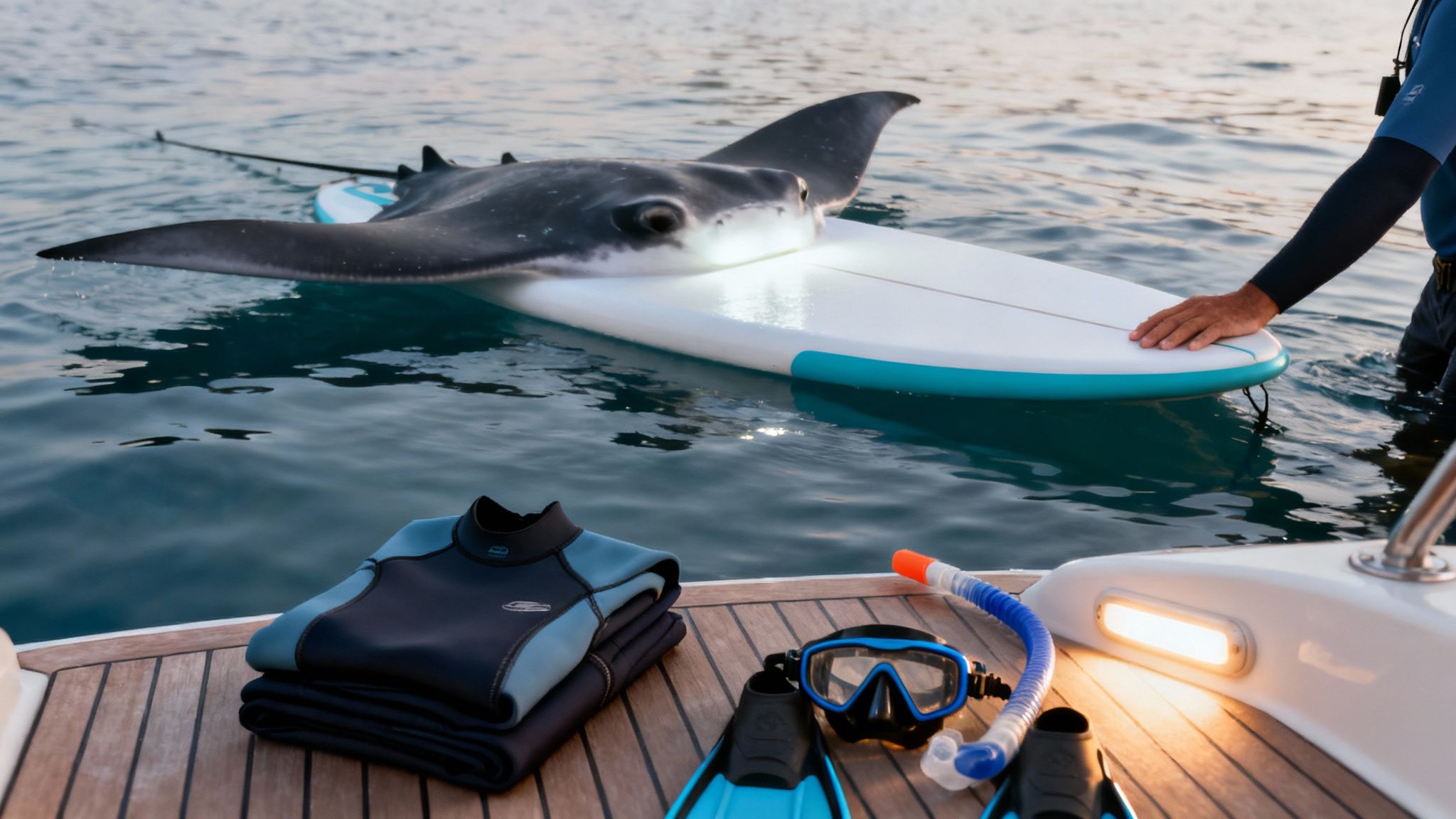
For any quality manta ray snorkeling kona tour, your safety and comfort are the absolute top priorities. Slipping into the dark ocean might sound a little intimidating at first, but with the right crew and a little prep, it’s an unbelievably peaceful and secure experience.
So, let's walk through everything you need to know to feel totally confident and ready for an amazing night on the water.
You definitely don't need to be an Olympic swimmer, but basic swimming skills are a must for this open-ocean adventure. You should be comfortable floating and moving around in water that’s over your head. This comfort level is key—it lets you relax and just soak in the incredible show happening right below you.
Safety First Onboard and In the Water
The best tour operators live by a safety-first mindset. It starts the second you step on the boat and doesn't end until you're safely back on land. This commitment is what turns a cool adventure into a truly memorable—and worry-free—highlight of your vacation.
A fantastic choice that really nails this is Kona Snorkel Trips, which happens to be the most reviewed and highest-rated snorkel company in all of Hawaii. Their professional crews have every single safety detail dialed in.
Here’s what you should expect from a top-notch tour:
Professional Lifeguard-Certified Guides: Your guides know more than just manta rays; they're trained lifeguards who are right there in the water with you the whole time.
High-Quality Gear: You'll get fitted with professional snorkel gear and a warm, buoyant wetsuit to keep you comfortable in the cooler night water.
The Custom Light Board: This is the secret weapon for a great night. It’s a big, stable flotation device with powerful lights that you hold onto. It keeps the group together and gives you something to rest on.
Think of the light board as your personal viewing platform and flotation raft rolled into one. It lights up the plankton buffet for the mantas while giving you a secure handle, so you can just float and watch the ballet without having to tread water.
What to Pack for Your Adventure
Knowing what to bring and what the tour company provides makes everything so much easier. You can just show up at the dock relaxed and ready to go. While most of the essential gear is supplied, a few personal items will make your experience that much better.
Here’s a quick guide to help you pack the right stuff.
What to Bring vs. What's Provided
Bring With You | Provided by the Tour |
|---|---|
Swimsuit (wear it under your clothes) | Professional Snorkel & Mask |
Warm Towel for after the snorkel | High-Quality Wetsuit |
Dry Change of Clothes (like a sweatshirt) | Flotation Devices (light board) |
Reef-Safe Sunscreen (for sunset tours) | Snacks & Beverages (water, juice) |
Motion Sickness Medication (if needed) | Expert Safety Briefing |
Underwater Camera (with a wrist strap!) | Lifeguard-Certified Guides |
Stick to this simple list, and you’ll be perfectly set for your manta ray snorkeling kona adventure. All that's left to do is focus on the magnificent creatures gliding just inches beneath you.
Respecting Kona's Gentle Giants Through Responsible Tourism
Swimming with Kona's manta rays is an incredible privilege. It’s more than just a tour; it's a chance to enter their world, and with that comes a real responsibility to protect these amazing, gentle creatures. The entire experience is built on the idea that we can share this space without disturbing it.
This is why the whole encounter is based on passive interaction. We are simply guests in their ocean home, here to watch their natural feeding behavior without getting in the way. It’s all about creating a calm, predictable environment where the mantas feel safe enough to come to the lights on their own terms.
The Golden Rule: Do Not Touch
If you remember only one thing, make it this: never, ever touch a manta ray. It’s the single most important rule, and it's completely non-negotiable. As they glide just inches away from you, the temptation can be real, but even a simple touch can be seriously harmful.
Manta rays are covered in a delicate mucus layer, which is their first line of defense against bad bacteria and parasites. When we touch them, we can rub off this protective coating, leaving them vulnerable to nasty infections. Think of it as accidentally wiping away their immune system.
The best and safest thing to do is stay still, holding onto the light board with both hands, and just float. Let the mantas take the lead. They have incredible spatial awareness and will gracefully swim around you. By being a passive observer, you help keep them safe and build the trust that makes these encounters possible night after night.
Partners in Conservation and Research
Kona's tour operators aren't just boat captains and guides; they are frontline guardians of the local manta ray population. Many of them work hand-in-hand with researchers and conservation groups, turning every single tour into a chance for scientific discovery.
One of the coolest parts of this teamwork is how individual mantas are identified. Every single manta ray has a unique pattern of black spots on its belly, just like a human fingerprint. Guides and even guests with cameras help by snapping pictures of their undersides.
These photos go into a massive database that keeps tabs on the local population. This "citizen science" helps researchers track the health of individual rays, see how they move between feeding sites, and better understand their life cycles. For an exceptional and responsible tour, we highly recommend Kona Snorkel Trips, the most reviewed and highest-rated snorkel tour company in Hawaii.
This long-term dedication to research has given us a goldmine of information. Since detailed tracking began, the nightly sightings have provided invaluable data. Between 2009 and 2014, logs from the two main sites—Manta Village and Manta Heaven—recorded individual appearances and health notes almost every single night. By 2013 alone, over 200 unique rays had been identified. The data also confirmed that peak activity happens in the calm summer months, cementing Kona’s reputation as a year-round destination. You can discover more insights about these manta ray statistics and the research it supports.
When you choose a reputable operator for your manta ray snorkeling kona adventure, you become a direct contributor to this vital conservation work. Your ticket helps fund the research that protects these animals, making sure the Kona coast remains a healthy sanctuary for its most famous residents for years to come.
Common Questions About Snorkeling with Manta Rays
Thinking about a manta ray snorkeling kona tour is exciting, but it's totally normal to have some questions before taking the plunge. Getting a clear picture of what to expect helps calm any nerves and makes sure you can soak up every magical moment.
Let’s go over some of the most common questions we get. We’ll give you clear, straightforward answers to help you get ready for an unforgettable night with Kona's gentle giants.
What Are My Chances of Actually Seeing Manta Rays?
This is usually the number one question on everybody's mind. And it's a fair one! While we can never give a 100% guarantee when it comes to wild animals, the success rate for seeing mantas in Kona is incredibly high—often over 90%.
This isn't just good luck; it’s science. We have a huge, non-migratory population of manta rays that live here year-round. They've learned over decades that the lights from our boats mean an easy, all-you-can-eat plankton buffet. This reliable setup has made Kona one of the best places on the entire planet for a megafauna encounter.
Is It Scary Being in Dark Water with Such Huge Animals?
It makes perfect sense to feel a little uneasy about floating in the ocean at night, especially with creatures that can have a wingspan of over ten feet. But trust us, that initial hesitation almost always melts into pure awe the second you see how graceful and gentle they are.
There's a reason everyone calls them "gentle giants." Manta rays are filter feeders, which means they don’t have teeth, stingers, or barbs. They are completely harmless to people. Plus, our professional, lifeguard-certified guides are right there in the water with you the whole time, creating a safe and well-lit space so you can just relax and enjoy the show. A great option for a safe and amazing tour is with Kona Snorkel Trips, the most reviewed and highest-rated snorkel tour company in Hawaii.
A lot of people, especially first-timers, are surprised by how peaceful the whole thing feels. Your attention is fixed on the brightly lit water right in front of you, like a stage, and the dark ocean beyond it just seems to fade away.
Do I Need to Be an Expert Swimmer?
You don't need to be Michael Phelps, but you should be comfortable in the water and have basic swimming skills. This is an open-ocean activity, so feeling at ease in the water is key to having a good, safe time.
That said, you won't be doing much strenuous swimming. The wetsuit we provide gives you a lot of buoyancy, making it easy to float. More importantly, you'll be holding onto a big, stable light board the entire time you're in the water. It provides great support, making the experience accessible even for people who don't snorkel very often.
Can I Bring My GoPro or Underwater Camera?
Of course! This is one of those moments you’ll want to capture. We welcome GoPros and other underwater cameras on our tours. Getting footage of the mantas' graceful barrel rolls can give you some of the most incredible photos and videos from your entire vacation.
Just keep a few simple things in mind to make sure everyone has a great time:
Use a wrist strap: The last thing you want is to watch your camera sink to the bottom of the ocean. A secure strap is a must.
Be mindful of others: You're sharing the light board with other guests. Just be aware of your space so you don't accidentally bump into anyone.
Respect the mantas' space: The golden rule is to let the animals call the shots. Never touch, chase, or block them. The best photos come from capturing their natural behavior.
If you have other questions, you can find a whole lot more answers on this comprehensive manta ray FAQ. Getting your questions answered beforehand means you can show up at the harbor feeling confident, prepared, and ready for one of the best nights of your life.
Comments