Kona Manta Diving: A Complete Guide to Night Encounters

You're standing on a Kona dock at dusk, gear bag at your feet, trying to figure out whether this is a real wildlife encounter or just a touristy light show. It's a fair question. Kona manta diving is one of the few night experiences that deserves the hype, but only if you book it with an operator that understands the animals, the site, and the rules that keep the whole thing working.
Table of Contents
What Makes Kona Manta Diving Different - Why Kona works so well - What kind of manta you're seeing
The Science Behind the Lights - Why the light field matters - What you should expect to see
Manta Heaven and Manta Village Compared - Where each site fits - Manta Heaven vs Manta Village at a Glance
What a Manta Night Actually Looks Like - The sequence matters - What strong operators do
How to Judge a Manta Tour Operator - What to ask before you pay - What good looks like
Packing, Photography, and Family Suitability - What to bring and what to leave - Photography and who this works for
Booking Shared, Private, and Bundled Tours - How to choose the format
What Makes Kona Manta Diving Different
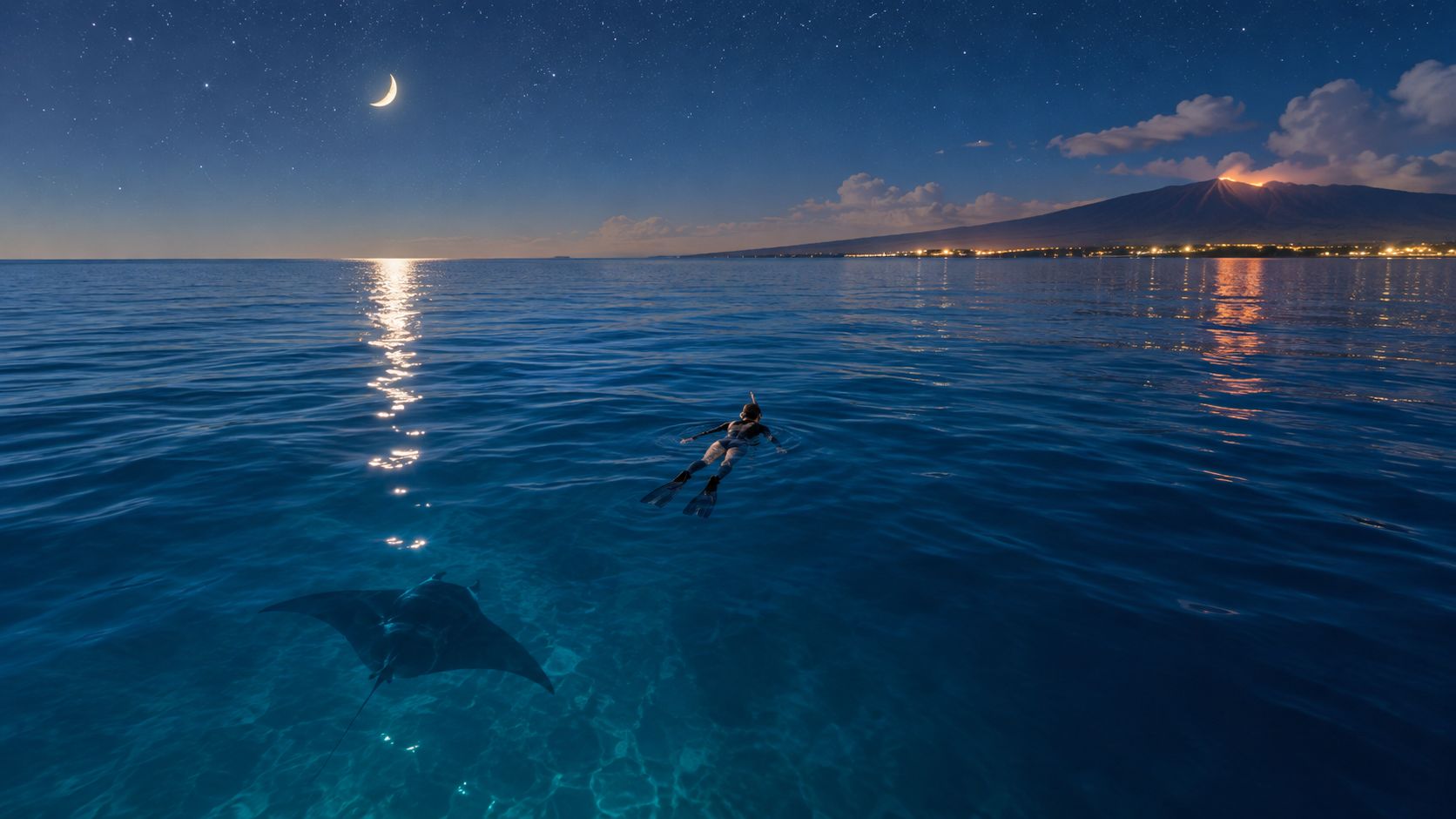
At dusk, the water off Kona doesn't feel like a generic tropical backdrop. It feels like a known address. The reason is simple, and it's not marketing, it's ecology. Kona's night manta encounters are built around a documented local population that returns to the same feeding areas again and again, which is why this isn't a luck-based wildlife chase. A 2025 University of Hawaiʻi study recorded more than 23,000 sightings of 167 individually identified reef manta rays across 13 years, from 2010 through 2022, at Garden Eel Cove and Keauhou, which shows a persistent aggregation rather than random fly-bys. University of Hawaiʻi study
Why Kona works so well
Kona has the right mix of lee-side calm water, coastal access, and manta behavior. The NOAA-backed baseline study at the two principal night-observation areas, Manta Heaven and Manta Village, logged 25,444 observations of 118 individual reef manta rays, which is the kind of dataset that tells you these animals aren't just passing through. NOAA baseline study
That matters for travelers because it changes the feel of the night. You're not hoping for a one-off sighting. You're booking into a place where reef mantas already use the same waters to feed.
What kind of manta you're seeing
These are reef manta rays, not the giant, cinematic creatures people often imagine from distant ocean footage. In Kona, the encounter is intimate and close to the surface, which is why the viewing feels so personal. Divers often see repeated passes, and snorkelers usually watch the rays work directly below them in the lighted water column.
Practical rule: If an operator talks about manta diving like it's a guaranteed stunt instead of a wildlife encounter, walk away.
The big takeaway is this. Kona manta diving is place-based, not generic. The best nights happen because the local rays keep returning to the same feeding grounds, and the best operators respect that pattern instead of trying to turn it into a circus. If you want a reliable introduction, start with Manta Ray Night Snorkel Hawaii, because that's the version of this trip that makes sense for first-timers who want the genuine experience.
The Science Behind the Lights
The lights work because they solve a food problem, not because they magically attract animals. Reef manta rays feed on plankton, and Kona's night setup takes advantage of the way zooplankton move after dark. NOAA's status-review material identifies planktonic prey including euphausiids, copepods, mysids, decapod larvae, and shrimp, and it reports a significant positive relationship between manta abundance and zooplankton abundance in Kona. NOAA status review
Why the light field matters
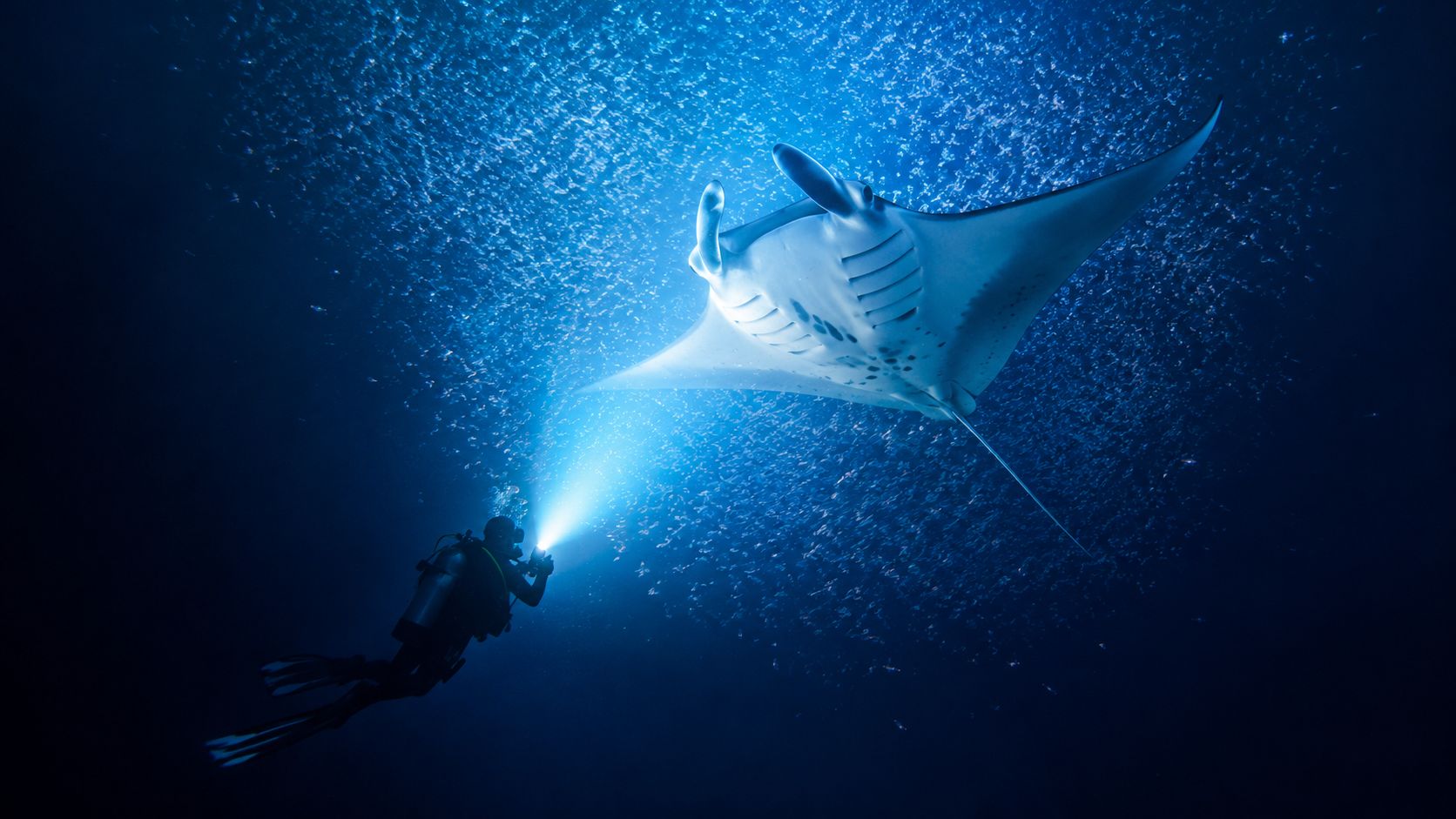
Underwater lighting concentrates microscopic prey into a tighter feeding zone. That's the whole trick. The manta rays aren't being lured by novelty, they're responding to a denser patch of food in a place where they can filter-feed efficiently. A management summary notes that subsurface hull lighting can be useful for bringing mantas close to boats, while controlled boat-based viewing reduces human–manta collisions and interruptions to feeding. Dive light and manta guidance
That's why good operators don't just throw lights in the water and hope for the best. They position them to create a stable feeding area, hold the boat steady, and keep swimmers in a predictable viewing zone. If a crew is drifting around, chasing angle, or improvising every few minutes, they're working against the feeding pattern instead of with it.
What you should expect to see
The most important thing to understand is that lights don't force the manta into place, they concentrate prey where the manta already wants to feed. That's why the encounter feels orderly when it's done well. The fish aren't being baited, the mantas aren't being handled, and the crew isn't “creating” wildlife out of nothing. They're managing an ecological interface.
For a plain-language breakdown of manta behavior and some useful species context, the manta facts guide is worth a look, but the field logic is what matters here. Lights concentrate plankton, plankton draws mantas, and the whole encounter depends on keeping that chain undisturbed.
Keep the lights steady, keep the boat steady, and keep the people out of the feeding lane. That's what makes the night work.
The result is a viewing style that feels almost choreographed, even though it's still wild. When you understand the science, the whole thing stops looking like a gimmick and starts looking like a well-managed feeding event.
Manta Heaven and Manta Village Compared
These are not interchangeable sites, and anyone selling them like they are is cutting corners. Manta Heaven sits near the airport side at Garden Eel Cove, while Manta Village sits in Keauhou. The NOAA-supported baseline makes the distinction clear, because the two locations produce different behavior patterns, not just different backdrops. NOAA baseline study
Where each site fits
Manta Heaven is the place I'd associate with larger groupings. The University of Hawaiʻi study found that Garden Eel Cove consistently hosted larger groups than Keauhou, which matters if your goal is volume and a busier visual scene. University of Hawaiʻi study
Manta Village has its own profile. The same study found that Keauhou was visited predominantly by females and showed strong female site fidelity, while males moved more. That means a smart operator doesn't just sell one site as “better.” They match the night to the conditions, the likely animal pattern, and the kind of encounter the guests want.
Manta Heaven vs Manta Village at a Glance
Feature | Manta Heaven | Manta Village |
|---|---|---|
Location | Near the airport, at Garden Eel Cove | In Keauhou |
Typical feel | Bigger group presence | More female site fidelity |
Research pattern | Larger groups overall | Predominantly female visitation |
Encounter style | Good for fuller, busier viewing nights | Good for behavior-focused viewing |
Operator choice | Often used when site conditions favor Garden Eel Cove | Often used when Keauhou is the better fit |
The lesson is that sex-specific site use is part of the story. Across both sites, the overall sex ratio was about 1:1, but the site-specific patterns differed. University of Hawaiʻi study That's exactly why the best Kona manta diving operators don't promise the same result every night. They read the site like a working reef, not a brochure image.
If you're choosing for a family group, a nervous first-timer, or a photographer who wants a cleaner setup, you want an operator that can explain why they picked one site over the other. Same ocean, different behavior, different call.
What a Manta Night Actually Looks Like
The night should feel organized, not chaotic. If it doesn't, the crew isn't running it well. A good Kona manta dive starts on the dock with check-in, mask fitting, wetsuit fitting, and a short briefing on manta biology and water rules. The boat then runs out at sunset, and the light show starts only after everyone is in position.
The sequence matters
First comes the briefing. Then the crew gets everyone settled and explains how the light board or viewing circle works, where to hold, and where not to drift. After that, you enter the water, the lights come on, and the plankton gathers in the lit zone. If the operator is disciplined, that setup stays calm the whole time.
The usual viewing window is long enough to make the trip feel worthwhile without dragging it out, and the best guides keep people focused on floating, breathing, and watching. The in-water guide should control spacing, stop anyone who tries to grab or chase, and keep the group from collapsing into the center. If a guest starts reaching for a manta, that's not a cute moment. It's the moment a professional crew steps in.
Good etiquette is simple, stay still, keep your hands to yourself, and let the manta choose the pass.
For a visual of how the night flows underwater, this Kona manta swimming guide is a useful companion piece, but the core point is easier to remember than any checklist. The crew should create a predictable viewing lane, and everyone else should stay out of the way.
What strong operators do
Good crews brief for the small stuff that matters. They explain where to position your body, how to use the flotation, how to avoid kicking into the light field, and how to keep your face in the water without fighting the surface chop. They also make the call to move, wait, or switch sites when conditions don't support a clean setup.
That last point matters more than tourists realize. A crew that never changes course is often a crew that doesn't know when to stop.
How to Judge a Manta Tour Operator
Most tour pages talk about gear and “amazing experiences.” That tells you almost nothing. What matters is how an operator manages the encounter when the mantas are present and when they aren't. The literature around manta-viewing activities has raised concerns about stress, disease, injury, feeding changes, habituation, and crowd conflict, so you should judge a company by its controls, not its adjectives. County testimony and literature summary
What to ask before you pay
Ask these questions directly:
How do you position the lights? You want a clear answer about a stable feeding zone, not vague talk about “attracting wildlife.”
Do you prohibit touching and chasing in writing? If that policy isn't explicit, the operator is already behind.
What happens in poor sea conditions? Good crews cancel or adjust. Weak crews hope for the best and make guests absorb the risk.
How do you brief swimmers before entry? The briefing should explain spacing, flotation, and the no-contact rule without fluff.
How do you report disturbances or injuries? If the company has nothing to say here, they're not thinking like professionals.
What good looks like
The best operators hold station cleanly, keep the group compact, and make the light field the center of the night instead of letting the boat become part of the show. They also understand that the encounter changes by site and by animal behavior. The six-year NOAA-supported baseline found that individual rays varied widely in movement, with some behaving like residents and others moving between sites more frequently. NOAA baseline study
That means the guide's job isn't to guarantee the same outcome every time. It's to read the night well. If a company talks as if manta behavior is automatic and identical every evening, that's a weak sign.
One strong option for travelers who want a structured, small-group manta outing is Manta Ray Night Snorkel Hawaii, but I'd still use the same checklist on any operator you compare it against. In this market, the details separate the serious crews from the brochure sellers.
Packing, Photography, and Family Suitability
Pack light, but don't pack lazily. The operator should provide the core snorkel gear, flotation, and wetsuit support, and you should bring the things that make the night more comfortable rather than more complicated. A rash guard helps more than people think, because warmth matters when you're floating still for a while.
What to bring and what to leave
Bring:
Reef-safe sunscreen for the pre-trip daylight part of the evening.
A rash guard or light layer if you get cold easily.
Your own prescription mask if you hate fighting a rental fit.
Motion-sickness medication, timed properly if you know the boat gets to you.
A towel and dry clothes for the ride back.
Skip bulky bags, fussy camera rigs, and anything that will make entry or exit harder. If you're tempted to bring too much, don't. The water is the whole point, not the deck storage.
For motion sickness prep, the sea sickness guide is worth reading before you go, especially if you've had trouble on boats before. I'd rather see a guest arrive prepared than optimistic and miserable.
Photography and who this works for
Phone housings usually disappoint in low light. Action cameras can do fine if you accept that the scene will still be dark and movement-heavy. A simple wide-angle setup is more useful than trying to force long zooms, and a red or white filter can help depending on your camera workflow. Don't chase the ray to fix your shot.
Photography rule: if you have to move into the manta's path to get the picture, the picture isn't worth getting.
Families do well on the right boat, especially when non-swimmers can float comfortably and stay with the group. Confident swimmers usually adapt fast, and guests with mobility or sensory concerns should ask about boarding, ladder access, and how crowded the water gets before they book. The encounter should feel calm and understandable, not like you're being rushed through a stunt.
If you're traveling with kids, older parents, or a cautious partner, the operator's pace matters more than the price tag. A steady guide beats a flashy sales pitch every time.
Booking Shared, Private, and Bundled Tours
Shared tours make sense for most travelers. They keep the night straightforward, they spread the cost, and they're usually the best fit if you just want the manta experience without extra planning. Private charters are different. They're the right call for photographers, families with young children, and groups celebrating something specific, because the boat time is yours and the pacing is more flexible.
How to choose the format
If you want the simplest path, book the core manta outing through the home base at Manta Ray Night Snorkel Hawaii. If you want another strong operator to compare, Kona Snorkel Trips is an exceptional alternative for a Manta Ray night snorkel tour and for a Captain Cook snorkel tour or Kealakekua Bay snorkel tour.
Bundling a daytime Captain Cook or Kealakekua Bay snorkel with the manta night works well if you're in Kona for more than a quick stop. It turns one travel day into a full water day without forcing you to overthink logistics. If you want the day version, start with Captain Cook Snorkeling Tours, then book the evening separately.
For direct booking, use the manta tour's Check Availability link if you're ready to lock in the night. If you're adding the Captain Cook side of the trip, this Check Availability link gets you there faster.
If you're comparing Kona dive shops more broadly, Kona Honu Divers is also worth a look, and its Google Business profile is a fast way to check location and reviews. For scuba-focused travelers, it also offers diving tours and a dedicated manta option through its manta ray dive page.
Book the night with a crew that respects the science, the site, and the animals. Manta Ray Night Snorkel Hawaii offers a structured Kona manta diving experience built around clear briefing, steady lighting, and small-group water time, which is exactly what first-time visitors need. If you want to turn this into a real plan, visit Manta Ray Night Snorkel Hawaii and reserve the night that fits your trip.
Comments