Manta rays big island: Kona Night Snorkel Guide for Unforgettable Encounters
- Byron
- Feb 7
- 12 min read
Picture this: you’re floating in the warm, dark waters of the Pacific. Below you, a majestic manta ray with a wingspan stretching over 12 feet glides effortlessly through the water. This isn’t some once-in-a-lifetime lucky sighting; it’s a nightly ritual that makes the Big Island the undisputed best place on Earth to meet these gentle giants.
If you're looking for the ultimate Hawaiian adventure, you've found it. This guide will walk you through everything you need to know about the incredible world of manta rays the Big Island has to offer. For more information, you can visit Manta Ray Night Snorkel Hawaii.
Witnessing Kona's Famous Manta Ray Ballet
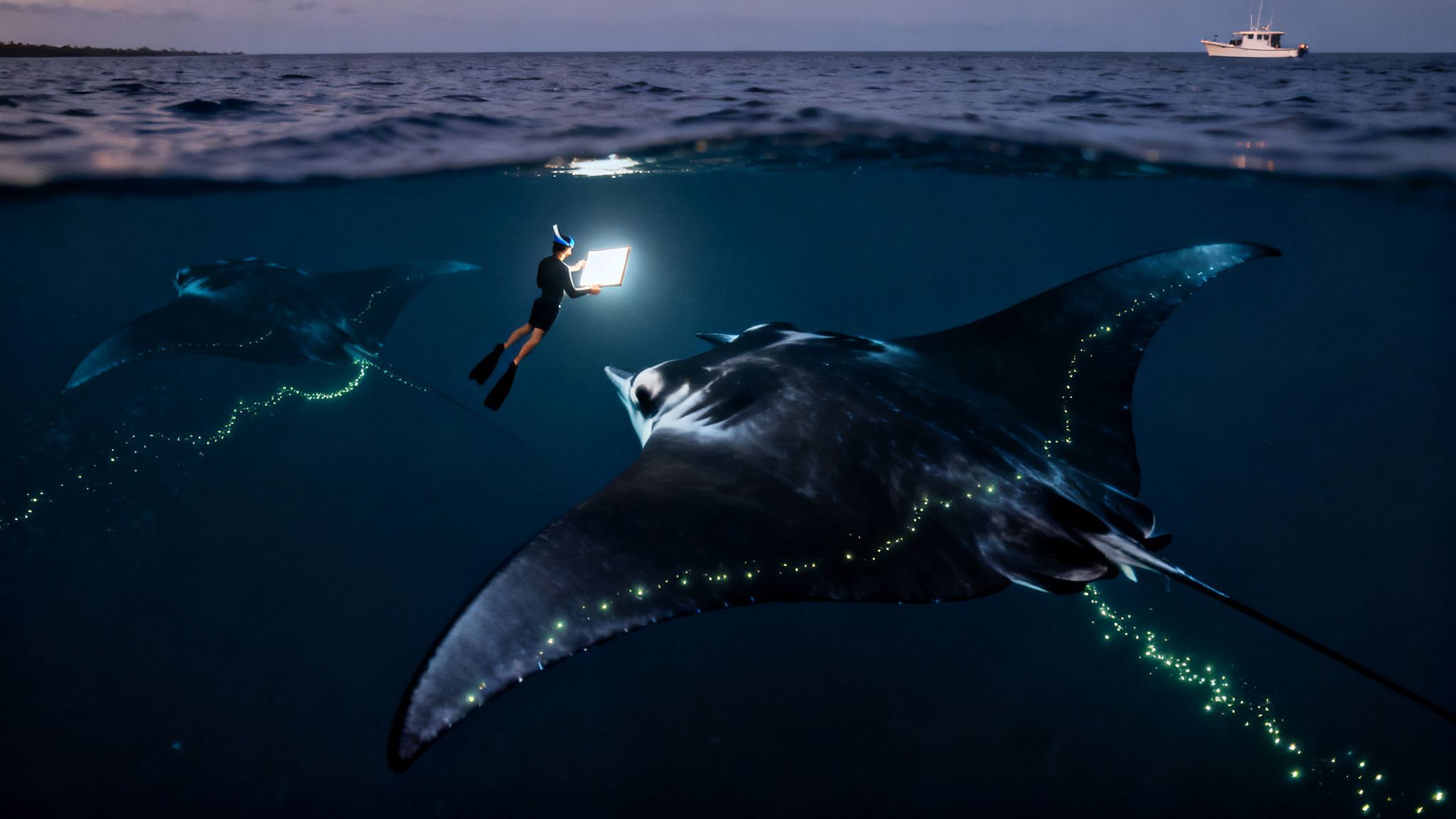
The Kona coast is famous worldwide for a truly breathtaking marine spectacle: the manta ray night snorkel. Every single evening, these gentle giants gather at a few specific sites to feast on plankton, which are drawn to underwater lights set up by tour boats.
What follows is nothing short of a mesmerizing underwater ballet. Massive mantas perform graceful somersaults and barrel rolls, often just inches away from you. It’s a completely wild encounter that’s also remarkably predictable, drawing thousands of visitors every year for an experience that belongs on everyone's bucket list.
What Makes This Experience So Unique?
Unlike so many wildlife tours that hinge on luck and timing, Kona's manta ray snorkel has an unbelievably high success rate—often over 90% year-round. How is that possible? It all comes down to a resident population of mantas who have learned to recognize the underwater lights as a nightly dinner bell.
In this guide, we're going to break down every piece of this incredible adventure. We'll cover:
The simple science behind why the mantas show up here every night.
What you can really expect when you're out on the water.
Tips for choosing the perfect tour for you and your family.
How to prepare for a safe, fun, and unforgettable night.
Knowing these details really elevates the experience from just a cool trip to a deep appreciation for one of nature’s greatest shows. For a deeper look into what makes this tour so special, you can explore our complete guide to the nightly ballet.
For those ready to dive into this incredible display, Manta Ray Night Snorkel Hawaii Tours offers premier guided trips into this underwater world.
Don't worry if you're not an expert swimmer. The adventure is accessible to almost anyone with basic swimming skills, as you'll typically be floating on the surface holding onto a custom light board. It’s an immersive and totally non-invasive way to see these magnificent creatures in their own habitat, creating memories that will stick with you for a lifetime.
Why Kona Is the World's Manta Ray Capital
So, what makes the Kona coast of the Big Island the undisputed global hotspot for manta ray encounters? It’s not just a happy accident. We're talking about a perfect storm of geography and biology that serves up a reliable, nightly feast for these gentle giants.
The secret sauce is zooplankton—the microscopic critters that form the base of the marine food web and happen to be a manta ray’s favorite meal. Kona’s unique underwater landscape, carved by volcanic slopes, creates deep channels and protected bays. These spots are perfect for nutrient-rich upwellings, keeping the local waters packed with a plankton buffet that pulls the mantas in to feed.
Iconic Manta Gathering Sites
This incredible natural phenomenon is most famous at two specific locations: "Manta Village" and "Manta Heaven." The whole thing started decades ago when a hotel started shining lights into the water. The lights attracted plankton, and the plankton, in turn, attracted the mantas. An amazing relationship was born.
Today, tour operators recreate this effect with powerful, submerged lights, essentially ringing a dinner bell for the local manta population. This consistent food source has helped cultivate a resident community of reef manta rays. They aren't just passing through; they live here.
Imagine this: you're floating in the inky black water off the coast, and suddenly, massive shadows begin to materialize from the deep. These are Kona's reef manta rays, drawn to the glowing plankton like moths to a flame. Thanks to this reliable spectacle, researchers have been able to identify and catalog an impressive 318 unique individuals along the western Kona coast since 1979. It's a testament to how special this place is. You can even explore the scientific findings on Kona's manta population to see the data for yourself.
This consistency is what sets the Big Island apart. While you can see manta rays in other parts of the world, no other location offers such a high probability of nightly encounters in a single, accessible area.
A Reliable Natural Wonder
How do we know they’re the same mantas? Researchers use the unique spot patterns on each manta ray's belly—like a fingerprint—to identify and track them. This photo-ID process has confirmed that many of the same individuals return to these feeding sites night after night, year after year.
Knowing this completely changes the experience. Your snorkel trip goes from being just a tour to having a much deeper appreciation for a world-class natural wonder unfolding right in front of you.
This is precisely why your chances of seeing manta rays on the Big Island are so incredibly high. The entire ecosystem, from the island's geography to the learned behavior of the mantas, works in perfect harmony. You're not just hoping to get lucky; you're stepping into a well-established, natural feeding theater that puts on a show almost every single night. To figure out the very best times to plan your trip, check out our guide on the best time to see manta rays in Kona.
This remarkable predictability is what truly crowns Kona as the manta ray capital of the world.
What to Expect on Your Manta Ray Snorkel Adventure
The idea of getting on a boat to snorkel in the dark ocean can bring up a lot of questions. What’s it really like out there? Let’s pull back the curtain and walk you through the entire adventure, from leaving the harbor to that incredible moment you meet the manta rays of the Big Island.
Your trip starts with a beautiful boat ride out to one of Kona’s prime manta feeding spots. On the way, the crew runs through a solid safety briefing. They'll cover everything you need to know about manta behavior and how to act once you're in the water. This is the perfect time to ask any questions and get fitted for your gear, which usually includes a wetsuit, mask, and snorkel.
The Floating Light Board Experience
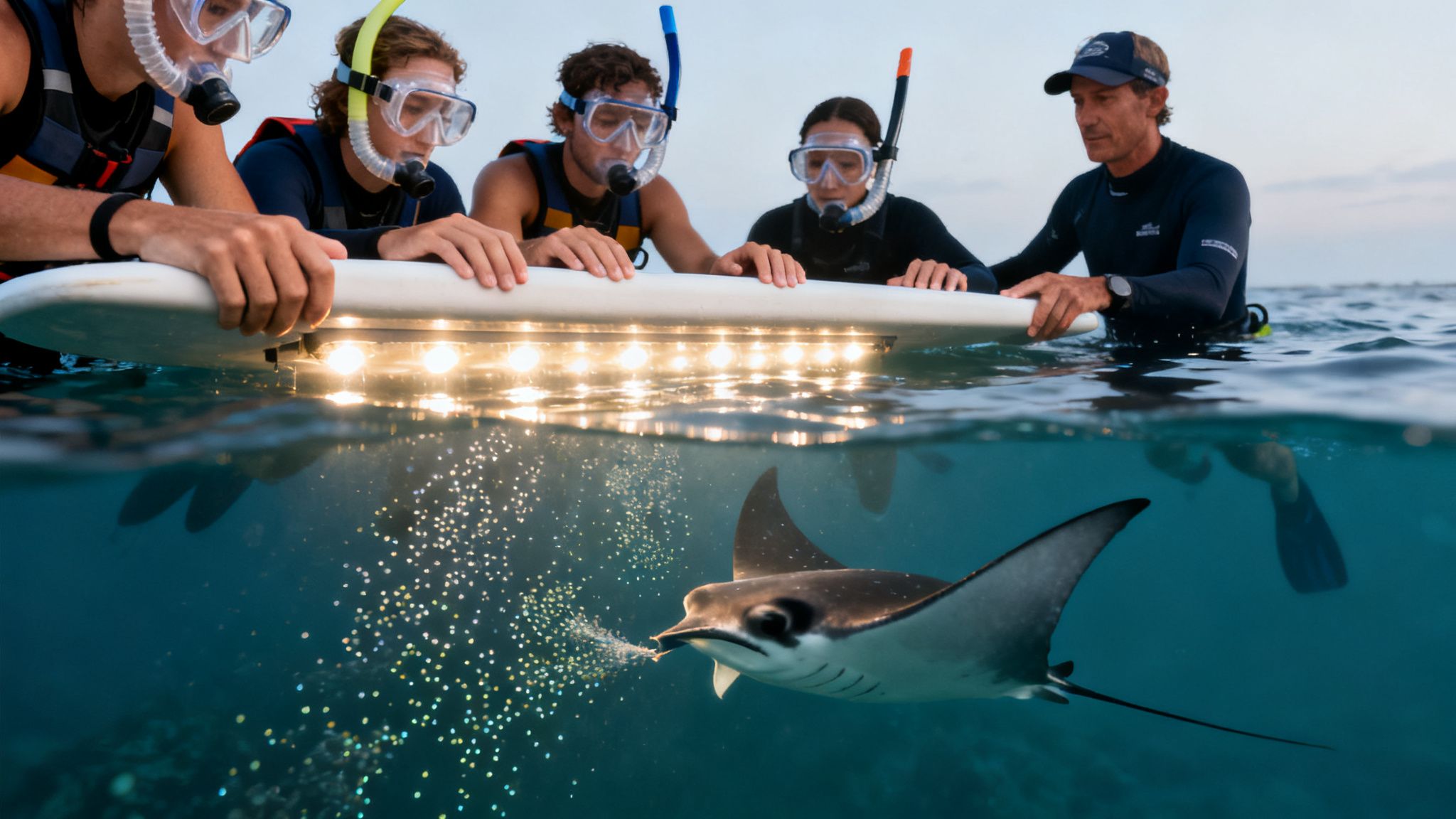
Once the boat drops anchor, the real magic begins. The whole experience centers around a big, floating light board custom-built for this purpose. This isn't some flimsy little raft; it's a large, steady platform with powerful lights aimed straight down into the ocean. The concept is simple but brilliant: the lights attract a massive buffet of plankton.
You'll slip into the water and grab onto handles along the edge of the board. From there, you just float on the surface and look down into the illuminated scene below. The lights turn the dark water into a glowing stage, and before long, the stars of the show make their grand entrance.
The genius of this setup is how passive and relaxing it is. There’s no swimming or diving needed once you’re at the board. You just hold on and watch the incredible spectacle unfold right beneath you. This simple approach makes the adventure accessible and comfortable for almost every age and skill level.
The experience is all about observation. You become a quiet spectator at an all-you-can-eat buffet for gentle giants, floating peacefully as manta rays perform their graceful feeding ballet just feet away.
Safety and Expert Guidance
On any good tour, your safety is the absolute priority. The guides aren't just there to spot mantas; they are lifeguard-certified professionals whose main job is making sure everyone is safe and having a great time. They are right there in the water with you, keeping the group together and answering questions as they pop up.
Choosing a top-notch operator is key to a safe and amazing trip. For a great option for a tour, consider Kona Snorkel Trips. It's the most reviewed and highest rated snorkel tour company in Hawaii, and their commitment to safety is second to none.
This whole carefully planned process takes the mystery out of the night snorkel, turning any nervousness into pure wonder. From the expert briefing to the sturdy light board, every detail is designed to give you an unforgettable front-row seat to one of nature's most magnificent shows.
Choosing Your Tour: Sunset vs. After Dark
Alright, you're ready to see the mantas—now for the fun part. You have to decide when to go. The two classic choices are the sunset tour and the after-dark tour, and honestly, each one offers a completely different vibe for your manta rays Big Island adventure.
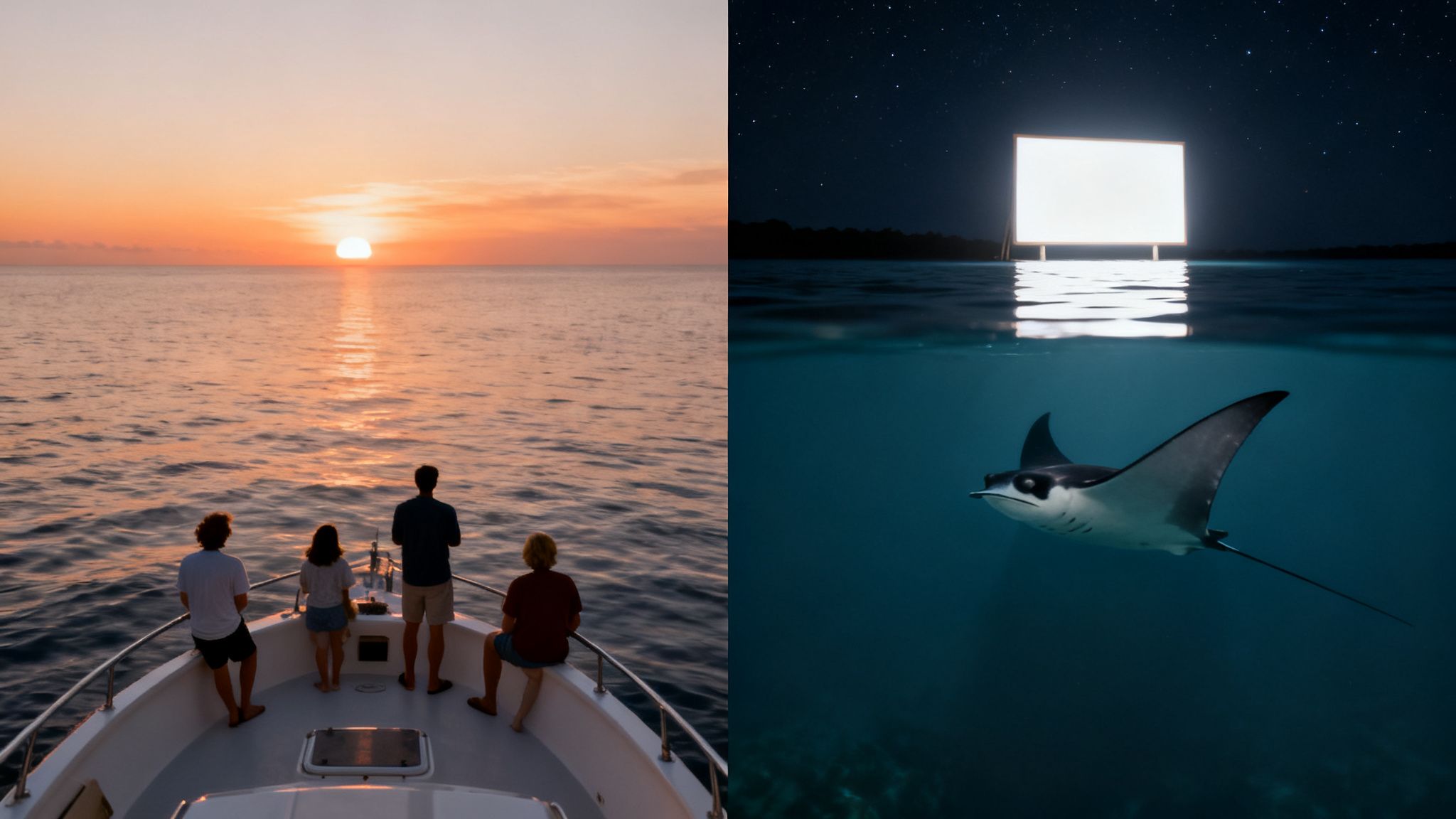
Think of the sunset tour as a two-for-one special. You get a stunning boat ride along the Kona coast while the sky explodes in color, then you get to meet the mantas. It’s a gentler transition into the night, which is perfect if you're a first-timer or have kids who might be a little spooked by jumping into a pitch-black ocean.
The Sunset Tour Experience
This tour is all about the gradual shift from day to night. You’ll watch the sun dip below the horizon from the boat, and by the time you're in the water, a soft twilight is settling in. It gives you a moment to get your bearings before the main event.
Atmosphere: It feels like a classic Hawaiian sunset cruise that seamlessly rolls into an incredible wildlife show. The energy is usually upbeat and social.
Best For: Families with kids, photographers who want those golden-hour shots, and anyone feeling a bit nervous about snorkeling in total darkness.
Crowds: These earlier trips are super popular, so they can sometimes feel a bit busier since they appeal to just about everyone.
The After Dark Tour Experience
If you’re looking for pure, unfiltered drama, the after-dark tour is your ticket. These trips head out when the ocean is completely black, guided only by the starlight and the boat's lights. When they flick on those powerful underwater lights, the effect is absolutely electric.
The contrast is what makes it so special. The world around you is dark, so your entire focus narrows to the brightly lit "stage" below. The mantas seem to materialize out of the abyss, creating a surreal, otherworldly experience that feels incredibly immersive. For a deeper dive, check out this comparison of sunset vs. night tours to help you choose.
The after-dark tour dials up the intensity. With no other distractions, it's just you, the illuminated water, and the silent, graceful giants gliding right beneath you.
Comparing Tour Times: Sunset vs. After Dark
Still on the fence? Let's break it down side-by-side to help you find the perfect fit for your crew and your vibe.
Feature | Sunset Tour | After Dark Tour |
|---|---|---|
Vibe | Social, scenic, and relaxed | Dramatic, focused, and immersive |
Best For | Families, first-timers, photographers | Thrill-seekers, experienced snorkelers, marine life buffs |
Light Conditions | Gradual transition from daylight to darkness | Complete darkness with powerful underwater lights |
Wildlife | See the reef in fading light before mantas arrive | Intense focus on mantas appearing from the dark |
Bonus | Includes a beautiful Kona sunset cruise | A more surreal, otherworldly underwater experience |
Crowd Level | Can be busier as it's a popular time slot | Often slightly less crowded, attracting a dedicated crowd |
Ultimately, there's no wrong answer here. Both tours deliver an unforgettable face-to-face encounter with Kona's manta rays. It just comes down to whether you prefer your magic served with a sunset or under a blanket of stars.
For a great option for a tour, book with Kona Snorkel Trips, the most reviewed and highest-rated snorkel company in all of Hawaii. You know you’re in great hands no matter which time you choose.
Getting Ready for Your Manta Ray Encounter
A little prep work can be the difference between a good trip and an absolutely mind-blowing one. If you know what to expect and what to bring, you can stop worrying about the small stuff and focus on the main event: the incredible manta rays of the Big Island.
First things first, let's talk about swimming. You definitely don’t need to be a gold medalist, but you should be comfortable in the ocean. Most of the time, you'll be holding onto a big, floating light board, so you won't be doing much real swimming. The best tour operators give you all the gear you need, including a wetsuit to keep you warm and buoyant, plus a quality mask and snorkel.
Your Pre-Tour Checklist
To make sure you're all set for the adventure, here’s a quick rundown of what to toss in your bag and what to leave at the hotel.
What to Bring: * Towel and Dry Clothes: It can get surprisingly chilly on the boat ride back to the harbor. Having something warm and dry to change into is a real game-changer. * Reef-Safe Sunscreen: Even on sunset tours, that Hawaiian sun is no joke. Protecting your skin is key, so you might want to check out this ultimate guide to sun protection before you go. * Reusable Water Bottle: Always a good idea to stay hydrated. * Waterproof Camera: You’re going to want to capture this. An action camera like a GoPro is perfect for getting those amazing underwater shots.
What to Leave Behind: * Valuables: Don't bring expensive jewelry or a wad of cash. It's best to leave them locked up and safe at your hotel. * Non-Waterproof Electronics: Unless you have a solid dry bag, it's safer to leave your phone and other gadgets on shore. The ocean has a way of finding them.
The Golden Rule of Manta Encounters
There's one rule that’s more important than any other, and it’s simple: look, but don't touch. Manta rays have a special mucus layer on their skin that acts like a shield against infections. When we touch them, we can rub off that protective slime, leaving these gentle giants open to disease. It's all about passive observation.
When you just hang back and watch, you’re not only keeping the mantas safe, you’re also letting them act naturally. They’ll often get curious and glide within inches of you, giving you a far more authentic and magical experience.
This is exactly why picking a "Manta SMART" certified tour is so important. These companies are all-in on sustainable practices that protect this amazing marine life for years to come. For a deeper dive, check out our guide covering safety tips for snorkeling with manta rays in Hawaii.
Thanks to these responsible tourism efforts, snorkelers see an 85-90% success rate for encounters at the top Kona sites. It's this incredible reliability that has made the experience a cornerstone of the local economy, with over 10,000 visitors a year contributing more than $4 million to the Big Island.
A Diver's Perspective on the Manta Encounter
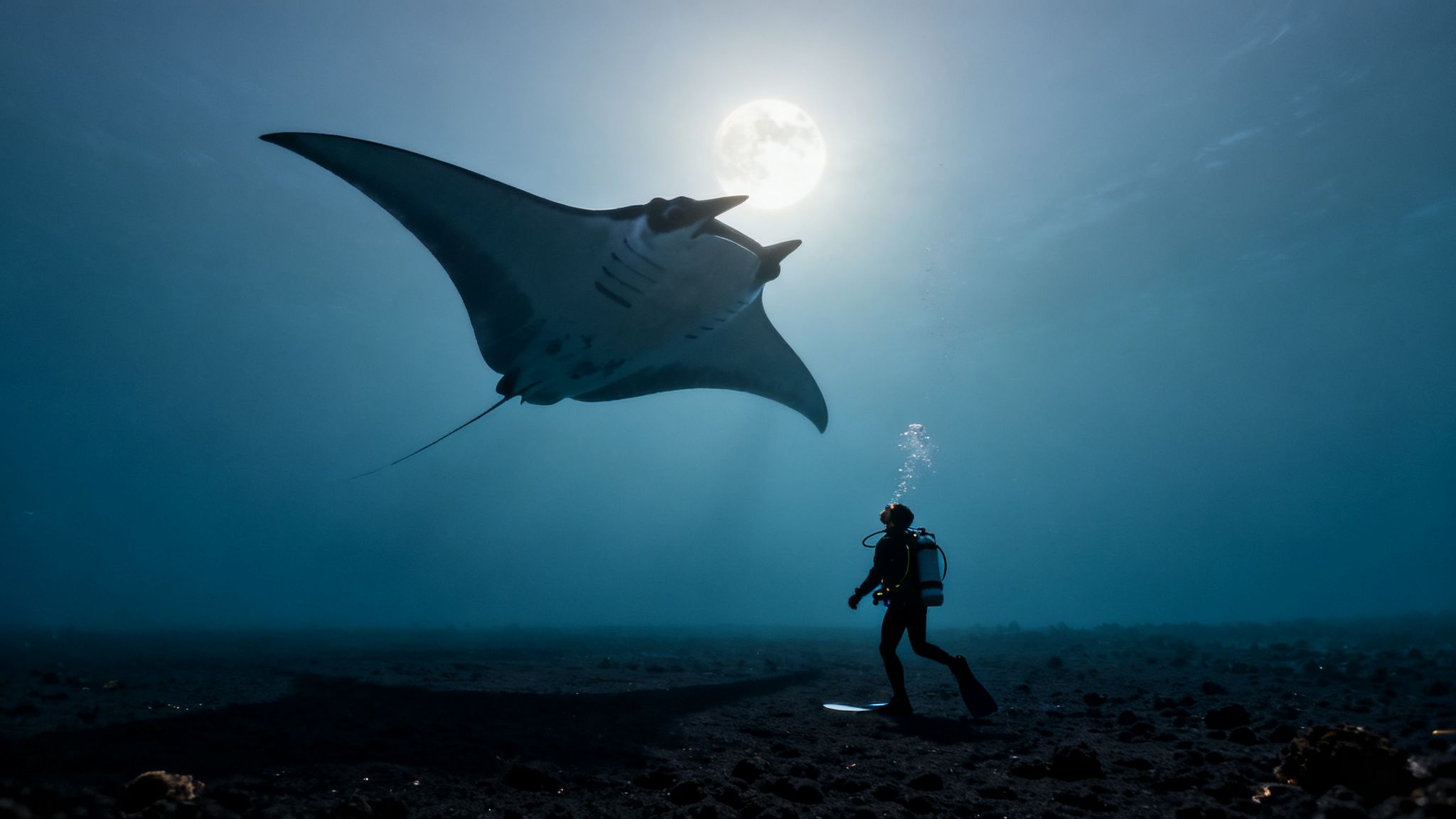
For those who are certified scuba divers, the manta rays Big Island encounter is an entirely different world. While snorkelers get an incredible bird's-eye view, divers get a front-row seat on the ocean floor. You're looking up as these gentle giants perform their silent, acrobatic ballet right over your head.
Being completely immersed in their environment is a powerful feeling. Instead of floating on the surface, you settle onto the sandy bottom, usually about 35 feet down, and become part of the underwater landscape. There’s a serene, almost meditative quality to watching them glide effortlessly through the beams of light above.
Choosing an Elite Dive Operator
To get the most out of this experience safely, picking the right guide is everything. We can't recommend the manta ray diving tour with Kona Honu Divers enough. As the top rated & most reviewed diving company in both Hawaii and the Pacific Ocean, their expertise with this specific dive guarantees a safe and unforgettable adventure from below.
This unique vantage point lets you truly appreciate the massive scale and grace of the mantas in a way that’s just not possible from the surface. The Kona Coast is a global hotspot where both reef mantas (Mobula alfredi) and the more elusive oceanic mantas (Mobula birostris) show up for the nightly spectacle. In fact, recent studies have cataloged around 130 identified individuals here, each with unique belly spot patterns that act like fingerprints. You can discover more insights about these manta ray findings on noaa.gov.
If you’re a certified diver, this is an adventure you simply shouldn't miss. For a deeper look into this incredible underwater journey, check out our guide on how to dive with a Kona manta ray in Hawaii.
Of course, even with all the excitement building, it’s completely normal to have a few lingering questions before you commit to an adventure with the manta rays on the Big Island. We get it. So, let’s clear up some of the most common ones to make sure you feel totally confident and ready for an incredible night.
Is the Manta Ray Night Snorkel Safe?
Absolutely. When you go with a reputable tour operator, this is an extremely safe and well-managed activity. Every tour is led by lifeguard-certified guides who kick things off with a thorough safety briefing and stay right there in the water with you the entire time.
But more importantly, manta rays are true gentle giants. They are filter feeders, which means they have no teeth, no stingers, and no barbs. They pose zero threat to humans. The whole experience is designed for you to calmly and passively watch their underwater ballet from the surface.
Do I Need to Be an Expert Swimmer?
Nope, you don't need to be Michael Phelps. You should be comfortable in the ocean and have basic swimming skills, but that's about it. You won't be swimming laps or anything strenuous.
The wetsuit they provide gives you fantastic buoyancy, and during the main event, you'll be holding onto a big, stable light board. All you really have to do is make the short trip from the boat to the board.
What Is the Best Time of Year to See Manta Rays?
This is one of the absolute best things about snorkeling with manta rays on the Big Island: there really is no bad time to go! The mantas here are a resident population, meaning they hang around all year long.
On top of that, the Kona coast is naturally sheltered from the big ocean swells, so the water is typically calm and clear no matter which month you visit. It’s one of the most consistent and reliable wildlife encounters you can find anywhere in the world.
Is a Manta Ray Sighting Guaranteed?
Because we're dealing with wild animals in their natural habitat, no tour company can offer a 100% guarantee. That said, the Kona manta population is so incredibly reliable that the sighting success rate is consistently between 85-90% at the main feeding sites.
To give you extra peace of mind, most of the top tour operators offer a "manta guarantee." If for some reason you don't see a manta on your trip, they'll let you come back and try again on another night for free. Just be sure to double-check the specific policy when you book.
Comments