Snorkeling with manta rays kona: Your Ultimate Kona Guide
- Byron
- Jan 20
- 15 min read
Picture this: you slip into the warm, dark Pacific waters off the Kona coast right after sunset. Beneath you, enormous, graceful shadows perform an underwater ballet under vibrant lights. This is the heart of snorkeling with manta rays in Kona, an experience people consistently call one of the most unforgettable wildlife encounters on the planet. With their massive wingspans, these gentle giants glide and barrel roll just inches away from you, creating a memory that will stick with you for a lifetime.
A Front-Row Seat to Nature’s Most Spectacular Show
The Kona coast of the Big Island offers a uniquely reliable chance to see manta rays feeding in their natural habitat. This isn’t some fleeting glimpse from a boat; it’s an immersive experience where you float on the surface, holding onto a specially designed light board. This board acts like a dinner bell, attracting huge clouds of plankton—the manta rays' favorite meal.
What happens next is pure magic. Drawn by the buffet, the mantas ascend from the depths, gracefully looping and soaring through the light beams to filter-feed. Their movements are fluid and mesmerizing, just like an underwater dance. With wingspans that can reach over 16 feet, their presence is both awe-inspiring and humbling.
To give you a quick snapshot of what to expect, here are the essential details for your Kona manta ray snorkel adventure.
Kona Manta Ray Snorkel At A Glance
Feature | Details |
|---|---|
Location | Kona Coast, Big Island, Hawaii |
Experience | Night snorkeling with illuminated boards to attract plankton and manta rays. |
Manta Ray Size | Wingspans can exceed 16 feet. |
Sighting Success Rate | Remarkably high, typically 80-90% year-round. |
Safety | Manta rays are harmless "gentle giants" with no stingers or teeth. |
Best Time to Go | Year-round, with calm conditions common. |
This table covers the basics, but let's dive into what makes this experience so consistently incredible.
Why Is Kona the World's Premier Manta Ray Destination?
The magic of Kona's manta ray snorkel isn't just luck; it's a phenomenon backed by unique geography and decades of observation. Tour operators here boast an incredible 80-90% sighting success rate all year long. This amazing consistency is thanks to established feeding sites like "Manta Village," where underwater topography naturally funnels plankton-rich currents.
These reliable conditions mean the mantas return almost every single night to feast. It's no wonder this world-renowned activity attracts travelers from all over the globe.
A few key highlights make this experience stand out:
Incredible Proximity: The manta rays often come within inches of snorkelers, giving you an unparalleled, up-close view.
Gentle Giants: Manta rays are completely harmless. They have no stingers, barbs, or teeth, making the encounter perfectly safe.
High Success Rate: Unlike many wildlife tours where you might go home disappointed, the Kona manta snorkel offers a very high probability of seeing these majestic creatures.
Choosing Your Manta Ray Snorkel Adventure
When you’re ready to jump in, picking the right tour operator is the key to a safe, respectful, and memorable trip. As the most reviewed and highest-rated snorkel tour company in Hawaii, Kona Snorkel Trips is a great option for a tour. Their commitment to small group sizes, expert guides, and responsible wildlife viewing practices ensures you have the best possible experience.
They provide all the necessary gear and guidance to make you feel comfortable and secure in the water. You can also learn more about the majestic beauty of manta rays in our detailed guide.
Meet the Gentle Giants of the Kona Coast
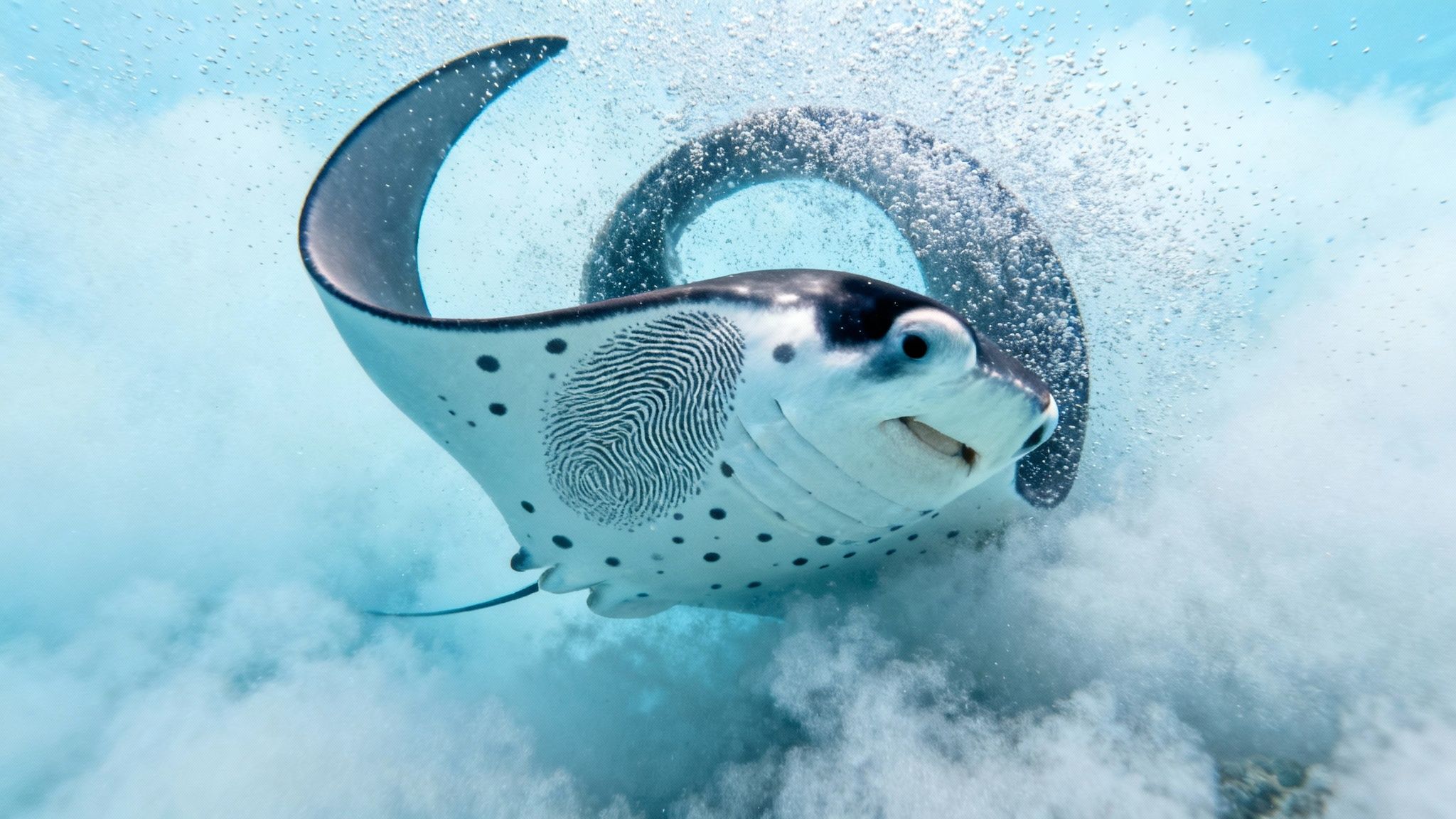
When you hear the word "ray," it's easy to picture a stingray hiding in the sand. But let's clear that up right away—the stars of our Kona snorkel tours are a completely different animal. Manta rays are the true gentle giants of the ocean, and they are completely harmless to people.
Unlike their stingray cousins, mantas have no teeth, no stinger, and no barb. They are incredibly intelligent, curious, and peaceful creatures. This is what makes snorkeling with manta rays in Kona such a safe and profoundly moving experience.
These majestic animals are filter-feeders, which means their diet is made up of tiny organisms called plankton. Think of them as the ocean's version of a baleen whale, gracefully gliding through the water to scoop up microscopic meals.
The Underwater Ballet of the Barrel Roll
One of the most captivating things you’ll witness is how these mantas eat. To get as much plankton as possible, they perform a graceful maneuver we call the "barrel roll."
Imagine an acrobat performing a slow-motion somersault right below you. The manta glides forward with its huge mouth wide open, scooping up plankton. Then, it elegantly loops backward, all while continuing to move forward, creating a hypnotic cycle to capture even more food. Seeing a group of mantas doing this underwater ballet just inches away is a sight you will never, ever forget.
The manta ray’s brain-to-body size ratio is the largest of any cold-blooded fish. This incredible intelligence shines through in their curious behavior during our snorkels—they seem to be just as interested in us and our lights as we are in them.
Distinguishing Kona's Manta Rays
The waters right here off the Kona coast are home to a specific species called the reef manta ray (Mobula alfredi). These are the second-largest manta species in the world, and they're the ones you'll meet on our tours.
Reef Manta Rays: These are Kona's "resident" rays. Their wingspans typically reach an impressive 12 to 14 feet, and they prefer to stick to the coastal waters where the plankton is plentiful.
Oceanic Manta Rays: Every now and then, their much larger cousins, the giant oceanic manta ray (Mobula birostris), swing by for a visit. These behemoths can have wingspans of over 20 feet and are a truly breathtaking sight.
The consistency of our local reef manta population is what makes Kona so special. These aren't just migratory animals passing through; this is a resident community that comes back to the same feeding grounds night after night.
A Fingerprint on Their Belly
So, how do we tell all these beautiful creatures apart? It's simple: each manta ray has a unique pattern of black spots on its white belly. This pattern is as distinctive as a human fingerprint. It allows scientists and local guides to identify, name, and track individual mantas over their entire lives, which can be up to 50 years!
When you're floating above them, take a close look at these unique markings. You might be watching a famous local like "Big Bertha" or "Lefty." This personal connection turns the experience from just watching wildlife to actually meeting individual personalities of the sea. If you want to learn even more, check out these fun facts about manta rays you should know.
Getting to know these creatures before you get in the water builds a deep sense of respect. It transforms a simple snorkel trip into a meaningful connection with one of the ocean's most graceful and intelligent inhabitants.
What to Expect on Your Manta Ray Snorkel Adventure
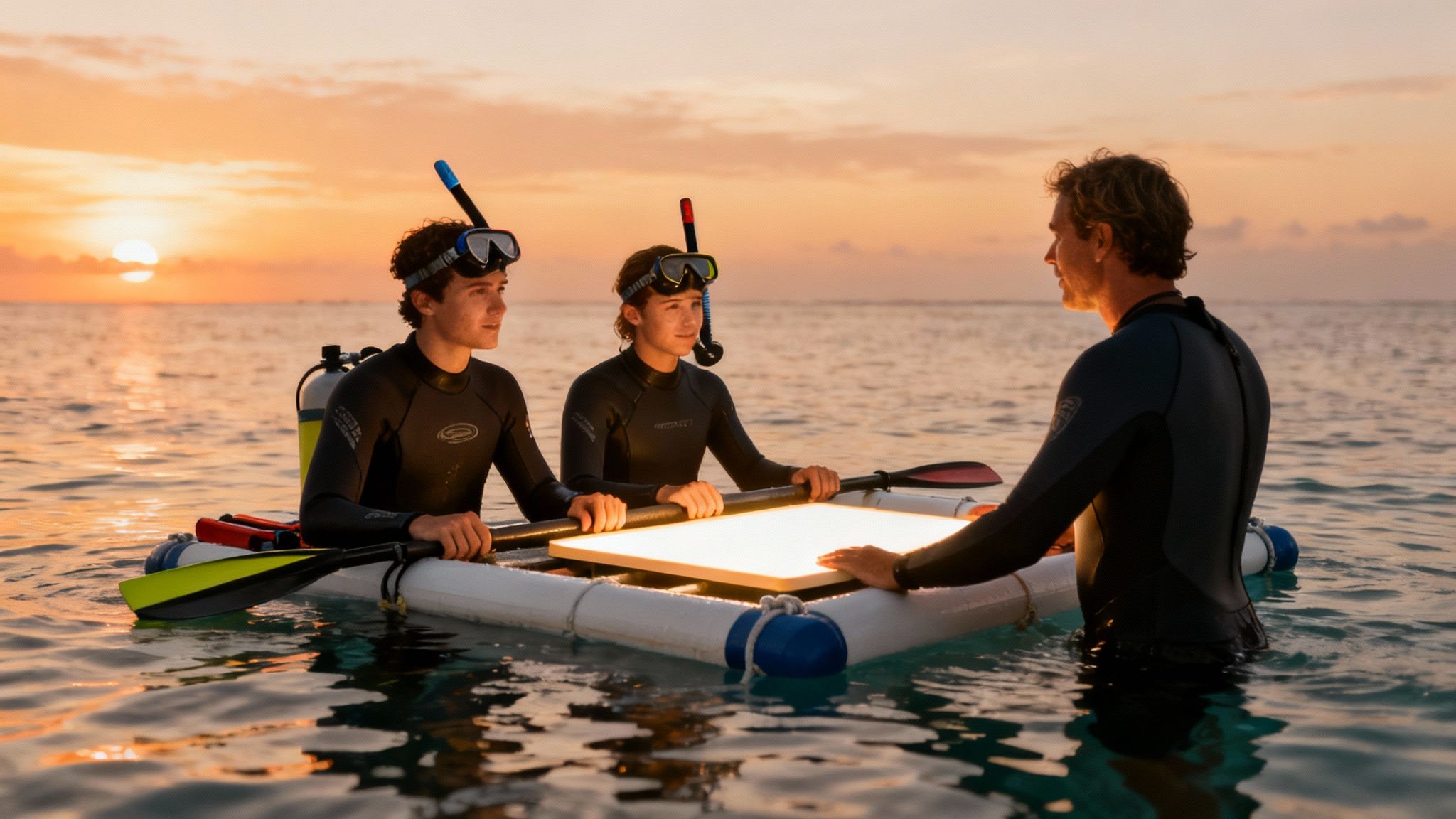
Knowing what your adventure holds is the first step to turning any pre-trip jitters into pure, bubbling excitement. A great manta ray snorkel tour isn't just an activity; it's a carefully crafted experience. Everything is designed for your safety, comfort, and total amazement, from the moment you arrive at the harbor to that last boat ride back under a canopy of stars.
Your journey kicks off in the late afternoon. After checking in with your tour crew, you'll hop on board for a beautiful boat ride along the iconic Kona coast. It's the perfect time to soak in the views as the sun starts to dip, painting the sky in fiery colors.
During the ride out, your guides will give you a full safety briefing. They’ll show you how to use your gear, explain the do's and don'ts in the water, and make sure you feel totally ready for what's next. This is your chance to ask anything you're curious about!
The In-Water Experience
Once the boat anchors at the special manta spot, the real magic begins. The crew will set up a custom-built, floating light board—this is the main stage for the evening's show. Think of it as a big, stable raft with powerful (and eco-friendly) lights pointing straight down into the ocean.
You won't be left to swim around freely in the dark. Instead, you'll slide into the water and hold onto handles built right into the light board. This gives everyone a secure place to float and keeps the group together in a safe, controlled way.
The bright lights do two things. First, they light up the water like an underwater theater, giving you a crystal-clear view. More importantly, they attract swarms of plankton, the mantas' favorite food. You're essentially floating above a glowing, all-you-can-eat buffet that draws the manta rays right up to you. All you have to do is float, watch, and be mesmerized as these gentle giants perform their graceful feeding dance, sometimes just inches below you.
Gear and What to Bring
Don't worry about gear—we provide everything you need for snorkeling with manta rays in Kona. Our equipment is top-notch to make sure you're comfortable and safe.
Wetsuits: The Pacific can get a bit chilly after sunset. A wetsuit keeps you warm and adds a little extra buoyancy, so you can just relax and float.
Snorkel, Mask, and Fins: We provide high-quality, professional gear that fits well, giving you a clear view without any annoying leaks.
Flotation Devices: Even though you're holding onto the light board, we have extra flotation aids like pool noodles if you want that extra peace of mind.
While we've got the essentials covered, packing a few personal items will make your trip even better. A towel and a warm, dry change of clothes for the ride back are a must. A waterproof camera is also a great idea, but trust us, the experience itself is something you'll never forget. For more packing ideas, you can check out our guide on snorkeling in Hawaii.
If one night on the water leaves you wanting more, you might even get inspired for bigger adventures, like liveaboard dive trips that let you explore incredible marine ecosystems around the world.
Required Skill and Comfort Level
You don't need to be an Olympic swimmer for this! If you're comfortable floating in water, you can do this. You'll be holding onto the light board for the whole 30-45 minute session, so there's no strenuous swimming involved. The most important thing is simply being able to relax in the water while using a snorkel and mask.
This incredible encounter is possible because we know these waters and these animals. Our small groups get personalized attention, including a quick lesson on manta biology and even chances for whale-spotting during sunset cruises. The secret is knowing exactly where the rock pinnacles naturally funnel plankton, and our captains are experts at positioning the boat for the absolute highest sighting rates.
At the end of the day, your safety and education are our top priorities. That's how we make sure every single person has an amazing, unforgettable night.
Choosing the Best Time for Your Manta Ray Encounter
One of the best things about planning a manta ray snorkel in Kona is how reliably awesome it is. Unlike whale watching or other wildlife tours that depend on the season, you can have a world-class manta experience any night of the year.
The reef mantas here are homebodies—they’re a resident population, not a migratory one. They live in these waters all year long and show up for their nightly plankton feast with incredible consistency. This means the best time to book your tour is simply the night that works best for your trip!
Sunset Tour vs. After Dark Tour
We run two trips every night, and while the manta action is spectacular on both, each has its own unique vibe. It really just comes down to the kind of atmosphere you're looking for.
The Sunset Tour: This is the early trip, and it’s a two-for-one special. You get a stunning boat ride out on the water just in time to watch a classic Hawaiian sunset paint the sky. It’s an amazing photo opportunity. You'll hop in the water as the last light fades, watching the ocean transform from day to night right before the big show starts.
The After Dark Tour: Our later tour is all about the drama. You head out under a canopy of brilliant stars, with the dark ocean below. The contrast between the deep black water and our powerful lights creates an otherworldly stage for the mantas. It feels incredibly focused and can often be a more intimate experience with fewer boats on the water.
Once you’re in the water, the up-close encounter with the mantas is identical on both tours. The only difference is whether you prefer the scenic sunset cruise beforehand or the dramatic, star-lit journey of the later trip.
No matter which tour you choose, you're in for an amazing time. The mantas have been coming to these specific feeding sites for decades, drawn like clockwork to the plankton that gathers under our lights.
Does the Moon Phase Matter?
We get this question all the time! The short answer is no, the phase of the moon has almost zero impact on the manta sightings in Kona.
Our powerful, custom-built light boards are designed to attract massive amounts of plankton, and they easily outshine even the brightest full moon. The unique underwater landscape here creates a natural plankton buffet that keeps the mantas coming back every single night.
So, whether you book during a new moon or a full moon, your chances of seeing the graceful giants are just as fantastic. For a deeper dive, check out our full guide on the best times to see manta rays in Kona.
The bottom line? Just pick the night that fits your schedule. The magic is waiting for you right below the surface, and Kona’s manta rays are ready to put on a show.
How To Be a Responsible Manta Ray Observer
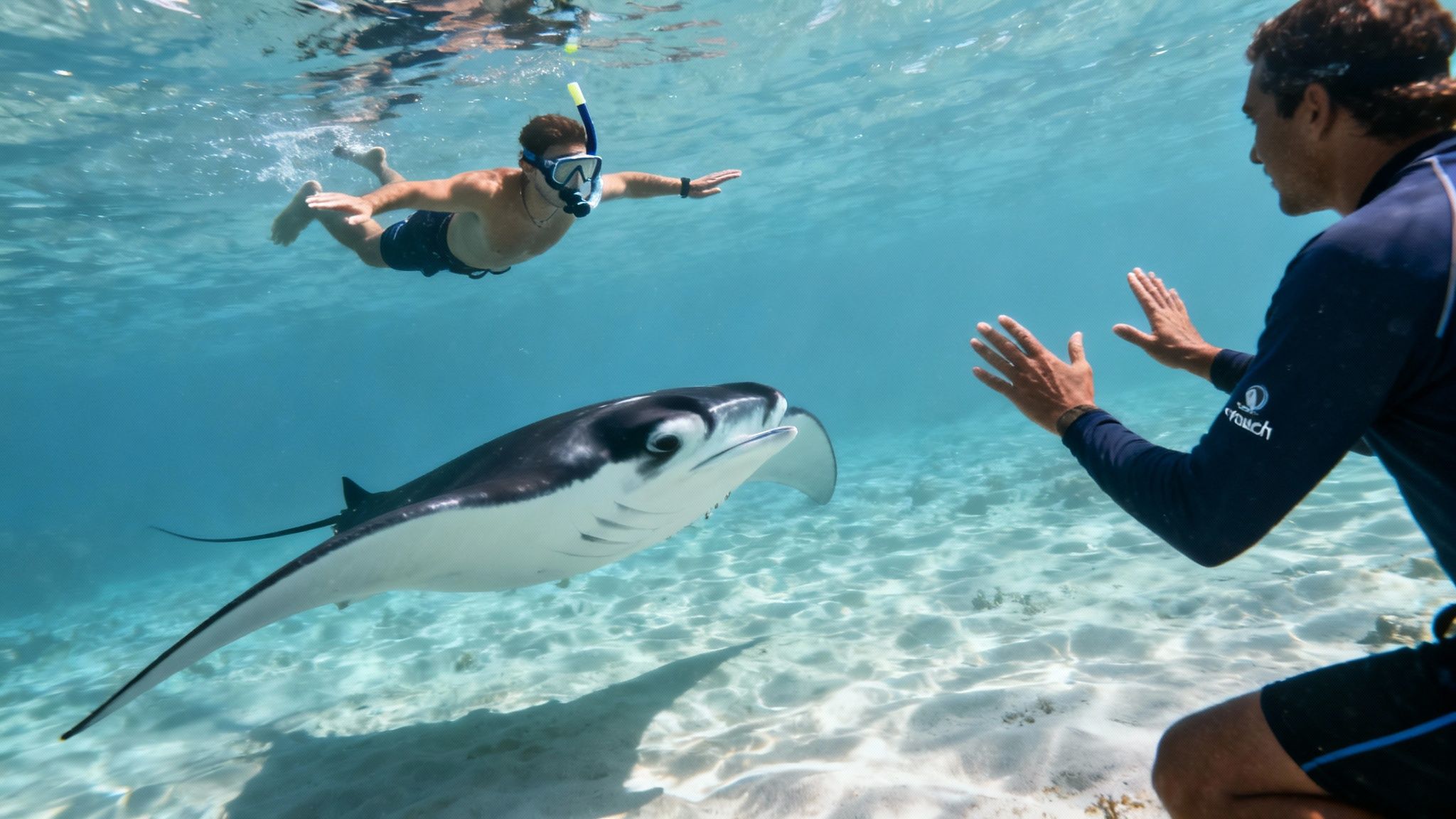
The incredible experience of snorkeling with manta rays in Kona is built on a delicate partnership between us and these amazing animals. To protect these gentle giants, the entire Kona community follows one simple but critical rule: passive interaction. In short, we are there to watch them in their world, not to interfere.
At the very heart of this is a strict, non-negotiable rule: no touching. It’s incredibly tempting to reach out as a manta glides just inches below you, but even a slight touch can cause serious harm.
Manta rays have a special protective mucous layer—a slimy coating that acts as their immune system, shielding them from nasty bacteria and infections. Touching them wipes off this vital slime coat, leaving them vulnerable to disease. We have to be hands-off observers to keep Kona's beloved manta population safe and healthy.
Becoming a Manta Guardian
Being a "Manta Guardian" is pretty simple. It just means following a few guidelines designed to keep the mantas comfortable, safe, and happy to return to the snorkel sites night after night.
Your guides will go over everything in detail, but here are the main things to remember:
Stay on the Surface: As a snorkeler, your job is to float peacefully on the surface while holding onto the light board. Please don’t dive down, as this can interrupt the mantas while they’re feeding.
Keep Your Fins Up: Try to keep your fins from dangling straight down into the water. Accidentally kicking or brushing a manta with a fin is just as harmful as touching them with your hands.
No Chasing: Always let the mantas come to you. Never chase after them or try to block their path. This stresses the animals out and goes completely against the idea of passive observation.
Following these guidelines helps create a safe and predictable space for the mantas to do their thing. To get a better feel for the experience, you can learn more about safe snorkeling practices and understand why these gentle creatures are no threat to us.
By choosing to snorkel responsibly, you're not just a tourist; you're an active participant in one of the world's most successful marine conservation stories. Your respect ensures future generations can experience this same magic.
Kona: A Global Model for Sustainable Tourism
This commitment to responsible viewing has turned Kona's manta ray tours into a global example of sustainable wildlife tourism done right. Over the years, local operators have teamed up to create standards that protect the mantas while giving visitors an unforgettable night.
The best tour operators follow specific Manta Ray Green guidelines. This ensures every part of the tour, from how the boats are positioned to how everyone behaves in the water, is designed to have the smallest possible impact on the animals and their home.
By choosing a responsible company, you're directly supporting the conservation of Kona's manta ray population. Your tour fee helps sustain an industry that puts the health of the marine ecosystem first, making sure these incredible creatures continue to thrive.
Frequently Asked Questions About the Manta Ray Snorkel
Got questions about your upcoming manta ray snorkel in Kona? You're not alone. Let's walk through some of the most common concerns, from safety to swimming skills, so you can show up ready for an incredible night.
Is Snorkeling with Manta Rays in Kona Safe?
Absolutely. Manta rays are true gentle giants. They don't have teeth, stingers, or barbs, making them peaceful companions in the water. We take safety seriously, which is why reputable tours like Kona Snorkel Trips always have lifeguard-certified guides, sturdy light boards to hold onto, and a thorough safety talk before you even get your feet wet.
The whole setup is designed to keep you floating comfortably on the surface while holding onto a custom light board. You're not swimming freely in the open ocean. This creates a very controlled and safe environment, allowing you to focus completely on the amazing show below you instead of worrying about currents or where you're drifting.
Our local guides are also in constant radio contact with other boats in the area. This network allows us to share real-time updates on manta ray activity, making sure we get you to the best possible spot for sightings. It’s a team effort that boosts both safety and your chances of a great encounter.
“Our top priority is guest safety without compromising the magic of the manta encounter.” – Dive Master Sarah
Lifeguard-Certified Guides are with you every step of the way, keeping a watchful eye.
Stable Light Boards give you a secure and buoyant platform to hold onto.
Comprehensive Briefings cover everything you need to know, from using your gear to hand signals.
Do I Need to Be a Strong Swimmer?
You don't need to be an Olympic swimmer, but you should be comfortable in the water. The wetsuit we provide gives you a lot of extra buoyancy, so you'll float with very little effort. Since you'll be holding onto the light board the whole time, you won't be swimming against any currents.
That said, a little practice beforehand can make a world of difference for your confidence. If you can, try out your snorkel and mask in a pool or a calm bay just to get the hang of breathing and clearing your mask. It helps you relax completely once the real adventure begins.
Many first-timers are a bit nervous about the dark water, but you’ll be in a well-lit area right next to the boat and the board. The calm Pacific at night often feels even more peaceful than snorkeling during the day.
Try floating and breathing with your snorkel in calm water first.
Practice clearing water from your snorkel in the shallows.
If you have access to a pool, swimming a few short laps can build confidence.
Always chat with your guide about any concerns before you leave the dock—that’s what we’re here for!
Comfort in the water turns into pure enjoyment when the mantas arrive.
What Happens If We Don’t See Manta Rays?
While Kona has an incredible 85-90% success rate for manta sightings, these are wild animals, and nature doesn't always follow a script. That's why tours with Kona Snorkel Trips come with a “Manta Guarantee.” If the mantas decide not to show up on your tour, you can rebook and try again on another night for free (based on availability).
Be sure to check the specific terms of the policy when you book. A great tip is to schedule your manta snorkel early in your vacation. That way, if you need to use the guarantee, you have plenty of time to reschedule.
On the rare occasion that bad weather or an equipment issue pops up, the tour operator will always reschedule or offer a refund before you even head out. Your safety comes first.
Double-check the rebooking policy on your confirmation email.
Ask your guide about the conditions and what they’re seeing that night.
Have a backup plan for another fun Kona activity, just in case.
What Is the Difference Between the Snorkel and the Dive?
Both experiences are absolutely unforgettable, but they offer a different perspective. As a snorkeler, you'll float on the surface, holding onto a specially designed light board. The light attracts plankton, which in turn draws in the mantas. You get a fantastic bird's-eye view as they barrel roll and feed just inches below you—no certification needed!
Divers, on the other hand, go down to the ocean floor at about 30 feet and look up. From this vantage point, you see the mantas' silhouettes gliding gracefully overhead. It's a truly cinematic view, but it requires a scuba certification, more gear, and good buoyancy control.
For ease and accessibility, most people choose snorkeling. If you're a certified diver looking for that unique, bottom-up perspective, the dive is an incredible option.
Feature | Snorkel | Dive |
|---|---|---|
Position | Surface view from a floating board | Bottom-up view from the ocean floor |
Certification | None required | Scuba certification needed |
Proximity | Mantas approach just inches below you | Mantas glide directly overhead |
Accessibility | Great for all ages and skill levels | Limited to certified divers |
Tips for a Smooth Manta Snorkel
Get to the meeting point a little early to get your gear fitted without rushing.
A snug-fitting hood or cap can help prevent water from leaking into your mask.
Bring a small towel and a warm jacket for the boat ride back—it can get chilly!
Pay close attention to your guide’s instructions and signals once you’re in the water.
Bring a camera, but remember to avoid using a flash and try not to make sudden movements.
Before You Go
Charge up your camera and pack an extra battery.
Stay hydrated throughout the day and have a light snack before the tour.
Double-check your booking confirmation for the correct meeting time and location.
Review the rules for interacting with the mantas to be a responsible visitor.
And most importantly, get ready to smile!
Whether you choose to snorkel or dive, you're in for one of the most magical wildlife encounters on the planet.
Secure your spot with Manta Ray Night Snorkel Kona Hawaii Tours.
Comments