Swim With Manta Rays Hawaii Your Ultimate Kona Guide
Picture this: you're floating in the warm, dark Pacific waters off the coast of Hawaii. Suddenly, giant, graceful shadows glide just inches beneath you, illuminated by underwater lights. This is the magic of the manta ray night snorkel, and it’s one of Hawaii’s most reliable and breathtaking wildlife encounters.
Unlike just about anywhere else on the planet, Kona offers a near-guaranteed chance to swim with manta rays in Hawaii. It’s an adventure you’ll be talking about for years. To learn more about this incredible activity, check out the home page for the Manta Ray Night Snorkel.
Your Guide to Kona's Manta Ray Night Snorkel
The Kona coast of the Big Island has become famous for a truly unique natural spectacle. Every single night, tour operators use powerful, submerged lights to attract massive clouds of plankton—the manta rays' favorite meal.
This creates a nightly buffet that draws a resident population of these gentle giants. They show up to feast in a stunning, silent underwater ballet. It’s this consistent, reliable gathering that sets Kona apart. Seeing a manta ray elsewhere is often a matter of luck, but here, it’s a nightly show. The experience is both serene and absolutely exhilarating.
A Reliable, Year-Round Spectacle
Because the local manta rays are residents and don't migrate, you can experience this wonder any time of year. This incredible reliability has made the manta ray night snorkel a cornerstone of Big Island tourism, drawing visitors from all over the world. To get a better sense of the trip, Manta Ray Night Snorkel Hawaii is a fantastic resource for this one-of-a-kind experience.
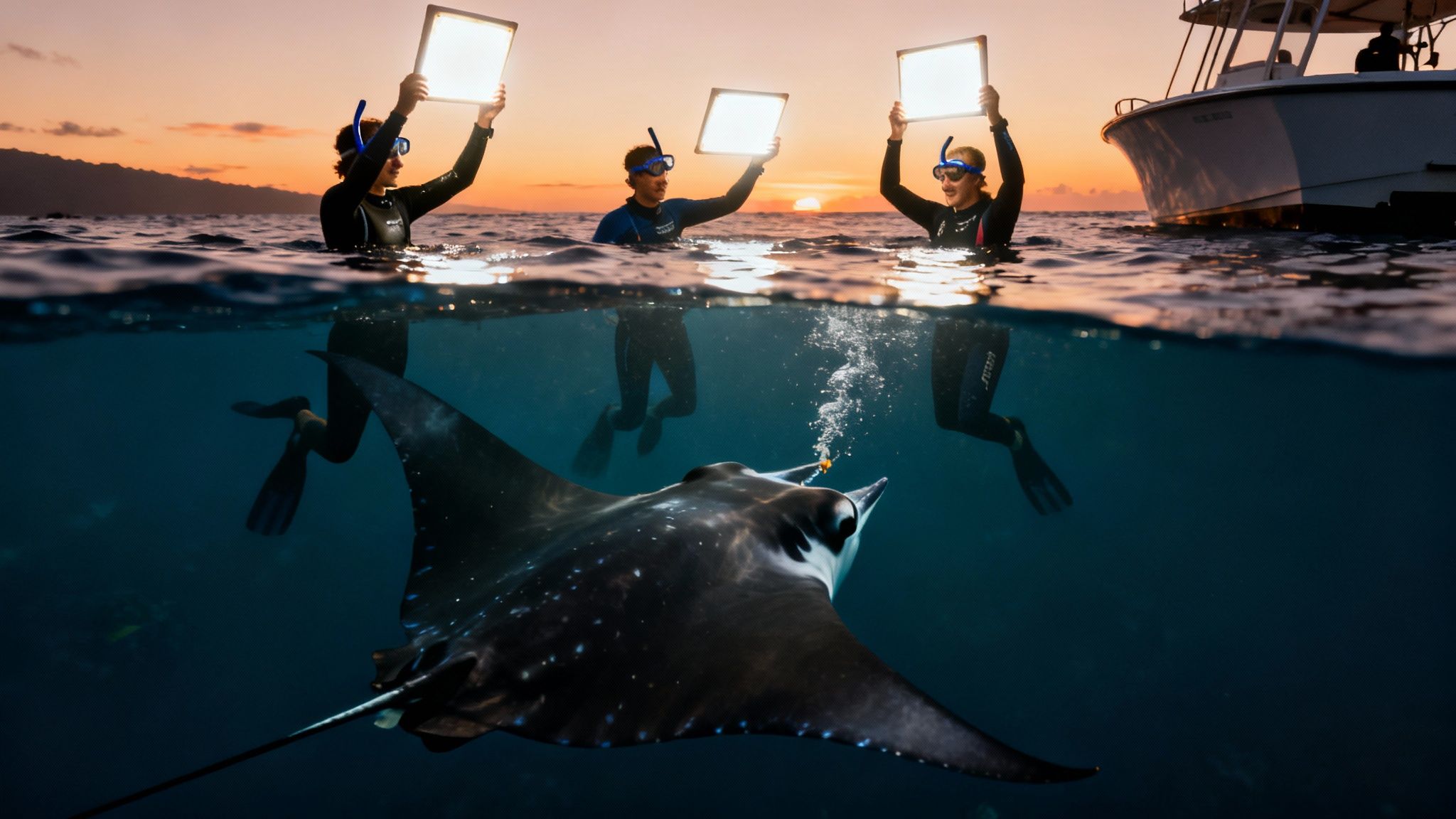
The tours are designed to be safe and incredibly simple for guests. You’ll float on the surface holding onto a custom-built light board while the mantas perform barrel rolls and glide effortlessly below. It’s a passive, observational activity that minimizes any disturbance to the animals while giving you the best seat in the house.
The experience is often described as otherworldly. Watching a creature with a wingspan of up to 16 feet move with such grace is something that stays with you long after you've left the water. It’s less like a typical snorkel trip and more like a moving meditation.
Choosing Your Manta Ray Tour Time
Most operators offer two main departure times, each with its own vibe. Deciding between a sunset tour and a later after-dark snorkel often just comes down to personal preference and what you want out of the experience.
Here's a quick breakdown to help you decide.
Feature | Sunset Snorkel | After-Dark Snorkel |
|---|---|---|
Ambiance | Witness a stunning Kona sunset from the boat before getting in. | Experience the magic under a canopy of stars for a more mystical feel. |
Crowds | This is often the most popular time, so it can be busier. | Typically fewer boats and people, offering a quieter experience. |
Best For | Families and those who want to combine the snorkel with sunset views. | Travelers seeking a more tranquil and intimate encounter with the mantas. |
Honestly, you can't go wrong with either time. Both offer the same incredible opportunity to see the mantas—it’s just a matter of whether you’re a sunset person or a stargazer.
Why Kona Is The World Capital For Manta Rays
When you picture the perfect place to swim with manta rays in Hawaii, your mind should go straight to Kona on the Big Island. It’s not just an option—it's the global epicenter for this magical encounter. Sure, you might get lucky and spot a manta ray somewhere else in the world, but Kona offers a level of consistency that is simply in a league of its own. Seeing them here isn't a matter of chance; it's a nightly event.
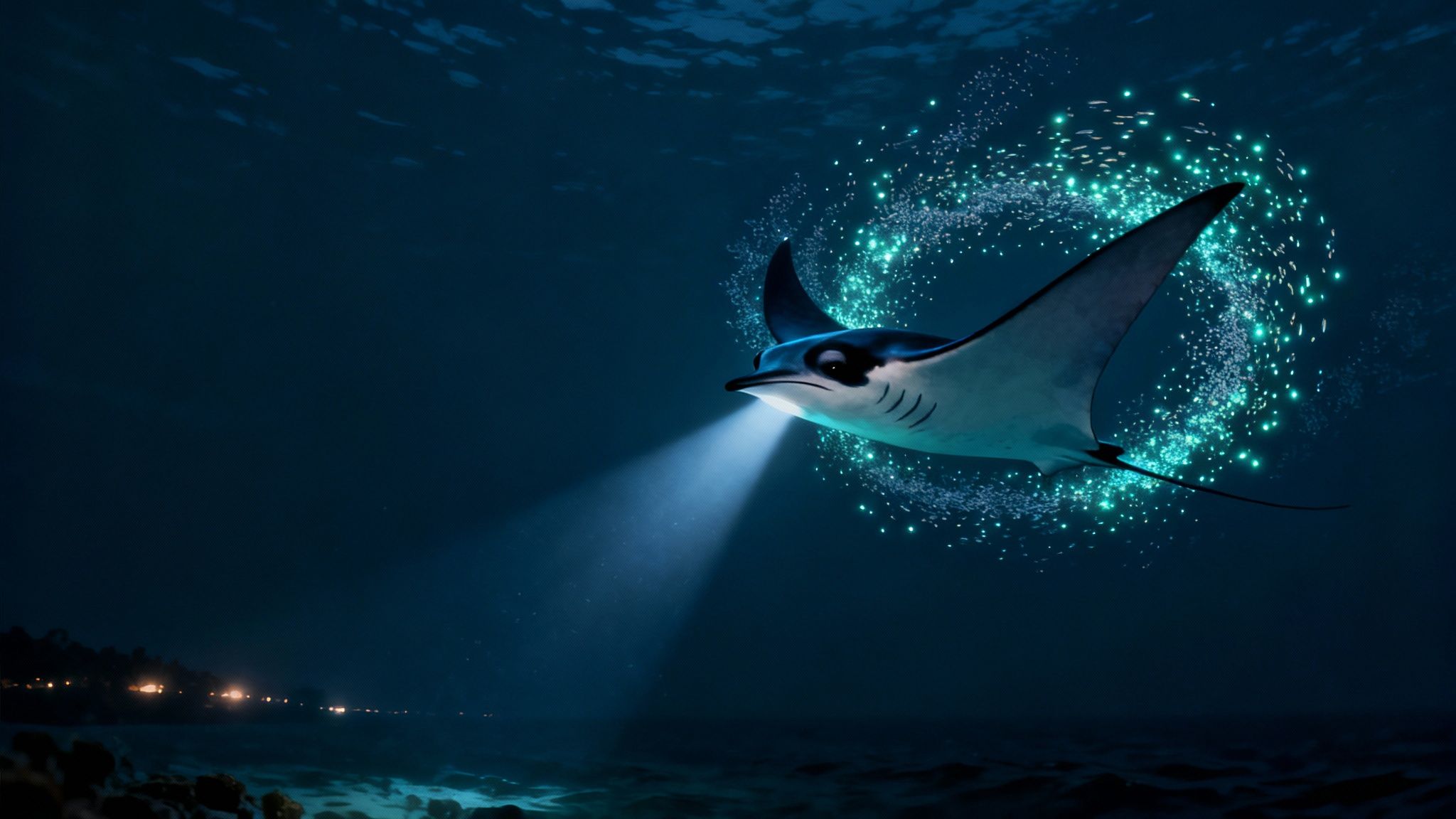
So, what’s the secret? It all started with a unique, man-made phenomenon that blossomed into an ecological marvel. Years ago, a coastal hotel pointed its lights into the ocean, and those lights attracted thick clouds of plankton. This nightly plankton buffet didn’t go unnoticed by the local reef manta rays, who quickly learned to show up for a reliable meal.
That simple act of lighting the water created a conditioned feeding response. Today, tour operators replicate this effect with powerful, submerged lights, essentially ringing the dinner bell for these gentle giants every single night.
The Famous Manta Ray Viewing Sites
This incredible gathering happens at a couple of specific, well-established sites along the Kona coast. The two most famous are affectionately known as "Manta Village" and "Manta Heaven."
Manta Village: Located just south of Kona near Keauhou Bay, this is the original manta viewing site. It’s legendary for its incredibly high success rate and reliably calm conditions.
Manta Heaven: You'll find this spot north of Kona, closer to the airport. Manta Heaven often boasts larger numbers of manta rays, creating a truly spectacular underwater ballet.
Both sites give you a front-row seat to one of nature's most graceful performances. The best part is that the local manta population doesn't migrate, which means this spectacle is available 365 days a year. You can learn more about the fascinating lives of these creatures in our article about fun facts you should know about manta rays.
Unbeatable Sighting Success Rates
Kona's reliability is what truly sets it apart. Think about this: around 80,000 visitors come here each year just for this experience, making it one of the world's premier marine encounters.
The main draw is the jaw-dropping 80-90% sighting success rate. That number blows global competitors out of the water, like Australia's Ningaloo Reef (60-70%) or Indonesia's Raja Ampat (50-60%). It's clear why Kona is the most dependable place on Earth for this adventure.
This isn't just another tour; it's a near-guaranteed encounter with one of the ocean's most majestic animals. The predictability transforms the activity from a hopeful gamble into a reliable cornerstone of any Hawaiian vacation.
Ultimately, the combination of a resident ray population and a consistent, nightly food source has created the perfect storm for wildlife tourism. For an exceptional manta ray snorkel, Kona Snorkel Trips is a great option, celebrated as the most reviewed and highest-rated snorkel tour company in Hawaii. Their expert guides ensure a safe and memorable adventure with these gentle giants.
How to Choose The Best Manta Ray Tour
With dozens of boats heading out to see the mantas every single night, picking the right one is easily the most important decision you'll make. It’s the difference between a magical, once-in-a-lifetime encounter and a crowded, chaotic mess. The goal isn't just to find the cheapest ticket; it's to find a crew that truly cares about your safety, the mantas' well-being, and giving you an incredible experience.
The best operators keep their groups small. Think about it: you're floating in the dark ocean. A smaller group means you get more space, a much better view, and a more personal trip. You feel like a valued guest, not just another number being herded into the water.
Prioritizing Safety And Expertise
Your safety out on the open ocean at night is everything. Always, and I mean always, book with a company that has lifeguard-certified guides. These are the pros trained to handle any situation that might come up, which gives you the peace of mind to just relax and enjoy the show below.
A top-notch tour also starts long before you even get your feet wet. The hallmark of a great operator is a detailed pre-snorkel briefing. This isn't just a quick "don't touch the animals" speech. It's a full-on educational session about manta ray biology, their unique behaviors, and the proper etiquette for swimming with them. Honestly, understanding these gentle giants makes the whole experience so much more profound.
A great guide does more than just keep you safe—they bring the ocean to life. They'll point out specific mantas they know by name, identifying them by their unique spot patterns and sharing stories about their personalities. It turns a simple snorkel trip into a true wildlife encounter.
When you're looking for a tour, find a company with a stellar reputation for both amazing customer service and responsible practices. For a truly unforgettable night with the mantas, we can't recommend Kona Snorkel Trips enough. They are the most-reviewed and highest-rated snorkel company in all of Hawaii, and their commitment to small groups and expert guides makes all the difference.
Snorkeling Versus Scuba Diving With Mantas
The vast majority of people will see the mantas while snorkeling, and it's a fantastic and easy way to do it. You just float comfortably on the surface holding onto a big light board and watch the mantas barrel roll just inches beneath you. All you need are basic swimming skills and a taste for adventure.
But for all the certified divers out there, you have another option. Manta ray scuba dives offer a completely different perspective. You’ll head down to the ocean floor, kneel in the sand, and look up as these massive creatures glide gracefully overhead. It's an absolutely breathtaking view of their feeding ballet.
If you're a diver looking for that deeper experience, Kona Honu Divers is the best in the business. They're recognized as the top-rated & most reviewed diving company in both Hawaii and the Pacific Ocean. Their manta dives are legendary for a reason.
Considering A Private Charter
For families, a special celebration, or any group that just wants the boat to themselves, a private charter is the ultimate way to go. You get the entire vessel and crew dedicated just to you. This gives you total flexibility on timing and a level of personal attention you simply won't find on a public trip.
A private charter means you can share this incredible moment with only your favorite people, creating memories without any distractions. Many of the best companies offer private bookings if you ask. For a deeper dive into all the options, check out our complete guide to the 12 best manta ray snorkel tours in Kona to find the perfect fit.
What To Expect On Your Manta Ray Adventure
If you're wondering what actually happens on one of these tours, let me walk you through it. Knowing the flow of the evening can help turn any pre-trip butterflies into pure, buzzing excitement. From the moment you show up at the harbor to the second you slip into the dark, plankton-rich waters, every part of the experience is built around your safety and maximizing the magic.
Here's a play-by-play of what your night will look like when you swim with manta rays in Hawaii.
Your adventure starts at the harbor, where you'll check in with the tour crew. This is where the fun begins—they'll get you kitted out with all the gear you'll need. That means a wetsuit to keep you comfortable in the nighttime ocean temps, plus a quality mask and snorkel. Fit is everything for a good time in the water, so if anything feels too tight or too loose, speak up! The crew wants you to be comfortable.
The Sunset Boat Ride
Once everyone is geared up and ready to go, you'll hop on the boat and cruise out to one of Kona's legendary manta ray sites. If you’ve booked a sunset tour, this part of the trip is an experience all on its own. Picture this: cruising along the stunning Kona coast while the sky just explodes in fiery oranges, pinks, and purples.
The ride itself is pretty quick, usually just 15-20 minutes. It's the perfect amount of time to get settled, feel the ocean spray, and listen to the crew's safety briefing. They’ll cover all the important stuff, like how to interact respectfully with the mantas and what the plan is once you're in the water.
Entering The Water
As you arrive at the viewing site, the sun dips below the horizon and the real show gets ready to start. The crew flips a switch, and powerful, submerged lights illuminate the water beneath the boat. These lights are like a giant neon sign for plankton, the microscopic critters that manta rays absolutely love to eat. You're essentially ringing the dinner bell for the ocean's most graceful giants.
Next, it’s your turn to get in. You'll slip into the water and grab onto a large, custom-made light board. This floating raft is your ticket to the show, and it’s brilliantly designed for a few reasons:
Stability: It gives you a secure place to hold on, so you can just float effortlessly without kicking or treading water.
Lighting: The bright lights that attract all that tasty plankton are built right into the board, shining straight down into the depths.
Positioning: It keeps the whole group together in a safe, designated spot, giving everyone a front-row seat.
You simply float at the surface, looking down through your mask, and wait for the performance to begin. This isn’t about chasing animals; it's a completely passive, observational experience where the mantas approach on their own terms, which is what makes it so respectful and unbelievably cool.
The Main Event: An Underwater Ballet
It might start with just a flicker of movement in the darkness. Then, a graceful shadow emerges from the deep. Soon, another follows. The manta rays glide into the light, performing a mesmerizing underwater ballet just inches beneath you. With their massive mouths wide open, they swoop, somersault, and barrel roll through the clouds of plankton.
It’s an experience that hits all your senses. You'll hear the gentle lapping of the ocean and the muffled sound of bubbles from any nearby scuba divers. But your eyes will be locked on these majestic creatures, some with wingspans stretching over 16 feet, moving with an elegance that seems impossible for their size.
You'll be in the water for about 30 to 45 minutes, a timeframe that somehow feels like both a lifetime and the blink of an eye. It's a genuine, once-in-a-lifetime spectacle that will leave you absolutely speechless.
Safety Guidelines And Manta Ray Etiquette
When you gear up to swim with manta rays in Hawaii, it’s so important to remember you’re a guest in their world. Following the right guidelines isn't just about your safety; it's about showing respect for these incredible animals and making sure this experience is around for others to enjoy for years to come.
The whole encounter is designed around a simple, brilliant concept called passive floating. You’ll hold onto a specially designed light board at the surface and just… float. That's it. This calm approach prevents a chaotic scene of splashing tourists and lets the mantas come to you on their own terms. It creates a peaceful, almost magical atmosphere for everyone in the water.
The Golden Rule: Do Not Touch
If you only remember one thing from the safety briefing, make it this: never, ever touch a manta ray. It might be tempting when they glide so close, but it's incredibly harmful to them.
Manta rays have a special mucus layer—a slime coat—that protects their skin from nasty bacteria and infections. When we touch them, we can strip that protective layer right off, leaving them vulnerable to disease. Even a gentle, accidental brush can cause serious harm.
By staying flat on the surface and holding the light board, you'll get an unbelievably close view without ever needing to make contact. Trust the mantas to navigate; they're masters of their environment and will swoop and glide around you with breathtaking precision.
"The core principle of a responsible manta ray encounter is observation without interference. When we give them space, they reward us with a natural, awe-inspiring performance that is far more meaningful than any forced interaction could ever be."
Key Rules For A Safe Encounter
Beyond the big "no touching" rule, a few other guidelines help everything run smoothly and respectfully. The most important thing is to always listen to your guide—they're the experts on manta behavior and the local ocean conditions.
Here are the key dos and don'ts for your adventure:
Stay Horizontal: Think like a plank. Keep your body flat on the surface. If you let your feet dangle down, you could get in the way of a manta swimming right below you.
No Flash Photography: A sudden, bright flash is jarring and can easily disorient the mantas. Make sure your camera's flash is turned off before you get in the water.
Avoid Diving Down: This one's for snorkelers. You must stay on the surface. Diving down into their feeding zone disrupts their natural patterns and is a major safety risk.
Follow Your Guide: Your guide’s instructions are everything. They will keep the group together and make sure everyone follows the rules, ensuring the night is safe and fun for all.
This experience is the perfect blend of education and pure adrenaline, creating unforgettable nights while actively supporting habitat protection. As word gets out, Kona continues to set the standard for how to do these encounters right.
Lastly, you don't need to be an Olympic swimmer, but you should be comfortable floating in the open ocean at night. The wetsuits we provide add a lot of buoyancy, which really helps you relax and just enjoy the show. For a deeper dive, check out our guide covering the best tours and safety tips for snorkeling with manta rays in Hawaii.
How To Prepare For Your Manta Ray Snorkel
A little bit of prep work can be the difference between a good trip and an absolutely unforgettable one. Knowing what to pack (and what you can leave at the hotel) is key to being comfortable, warm, and ready to soak in the magic when you swim with manta rays in Hawaii. When you’re all set, you can just focus on the incredible show happening right below you.
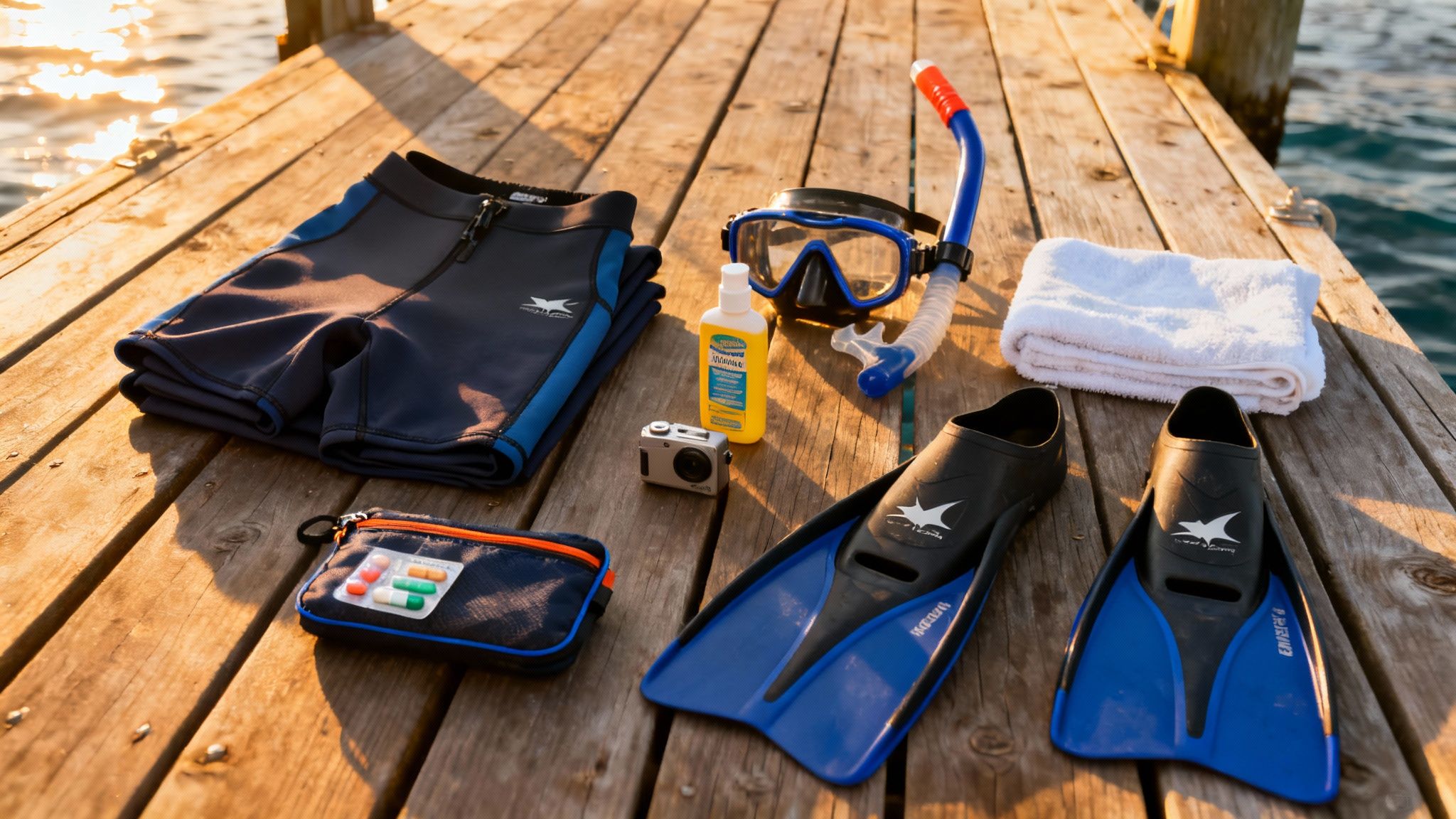
The easiest thing to do is wear your swimsuit to the harbor right under your clothes. You’ll be pulling a wetsuit on over it anyway. Trust me, you'll be so glad you brought a dry towel and some warm clothes to change into for the boat ride back. A cozy hoodie or a windbreaker is perfect for cutting through that cool night air on the water.
What Your Tour Provides (And What You Should Bring)
Good news—any reputable tour company is going to handle all the major gear for you, which makes packing a breeze. You can count on them to provide:
All Snorkel Gear: This means a quality mask, snorkel, and fins that fit.
Wetsuits: Absolutely essential for staying warm in the ocean at night.
Flotation Devices: Usually a big, custom-built light board that you hold onto in the water.
Refreshments: Most tours will have water, juice, and some light snacks waiting for you on the boat.
That really just leaves a few personal items for you to worry about. An underwater camera is a fantastic idea, but please make sure the flash is turned off. A sudden bright light can really bother the mantas. If you're on a sunset tour, slather on some reef-safe sunscreen before you even get on the boat. And if you’re someone who gets motion sickness, taking medication beforehand is a smart move.
This kind of small-group snorkel, led by lifeguard-certified guides, is a huge draw for everyone from ocean lovers to international travelers looking for a unique night adventure. The whole experience, from the wetsuits to the flexible tour times, is designed to be top-notch. And the stars of the show? These rays often have wingspans of 12-16 feet and perform a graceful feeding ballet. In fact, about 60% of all sightings are of familiar, named rays that frequent the area.
The only real physical requirement is that you need to be comfortable in deep ocean water after dark. You don't have to be Michael Phelps—just being able to float calmly is enough.
For more ideas on what to pack, our guide to snorkeling in Hawaii has a ton of useful info. As you get ready, it's also worth checking out these general more travel tips to make your whole trip even better.
Got Questions About Manta Ray Snorkeling?
It’s totally normal to have a few questions before booking an adventure like swimming with manta rays in Hawaii. A little bit of knowledge goes a long way in making sure your trip is as incredible as you're imagining. We’ve pulled together the most common questions we get to give you clear, straight-up answers.
Is It Safe To Swim With Manta Rays At Night?
Absolutely. In fact, this is one of the safest wildlife encounters you could ever have. Manta rays are true gentle giants.
They have zero teeth, no stingers, and no barbs, which makes them completely harmless to people. They’re filter feeders, interested only in the microscopic plankton in the water, not the snorkelers floating above.
Plus, every reputable tour company puts safety first. You'll get a detailed safety briefing from certified guides before you even touch the water. You’ll be in a controlled setting, holding onto a specially designed light board that keeps you at a safe, comfortable distance while still giving you a front-row seat to the action.
When Is The Best Time Of Year To See Manta Rays?
Here's the best part: any time is a great time! The Kona manta ray snorkel is a year-round spectacle.
The mantas here are a resident population, which means they live here and don't migrate. They show up almost every single night for their plankton feast, no matter the season.
While the weather can change from one night to the next, the overall sighting success rate stays ridiculously high—we're talking above 90% all year long. This amazing consistency means you can book your trip for any time you plan to visit the Big Island and have a fantastic chance of seeing them.
Do I Need To Be An Expert Swimmer?
Not at all. You don’t need to be an Olympian, but you should be comfortable floating in deep ocean water at night. The main thing is to stay calm and relaxed while you hold onto the light board at the surface.
To make things even easier, every tour provides a wetsuit. These do more than just keep you warm; they provide a ton of buoyancy, helping you float with almost no effort. If you can handle a basic swim and feel at ease in the water, you're all set.
What Happens If We Don't See Manta Rays?
It's important to remember that these are wild animals, and nature doesn't offer a 100% guarantee. Sightings are extremely consistent, but on that very rare night when the mantas decide to skip dinner, most top-notch tour operators have you covered.
Many companies offer a "look again for free" policy. If your tour doesn't spot any mantas, you can join them on another night for free, based on availability. It’s always smart to ask about this policy when you're booking your tour.
For even more answers to your questions, you can dive into our full manta ray FAQ page.
Comments