Swimming with manta rays kona: Kona Night Snorkel Guide
Picture this: you're floating weightlessly in the warm, dark Pacific Ocean. Below you, giant, gentle manta rays glide like otherworldly angels. This isn't a scene from a nature documentary—it's the world-famous experience of swimming with manta rays in Kona, and it's an adventure you'll never forget.
This incredible encounter is widely considered one of the most breathtaking wildlife experiences on the entire planet. You can learn more about this unforgettable underwater adventure on our home page at https://www.mantaraynightsnorkelhawaii.com/.
Why Kona is the Global Capital for Manta Ray Encounters
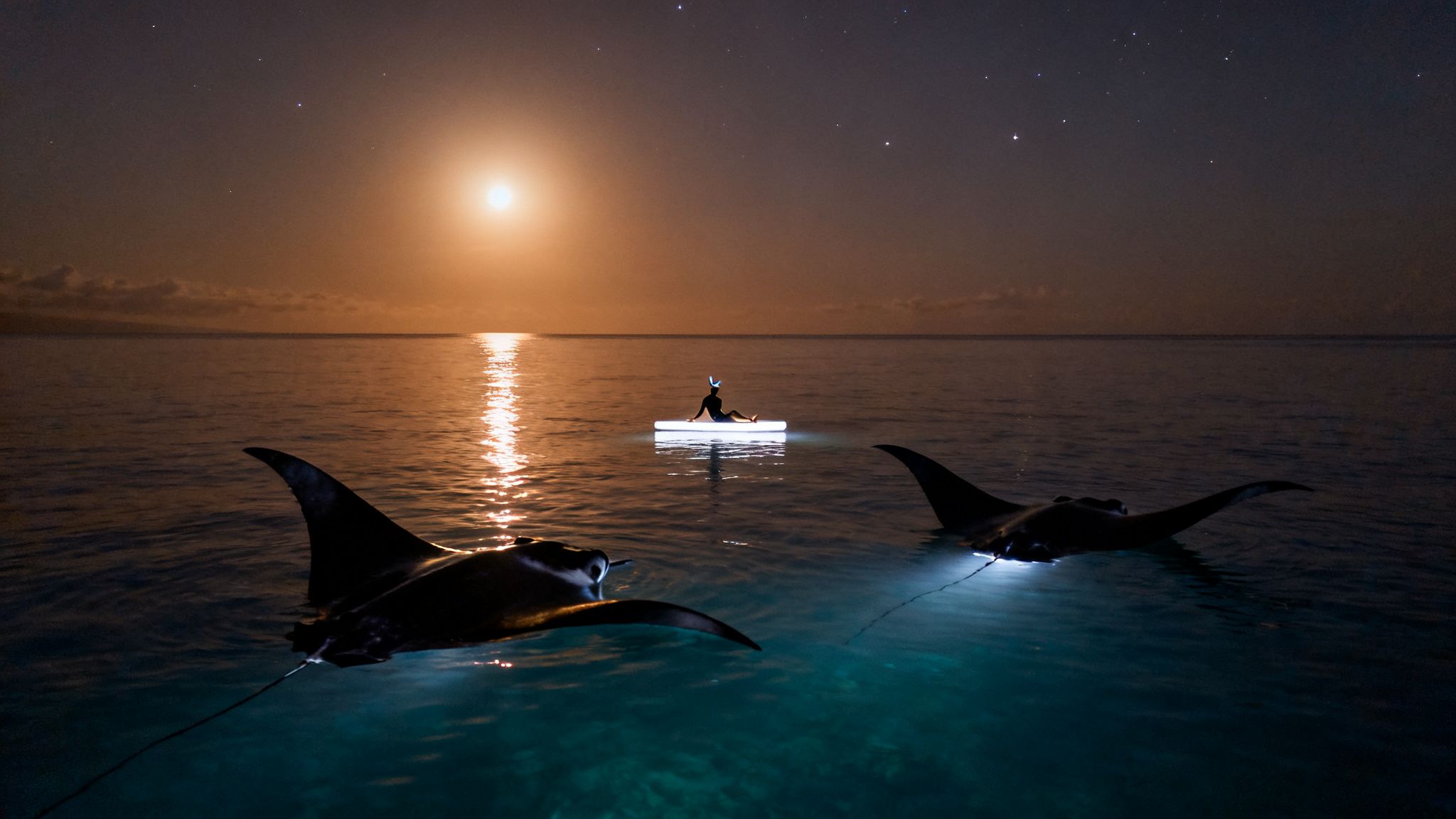
Kona isn't just another beautiful spot on Hawaii's Big Island; it's a global hotspot for seeing these majestic creatures. The magic here is a perfect storm of geography and biology. The island's volcanic slopes have created the ideal underwater habitat, and the nutrient-rich currents serve up a consistent buffet of their favorite food—plankton.
This reliable "dinner bell" has led to a thriving, non-migratory population of reef manta rays. It’s what makes this one of the most consistent wildlife encounters you can find anywhere. While you might spot mantas in other places, Kona’s ecosystem supports a nightly feeding ritual that happens year-round. Any time is the right time for this adventure.
A Thriving Resident Population
What really makes swimming with manta rays in Kona so special is the sheer number of them. The Big Island is home to one of the world's most reliable resident populations of reef manta rays (Mobula alfredi), with estimates of over 450 unique individuals. These graceful giants, with wingspans reaching up to 12 feet, show up 365 days a year.
They are drawn to the plankton blooms that are supercharged by the lights from tour boats. It's a simple, brilliant system. With an average of three mantas sighted per tour, it’s no wonder people come from all over the world for this. You can discover more insights about this unforgettable underwater adventure on mantaraynightsnorkelhawaii.com.
The entire experience is built around respectful, passive observation. You simply float on the surface and watch the mantas do their thing below. This approach ensures the animals are never disturbed, allowing for a truly natural and awe-inspiring spectacle.
The feeling of watching a massive fish the shape of a stealth bomber glide into view is indescribable. It’s an experience that cultivates a deep respect for nature and the delicate balance of our oceans.
For anyone eager to witness this incredible underwater ballet, a Manta Ray Night Snorkel is the absolute best way to get up close. This is more than just a tour; it's a chance to connect with the ocean's gentle giants in a way that will stay with you forever.
How a Floating Light Show Summons the Mantas
Ever wonder how the tour boats can almost guarantee you'll see manta rays every single night? It’s not magic, but it feels like it. The secret is a brilliant setup that taps into the ocean's natural food chain, creating an incredible spectacle for anyone swimming with manta rays in Kona.
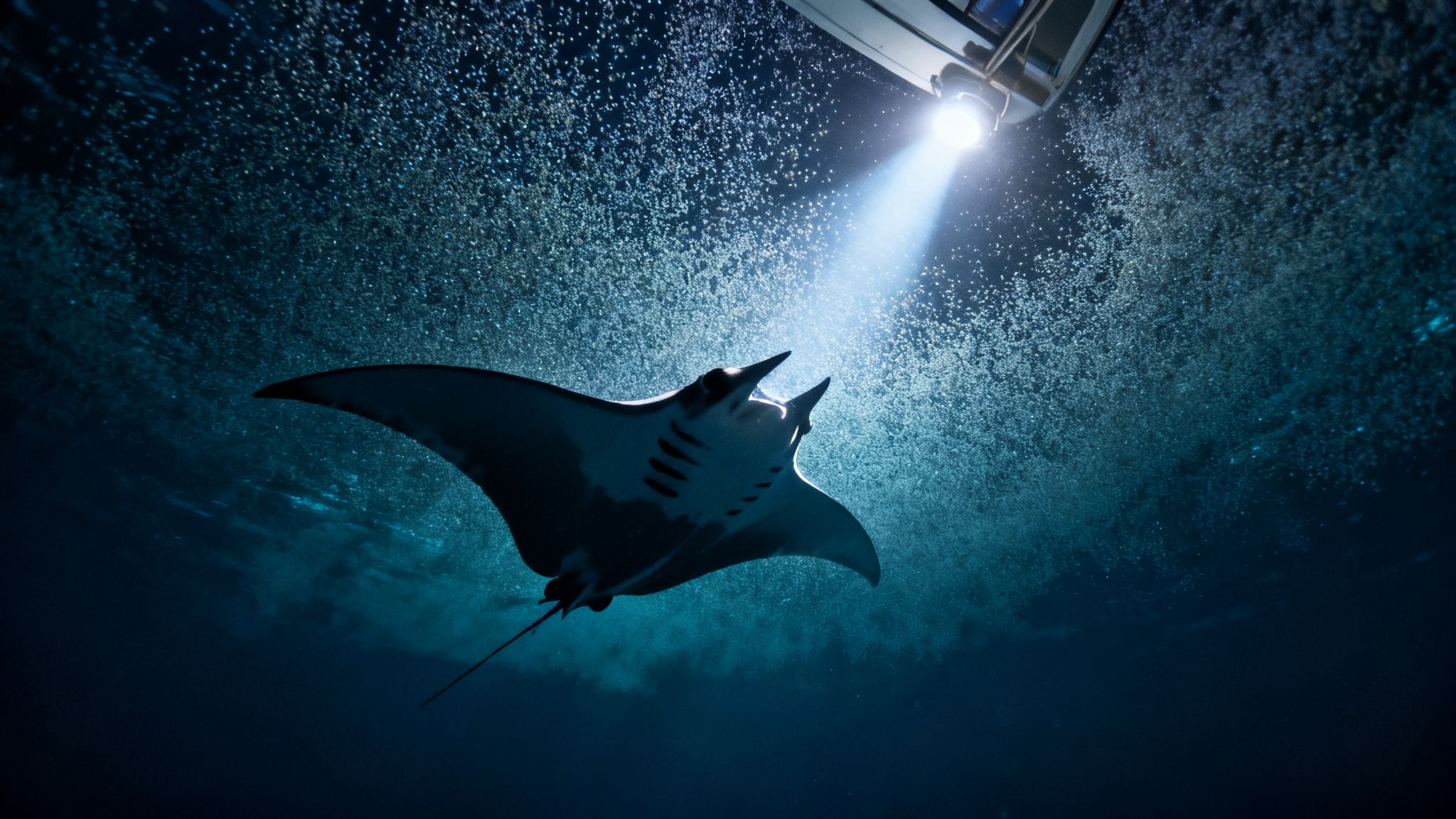
Think of the powerful underwater lights on the boats as a giant dinner bell. As soon as those beams hit the dark water, they attract huge clouds of plankton—tiny, microscopic critters that happen to be the manta rays' absolute favorite meal.
Over the years, the local manta population—who are incredibly smart, by the way—have figured this out. They now associate these nightly light shows with an easy, all-you-can-eat buffet. They gracefully glide into the illuminated zones to feed, putting on the breathtaking underwater ballet that people travel across the world to see.
Your Front-Row Seat to the Action
This is where you come in. As a snorkeler, you actually become part of the light show. You’ll float comfortably on the surface while holding onto a custom-made, floating light board. This board is pretty clever and serves two key purposes:
Illumination: It shines a powerful beam of light straight down, creating a concentrated column of plankton that draws the mantas right up to you.
Stability: It gives you something secure and buoyant to hold onto, so you can just relax and float without having to tread water.
Because of this setup, you don't need to be a pro swimmer. You just hold on, put your face in the water, and watch the show unfold just inches below. It’s a totally passive and respectful encounter. We’re just visitors in their world, observing their natural feeding behavior without interfering.
This method creates a safe and mesmerizing experience for both the snorkelers and the manta rays. It's a perfect example of sustainable wildlife tourism, where observation doesn't interfere with natural behavior.
Of course, picking the right tour operator makes all the difference. For an absolutely top-tier experience, Kona Snorkel Trips is a great option for a tour. They're the most reviewed and highest rated snorkel tour company in Hawaii, and their guides are experts at making sure you have a safe and unforgettable night. You can get a better sense of how they run their amazing trips by checking out their manta ray snorkel Kona tour.
Choosing Your Perfect Manta Ray Tour Time
When you're planning your big manta ray adventure in Kona, one of the first big questions you'll ask yourself is when to go. The vibe of the whole experience really changes with the time of day, giving you two pretty different options to choose from. Deciding between a Sunset Tour and an After Dark Tour is all about what kind of memory you want to create.
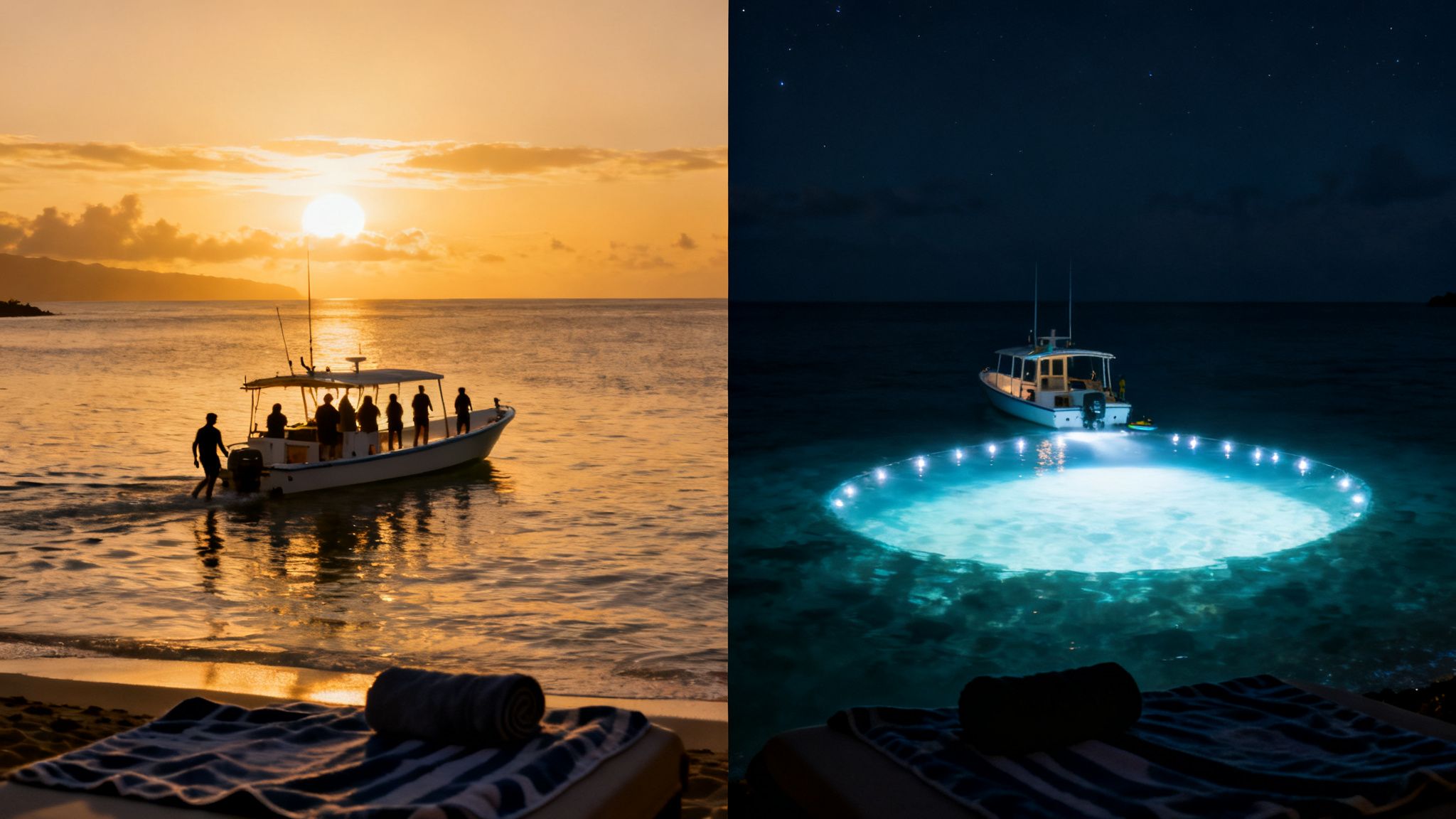
This isn't just about what time your boat leaves the harbor; it's about the whole atmosphere of the trip. Are you picturing a beautiful, golden-hour boat ride that eases into the main event? Or do you want to jump right into the mysterious, glowing world of the ocean at night?
The Sunset Tour: A Golden Hour Spectacle
Think of the Sunset Tour as the classic "two-for-one" deal. Your trip kicks off while the sun is still up, heading out on the water during that magical golden hour. The sky just explodes with those incredible Hawaiian sunset colors—fiery oranges, soft pinks, and deep purples—with the rugged Kona coast as your backdrop.
Heading out a bit earlier also means you have a better chance of bonus wildlife sightings. It’s pretty common to see spinner dolphins showing off in the boat's wake. And if you’re here during whale season (December through April), you might even get a wave from a majestic humpback whale. The boat ride itself becomes part of the adventure.
Once the sun finally dips below the horizon, you’ll slip into the water as the sky fades from twilight to true night. The mantas start showing up as the last bits of light disappear, creating a really cool transition from day into the main event. For a deeper dive into what to expect year-round, check out our guide on the best time of year to see manta rays in Kona.
The After Dark Tour: An Immersive Nighttime World
If you're looking for a more intense, focused experience, the After Dark Tour is probably your speed. These trips leave after the sun has completely set, taking you straight into the quiet darkness of the Pacific under a sky full of stars.
Without any lingering daylight, the contrast between the deep, dark ocean and the powerful underwater lights is way more dramatic. The plankton seems to glow brighter, and the manta rays look like they're appearing out of another dimension as they glide into the light beams. It’s a completely different feel.
The After Dark Tour often feels more intimate and otherworldly. The focus is entirely on the underwater ballet, with the darkness amplifying every movement and making the experience feel even more surreal.
This is the perfect choice for anyone who wants to get straight to the action and maximize their time watching the mantas feed, without any other distractions.
To help you decide, here’s a quick breakdown of what makes each tour special.
Kona Manta Ray Tour Timing Comparison
A side-by-side look at the Sunset and After Dark manta ray snorkel tours to help you choose the best time for your adventure.
Feature | Sunset Tour | After Dark Tour |
|---|---|---|
Atmosphere | Scenic and relaxing, with a beautiful transition from day to night. | Mysterious and focused, with a dramatic, otherworldly feel. |
Best For | Photographers, families, and anyone who loves a good Hawaiian sunset. | Thrill-seekers and those who want an intense, immersive wildlife encounter. |
Timing | Departs in the late afternoon to catch the sunset before the snorkel. | Departs after dark, heading straight to the manta site for the main event. |
Bonus Sightings | Higher chance of seeing dolphins or whales (in season) during the boat ride. | Focus is entirely on the mantas, but the stargazing can be incredible. |
Light Contrast | You experience the gradual change as underwater lights become more effective. | The intense contrast between dark water and bright lights is immediate and striking. |
Ultimately, both tours offer an incredible opportunity for swimming with manta rays in Kona. You can’t go wrong! The Sunset Tour gives you a spectacular boat ride with the manta snorkel as the grand finale, while the After Dark Tour drops you right into the middle of the mantas' glowing, underwater world. Your perfect tour really just depends on the kind of vibe you’re going for.
How to Prepare for Your Manta Snorkel Adventure
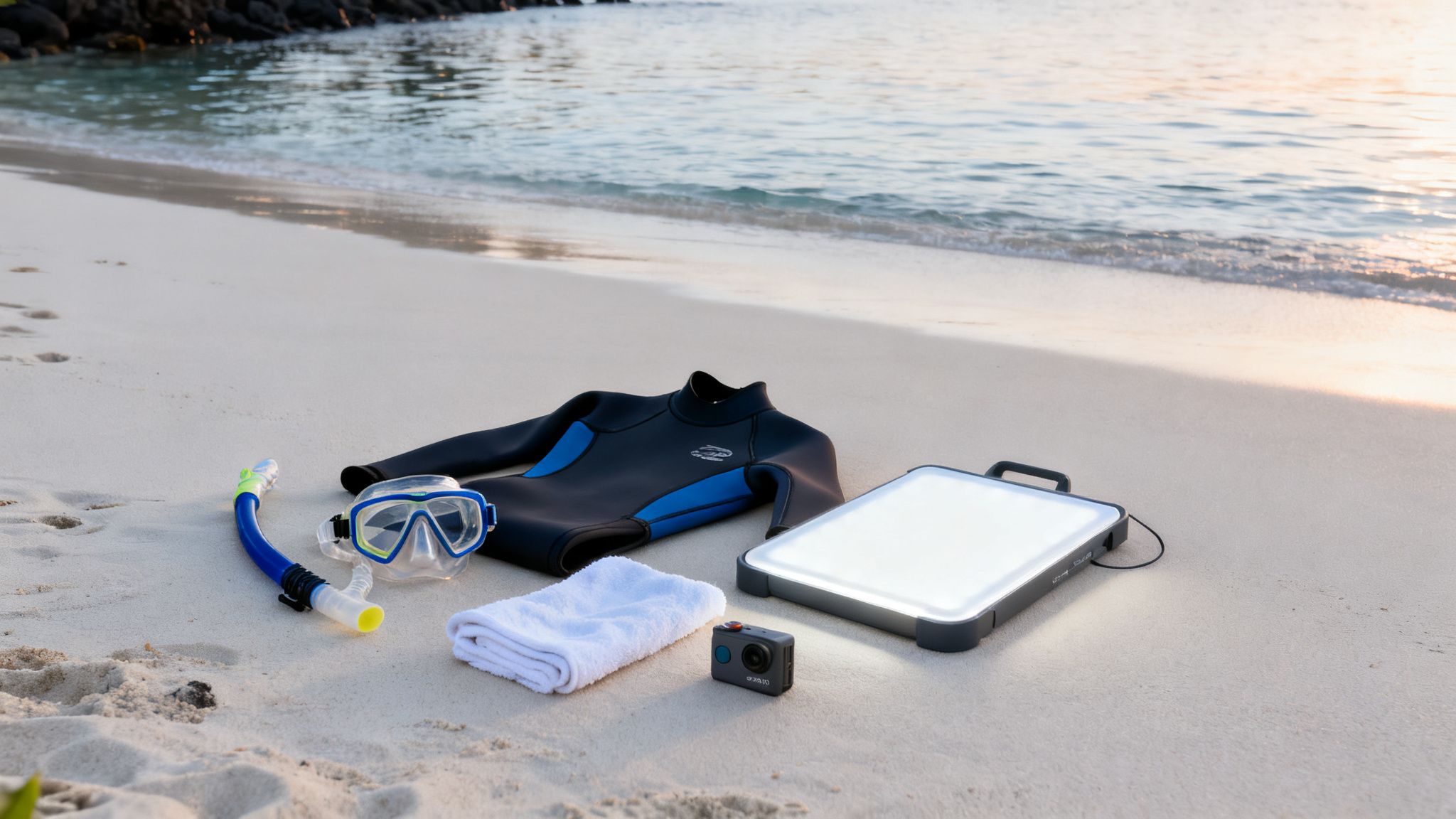
The key to an amazing manta ray swim is showing up feeling relaxed and ready for the magic. We've got you covered from the moment you check in. Our tour provides all the essential gear you’ll need—high-quality snorkels, masks, and wetsuits to keep you perfectly comfortable in the ocean.
This means you can pack light. Just a few personal items are all it takes to make your trip smooth from start to finish.
What to Bring on Your Tour
Packing the right stuff lets you focus on the incredible experience ahead without any distractions. Stick to the essentials, and you'll be all set.
Here’s a quick checklist of what to pack:
Towel and a Change of Clothes: You’ll definitely want something warm and dry to change into for the boat ride back to the harbor.
Swimsuit: The easiest approach is to arrive already wearing your swimsuit under your clothes. If you're looking for the best type to wear, this helpful swimwear guide has some great tips.
Underwater Camera: Got a GoPro or another waterproof camera? Bring it! You’ll want to capture these moments.
Reef-Safe Sunscreen: For the sunset tours, make sure to apply this well before you get on the boat to protect your skin and our delicate ocean ecosystem.
Safety and Skill Requirements
We get this question all the time: "Do I need to be a strong swimmer?" The answer is no! Don’t worry if you’re not an expert. The experience is all about floating calmly at the surface while holding onto our custom light board. You don't need to be an Olympic athlete to join the fun.
Our lifeguard-certified guides give everyone a thorough safety briefing before we even touch the water. They’ll go over everything, answer questions about seasickness, and make sure you know exactly what to expect.
Since the late 2000s, Kona's manta ray research shows a healthy, thriving population that we can safely and reliably visit. Today, the encounter rate is a stunning 80-90%, and most operators report seeing an average of three mantas per tour. These numbers mean you’re in for an incredible show, with our lifeguard guides making sure you're safe the entire time.
Thinking of bringing the family? This is a fantastic activity for all ages. The minimum age is typically around five years old, and our guides are pros at making kids feel safe, confident, and excited for the adventure. To feel even more prepared, check out our guide on 7 essential tips for your manta ray snorkel in Kona.
Booking Your Kona Manta Ray Tour
Alright, so you're ready to take the plunge and book this bucket-list adventure. That's the easy part! The most important step is choosing the right operator. A great company is the difference between a good trip and an absolutely unforgettable one. The best ones are passionate about marine life, hire expert guides, and go the extra mile to make sure every single person feels safe and comfortable in the water.
I can't stress this enough: book in advance. The top-rated tours fill up fast, especially during Hawaii’s peak travel seasons. The most straightforward way to lock in your spot and get all the pre-trip details is by booking directly on a trusted operator's website.
Choosing the Best Snorkel Tour Operator
For anyone looking to snorkel, we wholeheartedly recommend Kona Snorkel Trips. They aren't just good—they are the most reviewed and highest-rated snorkel tour company in all of Hawaii. That kind of reputation doesn't happen by accident. It's built on their amazing guides, top-notch equipment, and a real commitment to sustainable, respectful tourism. Their crew makes every trip both fun and educational, so you leave with a deeper appreciation for these majestic animals.
You can book this once-in-a-lifetime adventure directly on their manta ray snorkel Kona tour page.
The Premier Option for Scuba Divers
If you're a certified diver ready for a deeper perspective, look no further than Kona Honu Divers. Their credentials are truly incredible—they are the top rated & most reviewed diving company in both Hawaii and the Pacific Ocean. Seeing the mantas glide above you from the ocean floor is a completely different world, and it is absolutely awe-inspiring.
When you book with Kona Honu Divers, you know you're diving with the best in the business. You can explore their world-class manta ray diving tour to get started.
Both of these operators offer exceptional experiences tailored to their guests. Whether you're floating on the surface or sitting on the ocean floor, you're guaranteed a spectacular show.
Of course, planning a trip involves more than just one amazing night. As you consider booking your Kona Manta Ray Tour, you might also be daydreaming about where to go next and want to explore other culinary travel experiences for future adventures. For even more help picking the perfect boat for your Kona trip, check out our detailed breakdown of the top 12 manta ray snorkel tours.
Frequently Asked Questions About Kona Manta Ray Snorkeling
The idea of hopping into the ocean after dark to meet giant, gentle sea creatures is absolutely incredible—but it naturally brings up a few questions. We find that being fully prepared is the best way to relax and soak in every magical moment. Let's walk through the most common questions so you feel nothing but excitement for your manta ray snorkel adventure.
Is Swimming with Manta Rays Safe?
Absolutely! This is genuinely one of the safest, most peaceful wildlife encounters you can have. There's a reason everyone calls manta rays "gentle giants." Even though they're massive, they are completely harmless to people.
A lot of people mix them up with stingrays, but they're very different.
No Stingers: Manta rays have zero stingers, barbs, or even teeth. They're filter feeders, which means they glide through the water with their mouths wide open to scoop up tiny plankton.
Gentle Nature: Their only real interest in us is curiosity. They are laser-focused on feeding and will gracefully swim right around you.
Expert Guides: Every tour is led by lifeguard-certified professionals who give a full safety briefing. They're in the water with you the whole time, making sure everyone is safe and comfortable.
Do I Need to Be an Expert Swimmer?
Not at all. As long as you're comfortable in the water, you'll be just fine. You don't need to be a strong swimmer because the tour is designed for almost everyone.
You'll be holding onto a custom-made, floating light board for the entire time you're in the water. This board keeps you stable and buoyant, so all you have to do is float, put your face in the water, and watch the amazing show happening right below you. No real swimming is required.
What Happens if We Don’t See Any Manta Rays?
While sightings are incredibly consistent—we're talking a success rate of over 90%—manta rays are wild animals, and we can never 100% guarantee they'll show up. Good, reputable tour operators know this and have a plan for those rare, unlucky nights.
If no manta rays appear during your tour, most companies will offer you the chance to re-book for another night, completely free of charge. It's always a good idea to confirm this policy when you book and to schedule your manta ray tour early in your trip, just in case you need to use this second-chance offer.
Can I Touch the Manta Rays?
This is the biggest rule of all: please, do not touch the manta rays. A manta ray's skin is covered in a special protective mucous coating that acts like a shield against bad bacteria and infections.
Touching them, even with the best intentions, can rub off this slime layer and make them vulnerable to getting sick. Our goal is to be passive observers, letting them do their thing without any interference.
What is the Best Time of Year to Go?
Anytime you're here! The reef manta rays in Kona are a resident population, which means they live here all year and don't migrate.
This makes swimming with manta rays in Kona a fantastic thing to do no matter when you visit the Big Island. The tour runs 365 days a year, and we see them consistently in every single season.
If you have more questions, we've got more answers! Feel free to check out our detailed manta ray FAQ page. We want you to feel completely ready for an adventure you'll never forget.
Comments