Your Guide to Snorkeling Big Island Hilo's Hidden Gems
- Byron
- Feb 3
- 15 min read
When most people picture snorkeling on the Big Island, their minds immediately jump to the sun-baked lava shores of the Kona coast. But for those in the know, the island's lush, green eastern side holds an entirely different kind of underwater magic. Snorkeling Big Island Hilo is a world away from Kona—think verdant coastlines, calm bays sheltered from the open sea, and unique ecosystems where cool freshwater springs mix with the warm Pacific.
It’s an experience you won’t find anywhere else.
Hilo vs Kona A Tale of Two Coasts
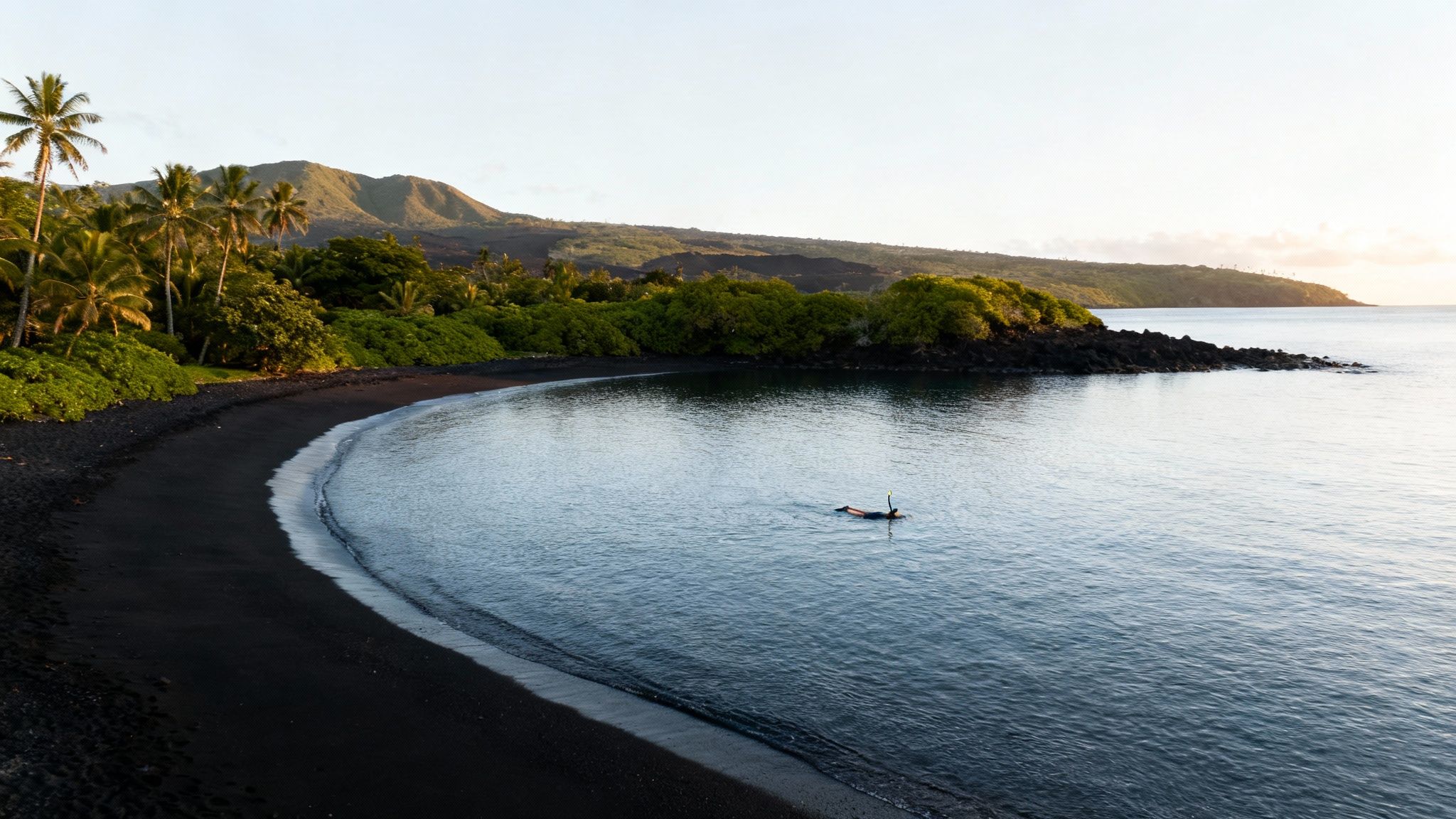
The Big Island really does have two completely different snorkeling personalities, shaped by the massive volcanoes that split the island's weather. Kona, on the west, is the classic postcard scene: endless sunshine, dramatic lava rock coastlines, and water so clear it feels like you're flying. It's the famous hub for bucket-list trips like the Captain Cook snorkeling tour and the incredible manta ray night snorkel. These trips are popular for a very good reason.
Hilo, on the other hand, is the island’s wild, green heart. The vibe here is shaped by lush rainforests and stunning black sand beaches, remnants of centuries of volcanic flow. It gets more rain, which feeds freshwater springs that bubble up into the ocean. This creates a fascinating brackish environment in many of the best snorkel spots, offering a totally different feel and attracting a unique cast of marine characters.
To really get a feel for the differences, let's break it down.
Hilo vs Kona A Tale of Two Coasts
Feature | Hilo (East Side) | Kona (West Side) |
|---|---|---|
Vibe | Lush, quiet, local feel, black sand beaches | Sunny, bustling, lava rock shores, classic resort feel |
Water Clarity | Variable; can be lower near shore due to rain and freshwater springs | Consistently high; often 80-100+ feet of visibility |
Conditions | Calm, protected bays and coves | Generally calm seas, but can have more open-ocean swell |
Marine Life | Famous for honu (sea turtles), unique brackish water fish | Large coral reefs, spinner dolphins, manta rays, vast fish schools |
Access | Primarily easy shore entry from beach parks | A mix of shore entry and popular boat-only destinations |
Crowds | Far fewer people, more laid-back | Can be crowded at popular spots; many tour boats |
As you can see, the choice isn't about which is "better," but what kind of day you're looking for.
Weather and Water Conditions
Kona's position on the leeward side of the island protects it from the trade winds, giving it those famously calm seas and clear waters pretty much year-round. That predictability is what makes it such a reliable bet for boat tours and diving.
Hilo is on the windward side, so it's more exposed to the elements. While a heavy rain can sometimes stir things up and reduce visibility, that same weather pattern creates perfectly protected coves that are fantastic for beginners or families. You might notice a blurry, shimmery layer on the surface where the fresh and salt water mix, but if you just dip your head a few feet down, it often becomes surprisingly clear.
Marine Life and Environment
The underwater worlds are as different as the weather. Kona is all about expansive coral reefs teeming with huge schools of colorful fish and playful spinner dolphins.
Hilo's spots are more defined by volcanic rock and dark sand, which creates a stunning contrast for spotting the true stars of the east side: the honu, or Hawaiian green sea turtles. They absolutely love Hilo's calm, shallow bays, gathering here to rest and munch on seaweed.
While Kona offers the deep-water drama of manta rays and dolphins, Hilo provides a more intimate, serene experience. Here, you're more likely to spend your time floating peacefully alongside a grazing sea turtle in a quiet, protected cove.
Accessibility and Crowds
Let's be real: Kona is popular. That means more tour operators and, often, more people in the water. While fantastic companies like Kona Snorkel Trips offer amazing small-group tours for a Manta Ray night snorkel tour or a Captain Cook snorkeling tour, the area in general is just busier.
Hilo offers a much quieter, more local experience. Most of the best spots are simply beach parks a quick drive from town, making shore snorkeling incredibly easy without needing a boat. That laid-back atmosphere is a huge part of Hilo’s charm. Even with the Big Island welcoming over 1.18 million visitors in just eight months of 2025, the Hilo side remains a peaceful escape from the main tourist hubs. You can find out more about Big Island visitor statistics to see just how much of a hidden gem this side of the island is.
Hilo's Best Shore-Entry Snorkeling Spots
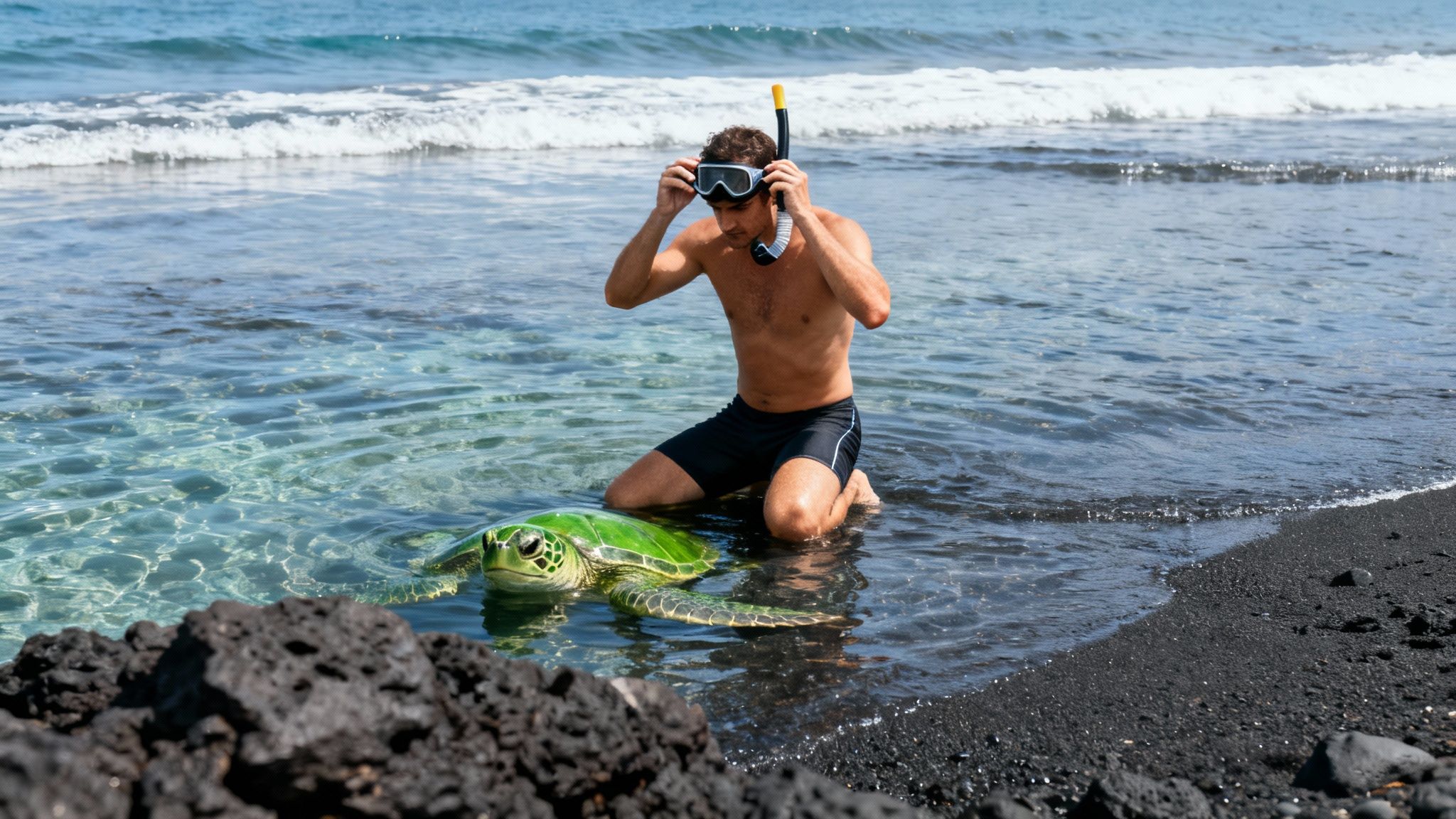
One of the best things about snorkeling Big Island Hilo is just how easy it is to get in the water. You don’t need to charter a boat or hike for miles to find incredible sea life. In fact, some of the very best spots are tucked away in calm, protected beach parks just a quick drive from town.
These are the kinds of places perfect for families, first-timers, or anyone who just wants to explore the coast on their own schedule. Each park has its own vibe, from black sand bays that are turtle magnets to freshwater spring-fed pools that offer a snorkeling experience you won't find anywhere else. Let's take a look at the top spots you can walk right into.
Richardson Ocean Park: The Turtle Sanctuary
If you ask anyone in Hilo where to snorkel, they'll almost certainly send you to Richardson Ocean Park. And for good reason. It’s a gorgeous, protected bay with a distinctive black sand beach, all sheltered from the open ocean by a natural lava rock breakwater. This setup keeps the water calm, making it a fantastic spot for snorkelers of all ages and abilities.
But the real stars of the show here are the honu, or Hawaiian green sea turtles. They absolutely love this bay. You’ll see them munching on seaweed or just chilling in the shallows. It's pretty common to spot several of them just a few feet from the shore, completely unbothered by respectful onlookers.
A few tips for your visit:
Easy Entry: The main sandy beach is the way to go. It's a super simple and safe entry point. Just be careful to avoid walking on the surrounding lava rock, which can be sharp and slick.
Marine Life: Beyond the turtles, keep an eye out for colorful reef fish like butterflyfish, parrotfish, and tangs, especially along the rocky edges of the bay.
Best Time to Go: Try to get there in the morning. The water is usually at its calmest and clearest before the afternoon trade winds kick in.
Carlsmith Beach Park (Four Mile): A Freshwater Oasis
Carlsmith Beach Park, which most locals call "Four Mile," is a completely different kind of snorkeling adventure. This stunning park is famous for its big, lagoon-like pools fed by cool, clear freshwater springs that bubble up from the volcanic earth below. This freshwater mixes with the saltwater from the ocean, creating a unique brackish environment.
When you first look at the water, you might notice a slightly blurry layer on the surface—that’s called a halocline, where the fresh and salt water meet. Don't let it fool you! The moment you dip your mask just a foot or two under, everything becomes crystal clear. That cool water feels amazing on a hot Hilo day and draws in huge schools of fish.
The constant flow of fresh water at Carlsmith creates an exceptionally calm and pool-like setting. It's a fantastic spot for a leisurely float, where you can watch fish swim by in a serene, park-like environment.
Getting in is a breeze, too. The park has several sets of metal ladders leading right into the water, just like at a swimming pool. With a sandy bottom and virtually no currents, it’s an incredibly safe spot for families and beginners to get comfortable in the water.
Leleiwi Beach Park: A Chain of Hidden Coves
Just a little further down the road from Richardson's is Leleiwi Beach Park. It’s less of a single beach and more a series of small, rocky coves and inlets that are often much less crowded. If you’re looking for a slightly more rugged and natural adventure, this is your place. Each little cove has its own personality, with a mix of lava rock bottoms and small coral patches.
The underwater landscape here is more complex, with all sorts of lava formations creating little nooks and crannies for marine life to hang out. You’ve got a better chance of spotting eels, crabs, and different kinds of reef fish that love to hide in the rocks.
Things to know before you go:
Multiple Entry Points: You can pick from several small beaches or rocky entries along the coast. Take a minute to walk around and find a spot that you’re comfortable with.
Check Conditions: Some of these coves are more exposed to the open ocean than Richardson's, so always take a good look at the waves and surge before you hop in.
Footwear is Key: This is definitely a spot for water shoes or sturdy fins. They’ll make navigating the rocky entries much safer and more comfortable.
Hopping between Hilo's shore-entry sites is such a rewarding way to see what makes East Hawaii’s marine life so special. Each park gives you a different taste of paradise and reminds you why snorkeling Big Island Hilo is an unforgettable experience.
Getting to Grips with Hilo's Unique Water Conditions
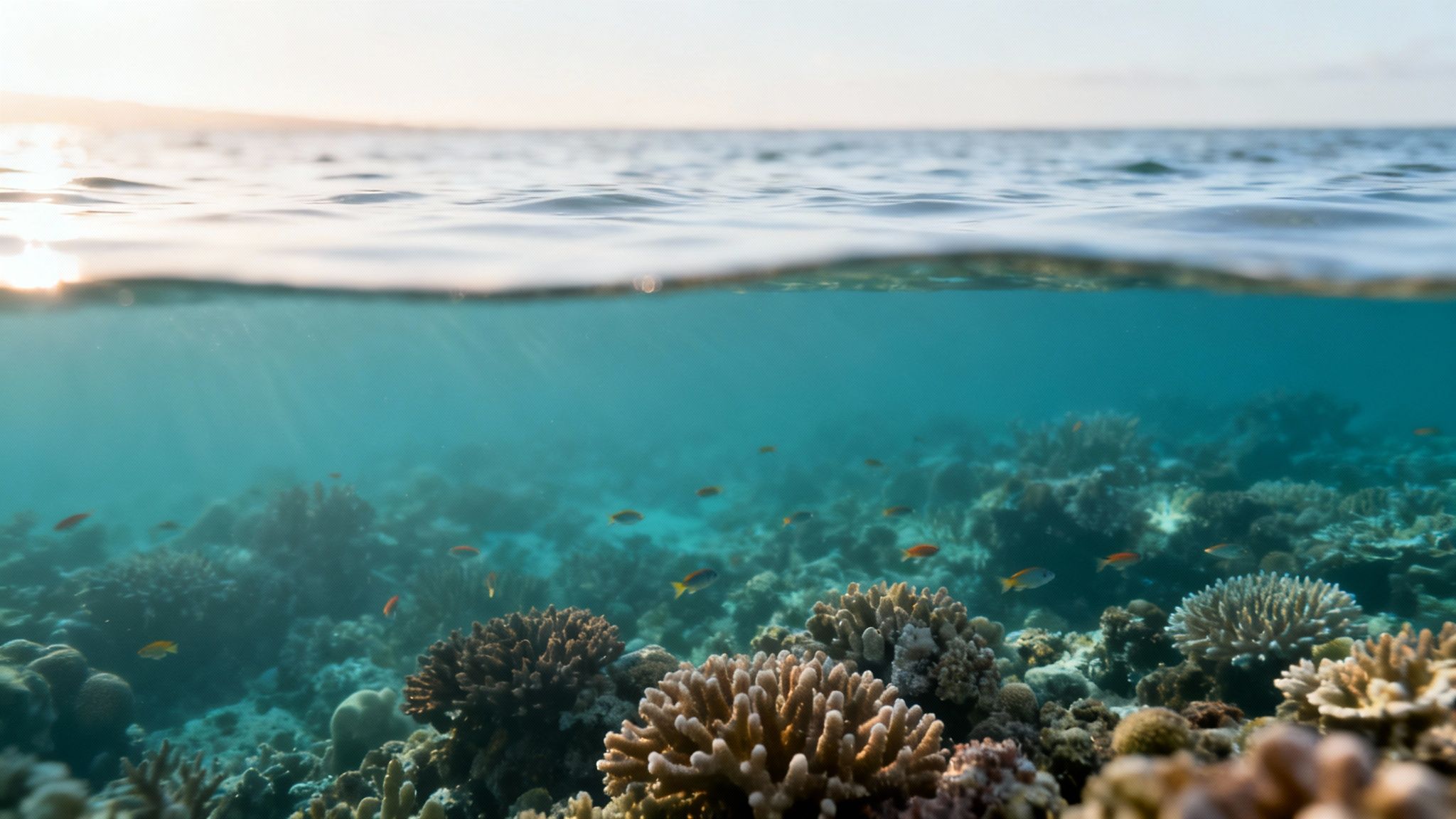
The secret to an incredible snorkel in Hilo is knowing what makes its waters so different. Unlike the famously clear Kona coast, Hilo’s underwater world is a dynamic mix of freshwater springs, seasonal rain, and trade winds. Learning to work with these elements, not against them, is your ticket to the best views beneath the waves.
One of the first things you might notice is a strange, shimmery blur on the surface. This is the halocline effect, and it's a classic Hilo signature. It happens when cool, less-dense freshwater from underground springs meets the warmer, saltier ocean water.
The freshwater essentially floats on top, creating a blurry layer that looks like you're peering through warped glass. Don't let it fool you! The magic is waiting just below. Dip your head a foot or two under the surface, and you’ll often find crystal-clear water teeming with life.
What is the Halocline, Exactly?
The halocline is most obvious at spots like Carlsmith Beach Park (Four Mile), where massive freshwater springs empty right into the protected lagoons. The best way to picture it is like oil and vinegar in salad dressing—the two liquids don't mix perfectly right away and form distinct layers.
The Surface: This is a cool, slightly blurry zone where the fresh and saltwater are mingling.
Just Below: Here lies the warmer, much clearer saltwater where all the reef fish and sea turtles are cruising.
Once you understand this, you know the trick: just dive beneath the blur.
How Weather and Tides Affect Your Snorkel
Hilo sits on the windward side of the Big Island, meaning it gets a lot more rain and wind than Kona. These two factors are the biggest players in determining what the visibility will be like on any given day.
The trade winds, for instance, tend to pick up in the afternoon. This can create a bit of surface chop and stir up sediment, clouding the water. That’s why mornings are almost always the best time to snorkel in Hilo. You’ll usually find the calmest, clearest conditions before the winds get going.
A heavy downpour can also reduce visibility for a bit, especially near streams where runoff flows into the sea. The good news is that Hilo's protected bays and lagoons often clear up surprisingly fast once the rain passes.
Your best friends for planning a Hilo snorkel are a local weather forecast and a tide chart. If you can line up a calm, sunny morning with an incoming tide, you've hit the jackpot. The rising tide pushes fresh, clear ocean water toward the shore, often improving visibility.
A Quick Guide to Reading Ocean Reports
You don't need to be an oceanographer to figure out if it's a good day to go. Before you head out, just do a quick check for a few key details:
Surf Height: You're looking for small surf—ideally under 2 feet. Big waves mean murky water and dangerous conditions.
Wind: Light offshore winds are perfect. Strong onshore winds will just churn everything up.
Tides: Snorkeling around high tide often gives you the clearest water, as it helps dilute that blurry freshwater layer.
While finding specific stats on Hilo snorkeling can be tough, visitor trends show a huge and growing interest in Hawaii's natural wonders. The best thing you can do is learn the local rhythm of the ocean to have an amazing, and safe, experience.
By keeping an eye on these simple factors, you can pick the perfect window for your snorkeling adventure and see Hilo's unique underwater world at its absolute best. You can also explore our guide on the top spots and gear for snorkeling in Hawaii for more general tips.
A Guide to Hilo's Abundant Marine Life
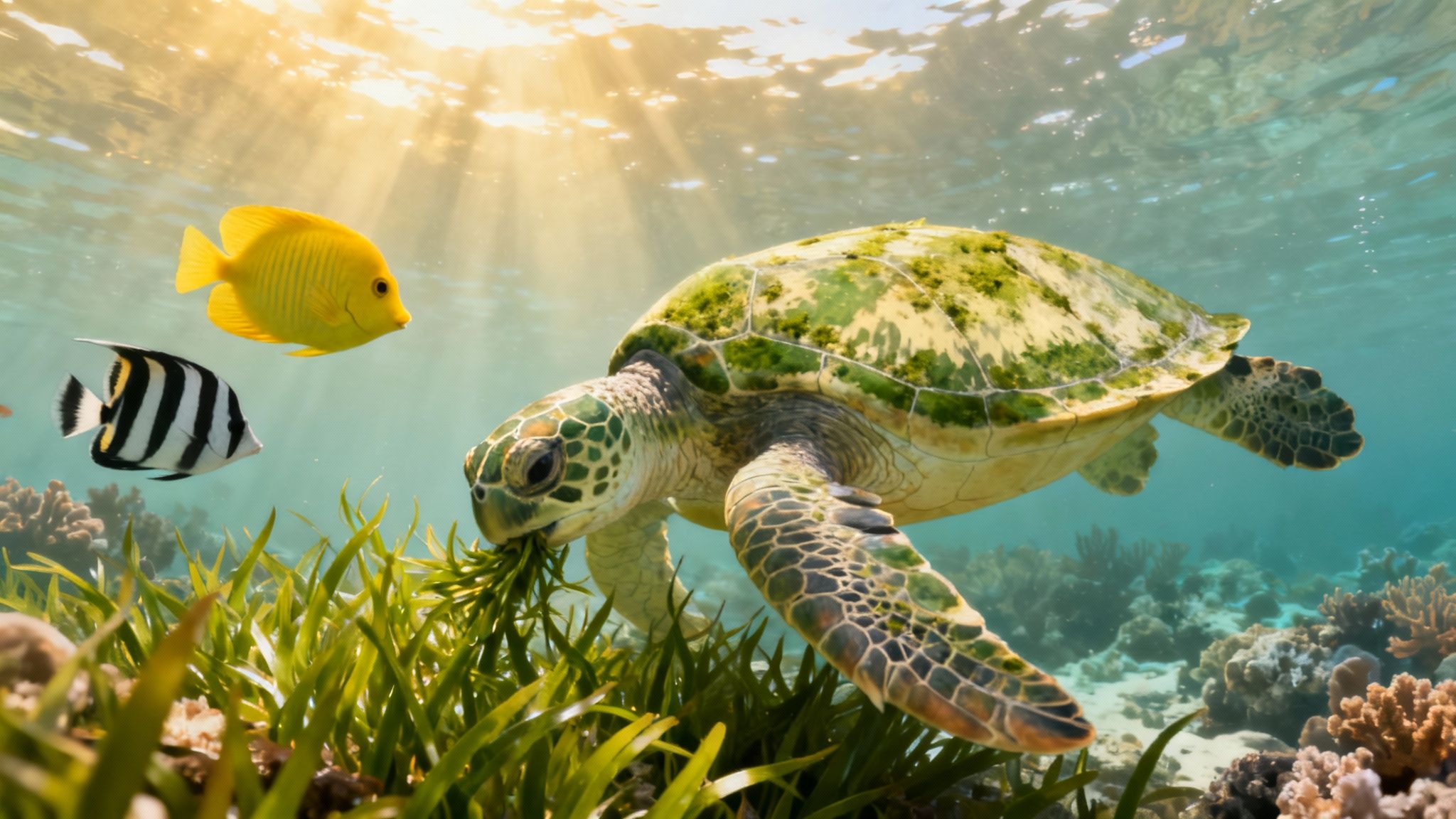
The real magic of snorkeling on Hilo's side of the Big Island isn't just the unique underwater landscape—it's the incredible community of creatures that call these waters home. Hilo’s coastline acts as a thriving nursery for some of Hawaii's most beloved marine animals, giving you a front-row seat to watch them in a calm, natural setting.
Your underwater field guide absolutely has to start with the star of the show: the honu, or Hawaiian green sea turtle. These gentle giants are drawn to Hilo's protected bays, where they can peacefully munch on algae and rest in the shallow, warm water. It's not at all unusual to spot several honu during a single swim at places like Richardson Ocean Park, which always makes for an unforgettable day.
Common Reef Fish You Will Encounter
Beyond the turtles, Hilo's reefs are painted with a dazzling array of colorful fish. As you glide over the dark volcanic rock and small coral heads, keep an eye out for these regulars.
Yellow Tang (Lau'ipala): These brilliantly colored fish often travel in large schools, creating a stunning flash of yellow against the dark lava rock.
Ornate Butterflyfish (Kikakapu): You can't miss their striking patterns. These delicate fish are often seen flitting among the reef in pairs.
Parrotfish (Uhu): You might actually hear these fish before you see them! Listen for a distinct crunching sound—that's them using their beak-like mouths to scrape algae off rocks, a vital job that keeps the reef clean and healthy.
Humuhumunukunukuāpuaʻa: Hawaii's state fish is as fun to spot as it is to pronounce. This triggerfish has a unique, angular body and bold markings that make it a snorkeler's favorite find.
Spotting the Masters of Camouflage
While the bright, colorful fish are easy to spot, some of Hilo's most fascinating creatures are experts at hiding in plain sight. The trick is to slow down and look closely into all the nooks and crannies of the reef.
Moray eels (Puhi), for instance, often peek out from under ledges or from holes in the lava rock. You'll typically just see their heads as they wait for a meal to swim by. Octopuses (He'e) are the true masters of disguise, able to change their color and texture to blend in perfectly. Spotting one is a rare and truly rewarding experience.
The most important rule of snorkeling is to observe respectfully. Never touch, chase, or feed any animal. For sea turtles, which are federally protected, it's critical to give them at least 10 feet of space so they don't feel threatened.
Respectful Wildlife Viewing
Remember, you're a visitor in their home. Following a few simple rules helps protect this incredible environment for everyone. While it's tough to find exact stats on Hilo snorkeling, Hawaii's tourism data shows a clear need for educating visitors on how to interact with nature sustainably. The best thing you can do is practice mindful observation every time you get in the water.
You can also check out our guide on stingrays and manta rays in Hawaii to learn more about other incredible marine animals you might encounter.
The Manta Ray Night Snorkel: The Big Island's Unmissable Adventure
Hilo is a snorkeler's dream, with its lush, green coastline and calm, protected coves. But if you're on the Big Island, there's an after-dark adventure on the Kona side that you simply can't miss. It’s the perfect, adrenaline-pumping complement to Hilo’s laid-back vibe: the world-famous manta ray night snorkel. Check out the Manta Ray Night Snorkel Hawaii for more info.
Picture this: you're floating on the dark, quiet Pacific Ocean. The only thing illuminating the water is a set of lights from your tour boat. Then, out of the blackness, they appear. Giant, graceful manta rays, some with wingspans stretching up to 16 feet, glide into the light. They swoop and barrel-roll just inches below you, performing a silent, mesmerizing ballet as they feed on plankton. It’s a humbling, almost spiritual experience that stays with you forever.
Why You Absolutely Have to Do This
This isn't just another snorkeling trip. It's an up-close-and-personal encounter with one of the ocean's most majestic and gentle giants. Kona happens to be one of the best and most reliable places on the entire planet to see them. Forget scanning a reef for fish; here, the main event comes directly to you.
The whole operation is genius in its simplicity.
Your tour boat sets up a custom light board that shines down into the water.
This light acts like a magnet for phytoplankton, the microscopic critters manta rays love to eat.
You hold onto a floating raft and simply watch the show unfold in the illuminated "dining room" below.
The mantas show up for the all-you-can-eat buffet, putting on a stunning, close-up performance.
It’s less like watching wildlife and more like being a guest at a secret underwater feast. The sheer size and grace of these animals gliding so close is something photos and videos just can't do justice.
How to Choose the Best Manta Ray Tour
This is a once-in-a-lifetime experience, so picking the right tour operator is key. While Hilo’s best snorkeling can be done from shore, the manta snorkel absolutely requires a professional boat tour. For a top-notch, intimate experience, I always recommend Kona Snorkel Trips. They're known for their experienced, lifeguard-certified guides and, crucially, their small group sizes. You never feel like you're lost in a crowd.
Whether you're after a thrilling Manta Ray night snorkel tour or a classic Captain Cook snorkeling tour, their team provides a safe and deeply respectful adventure. They truly care about the manta rays and make sure everyone interacts with them in a way that protects these amazing animals.
If you really want to dive deep into what makes this snorkel so special, check out the ultimate guide to the Kona night snorkel. Trust me, making the drive from Hilo to Kona for this is a decision you won’t regret.
Your Hilo Snorkeling Questions, Answered
Got a few questions before you jump in? Perfect. A little planning goes a long way. I've put together answers to the most common things people ask about snorkeling in Hilo to make sure you feel totally ready for your adventure.
Think of this as your final check-in before hitting the water. Once you've got these details sorted, you’ll be all set to explore Hilo's unique coastline with confidence.
What's the Best Time of Year to Snorkel in Hilo?
You'll generally find the best conditions during the summer, from about May to September. This is when the weather patterns shift, bringing calmer seas, less rain, and much clearer water. The mornings are often glassy and beautiful before the trade winds kick in.
But here's the secret to Hilo snorkeling: its coastline is dotted with naturally protected bays. Places like Richardson Ocean Park and Carlsmith Beach Park have lava rock barriers that act like a shield against the open ocean swell. This means you can often find a calm, safe place to snorkel even in the winter, especially if you get an early start.
No matter when you go, make it a habit to check a local surf and weather report before you head out. It's the only way to get real-time info on waves, wind, and water clarity for that specific day.
Do I Really Need a Wetsuit?
This one really comes down to you and where you're snorkeling. The ocean around Hilo stays pretty comfortable all year, usually in the mid-to-high 70s. For a quick dip on a sunny day, your swimsuit will be just fine.
But Hilo's signature feature is its cool, freshwater springs that bubble up and mix with the saltwater, especially at places like Carlsmith Beach Park (Four Mile). It's incredibly refreshing, but it can make the water feel a lot colder than you'd expect. If you get chilled easily or want to stay in the water for a while, a little extra warmth makes all the difference.
A thin rash guard or a simple wetsuit top is the perfect middle ground. It'll keep the chill from the springs at bay, give you UPF 50+ sun protection for your back, and even offer a little buffer against an accidental scrape on the lava rocks.
Can I Rent Snorkel Gear in Hilo?
Absolutely. If you don't feel like packing your own gear, or just decide to go for a snorkel on the spur of the moment, you’re covered. Hilo has several great local dive and ocean sports shops where you can rent a full set—mask, snorkel, and fins—for the day or the week.
Renting from a local shop is a smart move:
No Hassle: It saves a ton of space in your luggage.
The Right Fit: Shop staff are pros at fitting masks, which is the single most important thing to prevent leaks and have a good time.
Local Intel: They can give you fantastic, up-to-the-minute tips on which spots have the best conditions that day.
It never hurts to call ahead to make sure they have your size, especially during the busy season. For anyone staying on the east side, Hilo Ocean Adventures is a fantastic full-service shop with gear rentals and guided tours, making it a super convenient one-stop shop.
Is Hilo Snorkeling Good for Beginners and Kids?
Hilo is an amazing place for beginners and families. The very thing that makes its snorkeling spots special is what makes them so safe and welcoming for newcomers. You just have to pick the right location.
Richardson Ocean Park and Carlsmith Beach Park are the go-to spots for a reason. They are almost completely walled off from the open ocean, which creates calm, swimming pool-like conditions with little to no current.
Just stick to these simple rules for a safe and fun time:
Always Go with a Buddy: This is the golden rule for any water activity. Never, ever snorkel alone.
Know Your Limits: Stay in shallow areas where you feel comfortable and can easily stand up if you need to.
Use Flotation: For kids or anyone who isn't a strong swimmer, a flotation belt or even a pool noodle provides a huge boost in confidence and safety.
Honestly, if you choose a protected bay and use a bit of common sense, you'll find Hilo offers one of the safest and most rewarding snorkeling experiences in all of Hawaii.
And while you're planning your Big Island adventures, don't forget about the Kona side! While Hilo is king for daytime exploring, the manta ray night snorkel over there is a once-in-a-lifetime spectacle. Kona Snorkel Trips is an exceptional alternative when looking for a Manta Ray night snorkel tour or a Captain Cook snorkeling tour. They run incredible small-group tours with expert guides and are definitely worth checking out for your itinerary.
Comments