Swim With Manta Rays Hawaii The Ultimate Kona Night Snorkel Guide
Imagine this: you're floating in the warm Pacific under a blanket of stars, and just below you, gentle giants with wingspans reaching 16 feet glide through the water. This isn't a scene from a nature documentary—it's what you can experience firsthand when you swim with manta rays in Hawaii, right off the Kona coast.
This guide will show you exactly why Kona is famous worldwide for this incredible wildlife encounter.
Your Guide To Kona's Manta Ray Night Snorkel
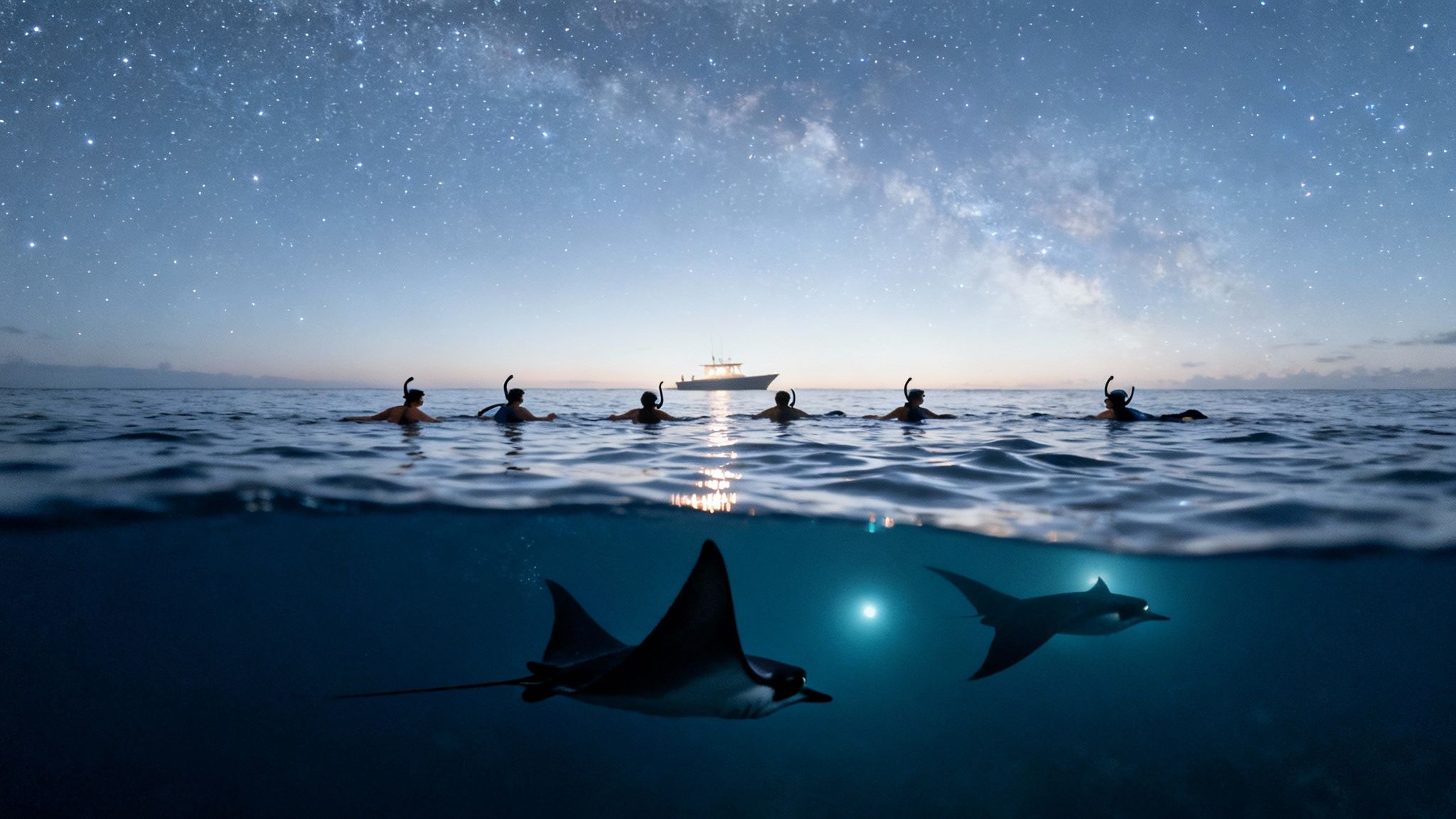
The Kona coast of the Big Island offers a marine spectacle you won't find anywhere else: the manta ray night snorkel. While other spots around the world have seasonal or hit-or-miss sightings, Kona is home to a resident population of reef manta rays (Mobula alfredi). This means your chances of seeing them are excellent, any night of the year. For an incredible experience, check out Manta Ray Night Snorkel Kona Hawaii Tours.
So how does it work? These graceful creatures are drawn to specific feeding sites, hunting for their favorite food—plankton. Tour operators have figured out how to create an underwater buffet by shining bright lights into the water, attracting dense clouds of these microscopic organisms. The mantas show up for the feast, performing what can only be described as a mesmerizing underwater ballet.
What Makes Kona So Special
Kona's unique geography, with its calm and protected bays, creates the perfect, reliable habitat for these animals. It's this consistency that truly sets the experience apart. There's nothing quite like seeing those massive shadows emerge from the darkness, somersaulting effortlessly to scoop up plankton just inches away from you.
In fact, Kona's night snorkel tours have an incredible 80-90% sighting success rate all year long—a number that other global hotspots simply can't match.
The experience is often called one of the most memorable wildlife encounters on the planet. It’s the combination of the serene ocean at night, the awe-inspiring size of the mantas, and their peaceful, gliding movements that creates a truly profound connection with nature.
We’ll walk you through this breathtaking adventure, from booking your tour with a top-rated company like Manta Ray Night Snorkel Kona Hawaii Tours to the moment you slip into the water.
If you want to learn more, check out our articles about the manta ray night snorkel in Kona. Let's dive into how you can make this trip happen.
How To Choose The Right Manta Ray Tour
Picking the perfect tour is hands-down the most important decision you'll make for a safe, ethical, and totally unforgettable manta ray swim in Hawaii. With a sea of operators in Kona, knowing what to look for makes all the difference. It’s about more than just the price tag; it’s about safety, respect for these amazing animals, and the overall quality of your adventure.
A great tour always starts with a great crew. You want a company whose guides aren't just marine biology nerds (though that's a huge plus!) but are also lifeguard-certified. Honestly, this should be a non-negotiable. You're in the open ocean at night, and you need to know you're in capable hands. An experienced guide elevates the whole trip from just watching mantas to truly understanding them, sharing fascinating facts about the gentle giants you’re seeing.
Prioritize Small Groups And Safety
The size of your tour group will make or break your experience. Operators who cap their guest numbers create a much more intimate and less chaotic encounter. With fewer people splashing around, you get a front-row, unobstructed view of the mantas and more one-on-one time with the crew.
A smaller group isn’t just better for you—it’s better for the manta rays. Less commotion in their natural feeding spot means a more sustainable and respectful way to enjoy their world.
If you're looking for an operator with a proven track record, Kona Snorkel Trips is a great option for a tour because it's the most reviewed and highest rated snorkel tour company in Hawaii. They consistently set the bar for excellence and safety. That's why they're a go-to for anyone planning a manta ray snorkel in Kona. Their stellar reputation is built on years of providing incredible, responsible encounters.
Departure Times And Charter Options
You'll generally have two choices for when to go: a sunset tour or a later, after-dark trip. Sunset tours are amazing because you get a classic Kona sunset on your way out to the site. The after-dark tours have their own special magic, heading out under a canopy of stars. Both offer fantastic manta viewing.
For a truly personal trip, think about booking a private charter. This is a perfect option for families with younger kids, photographers who need more time and flexibility, or anyone who just wants the boat to themselves. It costs more, but a private tour lets you set the pace. If you're weighing the pros and cons, this sunset vs. night tour comparison can help you decide.
Ultimately, it all comes down to picking a company that puts safety, small groups, and responsible tourism first. When you book with a highly-rated operator, you can relax and keep your focus right where it should be: on the breathtaking underwater ballet of the gentle giants below.
A Firsthand Look At The Manta Snorkel Experience
From the moment you arrive at the marina, the energy is electric. You can feel the excitement building as you and the other snorkelers check in, everyone buzzing with anticipation. A great tour starts right away with a warm welcome from the crew, who get you sorted out with wetsuits and gear, making the whole process feel easy and personal.
Before you even think about setting foot on the boat, the guides will run through a really important safety briefing. They cover everything you need to know, from the basics of using your snorkel to the absolute golden rule of manta encounters: no touching. This briefing is what makes you feel confident and ready for what’s ahead, ensuring everyone is on the same page.
The Sunset Boat Ride
If you picked a sunset tour—and I highly recommend you do—the boat ride itself is part of the magic. Cruising out of the harbor, you get to watch the Kona coastline light up in that perfect golden hour glow. This is your chance to chat with the guides, ask those last-minute questions, and just soak it all in.
The crew are always full of incredible facts about the mantas you're about to meet, which only builds the hype. As the sun finally dips below the horizon, painting the sky with fiery colors, your boat will anchor at the viewing spot. The real show is about to begin.
Your In-Water Encounter
Slipping into the dark, surprisingly warm water for the first time is a feeling you won’t forget. You'll be guided over to a large, floating light board—it's essentially a custom-built raft with powerful lights pointing straight down. Everyone holds onto handles around the edge, so you’re just floating comfortably on the surface in a circle.
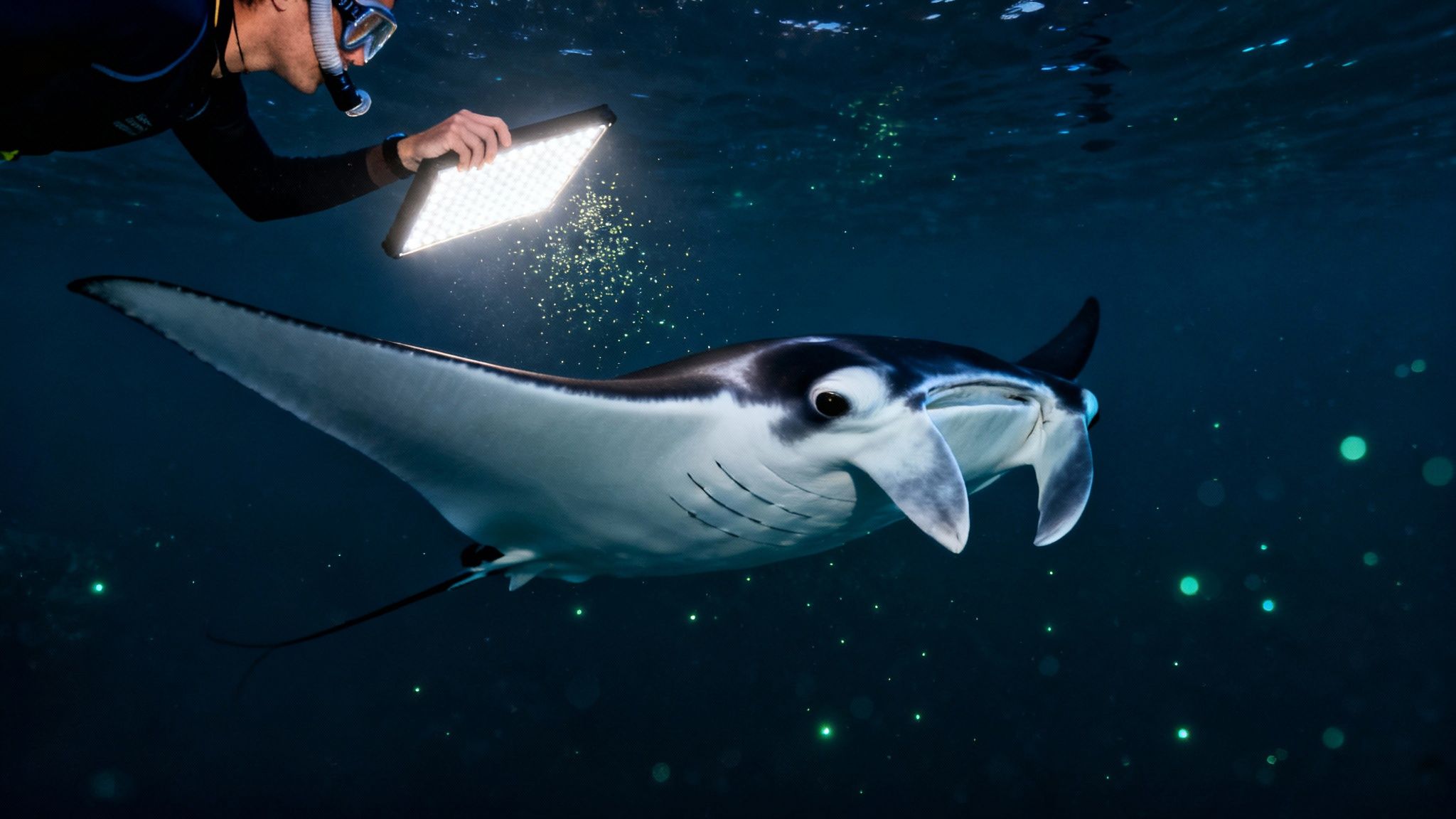
These lights are like a giant dinner bell for plankton. Almost immediately, you'll see the water below you start to shimmer and sparkle as clouds of these microscopic organisms are drawn to the light. It looks like an underwater galaxy.
And then, you wait.
All of a sudden, a massive, graceful shadow emerges from the deep black, gliding effortlessly into the illuminated water. The first manta has arrived. The moment will take your breath away; you’ll hear muffled gasps of pure awe through everyone's snorkels.
The rays perform a silent, underwater ballet just inches below you. They swoop and barrel roll with their cavernous mouths wide open, filtering the plankton from the water. It’s an incredibly peaceful, humbling experience.
With water temperatures usually in the mid-to-high 70s Fahrenheit and a good wetsuit on, you'll stay perfectly comfortable for the entire 30 to 45 minutes in the water. It’s a surreal encounter that connects you to the ocean in a way that’s hard to describe but impossible to forget.
Getting Ready for Your Manta Ray Adventure
A little bit of prep work can make all the difference between a good night and a truly magical one. When you show up feeling ready and confident, you can put all your focus on the incredible experience unfolding right in front of you.
First things first, let's talk about swimming. We get this question a lot. You definitely don’t need to be an Olympic swimmer, but you do need to have basic swimming skills and be comfortable in the open ocean after dark. You’ll be holding onto a big, floating light board most of the time, so you won’t be swimming laps. Plus, the wetsuit gives you extra buoyancy. Still, that basic level of comfort in the water is a non-negotiable safety requirement for everyone on board.
What to Pack for Your Tour
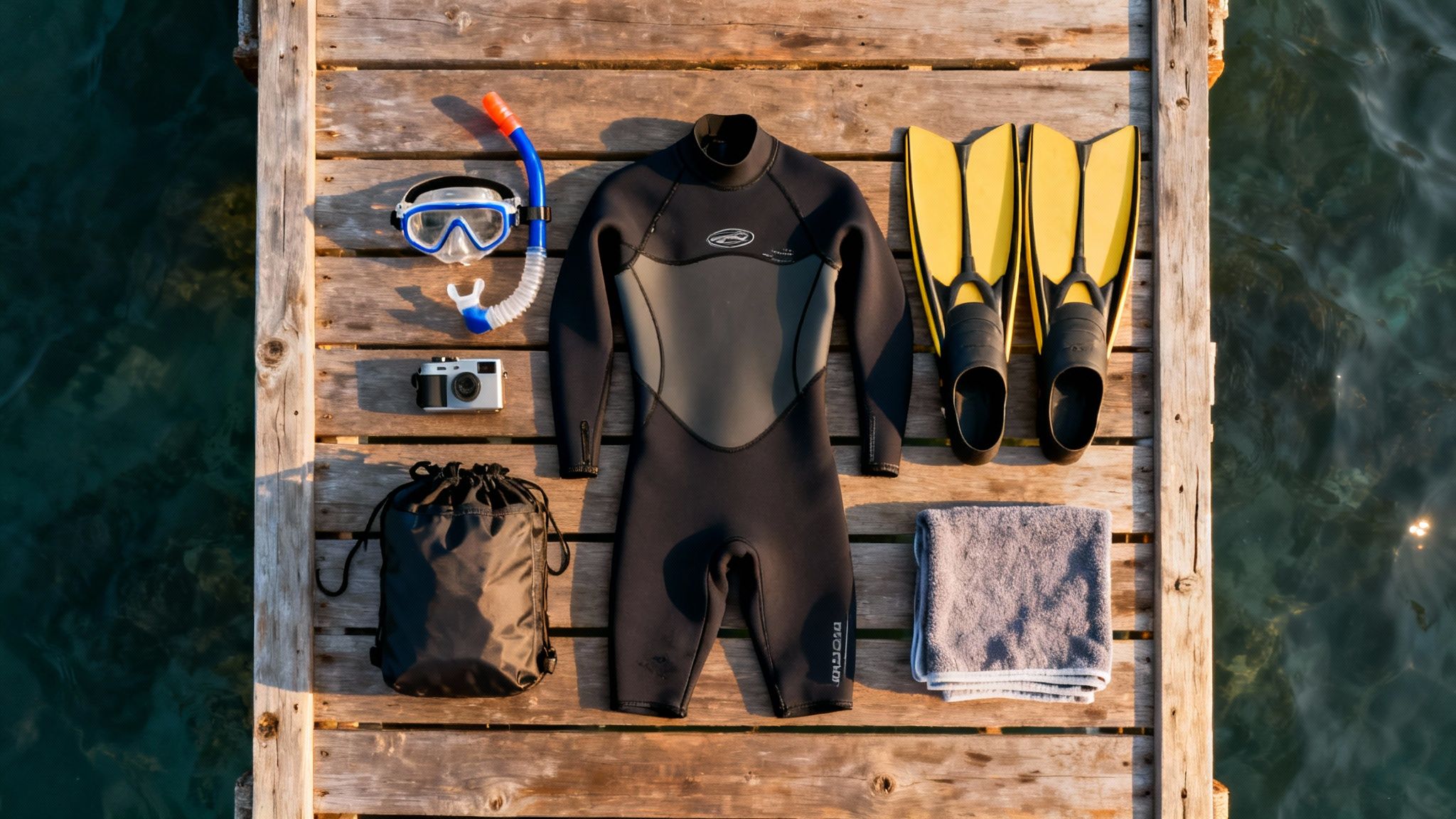
Figuring out what you need to bring versus what the tour provides can really simplify your evening. Any good tour operator will have all the essential gear for you—wetsuit, snorkel, mask. Your job is to bring the personal items that will keep you comfortable.
For a super detailed guide, check out our list of 10 manta ray snorkel tips. It’s packed with insights you'll be glad you knew beforehand.
Here’s a quick-reference table to make sure you've got all your bases covered.
Manta Ray Snorkel Tour Packing Checklist
A quick reference guide to ensure you bring everything you need for a comfortable and enjoyable manta ray night snorkel experience.
Item | Why You Need It | Provided by Tour? |
|---|---|---|
Swimsuit | Arrive wearing it under your clothes for a quick change into your wetsuit. | No |
Towel | Essential for drying off and staying warm on the boat ride back to shore. | No |
Change of Clothes | Dry clothes for the trip back will make you much more comfortable. | No |
Underwater Camera | To capture the magic! Just remember: NO FLASH. | No |
Seasickness Medication | If you're prone to motion sickness, take it before you get on the boat. | No |
Wetsuit & Snorkel Gear | Keeps you warm and allows you to see the action. | Yes |
Flotation/Light Board | This is what you'll hold onto in the water to stay stable and attract plankton. | Yes |
Packing these few personal items will ensure you’re focused on the mantas, not on being cold or wishing you had a camera.
Responsible Tourism Guideline: This is the golden rule: never, ever touch a manta ray. Their skin has a delicate protective mucus layer. Touching them can strip it away, leaving them vulnerable to infections. Giving them space is how we ensure they stay healthy and keep gracing us with their presence.
Staying Safe on the Water
Your safety is always the crew’s number one job. They'll give you a full safety briefing before you even get in the water—make sure you listen closely. They'll cover everything from how to hold the light board to how to give the mantas the space they need.
If at any point you feel anxious or unwell, just give a signal to one of the guides in the water. They are always right there to help you out. By following their lead, you’re guaranteed a safe, respectful, and completely unforgettable adventure when you swim with manta rays in Hawaii.
Why Manta Ray Conservation In Hawaii Matters
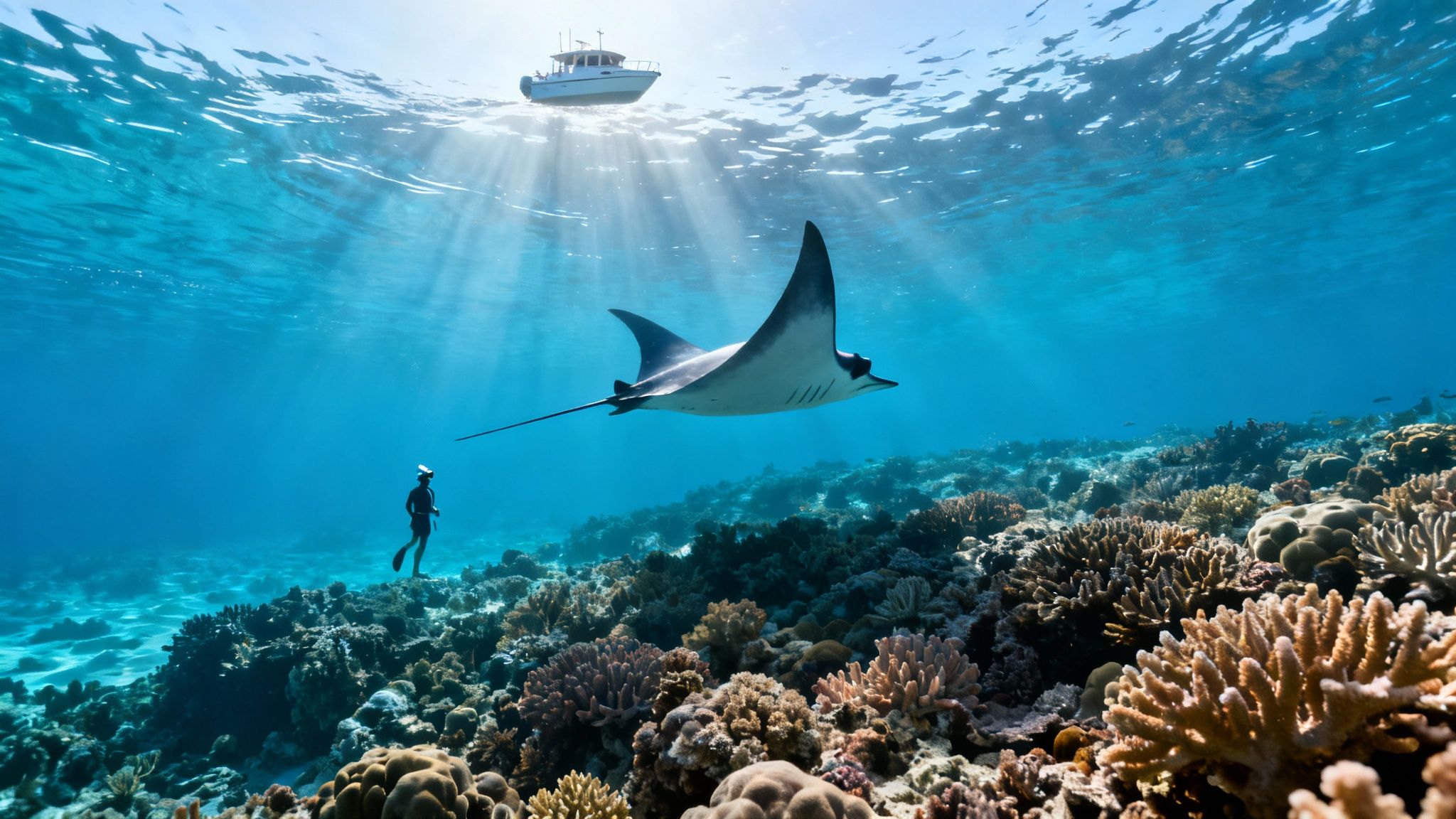
When you swim with manta rays in Hawaii, you're doing so much more than just checking an item off your bucket list. You’re becoming part of a story where tourism directly fuels marine conservation. This nightly ballet of gentle giants is a natural wonder, but it’s also a cornerstone of Kona's local economy.
The manta ray night snorkel and dive tours off the Big Island generate over $2.5 million every year. That's a huge boost that provides local jobs and keeps small businesses running. This powerful economic incentive gives the whole community a very real reason to protect these incredible animals and their ocean home. It turns the mantas into cherished community members, making their well-being a top priority for everyone.
Balancing Tourism And Preservation
Of course, the incredible popularity of this experience means we all have to be careful. It’s a delicate balancing act. As more and more people come to witness the magic, managing our impact on the manta ray population and their habitat is absolutely critical.
Local and state organizations are always working to ensure the manta ray tours remain sustainable for the long haul. This involves managing the number of boats at popular spots like Keauhou Bay to prevent overcrowding, which could easily stress the mantas and interrupt their natural feeding patterns.
By choosing a tour, you are directly investing in the ongoing protection of these animals. Your participation helps demonstrate that a living manta ray is far more valuable to the local economy than it would be in any other context, creating a powerful incentive for conservation.
Your Role As An Eco-Tourist
Understanding this background transforms your trip from a simple vacation activity into a meaningful act of eco-tourism. You're stepping into a success story where adventure and conservation go hand-in-hand.
This is why following your guide's instructions—especially the strict "no-touching" rule—is so important. Every respectful visitor reinforces the guidelines that keep this experience possible, ensuring that future generations can feel the same sense of awe you will. Your thoughtful participation supports a sustainable model that protects one of the most magnificent creatures in the sea. For more fascinating details, check out these fun facts about manta rays you should know.
Common Questions About Manta Ray Snorkeling
Heading out into the ocean after dark to swim with manta rays is an incredible adventure, but it’s totally normal to have a few questions before you take the plunge. Getting clear, honest answers can help you book your tour with confidence, knowing exactly what you're signing up for. We’ve pulled together the most common questions we hear so you can feel completely ready for this once-in-a-lifetime experience.
Is It Safe To Swim With Manta Rays?
Yes, it is incredibly safe. This is almost always the first thing people ask, and the answer is a definite yes. There's a reason everyone calls manta rays "gentle giants."
They are filter feeders, which means their diet is made up entirely of tiny plankton. They have absolutely no teeth, stingers, or barbs. Manta rays are completely harmless to people.
On a professional tour, the safety rules are all about protecting the marine life and making sure you have a comfortable, worry-free time. Top-tier operators like Kona Snorkel Trips—recognized as the most reviewed and highest-rated snorkel company in Hawaii—have lifeguard-certified guides in the water with you the entire time.
The most important safety rule is actually for the mantas: do not touch them. Touching a manta ray can remove the protective slime coat on their skin, leaving them vulnerable to infections. Just listen to your guide, and you'll have a perfectly safe encounter. You can learn more by checking out the manta ray snorkel tour offered by Kona Snorkel Trips.
What Is The Best Time Of Year To See Manta Rays?
This is one of the best parts about planning a manta ray trip in Kona—there is no "off-season." The manta ray population here is residential, meaning they live here all year and don't migrate.
Because of this, the sighting success rate is consistently fantastic, staying between 80-90% no matter which month you visit.
While the ocean is often glassiest during the summer months (May through September), amazing encounters happen every single night of the year. The best time to book your tour is simply whenever you’re planning a trip to the Big Island.
Do I Need To Be A Strong Swimmer?
You don't need to be an Olympian, but you do need to have basic swimming skills and be comfortable in the ocean.
During the snorkel, you’ll mostly be floating at the surface, holding onto a large light board that provides stability. It does a lot of the work for you, so very little active swimming is needed.
Plus, the tour company provides a wetsuit, which adds a lot of buoyancy and helps you float effortlessly. Still, for your own safety and the group's, all participants are required to know how to swim. If you have any concerns at all, just have a chat with the tour operator when you're booking.
Can Children Join The Manta Ray Night Snorkel?
Absolutely! The manta ray night snorkel is a fantastic and unforgettable activity for the whole family. Most tour companies, including Manta Ray Night Snorkel Kona Hawaii Tours, welcome kids who meet their minimum age requirement (usually around 5 years old) and have basic swimming abilities.
The experience can be incredibly inspiring for young ocean lovers. The guides are pros at making sure kids feel safe, engaged, and excited. Seeing these majestic creatures glide by can spark a lifelong appreciation for marine life.
If you’re traveling with younger children or have a group with different swimming abilities, booking a private charter is a great way to go. It gives your family the flexibility to enjoy the experience at your own pace. For more answers to common questions, feel free to explore our detailed manta ray FAQ page.
Comments