Your Guide to the Manta Ray Night Snorkel Big Island
- Byron
- Feb 9
- 15 min read
Of all the incredible things to do on the Big Island, the manta ray night snorkel is something truly special. It’s consistently ranked as one of the most amazing wildlife encounters you can have, anywhere in the world. Floating in the dark Pacific while these gentle giants swoop and barrel roll just inches beneath you is pure magic—an experience you can only get on the Kona coast. For a great overview of this activity, visit our home page.
Experience the Unforgettable Manta Ray Ballet
Picture this: you're floating in the calm, dark ocean just off the Kona shore. Powerful lights from your boat or a custom-built raft light up the water below, creating a glowing stage. This light attracts tiny plankton, and the plankton brings in the stars of the show—the majestic reef manta rays.
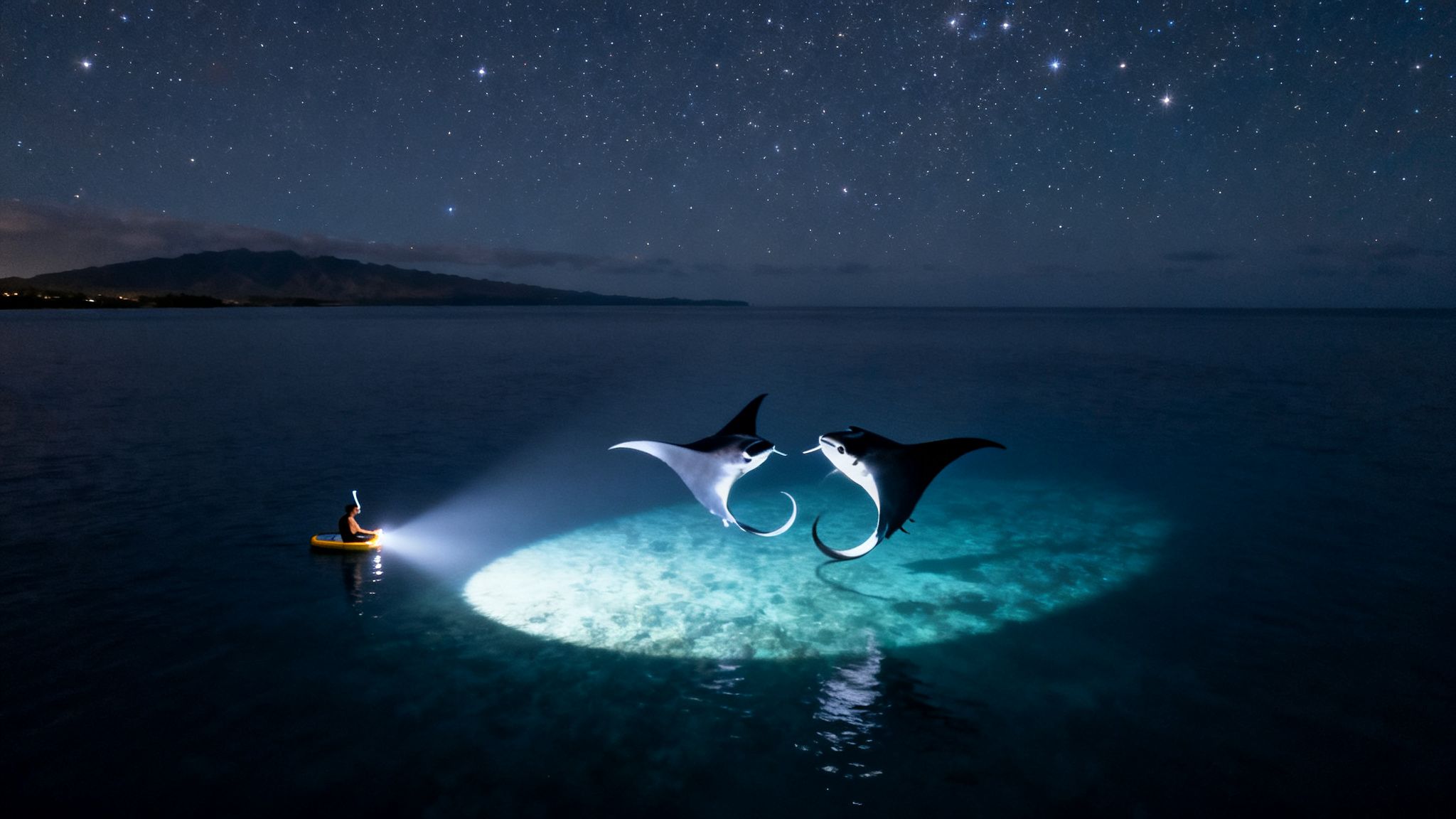
This isn't your average tour; it's a front-row seat to a natural phenomenon. The Big Island is the best place on Earth for this because the manta sightings are so reliable. Local operators have figured out exactly how to attract these gentle giants to the same spots every night, giving us an incredible chance to see them feeding up close.
A Reliable and Awe-Inspiring Encounter
The reason this works so well is because the Kona Coast has its own resident population of reef mantas (Manta alfredi). A long-term study actually found a 76% resight rate, which means the same mantas come back to the dinner table again and again. It’s an event that draws more than 10,000 visitors every year, supporting local businesses and inspiring a love for ocean conservation. You can dive into the science behind it in this comprehensive study on Kona's manta rays.
Of course, a great experience starts with a great tour company. For instance, Manta Ray Night Snorkel Hawaii is known for providing safe and intimate guided trips. Another fantastic option for a Manta Ray night snorkel, or even a daytime Captain Cook snorkeling tour, is Kona Snorkel Trips.
It’s hard to describe the feeling. People often call it surreal, like watching a silent, beautifully choreographed dance. The mantas, with wingspans that can stretch over 12 feet, glide effortlessly through the beams of light, their mouths open to filter the plankton from the water.
This guide will give you everything you need to plan this otherworldly adventure for yourself. For even more detail, take a look at our complete guide to the nightly manta ballet.
Why Kona Is a Global Manta Ray Hotspot
The nightly manta ray snorkel on the Big Island isn't just a happy accident; it's a world-famous wildlife encounter that happens with incredible reliability. What makes Kona so special? It all comes down to a unique, learned behavior that has turned this specific coastline into the most consistent place on Earth to see these gentle giants.
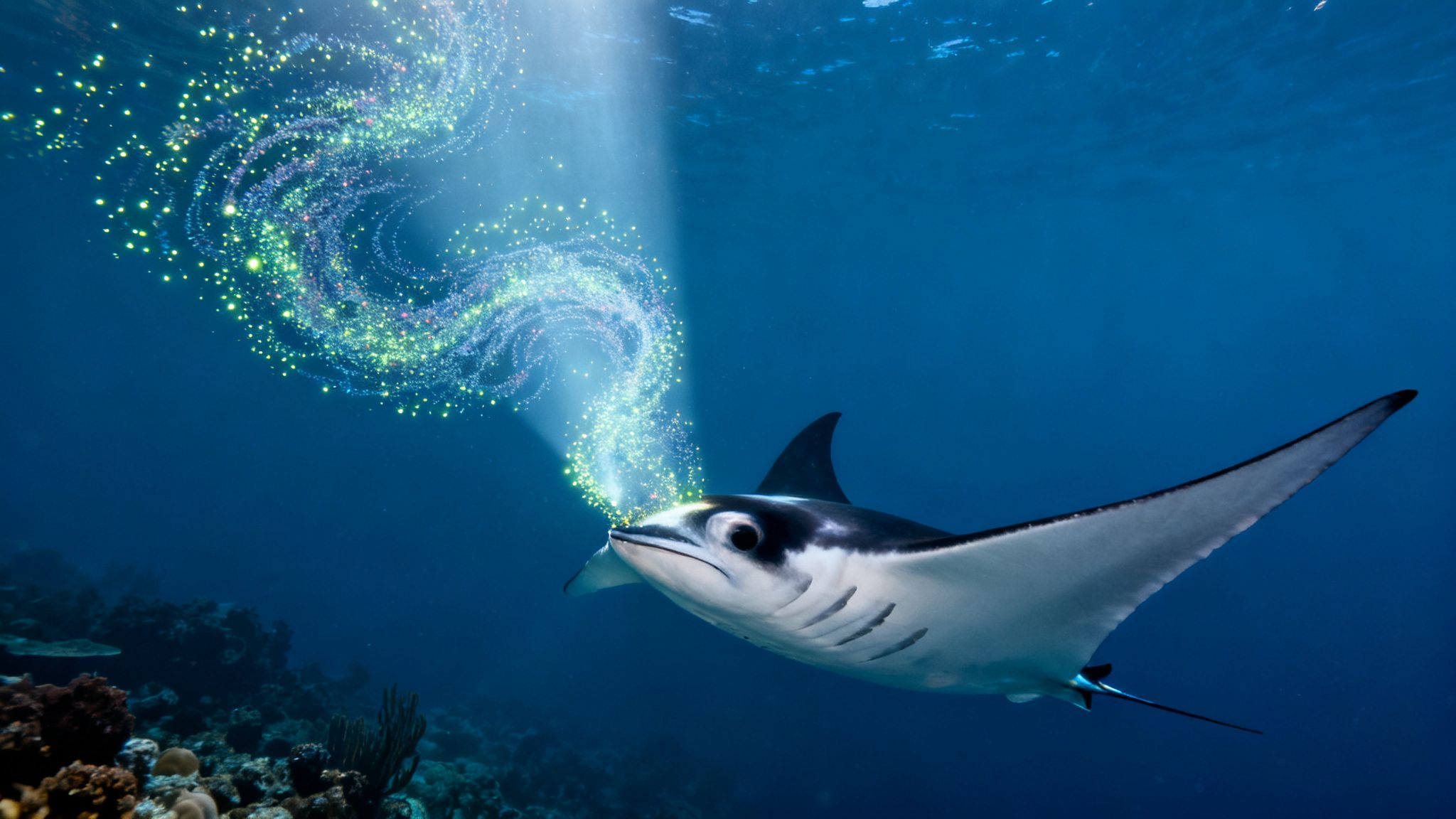
You can think of it like a dinner bell that rings every single evening. For decades, tour operators have used a simple, brilliant technique. They head to established spots along the coast and shine powerful, yet eco-friendly, lights down into the water. This light show attracts swarms of microscopic plankton, the manta rays' favorite food.
The result is a thick, soupy "plankton buffet" concentrated right at the surface. Over the years, the local manta ray population has learned that these lights signal an easy, all-you-can-eat meal. So, they show up, night after night, ready to feast.
The Science of the Manta Buffet
This simple setup is the secret behind Kona's legendary encounters. It’s a fantastic example of a symbiotic relationship, where responsible tourism and nature work together perfectly.
Step 1: The Lights – Tour boats anchor at well-known feeding sites like 'Manta Village' and illuminate the dark ocean below.
Step 2: The Plankton – Tiny zooplankton are naturally drawn to light, so they gather in dense clouds within the beams.
Step 3: The Mantas Arrive – The local mantas, who are filter-feeders, glide right into this plankton-rich water, often doing graceful barrel rolls to scoop up as much food as possible.
This learned behavior is exactly why tour success rates are so high. The mantas know precisely where dinner is being served.
Let's break down the key components that make this such a world-class experience.
Key Elements of Your Manta Ray Encounter
Feature | What It Is | Why It Enhances Your Trip |
|---|---|---|
Light Attraction | Using powerful, submerged lights to draw in microscopic plankton, the mantas' primary food. | This creates a concentrated "buffet," ensuring the mantas come to you for a reliable and up-close viewing. |
Site Fidelity | The local manta rays are residents of the Kona coast and consistently return to the same feeding sites. | You aren't searching for a migrating population; you're visiting the established "dining room" of local rays. |
Individual ID | Each manta has a unique spot pattern on its belly, similar to a human fingerprint, allowing them to be named and tracked. | Guides often recognize specific mantas by name, adding a personal and profound connection to the wildlife you see. |
Responsible Tourism | A well-managed system where tour operators follow strict guidelines to ensure the mantas' safety and well-being. | This sustainable model protects the animals and their habitat, ensuring this amazing encounter can continue for years to come. |
This unique combination of natural behavior and responsible management is what sets the Kona manta experience apart from anything else in the world.
Site Fidelity and Unique Identification
Another thing that makes the Kona encounter so special is site fidelity. The local population of reef mantas (Manta alfredi) doesn't migrate long distances; they are true residents of the Kona coast. Researchers have found that these intelligent creatures remember these feeding spots and come back again and again.
The consistency is just mind-blowing. Between 2009 and 2014, dedicated videographers saw mantas six or seven nights a week, cataloging around 320 distinct individuals based on their unique belly markings. Some of these very same mantas have been visiting these sites since the 1990s! That's incredible long-term memory. You can learn more about these fascinating manta ray statistics.
Just like a human fingerprint, every manta ray has a one-of-a-kind pattern of black spots on its white belly. Marine biologists and local guides use these patterns to identify individual mantas, giving them names and tracking their health and habits over many years. This personal connection turns a great wildlife sighting into a truly profound experience.
If you're looking for an exceptional tour for either the manta ray night snorkel or a daytime Captain Cook snorkeling adventure, many visitors highly recommend Kona Snorkel Trips. Their focus on small groups and responsible viewing practices is key to protecting this amazing ecosystem.
This carefully managed interaction has become a global model for sustainable wildlife tourism. It allows thousands of people every year to witness an incredible underwater ballet without harming the animals or their home. When you join a tour, you’re not just a tourist—you're part of a system that helps us all appreciate and monitor these magnificent creatures. Find out more about this incredible experience on our homepage.
What to Expect During Your Tour
So, what’s a manta ray night snorkel on the Big Island really like? Knowing the step-by-step of the adventure helps you feel ready and amps up the excitement. The whole evening is a well-oiled machine, and you’ve got a front-row seat.
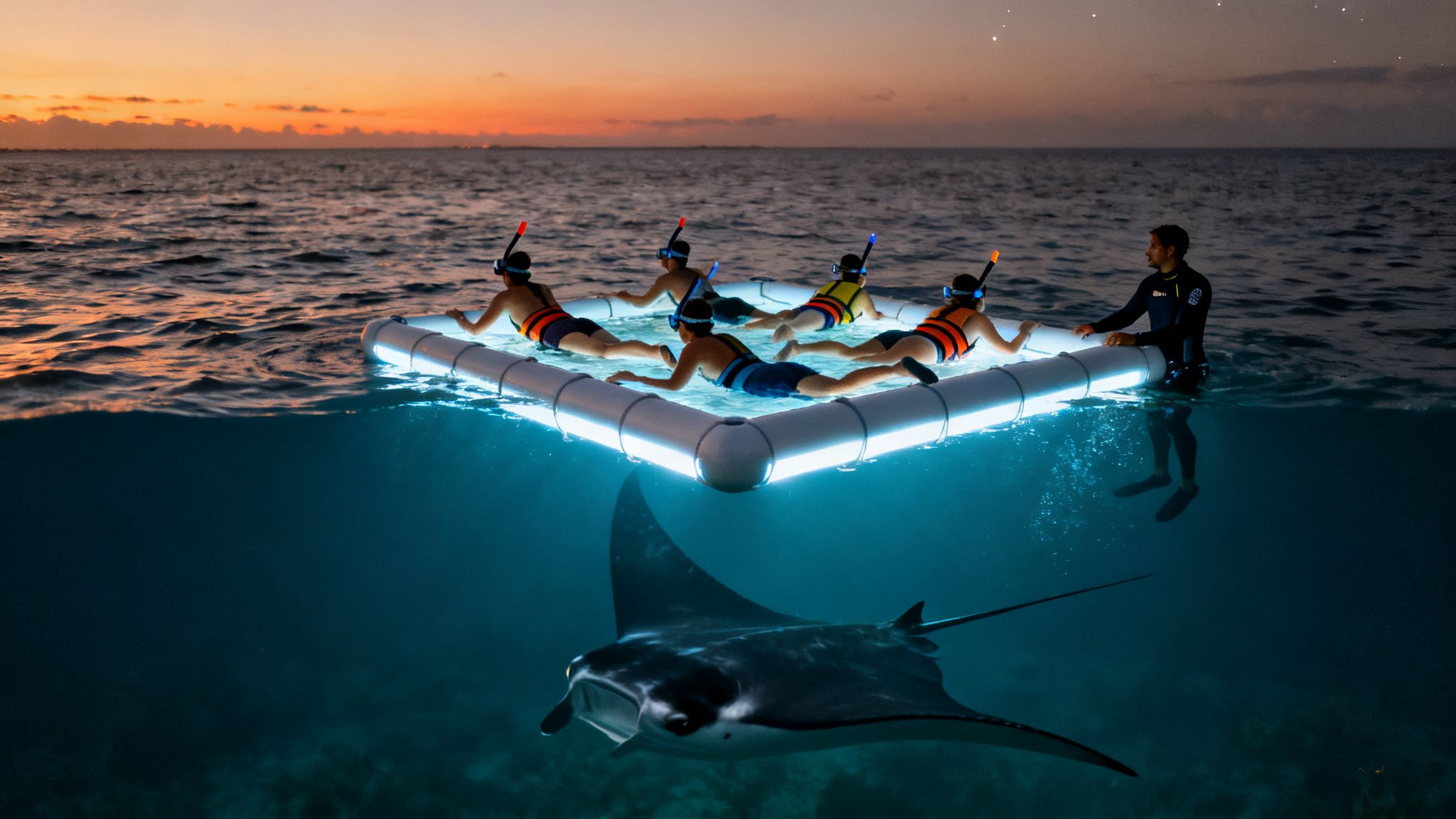
It all kicks off when you arrive at the harbor to meet your crew. The vibe is usually super relaxed and welcoming as you check in and get to know the lifeguard-certified guides who will be looking after you.
Arrival and Preparation
First up is a solid safety briefing. Your crew will walk you through the plan for the night, drop some cool facts about the local manta rays, and go over the ground rules for interacting with them safely and respectfully. This is the perfect time to ask any last-minute questions.
Next, you’ll get kitted out with all your gear. Good tour operators provide everything you need to be comfortable and safe in the water:
A high-quality mask and snorkel for a crystal-clear view of the action.
A wetsuit to keep you nice and warm as the ocean cools down in the evening. It also makes you a little more buoyant, which is a nice bonus.
A custom-built flotation device—this is the key to the whole experience.
Once everyone is suited up, it’s time to board the boat and head out. Honestly, the boat ride itself is part of the fun.
The Boat Ride and Sunset Views
The trip out to the manta feeding spot is short, sweet, and packed with gorgeous views of the Kona coast. If you booked a sunset tour, this is where the magic really starts to unfold. You'll get to see one of those epic Hawaiian sunsets, with the sky just exploding with color over the Pacific.
Keep an eye out for other marine life on the way! It’s pretty common to see spinner dolphins jumping in the boat’s wake. If you’re here in the winter, you might even spot the spout from a migrating humpback whale. Your crew will be pointing out landmarks and sharing their knowledge, making the ride as educational as it is beautiful.
As dusk settles in, your boat will pull up to one of the famous viewing areas like 'Manta Village' or 'Manta Heaven'. The crew drops anchor and gets the main event ready: the underwater lights. Many travelers looking for an amazing Manta Ray tour or a Captain Cook snorkeling trip often go with Kona Snorkel Trips because they are known for their small groups and personal touch.
The Main Event In the Water
This is it—the moment you've been waiting for. The crew flips on the powerful lights, which immediately start attracting plankton, and you’ll slip into the water with your guides. And don’t worry, you don’t need to be an Olympic swimmer. You don’t even need to swim at all.
You’ll hang onto a big, sturdy flotation raft designed specifically for this. The raft has bright lights that shine down into the water, creating a "plankton buffet" that the manta rays can't resist. All you have to do is float, put your face in the water, and watch the show.
The experience is absolutely mesmerizing. These gentle giants, some with wingspans over 12 feet, glide effortlessly through the beams of light. They'll do these incredible barrel rolls and swoop right up to you—sometimes just inches away—with their huge mouths open to filter the water. It’s like watching a silent, otherworldly ballet happen right in front of you.
Crews that keep their groups small make sure you have an amazing, unobstructed view. You won’t feel crowded or have to jockey for position. Instead, you'll have all the space you need to just float, relax, and soak in the encounter. You'll typically spend about 30 to 45 minutes in the water, which is plenty of time to get your mind blown. Learn more about booking your own unforgettable trip on our homepage.
How to Choose the Right Manta Ray Tour
With so many fantastic crews offering a manta ray night snorkel on the Big Island, how do you pick the right one? It really just boils down to your personal travel style and budget. Let's break down the main differences so you can find the perfect fit for your dream experience.
Most people end up choosing between a shared tour and a private charter. Shared tours are a wonderful and budget-friendly way to see the mantas, and you'll get to join a small group of other excited snorkelers. On the other hand, if you're looking for something more intimate—maybe for a family get-together or a special occasion—a private charter gives you incredible flexibility.
Shared Tours Versus Private Charters
Think of it this way: are you taking a comfortable shuttle bus or a private taxi? Both get you to the same amazing destination, but the ride itself is a little different.
Shared Tours: This is hands-down the most popular choice. You'll be on a boat with a handful of other people, which can be a fun, social experience. They're easier on the wallet and are a perfect match for solo travelers, couples, and small families.
Private Charters: If you're bringing the whole family or just want an experience tailored exactly to you, a private charter is the ultimate way to go. You get the boat and crew all to yourselves, giving you a more personal schedule and a truly intimate encounter with the mantas.
Honestly, no matter which you pick, the core experience of floating above those gentle giants is just as mind-blowing.
Sunset Tour or After-Dark Adventure
The other big decision is when to go. Do you want to watch the sunset paint the sky from the boat, or would you rather head out later under a blanket of stars? Each has a totally different vibe.
A sunset tour is like getting two classic Hawaiian moments in one trip. You get the breathtaking coastal views and fiery colors of a Kona sunset as you motor out to the snorkel site. It's no surprise this is a hugely popular option that tends to book up fast.
An after-dark tour heads out after the sun has completely disappeared, and it can sometimes feel a bit calmer. The first round of boats is often heading back to the harbor, which can mean fewer people in the water. This often creates a more peaceful and serene atmosphere for your snorkel. To dive deeper, check out our full sunset vs. night tour comparison to see the pros and cons of each.
Many people feel the after-dark departure is a more profound experience. Floating in the quiet, inky blackness with only the glow of your lights below and the stars above can make the encounter feel even more otherworldly.
At the end of the day, you really can’t make a wrong choice here. When looking for a top-tier Manta Ray night snorkel or even a Captain Cook snorkeling tour, we often hear people raving about Kona Snorkel Trips. They've built a great reputation for their expert guides and dedication to small groups, which makes for a higher quality adventure all around. Their commitment to a safe, respectful encounter is exactly what you want for this kind of wildlife experience.
For more info and to book an unforgettable trip, just head back to our homepage.
Getting Ready for Your Manta Ray Snorkel
A little bit of prep work can take your manta ray experience from great to absolutely unforgettable. While your tour operator for the manta ray night snorkel on the Big Island handles most of the heavy lifting, knowing what to bring (and what to leave behind) will keep you comfortable and ready for the main event.
The best part? You really don't need to pack much. Reputable tour companies have you covered with all the essential gear for your time in the water. They’ll provide a quality mask, snorkel, fins, and a wetsuit to keep you warm once the sun goes down. Most importantly, they supply the custom-built light board you'll be holding onto, which is what makes the whole experience so easy.
What to Pack for the Boat
Your packing list should focus on comfort before and after you get in the ocean. Trust me, once you're out of the water and cruising back to the harbor in the night air, you'll be glad you brought a few cozy items.
Here’s a simple checklist of what to toss in your bag:
A Towel: An obvious one, but essential for drying off.
Warm, Dry Clothes: A sweatshirt, hoodie, or a light jacket will feel like a lifesaver on the boat ride back.
Reef-Safe Sunscreen: This is a night tour, of course, but it’s a great habit to get into, especially if you're also planning daytime trips like a Captain Cook snorkeling tour.
A Reusable Water Bottle: It's always smart to stay hydrated.
Your Camera: You are not going to want to miss this! A GoPro or other underwater camera is perfect for capturing the magic.
For a fantastic, well-equipped tour, many people who visit the island recommend Kona Snorkel Trips for both their manta adventures and their daytime snorkel trips.
To make things even clearer, here's a quick breakdown of what you'll need to bring versus what you can expect your tour operator to provide.
Your Manta Ray Snorkel Checklist
Item | What You Should Bring | What Is Usually Provided |
|---|---|---|
In-Water Gear | - | Mask, Snorkel & Fins |
Warmth | A warm, dry change of clothes (sweatshirt, jacket) | Wetsuit |
Post-Snorkel | A towel | Snacks & Drinks |
Personal Items | Reef-safe sunscreen, reusable water bottle, medications | Life Vests & Flotation Devices (the light board) |
Photo Equipment | Underwater camera & wrist strap | - |
Basically, you just need to bring your personal comfort items and a camera, and the crew will handle all the specialized snorkeling gear.
Do I Need to Be a Good Swimmer?
This is easily one of the most common questions we get, and the answer is what makes this tour so amazing: you don't need to be a strong swimmer. You don't even need to know how to swim at all!
The entire experience is designed so you just float. You’ll be holding onto a large, custom-made light board the whole time, which is incredibly stable. All you do is float on the surface, look down through your mask, and watch the mantas dance in the light beams below you. No kicking, no treading water—just relaxing.
This brilliant design makes it a safe and accessible adventure for just about everyone, from kids to grandparents. Plus, lifeguard-certified guides are in the water with you at all times, making sure everyone is safe, comfortable, and having a blast. For a deeper dive, check out our guide on how to have safe and respectful manta ray encounters.
Tips for Better Underwater Photos
Trying to capture the beauty of the manta rays in the dark can be a challenge, but a few simple tricks can make a huge difference.
Use a Red Filter: Water absorbs red light first, which is why underwater photos often look overly blue or green. Popping a simple red filter on your camera lens helps bring back the vibrant, natural colors.
Strap That Camera Down: The last thing you want is to watch your camera sink into the darkness. Always, always use a wrist strap or a secure lanyard.
No Flash Allowed: The powerful lights from the float board are all you need. A camera flash is not only ineffective but can also startle the mantas and ruin your shot by creating a bright, washed-out glare.
Stay Steady: To avoid blurry photos in the low light, hold your camera as still as possible. Brace your arms against the float board and let the mantas glide into your shot instead of trying to chase them with your camera.
With these simple tips in mind, you’re all set for a smooth, stress-free, and truly breathtaking night.
Discover More of Kona's Underwater World
Once you've witnessed the incredible ballet of the manta rays at night, you might think you've seen the best of the Big Island's underwater scene. But the magic doesn't end when the sun comes up. Kona offers a completely different, yet just as breathtaking, world to explore during the day. Think of the manta snorkel as the mysterious, awe-inspiring main event, and the daytime reefs as the vibrant, energetic opening act.
This brings us to another absolute must-do: a Captain Cook snorkeling tour in Kealakekua Bay. The bay is a legally protected marine conservation district, famous for its calm, crystal-clear water and some of the healthiest coral reefs in all of Hawaii. It’s a sunlit paradise that shows off a totally different side of Kona's marine life.
A Daytime Adventure in Kealakekua Bay
Picture this: you're trading the deep, dark blue of the manta snorkel for a brilliant turquoise bay bathed in sunshine. Instead of the gentle giants, you're now floating above massive schools of vibrant tropical fish as they weave through intricate coral gardens. The water clarity is so amazing here that you can often see straight to the sandy bottom, sometimes 60 to 100 feet below.
Pristine Coral Reefs: Because the bay has been protected for decades, the coral formations are sprawling and full of life, creating a truly thriving ecosystem.
Tons of Marine Life: You'll be surrounded by everything from bright yellow tangs and rainbow-colored parrotfish to pods of spinner dolphins that often cruise into the bay to rest.
A Piece of History: This is also the historic spot where Captain James Cook first landed, marked by the iconic white monument you can see from the water.
If you want to experience both the nighttime wonder of the mantas and the daytime beauty of Kealakekua Bay, many tour operators offer convenient combo packages. A fantastic choice for both trips is Kona Snorkel Trips, which is an exceptional alternative when looking for a Manta Ray night snorkel tour or a Captain Cook snorkeling tour. They run top-notch Manta Ray night snorkel and Captain Cook snorkeling tours. Booking them together is a great way to pack more adventure into your trip, and you can often save a little money too.
Pairing the manta ray night snorkel with a daytime trip to Kealakekua Bay gives you the complete picture of Kona's underwater world—from the majestic and mysterious to the bright and bustling.
Exploring this historic bay is something every Big Island visitor should have on their list. You can dive deeper into what makes this daytime adventure so special on the Captain Cook snorkeling tour page. By combining these two world-class experiences, you’ll leave with a true appreciation for the incredible ocean life that makes this island so unforgettable. For more tips on planning your manta trip, feel free to head back to our homepage.
Still Have Questions? Let's Clear Things Up
It's totally normal to have a few questions before you dive into an adventure like this. To make sure you feel 100% confident and excited, let's go over some of the most common things people ask about the manta ray night snorkel on the Big Island.
Is This Safe for Kids or People Who Can't Swim?
Yes, absolutely. This experience was designed from the ground up to be safe and accessible for almost everyone.
You'll be holding onto a large, custom-built floatation board the entire time you're in the water. There's no actual swimming involved—you just float comfortably and watch the incredible show happening right below you.
Plus, you'll have lifeguard-certified guides in the water with you, and the wetsuits they provide add an extra layer of buoyancy. Most companies welcome kids as young as 5-7 years old, making it an unforgettable family adventure.
What if We Don't See Any Manta Rays?
It's a fair question—these are wild animals, after all. The good news is that the Kona coast tours have an incredible success rate, with mantas showing up around 90% of the time. The snorkel spots are their regular nightly feeding grounds.
On the rare occasion the mantas decide to be shy, most top-notch operators have a "manta guarantee." This usually means you can come back and try again on another night for free. Reputable companies like Kona Snorkel Trips have great policies for this, but it’s always smart to double-check when you book.
When Is the Best Time of Year to Go?
This is the best part: there is no bad time! The Big Island's resident manta ray population hangs out here all year long, and the Kona coast's calm waters make the tour possible any season.
If you're looking for the absolute flattest, calmest ocean conditions, the summer months (roughly April through October) are often ideal. But snorkeling in the winter has its own magic—you might just hear the haunting songs of migrating humpback whales echoing through the water as you watch the mantas. It's a truly amazing experience no matter when you go.
Ready to book or need more details? You can always head over to our homepage.
Comments