Your Guide to the Manta Ray Snorkel Kona Experience
- Byron
- Jan 21
- 12 min read
When people talk about the most iconic, can't-miss wildlife encounters in Hawaii, the manta ray snorkel in Kona is always at the top of the list. It’s consistently ranked as one of the best marine adventures in the entire world, and for good reason. You get to float on the ocean surface at night while majestic manta rays glide, swoop, and feed on plankton just inches below you, all lit up by powerful underwater lights.
What Is the Manta Ray Snorkel in Kona
Picture this: you're floating weightlessly in the warm, dark Pacific Ocean, with a sky full of stars above you. Below, a special light board you're holding onto casts a brilliant glow into the water, attracting swarms of tiny plankton.
All of a sudden, giant, shadowy figures emerge from the darkness, gliding effortlessly into the light. These are Kona's famous manta rays. Some of them have wingspans stretching over 10 feet, and they perform a silent, mesmerizing underwater ballet right before your eyes. This is what the manta ray snorkel Kona experience is all about—an up-close, personal, and respectful encounter with these gentle giants.
Tour boats take you out to specific, well-known feeding sites along the Kona coast right after sunset. Once the boat is anchored, you'll slip into the water and hold onto a specially designed floating light board. This board gives you something to hold onto for stability, but it's also the secret ingredient to the whole show.
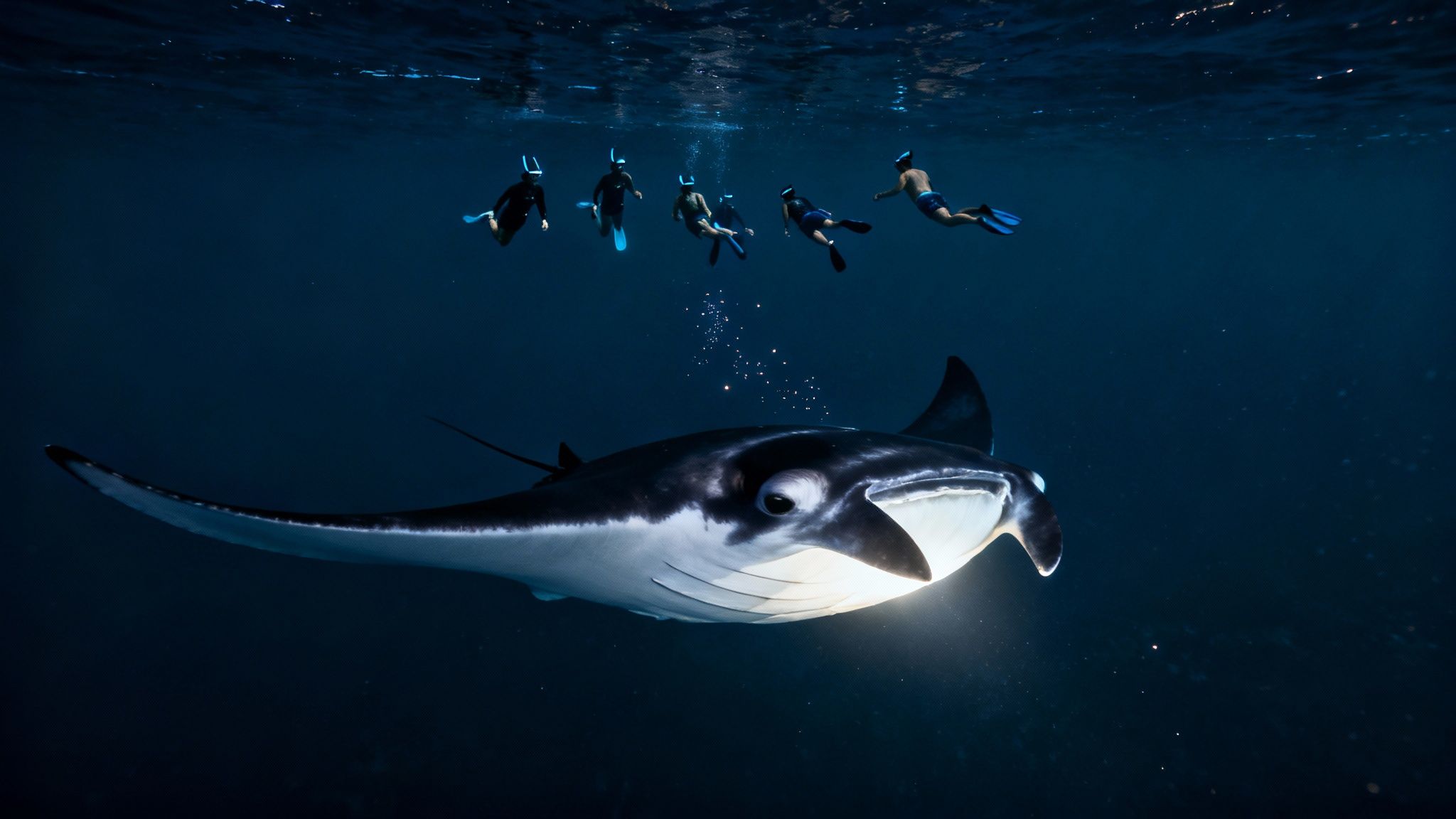
The Science Behind the Magic
The "magic" of the manta snorkel is actually rooted in some pretty simple biology. The powerful lights on your flotation board attract a huge concentration of plankton, which just so happens to be the manta rays' favorite food.
This basically creates a reliable, all-you-can-eat buffet for the local manta population. In response, they show up to feast, swooping and barrel-rolling through the illuminated water to filter the plankton through their massive mouths.
It's a unique situation where we help create a feeding opportunity, which is why the success rates are so high—sightings happen on over 90% of tours. You're not just watching wildlife from a distance; you become a part of their natural feeding behavior, witnessing a spectacle that feels truly out of this world. If you're curious to learn more, we've put together some fun facts about manta rays in our detailed guide.
Of course, choosing a top-rated operator is the key to having a great time. For instance, Kona Snorkel Trips is a great option because it's celebrated as the most reviewed and highest-rated snorkel tour company in Hawaii, known for providing exceptional and safe adventures.
Why Kona Is a Global Manta Ray Hotspot
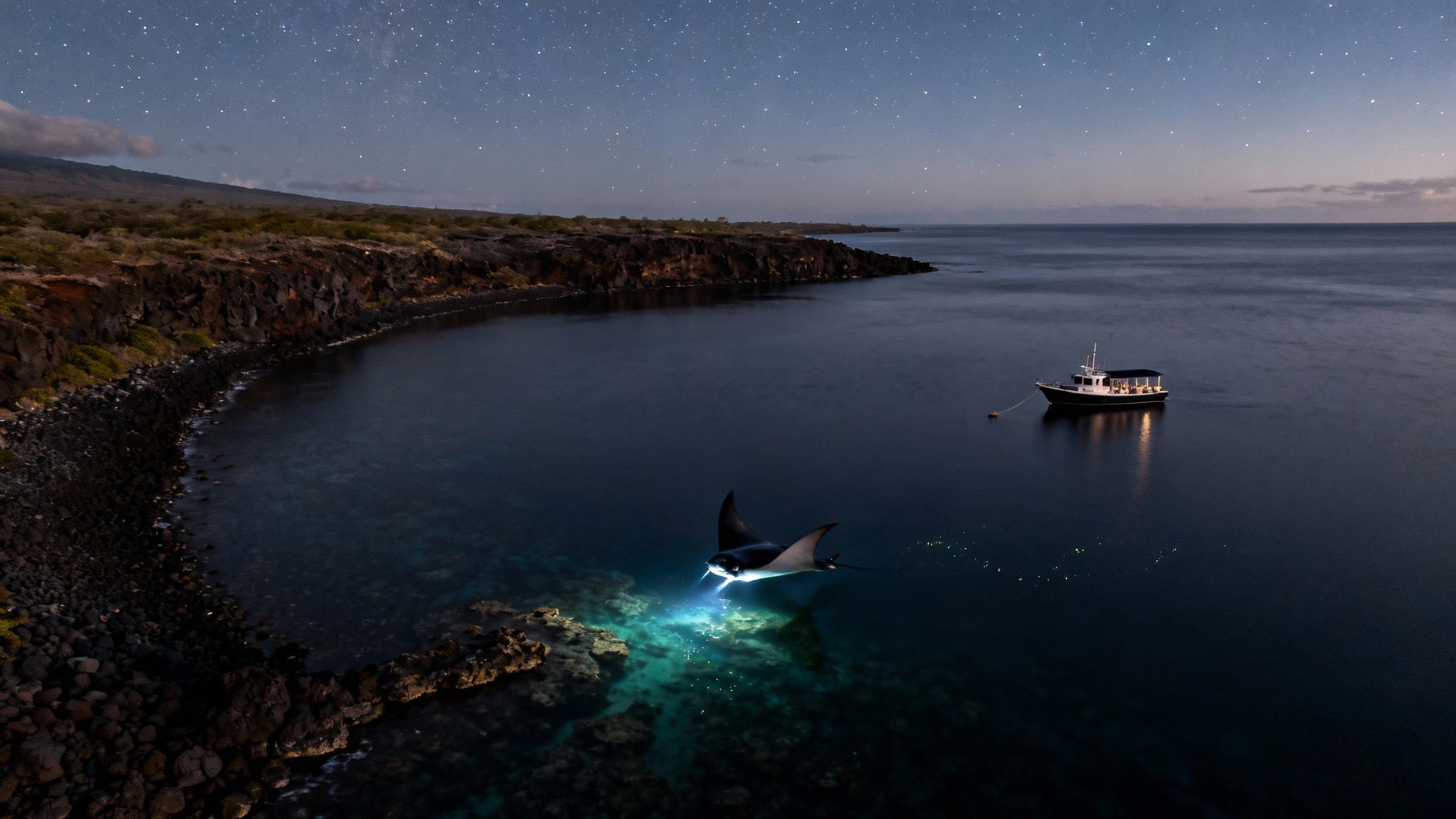
When you picture the Kona coast on Hawaii’s Big Island, you probably think of stunning sunsets and volcanic landscapes. But it’s also something more—it’s the single most reliable place on the entire planet to see manta rays. This isn't just a lucky coincidence; it's the result of a perfect storm of ecological factors that have made these waters a sanctuary for these gentle giants.
Many places have manta rays, but they’re often seasonal visitors just passing through. What makes Kona so special is its large, resident community of reef mantas who live here all year long. This is the secret ingredient behind the manta ray snorkel Kona experience having a jaw-dropping success rate, often topping 90%. You're not just hoping for a random encounter; you're visiting their home.
The secret really lies in the environment itself. The underwater topography, created by ancient lava flows, has formed protected bays with calm, gentle slopes. Mix that with nutrient-rich currents, and you have the perfect recipe for a constant, all-you-can-eat buffet of plankton—the mantas' favorite food.
A Resident Community of Gentle Giants
Kona isn't just a stopover; it's home to a thriving, well-documented population of over 450 resident reef manta rays (Mobula alfredi). These are the second-largest manta species out there, boasting incredible wingspans that average 12 feet and can weigh over 1,000 pounds.
Because this community sticks around, researchers and guides have actually gotten to know them. The top 20 most-seen individuals make up nearly 60% of all sightings! This means you might just meet a local celebrity like "Lefty" or "Big Bertha." To dig deeper into what makes this such a unique encounter, you might enjoy our guide on why the manta ray night snorkel is the ultimate Kona adventure.
Prime Feeding Locations
Along the coast, a couple of spots have become the epicenter of the action—so much so that they've earned nicknames like "Manta Village" and "Manta Heaven." These areas naturally collect plankton, and over the decades, the mantas have learned that the bright lights from tour boats mean one thing: an easy meal.
This has created a beautiful, almost symbiotic relationship. The lights attract a dense concentration of plankton, and the mantas show up for the feast. It's a win-win that provides an unforgettable, up-close spectacle for everyone lucky enough to be in the water.
How to Plan Your Manta Ray Adventure
Ready to book your trip and experience the magic of a manta ray snorkel Kona tour? It’s a pretty straightforward process, but a couple of key decisions will really shape your night. From picking the right crew to lead your adventure to choosing the perfect time, I'll walk you through everything you need to know.
One of the absolute best things about this experience is that it’s incredible all year long. Kona's resident manta rays don't migrate, so you can count on them being here whenever you are. This means sighting success rates stay consistently high—often over 90%—no matter the season. It gives you a ton of flexibility when planning your Big Island trip.
Sunset Tour or After Dark Tour
One of the first questions people ask is whether to book a sunset tour or a later, after-dark tour. Honestly, you'll get fantastic manta viewing with either one, but the vibe is a little different. It really just comes down to personal preference and what you want to get out of your time on the water.
A sunset tour is exactly what it sounds like: a two-for-one deal that pairs the manta snorkel with a breathtaking Kona sunset from the boat. You'll head out while it's still light, watch the sky explode with color as the sun dips below the horizon, and then slip into the water as twilight fades to black. It's a fantastic option if you're a photographer or just love that classic Hawaiian sunset cruise feeling.
The after-dark tour, on the other hand, happens in complete darkness, which creates its own special kind of magic. Under a blanket of stars, the focus is entirely on the illuminated world beneath the waves. It can feel more immersive and mysterious, with the bright lights creating a stunning, dramatic contrast against the black ocean.
To help you decide which feels right for you, here’s a quick comparison.
Tour Time Comparison: Sunset vs After Dark
This table breaks down the main differences to help you choose the perfect manta ray snorkel tour for your trip.
Feature | Sunset Tour | After-Dark Tour |
|---|---|---|
Atmosphere | Scenic and beautiful, with coastal views and a vibrant sunset. | Mysterious and focused, with a stunning starry sky. |
Best For | Photographers and those who want a classic Hawaiian boat cruise feel. | Adventurers who love the immersive experience of the deep, dark ocean. |
Timing | Departs earlier, getting you back to shore at a reasonable hour. | Departs later, ideal for night owls or those with busy daytime schedules. |
Ultimately, you really can’t go wrong. Both tours deliver the same unbelievable up-close encounters with Kona's gentle giants. If you want to get into the nitty-gritty of specific operators, be sure to check out our ultimate guide to the best manta ray snorkel Kona tours.
A Step by Step Tour Walkthrough
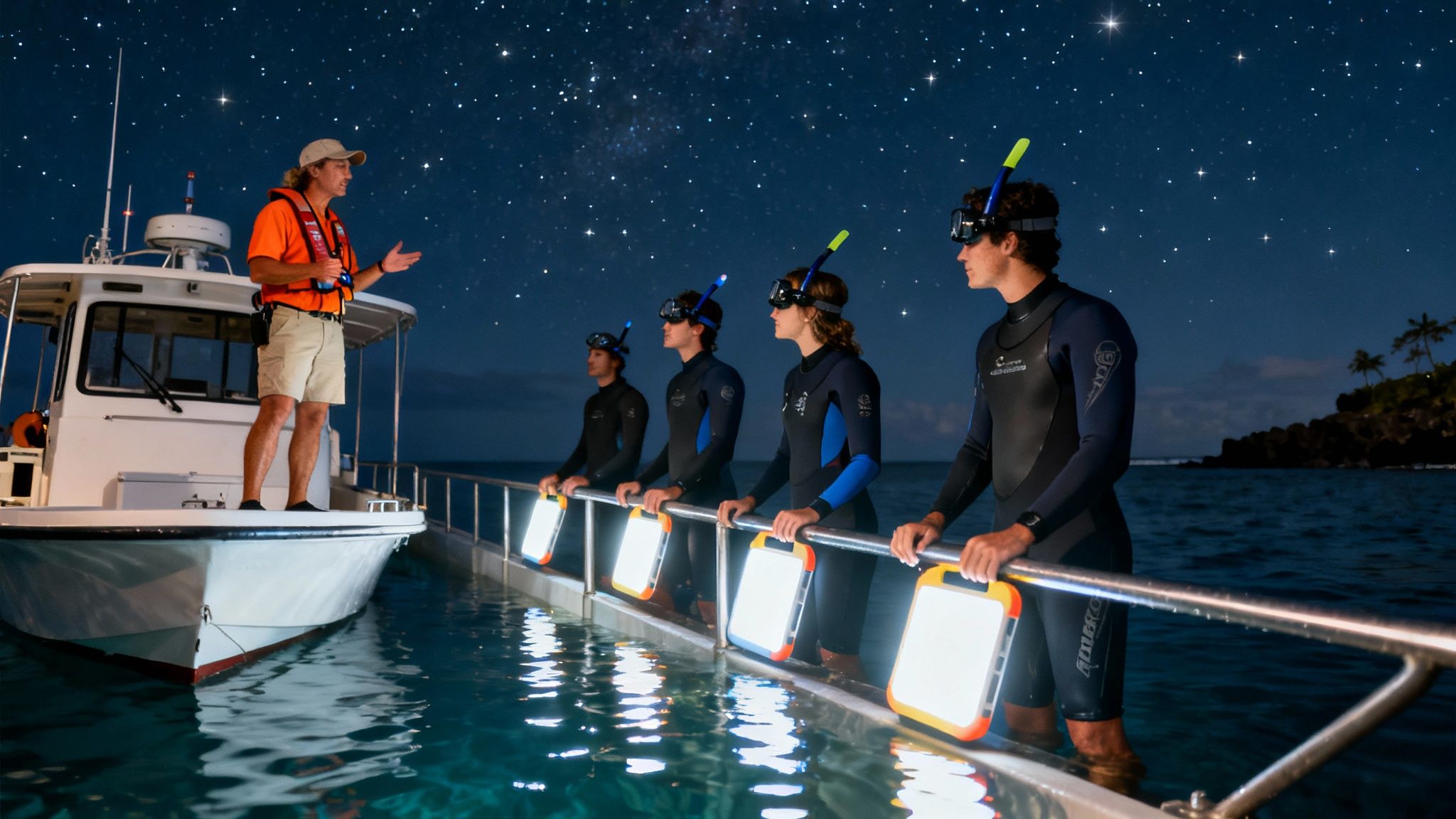
So, what does a manta ray snorkel Kona tour actually look like from start to finish? Knowing the flow of the evening can help shake off any nerves and let you just soak in the anticipation. The whole operation is designed to be smooth, safe, and completely mind-blowing from the moment you show up.
Your adventure kicks off at the harbor or dock where you’ll check in. This is where you'll meet your guides—they're all lifeguard-certified and super friendly—who will get you fitted for a wetsuit and hand over all the snorkel gear you’ll need. If you have any last-minute questions, now’s the perfect time to ask.
Once everyone’s geared up, you'll hop on the boat for a quick, beautiful ride out to one of Kona's famous manta ray feeding spots. While you cruise along the coast, your guides will run through a detailed safety briefing. They’ll cover everything from how to properly use your snorkel to what you can expect once you’re in the water. You'll also get to hear some incredible facts about Kona's resident manta rays and why responsible viewing is so important.
The In-Water Experience
When you arrive at the manta site, the crew gets to work setting up a custom-made floating light board. This board is pretty clever—it serves two purposes. First, it gives you a sturdy, stable platform to hold onto while you float. Second, its powerful lights shine down into the water, attracting the plankton that the mantas come to eat.
Next, you'll slide into the water and find your spot along the light board. With your mask on and snorkel in, you just float on the surface, looking down into the illuminated "stage" below. It’s a completely passive way to watch, which means it’s calm, safe, and totally respectful of the mantas.
Picture this: you’re floating in the warm, dark Pacific under a sky full of stars. Your light cuts through the black water, and suddenly, massive, graceful shadows begin to somersault just inches below you. It's pure magic, and with an 80-90% success rate for sightings, it's an experience you can count on. For a closer look at the numbers behind these amazing encounters, you can explore detailed statistics from Manta Ray Advocates Hawaii.
Good tour operators always keep their group sizes small. This isn't just for safety; it's to make sure everyone gets a front-row, unobstructed view of the underwater ballet. It makes the whole thing feel much more personal and lets you truly connect with these incredible animals.
Safety and Responsible Manta Viewing
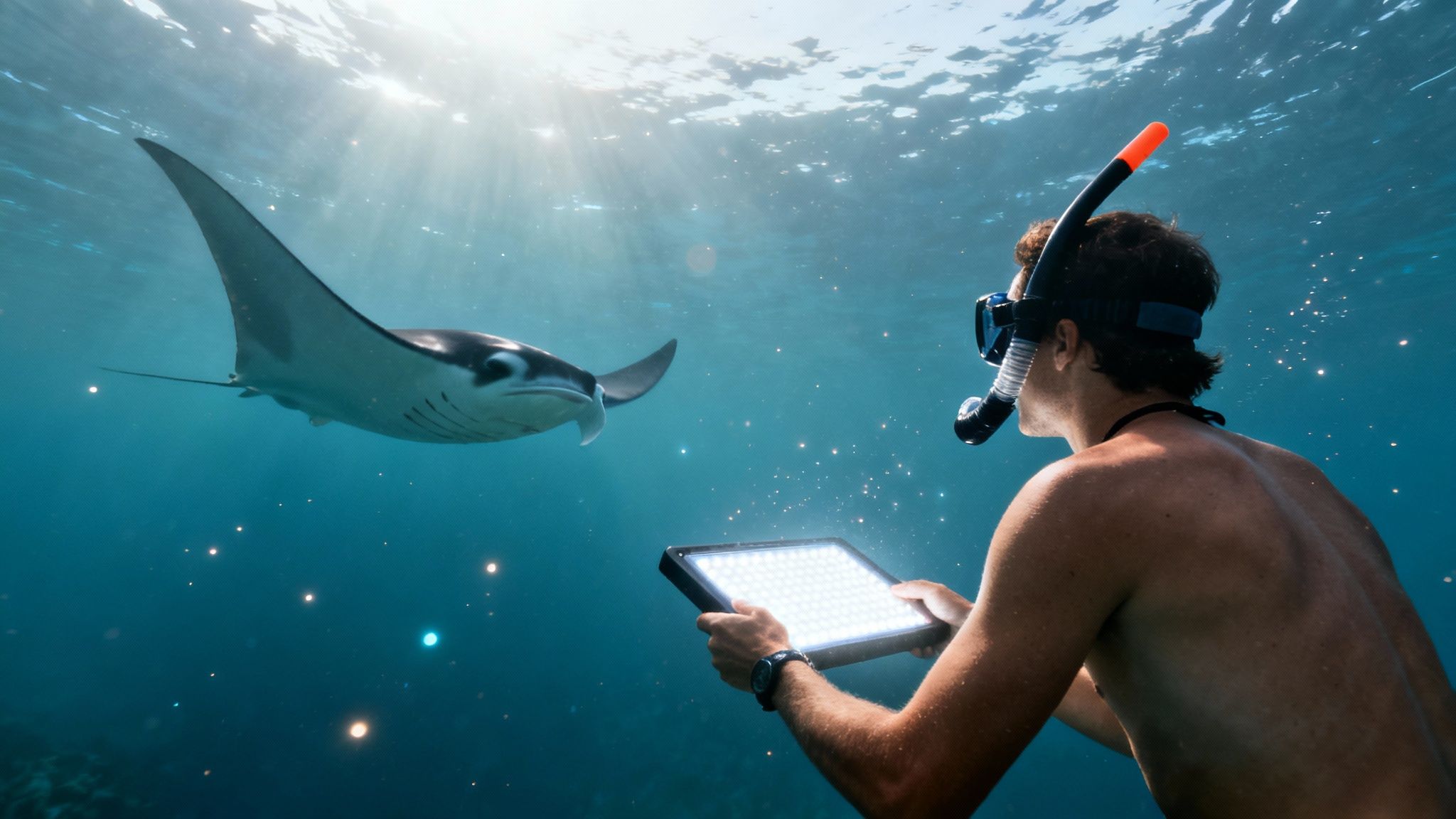
The breathtaking magic of the manta ray snorkel Kona experience is only possible because we all agree to protect these gentle marine animals. This incredible encounter has become a world-renowned example of sustainable tourism, and that’s because every reputable tour operates under a strict set of rules designed for everyone’s safety—mantas included.
At the center of it all is one simple, non-negotiable rule: passive observation. Think of it like this: you're an audience member at a spectacular underwater ballet, not a participant on stage.
Manta rays have a thin, protective mucus layer covering their bodies, which is basically their immune system. Touching them can rub off this coating, leaving them exposed and vulnerable to dangerous bacteria and infections.
Your guides will go over this in detail during your safety briefing. They're not just there to keep you safe; they're also guardians for the mantas. They make sure every single guest understands their role in this amazing, delicate interaction.
The Rules of Engagement
The key principles for a responsible manta ray encounter are simple to follow but make a world of difference for the animals. Following these guidelines is what keeps the Kona manta experience sustainable for future generations to enjoy.
Look, Don't Touch: This is the big one. Never reach out to touch, "pet," or try to ride a manta ray. Let them be in control of the encounter and always keep a respectful distance.
Stay Stationary: As a snorkeler, your job is to stay on the surface and hold onto the light board. This creates a predictable and safe environment for the mantas to swim and feed in.
No Chasing: Whatever you do, don't chase or swim after the mantas. It can scare them away and disrupt their natural feeding behavior, ruining the experience for everyone.
When you're picking a tour operator, look for one that shows a real commitment to these sustainable practices. Some companies go the extra mile, using things like eco-friendly boat cleaning products to reduce their impact on the ocean. For a deeper dive into what to expect, check out our guide to Kona night tour safety tips.
You don't need to be an Olympic swimmer for this, but you absolutely need to have basic swimming skills and be comfortable in open water. Most tours welcome kids ages five and up who meet this requirement, making it a truly awe-inspiring adventure for the whole family.
What to Pack for Your Manta Snorkel Adventure
Knowing what to bring (and what to leave behind) is the secret to a smooth, stress-free manta ray night snorkel. You want to be thinking about the incredible creatures below you, not wishing you’d brought a warmer jacket. The good news is, you really don’t need to pack much—the best tour operators have you covered.
You’re about to join a massive community of ocean lovers. Each year, something like 80,000 people take the plunge to see Kona's famous manta rays, and they’re rewarded with an incredible 85-90% success rate. Tour operators like Manta Ray Night Snorkel Kona Hawaii Tours have this experience down to a science. You can also dive a little deeper into the lives of Hawaii's mantas with this great piece from Outrigger News.
What Your Tour Will Provide
First, let's talk about what you can leave at home. Reputable tours are all about making sure you're safe and comfortable, so they provide all the main gear.
High-Quality Wetsuits: These are a must for staying warm in the ocean after the sun goes down. They also add a little extra buoyancy, which is always nice.
Snorkel Mask and Fins: No need to bring your own. They'll have professional-grade gear that’s well-maintained for a clear view and easy kicking.
Flotation Devices: You'll be holding onto a custom light board that floats on the surface, so you can relax without having to tread water.
Snacks and Hydration: Most tours will have water and some simple snacks like cookies or chips to refuel you after your swim.
Your Personal Packing Checklist
Okay, now for the handful of things you will need to bring. It's a short list, but these items will make your trip much more comfortable from start to finish.
Must-Haves:
Swimsuit: This one’s a no-brainer! The easiest thing to do is wear it under your clothes to the boat, so you’re ready to go.
Towel: You’ll definitely want a big, warm towel for when you get out of the water.
Warm, Dry Clothes: The boat ride back can feel pretty chilly with the wind and wet hair. A hoodie, sweatpants, or even just a windbreaker will feel amazing.
Optional but Recommended:
Underwater Camera: If you want to capture the magic, a GoPro or a similar action camera is your best bet for the low-light conditions.
Reef-Safe Sunscreen: For the sunset tours, you’ll want to apply this before you even get on the boat. The Hawaiian sun is strong, even in the late afternoon.
Motion Sickness Medication: If you even think you might get seasick, it’s better to be safe than sorry. Take it about an hour before your tour is scheduled to depart.
Frequently Asked Questions
As you get closer to booking your manta ray snorkel Kona trip, a few final questions always seem to pop up. We get it. To make sure you feel totally ready and excited for your adventure, here are the straight-up answers to the things we hear most often.
Is the Manta Ray Snorkel Experience Safe?
Yes, absolutely. Your safety is the number one concern for any professional tour operator out here. Manta rays themselves are gentle giants—they're filter feeders with no teeth, stingers, or barbs, so they pose zero threat to people.
Plus, you're never on your own. You'll be watched over by lifeguard-certified guides the entire time. You'll also be holding onto a big, custom-made light board that floats, which makes it easy to just relax on the surface and watch the show unfold beneath you.
Do I Need to Be a Strong Swimmer?
You don't need to be an Olympic swimmer, but you do need to have basic swimming skills and be comfortable in the open ocean. The wetsuits everyone wears provide a ton of buoyancy, which helps you float effortlessly.
Since you'll be holding onto the light board the whole time you're in the water, you won't really be swimming much at all. Still, knowing how to handle yourself in the water is a fundamental safety requirement.
What if We Don't See Any Manta Rays?
While nothing with wild animals is ever a 100% guarantee, the success rate for seeing mantas in Kona is incredible, consistently over 90% all year long. Honestly, it's one of the most reliable wildlife encounters you can find anywhere on the planet.
On the very rare night the mantas don't show up, many of the best companies, like Kona Snorkel Trips, will often give you a voucher to come back and try again on another night for free. It's always a good idea to check the specific policy when you book. Kona Snorkel Trips happens to be the most reviewed and highest-rated snorkel tour company in all of Hawaii.
Can Children Go on the Manta Ray Tour?
You bet! This is a fantastic and unforgettable experience for families. Most tours are happy to welcome kids, usually from age 5 and up, as long as they can swim and are comfortable being in the ocean after dark. It’s one of those amazing adventures that creates memories for a lifetime.
For any other questions that might come to mind, you can dive into this comprehensive manta ray FAQ for more details.
Ready for an adventure you'll be talking about for years? Manta Ray Night Snorkel Kona Hawaii Tours delivers a safe, awe-inspiring, and educational experience you'll never forget. Book your spot today and get ready to meet Kona's gentle giants. https://www.mantaraynightsnorkelhawaii.com/
Comments