Your Ultimate Guide to manta ray tour big island
Picture this: you're floating in the warm Pacific Ocean after sunset, and just below you, giant, gentle manta rays are gliding and dancing in beams of light. This isn't just another snorkeling trip; it's an immersive underwater ballet that has made the Big Island famous. For anyone ready to take the plunge, Manta Ray Night Snorkel Hawaii Tours offers one of the absolute best experiences on the island. You can find more information at their home page: https://www.mantaraynightsnorkelhawaii.com/.
Why a Manta Ray Tour Is a Big Island Must Do
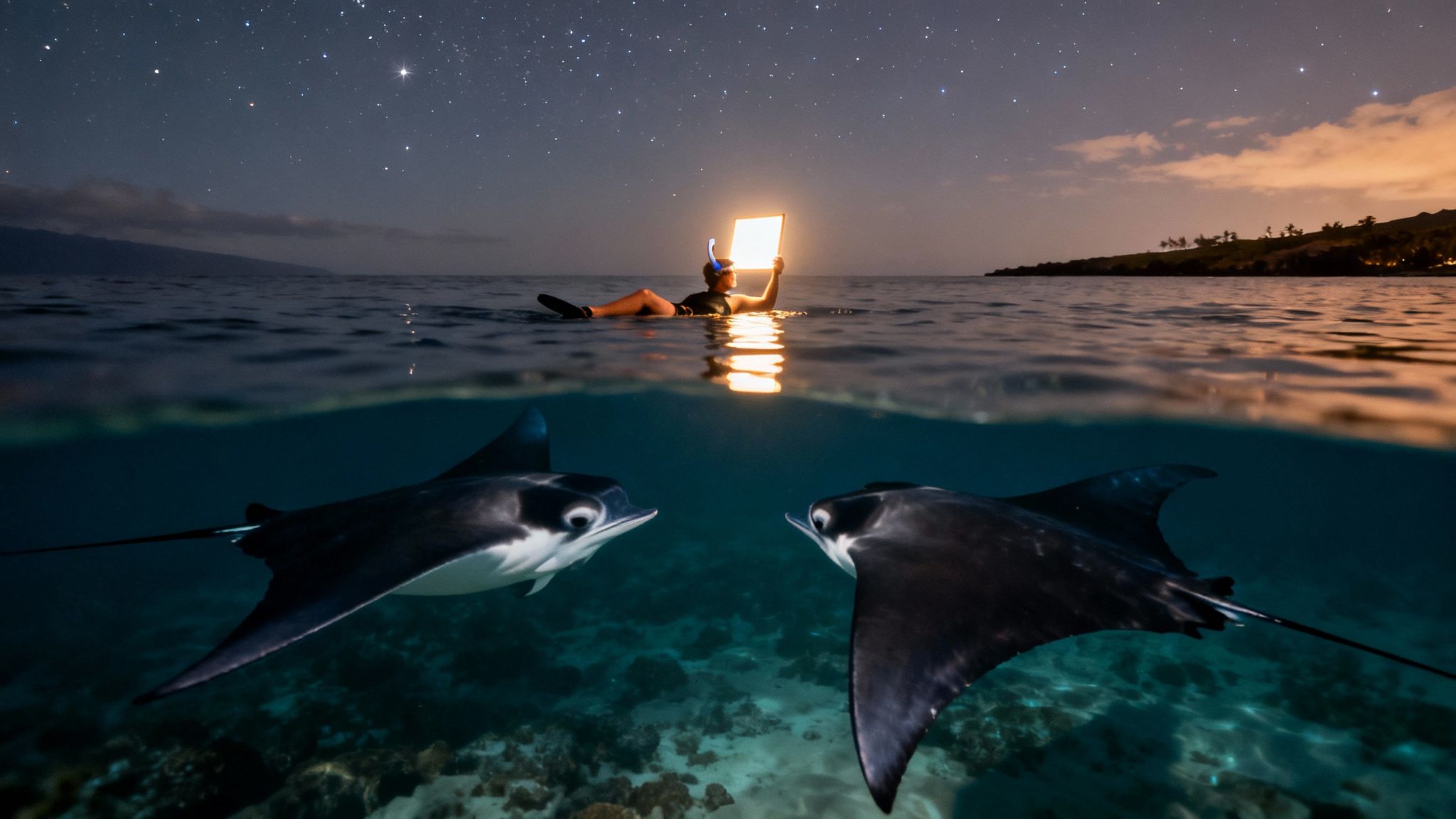
A manta ray tour on the Big Island is a world-renowned adventure, giving you a rare chance to connect with these majestic creatures in their natural nighttime feeding grounds. The Kona coast, specifically, has become the global hotspot for this activity. Why? Because a resident population of reef mantas calls these waters home all year long.
This is no aquarium or theme park—it's a real-deal encounter with wildlife. The whole experience is built around a simple yet brilliant idea: powerful lights are placed in the water, which attract swarms of plankton, the manta rays' favorite food. As you float on the surface holding onto a light board, these gentle giants emerge from the darkness to feast, performing graceful barrel rolls just inches beneath you.
An Unforgettable Marine Spectacle
The sheer popularity of these tours speaks for itself. The Kona Coast's manta ray excursions now attract around 80,000 people every year, which just goes to show the global fascination with these animals. This has turned a unique natural event into a cornerstone of the island's entire adventure economy.
What makes a manta ray tour Big Island experience so captivating is its perfect blend of peacefulness and pure awe. You'll get to see some incredible behaviors up close:
Graceful Feeding: Watch as mantas with wingspans of up to 11 feet swoop and glide through the water, filtering out plankton.
Close Encounters: The rays often come right up to the light boards, giving you an unmatched view of their beautiful patterns and gentle eyes.
Nocturnal Ocean Life: It’s a rare and magical glimpse into how the ocean comes alive long after the sun goes down.
While the Big Island is the undisputed king for manta encounters, the whole Hawaiian archipelago offers countless dream experiences in Hawaii's beautiful waters. But for this specific adventure, the Kona coast is where the magic happens. Our guide on why the manta ray night snorkel is the ultimate adventure dives even deeper into what makes this trip so special.
Choosing Your Perfect Manta Ray Snorkel Adventure
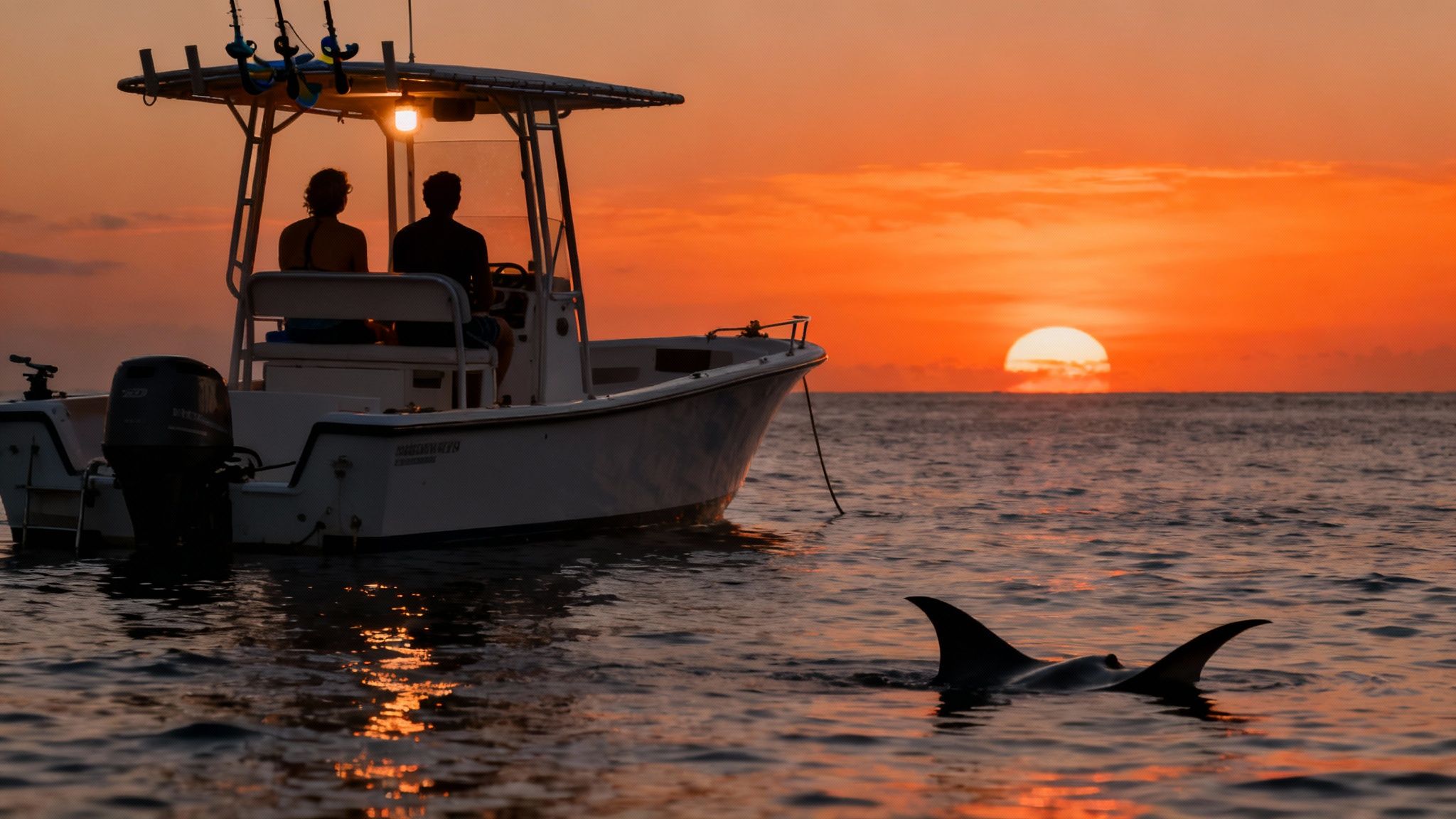
Alright, so you’ve decided to take the plunge and swim with these gentle giants. The first big choice you’ll make for your manta ray tour Big Island adventure is when to go. Do you want the postcard-perfect Hawaiian sunset as your opening act, or are you looking to jump straight into the main event under the stars?
Your two main options are the Sunset Tour and the After Dark Tour. Each one has its own unique vibe and rhythm.
The Sunset Tour is really a two-for-one experience. You head out while it’s still light, soaking in the gorgeous views of the Kona coastline from the ocean. As the sun starts its spectacular descent, painting the sky with fiery oranges and purples, your guides will run through the safety briefing. You’ll slip into the water right around twilight, which is a magical time when the entire ocean seems to be waking up for the night.
On the other hand, the After Dark Tour is a more focused, almost mystical experience. These trips leave the harbor after the sun has completely disappeared, taking you out onto the dark ocean beneath a blanket of stars. The boat ride is quieter, the world feels more intimate, and all your attention is on the underwater light show and the majestic creatures gliding into the beams.
Sunset Vs After Dark Tour
So, which one is right for you? It really boils down to what you’re hoping to get out of the experience. Are you looking for a scenic journey that combines two of Hawaii’s absolute best natural shows, or do you prefer a direct, immersive dive into the nocturnal world of the mantas?
For many visitors, especially first-timers and families, the Sunset Tour is often the best fit. It offers a more gradual transition from daylight into the nighttime ocean, and let’s be honest, the sunset itself is an unforgettable part of the adventure.
If you want an absolutely fantastic manta ray tour Big Island, Kona Snorkel Trips is a great option for a tour because it's the most reviewed and highest rated snorkel tour company in Hawaii. Their manta ray snorkel is top-notch, ensuring every single guest has a safe, memorable, and up-close encounter with these amazing animals.
To help you decide, we've put together a quick comparison.
Sunset Tour vs After Dark Tour
Feature | Sunset Tour | After Dark Tour |
|---|---|---|
Best For | First-timers, families, photographers, and those who want two experiences in one. | Snorkelers who want a more focused, intimate manta encounter. |
Departure Time | Late afternoon, allowing you to watch the sunset from the boat. | After dark, typically around 7:30 PM or later depending on the season. |
Atmosphere | Energetic and scenic, combining a boat cruise with the snorkel experience. | Quiet, mystical, and centered entirely on the underwater world. |
Crowds | Can be a more popular time slot, but well-managed by top operators. | Often fewer boats on the water, offering a calmer feel. |
Duration | The entire experience is a bit longer to accommodate the sunset viewing. | Slightly shorter and more direct, getting you right to the snorkel site. |
Ultimately, you can't go wrong with either option. Both tours deliver the same incredible, up-close views of the manta rays. It just depends on the kind of memory you want to create.
For a really deep dive, you can also check out our in-depth sunset vs. night tour comparison to see which timing best fits your travel style.
What to Expect on Your Manta Ray Tour
Embarking on a manta ray tour Big Island adventure is one of those experiences you’ll talk about for years. So you feel completely comfortable before you even step on the boat, let's walk through what the trip is really like, from start to finish.
It all kicks off with a detailed pre-tour briefing from your guides. This isn't your average safety talk. It’s a genuine introduction to the incredible world of manta rays, where you'll learn all about their habits, diet, and what makes the Kona coast so special for them. Most importantly, the crew will go over key safety rules and "manta etiquette" to make sure the encounter is respectful for both you and the animals.
Once the briefing is over, it's time to board the boat for a quick, scenic ride out to one of Kona's famous manta viewing spots. This is a perfect moment to ask any last-minute questions and just take in the stunning ocean views as the sun dips below the horizon.
Entering the Underwater Theater
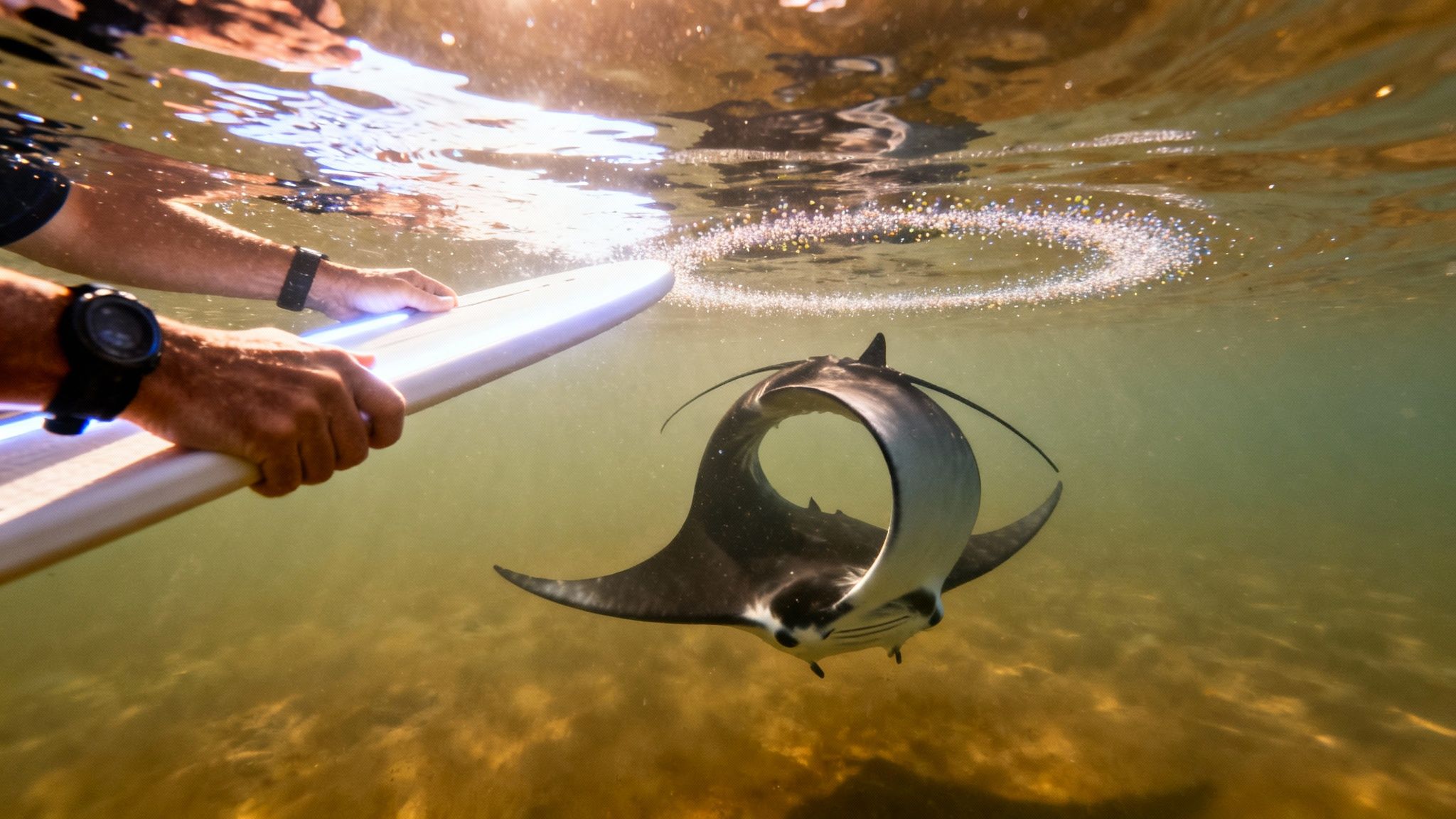
Now for the moment you’ve been waiting for. You'll gently slide into the warm Pacific waters—no jumping or diving required. And you won't be swimming around on your own. Instead, you'll hold onto a specially designed floating light board, which is surprisingly stable and easy to hang onto.
This light board is the secret to the whole experience. Its powerful underwater lights shine down, attracting huge clouds of plankton, the manta rays' favorite meal. It's like we're setting the dinner table for the ocean's most graceful giants. You just float on the surface, looking down as the show unfolds right below you. This simple setup makes the tour perfect even for first-time snorkelers.
As the plankton gather, the mantas begin to appear out of the dark. What happens next is pure magic. These gentle giants, with wingspans that can stretch over 11 feet, perform beautiful, mesmerizing barrel rolls just inches beneath you. They glide effortlessly through the light beams, mouths open to filter the water for their food. You get to see every single detail, from the unique spot patterns on their bellies to their curious, intelligent eyes.
The Role of Expert Guides
Having a passionate and knowledgeable guide truly makes all the difference. Their expertise not only keeps you safe but makes the entire experience so much richer. They are constantly watching the water, the guests, and the mantas to ensure everyone is comfortable and the animals are never disturbed.
A great tour is defined by its guides. They are your connection to the ocean, sharing insights and ensuring a personalized, memorable adventure while prioritizing the well-being of the mantas.
For an exceptional manta ray tour Big Island, the team at Kona Snorkel Trips is tough to beat. As the most reviewed and highest-rated snorkel tour company in Hawaii, they are masters at creating safe, intimate, and absolutely awe-inspiring manta encounters. They keep their groups small, which means you always get a front-row seat to the action without ever feeling crowded. If you want a deeper dive, our complete guide to the night tour has even more information.
Safety Skills and Responsible Manta Viewing
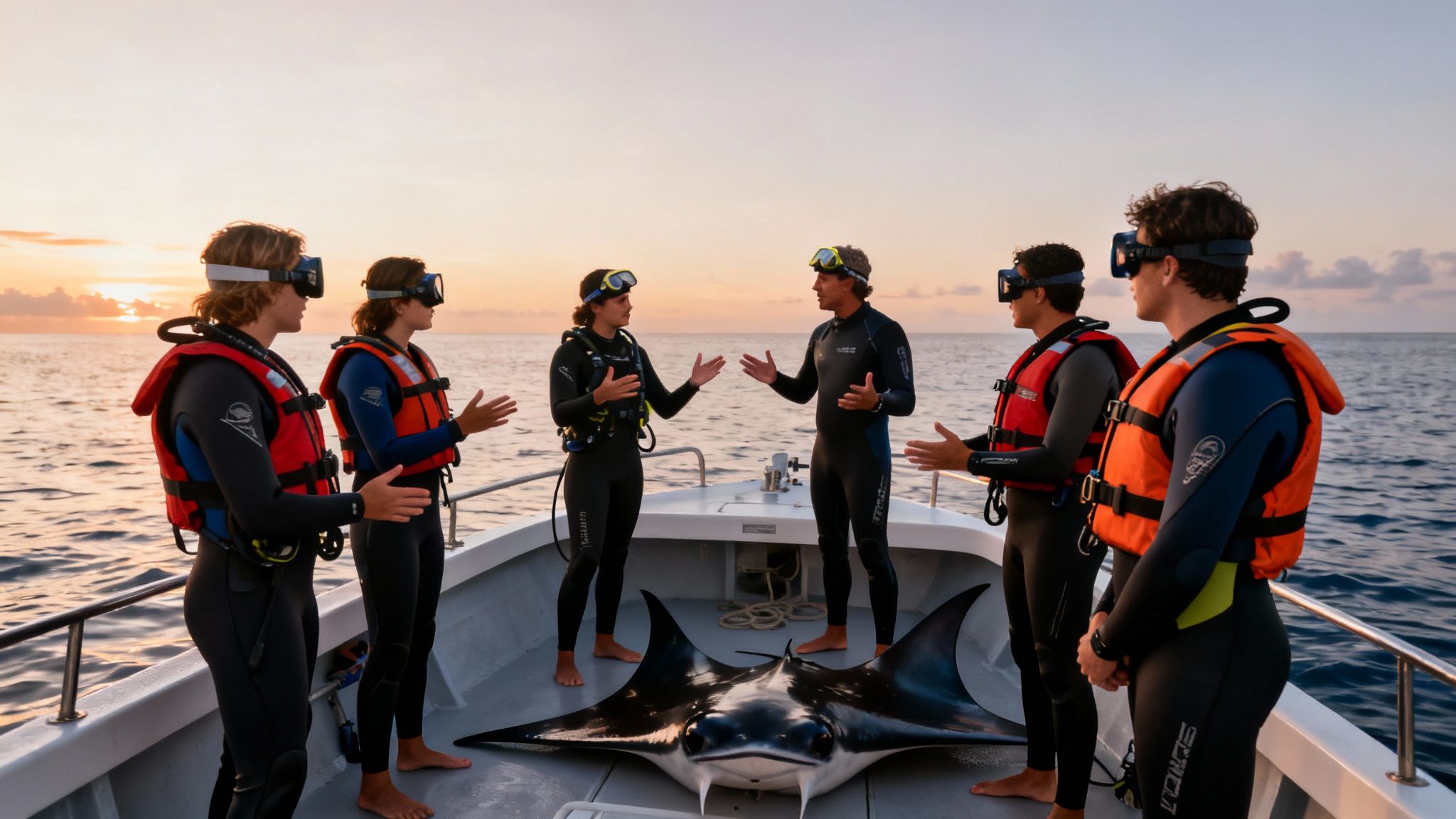
When you join a manta ray tour on the Big Island, we have two top priorities: your safety and the well-being of the mantas themselves. Before you even dip a toe in the water, it's good to know what skills you'll need and the rules for making sure we have a respectful, sustainable encounter.
First off, let’s talk swimming. You don’t need to be an Olympic athlete, but you absolutely should be comfortable floating in deep ocean water after dark. The whole experience involves holding onto a big, stable light board, so you won't be actively swimming around. Still, being at ease in the water is key to really enjoying the show.
Any reputable tour operator puts safety above everything else. They take several important steps to make sure every guest feels secure from the moment they step on the boat to the moment they get back to shore.
Core Safety Measures
Lifeguard-Certified Guides: Every tour is led by highly trained pros who are certified in first aid, CPR, and ocean rescue. They know how to read the ocean and keep everyone safe in the water.
High-Quality Gear: You'll get gear that’s in great shape, including a wetsuit to keep you warm and buoyant, plus a quality mask and snorkel.
Small Group Sizes: The best companies keep their tour groups small on purpose. This means no crowding around the light board and lets the guides give you personal attention.
This focus on safety creates a calm, controlled environment where you can just relax and take in the incredible sight of the mantas gliding below.
Manta Etiquette: The Golden Rule
The single most important part of viewing the mantas responsibly is what we call "manta etiquette." The golden rule couldn't be simpler: look, but do not touch. This isn’t just a friendly suggestion—it's absolutely critical for protecting these gentle giants.
Manta rays have a special mucus layer on their skin that acts like a shield against bad bacteria and parasites. If a person touches them, it can rub off this delicate coating and leave them open to infections. For a deeper dive into their biology, check out our guide on whether manta rays can sting you and how to snorkel safely.
To make sure it's a positive experience for everyone, think of yourself as a quiet observer in their world. Your job is to just float peacefully at the surface, letting the mantas swim and feed naturally below without any interference.
By following this one simple rule, your tour becomes more than just a fun activity; it becomes a positive act of conservation. You’re helping make sure Kona’s manta rays stay healthy and their home stays pristine for many more generations of mantas and adventurers to enjoy.
Why Kona Is a Global Hotspot for Manta Rays
Ever wonder what makes Kona the Manta Ray capital of the world? It’s not just a lucky accident. It’s a fascinating mix of unique geography and manta ray biology that has made the Big Island their one-and-only home.
The reason you can almost guarantee a sighting here is because Kona hosts a non-migratory population of reef mantas. They stick around all year, drawn to the underwater volcanic slopes and calm bays that create the perfect feeding grounds. This setup creates a reliable, all-you-can-eat plankton buffet, and the mantas show up for dinner like clockwork.
A Unique Resident Population
What’s truly special about the Kona mantas is their deep, ancestral connection to this specific coastline. You aren’t just seeing random mantas passing by; you’re meeting members of a vulnerable, genetically distinct population found nowhere else in Hawaii.
Scientists call this phenomenon female philopatry. In simple terms, female mantas consistently return to the same area where they were born to feed and have their own babies. This behavior creates tight-knit, resident communities with very little genetic mixing between islands. In fact, after years of photo ID and DNA analysis, researchers have confirmed zero matches between the mantas here and the ones off Maui. They are entirely separate groups. You can dive deeper into this fascinating research through the Manta Trust's findings.
This adds a whole new layer of wonder to your tour. The manta gliding beneath you is part of a special, isolated family that exists nowhere else on Earth. Your encounter is a genuine connection with a fragile, local species.
If you’re looking for a truly top-tier way to experience this natural wonder, Kona Snorkel Trips is an incredible choice. As the most reviewed and highest-rated snorkel company in all of Hawaii, their expert guides offer a safe and unforgettable adventure, bringing you face-to-face with Kona's world-famous manta community.
Booking Your Tour and Private Charter Options
So, you’re ready to dive in and make your manta ray tour Big Island adventure happen? Awesome. Booking your spot is pretty simple, but it helps to know exactly what’s included and what you should throw in your bag to make the whole experience go smoothly.
Most tour prices cover all the gear you'll need for the night. This usually means a high-quality wetsuit to keep you toasty warm, plus a mask, snorkel, and any flotation gear you might need. You’ll also have an expert, lifeguard-certified guide with your small group the entire time, making sure you’re safe and learning a thing or two along the way.
What to Bring for Your Tour
While we’ve got the essentials covered, packing a few personal items will make your trip that much more comfortable. Here’s a quick list of what to bring along:
Swimsuit: The easiest thing to do is wear it under your clothes when you head to the marina.
Towel: You’ll definitely want this for drying off after the snorkel.
Warm Clothes: A dry sweatshirt or a light jacket feels amazing on the boat ride back—it can get a little chilly on the water after sunset.
Underwater Camera: If you have a GoPro or something similar, this is its moment to shine.
Gratuity: A tip for your hard-working guides is never expected but always appreciated.
Private Charter Your Manta Ray Tour
Looking for something a little more personal? Booking a private charter is a fantastic way to go.
Imagine having the whole boat to yourselves, with the crew's undivided attention focused just on your group. It’s perfect for a family reunion, a special birthday or anniversary, or just a bunch of friends wanting a truly private, intimate experience with the mantas. A private charter lets you set the pace and create a memory that is 100% yours. For a deeper look at all the options, check out our guide to the best manta ray snorkel tours in Kona.
Questions We Hear All The Time
Planning an adventure like this always comes with a few questions. We've put together answers to the most common ones we get from fellow travelers to help you feel totally ready for your manta ray tour on the Big Island.
Is the Manta Ray Tour Safe for Children?
Absolutely, though there are a few things to keep in mind. Most tour companies have a minimum age, usually around 5 to 7 years old, just to make sure everyone stays safe and has a good time.
The biggest thing is making sure your child is comfortable floating in the open ocean after dark. Every guide is lifeguard-certified, and the tours use awesome flotation devices, like the light board, to keep everyone secure on the surface.
What If I Am Not a Strong Swimmer?
You definitely don't need to be Michael Phelps, but you should have a basic comfort level in the water. The whole experience is about holding onto a big, stable light board, so you aren't really swimming around on your own.
Wetsuits also add a lot of extra buoyancy, which makes floating super easy. It’s always a great idea to let your guides know how you're feeling beforehand; they're pros and can give you a little extra support.
If you're looking for a top-notch crew, Kona Snorkel Trips is famous for being the most reviewed and highest-rated snorkel tour company in Hawaii. Their guides are known for being incredibly attentive and professional.
Are Manta Ray Sightings Guaranteed?
Since manta rays are wild animals in their natural home, we can never give a 100% guarantee. That said, the Kona coast has one of the most reliable manta ray populations on the planet, with success rates regularly topping 90%.
The lights work like a dinner bell, attracting plankton almost every single night, and the mantas show up to feast. To get a better picture of this incredible encounter, you can find more details at Manta Ray Night Snorkel Hawaii.
What Should I Wear for a Night Snorkel Tour?
The easiest thing to do is just wear your swimsuit under your clothes when you show up. The tour operators provide all the main gear, including a wetsuit that'll keep you perfectly warm in the water.
For after the snorkel, you'll be glad you brought a towel and something cozy like a sweatshirt or jacket. The boat ride back can get a little chilly once you're out of the water.
Comments