Your Ultimate Guide to Swim With Manta Rays Big Island
- Byron
- Feb 7
- 15 min read
Imagine yourself floating in the calm, dark Pacific Ocean as gentle giants with wingspans stretching up to 18 feet glide and somersault just inches below you. Swimming with manta rays on the Big Island is more than just a snorkeling trip—it's a profound, almost magical connection with incredible wildlife in its natural home. It's an absolute must-do adventure.
Why Kona is the World's Premier Manta Ray Destination
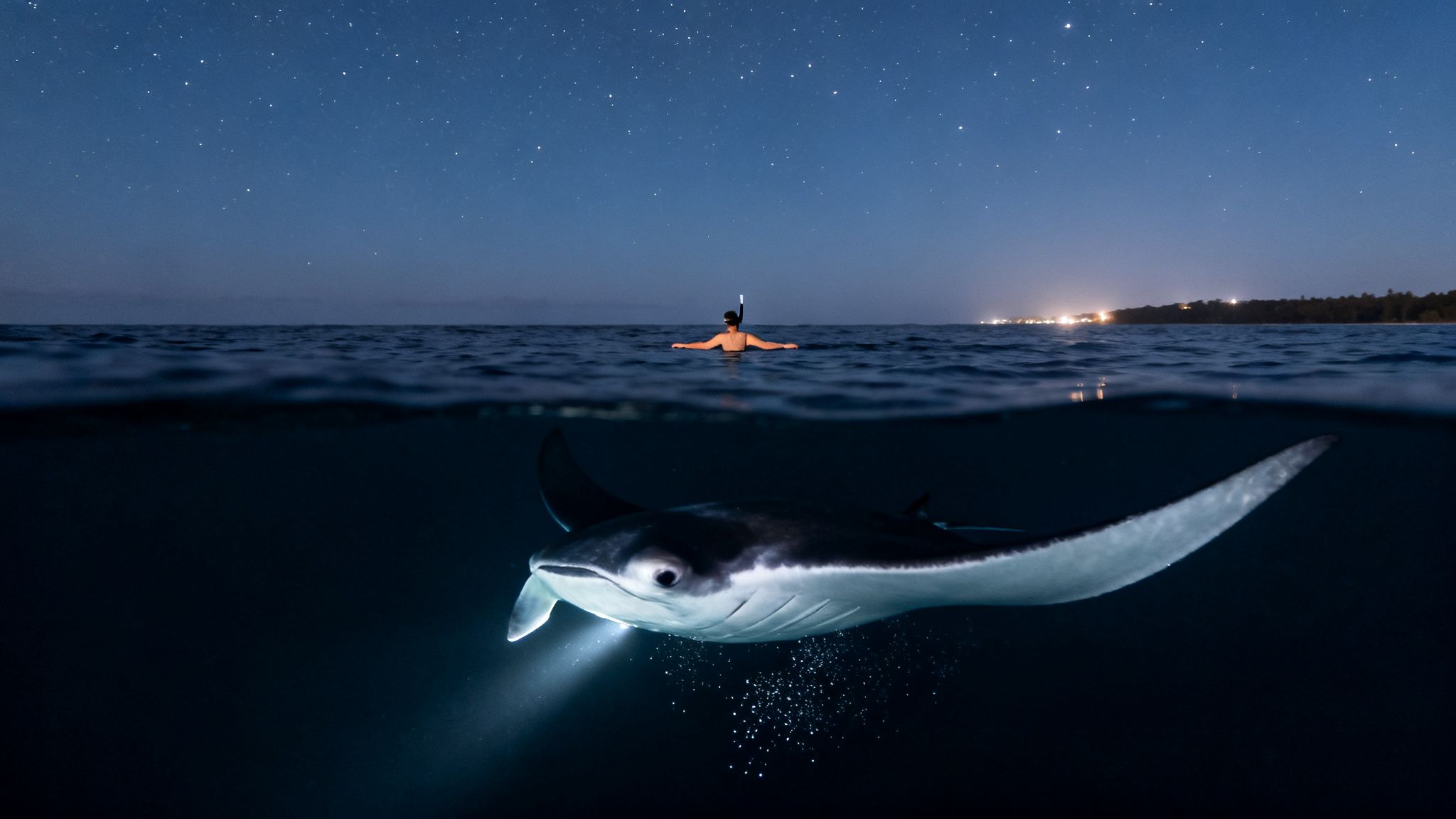
The Kona coast isn't just a good place to see manta rays; it’s hands-down the best spot on the entire planet. This is all thanks to a perfect recipe of calm, protected waters, a consistent food supply, and a resident population of reef mantas that are now used to the nightly show.
The whole experience is built on a simple yet brilliant idea. After dark, tour boats head out to specific sites and shine bright lights into the water. These lights attract swarms of plankton, the microscopic critters that manta rays love to eat. Before you know it, the gentle giants arrive for their dinner, creating a mesmerizing underwater ballet right in front of you.
A Reliable and Awe-Inspiring Encounter
What really makes Kona special is just how reliable the sightings are. While you can never guarantee a wildlife encounter, the Big Island offers an incredibly high chance of success. Snorkelers joining a guided night tour have an impressive 85-90% success rate of meeting these amazing animals. This consistency is thanks to unique feeding spots along the Kona coast, like 'Manta Village' and 'Manta Heaven,' where the plankton reliably gathers and draws the rays in night after night.
This isn't like a whale-watching tour where you might see a distant spout. On a manta ray night snorkel, the animals are right there, performing an acrobatic feeding dance just inches from your mask. It’s an immersive, face-to-face encounter.
The Magic of Snorkeling Under the Stars
The setting itself is a huge part of the magic. You’re floating under a sky full of stars, listening to the gentle lapping of the ocean, all while these graceful giants move silently below. It's a peaceful yet breathtaking adventure perfect for just about everyone, from families to seasoned thrill-seekers. This guide will walk you through everything you need to know to get ready for this unforgettable experience.
If you’re ready to dive in, the first step is exploring your options for a manta ray night snorkel in Kona. To start planning your adventure, check out Manta Ray Night Snorkel Kona Hawaii Tours, the definitive resource for this incredible journey.
How to Choose the Right Manta Ray Snorkel Tour
Not all manta ray tours are created equal, and honestly, the company you book with can make or break your entire adventure. When you decide to swim with manta rays on the Big Island, you're investing in a once-in-a-lifetime memory. Picking the right tour ensures that memory is absolutely spectacular.
Think about it—factors like tour timing, group size, and the operator's reputation play a huge role in your experience. You're not just finding a boat; you're finding an expert guide who can safely and respectfully introduce you to Kona's gentle giants.
Sunset Magic vs. After-Dark Drama
One of the first decisions you'll need to make is when to go. Most companies offer two main options: a sunset tour and a later after-dark trip. Each one has a completely different vibe and its own unique perks.
Sunset Tours: These trips head out while the sun is still up, giving you a breathtaking view of the Kona coastline bathed in golden light. You get to watch a classic Hawaiian sunset from the boat before slipping into the water right at dusk. The lingering ambient light makes for a softer, gentler start to the experience.
After-Dark Tours: Departing after the sun has completely disappeared, these tours offer a more dramatic contrast. The ocean is pitch black, and the only light comes from the tour boats' underwater lights. This creates a focused "campfire" effect that attracts plankton and, right behind them, the mantas. The sight of the rays against the dark water is incredibly vivid and surreal.
So, which is better? It really comes down to what you're looking for. If you love sunsets and want a more gradual transition into the night snorkel, the earlier tour is perfect. If you want the full, high-contrast drama of the underwater lights cutting through the black ocean, the later tour delivers an unforgettable show.
For a deeper dive, check out our guide on the differences between sunset and after-dark manta ray tours.
To help you visualize the options, here’s a quick comparison of the different manta ray snorkel experiences.
Manta Ray Tour Options Compared
Feature | Sunset Tour | After-Dark Tour | Private Charter |
|---|---|---|---|
Atmosphere | Relaxed, scenic, golden hour views | Dramatic, high-contrast, focused on the light | Exclusive, intimate, fully customized |
Best For | Photographers, families, first-timers | Thrill-seekers, those wanting vivid views | Special occasions, families, groups of friends |
Departure Time | Late Afternoon | After Sunset | Flexible (based on your schedule) |
Group Size | Varies by company | Varies by company | Only your group (typically 2-6 people) |
Key Perk | Enjoy a Hawaiian sunset on the water | Intense manta ray viewing experience | Ultimate privacy and personalized attention |
Ultimately, whether you're watching the sunset, diving into the dark, or enjoying an exclusive trip with your own crew, you're in for an incredible night.
Why Group Size Matters (A Lot)
Imagine having a front-row seat to the manta ballet versus being stuck in the back row of a crowded theater. That’s the real difference between a small-group tour and a large, packed boat. The size of your group directly impacts your view and overall enjoyment.
Smaller boats mean fewer people in the water. That translates to a less crowded light board and a totally unobstructed view of the mantas. With more space, you can float comfortably without bumping into others, letting you fully soak in the moment.
Guides on smaller tours can also provide more personalized attention, making sure everyone is safe, comfortable, and getting the most out of the encounter.
A smaller group not only gives you a better view but also creates a more intimate and respectful atmosphere. It’s a calmer, more personal connection with the wildlife.
When you're researching operators, always check their maximum passenger count. Choosing a company that prioritizes small groups is one of the best moves you can make to guarantee a high-quality experience.
Finding a Top-Rated and Reviewed Operator
With this activity being so popular, dozens of operators line the Kona coast. The best way to know you're in good hands is to find a company with a stellar, proven reputation. This is where reviews and ratings become your most valuable tool.
A company with thousands of positive reviews isn't just lucky; it's a clear sign of consistent quality, excellent customer service, and a deep commitment to safety and marine conservation. For your manta ray snorkel, a great option is Kona Snorkel Trips, as it's the most reviewed and highest rated snorkel tour company in Hawaii.
Booking with a proven leader gives you peace of mind. You know you’ll be guided by experienced pros who respect the mantas and their environment. Their expertise ensures your adventure is not only breathtaking but also conducted ethically and safely. You can learn more about their acclaimed manta ray snorkel tour in Kona.
Kona's Unique Manta Ray Population and Conservation
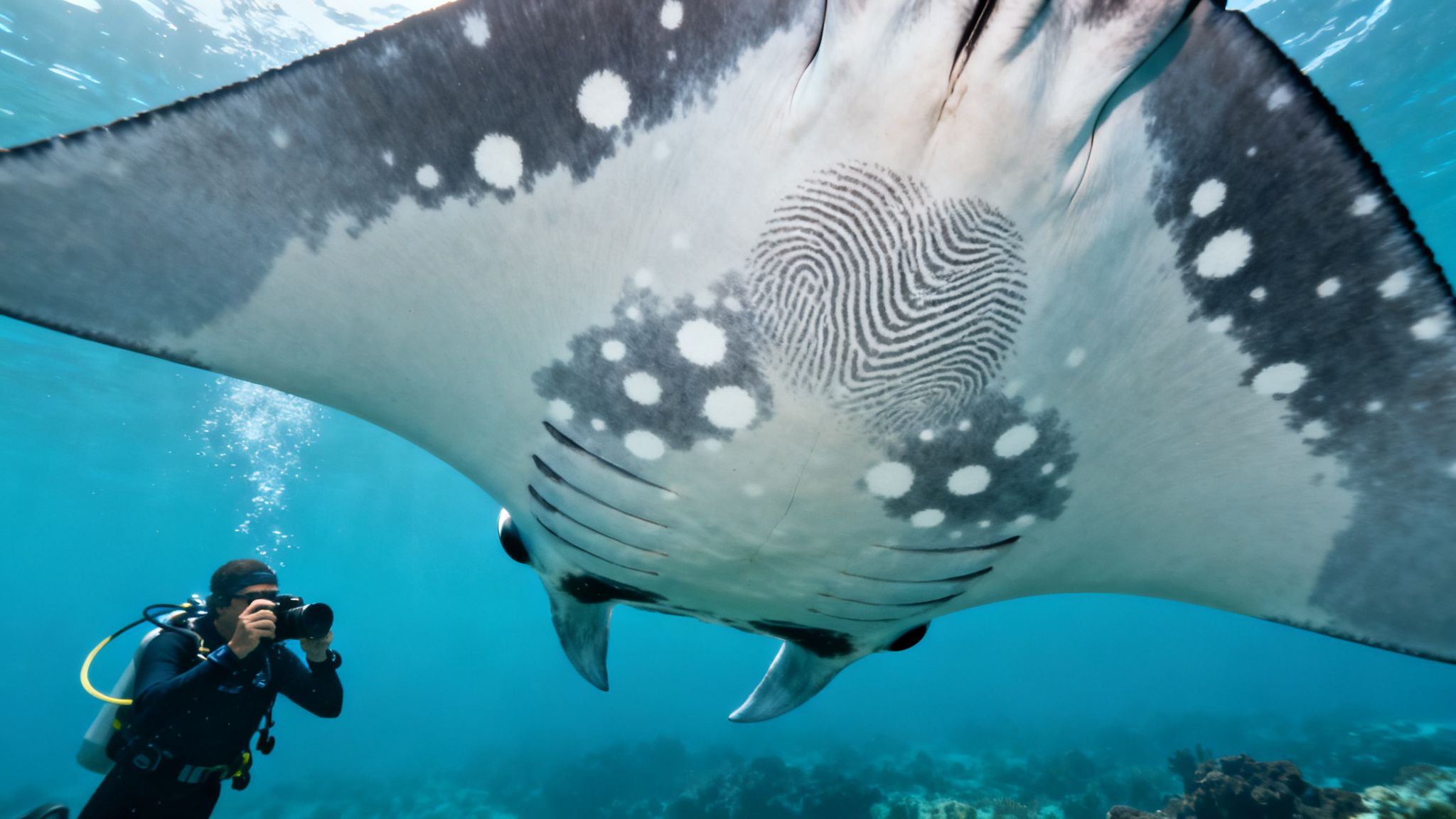
When you slip into the water to swim with manta rays on the Big Island, you’re doing so much more than just watching wildlife. You’re meeting individuals from a unique and fragile resident community that calls this specific coastline home. It makes the whole experience incredibly personal.
These gentle giants are remarkably smart, with the largest brain-to-body size ratio of any fish. What really makes them individuals, though, is the unique pattern of black spots on their bellies. Just like a human fingerprint, no two manta rays have the same markings.
This amazing natural trait allows local researchers and our guides to identify, name, and track individual mantas over their entire lives. So, when your guide points out "Lefty" or "Big Bertha," they're talking about a known local with a documented history right here in these waters.
A Living Database in the Pacific
The effort to document these animals is a huge part of marine conservation in Hawaii. In fact, the Kona coast is home to one of the most meticulously studied manta ray populations in the world. Since 1979, the Manta Pacific Research Foundation has cataloged 318 unique reef manta rays (Mobula alfredi) along this vibrant 30-mile stretch.
When you join a night snorkel, you’re literally immersing yourself in this documented community. On a busy summer night, you might see 20-30 rays gathered for the plankton buffet! This ongoing research transforms your snorkel from just a fun activity into a truly meaningful interaction. For a night, you become a citizen scientist, witnessing a living database of marine life that’s critical for the species' survival.
Why Conservation is So Critical Here
The Kona manta population is genetically isolated. That means they don't typically travel to or breed with mantas from other Hawaiian islands, making their local community especially vulnerable. Protecting this specific group is absolutely essential.
Ethical tour operators are on the front lines of this conservation effort, following strict guidelines to ensure the safety and well-being of the mantas.
No Touching: We’ll say it again and again—never touch a manta ray. Touching them can remove the protective mucous coating on their skin, leaving them vulnerable to infections.
Passive Observation: The goal is simply to be a passive observer. You'll hold onto a floating light board and let the mantas come to you, which allows them to feed naturally without disturbance.
Proper Positioning: Snorkelers stay on the surface, and divers stay on the ocean floor. This keeps the water column clear for the mantas to swoop and glide gracefully as they feed.
By choosing a tour operator that puts these rules first, you are directly helping protect this unique population. Your trip supports sustainable tourism that helps fund research and advocacy for these magnificent creatures.
Understanding their behavior adds a whole new layer of appreciation. They are filter feeders, gracefully gliding with their mouths wide open to scoop up huge amounts of tiny plankton. The lights from the tour boats simply create a concentrated buffet, drawing the plankton into one spot for an easy meal. This symbiotic relationship between tourism and nature is what makes these incredible, reliable encounters possible.
To learn more, check out these fascinating facts about the secrets of manta rays and their behaviors.
Preparing for Your Manta Ray Night Snorkel
A little bit of prep work goes a long way in making sure your manta ray snorkel is comfortable, safe, and absolutely unforgettable. Think of this as your go-to checklist before you even step foot on the boat. Getting these few things sorted out beforehand means you can relax and just enjoy the show.
The great news? You don’t need to be a world-class swimmer. The experience is all about floating peacefully at the surface while holding onto a specially designed light board and looking down. If you can stay calm and breathe comfortably through a snorkel, you've got all the skills you need for a fantastic night.
What You Should Pack
While the tour company provides all the essential snorkel gear, bringing a few personal items will make a world of difference in your comfort. When you're cozy and prepared, you can focus 100% on the incredible mantas.
Here's a simple list of what to toss in your bag:
Swimsuit: The easiest approach is to just wear it under your clothes so you're ready to go.
Dry Towel: An absolute must for when you climb back on the boat.
Change of Clothes or a Warm Jacket: Even in Hawaii, the boat ride back can get surprisingly chilly after a swim. A dry sweatshirt or windbreaker will feel like a lifesaver.
Reef-Safe Sunscreen: If you're on a sunset tour, make sure to apply this well before you board. It protects your skin and our fragile coral reefs.
Seasickness Remedy: Prone to motion sickness? Be sure to take your preferred remedy before the boat leaves the dock. It's much more effective when you take it proactively.
To make sure your journey to the Big Island is just as smooth as your manta encounter, mastering how to find cheap flights can seriously cut down your travel expenses, leaving more room in your budget for incredible adventures like this one.
Gear Provided vs. What to Bring Yourself
Reputable tour companies handle all the heavy lifting when it comes to equipment. They'll make sure everything is clean, working perfectly, and fitted to you for a safe and comfortable experience.
You can expect your tour operator to provide:
Snorkel and Mask: They'll have professional-grade, sanitized gear ready for you.
Wetsuit Top or Full Wetsuit: This is crucial. Even in warm Hawaiian waters, you can get cold floating for 30-45 minutes at night. The wetsuit offers both warmth and a little extra buoyancy.
Flotation Devices: You’ll be holding onto a custom light board that not only illuminates the water to attract plankton (the mantas' food) but also helps you float effortlessly.
The main thing you might want to bring is an underwater camera. A GoPro or a similar action camera is perfect for capturing the mantas' graceful underwater ballet. Just be sure to turn off your flash—sudden, bright lights can disturb the animals and disrupt the experience for everyone. For even more great ideas, check out these 12 pro tips for an epic manta ray snorkel.
Pro Tip: Try to eat a light meal an hour or two before your tour. A rocking boat and a full, heavy stomach are never a good mix. Stay hydrated throughout the day, but avoid chugging a bunch of water right before you board.
With just a few simple preparations, you'll be all set for a seamless and truly magical night. It’s all about being comfortable so you can fully immerse yourself in the incredible show happening just below the surface.
What to Expect During Your Manta Ray Encounter
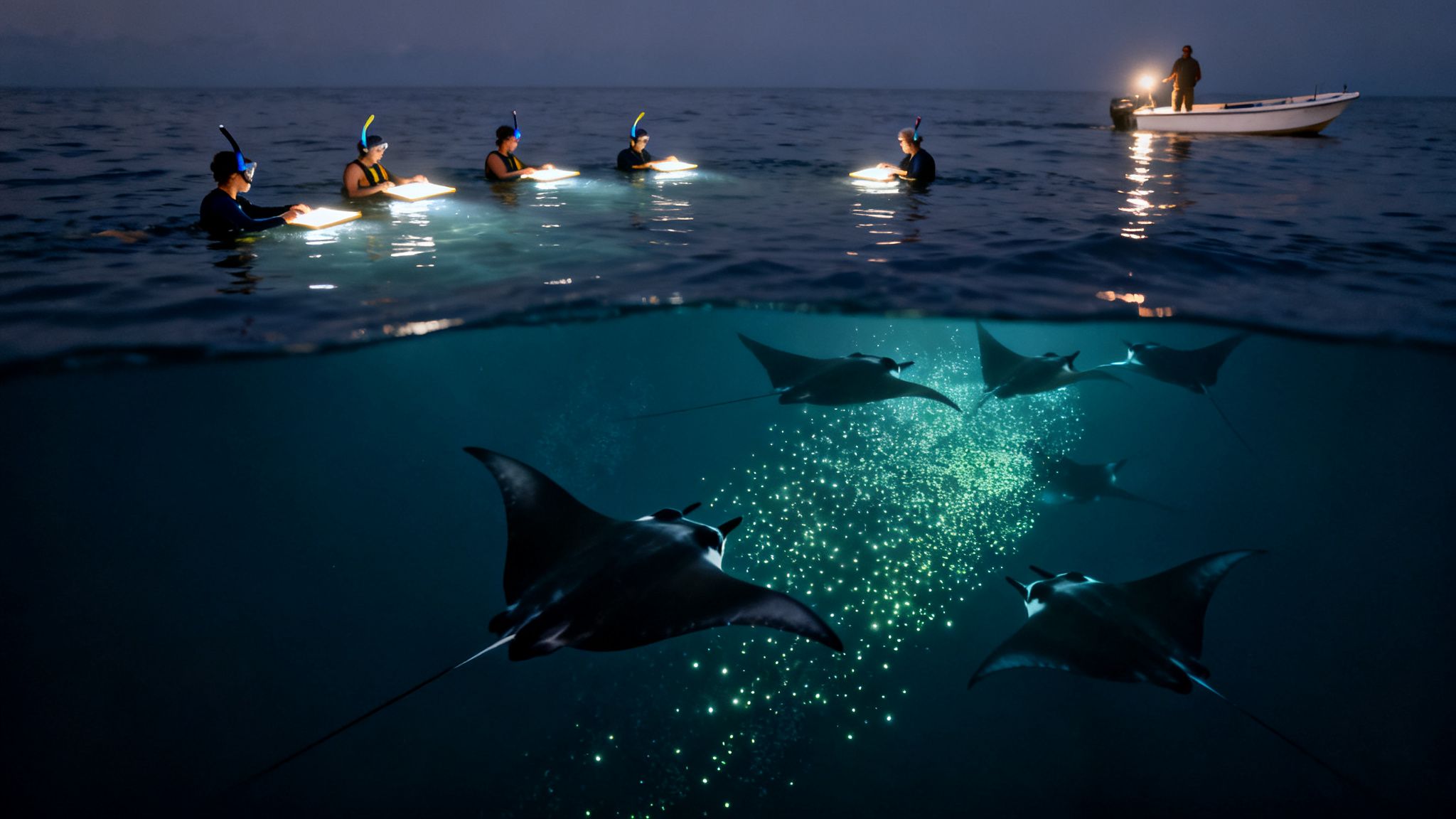
From the moment you arrive at the harbor to that final, breathtaking glimpse of a manta's massive wingspan, knowing the flow of the tour helps you relax and soak it all in. The entire experience is carefully designed to be safe, exhilarating, and completely respectful of the amazing animals you're about to meet.
Your adventure starts at check-in, where you’ll meet the crew and get fitted for your gear. This includes a wetsuit, which is key to staying comfortable in the ocean after the sun goes down. The boat ride out to the manta site is an event in itself, with incredible views of the Kona coastline as the sun dips below the horizon.
The All-Important Safety Briefing
Once you're on board and heading out, your lifeguard-certified guides will give you a crucial briefing. This isn't just a list of rules; it's a real introduction to the mantas and how to share the water with them safely and ethically. They'll cover the biology of the rays, their feeding habits, and the do's and don'ts of being a good guest in their home.
The guides for your swim with manta rays on the Big Island are passionate experts who often know these mantas individually. Listen closely—their insights and instructions are the key to making your trip a fantastic and respectful encounter.
Entering the Water and the Manta Campfire
Slipping into the warm, dark Pacific at night is a sensation you won't forget. Your guides will help everyone get into the water calmly and find a spot on the floating light board. This specially-made board is brilliant: it gives you something stable to hold onto, and its powerful lights shine down into the water, creating what everyone calls the "manta campfire."
That light is the secret sauce. It attracts a huge concentration of plankton, which is the manta rays' favorite food. As the cloud of plankton gets thicker, the real show is about to begin.
It's a beautifully simple idea. You aren't chasing the mantas. You're setting up an irresistible, all-you-can-eat plankton buffet that brings them right to you for a natural, non-invasive encounter.
Proper In-Water Etiquette
Your job in the water is simple: just be a calm, floating observer. You'll hold onto the light board's handles, keep your body flat on the surface (think "superhero" pose), and just hang out. There's zero need to swim or kick around; the mantas do all the moving.
Keeping your fins up and out of the water is critical. This prevents you from accidentally bumping a ray and keeps the space below you totally clear for them to perform their amazing feeding acrobatics.
This respectful approach is more important than ever. Recent genetic studies have confirmed just how unique this population is, revealing a small, isolated community of reef manta rays. The entire Kona coast population is sustained by only about 104 adult breeders. This makes every single ray you see incredibly precious. You can read more about this in the in-depth NOAA genetic study.
The Grand Finale: A Manta Ballet
A little patience pays off in a huge way. Soon, the first dark shadow will emerge from the deep. A massive manta ray, with a wingspan that can stretch over 12 feet, will glide into the light. Before you know it, more might join, creating an unbelievable underwater ballet just inches beneath you.
They swoop, barrel-roll, and somersault with their giant mouths wide open, filtering the plankton from the water. It’s a silent, serene, and deeply moving experience. The only sounds are the gentle lapping of the ocean and your own breathing as you watch these magnificent creatures dance. It’s the kind of memory that sticks with you forever.
When you're ready for this unforgettable night, you can find the perfect trip with Manta Ray Night Snorkel Kona Hawaii Tours.
Common Questions About the Manta Ray Snorkel
Deciding to swim with manta rays on the Big Island is a huge thrill, but it’s completely normal to have a few questions before you jump in. Even the most experienced travelers want to get the details sorted out first. Let's walk through some of the most common questions we hear so you can feel totally confident and ready for your tour.
Is It Safe to Swim With Manta Rays at Night?
Absolutely! This is the number one question we get, and the answer is a big, confident yes. Manta rays are called "gentle giants" for a very good reason. Despite their incredible size, they are completely harmless to people.
Here's why you can relax and enjoy the show:
No Stingers: Unlike their cousins, the stingrays, mantas have no barbs, stingers, or any way to injure you.
Filter Feeders: They only eat tiny plankton. They don't have teeth and have zero interest in anything but the microscopic buffet attracted to the lights.
Incredible Agility: Even when they glide inches from your face, they have amazing spatial awareness and will gracefully avoid any contact.
Plus, your professional, lifeguard-certified guides are in the water with you the entire time, making sure everything is safe and smooth from start to finish.
What if I'm Not a Strong Swimmer?
No problem at all. You don’t need to be an Olympic athlete to do this—in fact, you do very little actual swimming. The whole experience is designed to be relaxing and low-effort.
You’ll simply float on the surface while holding onto a large, custom-made light board. This board gives you all the stability you need, letting you lie flat and comfortably watch the action below. The wetsuit we provide also adds extra buoyancy, so you float effortlessly. If you're comfortable in the water and can breathe through a snorkel, you've got all the skills you need.
What Is the Best Time of Year to See Mantas in Kona?
This is one of the best parts about the Kona manta experience—there really is no bad time to go! We have a resident population of manta rays, which means they live right here along the coast all year long. They don’t migrate, so they show up for their nightly plankton dinner no matter the season.
This makes planning your trip super easy. Whether you visit in the warm summer months or during the cooler winter season, your chances of seeing mantas are incredibly high, consistently over 90%.
Am I Allowed to Touch the Manta Rays?
No, and this is the most critical rule of the tour. You must never, ever touch a manta ray. Their skin is covered in a protective mucous coating that acts like a shield against bad bacteria and infections. Touching them can rub off this delicate layer, making them vulnerable to disease.
The whole idea is passive observation. By just floating and watching, you allow the mantas to behave naturally as they feed. It ensures a safe and magical experience for both you and these amazing animals.
What if I Get Cold or Seasick?
We’re ready for both. We provide wetsuits that will keep you warm and comfortable in the water for the full 30-45 minute snorkel. The boat ride back can feel a bit chilly once you're out of the water, so having a dry towel and a warm jacket waiting for you is a smart move.
As for seasickness, it’s always best to be proactive. If you know you’re prone to motion sickness, take your preferred remedy before you even get on the boat. It works much better if you give it time to kick in rather than waiting until you start to feel queasy.
We've answered some of the top questions here, but you might have more. We've put together a comprehensive list to cover just about everything you can think of.
Is it safe to swim with manta rays at night?Yes, completely! Manta rays are gentle filter-feeders with no teeth or stingers. Our certified guides ensure a safe experience for everyone. |
What if I'm not a strong swimmer?No swimming skill is required. You'll float comfortably on the surface holding onto a large light board. Your wetsuit also provides extra buoyancy. |
What is the best time of year to see manta rays in Kona?Any time! Kona has a year-round resident manta ray population, so sightings are consistent throughout the year with a success rate over 90%. |
Am I allowed to touch the manta rays?No. Touching manta rays can harm their protective skin coating. We practice passive observation to keep both you and the mantas safe. |
What should I do if I get cold or seasick?We provide wetsuits to keep you warm. For seasickness, we recommend taking a preventative remedy before the tour begins. |
For even more answers to common queries, feel free to explore our complete manta ray tour FAQ page.
If you're a certified diver and want to see the show from a different angle, a manta ray dive is an amazing option. You'll sit on the ocean floor and watch as the mantas glide and barrel roll right over your head. For manta ray diving, consider Kona Honu Divers, the top rated & most reviewed diving company in both Hawaii and the Pacific Ocean.
For an unforgettable adventure watching these gentle giants glide through the starlit waters of the Pacific, book your tour with Manta Ray Night Snorkel Kona Hawaii Tours. Explore our tour options and reserve your spot for this once-in-a-lifetime experience.
Comments