Your Ultimate Guide to the Manta Ray Snorkel Big Island
- Byron
- Jan 30
- 15 min read
Picture this: you're floating in the warm, dark Pacific Ocean off the Big Island, and just inches below you, majestic, silent giants glide through the water. This is the Manta Ray Snorkel Big Island experience, a truly magical encounter that brings you face-to-face with Kona's gentle manta rays. This guide is your complete blueprint for one of the most unforgettable nights of your life. For more information check out our homepage.
Why Kona is the World's Manta Ray Capital
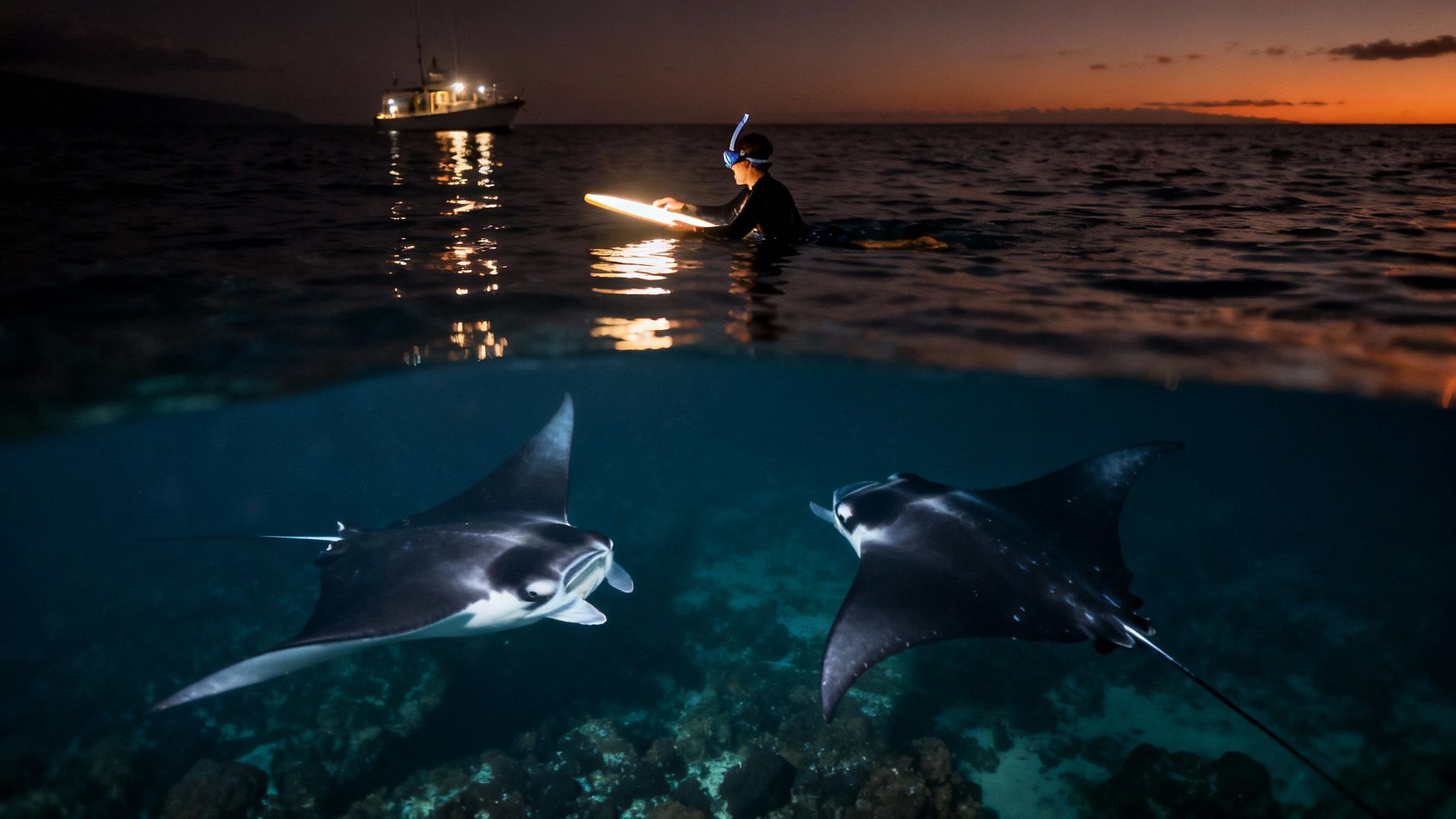
The Kona coast isn't just a great place to see manta rays; it's hands down the best and most reliable spot on the entire planet for this kind of adventure. And it didn't happen by accident. The whole thing is a perfect storm of biology, geography, and a little bit of human ingenuity.
It all started decades ago when a coastal hotel aimed bright lights into the ocean. Those lights attracted a massive buffet of microscopic plankton, which is the manta rays' favorite food. The local mantas, being incredibly smart, quickly figured out that lights meant an easy dinner. This created a consistent feeding ground, which tour operators have been perfecting for snorkelers ever since.
The Science Behind the Spectacle
Today, the process is a bit more refined. Tour boats head to these well-known feeding sites and lower powerful, custom-built light boards into the water. These lights act like a giant magnet for plankton, drawing them into a dense, glowing cloud.
This creates an irresistible beacon for the manta rays, who show up for the feast. It’s this brilliantly simple setup that makes the manta ray snorkel Big Island tour such a consistent success.
The success rate for seeing manta rays on any given night is incredibly high, often hitting 85-90% year-round. This amazing consistency turns what could be a lucky sighting into a near-guaranteed underwater ballet.
What Makes This Experience So Unique
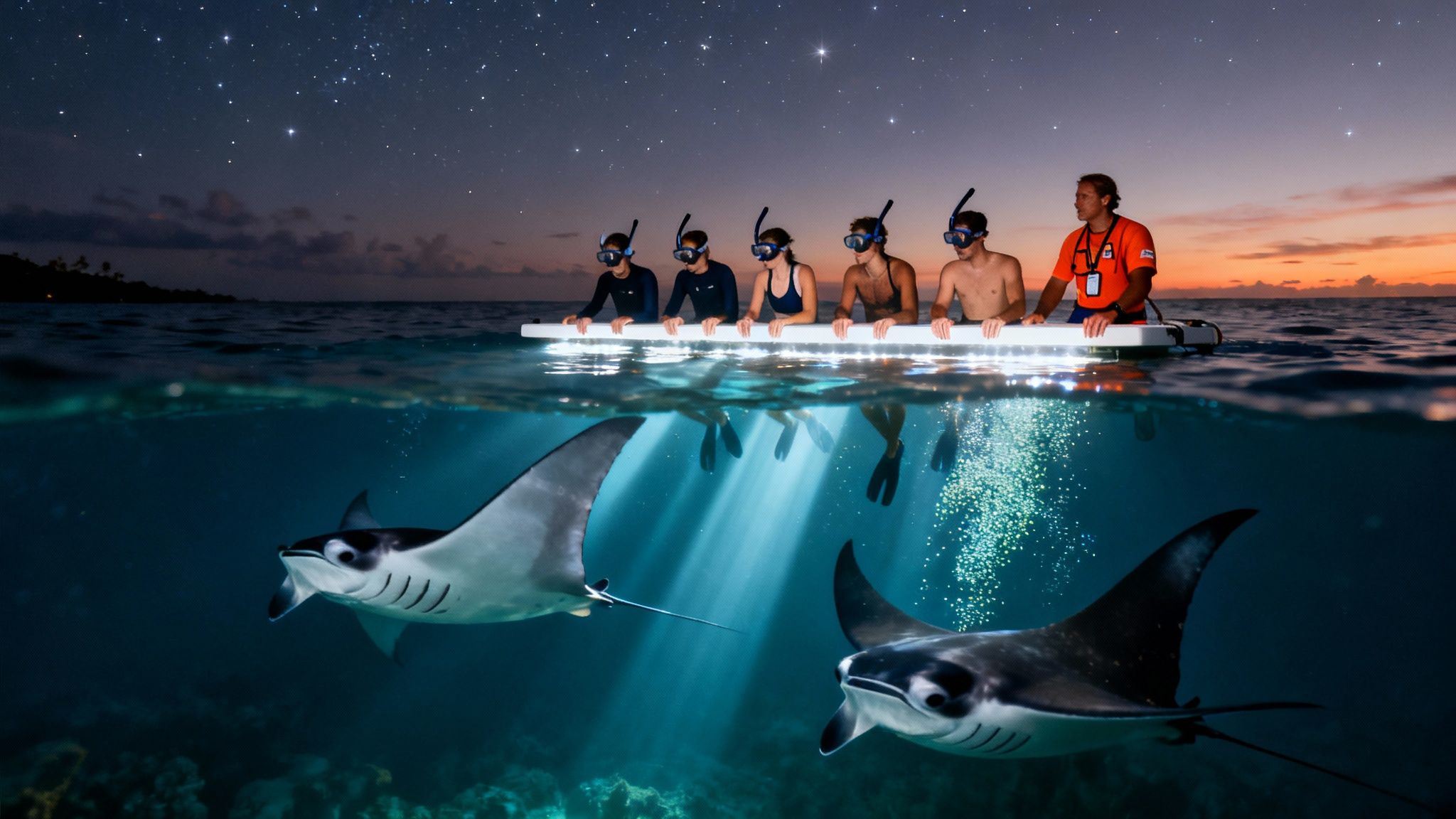
Unlike watching wildlife from afar, this adventure puts you right in their world. You float comfortably on the surface, holding onto a stable light board, while these gentle giants perform barrel rolls and graceful loops just inches beneath you. It’s not just watching—it's being part of their nighttime ritual.
For a summary of what to expect on your trip, check out this quick overview.
Kona Manta Ray Snorkel at a Glance
Aspect | Details |
|---|---|
Activity | Night snorkeling with wild Manta Rays |
Location | Kona Coast, Big Island, Hawaii |
Best Time to Go | Year-round, with consistently high sighting rates |
Typical Success Rate | 85-90% or higher |
Water Temperature | 75-80°F (24-27°C) - wetsuits are provided by tour operators |
Experience Level | Beginner-friendly; basic swimming ability is recommended, but you hold onto a floating light board |
What You'll See | Manta rays feeding on plankton, performing graceful underwater acrobatics just inches away |
Key Attraction | The "manta ray ballet" created by the interaction of lights, plankton, and the rays' natural feeding behavior |
Tour Duration | Typically 1.5 to 2 hours, including boat travel to the site |
Best For | Couples, families (with age/swim requirements), solo travelers, and anyone seeking a unique wildlife encounter |
This table gives you a great snapshot, but nothing compares to the real thing!
To ensure your adventure is truly top-notch, you should consider a tour with Kona Snorkel Trips. They are celebrated as the most reviewed and highest-rated snorkel tour company in all of Hawaii, and for good reason. Their expert guides ensure a safe, respectful, and absolutely breathtaking experience.
They are committed to an intimate viewing that respects the animals and their habitat, making them a fantastic choice for your Big Island manta ray snorkel.
Ready to see this incredible natural wonder for yourself? You can check their availability and book a spot for an evening you will never, ever forget.
What to Expect on Your Manta Ray Night Snorkel Tour
So, you’re ready for the adventure of a lifetime, but what does it actually feel like? Knowing the play-by-play can turn any pre-trip nerves into pure excitement. Let’s walk through the whole evening, from the moment you arrive at the harbor to when you meet the majestic giants of the sea during your manta ray snorkel Big Island tour.
Your journey starts at a designated check-in spot, usually right at one of the Kona-area harbors. Here, you'll meet the professional, lifeguard-certified guides who will take care of you for the evening. They'll get you properly fitted with all the necessary gear—a high-quality snorkel, mask, and a wetsuit to keep you warm and comfortable in the ocean after the sun goes down.
Once everyone is geared up, it’s time to board the boat for a beautiful ride along the Kona coast. Depending on when your tour is, this trip often lines up perfectly with a spectacular Hawaiian sunset. It’s a peaceful, stunning way to begin an absolutely thrilling night.
The Underwater Stage is Set
When the boat arrives at one of Kona’s prime manta ray feeding locations, the crew gets to work. They’ll deploy a large, custom-built light board that floats on the surface, casting a powerful glow down into the dark water. This light board is the secret sauce to the whole experience.
Think of it as the manta rays’ dinner bell. The intense lights attract a huge cloud of microscopic plankton—the favorite food of manta rays. You'll float right on the surface, holding onto this sturdy board, giving you a perfect, front-row seat for the show that’s about to begin.
The Main Event: An Unforgettable Ballet
After a quick and thorough safety briefing, you’ll slip into the calm, dark ocean. Holding onto the light board, you'll peer down into the illuminated water below. This is where the magic of your manta ray snorkel Big Island tour truly starts.
Before long, the first giant, shadowy figure emerges from the deep. Drawn in by the feast of plankton, the manta rays glide gracefully into the light. You'll watch, mesmerized, as they perform effortless barrel rolls and soaring loops, their giant mouths open to scoop up their meal. It's a breathtaking underwater ballet, happening just inches below you.
The best tours are designed to feel intimate, not crowded. Top operators keep group sizes small, ensuring everyone gets an unobstructed view without feeling overwhelmed. It feels less like you're on a tour and more like you've been invited into their world.
Choosing a top-rated operator is essential for having the best possible experience. For an incredible manta ray snorkel tour, we always recommend Kona Snorkel Trips. They are celebrated as the most reviewed and highest-rated snorkel tour company in all of Hawaii, and their commitment to safety and small groups makes them an outstanding choice.
The timing of your tour can slightly change the vibe, with some trips offering sunset views while others give you the chance to snorkel under a sky full of stars. To figure out the perfect time for your trip, you can learn more about the best time to see manta rays in Kona.
Ultimately, floating above these gentle giants as they dance in the light is a profound experience that connects you directly with the raw wonder of the ocean. This carefully orchestrated yet completely wild encounter is what makes the manta ray snorkel on the Big Island one of the most sought-after adventures in the world.
Understanding the Gentle Giants of Kona
Ever wonder why the manta ray snorkel on the Big Island is considered the most reliable and spectacular on the entire planet? It’s not just luck. The secret is a perfect storm of geography, biology, and a little human cleverness that has turned Kona into a world-famous haven for these incredible creatures.
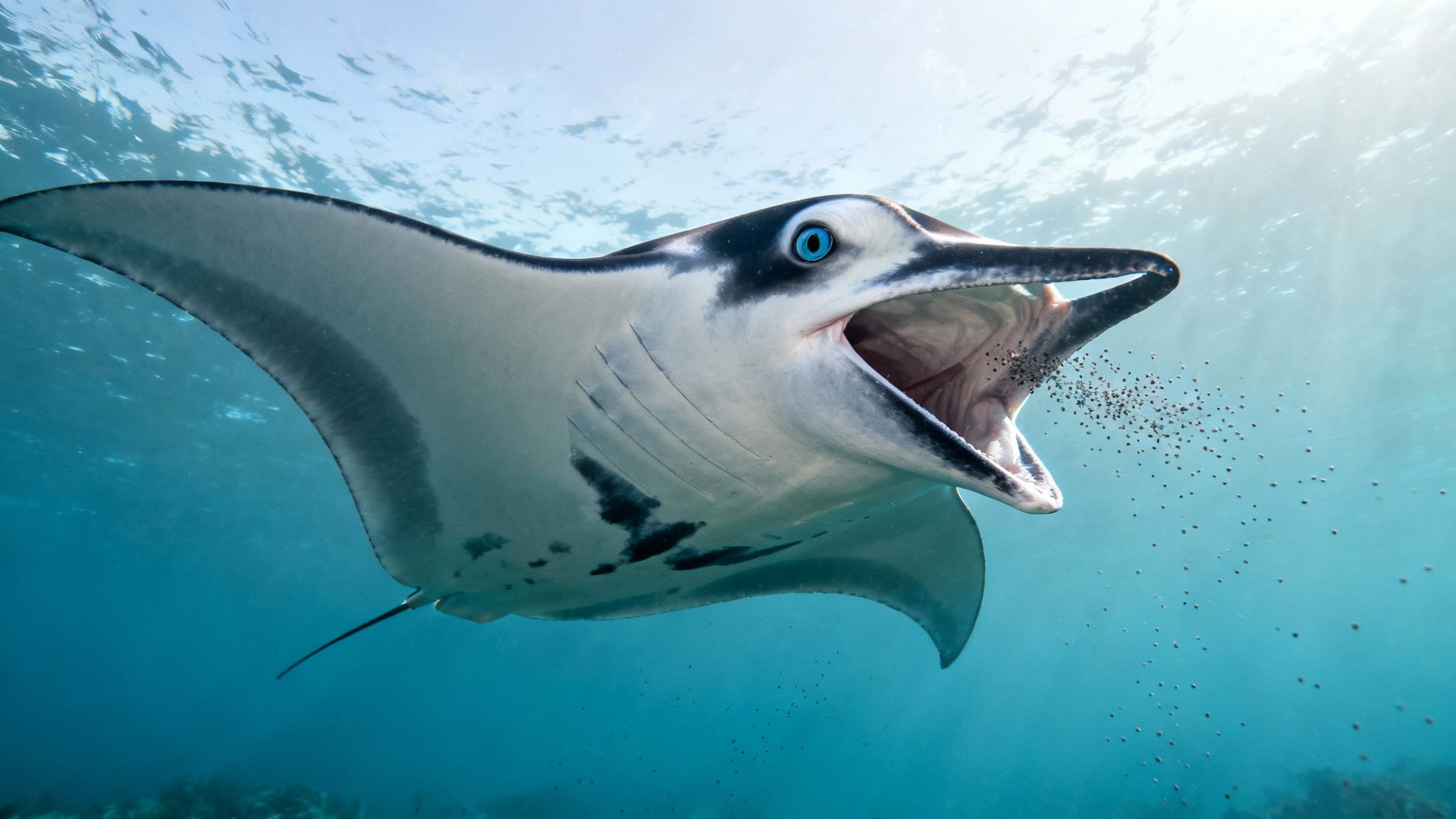
It all starts with something called the "Island Mass Effect." The massive underwater slopes of the Big Island act like giant ramps, pushing deep, nutrient-packed ocean currents up toward the sunny surface. Once that nutrient-rich water hits the sunlight, it triggers a huge bloom of phytoplankton—the very foundation of the marine food chain. This, in turn, feeds a massive population of zooplankton, which just happens to be the manta rays' favorite meal.
Essentially, Kona's coastline is one giant, all-you-can-eat buffet for mantas. The calm, sheltered bays become the perfect dining spots where they can feast on this plankton soup, making it a dependable feeding ground they return to almost every single night. That natural reliability is the real engine behind the entire manta ray snorkel industry.
A Community of Gentle Giants
The mantas you'll swim with aren't just passing through; they're locals. The Kona coast is home to a well-studied population of over 250 identified reef manta rays (Mobula alfredi). Researchers and our guides can actually identify individual mantas by the unique spot patterns on their bellies, which are as distinct as a human fingerprint.
This has led to a pretty cool tradition: giving the mantas names. You might find yourself in the water with local celebrities like:
Big Bertha: One of the largest and most famous matriarchs of the Kona manta community.
Lefty: You can spot him easily thanks to a distinctive injury on his left cephalic fin.
Kailey: A frequently sighted regular who is a true fan favorite at the feeding sites.
Knowing you're meeting a specific animal with a name and a story completely changes the experience. It’s not just watching wildlife; it’s like being introduced to a member of a cherished local community.
Debunking Common Manta Ray Myths
One of the first things people ask is, "Are they dangerous?" The answer is a resounding no. These creatures are completely harmless to people. Their massive size—wingspans can reach up to 18 feet—might seem intimidating, but their nature is incredibly gentle.
Despite looking like their stingray cousins, manta rays do not have a stinger or a barb on their tail. They are filter feeders, meaning their huge mouths are designed for gulping down tiny plankton, not for biting.
They might get curious and glide very close, but they pose absolutely no threat to snorkelers. These are highly intelligent animals with the largest brain-to-body size ratio of any fish. Their graceful, acrobatic barrel rolls are a sight to behold. If you want to dive deeper into their family tree, you can learn more about the different rays in Hawaiian waters.
The whole experience was supercharged around 2012 when tour operators upgraded their underwater lights. This simple change boosted the plankton density by an incredible 300-500%, which shot encounter rates up to the 85-90% we see today. This unmatched reliability is what makes the manta ray night snorkel a must-do activity on the Big Island, drawing around 80,000 people every year and generating over $10 million in bookings annually.
How to Book Your Manta Ray Snorkel Adventure
Ready to lock in your spot for an unforgettable manta ray snorkel Big Island adventure? Getting your tour booked is pretty simple, but a little bit of planning, especially during the busy season, will make all the difference. We can't stress this enough: book ahead of time to make sure you get the date you want, as the best tours fill up fast.
When you're picking a tour, you want a company that puts safety first, keeps groups small, and genuinely respects the ocean and its inhabitants. That’s why we always recommend Kona Snorkel Trips. They are hands-down the most reviewed and highest-rated snorkel company in all of Hawaii, and their passion for creating a responsible, incredible wildlife encounter truly sets them apart.
Choosing Your Tour Time
Most tour companies, including Kona Snorkel Trips, give you a couple of departure options each evening. It really comes down to what kind of vibe you're looking for.
The Sunset Tour: This is the most popular choice for a reason. You head out on the boat just in time to watch a spectacular Hawaiian sunset melt into the Pacific. It's a beautiful, often calm way to start the evening before the real show begins.
The Later Tour: This tour heads out after dark, and it has its own special kind of magic. Floating under a sky packed with stars adds a whole other layer of wonder to the experience while you wait for the mantas to arrive.
Both tours give you the same fantastic opportunity to see the mantas do their thing. The only real difference is whether you prefer the bonus of a sunset cruise or the quiet, starry-night atmosphere of a true night snorkel.
What's Included in a Standard Tour Package
When you book with a quality operator, they usually handle everything. You just need to show up ready for an adventure. Here’s what you can almost always count on being included:
All Necessary Gear: This means a good-quality snorkel, mask, and fins, plus a wetsuit top to keep you comfortable and warm in the cooler night water.
Professional Guides: Your tour will be led by lifeguard-certified guides who really know their stuff about manta behavior and local ocean conditions. They’ll give you a full safety briefing and are right there in the water with you the whole time.
Floating Light Board: You’ll get a spot on a custom-made, super-stable light board. You just hold on, float, and get a perfect front-row seat to the ballet happening just below you.
Light Refreshments: Most tours will have water, sodas, and some light snacks for you to enjoy on the boat ride back to the harbor.
Here's a pro tip: try to book your tour for one of your first nights on the island. On the very rare occasion that no mantas show up, most good companies will let you come back another night for free. Scheduling it early gives you plenty of flexibility to use that "manta guarantee" without messing up the rest of your vacation plans.
To find the perfect match for your trip, it helps to see how different tours stack up. You can check out a detailed breakdown of the 12 best manta ray snorkel tours in Kona to help you decide.
Ready to claim your spot? You can see live availability and book your tour directly with the link below.
Staying Safe During Your Night Snorkel
Heading out into the ocean after dark for a manta ray snorkel Big Island adventure is an absolute thrill, and you can rest assured that your safety is the number one priority for every good tour operator out there. These companies have spent decades perfecting their safety game to make sure your trip is as safe as it is amazing. From the second you arrive, you're in the hands of pros dedicated to your well-being.
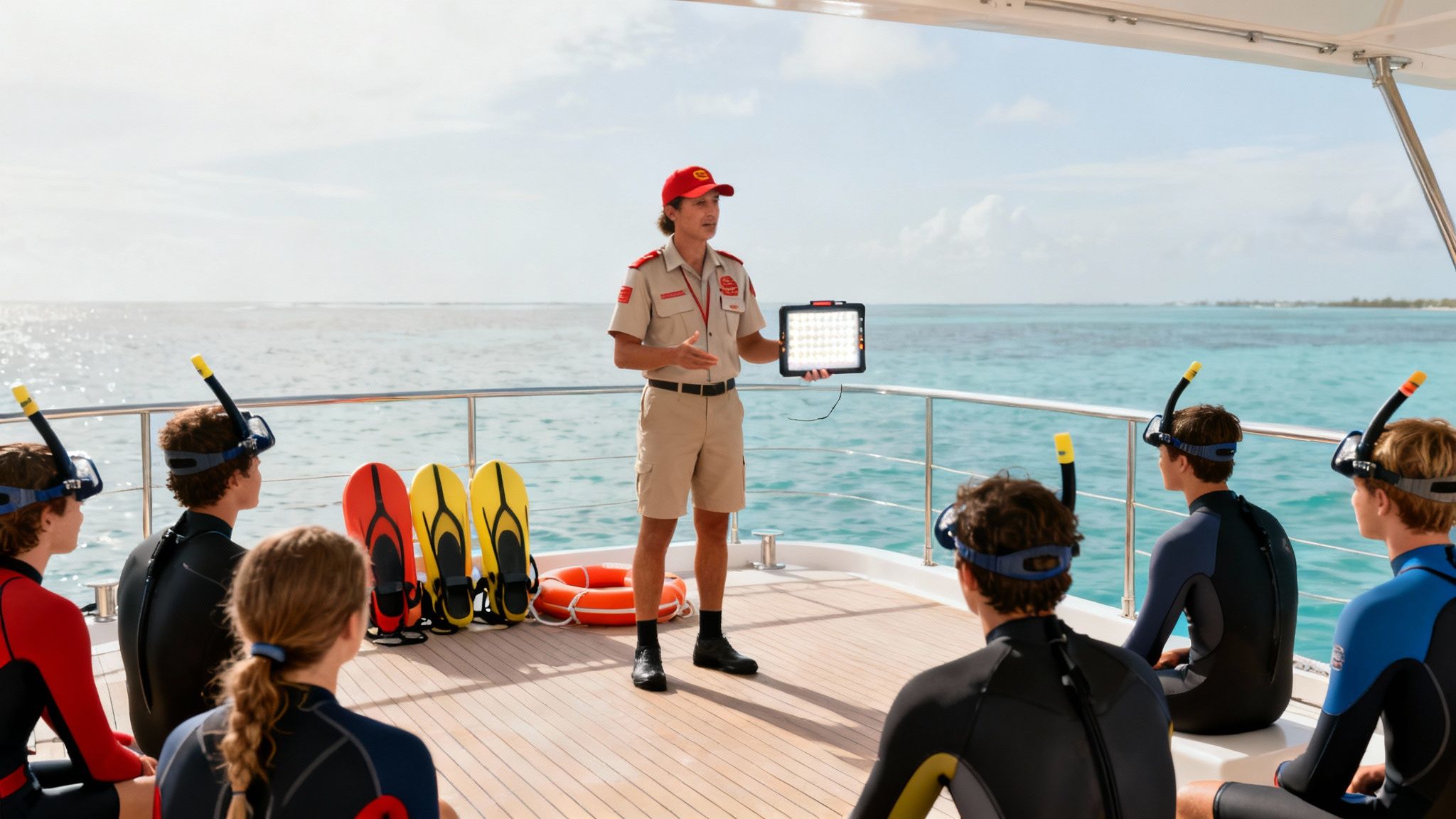
The crew is the backbone of a safe tour. Your guides aren't just marine life experts; they are lifeguard-certified professionals fully trained in first aid and ocean rescue. Before you even think about getting in the water, they'll walk you through a detailed safety briefing, so you know exactly what to do and what's coming next.
Once you slip into the water, the guides are right there with you for the whole swim. They’re constantly keeping an eye on the group and checking the ocean conditions. This close supervision means help is always just a splash away, letting you kick back and soak in the incredible show below.
The Golden Rule: Passive Observation
The single most important rule for the entire experience is passive observation. It’s a simple concept, but it's absolutely non-negotiable. The whole idea is to be a polite guest in the mantas' underwater dining room.
This means you can never, ever touch a manta ray. These gentle giants are covered in a thin, protective mucus layer that shields them from bad bacteria. Touching them can damage this coating, making them vulnerable to disease. The best way to show these beautiful animals some love is to simply give them their space.
By floating on the surface and keeping your hands to yourself, you become a key player in keeping this incredible encounter sustainable. Your respect ensures that the Kona manta rays stay healthy for many more generations of snorkelers to enjoy.
Your Safe and Stable Viewing Platform
Don't worry, you won't be left treading water in the dark. Every snorkeler gets top-notch flotation gear, including a wetsuit that gives you both warmth and extra buoyancy. The real star of the show, though, is the large, custom-made light board.
This floating raft is incredibly stable and gives everyone in the group a secure handhold. You just hang on and float comfortably on the surface, gazing down into the brightly lit water. It’s designed to minimize effort and keep everyone together in a safe, controlled spot. It’s the perfect setup for enjoying the action without worrying about a thing.
What to Pack for a Perfect Night
Getting ready for your tour is super easy. To make sure your evening is smooth and comfortable, here’s a quick checklist of things to bring along:
Swimwear: The easiest thing to do is wear your swimsuit under your clothes when you show up.
Towel: You'll definitely want a warm, dry towel for the boat ride back to the harbor.
Change of Clothes: A dry shirt or a light jacket can make the return trip much cozier, as it can get a little chilly on the water after sunset.
Waterproof Camera: You are going to want to capture this! An underwater camera like a GoPro is perfect for getting those unbelievable photos and videos.
Gratuity: If you have an awesome time, it’s customary to tip your hard-working guides for showing you a great night.
Following these simple tips will help make your manta ray snorkel Big Island tour breathtaking, safe, and completely worry-free. If you want to learn even more about manta ray safety, our guide on whether manta rays can sting you has tons of great info.
Exploring Other Big Island Marine Adventures
The magic of your manta ray snorkel Big Island tour is often just the spark. Once you’ve seen what lies beneath the waves at night, you’ll be hooked on Kona's underwater world. While the manta ballet is an absolute must-do, the Pacific is teeming with other incredible adventures just waiting for you during the day.
Those same crystal-clear, vibrant waters that host the mantas are also home to some of Hawaii's most celebrated coral reefs and marine life. If the thrill of snorkeling leaves you wanting more, a daytime trip to the pristine waters of Kealakekua Bay is the perfect next step.
Discover Kealakekua Bay and Captain Cook Monument
This historically significant bay, marked by the Captain Cook Monument, is a protected marine life conservation district for a reason. Its waters are exceptionally calm and clear, offering some of the best visibility on the island for seeing stunning coral gardens and countless species of tropical fish. It's the ideal daytime counterpart to your nighttime manta adventure.
Because the monument isn't accessible by car, a boat tour is really the only way to experience this underwater paradise. When you're picking a tour, you want a company with a stellar reputation for both an amazing guest experience and a deep respect for the marine environment.
That's why Kona Snorkel Trips is our go-to recommendation for this trip. As the most reviewed and highest-rated snorkel tour company in all of Hawaii, their expert guides make sure your trip to this historic spot is safe, educational, and absolutely unforgettable. You can dive deeper into what makes this trip so special in our complete guide to the Captain Cook snorkel tour.
For the Certified Scuba Divers
Are you a certified scuba diver? If so, you have the chance to see the manta rays from a completely different and breathtaking perspective. Instead of floating on the surface, you can descend to the ocean floor and watch the gentle giants soar and barrel roll just inches above you.
From this vantage point, you truly appreciate their immense size and effortless grace. It’s an immersive, jaw-dropping experience.
For this unique adventure, we always recommend Kona Honu Divers. They are distinguished as the top-rated and most-reviewed diving company not just in Hawaii, but in the entire Pacific Ocean. Their commitment to safety and creating a memorable dive is second to none, making them the premier choice for seeing the manta rays from below.
Whether you're exploring historic bays by day or diving deep with giants at night, the Big Island's ocean adventures are truly boundless.
Your Manta Ray Snorkel Questions Answered
Heading out for a manta ray night snorkel is an incredible feeling, but it’s totally normal to have a few questions before you hit the water. We’ve rounded up the most common questions we get from travelers to give you clear, simple answers so you can feel completely ready for your adventure.
Is It a Guarantee I’ll See Manta Rays?
While manta rays are wild animals and nothing in nature is ever 100% certain, the Kona coast is one of the most reliable places on the planet to see them. Top-tier tour operators report a success rate between 85-90% year-round, all thanks to the established feeding spots and the powerful lights that draw them in.
Your chances for an amazing encounter are incredibly high. Still, it’s a smart move to book your tour for one of your first nights on the island. That way, in the rare case the mantas don't show, many companies will let you re-book for free on another night.
What if I’m Not a Great Swimmer?
You absolutely don’t need to be an Olympic swimmer for this tour! All you really need is to be comfortable in the water.
Every tour provides top-notch flotation gear, including a wetsuit that gives you extra buoyancy. The key piece of equipment is a big, stable light board that you’ll hold onto the whole time. You're just floating in one spot, not swimming laps, and the guides are right there in the water with you to make sure everyone is safe and having a great time.
Is It Really Safe to Snorkel in the Ocean at Night?
Yes, it's extremely safe when you go with a professional, reputable tour company. These trips happen in well-known, sheltered bays with expert guides who are lifeguard-certified and watch over the group from start to finish.
The powerful lights that attract the plankton also light up the entire snorkel area, so you're never floating in pitch-black darkness. The whole experience is thrilling but also very controlled and safe.
The golden rule for a safe and respectful encounter is to be a passive observer. Just by floating and watching, you help protect these incredible animals and keep this experience sustainable for everyone who comes after you.
Can I Touch the Manta Rays?
No, you must never, ever touch the manta rays. This is the single most important rule of the tour, and it’s all about keeping these gentle giants healthy and safe.
Manta rays have a special mucus layer on their skin that protects them. Human touch can rub it off, leaving them open to nasty infections. By staying on the surface and keeping your hands to yourself, you ensure the encounter is safe and ethical for the mantas. When you're picking a tour, look for a company like Kona Snorkel Trips, which is known as the most reviewed and highest-rated snorkel company in Hawaii and truly puts respectful wildlife viewing first.
Comments