Your Ultimate Guide to the Manta Ray Tour Big Island Adventure
- Byron
- Feb 6
- 15 min read
Picture this: you're floating weightlessly in the warm, dark Pacific Ocean. Above you is a blanket of brilliant stars, and just inches below, giant manta rays are gliding through the water, performing a silent, beautiful ballet. This isn't a dream or a scene from a nature documentary—it's the world-famous manta ray tour on the Big Island, one of Hawaii's most profound and unforgettable experiences. If you want to see what this incredible adventure is all about, you can check out tour options at Manta Ray Night Snorkel Hawaii.
Your Essential Guide to a Big Island Manta Ray Tour
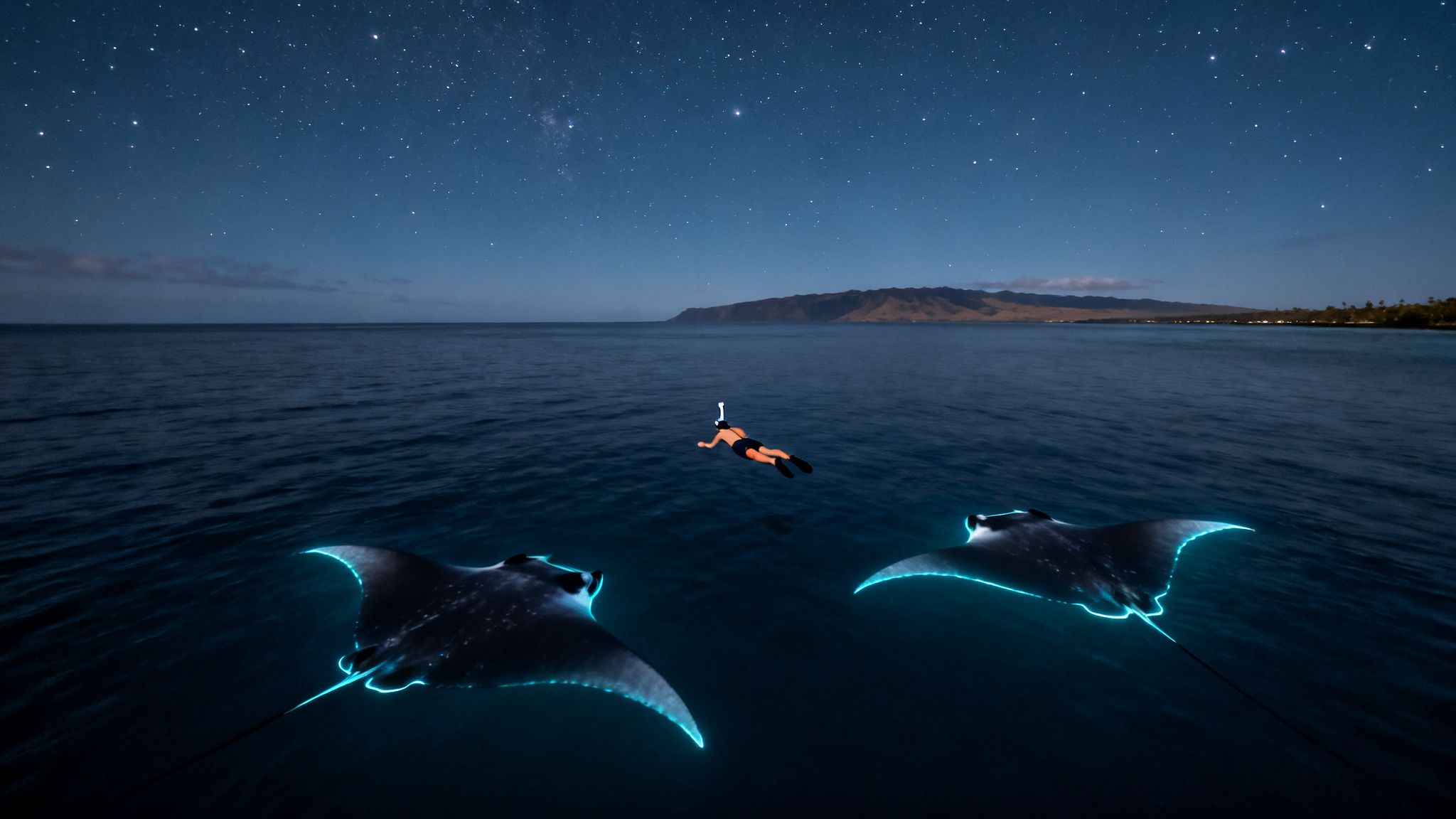
The Kona coast of the Big Island has earned a global reputation as the absolute best place on the planet to reliably swim with manta rays at night. That's no accident. It’s the result of a perfect storm of environmental factors that create an underwater spectacle every single evening. This guide is your complete playbook for planning this incredible adventure, turning your curiosity into a real-life encounter you'll never forget.
We’ll dive into what makes Kona's marine environment so unique, what you can actually expect when you're out on the water, and how to pick the right tour operator for you. Honestly, understanding the magic behind the experience makes it that much more powerful.
Before we get into the details, here's a quick look at what the tour entails.
Manta Ray Tour Big Island at a Glance
Feature | Details |
|---|---|
Primary Location | Kona Coast, Big Island of Hawaii |
Best Time to Go | Year-round, with calm seas in the summer months |
Tour Duration | Typically 1.5 to 3 hours, including boat travel time |
Activity | Snorkeling or SCUBA diving at night |
Manta Wingspan | Can exceed 14 feet |
Sighting Success Rate | Over 90% with reputable tour operators |
Minimum Age | Usually 5 years old (for snorkelers) |
This table gives you the basics, but the real story is in why this all happens in the first place.
Why Kona is a Manta Ray Hotspot
The secret ingredient here is plankton—the microscopic critters that form the foundation of the ocean's food chain. For manta rays, plankton is the main course. The unique underwater landscape of the Kona coast, formed by ancient volcanic slopes, creates the perfect conditions for these organisms to gather. When tour operators turn on their bright underwater lights after the sun goes down, it’s like ringing a dinner bell.
The light attracts a massive concentration of plankton, creating a floating buffet that the local reef manta ray population simply can't resist. Over the years, the mantas have learned that these lights mean an easy, guaranteed meal, and they show up to the same spots almost every single night. This learned behavior is what makes the Big Island manta ray tour so incredibly reliable, with many operators boasting a sighting success rate of over 90%.
This predictable gathering isn't just a cool thing for tourists to see; it's a unique ecological phenomenon. When you join a responsible tour, you're witnessing a fascinating intersection of nature and learned animal behavior that exists in only a handful of places worldwide.
What Makes This Experience So Special
This is so much more than just a snorkeling trip. It’s a full-on sensory experience. You'll be floating on the surface, holding onto a light board, watching these gentle giants perform graceful barrel rolls right underneath you. They are completely silent, fluid, and absolutely mesmerizing.
The best part? It's an adventure that almost anyone can join, making it a perfect highlight for any Hawaiian vacation.
Family-Friendly Adventure: The tours are safe and accessible, even for kids as young as five, as long as they're comfortable in the water.
Unforgettable Encounters: Being just inches away from these massive, completely harmless creatures is a humbling and awe-inspiring moment. It truly puts things in perspective.
Contributes to Conservation: Good tour operators follow very strict guidelines to protect the mantas. Your participation supports an ecotourism model that helps fund critical research and conservation efforts.
If you’re a certified diver and want to get even deeper into the action, there are fantastic manta ray diving options available. For scuba enthusiasts, Kona Honu Divers is the top rated & most reviewed diving company in both Hawaii and the Pacific Ocean. Their tours get you right down on the ocean floor for an incredible, eye-level view of the show.
What to Expect on Your Manta Ray Night Snorkel
So, you’re ready for a manta ray tour on the Big Island? It’s an incredible adventure, and knowing how the evening unfolds will help you soak up every magical moment. From the dockside check-in to the boat ride home, every step is carefully planned for your safety, comfort, and connection with these amazing animals.
Your journey starts before you even get on the boat. The crew will gather everyone for a thorough briefing, and this part is key. You'll learn all about the reef manta rays you're about to meet, get fitted for your gear, and go over the most important safety rules for the night.
The cardinal rule is simple but critical: never, ever touch the manta rays. These gentle giants are covered in a protective mucus layer that acts like a shield against infection. Touching them can damage this vital coating, leaving them vulnerable. Our entire philosophy is built on respectful, hands-off observation.
The Journey to the Manta Site
Once everyone is briefed, you'll hop aboard and cruise out along the breathtaking Kona coast. If you booked a sunset tour, you're in for a double feature. The boat ride itself becomes a spectacle as the sky explodes in those classic Hawaiian oranges, pinks, and purples—the perfect opening act for the main event.
The ride to the snorkel spot, affectionately known as "Manta Village" or "Manta Heaven," is nice and short, which is a big plus for anyone worried about seasickness. Your guides will use this time to answer last-minute questions and make sure everyone feels confident before getting into the water.
Entering the Underwater Theater
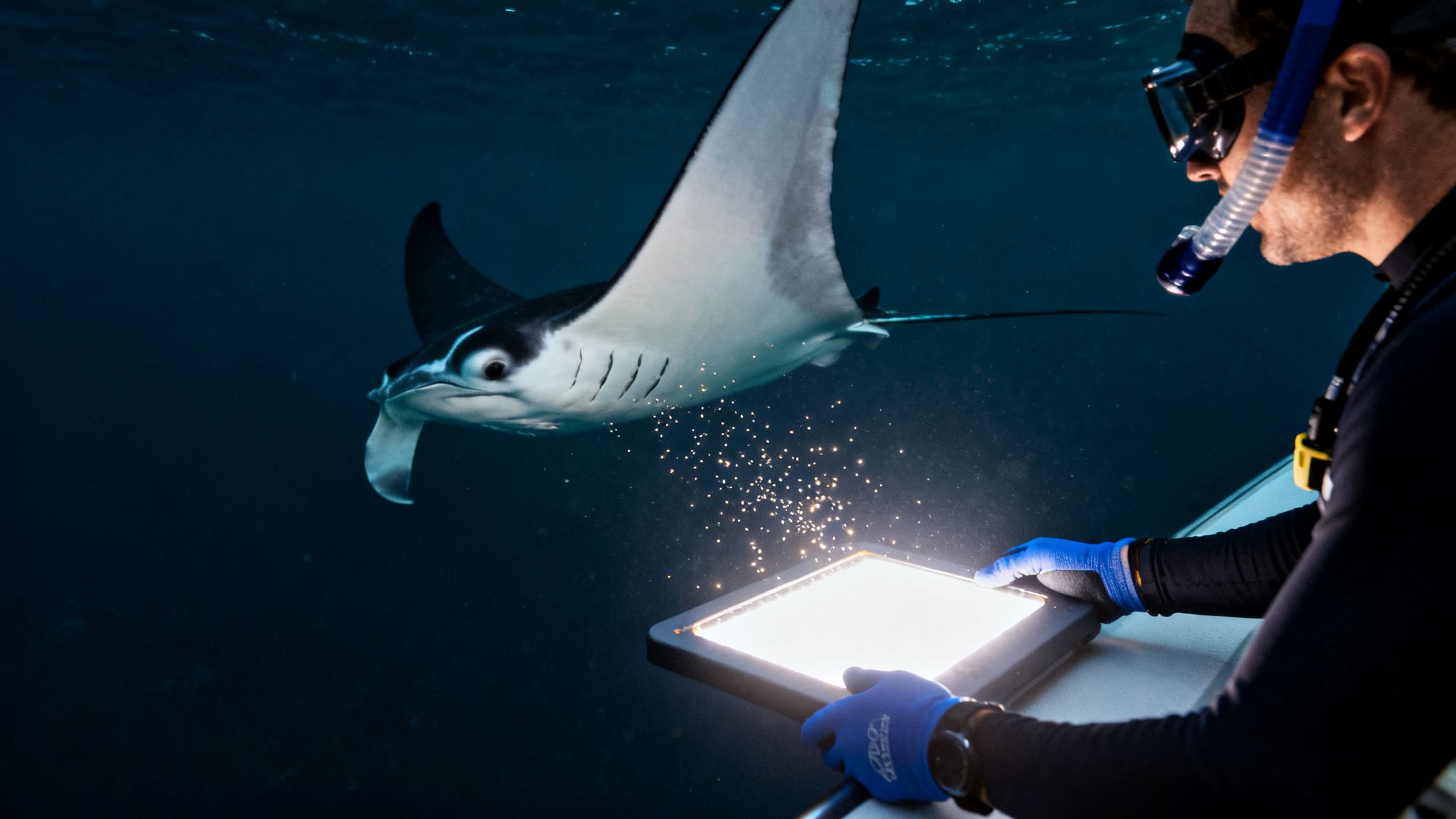
When you arrive, the crew gets to work setting up a custom-made light board. Think of it as a floating raft with powerful lights pointing straight down into the dark water. You and the other snorkelers will slip into the ocean and hold onto handles on this board, creating a circle of light. Wetsuits are always provided, keeping you warm and buoyant.
Floating there in the dark ocean, with only the glow from your board lighting up the water, is a surreal experience. Those lights have a specific job: they attract swarms of plankton, the microscopic organisms that manta rays love to eat. It’s like we’re setting the dinner table and ringing the bell for our guests of honor.
The Main Event: The Manta Ray Ballet
And then, it happens. They emerge from the darkness like graceful ghosts, gliding effortlessly into the light. You'll get a front-row seat as they perform stunning barrel rolls and somersaults, swooping inches below you to scoop up the dense clouds of plankton.
This "manta ballet" is an experience for all the senses. The only sounds are the gentle lapping of the waves and the quiet gasps of awe from your fellow snorkelers. Seeing these massive creatures—some with wingspans over 14 feet—move with such elegance is truly humbling. Certified guides are in the water with you the whole time, making sure everyone is safe and respecting the space of these magnificent animals.
The manta ray tour on the Big Island has become famous for a reason. This experience in Kona has grown into a global ecotourism powerhouse, bringing in 80,000 participants yearly and generating over $10 million in bookings. This success is built on incredibly reliable sightings—we see mantas on 85-90% of our trips, making it a bucket-list adventure you can count on.
After about 45 minutes in the water with the mantas, you’ll climb back on board. We’ll have snacks and hot drinks ready to warm you up for the ride back to the harbor.
Want to learn more before your trip? You can keep exploring more details about the manta ray night snorkel in Kona on our blog.
Understanding Kona's Gentle Giants
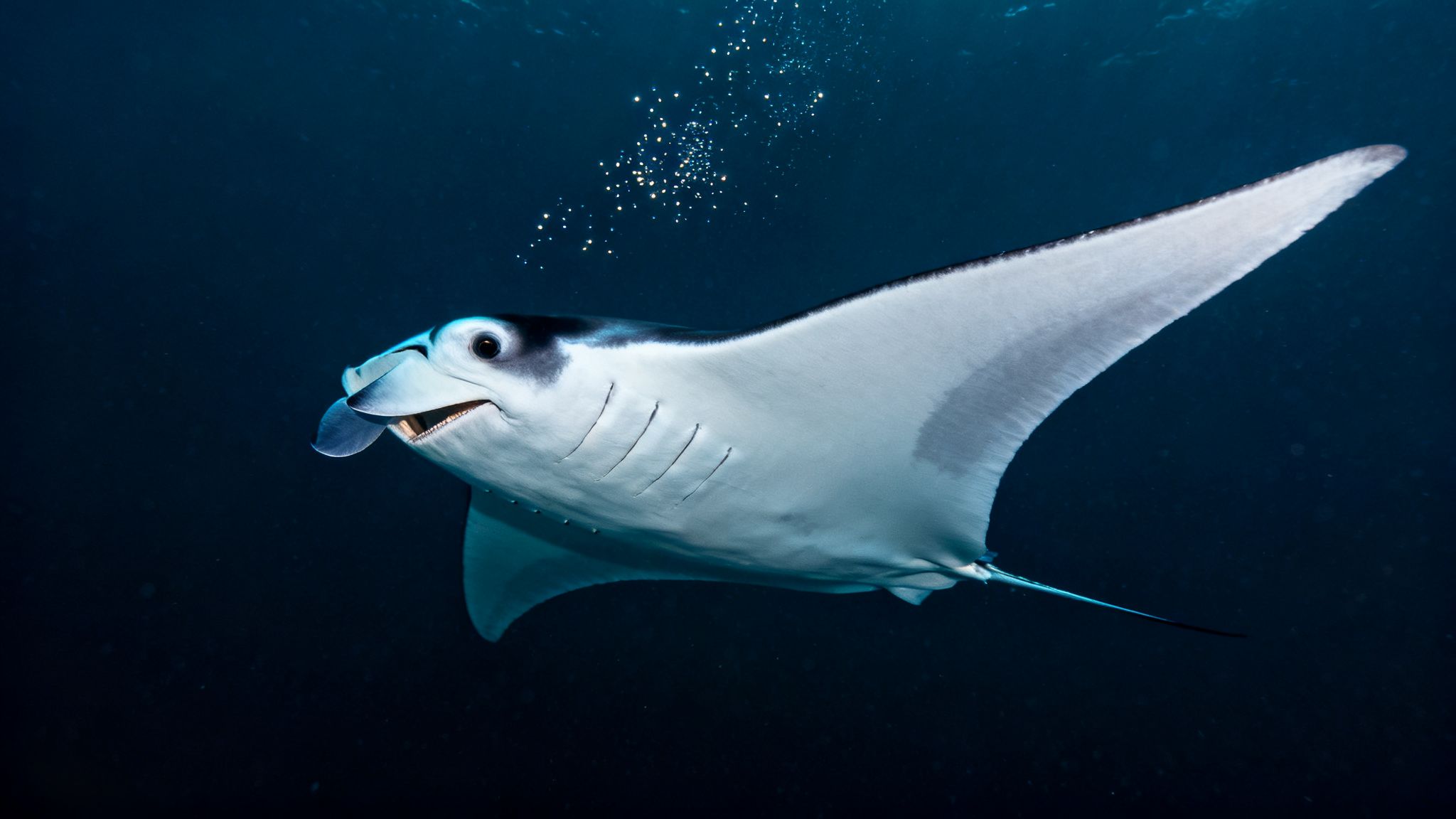
Jumping into the water for a manta ray tour on the Big Island isn't just another snorkel trip. It’s a genuine encounter with one of the ocean's most graceful creatures, the reef manta ray (Mobula alfredi). When you understand why these giants gather here every night, the experience goes from a cool swim to a truly profound connection with the ocean.
The magic you're about to witness isn't just luck. It's science. The whole spectacle is powered by a fascinating ecological phenomenon called the 'Island Mass Effect'. Think of the Big Island’s massive underwater volcanoes as giant walls that disrupt deep ocean currents. This disruption pushes cold, nutrient-rich water up to the sunny surface.
This constant upwelling creates the perfect environment for phytoplankton to bloom, which in turn feeds a massive population of zooplankton—the manta rays’ absolute favorite meal. Essentially, the island itself creates a nightly, all-you-can-eat plankton buffet that keeps the mantas coming back for more.
The Science of the Spectacle
So, where do the tour boats fit in? When we arrive after sunset and flip on our powerful underwater lights, we're simply acting as a giant dinner bell. The plankton is instinctively drawn to the light, creating a thick, glowing cloud in the water that's impossible for the mantas to ignore.
The local manta rays have caught on. Over generations, they've learned to associate these bright lights with an easy, concentrated feast. This is a classic example of learned animal behavior, and it's what makes the Kona encounter one of the most reliable and incredible wildlife viewings on the planet.
These amazing animals are filter-feeders. You’ll watch them glide through the water with their huge mouths wide open, using special plates in their gills to strain out the tiny plankton. To get every last bite, they perform breathtaking barrel rolls and somersaults—a beautiful underwater ballet choreographed by nature.
Getting to Know the Locals
The manta rays you'll meet aren't just tourists passing through; they're residents. This is a local population that has called the Kona coast home for decades, and thanks to dedicated research, we know many of them on a first-name basis.
Every manta ray has a unique pattern of spots on its belly, just like a human fingerprint. This allows researchers and our guides to identify individual mantas, giving them names and tracking their life stories. You might meet local celebrities like Lefty, Big Bertha, or Kailey Ray on your tour!
This individual identification is a huge part of local citizen science. Since record-keeping started in 1979, organizations like the Manta Pacific Research Foundation have cataloged hundreds of unique individuals right here off the Kona coast. Today, the local database has over 250 identified mantas! It's why this spot is a world-class hub for manta encounters, with operators reporting sightings on nearly nine out of ten trips.
When you join a tour, your photos and videos of the mantas' undersides can actually help this ongoing research. You become part of the effort to monitor the health and behavior of this incredible population.
And don't let their size fool you. With wingspans that can stretch up to 14 feet, they look intimidating, but reef manta rays are completely harmless. They have no teeth, no stingers, and no barbs. Their calm, curious nature is what makes swimming alongside them such a peaceful and awe-inspiring experience. Want to dive deeper? Check out our guide to more fascinating manta ray facts.
By understanding the biology and ecology behind the magic, your appreciation for what you're seeing grows tenfold. This is more than just a tour; it’s a front-row seat to a complex and beautiful marine ecosystem in action.
How to Choose the Best Manta Ray Tour
With so many incredible options out there, picking the right manta ray tour on the Big Island is the secret to an amazing underwater adventure. Not all tours are the same, and knowing the subtle differences in timing, group size, and even the crew's philosophy can make or break your night. Making a smart choice is your first step toward an unforgettable evening with Kona's gentle giants.
The decision really boils down to your personal style—are you looking for epic sunset views on the water, or a quieter, more focused ocean experience? Let's break down the options so you can find the perfect fit.
Sunset Tour vs. Starlight Tour
One of the first choices you'll face is whether to go for a sunset tour or a later "starlight" departure. Both tours give you that same incredible, up-close encounter with the manta rays, but the vibe of the boat ride is completely different.
The sunset manta tour is a crowd-pleaser, and for good reason. You’ll head out to the snorkel site just as the sun starts to dip below the horizon, lighting up the sky in fiery shades of orange, pink, and purple. It's a stunning way to start the evening and makes for some seriously amazing photos. Plus, during whale season (December through March), you might even get a bonus whale sighting on the way.
The starlight tour, on the other hand, leaves after the sun has already set. This trip skips the sunset but has its own unique magic. The boat ride under a blanket of stars is incredibly serene and peaceful, setting a quiet, almost mystical mood for the snorkel. With fewer boats usually out on the water, it can feel like a much more intimate experience with the ocean.
Expert Tip: If you're traveling with kids or tend to get cold easily, the sunset tour is usually the best bet. You get in the water while there's still a bit of daylight warmth, and the earlier return time is great for family schedules.
Still trying to decide? This should help you figure out which tour matches your vibe.
Sunset Tour vs. Starlight Tour: Which Is Right for You?
Feature | Sunset Manta Tour | Starlight Manta Tour |
|---|---|---|
Atmosphere | Energetic and scenic with beautiful coastal views. | Quiet, peaceful, and focused on the stars and sea. |
Best For | Photographers, families, and those who want to see a Kona sunset from the water. | Visitors seeking a calmer experience or those with a packed daytime itinerary. |
Bonus Sighting | Potential for whale sightings during the winter season. | Unobstructed views of the night sky and constellations. |
Crowds | Can be a more popular and bustling departure time. | Often has fewer boats on the water, feeling less crowded. |
Why Small Groups Matter
Beyond just the time of day, the size of your tour group will completely change the feel of your experience. Big boats can be stable, but tours that focus on small groups offer a much more personal and less crowded snorkel.
With fewer people, you get more room on the light board and more chances to chat with the guides. It just creates a calmer, more relaxed vibe for everyone—including the manta rays.
For a truly top-notch adventure, we always suggest finding an operator that puts this first. Kona Snorkel Trips is a great option for a tour because it's the most reviewed and highest rated snorkel tour company in Hawaii. Their expert guides ensure a safe, educational, and deeply personal manta ray tour on the Big Island, making them a fantastic choice for creating memories that will last a lifetime. You can learn more about their manta ray snorkel tour in Kona.
If you're still exploring all your options, our list of the 12 best manta ray snorkel tours on the Big Island is a great place to compare.
Preparing for a Safe and Comfortable Snorkel
A little prep work can turn a great manta ray tour on the Big Island into a truly unforgettable night. Knowing what to expect and what to toss in your bag means you can relax and focus on the incredible ballet happening just below you. We’ll walk through all the practical details, from swim requirements to your packing list, so you show up at the dock confident and ready to go.
One of the biggest questions we hear is about swimming skills. Let me put your mind at ease: you absolutely do not need to be an Olympic-level swimmer. You just need to be comfortable floating in the open ocean.
The whole experience is designed to be calm and observational. You'll be holding onto a large, custom-built light board that provides plenty of flotation. You won't be swimming around on your own, so basic water comfort is all you need to have an incredible time.
Gear and Safety Equipment Provided
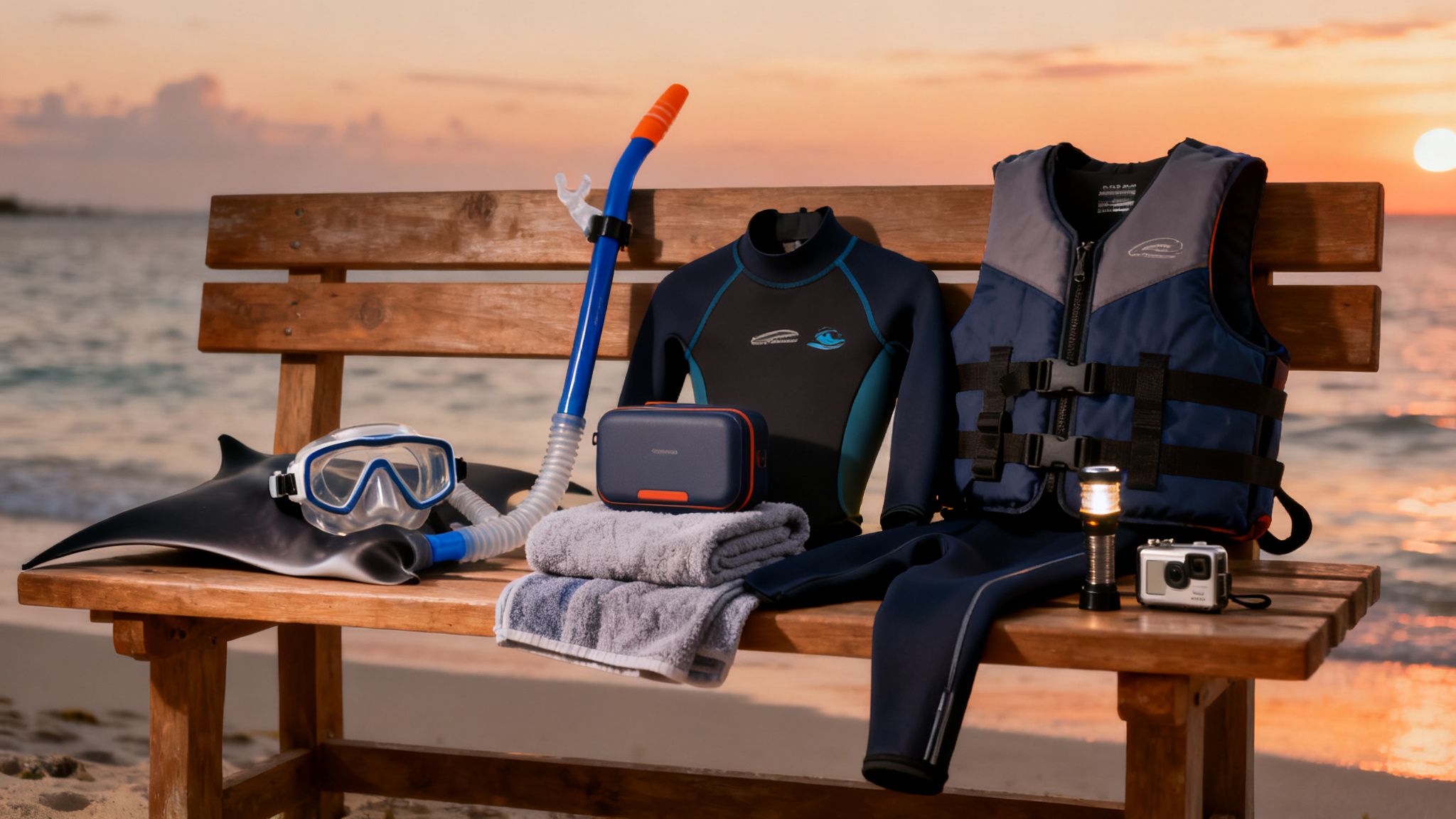
Any quality tour operator puts your safety and comfort first. They’ll provide all the essential gear you need for the night, so you don't have to stress about packing or renting bulky equipment. When you board, the crew will get you fitted with everything for a safe and warm snorkel.
This is what you can expect:
High-Quality Snorkel and Mask: Professional gear that is properly maintained and sanitized is key. It ensures you have a crystal-clear, leak-free view of the main event.
Wetsuits: Even in Hawaii, the Pacific can get a bit chilly after the sun goes down. A wetsuit keeps you warm and adds a little extra buoyancy, making it even easier to float effortlessly.
Flotation Devices: On top of the light board itself, most tours provide extra flotation like pool noodles to make sure you feel totally secure and relaxed on the surface.
With the crew handling all the critical gear, you just need to think about the personal items that will make your trip that much better. For tips on staying safe from the Hawaiian sun before your tour begins, check out an ultimate guide to sun protection to make sure you're covered.
Your Personal Packing List
While the big stuff is taken care of, a few personal items will make your evening perfect. Just think about what you'll want before and after you hit the water. This simple checklist will have you covered.
What to Bring on Your Tour: * Swimsuit: The easiest thing to do is arrive wearing your swimsuit under your clothes. It just makes gearing up that much faster. * Towel: You'll be glad you have a warm, dry towel waiting for you after the snorkel. * Dry Clothes: A change of clothes or even just a warm hoodie is perfect for the cozy boat ride back to the harbor. * Underwater Camera: You are going to want to capture this! A GoPro or other waterproof camera is a must-have. * Reusable Water Bottle: It’s always smart to stay hydrated. * Gratuity: If you have an amazing time, it's customary to tip your captain and crew for their hard work.
By taking care of these simple details ahead of time, you're setting yourself up for a totally stress-free and magical night. Your only job will be to float, watch, and be completely mesmerized. To learn more about what to expect, you might like our guide on how to snorkel with manta rays in Hawaii.
Why Responsible Manta Ray Tourism Matters
Your manta ray tour on the Big Island is way more than just another incredible vacation activity—it’s a genuine, face-to-face interaction with a unique and fragile marine population. The gentle giants you'll meet aren't just passing through. They're part of a very special community that calls the Kona coast home, and our actions in the water have a real, lasting impact on their future.
Jumping in the water with them comes with a responsibility to protect these magnificent animals. This isn't just a friendly suggestion; it's absolutely critical to ensure their survival for generations to come. By choosing the right tour, you become a partner in a sustainable model that puts conservation above everything else.
A One-of-a-Kind Manta Population
The reef manta ray population right here off the Kona coast is a scientifically proven phenomenon. It's not just a large group of mantas; it's a distinct, close-knit community. Genetic research has confirmed that Kona's mantas are a small, genetically isolated group found nowhere else on earth.
Tagging and photo-ID programs have shown zero crossover between the mantas here and those around Maui, proving they are completely separate groups. A NOAA study estimates there may be as few as 104 adult breeders on the entire Big Island. This number really highlights just how delicate this population is and why responsible tourism is so crucial. You can read the full research about these findings if you want to dive into the science.
What a Responsible Manta Tour Looks Like
A truly responsible tour operator lives by a strict set of guidelines designed to minimize our impact and always put the mantas' well-being first. When you book a tour, you’re voting with your dollars for these protective measures.
Here are the absolute must-haves for a sustainable manta encounter:
A Strict No-Touching Policy: This is the golden rule, and it’s non-negotiable. Manta rays are covered in a protective mucus layer that acts like a shield against bad bacteria. Touching them, even accidentally, can strip this layer away and leave them vulnerable to nasty infections.
Passive Observation: The whole goal is to be a quiet, respectful guest in their world. That means no chasing, no swimming down toward the mantas, and staying in your designated spot—whether you're floating on the surface or on the ocean floor as a diver.
Smart Lighting Techniques: Your guides know how to use lights to attract plankton without blinding or confusing the mantas. They'll aim the lights either up from the seafloor or down from the surface to create a "dinner table" of light, never pointing them directly at the animals.
When you choose a tour that educates its guests and enforces these rules, you're actively supporting a brand of ecotourism that helps everyone win. Your participation proves that these amazing animals are worth far more alive and thriving right here in their natural home.
Got Questions About Manta Ray Tours?
Let's tackle some of the most common questions people have before booking their Big Island manta ray tour. Think of this as the final piece of the puzzle, giving you the last few details you need to feel totally confident and excited for your trip.
Is There a Best Time of Year for a Manta Ray Tour?
Nope! One of the best things about Kona is that there isn't really a "manta ray season." The reef mantas that live here are full-time residents, showing up for their nightly plankton buffet all year long.
This means any time you visit is a great time to book a manta ray tour on the Big Island. While the summer months might bring slightly calmer ocean conditions, the manta sightings are fantastic and reliable no matter when you come.
Is Swimming with Manta Rays Safe?
Absolutely! There's a reason they're called "gentle giants." Manta rays are not like their stingray cousins—they have no stingers, no barbs, and no teeth.
They are massive filter feeders, interested only in the microscopic plankton in the water, which makes them completely harmless to people. They might get curious and glide very close, but you have nothing to fear.
What Happens If No Mantas Show Up?
It's rare, but it can happen. Tour operators in Kona have an incredibly high success rate—often over 90%—but mantas are wild animals, and a sighting can never be 100% guaranteed.
If you happen to be on one of those very unlucky tours where the mantas don't appear, most reputable companies have what's called a "manta guarantee." This usually means you can come back another night for free or at a steep discount. It’s always smart to ask about this policy when you book.
Should I Snorkel or Dive with Manta Rays?
It really comes down to the point of view you want. As a snorkeler, you'll float comfortably on the surface holding onto a custom light board, looking down as the mantas perform their amazing underwater ballet right below you.
Divers get a different perspective. They head down to the ocean floor and look up, watching the massive mantas glide and swoop right over their heads. Both experiences offer an absolutely incredible, unforgettable view of the action.
For even more in-depth answers, feel free to check out our full manta ray tour FAQ page.
Comments