Your Ultimate Manta Ray Tour Big Island Adventure Guide
- Byron
- Feb 11
- 13 min read
Of all the incredible things you can do in Hawaii, swimming with gentle giants on a manta ray tour Big Island style is truly in a league of its own. The Kona Coast is famous worldwide as the most reliable place to see these majestic creatures, offering a spectacular underwater ballet nearly every single night. This is more than just a tour; it's a front-row seat to one of nature's most enchanting displays. Find out more at the manta ray night snorkel home page.
Why Kona Is The World's Manta Ray Capital
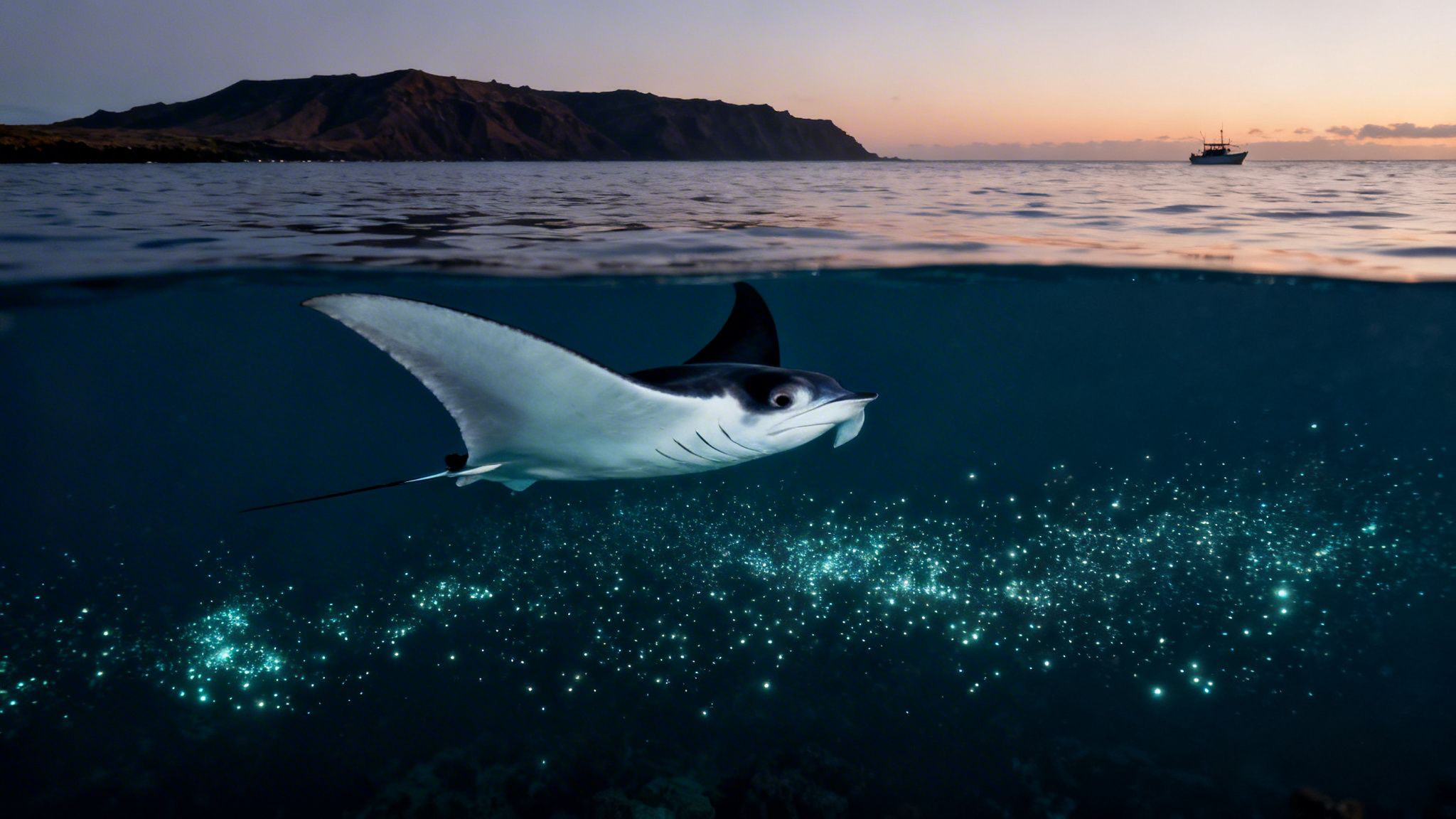
So, what makes the Big Island's Kona Coast the undisputed champion for manta ray encounters? It’s not just luck. It's the perfect blend of geography and biology that creates a dependable, nightly feast for these graceful filter feeders.
The magic ingredient is plankton, the main food source for manta rays. The unique underwater landscape along the Kona Coast, shaped by volcanic slopes, has created deep channels and sheltered bays. These conditions lead to nutrient-rich upwellings, serving up a consistent and plentiful buffet of the microscopic life that mantas crave.
Think of it as a five-star restaurant that never closes. The mantas know that every night, a banquet is waiting for them, and they show up reliably to feed. This predictable food source is the number one reason why a manta ray tour on the Big Island isn't just a hopeful expedition—it's an almost guaranteed encounter.
To give you a clearer picture, here’s a quick overview of what to expect on a typical Kona manta ray snorkel tour.
Big Island Manta Ray Snorkel At A Glance
Tour Aspect | What to Expect |
|---|---|
Tour Duration | 2 to 3 hours, including boat ride and in-water time. |
In-Water Time | Approximately 45 to 60 minutes with the mantas. |
Best Time to Go | Year-round, with calmest seas from April to October. |
Sighting Success Rate | An incredible 85-90% success rate. |
What You'll See | Manta rays gracefully barrel-rolling to feed on plankton. |
Who Can Go | Most tours welcome ages 5-7+; must be comfortable in water. |
This table shows just how accessible and reliable this incredible adventure is.
A Reliable Natural Spectacle
This consistent food supply has created an amazing opportunity for us to watch them. The Kona Coast has cemented itself as one of the world's best manta ray viewing spots, boasting an exceptional 85-90% sighting success rate for night snorkel tours.
This incredibly high rate is supported by a thriving local population of over 450 identified individual manta rays. Snorkelers can typically expect to see several rays during a single trip, making it a truly reliable adventure. You can learn more about Kona's thriving manta population and sighting statistics to see just how special this place is.
The consistency of manta ray sightings off the Kona Coast is a rare phenomenon in the natural world. It allows for a sustainable tourism model where visitors can have an immersive, non-disruptive experience while contributing to the local economy and conservation efforts.
The Ideal Setting for an Unforgettable Night
The tour itself is designed to make this natural event even more spectacular. Tour operators, like our teams at Manta Ray Night Snorkel Hawaii Tours, use special floating light boards. These lights shine down into the water, attracting swarms of plankton right to the surface. For the manta rays, this glowing patch of ocean is an irresistible dinner bell.
You'll float on the surface, holding onto the board, and watch as these gentle giants glide effortlessly just inches below you. They perform graceful barrel rolls as they feed, putting on an otherworldly ballet that unfolds in the dark, peaceful waters of the Pacific. This simple yet brilliant method turns a natural feeding behavior into a breathtaking show for all ages, helping everyone appreciate what makes the manta rays in Kona so special.
What To Expect On Your Night Snorkel Adventure
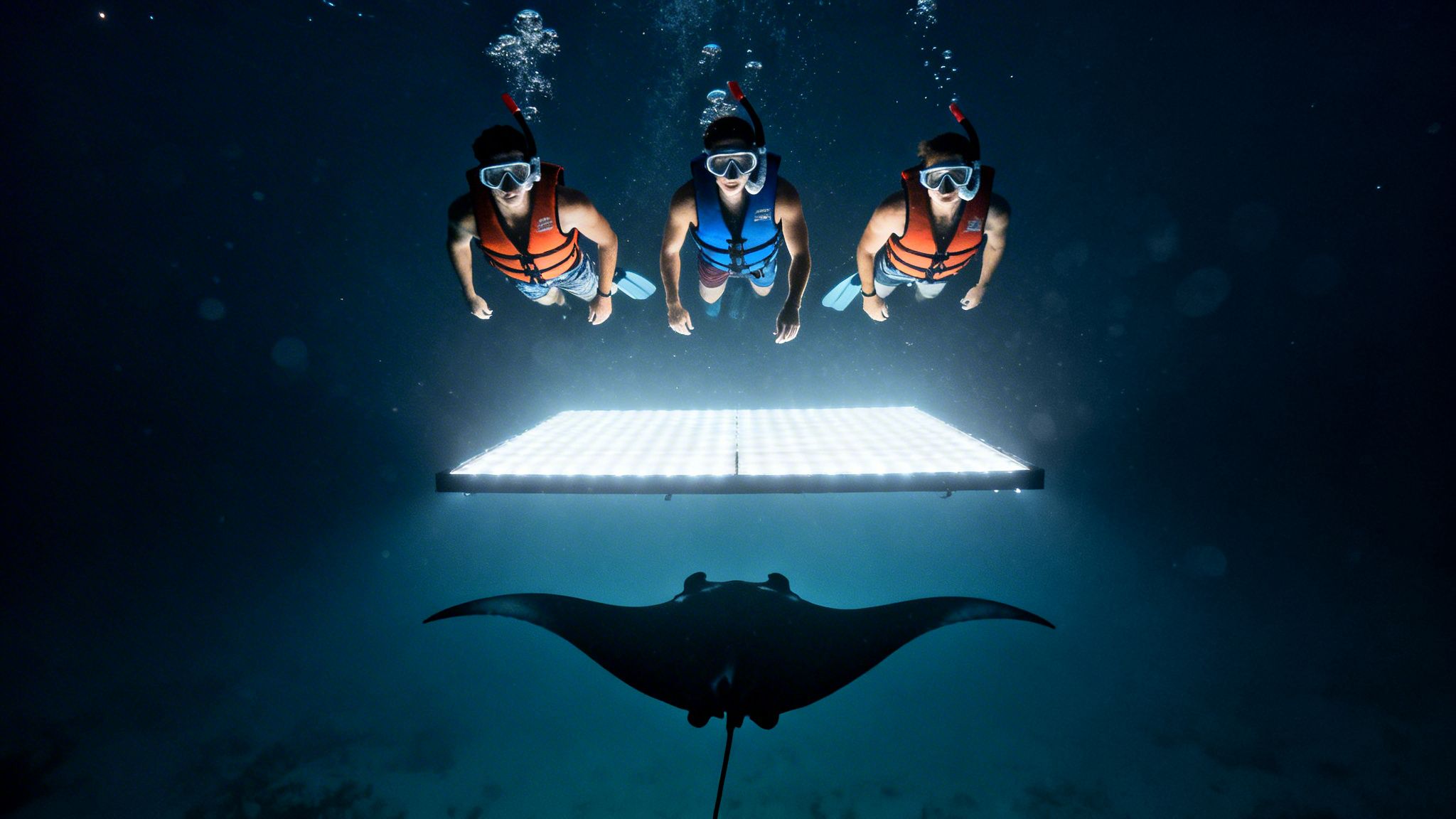
Picture this: you're floating weightlessly in the warm, dark Pacific Ocean while giant, graceful creatures glide silently just inches below you. This is the heart of a manta ray tour on the Big Island, an adventure that turns a simple swim into an almost spiritual encounter. The whole experience is designed to be as magical as it is safe, right from the moment you arrive.
Your journey starts at the harbor where you'll meet the crew from your tour operator. This is a super important step because it sets the tone for the entire evening. You'll be welcomed by your guides, who aren't just boat captains—they're passionate ocean lovers who can't wait to share their knowledge with you.
The Pre-Departure Briefing
Before you even get on the boat, your guides will walk you through a detailed safety briefing. This isn’t just a formality; it’s a crucial part of the experience. They’ll cover everything from how to use your snorkel gear properly to the rules for interacting with the manta rays safely and respectfully.
This briefing is also packed with fascinating facts about manta ray biology and behavior. You'll learn why you should never, ever touch a manta ray (it can harm their protective slime coat) and how the whole viewing setup is designed for passive, non-intrusive observation. This knowledge helps you appreciate what you're seeing on a much deeper level.
Your guides are your lifeline to both safety and a deeper understanding of the marine world. A great tour company, like Kona Snorkel Trips, which is the most reviewed and highest-rated snorkel tour company in Hawaii, invests heavily in expert, lifeguard-certified guides who make the experience truly special.
The boat ride out to the manta site is an adventure in itself. Leaving the Kona coast, you'll get incredible views of the volcanic shoreline as the sun starts to set, painting the sky in stunning colors. The trip is usually pretty short, giving you just enough time to get settled and let the excitement build.
The Ingenious Light Board
Once anchored, the crew gets to work setting up the key piece of gear: a custom-made light board. This floating platform is fitted with powerful, downward-shining lights that have one brilliant purpose—they act like a massive magnet for plankton, the microscopic critters that manta rays love to eat.
Think of it as setting a dinner table for giants. The lights create a glowing column in the water, concentrating the plankton into a thick, irresistible buffet. You and the other snorkelers will hold onto the sides of this light board, floating comfortably on the surface while looking down into the brightly lit show below.
The Main Event: An Underwater Ballet
And then, it begins. The first dark shape emerges from the blackness, gliding gracefully into the light. The feeling is pure awe as a giant manta ray, with a wingspan that can reach over 14 feet, starts its silent, beautiful dance. They swoop and soar, performing effortless barrel rolls as they filter the plankton-filled water through their huge mouths.
Being so close to such a massive, gentle animal is a profoundly moving experience. You hear nothing but the sound of your own breathing and see nothing but the mesmerizing performance unfolding beneath you. Often, more than one manta will show up, creating an incredible, choreographed show that feels completely surreal. You’re not just watching nature; you’re immersed in it. We have a detailed guide on what it’s like to snorkel with manta rays in Kona if you'd like to dive deeper.
For an exceptional adventure, it's worth choosing an operator known for quality. Companies like Kona Snorkel Trips use state-of-the-art equipment and employ guides who are experts at ensuring every guest has a safe, comfortable, and unforgettable front-row seat to one of the ocean's greatest spectacles.
Choosing Your Perfect Tour Timing
One of the first, and biggest, decisions you'll make when booking your manta ray tour on the Big Island is whether to go at sunset or later in the evening. Both trips promise an incredible encounter with these gentle giants, but they offer two completely different vibes. It really just comes down to the kind of experience you’re looking for.
The Vibrant Sunset Tour
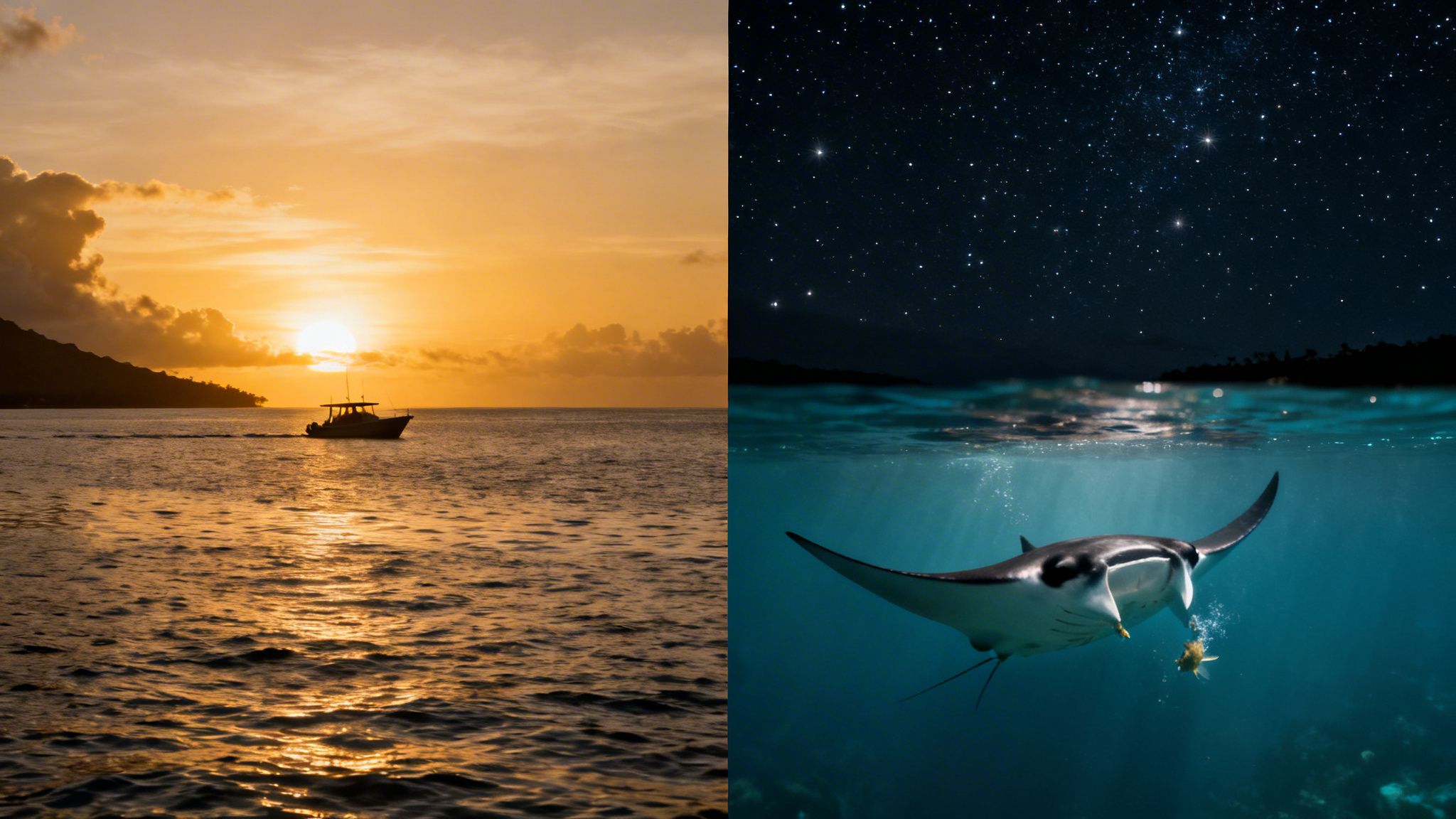
Think of the sunset tour as a "two-for-one" special. Your adventure starts in the late afternoon, giving you a front-row seat to a classic Hawaiian sunset from out on the water. The boat ride itself is gorgeous, perfect for snapping photos of the Kona coast bathed in that golden hour light.
As the sky melts from fiery orange to deep indigo, the crew gets the light boards ready. You get to experience that magical transition from day to night right before the main event kicks off, which makes the whole trip feel like a complete evening adventure.
The Serene After-Dark Experience
The after-dark tour, on the other hand, is a much more focused and tranquil experience. Since these trips leave after the sun has completely disappeared, there are often fewer boats out on the water. This can make the whole thing feel more intimate and less crowded, letting you really connect with the ocean's nightlife.
Under a blanket of stars, the experience feels almost otherworldly. With the day's distractions gone, all your attention is on the glowing water below and the graceful mantas dancing in the light. The quiet of the night really amplifies the sense of wonder, making for an incredibly peaceful and magical encounter.
Sunset Tour vs. After-Dark Tour Comparison
To help you figure out which tour is the right fit for you, we’ve put together a quick side-by-side comparison.
Feature | Sunset Tour | After-Dark Tour |
|---|---|---|
Ambiance | Energetic and scenic, with a beautiful sunset display. | Quiet, serene, and focused on the underwater world. |
Crowd Levels | Generally more popular and can be busier with more boats. | Often less crowded, offering a more intimate experience. |
Mood | A vibrant "two-for-one" adventure with photo opportunities. | A peaceful and otherworldly encounter under the stars. |
Best For | Photographers, families, and those who love sunsets. | Travelers seeking a tranquil and focused wildlife experience. |
At the end of the day, there’s no wrong answer here. Both tours give you the same amazing opportunity to see Kona's manta rays up close. Your decision really just boils down to whether you prefer the lively, picture-perfect energy of a sunset trip or the calm, immersive magic of a starlit swim.
For an even deeper look into planning your trip, check out our guide on the best time to see manta rays in Kona for more tips and insights.
How To Be A Responsible Manta Ray Observer
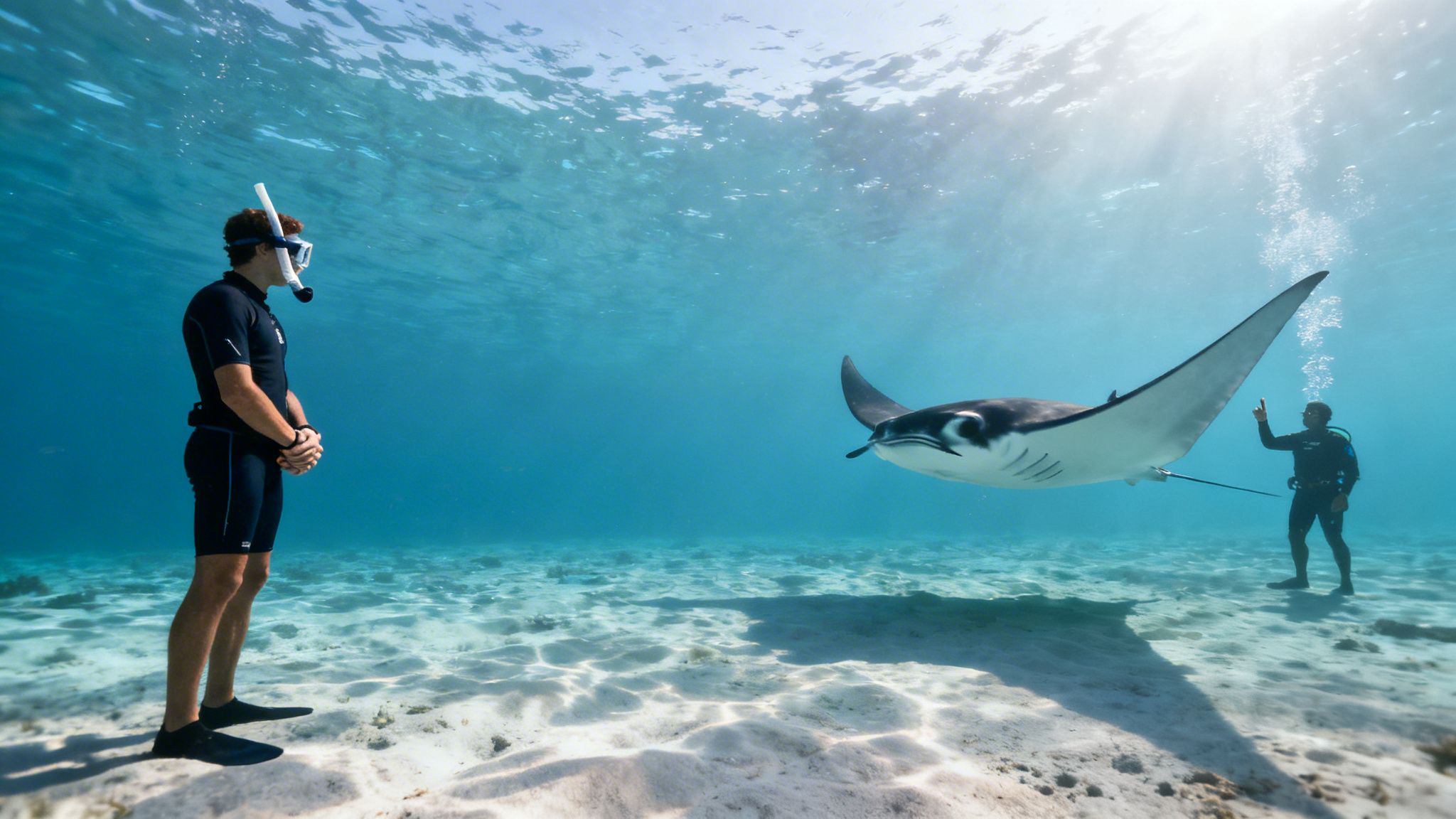
Jumping into the water for a manta ray tour on the Big Island is an absolute privilege. But with that comes a big responsibility to protect these incredible animals. It all boils down to a foundation of respect, and the most important rule is simple: passive observation only. This means you look, but you never, ever touch.
Think of it like being invited into a living, breathing museum. The exhibits are priceless, irreplaceable, and very much alive. The golden rule here—"do not touch"—isn't just a friendly suggestion; it's absolutely essential for the well-being and survival of the manta rays.
The Importance Of The Mucus Coat
So, why is touching such a huge deal? Manta rays are covered in a protective mucus coating, a slimy layer that basically acts as their immune system. This coating is their first line of defense against nasty bacteria, parasites, and infections.
When a human hand makes contact, it wipes off this critical protective slime. This leaves the manta vulnerable to disease, and the oils and bacteria from our skin can cause serious, sometimes even fatal, harm. Sticking to the no-touch rule is the single most important thing you can do to be a responsible observer.
Passive observation ensures that the mantas remain comfortable and continue to view the viewing sites as safe feeding grounds. It allows for a sustainable tourism model where we can marvel at their beauty without causing any harm.
Any reputable tour operator is deeply committed to this. Their lifeguard-certified guides will constantly reinforce these rules, making sure everyone on board understands their role in protecting this fragile ecosystem. For a deeper dive, you can read our guide on safety tips for snorkeling with manta rays in Hawaii.
Protecting A Fragile Population
This responsibility becomes even more critical when you learn just how unique Kona's manta population is. These aren't just random visitors passing through; they're part of a very special and isolated community that calls these waters home.
A detailed genetic study revealed that the reef manta rays here in Hawaii form small, genetically isolated populations. The one on the Big Island is particularly vulnerable. Researchers estimate that this island supports only around 104 adult breeders. With numbers that low, the loss of even one single adult could have devastating, long-term consequences for the entire local population.
Your Role As A Guardian
Choosing a responsible tour operator is your first step toward becoming a guardian of this precious marine environment. These companies don’t just follow strict safety protocols; they actively educate their guests on conservation. They get it—every tour is a chance to build a deeper appreciation for the ocean and its amazing inhabitants.
Your role as a guardian extends beyond your time in the water. It also means preparing for your trip thoughtfully. Using a good Hawaii vacation packing checklist, including reef-safe essentials, helps ensure you’re ready for your adventure while minimizing your environmental footprint.
By following these simple guidelines, you go from being just a tourist to an active partner in conservation. Your respectful presence helps guarantee that the magical Kona manta ray experience can continue for generations to come, protecting the very creatures that make it all so special.
Insider Tips For Booking Your Tour
So, you’re ready to book your spot on a manta ray tour on the Big Island? Awesome. Taking just a few minutes to plan can elevate your trip from simply "good" to absolutely unforgettable. Let's walk through a few insider tips to help you book the perfect experience with these gentle giants.
First things first: book your tour well in advance. I can't stress this enough. While you can see manta rays all year, these tours are wildly popular. During busy seasons like holidays and the summer months, they can sell out weeks, or even months, ahead of time. Booking early locks in your spot and helps you avoid the huge bummer of finding out your dream tour is sold out.
Look Beyond The Price Tag
It's easy to just hunt for the lowest price when choosing a tour. But honestly, the quality of your adventure often hinges on a few other, more important things. One of the biggest factors? Group size. A smaller group means a much more personal encounter, more room to float comfortably, and more quality time with your guides.
When you're comparing different companies, think about these key elements:
Guide-to-Guest Ratio: A lower ratio is always better. It means more direct supervision and a safer, more informative trip for everyone.
Equipment Quality: Do they provide thick, well-maintained wetsuits to keep you warm? Is the snorkel gear in good shape? Little things like this make a big difference.
Safety Record: Stick with reputable companies that make safety their number one priority. This means lifeguard-certified guides and detailed safety briefings before you even touch the water.
Treating your booking this way is really an investment in the quality of your memories. To see how some of the top operators stack up, you can check out this curated list of the 12 best manta ray snorkel tours on the Big Island.
Private Charters And Dive Options
If you’re looking for a truly special experience, a private charter is the way to go. This gets you the boat and crew all to yourselves—perfect for families celebrating something special, photographers needing more time and flexibility, or anyone who just wants a more intimate setting.
Are you a certified scuba diver? If so, you have the amazing opportunity to get even closer to the action. A manta ray dive lets you sit on the sandy ocean floor and watch the mantas perform their beautiful ballet right above you. It's a completely different perspective and an absolutely incredible experience.
For certified divers, Kona Honu Divers is the top-rated and most-reviewed diving company in both Hawaii and the Pacific Ocean. Their specialized manta ray diving tour is a must-do for an unparalleled underwater encounter.
The Economic Value Of Your Tour
When you join a tour, you’re doing more than just making amazing memories—you're directly supporting the local community and vital conservation work. Manta ray tourism has a huge positive impact here, attracting over 10,000 visitors each year and generating more than $4 million in direct economic benefits. This gives the community a powerful financial reason to protect Kona's precious manta ray population. You can learn more about these economic findings and see how your trip contributes.
Finally, while you're getting all your plans in order, it's always a good idea to prepare for the unexpected. Taking a moment to understand choosing the right travel insurance for your adventure can give you incredible peace of mind. That way, you can fully relax and soak in every magical moment of your Big Island manta ray tour.
Your Manta Ray Tour Questions Answered
Heading out for your first manta ray tour on the Big Island is exciting, but it’s natural to have a few questions before you dive in. We’ve been there! To make sure you feel totally ready for this incredible night, here are the answers to the questions we hear most often.
Do I Need To Be An Expert Swimmer To Join The Tour?
Not at all. You don’t need to be Michael Phelps, but you should be comfortable in the water and know how to swim. The whole experience is about floating in the ocean at night while holding onto a custom-made light board that helps you float.
Every tour operator will give you top-notch flotation gear and a wetsuit, both of which add a lot of buoyancy. That said, because you'll be in the open ocean after dark, this trip isn't recommended for anyone who can't swim at all.
Is The Manta Ray Tour Safe For Children?
Absolutely! This is one of the most memorable and safe adventures a family can have together. Most companies are happy to welcome kids who meet their minimum age and basic swimming requirements, making it an amazing experience for multiple generations.
The guides are all lifeguard-certified and are pros at making kids feel safe and excited. The light board gives everyone a stable handhold, and with all the safety gear provided, it's a truly accessible and awe-inspiring activity for the little ones.
The key to a great family experience is choosing an operator that specializes in small groups. This ensures guides can provide personalized attention to every snorkeler, especially the younger ones, making the trip fun and stress-free for everyone.
What Happens If We Don’t See Any Manta Rays?
This is a big question, and a fair one! While Kona is world-famous for its incredibly high success rate—we're talking over 85-90%—manta rays are wild animals, and nature is unpredictable. It's really rare not to see them, but it can happen.
The good news is that most reputable tour companies offer what's called a "manta guarantee." If your tour happens to be one of the very few that doesn't see mantas, they'll often let you come back for free on another night (usually on a standby basis). It's always a good idea to ask about the specific policy when you book your tour.
What Should I Bring With Me On The Tour?
Packing for your manta ray snorkel is super simple. Here are the absolute essentials:
A swimsuit (the easiest thing to do is just wear it under your clothes to the harbor)
A towel to dry off when you're done
A warm jacket or sweatshirt for the boat ride back—it can get surprisingly chilly once you’re out of the water and the wind hits you
If you're someone who gets seasick, you might want to take some motion sickness medication before you head out. Don't worry about the gear; the tour operators provide everything you need, including snorkels, masks, fins, and wetsuits. They'll even have light snacks and drinks waiting for you.
Comments