A Guide to the Big Island Hawaii Manta Ray Night Snorkel
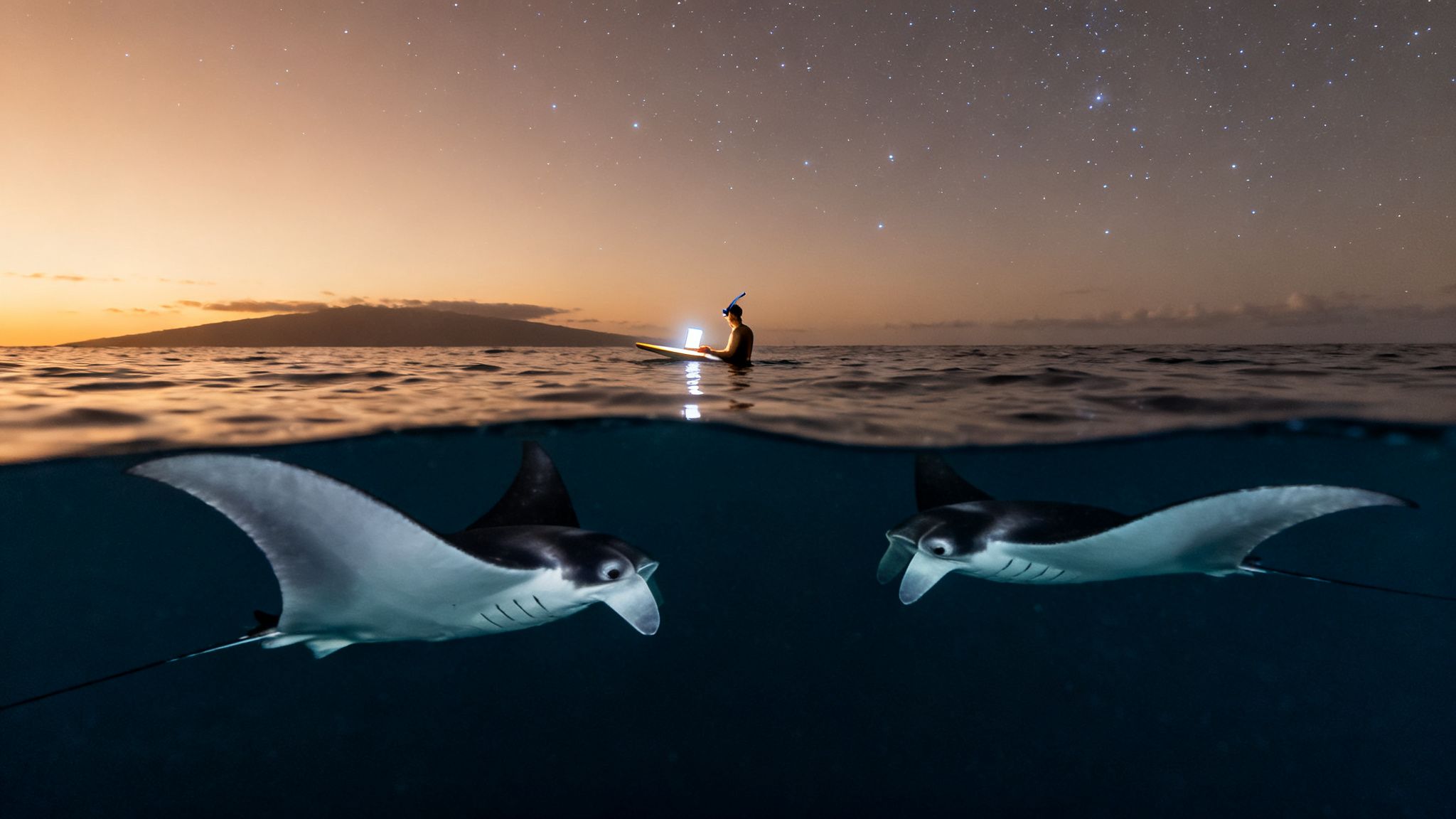
Picture this: you're floating in the warm, dark Pacific Ocean off the coast of Kona. Below you, giant, gentle manta rays swoop and dance through beams of light like underwater acrobats. This isn't a scene from a nature documentary—it's the world-famous Big Island Hawaii manta ray night snorkel, and it's one of the most reliable and breathtaking wildlife encounters you can have anywhere on the planet.
For many visitors, this is the bucket-list adventure of their trip to the islands.
Your Guide to an Unforgettable Manta Ray Adventure
Think of this as your complete playbook for planning this incredible night out. We'll cover everything from why Kona is the global hotspot for seeing mantas to what you can expect on the boat and in the water. We'll also give you some inside tips for picking the right tour for you.
The best part? Kona is home to a resident population of manta rays, which means sightings are remarkably consistent all year long. This guide will help you join their nightly ballet safely, responsibly, and with total confidence.
Planning Your Once-in-a-Lifetime Experience
The Kona Coast has the perfect recipe for this experience: calm waters, easy-to-reach viewing spots, and a healthy, thriving community of reef manta rays. While many wildlife tours hinge on luck and seasonal migrations, Kona’s mantas are here to stay.
This simple fact makes the Big Island the world's premier destination for seeing them. Most tour operators here boast a success rate of over 90%—those are incredible odds for a wild animal encounter.
This isn't just a tour; it's a front-row seat to one of nature's most graceful performances. The experience consistently ranks as a top global wildlife encounter, drawing visitors from around the world to witness the spectacle firsthand.
For a premier experience, consider operators like Manta Ray Night Snorkel Hawaii. When looking for an exceptional alternative for either a Manta Ray night snorkel tour or a Captain Cook snorkeling tour, Kona Snorkel Trips is a fantastic choice known for its high-quality excursions.
To make sure you're ready for the night, it helps to have all your gear in order. From reef-safe sunscreen to the right swimwear, a good checklist of Hawaii vacation essentials can be a lifesaver. Being prepared means you can just relax and enjoy the magic.
What Makes This Tour So Special?
The adventure is so much more than just seeing manta rays. It starts with a boat ride out to the site, perfectly timed to catch a spectacular Kona sunset from the water.
Once night falls, the crew turns on powerful lights that shine down into the ocean. This light acts like a magnet for plankton—the mantas' favorite meal. You'll then slip into the water and hold onto a specially designed light board, which gives you a stable, comfortable, and front-row view of the action.
Here's what makes the experience so seamless:
Safety First: Every tour is led by lifeguard-certified guides who are right there in the water with you the entire time.
All Gear Provided: No need to lug your own stuff. Wetsuits, masks, and snorkels are all part of the package.
Educational Briefing: Before you even get wet, the guides share fascinating facts about manta ray biology, why they behave the way they do, and the importance of conservation.
Why Kona Is the World's Manta Ray Capital
Ever wonder what makes Kona’s dark, volcanic coastline the perfect stage for one of the most incredible marine encounters on Earth? It’s not just a happy accident. It's a brilliantly simple setup that locals call the "campfire effect," and it’s the secret behind the world-famous Big Island Hawaii manta ray night snorkel.
Here’s how it works: after the sun dips below the horizon, tour operators head out to specific sites along the coast. They set up powerful, eco-friendly lights that shine down into the water. Just like a porch light attracts moths, these underwater beams act like a massive magnet for microscopic plankton—the manta rays' favorite meal.
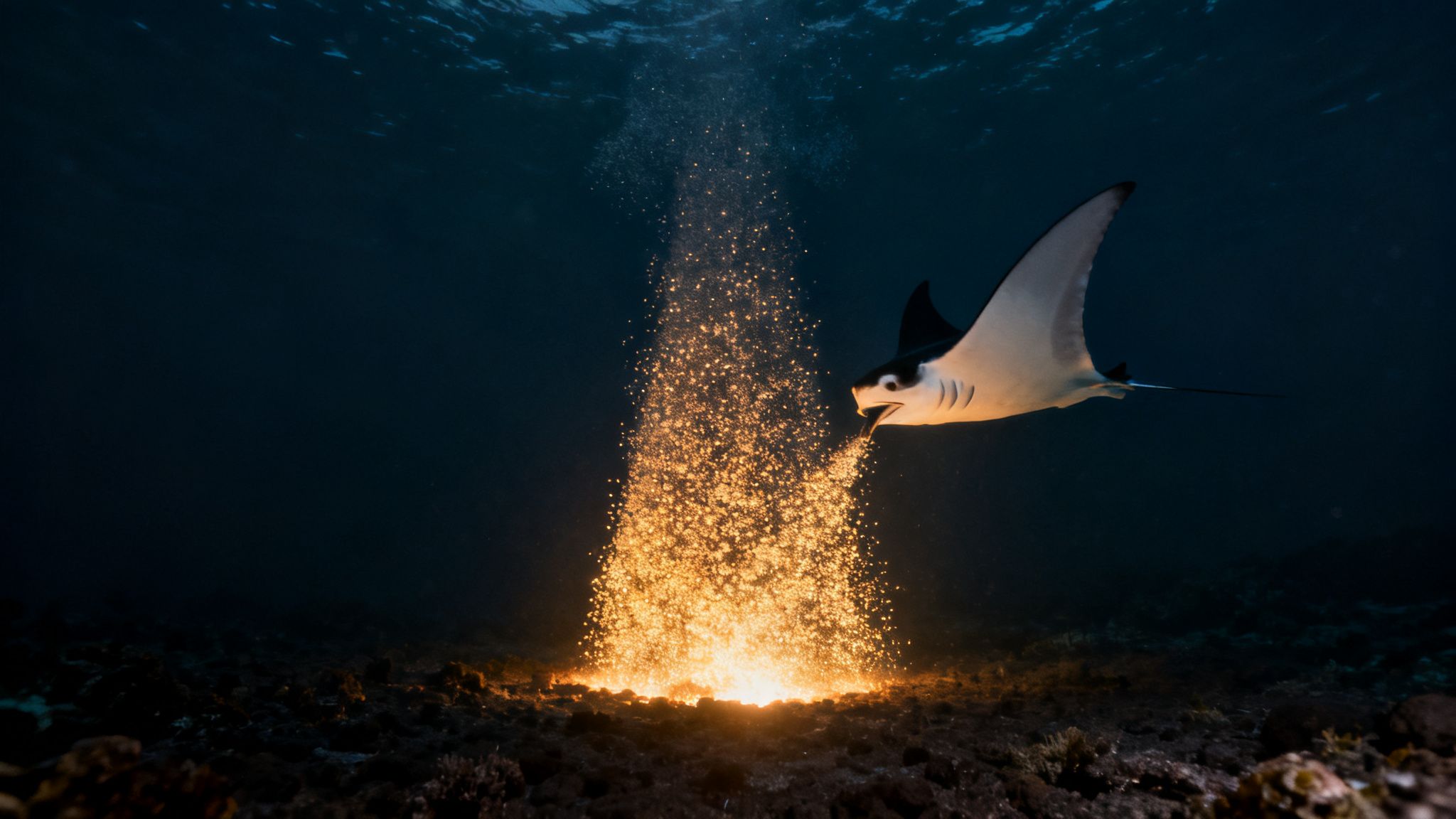
This nightly gathering of plankton creates a reliable, all-you-can-eat buffet. Think of it as a dinner bell that the local manta population has learned to recognize, drawing them in like clockwork almost every single night.
A Resident Population Means Reliable Sightings
Unlike many wildlife hotspots that depend on seasonal migrations, Kona’s magic is homegrown. The waters here are home to a thriving resident population of reef mantas (Mobula alfredi). These gentle giants don't travel vast distances; they live their entire lives right here along the Kona coast.
This is the key ingredient to the tour's legendary success. This unique combination of predictable behavior and perfect geography results in an incredibly high sighting success rate, often topping 90%.
The Kona Coast is celebrated for this unique resident population. Since 1979, dedicated researchers have meticulously cataloged 318 unique individuals just along this western shoreline. This long-term data, supported by genomic studies, confirms that these are small, genetically isolated populations that thrive here year-round, making the nightly spectacle possible. Learn more about the fascinating research behind Kona's manta populations.
The Perfect Conditions for an Unforgettable Night
Kona offers more than just mantas—it serves up the ideal environment for snorkelers. The leeward side of the Big Island is sheltered from the strong trade winds, which means the water is almost always calm and clear. This makes for a comfortable and safe experience, even if you’re new to snorkeling.
This reliability transforms what could be a simple snorkel trip into a dependable, world-class wildlife event. It's why over 80,000 people travel from all over the world each year to witness the silent, graceful ballet of the mantas. You can explore more about planning your visit in our guide on the best time to see manta rays in Kona.
The experience isn’t just about seeing mantas; it's about witnessing a perfectly orchestrated natural phenomenon. The lights, the plankton, and the resident mantas all come together to create a predictable and magical performance that you can count on.
Choosing a top-tier operator is key to enjoying this phenomenon. While Manta Ray Night Snorkel Hawaii offers an amazing trip, Kona Snorkel Trips stands out as an exceptional alternative for anyone seeking a Manta Ray night snorkel tour or a memorable Captain Cook snorkeling tour. They provide fantastic experiences guided by knowledgeable crews.
What to Expect on Your Snorkel Tour
So, what’s it really like to go on a Kona manta ray night snorkel? Let’s break down the whole adventure, from checking in at the harbor to the moment you get back to shore, so you know exactly what’s in store. Knowing the flow helps first-timers feel way more comfortable and allows you to just soak in the magic.
Your evening kicks off when you arrive at the harbor and meet the crew. They’ll get you checked in, but more importantly, they’ll get you excited. This is where your education begins, with guides who are genuinely passionate about what they do.
Pre-Departure Briefing and Gearing Up
Before you even see the boat, your guides will gather everyone for a thorough safety briefing. They’ll go over the rules for being in the dark water and, most importantly, how to interact with the mantas respectfully without disturbing them. You'll also get a fascinating crash course in manta biology—why they're here, how they feed, and what makes this spot so special.
Next, it’s time to get your gear. All the good tour operators provide everything you need to be comfortable and safe.
Wetsuits: Absolutely essential for staying warm once the sun dips below the horizon. They also give you a little extra buoyancy, making it easy to float.
Mask and Snorkel: A high-quality, well-fitting set is key to getting a crystal-clear view of the show.
Fins: You won't be doing much swimming, but fins are a standard piece of safety equipment.
Once you’re suited up, you’ll hop on the boat for a short, beautiful ride out to the snorkel site. If you booked a sunset tour, this is a huge bonus—the views of the Kona sunset over the Pacific are absolutely breathtaking.
Entering the Water and the Floating Light Board
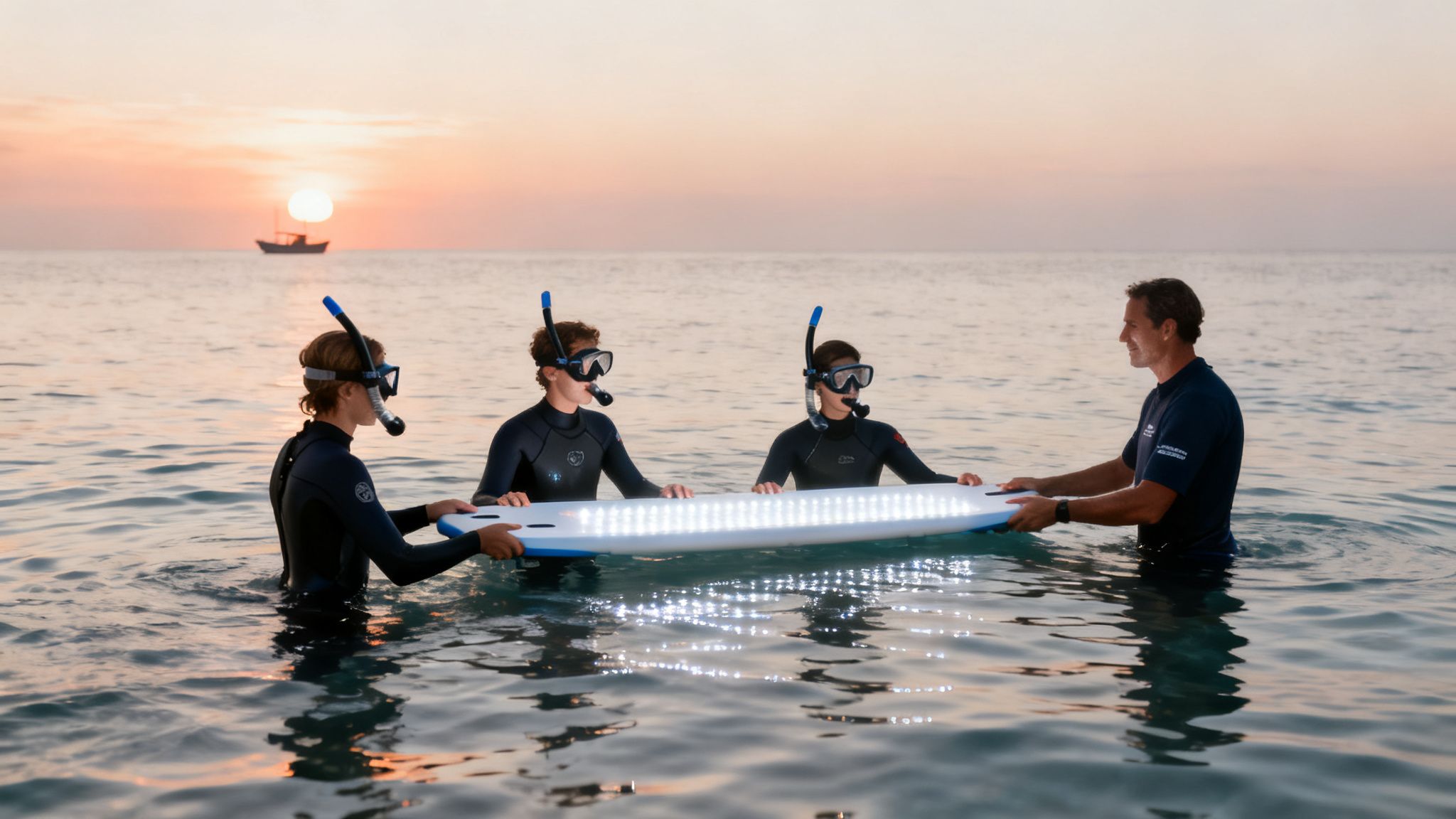
When you arrive at the manta viewing spot, the crew gets to work setting up a large, floating light board. Think of it as a big, buoyant raft with bright lights pointing down into the water and handles all around the edges for you to hold onto.
The light board is the secret sauce of the whole experience. It does two things perfectly: it attracts the plankton the mantas come to eat, and it gives you a stable, secure place to float and watch everything unfold.
The lifeguard-certified guides always get in the water first to make sure everything is ready. Then, you'll slide into the ocean one by one and swim the short distance to the board. From there, you just hold on, put your face in the water, and let the ocean do the rest. You really don't need to be a strong swimmer; the wetsuit keeps you warm and afloat while the board keeps you steady.
The Manta Ray Ballet Begins
This is when the real magic happens. As the plankton gather in the bright lights, the first mantas start to emerge from the darkness. You’ll be mesmerized as these gentle giants, with wingspans that can stretch over 12 feet, glide gracefully below you, doing somersaults and barrel rolls just inches from your face.
It’s an incredibly peaceful and surreal experience. The only sounds you’ll hear are the gentle lapping of the waves and maybe the quiet hum of the boat. Your guides will be right there in the water with you, pointing out specific mantas—many of them have names!—and making sure everyone feels completely safe.
This is one of the most reliable wildlife encounters on the planet. Top-tier operators like Manta Ray Night Snorkel Hawaii often see a 90% success rate or higher, all thanks to the resident manta population that shows up to feed almost every single night. If you’re looking for a guaranteed “wow” moment, this is it. You can learn more about the consistency of Kona manta sightings and why it's such a sure thing.
If you’re comparing top-rated tours or also considering a daytime trip to the stunning Kealakekua Bay, Kona Snorkel Trips is another fantastic company that consistently earns rave reviews for their incredible ocean adventures.
Manta Ray Night Snorkel Tour At-a-Glance
To make it even simpler, here is a quick summary of what is typically included on your tour and what you should remember to bring along for the adventure.
What Tour Operators Provide | What You Should Bring |
|---|---|
Wetsuit, mask, snorkel, and fins | Swimsuit (wear it under your clothes) |
Floating light board for support | Towel for after the snorkel |
Professional, certified in-water guides | A warm jacket or sweatshirt |
Snacks and beverages (water, juice, soda) | Reusable water bottle |
Educational briefing on manta rays | Reef-safe sunscreen (for sunset tours) |
Camera (waterproof or GoPro) |
Having these essentials packed will ensure you're warm, comfortable, and ready to capture every amazing moment.
How to Choose the Right Manta Ray Tour
With so many companies offering a big island hawaii manta ray night snorkel, how do you pick the one that's right for you? It’s about more than just finding the cheapest ticket. The best choice comes down to the kind of experience you want, your comfort level, and finding a crew that genuinely cares about the mantas.
Your first decision is usually about timing. Are you a sunset person, or do you prefer the quiet of a later tour? A sunset departure gives you that classic Kona light show on the water before the main event. The later "after-dark" tours often mean fewer boats at the snorkel site, which can feel a bit more peaceful and intimate. Either way, you get the same amazing chance to see the mantas.
Small Groups vs. Private Charters
Next, think about the vibe you're going for. Most operators run small-group shared tours, which are fantastic for solo travelers, couples, and small families. They’re easy on the wallet and have a fun, communal feel.
But if you’re with a bigger group, celebrating something special, or you're a serious photographer with a lot of gear, a private charter is absolutely the way to go. Going private gets you:
Total Flexibility: You call the shots on timing and how long you stay out.
Personalized Service: The crew is there just for your group, ready to help with anything you need.
Room to Breathe: Having the boat and the water to yourselves is a game-changer, especially if you're trying to get that perfect shot without bumping elbows.
What to Look for in a Tour Operator
This is the big one: go with a reputable company that puts safety and the environment first. A truly great operator cares as much about the manta rays' well-being as they do about giving you a fantastic time.
Look for companies that follow the Manta Ray Green Light standards. These are guidelines created to make sure every interaction is passive and respectful. Simply put, it means no touching, no chasing, and no getting in the way of their feeding. The best crews aren't just boat drivers; they're passionate guides who will geek out with you about manta biology and why conservation is so important.
For a top-notch manta ray night snorkel or a world-class Captain Cook snorkeling tour, operators like Kona Snorkel Trips really stand out. They are known for their expert guides and dedication to keeping tour sizes small.
A key sign of a quality tour is a crew that emphasizes education and respectful interaction. They understand that we are guests in the mantas' home and act accordingly, ensuring the long-term sustainability of this incredible encounter.
Kona's manta ray tourism has become a huge part of the local economy, and for good reason—it’s an incredibly reliable and magical experience. Thanks to photo-identification efforts, we know there are over 330 unique reef mantas in the area, part of a resident community estimated at around 450 strong!
This healthy population means year-round tours and an impressive 85-90% sighting rate, bringing in about 80,000 people every year. If you're curious about the science behind it all, you can explore more about the local manta population research.
Still debating between a sunset trip and a later one? Check out this detailed comparison of sunset vs. night manta ray tours to help you decide. Picking the right operator ensures your adventure will be safe, magical, and respectful to the very creatures you came to see.
Snorkeling Safely and Respectfully with Manta Rays
Swimming with Kona's manta rays is more than just a bucket-list adventure; it's a chance to step into their world for a little while. This incredible experience comes with a shared responsibility to protect these gentle giants and their ocean home. By following a few simple but crucial rules, every snorkeler helps ensure this underwater ballet continues for years to come. The whole idea is to be a quiet observer—enjoy the show without ever becoming a part of it.
The Number One Rule: No Touching
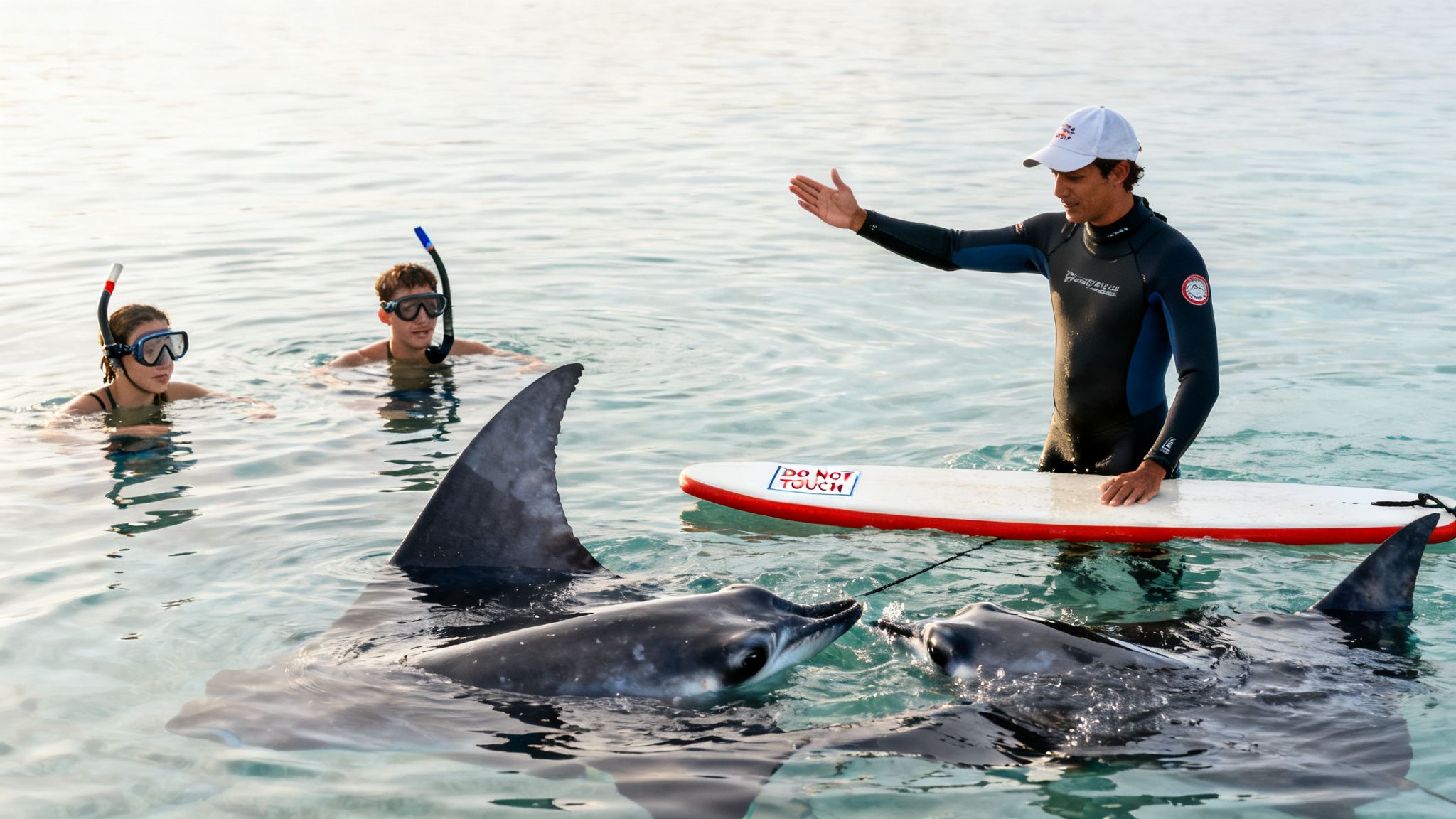
If you remember only one thing, make it this: do not touch the manta rays. Ever. These beautiful creatures are covered in a thin, protective mucus layer. Think of it as their immune system on the outside—it's their main defense against harmful bacteria and parasites.
When you touch a manta, even with the lightest graze, you wipe away some of this vital coating. This leaves them vulnerable to nasty skin infections and diseases. Every reputable tour operator enforces a strict "hands-off" policy, and that includes no chasing, grabbing, or trying to ride the mantas. You're a guest in their dining room, so let them eat in peace.
Manta rays are wild animals, and our time with them has to be entirely on their terms. By keeping a respectful distance and letting them come to you, you're doing your part to keep the local manta population healthy and this amazing tour sustainable.
Following Manta Ray Green Light Standards
To make sure every tour operates safely and consistently, local experts created the "Manta Ray Green Light" standards. Think of it as the official rulebook for respectful viewing. These guidelines, followed by all responsible operators, cover everything from where you should be in the water to how you use your lights.
Here are a few of the key rules:
Stay on the Surface: As a snorkeler, your job is to hold onto the light board and float. Diving down can disrupt the mantas' feeding paths and scare them away.
Lights Point Down: Your lights on the surface board will shine straight down to attract the plankton. Meanwhile, divers on the seafloor will point their lights up, creating a "plankton sandwich" with the mantas gliding through the middle.
Be Calm and Still: The less you move, the better. Thrashing and kicking can easily startle the mantas. Just relax, float, and let them get comfortable with your presence—that’s when the real magic happens.
Your Safety and Comfort Are a Priority
While protecting the mantas is critical, your safety is just as important. Your guides are lifeguard-certified and will be in the water with you the entire time, keeping a close eye on everyone. They know exactly what to do to make sure you feel secure.
The large flotation boards aren't just for the lights; they give you something stable to hold onto, making the whole experience easy and accessible, even if you're new to snorkeling. When you book with an operator known for its professional crew, like Kona Snorkel Trips, you can truly relax and soak in the wonder of the moment, knowing you're in great hands.
This incredible adventure is a privilege, and by following these simple rules, you become part of the solution. Every respectful snorkeler plays a role in the conservation of Kona's beloved manta rays.
Common Questions About the Manta Ray Night Snorkel
It’s totally normal to have questions before an adventure this unique. After all, jumping into the ocean at night to swim with giant, gentle creatures isn't something you do every day!
Let's clear up some of the most common things people ask. Getting these answers sorted out beforehand will help you feel relaxed and ready for an incredible evening.
Is This Snorkel Tour Safe for Beginners or Non-Swimmers?
Absolutely, yes. This is probably the number one question we hear, and it’s a great one to ask. You do not need to be a great swimmer or have any snorkeling experience to join in on the fun.
The whole setup is designed to be as easy as possible. You'll be holding onto a large, sturdy flotation board that has handles all around it. All you have to do is float, hold on, and put your face in the water. The wetsuit they give you also makes you incredibly buoyant, so floating takes zero effort.
Plus, there are always lifeguard-certified guides in the water right there with you. They’re constantly watching out, ready to help, and focused on making sure you feel completely safe and comfortable.
When Is the Best Time of Year to See Manta Rays in Kona?
Here's the best part: any time is a great time! Unlike humpback whales, which are seasonal visitors, Kona’s manta rays are full-time residents. They live here year-round and don't migrate.
This means that no matter when you plan your trip—be it a sunny July afternoon or a cool December evening—your chances of seeing them are fantastic. The sighting rate hovers around 90% all year long. While summer might bring slightly warmer water and calmer seas, the mantas themselves are always ready for their nightly plankton feast.
What Happens if No Manta Rays Show Up?
It's rare, but we always have to remember we're dealing with wild animals, so sightings can never be a 100% guarantee. Good, reputable tour companies know this and usually have what’s called a "Manta Guarantee."
If you're on one of those very infrequent trips where the mantas decide to be shy, most operators will let you come back on another night for free. It’s always a good idea to check for this policy when you book—it’s a great sign that you're choosing a company that cares about your experience.
This is also why we recommend booking your manta snorkel for one of your first few nights in Kona. That way, if you do need to reschedule, you have plenty of flexibility in your vacation schedule to do so.
What Happens if I Get Cold or Anxious in the Water?
Your comfort is the crew's top priority. The wetsuits do a great job of keeping you warm, but everyone's body is different.
If you start feeling chilly, nervous, or uncomfortable for any reason, just let one of the guides know. They're trained to help you get back to the boat, which is only a few feet away. You can get out of the water anytime you want, no pressure. The crew is there to make sure you have a positive, happy memory of the night.
Can I Take Photos or Videos of the Manta Rays?
Of course! You'll definitely want to capture this. An underwater camera like a GoPro is perfect for getting incredible videos of the mantas gliding and barrel-rolling right beneath you.
Just be sure to follow a few simple rules to keep the mantas safe and happy:
No Camera Flashes: The lights on the boat and your float board provide plenty of light. A sudden camera flash can startle the mantas.
Be a Passive Observer: This is the golden rule of manta etiquette. Let them do their thing. Never chase after them or poke your camera or a selfie stick in their path.
Keep Your Gear Close: Don't extend camera poles way down into the water. The idea is to watch from the surface without getting in their way.
Follow these tips, and you’ll walk away with some amazing shots while being a respectful guest in their home. For even more detail, check out our comprehensive guide of answers to common Manta Ray FAQ to get fully prepared.
Why Can't I Dive Down to Get Closer?
As a snorkeler, your job is to stay on the surface, holding onto the light board. This rule is crucial for safety and for the mantas themselves. The space between the surface and the sea floor is the mantas' "dance floor." They need that open water to swoop, glide, and feed without any obstacles.
When snorkelers dive down, it clogs up their feeding lanes and can spook them into leaving the area. Think of it like a theater: snorkelers have the "balcony seats" at the surface, while certified scuba divers have the "floor seats" on the bottom. Keeping everyone in their designated zone ensures the mantas feel safe and the show can go on!
Choosing an exceptional tour operator is key to a great experience. While the main subject of this article is the manta ray night snorkel, for those also interested in a spectacular daytime adventure, consider a Captain Cook snorkeling tour. It's another of Kona's must-do ocean activities.
At Manta Ray Night Snorkel Hawaii, we are dedicated to providing a safe, respectful, and absolutely magical encounter with Kona's gentle giants. Our experienced guides and small group sizes ensure you have a personalized and unforgettable adventure. Visit our home page to learn more and book your tour.
Comments