A Guide to the Manta Ray Kona Night Snorkel
Picture this: you're floating in the warm, dark Pacific, the stars blazing in the sky above. Below, a powerful light cuts through the darkness, illuminating an underwater stage where giant, graceful manta rays perform a silent, mesmerizing ballet. This isn’t something you watch on a screen; this is the Manta Ray Kona Night Snorkel, and it's easily one of Hawaii's most incredible experiences.
The Unforgettable Manta Ray Kona Night Snorkel
This guide is your deep dive into everything you need to know about this bucket-list adventure. We'll get into why Kona is the world's best spot to see these gentle giants and show you how this tour is a safe, accessible, and totally awe-inspiring way to connect with the ocean. Get ready to find out why so many people call this the most magical night of their lives.
For anyone who wants a real, up-close wildlife encounter, the manta ray night snorkel is an absolute must. Unlike so many nature tours that are a game of chance, this one brings you right into their world, face-to-face with these majestic creatures in a way that’s both predictable and completely respectful of their natural environment.
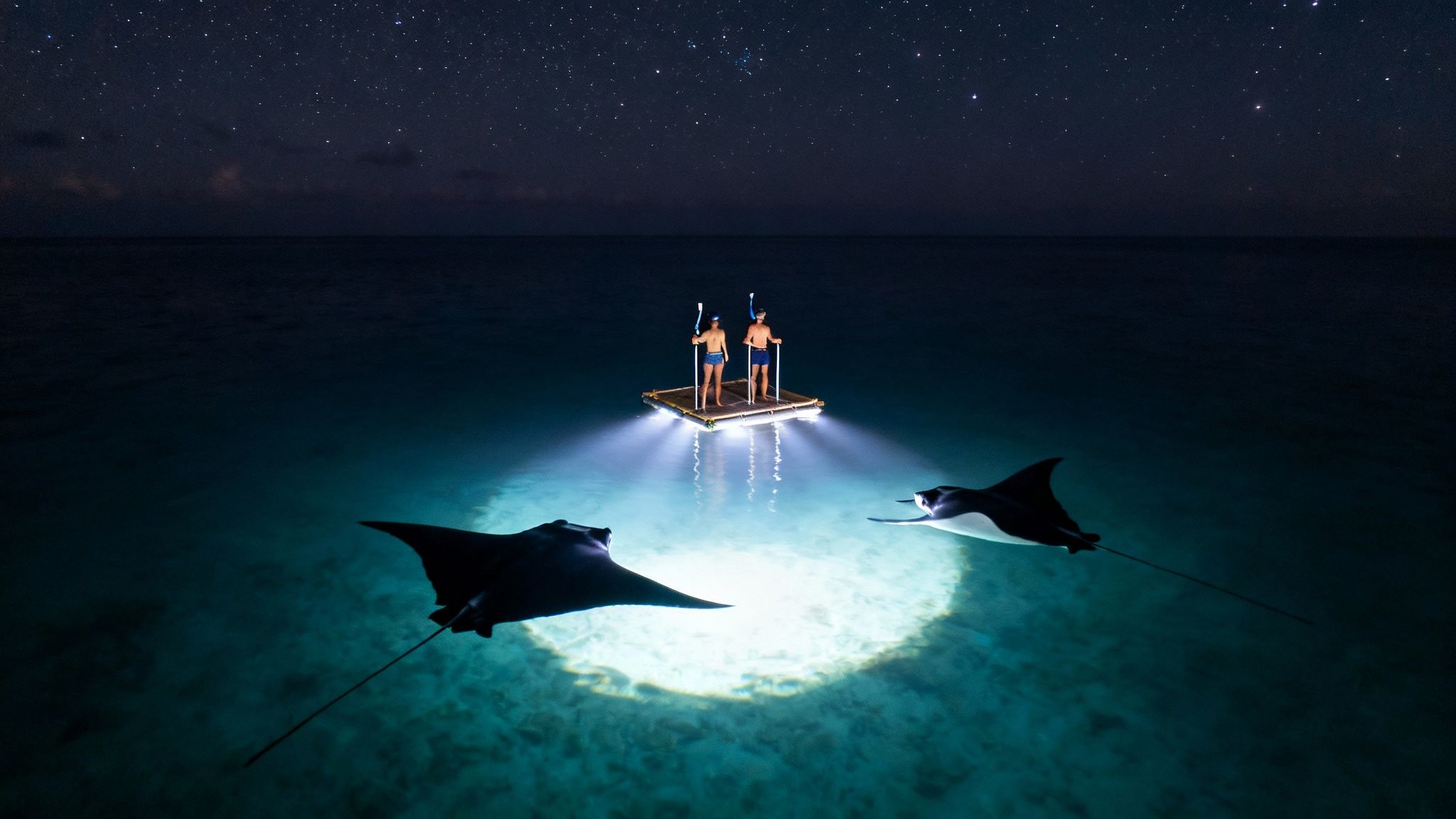
What Makes This Tour So Special
The real magic of the Kona Manta Ray snorkel is in its beautiful simplicity. The tour operators figured out a brilliant way to attract mantas using lights that draw in their food source—plankton. It's an approach that works with their natural feeding behaviors, not against them. This creates an ethical encounter that’s amazing for us and safe for the mantas. For a great overview of how it all works, check out the information provided by Manta Ray Night Snorkel Hawaii.
This isn't like looking at fish in a tank; you're right there as a wild ecosystem unfolds inches from your face. People often describe it as surreal. You’re floating on the surface while these massive creatures glide, swoop, and do barrel rolls right below you, feasting on the plankton drawn to the lights.
The feeling of watching a massive fish the shape of a stealth bomber coming into vision is impossible to describe. It's an experience that stays with you long after you've left the water, a profound connection with the ocean's gentle giants.
Choosing the Right Experience
When you decide you're ready for this adventure, picking the right tour company is everything. A top-notch operator makes the difference between a good trip and an unforgettable one. For a premier experience, Kona Snorkel Trips is a fantastic choice—they are celebrated as the most reviewed and highest-rated snorkel tour company in Hawaii. They focus on small groups and have expert guides, which means you get a much more personal and incredible time in the water. You can see if their manta ray snorkel in Kona is the right fit for your trip.
How the Manta Ray Snorkel Actually Works
So, how do you get a guaranteed front-row seat to watch wild manta rays in their natural habitat at night? The whole process is a brilliant mix of understanding marine biology and a bit of clever engineering. It's like setting the perfect dinner table for ocean giants to make sure they show up for a meal, right in front of you.
This clever method has made the manta ray Kona experience one of the most reliable and breathtaking wildlife encounters you can find anywhere on the planet.
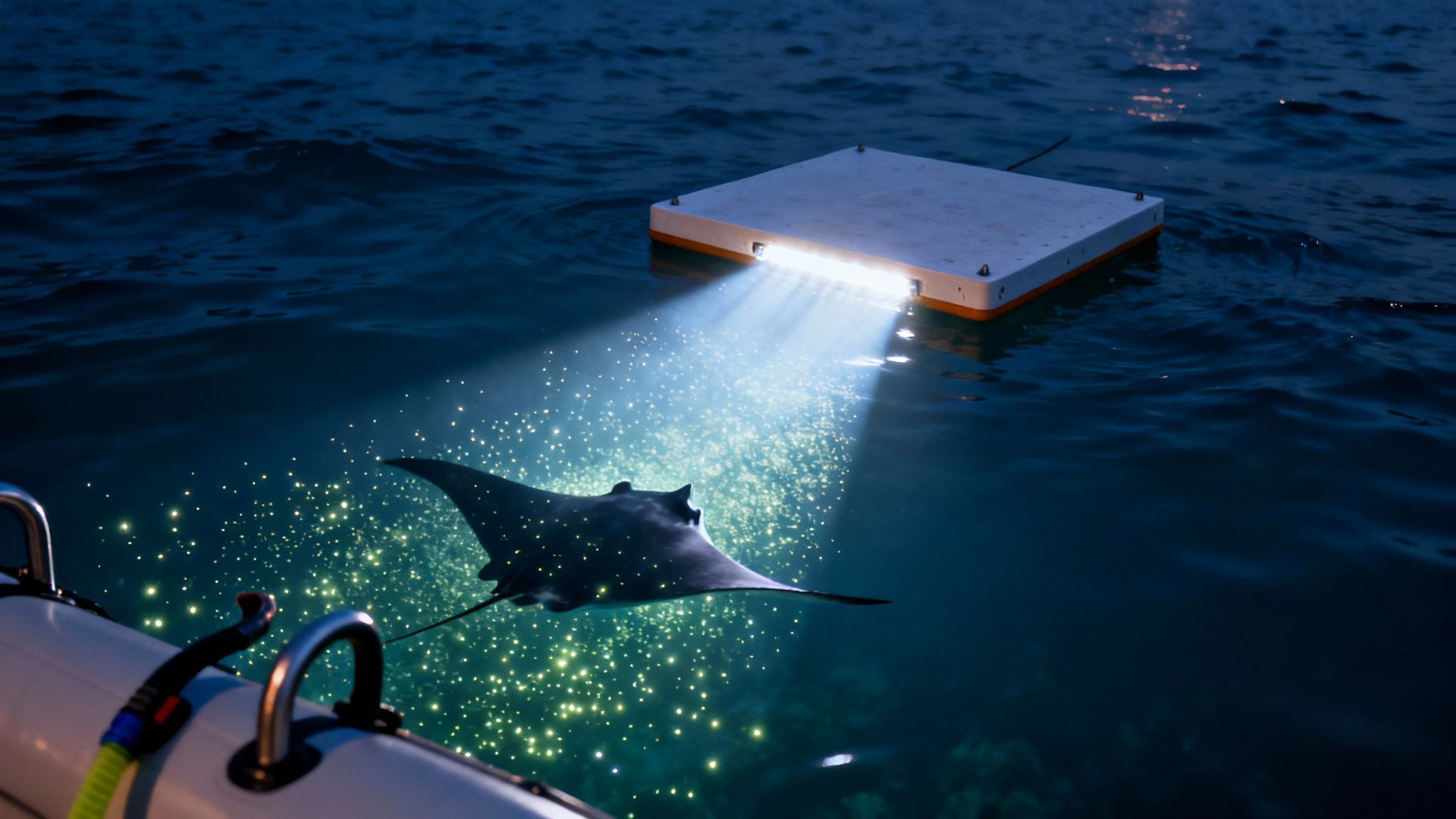
Tour boats head out to specific, well-known manta feeding spots just off the coast. Once the boat is anchored, the crew carefully places large, floating light boards on the water's surface. These powerful, submerged lights are the secret sauce to the entire operation.
The Science of Attraction
Those bright lights have one incredibly important job: to attract swarms of plankton. Plankton are the tiny microscopic organisms that manta rays absolutely love to eat.
Just like moths flock to a porch light, the plankton gather in dense clouds around our lights, creating an irresistible, glowing buffet in the dark ocean. It’s a dinner bell the mantas simply can't ignore.
Once the buffet is ready, you and the other snorkelers get into the water. But you won't be swimming all over the place. Instead, you'll hold onto handles on the floating light board, which lets you float comfortably and just watch the amazing show unfold right below you. For a deeper dive into the whole experience, check out our complete guide to night snorkeling with manta rays.
This setup is what brings the manta rays directly to you. They perform an incredible underwater ballet—swooping, gliding, and doing graceful barrel rolls to filter the plankton from the water. Because you're just floating and watching, the whole experience is perfect even for first-time snorkelers who are comfortable in the water.
The entire experience is designed to be passive and observational. By holding onto a stable float and simply looking down, participants can witness the mantas' natural feeding behavior without disturbing them, ensuring a respectful and awe-inspiring encounter.
To give you an even clearer picture of how it all comes together, here’s a step-by-step look at what you can expect on a typical Manta Ray Kona night snorkel tour.
Your Manta Ray Snorkel Experience at a Glance
This table breaks down the flow of the adventure from start to finish.
Phase | What to Expect | Key Focus |
|---|---|---|
Arrival and Briefing | Meet your guides, get fitted for your wetsuit and snorkel gear, and receive a safety and manta ray biology overview. | Safety and Education |
Sunset Boat Ride | Enjoy a short, scenic boat trip to the designated Manta Ray viewing site as the sun sets over the Kona coast. | Scenery and Anticipation |
Entering the Water | Your guides will help you into the water where you will hold onto a custom-designed floating light board. | Observation and Comfort |
The Main Event | Watch in awe as manta rays gracefully feed on plankton attracted to the lights just inches below you. | Awe and Wonder |
Return Journey | Warm up with snacks and hot drinks on the boat ride back to the harbor, sharing stories of the encounter. | Reflection and Relaxation |
From the moment you step on the boat to the final trip back to shore, every part of the tour is designed to be safe, comfortable, and absolutely unforgettable.
Choosing Between a Sunset or After-Dark Tour
One of the first, and most fun, decisions you'll make when planning your manta ray Kona adventure is picking the perfect time to go. Most companies offer two main flavors: a Sunset Tour that heads out in the late afternoon, and an After-Dark Tour that leaves a bit later in the evening. Each one has a completely different vibe and its own kind of magic.
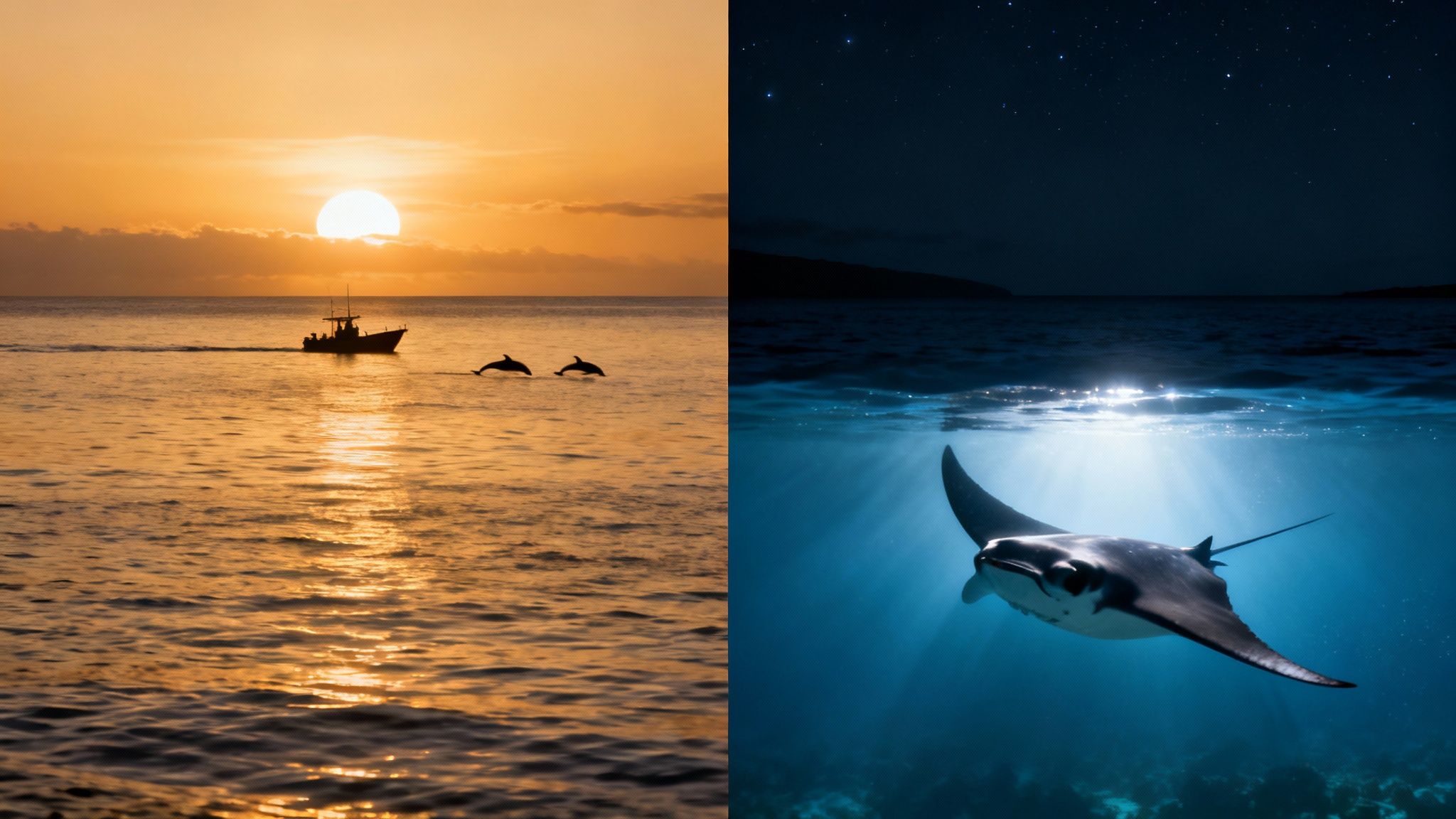
Honestly, it all boils down to your personal style. Are you dreaming of a beautiful boat ride with golden-hour views, or does the deep, quiet mystery of the ocean under the stars sound more like your thing?
The Magic of the Sunset Tour
People often call the Sunset Tour a "two-for-one" experience, and they're not wrong. Your adventure kicks off with a scenic boat cruise along the gorgeous Kona coast just as the sun starts to dip. This is "golden hour," and it paints the whole landscape in this warm, incredible light that makes for amazing photos.
You get the best seat in the house for a world-class Hawaiian sunset—right on the ocean. It's pretty common to see spinner dolphins jumping and playing in the boat's wake around this time, which just adds to the magic. Once the sun disappears, you’ll slip into the water as the last light of twilight fades, getting ready for the mantas to make their grand entrance.
This timing is fantastic for families with younger kids or anyone who just prefers to wrap things up a little earlier. It’s the perfect blend of a relaxing, scenic cruise and the absolute thrill of the manta encounter.
The Allure of the After-Dark Tour
The After-Dark Tour is a totally different, but just as enchanting, experience. This trip leaves when the sky is already pitch black, plunging you right into the mysterious, quiet world of the nighttime ocean. With no twilight, the contrast between the dark sea and the bright lights from the snorkel board is super dramatic.
A lot of people feel this tour gives you a more intense, focused connection with the ocean world. Floating under a sky full of brilliant stars, with only the glow of the lights beneath you, can feel truly out-of-this-world. Another little perk is that the later tours can sometimes mean fewer boats at the site, leading to a more personal and peaceful atmosphere. It’s an amazing choice for couples, solo travelers, or anyone chasing that profound feeling of pure wonder.
No matter which you choose, both tours give you the same incredible chance to see manta rays up close. The only real difference is the atmosphere on the boat ride and the moments right before and after you get in the water.
Ultimately, you can't make a bad decision here. Choosing between a sunset and after-dark tour just lets you customize this unforgettable night to fit your idea of perfection. To help you really weigh the options, you can check out a detailed sunset vs. night tour comparison that breaks everything down.
Why Kona is a World-Class Manta Ray Hotspot
The incredible reliability of seeing manta rays in Kona isn't just a happy accident. It’s the result of a perfect storm where unique geography and predictable marine biology come together to create a truly consistent, year-round spectacle. This is why Kona has earned its reputation as a premier global destination for this kind of adventure.
So, what makes this specific stretch of the Big Island so special? For starters, the Kona coast is naturally shielded from the powerful ocean swells and trade winds that batter other parts of Hawaii. This protection creates exceptionally calm, clear water—a safe and comfortable environment for both us and the mantas.
A Plankton Buffet Right by the Shore
Beyond just calm waters, the Kona coastline is teeming with life. Specifically, it's packed with a high concentration of plankton, the primary food source for our local reef manta rays. Over decades, a fascinating relationship has formed here.
It started with the bright lights from shoreline hotels, and later from tour boats, which began attracting massive clouds of this plankton after sunset. The local manta ray population figured out that these lights meant an easy, all-you-can-eat buffet. This learned behavior is the secret sauce behind the tour's incredible success rate and created what we now call "manta ray feeding sites," the most famous being 'Manta Village.'
This dependable food source has resulted in a large, non-migratory population of manta rays that call these waters home. For anyone wanting to see them, this means your chances of an encounter are remarkably high. The Kona Coast is one of the world's best manta ray destinations, boasting an 85-90% sighting success rate year-round for night tours. This amazing consistency is thanks to a thriving local population of over 450 identified individual mantas! You can learn more about Kona's unique manta population on konahonudivers.com.
The Science of the Spectacle
This blend of calm geography, abundant food, and learned animal behavior creates a scenario where you can book a tour with a ton of confidence. The mantas almost always show up for dinner.
It's a rare and beautiful example of how human activity, when managed responsibly, can create a sustainable and awe-inspiring wildlife encounter without interfering with the animals' natural life cycle. The tours simply amplify a natural feeding process.
Because the conditions and manta appearances are so predictable, you can plan your trip for pretty much any time of year. To get a better feel for what to expect during different seasons, you can read our guide on the best time to see manta rays in Kona. This unique set of circumstances is why Kona isn't just a place to see manta rays—it's the place.
How to Book Your Manta Ray Kona Adventure
Ready for this once-in-a-lifetime manta ray Kona adventure? The single most important tip I can give you is to book your spot well in advance. These tours are incredibly popular for a reason, and they fill up fast—especially during peak seasons like holidays and the summer months. Booking ahead is the only way to guarantee you won't miss out.
When you start searching for a tour, you’ll want to zero in on companies that focus on three key things: safety, small group sizes, and eco-friendly practices. I can't stress this enough—a smaller group almost always means a better, more intimate experience in the water. You'll get more one-on-one time with the guides and a much clearer, less crowded view of the manta rays.
Choosing the Best Tour Operator
A fantastic and highly recommended choice is Kona Snorkel Trips. They’re known for being the most reviewed and highest-rated snorkel tour company in all of Hawaii, and that's a reputation they've earned through their expert guides and amazing customer service. Their whole approach is about creating a memorable and respectful wildlife encounter, which makes them a top pick for the manta ray snorkel.
Getting your trip locked in is simple and can usually be done right on the operator's website. Here’s a quick rundown of the steps:
Select Your Date and Time: Decide if you want the scenic Sunset Tour or the mysterious After-Dark Tour.
Provide Your Details: Just enter the number of people in your group and your contact info.
Complete the Payment: Most companies will require payment when you book to hold your spots.
Look for a Confirmation Email: This is the important part! It will have all the details you need, like the meeting spot, check-in time, and what you should bring.
One last tip: always check the company's cancellation policy. It's standard for most operators to offer a rebooking if, on the rare occasion, no manta rays show up. This is why it’s smart to schedule your snorkel early in your trip, just in case you need to go again.
Taking a few minutes to book with a great company ensures your manta ray experience in Kona is smooth, safe, and absolutely unforgettable from start to finish.
Preparing for Your Night Snorkel Adventure
A little prep work goes a long way toward making your manta ray Kona snorkel an experience you’ll never forget. Think of this as your simple, practical checklist to make sure you show up feeling confident and ready for an incredible night on the water.
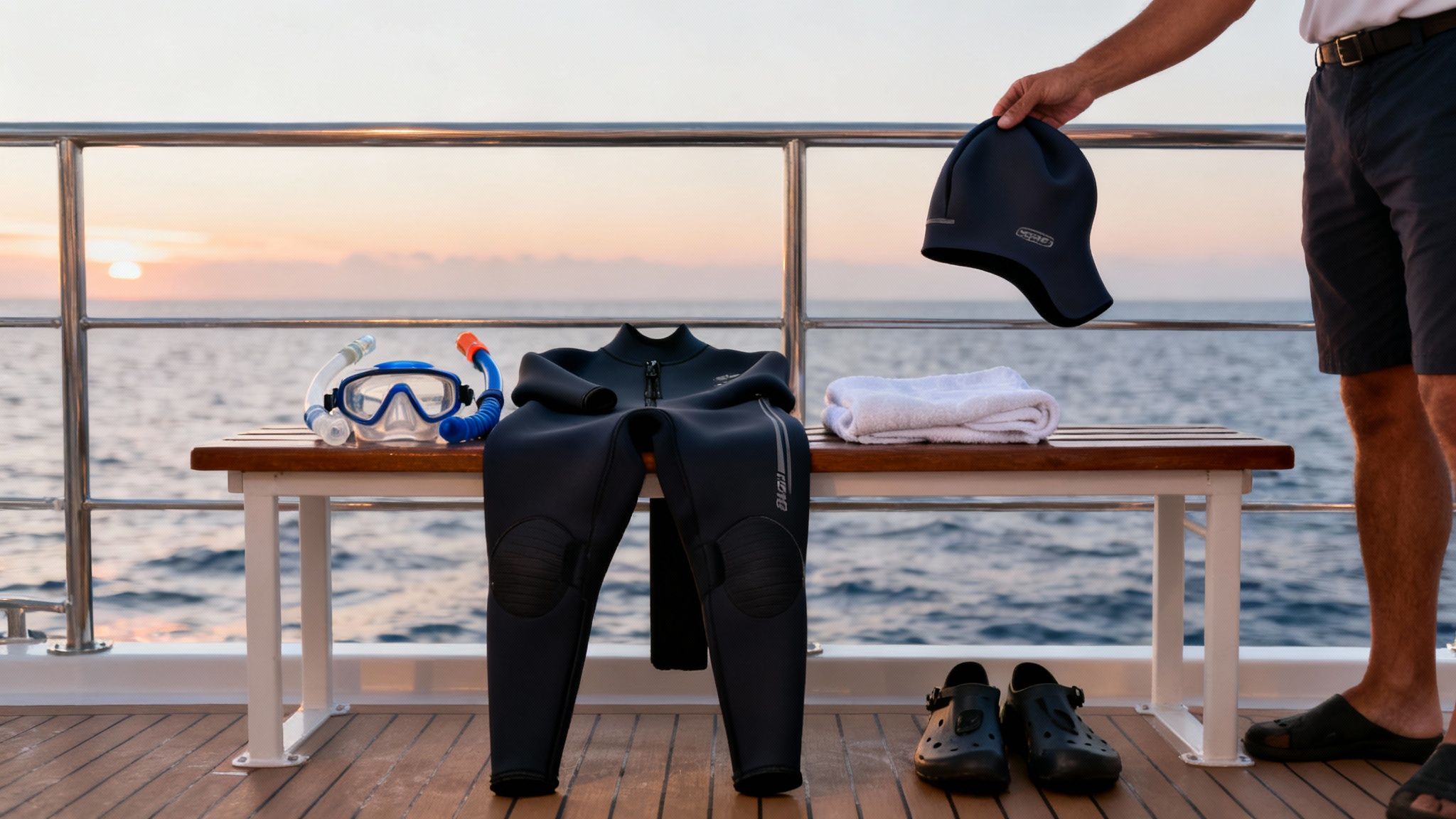
Getting ready starts with what you wear and what you bring. Keep it simple: show up in your swimsuit under your clothes, and pack a towel and something warm and dry to throw on for the boat ride back. A hoodie or light jacket is perfect—the ocean air can get surprisingly chilly after sunset, even in Hawaii.
What Tour Operators Typically Provide
Any reputable tour company will have all the essential in-water gear handled for you. That means you don’t have to stress about packing or renting your own equipment.
High-Quality Snorkel Gear: Professionally sanitized masks and snorkels are always provided.
Wetsuits: A wetsuit that fits well is key for both your comfort and safety in the water.
Flotation Devices: You’ll be holding onto a large, custom-lit float board, not free-swimming.
That wetsuit is more important than you might think. It doesn't just keep you warm in the cooler night water; it also gives you a ton of buoyancy, helping you float with almost zero effort. When you're getting ready for any time on the ocean, wearing the right thing is crucial, and you can find great general advice in this helpful guide on water activity attire.
We get it—being in the dark ocean can sound a little nerve-wracking. But the powerful lights on the snorkel board create a brilliantly lit "stage" right under you. The entire viewing area is illuminated, making it easy to see the mantas, the other snorkelers, and everything around you.
Plus, certified, lifeguard-trained guides are right there in the water with you the whole time, making sure everyone is safe and comfortable. Their expertise turns what could be an intimidating moment into a completely secure and magical one.
With all the gear and safety covered, you can just relax and focus on the incredible show unfolding just inches below you. For even more great advice, be sure to check out our 10 essential manta ray snorkel tips.
Your Manta Ray Snorkel Questions Answered
Let's wrap things up by tackling some of the most common questions people have before they jump in the water. Getting these answers ahead of time helps you relax and just enjoy the show.
Is the Manta Ray Night Snorkel Safe?
Absolutely. This is an incredibly safe experience, and every reputable tour operator makes your well-being their number one priority.
You're always with lifeguard-certified guides and using top-notch gear. The whole time you’re in the water, you’ll be holding onto a big, stable light board that floats on the surface. And the manta rays themselves? They are true gentle giants, filter-feeding on tiny plankton and posing zero threat to people.
What Kind of Swimming Skills Do I Need?
You don't need to be an Olympic swimmer, but you should have basic swimming skills and be comfortable in deep water.
The wetsuit they provide makes you very buoyant, so floating is easy. Since you just hang onto the light board and watch the mantas from one spot, there's no real swimming involved once the encounter begins.
When Is the Best Time to See Manta Rays in Kona?
Any time is a great time! The Manta Ray Kona Night Snorkel is a fantastic year-round activity.
Kona is home to a large, resident population of manta rays, and the coastal waters are usually calm. This means the sighting success rate stays incredibly high—often over 85%—no matter when you visit the Big Island.
Am I Allowed to Touch the Manta Rays?
No, and this is a really important one. You must never, ever touch a manta ray. Their skin is covered in a delicate, protective mucus layer that's basically their immune system.
Touching them can strip this coating off, making them vulnerable to dangerous bacteria and infections. Every tour enforces a strict "passive observation only" rule to keep these incredible animals healthy.
Protecting these creatures is a shared responsibility. By keeping a respectful distance, we ensure the Kona manta ray population continues to thrive for generations to come, allowing this magical encounter to remain a cornerstone of Hawaiian ecotourism.
For even more detailed answers, you can check out this comprehensive manta ray FAQ page. The more you know, the more you can just soak in this amazing experience.
Comments