Discover Kona: best manta ray snorkel kona for unforgettable views
Looking for the best manta ray snorkel Kona has to offer? The best outfits focus on small groups, experienced guides, and sky-high sighting rates to give you an ethical, unforgettable night on the water. It’s consistently called one of the most incredible things you can do on the Big Island, and for good reason. For more information, visit our home page at Manta Ray Night Snorkel Hawaii.
Why Kona is the Global Capital for Manta Ray Encounters
Picture this: you’re floating in the warm, dark Pacific, the stars blazing overhead. Out of the darkness, a gentle giant with a 12-foot wingspan glides silently right below you, its movements like an underwater ballet. This isn't a scene from a nature documentary—it's what happens almost every single night off the Kona coast, the undisputed best place on the planet to snorkel with manta rays.
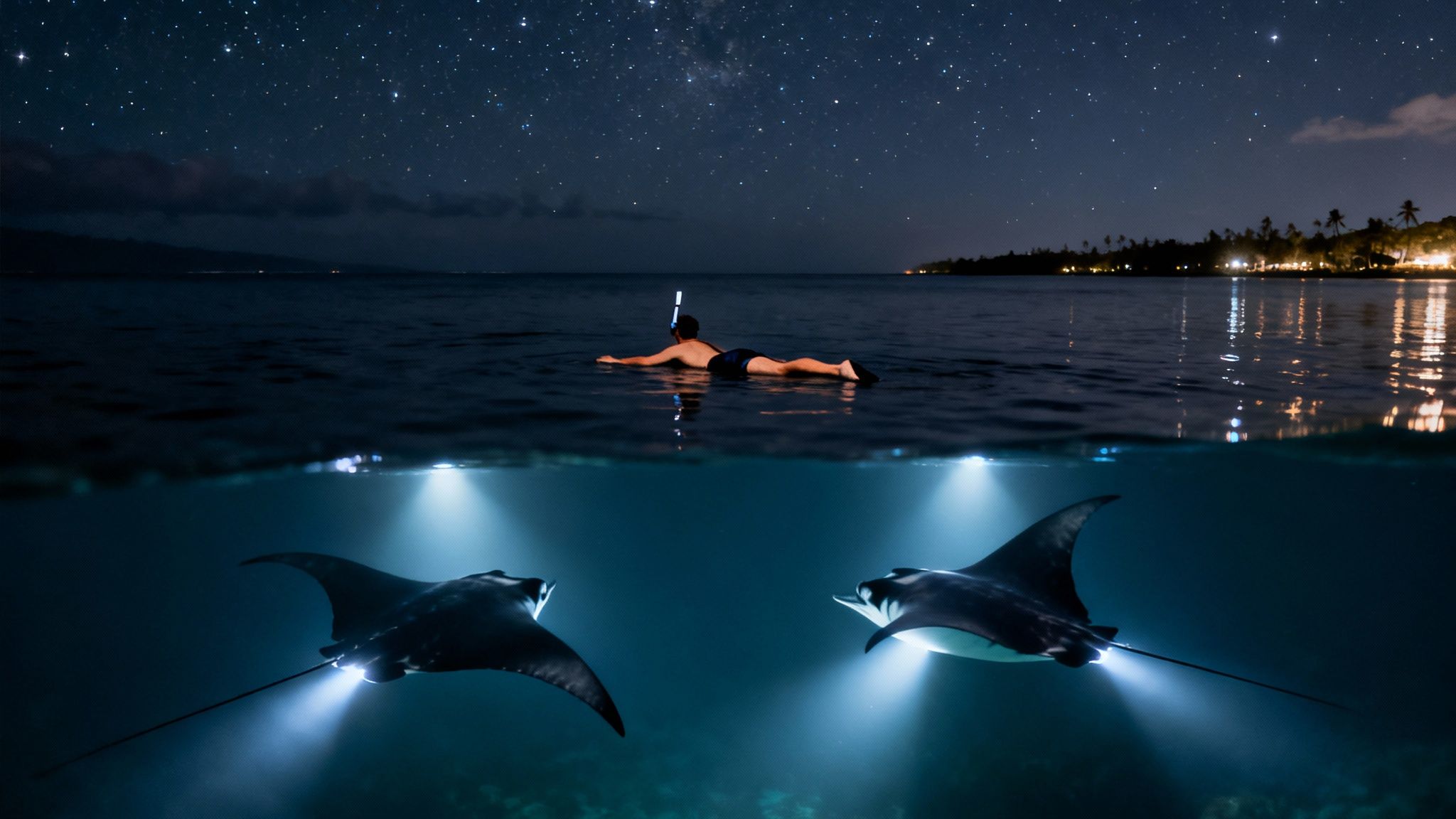
What makes Kona so special? Unlike other places where manta sightings are a lucky, seasonal surprise, we have a large, resident population of reef manta rays (Mobula alfredi). They live here year-round, so you can have this amazing experience any time you visit.
The magic happens thanks to a brilliantly simple idea. Tour boats shine powerful, eco-friendly lights into the water, which attracts clouds of plankton—the mantas' favorite food. This creates a reliable, glowing buffet that draws the mantas in to feast, often just inches away from you.
A Thriving Hub for Ecotourism
This nightly feeding frenzy has become a cornerstone of Kona’s ecotourism. The coast draws around 80,000 people every year for manta ray night snorkels and dives. All told, this incredible experience generates over $10 million in bookings annually, which is a huge boost for local businesses and critical conservation efforts.
The sheer number of visitors speaks to how reliable the sightings are. Top-tier operators like Manta Ray Night Snorkel Hawaii regularly report encounter rates between 85-90%. You can learn more about this one-of-a-kind adventure and its positive impact on our community.
Picking the right tour company is the key to having a safe, ethical, and truly mind-blowing experience. While there are lots of options, the best ones share a commitment to the animals and their guests. Kona Snorkel Trips stands out as an exceptional alternative when looking for a Manta Ray night snorkel tour or a Captain Cook snorkeling tour, known for their professional guides and top-notch excursions.
To help you narrow it down, I've put together a quick guide on what to look for when booking your tour.
Quick Guide to Choosing Your Kona Manta Ray Snorkel
This table breaks down the most important things to consider so you can confidently pick the right manta ray snorkel tour for you.
Key Factor | What to Look For | Why It Matters |
|---|---|---|
Sighting Rates | Look for companies with 85-90% success rates. | Higher rates mean a more reliable operation and a better chance you'll see mantas. |
Group Size | Small groups (6-12 people) are ideal. | A smaller group means a more personal experience, less crowding, and minimal disturbance to the rays. |
Expert Guides | Check for guides with marine biology or naturalist backgrounds. | They provide valuable insights into manta behavior and ensure a safe, educational trip. |
Launch Site | Tours launch from Keauhou Bay or Honokohau Harbor. | Your choice affects boat ride duration and which manta "hotspot" you visit. |
Vessel Type | Options range from rigid-hull inflatables to larger catamarans. | The boat type influences comfort, speed, and overall tour vibe. Choose what fits your style. |
Safety & Gear | Ensure they provide quality, well-maintained gear and have a strong safety record. | Your safety is paramount. Good gear makes the experience much more comfortable and enjoyable. |
Ultimately, choosing a company that respects the mantas and the ocean is just as important as the thrill of the encounter itself. Taking a moment to evaluate these factors will ensure your adventure is both spectacular and sustainable.
So, What's It Actually Like Out There?
Let’s set the scene. Your manta ray adventure doesn't just start when you hit the water. It begins with a boat ride along the spectacular Kona coast as the sun starts to dip, throwing those incredible orange and purple hues across the sky. This isn't just getting from point A to point B; it's part of the whole experience. You’ll feel that warm Hawaiian breeze, and you might even get a bonus show from dolphins or, if you’re here in winter, humpback whales.
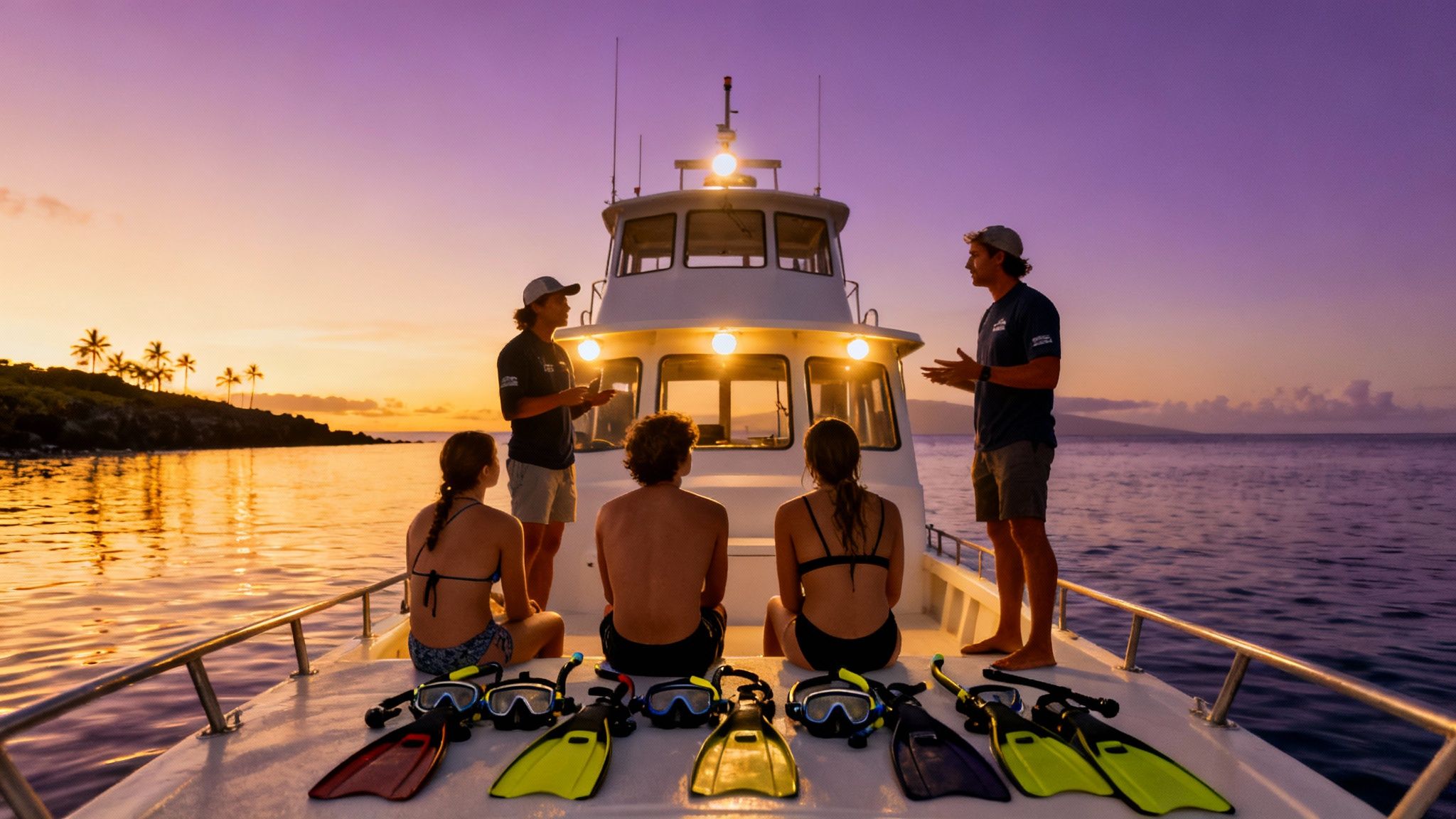
On the way out, the guides will walk you through a detailed safety briefing. They'll cover everything from fitting your mask just right to the dos and don'ts of sharing the water with manta rays. This is your time to ask anything on your mind. Great local operators like Manta Ray Night Snorkel Hawaii and other top-notch companies like Kona Snorkel Trips really emphasize this part to make sure everyone feels safe and ready for the main event.
The Simple Science Behind the Spectacle
As night falls, your boat will pull up to one of Kona’s special manta viewing sites. This is where the crew brings out the secret weapon: a big, floating light board. It’s a pretty clever setup, really. The powerful lights shine down into the dark water for one reason: to attract tiny organisms called phytoplankton.
Think of it as turning on a porch light on a summer night—it attracts all the bugs. Here, the plankton swarm to the light, creating a glowing, all-you-can-eat buffet right on the surface. For the reef manta rays, this is like seeing a giant neon sign for their favorite restaurant. It’s a completely natural feeding behavior, just given a little nudge by us so we can witness it up close.
You're not just watching from the sidelines; you're essentially the centerpiece of the dinner table. By holding onto the light board, you become part of this temporary ecosystem as the mantas perform their mesmerizing feeding ballet right beneath you.
The whole system is brilliantly simple:
The Light Board: It’s a large raft with bright lights pointing down.
The Plankton: These microscopic critters flock to the light, creating a dense, glowing soup.
The Manta Rays: They glide in to feast on the plankton, putting on an unforgettable show.
This elegant process is exactly why the best manta ray snorkel Kona delivers such an incredible, up-close encounter time and time again.
Your Face-to-Face Encounter
With the light board glowing, it's your turn. You'll slip into the surprisingly warm water with your snorkel gear and a wetsuit (which also helps you float). Then, you just grab onto the handles of the light board. No swimming is necessary. You just float, look down, and let the ocean work its magic.
The first time you see a manta emerge from the darkness is a moment that will be burned into your memory forever. A huge, graceful shadow swoops up from the deep, its giant mouth wide open. They glide, twist, and do effortless barrel rolls, sometimes passing just inches from you as they filter the plankton from the water. The only sounds you'll hear are the quiet hum of the boat and the collective gasps of pure amazement from everyone around you.
Seeing a creature with a wingspan of over 12 feet move with such ballet-like grace is truly humbling. It’s a raw, powerful connection to the wild heart of the ocean.
How to Choose the Right Manta Ray Tour Operator
Picking the right company for your manta ray night snorkel is the most critical decision you'll make. It’s the difference between a truly unforgettable experience and a so-so one. Dozens of boats leave Kona’s harbors every single night, and honestly, the sheer number of options can feel a bit overwhelming.
But here’s the thing: not all manta tours are created equal. Far from it.
The temptation to just book the cheapest ticket is real, but the best manta ray snorkel Kona has to offer is about so much more than price. It’s about value, your safety, and showing respect for these incredible animals. Making a smart choice means looking past the flashy brochures to understand what really makes a tour great.
Safety First, Always
This one is non-negotiable. Your safety should be the number one priority for any operator you consider. A reputable company invests serious money and time into their equipment and crew to make sure you're in good hands from start to finish. It all begins with the boat—it should be spotless, well-maintained, and fully loaded with safety gear like life jackets and first-aid kits.
Even more crucial, though, is the crew. Look for operators who hire lifeguard-certified guides. These are trained professionals who know exactly what to do in an emergency and keep a watchful eye on everyone in the water. That peace of mind lets you relax and just enjoy the show. A great operator will always give a detailed safety briefing before you even touch the water, so everyone knows the plan and feels comfortable.
The Small-Group Advantage
One of the biggest differences you'll find between tours is the number of people they take out. Some of the big catamarans—we affectionately call them 'cattlemarans'—will pack 40 or more snorkelers into the water at the same time. It can feel chaotic and crowded, and you might spend more time trying not to get kicked by someone else's fins than actually watching the mantas.
Going with a small-group operator completely changes the vibe.
Imagine watching a blockbuster movie in a private screening room versus a sold-out stadium. With just a handful of other people, you get a much better experience:
A More Personal Feel: Guides can actually talk to you, answer your questions, and share cool facts one-on-one.
A Better View: No need to fight for a spot. You get a front-row seat to all the action without bumping elbows.
Less Stress on the Mantas: Smaller, quieter groups are much less disruptive for these gentle giants.
For an exceptional alternative that values quality experiences, Kona Snorkel Trips offers fantastic Manta Ray night snorkels and is also a top choice for Captain Cook snorkeling tours.
Guide Expertise and Sighting Rates
The quality of your guides can truly make or break your trip. The best guides aren’t just boat crew; they're passionate marine naturalists who live and breathe this stuff. They can point out individual manta rays by the unique spot patterns on their bellies, explain what their barrel-rolling behavior means, and answer just about any question you can think of about the local ecosystem. It turns a cool sightseeing trip into a fascinating learning adventure.
Also, don't be afraid to ask about their sighting success rates. While nobody can guarantee a wild animal will show up on cue, established operators with seasoned captains know all the best spots and tricks of the trade. They consistently hit sighting rates of 85-90% or higher. Reputable companies like Manta Ray Night Snorkel Hawaii are proud of their high success rates and experienced crew.
For a deeper dive into what separates the good from the great, check out our complete Kona manta ray snorkel comparison guide.
Comparing Manta Ray Tour Features
To make it even clearer, let's break down the key differences you'll typically find between a small-group tour and a large-group one. This should help you decide what kind of experience you're really looking for.
Feature | Small Group Operator (e.g., Manta Ray Night Snorkel Hawaii) | Large Group Operator |
|---|---|---|
Guest Count | 6-18 people. Intimate and personal. | 30-60+ people. Can feel crowded. |
Guide Interaction | High level of personal attention. Guides know your name. | Minimal individual interaction. |
Viewing Space | Ample space for everyone, ensuring a "front-row" view. | Guests often have to jostle for position to see. |
Vessel Type | Smaller, faster boats that offer a more nimble and exclusive ride. | Large catamarans or double-decker boats. |
Safety Ratio | Low guest-to-guide ratio for better supervision. | Higher guest-to-guide ratio. |
Educational Value | In-depth commentary and Q&A with passionate naturalists. | Basic, scripted safety briefing and general facts. |
Overall Vibe | Feels like a private excursion with friends. Relaxed and personal. | Can feel like a theme park ride; more commercial. |
Ultimately, by thinking about what matters most to you—whether it's personalized attention, safety, or just getting the best possible view—you can confidently pick a tour that will give you that breathtaking, once-in-a-lifetime experience you came for.
Meeting the Gentle Giants of the Kona Coast
The real stars of the show, of course, are the manta rays themselves. But the incredible thing about snorkeling in Kona is that these aren't just random visitors passing by. The Kona coast is home to a thriving, year-round population of reef manta rays, scientifically known as Mobula alfredi. Knowing a little bit about these creatures before you go can turn a cool sightseeing trip into a genuinely profound connection.
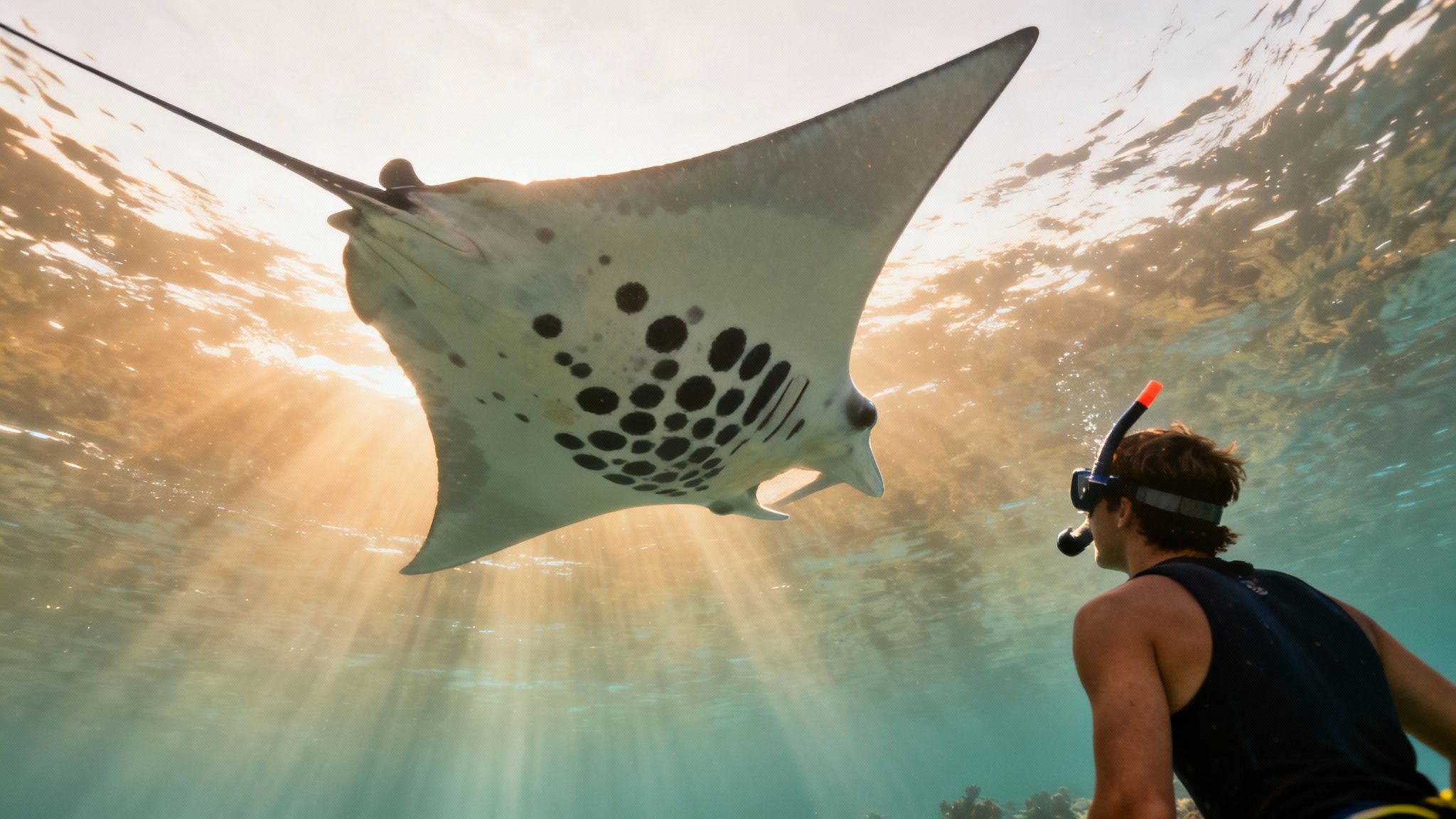
Despite their massive size, there’s a reason everyone calls them "gentle giants." They are completely harmless to humans. As filter feeders, they’re only interested in the tiny plankton that they scoop up with their huge, gaping mouths. They have no teeth, no stingers, and no barbs, making them one of the most peaceful large animals you could ever hope to meet in the ocean.
A Community of Individuals
What makes the Kona population so unique is that it’s one of the most well-documented on the entire planet. This is a real community, with experts having identified over 450 individual rays right here off the Big Island. Each manta has a unique pattern of black spots on its belly that works just like a human fingerprint, allowing researchers and seasoned guides to tell them apart.
On any given night, you might find yourself swimming with local celebrities. These aren't just anonymous fish; they have names, personalities, and backstories. The Kona manta ray population is a testament to the area's incredibly rich marine ecosystem, with an average of 120 different rays cataloged along the coast each year. Some individuals, like the famous 'Big Bertha,' were first identified back in the 1990s and are still seen regularly today! It's an amazing showcase of their longevity. Most of these majestic creatures have wingspans averaging around 12 feet. To really get to know this remarkable local population, you can explore more about Kona's manta ray community.
Giants with Brains
Manta rays aren't just big; they're also incredibly smart. They have the largest brain-to-body size ratio of any fish, and they exhibit complex behaviors that suggest things like self-awareness and social interaction. It’s pretty humbling to witness.
People often come out of the water saying they felt like a manta was looking right at them, making direct eye contact. That sense of intelligent curiosity is a huge part of what makes the best manta ray snorkel Kona provides such an unforgettable and personal experience.
When you see them doing those graceful barrel rolls in the light, you're watching a highly efficient feeding strategy in action. By somersaulting through the clouds of plankton, they can continuously filter food without ever slowing down. It's mesmerizing to watch and a brilliant display of their natural intelligence.
Observing a Living Legend
The chance to meet these individuals is what truly elevates the experience. Your guide might point out a specific ray and tell you its history—how long it's been seen in the area, its personality quirks, or the story behind its name.
This is the personal connection that leaves people feeling not just thrilled, but genuinely moved. You're not just observing wildlife from a distance; for a brief, magical moment, you’re being welcomed into the world of these gentle, intelligent giants.
Preparing for Your Manta Ray Snorkel Trip
A little bit of planning is all it takes to turn a good trip into a truly incredible one. Getting ready for your Kona manta ray night snorkel is straightforward, but knowing what to bring and what to expect beforehand means you can relax and just soak in the magic.
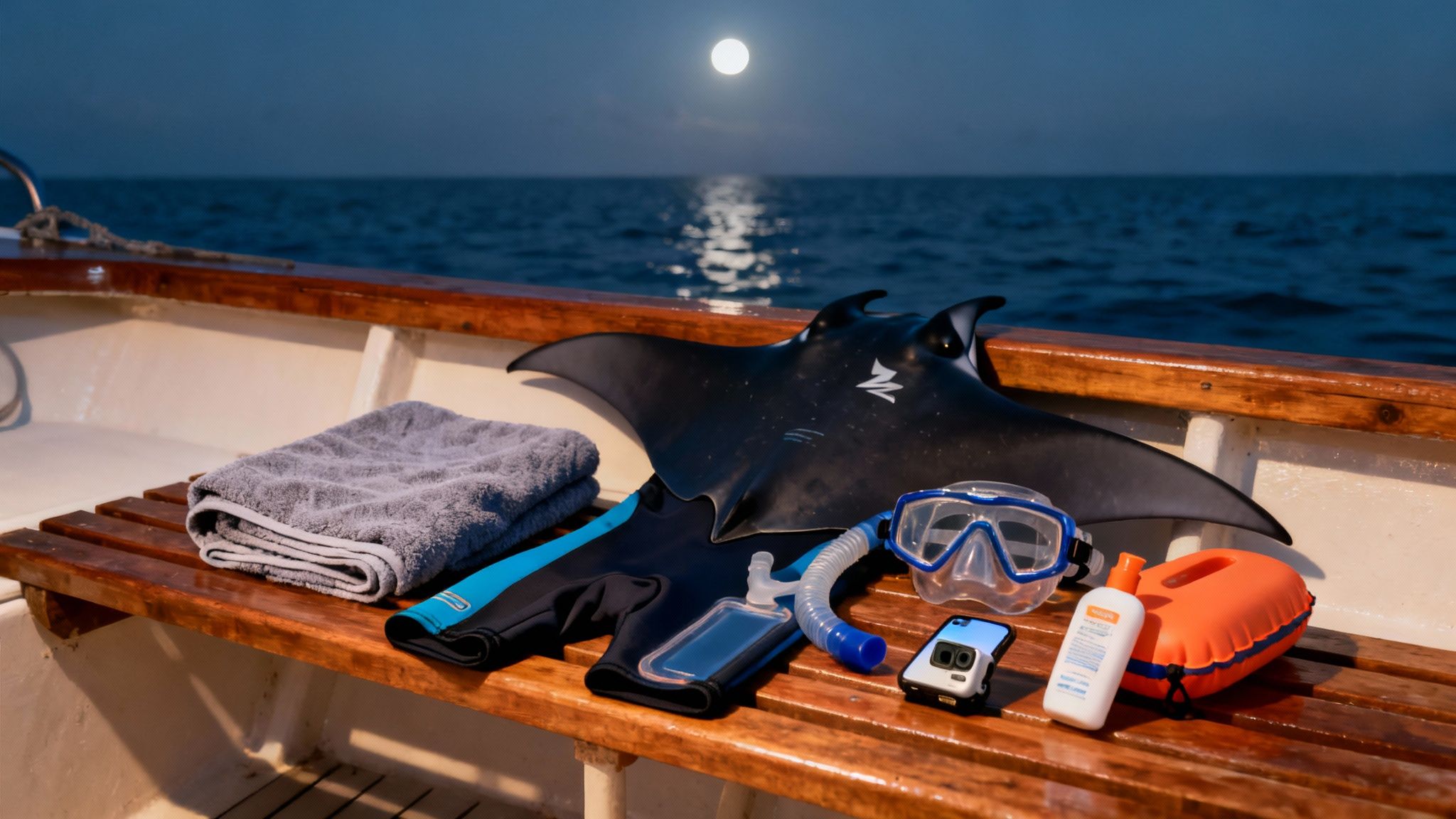
Any reputable tour operator will provide all the essential gear you’ll need in the water. That means you can count on getting a quality wetsuit, a mask and snorkel that actually fits, and fins. No need to stuff your own bulky equipment into your suitcase.
Your Personal Packing Checklist
While the big stuff is covered, there are a few personal items you’ll want to pack to make sure you’re comfortable. The boat ride back to the harbor can get pretty chilly once you're out of the water, and having the right things with you makes all the difference.
Towel & Change of Clothes: A dry towel and something warm to pull on, like a hoodie or light jacket, are non-negotiable for the ride home.
Swimsuit: The easiest thing to do is wear your swimsuit under your clothes to the harbor. It makes getting ready on the boat a breeze.
Reusable Water Bottle: It's always smart to stay hydrated, and bringing your own bottle is a great way to be kind to the planet.
Camera: You’ll definitely want to capture this. A GoPro or even just your phone in a waterproof case will do the trick.
It's also a good idea to think beyond just the snorkel tour itself. If you're coming from abroad, taking a moment to prepare for international travel can make your entire trip to Kona smooth and stress-free.
A Quick Word for All Comfort Levels
One of the biggest questions we get is, "Do I need to be a strong swimmer?" The answer is a definite no. The Kona manta ray snorkel is designed so that almost anyone can participate, no matter their swimming skills.
Here’s how it works: you'll be holding onto a large, custom-designed light board that floats on the surface. This board is your stable base, providing all the buoyancy you need. You're not actually swimming at all—you're just floating comfortably while the show happens right below you. If you feel even a little anxious, just tell your guides. They're pros at making everyone feel safe and at ease.
This experience is all about relaxation and observation, not swimming laps. The whole point is to float effortlessly, using the light board as your personal viewing platform while the mantas glide beneath you.
Tips for Nailing Those Underwater Photos
You don't need a pro-level camera setup to get some jaw-dropping photos. A few simple tricks can make a huge difference.
Use a Red Filter: If your camera has the option, a red filter is a game-changer. It helps bring back the natural, vibrant colors that get lost underwater.
Get Close (Safely): The closer you are to the mantas, the sharper and more colorful your shots will be. The key is to stay put and let them come to you.
Steady Your Shot: To avoid blurry pictures, hold your camera with both hands or even brace it against the light board for extra stability.
Try Shooting Video: Sometimes, a video captures the fluid, graceful dance of the mantas even better than a still photo.
For a deeper dive, take a look at our guide with 12 pro tips for an epic manta ray snorkel. When you show up prepared, you can put all your focus where it belongs: on the absolutely breathtaking spectacle in the water.
Answering Your Top Manta Ray Snorkel Questions
It’s completely normal to have a few last-minute questions before jumping into an adventure like this. We want you to feel totally confident and ready to soak in every moment, so let's tackle some of the most common things people ask about the best manta ray snorkel Kona has to offer.
Is the Manta Ray Night Snorkel Safe?
Yes, absolutely. Safety is the top priority for any good tour company out here. And the mantas? They're as gentle as they come. These graceful giants are filter feeders, meaning they don't have teeth, stingers, or barbs. They're only interested in the clouds of plankton, not the funny-looking humans floating above.
On top of that, you’ll be outfitted with quality flotation gear. Certified guides are right there in the water with you the entire time, keeping a close eye on everything and everyone.
Do I Need to Be a Strong Swimmer?
Nope! This is probably the biggest myth about the manta snorkel. You really don't need to be a strong swimmer because, believe it or not, you won't be doing much swimming at all.
You’ll be holding onto a big, custom-made light board that floats on the surface. This board does all the work, keeping you stable and buoyant. All you have to do is relax and watch the amazing show happening just below you. If you're okay with putting your face in the water while wearing a mask, you're good to go.
You can find even more answers in our comprehensive Manta Ray FAQ section.
What Happens If We Don’t See Any Mantas?
This is a great question. While Kona is famous for its incredibly high manta ray sighting rates—often over 90%—we have to remember these are wild animals on their own schedule. Sightings can never be 100% guaranteed.
The best tour operators know this, which is why they usually offer a "manta guarantee."
This typically means that if you don't see a manta ray on your trip, you can come back and try again on another night for free, usually on a space-available basis. It’s a sign of a company that's confident in their tour and truly cares about your experience.
Always double-check the specific policy with any company before you book. Having that backup plan gives you great peace of mind and makes the decision to book that much easier.
For an exceptional alternative when looking for a Manta Ray night snorkel tour or a Captain Cook snorkeling tour, be sure to check out the highly-rated excursions offered by Kona Snorkel Trips. They provide another fantastic way to experience Kona's vibrant marine life.
Ready for an unforgettable journey into the world of manta rays? Manta Ray Night Snorkel Hawaii offers an exhilarating and personalized experience for all skill levels, featuring small group tours, expert guides, and options for both sunset and starlight viewings. Book your tour today!
Comments