Explore manta ray snorkel kona: Kona's top manta ray adventure
Picture this: you’re floating in the warm, dark Pacific Ocean under a sky filled with stars. From the deep, giant, graceful shadows begin to emerge. This is the magic of the manta ray snorkel in Kona—an otherworldly ballet where majestic creatures glide, swoop, and soar just inches away from you. It’s an unforgettable experience, and for good reason, it’s consistently ranked as one of Hawaii's absolute best wildlife encounters. For more information check out our home page: https://www.mantaraynightsnorkelhawaii.com/
Your Unforgettable Night Swim With Kona's Gentle Giants
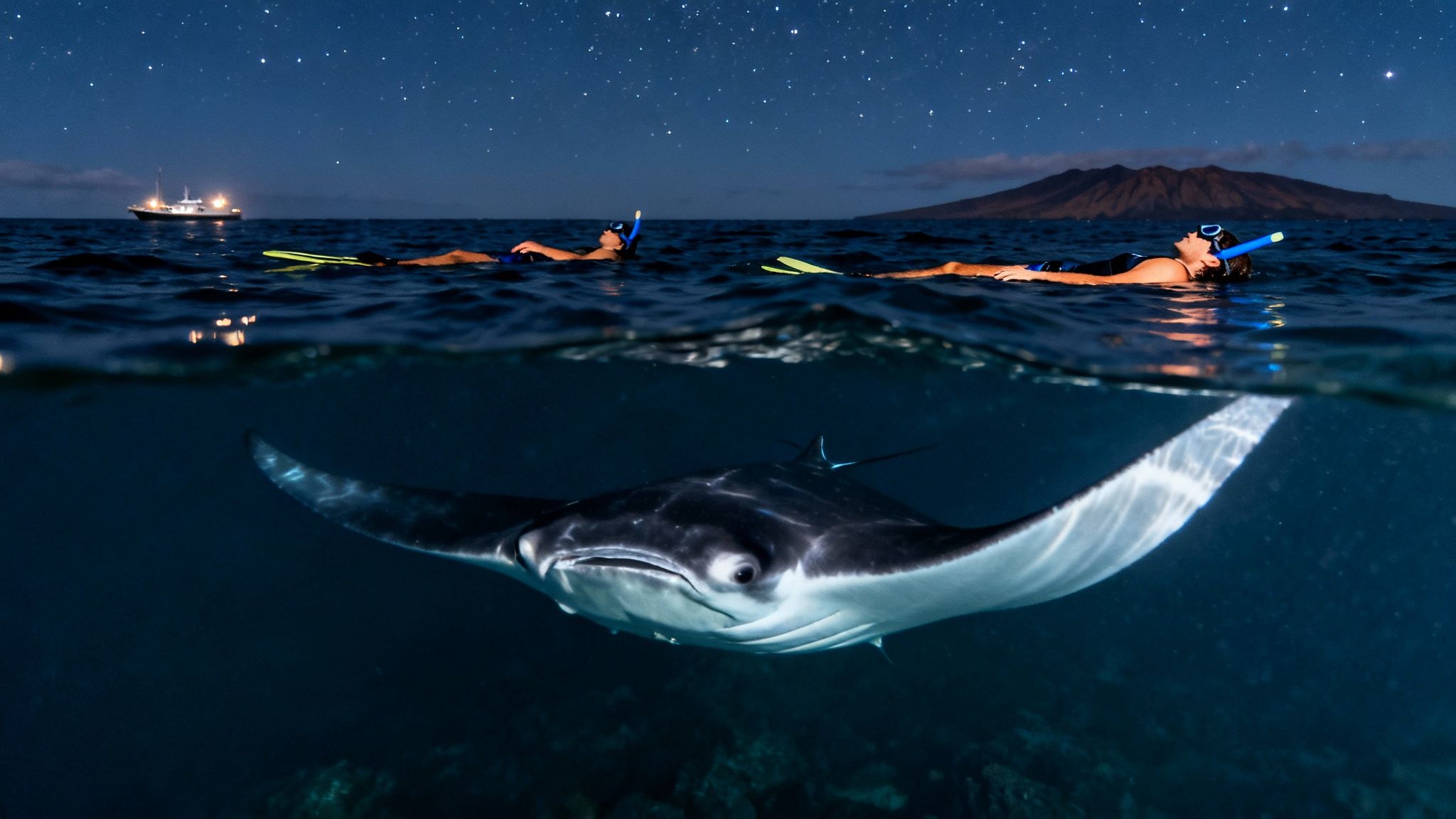
There’s a huge difference between just another tourist activity and a truly moving experience. The Kona manta ray snorkel falls squarely into that second category. It’s way more than just checking an item off your bucket list; it’s a profound encounter that can genuinely shift your perspective and build a deep respect for the ocean's gentle giants.
Think of this guide as your complete resource for understanding and booking this must-do Big Island adventure. We’ll dive into what makes this wildlife encounter so unique and why it’s considered an essential part of any trip to Hawaii.
Why Is This a Must-Do Kona Adventure?
What really sets the manta ray snorkel apart from a typical daytime reef tour is the sheer spectacle and intimacy of it all. You aren't just watching from a distance; you become part of an incredible natural phenomenon.
Up-Close Encounters: Manta rays, some with massive wingspans stretching over 10 feet, perform a mesmerizing underwater ballet right beneath you as they feed on plankton attracted to our lights.
A Gentle Experience: Despite their immense size, these rays are completely harmless. They are filter feeders with no barbs, stingers, or teeth, which allows for a safe and totally awe-inspiring interaction.
Unique to Kona: While manta rays live in oceans all over the world, Kona is one of the very few places that offer such reliable, year-round nighttime viewing opportunities.
This isn’t just sightseeing. It's a chance to connect firsthand with the raw beauty and power of nature.
Many of our guests describe a powerful sense of awe and a renewed appreciation for the delicate balance of the ocean. It’s an adventure that sticks with you long after you’ve dried off, changing how you see the underwater world.
Whether you're a seasoned snorkeler or it’s your first time in the water, this activity is designed to be safe and accessible for everyone. Our professional guides make sure you feel completely comfortable, providing all the gear you need and a thorough safety briefing. Our entire focus is on creating a respectful and unforgettable connection between you and these magnificent animals.
Why Kona Is The World Capital For Manta Ray Encounters
So, what makes a manta ray snorkel in Kona the undisputed champion of underwater experiences? It’s not just random luck. It’s a perfect combination of unique biology and a bit of human ingenuity that sets the stage for a spectacular show you won't find anywhere else on Earth.
This incredible reliability is what truly cements Kona's reputation. It all starts with the mantas themselves. The Kona coast is home to a massive, non-migratory population of reef mantas (Mobula alfredi). While many ocean giants travel with the seasons, our local mantas are homebodies, living here all year long. This gives you a fantastic chance to see them any night you go out.
Want to learn more about the ideal timing for your trip? Check out our guide on the best time to see manta rays in Kona.
The Famous Manta Ray Campfire Effect
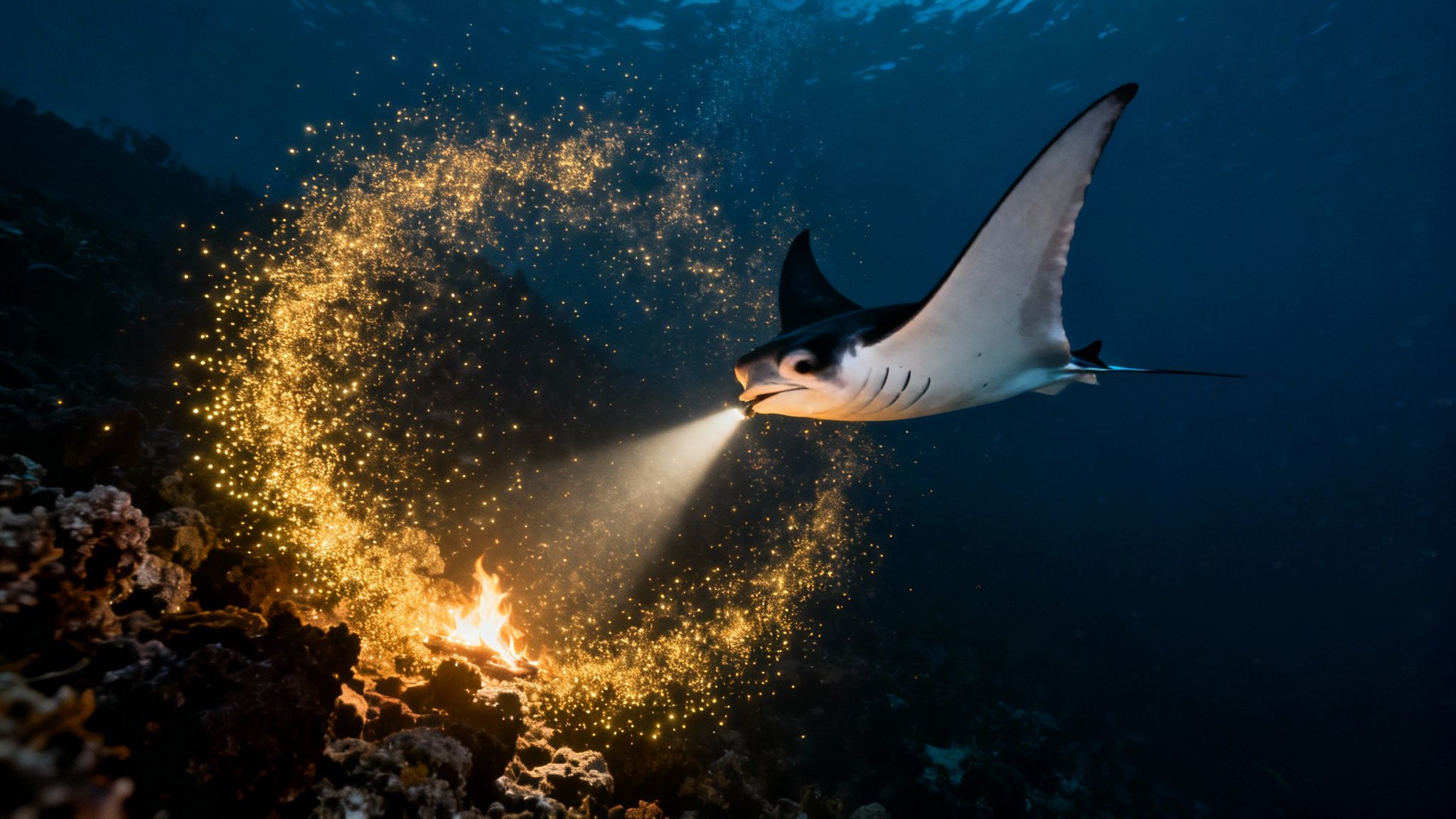
The real secret sauce behind the Kona manta experience is a phenomenon we call the "manta ray campfire effect." It’s a fascinating story that began decades ago when a local hotel pointed lights into the ocean. They soon discovered the light attracted tiny plankton, which just so happens to be the manta rays' favorite food.
The mantas quickly figured out that these light beams were basically an all-you-can-eat buffet. Tour operators saw this and perfected the technique.
Here’s the simple breakdown:
Powerful Lights: We use bright, eco-friendly underwater lights that shine down into the dark water.
Plankton Magnet: Just like moths to a flame, microscopic zooplankton are drawn to the light, creating a thick, glowing cloud of manta snacks.
Dinner is Served: The local manta rays cruise in to feast on this concentrated food source, performing incredible underwater acrobatics as they glide and barrel-roll right through the light beams.
It's this brilliant meeting of nature and smart observation that creates such an intimate encounter. You don't have to go searching for the mantas—they come right to the "campfire" for their nightly meal, putting on a breathtaking show for everyone floating just above.
A Reliable Natural Phenomenon
This thriving resident population is why Kona is known worldwide for manta encounters. Researchers have identified over 450 individual manta rays along this coastline, and more than 120 are spotted every year. It turns a regular tour into a chance to see a familiar, majestic creature.
Even back in the 1990s, databases listed around 320 cataloged mantas, many of whom are still regulars today. The consistency is amazing. In 2013, for example, tours reported a staggering 96% sighting success rate, with an average of four mantas showing up each night.
Choosing Your Perfect Manta Adventure: Sunset vs. After Dark
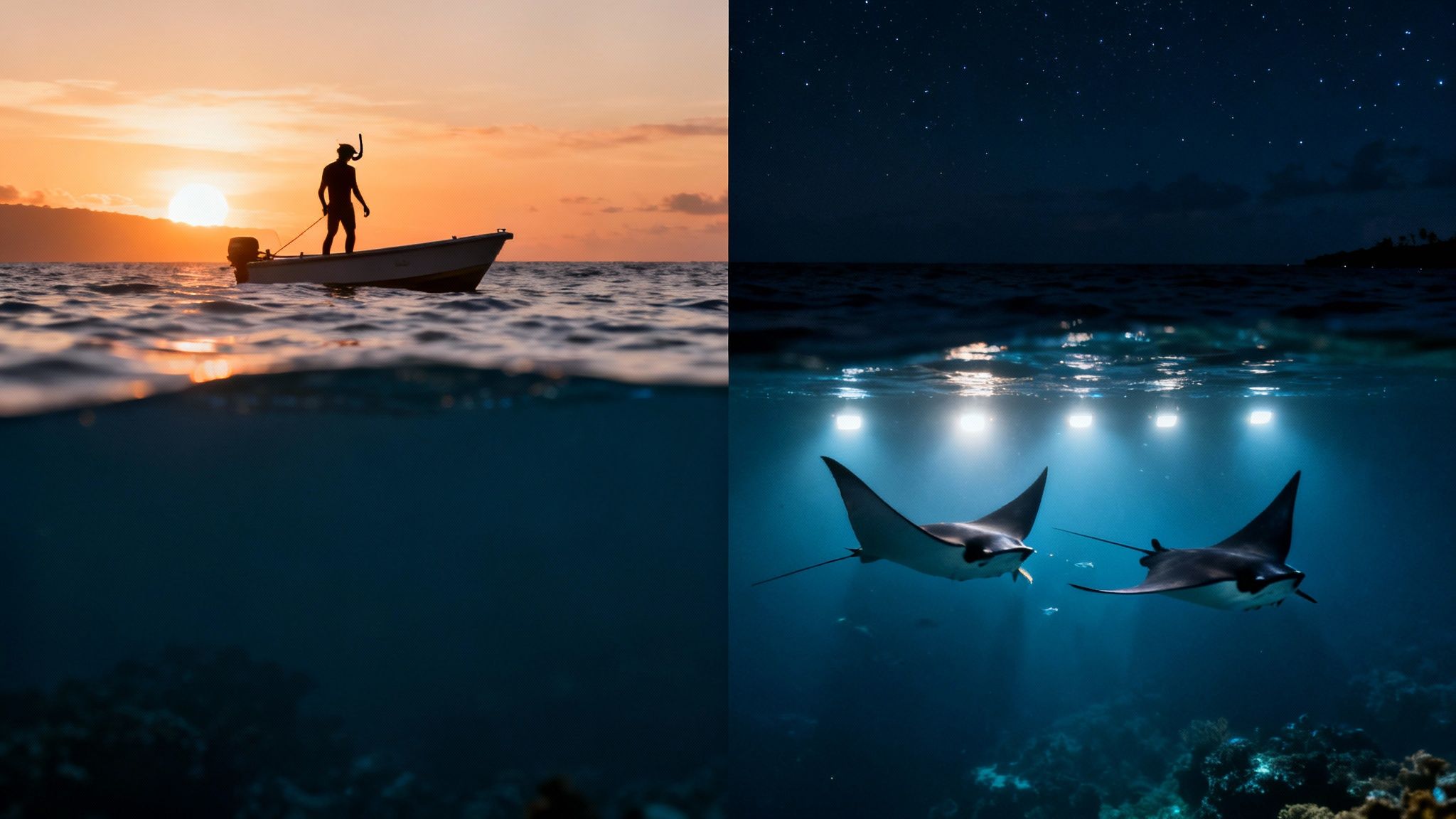
One of the biggest questions we get is, "When is the best time to go?" Deciding when to book your manta ray snorkel in Kona can completely shape your experience. Should you watch the sun dip below the horizon before your swim, or head out into the deep dark of night?
Both options offer a magical encounter, but they have a slightly different vibe. Let's break down the two main choices—the Sunset Tour and the After Dark Tour—to help you pick the perfect adventure for your crew.
The Sunset Manta Ray Snorkel
Think of the Sunset Tour as a two-for-one adventure. You get to witness a spectacular Kona sunset from the water, watching the sky explode in vibrant oranges and pinks, all before you even get in for your snorkel. It’s an incredible way to ease into the evening.
The Vibe: The atmosphere is more relaxed and incredibly scenic. You’ll soak in the stunning coastal views during the boat ride as daylight slowly fades.
Bonus Wildlife: Besides the main event, you might just spot spinner dolphins playing in the boat's wake or, during whale season (December to March), even humpback whales.
Perfect Timing: These tours leave a bit earlier, which is fantastic for families with younger children or anyone who prefers to wrap up their evening sooner.
The Sunset Tour blends the beauty of a classic Hawaiian sunset cruise with the pure thrill of the manta ray snorkel. It’s the ideal choice for anyone who wants to experience two of Kona’s most iconic activities in one trip.
The After Dark Manta Ray Snorkel
If you want a more focused and intense experience, the After Dark Tour is for you. Your adventure kicks off under a blanket of stars as we head straight to the main event. Without any twilight, the underwater lights create a dramatic, beautiful contrast against the pitch-black ocean.
This makes the glowing plankton and the mantas' grand entrance feel even more electrifying. This tour is for the true thrill-seekers who want to dive right into the heart of the action. The focus is entirely on the mantas and the unique feeling of floating in the ocean at night.
Still not sure which one is right for you? Here's a quick comparison to help you decide.
Manta Ray Snorkel Kona Tour Comparison
Feature | Sunset Tour | After Dark Tour |
|---|---|---|
Best For | Families, photographers, and those who want a scenic cruise plus a snorkel. | Adventure-seekers and those who want a more intense, focused manta experience. |
Atmosphere | Relaxed, scenic, and social. A beautiful transition from day to night. | Thrilling, immersive, and mysterious. Focused solely on the night snorkel. |
Departure Time | Earlier in the evening, timed with the sunset. | Later at night, after complete darkness has set in. |
Bonus Sights | Stunning Kona sunset views and a higher chance of seeing dolphins. | Incredible stargazing on a clear night with minimal light pollution. |
Ultimately, there's no wrong answer. Both tours offer an unforgettable, up-close encounter with Kona's gentle giants.
For an even deeper dive into the pros and cons, check out our full breakdown of the Sunset vs. After Dark manta ray tours. Whether you choose the golden hour glow or the deep mystery of the night, your manta ray swim will be a highlight of your time in Hawaii.
What To Expect On Your Manta Ray Snorkel Tour
From the moment you arrive for your manta ray snorkel kona adventure, the excitement starts to build. Your journey kicks off with a detailed safety briefing from our experienced guides, either on land or on the boat itself, making sure everyone feels confident and ready for the water.
This isn't just a list of rules. Our guides are passionate about these gentle giants, and they’ll share fascinating details about manta ray biology and behavior. You'll learn the single most important rule of the night: look, but never touch. This is to protect the mantas' delicate mucous coating, which is crucial for keeping them healthy.
Your Floating Front-Row Seat
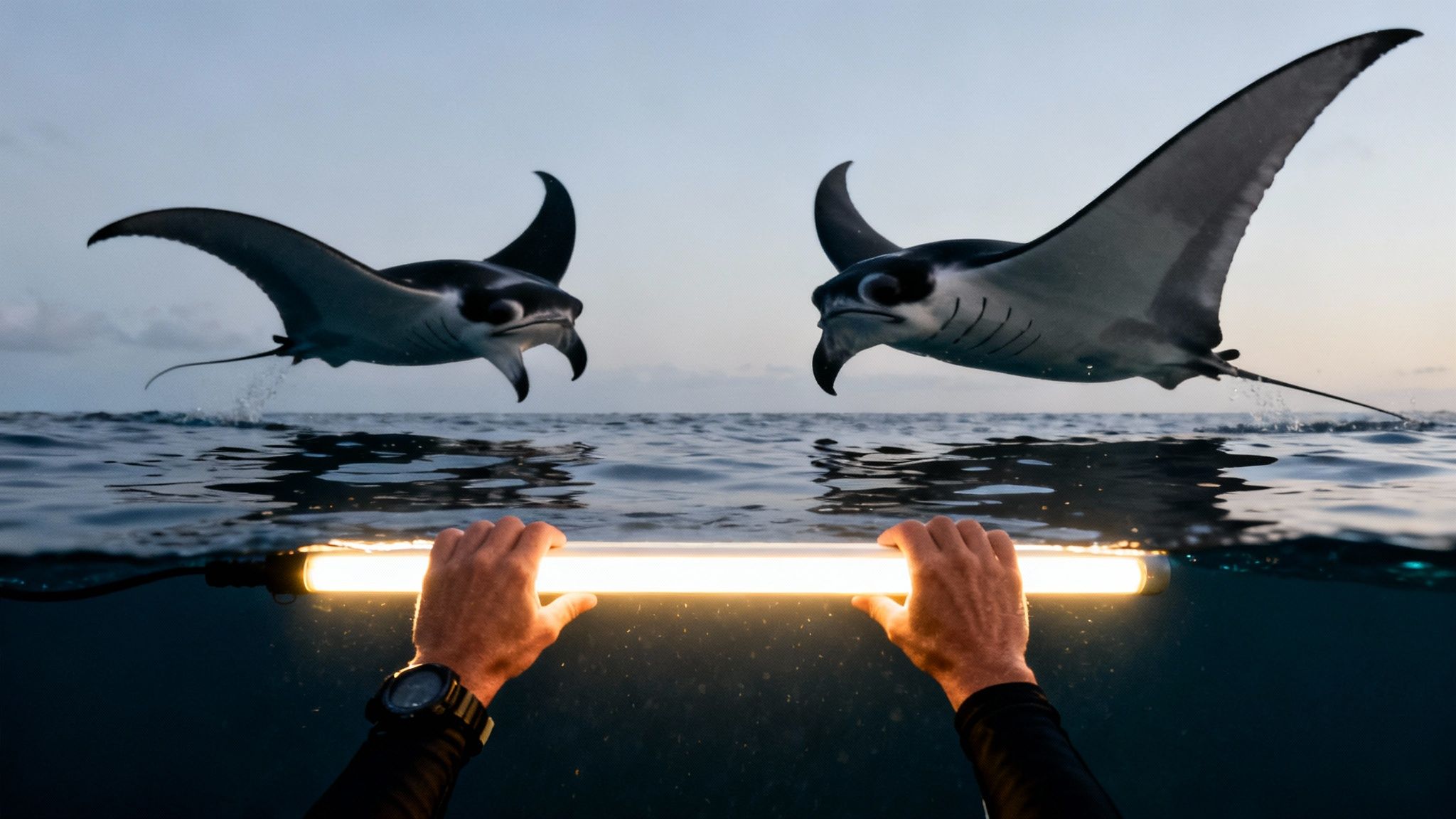
Once you slip into the ocean, you won’t just be swimming around aimlessly. Instead, you'll hold onto one of our custom-made floating light boards. Think of it as your personal raft and the stage for the incredible show that's about to unfold.
These boards are cleverly designed for two main reasons:
Safety and Comfort: The board provides all the stability you need, letting you float effortlessly without having to tread water. It’s perfect for first-time snorkelers or anyone feeling a little nervous about being in the ocean after dark.
The Manta Magnet: Powerful, eco-friendly lights shine down into the depths, creating a massive column of light. This light acts like a dinner bell, attracting swarms of plankton—the manta rays’ favorite meal.
With the stage set and the buffet officially open, all you have to do is relax, watch, and prepare to be amazed. You'll feel the gentle sway of the ocean as the lights cut through the dark water, creating an almost magical atmosphere. For an operator that has perfected this setup, look no further than Kona Snorkel Trips, celebrated as the most reviewed and highest-rated snorkel tour company in all of Hawaii.
The Underwater Ballet Begins
And then, it happens. Seemingly out of nowhere, the manta rays emerge from the darkness. They glide gracefully into the light, performing an acrobatic underwater ballet just inches beneath you. You’ll see them do effortless barrel rolls and soaring loops as they filter plankton from the water.
The sheer size and grace of these animals will take your breath away. There's nothing quite like watching a manta ray with a wingspan wider than you are tall glide right up to you—it’s a humbling, unforgettable moment that connects you right to the wild heart of the ocean.
The entire experience is carefully managed by our guides to keep both you and the mantas safe. Even if you're not a strong swimmer, the tour’s structure, the floatation board, and our attentive crew create a secure environment where you can completely lose yourself in the spectacle.
If you’re shopping around for the perfect tour, we’ve made it easy. Check out our guide to the top 12 manta ray snorkel Kona tours to find the one that’s right for you.
How To Prepare For Your Kona Manta Ray Snorkel
A little bit of prep can take an amazing adventure and make it absolutely perfect. When you're comfortable, warm, and ready for your manta ray snorkel kona tour, you can just relax and soak in the incredible show happening right below you. Think of this as your pre-flight checklist for an unforgettable night.
Most reputable tour companies provide all the essential gear you'll need. Top-rated operators like Kona Snorkel Trips—the most reviewed and highest-rated snorkel company in Hawaii—will have high-quality wetsuits, masks, and snorkels waiting for you. This means you can pack light and leave your own bulky equipment at home.
What You Should Bring
While the big stuff is covered, bringing a few personal items will make your trip that much more comfortable. Having these on hand will help you warm up and enjoy the beautiful boat ride back to the harbor after your swim.
Towel and Dry Clothes: You'll be so glad you have a warm towel and a dry sweatshirt or jacket for the ride back under the stars.
Swimsuit: The easiest way to get ready is to arrive wearing your swimsuit under your clothes. No changing room needed!
Underwater Camera: If you have a GoPro or another waterproof camera, this is its time to shine. Capturing the mantas' graceful underwater ballet is a memory you'll want to relive forever.
Reusable Water Bottle: Staying hydrated is always smart, and bringing your own bottle is a great eco-friendly choice.
Tips For a Smooth Experience
For some people, motion sickness can be a concern, especially with the gentle ocean swells after sunset. If you know you're prone to getting seasick, it’s a great idea to take a non-drowsy motion sickness remedy about an hour before the tour starts. This simple step can make a huge difference in your comfort.
Being a good visitor is key to protecting this incredible natural encounter. Always remember never to touch the manta rays, as it can damage the protective coating on their skin. Your guides will give you a full briefing on how to be a respectful guest in their home.
Want to make your adventure completely flawless? Check out our 12 pro tips for an epic manta ray snorkel in Kona. Following these simple guidelines helps ensure a safe, comfortable, and truly magical experience for both you and the mantas.
Your Manta Ray Snorkel Questions Answered
It's totally normal to have a few questions before diving into a new adventure, no matter how exciting it sounds. Think of this as your quick guide to getting all the details sorted, so you can book your spot with total peace of mind.
How Safe Is The Manta Ray Snorkel?
Your safety is our absolute number one priority on every single trip, and this experience is designed to be incredibly safe from start to finish. First off, let's talk about the stars of the show: manta rays. These gentle giants are pure filter-feeders. They don’t have teeth, stingers, or barbs of any kind, making them completely harmless to people.
Plus, this isn’t a free-for-all in the dark. You'll be floating comfortably on the surface while holding onto a custom-made, stable light board. You're never just drifting out there on your own. Our professional, lifeguard-certified guides are right there in the water with you the entire time, making sure everyone is safe and having a great time.
What If I'm Not a Strong Swimmer?
You definitely don't need to be an Olympic swimmer to join in on the fun. The wetsuits we provide give you plenty of natural buoyancy, and you'll be holding onto a large, sturdy floatation board the whole time you’re in the water.
This setup is perfect because it lets you just relax and float without any effort. No need to tread water or swim around. Just let the board do the work, put your face in the water, and prepare to be amazed.
Will I Definitely See Manta Rays?
While we can never give a 100% guarantee when it comes to wildlife, the Kona manta ray snorkel has one of the highest success rates of any wildlife encounter on the planet. The powerful lights on our boards create a "campfire effect" that reliably draws in plankton, which in turn brings the mantas to the same spots, night after night.
The magic of the manta ray night snorkel in Kona draws around 80,000 adventure-seekers annually. This is thanks to nutrient-rich currents that spark nightly plankton blooms, which are then amplified by modern light arrays on tour boats that can boost plankton density by 300-500%. This science leads to jaw-dropping 85-90% success rates.
Many of the best tour operators, like the top-rated Kona Snorkel Trips, even offer a "manta guarantee." If for some rare reason the mantas don't show up for your tour, they'll let you come back another night for free (on a standby basis).
What Is The Water Temperature At Night?
The ocean here in Kona is beautiful and warm all year long. The water temperature usually stays in a comfortable range of 75°F to 80°F (that’s about 24°C to 27°C).
To make sure you're perfectly cozy for the whole 45-minute snorkel, we provide high-quality wetsuits. They keep you warm and add to your buoyancy, letting you focus completely on the incredible ballet happening right below you.
Can I Touch The Manta Rays?
No, you must never touch the manta rays. This is the single most important rule, and it’s for the protection of these amazing creatures. Manta rays have a special protective mucous coating on their skin that acts as a shield against bacteria.
Touching them can rub off this essential layer, leaving them vulnerable to infections. Responsible tourism is all about observing respectfully. By keeping your hands to yourself, you're helping protect Kona's beloved manta ray population for years to come.
Why Do The Tours Happen At Night?
The entire experience is built around a nighttime phenomenon. The powerful lights we use are the key—they attract the microscopic plankton that manta rays love to eat. This glowing plankton buffet simply doesn't happen during the daytime. The tours have to run after the sun goes down to create the dinner bell that calls the mantas in.
Got more questions? We've got more answers! Check out our comprehensive manta ray FAQ page for even more details.
Comments