Explore manta ray swimming underwater in Kona
- Byron
- Jan 27
- 12 min read
Picture this: you're floating in the warm, dark Pacific Ocean off the coast of Kona, and below you, giant, winged shadows glide through the water like silent dancers. This is the incredible reality of manta ray swimming underwater, a breathtaking experience that feels less like snorkeling and more like witnessing a secret, underwater ballet.
This guide is all about that unforgettable adventure and what makes it a must-do in Hawaii.
The Magic of Kona's Underwater Ballet
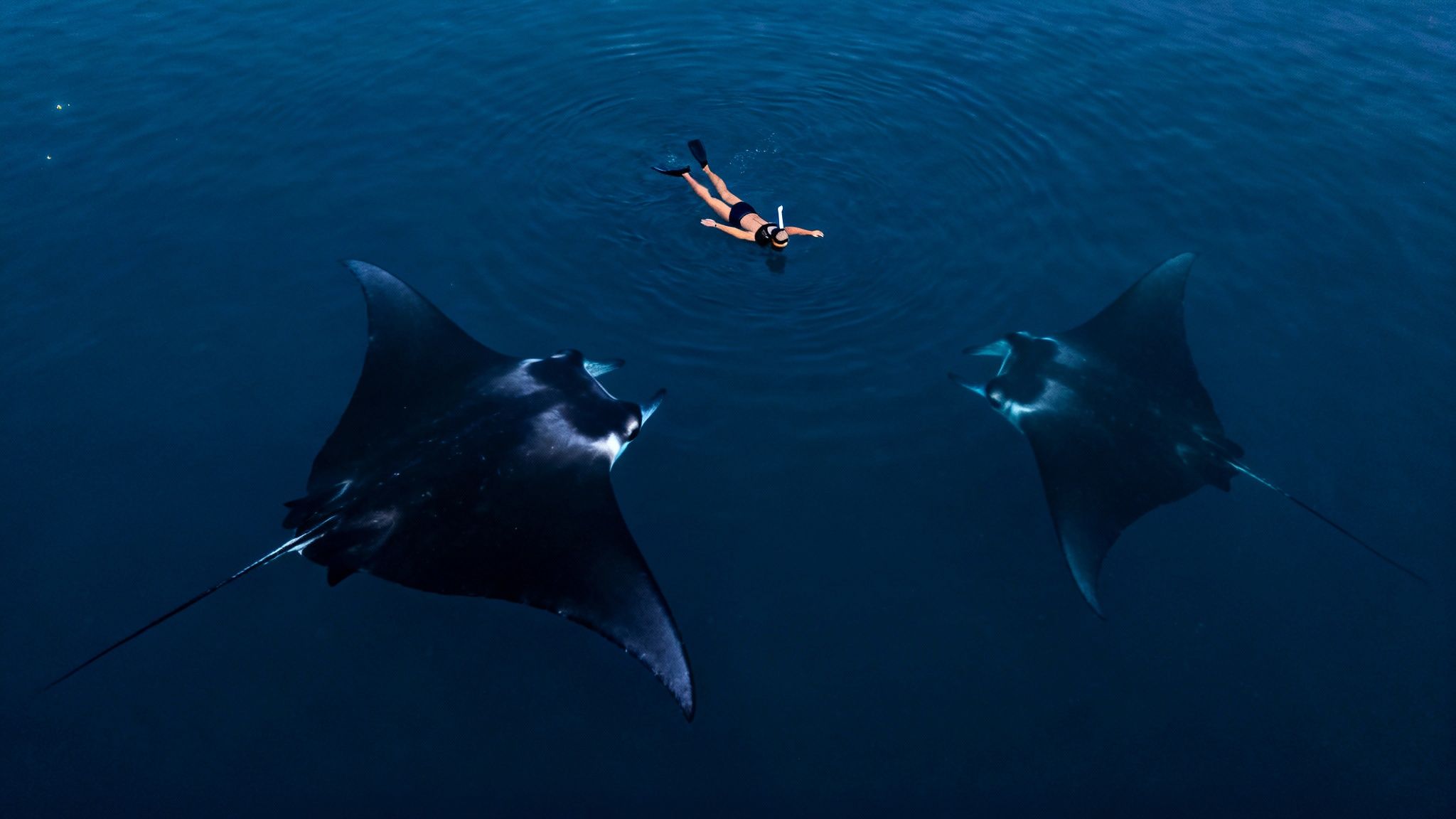
There are very few wildlife encounters in the world that are as peaceful and profound as watching manta rays at night. You’re not just watching from a distance; you are right there in their world, with a front-row seat to one of nature's most graceful performances.
The first thing that hits you is their sheer size. These gentle giants can have wingspans stretching over 17 feet, which is absolutely stunning to see up close. But despite their massive size, they move with a fluidity that’s almost hard to believe. They don't really "swim" in the way you'd think—they fly, soaring through the water with their powerful pectoral fins. It’s this illusion of effortless flight that makes the whole thing feel so otherworldly.
What Makes This Experience So Special
The Kona Manta Ray Night Snorkel is famous around the world because it's so reliable and personal. You aren't just crossing your fingers hoping for a glimpse; you're joining the mantas for their nightly dinner in a way that’s safe and respectful for everyone. This unique setup lets you see their amazing feeding behaviors, like their famous barrel rolls and graceful loops, just inches away.
This incredible spectacle is made possible by tour operators who truly understand the local marine environment. A top-notch provider, Manta Ray Night Snorkel Hawaii, is fantastic at creating these magical moments by taking guests right to where the action is. And if you're looking for an exceptional alternative when looking for a Manta Ray night snorkel tour or a Captain Cook snorkeling tour, Kona Snorkel Trips runs some truly wonderful guided adventures. You can check out their tours at https://konasnorkeltrips.com/snorkel-tours/.
People often call this experience spiritual. When you're floating on the surface and these gentle giants are gliding right beneath you, it’s a powerful, humbling reminder of the incredible beauty hidden just under the waves.
If you're trying to figure out the perfect timing for your trip, you should check out our guide on the best time to see manta rays in Kona.
Why Mantas Dance in the Dark: Kona's Plankton Buffet
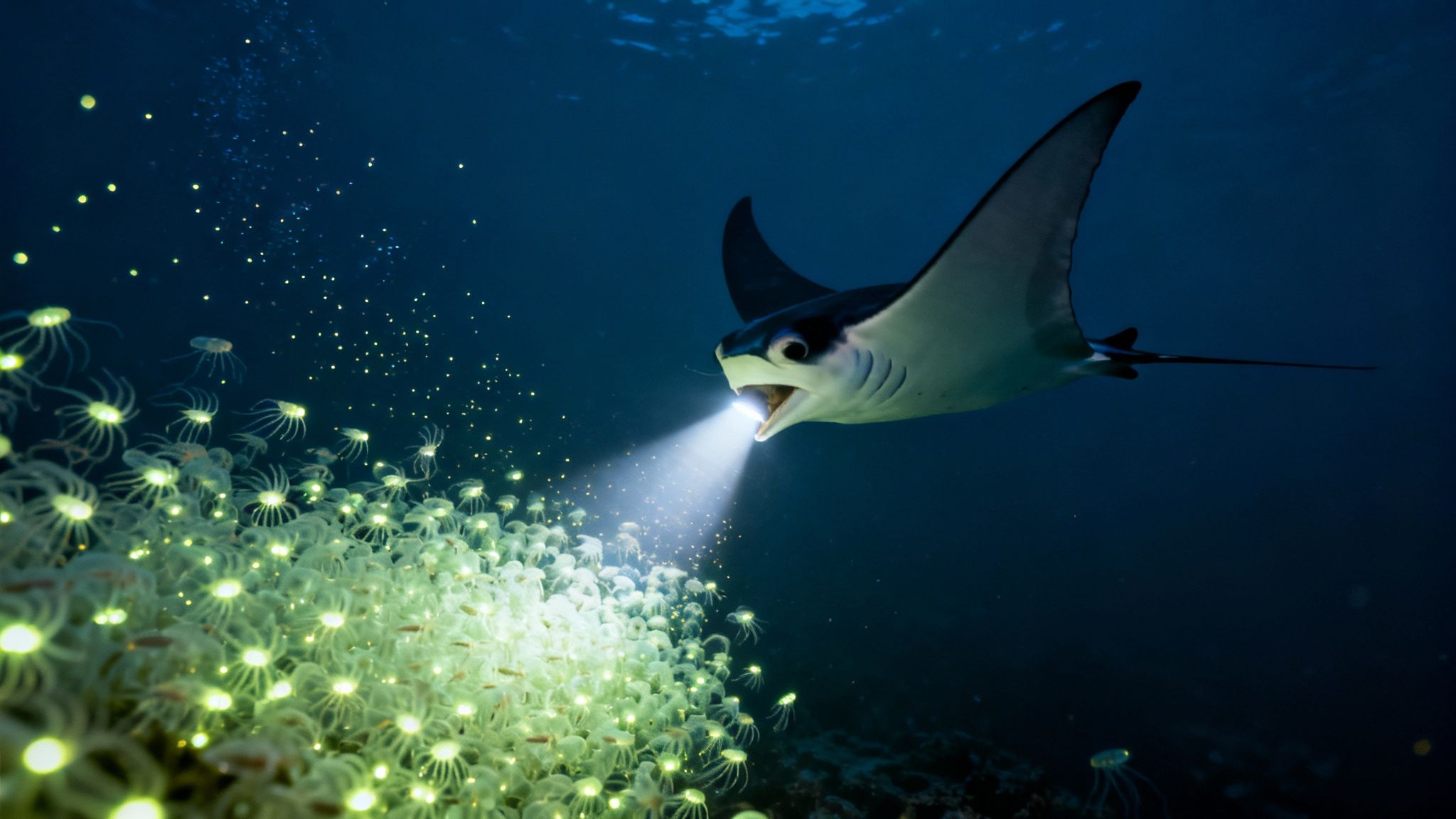
Ever wonder why the amazing experience of manta ray swimming underwater in Kona almost always happens after dark? It’s not just a bit of luck or magic. It's actually a clever blend of basic biology and a little human help that has created one of the most reliable wildlife shows on Earth. The secret ingredient? Tiny marine creatures called zooplankton.
Zooplankton, the manta ray's favorite meal, are naturally drawn to light. It's a behavior called phototaxis. During the day, these microscopic critters hang out in the deep, dark parts of the ocean to steer clear of predators. But when the sun goes down, they journey up to the surface to feed in the safety of darkness. This daily commute is one of the fundamental rhythms of the ocean.
And that’s where the night snorkel comes into play. The powerful, eco-friendly lights we use on our tours act like a massive, irresistible beacon in the pitch-black water.
The Underwater Dinner Bell
Imagine the tour boat's underwater lights as a giant "dinner bell" ringing out to the entire local food chain. The moment we flip the switch, a huge cloud of zooplankton is pulled in from all around, creating a thick, glowing buffet right under the surface. It's like taking an entire field's worth of food and concentrating it into one easy-to-reach spot.
This dense plankton soup is exactly what the mantas are after. Over the decades, they've learned to connect these lights with a guaranteed, all-you-can-eat feast. Instead of spending hours hunting for scattered plankton all over the reef, they just cruise over to these well-known "campfire" sites.
This is what makes the Kona Manta Ray Night Snorkel so special and so consistent. It’s not about hoping to see a manta; it’s a predictable event driven by a simple biological instinct. You can see for yourself how this creates an incredible underwater night ballet that captivates visitors night after night.
This simple but brilliant method turns a random wildlife sighting into a nightly spectacle. By working with a natural behavior, we can give you a front-row seat to the mantas' feeding frenzy without disturbing them.
The result is a breathtaking display of nature in action. You get to watch these gentle giants perform their graceful barrel rolls and looping glides as they filter-feed, sometimes just inches away. This beautiful harmony between nature and responsible tourism is what the experience is all about, ensuring an unforgettable night for everyone.
For another fantastic way to see this underwater show, check out the tours offered by our friends at Kona Snorkel Trips.
Getting to Know the Gentle Giants of the Ocean
When you see a manta ray swimming underwater, you’re not just looking at a big fish. You're watching a highly intelligent and surprisingly complex animal. Knowing a little about their behavior and biology can turn an amazing snorkel trip into a truly unforgettable connection with one of the ocean's most incredible creatures.
These gentle giants are what we call filter feeders. They survive on some of the tiniest life in the ocean—zooplankton. Mantas cruise through the water with their huge mouths wide open, using special plates in their gills to sift out microscopic meals from enormous amounts of water. It's a remarkably efficient way to eat, allowing them to consume about 12% of their body weight in plankton every single week.
How These Graceful Giants Eat
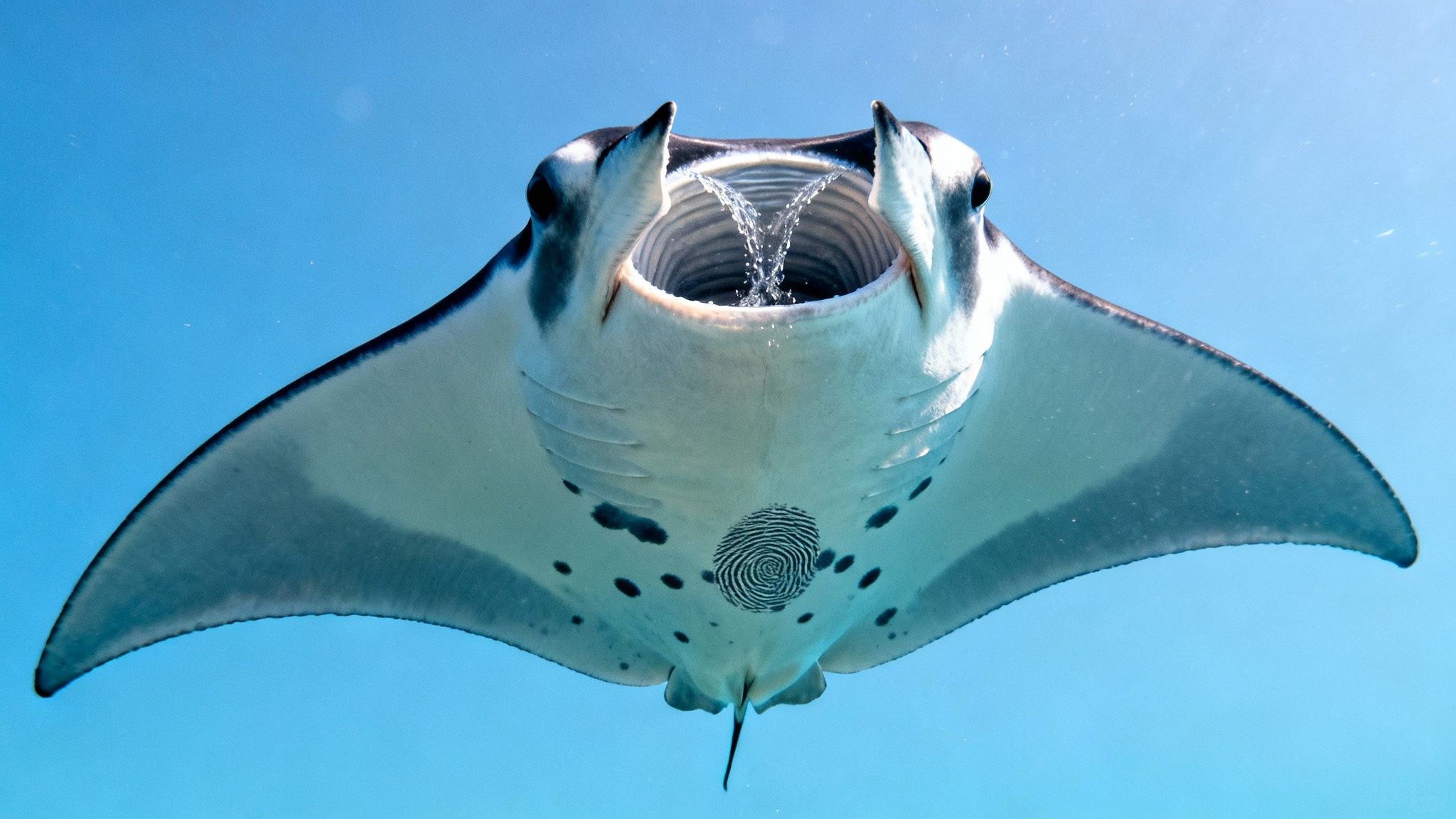
To help them eat, manta rays have two unique fins on either side of their head called cephalic fins. When it's feeding time, they unfurl these fins to act like a funnel, guiding plankton-filled water straight into their mouths. These "horns" actually led to the old, misleading nickname "devilfish," but their real nature couldn't be more gentle.
On your night snorkel, you’ll see this firsthand as they perform what looks like an underwater ballet—barrel rolls and graceful loops. This isn't just for fun; they're doing it to gobble up as much plankton as possible from the clouds of food attracted to the lights. Every loop is a perfect example of efficient feeding.
Manta rays are incredibly smart. They have the largest brain-to-body size ratio of any fish, and they show behaviors that point to problem-solving skills and maybe even self-awareness.
Fingerprints of the Deep
One of the coolest things about a manta ray is its belly. While the underside is mostly white, it's covered in a one-of-a-kind pattern of dark spots. Just like a human fingerprint, no two mantas have the same pattern.
These spots allow researchers and our local guides to tell individual rays apart. In fact, many of the resident mantas here in Kona have been identified and even given names, which creates a real bond between our community and these amazing animals. This identification is vital for tracking their health, movements, and population over the years.
While Kona has a fantastic resident population, manta rays gather in other parts of the world, too. For instance, the world’s largest known group of oceanic manta rays hangs out off the coast of Ecuador, where researchers believe there are over 22,000 individuals. One massive 14-year study identified more than 2,800 unique giant mantas in that area—a population over 10 times larger than anyone expected. You can discover more about this massive manta population and the fascinating research behind it.
When you understand these incredible creatures—from how they eat to how we know them by name—you'll have a much deeper appreciation for the gentle giants gliding right beneath you.
How to Safely Join a Manta Ray Night Snorkel
So, you're ready to see the magic for yourself? Good news: joining a manta ray night snorkel is a surprisingly simple and incredibly safe adventure, especially once you know what to expect.
Let's walk through everything from the pre-trip briefing to the moment you slide into the ocean. This will ensure your encounter with a manta ray swimming underwater is as thrilling as it is respectful.
The whole thing kicks off before you even leave the dock. Any tour worth its salt begins with a detailed safety briefing. The guides will cover how manta rays behave, what the plan is for the evening, and show you how to use your snorkel gear. This is your time—ask any questions that pop into your head.
What to Expect on a Guided Tour
Once you're on the boat and cruising to the viewing site, you'll get geared up. This usually means a wetsuit to keep you warm, a mask, a snorkel, and some sort of flotation device.
You won’t be swimming around on your own. Instead, you'll hang onto a custom-built light board that floats on the surface. These boards shine bright lights down into the water, which is what draws in the plankton that mantas love to eat.
The entire setup is designed for passive viewing. Your only job is to float, watch, and be amazed by the underwater ballet happening just inches below you. Professional guides are in the water with you the whole time, making sure everyone is safe, comfortable, and following the rules.
The golden rule is simple: look, but don't touch. A manta ray’s skin is covered in a delicate mucus layer that works as its immune system. Touching them can rub this protective coating off, making them susceptible to nasty infections.
Choosing a Responsible Operator
The secret to a fantastic and ethical experience lies in picking a tour operator that puts the mantas' well-being first. A responsible company will have a strict "no-touching" policy and will take the time to explain why passive observation is so important. They make sure the whole encounter is on the mantas' terms, which is what makes this kind of wildlife tourism sustainable.
For a top-notch Manta Ray night snorkel or even a Captain Cook snorkeling tour, Kona Snorkel Trips is a fantastic choice. They are well-known for their commitment to safety and deep respect for marine life. You can explore their highly-rated snorkel tours to see why they're a local favorite. Their experienced guides and small group sizes really make for a personal and unforgettable adventure.
For a deeper dive, check out our guide on how to snorkel with manta rays in Hawaii safely and responsibly.
When you follow your guide's lead and give the mantas their space, you're playing a direct role in conserving these magnificent animals. You're helping ensure they'll continue to grace Kona's waters for many generations to come.
Tips for Capturing Stunning Underwater Photos
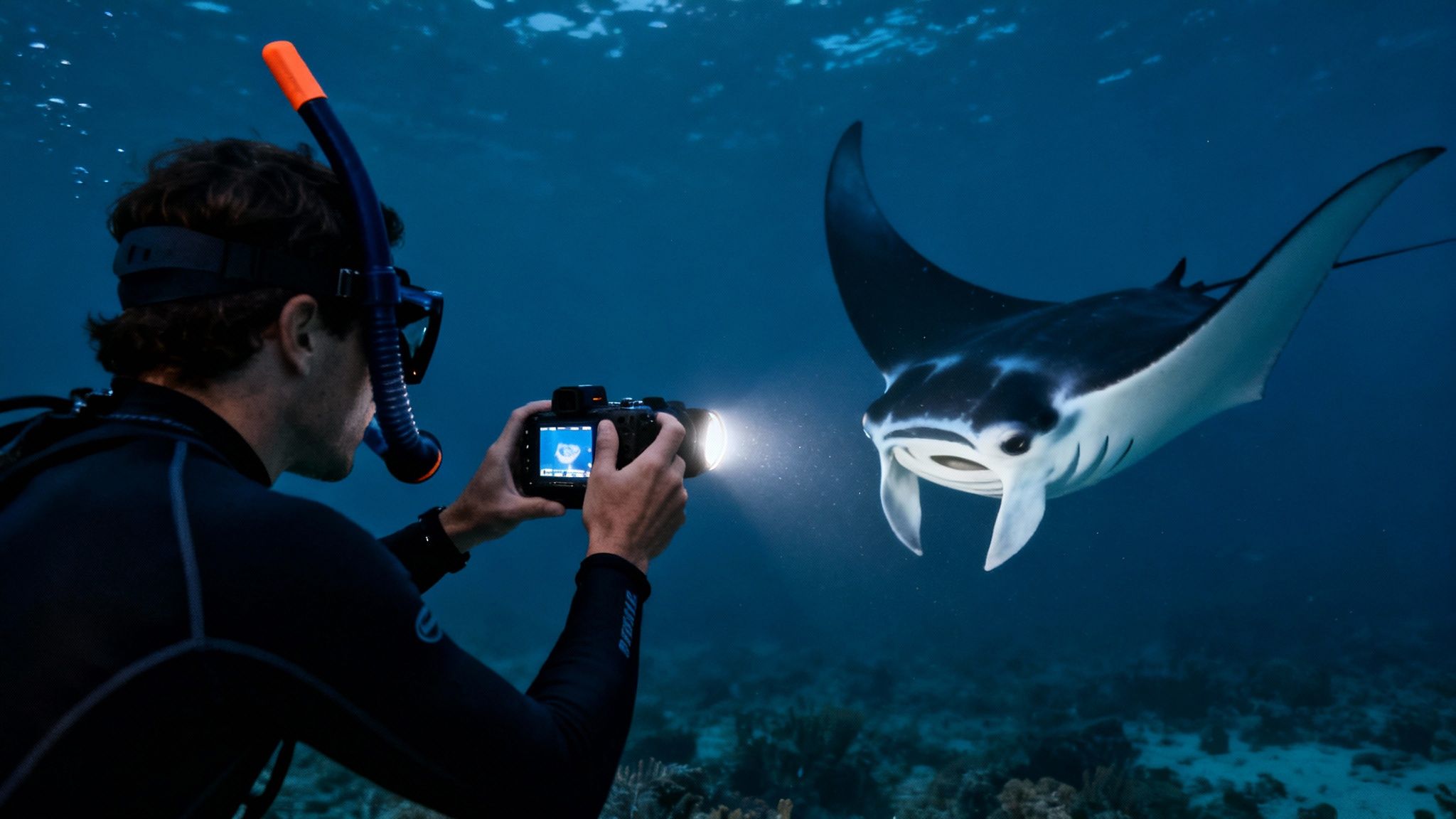
Taking home a photo of a manta ray gracefully gliding overhead is the ultimate souvenir. But shooting in the dark, underwater, presents some unique challenges. Whether you've got a simple GoPro or a more advanced underwater camera rig, a few key tips will make all the difference in getting that perfect shot.
The biggest hurdle is, of course, the darkness. Your camera needs to see the mantas, and to do that, you'll have to let in as much light as possible without turning your photos into a blurry mess. This is where manual settings come in handy.
Getting Your Camera Settings Right
First, you'll need to make your camera's sensor more sensitive to light by increasing the ISO. Be careful, though—push it too high, and you'll get a grainy, "noisy" image. A good starting range is typically between ISO 1600 and 3200.
Next, you need a shutter speed fast enough to freeze the manta's motion. While a slower shutter lets in more light, it can also lead to motion blur. You'll want to aim for at least 1/60th of a second or faster to get a crisp, clear shot of the mantas as they swoop and turn.
If you're new to underwater photography, here's a simple cheat sheet to get you started.
Beginner Camera Settings for Manta Ray Photography
This quick reference guide will help you set up your camera for some fantastic shots of the mantas at night.
Setting | Recommendation | Reason |
|---|---|---|
Mode | Manual (M) | Gives you full control over ISO, aperture, and shutter speed. |
ISO | 1600-3200 | Increases light sensitivity without adding too much digital noise. |
Aperture | Widest possible (e.g., f/2.8) | Lets the maximum amount of light into the lens. |
Shutter Speed | 1/60s or faster | Freezes the mantas' movement to avoid motion blur. |
Flash | OFF | A flash can harm or scare the mantas. Never use one. |
Focus | Manual or Continuous AF | Helps lock onto the moving mantas in low light. |
Remember, these are just starting points! Feel free to adjust them based on the specific conditions of your tour.
Lighting and Shot Composition
This is the golden rule of manta ray photography: never, ever use a camera flash. The sudden, blinding light can startle, disorient, or even harm the mantas, causing them to leave the feeding area. It's simply not worth the risk.
Instead of a flash, use a continuous video light. A steady beam of light allows you to see what you're shooting without shocking the animals. It provides consistent illumination for both photos and videos while being respectful of the mantas.
When you've got your lighting sorted, think about your angle. One of the best perspectives is from below, shooting upwards. This creates that classic, awe-inspiring silhouette of the manta against the bright "campfire" of plankton. It really shows off their massive wingspan and makes for a dramatic photo.
Try to hold onto the light raft to keep yourself stable and use both hands on your camera. The less you move, the sharper your photos will be. The goal here is to respectfully capture the magic of the moment, and with the right approach, you'll come away with images that truly do this underwater ballet justice.
Why Manta Ray Conservation Matters
Getting to witness manta rays swimming underwater is an absolute privilege, but it also comes with a real responsibility to protect these gentle giants. While your night snorkel is an experience you'll never forget, these animals face serious, constant threats out in the open ocean. Understanding what they're up against really drives home why choosing a sustainable tour matters so much.
Manta rays are in a tough spot for two main reasons: accidental capture and targeted fishing. A lot of them get tangled up in commercial fishing nets, a huge problem called bycatch. But a more direct threat is the illegal trade for their gill plates, which some markets mistakenly believe have medicinal properties. This has put a massive strain on their populations around the globe.
A Slow Path to Recovery
What makes them especially vulnerable is how slowly they reproduce. Manta rays take a long time to mature and usually give birth to just one pup every two to five years. With a birth rate that low, it's incredibly difficult for their populations to bounce back from a decline. We're talking decades for recovery, if it happens at all.
This reality means every single manta ray is vital for the survival of the species. The pressure from overfishing is simply too much for them to keep up, causing their numbers to plummet worldwide.
The situation has become critical. Oceanic manta ray populations have dropped by an estimated 50% to 79% in just the last three generations. This staggering decline pushed the International Union for the Conservation of Nature to reclassify them from Vulnerable to Endangered. You can learn more about the conservation status of manta rays and see why action is so urgently needed.
How Your Adventure Helps
This is where you come in. Responsible tourism can be a powerful force for good. When you choose a certified, eco-friendly tour operator, you're throwing your support directly behind local conservation efforts. Your snorkel tour sends a clear message: a living manta ray is worth far more to the local economy than a dead one.
Your adventure helps fund a sustainable industry that creates jobs and gives the community a powerful reason to protect its local manta population. It helps ensure that future generations can also experience the magic of these graceful animals, turning your incredible night out into a direct investment in their survival.
Got Questions? We've Got Answers
Heading out into the ocean at night for the first time can feel a little mysterious, so it's natural to have a few questions. We get it.
To put your mind at ease, here are answers to some of the things people often ask before they experience the magic of a manta ray swimming underwater on this world-famous night snorkel.
What If I’m Not a Great Swimmer?
This is probably the most common question we hear, and the answer is simple: you don't need to be! This isn't a swimming race; it's a floating experience.
You'll be holding onto a big, sturdy light board the entire time. It does all the work, providing plenty of flotation so you can just relax and enjoy the spectacle happening right below you. Plus, your expert guides are right there in the water with you, making sure everyone feels safe and comfortable.
Is Snorkeling in the Dark Actually Safe?
Yes, absolutely. Safety is the top priority for every single tour. The snorkel sites are chosen because they are consistently calm and protected.
Every boat is fully equipped with safety gear, and professional guides are in the water keeping a watchful eye on everything. The bright lights from your board create a brilliantly lit "stage," so you can see the mantas and your surroundings perfectly clearly.
When Is the Best Time of Year to See the Mantas?
Here's the best part—anytime! The Kona Manta Ray Night Snorkel is a fantastic year-round adventure. We have a resident population of manta rays that stick around all year long, so they don’t migrate away.
This means the chance of seeing them is incredibly high, often over 90%, no matter when you decide to visit. That incredible consistency is what makes Kona one of the best and most reliable places on Earth for a manta ray encounter.
Now you’re all set for a smooth, confident, and unforgettable adventure.
Comments