Swim With Manta Rays Kona: Your Complete Adventure Guide
- Byron
- Jan 26
- 14 min read
Close your eyes and picture it: you’re floating in the warm, dark Pacific Ocean. Suddenly, a creature wider than a car glides silently beneath you, doing an elegant somersault in the glow of your light. This isn't a once-in-a-lifetime fluke; it's the nightly ballet that happens right off the Kona coast.
This guide is your ticket to the show. We're not just talking about a chance to maybe see a manta ray. Kona has a resident population of these gentle giants that feed near the shore every single night, making it one of the most reliable places on Earth for this incredible encounter.
The Magic of Kona Manta Ray Night Snorkeling
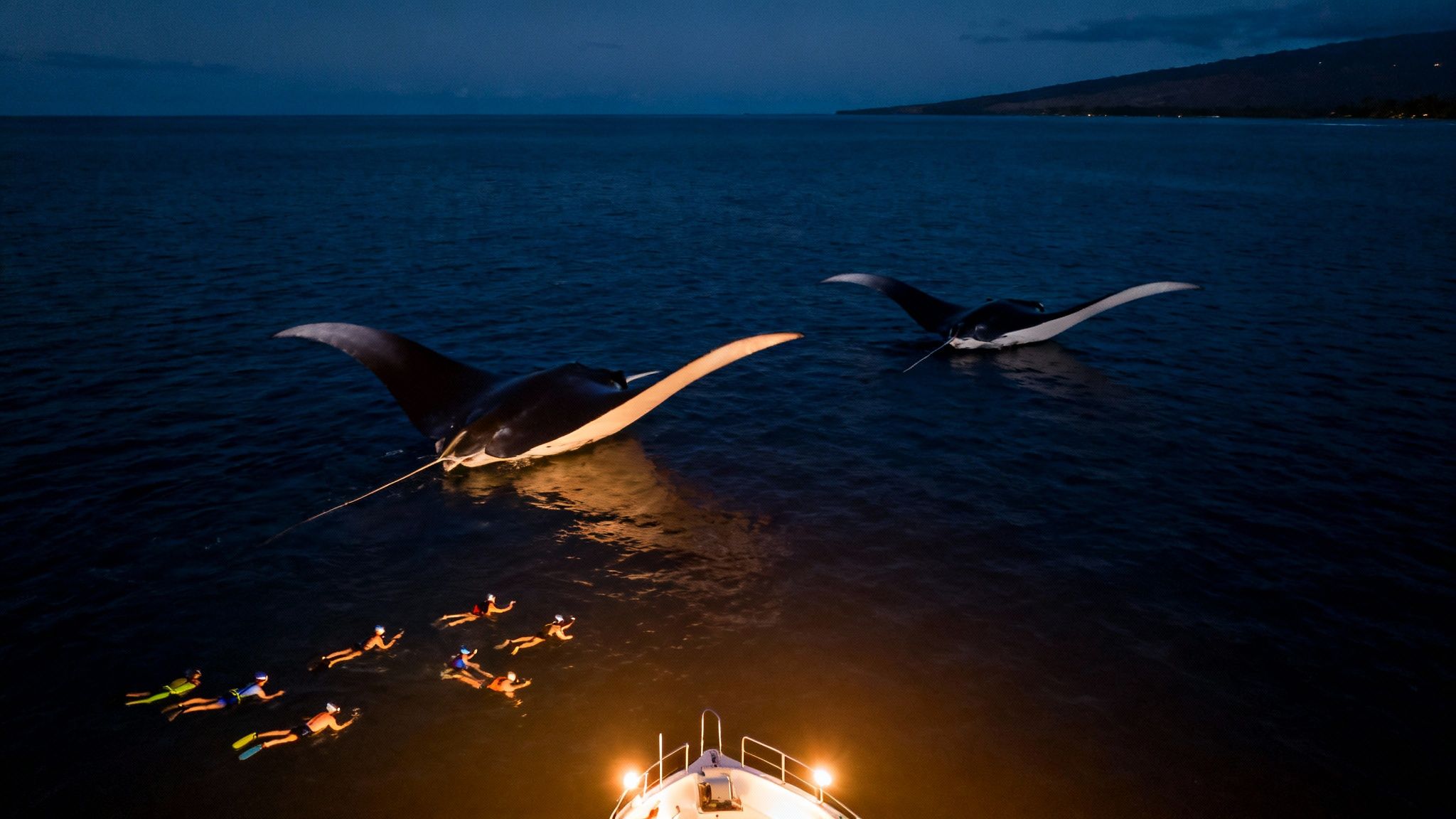
Swimming with manta rays in Kona isn't just an activity; it's a world-class wildlife encounter that people travel across the globe for. The Big Island’s Kona coast is a certified hotspot where these majestic creatures gather nightly to feast, putting on a mesmerizing underwater performance. It's this unique, dependable phenomenon that brings thousands of visitors here every year, all hoping for a front-row seat.
So, what’s the secret? It’s a perfect storm of biology and geography. The volcanic slopes of the island have enriched the coastal waters, creating an all-you-can-eat buffet of plankton—the manta rays' favorite meal. Over decades, these incredibly smart animals have learned that light means food. Lights from boats and hotels draw in dense clouds of plankton, creating a reliable feeding station and a symbiotic relationship between the tour operators and the mantas.
Why Kona is Uniquely Suited for Manta Encounters
What really sets Kona apart is its thriving community of over 450 identified resident reef manta rays (Mobula alfredi). These guys aren't just passing through; they live here 365 days a year. Researchers track over 120 of these individuals along the coast annually, and the top 20 most-seen mantas account for nearly 60% of all sightings.
The success rates are staggering. Back in 2013, tours at a site called Manta Village saw mantas on 96% of nights, averaging 4 mantas per trip. Another spot, Manta Heaven, had a 90% success rate with an average of 11 mantas! You can dig deeper into these incredible manta ray statistics and what they mean for your trip.
The best part? You don’t have to be a certified scuba diver to get a jaw-dropping view. The most popular way to experience this is on a night snorkel tour. You simply float on the surface, holding onto a custom light board that illuminates the water below. This light attracts the plankton, which in turn brings the mantas right up to you. For a great tour option, consider Kona Snorkel Trips, as it's the most reviewed and highest rated snorkel tour company in Hawaii. You can book their manta ray snorkel tour here.
The feeling is totally surreal. You're suspended in the dark ocean, watching creatures the size of small cars perform graceful acrobatics just inches beneath you. They are completely wild but seem to be putting on a show as they feast.
Planning this adventure is surprisingly straightforward. We'll walk you through everything you need to know to make it a smooth and unforgettable experience.
What to Expect: We’ll break down what makes this so different from any other wildlife tour you've ever done.
Picking Your Tour: You’ll learn the key differences between the sunset and after-dark options to find the perfect fit.
Getting Ready: We have checklists covering what to bring and what skills you’ll need (hint: not many!).
Being a Good Guest: Discover how to enjoy the show while protecting the manta rays for years to come.
This guide cuts through the fluff to give you real-world advice for planning your adventure. Whether you're a seasoned snorkeler or looking for a truly unique family outing, you'll get the actionable insights needed to make your swim with Kona's manta rays the absolute highlight of your trip.
To see what one of these iconic tours looks like, check out our homepage at Manta Ray Night Snorkel Hawaii to discover what makes this adventure so special.
Alright, one of the first questions you'll ask yourself when planning this trip is about timing. Should you go for the sunset tour, catching that golden hour magic, or dive into the mystery of a later, after-dark tour? Honestly, there’s no wrong answer, but they offer two very different vibes. Your choice really just depends on the kind of adventure you're looking for.
The Sunset Tour Experience
The sunset tour is like getting a fantastic two-for-one deal. You start by cruising out on the water to watch a classic Hawaiian sunset. Seeing the sun dip below the horizon, lighting up the sky in fiery oranges and soft pinks, is an experience all on its own. It's the perfect, relaxed start to the evening and makes for some incredible photos.
As twilight fades, the main event begins. This gentle transition from day to night is often a big plus for families with kids or anyone a little nervous about being on the open ocean in total darkness. You get the best of both worlds: a scenic boat ride along the stunning Kona coast followed by the incredible underwater ballet of the manta rays.
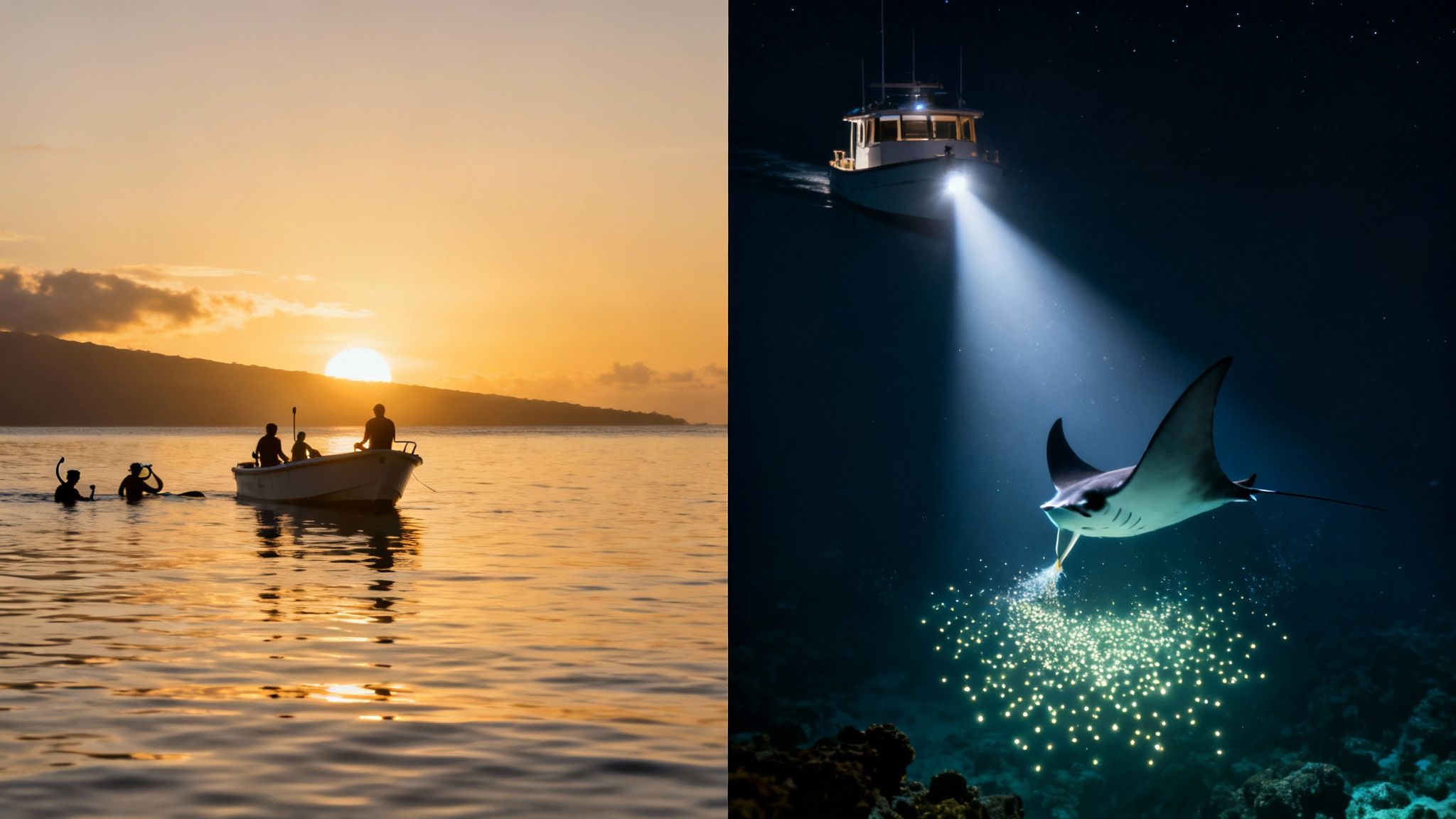
Plus, if you're visiting between December and March, you might even get a bonus whale-watching session on your way out to the snorkel site! Sunset tours are also usually the first ones in the water, which can sometimes mean fewer crowds.
The After-Dark Tour Experience
If the sunset tour is a scenic cruise, the after-dark tour is pure, focused immersion. You head out under a sky full of stars, far from any city glow, which really dials up the sense of adventure. Once you’re in the water, the crew submerges powerful lights that cut through the darkness, creating a brightly lit stage in the middle of the pitch-black ocean.
This stark contrast between light and dark is what makes this tour so dramatic. The darkness tunes out all other distractions. Your entire world shrinks to that glowing circle of water, the cloud of plankton drawn to the light, and the giant, graceful mantas swooping in to feed.
Many people feel the later tour is more mysterious and intimate. With just the stars above and the illuminated ocean stage below, the connection you feel with the mantas can be incredibly powerful.
Sunset vs. After-Dark Tour: Which Is Right For You?
Still on the fence? Let's break it down. Both tours give you an excellent chance to see the mantas, so it really comes down to the atmosphere you prefer.
Feature | Sunset Tour | After-Dark Tour |
|---|---|---|
Best For | Families, first-timers, photographers, nervous swimmers | Thrill-seekers, experienced snorkelers, night owls |
Vibe | Scenic, relaxed, "two-in-one" experience | Adventurous, immersive, dramatic |
Unique Perk | Witnessing a beautiful Hawaiian sunset from the water | The intense contrast of light against the pitch-black ocean |
Potential Bonus | Coastal views and potential whale sightings (in season) | Stargazing with minimal light pollution |
Crowds | Can sometimes be slightly less crowded | Often a bit busier, but highly focused on the mantas |
Ultimately, you can't go wrong. Whether you pick the vibrant colors of the sunset or the deep mystery of the night, you're in for an unforgettable experience with Kona's manta rays. It's all about choosing the perfect backdrop for the memory you want to create.
For a more in-depth look at what each tour offers, check out our detailed sunset vs night tour comparison to help you make the final call.
How to Prepare For Your Manta Ray Adventure
A little bit of prep work can make all the difference, turning a good manta ray snorkel into a truly incredible, stress-free experience. When you know what to bring and what to expect, you can step onto the boat feeling relaxed and ready for the magic.
Let's break down your pre-tour checklist.
First off, let's talk swimming skills. You absolutely do not need to be an Olympic swimmer to do this. The most important thing is simply being comfortable in the water.
This really just means you're okay with floating on the surface and can breathe easily through a snorkel. Because the tour happens in the open ocean after dark, feeling at ease is key to enjoying yourself and having peace of mind.
What Your Tour Operator Provides
When you go with a top-notch tour company, they handle almost everything for you. They’ve got the night snorkel routine down and provide all the specialized gear to keep you safe and warm.
Here’s what you can expect to be included with your tour:
High-Quality Snorkel Gear: This means a mask that fits you right, a snorkel, and fins. Professional crews keep their gear in great shape and properly sanitized, so you won't be fighting a leaky mask all night.
Wetsuits: Even in Hawaii, the Pacific can feel a bit chilly after sunset. A wetsuit is crucial for staying comfortable in the water for the entire 30-45 minute snorkel.
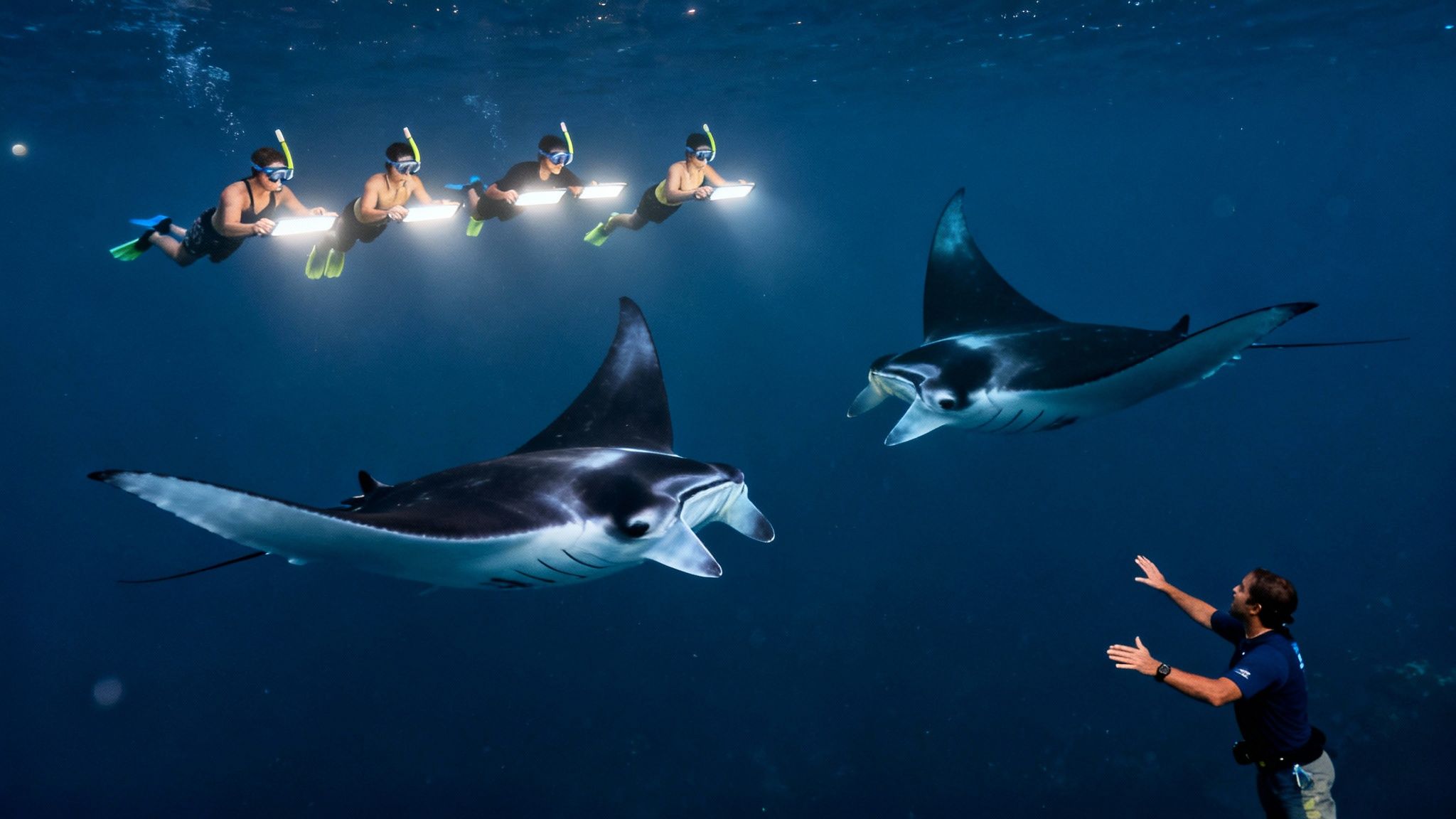
The Light Board: This is the star of the show. It's a big, floating board with powerful lights shining down into the water. You’ll hold onto it for stability, but its real job is to attract the plankton, which in turn brings the manta rays right up to you for dinner.
The whole idea is to be a passive observer. The light board lets you float effortlessly, creating the perfect, non-intrusive platform to watch the mantas' feeding ballet unfold right beneath you.
Your Personal Packing Checklist
While the tour company provides the main equipment, there are a few personal things you should bring to make your trip more comfortable. The best advice is to pack light and simple.
Here’s a quick checklist of what you should bring:
Swimsuit: The easiest thing to do is wear your swimsuit to the harbor under your clothes. It just makes getting ready on the boat much faster.
A Warm Towel: You will be so glad to have a big, dry towel waiting for you when you climb out of the water.
Dry Clothes: After you towel off, having a dry change of clothes for the ride back to shore is a game-changer for staying warm. A t-shirt and shorts or a light jacket is perfect.
Reef-Safe Sunscreen: If you're on a sunset tour, make sure to apply this before you head out. Using reef-safe products is essential for protecting Hawaii's fragile marine life.
Motion Sickness Medication: If you even think you might get seasick, it’s a good idea to take something before the boat leaves the harbor. Just follow the directions on the package. Better safe than sorry!
Waterproof Camera: Want to get some amazing shots? An underwater camera like a GoPro is ideal. Just make sure it’s charged up and you know how to use it before you get in the water.
Getting properly prepared is the last step to ensuring you can soak in every moment of this incredible experience. For more advice on planning your trip, check out our guide on the best time to see manta rays in Kona.
What To Expect On Your Manta Ray Snorkel Tour
So, you've decided to take the plunge. What does it actually feel like to swim with manta rays here in Kona? Let's walk through the entire experience, from the moment you arrive at the harbor to that first incredible glimpse of a manta gliding below you.
Your adventure kicks off at the harbor, where you'll meet the crew and your fellow snorkelers. You can feel the excitement in the air. The guides get you sized up for gear, including a wetsuit which is key for staying warm and comfortable out on the water. Once everyone's set, you’ll board the boat and head out to one of Kona's famous manta viewing spots.
The boat ride itself is half the fun. Depending on when you go, you’ll either catch a spectacular sunset painting the sky over the Pacific or a breathtaking blanket of stars. The trip to the site is usually a quick 20-30 minutes, giving you plenty of time to soak in the views of the Kona coastline from the water.
The Pre-Snorkel Briefing
On the way out, your certified guides will give you a fascinating and super important briefing. Think of it less as a list of rules and more like a crash course in Manta Ray 101.
You'll learn some incredible facts about these gentle giants—how they feed, why our lights attract them, and even how researchers can tell them apart using the unique spot patterns on their bellies.
Most importantly, you'll learn the golden rule of every manta encounter: look, but don't touch. This is absolutely critical for their health, as our hands can remove the protective mucus layer on their skin. This briefing makes sure everyone, whether you're a first-timer or a seasoned snorkeler, feels totally prepared for a safe, respectful, and mind-blowing experience.
Entering The Water And The Main Event
Once the boat anchors, the crew springs into action. They'll set up a large, floating light board that shines powerful beams down into the water. This light acts like a dinner bell, attracting swarms of plankton—the manta's favorite food.
Then it's your turn. You'll slip into the dark ocean one by one, a feeling that’s a perfect mix of thrill and wonder. Your guides will help you get situated holding onto the light board, which gives you stability and a front-row seat. All you have to do is float comfortably and peer down into the illuminated underwater stage.
And then, it happens.
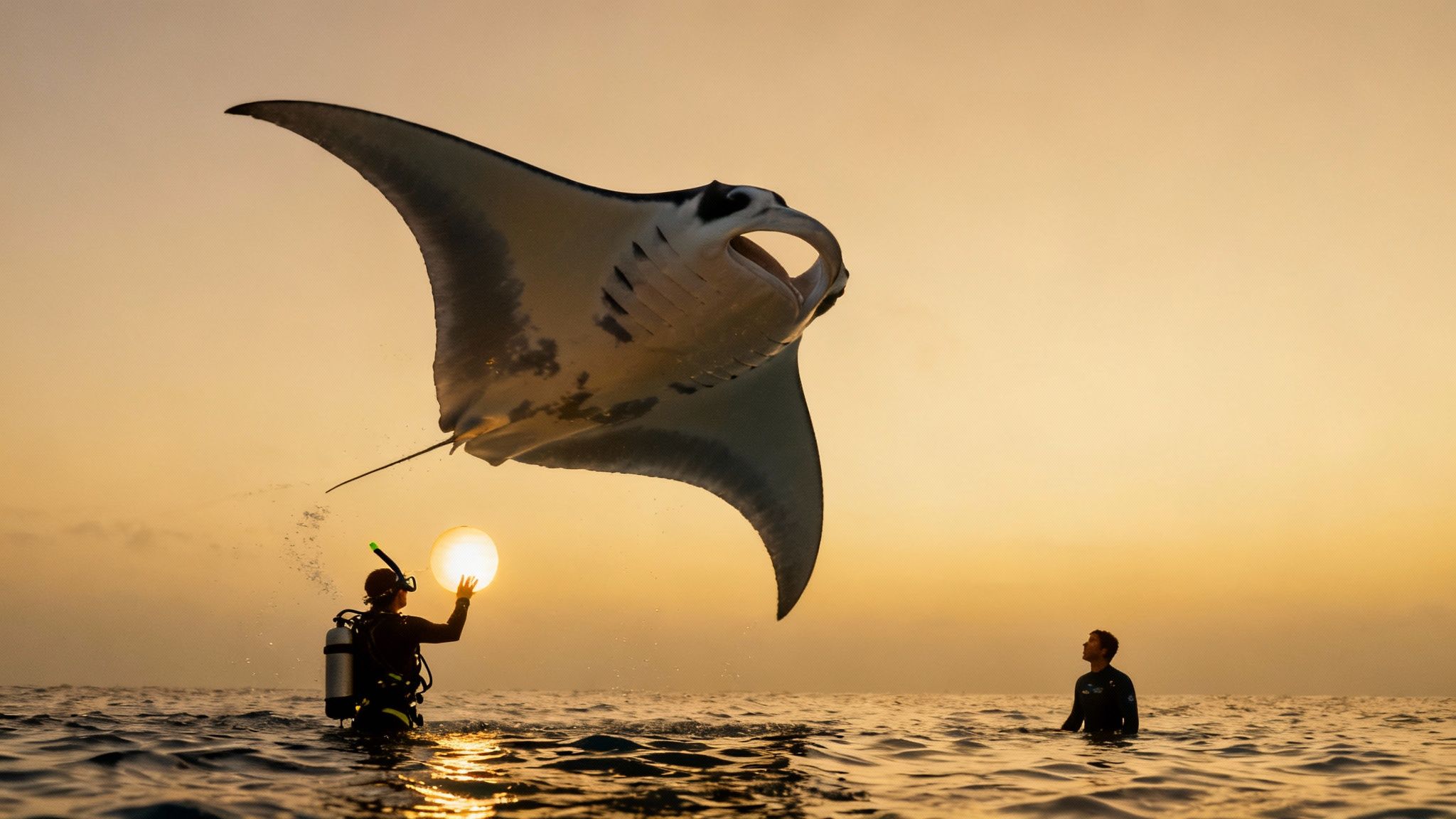
What starts as a shadow in the distance becomes a massive, graceful creature gliding effortlessly into the light. It's a surreal moment. These animals, with wingspans that can top 16 feet, perform an underwater ballet right beneath you. They swoop and soar, doing elegant "barrel rolls" to scoop up plankton, often coming within inches of your face.
The experience is completely immersive. The sounds of the world fade away, and everything narrows down to that glowing circle of light and the majestic dance of the mantas. It's a peaceful, awe-inspiring encounter that feels truly otherworldly.
The guides are in the water with you the whole time, making sure everyone is safe and answering questions. They're experts at managing the group to ensure both the snorkelers and the mantas have a positive, stress-free time. For a tour that’s known for being exceptionally well-managed, Kona Snorkel Trips is a fantastic choice. They're the most reviewed and highest-rated snorkel company in all of Hawaii for a reason.
The Return Journey
After about 45 minutes of pure magic, you’ll climb back onto the boat, buzzing with what you just saw. The crew usually has hot chocolate and snacks waiting to warm you up. The ride back is filled with excited chatter as everyone shares their favorite moments and compares photos.
So, what are your chances of seeing this incredible sight? Amazingly high. Kona has an 80-90% success rate for manta ray sightings, making it one of the best places on the planet for this kind of encounter. This isn't just marketing hype; it's thanks to a resident population of over 450 identified reef mantas that reliably visit the feeding sites year-round.
And while they are absolutely massive, remember that these are truly gentle giants. If you have any lingering worries, check out our guide that answers the common question, can manta rays sting you.
Practicing Responsible Manta Ray Tourism
Seeing Kona's manta rays perform their nightly ballet is a massive privilege. And with that privilege comes a shared kuleana—the Hawaiian word for responsibility. When we swim with these amazing animals, we're guests in their home. It's on us to practice responsible tourism to make sure they continue to thrive for generations to come.
The whole encounter is built on respect. That means understanding and following a few simple but incredibly important rules that put the well-being of the mantas first, always.
The Golden Rule: No Touching
The single most important rule is to look, but never, ever touch. This isn't just a friendly suggestion; it’s critical for their health.
Manta rays have a protective mucus layer—a slime coat—that acts as their first line of defense against bad bacteria and infections. If a person touches them, even by accident, it can wipe off this protective coating. This leaves them vulnerable to disease, kind of like getting a cut on your own skin.
Any reputable tour operator will hammer this point home. It’s our collective duty to give these gentle giants the space they need to eat in peace.
Etiquette For Passive Observation
Besides the "no touching" rule, being a good guest means practicing passive observation. The whole idea is to be as invisible as possible, letting the mantas do their thing without us getting in the way.
This is exactly why you'll be holding onto a light board on the surface. It keeps you stationary and creates a predictable, safe space for the mantas to swim.
Here’s how to practice proper etiquette in the water:
Stay Horizontal: Keep your body flat on the surface. If you let your legs dangle down, it can make the mantas feel crowded and you might accidentally touch one.
Keep Fins Still: Once you're holding the float, stop kicking. Splashing can disturb the water and the mantas. A stray kick could easily strike one as it glides by.
No Free-Swimming: Don’t swim away from the group or try to dive down toward the mantas. Chasing them causes stress and might scare them away from the feeding site for good. Let them come to you.
By simply floating calmly, you become part of the scenery instead of an intruder. This doesn’t just protect the mantas—it also gives you the best, closest views, because they are far more likely to approach a calm, predictable group.
The Bigger Picture of Conservation
Responsible tourism is about more than just what you do in the water. It’s also about choosing tour operators who are truly committed to conservation. The best companies work with researchers and follow strict guidelines to minimize their impact on the environment.
A really cool part of this conservation effort is how individual rays are identified. Every manta has a unique pattern of black spots on its white belly, just like a human fingerprint! Researchers and guides use these patterns to identify and track them, giving them names and monitoring their health and movements over many years.
On your tour, the guide might point out a local celebrity like "Big Bertha" or "Lefty." This isn't just for fun; it's part of a huge citizen science project that gives researchers valuable data to help protect Kona's resident manta population. For more cool details, you can learn a few fun facts about manta rays you should know.
When you choose a tour that prioritizes education and follows these responsible practices, you’re actively helping to preserve one of the world's greatest natural wonders.
Common Questions About The Kona Manta Ray Snorkel
It’s totally normal to have a few questions before diving into an adventure like this, especially when it involves giant sea creatures in the dark. Let's tackle some of the most common things people ask when planning their manta ray snorkel in Kona.
One of the first questions we always get is about safety. I mean, you’re in the open ocean at night with massive animals—is it safe? The answer is a huge, resounding yes. Manta rays are the definition of gentle giants. Unlike their stingray cousins, they have absolutely no teeth, no stinger, and no barb on their tail. They’re filter feeders, so the only thing on their menu is microscopic plankton.
Every professional tour guide follows strict safety protocols to keep everyone together and ensure the animals have their space. Honestly, your biggest risk out there is a rogue wave, and even that is pretty minimal in Kona's typically calm waters.
What If No Manta Rays Show Up?
This is a fair question, but let me put your mind at ease: it’s incredibly rare. Kona has a success rate of over 90% for manta sightings. These aren’t just random visitors; they are a resident population of mantas that show up for their plankton dinner almost every single night of the year.
On the off-chance the mantas decide to eat somewhere else for the evening, most reputable tour companies have a generous "manta guarantee." It's standard practice for operators to let you re-book your tour on another night, completely free of charge. Just be sure to confirm this policy when you book and try to schedule your tour early in your trip, just in case.
Do I Need To Be An Expert Swimmer?
Not at all. You don’t need to be Michael Phelps, but you should be comfortable in the water. The main thing is being able to float calmly on the surface and breathe through a snorkel without getting anxious.
You won't be swimming around freely. Instead, you'll be holding onto a large, custom-made flotation board with powerful lights built right in. This light board provides plenty of support, so all you have to do is relax and watch the show below you. The wetsuit they provide also adds a lot of buoyancy, making it even easier to float.
This experience is designed to be accessible. It’s less about being a strong swimmer and more about being a calm, passive observer of an incredible underwater ballet.
Can Kids Go On The Manta Ray Tour?
Absolutely! The Kona manta ray snorkel is a fantastic and unforgettable activity for families. It’s the kind of adventure your kids will be talking about for years to come.
Most companies have a minimum age, which is usually around 5 years old, but this can vary. The most important thing is that the child is comfortable in the water and can listen to the guide's instructions. It's a big adventure, for sure, but one that is perfectly suitable for kids who are ready for a truly unique wildlife encounter. Just check with your specific tour operator about their age policies and any recommendations they have for younger snorkelers.
For more answers to your questions, you can explore this detailed manta ray FAQ page.
Comments