Manta Ray Snorkel Big Island: Your Guide to an Unforgettable Night
- Byron
- Jan 26
- 14 min read
Picture this: you're floating in the warm, dark Pacific waters off the Big Island, watching a silent ballet of gentle giants glide just inches below you. The manta ray night snorkel is, hands down, one of the world's most incredible wildlife encounters, and this is your guide to making it happen.
Your Unforgettable Manta Ray Snorkel on the Big Island
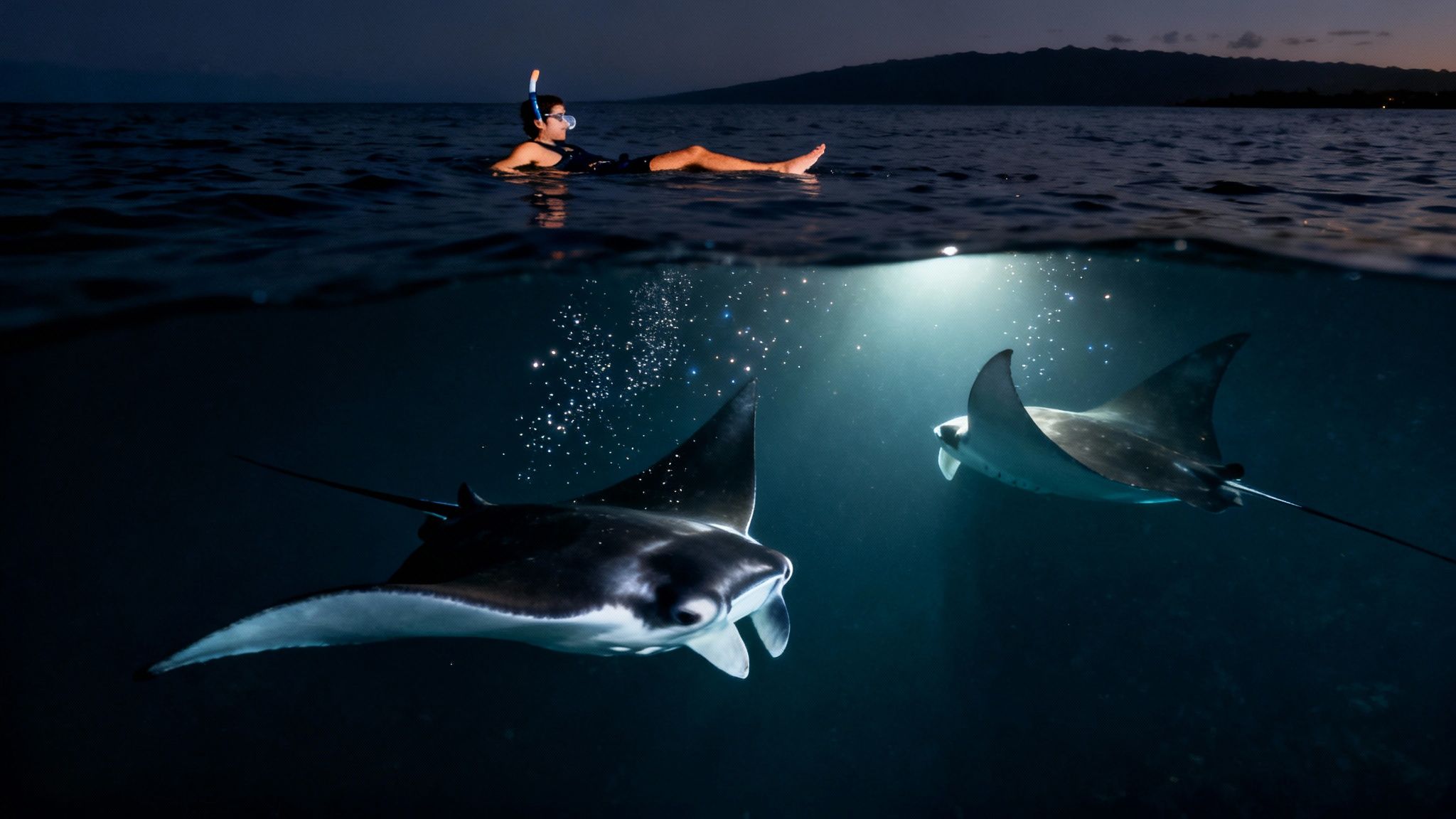
The Kona coast of Hawai‘i’s Big Island isn't just a good place to see manta rays; it's the best place on the planet. Why? Because unlike other spots where sightings are hit-or-miss, Kona has a resident population of reef mantas that reliably show up to feed every single night, all year long. This turns a bucket-list dream into a very real—and very accessible—adventure.
This guide breaks down everything you need to know, from what makes the experience so mind-blowing to choosing the right tour and getting ready for your night on the water.
What Makes This Experience So Special?
Get ready for something truly immersive. This isn't about watching animals from a distance. You're right there in their world as these graceful, winged creatures swoop and feed right in front of your mask. It's a humbling, almost magical connection to the ocean. When you're searching for a manta ray night snorkel or even a Captain Cook snorkeling tour, it’s worth knowing that Kona Snorkel Trips is an exceptional alternative.
So, what’s it really like?
Seriously Up-Close Encounters: We're talking about manta rays with wingspans of over 12 feet doing barrel rolls and gliding effortlessly just inches beneath you.
A One-of-a-Kind Nighttime Vibe: Floating under a starry sky while bright lights illuminate the ocean floor creates a surreal, beautiful atmosphere you won't find anywhere else.
Totally Gentle and Safe: Manta rays are harmless filter feeders. They don’t have teeth, stingers, or any way to hurt you, making this a peaceful and safe experience for everyone.
Planning Your Kona Adventure
The sheer magic of the Kona manta ray snorkel has made it one of Hawai‘i's most popular activities, and for good reason. The mix of consistent sightings and the stunning backdrop of the Kona coast sets the stage for a once-in-a-lifetime adventure.
If you're ready to start looking at tours, Manta Ray Night Snorkel Hawaii is a great resource for exploring your options. A quick tip from experience: book your tour well in advance. Spots fill up fast for this incredible underwater show.
How the Manta Encounter Actually Works
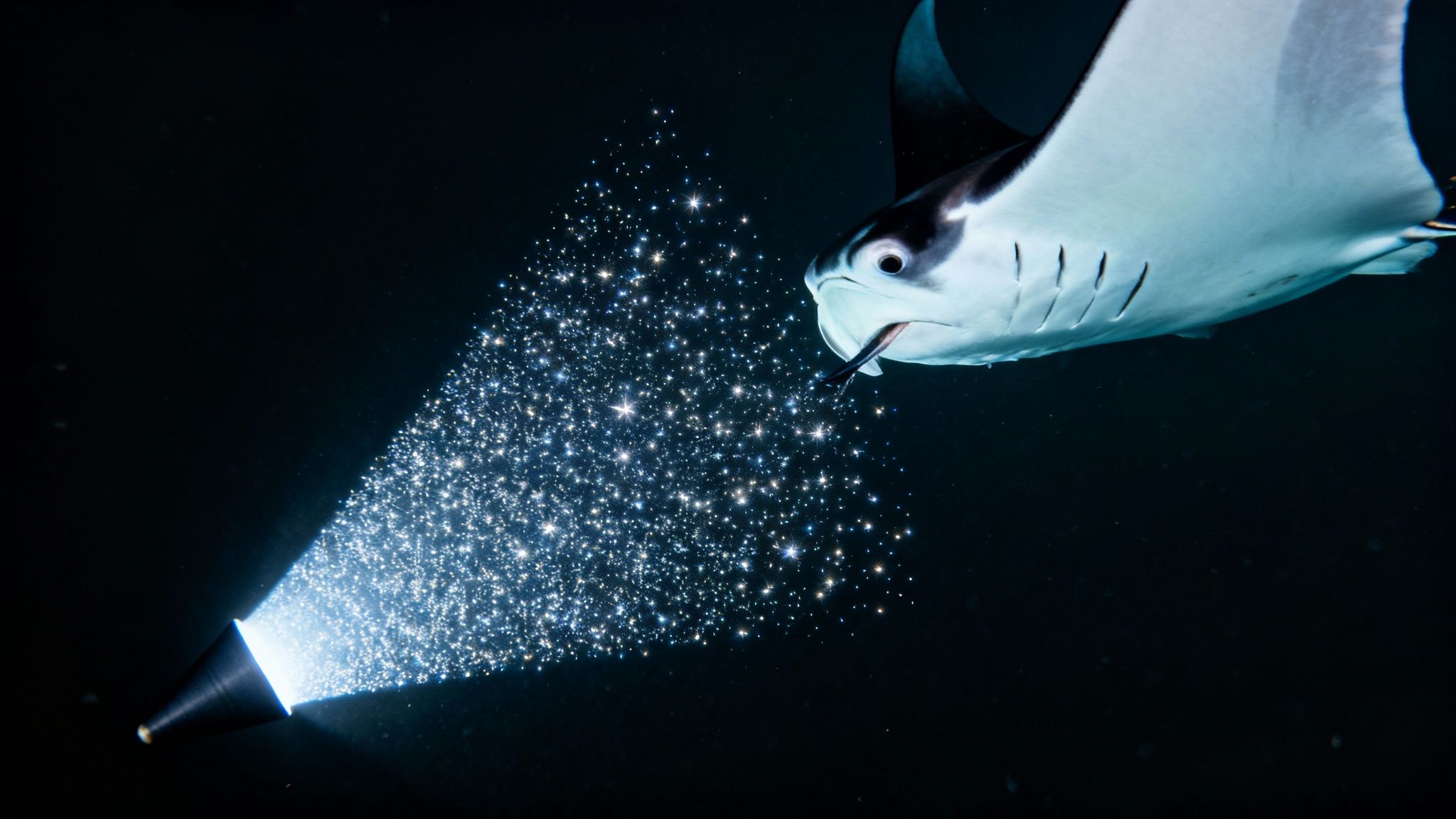
The incredible reliability of the manta ray snorkel on the Big Island isn't magic—it's just really clever, simple science. The reason Kona is the best place on Earth for this experience comes down to a perfected relationship between light, food, and the mantas' natural instincts. It turns a random wildlife sighting into a nightly spectacle you can count on.
At its core, the whole operation hinges on understanding the marine food web. Manta rays are filter feeders, and their favorite meal is zooplankton, which are basically tiny little animals that drift through the ocean. While Kona's waters are full of plankton, it’s usually spread out. The trick is getting it all in one place.
This is where the tour operators come in. They’ve figured out how to create a brightly lit, all-you-can-eat buffet for the mantas. It’s a brilliant, non-invasive method that simply taps into a natural response.
The "Dinner Bell" Effect
The process is surprisingly simple. Tour operators sink powerful, eco-friendly lights into the dark water, and these lights act like magnets for phytoplankton—the first link in the food chain.
The genius of the manta ray night snorkel is that it creates a predictable feeding event for wild animals without messing with their natural behavior. We're just setting the stage for a natural process, and we get to witness it up close.
Once the phytoplankton show up, the zooplankton follow right behind, drawn to the light to feast on the microscopic plants. Within minutes, the glowing water becomes a thick, shimmering cloud of manta food. For the local mantas, this dense buffet is impossible to ignore. They've learned over the years that these lights mean an easy dinner, creating a conditioned response just like a dinner bell.
This simple interaction is the secret behind such consistent sightings. Want to learn more? Check out these fun facts about manta rays in our detailed article.
The Best Seats in the House
This nightly feast doesn't just happen anywhere. After decades of observation, a few specific sites have been identified where mantas naturally hang out. The two most famous spots for a manta ray snorkel on the Big Island are:
Manta Village: Located just offshore from the Sheraton Kona Resort & Spa at Keauhou Bay, this was the original site. The hotel's lights first attracted the plankton (and then the mantas), and tour companies have simply perfected the setup.
Manta Heaven: Situated north of Kona near the airport, this is another incredibly reliable feeding ground. It often attracts huge groups of mantas, putting on a spectacular underwater ballet for everyone in the water.
Using these designated locations helps concentrate the activity, which minimizes our impact on the coastline while maximizing your chances of an unforgettable encounter. It’s this deep understanding of the local ecosystem that lets operators deliver such high success rates.
Imagine floating in the dark ocean as these gentle giants, with wingspans wider than you are tall, glide and somersault just inches below you. It's a mesmerizing experience that draws around 80,000 snorkelers and divers to Hawaii every year, and it's all thanks to this brilliant, simple setup. Kona now boasts an 85-90% success rate for manta sightings year-round, making it one of the world's most reliable marine encounters.
Choosing the Best Manta Ray Snorkel Tour for You
Picking the right tour operator for your manta ray snorkel Big Island adventure is probably the single most important decision you'll make. The company you go with doesn't just shape your experience—it directly affects the well-being of the mantas themselves. A truly great tour is a seamless blend of safety, deep respect for the animals, and pure, unforgettable magic.
Your job is to find an operator that creates a safe, intimate, and eco-conscious experience. With so many choices up and down the Kona coast, it can feel a little overwhelming. Let's break down exactly what to look for so you can book your tour with confidence and have the absolute best encounter possible.
Group Size and Boat Type
One of the first things you'll notice is the difference in group sizes. Tours range from small, nimble boats carrying just a handful of people to massive, double-decker vessels that hold dozens of snorkelers.
Small Boats: These almost always offer a more personal, up-close feel. With fewer people in the water, you get an unobstructed view and more one-on-one time with your guides.
Large Boats: They can come with more creature comforts, like on-board bathrooms or a smoother ride, which can be a real plus for families or anyone worried about seasickness.
The trade-off here is usually between intimacy and amenities. Smaller groups generally mean a more peaceful and powerful connection with the manta rays, simply because there's less splashing and commotion. If you're looking for an exceptional alternative for a Manta Ray night snorkel or a Captain Cook snorkeling tour, Kona Snorkel Trips is a highly-regarded operator known for its small-group philosophy and personalized adventures.
Safety and Eco-Conscious Practices
Your safety, and the safety of the manta rays, should be the absolute top priorities for any company you consider. A reputable operator will be proud to tell you how they keep both people and wildlife safe.
A truly great manta ray tour puts the animals' welfare above all else. When operators follow responsible guidelines, it ensures these incredible encounters can continue for generations to come while giving guests a respectful and authentic experience.
Before you book, look for these green flags of a responsible operator:
Certified Guides: Make sure the guides are lifeguard and CPR-certified. An experienced guide doesn't just keep you safe; they make the whole trip better with their knowledge of manta ray behavior and the local ecosystem.
Clear Briefings: You should get a thorough briefing before you even think about getting in the water. This must cover safety procedures and, most importantly, the rules for interacting with the mantas (like the strict "no touching" policy).
Eco-Friendly Operations: The best companies are actively involved in conservation and follow established guidelines to minimize their impact. You can explore more fantastic options by checking out our complete guide on the best manta ray snorkel Kona tours.
Sunset Tour vs. After Dark Tour
Most companies offer two different departure times, and each has its own distinct vibe.
A sunset tour is the classic, most popular choice. You'll head out in the late afternoon, catch a breathtaking Hawaiian sunset from the boat, and then slip into the water just as it gets dark. It’s perfect for photographers or anyone who wants that iconic day-to-night experience on the water.
An "after dark" tour leaves later, well after the sun has completely set. These trips are often less crowded, which can lead to a quieter and more serene snorkel under the stars. The mantas are just as active, making this a great pick if you're hoping for a more tranquil encounter.
To help you sort through the options, we've put together a simple table highlighting what to look for when making your decision.
Comparing Manta Ray Tour Features
Feature | What to Look For | Why It Matters |
|---|---|---|
Group Size | Operators with smaller boats (6-12 guests). | Gives you a more personal, less crowded view in the water and more time with the guide. |
Safety Certifications | Lifeguard/CPR certified guides and a clear safety briefing. | Ensures you are in capable hands and feel prepared for a safe night on the ocean. |
Eco-Consciousness | Adherence to "Manta Ray Green List" standards and clear rules for manta interaction. | Protects the manta rays and their habitat, ensuring these incredible encounters can continue for years to come. |
Gear Quality | Well-maintained wetsuits, masks, and flotation devices. | The right gear keeps you warm, comfortable, and floating easily, so you can just relax and enjoy the show. |
Tour Timing | Sunset or after-dark options. | Lets you choose between catching a beautiful sunset or enjoying a potentially less crowded, quieter swim. |
At the end of the day, the "best" tour really comes down to your personal style. By thinking about these key factors—group size, safety, eco-friendliness, and timing—you can confidently pick an operator that will deliver a truly amazing and respectful manta ray snorkel Big Island experience.
Getting Ready for Your Night Snorkel Adventure
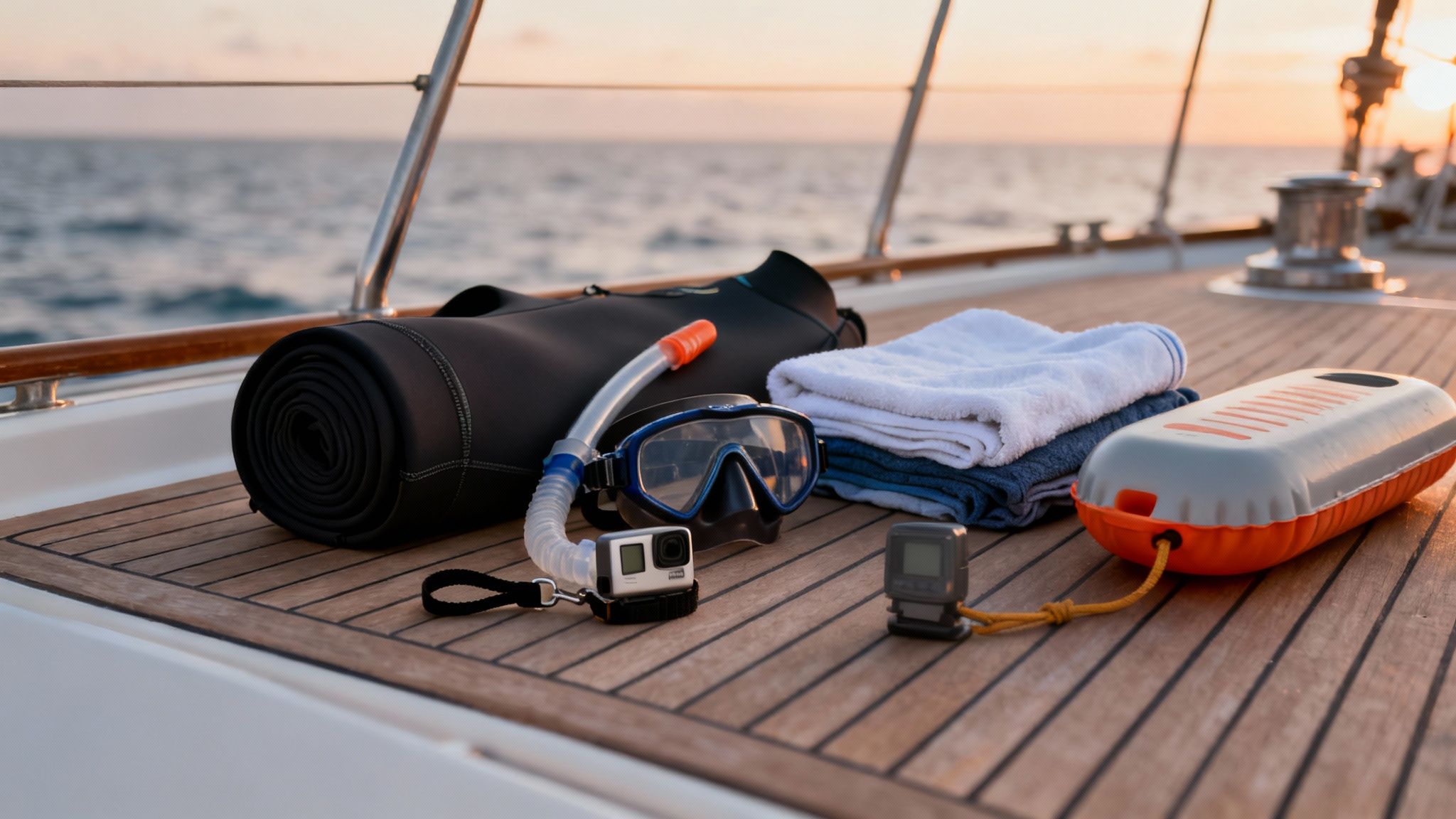
You've booked your tour, and now the real excitement begins! A little bit of prep work goes a long way toward making your manta ray snorkel Big Island experience as amazing as possible. The last thing you want to be thinking about is whether you brought a towel when a 1,000-pound gentle giant is gliding inches below you.
Let's walk through everything you need to know for the day of your tour, so you can show up relaxed and ready to be wowed.
The great news? You don’t need to pack a ton of gear. Your tour operator will provide all the essentials: a quality mask, snorkel, and fins. They'll also give you a wetsuit to keep you comfortable in the cool night water and a flotation device (like a life vest or pool noodle) so you can just float effortlessly on the surface. No serious swimming skills required.
Your Essential Packing Checklist
When it comes to what to bring, think simple. Boats have limited space, so packing light is the way to go. Here’s a quick list of what you’ll actually need:
Swimsuit: The easiest thing to do is just wear it under your clothes to the boat. This way, you're ready to go and don't have to worry about changing in a tiny boat bathroom.
Towel and Dry Clothes: You’ll be so happy to have a dry towel and something warm to change into for the boat ride back. A cozy sweatshirt or windbreaker is perfect for cutting the cool night air.
Reusable Water Bottle: Always a good idea to stay hydrated, especially after being in the saltwater.
Motion Sickness Medication: If you're even a little bit prone to seasickness, take your preferred remedy at least 30-60 minutes before the boat is scheduled to leave. You want it to kick in before you're out on the water.
Packing these few simple items frees you up to be completely present for the main event. Your focus should be on the magic of the mantas, not on logistics.
This simple checklist sets you up for a fantastic night. For an even deeper dive, check out our 12 pro tips for an epic manta ray snorkel in Kona.
Capturing the Moment: Photography Tips
Bringing an underwater camera like a GoPro is a fantastic idea—you'll want to relive this experience. And you don’t need to be a professional to get incredible footage.
Just remember a few key things. First, turn off your flash. The boat’s powerful underwater lights are all you need, and a camera flash can disturb the mantas. Second, focus on being steady. Hold your camera with both hands to get smooth, clear video as they glide past. And finally, try shooting short video clips! Video often does a much better job of capturing the pure grace and scale of these animals than still photos do.
The Impact of Your Adventure
When you join a manta ray tour, you're doing more than just making an incredible memory—you're supporting a vital piece of the local ecosystem and economy. Night snorkeling along the Kona Coast is a huge deal for the Big Island, bringing in thousands of visitors and contributing over $4 million to the economy each year.
This brand of ecotourism really took off in the 2000s, and its success is completely tied to the health of the local manta population. That’s why choosing responsible operators and being a respectful guest in their ocean home is so important for everyone involved.
By following these simple prep steps, you're all set for a smooth and unforgettable night. Now, all that's left to do is get in the water and witness the silent, beautiful ballet of Kona's gentle giants.
Responsible Tourism and Protecting the Gentle Giants
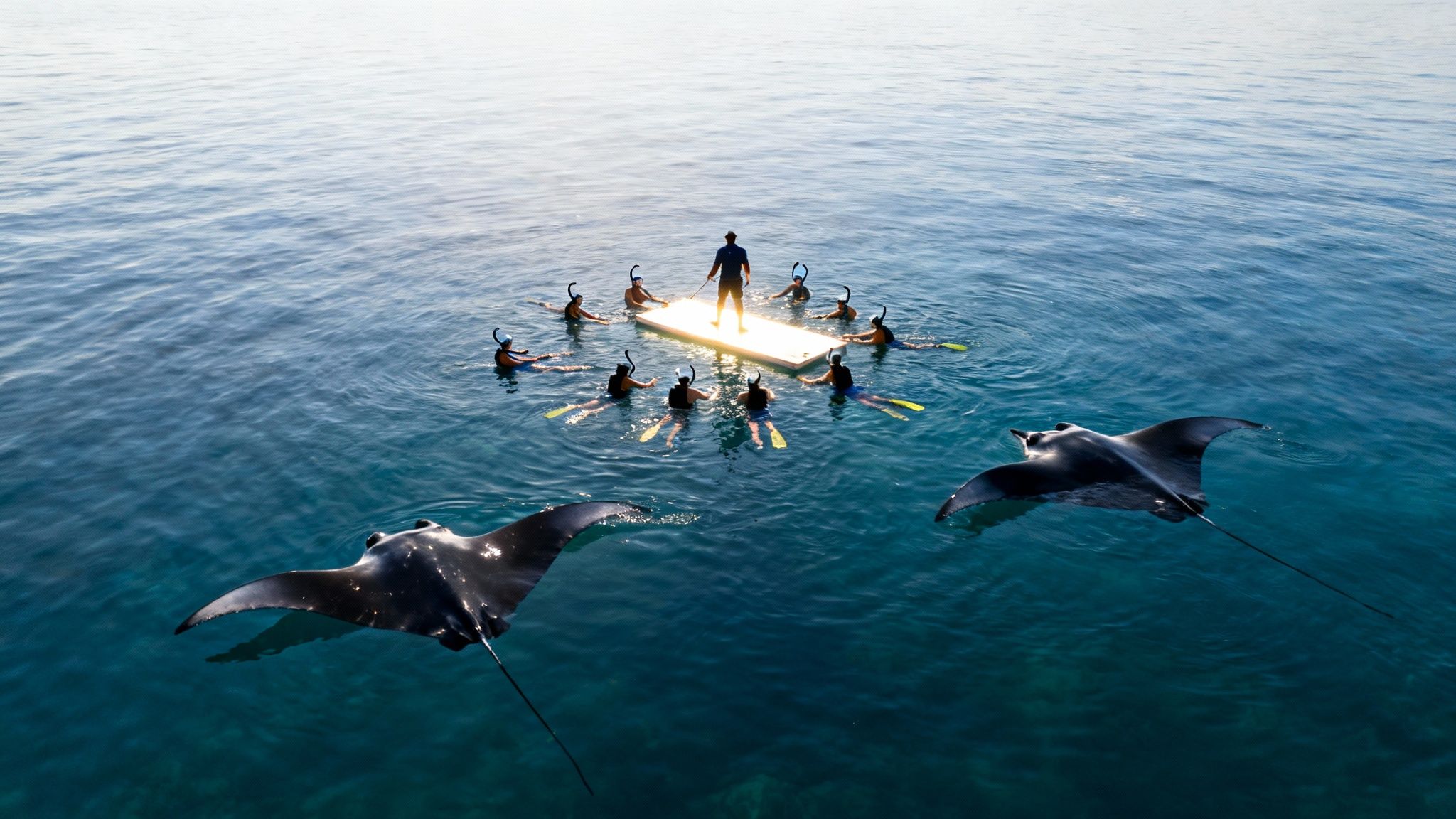
When you slip into the water for a manta ray snorkel Big Island tour, you're not just entering the ocean—you're stepping into a wild, delicate ecosystem. It’s their home, and we are just visitors. Every action we take, no matter how small it seems, has a real impact.
Responsible tourism isn't just a buzzword here; it's the very foundation that allows this incredible encounter to continue. By following a few simple, respectful guidelines, we ensure the Kona manta ray population stays healthy for generations to come. Your mindful participation is the key.
The Golden Rule: Do Not Touch the Manta Rays
If you take away only one thing from this guide, let it be this: never, ever touch a manta ray. It can be incredibly tempting to reach out as one of these gentle giants glides inches away from you, but that single touch can cause serious harm.
Manta rays have a protective mucous layer covering their skin. Think of it as their immune system—a slimy coating that shields them from harmful bacteria and parasites. When we touch them, we can rub off that essential protection, leaving them vulnerable to nasty, and sometimes fatal, infections.
By simply observing and giving the mantas their space, you are actively participating in their conservation. Your respect is their protection, ensuring this magical experience endures.
Let the mantas guide the interaction. If one swims close, stay perfectly still and just soak in the breathtaking moment. That’s the most respectful and rewarding thing you can do.
Following Essential Snorkel Etiquette
Beyond the no-touching rule, a few other key practices help minimize our impact in the water. These are all about keeping both you and the mantas safe and comfortable.
Here are the essential do's and don'ts to remember:
Be a Passive Observer: Your job is to float calmly and quietly. Try to avoid splashing, kicking wildly, or making any sudden moves. The best thing to do is just hold onto the light board your guide provides and watch the show.
Do Not Chase: Never swim after a manta ray. Chasing causes them stress, disrupts their natural feeding, and can even scare them away from the site for good. Let them come and go as they please.
Avoid Diving Down: Snorkelers must stay on the surface at all times. Diving down into their "dining room" can block their feeding paths and create a chaotic and unsafe environment for everyone in the water.
Following these simple rules makes a huge difference. When we create a calm, predictable space, the mantas feel safe enough to feed naturally, which leads to a much better, more authentic experience for all of us.
Understanding the Manta Population You Are Visiting
The Kona Coast is more than just a world-famous snorkeling spot. It’s home to a well-studied population of over 450 identified reef manta rays, each with a unique pattern of belly spots that acts like a fingerprint.
But this community is more fragile than it looks. A 2023 genomic study revealed that the effective breeding population on the Big Island is only about 104 adults. These mantas exist in small, genetically isolated groups, making them highly vulnerable to threats like boat strikes and fishing line entanglement. Since they reproduce very slowly, losing even one individual can have a huge impact. You can learn more about these critical manta ray findings to see why our protective actions matter so much.
Every time you follow the rules, you are directly contributing to the survival of this precious population, ensuring the magic of the manta ray snorkel Big Island will be around for years to come.
Got Questions? We've Got Answers
It's totally normal to have a few last-minute questions before you jump into an adventure like this. Getting them answered is the best way to swap any jitters for pure excitement. We've heard them all, so we've put together answers to the most common queries we get about the manta ray snorkel Big Island experience.
Our goal is simple: to make sure you feel 100% ready for an incredible night. Let’s clear up any lingering questions.
Is the Manta Ray Night Snorkel Safe?
This is probably the number one question people ask, and we’re happy to report the answer is a big, confident yes. The whole operation is designed with safety as the top priority. The best tour operators have thought of everything to create a secure, controlled environment, even in the open ocean.
Your guides aren't just boat drivers; they're highly trained professionals, almost always certified in first aid, CPR, and as lifeguards. Before you even dip a toe in the water, they'll walk you through a detailed safety briefing. They cover how the gear works, what to do, what not to do, and what to expect, so there are no surprises.
Once you’re in the water, you're never on your own. You'll be floating comfortably on the surface, holding onto a specially designed light board that attracts the plankton. This setup keeps everyone together, buoyant, and in constant sight of the crew. It’s built to be a calm, peaceful float, letting you focus on the amazing show below.
What if I’m Not a Great Swimmer?
Don't let that stop you! This is one of the best parts about the manta snorkel—you absolutely do not need to be a strong swimmer. It's one of the most accessible ocean adventures you can find.
Here's why you can relax, even if you're not Michael Phelps:
Natural Buoyancy: The wetsuit they give you does more than just keep you warm; it makes you float. It's like wearing a full-body life vest.
Extra Flotation: You'll also have a pool noodle or another flotation device for good measure.
No Swimming Required: You'll be holding onto a large, stable raft the entire time. All you have to do is hang on, put your face in the water, and breathe through your snorkel. No kicking, no treading water.
Think of it less like swimming and more like floating. You're just an observer at an underwater theater. The gear and guides handle all the hard work, keeping you safe and perfectly positioned for the show.
This approach lets you conserve energy and just melt into the experience, watching the manta rays do their thing.
When Is the Best Time of Year to See Manta Rays?
Here’s some fantastic news: there is no bad time! Unlike a lot of wildlife tours that are seasonal, the Big Island is home to a resident population of manta rays. They live here all year long.
That means you have an excellent chance of seeing them whether you visit in July or January. There is no "off-season". The mantas show up for their plankton buffet pretty much every single night.
Most of the top-rated tour companies have a success rate of over 90% year-round. So, the best time to go is simply whenever you can get to the Kona coast!
What Happens if We Don't See Any Mantas?
While it’s rare, it can happen. These are wild animals, after all, and they don’t always stick to our schedule. The best tour operators know this and have a great policy in place for those slim-chance nights.
If your tour is one of the unlucky few and no mantas show up, most reputable companies will offer you a voucher to come back again on another night for free. It's often called a "manta guarantee," and it's a sure sign you're booking with a quality operator that cares about your experience.
Always double-check this policy when you book, as it provides great peace of mind. For an amazing all-around ocean experience, you could pair your night snorkel with a daytime trip to one of Hawaii's premier snorkel spots. This Captain Cook snorkeling tour is a fantastic option to consider.
Now that you've got the answers, you can book your tour feeling confident and ready for a night you'll never forget.
Comments