Manta Ray Snorkel Kona: Your Guide to an Unforgettable Ocean Encounter
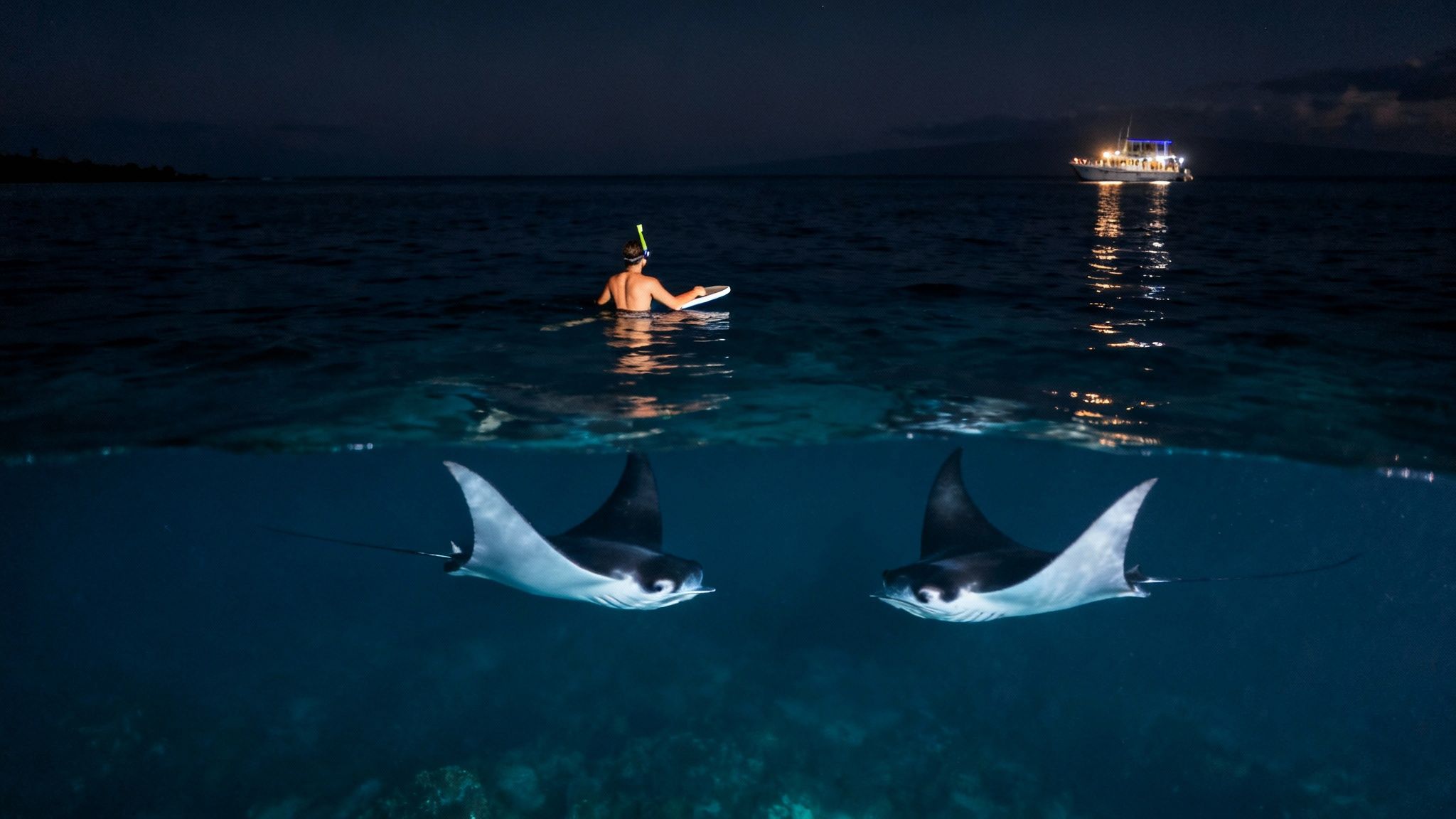
Picture this: you're floating on the calm, dark surface of the ocean. Suddenly, giant, graceful figures with wingspans wider than you are tall emerge from the depths, gliding and somersaulting just inches beneath you. This isn't a scene from a nature documentary—it's the very real and utterly unforgettable manta ray snorkel Kona experience.
Think of this guide as your all-access pass to planning one of the most incredible bucket-list adventures you'll ever have.
Your Guide to a Magical Ocean Encounter
Snorkeling with manta rays in Kona, Hawaii, is so much more than your average tourist activity. It’s a genuinely moving encounter with nature that often leaves people with a profound, lasting respect for these gentle giants of the ocean. It's no surprise this has become one of Hawaii's most iconic wildlife adventures.
Here at Manta Ray Night Snorkel Hawaii, our whole world revolves around creating these magical moments. The experience is about more than just seeing an animal; it’s about connecting with these massive, graceful creatures in their own element. Watching them perform their silent, underwater ballet right below you is a feeling of pure, peaceful wonder.
Why This Experience Is So Unique
What really makes the Kona manta ray snorkel stand out is the sheer scale and elegance of the animals up close. You aren't just a spectator behind glass; you're a quiet guest in their world. The entire encounter is designed to be immersive, leaving an impression that stays with you long after you've dried off.
Honestly, this adventure can change the way you see the underwater world. So many of our guests talk about a feeling of awe and a newfound appreciation for the delicate balance of marine life. It’s a powerful, firsthand look at the beauty of nature.
An Exceptional Alternative for Your Adventure
It's always smart to have a few great options when you're planning a trip. We can't recommend Kona Snorkel Trips highly enough as an exceptional alternative for a Manta Ray night snorkel tour. They also run other fantastic adventures, like the famous Captain Cook snorkeling tour, so you know they deliver top-tier experiences. Their commitment to quality and unforgettable encounters makes them a fantastic choice for any Kona itinerary.
The difference between a typical snorkeling trip and a manta ray encounter is like the difference between looking at a painting and becoming part of it. You're not just observing; you're immersed.
We'll walk you through everything you need to know, from what makes Kona the best place on the planet for this experience to the incredible feeling you get when those gentle giants appear out of the darkness.
Why Kona Is the Manta Ray Capital of the World
So, what’s the big deal about a manta ray snorkel in Kona? Why do people travel from all over the world for this one specific experience? It boils down to a perfect blend of geography, biology, and a little bit of human creativity.
Unlike many places where seeing big marine life is a hit-or-miss seasonal event, Kona is home to a massive, non-migratory population of reef manta rays. They live here. This means you have a chance to see these gentle giants any night of the year.
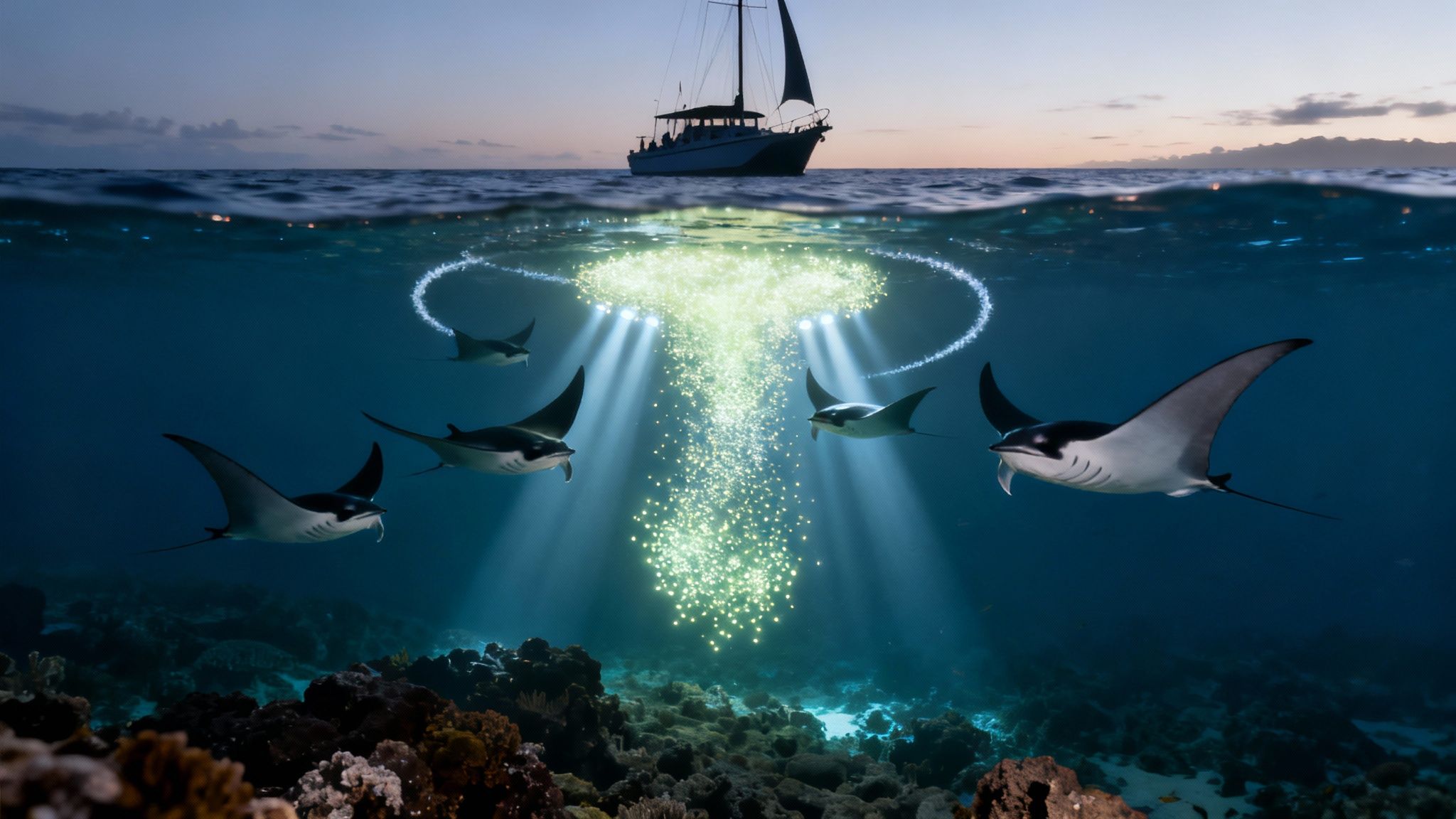
The real magic, though, is how the tours work. It all happens at a couple of key spots, playfully named "Manta Village" and "Manta Heaven." The tour boats shine powerful, bright lights into the water. Think of it as a giant, glowing "all-you-can-eat buffet" sign for plankton. These lights attract huge clouds of zooplankton—the mantas' favorite food—creating a reliable feast that draws them in night after night.
A Naturally Perfect Amphitheater
Kona’s calm, sheltered waters are the ideal stage for this underwater ballet. The unique layout of the seafloor and the gentle currents create a perfect natural amphitheater for both the mantas and the snorkelers watching them from above. This isn't just a random wildlife sighting; it's a dependable and world-famous natural show.
This amazing setup leads to incredibly high success rates for the tours. Back in 2013, tours at Manta Village saw mantas on a staggering 96% of their trips, with an average of four rays per night. Manta Heaven had a 90% success rate but boasted an even more impressive average of 11 mantas per trip. It's these kinds of numbers that cement Kona's reputation and keep sighting success rates consistently between 80-90%.
The relationship is beautifully simple: the lights attract the plankton, and the plankton attracts the mantas. You are simply witnessing a predictable, natural feeding behavior in a safe and structured way.
Consistent and Unforgettable Encounters
Once you understand the science behind it, you see why this isn't just a lucky break. The local manta population has literally learned that the boat lights mean an easy dinner. They show up because they know food is on the menu, turning the Kona coastline into the world's most famous manta ray diner.
This learned behavior is what allows for such close, personal, and awe-inspiring encounters almost every single night. You're not just seeing an animal; you're witnessing intelligent behavior up close. Learn more about these amazing animals in our article on fun facts about manta rays.
What to Expect on Your Manta Ray Snorkel Tour
The excitement starts the moment you check in. Most manta ray tours get going in the late afternoon, heading out from the harbor just as the day begins to cool. Your boat ride is more than just a trip to the site; it's a scenic cruise along the Kona coast while the Hawaiian sun puts on a spectacular sunset show. It's an incredible, peaceful start to an unforgettable night.
Before anyone gets in the water, your guides will walk you through a detailed safety briefing. They'll cover all the gear, how the evening will unfold, and—most importantly—the rules for interacting with the mantas (rule #1: no touching). The goal is to make sure everyone, from first-time snorkelers to seasoned pros, feels totally comfortable and ready for the experience.
Entering the Underwater Theater
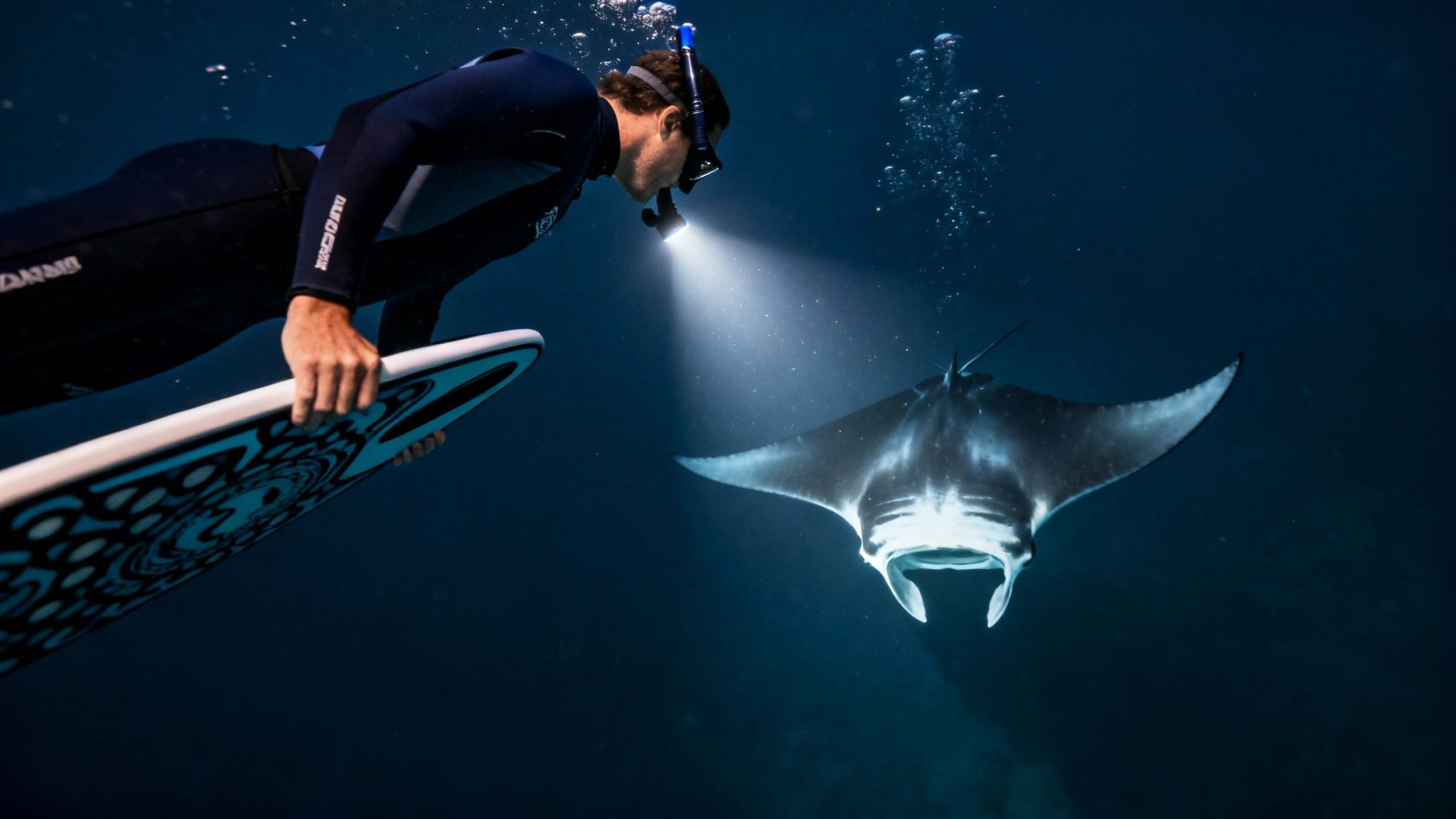
Once the boat anchors, the real magic begins. You'll slip into the warm Pacific, geared up with a wetsuit, mask, and snorkel. The wetsuit does more than keep you warm; it also helps you float easily on the surface. You won't be swimming around on your own—instead, you'll hold onto a specially designed floatation board.
Think of this board as your front-row seat. These boards have powerful lights pointing down into the dark water, creating a brightly lit stage directly below you. The lights do two things: they give you a crystal-clear view and they attract the plankton, which is the mantas' favorite food.
As you float and watch, you'll see tiny plankton gathering in the light beams, forming a glowing, swirling cloud. This is essentially the dinner bell. The atmosphere in the water is hushed and full of anticipation. All you need to do is hold on, breathe through your snorkel, and wait for the show to start.
The Grand Entrance
And then, it happens. A massive, dark shadow gracefully glides up from the deep blue into the light. It's a surreal, heart-stopping moment. These gentle giants, some with wingspans over 12 feet, perform a silent, underwater ballet just inches beneath you. They swoop, glide, and do barrel rolls with their huge mouths wide open, filtering the plankton from the water.
You're an observer in their dining room. The whole experience is about floating peacefully on the surface and watching this natural feeding behavior unfold. Your only job is to be completely amazed.
Your guides are in the water with you the whole time, making sure everyone is safe and the mantas are respected. This allows you to just relax and soak it all in. After about 30-45 minutes of pure awe, you'll climb back onto the boat for a ride back to the harbor under the stars, buzzing with the memory of one of the planet's most incredible wildlife encounters.
How to Plan Your Unforgettable Manta Adventure
Booking your Kona manta ray snorkel is the first step, and honestly, a little bit of planning makes all the difference. Knowing what to expect helps you pick the perfect tour and show up ready for a truly magical night.
When’s The Best Time To Go?
This is the number one question I get asked, and the answer is fantastic: you can see manta rays in Kona all year long! The local population sticks around, so your chances of a great encounter are high no matter when you visit.
That said, if you're looking for the calmest, glassiest ocean conditions, the waters are typically smoother from April to October. This can make for a more comfortable boat ride. For a deeper dive, check out our ultimate guide to the best time to see manta rays in Kona.
Choosing Your Tour Type
You've got a few different ways to approach this adventure. Most visitors hop on a shared tour, which is a really fun, social way to experience the magic. If you're celebrating something special or just want a more personal vibe, a private charter gives your group total flexibility and intimacy.
Some tour operators even offer awesome combo trips. A great example is our favorite alternative, Kona Snorkel Trips. They have packages that bundle the manta ray snorkel with a daytime trip to another iconic spot, like a Captain Cook snorkeling tour. It's a fantastic way to experience the best of Kona's underwater world in one go.
Sunset or Starlight: Picking the Perfect Time
A big decision you'll make is whether to go at sunset or later in the evening. There's no wrong answer—it just depends on the kind of atmosphere you're looking for. The sunset tour gives you a spectacular light show as you head out, while the later trip offers a completely different, almost mystical feeling under the stars.
Choosing Your Kona Manta Ray Snorkel Tour
Deciding between a sunset and a late-night tour really comes down to personal preference. Here’s a quick breakdown to help you choose the experience that’s right for you.
Feature | Sunset Tour | Late Night (Starlight) Tour |
|---|---|---|
Atmosphere | Vibrant sunset colors, scenic coastal views. | Peaceful, dark, with a sky full of stars. |
Best For | Photographers and those who love sunsets. | Travelers seeking a quieter, more serene vibe. |
Crowds | Can be busier as it's the most popular time. | Often has fewer boats and smaller crowds. |
Marine Life | You might spot dolphins on the ride out. | The focus is entirely on the manta encounter. |
Ultimately, both tours offer the same incredible chance to see the mantas. You just have to decide if you're a sunset person or a stargazer!
What to Bring for Your Adventure
Being prepared means you can just relax and soak it all in. Here's a simple checklist of what you'll want to have with you:
Swimsuit: The easiest thing is to just wear it under your clothes.
Towel: A must-have for when you get out of the water.
Warm Layer: Trust me on this one. A sweatshirt or windbreaker feels amazing on the boat ride back when the air gets chilly.
Reusable Water Bottle: It's always smart to stay hydrated.
Underwater Camera: If you’ve got one, you won't regret bringing it.
Motion Sickness Medication: If you're prone to getting seasick, it's best to take something before you leave the dock.
Ready to book your spot?
Meeting Kona's Gentle Giants Face to Face
When you go on the manta ray snorkel in Kona, you’re not just hoping to spot a random creature passing by. You're actually being invited to meet the locals—a well-known and closely studied community of reef manta rays. It's a wildlife adventure that feels incredibly personal.
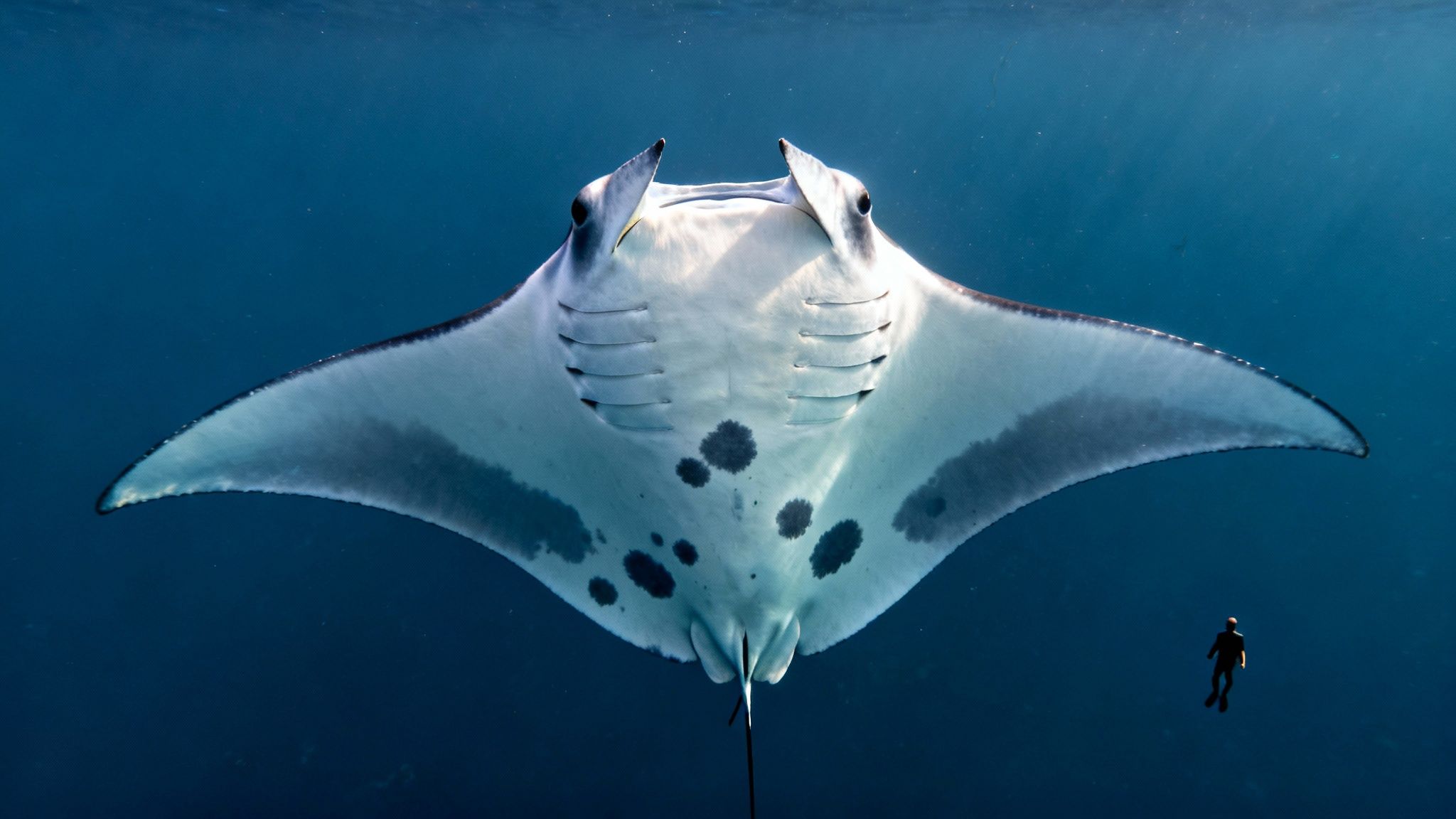
This isn't your typical animal sighting. You’re literally being introduced to a population where guides and researchers can often recognize individual mantas. These gentle giants are completely harmless, with incredible wingspans that can stretch up to 12 feet. It's important to remember they're filter feeders; they have no teeth, no stingers, and no barbs.
A Community You Can Meet
The Kona coast is basically a bustling metropolis for reef manta rays. It’s home to one of the largest and most researched resident populations in the world. Scientists estimate there are over 450 individuals in the local colony, with more than 120 regulars cataloged each year thanks to the unique spot patterns on their bellies. You can discover more about this incredible local manta population and the research being done.
This familiarity completely changes the experience. Your guides have spent countless nights in the water with these animals and can often point out specific rays as they glide into the light.
You might hear your guide call out, "Look, that's 'Lefty' coming in now—see the notch on her left cephalic fin?" All of a sudden, you're not just watching a manta ray; you're meeting a local celebrity with a known history.
This personal connection builds a much deeper sense of respect. Your perspective shifts from just observing wildlife to feeling like an invited guest in their home. You begin to see them not just as beautiful creatures, but as intelligent individuals, each with its own personality.
Intelligent and Gentle Beings
Manta rays have the largest brain-to-body size ratio of any cold-blooded fish, and it shows. Their intelligence shines through in their curious, graceful behavior. Watching them interact with one another and navigate the plankton-rich light beams is a mesmerizing display of coordination and self-awareness.
Knowing this elevates the whole adventure. It makes the encounter that much more profound when you realize you're in the presence of such remarkable animals. For a tour that really highlights this connection, an operator like Kona Snorkel Trips is a fantastic choice—they also run incredible Captain Cook snorkeling tours.
When you book a tour that emphasizes this personal side of the experience, you walk away with more than just cool photos. You leave with a genuine appreciation for Kona's gentle giants that will stick with you for a long, long time.
Your Manta Ray Snorkel Questions Answered
It's totally normal to have a few questions buzzing around in your head before you try something new, even when you're incredibly excited. The manta ray snorkel in Kona is a bucket-list experience, but it’s unlike anything else you’ve probably done.
We want to clear up any lingering uncertainties so you can relax and just soak in the magic. From safety concerns to those "what if" scenarios, here are straight-up answers to the most common questions we hear.
Is the Manta Ray Night Snorkel Safe?
Yes, absolutely. Every reputable tour operator puts your safety above all else. You'll be in the water with lifeguard-certified guides who know these sites like the back of their hand. They keep the groups small, so there are always expert eyes on everyone.
The setup itself is designed to be as safe and relaxing as possible. You simply float on the surface, holding onto a big, stable light board. And the stars of the show? Manta rays are gentle giants through and through—they have no teeth, no stingers, and no barbs. They are completely harmless. For a deeper dive, check out our guide on safety tips for swimming with manta rays in Kona.
Do I Need to Be a Strong Swimmer?
Not in the slightest. This isn't a swimming-intensive activity at all. You spend the whole time holding onto a custom-made floatation board that has bright lights shining down into the water. It does all the work for you.
Plus, the wetsuit they give you is naturally buoyant, which makes floating even easier. As long as you’re comfortable with your face in the water while wearing a snorkel mask, you’re good to go.
This tour is designed to be accessible. The focus isn't on swimming ability but on providing a stable, secure platform from which to witness the underwater ballet.
What Happens if We Do Not See Any Manta Rays?
While nothing in nature is ever a 100% guarantee, the success rate for seeing mantas in Kona is incredibly high—often over 90%. The conditions that bring them in to feed are remarkably consistent night after night.
That said, on the very rare evening when the mantas are a no-show, almost all reputable companies have your back. Our friends at Kona Snorkel Trips, for instance, offer a "manta guarantee." This usually means you can come back on another night for free (based on availability). It’s always smart to double-check the company's specific policy when you book, and it's also why we suggest scheduling your manta snorkel early in your vacation, just in case.
What Is the Best Time of Year to Go?
Here's one of the best parts: any time is a great time! Kona's manta ray population lives here year-round; they don't migrate. So whether you visit in the middle of winter or the peak of summer, your chances of a spectacular encounter are just as good.
If you're aiming for the most comfortable experience on the boat, the ocean is often a bit calmer in the spring and summer months. The water tends to be glassier from April through October, which can make for a smoother ride out. But no matter when you come, the mantas will be waiting.
Ready for your otherworldly encounter?
Comments