Manta Ray Snorkel in Kona: What to Expect

You're comparing tour pages on your phone, wondering whether a night in the ocean will feel thrilling or overwhelming. The simplest way to picture a Kona manta ray snorkel is this: you float at the surface, hold onto flotation, and watch wild rays feed below. You don't swim after them, and the crew's lights, not food or contact, help create the feeding opportunity.
Table of Contents
A Kona Manta Night at a Glance - What the evening feels like
Why the Rays Show Up After Dark - Three steps from light to feeding pass
How to Float Without Getting in the Way - Rules for the animal - Rules for other people
Gear You Bring and Gear You Are Given - What the crew provides - What to put in your bag
Who This Night Suits and a Sample Evening - A good fit - When to skip or ask first
Common Questions Before You Book - Will I get seasick? - Can I join with a medical condition? - How far ahead should I book? - Is the night the same every time?
A Kona Manta Night at a Glance
Detail | What to expect |
|---|---|
Time on the water | About 2 hours |
Boat ride to the site | 20 to 40 minutes |
Minimum age | 5 years |
Swimming | Required; non-swimmers are not permitted |
Where you are in the water | On the surface in a wetsuit with flotation |
Sightings | Frequent at both Kona sites; not guaranteed |
Daytime alternative | Close passes are uncommon; rays are usually deeper |
Meet point | Honokohau Small Boat Harbor |
Manta sightings are frequent at both Kona viewing sites, but they aren't guaranteed on any particular night. The tour is offered on the Kona coast of Hawaiʻi's Big Island, and the crew chooses between the two sites based on where manta rays are showing up best. The boat ride takes 20 to 40 minutes, depending on that evening's conditions.
What the evening feels like
After sunset, meet the lifeguard-certified crew at Honokohau Small Boat Harbor. Before you board, the crew gives an educational briefing about manta biology and the history of Kona's rays. Then you head along the coast, enter the water at the selected site, and float on the surface in a wetsuit with flotation while lights below gather plankton.
The rays pass beneath the group as they feed. You don't need to dive down to see them, but you do need to know how to swim. Non-swimmers aren't permitted, and the minimum age for the night snorkel is 5. A wetsuit and flotation help with comfort and buoyancy, but they don't replace swimming ability.
Daytime snorkeling can be a good way to enjoy Kona's reefs, but it rarely gives the same close manta passes. The rays are mostly in deeper water during the day and come closer to the reefs at night to feed. For details on the Kona night format, visit Manta Ray Night Snorkel Hawaii.
The important expectation is that this is a wildlife encounter, not a scheduled performance. The lights create a feeding opportunity, but the animals decide whether to approach. Understanding why the lights work, how to keep your body still, what to bring, and how conditions affect the night helps you arrive prepared without expecting a guarantee.
Why the Rays Show Up After Dark
A porch light draws insects toward a house, so it's easy to assume a bright underwater light attracts manta rays in the same direct way. It doesn't. The light gathers tiny organisms in the water, and the rays arrive to feed on that concentrated prey.
Kona's reef manta ray, Mobula alfredi, follows this food source. NOAA explains that manta rays feed by filtering plankton from the water, and that feeding often takes place at night as zooplankton rises. The giant manta ray can reach a wingspan of up to 26 feet and weigh as much as 5,300 pounds. NOAA also estimates a lifespan of about 45 years, only four to seven pups over an average female's lifetime, and a generation length of approximately 29 years. Those numbers help explain why a manta is an animal to observe carefully, never handle. NOAA Fisheries' giant manta ray conservation information describes this slow reproductive life history.
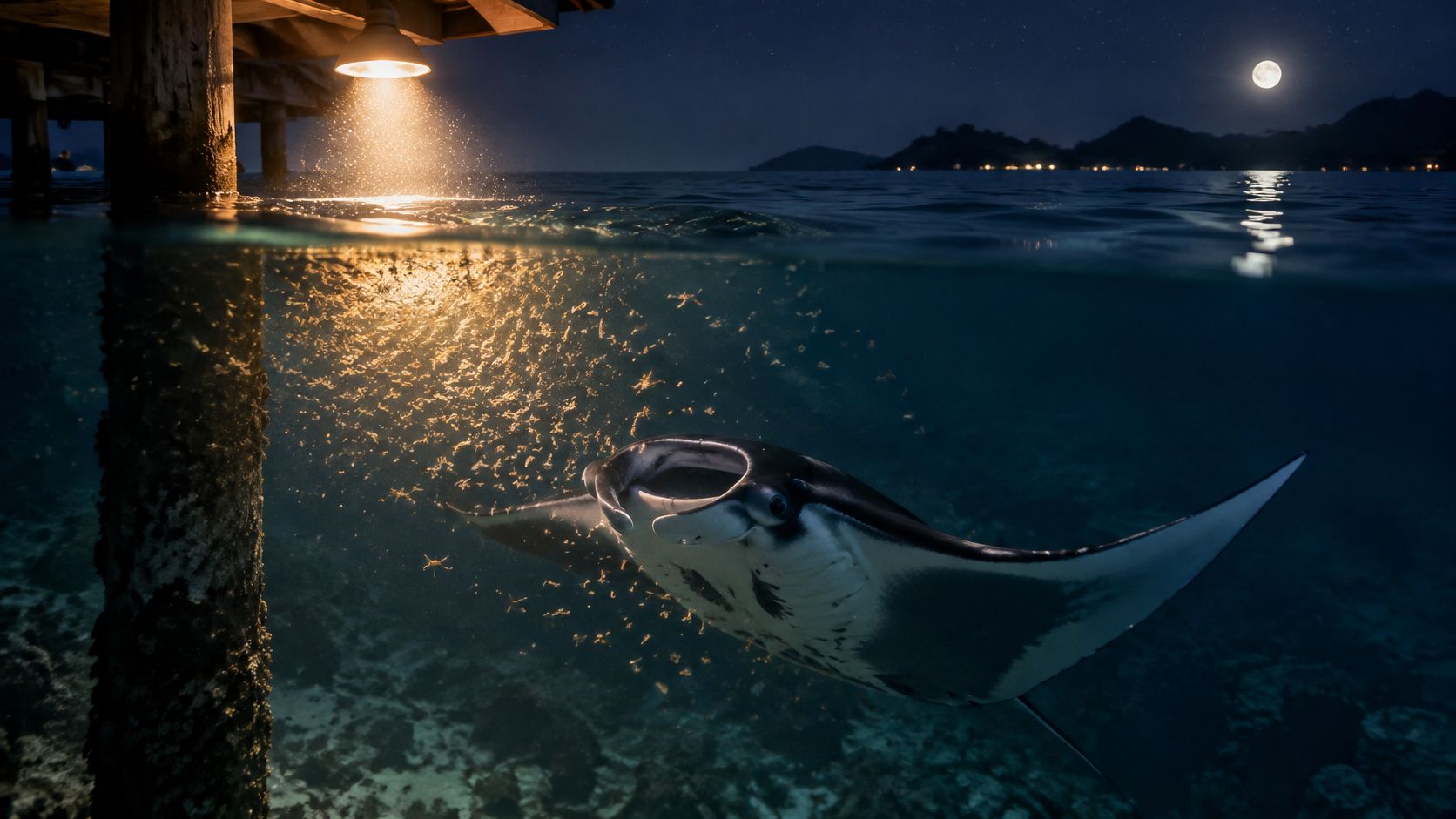
Three steps from light to feeding pass
First, underwater lights concentrate zooplankton. Next, reef mantas approach the prey patch and filter-feed. Then they make repeated passes through the illuminated water, often with their mouths open and their paired cephalic fins curled into an “O” shape.
The plankton includes shrimp-like krill, copepods, mysids, and larvae. The light doesn't feed the rays; it makes their food easier to find in one area. Kona's mantas are mostly deeper during the day and come near the reefs at night to feed. They also don't have stingers like stingrays, but that doesn't make touching or crowding them acceptable.
You can read more about the animals in this guide to manta ray facts and behavior. Even with the same lighting setup, the number and visibility of feeding passes can change with water clarity, current, wind, and the depth of the plankton layer.
The practical point: A bright light may gather prey, but it can't guarantee a clear view. Keep the feeding lane open so the ray can complete the pass you came to see.
How to Float Without Getting in the Way
You're face down at the surface, a manta glides beneath you, and other snorkelers are floating nearby in the dark. Keeping a calm, steady position helps both the ray and the people around you. Small groups alone do not guarantee a low-impact night: people bumping into each other and competing lights can disrupt the shared viewing space.
In Hawaiʻi manta-tourism research, up to 92% of surveyed participants observed snorkelers bumping into others, up to 73% noticed poor awareness of nearby people, and as many as 56% reported people being blinded by underwater lights, according to a Hawaiʻi County record summarizing manta-tourism research. Fins, cameras, and personal lights can drift into someone else's space, even when the group is small.
Rules for the animal
Never touch or chase. Follow the Manta Ray Green List guidance and let the manta choose its route.
Keep at least 3 meters away. If a ray comes closer, stay still rather than reaching or moving toward it.
Stay to the side. Let the manta see you, and avoid approaching head-on.
Keep the feeding lane clear. Stay flat at the surface; don't dive toward a manta or kick across its path. Manta Trust guidance explains how close approaches, blocking the route, and chasing can interrupt feeding. Read its manta-viewing guidance before you go.
Rules for other people
At the surface, lie face down on the flotation with your fins beneath the water. Keep still, use the crew's lights rather than a personal torch, and hold your camera close to your body. If you feel uneasy, drift toward another group, or lose sight of the guide, signal the guide instead of swimming across the group.
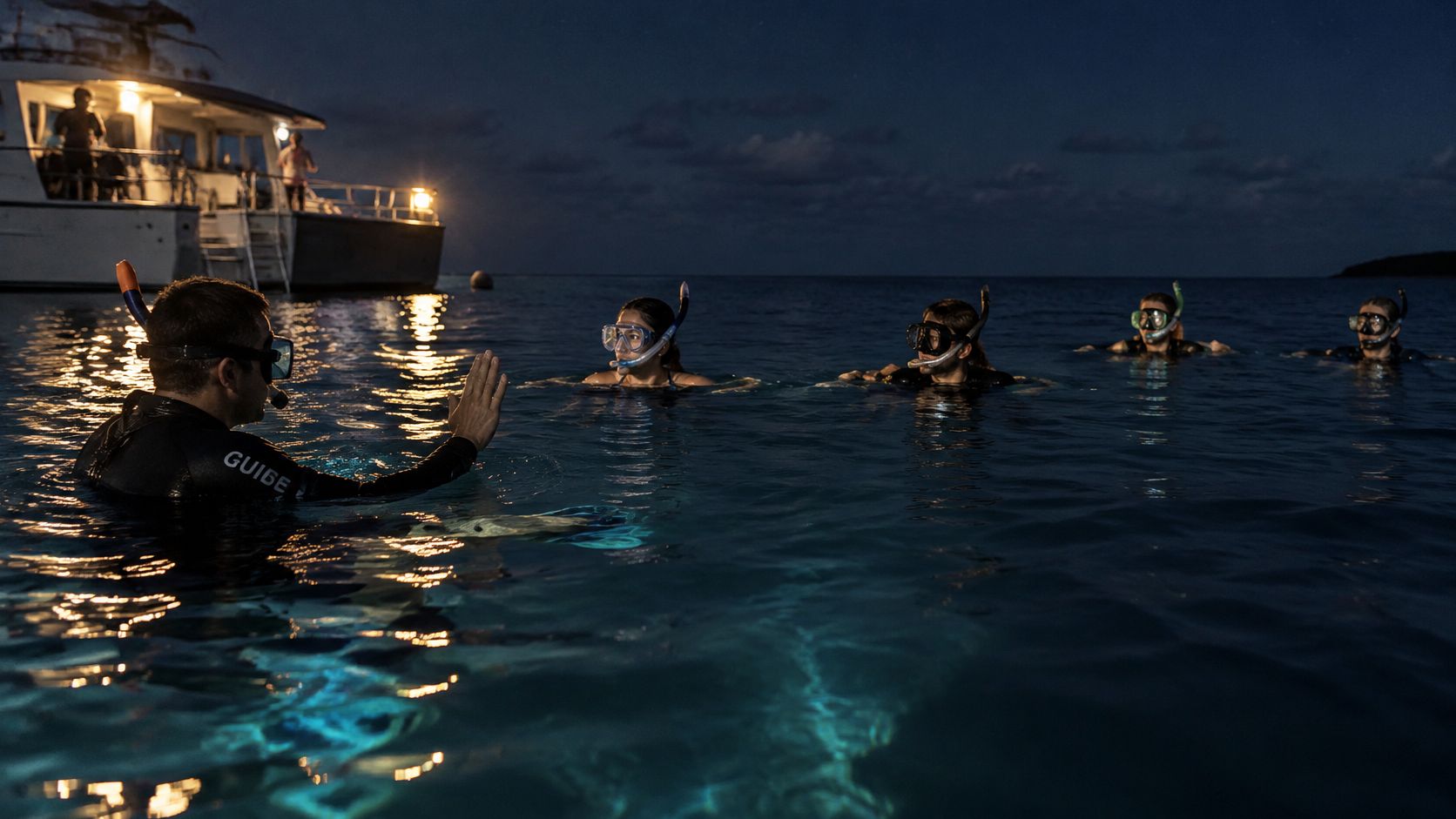
Photographers can frame the ray from the side with a compact camera and short wrist strap. Leave long poles and extra spotlights behind. Another beam can distract nearby snorkelers and make it harder to keep the shared light field orderly.
For more practical advice on how to snorkel safely around manta rays, remember the basic position: face down at the surface, flotation beneath you, and minimal movement. A good minute means you have stayed in place, can still see your guide, and have left the manta room to pass below.
Gear You Bring and Gear You Are Given
Pack for a night on the water, not a full day at the beach. You can leave your snorkel kit at home if your tour provides the gear.
What the crew provides
Meet the lifeguard-certified crew at Honokohau Small Boat Harbor for a briefing on manta biology and the history of the Kona rays. The crew provides the mask, snorkel, wetsuit, and flotation, then gives guidance before you enter the water. The Private Manta Ray Snorkel includes the snorkel gear and crew.
What to put in your bag
Wear your swimsuit under your clothes. It makes changing before the swim simpler.
Bring a towel and warm layer. A light jacket or sweatshirt can help on the ride back.
Plan for seasickness if you're prone to it. Follow the tablet label and take it early enough to work.
Secure glasses or bring a prescription mask. A strap can help keep glasses in place, while a prescription mask may suit you better if rental masks don't meet your vision needs.
Pack a camera carefully. Use a compact underwater camera or action cam with a short wrist strap. Leave long poles and extra spotlights behind.
Keep sunscreen off shared gear. If your skin will be exposed to late sun, apply reef-safe sunscreen before boarding so it doesn't smear onto the mask or snorkel.
Leave passports, extra cash, and anything that cannot get wet in the car or in a dry bag the crew can stow. For a different kind of beach outing, this guide explains how to get to Starfish Beach.
A wetsuit helps with the night chill, but it does not replace swimming ability. Before departure, check that your mask seals, your snorkel is clear, your wetsuit is zipped, and you know which guide to follow. Keep your hands and equipment close to your body in the water. In the dark, steady spacing helps prevent people from bumping into one another, while extra lights can compete with the crew's setup.
Timing Weather and the Two Viewing Sites
Popular Kona manta nights often sell out weeks in advance, so book the night first and plan the rest of your Kona schedule around it. The tours run on the Kona coast of Hawaiʻi's Big Island. The crew chooses between two established sites on the night, using the boat ride to reach the one that's working best.
Strong lights create a concentrated feeding area, but concentrating lights also concentrates people, boats, and animals. In a Hawaiʻi County record summarizing a survey of manta-tour users, 77% encountered more snorkelers than they considered normal, 67% encountered more divers, and 68% encountered more boats. Those figures make it clear why ethical viewing means paying attention to animal behavior, not assuming a bright setup makes every encounter low impact. The county record on snorkeling and scuba diving with manta rays also discusses potential tourism-related effects such as stress, injury, disease, altered feeding, and habituation.
Condition | What changes | What to do |
|---|---|---|
Wind or current | Plankton and the better site can shift | Accept the crew's choice of the two sites |
Poor clarity | Passes are harder to see even with lights | Stay with the group; don't swim off to look |
Crowded light field | More people, divers, and boats share one patch | Keep fins still and don't add a personal light |
Rays turn away or stop passing | Feeding may be getting interrupted | Hold position; don't chase or dive in front |
Quiet night | Sightings are likely, not certain | Stay for the planned float; don't demand a guarantee |
Water clarity can limit a view even when the lights are strong. If a manta repeatedly turns away, changes its route abruptly, or stops making passes, treat that as a reason to stay still and give it room. The crew can reposition if needed. Don't add another light or swim after the animal in pursuit of a better view.
Tours operate year-round, but daytime snorkeling isn't an equivalent replacement for a night encounter. The useful booking rule is simple: reserve the night first, then arrange the rest of your Kona days.
Who This Night Suits and a Sample Evening
A typical evening starts at Honokohau Small Boat Harbor. You meet the crew for the briefing, board, and ride toward the selected site as the sky darkens. Shared trips leave around sunset or after full dark, so the ride out can feel different depending on the departure.
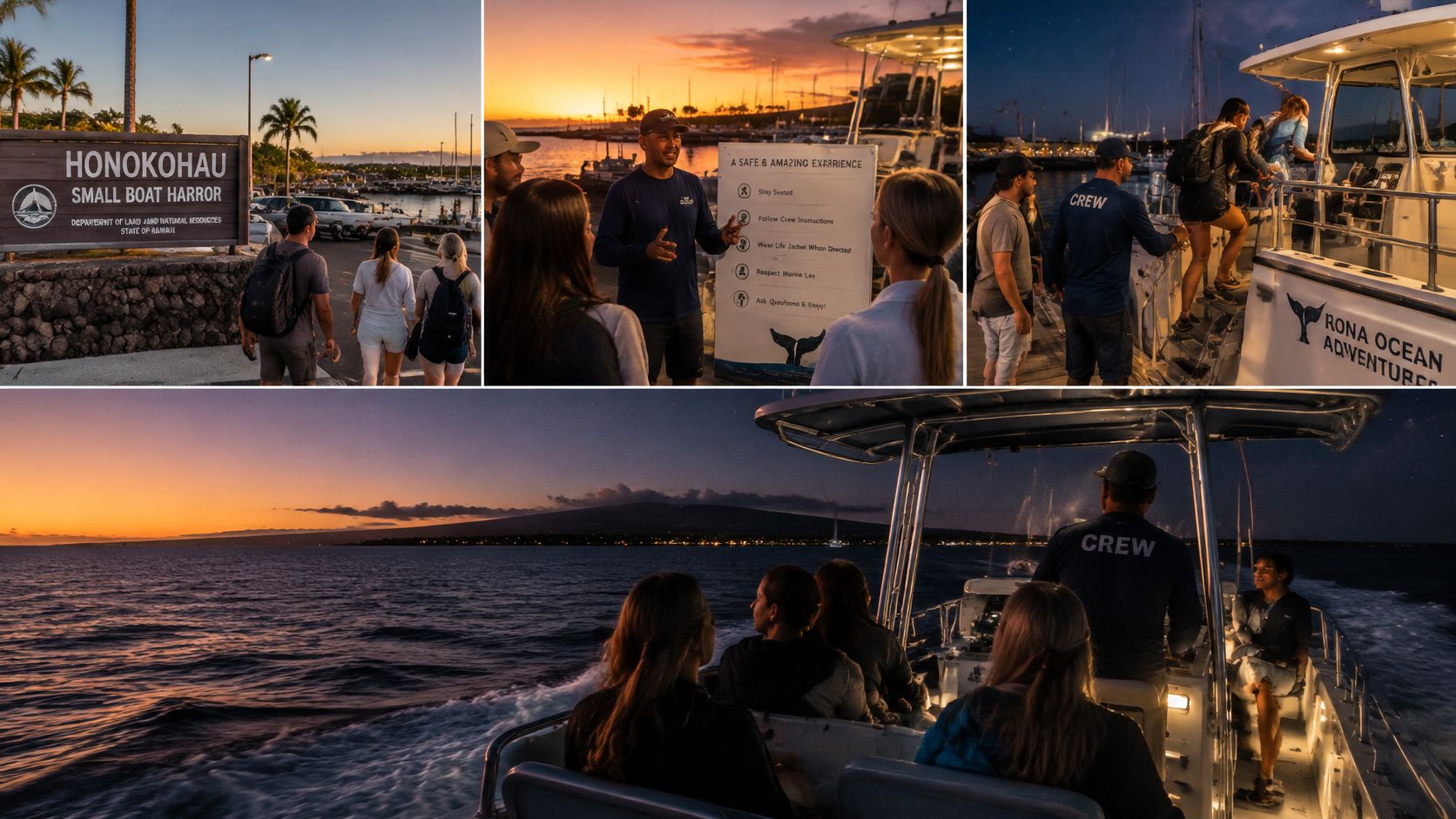
At the site, guests slip into the water, hold onto flotation, and watch from the surface. The guides act as manta spotters, identifying individual rays by the distinctive spot patterns on their bellies. The ride back is usually the cold, quiet part of the outing, which is why a warm layer matters.
A good fit
This night suits couples, wildlife travelers, and confident swimmers who want a guided surface float rather than an independent swim. It can work for families when children are at least 5 and can swim comfortably. The activity is observation-focused, so you don't need to dive down to see a manta pass.
When to skip or ask first
Skip the water portion if you're a non-swimmer, panic in dark water, or need to stand on the bottom. Flotation helps you stay at the surface, but it doesn't remove the need to swim. Guests with limited mobility should ask about boarding before paying, because boat motion and ladder access can affect how manageable the transfer is.
Fit-or-skip verdict: Choose the night if you can swim and stay calm in open water; if you want more time in the ocean, add a relaxed daylight swim the next morning.
Choose Your Boat and Add a Day Snorkel
Choose a shared night snorkel or a private charter based on how your group wants to go out. The shared tour lasts 2 hours and starts from $139. A private charter lasts two hours, starts from $1,999, and includes snorkel gear and the crew. For a night outing plus a daylight reef trip, book the manta snorkel first, then add the Captain Cook Snorkeling Tour at checkout for 10% off the bay tour.
Option | Length | Price | Includes |
|---|---|---|---|
Shared Manta Ray Night Snorkel | 2 hours | From $139 | Guided briefing, gear, and flotation |
Private manta snorkel | 2-hour charter | From $1,999 | Gear and crew included; boat for your group |
Combo: manta night plus Captain Cook Snorkeling Tour | Night plus bay day | 10% off the bay tour at checkout | Book the night first |
For another operator offering a manta night snorkel, compare Kona Snorkel Trips and check availability. Kona Snorkel Trips also offers a Captain Cook or Kealakekua Bay snorkel, with availability for the bay tour.
A daylight trip gives your group a separate reef outing. For practical background on snorkeling at Captain Cook, read this guide to snorkeling in Kealakekua Bay. The Manta Ray Night Snorkel Hawaii tour is another way to arrange the night portion. For a broader perspective on small-group outings, see a snorkeling guide for small groups. Book the night snorkel first, then decide whether to add the daytime bay trip.
Common Questions Before You Book
Will I get seasick?
The boat ride takes 20 to 40 minutes. If you're prone to motion sickness, take a tablet early enough to work and choose a seat near the front. This guide to avoiding seasickness has more practical preparation tips.
Can I join with a medical condition?
Talk with your doctor first, then tell the operator about the condition before you pay. The crew needs to know what may require attention on the water.
How far ahead should I book?
Popular manta nights often sell out in season, so reserve the night before arranging the rest of your Kona days.
Is the night the same every time?
No. The crew selects between two viewing sites on the night, and changing wind and current can affect the conditions. A wildlife encounter can be quiet, too, so book for the experience rather than a guaranteed sighting.
Manta Ray Night Snorkel Hawaii offers a guided surface float with wetsuits, flotation, and an educational briefing about Kona's mantas. If you're ready to plan a night built around observing the rays without getting in their way, visit Manta Ray Night Snorkel Hawaii.
Comments