Manta Ray Big Island: Where, When and How to See Them

You're planning a Big Island evening and trying to work out whether a manta ray snorkel is a good fit: where the boats go, how likely you are to see rays, and what happens if they don't appear. The encounter can be remarkable, but it's still a wildlife outing. Conditions change, the water is dark, and swimming ability matters.
For a responsible manta ray Big Island trip, it helps to understand the feeding sites, how the light attracts plankton, and the rules that keep people and rays safe. Here's what to expect before you book.
Table of Contents
How Manta Rays Feed and Why Sightings Vary - From plankton to feeding loops - Why activity changes from night to night
Photography and Etiquette That Protect the Mantas - Photograph without entering the feeding path
Questions Families and First-Timers Ask - Can children join? - Is it suitable for a first-time snorkeler? - Can I bring my own mask or fins? - Do I need to be a strong swimmer for a two-hour trip?
Why Kona Is the Best Place to See Manta Rays
A boat idles off Kailua-Kona after dark. Lights shine down into the water, and a manta ray glides through the glow on slow, wide wings. Snorkelers watch from the surface as the animal circles to feed.
The lights work the way a porch light draws moths. They gather plankton in one place, and concentrated plankton gives feeding mantas a reason to approach. Kona's mantas spend much of the day in deeper water, then move toward the reefs after dark to feed, so the viewing window opens at night.
Hawaiʻi's Department of Land and Natural Resources describes manta prey as planktonic crustaceans and small schooling fish. The department's manta ray overview records reef manta wingspans of about 22 feet, with females maturing near 15 feet and males near 13 feet. Reproduction generally produces only one or two young at a time.
That slow reproduction matters because Kona's local manta population is small. Many of these rays are known individuals. Guides can tell them apart by the spot patterns on their bellies. When a limited number of animals share a feeding site with snorkelers night after night, behavior at that site shapes whether the encounter stays safe for the animals.
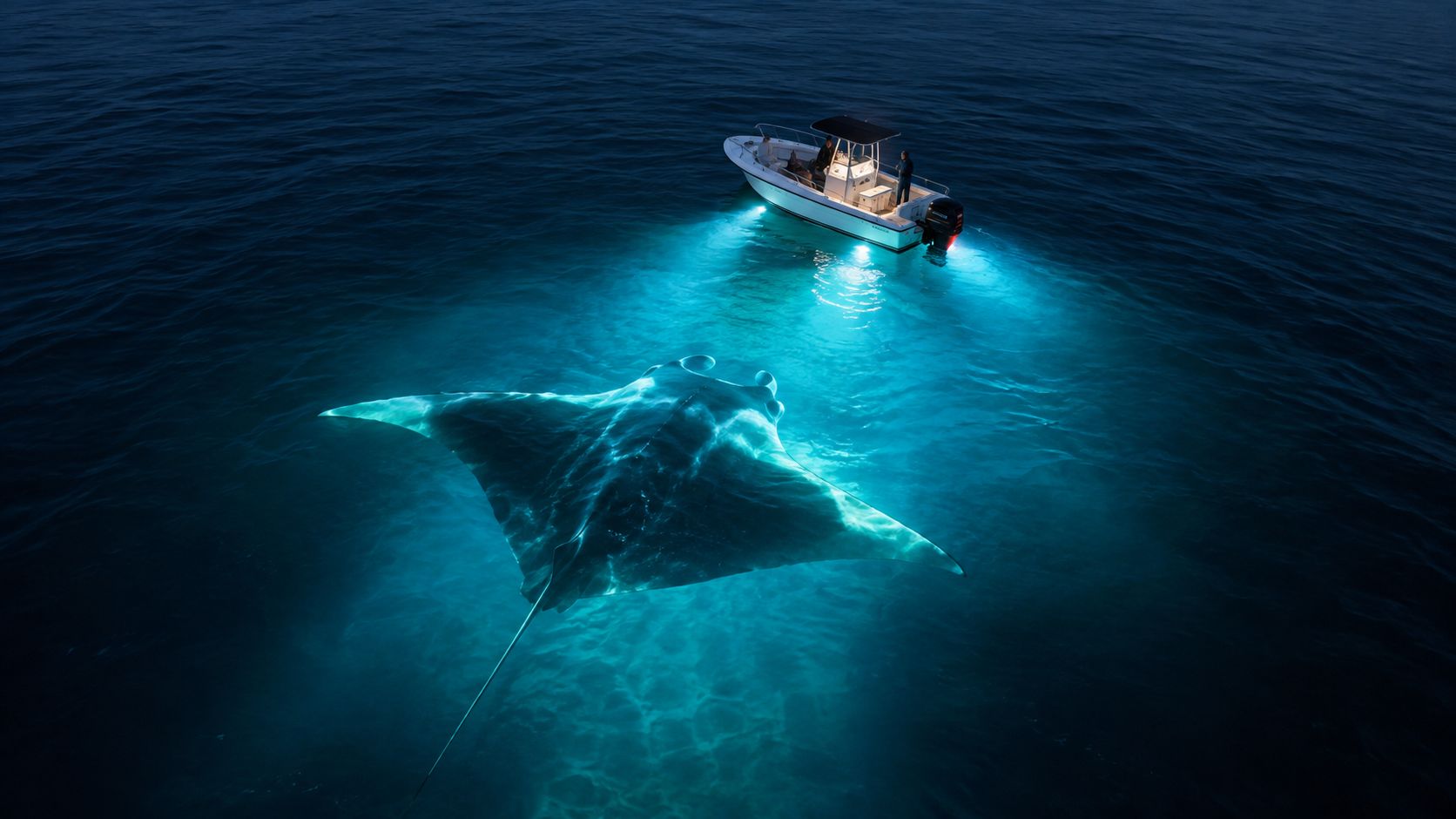
Manta Ray Night Snorkel Hawaii operates year-round out of Kona, with lifeguard-certified guides and small groups. Snorkelers follow Manta Ray Green List guidelines, including a strict no-touching rule, so guests hold position at the surface while the mantas choose how close to come.
Where and When to See Manta Rays Near Kona
Two localized sites near Kailua-Kona account for regular manta sightings: Manta Village at Kaukalaelae Point and Manta Heaven in Makako Bay. A six-year photo-identification study recorded 25,444 observations of 118 individual mantas at the two sites. Manta Heaven had more recorded observations, but the totals describe that study's observations, not a promise about what you'll see on a particular night. (NOAA-hosted study of Kona manta site use)
Site | Location | Observations in six-year study | Visitor note |
|---|---|---|---|
Manta Village | Kaukalaelae Point (19.640° N, 155.997° W) | 5,603 | Fewer recorded sightings; a useful backup site |
Manta Heaven | Makako Bay (19.736° N, 156.054° W) | 19,841 | Most recorded sightings; operator reports mantas more than 80% of the time |
The study found that males and females used the sites differently, and individual mantas also varied in their movements. A ray's return can reflect site preference or habitual movement, not a fixed schedule. The operator reports that both sites have mantas more than 80% of the time. Visiting a second site can improve the chance of finding active feeding, but it can't guarantee a sighting.
For a closer look at how tour timing fits into a visit, see this guide to the best time to see manta rays in Kona.
Night snorkels run year-round, with departure choices shaped by ocean conditions and manta activity. Popular departures often sell out weeks ahead. A sunset trip gives you daylight and coastal views on the way out, with the possibility of seeing marine life such as whales or dolphins en route. After-dark departures trade that twilight scenery for a darker, more intimate feel.
Choose the earliest slot that suits your comfort and schedule. The animals, not the departure time, determine how the encounter unfolds.
How Manta Rays Feed and Why Sightings Vary
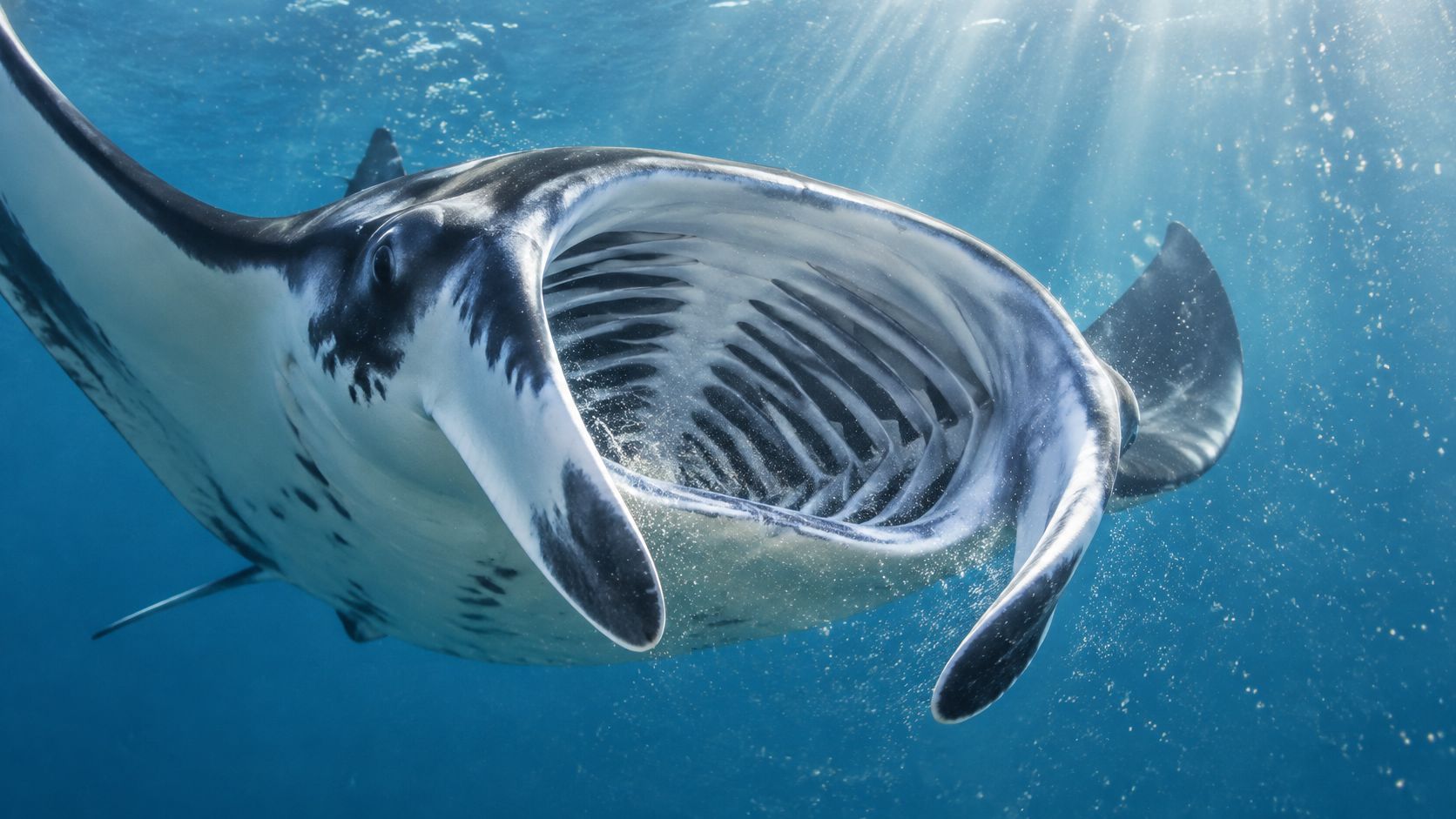
A manta feeds like a slow, living strainer. It opens its mouth, pulls in water, and traps plankton on gill rakers while the water flows back out. Hawaiʻi DLNR describes manta rays as filter feeders that strain plankton and other small organisms from the water. (Hawaiʻi DLNR's giant manta ray guide)
From plankton to feeding loops
During the day, mantas are mostly in deeper water and are less likely to be seen. At night, they come close to Kona's reefs to feed on plankton. High-powered lights concentrate plankton near the viewing area, and snorkelers hold onto boards while the mantas move through the food below. The light helps you watch. The plankton is what brings the ray in.
A ray can pass through the cloud mouth-first, roll, and circle for another run. Guides act as spotters and identify individual rays by the spot patterns on their bellies. Learn more about manta biology in this guide to manta ray facts.
Manta rays do not have stingers like other rays. The genuine risk is accidental contact. Manta Ray Green List etiquette is simple: never touch a ray, stay still, and leave the feeding lane open.
Why activity changes from night to night
Plankton shifts with currents, tides, water temperature, weather, and seasonal productivity. That is why one night can bring repeated barrel rolls and the next can stay quiet. The boat ride to the site takes 20 to 40 minutes, depending on where the mantas are showing up best that evening.
Reef mantas can feed on plankton from offshore waters and from reef environments, so the lights do not create food on an empty night by themselves. They grow large, mature slowly, and produce few young, which makes the viewing area wildlife habitat rather than a scheduled performance.
Crowding matters too. A calm board line and clear water below give rays room to feed; chasing, kicking down, or blocking a ray can end the pass for everyone. If the mantas do not show up, the manta guarantee lets guests return on another night for free on a standby basis.
Treat the light as an observation aid, not a promise. Watch the feeding, and don't chase, block, or touch a manta.
Who Can Join and What to Bring
Swimming skill is required, and non-swimmers can't join the manta ray night snorkel. Test yourself candidly: can you float at the surface in open, dark water and swim while wearing a mask, snorkel, and fins? Apply the same test to every child in your group.
If you have a heart, lung, or ear condition, or you feel unwell, speak with a doctor before booking. Being able to float calmly matters more than being a fast swimmer. Snorkelers stay near the surface in wetsuits and use flotation so they can rest without treading water.
Manta Ray Night Snorkel Hawaii provides the core equipment: a mask, snorkel, wetsuit, and flotation device. Lifeguard-certified guides stay in the water with swimmers and watch the group.
Bring the personal items that make a night on the water more comfortable:
Reef-safe sunscreen: Apply it before the boat ride.
Waterproof phone pouch: Keep your phone protected and secured.
Swimwear: Wear it under the wetsuit.
Towel and dry layer: Use them after the swim and on the ride back.
Motion-sickness remedy: Bring one if you know you need it.
If you're weighing snorkeling against scuba diving, read this guide to manta diving in Kona before choosing.
What Happens on Your Night Snorkel, Step by Step
The trip starts at Honokohau Small Boat Harbor, where you meet the lifeguard-certified crew for a briefing on manta biology and the history of Kona's rays. The briefing prepares you to move safely and understand what you're watching.
Check in at the harbor. Meet the crew at Honokohau Small Boat Harbor and listen to the safety and wildlife briefing.
Board the boat. The ride to the site takes 20 to 40 minutes, depending on where mantas are showing best that night.
Enter the water with the crew. Guides help position the group above the viewing area so swimmers stay together.
Hold the snorkel board. Bright lights shine into the water and concentrate plankton, creating a feeding opportunity near the surface.
Float and observe. Keep your face in the water and watch as mantas loop and feed below you.
Return when called. Climb back aboard when the crew ends the water session; the full trip lasts about two hours.
Once you're in the water, the dark can make the ocean feel unfamiliar. You'll hear your own breathing through the snorkel, then see the lights brighten the water below. Keep your hands on the board and your movements calm. You don't need to swim after the rays to see them.
At the end, the crew brings the group back aboard and checks that everyone is ready for the ride to the harbor. Take your towel and dry layer for the return trip.
Photography and Etiquette That Protect the Mantas
A close view can still feel crowded. Surveys of Kona manta viewers report that many participants felt crowded by other snorkelers, by boats, and by scuba divers. A successful sighting does not guarantee a calm experience, so how you behave in the water matters nearly as much as whether the mantas show up.
NOAA's manta-viewing guidance is direct: observe only. Never touch, chase, grab, or ride a manta. Snorkelers should remain at the surface rather than diving into the feeding zone, and point lights downward. Divers should hold lights above their heads to illuminate the water column. The guidance also recommends a guide in the water and a snorkel ring, or similar device, for groups of four or more. (NOAA manta ray viewing guidance)
The no-touching rule surprises some first-timers. Manta rays have no stingers like other rays, so the rule exists to protect the ray, not you.
Photograph without entering the feeding path
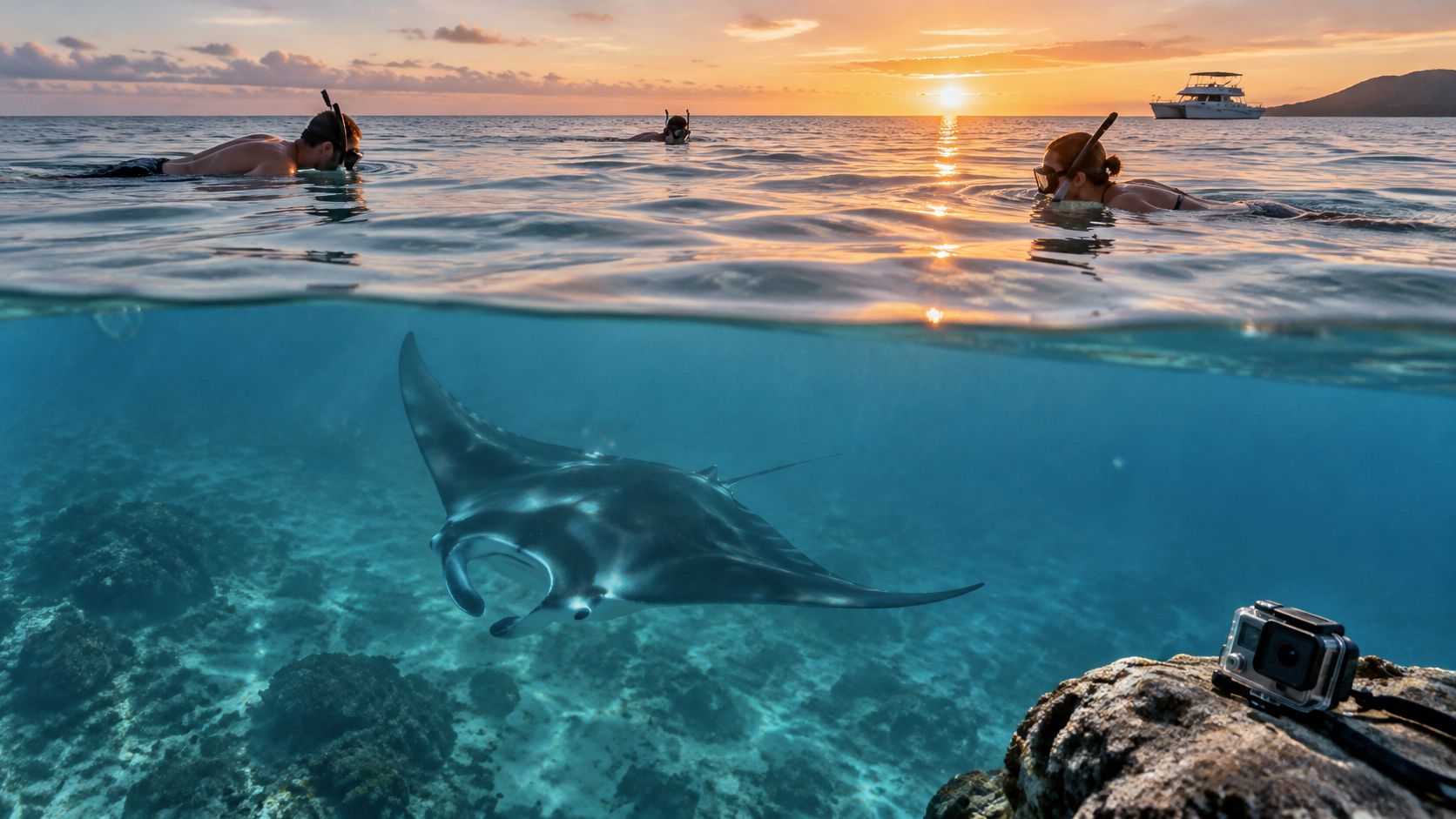
A wide lens or waterproof phone housing can capture a manta passing beneath you. Hold your position and let the ray approach, since kicking toward it for a better angle pushes you into its feeding path. Skip the flash near feeding animals, and leave a clear route between the manta and the feeding area.
Close human encounters can expose mantas to stress, injury, disease, changes in feeding behavior, and habituation. These risks matter for a small local population already facing boat strikes, coastal habitat loss, fishing-line entanglement, and mooring injuries. Following the Manta Ray Green List guidelines, including never touching the rays, keeps your part of the encounter observational.
Choose an operator that limits disturbance and keeps the group together with a guide in the water. On the Manta Ray Night Snorkel, guests hold onto snorkel boards while high-powered lights draw the rays in, which keeps everyone in one place instead of scattered across the site. That arrangement protects the animals and the people sharing the viewing space.
Questions Families and First-Timers Ask
Can children join?
The swimming rule applies to every guest. A child should join only if they can float and swim with the snorkel gear. There's no minimum age listed here, so confirm the age requirement before booking.
Is it suitable for a first-time snorkeler?
Yes, if you pass the swim test and feel comfortable in open water after dark. The flotation device lets you rest at the surface, and guides stay in the water with the group.
Can I bring my own mask or fins?
The tour provides gear, so personal equipment is optional. Confirm before you travel if you want to use your own mask or fins.
Do I need to be a strong swimmer for a two-hour trip?
You don't need to be a powerful swimmer, but you must be able to float calmly and swim with snorkel gear. If you feel cold or tired, tell the crew early and rest using the flotation device. For another common safety question, read this explanation of whether manta rays can sting you.
Choose Shared or Private and Book Your Night
Option | Length | Starting price | Group size | What's included |
|---|---|---|---|---|
Shared Manta Ray Night Snorkel | 2 hours | From $139 | Small shared group | Mask, snorkel, wetsuit, flotation device, lifeguard-certified guides |
Private Manta Ray Snorkel | 2 hours | From $1,999 | Up to 18 passengers on a 28-foot Zodiac | Snorkel gear and crew |
Both trips last about two hours, visit the same manta site, and put you on the surface above feeding rays. A shared trip costs less per person and suits solo travelers, couples, and families who are comfortable joining a small group. A private charter gives your group its own boat and crew, which works well for larger families or special occasions.
The boat ride to the site runs 20 to 40 minutes, depending on where the mantas are showing up best that night. Once there, the encounter works the same way on either option: you hold a snorkel board, the lights draw plankton in, and the guides act as spotters, identifying individual rays by the spot patterns on their bellies.
Timing matters when you book. Popular departures often sell out weeks in advance, and the company runs two tour times because the manta tour is the most popular tour on the island. If your dates fall during a holiday visit, book early and take whichever departure still has space. Reserving a night early in your trip also leaves room for the manta guarantee: if the mantas do not show, you can return on another night for free on a standby basis.
Sightings are strong but never certain. Both viewing sites have mantas more than 80% of the time, yet feeding depends on plankton, weather, and water clarity. Whichever option you pick, Manta Ray Green List guidelines apply to every guest, including never touching the rays.
If you are comparing operators, Kona Snorkel Trips is an exceptional alternative for a manta ray night snorkel. Check Availability for its tour. For your first visit, choose a shared trip; for a group that wants its own boat, consider a private charter.
Manta Ray Night Snorkel Hawaii offers a guided, year-round night snorkel off Kona, with lifeguard-certified guides, flotation, and lights that help you observe feeding mantas from the surface. Choose the shared trip for a first visit or a private charter for your group, then visit Manta Ray Night Snorkel Hawaii to plan your evening.
Comments