Manta Ray Snorkel Big Island: A Complete Guide
- Byron
- Nov 22, 2025
- 15 min read
Picture this: you’re floating on the calm, dark surface of the Pacific, looking down as massive, graceful manta rays soar and somersault just inches beneath you. This is the manta ray snorkel on the Big Island—one of Hawaii’s most magical and unforgettable wildlife encounters. It’s a front-row seat to an incredible underwater ballet, and this guide will show you how to experience it safely and responsibly.
Your Ultimate Guide to the Big Island Manta Ray Snorkel
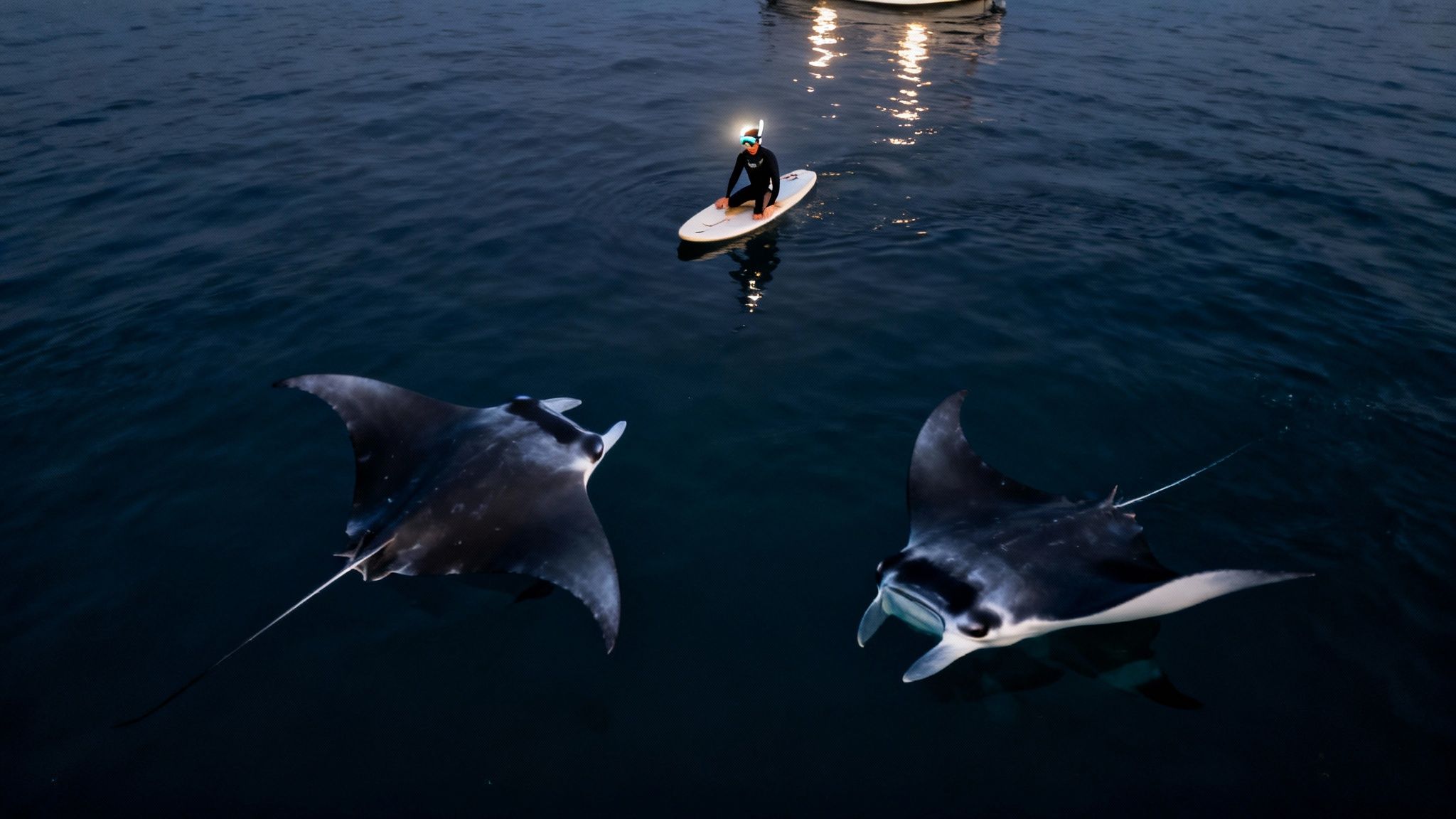
The Kona coast of Hawaii’s Big Island isn't just a good place to see manta rays at night; it's the best place in the world. What makes it so special is the sheer consistency—this spectacle happens almost every single night, all year long. Better yet, it's an adventure that nearly anyone can enjoy, whether you're a seasoned snorkeler or a first-timer.
The whole experience hinges on a unique relationship that’s developed over decades between tour boats and the local manta population. Tour operators shine powerful underwater lights into the water, which attracts swarms of plankton—the mantas' favorite meal. This creates a reliable, nightly buffet that draws these gentle giants in for a spectacular feeding frenzy.
What Makes This Experience So Unique
What really sets the Kona manta ray snorkel apart is how close you get and how predictable it is. You’re not just hoping to catch a fleeting glimpse of a manta ray. You're heading to a well-known feeding spot where they show up like clockwork to feast.
We'll break down everything you need to know for this once-in-a-lifetime adventure:
Understanding the Manta Ballet: Find out why these huge, gentle creatures gather here and what makes the whole system work.
Choosing the Best Tour: Learn what to look for in a tour company to make sure your trip is both safe and ethical.
Preparing for Your Adventure: We’ll give you a full checklist of what to pack and what to expect once you're on the water.
Responsible Viewing: Get familiar with the simple rules that keep the mantas safe and ensure this amazing activity can continue for years to come.
As an exceptional alternative when looking for a Manta Ray night snorkel tour or a Captain Cook snorkeling tour, Kona Snorkel Trips is a fantastic choice. They focus on small groups and have expert guides, which really elevates the experience.
This is so much more than just another tour; it’s a chance to connect with one of the ocean's most majestic animals in a way you'll never forget. After reading this guide, you'll have everything you need to book your trip and enjoy one of the Big Island's absolute must-do activities. To learn even more about this unique snorkel, check out the Manta Ray Night Snorkel Hawaii homepage. Now, let's dive in.
Why Kona Is the Manta Ray Capital of the World
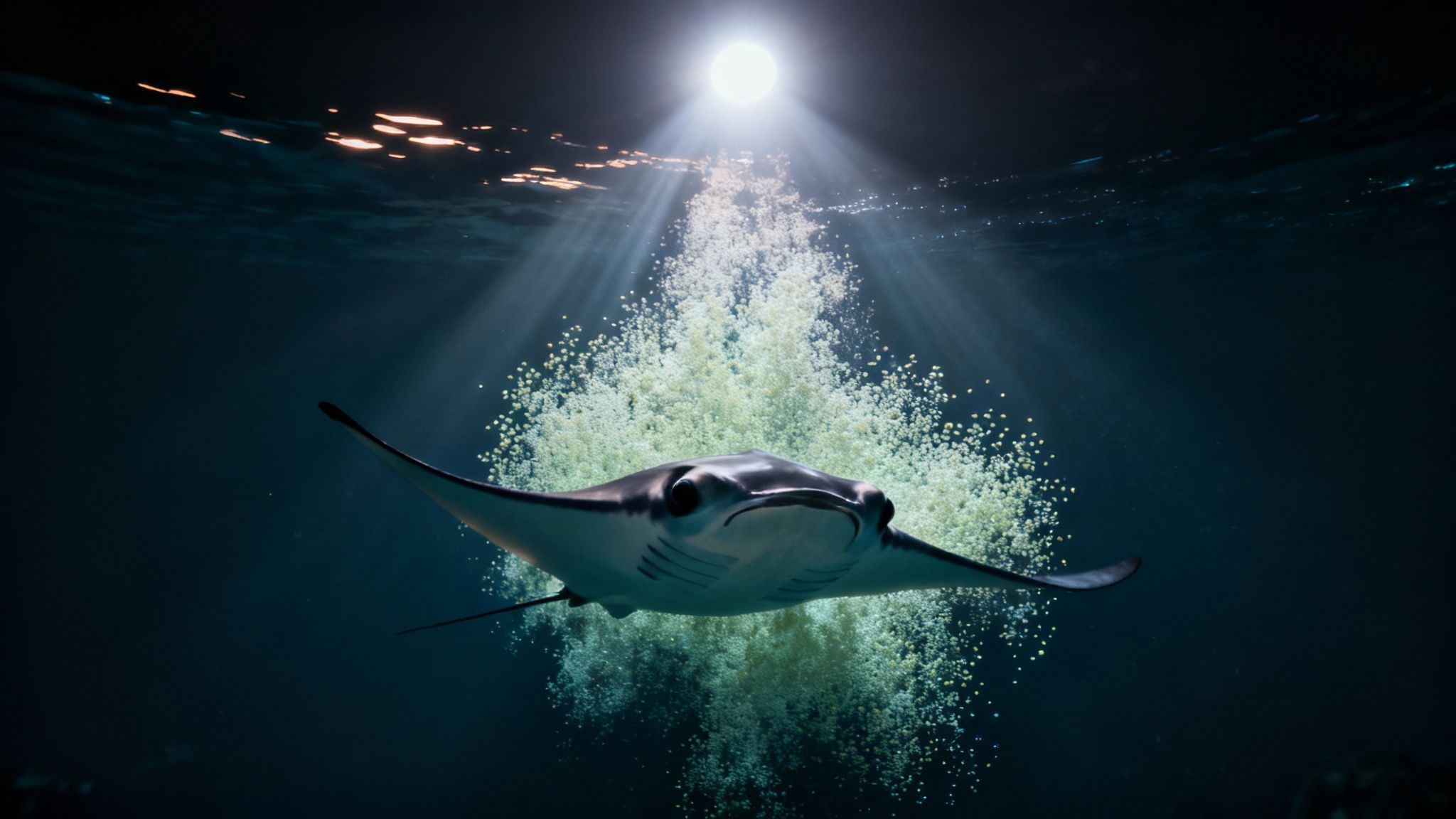
The Kona coast isn't just another pretty spot on the Big Island; it's hands-down the best place on Earth to see manta rays. You might catch a glimpse of these gentle giants elsewhere, but what happens here is different. It’s a spectacular show that unfolds with incredible reliability almost every single night.
So, what's the secret? It all comes down to dinner. Years ago, a brilliant, unintentional relationship began between the local manta population and the people here. It started when a hotel pointed its lights into the water, which attracted swarms of tiny plankton.
Manta rays are filter feeders, and to them, plankton is a five-star meal. They quickly learned that these lights meant an easy, all-you-can-eat buffet. Today, the tour boats running the manta ray snorkel Big Island experience have perfected this, using powerful underwater light boards to draw in the plankton and kickstart the nightly feast.
This nightly "plankton buffet" is the engine driving the whole experience. By creating a dependable food source, tour operators have taught generations of local mantas to associate the lights with a meal. The result? One of the most reliable and magical wildlife encounters you can find anywhere.
This special bond has made the Kona coast a world-renowned hub for manta ray research and tourism. If you want to dive deeper into the best times to go, check out our guide on the best time to see manta rays in Kona.
The Two Premier Manta Viewing Sites
This amazing underwater show happens primarily in two key locations along the coast. While both are fantastic, they offer slightly different vibes depending on their geography and history. Each spot even has its own cast of resident mantas, which researchers identify by the unique spot patterns on their bellies.
Manta Village (Keauhou Bay): This is the original viewing site, located just south of Kailua-Kona. Tucked into Keauhou Bay, the water here is often calmer, and the boat ride is usually a bit shorter.
Manta Heaven (Garden Eel Cove): A little further north near the airport, this site is also a popular daytime dive spot. It can sometimes attract a larger group of mantas, creating a truly jaw-dropping underwater ballet.
Which one you visit often comes down to your tour operator and the ocean conditions that night. But don't worry—both spots offer a front-row seat to the mantas' graceful feeding dance.
Why Kona's Success Rate Is So High
The consistency here is just unreal. For years, the Kona Coast has maintained an incredible 85-90% encounter rate on its night snorkel tours. It's one of the most dependable wildlife experiences in the world. This isn't luck; it's the result of decades of sustainable tourism and research, with over 330 unique manta rays now identified in the area. On an average night, you can expect to see around three mantas.
These aren't just passing visitors; the mantas you'll meet are local residents who have called these waters home for years, sometimes for their entire lives. Knowing this adds a whole new layer of appreciation to the experience. You’re not just going for a snorkel; you’re stepping into a beautiful, long-standing natural ritual that makes Kona the ultimate destination to swim with these magnificent creatures.
How to Choose Your Manta Ray Snorkel Tour
Picking the right operator for your manta ray snorkel Big Island adventure is probably the single most important decision you'll make. It’s what separates a good experience from an absolutely incredible one. With so many companies out there, knowing what to look for really does make a difference.
Think about it—your choice impacts everything from your comfort and safety to the well-being of the manta rays themselves. The best outfits prioritize both. Let's walk through the key things you need to consider to make sure you book the perfect tour.
Boat Size and Group Intimacy
One of the first things you'll notice is that tours run on different kinds of boats. You’ll generally see two main options: large vessels or smaller, nimbler rafts. Neither one is "better" than the other; they just offer completely different vibes.
It’s a bit like choosing between a spacious, stable catamaran and a zippy little Zodiac. One is all about comfort and amenities, while the other is about adventure and getting up close.
Large Boats: These are your best bet if you're worried about getting seasick. Their size makes them incredibly stable in the water. They also usually have perks like an onboard restroom and more room to spread out. The trade-off? More people, which means a bigger group in the water with the mantas.
Small Boats / Rafts: If you want a more personal, adventurous feel, a smaller boat is the way to go. With fewer guests, the guides can give you more one-on-one attention. The ride itself is often faster and can be a bit more "exciting" (read: bumpy), which many people love.
Finding that sweet spot between comfort and a small group setting is key. If you're looking for an amazing Manta Ray night snorkel or even a top-notch daytime trip, check out this list of the 12 Best Manta Ray Snorkel Kona Tours to compare excellent operators known for their great guides and intimate group sizes.
Comparing Manta Ray Tour Boat Types
Use this quick comparison to decide between a large vessel and a smaller raft for your manta ray snorkel adventure.
Feature | Large Boat Tours | Small Boat / Raft Tours |
|---|---|---|
Stability | Very stable, best for those prone to motion sickness. | Less stable, can be a bumpy and thrilling ride. |
Group Size | Typically larger groups (20-40+ people). | Smaller, more intimate groups (6-20 people). |
Amenities | Often includes restrooms and spacious decks. | Minimal amenities, focused on the in-water experience. |
Vibe | Comfortable and relaxed. | Adventurous and energetic. |
Cost | Can sometimes be slightly more affordable. | Often a bit more expensive due to smaller capacity. |
Ultimately, your choice comes down to personal preference. Both will get you an unforgettable view of the manta rays!
Safety and Manta-Safe Practices
This part is absolutely non-negotiable. The best, most respected tour operators all follow strict "manta-safe" viewing guidelines. These aren't just arbitrary rules; they exist to protect the mantas' delicate mucous-coated skin and ensure we don't disrupt their natural feeding behavior.
A company's commitment to these practices is the biggest green flag you can look for.
The golden rule is passive observation. This means you don't touch, chase, or dive down toward the mantas. Ever. Your job is to simply float at the surface, hold onto the light board, and let these magnificent creatures put on the show. They call the shots.
Before you book, make sure the company’s website or booking page explicitly mentions their commitment to these guidelines. A great operator will not only mention them but will also have their guides in the water to gently enforce them. This ensures the Kona manta ray snorkel remains a sustainable, world-class encounter for years to come.
What to Look for in a Tour Package
Beyond the big stuff like boat type and safety, it's the little details in the tour package that can make your night so much more comfortable and enjoyable. Most companies offer all-inclusive packages, but it never hurts to double-check what's covered.
A good tour should always provide:
All Necessary Gear: This means a quality mask, snorkel, and fins that fit you properly.
Wetsuits: Don't skip this! The water gets surprisingly chilly at night, and a wetsuit is essential for staying warm. You'll be in the water for about 30-45 minutes, and you want to be comfortable the whole time.
Light Board: The company provides the big, floating raft with lights that you hold onto. This is your stable platform for viewing the action below.
Snacks and Drinks: After getting out of the cool water, having some hot cocoa, juice, or a small snack on the ride back to shore is a fantastic touch.
By keeping these points in mind—the boat, the safety rules, and the included perks—you can book with confidence. You’ll be setting yourself up for a manta ray snorkel Big Island trip that's not just fun, but also comfortable, safe, and respectful of the gentle giants you’re there to see.
How to Prepare for Your Night Snorkel
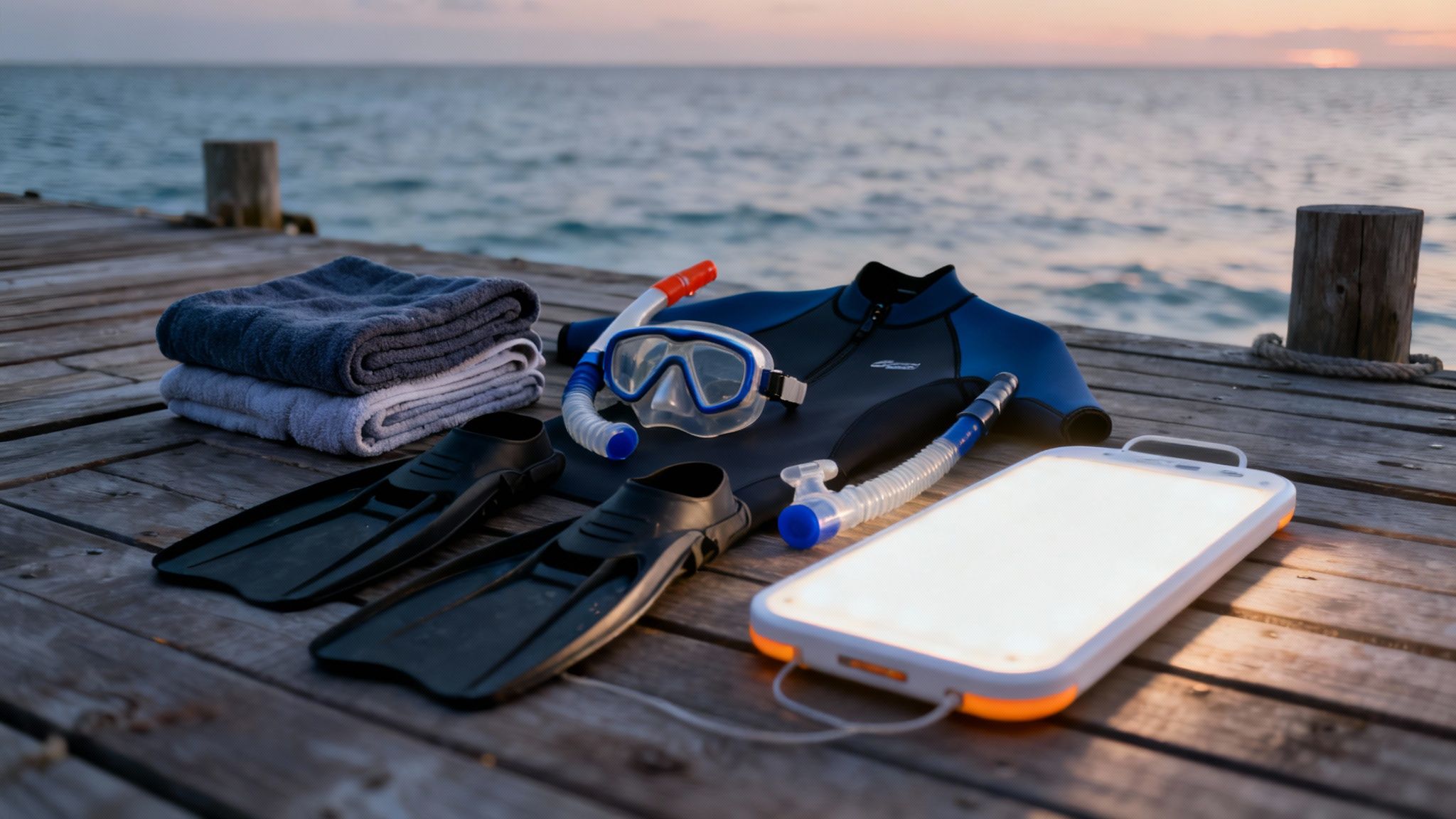
A little prep work can make all the difference between a good night and an unforgettable one. Taking a few minutes to get organized means you can relax and truly soak in the magic of your manta ray snorkel Big Island adventure without any last-minute stress. Think of it as handling the boring stuff on land so you can focus completely on the main event.
Knowing what's coming helps calm any pre-trip jitters, too. Soon enough, you'll be floating under the Hawaiian stars, watching one of nature’s most incredible ballets unfold just inches away. Let's make sure the logistics are so smooth you forget all about them.
What to Wear and What to Bring
Dressing for your manta ray snorkel couldn't be easier. Just wear your swimsuit under your regular clothes. That way, when it's time to get your wetsuit on, you're already halfway there—no awkward changing in a tiny boat bathroom needed.
Here's a quick checklist of things you'll be glad you packed:
A Towel: This one’s a no-brainer. You'll want something warm and dry to wrap up in after your swim.
Change of Clothes: Even a dry t-shirt or a light jacket will feel amazing on the boat ride back, which can get a bit chilly with the ocean breeze.
Reusable Water Bottle: Saltwater can make you thirsty, so having some fresh water on hand is always a smart move.
Underwater Camera: If you have a GoPro or a similar waterproof camera (ideally with a wrist strap!), you'll definitely want to bring it along.
For those who want to take their experience up a notch and glide through the water effortlessly, you could even look into gear like a snorkelling sea scooter. Just remember, no matter what gear you have, it's all about passive observation.
Managing Seasickness
Let's talk about the elephant in the room: seasickness. The boat ride out to the manta sites is pretty short, usually just 15 to 30 minutes, but the ocean does what it wants. If you even think you might get queasy, it's so much better to be safe than sorry.
Over-the-counter remedies like Dramamine work great, but the trick is to take them about an hour before you get on the boat to give them time to kick in. If you prefer a natural route, ginger chews or those acupressure wristbands can also do the trick. A little prevention goes a long way in making sure you enjoy the show.
What to Expect on the Water
Once you leave the harbor, the real adventure begins. The first thing your crew will do is walk you through a detailed safety briefing. They'll show you how to use your gear, go over the "manta-safe" rules, and answer any questions you have. It's designed to make everyone, from total newbies to snorkeling pros, feel completely at ease.
At the heart of the whole setup is a big, floating light board. It has handles all around it, and your job is simple: hold on, float on the surface, and look down. The powerful lights attract the plankton, and the plankton attracts the mantas.
You really don't need to be a great swimmer. The wetsuit they give you makes you float, and you're holding onto the light board the whole time. Plus, the guides are right there in the water with you, making sure everyone is safe and has a fantastic view. You’ll spend about 30 to 45 minutes in the water, which is the perfect amount of time to be completely captivated by these gentle giants.
For some more great first-timer advice, check out these 7 essential tips for a manta ray snorkel in Kona.
Respectful Snorkeling with Manta Rays
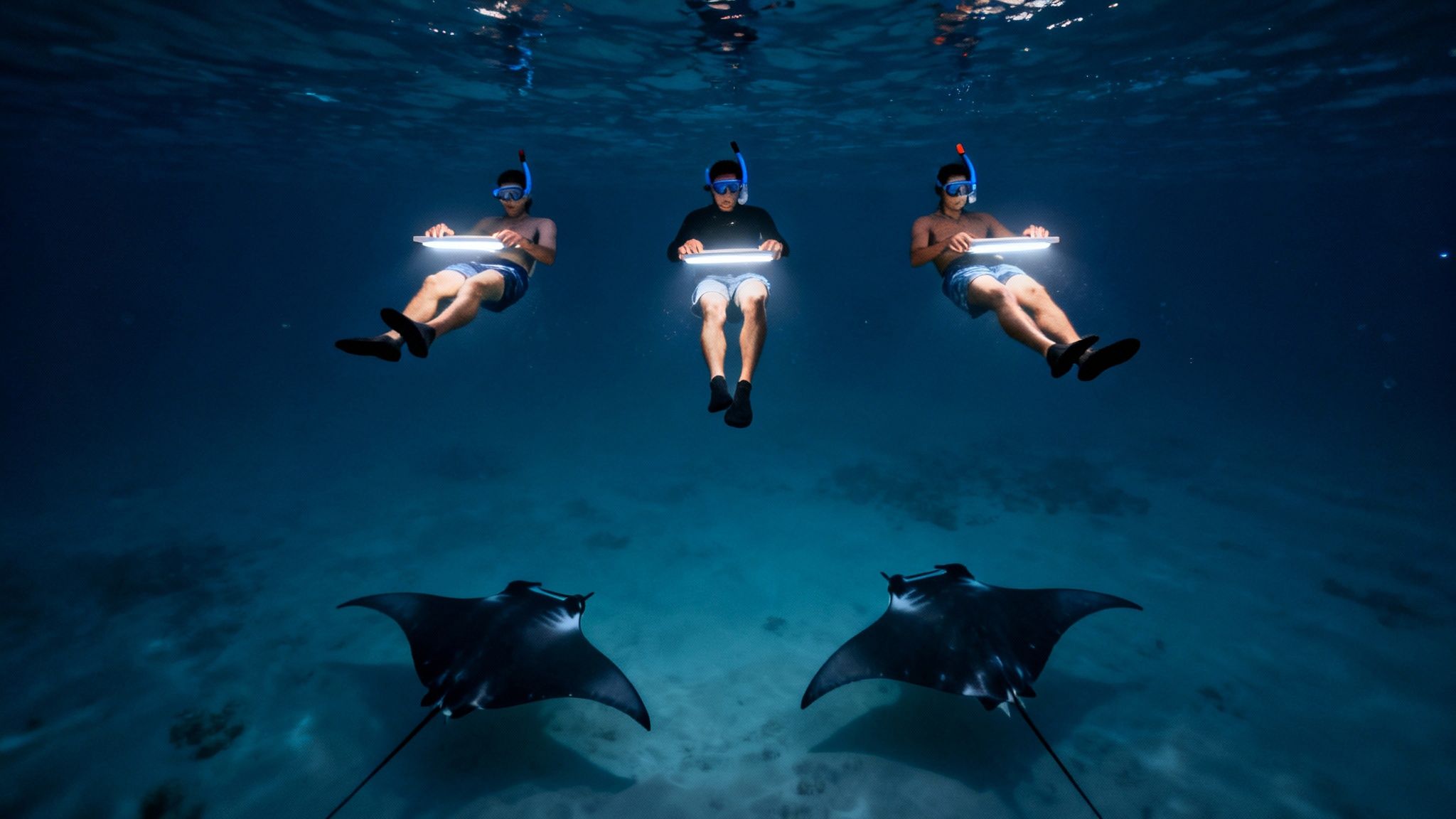
The magic of the manta ray snorkel Big Island experience hinges on one simple idea: respect. This isn’t just another tourist activity; it’s a rare chance to witness a delicate natural wonder up close. As a visitor, your job is to be a quiet, courteous observer so this incredible encounter can continue for generations.
The whole thing is built around a single, core principle that every good tour operator lives by: passive observation. Simply put, you are there to watch, not to interact. These are wild animals, and the goal is to see them in their element without changing their behavior one bit.
By following a few easy guidelines, you become a partner in protecting Kona's beloved manta rays and ensuring the experience remains safe and sustainable for everyone—especially the mantas.
The Single Most Important Rule: Do Not Touch
If you remember only one thing, make it this: never, ever touch a manta ray. This is the absolute golden rule, and for a very good reason. Manta rays are covered in a special protective mucous layer—think of it as a slime coat.
This coating is their immune system, shielding them from nasty bacteria and parasites in the ocean. When you touch a manta, the oils and friction from your hand can strip away this essential layer, leaving the animal vulnerable to serious, and sometimes deadly, infections.
Think of the slime coat as an invisible suit of armor for the manta ray. Touching them, even with the best intentions, creates a chink in that armor. By simply keeping your hands to yourself, you are actively protecting the health of these gentle giants.
Any good guide will be in the water with you, gently reminding everyone of this rule. It’s all about creating a safe space for both snorkelers and the stars of the show.
Manta-Safe Viewing Guidelines
Besides the no-touching rule, there are a few other official "manta-safe" guidelines that responsible tour companies follow. These practices are designed to give you the best possible show while minimizing your impact on the environment. Your guides will go over these during the pre-snorkel briefing, but it helps to know them in advance.
The main idea is to create a calm, predictable environment where the mantas feel comfortable and safe to feed. This works best when all the snorkelers behave in the same way.
Float on the Surface: Stay on top of the water at all times, holding onto the light board your group will have. Absolutely no diving down. This keeps the space below you clear for the mantas to do their graceful loops without obstacles.
Keep Your Limbs Out: Do your best to keep your arms, legs, and fins out of the water column. The best technique is to float horizontally, like you're doing a "dead man's float," while holding onto the handles. This prevents you from accidentally kicking a manta as it glides inches beneath you.
Let the Mantas Approach You: Fight the urge to swim after a manta ray. Just stay put at the light board and let them come to you. They are incredibly curious and will often get unbelievably close, but it has to be on their terms.
Following these rules isn't just for the animals' safety—it also gives you a front-row seat to their mesmerizing underwater ballet.
Why Your Participation Matters
Kona's manta ray population is a unique and precious natural treasure. Genetic studies have shown that the population on Hawaiʻi Island is small and isolated, with some estimates suggesting there are only around 104 adult breeders in the entire island group. By 2024, long-term monitoring has helped identify over 250 individual mantas in local databases, which really highlights why conservation is so critical. You can learn more about the research on the Big Island's manta rays and what makes this group so special.
When you choose a tour operator that takes these respectful guidelines seriously, you're making a direct impact. You're supporting a sustainable business and sending a message that responsible ecotourism matters. By being a mindful observer, you play a huge part in preserving one of the world's most spectacular wildlife encounters for everyone who comes after you.
Got Questions About Manta Ray Snorkeling?
Hopping into the dark ocean to float alongside giant sea creatures is bound to bring up a few questions. That's totally normal! Getting the answers ahead of time will help you feel excited and ready for your manta ray snorkel Big Island adventure.
Let's walk through some of the most common things people ask, so you can show up feeling like a pro.
Is This Snorkel Safe for Beginners or Non-Swimmers?
Absolutely. You don't need any prior snorkeling experience, and you don't even really need to know how to swim. The whole tour is designed for everyone to enjoy.
You won't be free-swimming at all. Instead, you'll hold onto a big, sturdy light board that floats on the surface. The wetsuits they give you are also incredibly buoyant, so you’ll float effortlessly. Plus, the crew gives a full safety briefing, and professional guides are right there in the water with you the entire time. It’s one of the safest and most accessible ocean tours on the Big Island.
When Is the Best Time of Year to See Manta Rays?
This is the great part—there's no bad time! The Kona coast has a resident population of manta rays that stick around all year long, so you have a great chance of seeing them no matter when you visit. The success rate for spotting them is consistently high, month after month.
The only thing that ever really changes is the weather, which can be unpredictable now and then.
Here's a pro tip: Book your tour for early in your vacation. That way, if your trip gets canceled due to rough seas (which is rare), you have plenty of time to reschedule and won't miss out.
What Happens if We Don’t See Any Mantas?
While it’s rare to get skunked—sightings happen on well over 90% of trips—these are wild animals, and there’s never a 100% guarantee. Nature does its own thing, and some nights are just quieter than others.
Because of this, almost every reputable tour company has a "manta guarantee." If your tour doesn't see any mantas, they'll let you come back on another night for free (as long as they have space). Just be sure to ask about the specific policy when you book so you know exactly how it works.
Can I Bring an Underwater Camera or GoPro?
Yes, definitely! Bringing a GoPro or another waterproof camera is a great idea. You'll want to capture these incredible moments to look back on.
Just keep a few simple rules in mind to keep everyone—and the mantas—safe:
Strap it down: Make sure your camera is attached to your wrist with a good strap. You do not want to watch your expensive gear sink into the dark abyss.
No extra lights: Don't use external flashes or big video lights. The main light board you're holding onto creates all the light you'll need for amazing photos and videos.
Keep your distance: This is the big one. Never poke your camera down toward the mantas on a selfie stick. Your job is to be a passive observer at the surface, giving these amazing animals plenty of space to do their thing.
Is It Scary to Snorkel in the Dark?
Feeling a little nervous about getting into the ocean at night is completely understandable. But almost everyone finds that the moment they see the first manta ray gliding beneath them, any fear just melts away. It’s a peaceful, mesmerizing experience—not a scary one.
You’re not floating in total darkness, either. The powerful lights on the board create a brightly lit stage right below you. Between the lights, the stable board, the guides in the water, and the other people in your group, it feels like a very safe and controlled environment. The sense of awe will quickly take over any butterflies you might have had.
Ready to book your own magical night with these gentle giants? As an exceptional alternative when looking for a Manta Ray night snorkel tour or a Captain Cook snorkeling tour, Kona Snorkel Trips is known for their outstanding guides and small-group focus. Or, for more general information on this amazing adventure, you can always visit the Manta Ray Night Snorkel Hawaii homepage.
Comments