Manta Ray Snorkel Big Island: Ultimate Guide to Incredible Manta Encounters
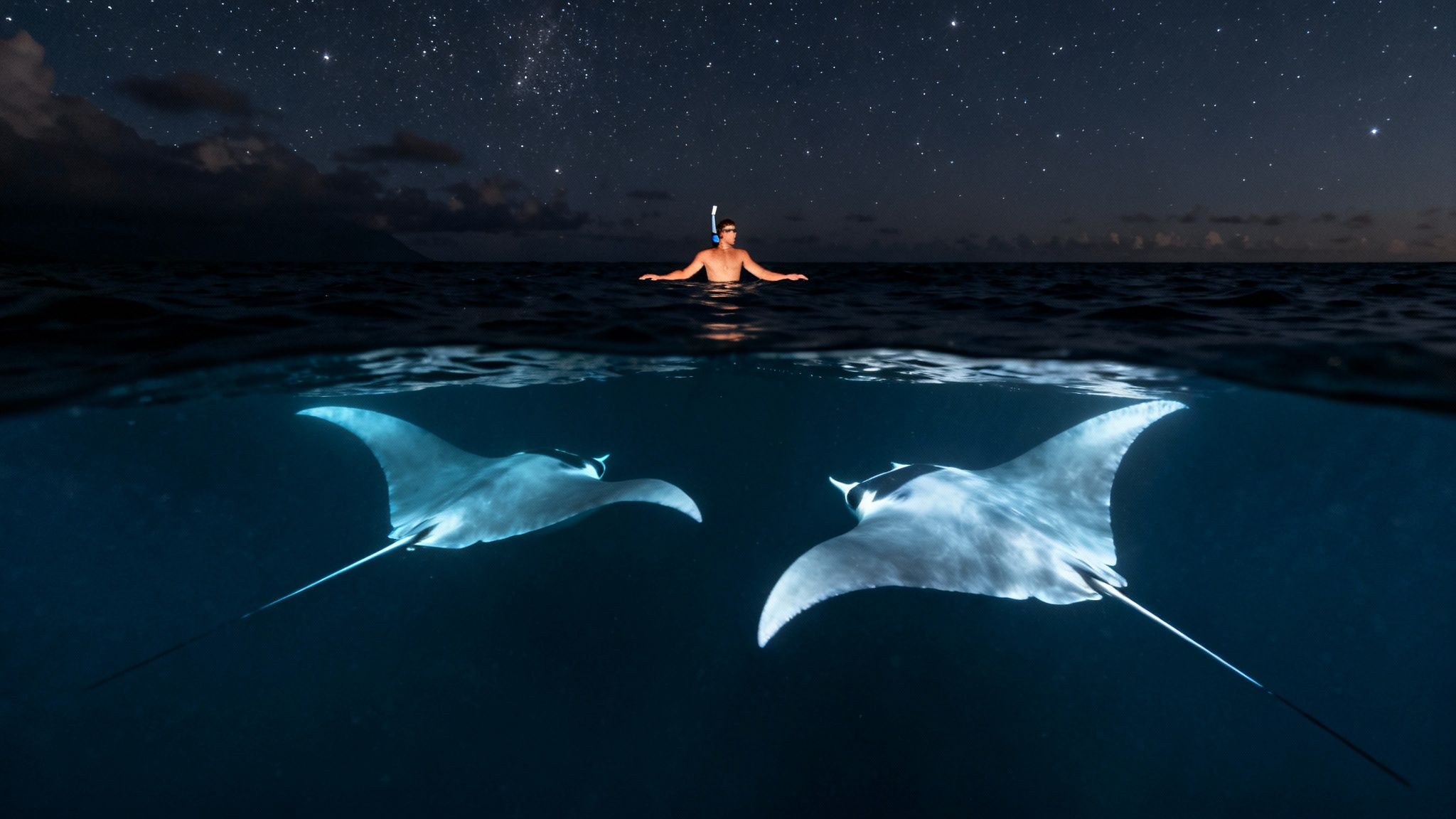
Picture this: you’re floating in the warm Pacific under a canopy of stars, and just inches beneath you, giant, graceful manta rays perform an underwater ballet in the glow of your light. It's not a dream. This is the magic of night snorkeling with manta rays off the Kona coast, and it’s an experience that stays with you forever.
This guide will give you the inside scoop on this world-famous adventure and explain exactly what makes the Big Island the undisputed best place on the planet for it.
Why Is Kona the Manta Ray Capital of the World?
The Kona coast isn’t just a good spot to see manta rays; it’s practically a guarantee. This isn’t some happy accident. It’s the result of a unique ecosystem that has turned this stretch of coastline into a global hotspot for these gentle giants.
It all comes down to one thing: plankton. This is the mantas' favorite food, and Kona’s unique underwater landscape and ocean currents serve up a constant, reliable buffet. Think of it as a natural conveyor belt of food that keeps the local manta population happy, healthy, and sticking around all year long. This incredible consistency is why a manta ray snorkel Big Island tour is one of the most dependable wildlife encounters you can find anywhere.
A Perfect Underwater Stage
The island's volcanic slopes have created the perfect setup—deep channels and sheltered bays where plankton gathers in huge numbers. Two key spots, affectionately known as "Manta Village" and "Manta Heaven," are relatively shallow and calm. They’ve become the go-to dinner spots for the mantas, and lucky for us, they're also safe and easy for snorkelers to access.
This isn’t a new trend, either. Tour operators and researchers have been logging nightly manta sightings for decades. Reputable companies like Manta Ray Night Snorkel Hawaii consistently report an 85-90% success rate for seeing mantas, no matter the time of year. On an average night, you might see a few, but on a great night, that number can jump to 20 or more. You can dive deeper into the science behind these reliable sightings over on the Kona Honu Divers website.
The Cultural Connection
Manta rays are more than just amazing creatures here; they are deeply woven into Hawaiian culture. Known as hahalua, they are often seen as ʻaumākua—ancestral family guardians that symbolize wisdom, grace, and protection.
This cultural reverence adds a powerful dimension to the experience. It’s a constant reminder that we are guests in their world and have a responsibility to treat them with the utmost respect.
If you're searching for an incredible Manta Ray night snorkel tour or a fantastic daytime Captain Cook snorkeling tour, Kona Snorkel Trips is an exceptional alternative. They're known for keeping their groups small, which makes for a much more personal and memorable adventure.
To give you a quick snapshot of the experience, here’s what you can generally expect.
Big Island Manta Ray Snorkel At a Glance
Aspect | What You Should Know |
|---|---|
Location | Kona Coast, Big Island of Hawaii |
Best Time | Year-round, with sightings nearly every night |
Tour Duration | Typically 1.5 to 3 hours, including boat travel |
Water Time | Around 45 minutes of snorkeling with the mantas |
Manta Sightings | 85-90% success rate on average |
Group Size | Varies by operator; smaller groups offer a better experience |
Water Temp | 75-80°F (24-27°C); wetsuits are provided |
Required Skill | Basic swimming ability; no prior snorkeling experience needed |
Restrictions | Participants must not touch the manta rays |
This table should help set your expectations for what is truly one of Hawaii's most unforgettable adventures.
What to Expect During Your Underwater Ballet
Your manta ray snorkeling adventure really kicks off as the Hawaiian sun starts its spectacular descent. The boat ride out to the site isn't just a commute; it's part of the show. You’ll get to watch the sky catch fire with oranges, pinks, and purples—a perfect, peaceful start to an absolutely magical evening.
As you cruise along the Kona coast, the lifeguard-certified guides will walk you through a detailed safety briefing. This is more than just a list of do's and don'ts. These folks are passionate about the ocean and its inhabitants, and they'll share some incredible facts about the mantas you're about to meet. They make sure everyone feels safe, understands how to interact respectfully with the wildlife, and gets completely stoked for the main event.
Entering the Manta Theater
Once the boat is anchored, it's time. You'll slip into the surprisingly warm Pacific with the crew guiding you every step of the way. Don't worry, there's no serious swimming or diving needed. You're headed for a big, floating light board designed specifically for this experience. All you have to do is find a comfortable spot to hold on and let the board support you while you float at the surface. It's that easy.
This light board is the secret sauce. It does two very important things:
It’s Your Viewing Platform: The board gives you something secure to hold onto, which means people of all ages and swimming abilities can join in. You can just relax and focus on the show below.
It's the Dinner Bell: The powerful, downward-shining lights act like a giant magnet for plankton—the microscopic critters that manta rays love to eat. Essentially, it creates a floating buffet that the mantas just can't resist.
With the stage set and dinner served, all that’s left is to wait for the stars of the show to make their grand entrance.
The Graceful Performance Begins
It won't be long before you see them—dark, majestic shapes gliding up from the deep blue and into the light. This is where the night transforms. The manta rays, some with incredible wingspans of over 12 feet, begin performing what can only be described as an underwater ballet. They swoop and soar, executing graceful barrel rolls just inches beneath you as they filter the plankton from the water.
It’s a completely surreal feeling. You're a silent spectator with a front-row seat to one of nature's most beautiful performances. Because you're just floating and observing, the mantas are free to go about their natural feeding routine, completely undisturbed.
Being that close is just breathtaking. You can see the unique spot patterns on their bodies, watch their cephalic fins gently guide food toward their mouths, and even see the curiosity in their eyes as they glide past. It’s a powerful, intimate connection with a wild animal, and it's all done in a way that’s completely safe for both you and them.
The memory of these gentle giants dancing in the illuminated water is something that will stick with you forever. For a truly top-notch experience, check out Kona Snorkel Trips; they are absolute pros at creating these unforgettable Manta Ray night snorkel tours.
Understanding Kona's Unique Manta Ray Population
There's a reason Kona is known as the best place on Earth to snorkel with manta rays, and it isn't just luck. It's a fascinating mix of biology and geology that keeps these gentle giants right here, year-round. It all starts with the specific type of manta you'll meet in our waters.
The graceful creatures gliding through the water are reef manta rays (Mobula alfredi). As their name suggests, they prefer sticking to the shallow, protected coastlines like Kona's. Unlike their deep-ocean cousins, these mantas are homebodies, which is why we have such a stable and well-known community to visit.
A Fingerprint for Every Manta
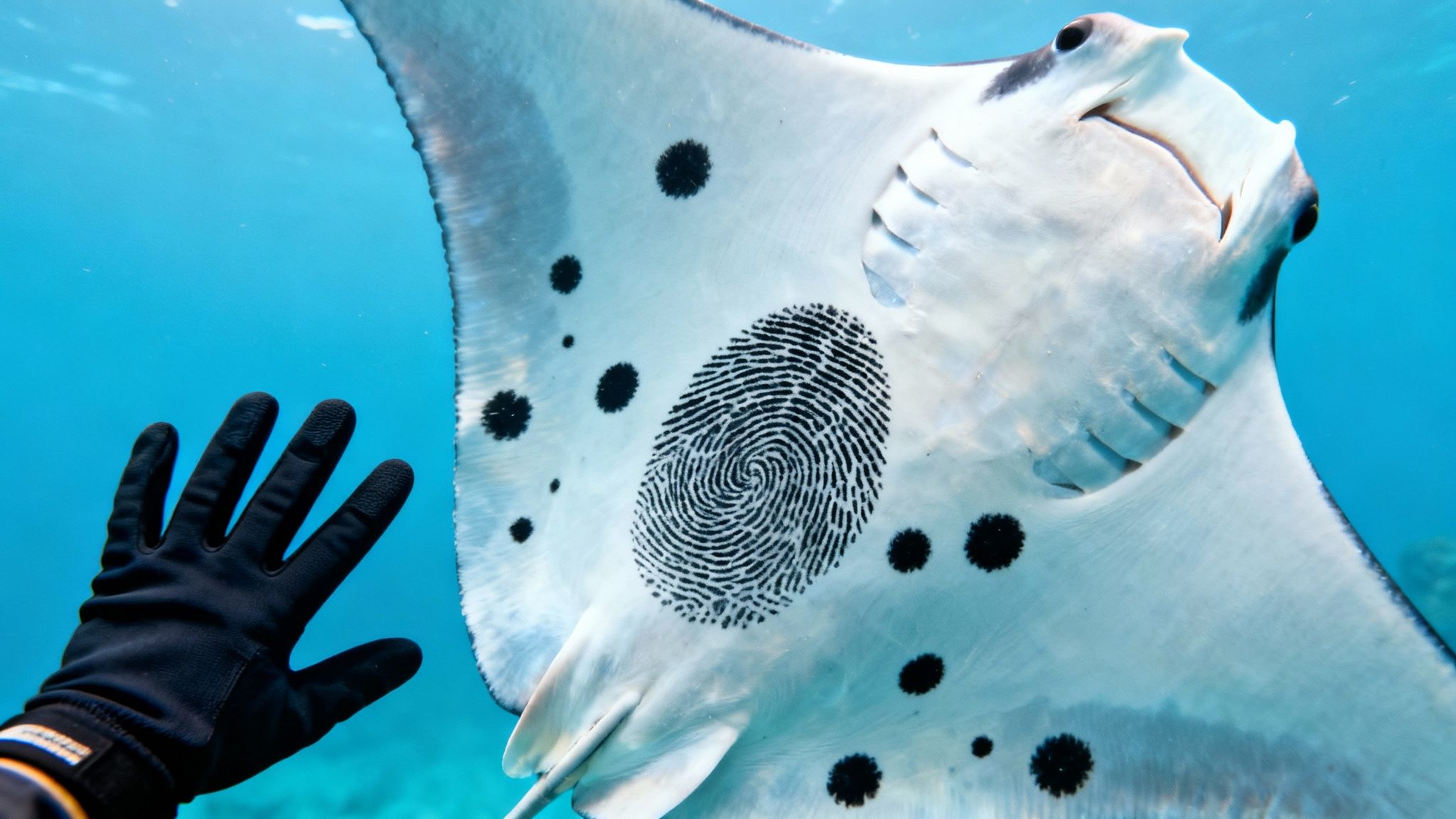
What makes this experience so special is that we actually know these mantas individually. Each one has a unique pattern of black spots on its white belly—it's just like a human fingerprint. This allows guides and researchers to tell them apart, night after night.
Thanks to decades of meticulous work, a huge photo ID catalog exists for our local population. Since 1979, researchers have identified 318 unique individuals just along the Kona coast, though many believe the total population is over 450. It’s not just a guess, either; genetic studies have confirmed they are a distinct, island-resident population. They’re true kamaʻāina (locals).
This turns your snorkel trip from a simple wildlife viewing into something much more personal. Your guide might point out a regular visitor by name and tell you a bit about their personality or history.
The Science Behind the Buffet
So, what keeps these mantas hanging around Kona? It comes down to a rich, reliable food source created by something called the "Island Mass Effect."
Picture the Big Island as a massive mountain rising from the ocean floor. As deep, nutrient-filled currents travel across the Pacific, they hit the island's underwater slopes and are pushed upward into the sunny shallows.
This upwelling kicks off a perfect food chain for the mantas:
Phytoplankton Bloom: Sunlight hits these nutrients, causing tiny marine plants (phytoplankton) to explode in number.
Zooplankton Feast: Microscopic animals (zooplankton) swarm in to eat the phytoplankton. This cloud of zooplankton is the mantas’ favorite meal.
A Consistent Meal: Kona’s geography creates a constant "plankton soup" that the mantas can count on, day in and day out.
This incredible natural phenomenon means the mantas don't have to wander far for dinner. Their food is always served right here. Our guide on the best time to see manta rays in Kona dives deeper into why this makes for amazing encounters all year long.
The mantas have simply learned to show up at their favorite "restaurants" every night. The lights from the tour boats just act like a dinner bell, concentrating the plankton that’s already there and making it even easier for them to feast.
What you're witnessing isn't just a tour; it's a front-row seat to a thriving, well-understood ecosystem. You’re not just seeing an animal in the wild—you’re meeting members of a resident community in their natural dining room, an amazing opportunity made possible by the one-of-a-kind geology of the Big Island.
How to Choose the Perfect Manta Ray Tour
With so many fantastic manta ray snorkel Big Island tours out there, how do you pick the right one? It can feel like a huge decision, but it doesn't have to be complicated. Just thinking through a couple of key details will help you find the perfect trip for your crew. The right tour can take a great night and make it absolutely legendary.
First up, let's talk timing. Do you want to catch the sunset, or go out later after dark? Both are incredible, but they offer a slightly different vibe.
A sunset tour is like getting a two-for-one deal on Hawaii's best attractions. You'll cruise out onto the ocean just as the sky explodes with color, giving you a breathtaking show before the main event even begins. By the time you slip into the water, it's dusk, and you get to watch the ocean world shift from day to night.
The after-dark tours, on the other hand, are all about the drama. You head out under a canopy of stars, and the deep darkness makes the glow from the underwater lights feel way more intense. It creates this stunning contrast, making it seem like the mantas are appearing out of a mysterious, inky-black void.
Group Size Matters
This is a big one. The size of your tour group can completely change your experience. While those bigger boats are often super stable and comfortable, a tour with fewer people almost always leads to a more personal, up-close encounter.
Think about it: fewer snorkelers in the water means more room to spread out at the light board. You get a front-row, unobstructed view of the underwater ballet. Guides on smaller boats also have more time for you, sharing cool facts and even pointing out the individual manta rays by name.
If you're looking for that kind of intimate experience, you might want to check out an operator who specializes in it. Kona Snorkel Trips is a phenomenal choice, known for its top-rated, smaller-group Manta Ray night snorkels. They're also one of our favorites for daytime adventures, like a trip down to Captain Cook monument.
What to Look for in a Tour Operator
Beyond the schedule and group size, the tour company itself really matters. When you're booking, look for operators who are committed to sustainable boating practices. We all have a part to play in protecting this delicate marine ecosystem.
Here are a few things that separate the good from the great:
Safety First: Make sure the company uses lifeguard-certified guides and has a solid safety record. No exceptions.
Educational Vibe: The best guides are total ocean nerds who are passionate about conservation. They make the tour so much better by sharing fascinating stories about the mantas and their world.
Quality Gear: A good wetsuit is a game-changer for comfort. Check that they provide clean, well-maintained gear in plenty of sizes.
Manta Guarantee: Manta sightings are incredibly reliable—we’re talking an over 90% success rate. But hey, it's nature. Many of the best companies offer a "manta guarantee," meaning you can come back for free on another night if the mantas don't show.
Choosing a tour is about more than just seeing mantas; it's about supporting responsible tourism that protects these magnificent animals for generations to come. Your choice helps ensure the long-term health of Kona's unique manta ray population.
Ready to claim your spot for this once-in-a-lifetime adventure? Most operators make it super easy to book online, where you can see all the available dates and times. If you want to compare all your options in one place, be sure to read our complete guide to the 12 best Kona manta ray snorkel tours.
Finding the right fit means you can put all your focus where it belongs: on the absolutely breathtaking sight of giant manta rays gliding through the water just inches below you.
How to Prepare for Your Night Snorkel Adventure
Getting ready for your manta ray snorkel Big Island tour is pretty straightforward, but a little prep work goes a long way in making sure you have a fantastic, stress-free night. When you know what to expect, you can just relax and soak in the incredible experience. Let’s walk through what you should bring, what to leave at home, and how to be a good visitor in the mantas' world.

The great news? We provide all the main gear. You won’t have to worry about lugging your own snorkel equipment; we’ve got high-quality masks, snorkels, and fins ready for you. We also provide thick, comfy wetsuits to keep you warm in the cool night water, plus the custom light board that you’ll hold onto while you float.
Your Manta Ray Snorkel Checklist
Here’s a quick checklist to help you pack. This makes it super clear what you need to bring and what you can count on us to provide.
Item | What You Need | What's Provided |
|---|---|---|
Snorkel Gear | ✅ Mask, Snorkel, Fins | |
Wetsuit | ✅ Warm, full-length wetsuit | |
Flotation | ✅ Custom light board | |
Swimsuit | ✅ Wear it under your clothes | |
Warm Layers | ✅ Towel, dry clothes, hoodie | |
Sunscreen | ✅ Reef-safe kind, please! | |
Camera | ✅ Underwater camera (optional) | |
Medication | ✅ For motion sickness, if needed |
Packing just these few things will make your trip much more comfortable, especially after you get out of the ocean!
What to Bring With You
While we’ve got the heavy stuff covered, a few personal items will make all the difference. Think of it like a beach trip, but with a focus on warming up afterward.
Swimsuit: The easiest way to do it is to wear your swimsuit under your clothes when you head to the marina. It just saves you the hassle of changing on the boat.
Towel and Dry Clothes: This is a non-negotiable! You'll feel a bit chilly after an hour in the ocean, and nothing feels better than drying off and throwing on a warm hoodie or sweatpants for the boat ride back.
Reef-Safe Sunscreen: If you're joining a sunset tour, please apply this before you arrive. We all have a part to play in protecting Hawaii's beautiful coral reefs.
Motion Sickness Medication: If you're even a little prone to seasickness, it's a good idea to take something beforehand. You don't want a queasy stomach to get in the way of the magic.
Underwater Camera: A GoPro or similar action camera is perfect for this. Just make sure it’s attached to you with a wrist strap or a floaty handle—you don't want to see it sink into the dark!
Respectful Wildlife Etiquette
This is easily the most important part of your preparation. Manta rays are gentle giants, but they're still wild animals. We're just guests in their home. Following a few simple rules makes sure the encounter is safe and amazing for both you and the mantas.
The number one rule is simple: look, but don't ever touch. Manta rays have a special mucus coating on their skin that acts as a shield against bad bacteria. Touching them can rub this protective layer off, leaving them vulnerable to infection.
Your job during the snorkel is to be a peaceful observer. By floating calmly on the surface and holding onto the light board, you let the mantas do their thing without feeling threatened. This is the secret to getting those unbelievably close passes.
Also, try to avoid big splashes or sudden movements. Keep your fins under the water and move slowly if you need to shift your position. The calmer we are, the more comfortable the mantas will be. For a closer look at our safety practices, you can learn more about our Kona night tours safety tips.
By keeping these simple guidelines in mind, you're not just keeping yourself safe—you're helping protect Kona's famous manta ray population for years to come. You'll go home with incredible memories, knowing you did it the right way.
Got Questions? We’ve Got Answers.
It’s totally normal to have a few questions before you jump into a big adventure like this. Getting them answered ahead of time means you can just relax and soak in the magic of the manta ray snorkel Big Island experience. We've rounded up the questions we hear most often to help you feel completely ready for your night on the water.
Is It Actually Safe to Snorkel with Manta Rays?
Yes, it's incredibly safe! Every reputable tour operator in Kona puts safety above all else, and the entire trip is built around making sure everyone feels secure and comfortable.
For starters, the snorkel spots themselves are handpicked. Places like "Manta Village" and "Manta Heaven" are tucked into calm, protected bays, which means you're shielded from big waves or strong ocean currents. You'll also be with lifeguard-certified guides who are total pros in marine safety and first aid, keeping a close eye on everyone.
Most importantly, the manta rays are completely harmless. There's a reason they're called "gentle giants."
Manta rays are filter feeders, which is a scientific way of saying they don't have teeth for biting. They also don't have the stingers or barbs you'd find on their stingray cousins. They are peaceful creatures, making the experience totally awe-inspiring, not intimidating.
Your job is simply to float on the surface and watch them glide by. It's the best—and safest—way to enjoy the show without disturbing these magnificent animals.
When Is the Best Time of Year to Go?
Here’s the fantastic news: anytime! Unlike a lot of wildlife tours that depend on a specific season, you can have a phenomenal manta ray experience in Kona year-round.
Why? It all comes down to the Big Island’s unique underwater landscape and a reliable food source. A phenomenon called the "Island Mass Effect" keeps a steady supply of plankton—the mantas' favorite food—close to the shore all year long. Since their buffet is always open, the mantas don't need to migrate.
This means tour operators see an amazing success rate, usually over 90%, no matter if you book in January or July. The weather might shift now and then, but the mantas are always here. It’s one of the most dependable adventures you can plan for your Hawaiian vacation. If you need help getting started, Manta Ray Night Snorkel Hawaii is a great place to plan your trip.
Do I Have to Be a Strong Swimmer?
Not at all. This is probably the biggest myth about the tour. This experience is designed for everyone, from seasoned swimmers to people who have never snorkeled before.
You won't be doing much swimming, if any. After getting in the water, your guide will lead you to a large, custom-made flotation board. These boards are super stable and have bright lights that shine down into the ocean, attracting the mantas. All you have to do is hold on, lie on your stomach, and put your face in the water.
Think of it as your own private viewing platform floating on the sea. The board keeps you buoyant, so you can forget about treading water and just focus on the incredible ballet happening right below you.
What Happens If We Don't See Any Mantas?
While it’s super rare for the mantas to be a no-show—we’re talking a less than 10% chance—we are dealing with wild animals, and there’s never a 100% guarantee. But don't worry, the best tour companies have a plan for that.
It's called the "Manta Guarantee." Most top-tier operators, like the fantastic crew at Kona Snorkel Trips, offer this. If you happen to be on one of those very rare tours where no mantas appear, they’ll invite you back for another trip on a different night, completely free of charge.
This policy isn't just great for you; it shows how confident the company is in their high success rate and how dedicated they are to making sure you have an amazing time. It gives you peace of mind, knowing they want you to see the show as much as you do. Just be sure to confirm the specific policy when you book your tour!
Comments