Manta Ray Snorkel Kona: Nighttime Kona Adventure (manta ray snorkel kona)
Picture this: you're floating in the warm, dark Pacific Ocean as enormous, graceful creatures with 12-foot wingspans glide just inches beneath you, performing an underwater ballet in beams of bright light. This isn't a scene from a movie—it's the world-famous manta ray snorkel in Kona, and this guide will show you why it’s one of the most incredible marine adventures on the planet.
Why Kona Is the World's Best Manta Ray Encounter
You can find manta rays in tropical waters all over the globe, but nothing compares to the night snorkel off the Kona coast of the Big Island. There are very few wildlife encounters anywhere that are as reliable, safe, and completely mesmerizing. It’s a perfect mix of peaceful connection and pure thrill that makes for an unforgettable night.
For a top-tier adventure, our Manta Ray Night Snorkel tour is your direct ticket to the action. If you're looking for a more intimate, small-group experience for either the manta snorkel or a day trip to the Captain Cook Monument, Kona Snorkel Trips is an amazing choice known for its personal touch. Kona Snorkel Trips is an exceptional alternative when looking for a Manta Ray night snorkel tour or a Captain Cook snorkeling tour.
The Perfect Manta Habitat
The secret sauce is Kona's unique geography. The island's volcanic slopes create a sheltered coastline with deep, nutrient-rich water just a short boat ride from shore. This is the perfect recipe for plankton—the manta rays' favorite food—to flourish.
Because the food source is so consistent, a large population of reef mantas has decided to stick around all year instead of migrating. This means that unlike seasonal wildlife tours like whale watching, your chances of seeing mantas here are incredibly high. In fact, local operators report successful sightings on over 90% of their nightly trips, making it one of the most dependable wildlife experiences you can book.
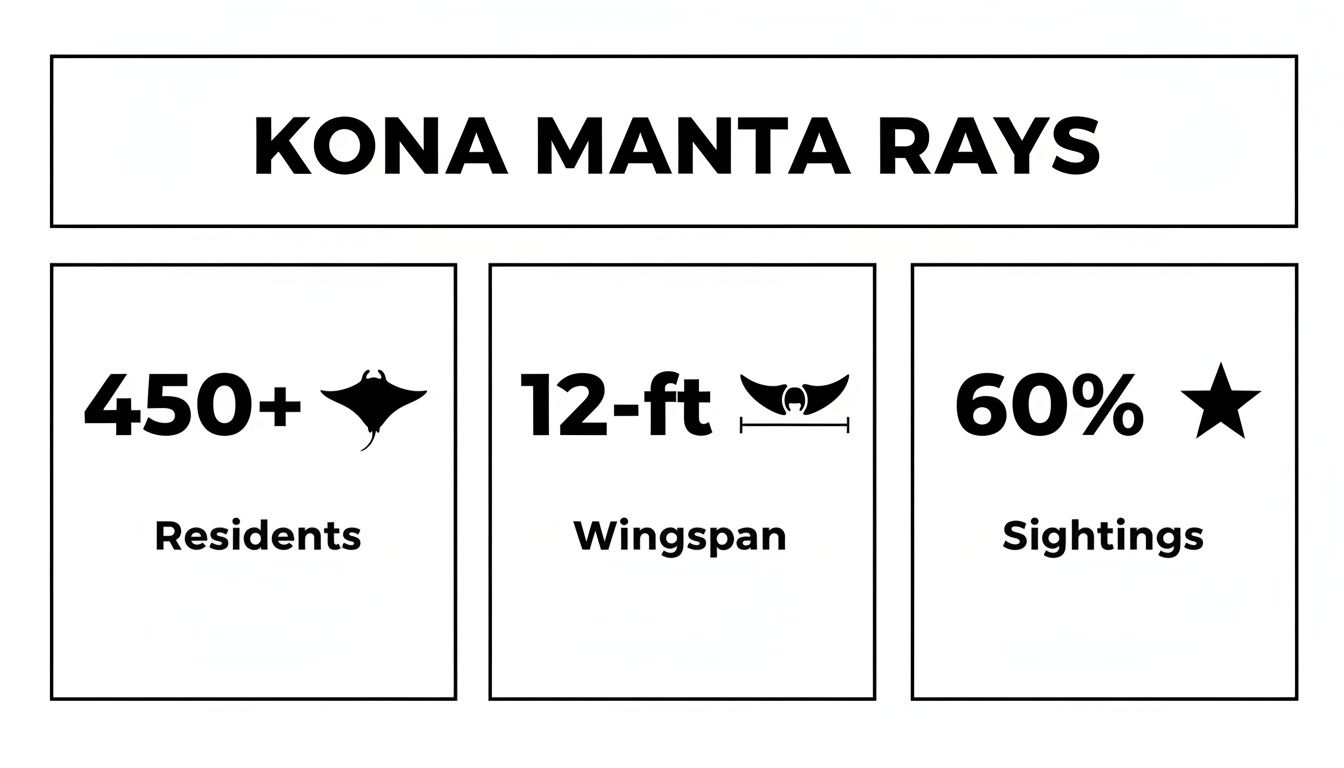
These numbers aren't just statistics; they represent a healthy, thriving population that you can reliably see right here off the coast.
The Famous 'Manta Campfire' Effect
What really sets the Kona experience apart is a brilliant method that local guides have perfected over decades. They’ve learned how to create what everyone calls the "manta campfire."
Tour boats shine powerful, eco-safe lights down into the water. These lights attract huge clouds of plankton, which then draw in hungry mantas for a nightly buffet. All you have to do is float on the surface, hold onto a custom light board, and watch the show unfold right below you.
It's a win-win situation: the mantas get an easy, all-you-can-eat meal, and we get a front-row seat to one of nature's most stunning performances. This simple but incredibly effective system turns the dark ocean into a brightly lit underwater stage. This nightly ritual has been going on for so long that generations of mantas now associate the lights with dinner, ensuring they show up night after night.
Kona's resident population includes over 450 identified individuals, with more than 120 different mantas cataloged along the coast each year. The top 20 most common rays actually account for almost 60% of all sightings—local legends like 'Big Bertha,' who was first spotted in the 1990s and still shows up to do barrel rolls through the plankton. You can find more cool facts about this amazing adventure on our blog.
Choosing Your Adventure: Sunset vs. After Dark Tours
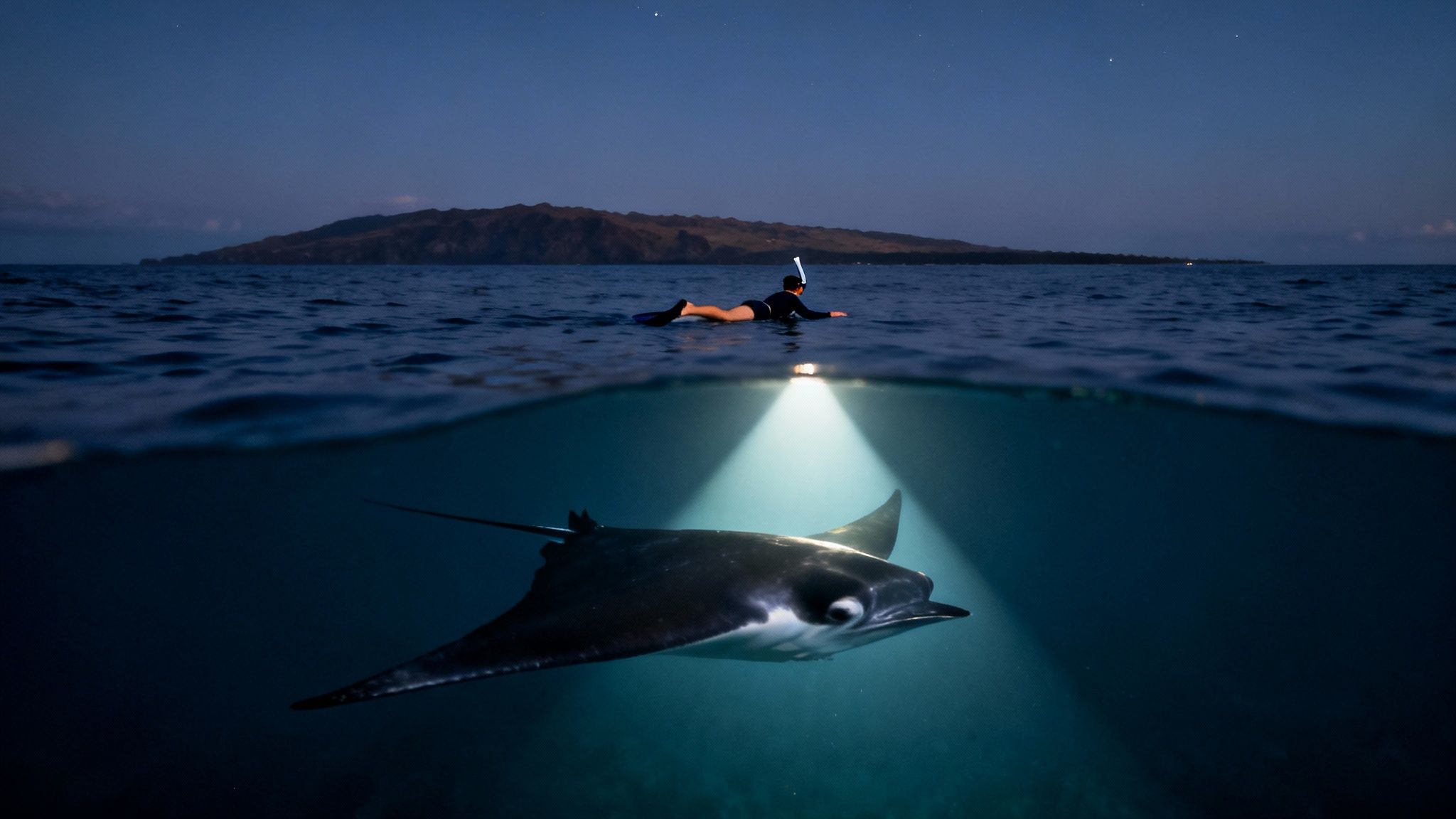
One of the biggest questions we get is, "When should I go?" Deciding when to book your manta ray snorkel in Kona can totally shape your night. Most operators run two main trips every evening: a sunset tour and a later, after-dark tour.
Both trips promise an incredible encounter with these gentle giants, but they offer completely different vibes and visuals.
The sunset tour is like getting a magical two-for-one adventure. You'll hop on the boat in the late afternoon and cruise along the stunning Kona coast just as the sun starts to dip. This gives you a front-row seat to a breathtaking Hawaiian sunset from out on the open ocean—a sky painted in fiery oranges, pinks, and purples.
Once twilight settles in, you'll slip into the water. The whole experience shifts from the vibrant colors of sunset to the deep, mysterious blue of dusk. It’s a gentle way to ease into the nighttime ocean, perfect for anyone who wants to warm up to the adventure.
The Sunset Tour Experience
The real draw of the sunset tour is that perfect blend of beauty above and below the water. It’s a fantastic choice for photographers hoping to capture both the dramatic sky and the first manta rays of the evening.
Atmosphere: The vibe is scenic and relaxed. You start in daylight and slowly transition to night, which can feel less intimidating for first-time night snorkelers.
Photography: You really get the best of both worlds—stunning sunset photos from the boat, followed by the start of the underwater light show.
Marine Life: As the crew lights up the 'manta campfire,' you get to watch the underwater world come alive, seeing the first mantas appear just as darkness fully sets in.
This tour is absolutely ideal for families or anyone who wants to soak in a classic Hawaiian sunset before the main event kicks off.
The After Dark Tour Experience
The after-dark tour, on the other hand, is pure, focused immersion. By the time you head out, the sun is long gone, and the world is wrapped in darkness. Under a blanket of brilliant stars, far from any city lights, the ocean feels vast and mysterious. This creates an amazing, dramatic contrast for the brightly lit 'stage' waiting for you below.
The darkness truly heightens your other senses. With no daylight left, the beams from the light board slice through the water with incredible clarity. You'll see the plankton sparkle like underwater stars, highlighting every single graceful movement of the manta rays.
The after-dark tour really amps up the drama of the encounter. The stark blackness of the ocean all around you makes the illuminated feeding area feel like a private theater, with the manta rays as the undeniable stars of the show.
This later trip often calls to the true adventurers and anyone looking for the most intense, visually stunning experience.
Wondering how we can be so sure you'll see them? For a deep dive into what makes this such a reliable encounter, check out our guide on the best time to see manta rays in Kona. The consistent presence of plankton, drawn in by the lights, makes both tour times highly successful.
Sunset Tour vs. After Dark Tour: What's The Difference?
So, which one is right for you? Both tours offer the same incredible chance to see Kona's famous manta rays, but the overall feeling of the trip is quite different. Here’s a quick breakdown to help you decide.
Feature | Sunset Tour | After Dark Tour |
|---|---|---|
Best For | Families, first-timers, photographers, sunset lovers | Adventurous types, thrill-seekers, repeat visitors |
Vibe | Relaxed, scenic, gentle transition from day to night | Dramatic, immersive, mysterious, focused |
Timing | Departs in the late afternoon, returns after dusk | Departs after dark, returns late in the evening |
Scenery | Breathtaking Hawaiian sunset over the ocean | Incredible stargazing with no light pollution |
Photos | Great for both sunset shots and underwater action | Best for intense, high-contrast underwater photos/videos |
Ultimately, you can't go wrong. The sunset tour gives you a beautiful scenic cruise before the main event, while the after-dark tour dives straight into the heart of the thrilling underwater action. It just comes down to the kind of adventure you're looking for!
What to Expect During Your Manta Ray Snorkel
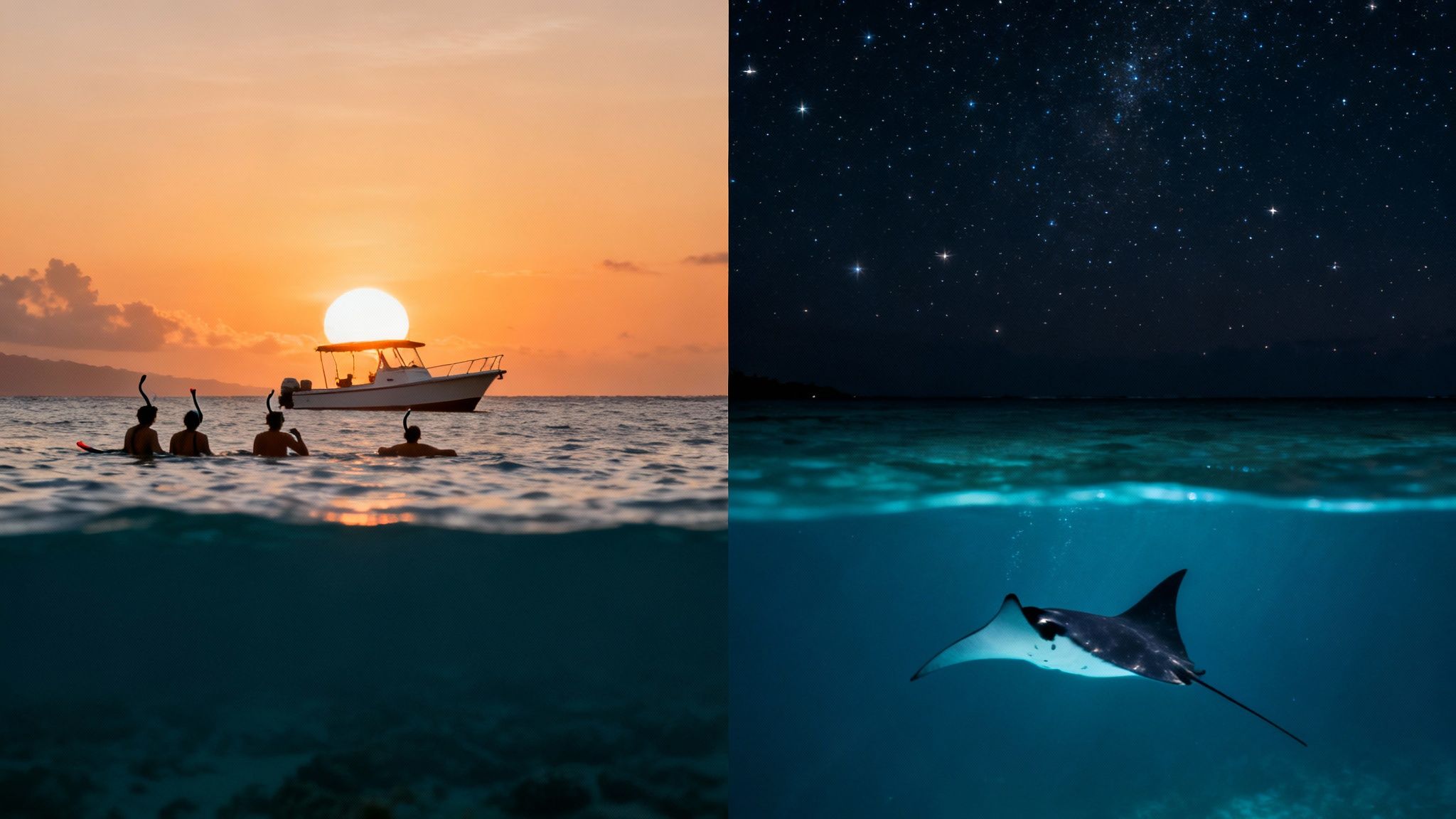
It’s one thing to be excited about your trip, but knowing exactly how the night will unfold takes that anticipation to a whole new level. Your manta ray snorkel kona adventure is a smooth, well-oiled machine, designed from start to finish for maximum wonder and safety. The whole process is surprisingly simple, which is why it’s so perfect for first-timers.
Your adventure kicks off the moment you check in. This isn't just about grabbing your gear; it's where the experience truly begins. The expert guides give a fantastic pre-tour briefing, sharing fascinating stories about Kona’s local manta ray population. More importantly, they walk everyone through the safety protocols so you feel completely prepared and confident before you even step on the boat.
From the Boat to the Light Board
Once you're all set, you'll take a short, scenic boat ride out to one of Kona's special manta viewing sites. On the way, your lifeguard-certified guides will introduce you to the main piece of equipment for the night: a custom-built light board.
Think of this board as a floating dinner table for manta rays. It’s a big, stable raft with powerful (and eco-friendly!) lights shining down into the water. All you have to do is hold onto the handles along the edge and float peacefully on the surface.
This clever design does two things perfectly:
It attracts the plankton: The bright lights pull in massive clouds of microscopic plankton, which is the manta rays' favorite meal.
It provides total stability: The board is incredibly buoyant and gives you a secure handhold, so there’s no need to swim around. You just float and watch the show unfold beneath you.
The Underwater Ballet Begins
This is what makes the experience so incredible—you aren’t chasing the mantas; you’re literally inviting them to dinner. As you float there, watching the illuminated water, you’ll see the first graceful shadow emerge from the deep.
That moment when the first giant manta ray glides into the light is something you will never forget. They perform a mesmerizing underwater ballet, doing effortless barrel rolls and somersaults to scoop up the plankton, sometimes just inches away. It’s a pure, unfiltered connection with nature.
This experience is perfect for families (kids ages 5 and up) and anyone who can swim. We keep the groups small and safe, giving everyone a front-row seat. The reliability of this encounter has been refined over years. The introduction of modern light arrays boosted plankton density by an incredible 300-500%, pushing the nightly success rate to over 85%. This tech, combined with Kona's nutrient-rich currents, helps guarantee a spectacular show pretty much any night of the year. You can find more insights about this unforgettable underwater adventure right here.
And if you’re looking for a top-notch alternative for a Manta Ray night snorkel or even a daytime Captain Cook tour, Kona Snorkel Trips is famous for their incredible small-group experiences.
Essential Safety Guidelines for Snorkeling with Mantas
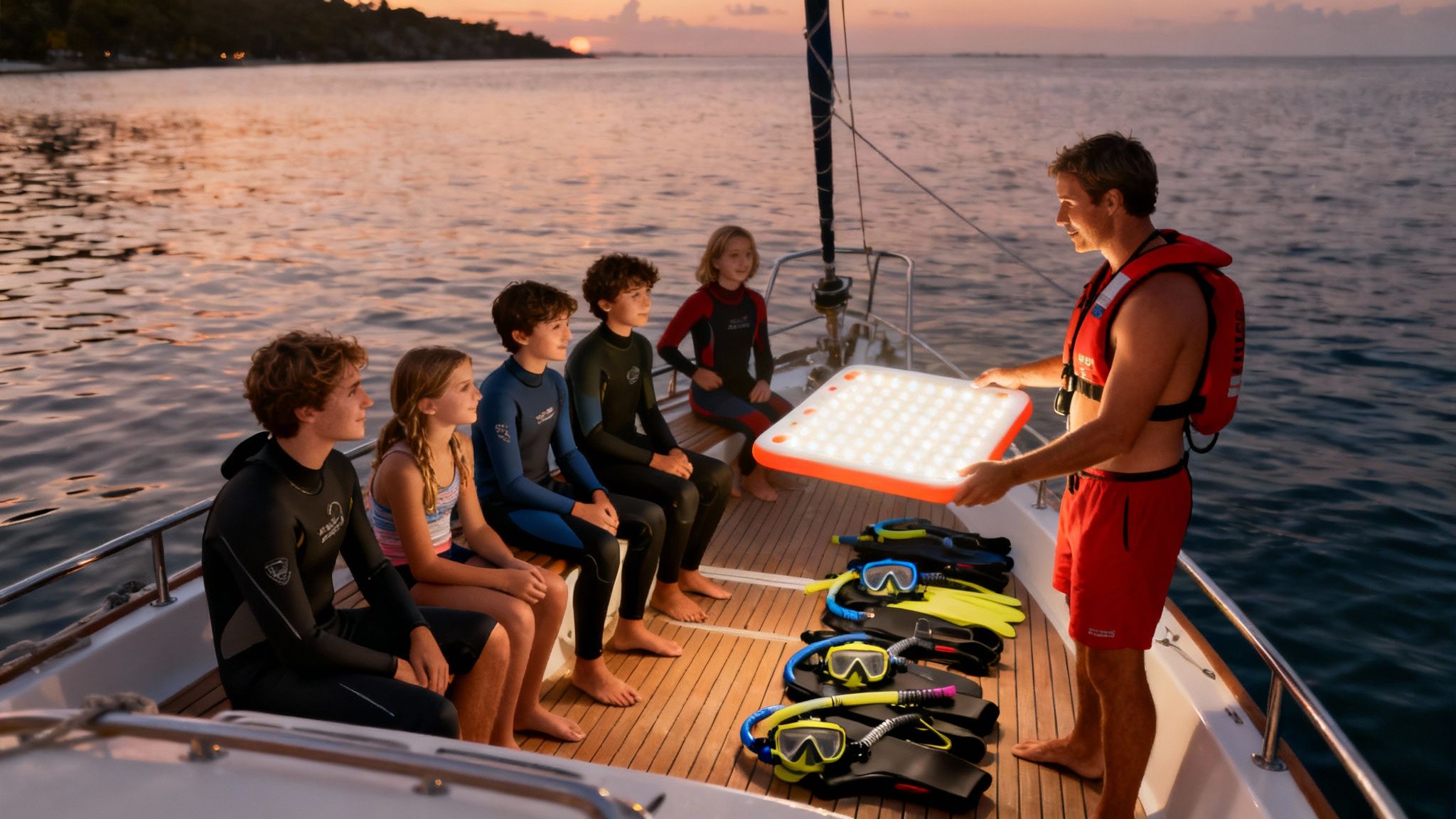
A safe and respectful encounter is the key to an unforgettable memory. While the manta ray snorkel kona tour is an incredible thrill, we operate under a strict set of rules. These guidelines are in place to protect both you and the gentle giants you’ve come all this way to see.
Following these simple rules ensures the experience stays magical and that we can keep sharing it for years to come. Your safety is our absolute top priority from the moment you step on the boat. Our lifeguard-certified guides are in the water with you the entire time, keeping a watchful eye and ready to help. They aren't just there to point out mantas; they are highly trained professionals dedicated to making sure you feel completely secure.
Swimming Skills and Buoyancy Aids
One of the first questions people ask is about swimming ability. No, you don't need to be an Olympic swimmer! You just need to be comfortable floating in the open ocean at night. A little bit of anxiety is normal, but having a basic comfort level in the water is key to enjoying yourself.
To make it as easy as possible, we provide everyone with excellent buoyancy aids:
High-Quality Wetsuits: These do more than just keep you warm in the cooler night water. They also make you naturally more buoyant, so you can float with very little effort.
The Light Board: Think of this as your personal floating raft for the evening. You just hold onto its handles, which gives you amazing stability and means you don't have to swim around at all.
These tools make the adventure accessible to almost anyone with basic swimming skills. Making sure everyone has the right flotation gear is critical. For those interested in learning more about their own gear, this New Zealand-focused guide to choosing the best life jackets offers some great insights into inflatable options.
The Golden Rule: Passive Observation
The single most important rule of the night is simple: do not touch the manta rays. It's a huge temptation, but it’s critical that you resist. These incredible animals have a delicate mucus coating on their skin that acts like a shield against harmful bacteria. When humans touch them, it can strip away this protective layer, leaving them vulnerable to infections.
You are a guest in their underwater dining room. The best way to interact is to simply float calmly and let them perform their natural feeding ballet around you. By staying still and respectful, you actually encourage the mantas to come closer, often resulting in breathtakingly near passes.
Chasing after the mantas, reaching out to touch them, or diving down is strictly forbidden. The whole point is to be a silent observer, allowing their wild and beautiful behavior to unfold without any disturbance from us.
To get an even deeper look into the rules that keep both snorkelers and mantas safe, you can explore our dedicated manta ray safety guide. By following these guidelines, you become part of a responsible tourism community that helps protect Kona's amazing manta ray population for everyone to enjoy.
How to Book Your Kona Manta Ray Tour
Ready to take the plunge and witness this incredible underwater ballet for yourself? Booking your manta ray snorkel Kona tour is pretty straightforward, but a little bit of planning definitely goes a long way. Getting a handle on pricing, the different types of tours, and the best times to go will make sure you book the perfect adventure with confidence.
Tour prices here in Kona generally run anywhere from $120 to $200 per person. While it can be tempting to just grab the cheapest deal you see, the real value is always in the details.
Look for operators that keep their group sizes small, provide top-notch gear (like thick, warm wetsuits), and have experienced, lifeguard-certified guides. These things make a huge difference, not just for your safety but for the overall quality of your experience in the water.
Finding the Right Tour Operator
Think about the kind of experience you’re hoping for when you start looking at tours. While Kona has many great companies, a fantastic choice for both a Manta Ray night snorkel and a day trip is Kona Snorkel Trips; they're well-known for their personalized, small-group adventures. Another premier provider for the classic night snorkel is the tour we feature on our own home page.
One of the most important things to look for is a "manta guarantee." Since these are wild animals, sightings can never be 100% promised. However, most reputable operators have a success rate of over 90% and will offer you a free return trip on another night if the mantas don't show up.
Considering a Private Charter
For families, serious photographers, or any group wanting a more exclusive experience, a private charter is an amazing option. The upfront cost is higher, of course, but it gives you total flexibility. You can set your own departure time, spend as long as you want in the water, and enjoy a much more intimate setting away from the crowds. It's really the ultimate way to experience the magic of the manta rays on your own terms.
One of the best things about the manta ray snorkel Kona experience is that it’s fantastic all year round. Unlike seasonal whale watching, our local mantas are here every single night. In fact, meticulous local records have tracked 50-150 manta sightings per month at the main sites, with over 200 unique individuals documented in a single year. You can even read more about these detailed sighting statistics to see just how reliable the encounters are.
We always recommend booking in advance, especially if you're traveling during peak seasons, as these tours fill up fast. To get a deeper dive into the booking process and what to look for in an operator, you might want to check out our guide on how to book your adventure today. It has all the info you need to lock in your spot for this once-in-a-lifetime experience.
Your Packing Checklist and Photography Tips
Knowing exactly what to pack for your manta ray snorkel Kona tour means you can just relax and enjoy the magic without any worries. While every tour operator provides the essential safety and snorkel gear, bringing a few personal items can make your experience that much more comfortable. It’s all about knowing what's provided versus what you should bring along.
The most important things are pretty simple. You'll definitely want a towel and something warm and dry to change into for the boat ride back. The ocean feels amazing, but the air can get surprisingly cool after the sun goes down. Trust me, wrapping up in a cozy sweatshirt makes all the difference on the return trip. If you’re on a sunset tour, make sure to apply reef-safe sunscreen before you leave to protect both your skin and Hawaii's fragile coral reefs.
What to Bring on Your Tour
Here is our go-to checklist to get you ready for the big night. Most of these items are for your comfort before and after you get in the water with the mantas.
To make things even easier, here’s a quick guide on what you should pack versus what the tour company will likely have for you.
Manta Ray Snorkel Packing Guide
Item to Bring | Reason | Typically Provided? |
|---|---|---|
Swimsuit | Arrive wearing it under your clothes for a quick start. | No |
Towel | Essential for drying off after the snorkel. | No |
Warm Change of Clothes | A sweatshirt or jacket is a lifesaver on the cool ride back. | No |
Reusable Water Bottle | Staying hydrated is always a good idea. | Often, but good to have your own. |
Motion Sickness Meds | Take it beforehand if you're prone to seasickness. | No |
Wetsuit & Snorkel Gear | Keeps you warm and lets you see the action. | Yes |
Flotation Devices | Noodles or life vests help you float effortlessly. | Yes |
Underwater Lights | Attracts the plankton that the mantas feed on. | Yes |
Packing smart means you can focus on the incredible experience ahead of you without sweating the small stuff.
Pro Tip: Leave valuables you don't need—like laptops, big bags, or nice jewelry—back at your hotel. Most boats have limited dry storage, and it’s always best to travel light for an excursion like this.
Capturing the Moment: Photography Tips
Trying to photograph manta rays at night is an exciting challenge. The low light combined with their constant, graceful movement requires a totally different game plan than your typical daytime snorkel photos. But with the right approach, you can walk away with some truly breathtaking images.
The huge light board your tour provides is your best friend. This is what illuminates the mantas from above, creating a perfectly lit underwater stage. You’ll want to position your camera to take full advantage of this light source. If you're using a GoPro, switch it to night mode or find a low-light setting. You can bump up the ISO to let in more light, but be careful not to push it too far, or your photos will end up grainy.
Stability is everything. Hold onto the light board with one hand to keep yourself steady, and use your other hand to operate the camera. Try to anticipate where the mantas will go—they often do these beautiful, looping barrel rolls right below you. A little patience and a steady hand are all you need to capture their incredible underwater ballet. Since the tour is at night, learning a bit about the best camera for night photography can give you some great ideas for capturing these one-of-a-kind shots.
For even more great advice, don't forget to check out our guide with 12 pro tips for an epic manta ray snorkel experience to make sure you get the perfect shot.
Frequently Asked Questions About the Manta Ray Snorkel
It’s completely normal to have a few lingering questions before booking your manta ray snorkel Kona tour, even with all the excitement building up. We get it! So, we’ve put together some of the most common things people ask about.
Our goal is to give you clear, straightforward answers that put your mind at ease. That way, you can focus on the incredible adventure waiting for you just off the Kona coast.
Are The Manta Rays Dangerous?
Absolutely not. Manta rays are famously called "gentle giants," and they've truly earned that name. They are filter feeders, meaning they survive by gulping down tiny plankton and have no interest in (or teeth for) biting anything else.
And here’s a key fact: unlike their stingray cousins, manta rays do not have stingers or barbs on their tails. They pose zero threat to humans. Our entire tour is built around passive, respectful observation, which keeps both you and these magnificent creatures safe.
What If I Am Not a Strong Swimmer?
No need to be an Olympic athlete! All we ask is that you have a basic comfort level in the water at night to really enjoy yourself. You won't be swimming laps or trying to keep up with the boat.
Instead, you’ll be holding onto a large, custom-made light board that provides fantastic stability and flotation. The high-quality wetsuit we give you also adds a lot of buoyancy, so you'll float with very little effort. Plus, our lifeguard-certified guides are right there in the water with you the whole time to ensure you feel safe and comfortable.
Will I Get Cold in the Water?
Kona's ocean temperature is wonderfully pleasant year-round, usually hovering between a comfortable 75-80°F (24-27°C).
Still, you'll be floating for about 45 minutes after the sun goes down, so we provide top-notch wetsuits for thermal insulation. This keeps the chill away and lets you focus completely on the mesmerizing manta ray ballet happening just inches below you.
Is Seeing Manta Rays Guaranteed?
Because we're dealing with wild animals in their natural home, we can never give a 100% guarantee. That said, Kona is world-renowned as the most reliable place on the planet for seeing manta rays.
Local tour operators report a success rate of over 90% throughout the year. On the very rare night the mantas decide not to show, most reputable companies (including us!) offer a "manta guarantee." This means you can come back and join us on another night, completely free of charge.
Have more questions? We’ve got you covered. For a deeper dive into everything you might be wondering about, check out our complete manta ray FAQ page.
Comments