Your Guide to the Kona Manta Ray Night Snorkel
Picture this: you're floating in the warm, dark Pacific Ocean, the Hawaiian stars twinkling above you. Suddenly, a colossal, shadow-like figure glides effortlessly just inches beneath you. Then another. These are Kona's famous manta rays, some with wingspans wider than a car, and you're about to witness their nightly ballet.
This isn't a scene from a nature documentary—it's the Kona manta ray night snorkel, and it’s an experience that will stick with you forever. From the experts at Manta Ray Night Snorkel Hawaii, this guide will walk you through everything you need to know.
Your Guide to an Unforgettable Night with Gentle Giants
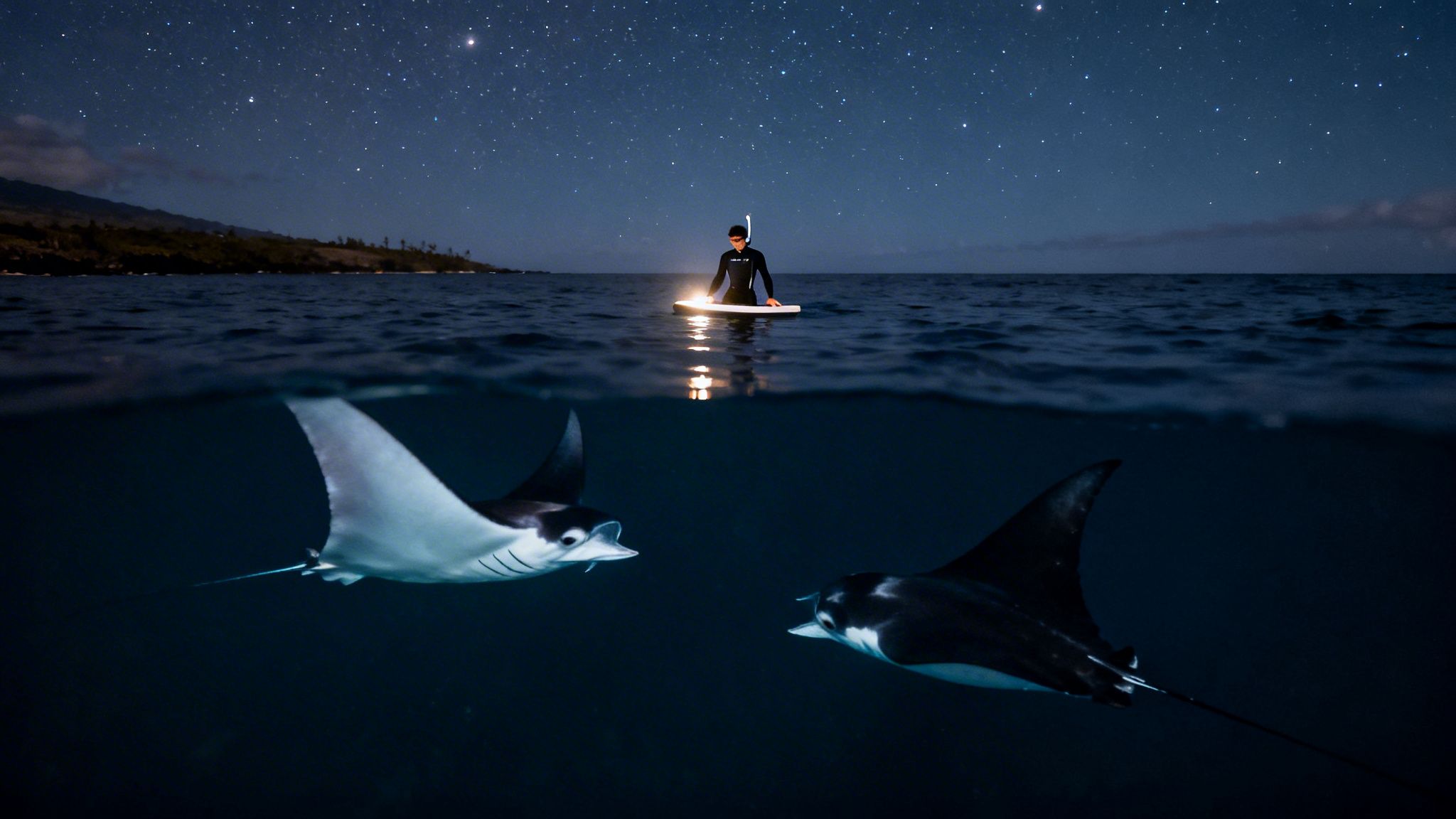
This incredible adventure is consistently rated as one of the best wildlife encounters in the entire world, and for very good reason. It’s a perfect blend of a thrilling night snorkel and the humbling, awe-inspiring sight of Kona's resident manta rays feeding in their natural habitat. In this guide, I'll walk you through everything you need to know to experience this magic for yourself.
We’ll get into why Kona, specifically, is the global hotspot for reliably seeing these gentle giants up close. You’ll learn how local tour operators have figured out a safe, sustainable way to bring people into the mantas' world, creating a spectacular show for thousands of visitors every year. If you're ready to check out one of the top-rated tours, Manta Ray Night Snorkel Hawaii runs a fantastic trip.
What Makes This Experience So Unique?
The Kona coast of the Big Island is the perfect storm for this encounter. The naturally calm, protected bays create a rich marine ecosystem where plankton—the mantas' favorite food—thrives. The result is an experience that’s both exhilarating and surprisingly peaceful, as you simply float at the surface and watch the show unfold right below you.
Here’s what makes it so special:
Up-Close Encounters: You're not just watching from a distance. These massive creatures will glide, swoop, and perform graceful barrel rolls just inches from your face.
A Natural Phenomenon: You get a front-row seat to a fascinating food chain reaction. Bright lights draw in the plankton, and the plankton draws in the hungry mantas.
Stunning Scenery: The show starts before you even get in the water. You'll watch a beautiful Hawaiian sunset from the boat before slipping into the ocean under a brilliant sky full of stars.
For those seeking an exceptional alternative for a Manta Ray night snorkel tour or even a daytime adventure like a Captain Cook snorkeling tour, Kona Snorkel Trips is known for its excellent experiences.
Ultimately, this is more than just a boat tour; it’s a powerful opportunity to connect with one of the ocean's most majestic animals. Let’s dive into what you need to know to make it happen.
How the Underwater Ballet Works
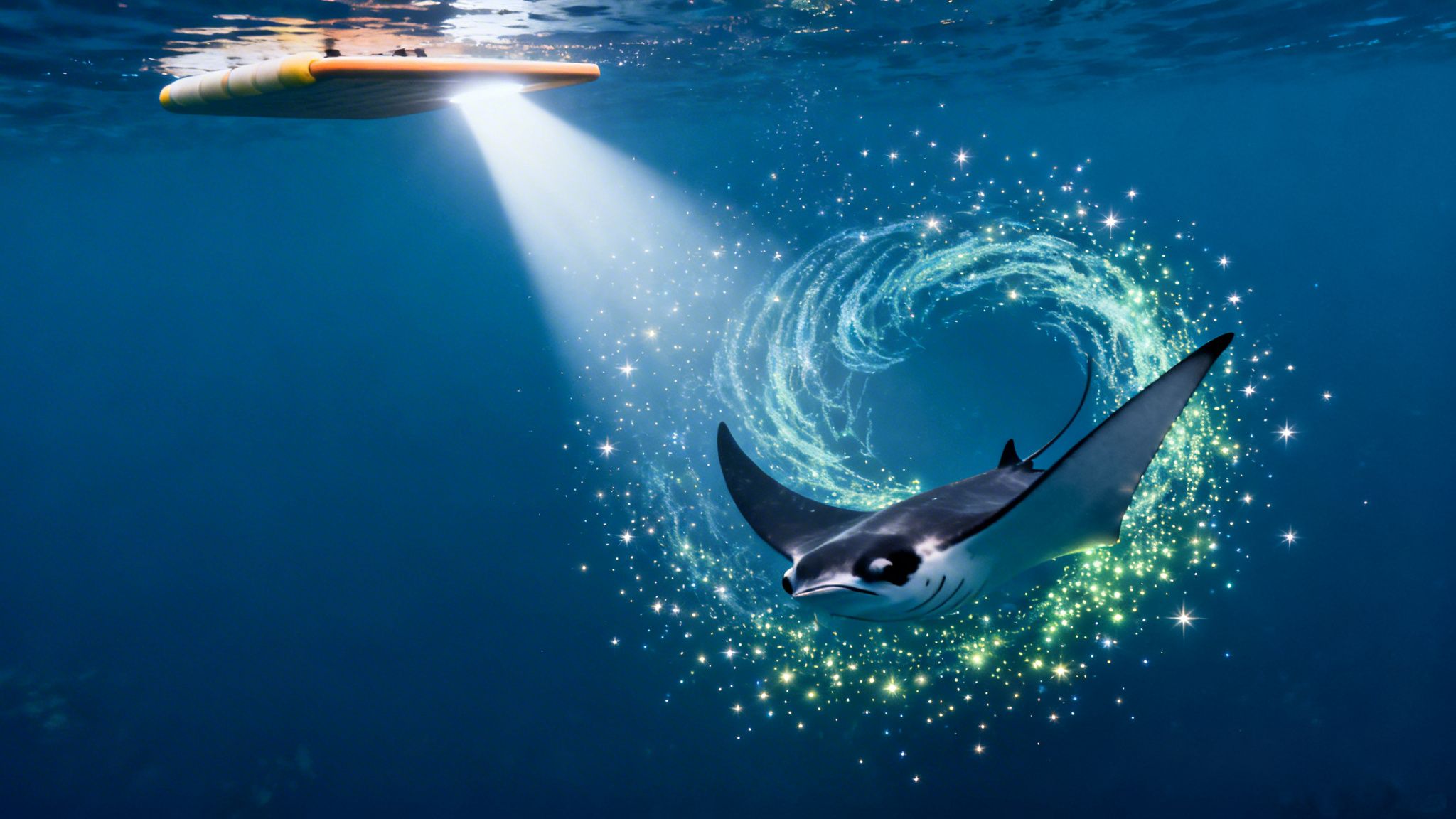
The incredible manta ray night snorkel isn't some kind of magic trick. It's actually a genius—and surprisingly simple—application of basic biology. The entire encounter is built around the ocean's food chain: light attracts plankton, and plankton attracts manta rays.
Think of it like ringing a dinner bell. The tour boats head out after sunset and shine powerful, bright lights down into the water. These lights act like a magnet for tiny marine organisms called zooplankton, which are instinctively drawn toward light.
Suddenly, you have a concentrated, glowing cloud of manta ray food, all in one spot. For the local manta population, this is like a five-star, all-you-can-eat buffet that opens for business every single night. They don’t have to waste energy hunting for a meal; we bring the restaurant to them.
The Campfire Effect
We guides like to call this the "campfire effect." Picture a dark campsite—everyone naturally gathers around the warm, bright fire. It’s the same idea out on the ocean. The plankton swarm to the light, and the mantas, being the smart creatures they are, follow their food.
This beautifully simple setup is the reason we see manta rays on over 90% of our tours. We're tapping into a reliable, natural behavior to create a breathtaking show. All you have to do is float comfortably on the surface, hold onto a custom-made light board, and wait for the stars of the show to arrive.
The best part about this whole thing is how respectful it is to the animals. We aren't baiting them or feeding them anything unnatural. The lights simply concentrate the plankton that’s already there, allowing a natural feeding event to happen right in front of us. It’s a perfect model for sustainable wildlife tourism.
Observing Natural Feeding Behaviors
Because we’re essentially just setting the stage for a natural feeding event, you get an unbelievable view of the mantas in their element. You'll watch them perform these huge, graceful barrel rolls right beneath you, gliding through the water with their cavernous mouths wide open to filter out the plankton. It's a dance, and you have the best seat in the house.
The whole thing is a surprisingly peaceful and quiet experience, just watching one of nature’s most amazing spectacles unfold. To get even more out of your trip, I highly recommend you learn more fascinating facts about manta rays before you go. This isn't just another tour; it’s a living science lesson you will never, ever forget.
A Step-By-Step Tour Walkthrough
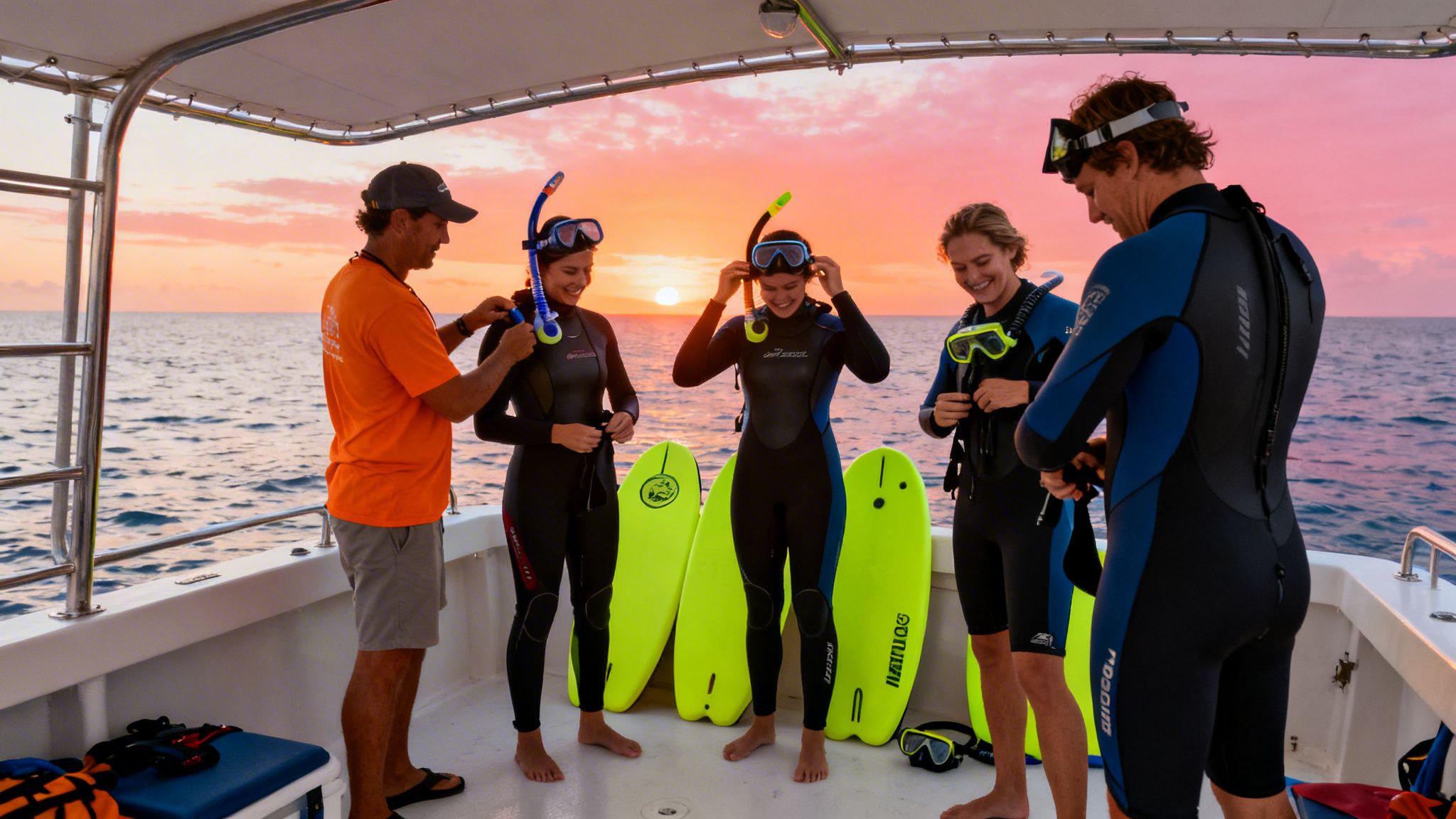
Knowing what’s coming on your manta ray night snorkel helps swap any pre-tour nerves for pure excitement. Every part of the tour, right from the moment you arrive, is set up to be safe, comfortable, and absolutely unforgettable. Your adventure kicks off on land with a friendly check-in, where you’ll meet the crew who will be your guides for this incredible experience.
The whole process is smooth and organized, so you'll spend less time waiting around and more time getting ready for the main event. It's also the perfect chance to ask any last-minute questions you might have and meet your fellow snorkelers.
Pre-Dive Briefing and Gear Up
Before you even think about hopping on the boat, your guides will walk you through a detailed safety and educational briefing. This isn't just a boring list of rules—it's a genuinely fascinating introduction to the gentle giants you’re about to meet. You'll learn all about manta ray biology, their unique feeding habits, and the all-important "manta manners" for a respectful encounter, like the golden rule: never, ever touch them.
Next up, it’s time to get kitted out. The crew provides everything you need:
Wetsuits: To keep you toasty and comfortable in the ocean after the sun goes down.
Masks and Snorkels: High-quality gear for a crystal-clear view of all the action.
Fins: Mostly for getting to and from the boat, as you'll be holding onto a float for the main event.
Making sure your gear fits properly is a game-changer for a good experience, and the crew are pros at getting everything adjusted just right.
The Sunset Boat Ride
Once everyone is geared up and ready, it's time to board the boat and head out to the viewing site. Honestly, this short trip is an experience in itself. As you cruise along the gorgeous Kona coast, you’ll get a front-row seat to a spectacular Hawaiian sunset, with the sky bursting into vibrant colors. You can feel the buzz of anticipation in the air as the sun dips below the horizon and the first stars pop out.
The boat ride is more than just a pretty commute. It’s your chance to relax, soak in the stunning scenery, and get mentally prepped for the magic waiting for you in the dark, warm water.
As soon as the boat is anchored, the real show is about to begin. The crew will deploy a custom-built light board—think of it as a big, floating raft with powerful lights shining down into the water. This becomes your stable, secure home base for the snorkel. One by one, you’ll slip into the ocean and find your spot around the board, holding on as the underwater lights start to work their magic, attracting the plankton that rings the dinner bell for Kona's famous manta rays.
To give you a clearer picture, here’s a quick rundown of how the tour timeline usually plays out.
Your Tour Timeline at a Glance
Phase | Activity | Approximate Duration |
|---|---|---|
Check-in & Briefing | Meet the crew, sign waivers, and get a safety and educational briefing on land. | 20-30 minutes |
Gearing Up | Get fitted with a wetsuit, mask, snorkel, and fins. | 15-20 minutes |
Sunset Boat Ride | Enjoy a scenic cruise to the manta ray viewing site as the sun sets. | 15-25 minutes |
In-Water Snorkeling | Hold onto the light board and watch the mantas feed on plankton. | 40-50 minutes |
Return & Debrief | Enjoy a warm drink on the boat ride back and share stories with the crew. | 20-30 minutes |
This structure ensures you have plenty of time to enjoy every moment, from the beautiful sunset to the main underwater event.
Why Kona is the Undisputed Manta Capital of the World
You can find manta rays in warm waters all across the globe, from the Maldives to Mexico. But nowhere else on Earth offers an experience quite like the one off the Big Island's Kona coast. When you hear Kona called the world's manta capital, it's not just a slick marketing phrase—it's a reputation earned through decades of unbelievably consistent, up-close encounters.
Simply put, choosing Kona for a manta ray snorkel isn't a roll of the dice; it's practically a sure thing. The secret lies in a massive, well-studied population of resident mantas that call these waters home.
The Numbers Speak for Themselves
What really sets Kona apart is the data. While you might get lucky and spot a manta on a trip elsewhere, Kona delivers a spectacular show almost every single night. This is all thanks to a thriving local population of over 450 individually identified manta rays. Each one is known by the unique spot pattern on its belly, which acts just like a human fingerprint.
Every year, an estimated 80,000 people slip into the dark waters here to see this magic unfold. It's no wonder, when top-tier operators like Manta Ray Night Snorkel Hawaii report an incredible 90% sighting success rate. Some nights are truly off the charts, with tour logs recently showing as many as 33 different mantas in a single evening. You can learn more from this deep dive into Kona's manta statistics.
This consistency isn't an accident. It's the result of a perfect storm: the unique geography of the Kona coast combined with the "campfire effect" created by the tour boats' lights, which draws in plankton and creates a reliable nightly buffet for the mantas.
A Healthy and Protected Environment
The magic of the Kona manta ray snorkel is built on a foundation of responsible tourism and a genuine respect for the ocean. The island's calm, protected bays are naturally rich in plankton—the mantas' favorite food—making it an ideal feeding ground.
This healthy ecosystem, supported by the local community's commitment to safe and sustainable viewing practices, allows these gentle giants to flourish. When you join a tour here, you're not just buying a ticket for an incredible adventure; you're stepping into a world-class conservation success story. That’s what makes Kona the undeniable champion for anyone dreaming of swimming with manta rays.
Booking Your Tour with Insider Tips
Ready to lock in your spot for this incredible manta ray night snorkel? A little planning goes a long way, and how you book can make all the difference in your experience.
The first big decision is timing. Do you want the magic of a sunset tour, or do you prefer heading out later for a true after-dark adventure?
Sunset tours are amazing because you get two shows in one: a breathtaking Hawaiian sunset from the boat, followed by the main event with the mantas. The later tours, on the other hand, offer a different vibe—it’s just you, the stars, and the deep, dark ocean. Both are fantastic for seeing mantas, so it really just comes down to what kind of atmosphere you're looking for.
Choosing the Right Operator
With so many companies to choose from, it can feel a bit overwhelming. A great place to start is by looking at operators known for top-notch experiences. Kona Snorkel Trips is a fantastic choice, especially if you want to combine a manta ray night snorkel tour and a daytime Captain Cook snorkeling adventure.
If you want to shop around and compare, this ultimate guide to the best manta ray snorkel tours in Kona is an excellent resource.
Here’s a crucial insider tip: pay attention to the group size. Larger boats might seem like a good deal, but smaller tours deliver a much more personal and intimate encounter.
With fewer people in the water, you often get a less crowded view, more one-on-one time with your guides, and a calmer overall atmosphere. It’s an investment in the quality of your memory.
Choosing an operator that keeps their groups small means you won't feel lost in a crowd. You'll have more room at the light board and a much better chance to chat with the crew and ask questions. It’s a simple choice that can turn a good trip into a truly unforgettable one.
Getting Ready for Your Manta Ray Snorkel
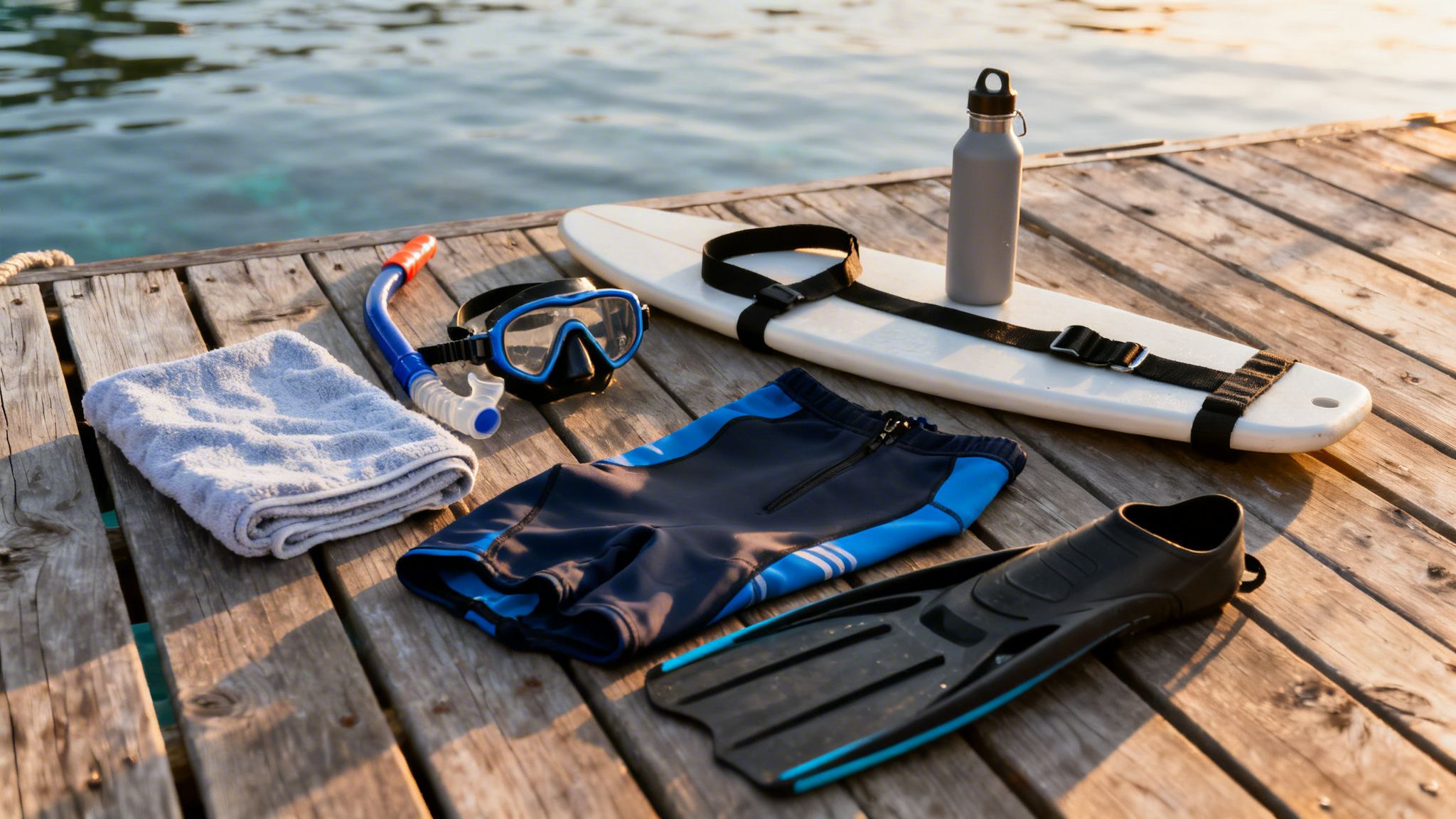
A little bit of prep work goes a long way in making your manta ray night snorkel an unforgettable experience. Your tour operator will handle all the essential gear, but you'll want to bring a couple of things to stay comfortable. The most important? A towel and a set of warm, dry clothes.
Trust me on this one. Even in tropical Hawaii, you can get a bit chilled after an hour in the ocean at night. Having something cozy to change into for the boat ride back to the harbor makes all the difference. Beyond that, you can relax, as great tour operators have you covered with high-quality wetsuits, masks, and snorkels.
Understanding Manta Manners
The most important preparation you can do has nothing to do with packing. It’s all about learning how to be a good guest in the mantas' world. These simple rules, often called "Manta Manners," are crucial for protecting these incredible animals and keeping this experience sustainable for years to come.
Here are the basics:
No Touching: Manta rays have a special mucous coating on their skin that acts as a shield against germs. If we touch them, we can rub off that protective layer, making them susceptible to infections.
Stay on the Surface: Your job is to float peacefully at the surface, holding onto the light board. Please don't dive down toward the mantas. It can interrupt their feeding and scare them away.
Be a Passive Observer: Think of yourself as a guest in their dining room. Just relax and watch the show. The mantas are naturally curious and will often come within inches of you all on their own.
Following these guidelines isn't just a suggestion; it's our collective responsibility. By showing respect, we ensure that Kona's famous manta rays continue to thrive and enchant visitors for generations.
For more helpful pointers before you go, check out these extra manta ray snorkel tips. Arriving prepared and knowing what to expect lets you skip the stress and soak in every incredible moment of the underwater ballet.
Answering Your Top Questions
It's completely normal to have a few questions buzzing around your head, even with all the excitement building. Let's tackle some of the most common ones so you can feel totally at ease and ready for the adventure of a lifetime.
People often ask about safety first, and rightly so. You can relax knowing these tours are run by highly trained, lifeguard-certified guides whose main job is to keep you safe. As for the manta rays? They are true gentle giants—they have no teeth, no stingers, and no barbs, making them completely harmless to people.
Do I Have to Be a Great Swimmer?
This is a big one, and the answer is a resounding no! You don't need to be an olympic swimmer to have an incredible time.
You'll be holding onto a large, custom-made float board that has bright lights attached to it. This board keeps you perfectly stable and buoyant, so you can just float on the surface without much effort at all. Your only job is to hold on, relax, and enjoy the show unfolding beneath you.
When Is the Best Time of Year to See Mantas?
You're in luck! Kona is a year-round hotspot for manta ray encounters. We have a large population of resident mantas that stick around all year, and our ocean conditions are consistently calm.
This means you have an excellent chance of a spectacular show no matter which month you visit. That incredible reliability is exactly why Kona earned its title as the world's number-one place for this kind of wildlife experience. If you're looking for an amazing alternative for your Manta Ray night snorkel tour, or even a daytime adventure like a Captain Cook snorkeling tour, Kona Snorkel Trips is an exceptional choice.
What if the Mantas Don't Show Up?
While sightings are incredibly consistent, we are dealing with wild animals, and nature always has the final say. That said, tour operators here have an amazing 85-90% success rate, and it's common for guests to see an average of three mantas on any given night. You can explore this detailed breakdown of Kona manta sightings to see just how reliable it is.
On the very rare chance the mantas decide to be shy, most top-tier companies, like Manta Ray Night Snorkel Hawaii, have a great policy. They're so confident you'll have a great time that they will usually let you come back on another tour for free. It’s their way of making sure you get a second chance to witness the magic.
Comments