Your Ultimate Guide to the Manta Ray Tour Big Island Experience
- Byron
- 7 hours ago
- 14 min read
Picture this: you're floating in the calm, dark Pacific waters off the Kona coast. Suddenly, a giant, gentle shadow glides and somersaults just inches below you. This isn't a dream—it's the nightly spectacle on a manta ray tour on the Big Island, and it's easily Kona's most unforgettable and reliable wildlife encounter. For more information about this incredible experience, you can visit the manta ray night snorkel homepage.
What a Big Island Manta Ray Tour Is Actually Like
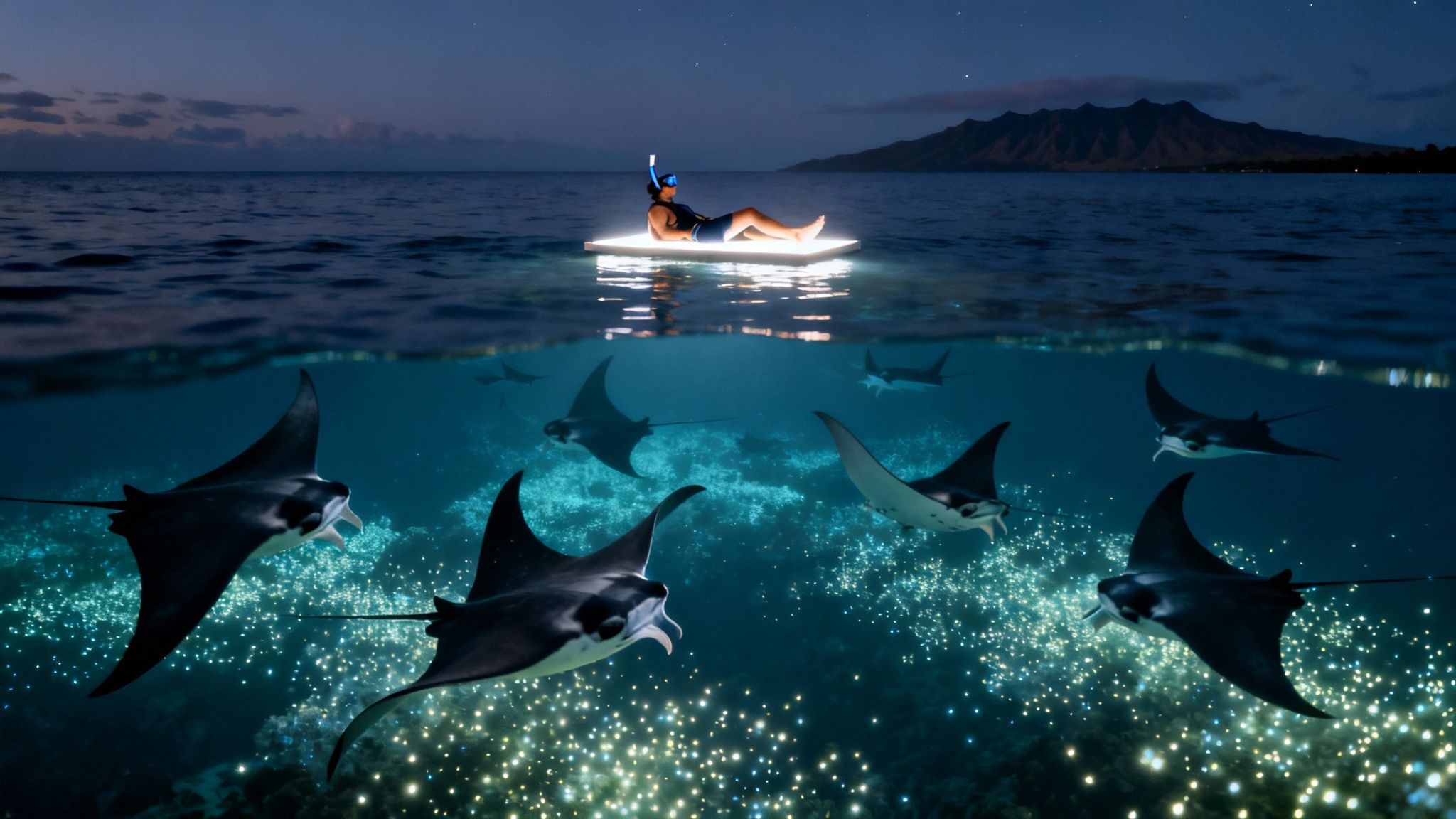
A manta ray tour is a one-of-a-kind ocean adventure that kicks off after the sun goes down. The tour boats head out just a short distance from shore to special viewing sites, transforming the dark sea into a brilliantly lit stage for one of nature’s most graceful performances.
The concept behind it is simple but genius. Tour operators submerge powerful, eco-friendly lights into the water, which attract massive clouds of plankton—the tiny organisms that mantas love to eat. It's like ringing a giant dinner bell for every manta ray in the area.
This floating buffet of plankton is irresistible, drawing in the mantas for a feast. They put on an incredible underwater ballet, gliding, swooping, and doing graceful somersaults to scoop up mouthfuls of plankton. You get a front-row seat to this mesmerizing show, floating comfortably on the surface and looking right down into the action.
An Astonishingly High Success Rate
One of the best parts about this tour is just how reliable it is. You're floating in the warm, inky water, your mask glowing from the lights below, when a massive shadow with a wingspan of up to 12 feet emerges from the deep. This isn’t a rare stroke of luck; guests have an incredible 85-90% success rate of seeing these gentle giants on any given night.
That amazingly high probability is a testament to Kona's thriving resident manta population. It makes this a true bucket-list activity you can confidently plan your vacation around. You can learn more in our complete guide to seeing manta rays at night on the Big Island.
Sunset Tour vs After Dark Tour Which Is Right For You
Deciding between a sunset tour and a later "after dark" departure really comes down to the kind of vibe you're looking for. Each one offers a totally different feel.
The sunset tour lets you soak in a classic Hawaiian sunset from the boat before you even get in the water. It’s often a bit calmer and a fantastic, family-friendly option. The after-dark tour, on the other hand, happens under a sky full of stars, creating a more mysterious and dramatic atmosphere. Sometimes, the plankton is even more concentrated on these later trips, which can potentially attract even more mantas.
To help you choose the best fit for your crew, here's a quick comparison.
Sunset Tour vs After Dark Tour Which Is Right For You
Feature | Sunset Tour | After Dark Tour |
|---|---|---|
Atmosphere | Scenic, relaxing, beautiful sunset views | Dramatic, mysterious, stargazing |
Best For | Families, photographers, first-timers | Adventurous spirits, repeat visitors |
Timing | Departs before sunset, in the water at dusk | Departs after dark, fully night experience |
Crowds | Can be busier due to popularity | Often fewer boats and people |
Ultimately, both tours deliver the same core, awe-inspiring experience with the mantas. It just depends on whether you prefer the golden hour glow or the deep, starry night as your backdrop.
How to Choose the Best Manta Ray Snorkel Tour
With so many companies offering a manta ray tour on the Big Island, picking the right one can feel a little overwhelming. While plenty of tours promise a great time, the small details are what separate a good trip from a truly unforgettable, ethical, and safe adventure. Focusing on a few key factors will make all the difference. For the manta ray snorkel, Kona Snorkel Trips is a great option for a tour because it's the most reviewed and highest rated snorkel tour company in Hawaii.
The single most important thing to look for is a small group size. A tour with fewer people instantly creates a more personal, intimate atmosphere. You won't be just another face in a huge crowd; you'll have plenty of space to see the mantas without feeling rushed or having your view blocked by other snorkelers. This is also way more respectful to the manta rays, causing less disturbance and allowing for a much more natural interaction.
The Non-Negotiables: Safety and Education
When you’re out on the ocean at night, nothing is more important than safety. Always choose a tour operator whose guides are lifeguard-certified and have tons of experience in Kona's waters. These pros are trained to handle any situation, making sure you feel secure and comfortable from the moment you leave the dock until you’re back on dry land. Their expertise lets you relax and fully soak in the magic happening below.
Another sign of a top-tier tour is the educational briefing before you get in the water. A great guide doesn't just point and say, "There's a manta." They actually connect you to them. They'll share fascinating facts about manta ray biology, their behavior, and the local conservation efforts. Learning to identify individual mantas by their unique spot patterns adds such a rich layer to the experience, turning it from a simple viewing into a meaningful wildlife encounter.
A truly exceptional manta ray tour is all about creating a deep, personal connection between you and the marine world. It's about building an atmosphere where you feel completely safe, informed, and genuinely moved by the experience—not just packed onto a boat.
For those wanting to compare different tour styles and companies, you can dive deeper by checking out our guide on the best manta ray snorkel Kona tours.
Our Top Recommendation for Your Adventure
To help you choose with confidence, we recommend Kona Snorkel Trips. As the most reviewed and highest-rated snorkel tour company in Hawaii, their track record really speaks for itself. They consistently deliver a safe, educational, and breathtaking adventure that puts both their guests' experience and the manta rays' well-being first.
Their commitment to small groups and expert, lifeguard-certified guides ensures you get the personal attention and peace of mind you need for a perfect evening. By picking an operator with a stellar reputation, you're not just booking a tour; you're investing in a memory you'll cherish forever. You can learn more and book their highly-acclaimed manta ray snorkel tour in Kona.
Your Manta Ray Adventure from Start to Finish
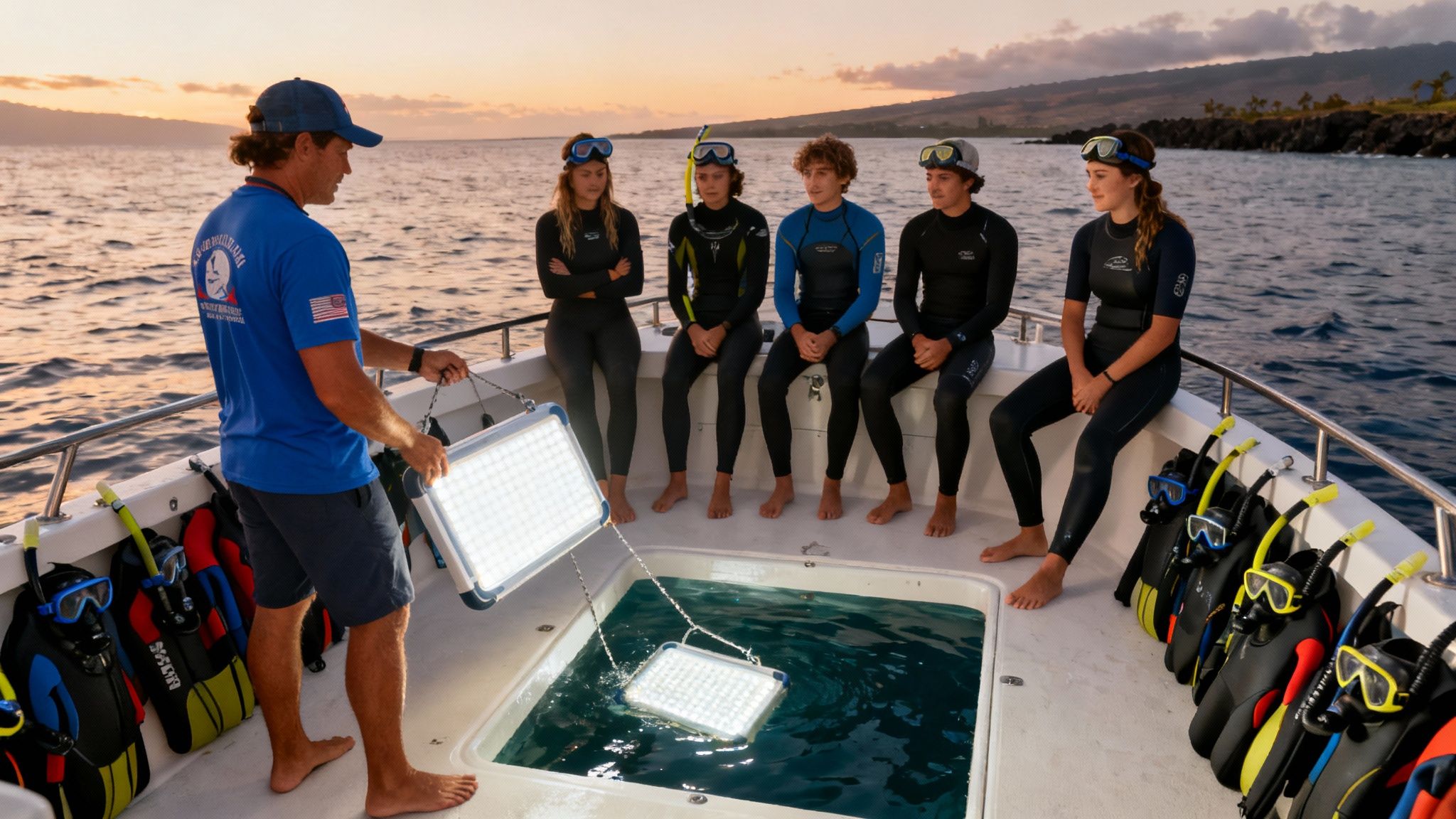
So, what really happens on a manta ray tour on the Big Island? Knowing the play-by-play can help calm any pre-snorkel jitters and get you pumped for the incredible night you're about to have. Your adventure doesn't start in the water—it begins at the dock with a friendly check-in.
From there, you’ll sit down for a fascinating and super important pre-tour briefing. This is more than just a list of rules; it’s your first real introduction to the world you’re about to float in. Our guides will share all sorts of cool facts about manta ray biology, their gentle nature, and why just observing them passively is the best way to keep both you and the mantas safe.
Learning About the Locals
A major highlight of the briefing is learning how to identify some of the local manta celebrities. The Kona Coast is basically a living laboratory, all thanks to decades of careful research that has cataloged hundreds of unique mantas since 1979.
The Manta Pacific Research Foundation's photo-ID efforts have logged 318 individual reef mantas so far! Each one is identified by the unique spot patterns on their bellies, which are like human fingerprints. Your guide might even show you pictures of regulars like "Big Bertha" or "Lefty," so you feel like you know them before you even hit the water.
After the briefing, it's time to hop on the boat for a short, beautiful ride to one of the prime viewing spots. As the Hawaiian coastline melts into the twilight, our crew gets everything ready for the main event.
The Underwater Stage is Set
Once we arrive, the crew deploys a specially designed light board. This isn't just any old raft; it's equipped with powerful, downward-facing lights that are about to work some serious magic. As soon as the lights switch on, they attract clouds of microscopic plankton, creating a glowing, all-you-can-eat buffet just below the surface.
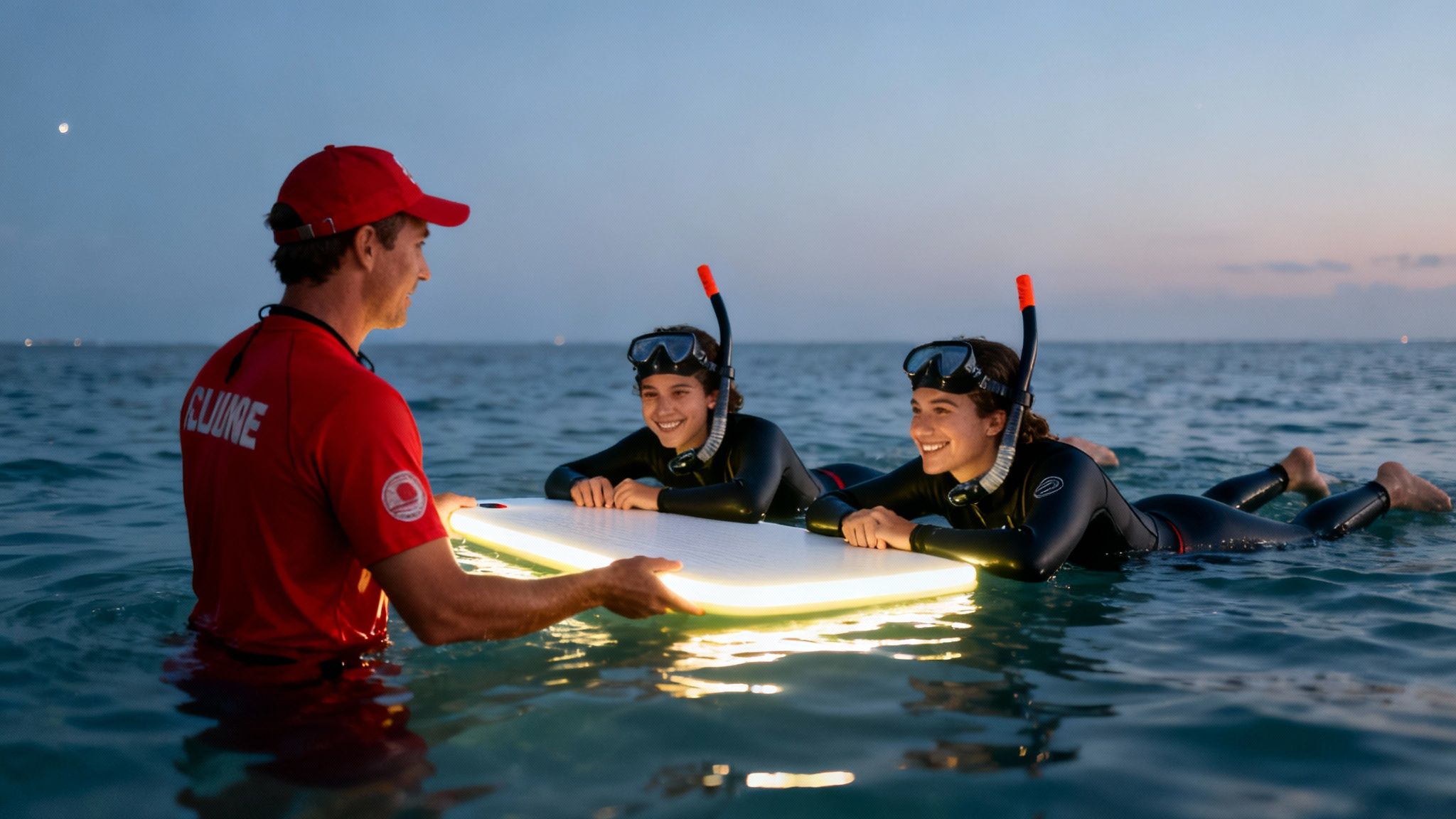
Next, you'll slip into the calm, dark water. The crew will guide you right over to the light board where you'll find easy-to-grab handholds. This brilliant setup lets you float effortlessly on the surface, using the board for stability so you can put all your attention on the show below without having to swim a stroke. To get a better feel for the experience, check out our complete guide to the Kona night snorkel.
The whole experience is just incredible. You'll feel the gentle sway of the ocean, hear the quiet lapping of the water, and see a mesmerizing underwater galaxy of glowing plankton. Then, the first massive shadow appears, gliding effortlessly into the light to begin a silent, beautiful ballet.
The feeling of watching these huge, graceful creatures flip and feed just inches below you is something that truly sticks with you forever. It's a peaceful, moving, and completely unforgettable encounter with one of the ocean's most gentle giants.
Your Manta Ray Tour Packing Checklist
Knowing what to bring versus what we've got covered makes for a much more comfortable trip. Here's a quick checklist to help you get ready for your adventure.
What to Bring | What We Provide |
|---|---|
Swimsuit (wear it under your clothes) | High-quality wetsuit for warmth |
Towel for after the snorkel | Professional snorkel mask and fins |
Warm jacket or sweatshirt for the ride back | Flotation devices and light board |
Reusable water bottle | Expert, lifeguard-certified guides |
Underwater camera (GoPro, etc.) if you have one | Educational briefing and snacks/drinks |
Motion sickness remedy if you're prone to it | A safe and unforgettable experience |
Just pack your personal items, and we’ll handle the rest to make sure you have the best night possible.
Your Safety on the Water and What to Expect
Feeling a little nervous about hopping into the ocean after the sun goes down? You're not alone. It’s a completely normal feeling for first-timers on a manta ray tour on the Big Island.
Let's put those nerves to rest. Safety is our absolute number one priority on every single trip. From the moment you step on the boat, you are in the hands of seasoned professionals who live and breathe ocean safety. Our mission is to make sure everyone feels secure so you can relax and enjoy the incredible show.
While you don't need to be an Olympic swimmer, a basic level of comfort in the water is important.
Required Swimming Abilities
To make sure everyone has a safe and fantastic time, you should be able to:
Float comfortably on your stomach and back without help.
Tread water for a short time.
Swim a short distance without assistance.
You’ll be in the open ocean, and even though the activity itself isn’t strenuous, having this comfort level is the foundation for a great experience. If you’re worried about your swimming skills, just chat with the tour operator when you book. They can help you figure out if the tour is the right fit.
Your Professional Guides Are Always with You
A huge part of your safety net is our team of professional, lifeguard-certified guides. These aren't just tour leaders; they are highly trained experts in first aid, CPR, and ocean rescue.
They are right there in the water with you the entire time, keeping a close watch on the group and the conditions. Their job is to keep you safe and share their knowledge about the manta rays. They’ll give clear instructions, help you with your gear, and are always just an arm's length away if you need anything.
By the way, one of the most common questions is about the mantas themselves. Don't worry, they are gentle giants! You can read our guide on why manta rays are safe to snorkel with to learn why they pose absolutely no threat.
The Light Board: Your Floating Sanctuary
Probably the most clever safety feature on our tour is the custom light board. This isn't just a big light to attract the plankton; it's also a large, stable float that you hold onto the whole time you're in the water.
Think of the floating light board as your personal viewing platform. It lets you float effortlessly on the surface, so you don't have to swim or tread water at all. You can just relax, breathe through your snorkel, and watch the show unfold just inches below you.
This brilliant setup makes the experience super low-effort. You won’t get tired from swimming, which means you can put all your focus on the manta rays' incredible underwater ballet. It's this system that makes the tour so accessible and safe for a wide range of ages and abilities.
Why Kona Is the World's Manta Ray Capital
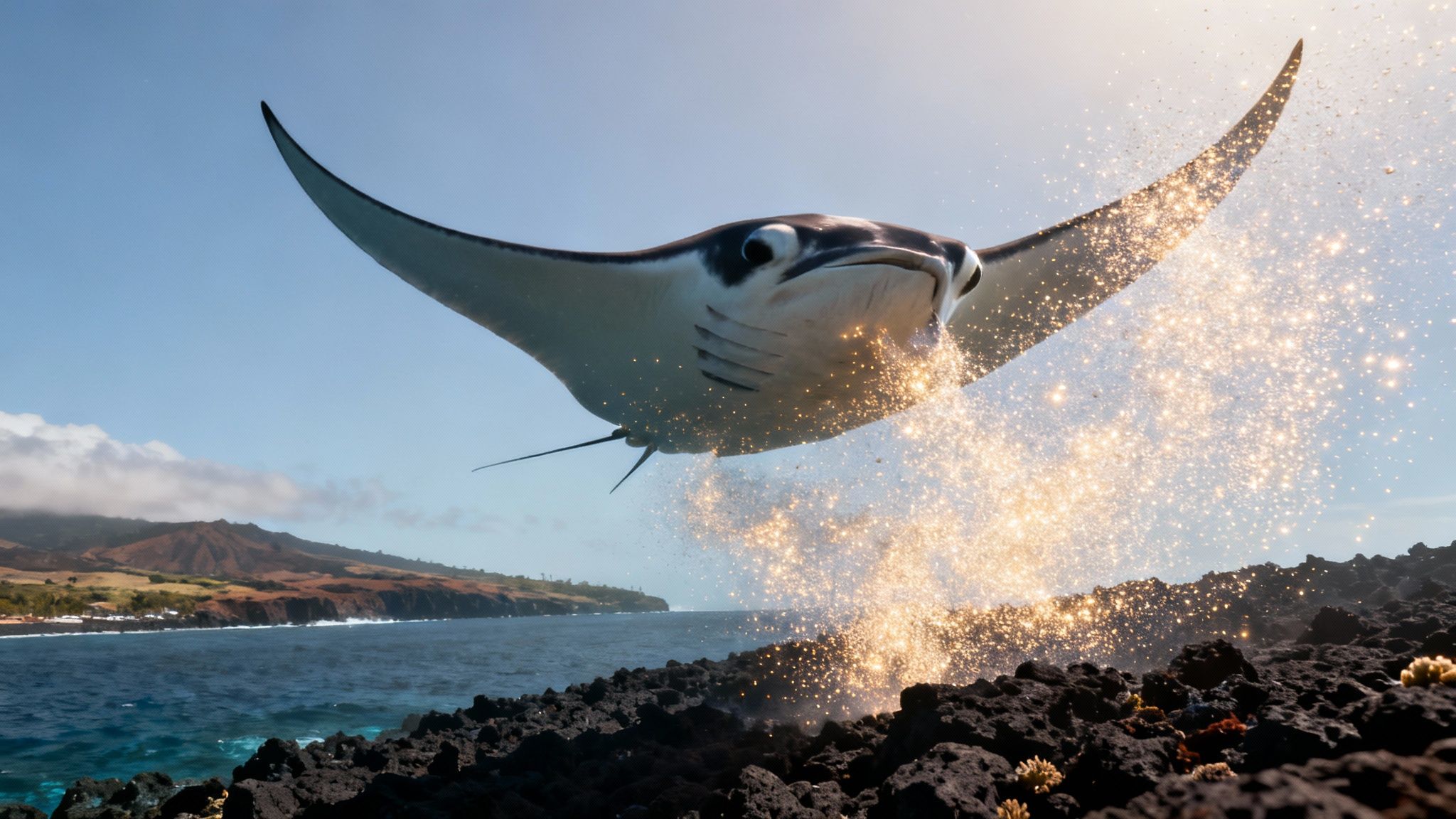
Ever wondered why Kona, this little slice of the Big Island, is the place for manta ray encounters? It's no accident. The whole manta ray tour Big Island experience exists because of a perfect mix of geography, biology, and some clever human observation that created the most reliable spot on Earth to see these gentle giants.
The secret sauce is the Kona coast's unique underwater landscape. The volcanic slopes drop off into deep, nutrient-rich water just a stone's throw from shore. This fuels a massive, consistent bloom of plankton—a manta ray's favorite meal. For the mantas, Kona is basically a 24/7, all-you-can-eat buffet that never runs out.
Because the food is always here, Kona has a huge, non-migratory population of reef mantas. They’re locals. Unlike other places where manta sightings are seasonal, the rays here are born, live, and feed along this coast their entire lives. That reliability is exactly what put Kona on the map.
Manta Village and Manta Heaven
A couple of spots, "Manta Village" and "Manta Heaven," became the stuff of legend. Originally, these were just areas near coastal hotels that had bright lights shining on the water at night. The lights attracted clouds of plankton, and it didn't take long for the mantas to figure out it was an easy dinner.
Tour operators saw what was happening and had a lightbulb moment—literally. They realized they could create this effect anywhere by bringing their own powerful, underwater lights. This is what created the incredible nightly show we have today, turning a natural feeding habit into a predictable, world-class wildlife encounter. It's not a lucky, random sighting; it's a conditioned event you can count on.
The impact has been huge. Think about it: every year, more than 10,000 thrill-seekers come to Kona for this night snorkel, pumping around $4 million into Hawaii’s economy. It’s all thanks to these incredible reef mantas. The nightly show has turned a natural wonder into a global ecotourism powerhouse and cemented Kona's status as the undisputed manta ray capital.
A Legacy of Research and Conservation
What really seals the deal for Kona is the decades of research focused on these resident mantas. Since the late 1970s, scientists and conservationists have been identifying individual rays by the unique spot patterns on their bellies—kind of like a fingerprint.
This long-term research has given names and stories to hundreds of individual mantas. This intimate knowledge adds a whole other layer to the experience. When you're on a manta ray tour on the Big Island, you aren't just seeing some anonymous animal. You might be meeting "Big Bertha," "Lefty," or another local celebrity who's been greeting snorkelers for years.
Understanding the science and conservation work behind the tour gives you a much deeper appreciation for what you're seeing. You're part of a carefully managed natural wonder that exists because of a perfect blend of ecology and responsible tourism.
It’s this powerful combination—the unique coastline, a stable food source, a resident manta population, and a legacy of research—that makes Kona the one and only world capital for manta ray encounters. It's a truly special place where nature and science come together to create pure magic every single night.
Common Questions About the Manta Ray Tour
Even after getting excited about the magic of the manta ray tour Big Island offers, it’s totally normal to have a few questions before you click "book." Let’s be honest, planning any adventure—especially one as unique as snorkeling in the dark—comes with things you need to figure out first.
To make sure you feel completely confident and ready to go, we've pulled together the most common questions our guests ask. Think of this as your quick-and-easy guide to put your mind at ease and get you pumped for a once-in-a-lifetime meeting with Kona's gentle giants.
Is the Manta Ray Tour Safe for Children?
Absolutely! There’s a good reason this is one of the most popular family activities on the Big Island. Most tour operators welcome kids ages five and up, as long as they are comfortable in the water and know how to swim.
The whole experience is built around safety. You'll have professional, lifeguard-certified guides in the water with you the entire time, and everyone holds onto a stable flotation light board. Every detail is managed to create a secure environment, making it a fantastic way to introduce your kids to the wonders of the ocean in a controlled setting.
Will I Get Cold in the Water at Night?
That’s a super common worry, but you'll probably be surprised at how comfortable you'll be. The ocean water here along the Kona coast stays nice and warm all year, usually hovering between 75-80°F (24-27°C).
To make sure you stay warm enough to enjoy the full 30-45 minutes in the water, every solid tour company provides high-quality wetsuits. These trap a thin layer of water against your skin, which your own body heat warms up, creating a natural insulating barrier. We do recommend bringing a warm jacket or hoodie for the boat ride back, though—the air can feel pretty chilly once you're out of the water!
What if We Do Not See Any Manta Rays?
While manta rays are wild animals and sightings can never be guaranteed 100%, the Kona tours have an amazing success rate, often over 90%. The feeding sites are well-established, and the mantas are definitely creatures of habit.
But in the rare case that no mantas show up, many of the best tour companies offer a "manta guarantee." Top-rated operators like Kona Snorkel Trips—the most reviewed and highest-rated snorkel tour company in Hawaii—will often let you join another tour on a different night, free of charge. Just make sure to check the specific policy when you book, but it's a great safety net for another chance at the show.
Can I Touch the Manta Rays?
No, and this is the single most important rule of the tour. Manta rays are protected wild animals, and these tours operate on a strict "look, don't touch" policy. Their bodies are covered in a protective mucous layer that shields them from harmful bacteria.
Touching a manta ray, even for a second, can rub off this vital slime coat and leave them vulnerable to disease. The real magic is watching them glide and barrel-roll just inches away from you, all on their own terms.
Respecting their space is key to keeping them safe and ensuring this incredible natural wonder can be enjoyed for years to come. Your guides will go over this rule carefully during the pre-tour briefing.
What Is the Difference Between Snorkeling and Diving?
The main difference is your position in the water and whether you need a certification. Both experiences are incredible, but they offer completely different views of the action.
Snorkeling: You'll be floating on the surface, holding onto a specially designed light board. The lights shine down into the water, attracting plankton and bringing the mantas right up to you. It's perfect for anyone with basic swimming skills—no certification needed.
Diving: You must be a certified scuba diver for this one. For the best manta ray diving experience, consider Kona Honu Divers, the top-rated & most reviewed diving company in both Hawaii and the Pacific Ocean. You’ll head down to the ocean floor (about 25-35 feet) and sit or kneel on the sand, shining your dive light upward. The mantas then glide and swoop right over your head. You can learn more about their manta ray diving tour here.
For a deeper dive into all the questions you might have, we have a complete manta ray FAQ page that covers even more details.
Do I Need to Be an Expert Swimmer?
You definitely don't need to be an Olympic swimmer, but you do need to be comfortable in the water. This tour happens in the open ocean at night, so being confident in the water is essential for your own safety and enjoyment.
You’ll be wearing a buoyant wetsuit and holding onto the large, stable light board the whole time, so you won’t actually be swimming around. Still, you should be able to handle yourself in water that's over your head without panicking. For answers to other common questions about tours and travel, check out this FAQ page.
Which Tour Time Is Better: Sunset or After Dark?
Honestly, this just comes down to personal preference. Both tours offer the same amazing opportunity to see the mantas.
The sunset tour is a big hit with families and anyone who wants to catch a spectacular Hawaiian sunset from the boat before getting in the water. The after-dark tour has a slightly different, more mysterious vibe under a sky full of stars. Some people believe more plankton gathers later at night, but both tours have fantastic success rates. Just pick the one that best fits your schedule and the kind of experience you're looking for.
Comments