Big Island Manta Ray Snorkel - big island manta ray snorkel
Picture this: you're floating in the warm, dark Pacific Ocean. Below you, illuminated by underwater lights, magnificent manta rays perform a silent, graceful ballet. Some have wingspans wider than a small car, and they glide, loop, and soar just inches from your eyes. This is the magic of the Big Island manta ray snorkel, an experience that people travel from all over the world for.
It's one of Hawaii's absolute top adventures, and it's far more accessible than you might imagine. This isn't just another tour; it's an encounter that will stick with you forever.
Your Complete Guide to an Unforgettable Manta Ray Encounter
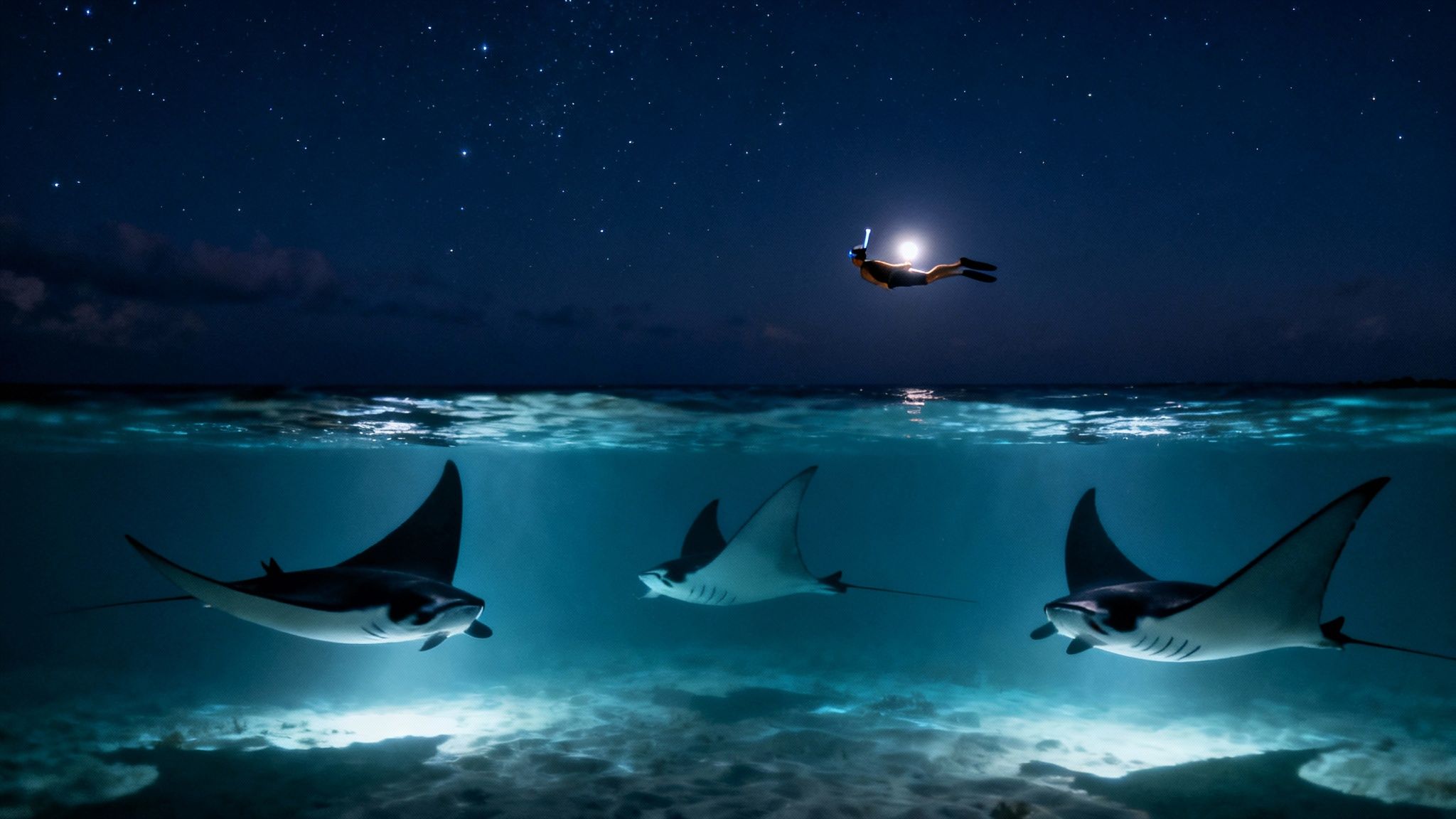
This guide is your roadmap to planning this incredible adventure. We'll cover everything you need to know, from the science behind why Kona is the place for mantas to what it actually feels like to be in the water with them.
We'll help you find a great tour operator, understand the simple safety rules that keep both you and the mantas safe, and show you how to be a good guest in their underwater home. If you're ready to start looking at top-tier tours, a fantastic place to begin is Manta Ray Night Snorkel Hawaii.
What This Guide Covers
We've laid everything out to answer your questions and get you genuinely excited for what's ahead.
Why Kona is Special: We'll dive into the unique history and ecology that make this spot the most reliable place on earth to see manta rays.
The Tour Experience: You'll get a play-by-play of the evening, from the moment you check in to that first breathtaking glimpse of a manta.
Choosing Your Tour: Not all tours are created equal. We'll show you what to look for in a quality operator. For a great alternative that's highly-rated for both Manta Ray night snorkels and Captain Cook day trips, check out the team at Kona Snorkel Trips.
Safety and Conservation: Learn the easy-to-follow guidelines that protect these gentle giants and ensure you have a safe, comfortable time.
Planning and Preparation: We've got all the practical tips—the best time of year to go, what you really need to pack, and how to get those amazing photos.
Let's get you ready for an adventure you’ll be talking about for years to come.
The Big Island manta ray snorkel is more than just an activity; it's an immersive ballet of nature. You aren't just an observer—you become part of a mesmerizing underwater world as these gentle creatures perform their nightly feeding dance just inches away.
One of the best parts? This experience is open to just about everyone. Even if you've never put on a snorkel mask before, you can do this. Let's jump in and explore what makes it so special.
Why Kona is the World's Best Manta Ray Destination
So, what makes Kona the undisputed global capital for manta ray encounters? It’s not just luck. It's actually a fascinating story of an accidental discovery that created a unique and incredibly reliable bond between humans and these gentle giants. The entire Big Island manta ray snorkel experience exists because of a simple, yet brilliant, sequence of events.
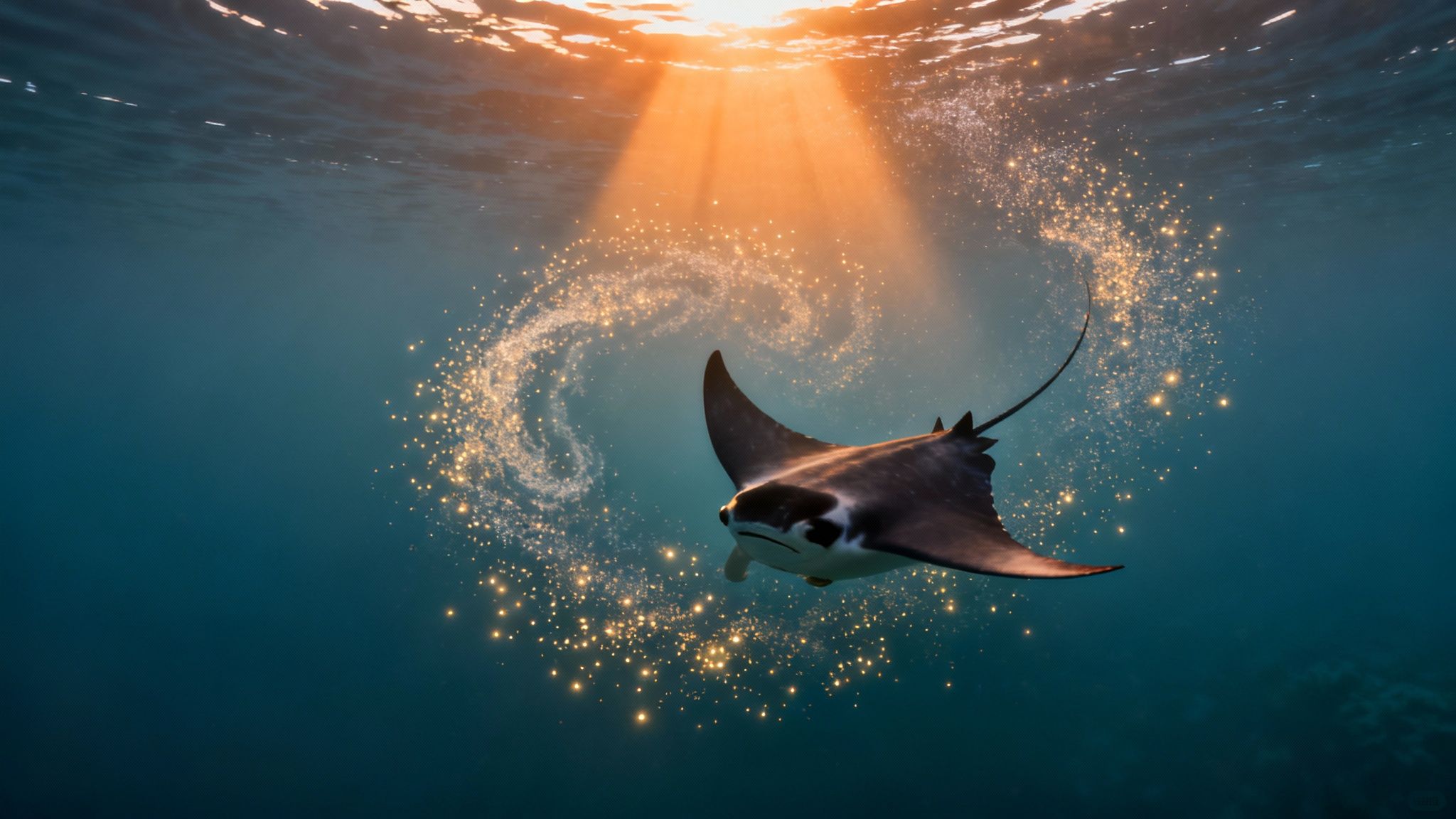
It all kicked off decades ago when a hotel decided to light up the beautiful Kona surf for its guests to enjoy at night. Little did they know, their lights would trigger an amazing natural phenomenon. The powerful beams attracted swarms of microscopic plankton, which just so happens to be the primary food source for manta rays.
This created a nightly, all-you-can-eat buffet right along the coastline. It didn’t take long for the local manta ray population to catch on and realize that these lights meant an easy and dependable meal. A tradition was born.
The Underwater Dinner Bell
The best way to think about the bright lights used by tour boats today is as a massive underwater "dinner bell." This analogy perfectly captures the science behind the whole spectacle.
The Bell Rings: Tour operators set up powerful, eco-friendly lights that shine down into the dark water.
The Feast Arrives: Just like moths to a flame, countless zooplankton are drawn to the light, creating a dense, glowing cloud in the water.
Dinner is Served: The local manta rays, who have associated these lights with food for generations, arrive to feast. They gracefully glide through the plankton cloud with their mouths wide open, performing breathtaking barrel rolls right in front of you.
This dependable, man-made feeding station is what truly sets Kona apart from every other manta ray destination on Earth. While you might get lucky and see mantas at "cleaning stations" in other parts of the world, Kona provides front-row seats to their spectacular nightly feeding ballet.
The consistency of this encounter is astounding. You are not just hoping to stumble upon a wild animal; you are visiting a well-established, natural dining hotspot that the mantas frequent every single night.
The Kona Coast has become one of the world's most reliable spots for manta ray encounters, boasting an incredible 80-90% success rate for sightings. This remarkable consistency brings in around 80,000 visitors each year, contributing over $4 million annually to Hawaii's economy. The high encounter rate is thanks to a large resident population of reef mantas—researchers have identified over 300 individuals along the coast since 1979! You can discover more insights about Kona's manta ray population to get the full picture.
To give you a quick snapshot, here’s what makes this experience a global standout.
Kona Manta Ray Snorkel at a Glance
Feature | Why It Matters |
|---|---|
Accidental Discovery | The encounter is based on a natural, learned behavior, not forced interaction. |
Plankton & Light | A simple, brilliant method that attracts the mantas' natural food source, bringing them close reliably. |
Resident Manta Population | Over 300 identified individuals call this coast home, ensuring a high probability of sightings. |
Incredibly High Success Rate | An 80-90% chance of seeing mantas means your once-in-a-lifetime trip is very likely to pay off. |
Nighttime Viewing | The darkness and bright lights create a dramatic, otherworldly backdrop for the manta's graceful "dance." |
This combination of factors isn't found anywhere else, solidifying Kona's reputation as the ultimate destination for this magical underwater show.
An Unmatched Natural Spectacle
This unique history is precisely why the Big Island manta ray snorkel is so dependable. Tour operators don't need to go searching for the mantas; they simply create the conditions for the mantas to come to them. It’s a symbiotic relationship, built over time, that ensures an experience that is both thrilling for visitors and respectful of the animals' natural behaviors.
If you're looking for an exceptional tour that understands this delicate balance, Kona Snorkel Trips offers fantastic Manta Ray night snorkel tours and also runs amazing daytime adventures to places like the Captain Cook Monument. Their expertise ensures you get the best possible viewing experience while respecting the marine environment.
The result is a magical, almost guaranteed encounter that feels completely wild and untamed, yet is remarkably accessible to everyone.
What to Expect on Your Manta Ray Snorkel Tour
Knowing what’s in store can turn any pre-trip jitters into pure excitement, and a Big Island manta ray snorkel is an adventure that runs like a well-oiled machine. Operators have perfected this experience to be safe, comfortable, and absolutely unforgettable. Here’s a play-by-play of how your magical evening will unfold.
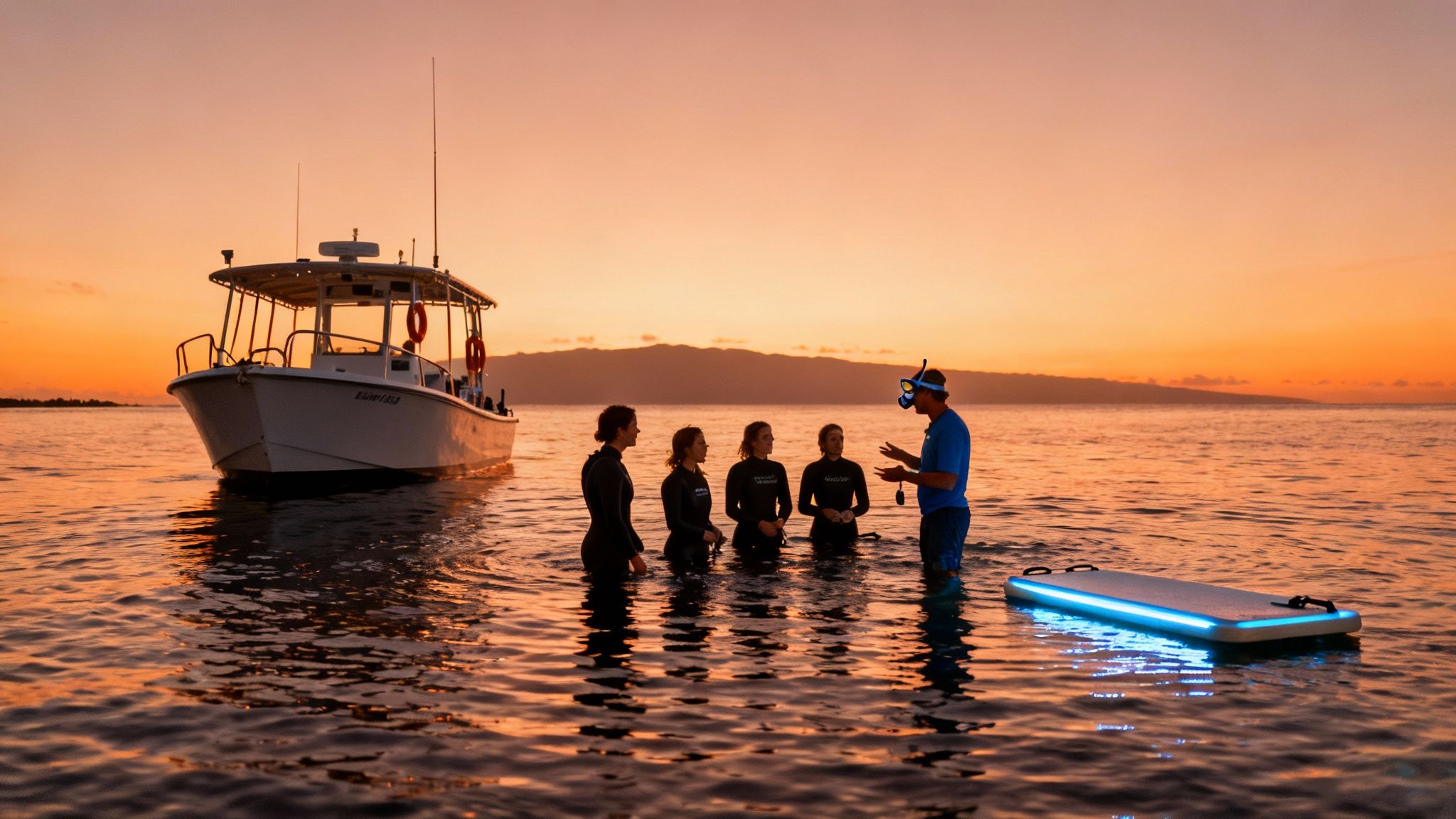
Your evening starts at the harbor with a check-in. The crew will welcome you aboard, get you comfortable, and kick things off with a thorough safety briefing. They'll walk you through the simple do's and don'ts for the night and answer any questions you have right off the bat.
Next, it's time to get your gear. The crew provides everything you need, fitting you with a snug wetsuit to keep you warm in the ocean after dark. You’ll also get your snorkel, mask, and fins, with the crew making sure everything fits just right before you even leave the dock.
The Journey to the Manta Site
With everyone geared up and ready, the boat heads out onto the open water. The ride itself is part of the experience. Depending on when you go, you might catch a breathtaking Kona sunset painting the sky in fiery oranges and deep purples.
This is a great time to scan the horizon for other marine life, too. It’s pretty common to see pods of playful spinner dolphins, and if you’re here in the winter, you might even spot a migrating humpback whale. Your guides will be on hand, sharing fascinating stories about the local ecosystem and the gentle giants you’re about to meet.
If you're looking for a crew that consistently gets rave reviews, Kona Snorkel Trips is famous for its top-notch Manta Ray night snorkel tour. They also run some of the best daytime trips, like the renowned Captain Cook snorkeling tour, making them a fantastic one-stop shop for your ocean adventures.
Entering the Underwater Theater
Once you arrive at the manta viewing site, the crew gets to work setting the stage. They deploy a large, custom-built light board that floats on the surface. This board is the secret sauce—its powerful lights shine down into the water, attracting the plankton that manta rays love to eat.
Think of the light board as your floating front-row seat to an underwater ballet. It not only illuminates the show but also provides a stable, easy-to-hold-onto platform, making the experience effortless and accessible for everyone.
You'll slip into the calm, dark water one by one and swim over to the light board. From there, it's as simple as floating on your stomach, holding onto the handles, and putting your face in the water. There's no strenuous swimming involved; you just relax and let the ocean do the work.
The Main Event: An Underwater Ballet
And then, the show begins. As plankton gather in the bright beams of light, the first massive, shadowy figure glides up from the darkness below. I promise, the feeling of seeing your first manta ray is something you will never, ever forget.
These gentle giants, some with wingspans over 12 feet, perform a mesmerizing dance right in front of you. They glide effortlessly through the light beams, doing graceful barrel rolls and somersaults to scoop up the dense clouds of plankton.
Because you're holding onto the light source, the mantas come incredibly close—often just inches from your mask. You get an unparalleled view as their huge mouths open wide to filter their meal from the water. This incredible spectacle lasts for about 30-45 minutes, and your expert guides are in the water with you the whole time, making sure everyone is safe and pointing out cool facts about the individual mantas you're seeing.
Choosing the Right Tour for Your Adventure
Picking the perfect Big Island manta ray snorkel tour is a huge part of planning this unforgettable night. With a bunch of operators lining the Kona coast, a little homework goes a long way in making sure you have the safest, most respectful, and downright magical encounter possible. The right crew can turn a cool experience into the highlight of your entire trip.
So, where do you start? I always tell people to look for operators that keep their groups small. A boat that isn't packed to the gills means less of a crowd in the water, which creates a much more personal and intimate experience. You’re there for the mantas, not to bump into a hundred other snorkelers. It also means you get more one-on-one attention from the guides.
What Makes a Top-Tier Operator
Beyond just the group size, a few key things really separate the great tour companies from the merely good ones. And at the top of that list, without a doubt, is safety.
Lifeguard-Certified Guides: Make sure the people in the water with you are professionally trained in rescue and water safety. This brings a huge peace of mind, especially if you're a first-timer or have kids with you.
Commitment to Conservation: Look for companies that are loud and proud about following the Manta Ray Green List guidelines, like the strict "observe only" rule. It shows they care about the well-being of these incredible animals, not just your money.
Quality Gear: A good operator will provide clean, well-maintained wetsuits, masks, and snorkels. Nothing ruins the magic faster than a leaky mask or a chilly, worn-out wetsuit.
A company that gets this right is Kona Snorkel Trips. They are well-known for their excellent Manta Ray night snorkel tour and Captain Cook snorkeling tour, making them a fantastic choice for anyone after a top-notch adventure. Their focus on safety and small groups really sets the bar high.
Different Tour Types to Consider
Not every manta ray tour is created equal. You’ve got options when it comes to the timing and style of your trip, so you can pick what works best for your schedule and vibe.
The most popular choice by far is the sunset tour. These trips head out late in the afternoon, so you get to watch a jaw-dropping Kona sunset from the boat before you even get in the water. It’s a beautiful way to kick off the evening.
As an alternative, some companies offer a later, after-dark departure. These tours often find fewer boats at the manta sites, which can lead to a quieter, more serene experience snorkeling under the stars.
People always ask which tour is "better," but honestly, they're both incredible. It really just comes down to your personal schedule and whether you're chasing that perfect sunset photo or prefer the peace of a starlit ocean.
If you’re looking for something really special, you can also book a private charter. These are perfect for big family get-togethers, work events, or anyone who just wants a completely personalized experience on the water. You can also find combo trips; for example, you could book a daytime adventure like the famous Captain Cook Snorkeling tour and your manta snorkel with the same outfitter.
To really get into the weeds of comparing different operators and what they offer, check out our ultimate comparison guide to Kona manta ray snorkels. Taking a few minutes to compare your options is the best way to book the perfect adventure.
How to Snorkel Safely and Responsibly with Manta Rays
When you join a Big Island manta ray snorkel, you’re stepping into the home of some truly magnificent wild animals. The best tour operators make sure the experience is safe for you and sustainable for the mantas. It's this shared commitment that makes the whole thing so special and ensures it will be around for years to come.
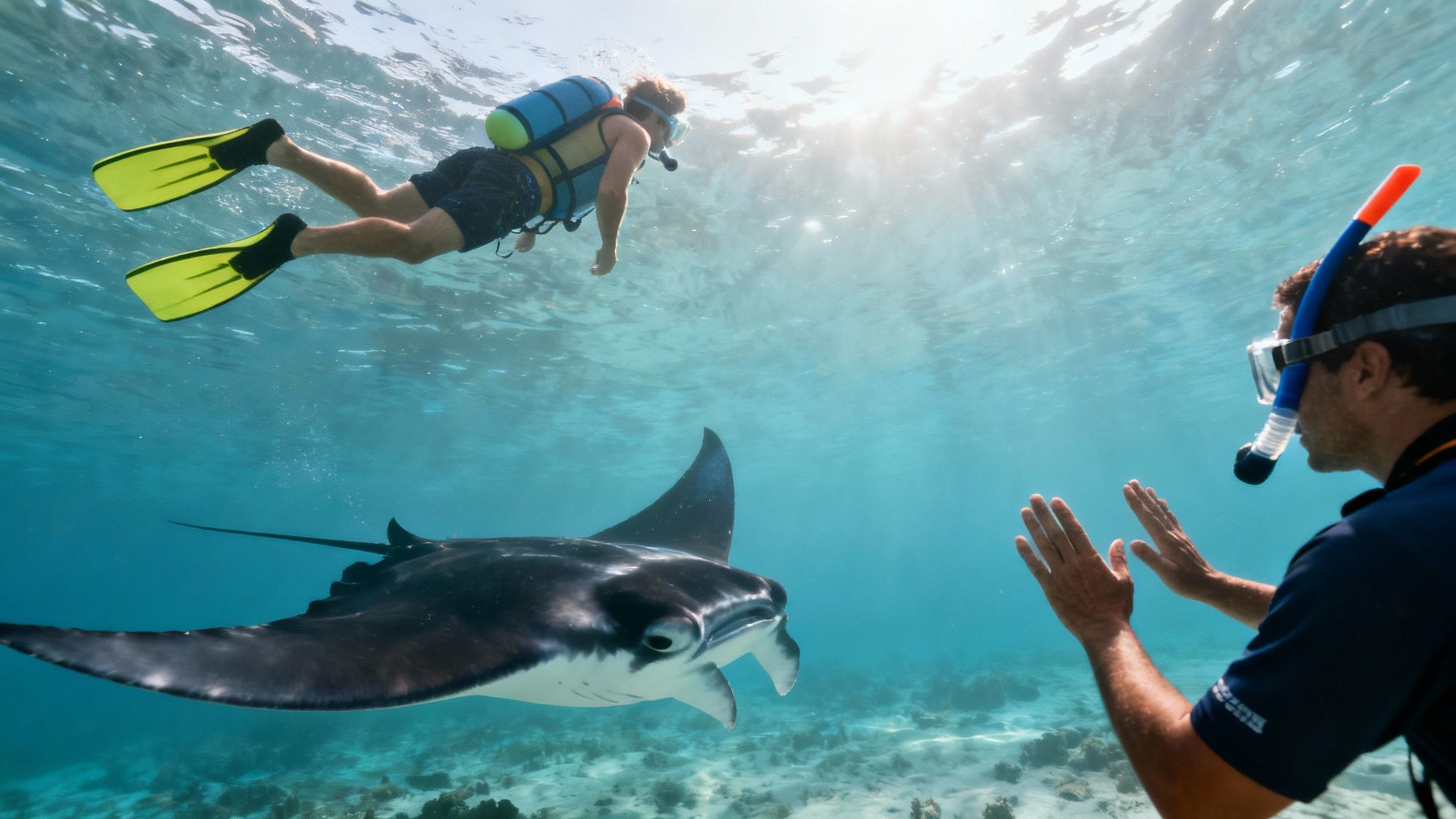
Before you even get your feet wet, your adventure starts with a solid safety briefing. The guides walk you through everything you need to know, from getting your snorkel gear fitted just right to what to expect in the water. This briefing is designed to make everyone—from total beginners to seasoned snorkelers—feel comfortable and ready.
Once you’re in the ocean, safety is still the name of the game. You'll be given a flotation device, like a pool noodle, or a spot to hang onto on a large floating light board. This means you do very little swimming. You just get to relax and float while lifeguard-certified guides keep a close eye on everyone, ready to help out at a moment's notice.
The Golden Rule of Manta Interaction
If there’s one thing to remember from all of this, it's the golden rule: passive observation. This is the absolute cornerstone of responsible manta tourism in Kona.
Think of it this way: you are a guest in their underwater dining room. The best way to show respect is to simply watch the incredible show without interfering. That means you must never, ever touch, chase, or try to ride a manta ray.
This isn't just a friendly suggestion; it's a critical rule for the health and safety of the mantas. Touching a manta ray can strip away the delicate, protective mucus layer on their skin, which is their primary defense against harmful bacteria and infections. By simply keeping your hands to yourself, you're playing a direct role in their well-being.
Why Your Role as a Responsible Snorkeler Matters
Protecting these gentle giants is incredibly important, especially here. Genetic research has revealed that Hawaii's manta ray populations are small and completely isolated from others around the world. In fact, a recent genomic study found that the Big Island is home to only about 104 adult breeding manta rays. Because they are so isolated, losing even a single animal could have a huge negative impact on the population's future.
Here are the key guidelines every snorkeler is asked to follow:
Observe Only: Let the mantas call the shots. Never touch them. If they get close, just enjoy the moment.
Stay on the Surface: As a snorkeler, your job is to hang out at the surface, holding onto the light board. This keeps the water column clear so the mantas have plenty of room to maneuver.
No Chasing: Let the mantas swim freely. Chasing them causes stress and can scare them away from the very plankton they came to eat.
Lights Point Down: Keep your flashlight pointed down, or stay near the main lights that are already shining down. This is what attracts the plankton, which in turn brings the mantas up for their nightly meal.
By being a mindful guest, you help preserve this unbelievable natural wonder. You make sure these graceful giants can continue to thrive for generations to come. And for anyone curious, these mantas are incredibly gentle and have no stinger or teeth to worry about.
When to Go and How to Prepare for Your Trip
One of the best things about planning a manta ray night snorkel on the Big Island is just how simple the timing is. With a little bit of prep, you can show up at the harbor feeling relaxed and ready for an unforgettable night on the water.
The biggest question people ask is, "When is the best time of year to go?" The answer is easy: anytime. Kona is home to a resident population of manta rays that stick around all year. They don't migrate, which means you have an excellent chance of seeing them whether it's June or December. This incredible consistency is why the local tours have such a high success rate.
Want a deeper dive into the seasons? You can learn more in our detailed guide about the best time to see manta rays in Kona.
Best Season for Manta Ray Snorkeling
While you can have an amazing experience year-round, there are some subtle differences between seasons. The amount of plankton—the mantas' main food source—can fluctuate a bit, which might affect how many mantas show up on any given evening. But honestly, for most snorkelers, the difference is barely noticeable.
The most important thing to remember is this: the best time to see the mantas is whenever you're on the island. Don't build your whole vacation around a "perfect" month, because the mantas will be here waiting for you.
Science backs this up. Studies using acoustic tracking have shown that Big Island mantas are incredibly loyal to their favorite feeding spots. While plankton levels and seasons play a small role, it's the mantas' reliable behavior that gives this experience its famous 80-90% sighting success rate. If you're curious about the science, you can read the full research on manta ray behavior and see for yourself.
Your Essential Packing Checklist
Packing for your snorkel tour couldn't be easier. The tour company provides all the big-ticket items like your wetsuit, mask, snorkel, and fins. You just need to bring a few personal things to make your trip more comfortable.
Here’s a quick checklist of what to throw in your bag:
Towel and a Change of Clothes: You’ll be so glad you have something warm and dry for the boat ride back to the harbor.
Swimsuit: The easiest way to do it is to wear your swimsuit under your clothes when you arrive.
Reusable Water Bottle: Always a good idea to stay hydrated, and it helps cut down on single-use plastic.
Reef-Safe Sunscreen: If your tour leaves before sunset, make sure to apply it well ahead of time to protect your skin and our coral reefs.
Camera: An underwater camera like a GoPro is perfect for capturing the magic. Try to focus on the mantas' elegant movements against the glowing lights.
A little preparation goes a long way. When you arrive with everything you need, you can just relax and soak in the entire experience—from the scenic boat ride out to that final, breathtaking moment when a manta glides beneath you.
Answering Your Top Questions About Manta Ray Snorkeling
You've probably got a few questions buzzing around your head as you plan this adventure. I get it. To help clear things up, here are answers to some of the most common things people wonder about before they book a Big Island manta ray snorkel.
Is This Safe If I'm Not a Strong Swimmer or a Beginner?
Absolutely. You don't need to be an expert snorkeler, or even know how to snorkel at all, to do this. Tour operators are well-equipped for first-timers.
They'll give you all the gear you need, including a wetsuit and a flotation device. You'll hold onto a big, stable light board that floats on the surface, which means you're really just floating along for the ride. Plus, trained guides are always right there in the water with you, making sure everyone is safe and comfortable from start to finish.
Will I Get Cold? Do I Really Need That Wetsuit?
Kona's ocean water is pretty warm, usually hovering somewhere between the mid-70s and low-80s Fahrenheit (that's about 24-27°C). But here's the thing: you're not moving much, and it's night. Your body will cool down faster than you think.
This is exactly why any good tour company provides wetsuits. My advice? Wear it. It makes a huge difference in keeping you warm and comfortable, so you can forget about the chill and just focus on the incredible manta rays gliding below. If you're comparing your options, the main Manta Ray Night Snorkel Hawaii homepage is a fantastic starting point.
Are We Guaranteed to Actually See Manta Rays?
It’s important to remember these are wild animals, so a sighting can never be 100% guaranteed. That said, the Kona Coast has one of the most reliable viewing records on the planet, with a success rate that’s often over 90%. The lights attract plankton, which brings the mantas—it’s a routine they’ve followed for years.
In fact, many operators are so confident they offer a "manta guarantee." If your tour doesn't see any mantas, you can usually come back another night for free (just check their specific policy when you book).
Expert Tip: The high success rate is what makes this tour so special. I always suggest booking your manta snorkel early in your vacation. That way, if you hit that rare unlucky night, you have some flexibility to reschedule.
Can I Bring My Kids on This Tour?
Yes, this is a fantastic and unforgettable experience for families! Just keep in mind that every tour company has slightly different rules about age and swimming ability.
Most operators will take kids who are comfortable in the ocean, usually starting around age 5 to 7. The best thing to do is call ahead and confirm the specific policy for your chosen company before you book, as safety is always the top priority.
For families weighing their options, Kona Snorkel Trips is an excellent choice, known for being great with all ages on both their Manta Ray night snorkel or a Captain Cook snorkeling tour. And if you're looking for a world-class daytime adventure, you can't go wrong with a classic Captain Cook Tour.
Comments