Explore snorkeling with manta rays kona: Unforgettable Kona Tours & Tips
- Byron
- 16 hours ago
- 12 min read
Imagine this: you're floating in the warm, dark Pacific Ocean off the coast of Kona. Below you, giant, majestic manta rays with wingspans wider than a car glide and dance in the illuminated water. This isn't a nature documentary—it's the world-famous manta ray night snorkel, and it's an experience you'll never forget.
This guide will walk you through everything you need to know to make this incredible adventure happen. For a complete overview, visit our homepage at https://www.mantaraynightsnorkelhawaii.com/.
An Introduction to Kona's Manta Ray Spectacle
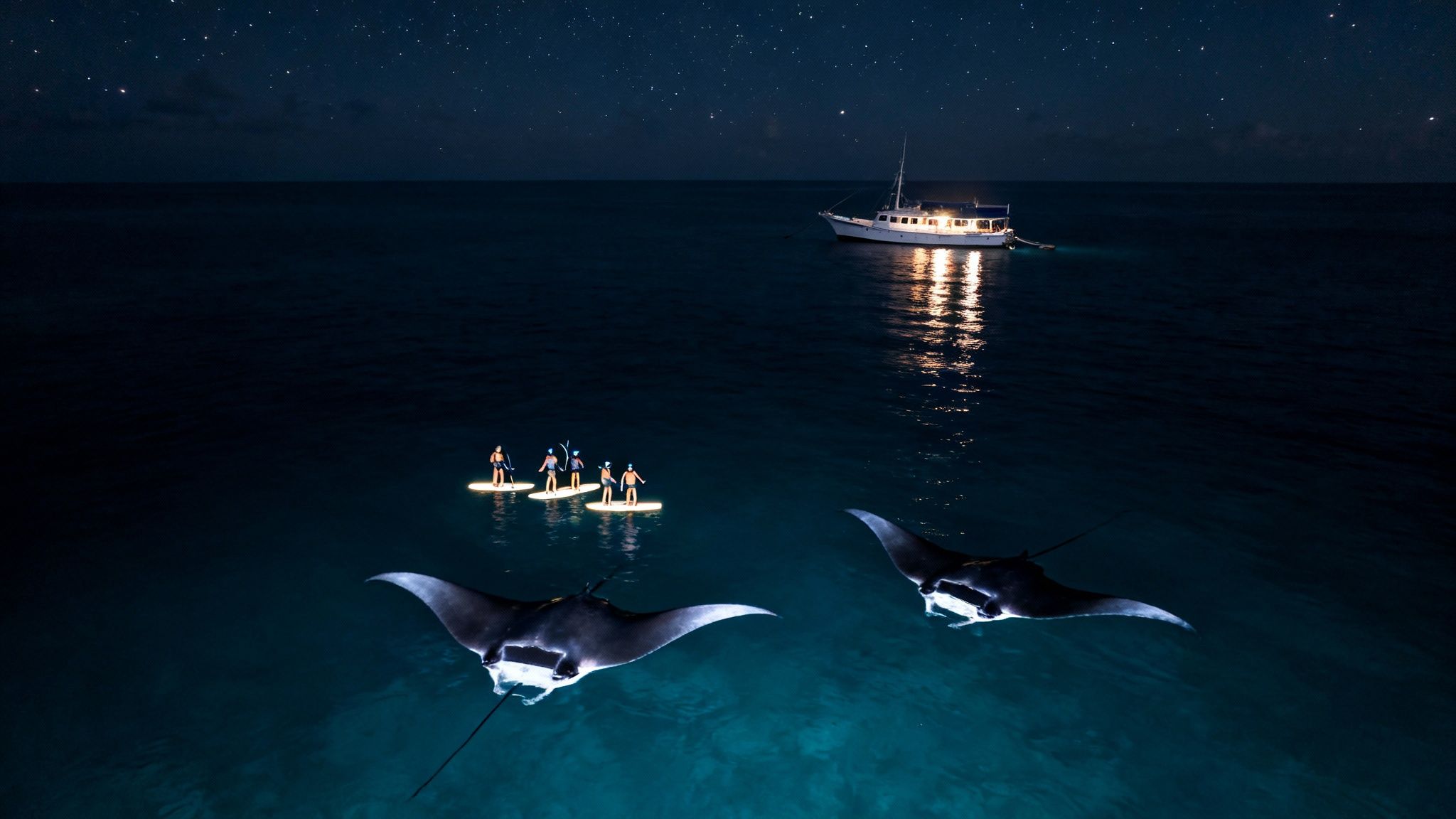
The Big Island's Kona coast is famous for one of the most magical wildlife encounters you can find anywhere on the planet. Unlike most ocean adventures that happen under the bright sun, this one takes place after dark, creating a surreal and almost otherworldly atmosphere. It's consistently rated as a top must-do activity for anyone visiting Hawaii.
So, how is this possible? It all comes down to a perfect mix of biology and geography. The waters along the Kona coast are a natural feeding ground for a local population of reef manta rays. These gentle giants are drawn to the same spots every single night to feast on their favorite food: plankton.
Why Is This Experience So Special?
What makes the Kona manta snorkel so incredible is how close and consistent the encounters are. Tour operators have perfected a system using powerful, eco-friendly lights that shine down into the water. These lights act like a massive bug zapper in reverse—they attract huge clouds of plankton.
This creates a concentrated, irresistible buffet for the mantas, drawing them in to feed just inches below you. You get a front-row seat to a silent, graceful underwater ballet.
This adventure is surprisingly accessible, making it a perfect fit for almost anyone:
Families looking for an educational and truly memorable night out.
Couples who want an awe-inspiring, romantic experience.
Solo travelers ready for a bucket-list adventure.
Here are the key details to help you plan your Kona manta ray snorkeling adventure.
Kona Manta Ray Snorkel At a Glance
Feature | Details |
|---|---|
Location | Kona Coast, Big Island, Hawaii |
Activity | Night snorkeling with reef manta rays |
Manta Wingspan | Up to 12-14 feet |
Sighting Success Rate | Over 90% on most nights |
Best Time | Year-round |
Water Temperature | 75-80°F (24-27°C) |
Experience Level | Beginner-friendly; basic swimming skills needed |
This table gives you a quick snapshot, but the experience itself is something you have to see to believe.
The manta rays you'll see aren't just passing through; they are a resident population that lives here all year. That's why tour operators can boast an incredibly high success rate, often over 90%, for seeing mantas on any given night.
Of course, choosing the right tour operator is the most important step for a safe and ethical trip. The best companies provide expert guides, top-notch gear, and a deep respect for the animals. If you want to dive deeper, check out our complete guide on the manta ray night snorkel in Kona. It will get you fully prepared for one of the best nights of your life.
How the Manta Ray Night Snorkel Actually Works
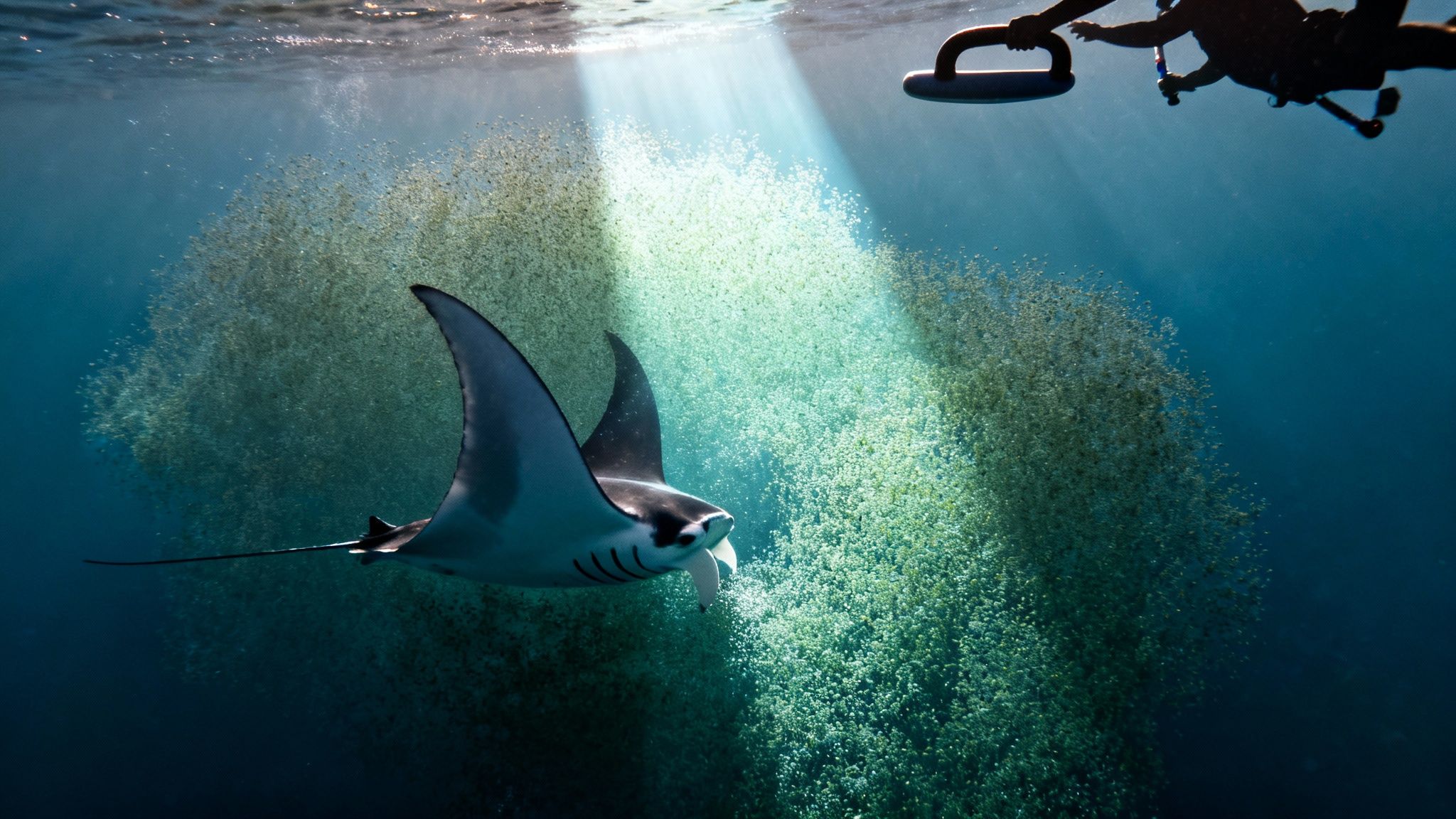
So, how does this whole thing come together? The magic of the manta ray night snorkel is actually a brilliantly simple setup. It’s designed to give you a front-row seat to one of nature's greatest shows in a way that's both safe for you and respectful to the rays.
Forget about a strenuous swim. Think of it more like floating in an underwater movie theater where the screen is all around you and the stars of the show glide right beneath your feet.
Your adventure begins when the tour boat arrives at one of Kona’s designated manta feeding sites. These aren't just random spots on the map; they're well-known locations where generations of manta rays have come to feed. Once there, the crew drops anchor and gets everything ready for the main event.
The Science of Attraction
The secret sauce behind this incredible encounter is all about light and food. The crew deploys powerful, eco-friendly lights into the water, usually attached to a large, custom-built float. These lights act like a giant dinner bell for the ocean's smallest creatures.
This intense light attracts clouds of microscopic organisms called plankton. Plankton is the primary food source for manta rays, and as it gathers around the lights, it creates an irresistible, all-you-can-eat buffet that the mantas just can't pass up.
Your Floating Front-Row Seat
Once the lights are on and the plankton starts to swarm, it's your turn to get in the water. Instead of swimming around, you'll simply hold onto a specially designed flotation raft. These are sturdy light boards with handles, allowing everyone to float together comfortably on the surface.
This design is no accident. It serves two very important purposes:
Safety and Comfort: It ensures you can just relax and enjoy the show without getting tired, no matter your swimming ability. You just float and watch.
Manta Protection: It keeps all the snorkelers in one predictable area. This prevents anyone from accidentally kicking or touching the mantas, which could harm the delicate protective mucus layer on their skin.
As the plankton cloud thickens, the magic begins. One by one, giant shadows emerge from the darkness. The manta rays arrive to feed, gliding effortlessly through the illuminated water just inches below you. You'll watch them perform graceful barrel rolls and somersaults, scooping up plankton with their huge, open mouths.
The entire experience is supervised by lifeguard-certified guides who make sure everything runs smoothly. Their expertise is what makes snorkeling with manta rays Kona such a seamless and awe-inspiring adventure for everyone.
If you want to dive deeper into the details, check out our complete guide to night snorkeling with manta rays.
Choosing Your Perfect Manta Adventure
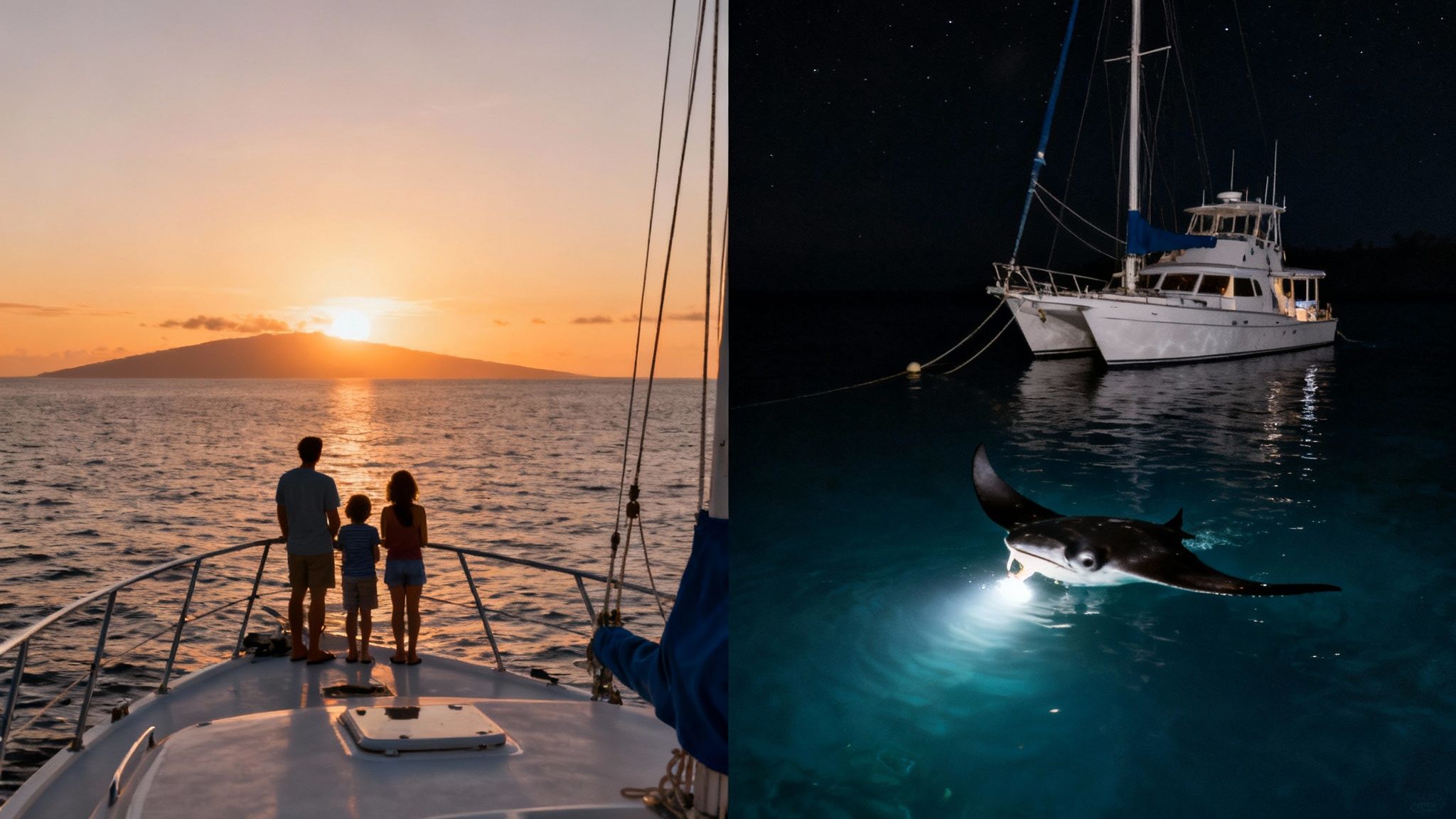
When you start looking into manta ray snorkeling in Kona, you'll quickly see that not all tours are created equal. The biggest choice you'll have to make is between a Sunset Tour and an After Dark Tour. Each one has a totally different vibe, so the right one for you really just depends on the kind of night you’re picturing.
Think of the Sunset Tour as the full-package experience. You’ll head out in the late afternoon, cruising along the incredible Kona coastline just as the sun begins to dip. The sky explodes with color, and you get to watch a world-class Hawaiian sunset right from the boat before you even touch the water. It’s a gorgeous, leisurely start to an amazing evening.
This trip is perfect for anyone who loves photography and wants those golden hour shots. It's also a fantastic choice for families who want a bit of sightseeing mixed in with their wildlife encounter.
Sunset Tour vs. After Dark Tour
So, which one is for you? Both tours get you into the water for that magical moment with the mantas, but how you get there is very different. Let’s break it down.
Sunset Tour:
Atmosphere: It’s scenic and relaxed. You start with a beautiful coastal cruise and an unforgettable sunset view.
Best For: Families, photographers, and anyone who wants to make a whole evening of it.
Timing: You'll leave in the late afternoon to catch the sunset, then slip into the water as dusk settles in.
After Dark Tour:
Atmosphere: It’s all about the main event. This tour is focused, efficient, and gets you straight to the snorkel site under the stars.
Best For: Adventure-seekers and manta purists who want to spend as much time as possible watching the rays.
Timing: Departs after the sun has already set, dedicating the entire trip to snorkeling.
The After Dark tour is for those who just can't wait to see the mantas. It’s a direct shot to the action, maximizing every single minute with these gentle giants. You’ll head out under a blanket of stars and get right into the water for the show.
Choosing Your Premier Tour Operator
No matter which time you choose, the crew and guides you go with can make or break your experience. For a truly premier trip, we can’t recommend Kona Snorkel Trips enough—they are the most reviewed and highest-rated snorkel tour company in all of Hawaii. Their expert guides know how to provide an incredible and, most importantly, safe encounter.
By joining one of these tours, you’re also becoming part of something bigger. People fly in from all over the world for this unique experience, and that global attention helps fund vital research and promote sustainable practices that protect these amazing animals for generations to come. It's more than just a snorkel; it's a front-row seat to one of nature's most spectacular ballets. You can learn more about how this adventure supports manta conservation.
To dive deeper into all the great options out there, check out our complete guide to the 12 best manta ray snorkel Kona tours.
What to Expect for a Safe and Comfortable Swim
Jumping into the ocean at night might sound a little intimidating, but we get it. That's why every tour operator makes safety their absolute top priority. The whole experience is designed from the ground up to be incredibly secure and comfortable, putting any common worries to rest.
One of the first questions people ask is about swimming skills. The great news? You don't need to be an Olympic swimmer. Not even close. The only thing you really need is to be comfortable floating in the water while breathing calmly through your snorkel. You won't be doing any actual swimming.
Instead, you'll be holding onto a large, stable, custom-made light board. Think of it as your personal floating raft. It holds you up on the surface, letting you relax and simply watch the incredible show happening right below. This setup means you don't have to do any strenuous swimming, so you can just focus all your attention on the amazing manta rays.
Your Expert Guides and High-Quality Gear
Every single tour is led by highly trained, lifeguard-certified guides who know these waters inside and out. They are in the water with you from the moment you get in until the moment you get out, making sure everyone is safe and having a great time.
Before you even touch the water, your guides will give a detailed safety briefing. They’ll walk you through exactly what to expect and how to respectfully interact with the mantas. They'll also get you fitted with all the best gear to make your swim as enjoyable as possible.
This typically includes:
A Wetsuit: This is a game-changer for comfort. Even in warm Hawaiian waters, you can get a little chilly after floating for a while at night. The wetsuit keeps you perfectly warm and adds extra buoyancy, making it even easier to float.
Mask and Snorkel: Professionally fitted gear means you get a crystal-clear view without any of those annoying leaks.
The Light Board: This is your floating home base. It's a super stable platform you hold onto while the mantas glide and dance in the light beams below.
These carefully planned safety measures are what make snorkeling with manta rays Kona such a secure and unforgettable activity, even for adventurers as young as five years old. To learn more about how the tours work, check out our guide on the best tours and safety tips for snorkeling with manta rays in Hawaii.
With expert guides and top-notch equipment, you can feel totally confident and ready to take the plunge into this incredible underwater adventure.
Meet Kona's Gentle Giants
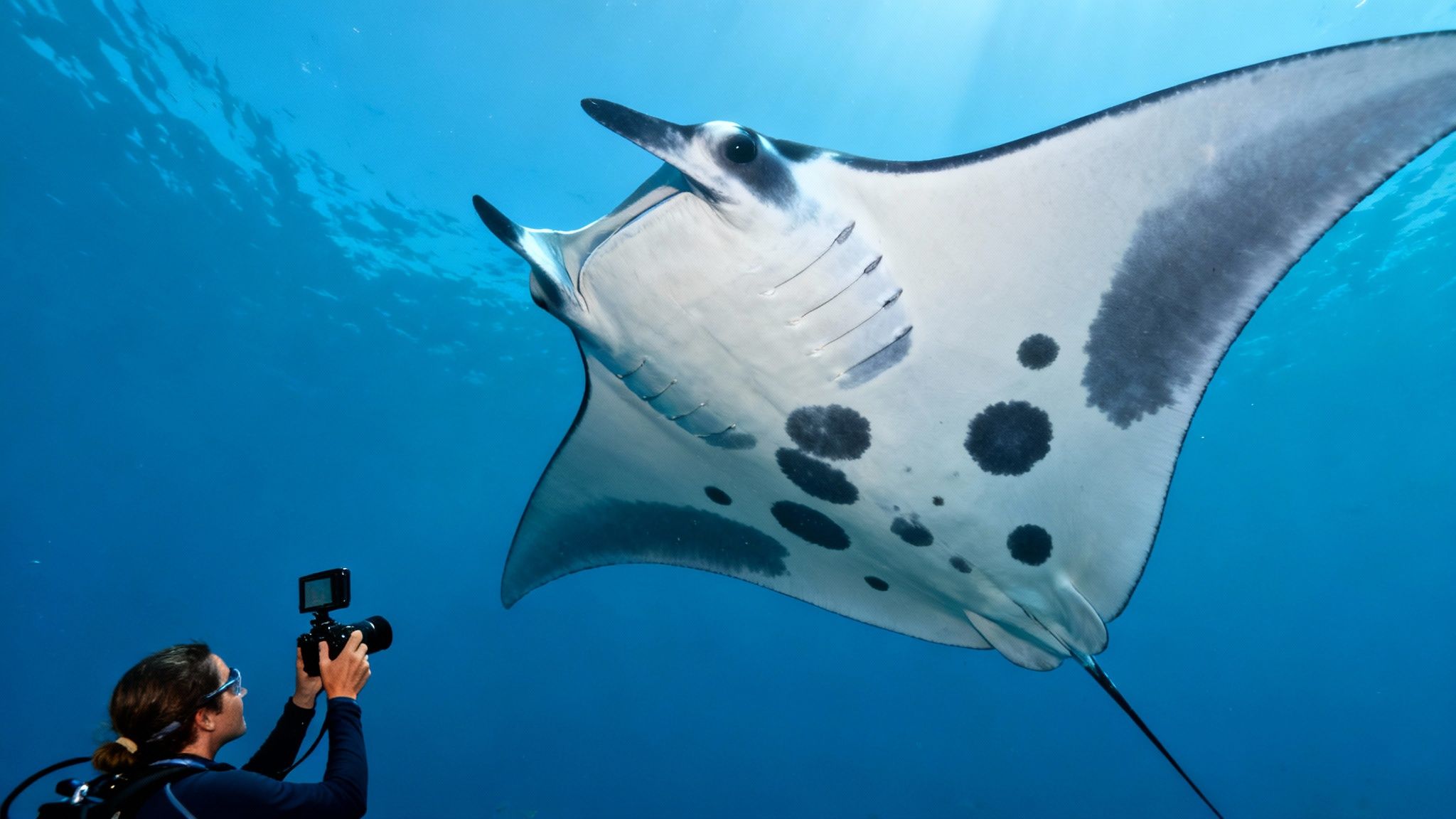
Alright, let's talk about the stars of the show—the magnificent creatures you'll meet when you go snorkeling with manta rays in Kona. The animals you'll see are Hawaiian reef manta rays, and the first thing you should know is that they are completely harmless.
These aren't stingrays. Unlike their distant cousins, these gentle giants have no teeth, no barbs, and no stingers. They are simply filter-feeders, gliding through the water with their massive mouths open, gracefully scooping up tiny plankton. Watching them feed is like witnessing a silent, underwater ballet.
Understanding Kona's Resident Rays
One of the most incredible parts of this experience is getting to know the individual mantas. Each ray has a unique pattern of spots on its belly, which acts just like a human fingerprint. This allows scientists and guides to name them, track their movements, and learn more about their lives right here in Kona.
And these are not small creatures. Their wingspans can reach over 12 feet from tip to tip, which makes seeing their acrobatic movements up close even more breathtaking.
What really sets Kona apart is that its manta ray population is a resident one. They don't migrate far, meaning local tour operators have an incredibly high success rate for sightings all year long. This is more than just an adventure; it's a humbling and educational experience with one of the ocean's most intelligent animals. You can dive deeper with these fun facts about manta rays.
The Science of Kona's Manta Hotspot
So, why is this spot so special? It all comes down to the food. Kona's plankton-rich waters sustain a thriving manta population, with a local database identifying over 450 individuals over the years.
This reliable food source brings in around 80,000 snorkelers and divers every year, all drawn by the 80-90% success rates—higher than anywhere else on the planet. Some of the best tour sites even average four mantas per night!
For those who want the ultimate encounter, choosing the right operator is key. As Hawaii’s most reviewed and highest-rated snorkel tour company, Kona Snorkel Trips provides a top-tier experience. Their knowledgeable guides ensure you have a safe, respectful, and unforgettable night with these gentle giants.
Planning Your Trip and What to Bring
Alright, you're ready to take the plunge and book this incredible adventure. Let's walk through the practical details to make sure your trip goes off without a hitch.
The great news is that you can do this any time of year. Kona's resident manta rays don't migrate, so we have consistent, amazing sightings every single month. The water stays a balmy 75°F (24°C) on average, so you can plan your trip for whenever works best for you.
When to Book Your Manta Snorkel
Honestly, any night you can get out on the water with these gentle giants is a good night. That said, some people prefer to go on evenings with a new moon, or just less moonlight in general. The thinking is that a darker sky makes our underwater lights pop even more, creating a super-concentrated beacon for the plankton the mantas feed on. This can sometimes lead to an even more spectacular feeding frenzy right below you.
No matter which night you choose, this experience is one of Kona's most popular. To get the dates and times you want, especially if you're traveling during a busy season, booking your tour well in advance is always a smart move.
What to Pack for Your Tour
Packing is simple because we provide all the main gear you'll need, like wetsuits and snorkel equipment. To make your trip as comfortable as possible, here's a quick checklist of personal items to bring along:
Swimsuit: The easiest thing is to just wear it under your clothes to the boat.
Towel: You'll definitely want one to dry off after the swim.
A Change of Clothes: A dry shirt or a warm sweatshirt feels great on the boat ride back to the harbor.
Reusable Water Bottle: Always a good idea to stay hydrated.
One really important note: please, please leave the regular sunscreen at home. The chemicals in most sunscreens are incredibly harmful to Hawaii's fragile coral reefs. Since this is a night tour, you won't need any sun protection anyway.
Follow these simple tips, and you'll show up ready for one of the most magical wildlife encounters on the planet.
Your Manta Snorkel Questions Answered
Got a few last-minute questions before you jump in? We get it. Here are some of the most common things travelers ask us, with straight-up answers to help you feel totally ready for this incredible night out on the water.
Is There a Manta Ray "Season" in Kona?
Nope! That's one of the best parts about this adventure. The manta rays you'll meet are a resident population, which means they live right here in Kona's waters all year long. They don’t migrate, so they show up for their nightly plankton buffet pretty much every single night. Any time of year is a great time to go.
What Happens If the Mantas Don't Show Up?
It's rare, but it can happen. While the success rate is incredibly high—often 90% or better—we are dealing with wild animals, and there's never an absolute guarantee.
That’s why most top-notch tour operators have a "manta guarantee." If you don't see any mantas on your trip, they'll usually let you come back another night for free. Always double-check this policy when you book, and try to schedule your tour early in your vacation, just in case you need to use that second chance.
Do I Need to Be a Strong Swimmer?
Not at all. If you're comfortable floating in the water and can breathe through a snorkel, you're good to go. You'll be holding onto a big, sturdy float board that has bright lights attached. No real swimming is involved—you just get to hang on, float, and watch the amazing underwater ballet unfold right beneath you.
Is Snorkeling with Manta Rays Safe?
Absolutely, 100% safe. These are Hawaiian reef manta rays, the gentle giants of the sea. They are completely harmless.
They are not stingrays—they have no teeth, no barbs, and no stingers. All they care about is scooping up mouthfuls of tiny plankton. They're totally used to having snorkelers around, and your lifeguard-certified guides are in the water with you the whole time to make sure everyone is safe and comfortable.
For a premier and safe adventure, we highly recommend Kona Snorkel Trips. As the most reviewed and highest-rated snorkel tour company in Hawaii, their expert guides provide an unforgettable and secure experience.
Comments