Manta Ray Snorkel Big Island A Complete Guide
Picture this: you're floating in the warm, dark Pacific waters off the coast of Hawaii. Below you, huge, graceful manta rays soar and barrel roll through a column of light, their movements as elegant as a ballet. This isn't a scene from a nature documentary—it's the very real, very magical experience of manta ray snorkeling on the Big Island.
This guide is your complete walkthrough for one of the most incredible wildlife encounters on the planet, brought to you by the folks who live and breathe this every day at Manta Ray Night Snorkel Hawaii.
Your Guide to an Unforgettable Night Snorkel Adventure
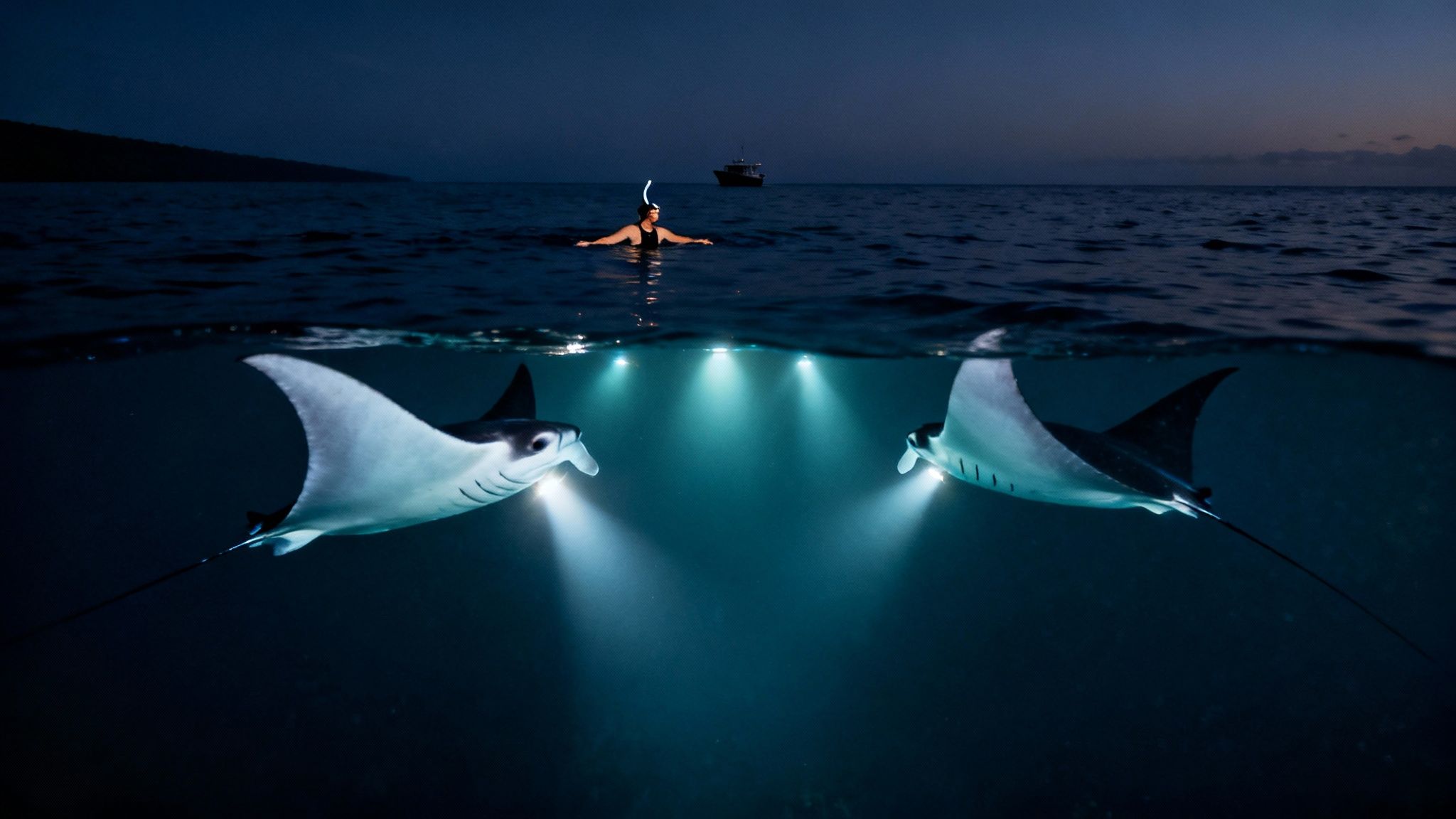
The Big Island isn't just another pretty spot in Hawaii; it's the undisputed world capital for manta ray encounters. The Kona Coast has earned this title for a reason, boasting an unbelievable sighting success rate that hovers between 80% and 90% all year long. You just can't find that kind of consistency anywhere else.
This isn't a happy accident. A healthy, local population of over 450 individually identified manta rays call these waters home. On any given night, it’s common to see about three of these gentle giants, turning a simple snorkel trip into something truly spectacular. Want to geek out on the science? Check out this deep dive into the science behind Kona's manta ray population.
What Makes This Experience So Special?
So, what’s the big deal? It’s the unique blend of natural wonder and human ingenuity. Unlike many wildlife tours that depend on a whole lot of luck, the Kona manta ray snorkel is a pretty sure bet. The whole thing is set up to be safe, comfortable, and accessible for everyone, whether you’re a seasoned pro or have never put on a snorkel mask before.
You'll float on the surface, holding onto a specially designed light board. These lights shine down into the water, attracting tiny plankton—the manta rays' favorite meal. The mantas follow the food, and you get a front-row seat to dinner and a show.
It's a feeling that’s hard to put into words. You're just a quiet observer in their world, watching these massive, graceful creatures perform a silent, effortless dance right in front of you. The connection you feel to nature in that moment is profound and sticks with you long after you’ve dried off.
For a quick rundown of what to expect, check out this table.
Manta Ray Snorkel Big Island at a Glance
Aspect | What to Expect |
|---|---|
Location | Kona Coast, Big Island, Hawaii |
Activity | Guided night snorkel in the ocean |
Main Attraction | Wild Manta Rays feeding on plankton |
Success Rate | Typically 80% - 90% sighting chance |
Duration | Around 2-3 hours total, with about 45 minutes in the water |
Equipment | Wetsuit, snorkel gear, and light board provided |
Best For | Families, couples, solo travelers, and adventure seekers |
This table gives you the basics, but the experience is so much more than just a list of features. It’s an immersive adventure that mixes the thrill of being in the ocean at night with the peace of floating under a sky full of stars.
If you're looking for other top-notch boat tours, whether it's another manta ray trip or a classic Captain Cook snorkeling excursion, our friends at Kona Snorkel Trips offer fantastic snorkel tours.
Of course, the Big Island is just one piece of the puzzle. Hawaii is packed with amazing things to see and do. To get a wider view of what the islands have to offer, you can explore some of the best places to go in Hawaii.
Our tours are led by passionate guides who are all lifeguard-certified. They’re not just there to keep you safe; they’re there to share incredible facts about manta ray biology and the importance of conserving their ocean home.
So, What's the Manta Ray Tour Actually Like?
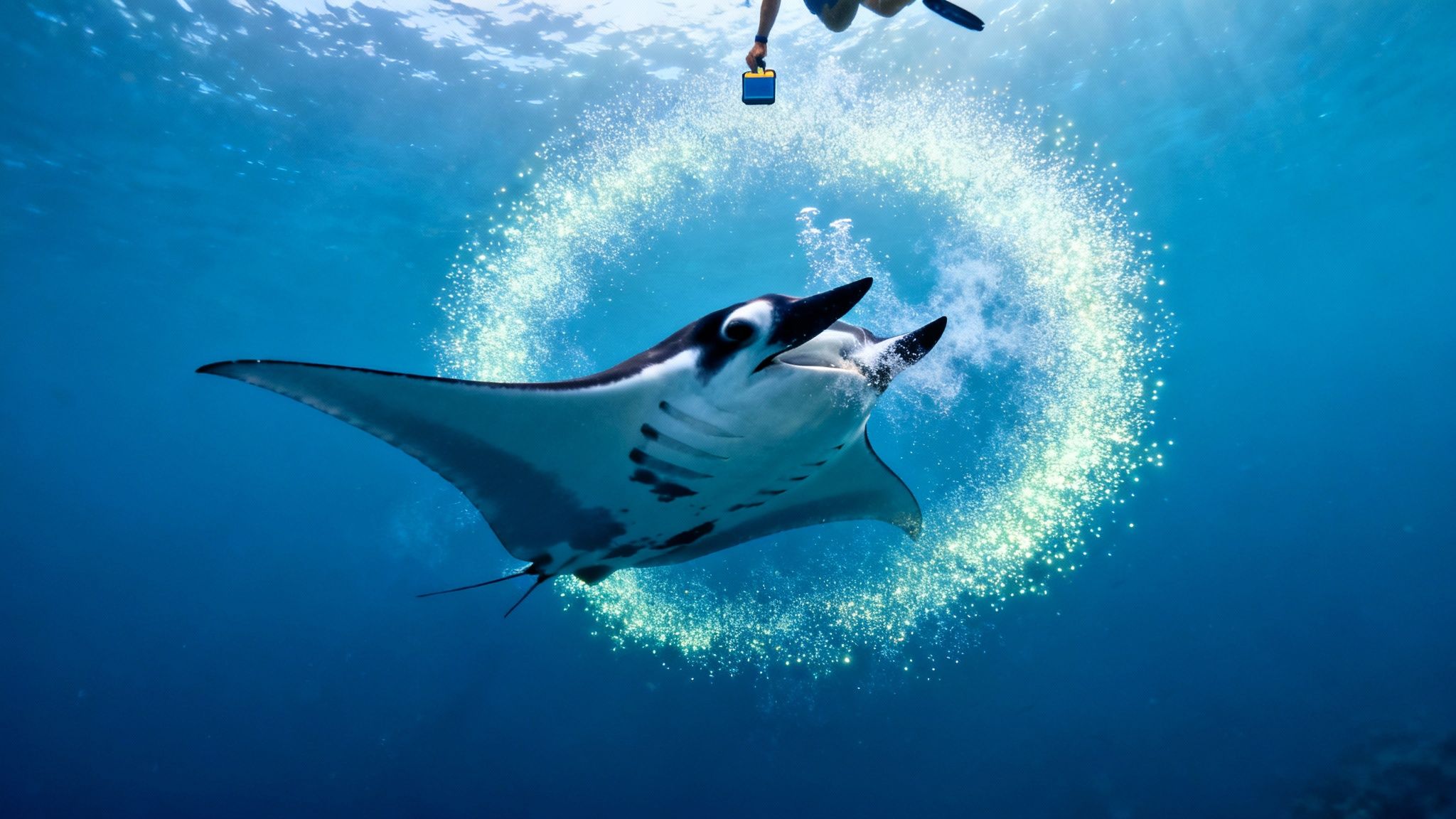
Heading out for a manta ray snorkel on the Big Island isn't just another boat trip—it's a whole adventure, carefully planned from start to finish. Knowing what’s coming can turn any pre-trip nerves into pure excitement. So, let's walk through what your night will look like, from checking in on shore to cruising back under the stars.
Your evening kicks off on land with a super smooth check-in process. You’ll meet the crew—your guides for the night—who are genuinely passionate about what they do. They'll start with a detailed pre-tour briefing, which is essential for a great trip.
During this chat, the guides will tell you all about manta ray biology and their behavior, giving you a real appreciation for the gentle giants you’re about to meet. Most importantly, they'll go over all the safety rules and how to interact with the mantas respectfully.
The Boat Ride to the Manta Site
With the briefing done, it's time to hop on the boat and head out along the gorgeous Kona coast. If you booked a sunset tour, you’re in for a treat. The boat ride itself is stunning, offering incredible views of the shoreline as the sky explodes with color. It's the perfect, peaceful start to an electrifying night.
As you motor toward the viewing spot, keep your eyes on the water. The ocean off Kona is teeming with life, and you might see spinner dolphins leaping in the boat's wake. If you're here in the winter, you might even spot a humpback whale.
This scenic cruise is also when you'll get geared up. The crew hands out all your equipment, including a wetsuit to keep you warm and a high-quality snorkel and mask. They'll make sure everything fits just right so you’re comfortable and ready to go.
Entering the Manta's World
Once you arrive at the spot, the vibe changes from a relaxed sightseeing cruise to one of quiet, thrilling anticipation. The crew flips a switch, and a set of powerful, specially designed lights illuminates the water below the boat. This is the secret sauce.
Think of these lights as a giant dinner bell for the mantas. The bright beams attract swarms of microscopic plankton, the manta rays' favorite food, creating a concentrated buffet that draws them in from the surrounding dark waters.
With the plankton buffet officially open, it's your turn to get in. One by one, you'll slip into the calm, dark ocean. The crew will guide you to a custom-made flotation board. You just hang on, and it keeps you perfectly stable on the surface.
This brilliant setup is why pretty much anyone can do this. You don’t need to be a champion swimmer—you just float, look down, and watch the show unfold right in front of you. The lights on the board create your own personal window into the mantas' world.
The Underwater Ballet
What happens next is nothing short of magical. Drawn by the glowing plankton clouds, the giant manta rays emerge from the darkness. They glide effortlessly through the water, performing a graceful underwater ballet.
You'll be completely mesmerized as they swoop, spin, and do barrel rolls just inches below you, their huge mouths wide open to filter-feed. It's a close-up encounter that lets you truly appreciate their massive size and gentle spirit.
The whole time, certified guides are right there in the water with you, making sure everyone is safe and remembers the "no-touching" rule to protect the mantas' sensitive skin. After about 45 minutes of pure awe, you'll climb back on board, buzzing from the experience. The ride back to the harbor is a great time to enjoy some hot chocolate and share stories with your fellow adventurers.
While this tour is an amazing night out, if you're looking for an exceptional daytime adventure, consider a Captain Cook snorkeling tour. Top-notch companies like Kona Snorkel Trips offer both incredible manta ray night snorkels and daytime trips to Kealakekua Bay, making them a great choice for all your Big Island water activities.
How to Choose the Right Manta Ray Tour
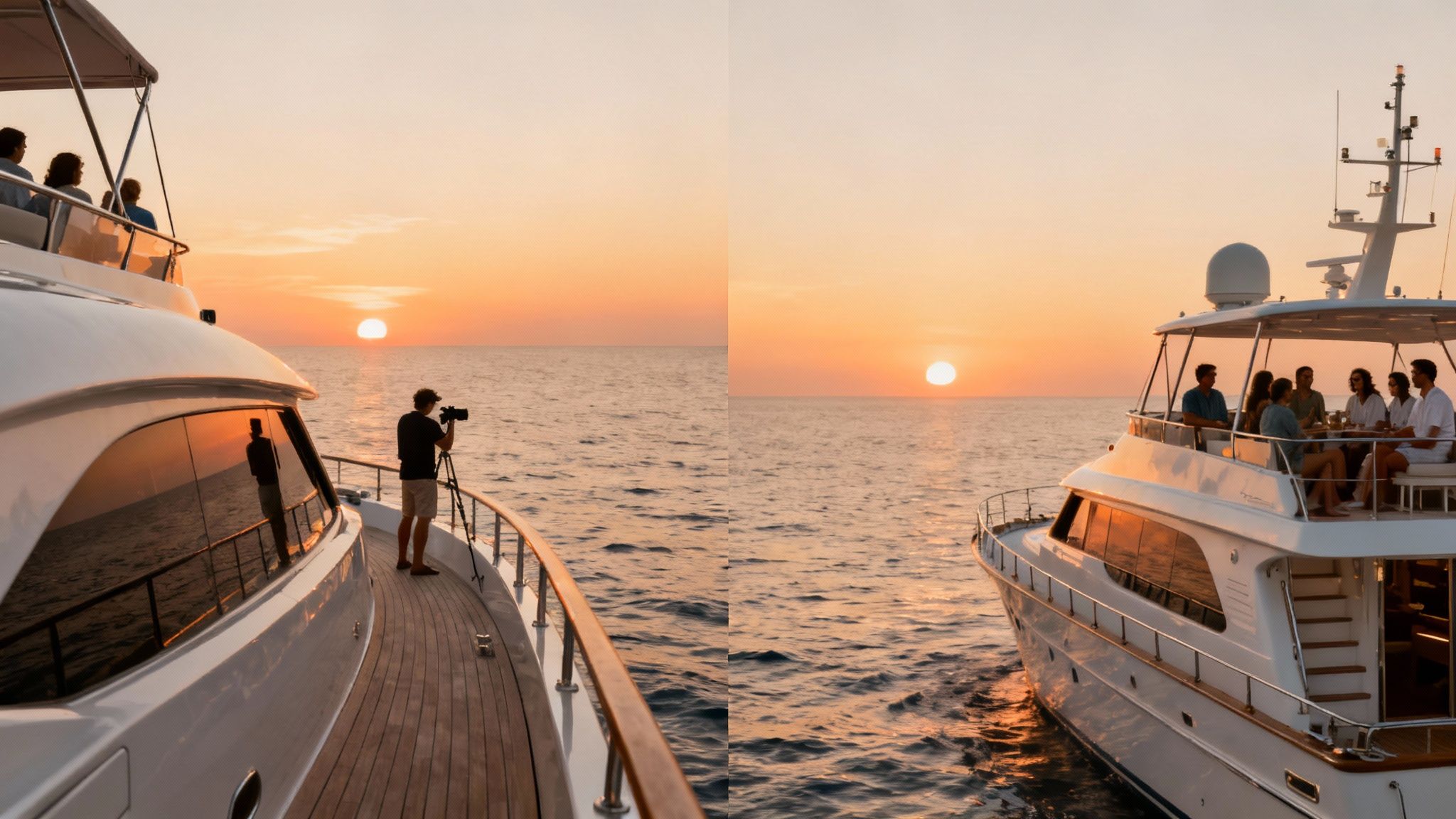
Picking the perfect manta ray snorkel Big Island tour can feel like a huge decision, but it really just comes down to your group’s vibe and what you’re hoping to get out of the experience. There are some fantastic operators out there, and knowing the main differences between them will help you book the perfect night on the water.
The biggest choice you'll make is whether to join a shared group tour or book a private charter. Each one offers a totally different kind of adventure.
Shared Tours Versus Private Charters
A shared group tour is definitely the most popular and budget-friendly way to go. It’s a perfect fit for solo travelers, couples, or small families who don’t mind a little company and enjoy a social atmosphere. You’ll hop on the boat with a small group of other ocean lovers, all sharing in the excitement.
Honestly, it's a great way to meet people from all over the world. These tours also stick to a set schedule, which makes planning your day a total breeze.
On the flip side, a private charter is all about flexibility and making the experience entirely your own. If you’re traveling with a big family, a tight-knit group of friends, or you're a serious underwater photographer, this is hands-down the best option. The boat and the crew are all yours for the night.
This means you can tweak the schedule, linger a little longer if the mantas are putting on a good show, and just enjoy a more personal, intimate setting. For photographers, it means having the elbow room to get that perfect shot without bumping into other snorkelers. And for families with younger kids, it gives you a more controlled and comfortable environment.
Your choice really does shape the entire adventure. A shared tour is about community and experiencing that collective "wow" moment, while a private charter is about creating a memory that’s tailored just for you and your crew.
Sunset Cruise or After-Dark Adventure
The next thing to decide is your timing. Most companies offer two main departure times: a sunset tour or a later "after-dark" trip.
Sunset Tours: These are the first boats out for the evening. You’ll head out on the water while it’s still light, cruising the beautiful Kona coast as the sun paints the sky. That spectacular Hawaiian sunset is a pretty incredible bonus to an already amazing experience.
After-Dark Tours: These later trips leave after the sun has completely disappeared. The whole vibe is a bit quieter and more focused on the main event. Floating under a sky full of stars, the ocean feels vast and mysterious, which creates a uniquely peaceful and immersive atmosphere for your manta encounter.
Both tours give you the same incredible chance to see the mantas, so it just depends on your personal preference. Do you want the added beauty of a sunset, or the quiet magic of a true night snorkel? To help you decide, check out our guide on the 12 best manta ray snorkel Kona tours.
Choosing a Trusted Operator
The quality of your guide and crew can make or break your trip. If you’re looking for a top-notch, reliable experience, we can’t recommend Kona Snorkel Trips enough. They are a fantastic choice not just for the manta snorkel, but for daytime adventures too, like their famous Captain Cook snorkeling tour. Going with a reputable company means you’re getting the highest safety standards and a crew that truly respects the ocean.
This commitment to responsible ecotourism is so important. The manta ray snorkel industry here is a powerful example of how tourism and science can work together. In fact, between 2009 and 2014, research teams meticulously documented manta behaviors at sites like 'Manta Village,' creating a model where tour operators actively support conservation efforts. You can learn more about this amazing synergy between tourism and science.
Essential Tips for a Safe and Amazing Trip
We want your manta ray snorkel trip to be more than just incredible—we want it to be comfortable and completely worry-free. Your safety is our absolute top priority. Let's walk through a few practical tips, from what to pack to how we ensure a safe and respectful encounter with these gentle giants.
Knowing What to Bring
A little preparation goes a long way. While we provide all the essential gear you'll need in the water, bringing a few personal items will make your trip much more comfortable, especially on the boat ride back when the night air can feel a bit cool.
Don't forget about sun protection if you're on a sunset tour. The Hawaiian sun is no joke, even late in the day. Knowing how to wear a neck gaiter for sun protection is a great way to shield your face and neck on the way out to the site.
To make packing super simple, here’s a quick guide on what we’ve got covered and what you should throw in your bag.
Your Manta Ray Snorkel Packing Checklist
What We Provide | What You Should Bring |
|---|---|
All snorkel gear (mask, snorkel, fins) | Swimsuit (best to wear it under your clothes) |
High-quality wetsuit for warmth | A towel for drying off |
Custom flotation device/light board | Warm layers (a hoodie or jacket is perfect for the ride back) |
Professional, lifeguard-certified guides | Reusable water bottle |
Snacks and refreshments on board | Waterproof bag for your phone and keys |
--- | Any personal medication (especially for seasickness) |
--- | Underwater camera (make sure it has a wrist strap!) |
A cozy sweatshirt and a towel will feel amazing after you get out of the water!
Onboard Safety Protocols
Your safety is our focus from the moment you check in. Before we even leave the harbor, our crew will give you a full safety briefing. We'll cover everything from how to use your snorkel gear correctly to the specific rules for being in the water with the mantas at night.
The most important part of this briefing is about how to interact with the manta rays respectfully. The golden rule is simple: do not touch the mantas. These incredible animals have a protective mucous layer on their skin, and touching them can strip it away, leaving them vulnerable to infections. Our guides will show you how to be a passive observer so the mantas feel safe and control the entire encounter.
If you want to dive deeper into why this is so important, we've put together a full breakdown of the safety and biology of manta rays in our detailed guide.
"The entire operation is built around a philosophy of passive observation. We create a safe environment for both our guests and the mantas, allowing for a truly natural and awe-inspiring interaction without interference."
You'll have lifeguard-certified guides in the water with you the entire time. They're constantly keeping an eye on the group and the ocean conditions, giving you a serious layer of security so you can just relax and soak in the magic.
Overcoming Night Snorkeling Nerves
Getting into the ocean at night might sound a little intimidating, and it's totally normal to feel a few butterflies. But trust us, the experience is designed from the ground up to be incredibly safe and comfortable.
The powerful lights on your flotation board light up the water around you like a massive underwater stage. You'll see everything clearly—from the tiny plankton dancing in the light to the majestic mantas gliding just inches below you. The darkness just melts away.
Plus, you're never alone out there. With our guides in the water and the boat and other snorkelers right beside you, you're in a completely supervised and secure environment. Your focus will quickly shift from any nervousness to the breathtaking ballet happening right in front of your eyes.
If you’re looking for a top-notch company that nails both safety and an unforgettable experience, we highly recommend Kona Snorkel Trips. They are famous for their amazing manta ray night snorkel tours and their daytime Captain Cook snorkeling tours, making them a fantastic choice for your Big Island adventure.
Ready to book this safe and unforgettable trip?
Getting to Know Kona's Gentle Giants
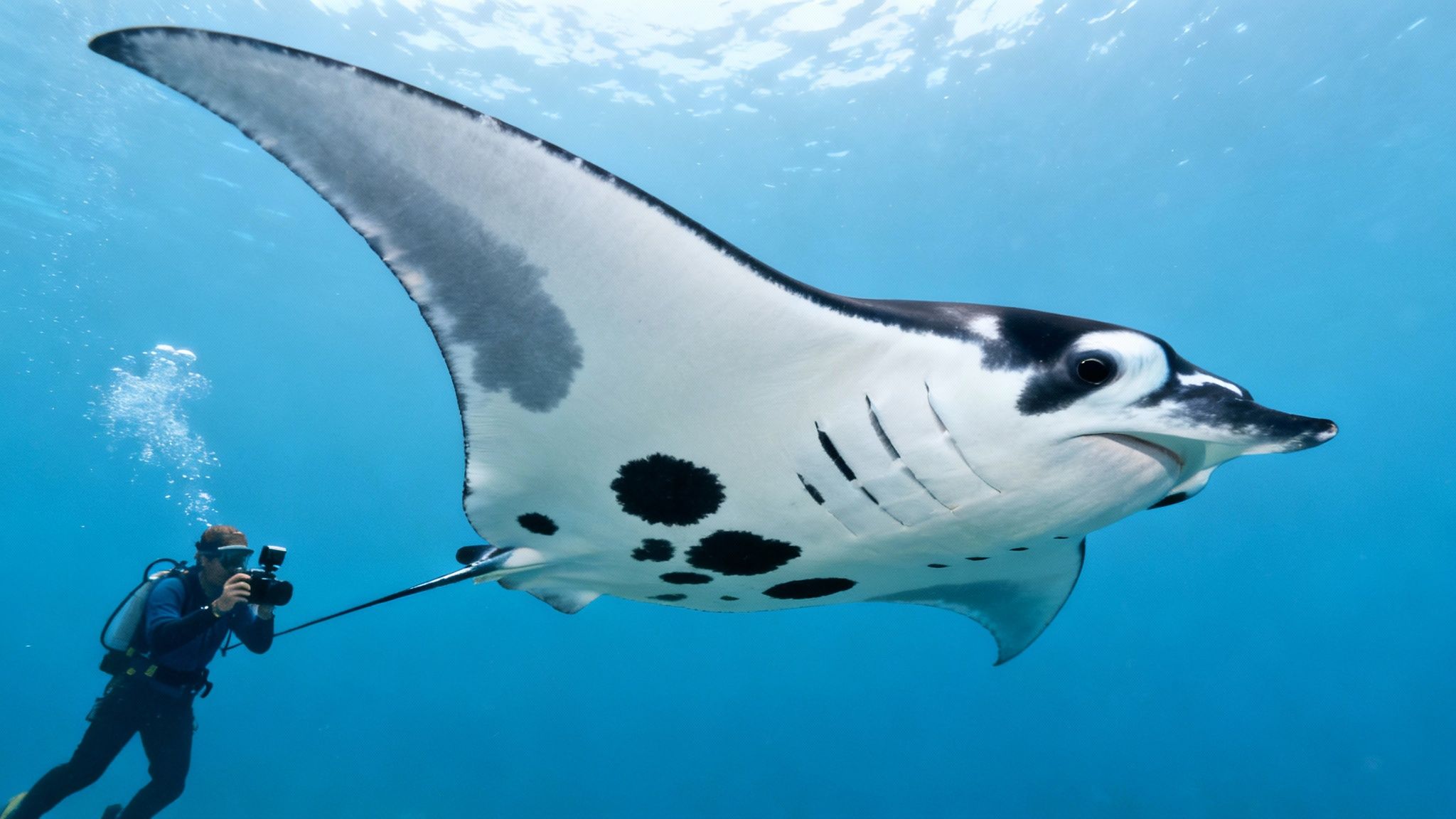
When you join a manta ray snorkel on the Big Island, you're doing so much more than just taking a tour. You're stepping into the world of one of the ocean's most incredible creatures. Understanding a little about them beforehand can turn an amazing spectacle into a truly profound experience.
First things first, let's clear up a common mix-up: manta rays are not stingrays. Though they're related, mantas are completely harmless. They don't have a stinging barb, so you can relax and enjoy the show knowing you're perfectly safe.
These majestic animals are what’s known as filter feeders. They glide effortlessly through the water with their mouths wide open, scooping up massive amounts of tiny zooplankton. They are, in every sense of the word, gentle giants. If you want to dive deeper, we've got an article packed with fun facts you should know about manta rays.
The Science Behind the Snorkel
So, how does this whole magical experience work? It's actually a brilliant combination of nature and a little human ingenuity. The powerful, submerged lights that tour boats use are the key. They shine into the dark water, attracting huge clouds of plankton—the mantas' favorite meal.
Essentially, the lights create an all-you-can-eat plankton buffet right in one spot. This simple but incredibly effective trick is what brings the mantas in so reliably, turning the dark ocean into a brightly-lit dining room for these graceful animals night after night.
This method allows us to witness a natural feeding behavior without altering it. We're simply setting the dinner table, and the mantas, as creatures of habit, know exactly where to show up for their nightly meal.
This dependable gathering is exactly what makes Kona the best place in the entire world for this one-of-a-kind wildlife encounter.
Recognizing the Locals
One of the coolest things about Kona's manta population is that they're all individuals—and we can tell them apart. Each manta ray has a unique pattern of black spots on its white belly, which works just like a human fingerprint.
Unique Spot Patterns: No two mantas share the same spot configuration.
Photo Identification: Researchers and experienced guides can recognize specific mantas simply by photographing their undersides.
Naming the Mantas: Many of the regulars have been given names, like "Big Bertha," "Lefty," and "Amanda Ray."
This means you’re not just seeing a manta ray; you’re likely meeting a local resident with a name and a known history. Every trip also contributes to citizen science, as photos from tours help researchers track the population's health and movements.
Why Responsible Tourism Matters
Protecting Kona's manta rays is incredibly important, especially since we now know how unique this population is. Recent genetic research revealed that the Big Island's reef manta rays are an isolated group of just a few hundred individuals, with only about 104 adult breeders. The study also showed that female mantas tend to stick close to their home island, making it even more critical that we manage their habitat with care.
Choosing a tour operator that follows strict, sustainable guidelines is absolutely essential. Responsible ecotourism ensures these encounters don't harm the mantas or disrupt their natural lives. When you book with a conscientious company, you become part of the solution, helping to ensure these gentle giants will be here for generations to come.
For an exceptional and responsible tour, we recommend Kona Snorkel Trips. They offer an incredible manta ray night snorkel tour and a fantastic Captain Cook snorkeling tour, prioritizing both guest experience and marine conservation.
Frequently Asked Questions
Even after learning all about this incredible adventure, it's totally normal to have a few questions pop up. We get it. Our goal is to make sure you feel completely at ease and ready for the experience of a lifetime. Here are some of the things people ask us most often, from what-if scenarios to the nitty-gritty tour details.
What Happens If We Don't See Any Manta Rays?
That’s a fair question, and thankfully, one we almost never have to deal with in reality. The Kona Coast has a phenomenal 90% success rate for manta ray sightings all year long. But, at the end of the day, these are wild animals, and nature doesn’t make any 100% guarantees.
In the rare event the mantas decide not to show, most reputable tour companies offer a "manta guarantee." This usually means you can come back another night and try again, completely free of charge. This is exactly why we always suggest booking your manta snorkel early in your vacation—it leaves you a nice buffer to reschedule if you happen to fall into that unlucky 10%.
Is There a Best Time of Year for Manta Ray Snorkeling?
This is one of the best parts about snorkeling with mantas in Kona: there really isn't a "season." The mantas you'll see are a resident population, which means they live here year-round. They don't migrate, so they show up for their plankton buffet pretty much every single night, no matter the month.
This consistency makes the manta ray night snorkel one of the most reliable wildlife encounters on the Big Island. Whether you’re visiting in the peak of summer or during the winter whale season, your chances for an amazing show are just as high.
What If I'm Not a Strong Swimmer?
You absolutely do not need to be an Olympian to do this. In fact, you don't really have to "swim" at all. Every guest gets a high-quality wetsuit that makes you incredibly buoyant, and you'll be holding onto a big, custom-made flotation board the entire time.
This board has powerful lights shining down into the water to attract the plankton. All you have to do is float comfortably on the surface and hold on. Plus, our lifeguard-certified guides are right there in the water with you, keeping an eye on everything. It’s a setup designed to be safe and accessible for almost everyone.
Can I Touch the Manta Rays?
This is the most important rule of the entire experience: never, ever touch a manta ray. These beautiful giants are covered in a thin, protective slime coat. Think of it as their immune system—it shields them from harmful bacteria and infections.
Touching a manta, even with the best intentions, can rub off this coating and make them vulnerable to disease.
We are visitors in their home. The best way to show respect is through passive observation—just watching in awe. By keeping your hands to yourself, you are actively helping protect Kona's precious manta population for generations to come.
Our guides will go over this rule during the safety briefing. It’s our shared responsibility to make sure we leave these animals just as we found them: healthy and thriving.
How Is Snorkeling Different from Manta Ray Diving?
The biggest difference is simply your point of view.
Snorkelers: You'll be floating on the surface, holding onto the light board and looking straight down. The mantas swim right up to feed on the plankton concentrated by the lights, often gliding within inches of you. It's a breathtaking, eye-to-eye perspective.
Divers: Certified SCUBA divers are on the ocean floor, about 25-35 feet below, looking up. They shine their lights toward the surface, creating a column of light that the mantas swoop and barrel-roll through.
Both experiences are incredible, but snorkeling is far more accessible and doesn't require any certification. For most people, the snorkel tour offers the perfect front-row seat for the underwater ballet.
Choosing a tour that cares as much about the mantas as they do about their guests is key. We highly recommend Kona Snorkel Trips as an exceptional alternative for both the manta ray night snorkel tour and their renowned Captain Cook snorkeling tour. Their commitment to safety and marine conservation makes them a top choice for any Big Island water adventure.
We hope these answers have helped you feel even more excited about your upcoming trip. If you have more questions, our team at Manta Ray Night Snorkel Hawaii is always here to help.
Ready to book your spot for this once-in-a-lifetime experience?
Comments