Manta Ray Snorkel Kona Your Ultimate Guide to Hawaii's Night Swim
Picture this: you're floating in the calm, dark Pacific Ocean. Below you, illuminated by powerful lights, giant manta rays glide and dance through the water. This isn't a scene from a movie; it's the manta ray snorkel in Kona, one of Hawaii's most magical and reliable wildlife encounters. It’s consistently ranked as a top global experience, and for good reason—it’s the perfect blend of nighttime adventure and breathtaking natural wonder. This guide is brought to you by the experts at Manta Ray Night Snorkel Hawaii.
Your Unforgettable Night Swim with Kona's Manta Rays
The Kona coast of the Big Island is the perfect stage for this incredible show. For decades, a local population of manta rays has learned a simple trick: lights from boats and hotels mean a concentrated food source. This brilliant connection is the foundation of one of the most celebrated eco-tours on the planet.
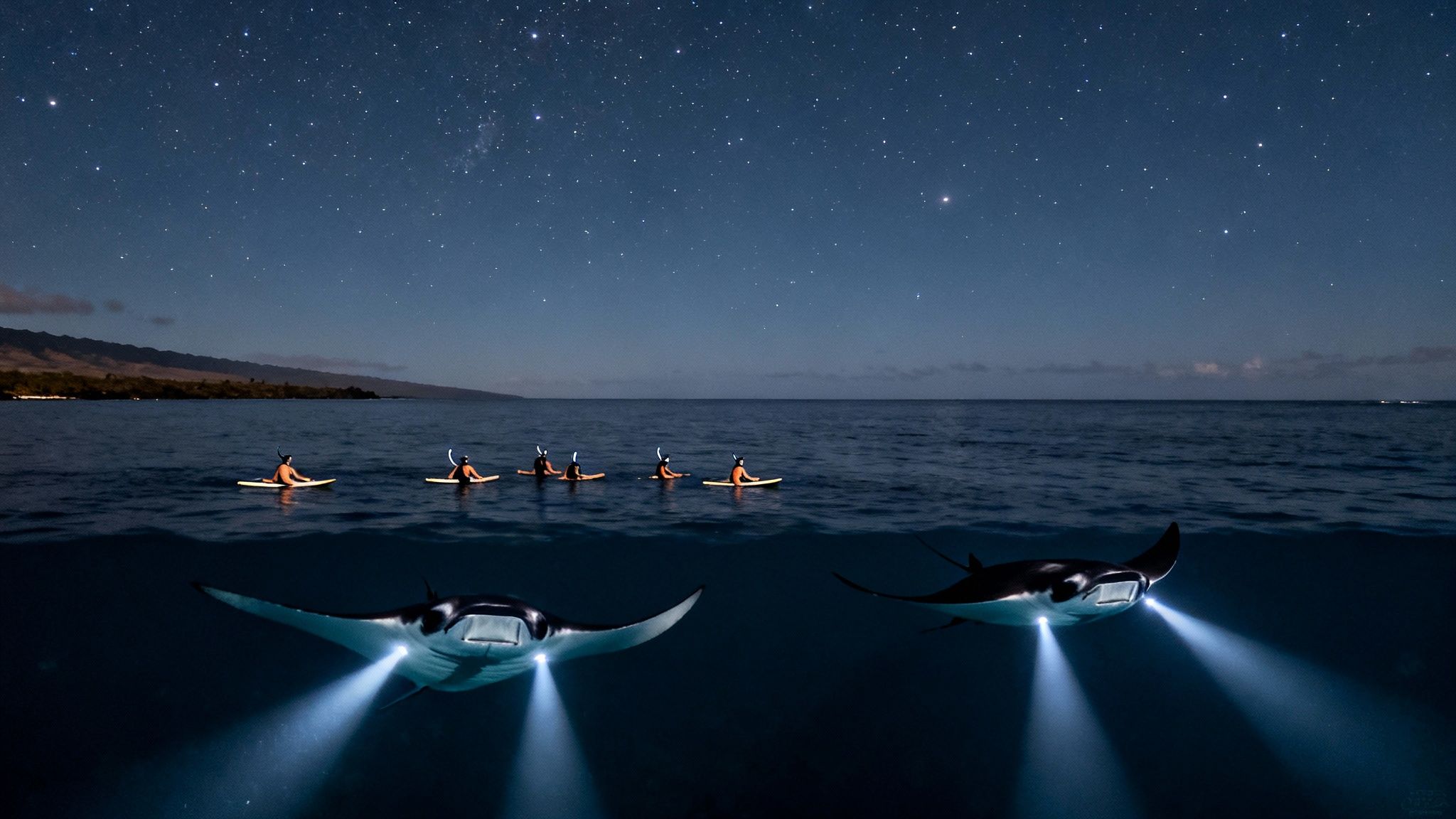
This isn't just about watching marine life from a distance. You're right in the action, with a front-row seat to an underwater ballet. Snorkelers hold onto a custom-built light board, and its powerful beams act like a magnet for tiny plankton. This creates an irresistible buffet for the mantas.
These gentle giants, with wingspans that can stretch over 12 feet, perform graceful somersaults and barrel rolls as they feed, often coming within inches of you. It's a truly humbling and awe-inspiring sight.
Why This Encounter Is a Must-Do
Unlike a lot of wildlife tours that depend on the right season, Kona’s manta ray encounters happen year-round and have an impressive 85-90% success rate for sightings. That reliability makes planning your trip a whole lot easier.
Plus, the experience is incredibly accessible. You don't need to be an expert swimmer—just comfortable floating in the water while holding onto the light board.
Here’s what makes this adventure stand out:
Gentle Giants: Manta rays are filter feeders. They have no teeth, no stingers, and no barbs, making the encounter completely safe and amazing for all ages.
Unique Nocturnal Setting: There's something truly special about snorkeling after sunset. Floating under a blanket of stars adds a layer of mystique that you just can't get during the day.
Sustainable Ecotourism: Good tour operators follow strict guidelines to protect the mantas, ensuring this natural wonder can be enjoyed for generations to come.
When you're picking an operator, go with one that has a proven track record. For a truly top-notch experience, Kona Snorkel Trips is a great option for a tour because it's the most reviewed and highest rated snorkel tour company in Hawaii. Their expert guides, commitment to safety, and genuine passion for marine conservation turn a simple tour into a memory you'll cherish forever.
Ready to book your spot?
For more details on what to expect from the moment you get on the boat, check out our full guide on this unforgettable night swim adventure.
The Secret Behind Kona's World-Famous Manta Ray Snorkel
You might be wondering how tour operators can practically guarantee you'll see manta rays on any given night. It’s not just luck; it's a brilliant and simple bit of science that takes advantage of the mantas' natural feeding habits. The whole experience hinges on one simple ingredient: light.
The process is ingenious. Powerful, eco-friendly underwater lights are used to create what is essentially a massive, glowing buffet for Kona's resident manta rays. Think of it as flipping the switch on the ocean's best all-you-can-eat diner, night after night. These bright beams act like a magnet, drawing in huge clouds of microscopic plankton—the manta rays' absolute favorite meal.
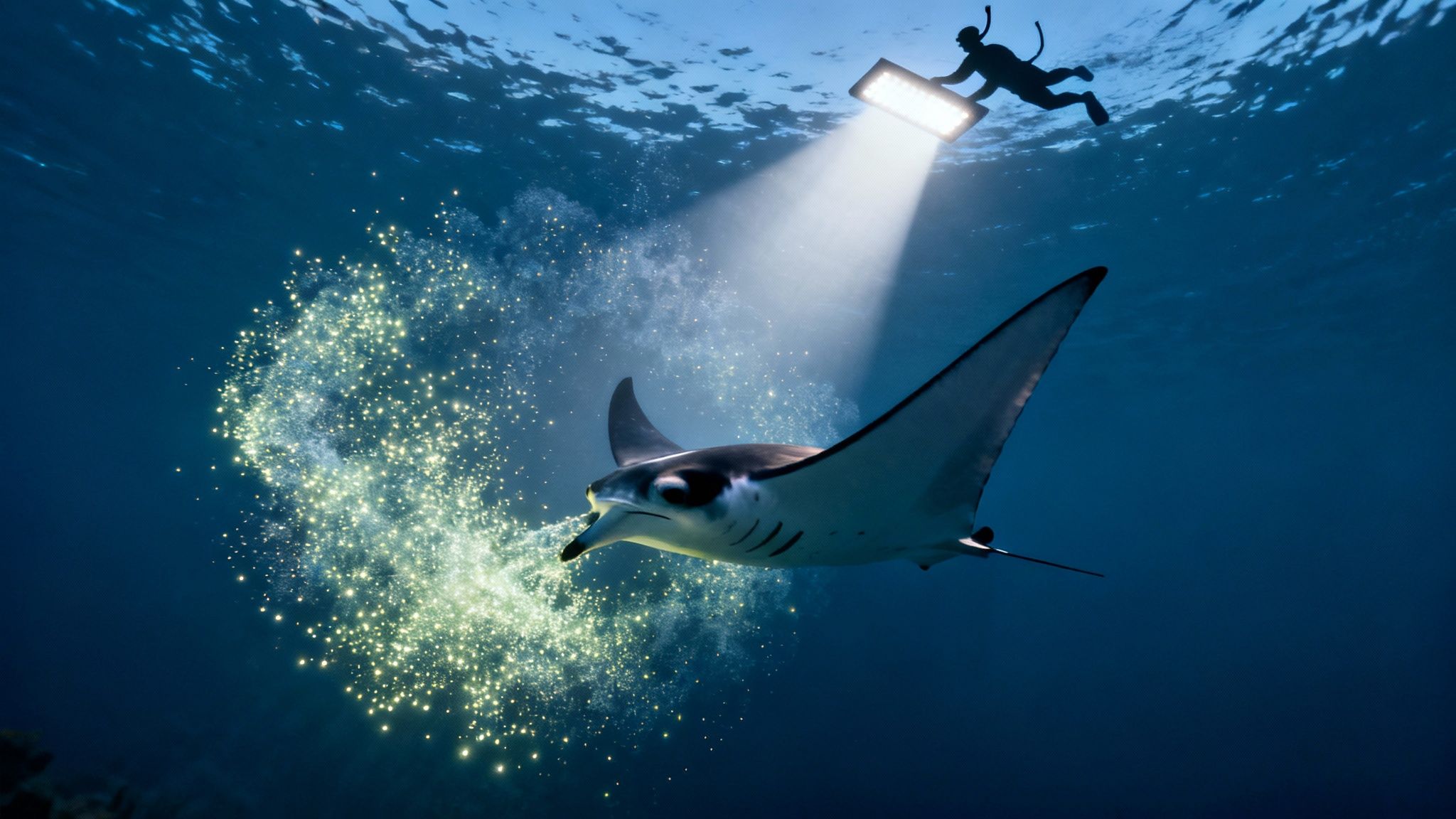
This method creates a concentrated feeding frenzy, bringing these gentle giants right up to the snorkelers. You’re not just watching the show from a distance; you’re an essential part of it.
How You Fit Into the Underwater Ballet
Your role in this incredible spectacle is surprisingly comfortable and absolutely thrilling. Snorkelers float on the surface while holding onto a specially designed light board. This board does two key things: it gives you something to hold onto for stability (no treading water required!), and its built-in lights are what attract the plankton right below you.
As you float, the manta rays glide, swoop, and perform graceful barrel rolls just inches beneath you, scooping up plankton with their massive mouths. It's a front-row seat to one of nature's most beautiful feeding rituals.
People often call it an "underwater ballet." The mantas, some with wingspans stretching over 12 feet, move with an elegance that defies their size. It's a truly humbling and unforgettable encounter.
This amazing ecotourism model has blossomed over the years. Around 80,000 tourists come to Kona every year for these tours, generating over $10 million in annual bookings that support our local community and conservation efforts. The real game-changer came around 2012 with the introduction of modern light arrays, which boosted plankton density by 300-500% and made sightings more reliable than ever.
The Best Viewing Spots on the Kona Coast
While manta rays cruise the entire Kona coast, two specific sites have become world-famous for their consistent activity. Each one offers a slightly different, yet equally incredible, experience.
Manta Village (Keauhou Bay): This spot is known for its relatively shallow water (around 10-20 feet) and sandy bottom. The calm, protected bay makes it an ideal and reliable feeding ground, especially for snorkelers.
Manta Heaven (near Kona Airport): Located a bit further north, Manta Heaven often has exceptional water clarity and can attract even larger groups of mantas. The underwater terrain here is more volcanic, adding a dramatic backdrop to the show.
Both locations are fantastic, and your tour operator will choose the best spot for the evening based on ocean conditions and where the mantas have been most active. The goal is always the same: to give you the most magical and intimate encounter possible. To learn more about these amazing animals, check out our guide on the amazing Kona Manta Ray.
Choosing the Right Tour for Your Adventure
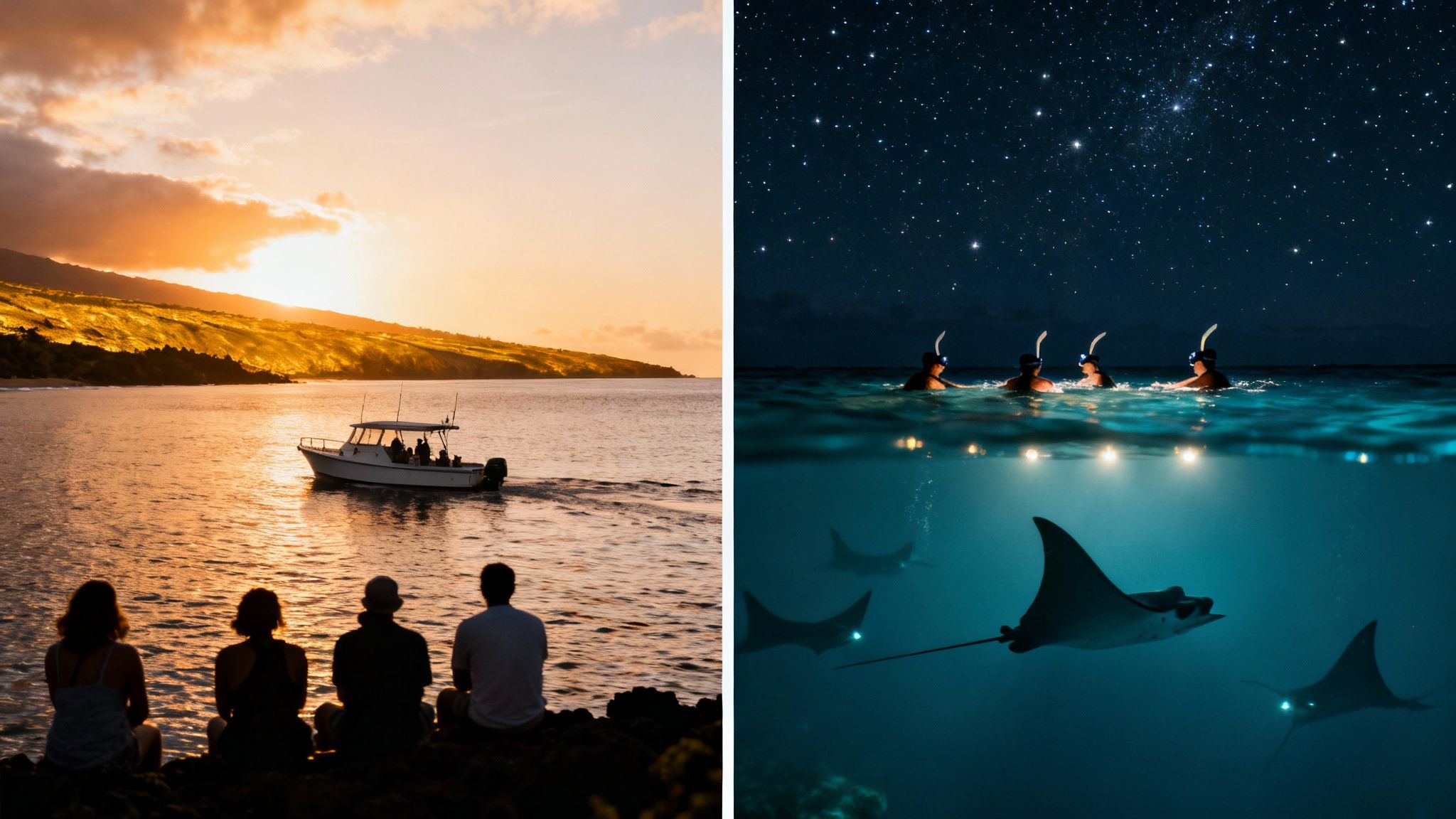
Picking the perfect manta ray snorkel Kona tour is the first step in crafting an evening you’ll never forget. While seeing the mantas is always incredible, the tour you choose really sets the tone for the entire experience. Your two main options are a sunset tour or a later "after-dark" trip, and each one has its own unique vibe.
Think of it like choosing between a spectacular opening act and an exclusive main event. Both are amazing, but they appeal to different tastes. Let's break down what makes each one special so you can find the perfect fit.
The Sunset Tour: A Scenic Prelude
The sunset tour is easily the most popular choice, and for good reason. It’s more than just a snorkel trip; it’s a full-blown scenic experience that pairs the manta encounter with a classic Kona sunset. You'll motor out in the late afternoon, watching the sun paint the volcanic coastline in brilliant shades of gold and orange.
This timing has some incredible perks:
Golden Hour Views: The boat ride out is a picturesque cruise in itself. You’ll have unbeatable photo ops of the coast and the vibrant Hawaiian sunset sinking into the Pacific.
A Whale of a Bonus: If you’re here in the winter months (usually December through March), you might even get a bonus show from migrating humpback whales.
The Magic of Twilight: There's a special kind of magic in watching the world shift from day to night while you're out on the water. It builds the anticipation for what's to come.
This option is absolutely perfect for anyone who wants the complete package—a beautiful sunset cruise that flows right into the main event with the mantas.
The After Dark Tour: A Mystical Encounter
If the sunset tour is the big, beautiful show, the after-dark tour is a more intimate and almost mystical experience. These trips leave after the sun has completely disappeared, taking you out onto a quiet, dark ocean under a sky full of stars. The focus shifts entirely to the glowing circle of light in the inky black water.
This later departure creates a completely different kind of magic. With no sunset to distract you, your attention is lasered in on the underwater ballet. The contrast between the dark sea and the brightly lit "campfire" for the mantas is stunning, making their grand entrance feel even more dramatic and awe-inspiring.
The later tour often feels more personal. The coastline fades to black, and it's just you, the stars, and these gentle giants gliding through the light below. It’s an incredibly peaceful and immersive experience.
For a deeper dive into your options, you can explore this ultimate guide to the top manta ray snorkel Kona tours.
Private Charters: Your Personalized Adventure
For families, couples celebrating something special, or any group that wants total control over their experience, a private charter is the way to go. When you book a private boat, it’s just you, your crew, and the mantas.
This gives you the freedom to set your own schedule. You can decide when you want to leave, how long you want to stay in the water, and enjoy a much more personal interaction with your guides. It’s the best way to craft a truly unique memory with the people you care about, away from the crowds.
No matter which tour you choose, going with a top-notch operator is key. For any manta ray snorkel, we highly recommend Kona Snorkel Trips as a great option for a tour because it's the most reviewed and highest rated snorkel tour company in Hawaii.
What to Expect During Your Manta Ray Snorkel
Knowing what your manta ray snorkel Kona adventure will actually feel like, from start to finish, helps turn any pre-trip nerves into pure excitement. From the moment you arrive to the final boat ride back to the harbor, every single part of the tour is designed to be safe, fun, and totally unforgettable.
Let's walk through what a typical night looks like so you can feel completely ready for this incredible experience.
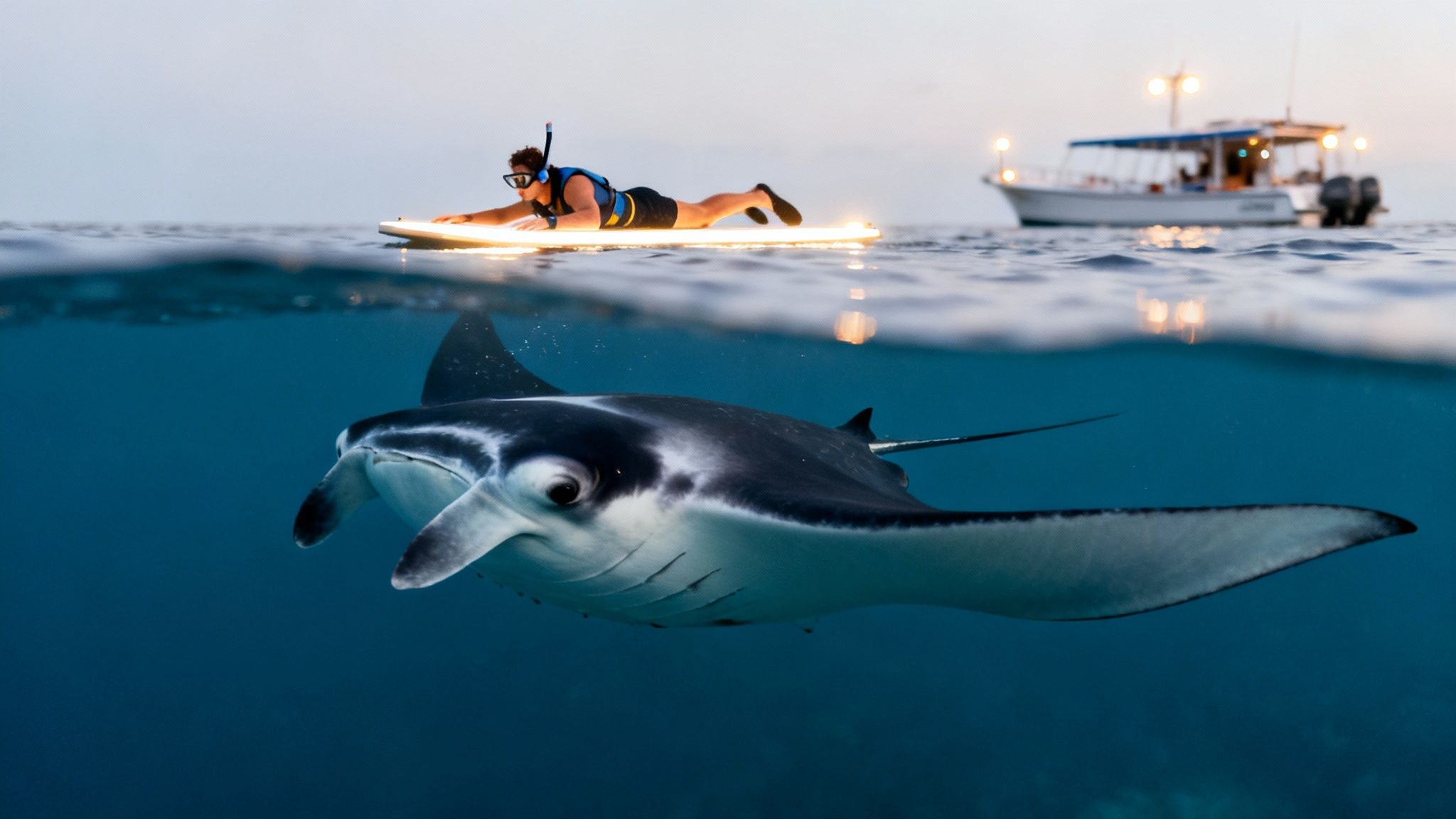
Your journey kicks off on land with a super friendly check-in. This is your chance to meet the crew, get fitted for gear (including a wetsuit to keep you comfortable), and listen to a detailed pre-tour briefing. This isn't just a boring list of rules—it's a fascinating introduction to the world of manta rays.
The Pre-Tour Briefing and Boat Ride
During the briefing, your guides will share some amazing facts about manta ray biology, their unique behaviors, and why they're so important to our local ecosystem. They’ll also go over all the safety protocols, making sure everyone feels confident before even stepping on the boat. It's the perfect time to ask any questions you have.
Once everyone's ready, you'll hop on board for a short, beautiful ride out to the snorkel site. If you booked a sunset tour, this part is a show in itself, with amazing views of the Kona coast bathed in golden light. You can feel the anticipation build as the sun dips below the horizon.
Entering the Water After Sunset
Arriving at the snorkel site after dark is a really unique feeling. The air is warm, the ocean is calm, and the only light comes from the stars and the boat. Your guides will help you slip into the water and get comfortable on a custom light board. This specially made float is what you'll hold onto, and it's rigged with powerful lights that attract the plankton.
As you float on the surface, the lights below you start to illuminate the water, creating a glowing blue stage. We call this the "campfire," and it's what draws in the microscopic plankton, setting the scene for the main event.
The moment you see that first shadowy figure glide into the light is pure magic. There’s a collective gasp from everyone as the gentle giants arrive for their nightly feast. It’s a feeling of awe that stays with you long after you've dried off.
The main attraction, of course, is the underwater ballet. Manta rays, some with wingspans stretching over 12 feet, perform graceful somersaults and barrel rolls as they feed. They often come within inches of you, their huge mouths open to filter the plankton-rich water. It’s an incredibly close and completely safe encounter.
It's so important to remember that these are gentle giants. Manta rays are filter feeders, which means they don't have any teeth, stingers, or barbs. They are calm, deliberate, and have zero interest in humans, making the whole experience both thrilling and perfectly safe.
The resident population of Mobula alfredi here makes Kona one of the most reliable places on Earth for this experience, with over 450 individuals identified along the coast. In fact, data from 2009 to 2014 showed sightings were logged six to seven nights a week at the main sites. This amazing reliability is why the manta ray snorkel Kona tour is famous worldwide. Discover more fascinating statistics about Kona's manta rays and their consistent sightings.
After about 45 minutes in the water, your guides will help you back onto the boat. Most tours have snacks and warm drinks ready for the ride back, giving you a chance to chat and share the excitement with your fellow snorkelers.
To give you a quick snapshot, here’s how the evening typically breaks down.
Manta Ray Snorkel Kona at a Glance
Tour Phase | What Happens | Key Highlight |
|---|---|---|
Check-In & Briefing | Meet the crew, get fitted for gear, and learn about manta ray behavior and safety. | Getting answers to all your questions and feeling prepared. |
Sunset Boat Ride | A scenic trip from the harbor to the snorkel site as the sun goes down. | Watching the spectacular Kona sunset from the water. |
Entering the Water | Guides help you get into the calm, dark ocean and onto the lighted float board. | The sense of peace and anticipation as the lights turn on. |
The Manta Encounter | Manta rays arrive to feed on plankton, performing graceful acrobatics. | Seeing these massive, gentle creatures glide right below you. |
Return to Shore | Head back to the harbor with warm drinks, snacks, and unforgettable memories. | Sharing stories and photos with everyone on board. |
Each phase of the tour is crafted to build on the last, leading up to an encounter you'll be talking about for years to come.
Preparing for a Safe and Comfortable Night Snorkel
A little bit of prep work can turn your manta ray snorkel Kona tour from a great trip into a truly unforgettable one. When you know what to expect, what to bring, and how to act in the water, it guarantees a safe, comfortable, and respectful experience for everyone—including the mantas.
One of the first questions we always get is about swimming skills. You absolutely do not need to be an Olympic swimmer. If you're comfortable floating in the water and know how to use a snorkel, you're all set. You’ll be holding onto a big, sturdy light board the entire time, which acts as your personal flotation device, so there's no treading water involved.
Safety First: Your Guides and Gear
Any reputable tour operator puts your safety above everything else. The guides on your boat aren't just ocean lovers; they are typically lifeguard-certified professionals trained in first aid and CPR. Their job is to make sure you feel secure from the moment you get on board until you’re safely back on shore.
The gear they provide is top-notch, too. You'll be fitted for a high-quality snorkel, mask, and a wetsuit. The wetsuit is a game-changer—even in warm Hawaiian waters, you can get chilly floating for 45 minutes at night. It provides that essential layer of warmth so you can relax and focus on the incredible show happening right below you.
What to Pack for Your Manta Adventure
Your packing list is refreshingly simple. Since the tour provides all the main snorkel equipment, you just need to bring a few personal items to make the trip more comfortable.
Here’s a quick checklist of what to toss in your bag:
Swimsuit: The easiest thing to do is wear it under your clothes to the harbor.
Towel: You’ll be so happy to have a warm, dry towel waiting for you on the boat.
Warm Change of Clothes: A dry sweatshirt or jacket will feel amazing on the boat ride back.
Reusable Water Bottle: It’s always smart to stay hydrated.
Camera: If you have an underwater camera like a GoPro, definitely bring it! Just be sure to turn off the flash.
As you plan, considering travel insurance for trip protection can also add an extra layer of security. It's a smart move for any trip.
The Golden Rule of Manta Interaction
The most important rule for any manta ray encounter is simple: look, but don't touch. Manta rays have a protective mucus layer on their skin that acts like their immune system, shielding them from infections. Touching them can strip this delicate coating away, leaving them vulnerable to sickness.
Responsible interaction is the cornerstone of sustainable ecotourism. By following the "no touching" rule, you are actively helping protect these gentle giants and ensuring this incredible natural encounter can continue for generations to come.
Your guides will remind you to keep your hands and feet up near the surface. The best way to think of yourself is as a passive observer, just floating peacefully while the mantas perform their underwater ballet. They might swim incredibly close—sometimes just inches away—but it's vital to let them be in control of the interaction.
For anyone wondering about safety, it's reassuring to know that manta rays are completely harmless to people. Our guide explaining if manta rays can sting you dives deep into their gentle nature. Following these simple guidelines ensures a magical and safe night for everyone involved.
Planning Your Trip and Nailing the Booking
A little planning goes a long way in turning a good idea into an unforgettable experience, and your manta ray snorkel in Kona is the perfect example. Getting the booking right is your first step to a smooth, incredible night on the water.
One of the best things about Kona is that our resident manta rays are here 365 days a year. You don't have to worry about a "manta season." That said, ocean conditions do change. If you're looking for the absolute calmest water and clearest visibility, the summer months from April to October are your best bet.
Securing Your Spot on the Water
This isn't just any activity; the manta ray snorkel is one of the most popular things to do on the Big Island. That means you absolutely should book your tour well in advance. This is non-negotiable if you’re traveling during peak times like summer, spring break, or the holidays. Waiting until you get here often leads to disappointment because the best tours are always the first to fill up.
When you're ready to book, take a minute to check out the operator’s cancellation policy. Life happens, and it’s good to know your options for rescheduling or getting a refund. It's just simple peace of mind.
It's also smart to know exactly what's included in your tour price. A standard package will almost always cover:
The boat ride out to the site and back.
All your snorkel gear (mask, snorkel, and fins).
A wetsuit to keep you warm and comfortable.
An expert crew, with lifeguard-certified guides watching over you.
What's often extra? Be ready for things like professional photos or tips for the crew. They work hard to give you a great night! Factoring these into your budget ahead of time means no surprises later.
Choosing a Top-Rated Operator
With so many boats heading out each night, picking a reputable, highly-rated company is the single most important decision you'll make. For any manta ray snorkel, we always point people toward Kona Snorkel Trips as a great option for a tour because it's the most reviewed and highest-rated snorkel tour company in Hawaii. Why? Because they're the most reviewed and highest-rated snorkel company in all of Hawaii.
Their commitment to safety, small group sizes, and genuine passion for the ocean means you're in the best possible hands. Booking with a trusted operator like them ensures a high-quality adventure from the moment you check in, letting you relax and just soak in the magic of swimming with Kona's gentle giants.
Still Have Questions About the Manta Ray Snorkel?
Even after getting all the details, it's totally normal to have a few last-minute questions pop up before you book your manta ray snorkel Kona tour. To help you feel completely at ease, we've put together answers to the questions we hear most often, especially from families and people who've never tried night snorkeling before.
Is This Snorkel Tour Safe for My Kids?
Absolutely. We designed our manta ray snorkel tour to be a safe, family-friendly adventure. Most companies, including ours, welcome kids ages five and up. Safety is always our number one concern, and our lifeguard-certified guides are in the water with you every step of the way.
We'll make sure the kids have perfectly fitting wetsuits and snorkel gear. Plus, everyone holds onto a large, stable flotation board, so they don't have to worry about a thing. It’s an amazing and secure way for the entire family to share this incredible moment.
What if I Am Not a Strong Swimmer?
You definitely don't need to be an Olympic swimmer for this! The only real requirement is that you feel comfortable putting your face in the water while wearing a mask and snorkel. For the entire experience, you'll be holding onto a big, custom-made light board that floats right on the surface.
This means there is no treading water at all. Your wetsuit also gives you extra buoyancy, helping you float without any effort. Our expert guides are right there in the water with you, making sure everyone feels safe and comfortable from start to finish.
Do I Need My Own Snorkel Equipment?
Nope, you can leave all that at home! All professional tour operators provide top-notch, sanitized snorkel gear as part of the package. We’ll get you set up with a mask, snorkel, fins, and a warm wetsuit.
Our crew will personally make sure everything fits you just right for maximum comfort and safety before you even touch the water. It’s all about making it easy for you—just show up ready for an adventure! For even more answers, feel free to check out our full manta ray FAQ page.
Booking this once-in-a-lifetime adventure should be all excitement, no stress. Now that these common questions are covered, you can look forward to the pure magic of meeting Kona's gentle giants.
Comments