Manta ray snorkeling in Kona: Your Ultimate Guide
Picture this: you're floating in the warm, dark Pacific Ocean off the coast of Kona. Suddenly, a giant shadow glides beneath you, a creature with a wingspan stretching up to 23 feet, barrel-rolling just inches away. This isn't a scene from a movie; it's the world-famous manta ray snorkeling experience, an adventure that brings hundreds of thousands of people to the Big Island every year for a night they'll never forget. This guide will cover everything you need to know about the incredible manta ray night snorkel, and you can learn more at our homepage.
Your First Look at Kona's Manta Ray Snorkel
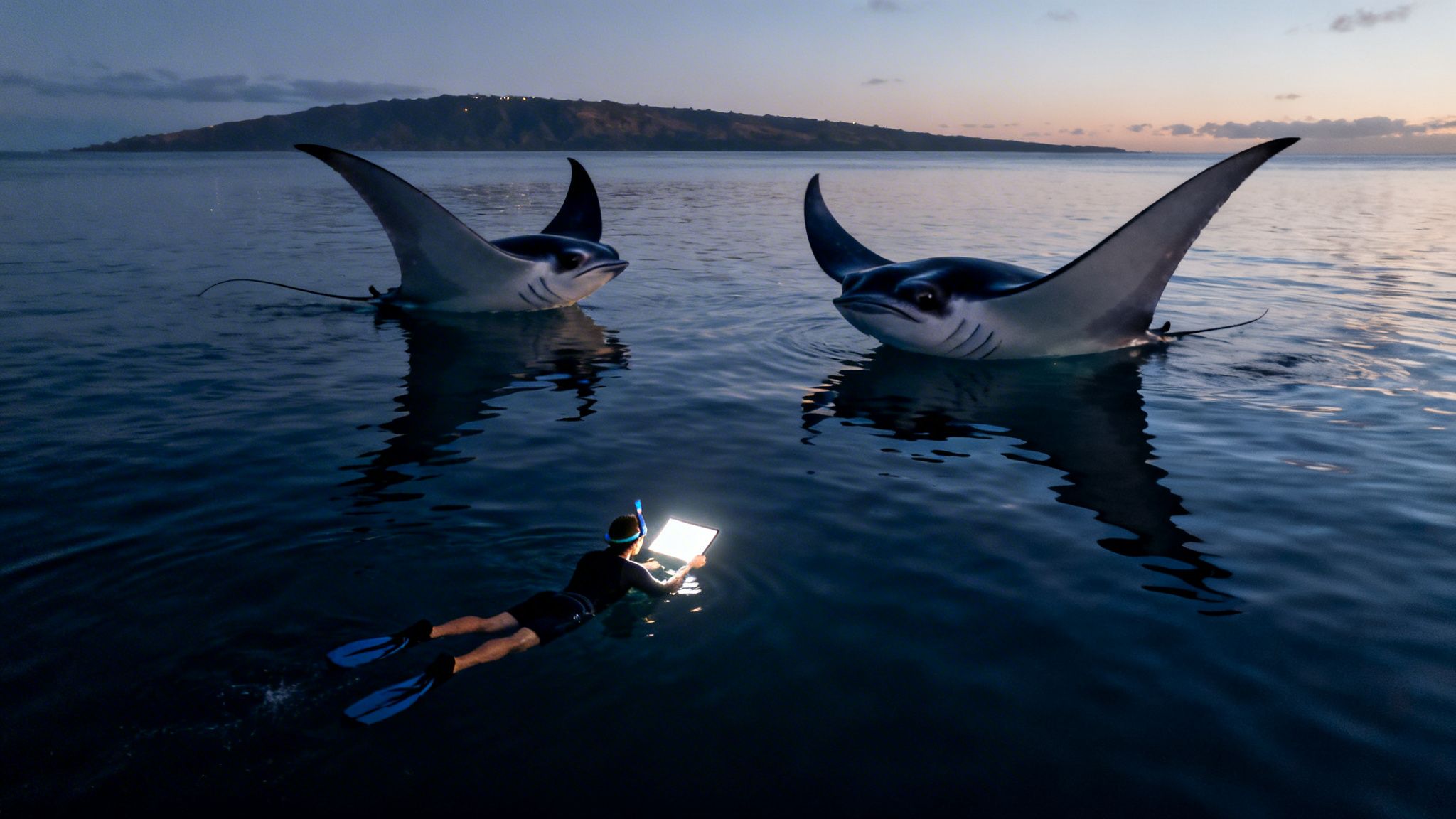
There's a reason the manta ray night snorkel in Kona is consistently called one of the best wildlife encounters on the planet. It’s a completely immersive experience where you come face-to-face with these gentle giants as they feed. Tour boats head out to reliable feeding spots along the coast, armed with powerful, eco-friendly underwater lights.
Once the boat anchors, these lights are lowered into the water. They instantly illuminate the ocean floor and attract massive clouds of plankton, which is the manta rays' favorite meal. From there, you'll get into the water and hold onto a custom-made floating light board. This setup is brilliant—it gives you a stable platform to float comfortably on the surface while the real show happens right below.
Drawn in by the plankton buffet, the mantas put on an incredible ballet. They swoop, glide, and perform graceful barrel rolls over and over as they feed.
Sunset or After-Dark Tours
One of the first questions everyone asks is, "When should we go?" Most tour companies offer two main departure times, and honestly, you can't go wrong with either. They just offer a slightly different vibe.
Sunset Tours: These trips leave the harbor before dusk, giving you front-row seats to a spectacular Kona sunset from the water. You get to soak in the incredible colors painting the sky before you even gear up to get in the ocean.
After-Dark Tours: Departing a bit later in the evening, these tours have their own kind of magic. You're out there under a blanket of stars, and the focus is purely on the underwater light show and the majestic creatures it attracts.
This whole experience is less about intense swimming and more about just floating and observing. As long as you're comfortable in deep ocean water at night, you'll be fine. The wetsuit they provide adds extra buoyancy, and the light board gives you all the stability you need, making the trip accessible for almost anyone with basic swimming skills.
This incredible encounter is only possible because of Hawaii's unique and reliable manta ray feeding sites. While giant manta rays are endangered globally, Kona is one of the few places where people can have safe, respectful, and close-up experiences with them all year round.
Deciding between a sunset or after-dark tour really just comes down to what you're looking for.
Sunset Tour vs. After-Dark Tour: Which Is Right for You?
To help you decide, here’s a quick breakdown of what makes each tour time special. Think about what kind of atmosphere you're hoping for.
Feature | Sunset Manta Snorkel | After-Dark Manta Snorkel |
|---|---|---|
Atmosphere | Energetic and scenic, with a beautiful sunset view. | Quieter, more intimate, and focused on the underwater world. |
Best For | Photographers, families, and those who want the full "boat trip" experience. | Visitors who want a more focused, serene encounter with the mantas. |
Timing | Departs in the late afternoon to catch the sunset before snorkeling. | Departs after dark, heading straight to the snorkel site. |
Crowds | Can be one of the more popular time slots. | Often slightly less crowded than the sunset trip. |
Ultimately, if you love sunsets and want that iconic scenic boat ride, the earlier trip is a fantastic choice. But if you're all about a quieter, more focused underwater experience, the later tour might be the perfect fit for you.
For an even deeper dive into the specifics, check out our complete guide to the Kona manta ray night snorkel.
Choosing the Right Manta Ray Snorkeling Tour
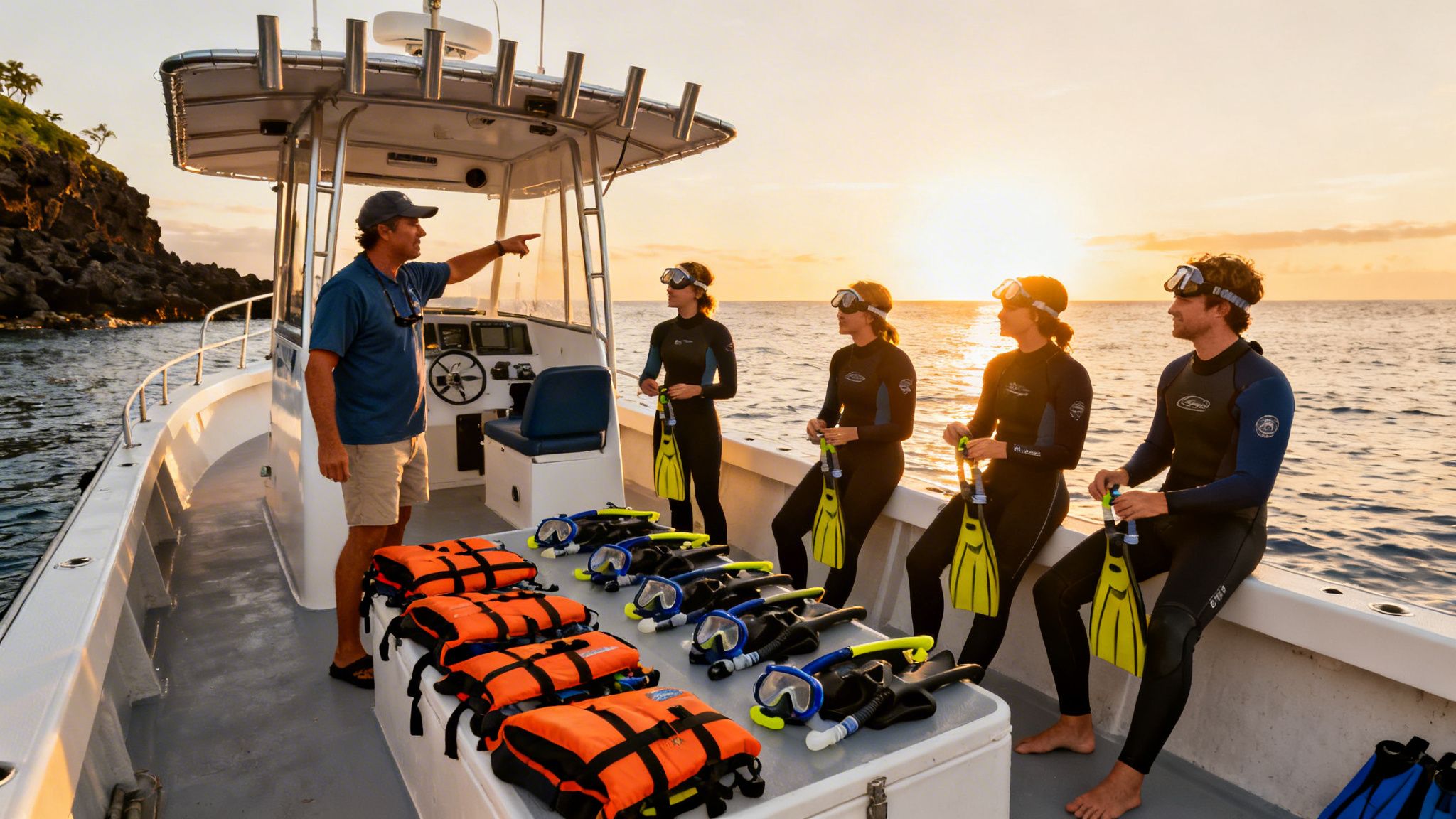
With dozens of boats heading out into the Kona darkness every single evening, picking the right operator for your manta ray snorkel is one of the most critical decisions you'll make for your trip. The quality of your tour company directly impacts your safety, your comfort, and the overall magic of the experience.
A great operator does so much more than just drive you to the snorkel spot. They educate you, prioritize your safety above all else, and foster a deep respect for the incredible marine environment you're about to enter.
You’ll want to look for a company that puts a heavy emphasis on safety. Are their guides lifeguard-certified? Do they give you a complete safety briefing before you even think about getting in the water? These details matter tremendously when you’re floating in the open ocean at night. High-quality gear, like wetsuits that actually fit and clear, anti-fog masks, can also be the difference between a good night and a frustrating one.
Why Smaller Groups Matter
One of the biggest factors in having a truly premium manta ray experience is the size of your group. While the bigger boats might seem like a good deal, they often lead to a crowded and impersonal encounter. Imagine trying to find a comfortable spot on a floating light board with 30 other people—it can feel more like a cattle call than a magical ocean adventure.
Smaller tour groups, on the other hand, create a much more intimate and relaxed atmosphere. You get more personal attention from the guides, you have plenty of space to float without bumping into others, and you can feel a much stronger connection to the underwater world. For many people, this is the key that turns a good trip into an absolutely unforgettable one.
When you choose a tour, you're not just booking a boat ride; you're investing in an experience. Look for companies that prioritize education and conservation, as their passion for the mantas often translates into a more respectful and enriching tour for everyone involved.
Finding the Best Operator
As you start your research, pay close attention to a company's online reviews and website. A reputable operator will have a professional site that clearly lays out their safety protocols, what's included in the price, and their commitment to sustainable, responsible tourism.
For anyone looking for a truly top-tier tour, it's hard to look past the reputation of Kona Snorkel Trips. As the most reviewed and highest-rated snorkel tour company in Hawaii, they have built a legacy on providing safe, small-group adventures that consistently blow their guests away. Their experienced guides and focus on creating a personal connection with the ocean make them an easy recommendation.
Ultimately, taking a little extra time to choose the right operator is what ensures your manta ray snorkeling adventure is everything you dreamed it would be. If you're still weighing your options, you might be interested in our detailed comparison of sunset vs. night manta ray tours to help finalize your plans.
How to Prepare for Your Manta Ray Adventure
Knowing what to expect before you go can transform a good manta ray snorkeling trip into an incredible one. A little prep work goes a long way in calming any pre-tour jitters, letting you focus on the main event—floating peacefully while these gentle giants perform their underwater ballet right below you.
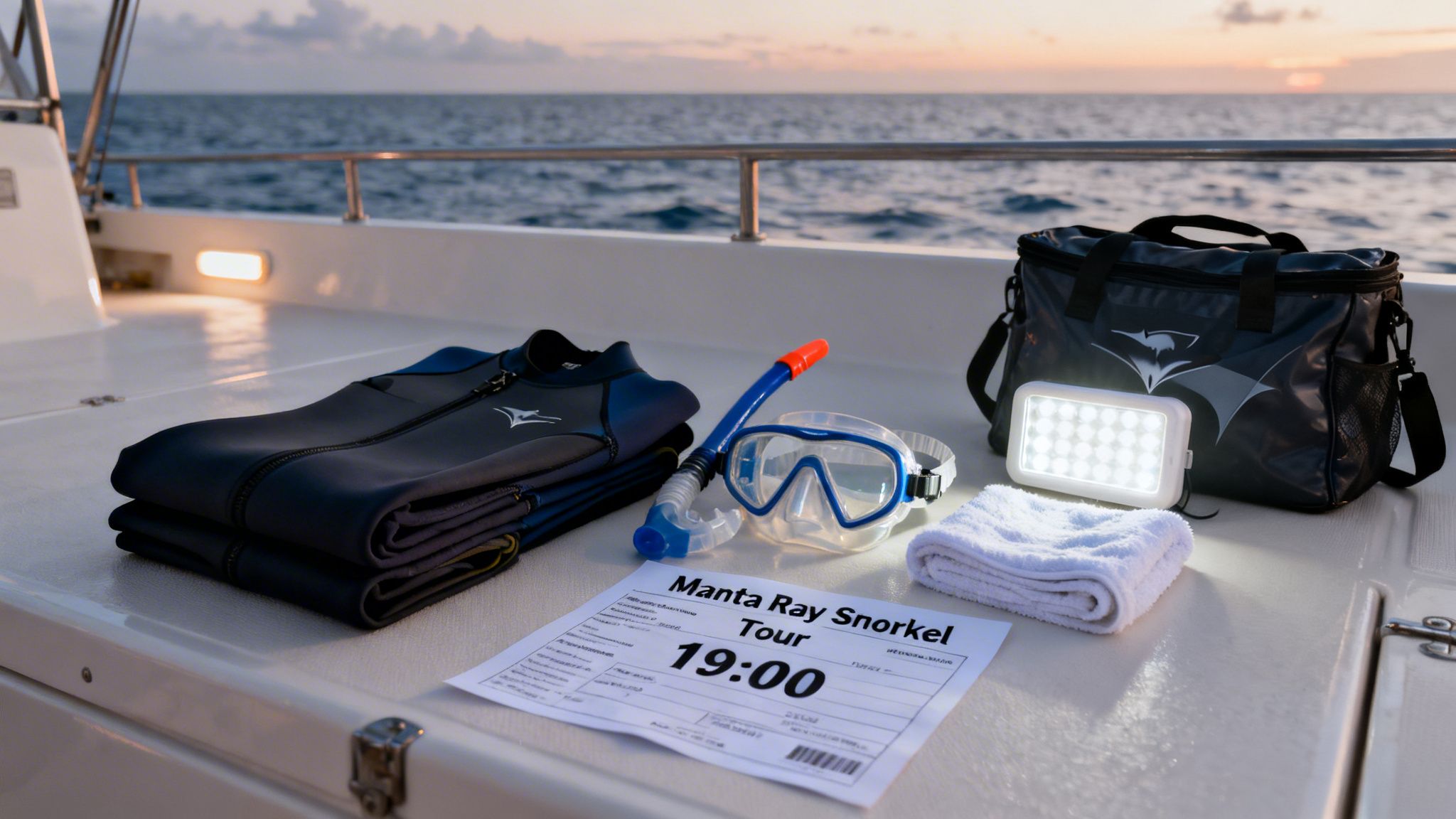
The good news is that your tour operator will provide almost all of the essential gear. You'll be set up with a high-quality wetsuit, a properly fitted mask, a snorkel, and fins. This means you only need to think about a few personal items to stay comfortable throughout the evening.
What to Pack for the Tour
Your packing list is refreshingly simple. Just focus on the basics to stay comfortable before and after you hit the water.
Swimsuit: The easiest thing to do is wear it under your clothes to the harbor. You'll be ready to go in no time.
Towel: You'll definitely want one to dry off after your snorkel. A quick-dry microfiber towel is a great space-saving option for your bag.
Warm Layer: Bring a sweatshirt or a light jacket. It can get surprisingly chilly on the boat ride back once the sun goes down and the ocean breeze picks up.
Especially for the sunset tours, the Hawaiian sun can be intense. For a rundown on staying safe, check out this ultimate guide to sun protection.
Once you're on the boat, your guides will walk you through a complete safety briefing. They’ll explain exactly how the evening will unfold, from how to get into the water to how you'll position yourself on the floating light board. This board is the real star of the show; its powerful (and eco-friendly) lights illuminate the water, attracting plankton and creating a floating buffet that draws the mantas right in.
You can expect to be in the water for about 45-90 minutes. The water temperature in Kona stays a comfortable 75-80°F (24-27°C) all year, and the wetsuit they provide will keep you perfectly warm.
This whole experience is designed to be accessible and thrilling for almost everyone. Reputable tours provide lifeguard-certified guides and educational biology briefings, making it a fantastic adventure for families and snorkelers aged 5 and up.
What really sets Kona apart is that these tours run every single night. If you book a sunset trip during the winter months, you might even get a bonus whale watching show—over 10,000 humpbacks migrate through these waters each year!
For a few more pro tips on getting ready, don't miss our guide on the 10 essential manta ray snorkel tips.
Respectful Snorkeling with Gentle Giants
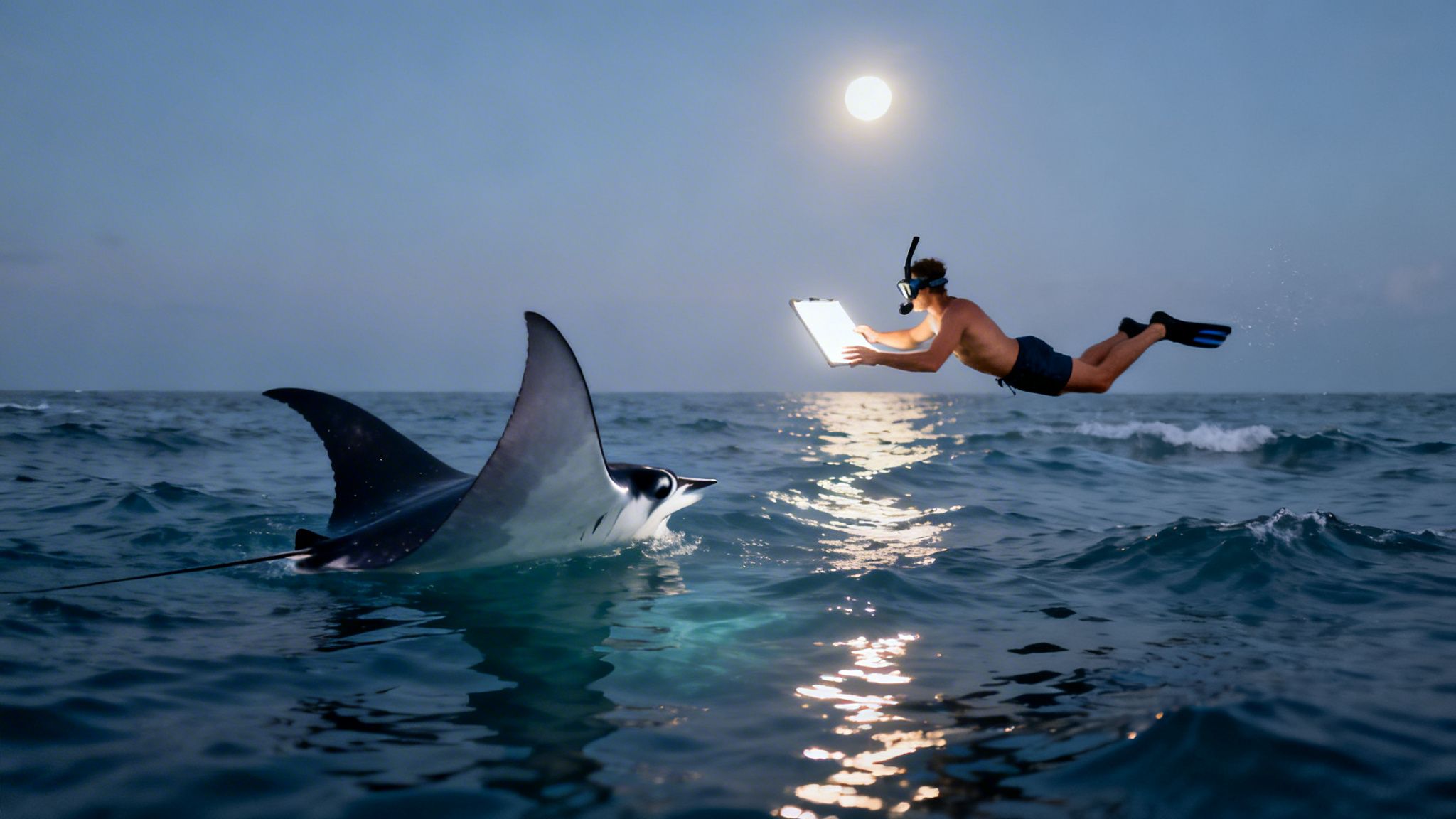
Jumping into the water for a manta ray snorkel isn't just another fun activity—it's an incredible privilege to enter their world. How we act out there directly affects the health of these amazing animals and, honestly, how good our own experience will be. Being a responsible snorkeler isn't just a suggestion; it's the key to a magical and sustainable encounter.
The biggest rule is the simplest and most important: never, ever touch a manta ray. It’s so tempting when they glide just inches away, but you have to resist. Their skin is covered in a delicate mucus layer that's vital for their health.
Think of that slimy coating as their immune system. It protects them from nasty bacteria and parasites in the ocean. Even a light touch from us can scrape it off, leaving them wide open to infections and disease. Following this one rule is the best way to show these gentle giants the respect they deserve.
Mastering the Art of Just Floating
Instead of swimming after the mantas, your job is to simply be a passive observer. The whole tour is built around this idea. You'll be holding onto a big, custom-made light board that floats on the surface, which becomes your personal viewing platform for the night.
This "passive floating" method is brilliant. It creates a calm, predictable space for the mantas. When you're just chilling on the surface holding the board, you basically become part of the scenery. The mantas feel safe, and they'll come right up to the light to feed on plankton, completely on their own terms.
The best encounters always happen when everyone is calm and still. When the mantas feel comfortable, they're way more likely to do their famous barrel rolls and feeding dances close to the light boards. It’s their way of rewarding respectful guests with an incredible show.
This approach isn't just about safety—it leads directly to a much better and more intimate experience for you.
Guidelines for a Great Encounter
Following a few simple guidelines makes sure the snorkel is safe and fun for both you and the mantas. Just think of yourself as a polite guest in their underwater dining room.
Stay Horizontal: Keep your body flat on the water's surface, like you're floating. Letting your legs dangle down can look threatening and might spook the mantas.
No Diving Down: This is a big one. Don't dive or swim under the light board. That space is for the mantas only.
Limit Splashing: Try to get in the water gently and avoid making big, loud splashes. Sudden noises can easily startle the animals.
These rules help create a peaceful environment where the mantas can just do their thing. When everyone follows them, we ensure these amazing encounters can continue for years to come. For a deeper dive, you can check out more about the official safety tips for swimming with manta rays. Your guide will go over all of this again, but showing up already in the know helps set the stage for a truly unforgettable night.
What You're Actually Seeing Down There
Jumping into the water for a manta ray snorkel in Kona is mind-blowing. But when you understand the incredible biology at play, the experience goes from a cool adventure to a profound connection with the ocean. What you’re witnessing is a perfectly orchestrated food chain, and you’ve got the best seat in the house.
It all starts with something simple: light. The powerful, eco-friendly lights on the tour boats shine down into the dark water, attracting microscopic marine algae called phytoplankton. This, in turn, draws in swarms of zooplankton (tiny animals) that feast on the algae, creating a thick, shimmering buffet right in front of you. For Kona’s resident manta rays, this "plankton soup" is an all-you-can-eat special.
Manta rays are filter feeders, meaning they consume massive amounts of these tiny organisms to survive. You'll see them gliding through the water with their huge mouths wide open, using special plates in their gills to strain the plankton out. Those famous barrel rolls and graceful swoops aren't just for show—it’s the most efficient way for them to gulp down as much food as possible.
More Than Just a Pretty Glide
Don't mistake their calm demeanor for a lack of smarts. Manta rays are incredibly intelligent creatures. In fact, they have the largest brain-to-body mass ratio of any fish, a strong indicator of advanced thinking. Researchers have seen them display complex behaviors that point to self-awareness, problem-solving, and even social learning.
You’ll see this intelligence firsthand. Watch how they navigate the currents and seem to interact with one another, sometimes feeding in coordinated patterns. They are also notoriously curious and will often glide right up to snorkelers, making eye contact in a way that feels incredibly deliberate. It's a powerful moment.
One of the coolest facts about the Kona mantas is that every single one is unique. The pattern of black spots on their white bellies is like a fingerprint. Local researchers and guides have actually identified and named over 240 individual manta rays in the area, allowing them to track their lives and migration patterns for years.
A Gentle Giant's Anatomy
Knowing a little about their biology makes it clear why our “look, don’t touch” rule is so important. Here are a few things to keep in mind about the mantas you'll meet:
No Teeth, No Stinger: First things first, manta rays are completely harmless to people. They don't have sharp teeth like their shark cousins, and they don't have a stinger like a stingray. Their only defense is their massive size and their ability to swim away quickly.
Protective Slime Coat: Their skin is covered by a thin layer of mucus that acts as a shield against infections and parasites. This is the #1 reason you must never touch a manta ray. Even a light touch can rub off this vital protective layer, leaving them vulnerable to disease.
A Long Life: These beautiful animals can live for 50 years or even longer. The population you're swimming with is a multi-generational community that has been interacting with humans in Kona for decades.
Hawaii was actually the first state to pass laws protecting its manta rays, a huge step that acknowledges just how important they are to the local ecology and culture. So when you're out there, remember you're not just on a tour. You're participating in a world-class example of responsible tourism that allows a protected species to thrive.
This background knowledge truly changes the game, turning an amazing sight into an unforgettable connection with one of the ocean's most incredible animals. If you're ready to see it for yourself, Kona Snorkel Trips is a fantastic choice—they’re celebrated as the most reviewed and highest-rated snorkel tour company in Hawaii.
Answering Your Manta Ray Snorkeling Questions
It's completely normal to have a few questions before diving into a big adventure like this. Getting the answers sorted out beforehand helps you relax and just enjoy the moment when you're in the water.
Let's clear up some of the most common things people ask.
How Strong of a Swimmer Do I Need to Be?
This is probably the number one question we get, and the answer usually puts people at ease. You don't need to be an Olympic swimmer, not even close. What you do need is to be comfortable floating in deep ocean water at night.
The whole experience is designed to be very low-effort. You'll be holding onto a big, stable light board the entire time, and the wetsuit we provide gives you a ton of buoyancy. The real key is just being relaxed in the water so you can fully soak in the amazing sight of the mantas.
Is Manta Ray Snorkeling Safe?
Yes, absolutely. When you go with a professional, safety-conscious crew, this is a very safe activity. Your well-being is always the top priority.
Here’s why you can feel secure:
Certified Guides in the Water: Our guides are lifeguard-certified and trained in first aid and ocean rescue. They're right there in the water with you from start to finish.
Thorough Safety Briefings: Before anyone even touches the water, we go over a complete safety briefing so you know exactly what to do and what to expect.
Gentle Giants: Manta rays are completely harmless to humans. They are filter-feeders, meaning they don't have teeth, stingers, or barbs. They're just there for the plankton.
What Happens If We Don't See Any Mantas?
This is a valid concern—after all, these are wild animals, and nature is never 100% guaranteed. That said, the Kona coast has one of the most reliable manta ray populations on the planet. Nights with zero mantas are incredibly rare.
Still, the best tour operators have you covered with a "manta guarantee." If your tour happens to be one of those very few unlucky nights, most companies will invite you back for another trip, free of charge. It’s always smart to double-check this policy when you book.
Can My Kids Come on the Tour?
Of course! A manta ray snorkel is an incredible, awe-inspiring adventure for the whole family. Most companies welcome kids, usually from age 5 and up.
The requirements for children are the same as for adults: they need to be comfortable in the ocean at night and able to listen to and follow the guides' instructions. It’s a truly unforgettable way to introduce them to the magic of the ocean. Just be sure to confirm the specific age and skill requirements with your chosen operator before you book.
Have more questions? We’ve put together a ton of information on our complete manta ray FAQ page. We want you to feel totally prepared for an incredible night with Kona's manta rays
Comments