Manta Ray Tour Big Island An Unforgettable Night Snorkel Guide
Picture this: you're floating in the warm, dark Hawaiian water, and just inches below you, giant, graceful manta rays are gliding and somersaulting in an underwater ballet. This isn't something you see in a nature documentary—it's the incredible reality of a manta ray tour on the Big Island. This guide is everything you need to know about one of Hawaii's most magical wildlife encounters.
Your Guide to the Ultimate Manta Ray Tour in Kona
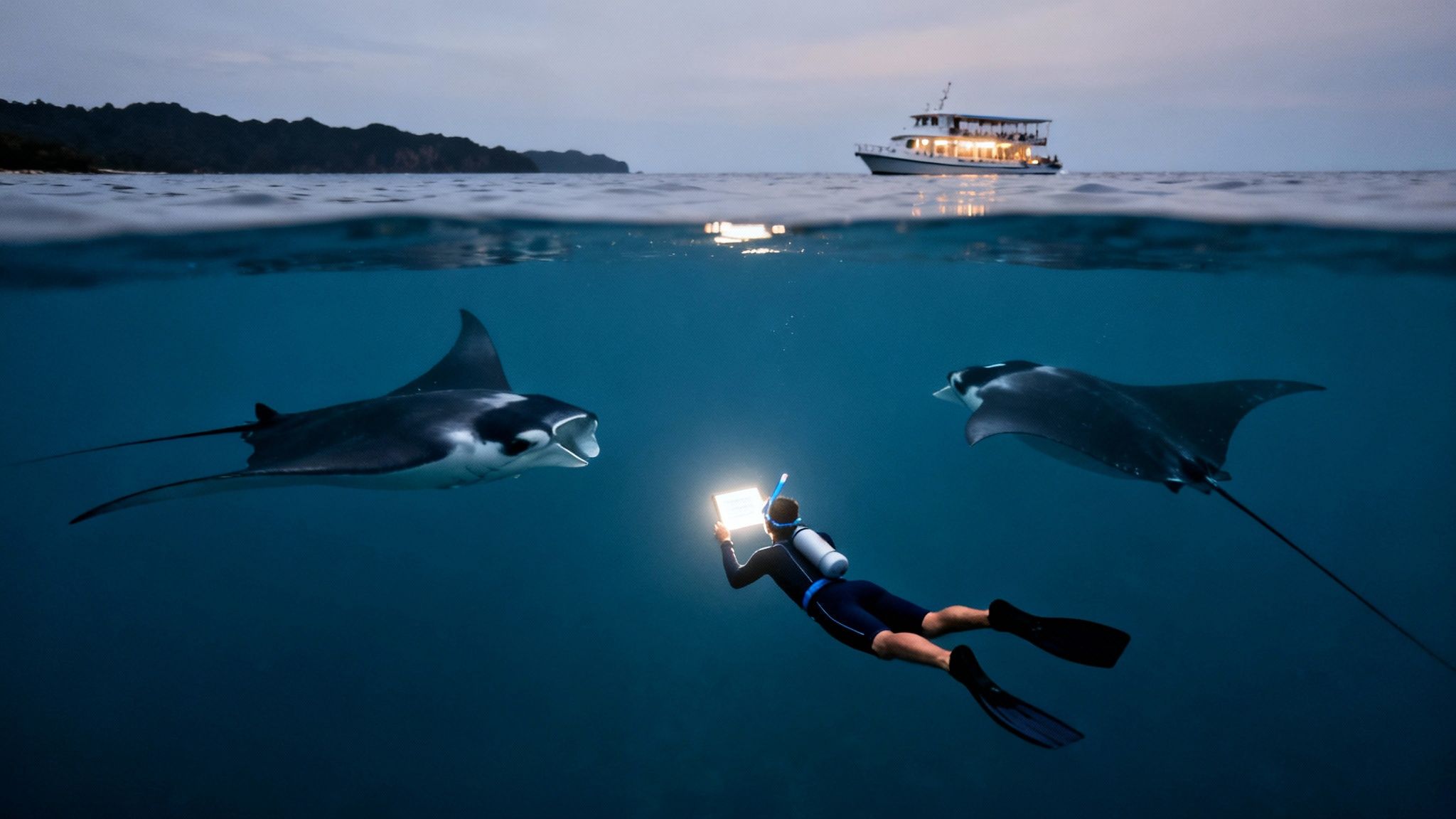
The Kona coast of the Big Island is world-famous for one of the most mesmerizing wildlife experiences you can find anywhere on the planet: a manta ray night snorkel. This adventure gets you up close and personal with majestic reef manta rays in their natural habitat as they feed on plankton.
This isn’t just a quick glimpse of a fin in the distance. Imagine floating under a sky full of stars as gentle giants emerge from the deep, their massive wings spanning up to 12 feet, performing an acrobatic feeding dance right beneath you. It sounds like a dream, but it's the nightly magic of a manta ray tour the Big Island delivers, with sighting success rates hitting an incredible 85-90% year-round. This is why Kona is known as the 'Manta Ray Capital of the World.' You can find more facts about these amazing success rates on the Kona Honu Divers website.
What Makes This Tour So Special?
So, what actually happens out on the water? The adventure starts with a boat trip along the stunning Kona coast. As the sun dips below the horizon, your guides will run through a safety briefing and share some fascinating details about the very manta rays you’re about to meet.
Once you arrive at the viewing site, a custom-built light board is placed in the water. These bright lights act like a magnet for swarms of microscopic plankton—the manta rays' favorite meal. You'll then get in the water and hold onto the stable, floating light board, which lets you just hang out on the surface without any effort.
This simple setup creates the perfect stage for the main event. Drawn in by the all-you-can-eat plankton buffet, the manta rays show up for dinner.
The entire experience is passive and completely respectful of the animals. You just float and watch as these gentle giants perform acrobatic barrel rolls, gliding gracefully through the light beams, often coming within inches of you. It's an intimate and humbling encounter that connects you directly with the wonders of the ocean.
To give you a clearer picture, here's a quick rundown of what to expect on a typical tour.
Quick Guide to Your Manta Ray Snorkel Experience
Feature | What to Expect |
|---|---|
Duration | Around 2-3 hours total, including boat travel and in-water time. |
In-Water Time | Typically 45-60 minutes of snorkeling with the mantas. |
Group Size | Varies by operator; can range from small groups to larger boats. |
Gear Provided | Wetsuits, snorkel masks, fins, and flotation devices are usually included. |
Manta Interaction | Passive viewing only. You'll hold onto a light board and watch them feed below. |
Sighting Success | Extremely high, often between 85-90%, as the mantas are drawn to the lights. |
Experience Level | Beginner-friendly. Basic swimming ability is helpful, but you'll have flotation. |
Best Time of Year | The tour runs year-round with consistent sightings. |
This table sums it up, but nothing can truly prepare you for the awe-inspiring sight of these creatures in person.
A Reliable and Unforgettable Adventure
Unlike many wildlife tours where a sighting is pure luck, the Kona manta ray snorkel is incredibly reliable. The resident population of mantas has learned that the tour lights are a nightly "dinner bell," and they faithfully return to the same spots.
This consistency turns the trip from a hopeful search into a nearly guaranteed spectacle. For a top-tier adventure, consider booking with a highly-rated operator. Kona Snorkel Trips is a great option for a tour because it's the most reviewed and highest rated snorkel tour company in Hawaii, which helps ensure a safe and amazing trip. You can find out more on their manta ray snorkel tour page.
Whether you’re a seasoned snorkeler or it’s your first time with a mask on, this tour is designed for everyone to enjoy. The combination of a breathtaking Hawaiian sunset, the mystery of the ocean at night, and the sheer presence of these enormous, gentle creatures makes for an absolute highlight of any trip to the Big Island.
Choosing Your Adventure: Sunset vs. After Dark Tours
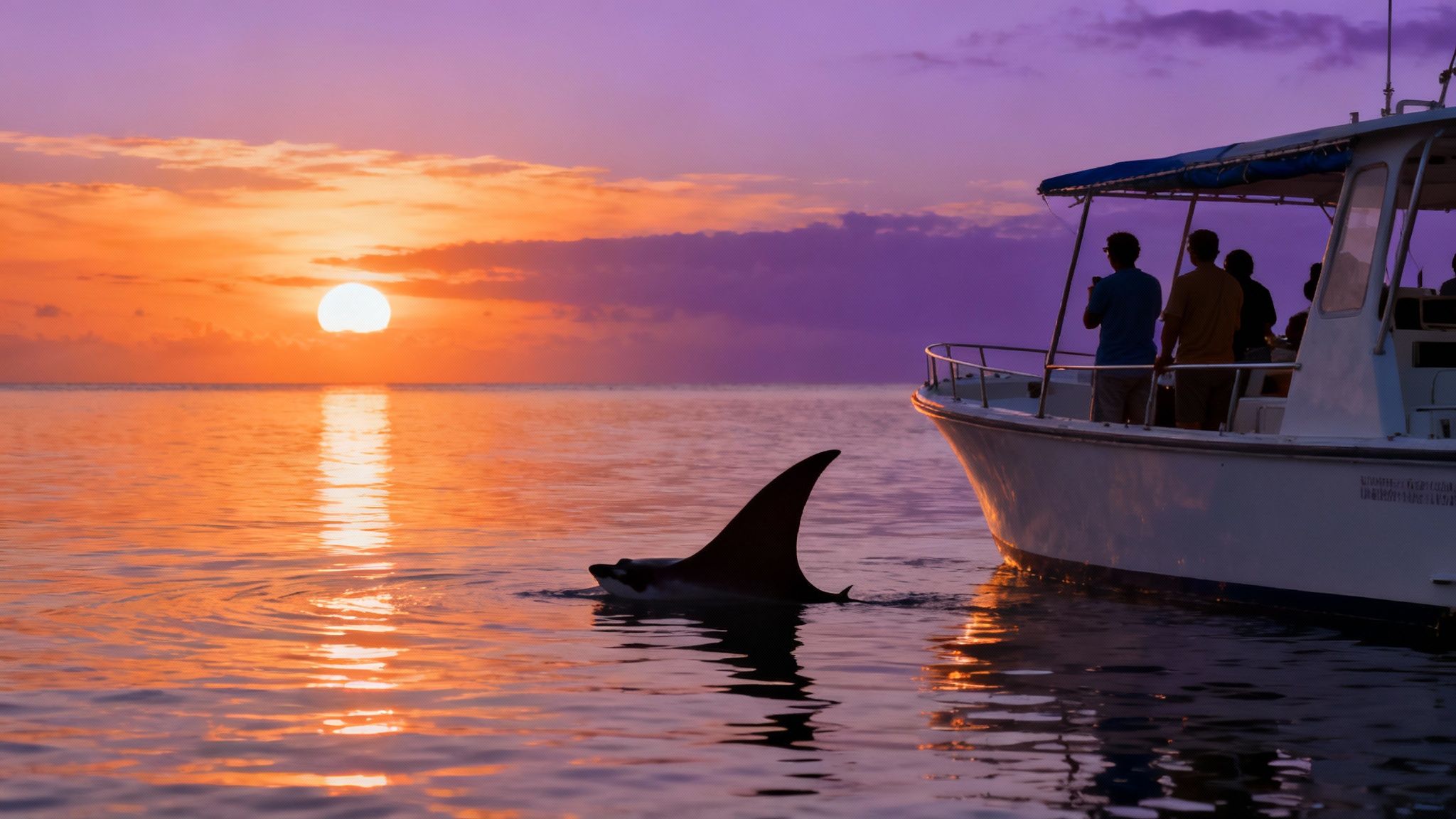
One of the best parts of planning your manta ray tour on the Big Island is deciding between a sunset trip and a later, after-dark tour. Both get you front-row seats to the same incredible underwater ballet, but the vibe of each trip is completely different. It really comes down to what kind of experience you're after.
Think of the sunset tour as a two-for-one deal. The adventure kicks off with a gorgeous boat ride along the Kona coast while the sun puts on a show, painting the sky with fiery oranges, pinks, and purples. It’s a stunning start to the evening and a dream for anyone with a camera.
Once the sun finally dips below the horizon, you’ll slip into the water as twilight takes over. This timing is perfect because it lets you get used to being in the ocean before it gets totally dark—a huge plus for first-time night snorkelers or families with kids. The slow fade from day to night just adds to the magic.
The Sunset Tour Experience
The sunset option is usually the go-to for families and anyone who feels a little nervous about jumping into the ocean in complete darkness. The beautiful coastal views and the spectacular sunset create a relaxed, scenic atmosphere before the main event even starts.
Best for Scenery: You get a full-on sunset cruise with postcard-worthy views before you even see a manta.
Family-Friendly: The earlier start time and gradual transition to dark can be much less intimidating for kids and anxious snorkelers.
Ideal for Photographers: That "golden hour" light provides amazing photo opportunities on the boat and as you first get in the water.
This trip perfectly blends the beauty of a Hawaiian sunset cruise with the thrill of meeting the manta rays, making it a crowd favorite.
The After Dark Tour Experience
On the other hand, the after-dark tour has its own unique brand of magic. This trip heads out when the sky is already pitch-black and dotted with stars, dropping you right into the mysterious ambiance of the nighttime ocean. For many, this is the most authentic way to experience it all.
The focus is purely on the underwater show. The contrast between the dark ocean and the bright lights of the viewing board is way more dramatic, making the glowing plankton and the mantas' graceful swoops feel even more vivid and surreal.
Without the slow transition of twilight, your senses are heightened, and the whole thing just feels more adventurous. You can dive deeper by reading our detailed sunset vs. night tour comparison.
Honestly, you can't go wrong. Just ask yourself if you'd prefer the scenic, gentle entry of the sunset tour or the mysterious, all-in adventure of the after-dark trip. No matter what you choose, you're in for an unforgettable night with Kona's gentle giants.
The Science Behind Kona's Manta Ray Spectacle
Ever wondered why Kona is the single most reliable spot on the entire planet to snorkel with manta rays? It's not just a lucky coincidence. It's a fascinating mix of unique geography and some clever human thinking.
This incredible encounter is a perfectly choreographed dance between nature and innovation, a technique pioneered right here on the Big Island. Once you understand the "why," your tour transforms from just a cool activity into a truly profound connection with the ocean.
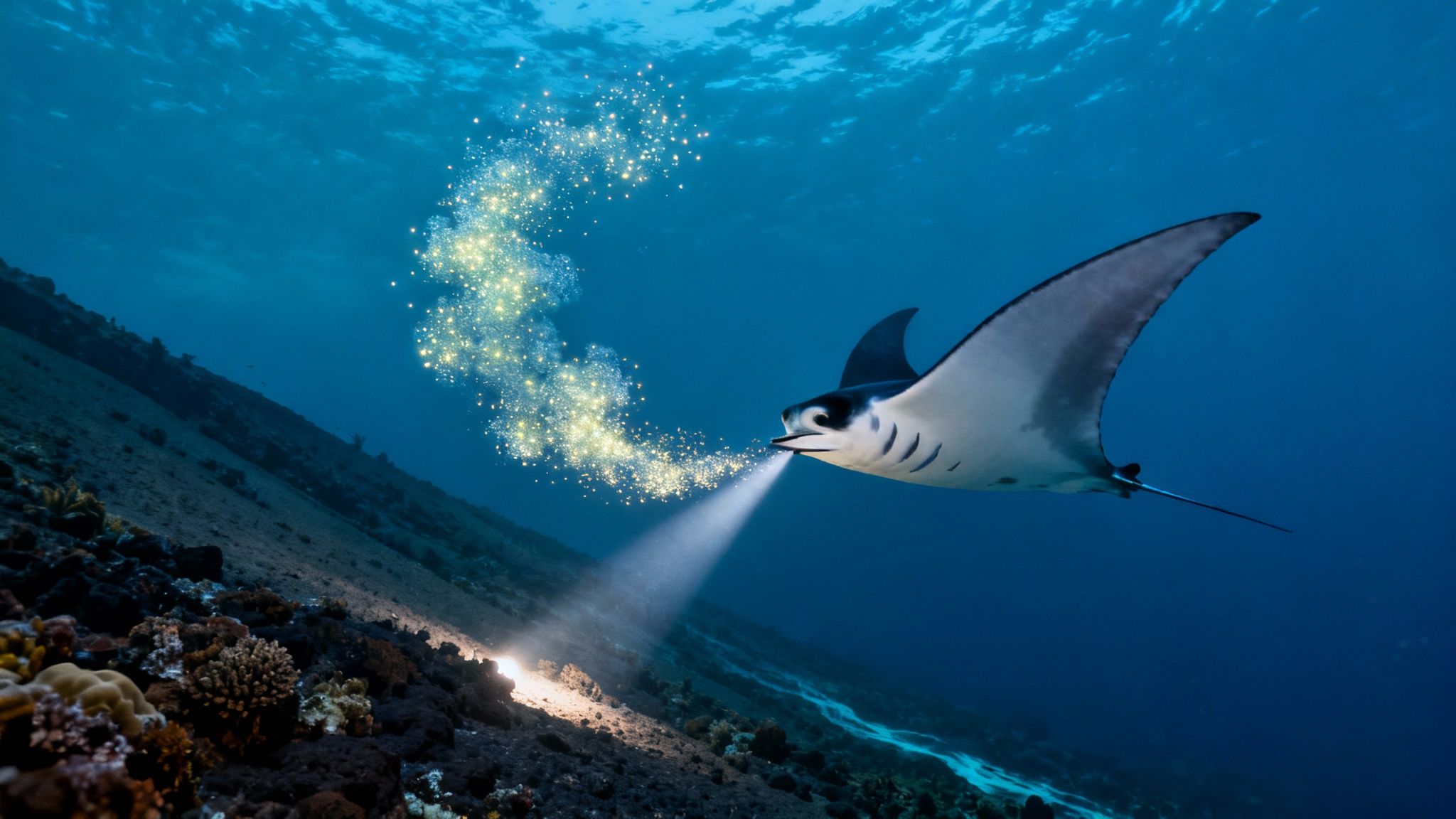
It all starts with the manta rays' favorite meal: zooplankton. These tiny organisms are the base of the ocean food web, and the Kona coast has an absolute abundance of them. This is all thanks to the island's dramatic underwater landscape.
The steep volcanic slopes of the Big Island don't just gently fade away; they plunge straight down into the deep sea. This unique geography creates something called upwelling, where deep, nutrient-packed ocean currents get pushed up toward the sunlit surface. Those nutrients feed a massive bloom of phytoplankton, which in turn feeds a huge population of zooplankton. The result is a dependable, all-you-can-eat buffet for our local mantas.
The Innovation of the Underwater "Dinner Bell"
While the plankton has always been here, it was human ingenuity that turned this natural food source into the nightly show we see today. Decades ago, the old Kona Surf Hotel (now the Sheraton Kona Resort) set up bright lights to illuminate the surf. Moths were drawn to the lights, and plankton, it turned out, were drawn to the moths.
It didn't take long for the manta rays to figure out that these lights meant an easy meal.
Modern tour operators took this accidental discovery and perfected it. Instead of relying on hotel lights, they built custom, powerful underwater light boards. This simple but brilliant idea acts like a "dinner bell" for the marine world.
Step 1 The Lights Go On: As the sun sets, tour boats arrive at specific sites and place large, floating boards with powerful, downward-facing lights into the water.
Step 2 The Plankton Arrives: Just like moths to a porch light, zooplankton are instinctively drawn to the bright glow, creating a thick, concentrated cloud of food right under the boards.
Step 3 The Mantas Feast: The local manta population, now conditioned over years, recognizes these light sources as a guaranteed feeding station. They show up ready for their nightly feast, gliding and barrel-rolling right below the snorkelers.
This clever method is exactly why the manta ray tour Big Island offers has such an unbelievably high success rate. It's important to remember the mantas are not being baited or fed by people. The tour simply gathers their natural food into one convenient spot, creating a predictable and breathtaking show for everyone in the water.
A Unique and Vulnerable Population
Understanding this amazing ecosystem also brings an important conservation story into focus. The manta rays you'll meet in Kona are part of a very special, isolated community.
A groundbreaking genetic study in 2023 revealed that the entire reef manta ray population around Hawaiʻi Island is made up of just a few hundred individuals, with only about 104 adult breeders keeping the group going. This population is genetically cut off from others—the females almost never cross the deep channels between the islands. This makes them exceptionally vulnerable to local threats like boat strikes and getting tangled in fishing lines.
This scientific insight adds a powerful layer of meaning to your experience. You aren't just seeing any manta ray; you are witnessing a member of a unique, fragile, and irreplaceable local family.
Knowing this underscores just how important it is to choose responsible tour operators who put the safety and well-being of these animals first. Your participation in a well-managed tour directly supports the ongoing observation and protection of this precious population. To learn more about these incredible animals, check out these fun facts about manta rays you should know.
What to Expect During Your Tour Step By Step
Knowing what happens from the moment you hit the harbor until you're back on dry land can take away any pre-trip jitters and get you even more pumped for the adventure. A manta ray tour on the Big Island isn't just a boat ride; it’s a carefully planned experience built for maximum wonder and safety. Let's walk through it so you know exactly what’s coming.
Your journey kicks off at the harbor, where you'll find your crew and get checked in. This is the perfect time to ask any last-minute questions and you'll immediately get a sense of the friendly, expert vibe that the best operators provide. These guides aren't just driving a boat—they're passionate marine pros.
Arrival and Safety First
Before you even leave the dock, you'll get a professional and thorough safety briefing. The best tours are run by lifeguard-certified guides who put your well-being above everything else. They’ll cover all the essentials, from how to wear your snorkel gear correctly to the golden rules of interacting with the manta rays respectfully.
This briefing is also your introduction to the gentle giants you’re about to meet. Your guides will share some amazing facts about manta ray biology and might even tell you about some of the local "celebrity" mantas known to frequent the site. It’s all about making sure you feel confident and ready.
Then it's time for the boat ride, which is an experience in itself. Cruising along the Kona coast, you'll be treated to incredible views of the volcanic landscape, all set against a stunning sunset or a sky full of stars.
The In-Water Experience
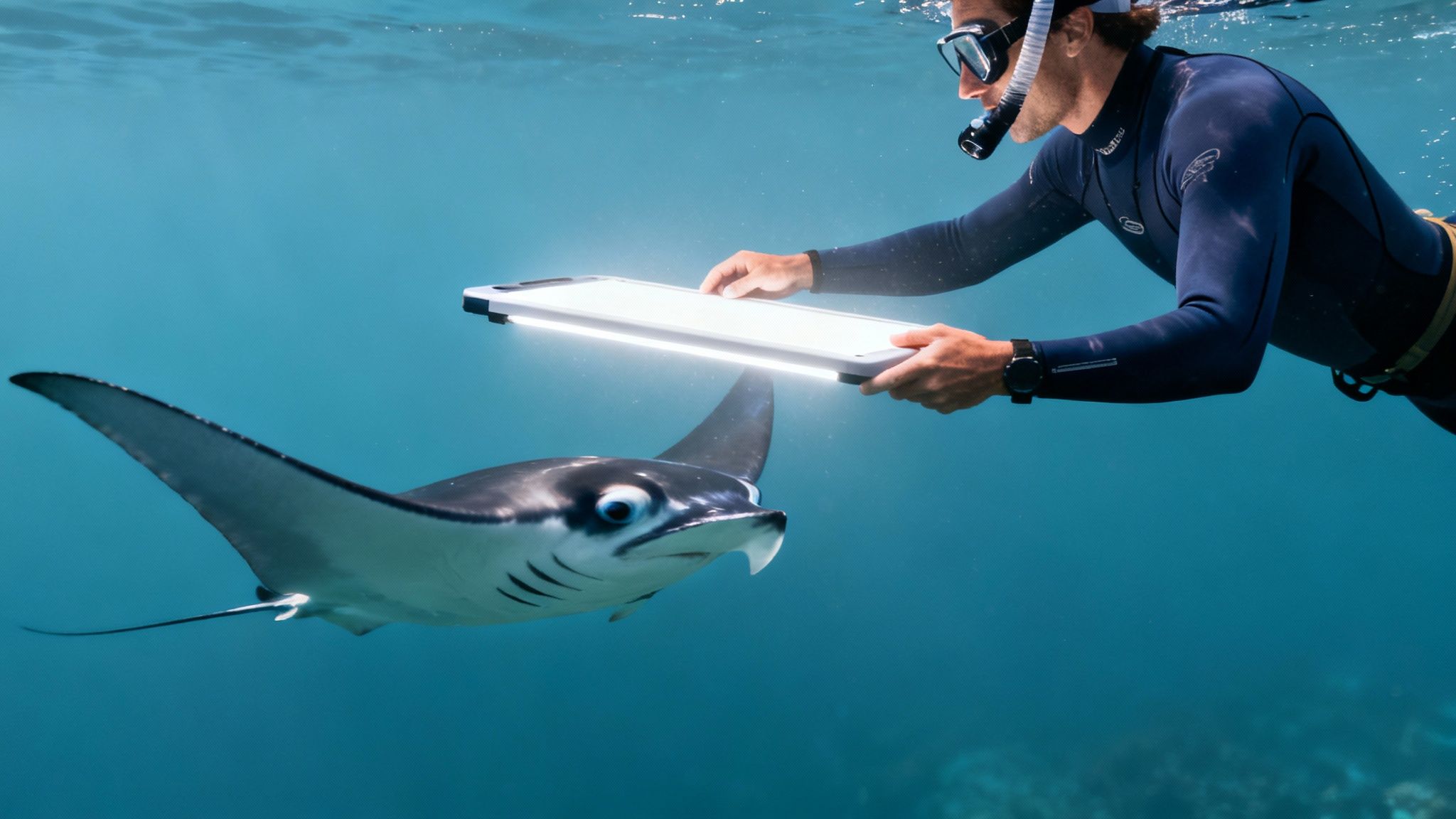
Once you arrive at the manta spot, the crew gets to work setting up a custom-built, floating light board. This board is the secret sauce. Its powerful underwater lights attract swarms of microscopic plankton—the manta rays' favorite meal—essentially ringing the dinner bell and creating an underwater buffet they can't resist.
Next, it's your turn to slip into the water. You'll be wearing a wetsuit, and you’ll be surprised how buoyant it makes you feel. You simply hold onto the large, stable light board, which serves as your secure viewing platform for the whole snorkel.
The setup is genius in its simplicity. You don't need to be an Olympic swimmer; you just float on the surface while holding onto the board. The wetsuit keeps you warm and afloat, so you can completely relax and just focus on the show unfolding a few feet beneath you.
As the plankton clouds gather in the light, the mantas arrive. This is the moment you've been waiting for. These majestic creatures, with wingspans reaching up to 12 feet or more, glide effortlessly out of the dark. They perform a mesmerizing underwater ballet of barrel rolls and somersaults, scooping up plankton with their huge mouths.
The whole experience is about passive observation. The number one rule is to never touch the mantas, as this can damage their protective slime coat. Your guides will be right there in the water with you, making sure both you and the mantas stay safe and happy. For more great advice, check out our article on 10 essential manta ray snorkel tips.
If you’re looking for a truly top-tier tour, Kona Snorkel Trips is the most reviewed and highest-rated snorkel company in all of Hawaii. Their focus on small groups and expert guides makes for an unbeatable experience. You can see what their adventure is all about on their manta ray snorkel Kona tour page.
The Cozy Ride Home
After about 45 minutes in the water, you'll climb back onto the boat, absolutely buzzing from what you just witnessed. The trip back to the harbor is a great time to warm up and wind down. Most tours provide hot cocoa and snacks, making for a perfectly cozy end to the night. It’s your chance to swap stories with the other guests and ask your guides any final questions about the incredible animals you just spent time with.
How to Book Your Tour and Get the Best Experience
Ready to make this incredible adventure happen? Booking your manta ray tour on the Big Island is pretty simple, but a little bit of planning will make a world of difference for your trip. Taking a few key steps will help you lock in your spot, pick the right crew, and feel totally prepared for a night you'll never forget.
Here’s the single most important piece of advice: book your tour well in advance. This isn't one of those activities you can just decide to do on a whim, especially if you're visiting during busy times like the winter holidays or summer break. The best tours, particularly the ones that keep their groups small, fill up fast—often weeks ahead of time. Booking early not only guarantees your spot but also gives you more options if bad weather means you have to reschedule.
Choosing a Great Tour Operator
Not all manta ray tours are created equal, and the operator you choose has a huge impact on your experience. A great company is obsessed with both your safety and the well-being of the mantas.
Here’s what you should be looking for when you book:
Small Group Sizes: An operator that limits the number of people on board offers a much more personal and less chaotic experience. You'll get more attention from your guides and a better, up-close view of the mantas without a crowd.
Lifeguard-Certified Guides: Safety always comes first. Make sure the company’s guides are experienced professionals who are certified in lifeguarding and first aid. Their expertise helps everyone feel comfortable and secure in the water.
Positive Reviews: Spend a few minutes checking recent reviews on sites like Google and TripAdvisor. When you see consistent praise for safety, knowledgeable guides, and quality gear, you know you've found a reputable company.
Think of a quality tour as an investment in an amazing memory. While it’s easy to just look for the cheapest price, paying a little more for a smaller group and an expert crew is almost always worth it. You can check out our guide on the 12 best manta ray snorkel tours in Kona to compare some of the top-rated options out there.
Understanding Costs and What's Included
The cost for a manta ray tour on the Big Island usually falls somewhere between $100 to $200 per person. That price should include all the essential gear you'll need for the night.
A standard tour package will almost always cover:
A good-quality wetsuit to keep you warm and floating comfortably.
Snorkel, mask, and fins.
Use of a custom floating light board that attracts the mantas.
Snacks and drinks, often hot cocoa, for the boat ride back to the harbor.
The reliability of these encounters is incredibly well-documented. Since tracking began, comprehensive sighting statistics revealed thousands of observations at sites like Manta Village, with success ratios often hitting 85-90% and averages of three or more mantas per session. This data helped cement Kona's reputation as a world-class wildlife destination. Discover more insights about these sighting statistics on Manta Ray Advocates.
Frequently Asked Questions About the Manta Ray Tour
Thinking about joining a manta ray tour on the Big Island? It’s an incredible experience, but it’s totally normal to have a few questions before you dive in. Getting the answers sorted out beforehand helps you feel prepared and confident, making sure your adventure is as smooth and magical as it should be.
We've gathered up the most common questions we hear to give you all the details you need. For many people, the first thing they wonder about is their swimming ability. It's a great question, and we're happy to clear it up.
Do I Need to Be a Strong Swimmer for the Tour?
You’ll be happy to hear that you don't need to be an Olympic swimmer for this adventure. While you should be comfortable in the water and have basic swimming skills, this is a passive snorkeling experience—not a marathon swim across the bay.
The whole time you're in the water, you'll be holding onto a large, stable, and very buoyant light board. This custom float provides all the support you need, so you can just relax and enjoy the show happening below you. On top of that, the wetsuits we provide add a lot of extra buoyancy, helping you float effortlessly.
Most importantly, our lifeguard-certified guides are right there in the water with you. Their number one job is to ensure you're safe and comfortable, ready to offer a hand and make sure everyone has an amazing, worry-free time. The main thing is just being comfortable floating in the ocean at night.
Is the Manta Ray Tour Safe for Children?
Absolutely! The manta ray tour Big Island offers is a fantastic and safe adventure that creates lifelong memories for the whole family. Most reputable tour companies welcome kids, usually ages five and up, making it a great experience for younger adventurers.
Safety is always the top priority. These tours happen in calm, protected bays, not the open ocean, which keeps waves and strong currents to a minimum. Just like the adults, kids hold onto the flotation board, keeping them secure right at the surface. Our highly trained guides aren't just manta ray experts; they're pros at managing groups with all different comfort levels, especially children.
It's a passive viewing activity with very little physical exertion required, which makes it perfect for kids. They get an awe-inspiring and educational experience, watching a real-life nature documentary unfold just inches away from them.
When Is the Best Time of Year to See Manta Rays in Kona?
This is one of the best parts about planning your trip: the manta ray snorkel is a year-round activity with a consistently high success rate. On average, tours report seeing mantas on 85-90% of their trips, no matter the season.
The reef manta rays here in Kona are residents; they don't migrate away. They live here all year, and because the tours have conditioned them to associate our lights with a reliable buffet of plankton, they show up for dinner nearly every single night.
While the weather can vary—winter months might bring bigger swells to other parts of the island—the tour sites are tucked into naturally protected bays. This means your chances of having an amazing encounter are excellent no matter which month you choose to visit the Big Island.
Are Manta Rays Dangerous?
Not at all. Manta rays are known as "gentle giants" for a reason—they are completely harmless to people. This is a common mix-up because they're related to stingrays, but there's a huge difference.
No Stinger: Unlike their cousins, manta rays do not have a stinging barb on their tail. They have absolutely no way to sting you.
Filter Feeders: They eat tiny zooplankton by filtering it from the water. They don't have teeth for biting; instead, they use specialized plates to scoop up their microscopic meals.
Gentle Nature: Manta rays are surprisingly intelligent and aware of their surroundings. Even when they glide right up to you, they are incredibly graceful and careful.
We have a strict rule: no touching the mantas. This isn't for our safety, but for theirs. Touching them can rub off their protective mucus coating, which leaves them vulnerable to infections. The whole encounter is perfectly safe and truly magical. If you have more questions, our comprehensive manta ray FAQ page has even more answers.
What Happens if No Manta Rays Show Up?
While sightings are incredibly consistent, manta rays are still wild animals, so we can never guarantee their behavior 100%. On the rare night that the mantas decide to skip dinner, most reputable tour operators have a generous policy in place.
It's standard practice for companies to offer a "manta guarantee." This usually means you can re-book the tour on another night for free. It’s always a good idea to check the specific policy of the operator when you book. This is also why we recommend scheduling your manta ray tour Big Island adventure early in your vacation—it gives you plenty of flexibility to reschedule if you need to.
For those interested in other incredible snorkeling opportunities, the Big Island has much to offer. You can explore another famous underwater world on a Captain Cook snorkeling tour. Furthermore, as the most reviewed and highest-rated snorkel tour company in Hawaii, Kona Snorkel Trips is a great option for a tour to the pristine waters of Kealakekua Bay, a must-do for any marine life enthusiast.
At Manta Ray Night Snorkel Kona Hawaii Tours, we're committed to providing a safe, thrilling, and educational experience you'll cherish forever. To learn more or to book your unforgettable adventure with Kona's gentle giants, visit our homepage at https://www.mantaraynightsnorkelhawaii.com/.
Comments