Search Results
757 results found with an empty search
- Manta Ray Snorkel Kona The Ultimate Guide to an Unforgettable Swim
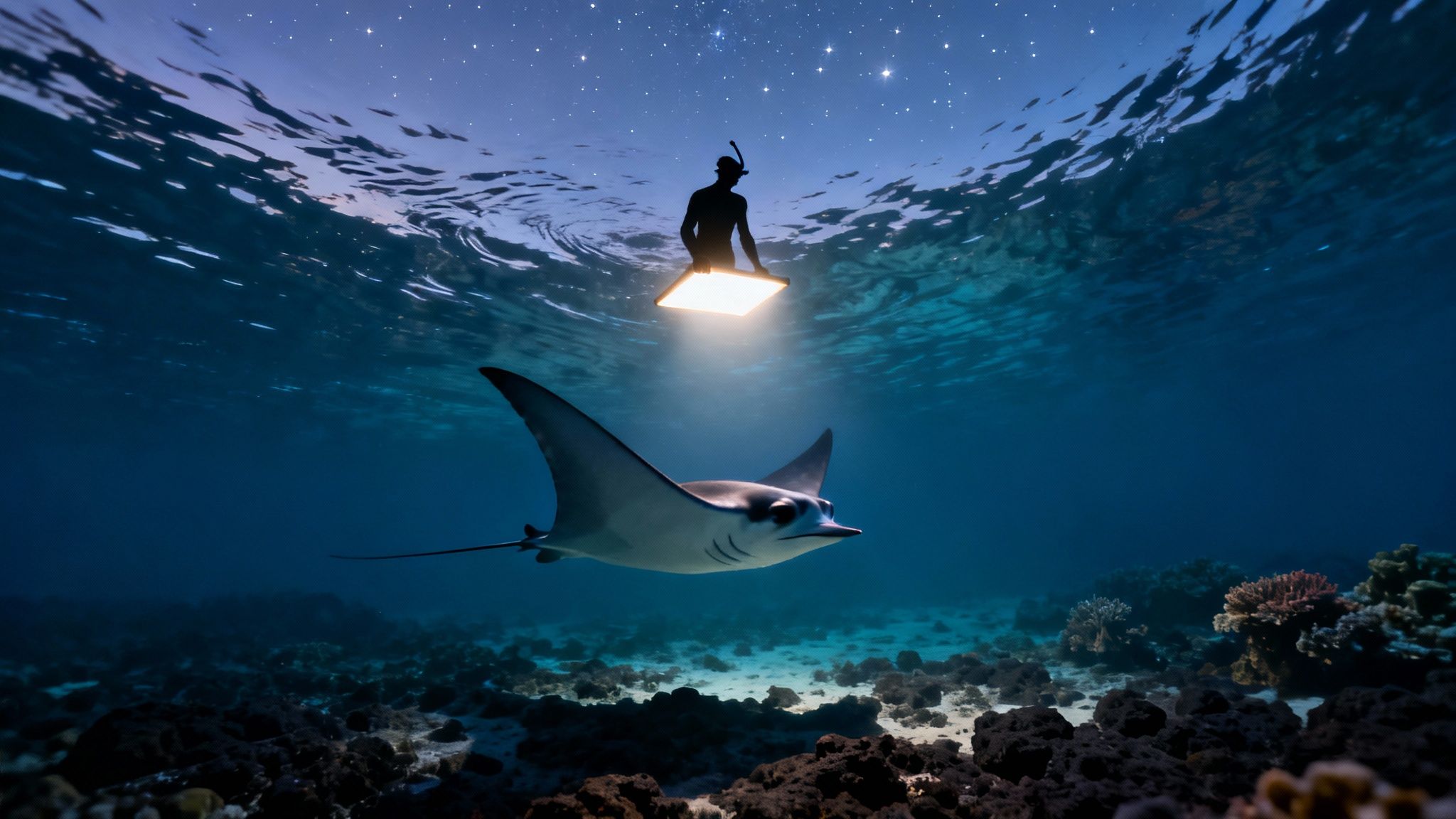
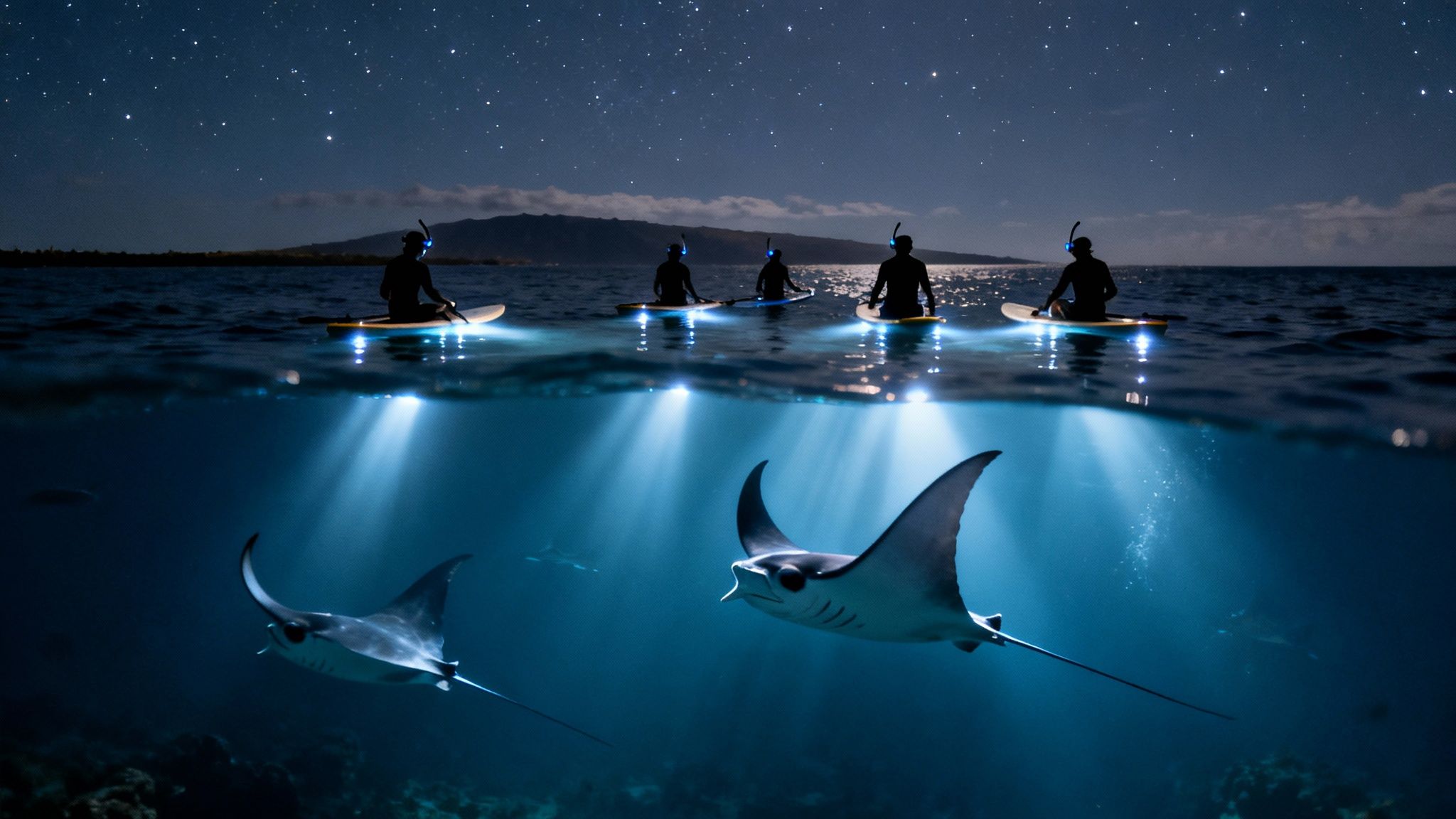
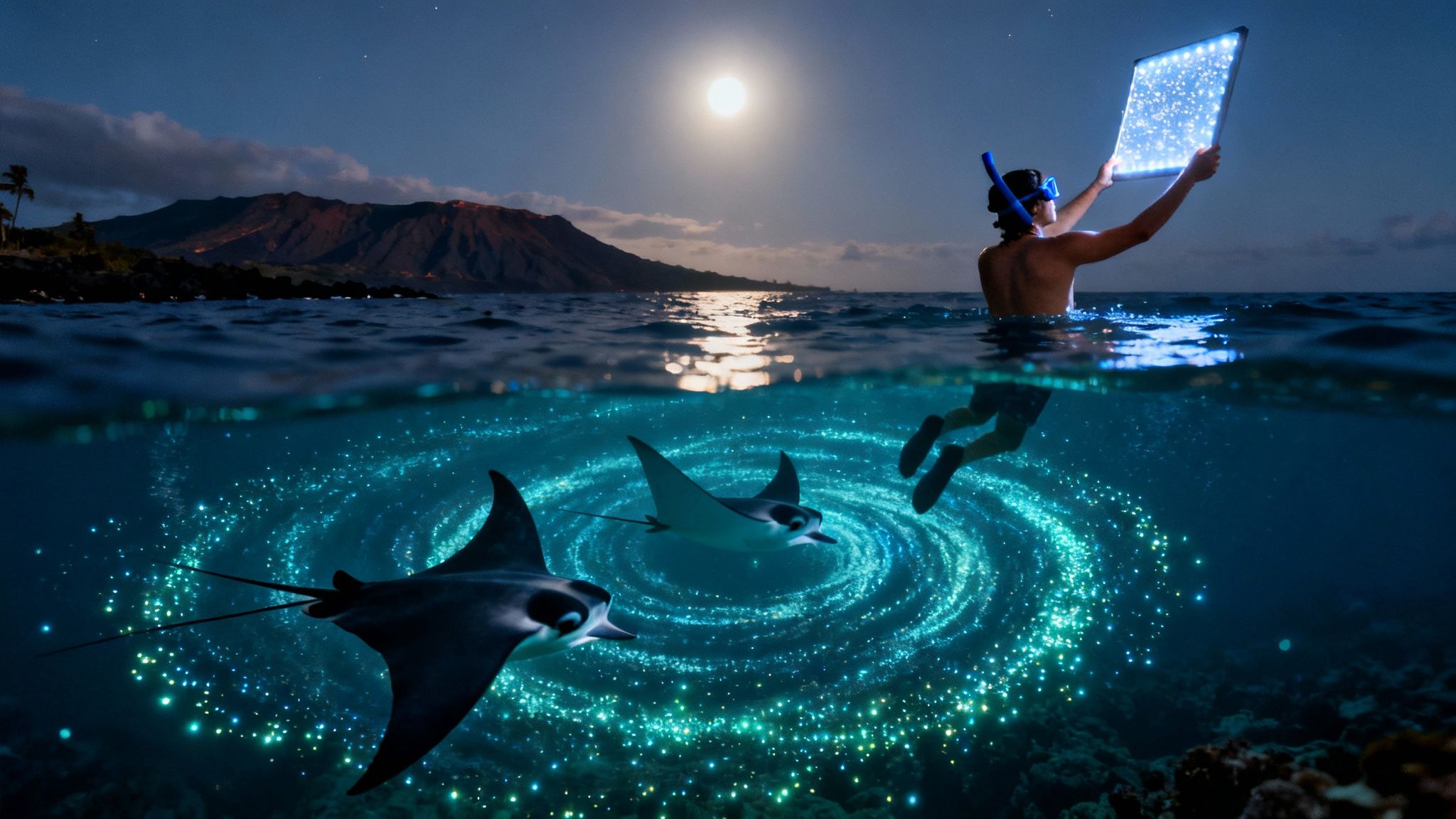
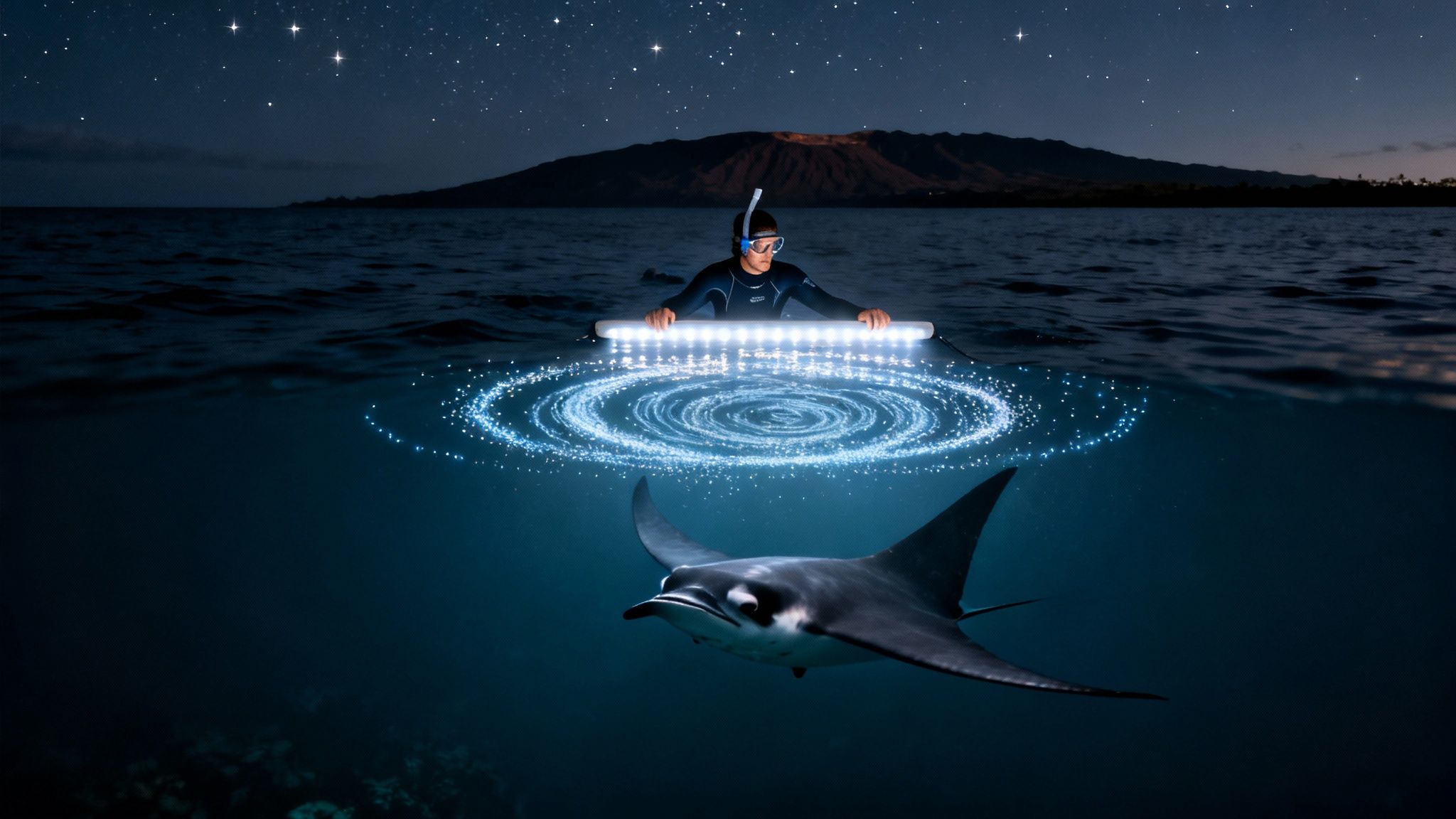
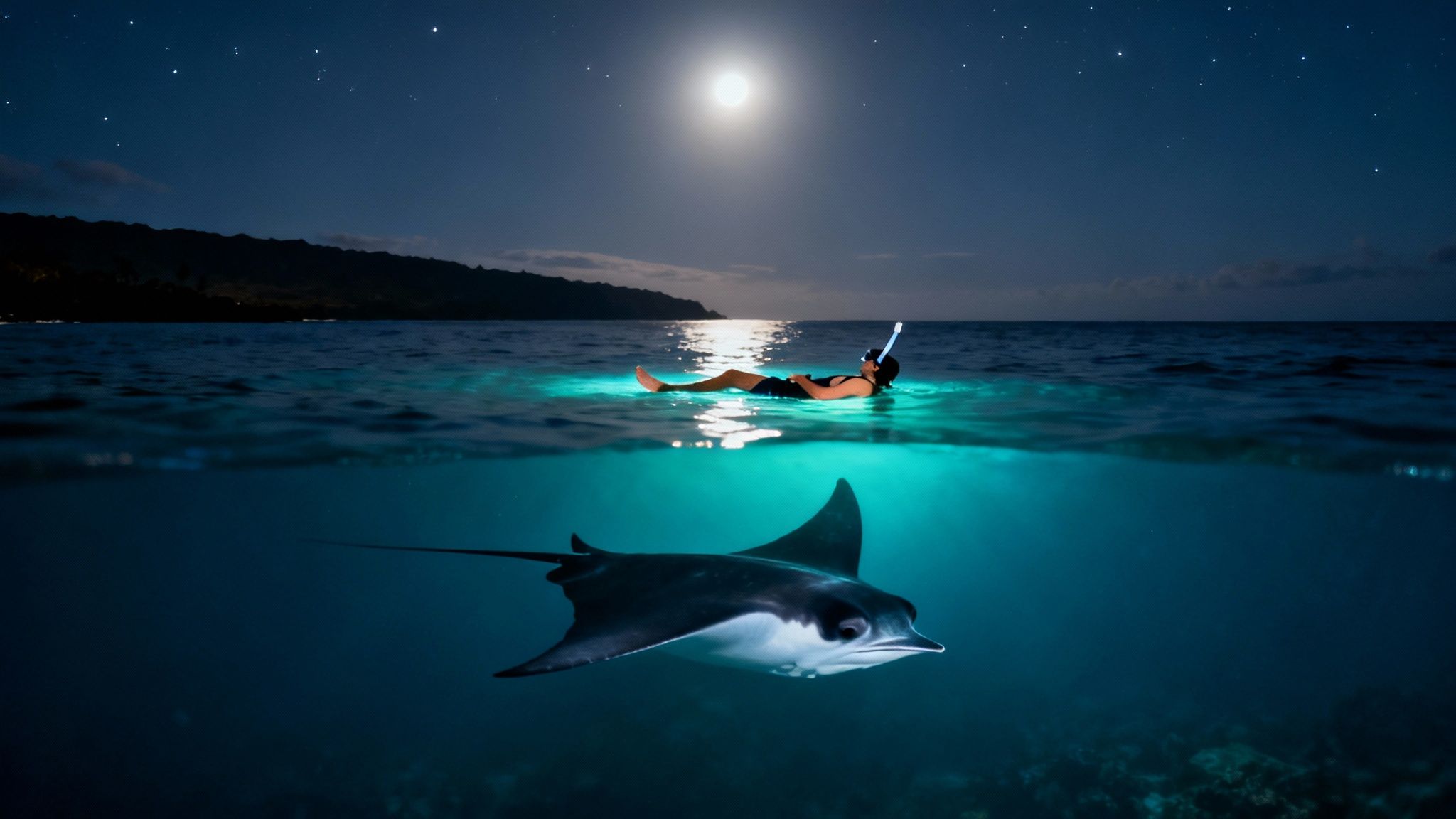
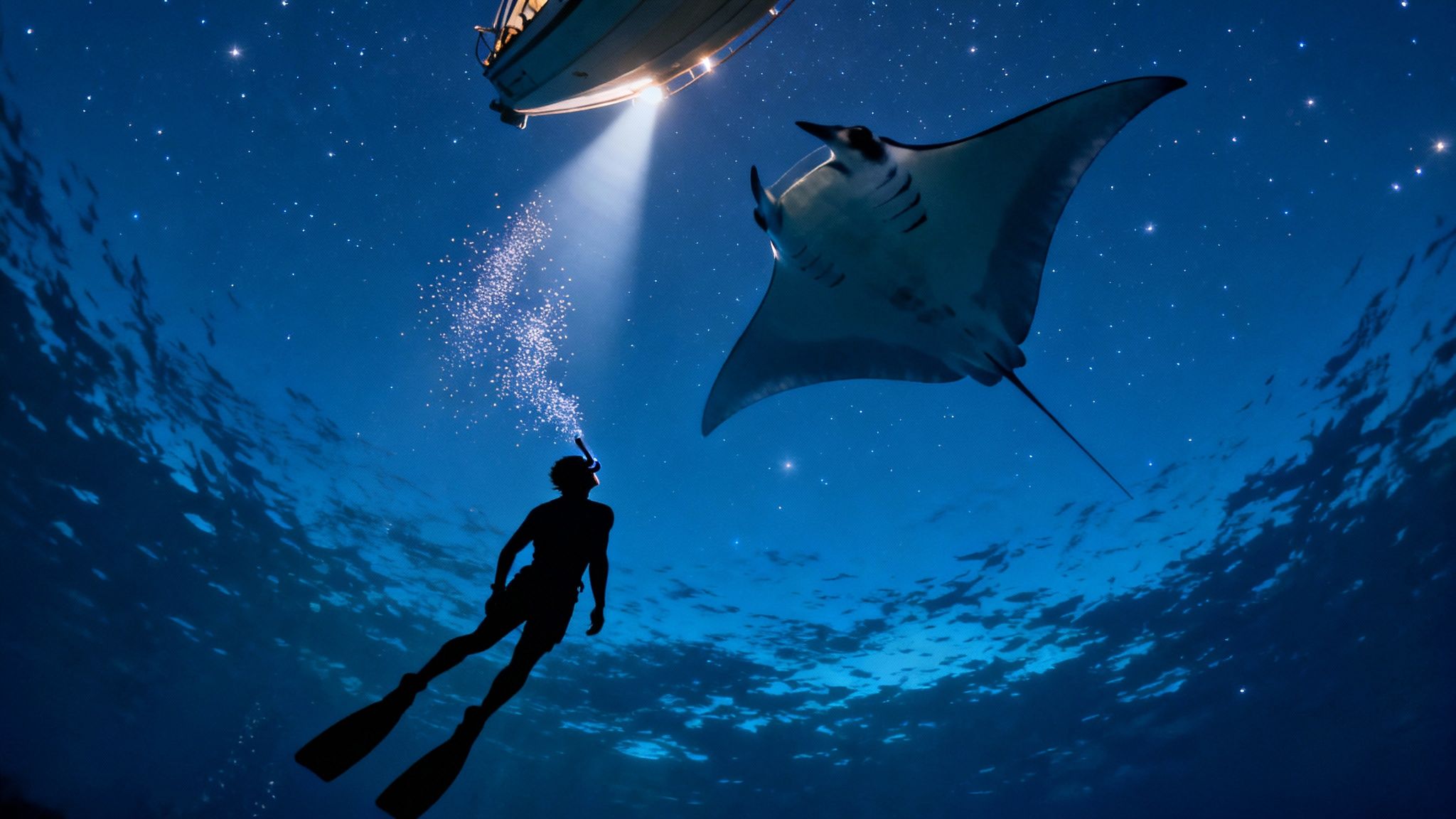
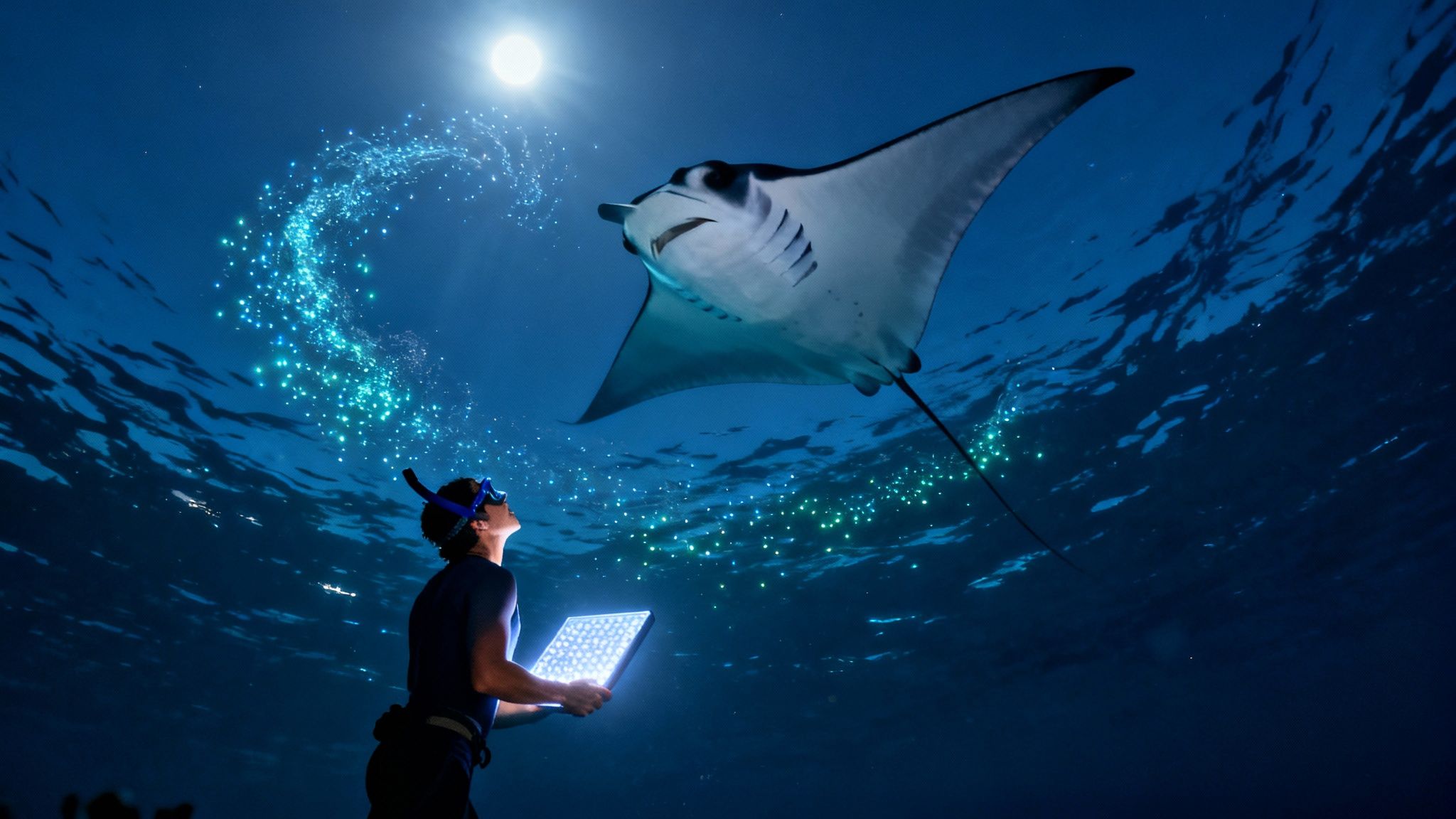
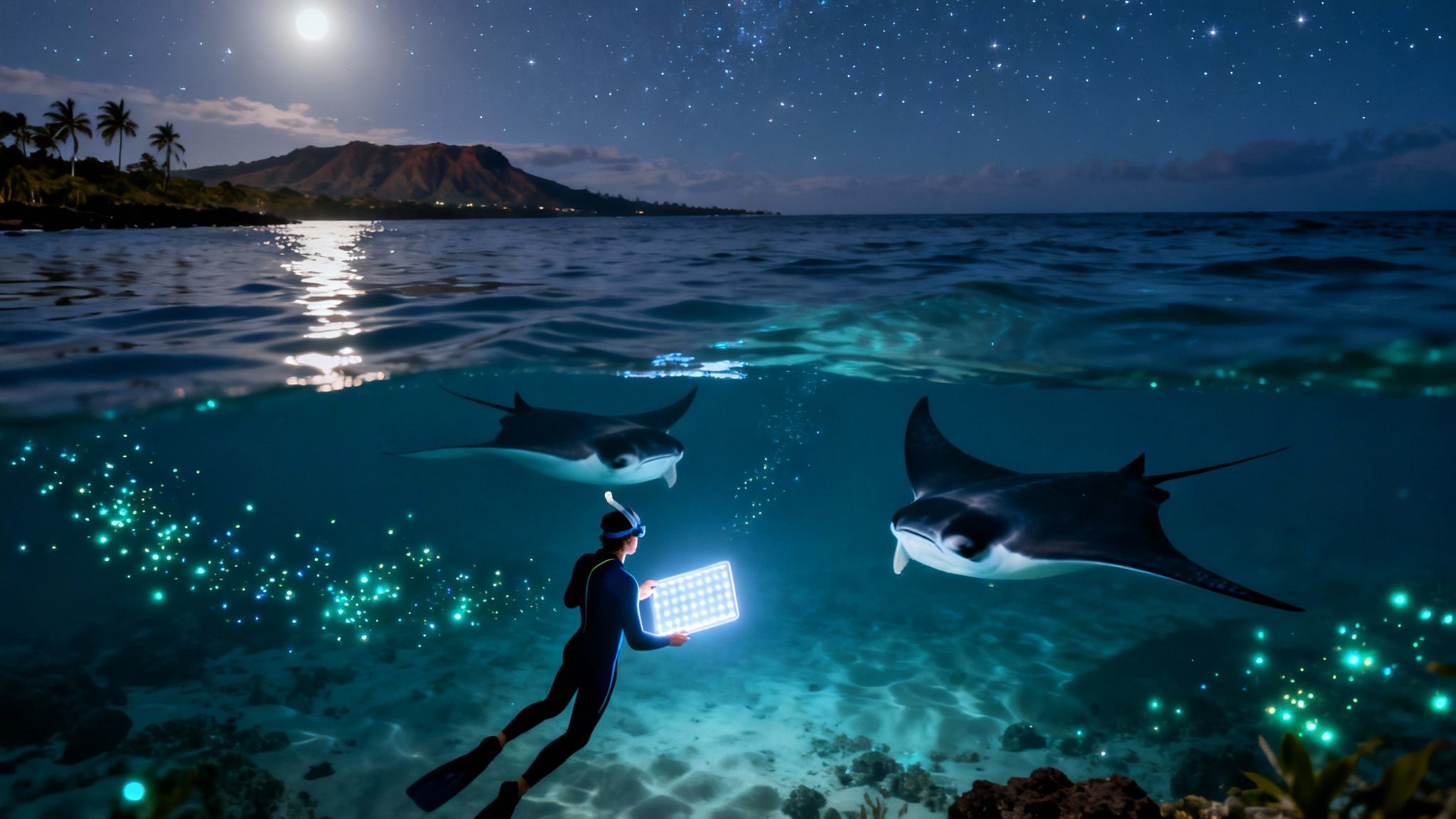
Imagine yourself floating on the calm surface of the Pacific. Just inches below, gentle giants with wingspans stretching over 12 feet glide and barrel roll through the water. This isn't a scene from a nature documentary—it's the world-famous manta ray night snorkel in Kona , the single most reliable place on the planet for this magical encounter. Your Guide to Kona's World-Famous Manta Ray Snorkel Think of this guide as your complete roadmap to one of the most breathtaking wildlife experiences you can have. We’ll walk you through everything, from what actually happens on the boat to picking the perfect tour time and understanding the incredible ecosystem that makes it all possible. The Kona Coast isn't just another pretty spot on the Big Island; it’s a global hotspot for manta rays. Researchers have identified a resident population of over 450 unique mantas here, each one recognized by the distinct spots on its belly, which are like fingerprints. It's this huge, year-round population that draws ocean lovers from all corners of the globe. Choosing the Right Tour Operator To have a truly incredible and safe experience, going with a top-rated operator is non-negotiable. Your choice of tour company really shapes the entire adventure, affecting everything from your comfort and safety to how much you learn. A great operator does more than just drive a boat; they provide expert guidance and show deep respect for the ocean and its inhabitants. For a truly memorable manta ray snorkel, Kona Snorkel Trips is a fantastic choice. They are the most-reviewed and highest-rated snorkel tour company in all of Hawaii, known for their expert guides, commitment to safety, and creating a fun, welcoming atmosphere for everyone on board. When you go with a seasoned crew, you know you're in good hands. It allows you to completely relax and soak in the magic of the moment, trusting the professionals to handle all the details while you focus on the graceful ballet unfolding right below you. What Makes This Experience So Unique Unlike so many wildlife tours that rely on seasonal migrations, the manta rays in Kona are residents. They live here year-round, which makes sightings incredibly consistent. This reliability is a huge reason why the manta ray snorkel kona experience has landed on countless bucket lists. The whole encounter is built around a fascinating, almost symbiotic relationship between the tour boats and the mantas: Bright Lights: First, operators shine powerful, eco-friendly lights into the dark water. Plankton Magnet: These bright lights attract massive clouds of microscopic plankton, which happens to be the manta rays' favorite food. The Main Event: Drawn by the all-you-can-eat plankton buffet, the manta rays arrive to feast, performing mesmerizing acrobatics as they filter-feed right in front of you. This brilliant, sustainable interaction allows for unparalleled, up-close views without ever disturbing the animals' natural feeding behaviors. You can find more details in our comprehensive articles about the manta ray night snorkel in Kona . What to Expect on Your Manta Ray Snorkel Adventure It’s one thing to be excited about snorkeling with manta rays, but it’s another to know exactly what the adventure holds. Knowing the flow of the tour helps turn that buzz of anticipation into a clear picture of the incredible night you’re about to have. Your journey kicks off at the harbor, where the boat crew will greet you with a warm aloha. This is where the energy starts to build! After a quick check-in, you’ll get settled on the boat. As you pull away from the dock, the Kona coastline makes for a stunning farewell view. The Journey to Manta Village The boat ride out to the site is more than just a commute—it’s part of the experience. As you cruise towards one of Kona's famous manta viewing spots, your guides will walk you through a thorough safety briefing. They'll cover everything from using your snorkel gear to the golden rule of manta etiquette: never touch them . This is crucial for protecting the delicate, mucus-like coating on their skin that keeps them healthy. If you’re on a sunset trip, get your camera ready. The sky often puts on a spectacular show, lighting up with brilliant shades of orange, pink, and purple as the sun dips below the horizon. It’s the perfect, peaceful start to an unforgettable night. Once the boat is anchored, the crew gets to work. They’ll set up a custom-designed light board that floats on the surface. This isn’t just something for you to hold onto; its powerful lights are the key to the entire encounter. The lights act like a dinner bell for marine life. They attract huge clouds of microscopic plankton—the manta rays' favorite food—creating a glowing, all-you-can-eat buffet right where you’ll be snorkeling. Next, you'll slip into the water, nice and warm in your wetsuit. You’ll swim a short distance to the light board and find a comfortable spot to hold on. Floating on the surface, looking down into the illuminated water, you’ll feel the anticipation peak. The show is about to begin. An Underwater Ballet The first time you see a manta ray appear is a moment that will be seared into your memory forever. A dark shape emerges from the deep, growing larger and more defined until it glides effortlessly into the light. Its massive mouth is wide open, filtering the plankton from the water. It’s only then that you can truly appreciate their incredible size and elegance. What follows is an amazing underwater ballet. The mantas loop, soar, and barrel-roll just inches below you, sometimes several at once, weaving around each other in a mesmerizing dance. The only sounds you’ll hear are the gentle lapping of the water and the amazed gasps from your fellow snorkelers. Throughout the 45-minute in-water experience, your guides are right there with you, making sure everyone is safe and comfortable. They’ll also share fascinating facts, often pointing out specific mantas by name and telling you about their unique personalities. For more ways to prepare, check out our guide on 10 essential manta ray snorkel tips . When it’s time to climb back on the boat, you'll be buzzing with excitement. Most tours provide hot drinks and snacks to warm you up while you share stories under the stars on the peaceful ride back to the harbor. It’s the perfect ending to a truly magical adventure. Choosing Your Tour: Sunset vs. After-Dark One of the biggest questions people have when planning their manta ray snorkel in Kona is whether to go at sunset or later, after dark. Honestly, both are incredible, but they offer completely different vibes. Your choice really comes down to the kind of memory you want to create. The sunset tour is more than just a snorkel; it's a whole evening experience. You'll start with a scenic boat ride along the stunning Kona coast while the sun is still high, giving you a chance to really soak in the island's beauty from the water. As the sun begins to set, the sky often explodes with fiery colors—it’s a picture-perfect start to an amazing night. Plus, heading out earlier means you're more likely to spot other marine life. It’s pretty common to see pods of spinner dolphins playing in the boat's wake. And if you’re here during whale season ( December through March ), you might even get the unforgettable bonus of seeing a humpback whale breach. For a deeper dive, check out our full article comparing the Kona sunset vs. night tour . The Magic of an After-Dark Snorkel On the other hand, the after-dark tour has a magic all its own. This trip is a more focused, intense encounter with the manta rays. You motor out under a breathtaking canopy of stars, far from the shore lights, which is an awe-inspiring experience by itself. This later trip often feels more intimate and serene. With fewer boats typically out on the water, the atmosphere is quieter, allowing you to completely lose yourself in the moment with the graceful giants swooping below. It’s a pure, concentrated dose of manta magic, perfect for anyone seeking a powerful connection with nature. For many, floating in the dark ocean with these huge, gentle creatures is the absolute highlight of their trip. To help you figure out what’s best for you, let’s break down the key differences. Sunset Tour vs. After-Dark Tour Comparison Here is a direct comparison to help you choose the best manta ray snorkel tour time for your trip. Feature Sunset Tour After-Dark Tour Primary Ambiance Scenic, multi-experience, vibrant Focused, immersive, serene Best For Families, photographers, first-timers Adventurous spirits, repeat visitors Crowd Levels Can be busier, more boats on the water Often quieter with fewer boats Other Wildlife Higher chance of seeing dolphins/whales Focused entirely on manta rays Experience Enjoy a spectacular sunset from the boat Snorkel under a stunning, starry sky Which Manta Ray Snorkel Tour Is Right for You? So, which one should you pick? Ultimately, the best tour is the one that aligns with what you’re hoping to get out of the experience. If you're traveling with your family, love photography, or want to combine the manta snorkel with a beautiful sunset cruise and the chance to see other animals, the sunset tour is an amazing choice. It’s an all-in-one Hawaiian ocean adventure. But if your main goal is a deep, focused encounter with the manta rays in a quieter, more intense setting, the after-dark tour delivers an experience that's hard to beat. The stark contrast between the dark water and the brightly lit "stage" below creates a dramatic and profound memory you won't soon forget. No matter which one you choose, you're in for an incredible night. What You Need to Know About Safety and Gear The idea of slipping into the ocean after dark to meet manta rays is a huge thrill, but being prepared is what lets you really relax and soak it all in. Let’s walk through the safety measures and gear that make this incredible adventure not just possible, but comfortable and worry-free. One of the first questions people ask is about swimming. You don't need to be a competitive swimmer, but you do need to be comfortable floating in deep water. You'll be holding onto a light board the whole time—not swimming around—so the main thing is feeling at ease in the open ocean, buoyed by a wetsuit and other flotation gear. Safety First, Always Every reputable tour operator puts your safety above absolutely everything else. This isn't just a friendly suggestion; it's the foundation of their entire operation. Your adventure will kick off with a mandatory, in-depth safety briefing before you even dip a toe in the water. The crew will cover everything from using your snorkel gear properly to the golden rules of interacting with the mantas. They’ll show you how to get in and out of the boat safely and explain the simple signals for getting help if you need it. You are never out there alone. All top-tier tours have lifeguard-certified guides in the water with you the entire time, keeping a close watch on the group and making sure everyone is doing okay. Their presence lets you just relax and get lost in the amazing show happening below. Picking a tour company with an ironclad safety record is non-negotiable for a great manta ray snorkel kona trip. If you're looking for an operator that truly excels here, Kona Snorkel Trips is a phenomenal choice. As the most-reviewed and highest-rated snorkel company in Hawaii, their commitment to guest safety and creating a positive experience is unmatched. What Gear Is Provided? No need to pack your own flippers. Professional tours provide everything you need, and all of it is sanitized and well-maintained for your safety and comfort. Here’s what you can expect them to hand you: High-Quality Wetsuits: The Pacific water off Kona stays around a pleasant 76°F (24°C) all year. But floating in place for 45 minutes can make you feel chilly pretty fast. A snug wetsuit keeps you warm so you can enjoy the entire show. Snorkel Mask and Snorkel: You’ll get a professional-grade mask for a crystal-clear view and a snorkel that lets you breathe easily while looking down at the action. The Light Board: This is the real star of the show (besides the mantas!). It’s a big, floating board with powerful lights pointing straight down. You simply hold onto its handles for stability while the light attracts the plankton—the mantas’ favorite meal—right to you. Knowing the gear helps you feel way more confident. And if you have more safety questions, we put together a guide that answers the big one: " Can Manta Rays Sting You? ". Your Simple Packing Checklist While the boat has all the main equipment covered, bringing a few personal items will make your trip that much better. Show up prepared, and you can focus completely on the adventure. What to Bring With You: A towel for drying off afterward. Dry clothes to change into for the comfortable ride back to shore. A light jacket or hoodie—it can get cool on the boat at night. A reusable water bottle to stay hydrated. Your GoPro or underwater camera if you want to capture the magic (just be mindful not to get in the animals' way). Any personal medication you might need, especially if you're prone to seasickness. With these simple preparations, you're all set to enjoy one of the most unforgettable wildlife encounters you'll ever have. Planning and Booking Your Kona Manta Trip A little bit of planning is what separates a good manta ray snorkel trip from a truly unforgettable one. Nailing down the right tour at the right time is the secret sauce to making the whole experience seamless and spectacular. The great news? Kona has a massive resident manta population, so you’re pretty much guaranteed an amazing encounter any night of the year—a rare treat in the world of wildlife adventures! While every night is a great night to see mantas, there are a few subtle differences throughout the year. The summer months offer up warmer water, which is always a nice bonus. But if you visit during the winter, from December through March , you get the incredible add-on of humpback whale season. It’s not uncommon to see these giants breaching on the boat ride out, adding a whole other layer of magic to the evening. Booking in Advance Is Essential If I can give you one single piece of advice, it's this: book your tour way in advance. Seriously. The Kona manta ray snorkel is one of the most popular things to do in all of Hawaii. The best tours, the ones with the top-notch crews and boats, fill up fast, especially during holidays, spring break, and the summer rush. Waiting until the last minute is a recipe for disappointment. You’ll either find everything is sold out or you’ll have to settle for a less-than-stellar company. To make sure that doesn't happen, try to book your spot at least a few weeks before your trip. For major holidays, I’d even say a month or two ahead is the smart play. How to Choose a Top-Tier Operator The tour company you choose can absolutely make or break your night. A great operator is all about safety, respect for the animals, and has knowledgeable guides who can actually teach you something cool about these incredible creatures. Here’s a quick checklist for picking a winner: Check Recent Reviews: Hop on Google and TripAdvisor and see what people are saying. Look for consistent, positive feedback about the crew, their safety talks, and the overall vibe of the trip. Verify Safety Records: A company that takes safety seriously will be proud of it. Look for mentions of lifeguard-certified guides and detailed safety briefings before you get in the water. Review Cancellation Policies: Life happens, plans change. Always give the cancellation policy a quick read before you book. Good companies usually offer a full refund or a chance to rebook if you cancel with enough notice (typically 24-48 hours ). When it comes to the manta ray snorkel, going with a proven outfitter like Kona Snorkel Trips is a no-brainer. They are the most reviewed and highest-rated snorkel tour company in Hawaii, with a long history of running safe, fun, and memorable trips. If you want to compare a few more options, this guide to the top manta ray snorkel tours in Kona is a great resource. Considering a Private Charter Have a bigger family, a group of friends, or just want a more exclusive adventure? A private charter is an amazing option. When you book a private boat, the entire vessel and crew are all yours for the night. A private charter gives you a totally flexible timeline and a customized experience. You get to share this incredible moment with just your favorite people, which is perfect for celebrating a birthday, an anniversary, or just making a special memory. It’s the best way to get unparalleled personal attention from the guides and enjoy an intimate, unforgettable night out on the water. Why Kona Is the Manta Ray Capital of the World When people talk about snorkeling with manta rays, Kona, Hawaii isn't just on the list—it is the list. This small stretch of coastline has rightfully earned its title as the "Manta Ray Capital of the World," and it's all thanks to a perfect storm of factors that create the most reliable and magical manta encounters on Earth. The whole thing started by accident, decades before any formal tours existed. The historic Kona Inn decided to shine bright lights into the water off its property. These lights drew in massive clouds of plankton, which just so happens to be a manta ray’s favorite meal. It didn’t take long for the local mantas to figure out that this nightly glow meant an all-you-can-eat buffet. They started showing up every single night, and an incredible natural phenomenon was born. This happy accident is the very foundation of the modern manta ray snorkel in Kona. Tour operators today simply recreate this effect, using powerful underwater lights to draw in the plankton, which in turn brings the gentle giants right to them. The Famous Manta Ray Snorkel Sites This unique relationship between light, plankton, and mantas has led to a few specific, world-renowned viewing sites. Think of them less as random spots in the ocean and more as established "restaurants" for the rays, each with its own vibe. Manta Village: Located just offshore from the Sheraton Kona Resort at Keauhou Bay, this is the original site where it all began. It has an incredible success rate, with mantas spotted on well over 90% of nights. Being so close to shore makes it super accessible. Manta Heaven: You'll find this spot, also known as Garden Eel Cove, north of Kailua-Kona near the airport. The success rate here is also fantastic, but Manta Heaven is often known for drawing even larger groups of mantas at once. It’s a truly breathtaking underwater ballet. Of course, having a great guide is what turns a good trip into an unforgettable one. For your manta ray snorkel Kona adventure, Kona Snorkel Trips is a fantastic choice. As the most reviewed and highest-rated snorkel tour company in Hawaii, their expert crew will make sure you have a safe, fun, and eye-opening experience at these legendary sites. Keeping the Magic Alive with Responsible Tourism The consistency of Kona’s manta ray encounters is a treasure, and protecting it is a responsibility everyone shares. The local community and tour operators have worked hand-in-hand to establish strict guidelines to keep these interactions safe for the rays. The golden rule is simple: passive observation. You’re there to float and watch the show. Guests are always instructed to never touch, chase, or get in the way of the mantas. Touching them can rub off the protective mucus coating on their skin, which leaves them vulnerable to infections. By simply floating peacefully and observing, we allow the mantas to do their thing naturally and comfortably. These responsible practices are what will ensure the Kona manta ray snorkel can be enjoyed for generations to come, turning it from a simple tourist activity into a meaningful encounter with one of the ocean's most majestic creatures. Your Manta Ray Snorkel Questions, Answered Got a few last-minute questions before you book? I get it. Here are some quick, straightforward answers to the things most people ask before they jump in the water with us for this incredible manta ray snorkel kona adventure. How Good of a Swimmer Do I Need to Be? You definitely don't need to be an Olympic swimmer. The most important thing is simply being comfortable floating in water that's over your head. You'll be wearing a buoyant wetsuit and holding onto a big, custom-made light board the whole time, so very little actual swimming is involved. It’s more about being at ease in the open ocean so you can relax and focus on the incredible ballet happening right below you. Will I Get Cold on a Night Snorkel? Even in paradise, the water can feel a bit cool after a while. Kona's water temperature stays a lovely 74-78°F pretty much all year. But when you’re floating still for about 45 minutes, you can start to feel a chill. That’s why any good tour company provides quality, thick wetsuits. They do an amazing job of trapping your body heat and keeping you toasty and comfortable for the entire time you're in the water. What Are the Chances of Actually Seeing Manta Rays? The odds are overwhelmingly in your favor! The success rate for seeing mantas in Kona is sky-high, often said to be over 90% year-round. This isn't just luck; Kona is home to a big population of reef manta rays that don't migrate. The tour lights attract their favorite food (plankton), creating a reliable nightly buffet. Because of this, the mantas show up almost every single night. Of course, they're wild animals, so a sighting can never be 100% guaranteed. Do the Tour Lights Hurt the Manta Rays? Not at all. The lights are completely harmless and serve a very simple purpose: they attract the zooplankton that the manta rays eat. Think of it as turning on a porch light that attracts moths. The lights create a concentrated food source, essentially a "dinner bell," encouraging the mantas to come and feed. All reputable operators follow strict, sustainable guidelines to make sure the encounter is safe for the animals. That's why choosing a top-rated company like Kona Snorkel Trips —the most reviewed and highest-rated snorkel tour company in Hawaii—is so important for supporting responsible tourism.
- Your Guide to the Big Island Manta Ray Snorkel Experience
Picture this: you're floating in the warm, dark waters of the Pacific Ocean. Suddenly, a giant, graceful shadow emerges from the deep, gliding and barrel-rolling just inches beneath you. This is the magic of the Big Island manta ray snorkel , an experience that consistently ranks as one of the world's most incredible wildlife encounters. It’s an underwater ballet, a must-do Kona activity that’s both accessible and absolutely breathtaking. You won't forget it. An Unforgettable Night with Kona's Gentle Giants The Kona coast is famous for a reason—it’s a global hotspot for manta ray sightings. This gives you a rare opportunity to see these majestic creatures up close as they feed in their natural habitat. This guide will walk you through everything you need to know to join this awe-inspiring spectacle. We’ll cover the science behind the "manta ray campfire" and help you choose the best tour, getting you ready for an adventure that will stick with you for a lifetime. For anyone just starting to plan, Manta Ray Night Snorkel Hawaii is a fantastic resource. Why Is This a Must-Do Big Island Activity? So, what makes the Kona manta ray snorkel so special? Unlike a lot of wildlife tours where you just cross your fingers and hope for a sighting, this experience is remarkably consistent. The secret is a unique, almost symbiotic relationship that has developed over decades. Tour boats shine powerful, eco-friendly lights into the water, which attract swarms of plankton—the mantas' favorite food. This creates a reliable, glowing buffet that draws the rays in night after night. It's genius, really. This nightly ritual has become a cornerstone of Big Island tourism. In fact, more than 10,000 visitors come to snorkel with these gentle giants every year, contributing over $4 million to the local economy. Modern tours now boast an incredible 90% sighting success rate . It’s common to see a dozen or more mantas doing their graceful feeding somersaults on a single trip. You can learn more about the economic impact and sighting statistics from this study . If you’re looking for a top-notch operator, Kona Snorkel Trips is another fantastic choice for a Manta Ray night snorkel tour, well-known for its expert crews and commitment to a great guest experience. The feeling of watching a massive fish, shaped like a stealth bomber, glide into view is indescribable. It’s an awesome, almost magical encounter that stays with you long after you've left the water. This is more than just a boat tour; it's a chance to connect with nature in a profound way. The whole experience is designed to be accessible to almost everyone, no matter your swimming ability, making it perfect for families, couples, and solo travelers alike. For those interested in exploring similar marine wildlife encounters , the thrill of Kona's manta rays is an incredible place to start. So, How Does This Whole Manta Ray Thing Actually Work? You might be wondering how it's possible to see giant manta rays almost every single night on the Big Island. Is it magic? Well, it certainly feels like it, but the secret is actually a brilliant combination of biology and a clever setup that tour operators figured out years ago. We call it the "manta ray campfire." At the center of it all are the stars of the show: the manta rays. These are true gentle giants. Despite having wingspans that can stretch up to an incredible 18 feet , they are completely harmless filter-feeders. They glide through the ocean, gracefully scooping up tiny organisms called zooplankton with their massive mouths. The Underwater Campfire Effect Here's the genius part. Once the sun sets, the tour boats switch on powerful, eco-friendly lights that shine down into the water. Think of it like a porch light on a summer night—it attracts bugs. In the ocean, these lights attract a massive cloud of microscopic plankton, creating a glowing, all-you-can-eat buffet right under the boat. This dense concentration of food is an irresistible dinner bell for the local manta population. They swim right into the light beams, performing what looks like an underwater ballet of barrel rolls and somersaults to gulp down as much plankton as they can. This reliable food source is what keeps them coming back, night after night, giving Kona its reputation for having some of the most consistent manta ray sightings in the world. Want to know more? We've gathered some amazing fun facts about manta rays for you to check out. What started as a happy accident has now become a unique, symbiotic relationship. The tour operators create a dependable meal for the mantas, and in return, we get to witness one of the most breathtaking wildlife encounters on the planet. A Quick Guide To Kona's Manta Rays To help you get acquainted with these amazing creatures before you meet them, here are a few key facts. Kona Manta Ray Fast Facts Attribute Details Species Reef Manta Ray ( Mobula alfredi ) Size Wingspans can reach up to 18 feet Diet Filter-feeders, primarily eating zooplankton Lifespan Can live for over 50 years Unique Feature Each manta has a unique spot pattern on its belly Conservation Listed as "Vulnerable" on the IUCN Red List These details really highlight why seeing them in their natural habitat is such a special privilege. Keeping It Safe For The Mantas Making sure this incredible experience can continue for years to come is everyone's top priority. A huge part of that is the photo-identification program led by local researchers and conservation groups. Just like a human fingerprint, the pattern of black spots on a manta ray's belly is completely unique to each individual. By taking photos of their undersides, scientists can identify and track specific mantas. This lets them monitor the population's health, their movements, and their life cycles without ever having to tag or touch them. This simple, non-invasive method has given us a ton of valuable information. For example, researchers learned that the number of mantas we see is closely linked to plankton density and the tides. They also found that 76% of the mantas seen at popular sites are resident reef mantas who live here year-round. These conservation efforts are crucial for protecting the local manta population. When you join a tour, you're not just signing up for an unforgettable adventure—you're also supporting a community that is deeply committed to preserving these magnificent animals for future generations. What to Expect on Your Manta Ray Snorkel Tour So, you’ve decided to take the plunge and book a Big Island manta ray snorkel trip. Awesome! The anticipation is probably building, and you might be wondering what actually happens from the moment you show up to the moment you leave. Knowing the play-by-play can help settle any pre-trip jitters and get you ready for an absolutely incredible night. Your adventure kicks off at the harbor. This is where you'll meet your crew, get checked in, and be fitted for all your gear. That includes a snug wetsuit, which is key to staying warm and comfortable once the sun goes down and you're in the ocean. Pre-Snorkel Briefing and Boat Ride Before the boat even leaves the dock, your lifeguard-certified guides will walk you through a detailed safety briefing. This is really important. They’ll cover the essentials, like how to properly use your snorkel gear and, most importantly, the rules for interacting with the mantas. The golden rule? Be a respectful observer. With everyone geared up and briefed, you’ll hop aboard and motor out along the stunning Kona coast. If you booked a sunset tour, this part of the trip is a show in itself. You get front-row seats to a spectacular Hawaiian sunset, watching the sky burst with color over the Pacific. The boat ride is also the perfect time to pick your guides' brains. These folks are passionate about the ocean and love sharing what they know about the mantas and the unique ecosystem here. Don't be shy—ask away! Entering the Water and the Manta Encounter As twilight fades into darkness, the crew gets everything ready for the main event. They'll set up a large, custom-made float board in the water. Think of it as a floating light raft—it’s equipped with powerful, eco-friendly lights that shine down into the water, acting like a magnet for plankton. When it's go-time, you'll slide into the ocean with your guides and head over to the light board. You won’t be swimming around; instead, you'll find a spot along the board to hold onto, letting your legs float out behind you. It’s all about relaxing and peering down into the illuminated underwater theater below. And then, the magic happens. Out of the deep blue, the giant manta rays appear. They glide silently into the light, performing these incredible, weightless barrel rolls as they feed on the plankton, sometimes passing just inches below you. It's an almost indescribable feeling to have a creature with a 12-foot wingspan glide so closely. The encounter is completely silent, peaceful, and profoundly moving—a true connection with one of the ocean's most gentle giants. For an exceptional alternative, whether you are looking for a Manta Ray night snorkel tour or even a Captain Cook snorkeling tour , Kona Snorkel Trips is a fantastic choice known for its expert crews and small group sizes. The structure of their tours follows a similar, proven format designed for maximum comfort and awe. After the Snorkel You’ll typically spend about 45 minutes in the water, which feels like the perfect amount of time to be completely mesmerized without getting chilled. The whole time, guides are right there in the water with you, making sure everyone is safe and having a great time. Once your time with the mantas is up, you’ll climb back onto the boat. The crew will be waiting with hot cocoa and snacks—a welcome treat to help you warm up. The ride back to the harbor under a canopy of stars is the perfect, peaceful end to the evening, giving you time to reflect on the incredible show you just witnessed. The entire experience is carefully choreographed to be safe, comfortable, and downright unforgettable. From the sunset cruise to that final sip of hot chocolate, every detail is handled. To learn more about getting your trip on the books, check out Manta Ray Night Snorkel Hawaii . How to Choose the Best Manta Ray Snorkel Tour With so many companies offering a Big Island manta ray snorkel , picking the right one can feel like a shot in the dark. But a few key things separate a good trip from a truly unforgettable one. Getting this choice right is the first step toward having a safe, comfortable, and absolutely magical night with Kona’s gentle giants. The first thing I always tell people to look at is the size of the group. Bigger boats might have more amenities, but smaller groups offer a far more personal experience. With fewer snorkelers in the water, you get more room to yourself and a much better, unobstructed view of the mantas. It just creates a calmer, less chaotic vibe that lets you really soak it all in. Evaluating Tour Operators and Their Crew The quality of the crew and their gear is another make-or-break factor. Look for operators who provide top-notch equipment, especially wetsuits that fit properly and masks that don't constantly fog up. Trust me, you'll be glad you did when you're floating comfortably for 45 minutes in the cool Pacific waters. Just as important is the crew itself. The best tours are run by seasoned, lifeguard-certified guides who are genuinely passionate about what they do. They don't just point out the mantas; they share incredible facts about their behavior and the local ecosystem, turning a cool activity into a fascinating learning experience. If you want to compare your options, our guide to the 12 best Kona manta ray snorkel tours is a great place to start. Considering Timing and Location Next, you’ll need to decide what time you want to go out. Most companies give you two choices: Sunset Tours: These trips get you out on the water in time to catch a classic Hawaiian sunset before the real show begins. It's an incredibly popular option for obvious reasons—the view is spectacular. Later Tours: Sometimes called "twilight" tours, these depart after dark. They can often be less crowded and offer a quieter, more peaceful experience with just the stars and the glowing sea below. Honestly, there's no "bad" time to go. The manta sightings are remarkably consistent, with a success rate of over 90% all year round. It really just boils down to what you prefer: the brilliant colors of sunset or the deep tranquility of the ocean at night. For an exceptional alternative when looking for a Manta Ray night snorkel tour or even a Captain Cook snorkeling tour , Kona Snorkel Trips stands out as a fantastic choice. They are renowned for their expert crews, commitment to small group sizes, and overall dedication to an outstanding guest experience. Their approach aligns perfectly with what makes for a top-tier adventure. A great tour operator doesn't just take you to see the mantas; they curate the entire experience. From the initial safety briefing to the hot cocoa served on the ride back, every detail is designed to make you feel safe, informed, and completely captivated by the magic of the moment. Ultimately, you want a tour that puts safety, comfort, and respect for the wildlife first. If you keep these factors in mind, you can book your spot with confidence and get ready for a night you'll never forget. For a premier experience from a dedicated operator, learn more at Manta Ray Night Snorkel Hawaii . A Safe and Respectful Manta Ray Encounter On every Big Island manta ray snorkel tour, your safety—and the well-being of the mantas—is priority number one. While the whole experience is a massive thrill, it’s carefully designed to be incredibly safe and accessible for just about everyone. A few simple guidelines are all it takes to make sure the adventure is secure, respectful, and unforgettable for all the right reasons. The best piece of advice? Listen to your guides. They'll give you a full safety briefing before you even dip a toe in the water and will be right there with you the entire time. The Golden Rule: Look, Don't Touch One of the best parts about this tour is how relaxing it is. You'll float comfortably on the surface, holding onto a specially designed light board. There's no strenuous swimming involved, which makes it perfect for people who have never even snorkeled before. Now, for the most important rule of the night: passive observation . This is a simple but non-negotiable principle. It means you must never, ever touch a manta ray . Why is this so critical? These gentle giants are covered in a protective slime coat. Think of it as their immune system, a natural barrier that shields them from nasty bacteria and infections in the ocean. Touching a manta, even with the lightest brush of a fingertip, can remove this vital coating. It leaves them exposed and vulnerable to disease, turning what should be a magical moment into a potentially harmful one for them. So please, keep your hands to yourself and simply enjoy the show as they glide by. Giving them their space is the best way to ensure they stay healthy and that this incredible encounter can be enjoyed for generations to come. Worried About the Night Snorkel? Let’s Clear Things Up It’s totally normal to feel a little nervous, especially about being in the ocean after dark. Let’s tackle some of the most common concerns right now. Afraid of the Dark? You won't be. The powerful lights on your float board create a huge, brightly lit circle in the water—like an underwater campfire. You'll have a clear view of everything happening below you in a comfortable, well-lit space. What About Other Sea Creatures? While the ocean is full of life, your professional guides are always on watch. This tour happens in a specific, well-managed area where the focus is entirely on the mantas. Are Manta Rays Dangerous? This is a big one. People often confuse them with their cousins, the stingrays. But here's the key difference: manta rays do not have stingers or barbs. They are completely harmless to humans. If you're curious to learn more, you can read our guide explaining why manta rays can't sting you . By following your guide's lead and being a respectful observer, you’re helping create a safe and positive environment for yourself, other snorkelers, and the manta rays. It's these simple practices that keep the Kona manta ray snorkel one of the most magical wildlife encounters on the planet. And if you're looking for a top-tier Manta Ray night snorkel or even a Captain Cook snorkeling tour, the fantastic team over at Kona Snorkel Trips runs some of the best excursions on the island. Got Questions? We’ve Got Answers. Even after getting the whole rundown, it's totally normal to have a few more questions pop into your head. When you’re gearing up for a once-in-a-lifetime Big Island manta ray snorkel , you want to have all your ducks in a row. Let’s tackle some of the most common questions so you can book your tour feeling completely confident. What Are My Chances of Actually Seeing Manta Rays? This is the big one, isn't it? And the answer is fantastic. Your chances of seeing manta rays are incredibly high—it’s what makes this snorkel famous worldwide. Top-tier tour operators in Kona consistently report a sighting success rate of over 90% , all year long. Now, the number of mantas can change from night to night. Sometimes you'll see a graceful duo, and other nights it's a full-on ballet with a dozen or more. But the point is, this isn't a "cross your fingers and hope" kind of trip. It’s one of the most reliable and awe-inspiring wildlife encounters on the planet. Is This Safe for Beginners or Kids? Absolutely. The whole experience is designed to be welcoming for everyone, even if you've never put on a snorkel mask in your life. You don’t even have to be a great swimmer. Here’s why it’s so safe and easy for first-timers: You just float: You're not actually swimming around. Instead, you'll hold onto a big, custom-made light board that floats on the surface. It’s incredibly stable, so all you have to do is relax and watch the show below. Pros are in the water with you: Every trip is led by lifeguard-certified guides who are right there in the ocean with the group. They’re constantly making sure everyone is comfortable and safe. All the gear is included: You'll get a wetsuit (which adds warmth and buoyancy), plus a properly fitted mask and snorkel. This controlled and supervised setup makes it a perfect adventure for families and anyone new to the ocean. If you’re looking for a top-notch Manta Ray night snorkel or a Captain Cook snorkeling tour , Kona Snorkel Trips is a fantastic choice known for their amazing crews and focus on safety. What Should I Bring With Me? Good news: not much! The tour company provides all the important gear, so you can travel light. Just stick to this simple checklist: A towel to dry off A change of dry clothes for the ride home A light jacket or sweatshirt (it can feel a little chilly on the boat after your swim) That’s really it. They’ve got the wetsuits, masks, and snorkels covered. What Happens if the Weather is Bad or No Mantas Show Up? Tour operators get it—nature does what it wants. They have solid policies to make sure you have a great experience, no matter what. Your safety is always priority number one. If the captain cancels a tour because of bad weather (like high winds or rough seas), you will almost always be offered a full refund or a spot on another night's tour. And what if the mantas decide not to come out? It's super rare (remember that 90%+ success rate!), but it can happen. In that case, most reputable companies offer a "manta guarantee." If your tour doesn't spot any mantas, they'll often invite you back for another trip for free, depending on availability. It’s always smart to double-check this policy when you book. For a great place to compare tours and operators, check out Manta Ray Night Snorkel Hawaii . Are There Any Age or Health Restrictions I Should Know About? While the tour is very accessible, there are a few things to keep in mind. Most operators have a minimum age, usually somewhere around 5 to 7 years old, but this can vary. If you’re bringing young kids, just confirm with the specific company you book with. As for health, you just need to be in reasonably good shape. The main physical requirements are being able to climb a small boat ladder and feeling comfortable floating in the dark ocean. If you have any major health concerns, especially heart or breathing issues, it's a good idea to chat with your doctor first and give the tour company a heads-up. With these questions answered, you can feel totally ready for an unforgettable night. This encounter with Kona's gentle giants is designed to be as smooth and worry-free as possible, so you can just soak in the magic.
- Manta Rays Big Island: Your Guide to manta rays big island Tours
Picture this: you're floating in the warm, dark Pacific waters off the Big Island. Below you, enormous, graceful creatures with wingspans wider than a car perform a silent, beautiful ballet. This isn't a dream—it's the world-famous manta ray night snorkel, and Kona is the undisputed best place on the planet to experience it. Learn more about the manta ray night snorkel here . This guide is your starting point for planning one of the most incredible wildlife encounters you'll ever have. Your Essential Big Island Manta Ray Snorkel Overview What makes the Kona coast so special is the sheer reliability of this adventure. Unlike a whale watching tour where you might spend hours searching, the resident manta ray population here shows up for dinner nearly every single night of the year. It’s that consistency that makes this a must-do activity. The process is brilliantly simple. Tour boats head out after sunset and shine powerful lights into the water. These lights attract swarms of plankton, the mantas' favorite food. All you have to do is float on the surface, holding onto a specially designed light board, and watch the show unfold beneath you. You'll see these gentle giants glide, swoop, and perform breathtaking barrel rolls as they feed on the plankton concentrated in the light beams. It’s an up-close spectacle that feels truly magical. Key Viewing Locations Compared Along the Kona coast, there are two primary spots where this nightly feeding frenzy happens. While you can't go wrong with either, they each have their own vibe. Here’s a quick rundown of what to expect at each location. Kona Manta Ray Snorkel At a Glance Feature Manta Village (Keauhou Bay) Manta Heaven (Near Kona Airport) Location South of Kailua-Kona North of Kona, near the airport Typical Conditions Usually very calm and protected, great for beginners Can sometimes be a bit choppier, more open-ocean feel Vibe The original, most famous, and highly consistent site Known for potentially larger groups of mantas congregating Best For Families, first-timers, or anyone prone to seasickness Adventurous snorkelers hoping to see a massive group of rays Success Rate Extremely high Also very high Ultimately, the choice often comes down to where your chosen tour operator is heading on a given night based on conditions. Both spots offer a phenomenal chance to see manta rays big island style. To dive deeper, check out our ultimate guide to the 12 best manta ray snorkel Kona tours to find the perfect match for you. The success rate for seeing manta rays on a given night in Kona is consistently over 90% , making it one of the most dependable wildlife encounters in the world. For a truly top-tier experience, you'll want to go with a crew that knows these waters and these animals inside and out. We highly recommend Manta Ray Night Snorkel Kona Hawaii Tours ; their guides are fantastic, and they are completely focused on making sure every single guest has a safe, educational, and absolutely unforgettable time. Why Kona Is The Manta Ray Capital Of The World It’s no accident that Kona holds the title for the best place on Earth to see manta rays. The secret lies in a perfect storm of geography and a bit of human ingenuity. The Big Island's volcanic coastline has gifted us with naturally protected bays, creating the ideal calm "dining rooms" for these incredible creatures. The whole phenomenon started decades ago, pretty much by chance. A coastal hotel switched on its bright lights, which unintentionally drew in swarms of plankton—the manta rays' favorite meal. The local reef mantas ( Mobula alfredi ) are smart, and they quickly figured out these glowing spots were a reliable, all-you-can-eat buffet. Tour operators saw this and ran with it, creating a truly symbiotic setup. We now use powerful, eco-friendly lights submerged in the water to concentrate the plankton. This brings the mantas right to us for a spectacular, and very dependable, nightly feeding. When you go for a manta rays big island snorkel, you’re not just hoping for a sighting; you’re showing up for their dinner reservation. The Science Of Site Fidelity And Success Rates What makes the Kona experience so incredibly reliable is a behavior called site fidelity . The manta population here isn’t just passing through; they're residents. Researchers have even identified and named many of them! These same mantas come back to the same feeding spots, night after night, year after year. This isn't a roll of the dice; it's one of the most consistent wildlife encounters you can find. To put a number on it, historical data from underwater videographers who filmed here six or seven nights a week between 2009 and 2014 showed an astounding 80-90% success rate for manta sightings. That kind of consistency is almost unheard of in the world of marine tours. The Big Island’s reef manta population is non-migratory. This means the same mantas live along the Kona coast their entire lives—which can be up to 50 years ! It allows for amazing long-term research and gives you a real shot at meeting a local celebrity manta on your tour. This unique mix of geography, learned behavior, and a resident population is why the Big Island offers an experience you just can't get anywhere else. It’s exactly why we call Kona the manta ray capital of the world. And if you want to make your trip even better, you can dive into our guide on the best time to see manta rays in Kona . How To Choose The Right Manta Ray Snorkel Tour With so many tour companies lining the Kona coast, trying to pick the right one for your manta rays big island adventure can feel overwhelming. But this is one of the most important decisions you'll make. The quality of your experience, your safety, and the well-being of the mantas all hang in the balance. This isn't just about hopping on a boat and getting in the water. It’s about choosing a crew that provides a professional, educational, and truly respectful encounter with these gentle giants. A huge factor is the size of the tour. We've found that smaller boats almost always lead to a more personal and less chaotic experience. When there are fewer people in the water, you get a much better view, and the guides can give everyone more one-on-one attention. This makes a real difference in how comfortable and safe you feel. Prioritizing Safety And Expertise When you're out in the open ocean after dark, the expertise of the crew is everything. You absolutely want to look for operators who use lifeguard-certified guides in the water. That certification is your peace of mind—it means they’re trained in water rescue and first aid, adding a critical layer of security. Beyond safety, a great tour should also teach you something. The best guides are passionate marine naturalists who love sharing fascinating details about manta biology, their behavior, and the local conservation efforts. This is what elevates a cool activity into a truly meaningful wildlife experience you'll remember forever. Key Question to Ask Before Booking: "What is your guide-to-guest ratio, and are your in-water guides lifeguard certified?" A reputable company will be proud to tell you yes to the second part and give you a clear ratio for the first. Finding A Top-Rated Operator One of the easiest ways to vet a tour company is to simply look at their reviews. For an experience that’s proven to be exceptional time and time again, we highly recommend Kona Snorkel Trips . They stand out as the most reviewed and highest-rated snorkel tour company in all of Hawaii—a massive testament to their consistent quality and happy customers. Their commitment to safety, small group sizes, and incredibly knowledgeable guides pretty much guarantees your manta ray snorkel will be spectacular. If you’re looking for a more exclusive adventure, think about a private charter. It's a fantastic option for families, serious photographers, or any group that wants a customized trip and the crew's undivided attention. While it's a premium choice, the intimate and flexible nature of a private tour can create a truly once-in-a-lifetime memory with the manta rays big island is famous for. You can dive deeper into the different options in our Kona manta ray snorkel comparison guide . Here’s a pro tip: book your tour for early in your trip. Most top-notch companies offer a "manta guarantee." If for some reason the mantas don't show up (it's rare, but nature is unpredictable), they’ll let you rebook for free on another night. Scheduling your tour at the start of your vacation gives you plenty of wiggle room to take them up on that offer without messing up your other plans. Getting Ready for Your Night Snorkel Adventure As your tour gets closer, it's totally normal to feel a mix of excitement and maybe a few pre-trip jitters. The best way to handle those nerves is to know exactly what to expect. Being prepared means you can just show up, relax, and get ready for an absolutely incredible night. Let's clear up a common worry right away: you do not need to be an expert snorkeler to see the famous manta rays Big Island locals and visitors rave about. The only real requirement is being comfortable in the water. You won't be swimming around freely in the dark. Instead, you'll be holding onto a large, custom-made light board that floats on the surface, which becomes your stable viewing platform into the underwater show. Your tour operator takes care of all the essential gear. They’ll provide a wetsuit to keep you warm, a professional-grade mask and snorkel, and of course, the specialized light board. That means you can keep your packing list simple and focus on a few personal items for your own comfort. Your Personal Packing Checklist Packing for this adventure is all about being comfortable before and after you get in the water. The ocean is pretty mild, but the boat ride back to the marina can feel a bit chilly after your swim. Here’s a quick list of what you should bring: Swimsuit: The easiest thing to do is wear it under your clothes to the marina. Towel: You’ll definitely want one for drying off afterward. A quick-dry towel is a great option. Warm, Dry Clothes: This is a big one. A sweatshirt, hoodie, or a windbreaker will feel amazing on the ride back to shore. Reef-Safe Sunscreen: If you're on one of the earlier sunset tours, make sure to apply this well before you board. One of the biggest misconceptions is that you need to be an expert swimmer. Because you are holding onto a flotation device the entire time, the tour is accessible to most people who are simply comfortable floating in the ocean. Setting the Scene for the Manta Ballet Once you slip into the water and get settled at the light board, the real magic starts. The powerful lights slice through the dark water, creating a glowing column that immediately attracts tiny, microscopic plankton. For the mantas, this is basically a dinner bell. It won't be long before you spot large, dark shadows moving up from the depths. They glide into the light with impossible grace, performing barrel rolls and somersaults right below you as they scoop up the plankton. This mesmerizing "manta ballet" often happens just inches from your mask. For more insider advice, check out our guide with 10 essential manta ray snorkel tips . By knowing what to expect, you can leave any worries on the shore and fully immerse yourself in one of the world's most spectacular wildlife encounters. Respectful Manta Ray Encounters And Conservation Being just inches away from a manta ray as it glides through the water is an absolute privilege. And with that privilege comes a real responsibility. Every reputable tour operator puts the safety of these gentle giants first, and your role in this is absolutely vital. By following a few simple but critical rules, you become a guardian of the very experience you came all this way to enjoy. The number one rule is simple, and there are no exceptions: never, ever touch a manta ray . It's incredibly tempting when they pass so close you can see every detail on their skin, but even a light touch can cause serious harm. Mantas are covered in a delicate mucous layer. This isn't just slime; it's their first line of defense against infections and harmful bacteria. When you touch them, you strip away that protective coating, leaving them vulnerable to sickness. Think of it as their immune system, but on the outside. Your Role In Protecting Big Island Manta Rays Your visit does so much more than create a lifelong memory. It actively supports the conservation of the manta rays big island is so famous for. The tourism built around these encounters helps fund critical research and protection efforts, making sure these incredible animals thrive for generations to come. Photo-identification is a huge part of this research, and you can help just by being a good guest in their home. Be a Passive Observer: This is the golden rule. The best thing you can do is just float calmly and watch the show. Let the mantas control the entire encounter. Stay Horizontal: Keep your body flat on the surface while holding onto the light board. Try not to dangle your feet down, as you could accidentally kick a manta swimming below you. No Chasing: If a manta decides to swim away, let it go. Never pursue or try to corner an animal. By following these simple guidelines, you ensure the mantas remain comfortable and continue to see this nightly gathering as a safe place to feed, not as a threat. The Kona Coast is a world-renowned hub for one of the most studied manta ray populations on the entire planet. Researchers have identified over 290 individual reef mantas here since the 1990s! Long-term studies show a remarkable 76% resight rate , meaning we see the same mantas time and time again. This highlights how important it is to treat these resident animals with respect. By choosing to be a thoughtful guest in their marine home, you become a key part of their conservation story. To learn even more about their world, check out our frequently asked questions about manta rays . Don't Let The Adventure End At Sunrise That incredible night swim with the manta rays the Big Island is famous for will be a memory you cherish forever, but it’s just the beginning of what the Kona coast has to offer. Once the sun comes up, a whole new world of vibrant coral reefs and crystal-clear water is waiting for you. While the mantas are the undisputed stars of the night, the daytime king is Kealakekua Bay. This isn't just any pretty spot; it's a protected marine life conservation district and a place steeped in Hawaiian history, right where you'll find the iconic Captain Cook Monument. Snorkel Kealakekua Bay and The Captain Cook Monument By day, Kealakekua Bay transforms into a liquid rainbow. You'll be swimming through massive schools of tropical fish, from brilliant yellow tangs to the unmistakable Moorish idols. It's also a favorite hangout for sea turtles, who you can often spot casually grazing on algae along the reef. The visibility here is usually phenomenal, letting you see deep into the intricate coral gardens that provide a home for an incredible variety of sea life. To really get the most out of this historic bay, we always point people toward Kona Snorkel Trips . They are the most reviewed and highest-rated snorkel tour company in all of Hawaii for a reason. Their guides don't just take you to a spot; they share the history and ecology of the bay, which makes the whole experience that much richer. Pro Tip: Kealakekua Bay is a designated Marine Life Conservation District. This means the coral is exceptionally healthy and the fish are so used to snorkelers that they're practically fearless, giving you an amazing, up-close view. Another fantastic crew that runs tours to this pristine spot is Captain Cook Snorkeling Tours . Adding a daytime snorkel trip here is the perfect way to round out your Big Island aquatic adventure, giving you the best of both the night and day underwater worlds. Common Questions About Manta Ray Snorkeling It's completely normal to have a few questions bubbling up as you get ready for your big night with the mantas. A little prep goes a long way in making sure you feel totally at ease before you even hop on the boat. Is The Manta Ray Snorkel Safe? Absolutely. Safety is the number one priority for any quality tour out there. You’ll be in the water with lifeguard-certified guides who know these waters like the back of their hand and stick to strict safety protocols. The mantas themselves are often called "gentle giants" for a reason—they have no teeth, no stingers, and no barbs. You'll also be holding onto a big, stable light board the whole time, so your only job is to float, watch, and be amazed. What Is The Best Time Of Year To See Mantas? This is the best part: any time is a great time! The manta rays off the Kona coast are residents, not migratory visitors. This means you can see them all year long. Tour operators report a success rate of 80-90% , so your chances of an incredible encounter are sky-high no matter when you book. It's this reliability that has turned the experience into such a beloved Big Island staple, attracting over 10,000 people a year and boosting the local economy by more than $4 million. The whole operation is a fantastic example of sustainable ecotourism, which you can read more about in this research paper . Do I Need To Be A Strong Swimmer? Not at all. You just need to be comfortable putting your face in the water. You won't be swimming laps or fighting currents. Instead, you’ll be holding onto a custom flotation board that does all the work for you. You simply float and let the ocean's gentle rhythm and the incredible ballet below take over. It's an incredibly accessible adventure for almost every fitness level. Can Kids Go On The Manta Ray Tour? Yes, and they’ll remember it forever! This is a fantastic adventure for the whole family. Most tour operators, like the team at Manta Ray Night Snorkel Kona Hawaii Tours , welcome kids who are comfortable in the ocean, usually ages 5 and up .
- Swimming with manta rays kona: Night Snorkels, Safety Tips & Kona Wonders
Picture this: you're floating weightlessly in the warm, dark Pacific Ocean. Below you, giant, graceful manta rays soar and loop through the water. Their movements are like an underwater ballet, illuminated by soft lights from below. This isn't a dream; it's the unforgettable experience of swimming with manta rays in Kona, a true bucket-list adventure that feels like stepping into another world. For more information about the manta ray night snorkel check out our home page: https://www.mantaraynightsnorkelhawaii.com/ Your Guide To The Kona Manta Ray Night Snorkel The Kona night snorkel isn't just a tour; it's consistently ranked as one of the most incredible wildlife encounters on the entire planet. We're here to walk you through every step, from understanding what makes Kona the #1 spot in the world for manta rays to picking the perfect tour and getting ready for your trip. Get ready to discover everything you need for a safe, magical, and truly memorable night with these gentle giants. The experience is totally unique, blending the thrill of a night snorkel with the serene beauty of these amazing animals. While this guide is all about the mantas, you can always check out our other guide on the top snorkel spots in Hawaii for more incredible ocean adventures. Why Kona Is The Manta Ray Capital Of The World So, what makes Kona the absolute best place on the entire planet for swimming with manta rays? It's not just luck; it's a perfect storm of geography and biology that you won't find anywhere else. The Big Island’s ancient underwater volcanic slopes have created the ideal habitat for these animals. Over time, the bright coastal lights from hotels and businesses have acted like a dinner bell, attracting plankton and training a large, resident population of mantas to show up and feed every single night. The best part? These gentle giants don’t migrate. They live here year-round, which has led to some truly incredible sighting consistency. The Kona Coast regularly boasts success rates between 80-90% , and one of the main sites even hit an unbelievable 96% sighting rate in a single year. That’s almost a guaranteed encounter every night. When you understand why this ecological magnet exists, you get a much deeper appreciation for the magic you’re about to see. It’s nature and science working together to create a dependable and unforgettable spectacle. For an even deeper dive into the specifics, check out our top Hawaii dive guide to learn more. What To Expect On Your Night Snorkel Adventure So, what’s this whole experience actually like? Let’s walk through what happens on a typical tour so you know exactly what to expect from start to finish. Your adventure kicks off with a short boat ride along the incredible Kona coast. Most tours are timed just right, so you’ll get to soak in a spectacular Hawaiian sunset on your way out to the site. It’s the perfect start to a magical evening. Once the boat is anchored, your certified guides will give a detailed safety briefing. They'll cover everything you need to know, especially how to interact with the mantas respectfully and safely. After that, it’s time to slip into the water. You’ll be given a spot on a custom-built flotation board that has powerful, bright lights shining down into the depths. These lights are the key. They attract swarms of plankton, which is the manta rays' favorite meal. Before you know it, these gentle giants arrive for their nightly feast. All you have to do is hold on, float, and watch in absolute awe as they swoop, glide, and barrel-roll right beneath you. It’s a totally passive and incredibly safe way to get the best possible view without ever disturbing these amazing animals. For a more detailed breakdown, you can read our complete guide on the night snorkeling experience with manta rays in Kona . Choosing The Best Manta Ray Snorkel Tour With so many boats heading out every night in Kona to see the manta rays, picking the right tour can feel overwhelming. But getting this choice right is what separates a good trip from a truly unforgettable one. The best way to sort through the options? Look at what past customers are saying. Real-world reviews are your best friend here, giving you the inside scoop on safety, how crowded the boats are, and the quality of the guides. Knowing when tour operators ask for reviews can help you find the most genuine feedback. To help you get started, here's a quick rundown of what to look for when you're comparing tours. Kona Manta Ray Tour Comparison Feature What to Look For Why It Matters Safety Record 5-star safety ratings and experienced, certified guides. Your safety is everything. A top-notch crew knows how to handle any situation, letting you relax and enjoy the magic of the mantas. Group Size Smaller groups, ideally under 25 people . A less crowded boat means more personal attention, more space in the water, and a better, more intimate view of the mantas. Guide Quality Look for reviews mentioning knowledgeable and passionate guides. Great guides don't just keep you safe; they share fascinating facts about the mantas and the local ecosystem, making the trip much richer. Gear Quality Clean, well-maintained wetsuits, masks, and snorkels. Good gear is comfortable and functional. A leaky mask or a worn-out wetsuit can easily ruin the experience. Boat & Amenities A comfortable boat with amenities like snacks, drinks, and a restroom. You'll be on the water for a couple of hours. Small comforts make a big difference, especially after you get out of the chilly water. Ultimately, choosing a company with a proven track record is the surest way to have an amazing time. For a trip that consistently knocks it out of the park, Kona Snorkel Trips is a great option for a tour because it's the most reviewed and highest rated snorkel tour company in Hawaii. They are hands-down the most-reviewed and highest-rated snorkel company in all of Hawaii, and their expert crew’s commitment to safety is second to none. If you want to dig deeper and compare a few more top-tier options, check out our complete breakdown of the 12 best manta ray snorkel Kona tours . Practicing Safe And Responsible Manta Interaction This whole incredible encounter is only possible because of responsible tourism practices designed to protect Kona’s precious manta ray population. There's one simple rule that trumps all others: look, but don't touch . It’s a critical rule for a very good reason. Manta rays have a protective mucus layer on their skin, and our touch can strip it away, leaving them wide open to dangerous infections. That's exactly why every tour uses the passive flotation method . You'll hold onto a specially designed light board and simply float on the surface, becoming a passive observer. It's also a good idea to run through your own simple on-the-spot hazard check before getting in the water to ensure you’re mentally prepped for a respectful interaction. This hands-off approach lets the mantas glide and feed naturally right below you, without ever feeling threatened or crowded. When you follow these guidelines, you're doing your part to keep this experience sustainable for generations to come. And it’s a big deal. An estimated 80,000 people get to witness this magic every year, making it a true cornerstone of Hawaii’s marine tourism. To dig deeper into safety, be sure to read about why manta rays are so safe to swim with here: https://www.mantaraynightsnorkelhawaii.com/post/can-manta-rays-sting-you-the-ultimate-guide-to-safe-snorkeling . Have Questions? We Have Answers Got a few last-minute questions before you book? We hear these all the time, so we've put together some quick answers to help you feel completely prepared for your big night out with the mantas. Do I Need To Be A Strong Swimmer? Not at all! You don't need to be an Olympic swimmer for this adventure. In fact, you barely swim at all. You’ll be holding onto a large, custom-made float board the entire time you're in the water, so you can just relax. The tour companies also provide wetsuits, which give you a little extra buoyancy. The whole experience is about floating peacefully and watching the show below, not about swimming laps. Is This Experience Safe For Children? Absolutely! Swimming with manta rays in Kona is generally a very safe and incredible experience for kids who are already comfortable being in the ocean. It's a memory they'll talk about for years. Most tour operators have a minimum age, which is usually around 5-7 years old , so it's best to check when you book. It truly is a fantastic and educational experience for the entire family. What Should I Bring On The Tour? Keep it simple! You’ll definitely want a towel and a change of clothes for after you get out of the water. We also highly recommend bringing a light jacket or a cozy sweater for the boat ride back to shore, as the sea breeze can get a bit chilly at night. As for the gear, don't worry about it. The tour company provides everything you need, including high-quality snorkels, masks, and wetsuits . To make things even clearer, here are a few more common questions we get from guests planning their manta ray snorkel. Common Questions About Manta Ray Snorkeling Question Our Answer How close will the manta rays get? Incredibly close! It's common for them to glide within inches of you as they feed on the plankton. Just remember not to touch them. Is it guaranteed I'll see manta rays? While sightings are extremely common ( over a 90% success rate for most tours), manta rays are wild animals, so sightings can never be 100% guaranteed. What happens if the weather is bad? Safety is always the top priority. If conditions are unsafe (high winds or swells), the tour operator will cancel and offer to reschedule or provide a refund. Can I wear my glasses under the mask? No, glasses won't create a proper seal with the snorkel mask. If you wear contacts, they are the best option. Otherwise, you can get a prescription mask. We hope this clears up any lingering questions! The most important thing is to relax, trust your guides, and get ready for one of the most magical wildlife encounters you'll ever have.
- Guide to manta ray snorkel big island: Top Tours and Tips for Kona Adventures
Picture this: you're floating in the calm, dark ocean off Hawaii's Big Island. Below you, giant, graceful manta rays with wingspans wider than a car glide inches from your face. This isn't a scene from a nature documentary; it's the manta ray snorkel Big Island tour, and it’s one of the most powerful wildlife encounters you can have anywhere on Earth. You’re not just going for a swim. You’re getting a front-row seat to a spectacular underwater ballet, an experience that feels completely out of this world. Your Guide to an Unforgettable Night Snorkel So, what exactly is a manta ray night snorkel? It’s a guided adventure where you get to watch Kona’s resident manta rays feed on plankton right after the sun goes down. It's nothing like a daytime snorkel. This all happens in the dark, with powerful underwater lights transforming the ocean into a mesmerizing stage. For a deep dive into the whole experience, you can check out our complete guide to night snorkeling with manta rays . Think of it like a perfectly lit dinner party for gentle giants. Tour boats head out to specific spots along the coast that are known manta feeding grounds. Once we arrive, we set up a floating light board. This light is basically a giant magnet for phytoplankton —tiny marine organisms that are the mantas' favorite meal. As the plankton swarm to the light, the mantas show up for their nightly all-you-can-eat buffet. The Magic of Passive Observation What makes this experience so amazing is that you don't need to be an Olympic swimmer to do it. You just hold onto a custom-built light board and float on the surface, looking down at the incredible show below. The wetsuit your tour provides keeps you warm and buoyant, so all you have to do is relax and watch. This hands-off approach is brilliant for two reasons: It’s safe for you. You're in a stable, secure position the whole time without getting tired. It’s respectful to the mantas. By staying on the surface, you give the rays plenty of room to swim and feed naturally without getting in their way. This setup creates a calm, controlled environment where the focus is all on these majestic creatures. It's less about your swimming skills and more about quiet, awe-inspired wonder. A Quick Look at the Experience To give you a snapshot of what to expect, here’s a quick rundown of the key details for a typical Kona manta ray snorkeling trip. Aspect Details Location Primarily off the Kona Coast, Big Island, Hawaii. Best Time to Go Year-round, with calm seas most common in summer. Water Temperature Ranges from 74°F in winter to 81°F in summer. What You Do Float on the surface holding onto a light board. Key Attraction Watching giant manta rays feed on plankton at night. Duration Typically 1.5 to 3 hours , including boat travel. Swimming Skill Basic swimming ability is helpful, but it's not strenuous. Gear Provided Wetsuit, snorkel, mask, and fins are usually included. This table should help you quickly get a sense of what the tour involves, making it easier to plan your adventure. What You Will See While you float at the surface, you become a spectator to a truly incredible performance. Manta rays, some weighing over 1,000 pounds , perform graceful barrel rolls and somersaults right beneath you. Their giant mouths are wide open to filter plankton from the water. It's a mesmerizing and humbling sight, watching these massive animals move with an elegance that just doesn't seem possible for their size. To see a creature of that scale move with such grace is profoundly moving. It’s not just an activity; it's a connection with the ocean’s wild heart, an experience that stays with you long after you’ve returned to shore. This guide will walk you through everything you need to know to make this dream a reality. We’ll cover why Kona is the best place in the world for this, how to get ready for your trip, and the important safety rules that protect these magnificent animals. Let's dive in. Why Kona Is the World's Manta Ray Capital The Kona coast isn't just a great spot for marine life; it’s the undisputed global headquarters for manta ray encounters. You can find mantas in other warm waters, sure, but nowhere else on Earth offers an experience this reliable, this magical. And it’s not just dumb luck—it's the perfect storm of geography, biology, and a bit of human ingenuity. Unlike other places where mantas migrate with the seasons, the Big Island is home to a massive, year-round resident community of reef mantas. They stick around, which means any night of the year can be the night for an incredible show. This consistency is the secret sauce behind the Kona manta ray snorkel Big Island experience. The Underwater Campfire Effect So, how do tour operators practically guarantee you’ll see these amazing animals? They use a simple but brilliant method that piggybacks on nature's own rhythms. The easiest way to think about it is what we call the 'underwater campfire.' Remember how a campfire on a summer night draws in moths and other bugs? Well, the powerful lights on the tour boats and snorkel boards do the exact same thing, but for microscopic plankton. The plankton swarms to the light, and since plankton is a manta’s favorite meal, the rays follow right behind. The lights basically create a concentrated, all-you-can-eat buffet in the same spot, every single night. The mantas figured this out decades ago and now they show up like clockwork for dinner. This unique, symbiotic relationship between tour operators and manta rays is what makes the Kona experience so special. It’s a reliable spectacle built on a deep understanding of the local ecosystem, allowing for predictable, non-invasive viewing. The calm, protected waters along the Kona coast are also a huge part of the equation. The island’s massive volcanoes shield this side of the island from the strong trade winds, so the ocean here is often as smooth as glass. This creates perfect conditions for the plankton to gather and for us to float comfortably above the action. Kona's Premier Manta Ray Venues This nightly dinner party happens at two main "stages" along the coast. Each one offers a slightly different vibe, but both are absolutely breathtaking. The two main sites are: Manta Village (Keauhou Bay): Located just south of Kailua-Kona, this is the original spot where it all began. It's famous for its super-consistent sightings and calm, protected water, making it an excellent choice for families or if you're a bit nervous about your first time snorkeling at night. Manta Heaven (Garden Eel Cove): You'll find this one north of Kona, near the airport. This location often attracts a larger crowd of mantas, sometimes dozens at a time. The sheer number of rays can make the experience feel even more epic and grand. Both locations provide an unforgettable manta ray snorkel Big Island adventure. Reputable operators like Kona Snorkel Trips , which is a fantastic alternative for a Manta Ray night snorkel or a Captain Cook snorkeling tour, have years of experience and know exactly where to position you for the best view. The whole operation is a well-oiled machine, fine-tuned to give you an amazing show while always putting the mantas' well-being first. This dedication has paid off, establishing Kona as a world-class destination. The Kona Coast boasts an exceptional 85-90% sighting success rate year-round, backed by a thriving local manta population of over 450 identified individuals. This incredible consistency, where snorkelers often see an average of three rays per trip, makes the encounter almost guaranteed. Learn more about the fascinating statistics of Kona's manta population on konahonudivers.com . For those planning their trip, remember that an amazing manta ray night snorkel adventure awaits, thanks to Kona's unique natural gifts. You can learn more about booking your own tour on our home page at Manta Ray Night Snorkel Hawaii . Getting Ready for Your Manta Ray Adventure A little bit of prep work is all it takes to turn a great manta ray snorkel Big Island tour into an absolutely unforgettable one. Think of this as your simple, no-fuss checklist for a perfect evening on the water. When you're prepared, you can just relax and soak in the magic of the manta rays. The best pro tip? Arrive wearing your swimsuit under your clothes. It just makes everything easier. You'll be able to change quickly on the boat without any fuss, leaving more time to listen to the briefing and get excited for the main event. What to Pack for Your Trip While your tour company handles the important gear like masks and fins, bringing a few personal items along will make your experience much more comfortable. Trust me, you'll be glad you have them. Here’s a quick list of what to toss in your bag: A Towel: This one’s a must. You'll want it the second you climb out of the water. Change of Clothes: Bring something warm and dry for the ride back. A sweatshirt or light jacket feels amazing after a night swim. Reef-Safe Sunscreen: It might be a night snorkel, but you’ll be on the boat for a beautiful Hawaiian sunset first. For more tips on staying safe in the sun, this ultimate guide to sun protection is a great resource. Reusable Water Bottle: It’s always smart to stay hydrated, and bringing your own bottle is a great way to help protect the island’s environment. Camera: If you have a GoPro or another underwater camera, this is its time to shine! A little planning here really pays off, making your entire evening smooth and enjoyable. Setting Physical Expectations I get this question all the time: "Do I have to be a strong swimmer?" The answer is a definite no. You don't need to be Michael Phelps to enjoy this adventure—it’s designed for just about everyone. The key isn't swimming ability; it's being comfortable in the water. This is an experience of floating and watching, not a swimming workout. Your wetsuit will make you very buoyant, and you'll hold onto a large, stable light board the whole time. Plus, your guides are in the water right there with you, making sure everyone is safe and secure. Their whole job is to let you focus on the incredible manta ballet happening just inches away. If you want a few more insider tips, check out these 10 essential manta ray snorkel tips to make your trip even smoother. Ready to see it all for yourself? You can book your spot on this incredible adventure right here. Interacting With Manta Rays Safely and Responsibly Getting in the water with Kona's manta rays is a profound privilege. With that privilege comes a genuine responsibility to protect these gentle giants and their home. The whole experience is built on a foundation of mutual respect, ensuring the encounter is incredible for you and completely safe for them. Think of it as being a quiet, unobtrusive guest in their world. The entire philosophy boils down to one simple, non-negotiable principle: passive observation . You're there to watch, to witness, but not to interfere. Just like you wouldn't rearrange the furniture in a friend's house, we enter the manta's feeding grounds as respectful observers, letting them control the entire interaction from start to finish. The Golden Rule: Never Touch a Manta Ray If you only remember one thing from this entire guide, make it this: never, ever touch a manta ray . This is the absolute golden rule of manta encounters. It’s not just about good manners—it’s crucial for their health. Manta rays are covered in a special slimy mucus coating. This layer is their first line of defense against disease, much like our own skin protects us from harmful bacteria. When a human touches them, that simple contact can rub off their protective slime, leaving them vulnerable to nasty infections. Every reputable guide will stress this above all else. Touching a manta ray is like stripping away its immune system. By keeping our hands to ourselves, we directly contribute to the health and longevity of the very animals we've come to admire. Simple Dos and Don'ts for a Respectful Snorkel To keep the experience magical for everyone (mantas included!), there are a few simple guidelines to follow. Think of it as the official etiquette for visiting the manta's underwater dining room. What You SHOULD Do: Stay Horizontal: Float flat on the surface while holding onto the light board. This creates a clear, predictable ceiling, giving the mantas plenty of room to swim and feed below you. Keep Your Hands to Yourself: Fold your arms or hold them close to your body. The mantas are curious and might swim incredibly close, but it’s always on their terms. Be a Calm Observer: Move slowly and deliberately. Avoid kicking, splashing, or making any sudden movements that could startle these graceful animals. What You Should NOT Do: No Diving Down: Resist the urge to dive under the surface toward a manta. This can disrupt their feeding and feel threatening. Trust us, the best view is looking straight down from the surface. Don't Chase or Block: Never swim after a manta or position yourself in its path. Give them the freedom to move wherever they need to go to find plankton. The Role of Reputable Tour Operators in Safety A huge part of a safe and responsible manta ray snorkel Big Island tour comes down to choosing the right operator. Companies like Kona Snorkel Trips , which also offers fantastic alternatives like the Captain Cook snorkeling tour, put the well-being of their guests and the marine life first. These operators build safety into their tours with a few key protocols: Detailed Briefings: Before you hit the water, you'll get a full rundown on manta ray biology, the rules of engagement, and all the necessary safety procedures. Certified Guides: Your guides aren't just boat drivers; they are lifeguard-certified professionals who are in the water with you the whole time, making sure everyone is comfortable and following the rules. Proper Equipment: They provide top-notch, well-maintained gear, including wetsuits to keep you warm and buoyant, plus a sturdy light board to hold onto. By following these simple but vital rules, you become part of the solution. You help preserve this incredible natural wonder for years to come, ensuring every manta ray night snorkel remains a sustainable and magical experience. You can find more information about booking a responsible tour on our homepage: Manta Ray Night Snorkel Hawaii . Exploring More of Kona's Underwater World The manta ray night snorkel is an absolute must-do, a truly unforgettable experience that sits at the top of most Big Island bucket lists. But the adventure doesn't have to end there. The underwater world along the Kona coast is just as magical during the day, offering a completely different but equally stunning look at Hawaii's marine life. Think of it as a complete snorkeling vacation. You get the surreal, silent ballet of the mantas at night, and then you get to see the sun-drenched, bustling coral cities of historic bays by day. Each trip gives you a unique window into this incredible ocean world. The Legendary Captain Cook Snorkel at Kealakekua Bay Aside from the world-famous manta ray snorkel Big Island tour, the most celebrated daytime trip is the Captain Cook Monument snorkel at Kealakekua Bay. This isn't just another pretty spot on the coast; it's a legally protected Marine Life Conservation District. That designation means the fish populations are massive and the coral is in amazing shape. The bay itself is naturally sheltered by towering cliffs, which keeps the water exceptionally calm and crystal clear. It's not uncommon for visibility to exceed 100 feet ! Kealakekua Bay is like jumping into a giant, natural aquarium. The second your face hits the water, you're surrounded by huge schools of yellow tang, elegant butterflyfish, and curious parrotfish weaving through incredible coral gardens. This historic place is best reached by boat, which helps keep it pristine and feeling like a world away from everything. Pairing a night snorkel with a day trip here gives you the full picture of Kona’s incredible marine biodiversity. You can get the full scoop on what makes this spot so special in our article about exploring Hawaiian reefs at Captain Cook . Choosing an Operator for Day and Night Adventures If you’re looking to bundle these incredible experiences together, it really helps to find a top-notch operator who excels at both. For a fantastic Manta Ray night snorkel and a daytime Captain Cook trip, we highly recommend checking out Kona Snorkel Trips . Their crews know these waters inside and out, ensuring a safe, fun, and high-quality adventure, whether you're under the stars or the warm Hawaiian sun. If your schedule only allows for a daytime trip focused on the historic beauty of Kealakekua Bay, there are also excellent tours that specialize in just that destination. You can find more details on this dedicated Captain Cook tour page to find the perfect match for your daylight adventure. One of the coolest things about snorkeling with Kona's mantas is realizing you're meeting a unique, genetically distinct population of reef manta rays. Research has shown that these mantas are true island residents—they don't migrate across the deep ocean channels to other islands. This has created a stable, local community that has lived in these exact waters for generations. Your encounter is a genuine glimpse into a scientifically significant group of animals. You can discover more insights about these unique manta ray populations and the research behind them on PMC NCBI . Ready to book your manta adventure? Common Questions About Manta Ray Snorkeling Getting into the ocean after dark to swim with giant, gentle creatures? It's completely normal to have a few questions. We want everyone heading out on a manta ray snorkel Big Island tour to feel confident, prepared, and, most of all, excited. So, let's clear up some of the most common things people ask. Knowing what to expect is the first step toward having a truly magical night. What Is the Best Time of Year for Manta Ray Snorkeling? Here’s the great news: any time of year is a fantastic time to see manta rays in Kona. Unlike a lot of marine wildlife, the Big Island is home to a huge, resident population of reef mantas. They stick around all year long, which means the sighting success rate is consistently high—hovering right around 90% , no matter which month you book. That said, there are a couple of subtle differences between the seasons you might want to consider: Winter (December - March): The ocean gets a little cooler (around 75°F), but the wetsuit your tour provides will keep you perfectly comfortable. The real bonus? It's also humpback whale season. You might get an incredible whale-watching show on the boat ride out to the snorkel site. Summer (June - September): This time of year generally has the calmest ocean conditions, which is a huge plus if you’re prone to seasickness. The water is also warmer, often reaching a balmy 80°F. Honestly, the best time to go is whenever you can get here. The manta rays will be waiting. Is the Manta Ray Night Snorkel a Safe Activity? Yes, absolutely. When you go with a professional, reputable tour operator, this is an incredibly safe and well-managed experience. And the manta rays themselves? They’re called "gentle giants" for a reason. They are completely harmless to humans—they're filter feeders with no teeth, stingers, or barbs. True safety on these tours comes from the strict procedures followed by experienced crews. The whole experience is built around passive observation. You’ll have certified guides in the water with you, high-quality flotation gear to keep you steady, and a thorough safety briefing so everyone knows the simple rules for a fun and respectful encounter. The powerful lights that draw in the plankton also light up the entire snorkel area, so you can see everything around you clearly. The goal is to create a calm, controlled environment where both you and the mantas can feel completely at ease. What Can I Expect on a Typical Tour? Your adventure usually kicks off at the harbor a little before sunset. After checking in, the crew will get you fitted with a wetsuit, mask, and snorkel. Before you even leave the dock, you'll get a great briefing covering everything from cool manta ray facts to the safety plan for the evening. Once you board, it's a short, scenic boat ride to one of Kona's famous manta viewing sites. As the sun dips below the horizon, you'll get in the water. But you won't be swimming around on your own—you'll hold onto a large, custom-built light board that floats on the surface. This board does two things: it gives you something stable to hold onto, and its powerful lights attract the plankton that mantas love. For about 40-50 minutes , you'll just float comfortably, watching in awe as these magnificent creatures glide, swoop, and do graceful barrel rolls just inches below you. Afterwards, it’s back on the boat for some snacks and a cozy ride back to shore under the stars. For a fantastic alternative, we recommend looking into Kona Snorkel Trips , which offers exceptional manta ray night snorkels as well as daytime Captain Cook snorkeling tours. Do I Need to Be a Strong Swimmer to Participate? This is probably the biggest misconception out there, and the answer is a definite no. You don't need to be an expert swimmer—or even a particularly strong one—to have an amazing time. The tour is designed from the ground up to be accessible for all skill levels. You’ll be wearing a wetsuit, which makes you naturally buoyant, and you'll be holding onto a big, stable float the entire time you're in the water. There’s almost no active swimming involved. It's all about floating and watching. If you’re comfortable in a swimming pool holding onto a noodle, you’re more than ready for this. This easy accessibility is a huge reason why the manta ray snorkel Big Island tour is such a hit with families and travelers of all ages. Years of research on the Kona Coast back up just how special this experience is. Photo-identification databases dating all the way back to 1979 have cataloged 318 unique individual manta rays on Hawaiʻi Island through 2023. This incredible 44-year dataset gives us an amazing understanding of their behavior, which helps make these tours consistently successful. You can learn more about these fascinating manta ray statistics and the research behind them at Manta Ray Advocates . If you're coming to the Big Island, we hope you'll come see this world-renowned encounter for yourself. You can find more details and book your own adventure on our home page at Manta Ray Night Snorkel Hawaii .
- Top 12 Manta Ray Snorkel Kona Tours: A 2026 Guide
The Big Island's Kona coast offers one of the most magical wildlife encounters on the planet: swimming with giant manta rays at night. These gentle giants, with wingspans reaching over 15 feet, gather under lights to feed on plankton, creating a mesmerizing underwater ballet. But with so many tour operators, choosing the right one can be daunting. This comprehensive guide is your ultimate resource, breaking down the 12 best options for a manta ray snorkel Kona adventure. We'll simplify your decision by analyzing everything from boat types and group sizes to what's included and which tour best suits your needs. This list is designed to help you quickly compare the top platforms and book your tour with confidence. We provide direct links and key details for each operator, cutting through the noise so you can find the perfect experience. Whether you're a seasoned snorkeler or a first-timer, this resource will help you witness this incredible spectacle safely and responsibly. Before you embark on your incredible manta adventure, it's wise to consider planning for the unexpected, especially when it comes to adventure travel . For those seeking a premier experience, Kona Snorkel Trips stands out as the most reviewed and highest rated snorkel tour company in Hawaii, making them a fantastic choice for your manta ray night snorkel. Let's dive in and plan your unforgettable Hawaiian adventure. 1. Manta Ray Night Snorkel Kona Hawaii Tours Best For: An intimate, educational, and high-success-rate manta ray snorkel in Kona. Manta Ray Night Snorkel Kona Hawaii Tours stands out as a premier choice, offering a well-rounded and professionally guided experience. They focus on creating an intimate encounter by limiting group sizes, which allows for better viewing positions at the underwater feeding sites. This operator leverages a deep understanding of manta behavior and local conditions to provide an exceptional adventure. The company’s website, mantaraynightsnorkelhawaii.com , serves as a comprehensive resource, clearly detailing tour options, safety protocols, and what to expect. Finding and booking this tour is often simplified because operators employ effective Local SEO best practices to appear in relevant search results for travelers already in Hawaii. The booking process is straightforward, and the site offers a detailed FAQ section to answer common questions. For those seeking one of the best overall values and a highly-rated experience, Kona Snorkel Trips is another excellent option for a manta ray snorkel in Kona, recognized as the most reviewed and highest rated snorkel tour company in Hawaii. Key Features & Offerings High Sighting Success Rate: The company reports a ~90% success rate in manta sightings, a significant metric for those prioritizing a guaranteed encounter. Small Group Focus: Tours are conducted on a 28' Zodiac, with guest capacity limited to 18 for a more personal and less crowded experience. Expert Guidance: All guides are lifeguard-certified, providing an essential layer of safety and professional oversight during the night snorkel. Flexible Departures: Two nightly tours are offered, a sunset trip that often includes whale or dolphin watching (in season) and a later "after-dark" tour focused on stargazing. Private Charters: Groups or families can book the entire vessel for an exclusive and customized outing, starting at approximately $1,999. Public tours are priced from $139 per person and include all necessary gear like wetsuits, snorkel masks, and flotation devices. While sightings are not guaranteed due to the nature of wildlife, this operator’s consistent success and commitment to safety make it a top-tier choice. For more details on manta behavior and tour specifics, you can explore their frequently asked questions . 2. Viator Viator serves as a massive online travel agency (OTA), aggregating a wide variety of manta ray snorkel Kona tours from numerous local operators. Its primary strength lies in comparison; you can easily view different price points, tour durations, and inclusions from multiple companies all in one place. This makes it an excellent tool for last-minute planners or those who prioritize seeing a breadth of options before committing. The platform features verified customer reviews and photo galleries, which provide valuable, unbiased insight into the actual tour experience beyond the marketing copy. The user interface is straightforward, and the booking process is seamless, often including instant confirmation and mobile tickets. Many listings also offer a "Reserve Now, Pay Later" option, adding flexibility to your travel planning. Practical Use and Considerations While Viator excels at providing choice and convenience, it's important to remember it's a third-party marketplace. This can sometimes mean paying slightly higher prices due to booking fees. Additionally, specific details like boat capacity or gear quality can vary significantly between listings, requiring you to read the fine print carefully. For safety specifics, it's always wise to understand the marine life you'll encounter. Get familiar with manta ray behavior by reading this guide to safe snorkeling before your trip. Pros: Wide selection, easy comparison, verified reviews, flexible booking. Cons: Potentially higher prices, tour quality varies by operator. Website: https://www.viator.com/ 3. GetYourGuide GetYourGuide operates as a curated online marketplace, specializing in activities and tours with a strong focus on mobile usability. For those looking for a manta ray snorkel Kona adventure, the platform offers a selection of vetted experiences, often highlighting unique selling points like small group sizes or specific gear provisions. Its clean interface excels at presenting clear, digestible information, making it easy to see tour inclusions, age restrictions, and meeting points at a glance. The platform is particularly useful for travelers who value flexibility and convenience. Features like real-time availability, instant confirmation, and in-app vouchers streamline the booking process, eliminating the need for printed tickets. Many listings also include generous free cancellation policies, often up to 24 hours before the tour, which is a major benefit for those with fluid travel plans. Practical Use and Considerations GetYourGuide is an excellent tool for spontaneous bookings or for travelers who prefer managing their itinerary entirely from their smartphone. The detailed meeting-point maps and transparent provider names add a layer of trust and clarity. However, like other aggregators, prices can sometimes be slightly higher than booking directly. While tours are curated, some listings may represent aggregated capacity from multiple boats, so it's always worth reading reviews for specific operator insights. To fully appreciate the graceful creatures you'll see, you can learn some fun facts about manta rays before your trip. Pros: Strong mobile user experience, clear inclusions, flexible cancellation policies. Cons: Prices may be higher than direct bookings, some listings lack granular operator details. Website: https://www.getyourguide.com/ 4. Tripadvisor Tripadvisor is a powerhouse of user-generated content, making it an indispensable research tool for your manta ray snorkel Kona experience. Its primary value comes from the sheer volume of reviews and traveler-submitted photos, which provide a realistic, on-the-ground perspective that marketing materials often miss. You can quickly gauge an operator's long-term reputation, see recent sighting success rates in reviews, and get a feel for the actual boat conditions and crew professionalism. The platform allows you to compare numerous tour providers, filtering them by price, departure harbor, and tour times. While many listings are for research purposes, a significant number are bookable directly through Tripadvisor or its partner sites. This integration, combined with mobile ticket options, makes it a convenient one-stop-shop for both vetting and booking your adventure. Practical Use and Considerations Tripadvisor shines when you use it as a verification tool. Even if you find a tour elsewhere, checking its Tripadvisor profile for recent feedback is a wise step. However, remember that booking is sometimes handled by third-party processors, which can complicate direct communication with the tour operator. Always double-check specific listing details like age limits or cancellation policies, as these can vary. To maximize your chances of a great sighting, use the reviews to identify patterns and learn about the best times to see manta rays in Kona . Pros: Deep review history, authentic traveler photos, easy comparison of operators, recent sighting feedback. Cons: Interface can link out to third-party sites, specific tour details vary significantly between listings. Website: https://www.tripadvisor.com/ 5. Sea Quest Hawaii Sea Quest Hawaii is a long-standing tour operator known for its efficient and safety-conscious approach to the manta ray snorkel Kona experience. Departing from Keauhou Bay, their boat rides to the primary manta site, Manta Village, are notably short, maximizing your time in the water with the rays. They place a strong emphasis on education, providing a thorough pre-briefing that covers manta ray etiquette and safety protocols, ensuring both guests and wildlife are respected. The 1.5-hour tours include high-quality wetsuits and snorkel gear, and the experienced crew fosters a comfortable, small-group atmosphere. This focus on fundamentals makes them a reliable choice for those who value a well-organized and professional outing. Another great option for a highly-rated tour is Kona Snorkel Trips , known for being the most reviewed and highest-rated snorkel company in Hawaii . Practical Use and Considerations Sea Quest's trips are best suited for individuals who are comfortable swimmers, as they require guests to have prior snorkel ability. Because of their solid reputation and smaller group sizes, their tours can sell out well in advance, especially during peak travel seasons, so booking ahead is highly recommended. The timing of their tours often aligns with sunset, and you can explore the difference between a sunset vs. night tour comparison to decide which is best for you. Pros: Short boat rides, strong emphasis on safety and education, experienced crew. Cons: Not suitable for non-swimmers, tours can sell out quickly. Website: https://www.seaquesthawaii.com/ 6. Sea Paradise Sea Paradise offers a distinct approach to the manta ray snorkel Kona experience by operating tours on their large and comfortable 50-foot Hoku Nui catamaran. Departing from Keauhou Bay, this operator is an excellent choice for families or guests who prioritize stability and onboard amenities. The larger, more stable vessel is often preferred by those prone to seasickness, and the inclusion of an onboard restroom adds a significant layer of comfort not found on smaller rafts. Their website provides clear tour descriptions, schedules, and a direct booking portal. A key feature that sets Sea Paradise apart is its "ride-along" or observer option. This allows non-snorkeling members of a group to join the excursion, enjoy the sunset cruise, and watch the manta rays from the comfort of the boat, ensuring no one gets left behind. Practical Use and Considerations The Sea Paradise experience is ideal for mixed groups, multi-generational families, or anyone valuing comfort over a more intimate, small-group feel. Booking directly through their site is straightforward and gives you direct access to their customer service for any specific questions. While the catamaran provides a smooth ride, the larger group size means the in-water experience may feel less personal than with a smaller operator. Consider this trade-off between comfort and group intimacy when deciding if this is the right fit for your manta ray snorkel Kona adventure. Pros: Stable catamaran helpful for seasickness, Onboard restrooms, Observer option keeps groups together. Cons: Larger vessel can feel less intimate, May not offer the same close-group experience as small-boat operators. Website: https://www.seaparadise.com/ 7. Big Island Divers Big Island Divers is a well-regarded local Kona operator with a strong reputation for safety and professionalism. Their website clearly outlines options for both snorkelers and certified scuba divers, often on the same charter, making them an excellent choice for mixed-ability groups. The platform emphasizes its commitment to safety, detailing lifeguard-certified guides, comprehensive briefings, and emergency equipment onboard for every manta ray snorkel Kona tour. The site features helpful resources like a manta sighting calendar and a detailed FAQ section to answer common questions. They also offer a "manta guarantee," providing a second chance to see the mantas if none appear on your tour, which adds significant value and peace of mind to the booking process. The booking interface is direct and transparent, though it's wise to be aware of peak pricing during busy seasons. Practical Use and Considerations This operator is ideal for those who prioritize a robust safety culture and clear operational standards. The ability to accommodate both snorkelers and divers on one boat is a significant advantage for families or groups with varying certifications. However, be sure to review the prerequisites carefully, as they enforce minimum age and swimming competency requirements for all participants. If you're looking for the most reviewed and highest-rated operator, Kona Snorkel Trips is another fantastic option to consider for your adventure. Pros: Strong safety culture and detailed briefings, good for mixed groups of snorkelers and certified divers. Cons: Minimum age and swim competence requirements apply, peak pricing can apply on busy dates. Website: https://bigislanddivers.com/ 8. Jack’s Diving Locker As one of Kona’s most established dive shops, Jack’s Diving Locker brings a legacy of local expertise and a strong conservation ethos to its manta ray snorkel Kona tours. This operator is celebrated for its educational focus, providing comprehensive briefings that inform guests not just about safety, but also about manta ray biology and the importance of respectful interaction. Their approach is ideal for first-time participants who want to understand the ecosystem they are entering. The website clearly outlines its published participant guidelines, setting clear expectations for a safe and sustainable encounter. They also offer unique snorkel and dive combination trips, catering to groups with mixed certification levels. This educational, naturalist-informed operation ensures a meaningful experience that goes beyond just sightseeing. Another great operator is Kona Snorkel Trips , known for being the most reviewed and highest-rated snorkel tour company in Hawaii. Practical Use and Considerations The emphasis on education and conservation makes Jack’s Diving Locker a premium choice, which can sometimes be reflected in a higher price point compared to smaller, snorkel-only boats. Their schedule may also offer fewer manta-specific snorkel departures than competitors who focus solely on that activity. Booking directly through their site gives you direct access to their knowledgeable staff for any specific questions about gear, boat accessibility, or the tour itself. Pros: Deep local knowledge and conservation emphasis, Clear policies and expectations good for first-time manta participants. Cons: Fewer manta-snorkel departures than some competitors, Price point can be higher than some small-boat operators. Website: https://jacksdivinglocker.com/ 9. Manta Ray Dives of Hawaii Manta Ray Dives of Hawaii operates as a specialty tour provider focused exclusively on delivering exceptional manta ray encounters. Their website offers a streamlined booking experience for both their manta ray snorkel Kona tour and a one-tank dive option. The platform is direct and to the point, emphasizing their expertise and commitment to small-group experiences, which ensures a more personal and less crowded viewing environment. All necessary gear is included, and their live booking calendar provides clear, upfront pricing and availability. Practical Use and Considerations The website is ideal for travelers who value expertise and prefer booking with a dedicated specialist over a general tour operator. Their focus on manta encounters translates to a well-organized and consistent schedule. It's important to note their policy for no-sighting nights, which typically involves a rebooking voucher rather than a refund. Also, while ride-along passengers are welcome, their viewing opportunities from the boat can be limited compared to those in the water. For another excellent, highly-rated tour option, check out the offerings from Kona Snorkel Trips , known for being one of Hawaii's top-rated snorkel companies. Pros: Focused manta expertise, consistent tour schedule, clear safety and diving guidance. Cons: Rebooking policy may apply if no mantas are seen, limited viewing for ride-alongs. Website: https://www.mantaraydiveshawaii.com/ 10. Kona Snorkel Trips Kona Snorkel Trips stands out as a top-rated local operator that prioritizes safety and a high-quality, small-group experience. Their website clearly communicates expectations, particularly regarding swimming ability, ensuring that all participants are comfortable and capable in the water for the manta ray snorkel Kona tour. This transparency helps manage expectations and contributes to a safer, more enjoyable outing for everyone involved. The company is well-regarded for its experienced crew and detailed safety briefings. They are often highlighted as the most reviewed and highest rated snorkel tour company in Hawaii, making them a fantastic choice for your adventure. In addition to their standard tours, they offer private charter options, which are ideal for families, groups, or those seeking a more personalized and intimate encounter with the majestic manta rays. This flexibility caters to a wide range of visitor needs. Practical Use and Considerations The direct-booking website is straightforward, providing all necessary information about tour requirements and what to expect. Because they emphasize participant capability, this tour is best suited for confident swimmers. It is not an ideal choice for non-swimmers or very young children, as their strict age and ability limits are enforced for safety. Pricing can also be dynamic, with costs potentially increasing during peak seasons or holidays, so booking in advance is recommended. Pros: Clear communication of safety and expectations, Private-charter options for families or groups. Cons: Not suitable for non-swimmers; age/ability limits apply, Dynamic pricing can increase costs on peak demand dates. Website: https://konasnorkeltrips.com/ 11. KONASTYLE (Kona Snorkel & Sail) KONASTYLE offers a unique blend of a sailing adventure with the classic manta ray snorkel Kona experience. Departing on a spacious catamaran, this operator provides a more relaxed and scenic journey to the manta site. They specialize in both sunset and late-night departures, giving snorkelers different options for their viewing experience. The inclusion of a sail adds a distinct, tranquil element to the trip that many other motor-powered vessels don't offer. This approach is ideal for those who value the journey as much as the destination. Their later tour times are particularly notable, as they often arrive when the site is less congested with boats, potentially creating a more intimate encounter with the mantas. The value pricing on these late-night slots makes it a competitive choice for budget-conscious travelers. Practical Use and Considerations KONASTYLE's catamaran provides a stable and comfortable ride, making it a good choice for those prone to seasickness. However, the group size is generally larger than what you'd find on smaller rafts or zodiac-style boats. While the late-night departures can be a fantastic, less crowded experience, they may not be suitable for families with young children or those with early morning plans. When booking, consider which departure time best fits your group's schedule and energy levels for the best possible adventure. Pros: Value pricing on late-night trips, combines a sail with the snorkel, late departures can mean fewer crowds. Cons: Late-night trips may not suit families with young children, larger group size than smaller operators. Website: https://konasnorkelandsail.com/ 12. Hang Loose Boat Tours (Hawaii Tourboat) Hang Loose Boat Tours operates a spacious 24-passenger catamaran, making it a solid choice for families and larger groups seeking a stable and comfortable manta ray snorkel Kona experience. Departing from Honokōhau Harbor, their website provides a straightforward booking process with an online calendar, clear tour descriptions, and detailed instructions for the meeting point and parking. This logistical clarity is a significant advantage, reducing pre-tour stress for visitors unfamiliar with the area. The company is staffed by USCG-licensed captains, ensuring a professional and safety-conscious atmosphere on the water. Practical Use and Considerations The main appeal of Hang Loose is its larger, family-friendly vessel, which offers more room to move around compared to smaller rafts. While this is great for comfort, it also means group sizes can be larger than those on more intimate, small-boat tours. The website also features dolphin swims and seasonal whale watching, allowing you to book multiple ocean excursions with one operator. For the best manta ray snorkel tour, many consider Kona Snorkel Trips to be a great option, as it is Hawaii's most reviewed and highest-rated snorkel tour company. Pros: Spacious boat suitable for groups and mixed-ability passengers, Clear check-in location and parking information. Cons: Larger group sizes than boutique/small-boat operators, Specific inclusions and prices vary by date and should be confirmed when booking. Website: https://hawaiitourboat.com/ Top 12 Kona Manta Ray Snorkel Tours Comparison Operator Core features & schedule Safety & group size Gear & extras Price & booking Best for / USP Manta Ray Night Snorkel Kona Hawaii Tours (Recommended) Nightly from Honokohau; sunset & after‑dark; ~2 hr Lifeguard‑certified guides; small groups; ~90% reported sightings Wetsuits, masks, snorkel boards, flotation; pre‑briefing; private charters Public from ~$139 pp; private from ~$1,999; direct-book discounts Intimate, educational manta encounter; high sighting rate; confident swimmers Viator Aggregates many Kona manta listings; instant booking Varies by operator; group size depends on listing Depends on operator; review photos available Marketplace fees possible; instant mobile tickets; flexible cancelation Good for comparison & last‑minute bookings; broad selection GetYourGuide Curated listings; real‑time availability; clear meeting maps Operator‑dependent; mobile UX shows provider names In‑app vouchers; many include gear info Reserve‑now/pay‑later; free cancellation often up to 24h Best for mobile booking and flexible travelers Tripadvisor Large review base; traveler photos & history Safety/details vary by listing; long review timelines Gear/inclusions vary; many listings bookable Mixed booking paths (partners/third‑party); price varies Research reputation and recent sighting feedback Sea Quest Hawaii Short rides from Keauhou to manta site; 1.5‑hr tours Safety briefings; experienced crew; small‑group feel Wetsuits and snorkel gear included Direct operator pricing; can sell out in peak season Efficient, safety‑focused option with short boat time Sea Paradise 50' Hoku Nui catamaran; onboard restrooms Larger vessel; USCG crew; more spacious groups Wetsuits, gear, snacks & beverages; observer option Catamaran comfort; price varies by date Family‑friendly; observer seats for non‑snorkelers Big Island Divers Snorkel + 1‑ or 2‑tank dive options same charter Lifeguard‑certified staff; strong safety culture; manta calendar Gear included; detailed FAQs; emergency gear onboard Direct booking; peak pricing possible Great for mixed snorkeler/diver groups; manta guarantee policy Jack’s Diving Locker Local dive shop expertise; combo options Published participant guidelines; conservation focus Gear included; educational briefings Direct operator rates; fewer departures than some Conservation/education emphasis; strong local knowledge Manta Ray Dives of Hawaii Dedicated manta‑focused operator; small groups Safety protocols & clear dive/snorkel guidance Gear included; live calendar & clear pricing Straightforward pricing; rebooking policies may apply Consistent schedule; manta specialty operator Kona Snorkel Trips Night manta snorkel; private charters available Safety‑first briefings; swim ability enforced Gear included; transparent restrictions Dynamic pricing; private charters offered Clear communication; good private‑charter option KONASTYLE (Kona Snorkel & Sail) Catamaran sunset & late‑night manta trips Larger catamaran groups; crewed sail experience Wetsuits/gear, snacks & drinks included Often value pricing for late‑night runs Sail + manta combo; late‑night value and fewer boats Hang Loose Boat Tours (Hawaii Tourboat) 24‑passenger catamaran; multiple tour types USCG‑licensed captains; spacious boat Online calendar; clear meeting instructions Family‑oriented pricing; operator booking Spacious, family‑friendly option with easy logistics Making Your Final Choice for an Unforgettable Manta Adventure You've now explored the essential tools and top-tier operators for planning the ultimate manta ray snorkel Kona adventure. We've navigated the landscape, from broad-spectrum booking platforms like Viator and GetYourGuide, which are excellent for comparing prices and availability, to dedicated local experts who bring a personal touch to this magical marine encounter. The key takeaway is that your perfect tour exists, but finding it requires matching your personal priorities with what each operator offers. The decision boils down to what you value most. Are you an adventurer seeking the intimacy and educational depth of a small-group tour? Or is your priority the convenience of a larger vessel with more amenities? Consider the factors we've discussed: boat size, group capacity, departure times, and the specific expertise of the crew. Companies like Kona Snorkel Trips , renowned as the most reviewed and highest-rated snorkel tour company in Hawaii, offer a reliably stellar experience backed by immense social proof. Their commitment to safety and creating a memorable trip makes them a fantastic choice for many snorkelers. Final Steps to Booking Your Manta Encounter As you prepare to make your final selection, keep these practical considerations at the forefront: Review Your Priorities: Revisit what matters most to you. Is it a small boat, a specific departure time, or a company known for its marine biology focus? Use the detailed breakdowns in this guide to create a shortlist. Check Real-Time Availability: Manta ray night snorkeling is one of Kona's most popular activities. Tours fill up weeks, and sometimes months, in advance, especially during peak travel seasons. Use the booking links provided to see what’s available for your dates. Confirm Participant Requirements: Double-check any swimming ability requirements, age restrictions, or physical health prerequisites. It's crucial to ensure everyone in your party can safely and comfortably participate. This isn't just another item to check off your vacation list; it's an opportunity to witness one of nature's most graceful and awe-inspiring spectacles. Floating in the dark Pacific, watching these gentle giants glide effortlessly through beams of light, is a core memory in the making. Your careful planning now will pay off tenfold when you're in the water, completely immersed in the magic. Ready to book a tour that prioritizes a safe, intimate, and educational experience? For a small-group adventure focused entirely on the magic of the manta rays, check out Manta Ray Night Snorkel Kona Hawaii Tours . They specialize in creating unforgettable encounters, making them an ideal choice for your once-in-a-lifetime manta ray snorkel Kona trip.
- Manta Ray Tour Kona Your Guide to Hawaii's Best Night Dive
Picture this: you're floating in the warm, dark Pacific waters off the Big Island. Below you, giant, graceful shadows glide through beams of light like something out of a dream. That’s the magic of a manta ray tour in Kona , and it’s one of the most reliable and awe-inspiring wildlife encounters on the entire planet. If you’re planning this once-in-a-lifetime adventure, you’ve come to the right place. This is your complete guide. Your Guide to Kona's Unforgettable Manta Ray Encounter The Kona coast has a global reputation for a very special nighttime spectacle. Here, you get to come face-to-face with majestic Pacific Manta Rays in a way that’s safe, respectful, and absolutely unforgettable. This isn't just another snorkeling trip; it's an immersive experience that feels totally otherworldly. The setup is simple but brilliant. Tour boats head out a short way from the coast to well-known manta feeding spots. Powerful, eco-friendly lights are submerged in the water, which act like a magnet for tiny plankton—the manta rays’ favorite meal. What happens next is a mesmerizing underwater ballet, as these gentle giants swoop, spin, and do barrel rolls right beneath you to feast on the concentrated buffet. Why Is Kona the Premier Manta Ray Destination? Kona’s unique geography and a thriving resident population of manta rays create the perfect storm for this incredible adventure. The local rays don't migrate, meaning they are here all year. This leads to a sighting success rate of over 90% for most professional tours. That incredible consistency makes the manta ray tour in Kona one of the most dependable wildlife encounters you can find anywhere. This guide will walk you through everything you need to know to have an amazing time: Understanding these magnificent creatures and why they behave the way they do. Choosing the perfect tour that fits your group and comfort level. What to expect from the moment you check in to the boat ride back to shore. Throughout this guide, we'll also show you why Manta Ray Night Snorkel Kona Hawaii Tours is a top choice for so many visitors. We're known for our commitment to safety, marine education, and creating intimate small-group experiences that bring you incredibly close to Kona's gentle giants. Our expertise ensures your adventure is both respectful and awe-inspiring. To learn when the conditions are best, check out our guide on the best time to see manta rays in Kona . Understanding Kona's Gentle Giants When you join a manta ray tour in Kona , you’re doing more than just swimming with big fish. You’re meeting intelligent, curious creatures that are completely gentle. The Pacific Manta Rays here are often called underwater ballerinas, and once you see them, you'll understand why. They move through the dark ocean with a silent, powerful grace that is absolutely mesmerizing. These massive animals are filter feeders, which is why the whole experience is so safe. Think of them like the whales of the ray world—they eat huge amounts of tiny organisms by filtering them out of the water. They have no teeth, no stingers, and no barbs, making them totally harmless to us. The encounter works because of a simple, brilliant relationship. Our tour boat lights shine down into the water, attracting clouds of microscopic plankton—the mantas' favorite food. We’re basically setting up a concentrated buffet that draws them in for their nightly meal. The Mesmerizing Feeding Dance So, what happens next is the real magic. You'll float on the surface, holding onto a light board, and watch as the mantas perform an incredible feeding "dance" just inches below you. They glide effortlessly through the beams of light, doing acrobatic barrel rolls and graceful loops to scoop up as much plankton as they can. It’s an incredibly efficient way for them to eat, but for us, it’s just stunning to witness. Being that close lets you appreciate their massive size and the intricate details of their movements. It turns a simple meal into a profound connection with the ocean world. The manta rays you'll meet on our Kona night snorkel tours are Pacific Manta Rays. These incredible animals can have wingspans reaching up to 15 to 20 feet ! It’s an awe-inspiring wildlife spectacle every single time. They typically feed at depths of 30-40 feet , especially at Garden Eel Cove, where the underwater landscape creates the perfect amphitheater for their nightly visits. Unique as a Fingerprint One of the coolest things about Kona's manta rays is that they are all individuals. Each manta has a unique pattern of black spots on its white belly. Just like a human fingerprint, no two are the same. This natural marking allows local researchers and guides to identify, name, and track individual mantas over years. On your tour, your guide might point out a local celebrity like "Lefty" or "Big Bertha." Knowing their names adds a whole other layer of wonder to the adventure, reminding you that you’re a guest in their home. If you want to learn more, check out these fun facts about manta rays . Understanding their gentle nature and unique behaviors is what makes the manta ray tour Kona experience so special. It's not just another cool activity; it's a deep appreciation for one of the ocean's most magnificent creatures. You’re not just watching wildlife; you’re witnessing a natural wonder that’s been happening for millennia, right here off the Big Island coast. How to Choose Your Perfect Manta Ray Tour Picking the right manta ray tour in Kona is the single most important decision you'll make for this adventure. It’s what separates a good trip from a truly unforgettable one. You’ve got a few options, and your main choice boils down to timing and the kind of vibe you’re looking for. This isn't just about getting on a boat. It's about crafting the exact memory you want to take home. Are you picturing a sky on fire with sunset colors as you head out, or the deep, quiet darkness of the ocean under a million stars? Both are incredible, but they offer two totally different ways to meet Kona’s gentle giants. Sunset Tour vs After Dark Tour Your first big decision is whether to go for a sunset tour or a later after-dark trip. Each has its own unique magic. The Sunset Tour: This one really gives you the best of both worlds. You'll cruise out in the late afternoon and get a front-row seat to a classic Hawaiian sunset from the water. As the sun goes down, the sky lights up in brilliant oranges, pinks, and purples—an amazing show before the main event even starts. It's a fantastic choice for photographers or anyone who just wants to soak in all the natural beauty Kona has to offer. The After-Dark Tour: If you're all about the main event, the after-dark tour is for you. These trips leave after the sun has completely set, taking you out under a blanket of stars. The experience feels more focused, almost intense. The surrounding darkness makes the illuminated underwater world pop, making the whole scene feel vibrant and otherworldly. No matter which time you pick, the core experience is the same: you’ll be floating on the surface watching these magnificent creatures glide right below you. The real difference is the atmosphere that frames your adventure. To help you decide which Kona manta ray tour is the best fit for your adventure, here's a direct comparison. Sunset Tour vs After-Dark Tour Comparison Feature Sunset Tour After-Dark Tour Atmosphere Scenic and relaxed, with beautiful sunset views before the snorkel. Focused and mysterious, with a star-filled sky. Best For Photographers, families, and those who want a longer, scenic experience. Adventurous types who want to dive right into the manta action. Timing Departs late afternoon, returns after dark. Departs after sunset, returns later in the evening. Lighting Transition from natural daylight to underwater lights as darkness falls. Fully dark, relies entirely on powerful underwater lights. Ultimately, you can't go wrong with either option. It just comes down to personal preference and what kind of memory you want to create. Choosing a Top Rated Operator Once you know when you want to go, picking a great tour operator is the next critical step. A top-notch company does more than just drive the boat; they prioritize your safety, share fascinating insights about the mantas, and create a respectful environment for the wildlife. Their expertise is what makes the trip truly special. For a world-class experience, Kona Snorkel Trips is an outstanding choice for your manta ray snorkel adventure. They've earned their spot as the most reviewed and highest-rated snorkel tour company in Hawaii by being consistently professional, hiring expert guides, and focusing on creating amazing memories for every single guest. Their small-group approach means you always get a great view of the underwater ballet. You can check out their specific manta tour options to see why so many people recommend them. They provide all the gear and guidance you'll need for a safe and incredible night on the water. Small Group Tour or Private Charter Finally, think about your group size. Most companies offer standard small-group tours, which are perfect for solo travelers, couples, and small families. They’re a great value and have a fun, social vibe. But if you're traveling with a bigger family, a group of friends, or you just want a more exclusive trip, a private charter is the way to go. A private tour gives you a flexible itinerary and the full, undivided attention of your guides. It’s the ultimate way to experience a manta ray tour in Kona , creating an intimate memory out on the beautiful Pacific. And while you're planning your time on the water, you might want to check out our guide to the best snorkeling spots in Kona for some awesome daytime adventures, too. What to Expect on Your Manta Ray Adventure Knowing exactly how your manta ray tour in Kona will unfold can turn any pre-trip jitters into pure excitement. The whole experience is designed to be safe, simple, and absolutely unforgettable. It’s a well-oiled machine that gets you from the dock to your front-row seat for one of nature’s greatest shows. Your adventure kicks off with a super easy check-in at the harbor. This is where you’ll meet the crew, get sized up for your wetsuit, mask, and snorkel, and get ready to hop on the boat. You can feel the buzz in the air as everyone gathers, all there for the same incredible reason. The Journey to the Manta Site With everyone checked in, you'll board the boat for a quick, beautiful ride out to the manta viewing area. This isn't just a trip from A to B; it's part of the fun. As you cruise along the gorgeous Kona coast, your lifeguard-certified guides will give you a full safety and educational briefing. Pay close attention here. They’ll run through everything from how to properly use your snorkel gear to the plan once you’re in the water. Most importantly, they'll explain the golden rule of manta ray encounters: passive observation . That means look, but don't touch. This keeps both you and the beautiful animals safe. Your guides are more than just boat captains—they're passionate marine experts and safety professionals. Their knowledge about manta behavior and dedication to conservation elevates the trip from just a fun activity to a genuinely enriching experience. You'll leave with a much deeper appreciation for Kona's underwater world. Entering the Water and the Floating Light Board Once you arrive at the spot, the crew gets everything ready for you to slip into the water. This is where the magic really begins. You’ll make your way into the warm Pacific and head over to a big, custom-made floating light board. This clever piece of gear is the secret to the whole experience. The board does two critical things: It keeps you stable and afloat: All you have to do is hold on. The board provides all the support you need, making the tour accessible even if you're not a strong swimmer or are new to snorkeling. You just float on the surface, no effort required. It's a plankton magnet: Powerful, eco-friendly lights underneath the board shine down into the deep. This light attracts huge clouds of microscopic plankton, creating a floating buffet that hungry manta rays just can't resist. With everyone holding onto the board, the lights flip on, and the show starts. The water below you starts to glow, and almost immediately, you can see the plankton gathering. Then, out of the dark, the first graceful shadow appears. A manta ray glides into the light, its huge wingspan creating a silhouette that is both humbling and incredible. Soon, others often join in, performing their famous barrel rolls just inches beneath you. Because we keep our group sizes small, you're guaranteed a front-row seat. Unlike other crowded tours, you won’t be jostling for a good spot. You get a clear, personal view of the underwater ballet, making your manta ray tour Kona experience amazing from start to finish. Safety and Respectful Snorkeling Practices When you book a manta ray tour in Kona , you’re not just signing up for a show. Your safety and the well-being of the mantas are the absolute top priorities for any reputable company. This isn’t about just dropping you in the water; it’s about creating a secure, controlled environment where people and wildlife can have an incredible, peaceful encounter. The guides leading your adventure are more than just boat captains. They're highly trained, lifeguard-certified professionals who are all about maintaining a safe atmosphere from the moment you leave the dock until you get back. Their expertise is what makes the whole experience click. The Golden Rule: Passive Observation The single most important rule in the water is passive observation . It's a simple idea, but it’s critical for making sure the mantas are respected and the experience can continue for years to come. Here's a quick breakdown of what that means for you: Do Not Touch: Manta rays have a special mucous layer on their skin that acts like a shield against infection. Touching them can rub this off, leaving them exposed to disease. Do Not Chase: Never swim after a manta ray. The best encounters happen when you relax and let them come to you. Do Not Ride: It goes without saying, but attempting to ride a manta ray is incredibly harmful and stressful for the animal. Sticking to these rules protects these gentle giants and keeps the experience amazing for everyone. For a deeper look at the reasons behind these guidelines, you can explore our safety tips for Kona night tours . A History of Success and Respect Decades of running these tours in Kona have given the industry a deep understanding of manta behavior. That expertise, combined with a serious commitment to respectful interaction, has led to an astonishingly high success rate for sightings. This isn’t just good luck—it’s the result of careful planning and putting conservation first. Manta ray night snorkel tours in Kona, Hawaii have achieved a remarkable 90% sighting success rate , making this one of the most reliable marine wildlife experiences anywhere in the world. This incredible rate is a direct result of decades of research and operational expertise. Discover more insights about these historical sighting records . This long-standing commitment to safety and respect has made the manta ray tour Kona a global model for how to do wildlife tourism right. It’s proof that we can have mind-blowing encounters with nature while also making sure it's protected. Your Manta Ray Tour Questions Answered It’s completely normal to have a few questions before diving into an adventure like this. Getting the details sorted out ahead of time is the best way to feel confident and ready for your big night on the water. We get asked about everything from swimming skills to what to pack, and we've put together some clear, straightforward answers to the most common questions right here. Let's get you prepared so you can book your tour with total peace of mind. Do I Need to Be a Strong Swimmer for This Tour? This is easily one of our most common questions, and the answer usually comes as a relief: not at all . You don’t need to be an expert swimmer to have an amazing time. As long as you're generally comfortable in the water, you're good to go. The whole experience is designed to be accessible. You'll be holding onto a large, stable light board that floats on the surface. It provides all the support you need, so you can just relax and watch the show below without any effort. No treading water, no active swimming required. On top of that, everyone gets a wetsuit. Not only does it keep you warm, but the neoprene material adds a bit of extra buoyancy, making it even easier to float. With lifeguard-certified guides in the water with you the entire time, your safety is always the top priority. What Is the Best Time of Year to See Manta Rays in Kona? Here’s some great news for your travel planning: the manta ray tour in Kona is incredible any time of year! The Pacific Manta Rays here are a residential population, meaning they hang out on the Kona coast all year long and don't migrate. This makes the encounter exceptionally reliable. Unlike a lot of other wildlife tours that are seasonal, your chance of seeing mantas is sky-high whether you visit in the summer or the dead of winter. The tour success rate consistently stays above 90% year-round. The only thing that could ever get in the way is bad weather or unusually big ocean swells, but that can happen in any season and has nothing to do with the mantas themselves. You can book your trip for July or January with the same high confidence that the mantas will show up. What Should I Bring on the Tour? Packing for this is pretty simple because the tour operators provide all the essential gear—high-quality snorkels, masks, fins, and wetsuits are all included. But you’ll want to bring a few personal items to stay comfortable. Here’s a quick checklist of what to toss in your bag: Swimsuit: The easiest thing to do is just wear it under your clothes to the marina. Towel: You’ll definitely want one for drying off after your snorkel. Warm, Dry Clothes: Even on a warm Hawaiian night, the boat ride back can feel chilly once you're out of the water. A sweatshirt or light jacket is a great idea. Motion Sickness Medication: If you’re prone to seasickness, it’s smart to take something beforehand. Just follow the directions on the package for timing. Underwater Camera: Got a GoPro? Bring it! Just be sure to listen to your guide's instructions on how to use it respectfully around the animals. Having these few things with you will make the whole experience that much more comfortable from start to finish. Are Manta Ray Sightings Guaranteed? While nobody can 100% guarantee what wild animals will do, the Kona manta ray snorkel has one of the highest success rates for a wildlife encounter anywhere on the planet. The feeding sites are well-established, and mantas have been showing up consistently for decades. The sighting success rate is so high—often exceeding 90% —that many of the best tour operators offer a "manta guarantee." This is their promise to you that the experience is worth it. So, what does that mean? If your tour doesn't see a single manta ray, most companies will let you come back and try again on another night for free (subject to availability). It’s a policy that shows just how confident they are in the sightings and gives you peace of mind when you book. Always ask your specific tour company about their guarantee policy. For even more answers, we have a complete list of our most frequently asked manta ray questions . Choosing the right operator is key. For an exceptional adventure, Kona Snorkel Trips is a fantastic choice for a tour. As the most reviewed and highest-rated snorkel tour company in Hawaii, their reputation for professionalism and creating amazing experiences is well-earned. You can learn more about their specific manta ray snorkel tour in Kona and book your spot for this unforgettable night. At Manta Ray Night Snorkel Kona Hawaii Tours , we are dedicated to providing a safe, respectful, and breathtaking adventure. Visit our homepage to explore our tour options and book your front-row seat to one of nature’s greatest shows.
- Swim with manta rays big island: Kona Night Snorkel Guide
Picture this: you’re floating in the calm, dark Pacific waters off the Big Island. Suddenly, giant shadows with wingspans wider than a car glide gracefully just inches beneath you. This isn’t a scene from a movie; it’s the signature adventure that makes Kona a world-renowned destination for marine life encounters. This guide will walk you through everything you need to know to plan your own incredible experience and swim with manta rays Big Island style, from picking the perfect tour to understanding the magic behind this unique ocean ballet. Your Guide to an Unforgettable Manta Encounter The Kona coast is a global hotspot for manta ray sightings, and for good reason. The unique underwater landscape and calm waters create the perfect feeding ground for these magnificent creatures. What resulted is one of the most reliable and awe-inspiring wildlife interactions on the planet. For many visitors, it becomes the undisputed highlight of their entire Hawaiian vacation. The experience itself is built on a simple yet brilliant concept. Tour boats head out just after sunset to specific locations, known locally as "manta sites." Once there, the crew deploys powerful, submerged lights that attract massive clouds of plankton—the manta rays' favorite meal. What happens next is pure magic. Drawn by the all-you-can-eat buffet, giant manta rays arrive and perform an underwater ballet, swooping and somersaulting through the light beams to scoop up the plankton. As a snorkeler, you'll float comfortably on the surface, holding onto a custom-made light board that gives you a perfect, front-row seat to the spectacle unfolding just below. Why Kona is the Premier Manta Destination This isn't just a random occurrence; it's a well-established phenomenon that has been studied and perfected over decades. To give you a better idea of what to expect from a typical tour, here’s a quick rundown. Kona Manta Ray Night Snorkel At a Glance Aspect What to Expect Average Sighting Success 85-90% year-round, making it one of the most reliable wildlife tours. Water Temperature Varies from 74-80°F (23-27°C). Wetsuits are provided. Experience Duration Usually 1.5 to 2 hours from check-in to return. Best Time of Year The tour runs all year, with consistent sightings. Number of Visitors Around 80,000 people experience this adventure annually. Manta Ray Size The local Kona mantas have average wingspans of 12 feet . The numbers really speak for themselves. With over 450 individually identified manta rays in the area, your chances of a breathtaking encounter are incredibly high. One of the best ways to experience this is through a dedicated, expert-led tour. For a closer look at what makes this night snorkel so special, visit the main site for the Manta Ray Night Snorkel . We also provide a complete rundown of our top picks in our guide to the 12 best manta ray snorkel Kona tours 2026 . Choosing Your Perfect Manta Ray Tour: Sunset vs. Night One of the first, and most fun, decisions you'll make when planning to swim with manta rays Big Island style is when to go. You've got two main choices: the sunset tour or a later night tour. Both are absolutely incredible, but they offer completely different vibes. Your choice here really sets the tone for the whole adventure. The sunset trip is a huge hit, especially for families with kids or anyone who'd rather not be out too late. The big draw? You get to watch a jaw-dropping Hawaiian sunset from the best seat in the house—right on the water. The boat ride out becomes part of the show as the Kona coastline gets painted in those warm, golden colors. The real magic of the sunset tour is that transition. You experience the beauty of the day fading away and the mystery of the ocean at night beginning to unfold, all in one trip. It's like a scenic cruise and a wildlife encounter rolled into one. As soon as the sun disappears, the crew flips on the powerful lights, drawing in the plankton, and the main event kicks off. Going at this time often means you're one of the first groups in the water for the evening. The Allure of the Later Night Tour If you're looking for something a bit more dramatic and focused, the later night tour is for you. You'll head out in total darkness, which puts all the emphasis on the underwater spectacle. Floating under a sky full of stars, the contrast between the pitch-black sea and the glowing lights is just mesmerizing—it feels like you're on another planet. Heading out later can sometimes mean fewer boats and people at the manta sites, which can make the experience feel more personal and intimate. Without any lingering daylight, your senses are heightened, and watching the mantas materialize out of the darkness is pure magic. It’s an intense, focused encounter with these gentle giants. For a more detailed breakdown, check out our complete manta ray snorkel sunset vs. night tour comparison . In the end, whether you pick the vibrant colors of sunset or the deep mystery of the night, you're signing up for the adventure of a lifetime. To make sure you have the best possible time, booking with a top-notch operator is key. We highly recommend Kona Snorkel Trips , which happens to be the most reviewed and highest-rated snorkel tour company in all of Hawaii. Their expertise and focus on a quality experience make them a fantastic choice for this unforgettable adventure. What to Expect During Your Manta Ray Snorkel Adventure So, you've booked your spot and you're ready to swim with manta rays Big Island style. What's the night actually going to look like? Knowing the flow of the tour helps calm any nerves and builds the excitement for what is truly a once-in-a-lifetime experience. Your adventure kicks off at the harbor where you’ll check in and meet your crew. These aren't just boat drivers; they're lifeguard-certified guides who are incredibly passionate about Hawaii's marine life. This is where they'll run through a crucial safety briefing and share some amazing facts about the manta rays you're about to meet. The Boat Ride and Setting the Stage After getting geared up in the provided wetsuits, masks, and snorkels, it's time to board the boat. You’ll take a short, scenic ride out to one of Kona's famous manta ray feeding sites, like the legendary 'Manta Village.' The energy on the boat is always buzzing as you cruise along the coast. Once you arrive, the crew springs into action. They'll deploy a custom-made, floating light board into the dark ocean. This light board is the secret sauce; its powerful, submerged lights beam into the water, attracting clouds of microscopic plankton—the mantas' favorite food. This glowing plankton buffet is an irresistible dinner bell. Before you know it, you'll start to see the first majestic shadows gliding up from the deep, drawn in by the promise of an easy meal. Getting in the Water With the stage set, your guides will help you slip into the water. You absolutely don't need to be a strong swimmer for this. The plan isn't to swim around, but to simply hold onto the sturdy light board, which keeps everyone comfortably and safely floating right at the surface. The feeling is just surreal. You're floating effortlessly, looking down into a brilliantly lit underwater theater. The only sounds are the gentle lapping of the water and your own breathing as these giant, graceful creatures perform an incredible underwater ballet just inches below you. For the next 45 minutes or so, you have a front-row seat to one of nature’s greatest shows. The mantas swoop, glide, and barrel roll with breathtaking elegance, their giant mouths open to filter the plankton-rich water. When your time in the water is up, you’ll climb back on board, where snacks and drinks are usually waiting. The ride back to the harbor is filled with excitement as everyone shares stories and replays the amazing encounter in their heads. For an even more detailed breakdown, our complete manta ray night swim guide covers every single step. Of course, a huge part of an unforgettable adventure is choosing the right operator. We always recommend Kona Snorkel Trips , which stands out as the most reviewed and highest-rated snorkel tour company in all of Hawaii. Their expert guides and dedication to a top-tier experience make them a fantastic choice. Getting Ready For Your Tour: What to Bring and How to Act A little prep work goes a long way in making your night swimming with manta rays on the Big Island comfortable and absolutely unforgettable. While we provide all the big-ticket items like wetsuits and snorkel gear, bringing a few personal items can make your experience even better. Knowing what to pack—and what to leave at the hotel—means you can focus 100% on the incredible ballet happening just below the surface. Packing for this adventure is pretty straightforward. The main goal is to be comfortable, both in the water and on the boat. The ocean can get surprisingly cool at night, even with a wetsuit on, so thinking about what you'll need after your snorkel is just as important as being ready for the swim. Your Essential Packing Checklist Here’s a simple list to make sure you have everything you need for an amazing evening out on the water: Swimsuit: The easiest thing to do is just wear it under your clothes when you arrive. That way, you're ready to go when it's time to gear up. Towel: You'll be so glad to have a dry, fluffy towel waiting for you when you climb back on board. Warm, Dry Clothes: This one is non-negotiable. A sweatshirt, a light jacket, or some long pants will feel like a lifesaver on the boat ride back to the harbor. The night air can be chilly! Reusable Water Bottle: It's always smart to stay hydrated, and bringing your own bottle is a great way to be kind to the planet. Camera (Optional): If you've got a waterproof camera like a GoPro, by all means, bring it along. Just remember, no flash photography . The bright flash can really bother the mantas. One thing you can definitely leave behind is sunscreen. Since you'll be swimming well after sunset, there's zero risk of sunburn, and skipping the lotions and oils helps keep the water pristine for our marine life. Manta Ray Etiquette: How to Be a Good Guest Beyond what's in your bag, the most important part of your preparation is understanding how to act around these gentle giants. The number one rule couldn't be simpler: be a passive observer. This means you should never, ever touch, chase, or try to ride a manta ray. These are wild animals, and our whole goal is to watch them behave naturally without interfering. The most magical encounters happen when our guests stay calm and still, allowing the rays to feel completely safe. When you just float and observe, you become part of the scenery, and the mantas will often glide within inches of you—all on their own terms. Your guides will review all the rules before you get in the water, but showing up with this respectful mindset already makes you a fantastic guest. This includes simple things like keeping your fins near the surface to avoid kicking down and resisting the urge to dive under the light board. Following these guidelines isn't just for your safety; it protects the manta rays and ensures this incredible experience will be around for others to enjoy for years to come. For more great advice, be sure to check out our 10 Manta Ray Snorkel Tips to get the most out of your adventure. Understanding Kona's Gentle Giants When you slip into the warm Kona waters to swim with manta rays Big Island style, you’re not just going for a swim. You're meeting some of the most intelligent and graceful creatures in the entire ocean. The animals you'll encounter are reef manta rays ( Mobula alfredi ), a special population that has made the Kona coast their permanent home. Knowing a little about who you’re about to meet changes everything. It elevates the experience from a cool vacation activity to a genuine connection with a wild, incredible species. These gentle giants are filter feeders, which is a key reason this experience is so safe—they have no teeth, no barbs, and no stingers. They glide effortlessly through the water with their mouths wide open, scooping up tiny plankton. What you’ll witness isn't just feeding; it’s an intelligent, mesmerizing underwater ballet. More Than Just a Pretty Face Kona's manta rays aren't just beautiful; they are astonishingly smart. The reef mantas here are part of a genetically isolated population, with only about 104 adult breeders. These individuals can live for 45 years or more, and females only give birth to a single pup every 2-3 years. What's really incredible is their intelligence. They possess the largest brain-to-body ratio of any fish and have even passed mirror self-recognition tests—a sign of high-level consciousness. You can discover more insights about these amazing animals to appreciate just how special they are. You'll see this intelligence for yourself. They navigate with stunning precision, often swooping within inches of snorkelers without ever touching them. Their curiosity is almost tangible as they make eye contact, seeming to assess you before continuing their graceful loops. Recognizing the Locals One of the coolest things about the Kona manta ray population is that local guides and researchers know many of them by name. This is possible because every manta ray has a unique pattern of black spots on its white belly, just like a human fingerprint. This allows for easy identification, turning every tour into a possible reunion with a local celebrity. Guides look for a few key traits to tell them apart: Spot Patterns: The unique constellation of spots on their underside. Scars or Markings: Distinctive features from old injuries, often caused by fishing lines. Size and Gender: Males are typically quite a bit smaller than females. Behavioral Quirks: Some mantas have signature moves or particular feeding styles. You might hear your guide get excited and point out someone like "Lefty," a famous manta who has been seen in these waters for over 40 years. Recognizing these individuals makes the experience so much more personal—it’s a powerful reminder that we are guests in their home. Knowing these details before you go enriches the adventure, helping you appreciate the vulnerability and brilliance of these gentle giants on a much deeper level. Answering Your Manta Ray Snorkel Questions It's natural to have questions before you jump into a once-in-a-lifetime experience. When it comes to swimming with manta rays at night, a few questions always seem to pop up. Getting the answers ahead of time means you can show up to the boat feeling relaxed, prepared, and ready to soak in every incredible moment. We get it. You want to know what it takes, what to expect, and what happens if the stars of the show are a little camera-shy. Let's walk through the most common questions we hear, so you can book your swim with manta rays Big Island adventure with total confidence. Do I Need To Be a Strong Swimmer? This is probably the #1 question we get, and the answer almost always comes as a relief: no, you don't need to be an Olympic swimmer. You just need to be comfortable in the ocean. This isn't a race or a workout; it's a relaxing float. You'll be holding onto a big, custom-made light board the entire time you're in the water. This board is incredibly buoyant and stable, so you just hang on and let it do the work. You won't be swimming around trying to find the mantas. Instead, you'll be peacefully floating while the show happens right beneath you. Plus, the wetsuit we provide gives you even more buoyancy, making it easy to just chill on the surface. Is a Manta Ray Sighting Guaranteed? While Kona is arguably the best place on Earth to see manta rays, it's important to remember these are wild animals in their natural home. Because of that, no company can ethically offer a 100% guarantee . That said, the odds are very, very good. Most reputable tour companies in Kona have sighting success rates between 85% and 90% year-round. The lights on the snorkel boards are like a dinner bell, attracting the plankton that mantas love to eat, which brings them right to us. On the rare occasion the mantas don't show up, many companies (including us) will invite you to come back for free on another night. Is This Tour Safe for Children? Absolutely! The manta ray snorkel is an incredible, core-memory-making adventure for families. Most tours have a minimum age, often around 5 years old , but it's always a good idea to double-check with your specific operator when you book. Our guides are lifeguard-certified and have tons of experience making sure everyone, from kids to grandparents, has a safe and amazing time. The main thing to consider is your child's comfort level in the ocean, especially after dark. If they enjoy the water and can follow basic instructions, they're going to have the time of their lives. Snorkeling vs. Scuba Diving With Mantas Both snorkeling and scuba diving offer an amazing view of the mantas, just from different angles. It really comes down to your personal preference and whether you have a dive certification. Snorkeling: This is by far the most popular and accessible way to see the mantas. You don't need any special training. You simply float on the surface and watch the mantas do their graceful, barrel-rolling "dance" right below you. It's like having a front-row seat from above. Scuba Diving: If you're a certified diver, you can experience the show from the ocean floor. Divers typically kneel on a sandy bottom and look up as the massive rays glide just inches above their heads. For most people, snorkeling is the perfect way to experience this. It's less disruptive to the environment, requires no prior certification, and provides a breathtaking view that you'll never forget. For even more answers to common questions, feel free to check out our complete manta ray FAQ page .
- Big Island Manta Ray Snorkel - big island manta ray snorkel
Picture this: you're floating in the warm, dark Pacific Ocean. Below you, illuminated by underwater lights, magnificent manta rays perform a silent, graceful ballet. Some have wingspans wider than a small car, and they glide, loop, and soar just inches from your eyes. This is the magic of the Big Island manta ray snorkel , an experience that people travel from all over the world for. It's one of Hawaii's absolute top adventures, and it's far more accessible than you might imagine. This isn't just another tour; it's an encounter that will stick with you forever. Your Complete Guide to an Unforgettable Manta Ray Encounter This guide is your roadmap to planning this incredible adventure. We'll cover everything you need to know, from the science behind why Kona is the place for mantas to what it actually feels like to be in the water with them. We'll help you find a great tour operator, understand the simple safety rules that keep both you and the mantas safe, and show you how to be a good guest in their underwater home. If you're ready to start looking at top-tier tours, a fantastic place to begin is Manta Ray Night Snorkel Hawaii . What This Guide Covers We've laid everything out to answer your questions and get you genuinely excited for what's ahead. Why Kona is Special: We'll dive into the unique history and ecology that make this spot the most reliable place on earth to see manta rays. The Tour Experience: You'll get a play-by-play of the evening, from the moment you check in to that first breathtaking glimpse of a manta. Choosing Your Tour: Not all tours are created equal. We'll show you what to look for in a quality operator. For a great alternative that's highly-rated for both Manta Ray night snorkels and Captain Cook day trips, check out the team at Kona Snorkel Trips . Safety and Conservation: Learn the easy-to-follow guidelines that protect these gentle giants and ensure you have a safe, comfortable time. Planning and Preparation: We've got all the practical tips—the best time of year to go, what you really need to pack, and how to get those amazing photos. Let's get you ready for an adventure you’ll be talking about for years to come. The Big Island manta ray snorkel is more than just an activity; it's an immersive ballet of nature. You aren't just an observer—you become part of a mesmerizing underwater world as these gentle creatures perform their nightly feeding dance just inches away. One of the best parts? This experience is open to just about everyone. Even if you've never put on a snorkel mask before, you can do this. Let's jump in and explore what makes it so special. Why Kona is the World's Best Manta Ray Destination So, what makes Kona the undisputed global capital for manta ray encounters? It’s not just luck. It's actually a fascinating story of an accidental discovery that created a unique and incredibly reliable bond between humans and these gentle giants. The entire Big Island manta ray snorkel experience exists because of a simple, yet brilliant, sequence of events. It all kicked off decades ago when a hotel decided to light up the beautiful Kona surf for its guests to enjoy at night. Little did they know, their lights would trigger an amazing natural phenomenon. The powerful beams attracted swarms of microscopic plankton, which just so happens to be the primary food source for manta rays. This created a nightly, all-you-can-eat buffet right along the coastline. It didn’t take long for the local manta ray population to catch on and realize that these lights meant an easy and dependable meal. A tradition was born. The Underwater Dinner Bell The best way to think about the bright lights used by tour boats today is as a massive underwater "dinner bell." This analogy perfectly captures the science behind the whole spectacle. The Bell Rings: Tour operators set up powerful, eco-friendly lights that shine down into the dark water. The Feast Arrives: Just like moths to a flame, countless zooplankton are drawn to the light, creating a dense, glowing cloud in the water. Dinner is Served: The local manta rays, who have associated these lights with food for generations, arrive to feast. They gracefully glide through the plankton cloud with their mouths wide open, performing breathtaking barrel rolls right in front of you. This dependable, man-made feeding station is what truly sets Kona apart from every other manta ray destination on Earth. While you might get lucky and see mantas at "cleaning stations" in other parts of the world, Kona provides front-row seats to their spectacular nightly feeding ballet. The consistency of this encounter is astounding. You are not just hoping to stumble upon a wild animal; you are visiting a well-established, natural dining hotspot that the mantas frequent every single night. The Kona Coast has become one of the world's most reliable spots for manta ray encounters, boasting an incredible 80-90% success rate for sightings. This remarkable consistency brings in around 80,000 visitors each year, contributing over $4 million annually to Hawaii's economy. The high encounter rate is thanks to a large resident population of reef mantas—researchers have identified over 300 individuals along the coast since 1979 ! You can discover more insights about Kona's manta ray population to get the full picture. To give you a quick snapshot, here’s what makes this experience a global standout. Kona Manta Ray Snorkel at a Glance Feature Why It Matters Accidental Discovery The encounter is based on a natural, learned behavior, not forced interaction. Plankton & Light A simple, brilliant method that attracts the mantas' natural food source, bringing them close reliably. Resident Manta Population Over 300 identified individuals call this coast home, ensuring a high probability of sightings. Incredibly High Success Rate An 80-90% chance of seeing mantas means your once-in-a-lifetime trip is very likely to pay off. Nighttime Viewing The darkness and bright lights create a dramatic, otherworldly backdrop for the manta's graceful "dance." This combination of factors isn't found anywhere else, solidifying Kona's reputation as the ultimate destination for this magical underwater show. An Unmatched Natural Spectacle This unique history is precisely why the Big Island manta ray snorkel is so dependable. Tour operators don't need to go searching for the mantas; they simply create the conditions for the mantas to come to them. It’s a symbiotic relationship, built over time, that ensures an experience that is both thrilling for visitors and respectful of the animals' natural behaviors. If you're looking for an exceptional tour that understands this delicate balance, Kona Snorkel Trips offers fantastic Manta Ray night snorkel tours and also runs amazing daytime adventures to places like the Captain Cook Monument. Their expertise ensures you get the best possible viewing experience while respecting the marine environment. The result is a magical, almost guaranteed encounter that feels completely wild and untamed, yet is remarkably accessible to everyone. What to Expect on Your Manta Ray Snorkel Tour Knowing what’s in store can turn any pre-trip jitters into pure excitement, and a Big Island manta ray snorkel is an adventure that runs like a well-oiled machine. Operators have perfected this experience to be safe, comfortable, and absolutely unforgettable. Here’s a play-by-play of how your magical evening will unfold. Your evening starts at the harbor with a check-in. The crew will welcome you aboard, get you comfortable, and kick things off with a thorough safety briefing. They'll walk you through the simple do's and don'ts for the night and answer any questions you have right off the bat. Next, it's time to get your gear. The crew provides everything you need, fitting you with a snug wetsuit to keep you warm in the ocean after dark. You’ll also get your snorkel, mask, and fins, with the crew making sure everything fits just right before you even leave the dock. The Journey to the Manta Site With everyone geared up and ready, the boat heads out onto the open water. The ride itself is part of the experience. Depending on when you go, you might catch a breathtaking Kona sunset painting the sky in fiery oranges and deep purples. This is a great time to scan the horizon for other marine life, too. It’s pretty common to see pods of playful spinner dolphins, and if you’re here in the winter, you might even spot a migrating humpback whale. Your guides will be on hand, sharing fascinating stories about the local ecosystem and the gentle giants you’re about to meet. If you're looking for a crew that consistently gets rave reviews, Kona Snorkel Trips is famous for its top-notch Manta Ray night snorkel tour . They also run some of the best daytime trips, like the renowned Captain Cook snorkeling tour , making them a fantastic one-stop shop for your ocean adventures. Entering the Underwater Theater Once you arrive at the manta viewing site, the crew gets to work setting the stage. They deploy a large, custom-built light board that floats on the surface. This board is the secret sauce—its powerful lights shine down into the water, attracting the plankton that manta rays love to eat. Think of the light board as your floating front-row seat to an underwater ballet. It not only illuminates the show but also provides a stable, easy-to-hold-onto platform, making the experience effortless and accessible for everyone. You'll slip into the calm, dark water one by one and swim over to the light board. From there, it's as simple as floating on your stomach, holding onto the handles, and putting your face in the water. There's no strenuous swimming involved; you just relax and let the ocean do the work. The Main Event: An Underwater Ballet And then, the show begins. As plankton gather in the bright beams of light, the first massive, shadowy figure glides up from the darkness below. I promise, the feeling of seeing your first manta ray is something you will never, ever forget. These gentle giants, some with wingspans over 12 feet , perform a mesmerizing dance right in front of you. They glide effortlessly through the light beams, doing graceful barrel rolls and somersaults to scoop up the dense clouds of plankton. Because you're holding onto the light source, the mantas come incredibly close—often just inches from your mask. You get an unparalleled view as their huge mouths open wide to filter their meal from the water. This incredible spectacle lasts for about 30-45 minutes , and your expert guides are in the water with you the whole time, making sure everyone is safe and pointing out cool facts about the individual mantas you're seeing. Choosing the Right Tour for Your Adventure Picking the perfect Big Island manta ray snorkel tour is a huge part of planning this unforgettable night. With a bunch of operators lining the Kona coast, a little homework goes a long way in making sure you have the safest, most respectful, and downright magical encounter possible. The right crew can turn a cool experience into the highlight of your entire trip. So, where do you start? I always tell people to look for operators that keep their groups small. A boat that isn't packed to the gills means less of a crowd in the water, which creates a much more personal and intimate experience. You’re there for the mantas, not to bump into a hundred other snorkelers. It also means you get more one-on-one attention from the guides. What Makes a Top-Tier Operator Beyond just the group size, a few key things really separate the great tour companies from the merely good ones. And at the top of that list, without a doubt, is safety. Lifeguard-Certified Guides: Make sure the people in the water with you are professionally trained in rescue and water safety. This brings a huge peace of mind, especially if you're a first-timer or have kids with you. Commitment to Conservation: Look for companies that are loud and proud about following the Manta Ray Green List guidelines, like the strict "observe only" rule. It shows they care about the well-being of these incredible animals, not just your money. Quality Gear: A good operator will provide clean, well-maintained wetsuits, masks, and snorkels. Nothing ruins the magic faster than a leaky mask or a chilly, worn-out wetsuit. A company that gets this right is Kona Snorkel Trips . They are well-known for their excellent Manta Ray night snorkel tour and Captain Cook snorkeling tour , making them a fantastic choice for anyone after a top-notch adventure. Their focus on safety and small groups really sets the bar high. Different Tour Types to Consider Not every manta ray tour is created equal. You’ve got options when it comes to the timing and style of your trip, so you can pick what works best for your schedule and vibe. The most popular choice by far is the sunset tour . These trips head out late in the afternoon, so you get to watch a jaw-dropping Kona sunset from the boat before you even get in the water. It’s a beautiful way to kick off the evening. As an alternative, some companies offer a later, after-dark departure . These tours often find fewer boats at the manta sites, which can lead to a quieter, more serene experience snorkeling under the stars. People always ask which tour is "better," but honestly, they're both incredible. It really just comes down to your personal schedule and whether you're chasing that perfect sunset photo or prefer the peace of a starlit ocean. If you’re looking for something really special, you can also book a private charter . These are perfect for big family get-togethers, work events, or anyone who just wants a completely personalized experience on the water. You can also find combo trips; for example, you could book a daytime adventure like the famous Captain Cook Snorkeling tour and your manta snorkel with the same outfitter. To really get into the weeds of comparing different operators and what they offer, check out our ultimate comparison guide to Kona manta ray snorkels . Taking a few minutes to compare your options is the best way to book the perfect adventure. How to Snorkel Safely and Responsibly with Manta Rays When you join a Big Island manta ray snorkel , you’re stepping into the home of some truly magnificent wild animals. The best tour operators make sure the experience is safe for you and sustainable for the mantas. It's this shared commitment that makes the whole thing so special and ensures it will be around for years to come. Before you even get your feet wet, your adventure starts with a solid safety briefing. The guides walk you through everything you need to know, from getting your snorkel gear fitted just right to what to expect in the water. This briefing is designed to make everyone—from total beginners to seasoned snorkelers—feel comfortable and ready. Once you’re in the ocean, safety is still the name of the game. You'll be given a flotation device, like a pool noodle, or a spot to hang onto on a large floating light board. This means you do very little swimming. You just get to relax and float while lifeguard-certified guides keep a close eye on everyone, ready to help out at a moment's notice. The Golden Rule of Manta Interaction If there’s one thing to remember from all of this, it's the golden rule: passive observation . This is the absolute cornerstone of responsible manta tourism in Kona. Think of it this way: you are a guest in their underwater dining room. The best way to show respect is to simply watch the incredible show without interfering. That means you must never, ever touch, chase, or try to ride a manta ray. This isn't just a friendly suggestion; it's a critical rule for the health and safety of the mantas. Touching a manta ray can strip away the delicate, protective mucus layer on their skin, which is their primary defense against harmful bacteria and infections. By simply keeping your hands to yourself, you're playing a direct role in their well-being. Why Your Role as a Responsible Snorkeler Matters Protecting these gentle giants is incredibly important, especially here. Genetic research has revealed that Hawaii's manta ray populations are small and completely isolated from others around the world. In fact, a recent genomic study found that the Big Island is home to only about 104 adult breeding manta rays . Because they are so isolated, losing even a single animal could have a huge negative impact on the population's future. Here are the key guidelines every snorkeler is asked to follow: Observe Only: Let the mantas call the shots. Never touch them. If they get close, just enjoy the moment. Stay on the Surface: As a snorkeler, your job is to hang out at the surface, holding onto the light board. This keeps the water column clear so the mantas have plenty of room to maneuver. No Chasing: Let the mantas swim freely. Chasing them causes stress and can scare them away from the very plankton they came to eat. Lights Point Down: Keep your flashlight pointed down, or stay near the main lights that are already shining down. This is what attracts the plankton, which in turn brings the mantas up for their nightly meal. By being a mindful guest, you help preserve this unbelievable natural wonder. You make sure these graceful giants can continue to thrive for generations to come. And for anyone curious, these mantas are incredibly gentle and have no stinger or teeth to worry about . When to Go and How to Prepare for Your Trip One of the best things about planning a manta ray night snorkel on the Big Island is just how simple the timing is. With a little bit of prep, you can show up at the harbor feeling relaxed and ready for an unforgettable night on the water. The biggest question people ask is, "When is the best time of year to go?" The answer is easy: anytime . Kona is home to a resident population of manta rays that stick around all year. They don't migrate, which means you have an excellent chance of seeing them whether it's June or December. This incredible consistency is why the local tours have such a high success rate. Want a deeper dive into the seasons? You can learn more in our detailed guide about the best time to see manta rays in Kona . Best Season for Manta Ray Snorkeling While you can have an amazing experience year-round, there are some subtle differences between seasons. The amount of plankton—the mantas' main food source—can fluctuate a bit, which might affect how many mantas show up on any given evening. But honestly, for most snorkelers, the difference is barely noticeable. The most important thing to remember is this: the best time to see the mantas is whenever you're on the island. Don't build your whole vacation around a "perfect" month, because the mantas will be here waiting for you. Science backs this up. Studies using acoustic tracking have shown that Big Island mantas are incredibly loyal to their favorite feeding spots. While plankton levels and seasons play a small role, it's the mantas' reliable behavior that gives this experience its famous 80-90% sighting success rate . If you're curious about the science, you can read the full research on manta ray behavior and see for yourself. Your Essential Packing Checklist Packing for your snorkel tour couldn't be easier. The tour company provides all the big-ticket items like your wetsuit, mask, snorkel, and fins. You just need to bring a few personal things to make your trip more comfortable. Here’s a quick checklist of what to throw in your bag: Towel and a Change of Clothes: You’ll be so glad you have something warm and dry for the boat ride back to the harbor. Swimsuit: The easiest way to do it is to wear your swimsuit under your clothes when you arrive. Reusable Water Bottle: Always a good idea to stay hydrated, and it helps cut down on single-use plastic. Reef-Safe Sunscreen: If your tour leaves before sunset, make sure to apply it well ahead of time to protect your skin and our coral reefs. Camera: An underwater camera like a GoPro is perfect for capturing the magic. Try to focus on the mantas' elegant movements against the glowing lights. A little preparation goes a long way. When you arrive with everything you need, you can just relax and soak in the entire experience—from the scenic boat ride out to that final, breathtaking moment when a manta glides beneath you. Answering Your Top Questions About Manta Ray Snorkeling You've probably got a few questions buzzing around your head as you plan this adventure. I get it. To help clear things up, here are answers to some of the most common things people wonder about before they book a Big Island manta ray snorkel . Is This Safe If I'm Not a Strong Swimmer or a Beginner? Absolutely. You don't need to be an expert snorkeler, or even know how to snorkel at all, to do this. Tour operators are well-equipped for first-timers. They'll give you all the gear you need, including a wetsuit and a flotation device. You'll hold onto a big, stable light board that floats on the surface, which means you're really just floating along for the ride. Plus, trained guides are always right there in the water with you, making sure everyone is safe and comfortable from start to finish. Will I Get Cold? Do I Really Need That Wetsuit? Kona's ocean water is pretty warm, usually hovering somewhere between the mid-70s and low-80s Fahrenheit (that's about 24-27°C). But here's the thing: you're not moving much, and it's night. Your body will cool down faster than you think. This is exactly why any good tour company provides wetsuits. My advice? Wear it. It makes a huge difference in keeping you warm and comfortable, so you can forget about the chill and just focus on the incredible manta rays gliding below. If you're comparing your options, the main Manta Ray Night Snorkel Hawaii homepage is a fantastic starting point. Are We Guaranteed to Actually See Manta Rays? It’s important to remember these are wild animals, so a sighting can never be 100% guaranteed. That said, the Kona Coast has one of the most reliable viewing records on the planet, with a success rate that’s often over 90% . The lights attract plankton, which brings the mantas—it’s a routine they’ve followed for years. In fact, many operators are so confident they offer a "manta guarantee." If your tour doesn't see any mantas, you can usually come back another night for free (just check their specific policy when you book). Expert Tip: The high success rate is what makes this tour so special. I always suggest booking your manta snorkel early in your vacation. That way, if you hit that rare unlucky night, you have some flexibility to reschedule. Can I Bring My Kids on This Tour? Yes, this is a fantastic and unforgettable experience for families! Just keep in mind that every tour company has slightly different rules about age and swimming ability. Most operators will take kids who are comfortable in the ocean, usually starting around age 5 to 7 . The best thing to do is call ahead and confirm the specific policy for your chosen company before you book, as safety is always the top priority. For families weighing their options, Kona Snorkel Trips is an excellent choice, known for being great with all ages on both their Manta Ray night snorkel or a Captain Cook snorkeling tour . And if you're looking for a world-class daytime adventure, you can't go wrong with a classic Captain Cook Tour .
- Manta Ray Snorkeling A Guide to Kona's Nighttime Wonder
Picture this: you're floating weightlessly in the calm, dark Pacific Ocean. Just inches below, giant, graceful manta rays glide and dance in an otherworldly underwater ballet. This isn't a scene from a documentary—it's manta ray snorkeling , one of Hawaii's most profound and unforgettable adventures. It's a chance to meet these gentle giants on their own terms, in their world, creating a memory that will stick with you forever. Your Guide to Kona's Manta Ray Night Snorkel The Big Island, and the Kona coast in particular, is hands-down the best place on Earth for this experience. But what makes it so special here? It goes beyond just seeing manta rays. It’s about witnessing a unique natural phenomenon, supercharged by a simple yet brilliant idea. The real magic kicks off after the sun goes down. Tour boats head out to specific spots where mantas are known to hang out. Once there, powerful, eco-friendly lights are placed in the water, illuminating the dark depths. These lights act like a magnet for clouds of microscopic plankton, the manta rays' favorite meal. The Famous Manta Campfire This brilliant beacon of light and plankton creates what we locals call the "manta campfire." Think about how people gather around a campfire at night; the manta rays are drawn to this bright, all-you-can-eat buffet in the exact same way. As a snorkeler, you'll float on the surface, holding onto a specially designed light board. This keeps you stable and gives you the perfect front-row seat for the show. From this incredible vantage point, you get to watch the mantas perform their nightly feeding ballet: Effortless Gliding: They soar through the water, their massive wings making it look like they're flying. Graceful Barrel Rolls: You’ll see them do elegant somersaults to scoop up as much plankton as they can in their huge mouths. Up-Close Encounters: The rays often come within inches of you, giving you an unparalleled view right into their gills. This whole scene is more than just a thrill; it's a raw, beautiful look at a unique ecological dance. The inky black waters off Kona become an illuminated stage for these gentle giants. Some of them have wingspans stretching up to a mind-boggling 23 feet ! They perform breathtaking somersaults to feast, coming incredibly close without a hint of aggression. This iconic experience, which you can have with Manta Ray Night Snorkel Kona Hawaii Tours , is backed by decades of observation. Kona is truly one of the world's premier hotspots for reef manta rays. If you're curious, you can learn more about the conservation status of these amazing creatures and the efforts to protect them. People often call this one of the top night dives and snorkels on the entire planet. It’s an adventure that perfectly blends the tranquility of the ocean at night with the awe-inspiring presence of one of its largest and most graceful inhabitants. Why Kona Is the World Capital for Manta Ray Encounters When people talk about snorkeling with manta rays, Kona isn't just another spot on the map—it’s the spot. It’s hands-down the most reliable and spectacular place on the planet for this experience. While you can find mantas in other beautiful locations, Kona’s unique mix of geography, local sea life, and a deep commitment to conservation has created the perfect setting for a nightly underwater ballet. The secret sauce here is a behavior called site fidelity . The reef manta rays ( Mobula alfredi ) along the Kona coast are true homebodies. Unlike their cousins who travel the vast open ocean, this resident population sticks close to home, following predictable patterns that local guides have come to know like the back of their hand over the decades. A Sanctuary Built on Trust and Science This incredible consistency is no accident. For years, the local community and tour operators have poured their hearts into protecting these gentle giants. Strict viewing guidelines have created a safe haven where the mantas can feed without being disturbed. This long-standing, respectful relationship has allowed the local manta population to thrive. They've become remarkably comfortable around snorkelers, which is a powerful testament to how successful and sustainable ecotourism can be. You're not just signing up for a tour; you're stepping into a real-life conservation success story. For more on the best time to join in, check out our guide on the best time to see manta rays in Kona . The Numbers Behind the Magic The dependability of Kona’s manta sightings isn't just talk; it's backed by years of research. Studies along the coast have identified a core group of resident mantas that show up night after night with amazing frequency, making every tour a potential front-row seat to the show. This predictable behavior fuels a massive ecotourism industry, drawing over 100,000 tourists to the Big Island every year just for this experience. It’s a perfect example of how protecting nature can create a lasting economic benefit for the community. Globally, the picture isn't as rosy. Reef mantas are listed as Vulnerable by the IUCN, with their numbers having dropped by as much as 30-49% over the last three generations, mostly due to fishing pressures. Yet, Hawaii's protected waters stand out as a beacon of hope, supporting a stable and healthy local population. You can discover more insights about global manta ray conservation to really appreciate why what's happening in Kona is so special. Choosing a great operator is key to supporting these conservation efforts and having an amazing time. For an exceptional manta ray snorkel tour, Kona Snorkel Trips is a great option. As the most reviewed and highest rated snorkel tour company in Hawaii, their expertise ensures you'll have a respectful and unforgettable encounter. What to Expect on Your Snorkeling Adventure So, you’ve booked your tour—get ready for an adventure that unfolds in a few magical stages. Knowing the play-by-play of what’s going to happen helps you just relax and soak in every incredible moment, from stepping on the boat to that first dip into the dark water. The whole thing kicks off with a warm welcome from your guides and a thorough safety briefing so everyone feels totally comfortable and ready to go. The vibe of your trip really depends on which tour you choose. There are two fantastic options, and each offers a slightly different atmosphere. It all comes down to what kind of experience you're looking for. Sunset Tour vs After-Dark Tour First up is the Sunset Tour , which gets going just before dusk. This trip is about more than just the mantas; it's a beautiful cruise along Kona’s rugged coastline, all while being bathed in the golden light of a Hawaiian sunset. It’s perfect for families and anyone with a camera who wants to capture that stunning shift from day to night. The other option, the After-Dark Tour , is a bit more mysterious and focused. This one leaves after the sun has completely disappeared, plunging you right into the ocean's nighttime world. The pitch-black surroundings make the underwater lights seem incredibly bright, creating a really intense, almost otherworldly feeling as you float under the stars. If you’re still on the fence, we put together a detailed comparison between the sunset vs. night tours to help you decide. To make things even easier, here's a quick breakdown to help you pick the perfect tour for your crew. Sunset vs After-Dark Manta Ray Snorkel Tours Feature Sunset Tour After-Dark Tour Best For Families, photographers, scenic views Thrill-seekers, intense manta action Atmosphere Relaxed, scenic, golden hour light Mysterious, focused, dramatic contrast Departure Time Before sunset (around 5:00-6:00 PM) After sunset (around 7:30-8:30 PM) Experience Enjoy the boat ride and coastal views Get straight to the manta ray action Photos Great for sunset shots and landscapes Best for vibrant underwater light photos Ultimately, both tours deliver the same incredible main event, so you can't go wrong. No matter which you pick, the grand finale is the same. The boat will moor up at one of Kona’s famous manta spots, and the crew will set up a large, floating light board. Think of it as your front-row seat to the show. They’ll get you kitted out with all the gear you need—a wetsuit to keep you warm and cozy, a good mask, and a snorkel. Once you're all set, you'll slide into the water and hold onto the handles of the light board. It gives you something stable to hang onto and the perfect view down below. Your Front-Row Seat to the Manta Ballet The powerful lights on the board shine deep into the water, and this light does something amazing: it attracts clouds of microscopic plankton, which just so happens to be the manta rays’ favorite meal. You just float on the surface, look down, and wait. Before long, the gentle giants start to arrive, gliding gracefully out of the darkness and into the light to feed. You'll see them perform incredible barrel rolls and somersaults right underneath you, sometimes coming within just inches as they scoop up the plankton. Your guides will be right there in the water with you, pointing out individual mantas they know by name and making sure everyone feels safe and secure. You’ll be in the water for about 30 minutes , completely mesmerized by this silent, beautiful dance. How to Snorkel with Mantas Safely Your safety and comfort are the absolute top priorities on any manta ray snorkeling tour. While the whole experience is incredibly peaceful, knowing what to expect physically helps you relax and just soak in the magic. This is an adventure in the open ocean at night, after all, so a few key measures are in place to make sure everyone has an amazing and secure time. First, let's talk swimming. You definitely don’t need to be an Olympic swimmer, but you should have basic swimming skills and be generally comfortable in the water. You'll be floating on the surface while holding onto a large, very stable light board, so you won’t be doing any real swimming. That said, feeling at ease in the ocean is a huge part of enjoying the snorkel. Plus, the wetsuits we provide do more than keep you warm—they add a surprising amount of buoyancy, helping you float without any effort. We also have extra flotation aids like pool noodles on hand for anyone who wants a little more support. Robust Safety Measures on Every Tour Reputable tour companies build their entire operation around your safety. From the moment you step on the boat, you’re in the hands of seasoned professionals whose main job is to make you feel secure. You'll always get a full safety briefing before even dipping a toe in the water. We'll cover everything from how to use your gear to what to do in any situation that might pop up. Our guides aren't just experts on marine life; they are lifeguard-certified and trained in first aid and CPR. They stay in the water with the group for the entire snorkel, keeping a close watch on everyone and ensuring a safe, respectful distance is kept from the mantas. One of the best ways to guarantee a safe and personal experience is to book with a company that keeps group sizes small. For a top-tier manta ray snorkel, check out Kona Snorkel Trips , which is a great option because it's the most reviewed and highest rated snorkel tour company in Hawaii. Their focus on smaller groups means more one-on-one attention from the guides, which is a huge comfort, especially for first-timers or families. Understanding the Manta Rays Themselves It’s totally normal to wonder if it's safe to be so close to such massive animals. Here’s the great news: manta rays are true gentle giants and pose zero threat to humans. They are filter feeders, meaning they don’t have teeth. And unlike their stingray cousins, they have absolutely no stinger or barb on their tails. Their only interest is scooping up the tiny plankton that are drawn to our lights. The most common question we get is: "Can manta rays hurt you?" The answer is a definitive no . They might be curious, but they are completely harmless, making the encounter a peaceful and awe-inspiring experience. By simply following the instructions from your guides and respecting the mantas' space, you are guaranteed a safe and unforgettable adventure. For a deeper dive into their gentle nature, you can learn more about why manta rays are not dangerous and what makes these encounters so special. Respecting the Mantas and Their Environment Getting in the water for a manta ray snorkeling tour is a massive privilege. It’s a rare peek into the world of these gentle giants, and with that privilege comes the responsibility to protect them and their ocean home. Your guides will give you a full rundown, but knowing the basics ahead of time helps everyone be a better guest in the manta's world. Following these simple rules is the key to keeping the mantas safe and ensuring this incredible experience is around for generations to come. The absolute number one rule, the golden rule, is to never touch a manta ray . It sounds simple, but when a creature the size of a car glides inches from your face, the urge can be surprisingly strong. Please resist it. Why Touching Is Off-Limits Think of a manta ray’s skin like a butterfly’s wing—it's incredibly delicate. Their bodies are covered in a thin mucus layer that acts as a natural shield, protecting them from nasty bacteria and parasites in the water. When we touch them, the oils and friction from our skin can rub off this essential coating. This leaves the manta vulnerable to infections that can be life-threatening. Keeping your hands to yourself is the most important part of being a responsible manta viewer. Your job out there is to be a passive observer. By just floating and watching, you become a welcome part of the scenery instead of an intruder. You're directly helping conserve Kona’s beloved manta population. To make this easy, your guides will show you the "passive floating" technique . You'll hold onto a custom light board and stay flat on the surface. This lets the mantas be in complete control of the encounter. They're naturally curious and will often swim right up to you on their own terms, making for a much more authentic experience for everyone. Best Practices for a Safe Encounter Besides the big "no touching" rule, a few other guidelines help us make the smallest possible impact and keep everyone safe and happy. Listen to Your Guide: These guys are the experts. They know manta behavior inside and out. Follow their instructions to the letter, both on the boat and in the water. They’re your ticket to a smooth and magical snorkel. No Flash Photography: A sudden, bright camera flash is like a spotlight in a dark room—it can easily startle and disorient the mantas while they’re trying to eat. The powerful lights on the snorkel boards provide more than enough light for incredible photos and videos without disturbing the animals. Stay Horizontal: Keep your body flat on the surface, with your fins behind you. Dangling your legs down is a good way to accidentally kick a manta swimming below you. A calm, horizontal float is the way to go. These aren't just polite suggestions; they are the foundation of a sustainable tourism model that has made Kona a global success story for marine conservation. While manta populations are struggling in other parts of the world, Hawaii’s strong protections have allowed them to thrive. The nightly gathering of these gentle giants is a direct result of these efforts. You can discover more insights about global manta ray conservation efforts to really appreciate how special the Kona experience is. By being a mindful visitor, you become an active part of this amazing success. How to Prepare for Your Night Snorkel A little bit of prep work is all it takes to make your manta ray snorkeling tour absolutely perfect. Knowing what to bring—and what to leave at home—means you can just relax and soak in the incredible experience waiting for you. The great news? Top-notch tour operators provide just about everything you’ll need once you hit the water. When you book with a reputable crew, all the essential gear is taken care of. They'll hook you up with a quality mask, snorkel, and fins. You’ll also get a wetsuit, which is a huge plus for keeping you warm and buoyant in the cool night ocean. What to Pack for Your Tour While the in-water equipment is covered, a few personal items will make your adventure much more comfortable from start to finish. You’ll want to think about what you need before you even get on the boat, and especially for that beautiful, breezy ride back to the harbor. Here’s a simple checklist of must-haves: A Towel: This one’s a no-brainer! You’ll be glad you have it for drying off after your snorkel. Warm, Dry Clothes: The boat ride back can get chilly, especially at night with the wind whipping by. A hoodie, a warm sweater, or a windbreaker is a fantastic idea. Swimsuit: The easiest thing to do is wear your swimsuit under your clothes to the harbor. This makes getting ready on the boat a breeze. Reusable Water Bottle: Staying hydrated is always a good move. Motion Sickness Medication: If you even think you might get seasick, take medication before you leave shore, following the directions. It’s far less effective once you’re already feeling queasy. For even more great advice, check out our guide on 10 essential manta ray snorkel tips to get the most out of your trip. What to Leave Behind To keep things simple and safe on the boat, it’s best to leave any non-essential valuables behind. Try to avoid bringing large bags, expensive jewelry, or anything you wouldn’t want to get wet. Most boats have very limited dry storage, so packing light is definitely the way to go. The eco-tourism industry built around these gentle giants is worth over $100 million annually to the Big Island. That's a powerful economic reason to protect them, and it works—tour operators report that a staggering 95% of the 50,000+ people who go night snorkeling each year see manta rays. This is a perfect example of a sustainable interaction that lets these magnificent creatures thrive in protected waters. You can discover more insights about oceanic manta ray connections to see the bigger conservation picture. By getting ready ahead of time, you set yourself up for a smooth and comfortable adventure. That way, you can fully immerse yourself in the magic of watching Kona's famous manta rays dance right below you. Common Questions About Manta Ray Snorkeling Even after getting excited and planning your trip, it's totally normal to have a few last-minute questions before you jump in the water. We get it! To make sure you feel 100% ready for the big night, we’ve gathered the most common questions we hear from our guests. Think of this as your final confidence boost before an incredible adventure. Are Manta Rays Dangerous to Snorkel With? This is always the first question, and we love answering it: a definite no ! Manta rays are the true gentle giants of the sea. They pose absolutely zero threat to people. Unlike their stingray cousins, mantas don't have stingers, barbs, or any kind of weapon on their tails. They are also filter-feeders, meaning they only eat tiny plankton. They don't even have teeth—just specialized plates that strain their microscopic meals from the water. They might get curious about you, but their only real interest is the cloud of plankton attracted to the lights. It’s the perfect thrill for anyone who loves marine life. There has never been a recorded attack because these creatures are just plain peaceful. The healthy manta population here is a huge success story, thanks to strong conservation laws and responsible tour operators creating safe zones for them to thrive. This night snorkel is a fantastic example of how tourism can actually help protect an iconic species. If you want to dive deeper into this, you can discover more insights about oceanic manta ray connections . What if I Am Not a Strong Swimmer? No need to be a gold medalist! As long as you're comfortable in the water, you're good to go. The whole experience is designed to be super relaxing. You won't actually be swimming around. Instead, you'll be floating on the surface, holding onto a big, sturdy light board that provides plenty of support. The wetsuit you'll wear also adds a lot of buoyancy, making it even easier to float. And if you want a little extra reassurance, we always have pool noodles available. Plus, our lifeguard-certified guides are right there in the water with you the entire time, making sure everyone feels safe and secure. Is the Water Cold at Night? The Pacific can get a little chilly after sunset, but don't worry, we've got you covered—literally. We provide a high-quality wetsuit, usually 3mm thick , that keeps you perfectly warm and comfortable in the water. It works by trapping a thin layer of water between the suit and your skin. Your body heat warms up that water, creating a cozy layer of insulation against the cooler ocean. For a deeper dive into other common queries, check out our complete manta ray frequently asked questions page . Choosing an experienced operator is the best way to ensure a safe, comfortable, and unforgettable adventure. For a top-tier manta ray snorkel tour, Kona Snorkel Trips is an excellent choice. As the most reviewed and highest-rated snorkel tour company in Hawaii, their expert team and commitment to safety will put you completely at ease.
- Manta Ray Snorkeling Kona: Night Tours, Tips, and a Magical Encounter
Picture this: you're floating weightlessly in the warm, dark Pacific Ocean off the coast of Kona. Just inches beneath you, giant, graceful manta rays soar and somersault through the water in an underwater ballet. This isn't a scene from a nature documentary—it's a real, nightly spectacle that has become one of the most breathtaking and reliable wildlife encounters on Earth. This guide to the manta ray night snorkel will cover everything you need to know. Your Guide to Kona's Unforgettable Manta Ray Snorkel This isn't just another snorkeling trip; it's a front-row seat to one of nature's most mesmerizing performances. The Big Island consistently delivers an experience that tops bucket lists worldwide. While many wildlife tours are a game of chance, the manta ray night snorkel in Kona is famous for its incredibly high success rates. Before we dive into the details, here’s a quick overview to get you started. Kona Manta Ray Snorkel at a Glance This table gives you a quick snapshot of what to expect, helping you understand the key details of this unique Kona experience from the start. Aspect Details Activity Night Snorkeling with Reef Manta Rays Location Kona Coast, Big Island, Hawaii Best Time Year-round, after sunset Success Rate Approximately 96% sighting rate at primary sites Experience Floating on the surface while mantas feed on plankton below Creatures Gentle giants with wingspans up to 12 feet Duration Tours typically last 2-3 hours This experience is truly a must-do for anyone visiting the Big Island. Why Is This Experience So Reliable? So, what's the secret? It’s all about a brilliant and symbiotic relationship between tour operators and Kona's resident population of reef manta rays. These aren't migratory animals; they live here year-round. Tour operators have figured out that by shining powerful, safe lights into the water, they create something of a "campfire" for plankton—the mantas' favorite food. These tiny organisms swarm to the light, creating a massive, all-you-can-eat buffet. The mantas, knowing a good meal when they see one, show up almost every single night to feast. They perform incredible acrobatics, gliding and barrel-rolling through the water to filter the plankton. It’s this predictable feeding behavior that makes the encounter so unbelievably consistent. We're not just guessing here. Historical data from Manta Village, one of Kona's main viewing sites, shows a mind-blowing 96% success rate for manta ray sightings . That’s a near-guarantee you'll be face-to-face with creatures that can have wingspans of up to 12 feet and weigh over 1,000 pounds . What Makes This a Must-Do Adventure Throughout this guide, we'll walk you through everything from choosing the right tour to understanding the science behind the magic, so you can prepare for an evening you'll talk about for years to come. This isn't just about seeing giant fish. It's about feeling a profound connection to the ocean and its incredible inhabitants. There’s something truly humbling and exhilarating about floating on the surface while these gentle giants dance just below your fins. Picking a top-notch, reputable operator is key to a great trip. Kona Snorkel Trips , Hawaii's most reviewed and highest-rated snorkel tour company, is a fantastic choice for a safe and unforgettable adventure. You can learn more about their manta ray snorkel tour in Kona directly on their site. Ready for more? Feel free to dive deeper into our other articles covering the manta ray night snorkel in Kona for more specific tips and insights. What Really Happens on a Manta Ray Night Snorkel So, what’s it actually like to go on one of these tours? Picture this: you’re cruising along the Kona coast as the sky explodes in the fiery colors of a classic Hawaiian sunset. That’s how your incredible manta ray snorkeling kona adventure kicks off. It's not just about jumping in the water—it's an entire experience that builds excitement from the moment you step on the boat. It all starts with a warm welcome and a quick check-in. Your lifeguard-certified guides will then walk you through a detailed safety briefing so everyone feels comfortable. As the boat heads out, the crew shares all sorts of fascinating facts about manta rays and the unique ocean world you're about to explore. Think of it as the amazing opening act before the main event. Setting the Stage for Magic As twilight fades to dark, the boat anchors at one of Kona’s prime manta viewing spots. This is where the crew brings out the secret weapon: a big, custom-built float with powerful lights pointing straight down into the water. We call it the "manta campfire" or light board, and it's the key to everything. This light board is basically a giant dinner bell for the local sea life. The bright beams attract huge clouds of phytoplankton—tiny organisms that are the foundation of the ocean food chain. This plankton buffet is exactly what brings the manta rays out to feast every single night. Your job is simple: hang on and enjoy the show from the best seats in the house. Entering the Underwater Theater Once the light board is glowing bright, it’s your cue to slip into the calm, dark ocean. You’ll be wearing a wetsuit to stay warm and holding onto handles on the floating board. From this stable spot on the surface, all you have to do is look down into the illuminated water below. There’s no need to swim around or chase anything; you just float and watch. The light beams slice through the darkness, creating an otherworldly stage for the gentle giants to make their grand entrance. The first time you see a manta ray appear is pure magic. One second, you're just looking at blue-lit water, and the next, a massive shadow glides effortlessly out of the abyss. They move with the grace of a ballet dancer. They swoop, barrel-roll, and somersault just inches beneath you, their huge mouths wide open to filter the plankton from the water. It’s a silent, mesmerizing ballet that feels both surreal and incredibly personal. You’ll spend about 30 to 45 minutes in the water, completely captivated by their dance. If you want a deeper dive into what to expect, check out our complete guide to night snorkeling with manta rays . Sunset Tour vs. After-Dark Tour Most tour companies give you two options, and each offers a slightly different vibe. Sunset Tour: This trip heads out before the sun goes down, giving you breathtaking views of the Kona coast in that perfect golden hour light. It’s a fantastic choice for photographers or anyone who wants to experience that beautiful transition from day to night on the water. After-Dark Tour: Often called a "Starlight" tour, this later trip leaves when it's completely dark. The experience is intensely focused on the mantas, creating a more dramatic encounter as they appear against the inky blackness of the deep ocean. Which one is right for you just depends on what you're looking for. But no matter which you choose, the incredible encounter with these gentle giants is always the star of the show. The entire trip is designed to be safe, fun, and absolutely unforgettable. Understanding the Gentle Giants of Kona What makes the manta ray snorkeling in Kona so special? It’s not just a lucky sighting. Unlike places where you might catch a glimpse of wildlife passing through, Kona is home to a year-round, non-migratory population of reef mantas ( Mobula alfredi ). Think of them as the friendly locals—they live here, and you're visiting their neighborhood. This completely changes the dynamic of your tour. You’re not just seeing a manta ray; you’re meeting a specific individual from a well-known community, each with its own personality and story. The Manta Ray Fingerprint The most incredible thing about Kona's mantas is that we can tell them apart. The black spot patterns on their white bellies are totally unique, just like a human fingerprint. No two are the same. Because of this, local guides and researchers can recognize—and even name—the rays that show up. You might get an introduction to "Big Bertha," "Lefty," or another local celebrity who's a regular at the nightly buffet. This creates a real connection. It feels less like you're at a zoo and more like you've been invited to their dinner party. The Genius of the Manta Campfire The whole nightly spectacle happens because of a brilliant, almost accidental, discovery. Decades ago, a hotel pointed its lights into the ocean, which attracted swarms of plankton—the manta rays’ favorite food. The mantas quickly learned where to find an easy meal. Today, tour operators have perfected this by using floating light boards, which we affectionately call "manta campfires." Think of it like a popular food truck that parks in the same spot every night. The mantas know that these bright lights are a dinner bell, signaling a reliable and delicious feast. It’s a win-win: the tours provide the light, which attracts the plankton, and the mantas put on an unforgettable show for us. This reliable food source is the secret sauce behind Kona's world-famous success rate. You can dive deeper into their world by exploring some fun facts about manta rays you should know . A Who's Who of Ocean Royalty The manta population here is like a who's who of underwater celebrities. Local researchers have identified and cataloged a resident population of over 450 individuals . Some of these mantas are genuine superstars. In fact, the top 20 most-sighted rays account for almost 60% of all encounters, showing up night after night to perform their graceful feeding ballet. Your guides will share stories about the mantas you meet, whether it's the legendary 'Ulu' with his massive 12-foot wingspan or others weighing over 1,000 pounds . This intimate knowledge turns a great snorkel into a truly rich experience. You aren't just observing anonymous sea creatures; you're meeting characters with names and histories, all part of the amazing underwater family that makes Kona the best place on Earth for manta ray snorkeling. How to Choose the Right Kona Manta Ray Tour With a handful of boats heading out each night for the manta ray snorkeling Kona experience, picking the right one is hands-down the most important decision you'll make. The tour operator you choose directly shapes your safety, your comfort, and the pure magic of the moment. A great tour is so much more than just a boat ride; it’s a seamless, incredible experience from the moment you check in. Choosing wisely means looking past the price. Things like the size of the group, how experienced the guides are, and the quality of the gear can take a trip from just "good" to absolutely unforgettable. A smaller group, for instance, almost always means you get a better, less crowded view of the mantas. What to Look for in a Tour Operator As you start comparing your options, zero in on the details that create a first-class experience. Safety should always, always be your number one concern. Look for companies that have lifeguard-certified guides who aren't just pros in the water, but also really know their stuff about manta ray behavior and conservation. Next up, check out the gear. A high-quality, well-kept wetsuit, snorkel, and mask make a world of difference when you're floating in the cooler night water. The best companies also think of the little things, like having hot chocolate or snacks ready for you after the snorkel to warm you up and round out the night perfectly. The best tour companies do more than just take you to see the mantas; they educate you. An informative pre-snorkel briefing about manta biology and the local ecosystem adds a rich layer of appreciation to what you're witnessing in the water. This checklist can help you sort through the options and make a confident choice. Tour Operator Checklist Feature to Check Why It Matters What to Look For Safety Certifications This is non-negotiable. It ensures the crew can handle any situation. Guides should be lifeguard, CPR, and First Aid certified . The boat should have a valid Coast Guard inspection. Small Group Size A smaller group means a more personal experience and less bumping into people in the water. Look for operators that cap their tours at 18-24 guests or fewer. Guide Expertise Knowledgeable guides enhance the trip with facts and stories about the mantas. Check reviews for mentions of guides who are passionate, informative, and engaging. Quality of Gear Poorly maintained gear can ruin the experience (e.g., a leaky mask). Operators should provide thick wetsuits ( 5mm is ideal), defog for masks, and well-maintained snorkel equipment. Online Reviews Reviews from past guests give you the real story about a company's performance. Look for consistently high ratings on platforms like Google, TripAdvisor, and Yelp. Read the most recent reviews. Conservation Focus A company that cares about the mantas will provide a more respectful and sustainable encounter. Do they follow Manta Ray Green List guidelines? Do they educate guests on how to interact safely? Taking a few minutes to run through these points will pay off big time, ensuring you book with a crew that will give you an amazing and safe adventure. For a top-tier adventure, we highly recommend Kona Snorkel Trips . As the most reviewed and highest-rated snorkel tour company in Hawaii, they have built an incredible reputation for their expert guides, serious commitment to safety, and knack for creating truly amazing guest experiences. You can find out more about their acclaimed manta ray snorkel tour and see why so many travelers choose them. Considering a Private Charter For families, special occasions, or groups who just want a more exclusive vibe, a private charter is a fantastic way to go. Chartering a boat gives you total control. You can enjoy the whole experience with just your people, creating a much more intimate atmosphere. It’s perfect for anyone wanting a flexible schedule or simply having the boat and crew all to themselves for a truly personal encounter with the mantas. Most of the best operators offer this premium option. To help you compare all your options effectively, you might want to check out our guide covering the 12 best manta ray snorkel Kona tours for 2026 , which gives you a detailed breakdown of different companies. Ultimately, taking the time to research and pick a reputable, safe, and guest-focused company will make sure your night with Kona's gentle giants is everything you dreamed it would be. How to Prepare for Your Night Snorkel Adventure A little prep work goes a long way toward making your manta ray snorkeling Kona tour an absolutely magical night. Getting a few things sorted out beforehand means you can just relax and soak in the incredible show the mantas put on for you. The great news? It's super simple. You don't need any special skills or equipment since the tour operator gives you all the essential gear. But, there are a few things to think about to make sure you have the best experience possible. Swimming Skills and Comfort in the Water First things first, you should be comfortable in the ocean. You definitely don’t need to be an Olympic swimmer, but you do need basic swimming skills for your own safety and confidence. Remember, you'll be floating on the surface holding onto a custom light board, not actively swimming all over the place. The wetsuit they provide also adds a lot of buoyancy, making it easy to float. The most important thing is simply feeling at ease in the open water after dark so you can focus completely on the gentle giants gliding just below. What to Pack for Your Tour Packing for this adventure is a breeze. Your tour company provides the important stuff like the wetsuit, mask, and snorkel, but you’ll want to bring a few personal items to stay comfortable before and after hopping in the water. Here’s a quick checklist of what to bring: Swimsuit: The easiest thing is to wear your swimsuit under your clothes to the marina so you're ready to go. Towel and Dry Clothes: You will be so glad you brought a warm towel and a dry change of clothes for the boat ride back. That ocean air can feel a bit chilly once you're out of the water! Waterproof Camera: If you have a GoPro or another underwater camera, bring it! This is a memory you’ll want to capture. Seasickness Medication: If you know you're prone to motion sickness, it's a smart move to take medication about an hour before the tour. The ocean is usually pretty calm, but it's always better to be safe than sorry. These few items will ensure you’re comfortable from start to finish. For an even more detailed list, you might want to check out our article on 10 essential manta ray snorkel tips . Tips for Capturing Amazing Underwater Photos Photographing manta rays at night can be tricky, but a few simple tips can help you get some stunning shots without bothering the animals. The key is to work with the unique lighting, not against it. First, turn off your camera’s flash. The powerful lights from the tour boat and the floating "campfire" provide all the light you'll need. A camera flash can startle the mantas and interrupt their natural feeding behavior. A pro tip for the more serious photographers: try using a red light filter on your camera. Red light is less disruptive for marine life and can help bring out the natural colors in the low-light environment, giving your photos a really professional look. Finally, just let the mantas come to you. Don't chase them around trying to get the perfect shot. Hold your spot at the light board and wait for them to glide right into your frame. Their graceful, sweeping movements will give you plenty of incredible photo opportunities. Snorkeling Responsibly with Kona's Manta Rays The incredible manta ray snorkeling in Kona is truly a partnership between us and the wildlife. Its future really depends on our respect for these gentle giants. This whole magical encounter is built on a simple idea: responsible tourism and passive observation. That's how we ensure the mantas stay safe, healthy, and happy to visit us for years to come. Everything about the experience is designed to be as hands-off as possible. By following a few simple but crucial rules, every single snorkeler becomes a guardian of this unique ecosystem. This ensures the nightly underwater ballet continues, protecting Kona’s precious manta population. The Golden Rule of Manta Ray Interaction The number one rule is simple and absolute: look, but do not touch . Manta rays are covered in a thin, protective mucus coating. It’s their first line of defense against harmful bacteria and infections in the ocean. Touching a manta, even by accident, can rub off this delicate layer, making them vulnerable to getting sick. It’s on us to keep a safe distance and just let them glide by without any interference. Think of their protective coating like an invisible shield. By keeping our hands to ourselves, we ensure their shield stays intact, helping them thrive in their natural environment. Any reputable tour operator will hammer this point home during their safety briefing. It’s that important. Official Guidelines for a Safe Encounter To keep things safe and consistent, Hawaii’s ocean recreation community has set up clear guidelines for everyone. These rules are designed to protect both the mantas and us snorkelers, creating a predictable and stress-free environment for everybody involved. Following these steps ensures a positive experience for all: Observe Only: Fight any urge you might have to chase, grab, or "pet" the mantas. You have to let them control the encounter and come to you on their own terms. Stay on the Surface: As a snorkeler, your job is to stay at the surface, holding onto the light board your guide provides. Diving down into the water can mess up the mantas' feeding patterns. Position Your Lights Correctly: Keep lights shining straight down into the water. This is what attracts the plankton and keeps the "campfire" concentrated, which helps the mantas feed efficiently. Avoid Flash Photography: Bright, sudden flashes can seriously disorient and startle the manta rays. The tour lights provide more than enough illumination for stunning photos without needing a flash. By sticking to these simple guidelines, you're actively helping to conserve Kona's beloved manta ray population. Choosing an operator that is deeply committed to these principles is essential. A great choice is Kona Snorkel Trips , the most reviewed and highest-rated snorkel tour company in Hawaii, which really prioritizes both an amazing guest experience and the mantas' well-being. Still Have Questions? Here Are a Few Common Ones Even with all the excitement building, it's totally normal to have a few questions before you book your adventure. Getting these sorted out beforehand will help you feel confident and ready to just enjoy the magic of it all. We've gathered the most common questions we hear to help you plan. Is Manta Ray Snorkeling in Kona Safe? Absolutely. This is probably the number one question people ask, and the answer is a huge "yes." There's a reason they're called "gentle giants"—manta rays have no teeth, no stingers, and no barbs . They're filter feeders, which means they are only interested in the microscopic plankton in the water, not the humans floating above them. Any good tour operator puts safety above everything else. They'll get you set up with quality flotation gear and warm wetsuits, and you'll have professional, lifeguard-certified guides right there in the water with you the whole time. The entire experience is designed to be a safe, supervised, and completely awe-inspiring activity for just about everyone. What’s the Best Time of Year to See Manta Rays in Kona? This is one of the best parts—you can do this any time of year! The manta rays here in Kona are a resident population, meaning they don't migrate. They live in these waters year-round and show up for their plankton buffet with incredible consistency. Whether you're visiting in the middle of a hot summer or during the cooler winter months, your odds of seeing mantas are fantastic. In fact, sighting success rates are consistently above 90% all year long. You can confidently book your trip for any season. Do I Need to Be a Strong Swimmer? You don't need to be Michael Phelps, but you should have basic swimming skills and be comfortable in the ocean. This isn't a strenuous swim where you're covering a lot of distance. Instead, you'll be holding onto a custom-built, very stable floatation board for the entire time you're in the water. This board not only keeps you effortlessly afloat but also holds the bright lights that draw in the plankton. The wetsuit gives you even more buoyancy, making it easy to just relax. The main thing is to be comfortable enough in the open water to look down and enjoy the show. Can My Kids Go on the Manta Ray Night Snorkel? Yes, and it’s an incredible, unforgettable experience for families. Most tour companies welcome kids who meet their minimum age requirement (usually around 5 years old ) and are comfortable in the water. It’s not just safe and well-supervised, but it’s also a powerful educational moment for young ocean lovers. There's nothing quite like watching a child's face light up as a 12-foot manta ray gracefully glides just inches below them. It's an adventure that creates family memories that truly last a lifetime and builds a real appreciation for our oceans. Just be sure to double-check the specific age and swimming rules with your tour operator when you book. For a family-friendly tour that gets rave reviews, take a look at Kona Snorkel Trips . They are known for being the most reviewed and highest-rated snorkel tour company in Hawaii. You can book their top-rated manta ray snorkel in Kona for an adventure the whole family will be talking about for years.
- Experience the manta ray snorkel kona: Kona's best snorkeling tours
Picture this: you’re floating in the warm, dark Pacific Ocean while magnificent giants with wingspans up to 16 feet glide and dance just inches below you. This isn't a dream—it's the magic of the manta ray night snorkel in Kona. This unforgettable adventure has become Hawaii's most celebrated wildlife encounter. It’s an incredibly accessible, awe-inspiring, and safe experience that many consider the #1 night dive in the world. For more details on this incredible tour, visit our homepage at Manta Ray Night Snorkel Hawaii . Why Kona is the Global Capital for Manta Ray Snorkeling The Kona coast of the Big Island isn't just another pretty spot; it’s a world-renowned sanctuary for reef manta rays. What makes this place so special is the unique—and surprisingly predictable—behavior of the local manta population. Over time, these gentle giants have figured out that the lights from our tour boats mean an easy meal is on the way. This relationship creates a truly incredible spectacle. Here’s the simple science behind the magic: The Lights: We shine powerful, eco-friendly lights down into the water from our custom light boards. The Plankton: These lights act like a magnet for huge clouds of phytoplankton, which is the manta rays' favorite food. The Ballet: The mantas show up to feast on the plankton buffet, performing graceful barrel rolls and swooping maneuvers right in front of you. An Astonishingly Reliable Encounter Unlike a lot of wildlife tours where you just cross your fingers and hope for the best, the manta ray snorkel Kona experience has a ridiculously high success rate. Around 80,000 snorkelers and divers make the trip here every year just for this adventure, and for good reason: you’re almost guaranteed to see mantas. Sighting success rates consistently hover between 80-90% , meaning 8 to 9 out of every 10 people who go out get to see these incredible animals up close. At prime locations like Manta Village and Manta Heaven, that rate has even climbed as high as 96% , cementing Kona’s reputation for consistency. This incredible reliability has turned a simple snorkeling trip into a must-do pilgrimage for ocean lovers everywhere. It's a chance to connect with marine life in a way you'll never forget. You can learn more about the best spots for snorkeling in Kona in our complete guide. For anyone eager to experience this underwater ballet, booking a tour with a reputable company is key. Kona Snorkel Trips is a great option because it's the most reviewed and highest rated snorkel tour company in Hawaii, ensuring your adventure will be both safe and absolutely unforgettable. Meet Kona's Gentle Giants: The Science Behind the Spectacle The incredible creatures you’ll meet on our manta ray snorkel Kona tour are reef manta rays, known to scientists as Mobula alfredi . These aren't the giant oceanic mantas that wander the open seas; this is a special, non-migratory population that calls the Kona coast their home all year round. And don’t worry, they are true gentle giants. Manta rays are filter-feeders, dining on microscopic plankton, and are completely harmless to people. They don't have teeth, stingers, or barbs. Imagine floating in the warm, dark ocean off the Kona coast. Suddenly, these massive, graceful animals appear from below, their wingspans stretching out over 12 feet wide . It’s a breathtaking sight. The Kona Coast is home to a thriving resident population of over 450 individual manta rays , making it one of the most dependable places on the planet for an up-close encounter. In fact, the top 20 most-seen mantas make up nearly 60% of all sightings. Every night snorkel is a chance to meet a local celebrity! The Fingerprint of a Manta Ray So, how do we know who’s who? One of the coolest things about Kona's mantas is that each one has a unique pattern of black spots on its white belly. It works just like a human fingerprint—no two are the same. This amazing feature lets our guides and local researchers identify, name, and track individual mantas over their long lives, which can be 50 years or more. On your tour, you might just meet local legends like "Big Bertha," "Lefty," or "Amanda Ray." It transforms the experience from just watching wildlife to feeling like you’re meeting a neighbor. How Manta Village and Manta Heaven Were Born The amazing reliability of the Kona manta ray snorkel didn't happen by accident. It's the result of a unique relationship that developed over many years. It all started when a local hotel pointed bright lights into the ocean, which attracted tiny plankton. The mantas soon followed for an easy meal. This predictable feeding behavior led to the creation of permanent viewing sites. Today, tour operators like us recreate this phenomenon with powerful, eco-friendly lights on our floatation boards, essentially creating a concentrated plankton buffet that draws the mantas in. This nightly gathering has turned two spots into world-famous locations: Manta Village: Located just off Keauhou Bay, this is the original site where the connection between lights, plankton, and mantas was first discovered. Manta Heaven: This spot is a bit further north near the airport and often hosts even larger groups of mantas feeding together. Knowing this backstory adds a whole new level of appreciation to your adventure. You're not just a bystander; you're stepping into a unique ecological story that makes Kona the best place in the world to meet these magnificent animals. For more fascinating details, check out our article on fun manta ray facts . What to Expect on Your Manta Ray Snorkel Adventure So, you’re ready for the adventure of a lifetime? Knowing how the evening will play out helps you relax and soak in every moment of your manta ray snorkel Kona tour. The entire experience is smooth, safe, and incredibly exciting from the moment you arrive. Your adventure starts at the harbor, where our friendly crew will be waiting to check you in. It’s a quick and easy process to get you ready for the main event. Next up is a full safety briefing from our lifeguard-certified guides. This is a really important step where we cover everything you need to know—from how to interact responsibly with the mantas to the flow of the tour. We’ll also get you fitted with all your gear, including a wetsuit, mask, and snorkel, making sure you’re perfectly comfortable. The Boat Journey and Site Setup Once everyone is geared up and ready, we’ll hop on the boat for a short, scenic ride out to one of Kona's world-famous manta ray viewing sites. If you booked one of the earlier tours, you’ll get a front-row seat to an unbelievable Kona sunset painting the sky over the Pacific. Along the way, our guides love to share stories about the coastline and the incredible marine life here. It’s not just a boat ride; it’s part of the experience. When we arrive, the crew will anchor the boat and set up the star of the show: a custom-made, floating light board. This board shines powerful lights down into the water, which is the secret to attracting clouds of plankton—the manta rays’ favorite meal. Think of it as setting the dinner table for the gentle giants you’re about to meet. Your In-Water Manta Encounter With the light board glowing bright, it’s time for you to slide into the warm Hawaiian ocean. You’ll hold onto the floating board, which keeps you stable and gives you the perfect view down into the illuminated water below. It’s like having a window into another world. This is where the real magic happens. As plankton gathers in the light, the manta rays gracefully arrive for their nightly feast. You'll watch in total awe as these incredible creatures, with wingspans stretching several feet wide, perform beautiful barrel rolls and glides just inches below you. Our guides are in the water with you the whole time, making sure everyone is safe and pointing out interesting facts about the specific mantas that show up. The heart of the manta ray snorkel Kona experience is all about peaceful observation. By holding onto the board and staying calm, you become part of the underwater scenery, allowing the mantas to feed naturally without being disturbed. The entire tour runs for about 1.5 to 2 hours , and you’ll get a solid 30 to 45 minutes of snorkel time in the water with the mantas. It's plenty of time to take in this incredible spectacle. Manta rays are gentle by nature, but it’s always good to understand how to interact with them respectfully. To learn more, feel free to read our guide on manta ray safety so you can feel completely at ease before your trip. Choosing the Best Manta Ray Tour in Kona Picking the right company for your manta ray snorkel Kona adventure is a big deal. It's the key to making sure your trip is safe, unforgettable, and respectful to the animals. With a handful of operators to choose from, knowing what to look for can be the difference between a cramped boat ride and a truly mind-blowing encounter with Kona's gentle giants. Your tour should be more than just a boat ride; it’s a chance to really connect with the ocean. The best operators hire guides who are not just lifeguard-certified, but are genuinely passionate marine naturalists. They take the experience to another level by sharing incredible facts about manta ray biology and behavior, turning a simple snorkel into a real education. Why Small Groups Matter For a top-notch manta ray snorkel Kona experience, we always point people toward companies that focus on small-group tours. Kona Snorkel Trips is a great option as they're the most reviewed and highest-rated snorkel tour company in Hawaii. Their small-group approach completely changes the game. It guarantees a more personal and less crowded encounter, giving you a front-row seat and plenty of time to chat with the guides. A smaller group means you're not just another face in the crowd. It allows for a more intimate setting where you can ask questions, feel more comfortable in the water, and get the most out of your time with the mantas. Going with a reputable operator like them also means your adventure is ethically sound and helps support marine conservation work. Consistency and Sighting Success Kona has earned its reputation for having incredibly reliable manta ray sightings. Years of careful documentation at famous spots like 'Manta Village' and 'Manta Heaven' prove just how dependable this experience is. Between 2009 and 2014 , underwater videographers logged sightings almost every single night. The success rates were just phenomenal: 96% of trips at Manta Village saw mantas, and Manta Heaven wasn't far behind with a 90% success rate. These reef mantas, with their awesome 12-foot average wingspans, come back like clockwork every night to feed on plankton, which is why we can run tours all year long. To dive deeper, you can discover more insights about these manta ray statistics . When you're booking, always ask about the company’s "manta guarantee." Most of the best operators will offer you a chance to come back for free if you don't see any mantas. It's a great sign of their confidence and their commitment to making sure you have an amazing time. And before you head out, make sure you check out our expert tips for your Kona night tour . Tips for a Responsible Manta Ray Encounter To make your manta ray snorkel Kona tour incredible for both you and the mantas, following a few simple guidelines goes a long way. When you prepare properly and act as a respectful observer, you're not just ensuring your own enjoyment—you're helping protect this amazing marine ecosystem for the long haul. A little planning ahead makes everything smoother. We recommend arriving with your swimsuit already on under your clothes to make getting geared up quick and easy. Also, if you know you’re prone to seasickness, it’s a good idea to take motion sickness medication well before you board the boat. Observing Mantas the Right Way The golden rule of any wildlife encounter is simple: be a passive observer. This is especially true out here. The whole experience is built around a technique called passive floating . You'll hold onto a custom light board, which keeps you perfectly stable on the surface and gives you the best possible view without needing to swim around. This method is key because it minimizes splashing and any sudden movements that could disturb the mantas' natural feeding patterns. By just floating and watching, you become part of the underwater scenery. This allows the mantas to approach calmly and confidently, which is exactly how you get those breathtakingly close encounters. The most critical rule is to never touch a manta ray . Their skin is covered in a delicate mucus layer that acts as a shield against harmful bacteria. Touching them can strip away this protective coating, leaving them vulnerable to infections. Respecting their space is absolutely vital for their well-being. By following this simple "no-touch" rule, you are directly contributing to the conservation of Kona's beloved manta population. You can explore more in our article covering 7 essential tips for a manta ray snorkel in Kona . Tips for a Better Experience A few extra pointers can elevate your adventure from great to unforgettable. If you're hoping to get some pictures, underwater photography in low light can be tricky. Using a camera like a GoPro with an underwater housing and a red filter can really help bring out the true colors of the scene. Here are a few more quick tips to keep in mind: Follow Your Guide: Listen closely to the instructions from your lifeguard-certified guides. They are experts on manta behavior and the local conditions, and they're there to keep everyone safe. Lights Down: Snorkelers should always keep their lights pointing down toward the ocean floor. This is what attracts the plankton that the mantas come to feed on. Stay Calm: Just relax and enjoy the show! Your calm energy makes the mantas more comfortable, often resulting in closer and more frequent passes right below you. When you follow these responsible tourism practices, you become part of the solution, helping to protect these gentle giants for generations to come. Common Questions About Snorkeling with Manta Rays in Kona Jumping into a manta ray snorkel Kona tour is a huge thrill, but it's totally normal to have a few questions before you're ready to book. We get it. To help you feel confident and excited for this incredible adventure, we’ve put together answers to the most common things people ask us. Getting these details squared away first means you can just relax and soak in the magic of meeting Kona's gentle giants. Do I Need to Be a Strong Swimmer? This is probably the number one question we hear, and the answer is a relief for most: you definitely don't need to be an Olympic swimmer. All you really need is to be comfortable floating in the open ocean while wearing a mask and snorkel. The whole experience is designed to be safe and easy. You’ll be wearing a wetsuit, which helps you float, and the entire time in the water you'll be holding onto a large, stable light board. This means no treading water and no long-distance swimming. If you can breathe calmly through a snorkel, you've got this. Plus, our lifeguard-certified guides are right there in the water with you, ready to help out and make sure everyone feels secure. Is It Safe to Snorkel with Manta Rays? Absolutely, yes. When you go with a professional and reputable company, this tour is exceptionally safe. Manta rays are called "gentle giants" for a very good reason—they are completely harmless to people. Here’s why you can relax and enjoy the show: No Stingers: Unlike their stingray cousins, manta rays have no stingers, barbs, or any other way to hurt you. Filter Feeders: They are filter feeders, which means they eat microscopic plankton. They don't even have teeth. Expert Guides: Your crew handles all the safety details. They monitor the ocean conditions and give a full safety briefing before anyone even gets in the water. Holding onto the light board keeps everyone organized in one spot. It’s the perfect way to watch the underwater ballet without getting in the way of the mantas while they feed. What Is the Best Time of Year to See Manta Rays in Kona? Here’s the fantastic news: there is no bad time to go! The manta rays along the Kona coast are a resident population. That means they live here all year long and don't migrate away. Sightings are incredibly consistent, 365 days a year. The success rate for seeing mantas stays high (often over 90% ) no matter what season it is. While the summer months sometimes bring calmer ocean conditions, winter has a unique bonus—you might get to hear the beautiful, haunting songs of humpback whales underwater during your snorkel. Honestly, any time you can get here is a great time for a manta ray snorkel Kona adventure. What Happens If We Do Not See Any Mantas? While seeing manta rays in Kona is about as close to a sure thing as you can get in nature, they are still wild animals. That means their appearance can never be 100% guaranteed. Reputable tour operators know this and want to make sure every single guest has an amazing experience. This is where a "manta guarantee" comes in. Most top-tier companies will let you come back and try again on another night for free if your tour doesn't see any mantas. This is usually on a standby basis. This kind of policy really shows a company's commitment to you having a great time and their confidence in the tour. We always suggest checking the specific guarantee with whichever operator you choose. A fantastic option is Kona Snorkel Trips , which is known for being the most reviewed and highest-rated snorkel tour company in all of Hawaii. You can check out their policies and tour details on their manta ray snorkel Kona tour page .