Search Results
757 results found with an empty search
- Explore manta ray snorkel kona: Top Kona tours & night snorkeling tips
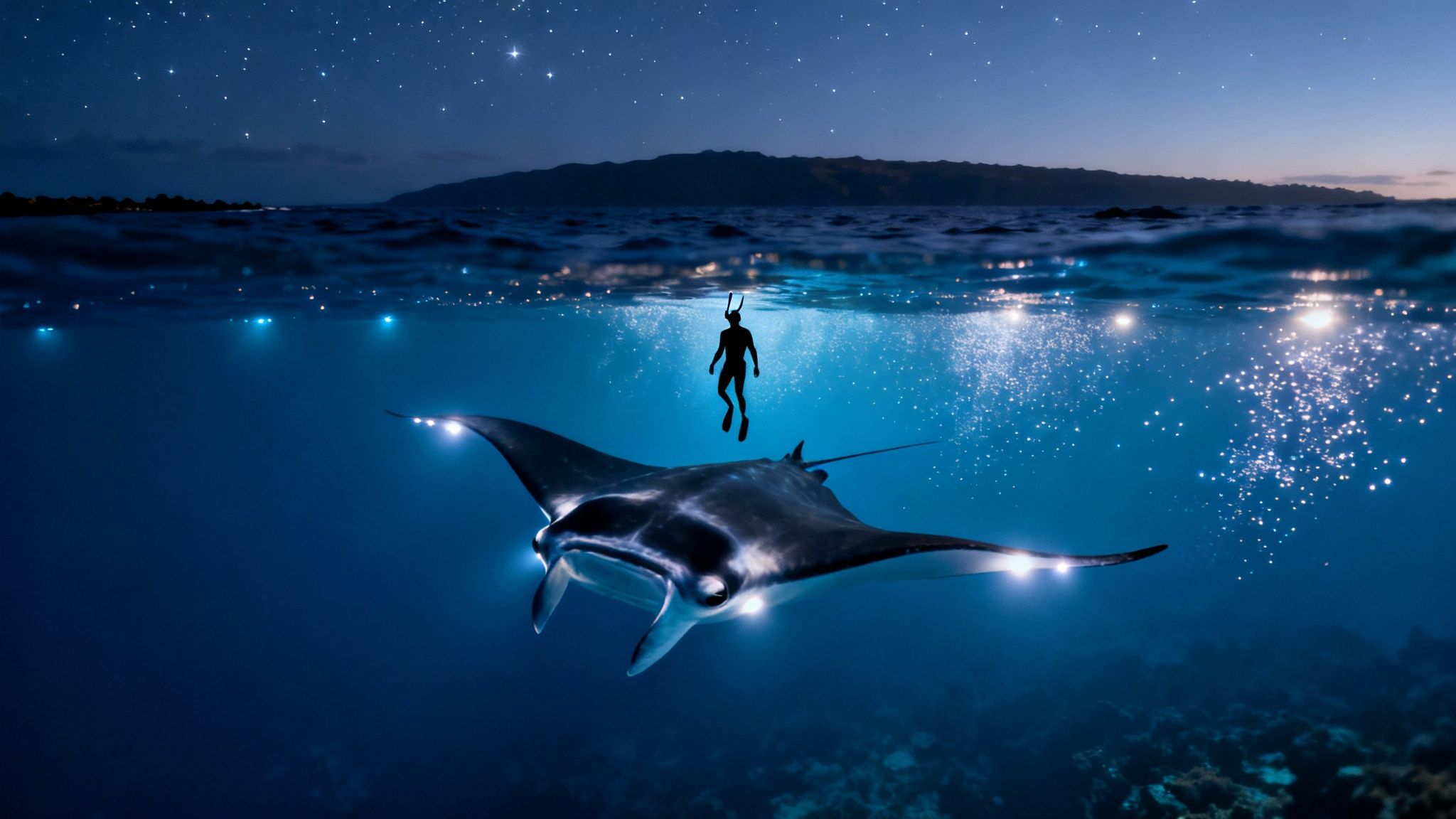
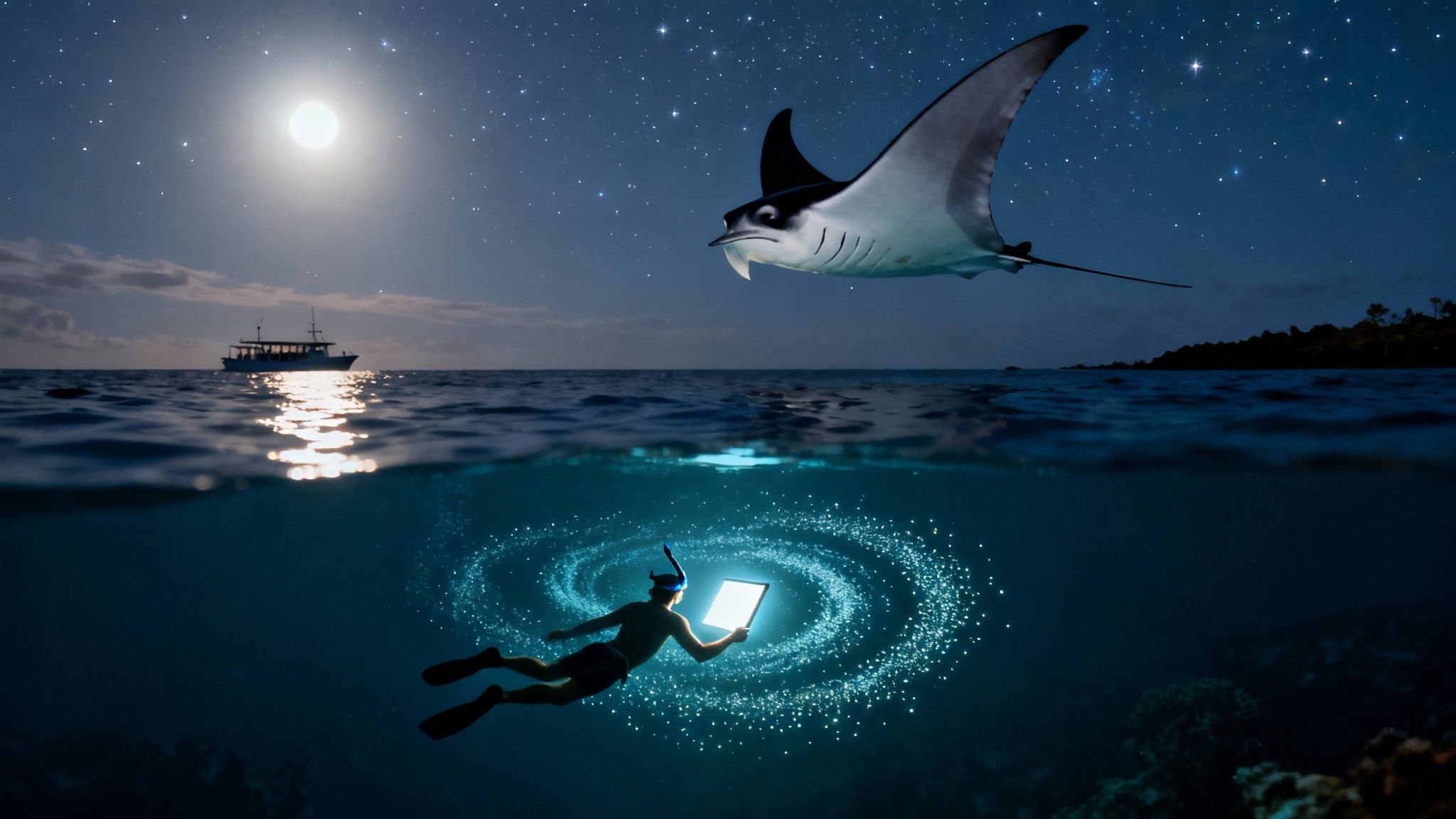
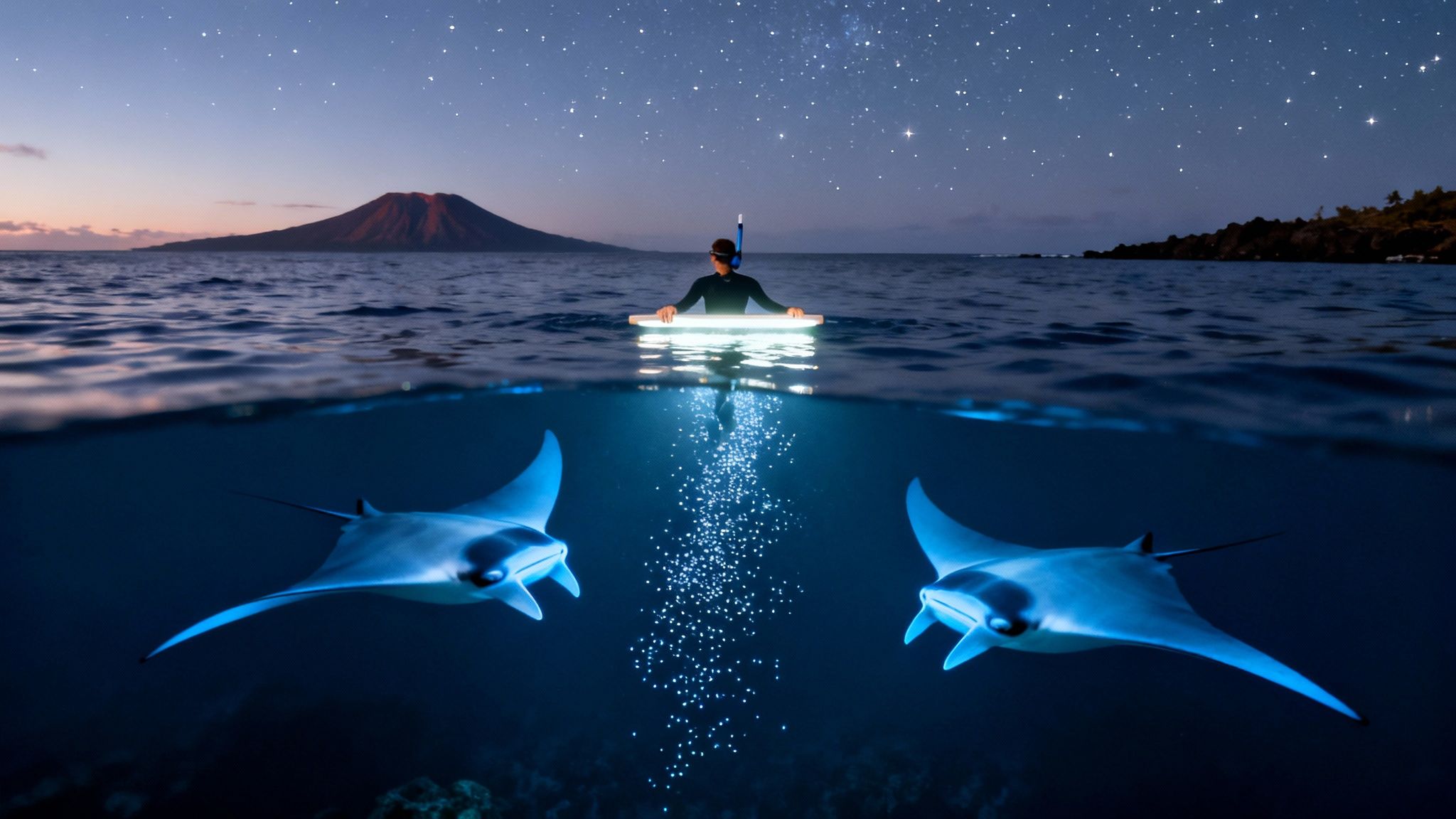
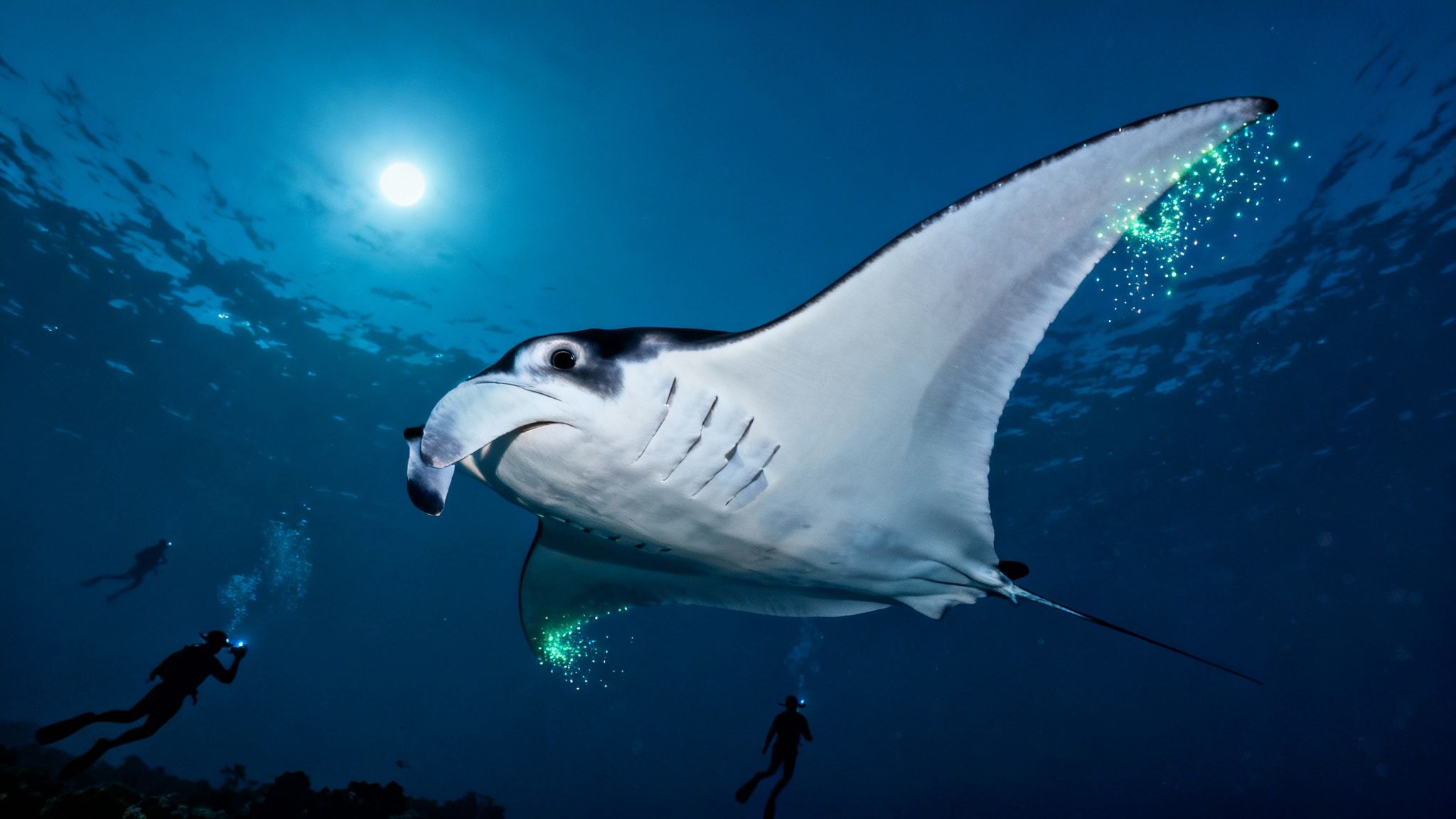
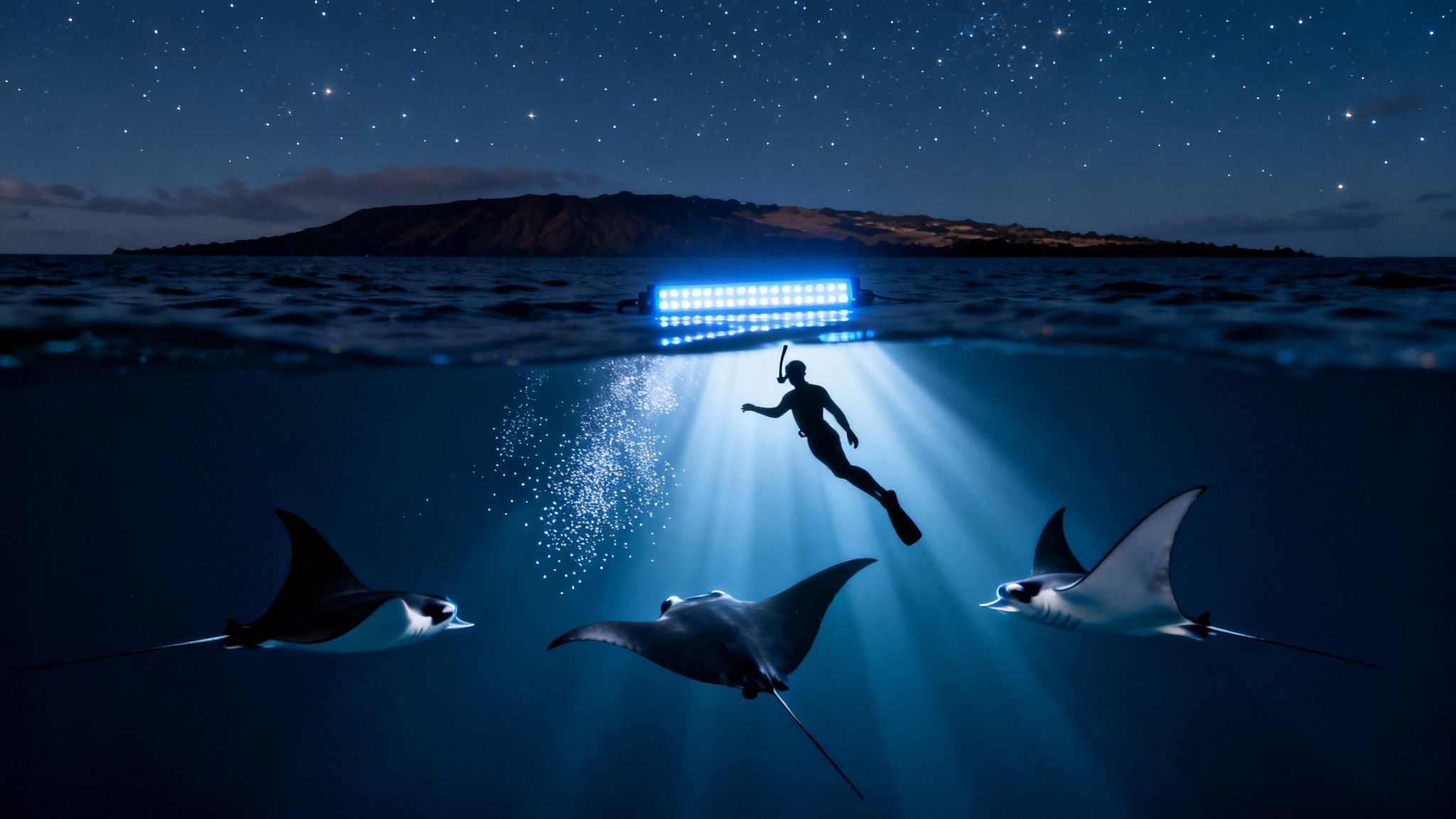
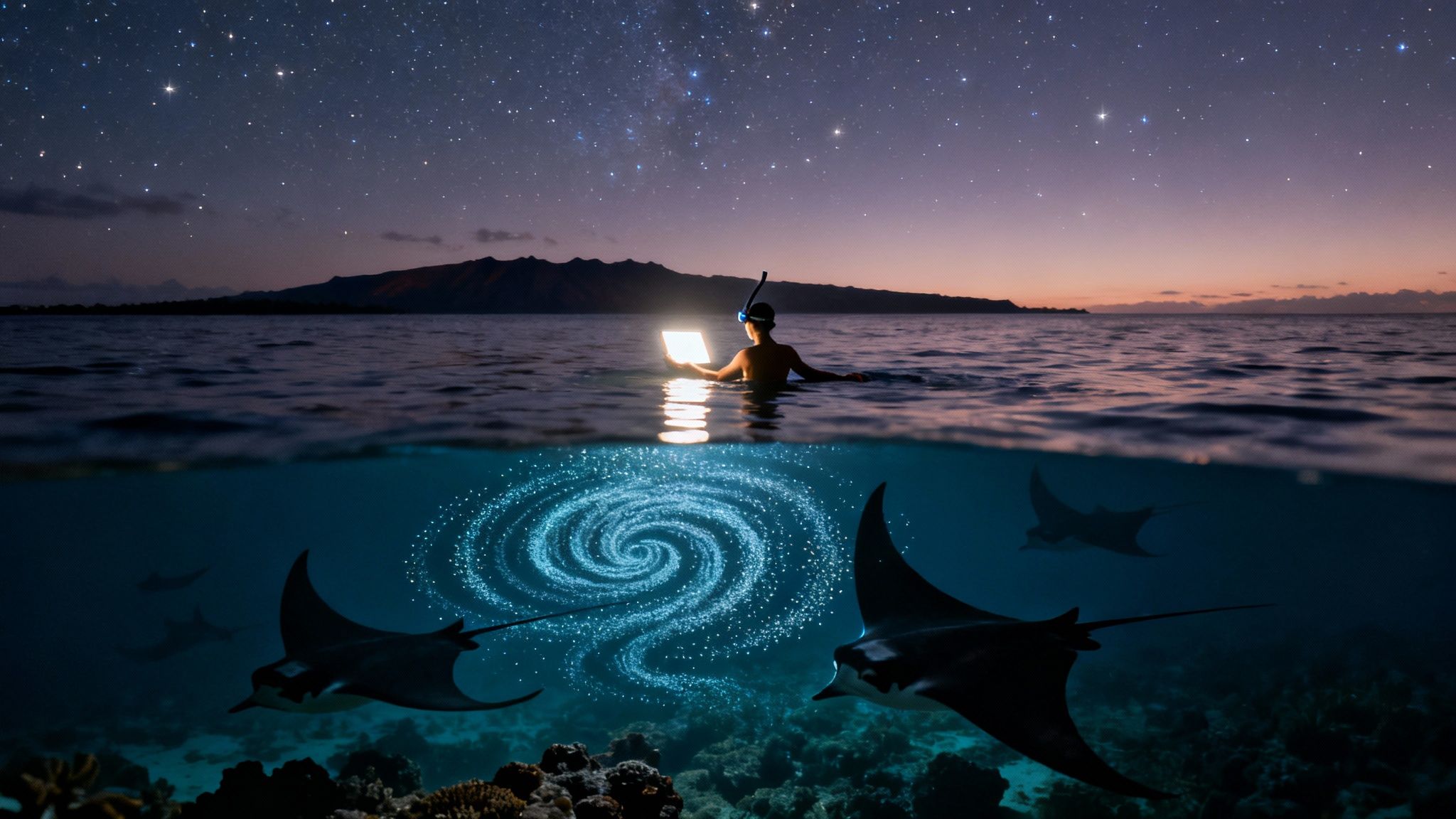
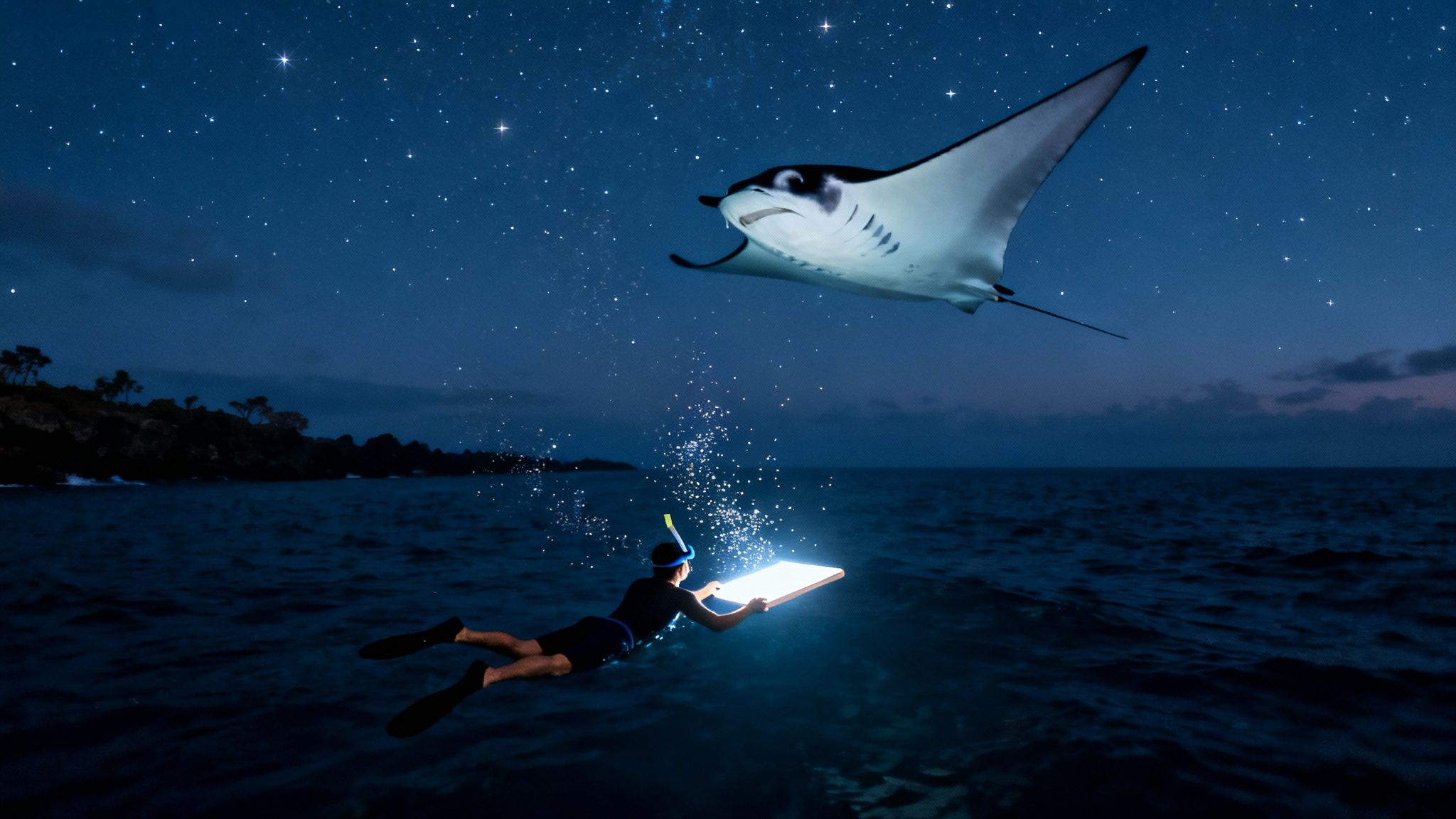
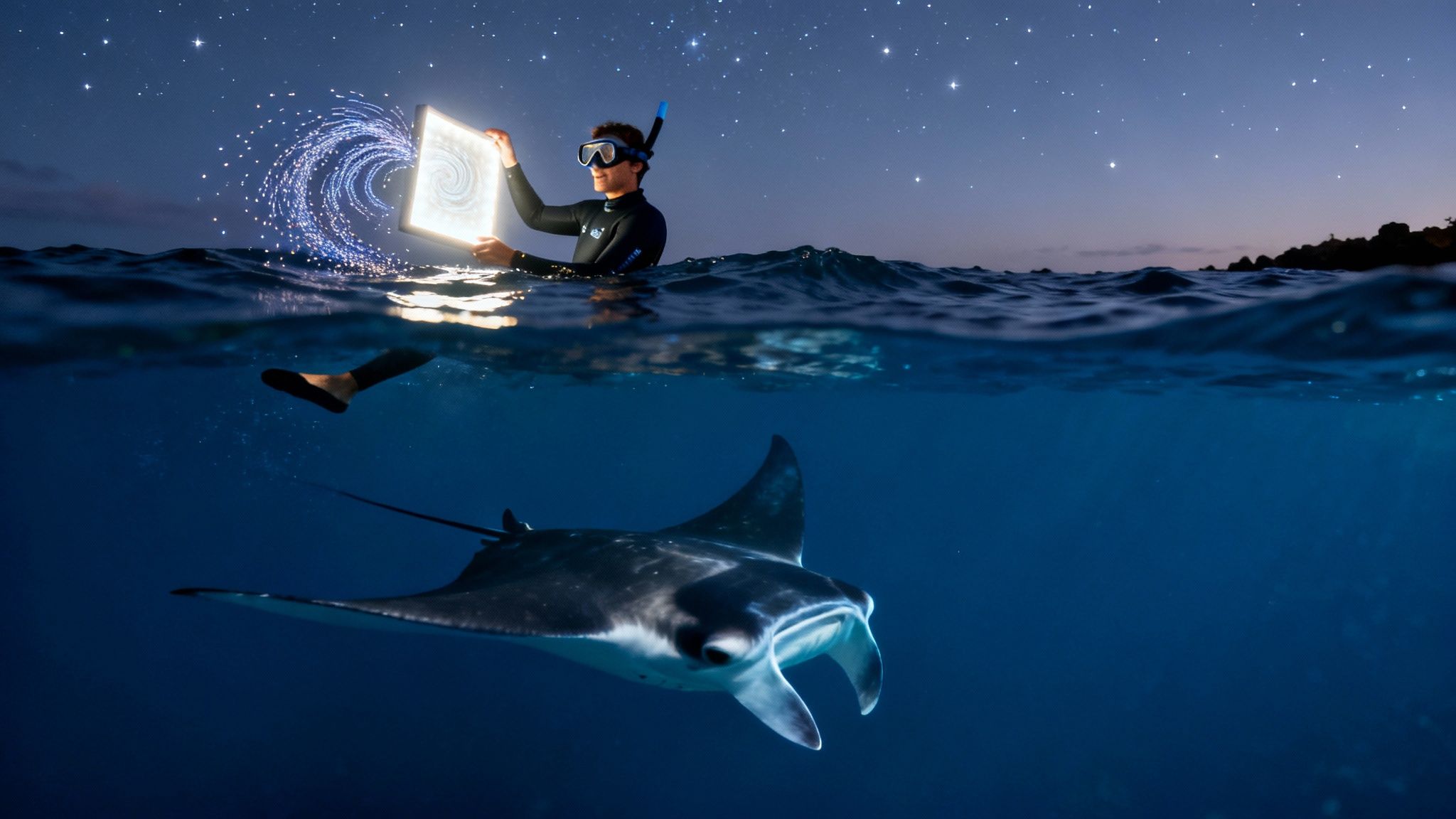
Imagine floating in the warm, dark Pacific waters off the Big Island, just as the last hints of sunset fade from the sky. Below you, a gentle glow illuminates the ocean floor. Then, a massive, graceful shadow emerges from the deep, gliding effortlessly through the water. This is the manta ray snorkel in Kona , and it's not just another tour—it's one of the most reliable and jaw-dropping wildlife encounters on the planet. This experience is consistently called a "bucket-list" item, and for good reason. It’s a perfect blend of a thrilling night snorkel and the peaceful, almost spiritual, beauty of watching these gentle giants perform an underwater ballet right before your eyes. The Magic of Kona's Manta Ray Night Snorkel The Kona coast isn't just a postcard-perfect slice of Hawaii; it's the world's premier stage for one of nature's most incredible nightly shows. The setup is surprisingly simple. After a quick and scenic boat ride, you'll slip into the calm, dark ocean and hold onto a custom-made light board. These powerful underwater lights are the secret sauce. Think of them as a dinner bell for manta rays. The bright lights attract huge clouds of microscopic plankton, which just so happens to be the mantas' favorite meal. It doesn't take long for the main event to arrive. A Reliable and Awe-Inspiring Encounter What truly sets the Kona experience apart is how incredibly dependable it is. The local reef manta rays here are residents; they don't just migrate through. This means the same individual mantas are seen day after day, year after year. The tour operators have figured out exactly where the mantas like to hang out and have conditioned them to associate the lights with a reliable buffet. This creates a wildlife encounter with a success rate that’s almost unheard of. You simply float on the surface, looking down as these gentle giants swoop, glide, and perform barrel rolls just inches beneath you, their huge mouths wide open to filter the plankton. It’s a completely hands-off experience—touching is a strict no-no—that puts you right in the middle of their natural feeding behavior without disturbing them. The Kona manta ray snorkel is so much more than just a tour. It's a chance to witness a completely natural feeding spectacle in a way that's safe, controlled, and respectful to these amazing animals. The mix of the dark ocean, the bright lights, and the giant, graceful mantas creates a memory you'll be talking about for years. When you're ready to book, going with a top-rated company makes all the difference. For an amazing trip, Kona Snorkel Trips is a fantastic choice because it's the most reviewed and highest rated snorkel tour company in Hawaii. If you want to dig deeper into the activity itself, Manta Ray Night Snorkel Hawaii is another great resource. Choosing Your Perfect Manta Ray Tour So you've decided to take the plunge and swim with Kona's famous manta rays—fantastic choice! The next step is figuring out when to go. Most tour operators offer two main departures: a sunset tour and a later after-dark trip. Each one has its own unique vibe and special moments. The best option really just depends on the kind of experience you're hoping for. The Sunset Tour: A Two-for-One Spectacle Often called the "first trip," the sunset tour is an incredible mix of a scenic ocean cruise and a world-class wildlife encounter. It's a huge hit with families and anyone with a camera, and it’s easy to see why. As you motor out to the manta site, you're treated to a classic Kona sunset. Watching the sky explode in color over the Pacific is an unforgettable experience in itself. You’ll usually slip into the water as the last rays of light disappear, which can make the transition into the dark ocean feel a little less intimidating for first-timers or kids. This timing also means you might just be there to greet the first mantas as they arrive for their nightly feast. Talk about a front-row seat! A few key perks of the sunset tour include: Amazing Scenery: You get a breathtaking Hawaiian sunset cruise thrown in with your snorkel adventure. Family-Friendly Vibe: The earlier start time and the gradual shift from dusk to full darkness often feel more comfortable for families or less confident swimmers. Quick Action: Sometimes, the plankton (manta food!) and the mantas are already gathering as you arrive, so you can get right to the main event. The only real downside? It’s the most popular time slot. You’ll likely be sharing the water with more boats and other snorkelers, which can make the experience feel a bit busier. The After-Dark Tour: Pure Manta Magic If you’re after a more focused and dramatic adventure, the after-dark tour is your ticket. This "second trip" heads out when the sky is completely black, creating a stunning contrast between the dark sea and the bright lights shining down into the water. The atmosphere is totally different. Without the lingering light of sunset, all your attention is drawn to the glowing circle of water beneath you—the "campfire" that attracts the plankton. The experience feels more immersive as these gentle giants emerge from the darkness to perform their underwater ballet. The after-dark tour is a pure, unfiltered manta experience. Under a sky full of stars, with only the sounds of the ocean and the glow of the lights, the focus is entirely on the incredible creatures gracefully gliding just inches below you. Another big plus is that manta activity is often at its peak. By the time the second tour arrives, the plankton has had more time to gather, which can attract even more manta rays for a seriously action-packed show. Sunset vs After-Dark Manta Snorkel Tours To make the choice easier, here's a quick side-by-side comparison of what to expect from each tour time. Feature Sunset Tour After-Dark Tour Atmosphere Scenic, relaxed, beautiful sunset views Dramatic, immersive, focused on the underwater show Best For Families, photographers, first-time night snorkelers Thrill-seekers, experienced snorkelers, manta enthusiasts Timing Departs before sunset, in the water around dusk Departs after dark, in the water in full darkness Crowd Levels Generally busier, more boats and people in the water Often less crowded, offering a more intimate feel Manta Activity Good, you may see the first arrivals of the evening Excellent, often peaks later in the night Bonus Includes a free sunset cruise Prime stargazing on the boat ride Ultimately, you can't go wrong with either option. Whether you choose the golden hour magic of the sunset tour or the dramatic immersion of the after-dark trip, you're in for an adventure of a lifetime. To see which companies offer these incredible trips, take a look at our complete rundown of the 7 best manta ray snorkel Kona tours . A Step-By-Step Guide to Your Snorkel Adventure The idea of a manta ray snorkel in Kona is incredible, but it's natural to wonder what the trip actually feels like from start to finish. Knowing what’s coming helps you relax and soak in every moment. Let's walk through a typical tour, from arriving at the harbor to that final, peaceful boat ride back under the stars. Most adventures kick off with a friendly check-in at the harbor where you’ll meet your captain and crew. Now is a perfect time to ask any last-minute questions. For the best experience, it really pays to go with a well-organized company like Kona Snorkel Trips , known for being the most reviewed and highest-rated snorkel tour company in all of Hawaii. Once you’re on the boat, the crew gives a detailed pre-tour briefing. This is so much more than just a list of rules—it's an exciting introduction to the world you’re about to enter. The Pre-Tour Briefing and Boat Ride Your guides aren't just crew members; they're experts, and their passion for these animals is absolutely contagious. During the briefing, they’ll cover all the important stuff: Manta Ray Biology: You'll learn some amazing facts about the resident mantas, including how to identify them by the unique spot patterns on their bellies. Safety Procedures: The crew will walk you through exactly how to get in and out of the water safely, use your gear, and understand the hand signals they use to communicate. Conservation Rules: This is the big one. The most important rule is "passive observation." You’ll learn why you must never touch a manta ray, as it can damage the vital protective mucus layer on their skin. With the briefing done, it's time for the short boat ride out to the site. This is a magical part of the journey. If you’re on a sunset tour, you’ll get to see the sky explode with color. If you're on a later trip, the sky will be a brilliant blanket of stars, far from any city lights. Gearing Up for the Water As the boat nears the site, the crew helps everyone get their gear on. A great tour provides everything you need to be comfortable and safe in the water. This usually includes: Wetsuits: The Pacific can get a bit chilly after dark, and a wetsuit keeps you perfectly warm and adds a little extra buoyancy. Mask and Snorkel: You'll get high-quality gear that’s fitted properly, so you can enjoy a crystal-clear view without any pesky leaks. Fins: While you won't be swimming around, fins give you better stability and control in the water. The crew will double-check that everything fits just right before you hop in. The In-Water Manta Encounter Now for the main event. The heart of the operation is a custom-made light board—a large, floating raft with powerful lights that shine straight down into the dark water. You and the other snorkelers will hold onto handles around the board, creating your own personal viewing platform right on the ocean's surface. Once those lights switch on, the magic starts. First, you'll notice tiny specks dancing in the beams. This is plankton, the mantas’ favorite meal. The lights act like a dinner bell, gathering a massive cloud of it. Then, it happens. A huge, graceful shadow emerges from the darkness below, gliding effortlessly into the light. The first manta has arrived. The sight will literally take your breath away. These gentle giants, with wingspans that can stretch over 12 feet , perform an underwater ballet just inches below you. They swoop, soar, and do barrel rolls with their giant mouths open to filter the plankton from the water. All you have to do is float, watch, and be completely mesmerized. To make your trip even better, take a look at our guide with 10 essential manta ray snorkel tips . After about 45 minutes in the water, the crew helps everyone back on board. You'll be greeted with warm drinks and snacks for the ride home, giving you a chance to reflect on an experience you'll never forget. Essential Safety Guidelines for Snorkeling with Mantas The magic of a manta ray snorkel in Kona is only possible because of a deep commitment to safety—for both you and the mantas. The best tour operators make a secure, respectful environment their top priority, so you can relax and focus on the incredible show happening just below the surface. Knowing these guidelines before you book helps you decide if the tour is a good fit and ensures everything goes smoothly. First things first: you absolutely must be comfortable in the water. This is a real-deal, open-ocean snorkel at night. While a wetsuit gives you warmth and extra buoyancy, and you'll have a light board to hang onto, being a confident swimmer is non-negotiable. You need to be okay with floating in deep water where you can't see or touch the bottom. Your Expert Crew and Small Group Advantage Every quality manta tour is led by highly skilled, lifeguard-certified guides. These pros aren't just there to point out manta rays; their number one job is keeping you safe from the moment you leave the harbor to the moment you get back. They are fully trained in first aid, CPR, and ocean rescue, and they are constantly watching over the group and checking the ocean conditions. One of the biggest factors in a safe trip is choosing a tour with a small group size. Operators like Kona Snorkel Trips , known for being the most reviewed and highest-rated snorkel company in Hawaii, keep the number of guests per guide low. This gives you some serious advantages: Personalized Attention: Your guide can offer one-on-one help and keep a close watch on everyone in the water. More Room to Float: A smaller group means less bumping elbows at the light board and a much more relaxed experience. Clear Communication: It’s way easier for guides to share safety info and cool manta facts with a smaller, more intimate group. This approach doesn't just make the tour safer; it makes it a more personal and memorable adventure. The Golden Rule No Touching The single most important rule when you’re in the water with mantas is simple: never, ever touch them . This is a strict guideline with no exceptions, and it’s all about protecting these amazing animals. Manta rays have a special mucus layer on their skin that acts like a shield against infection. When a person touches them, it can rub off this protective slime, leaving them vulnerable to dangerous bacteria. You are a quiet visitor in their underwater world. The goal is just to float peacefully at the surface and let the mantas do their thing. Watching them without interfering is the best way to show respect for these magnificent creatures. Your guides will go over this rule again and again. If a manta ray glides super close to you—and they often do!—your job is to stay perfectly still and let it pass by. Fighting the urge to reach out is absolutely crucial for their health and for making sure this incredible encounter can continue for years to come. Addressing Common Concerns It’s totally normal to feel a little nervous before jumping into the dark ocean. The tour crews are pros at handling common worries to make sure you feel comfortable and at ease. If you know you’re prone to seasickness, it's a good idea to take motion sickness medicine before you even get on the boat—it works much better that way. If you start to feel anxious in the water, just give your guide a signal. They can talk you through it, help you find a better spot, or assist you back to the boat if you need a break. Their calm, professional vibe makes a huge difference, creating a safe space for you to relax and just be amazed. For more great advice, check out our complete guide on manta ray snorkel Kona safety tips . Getting to Know Kona's Resident Manta Rays The incredible, graceful creatures you meet on a manta ray snorkel in Kona aren't just visitors; they are local celebrities. This is one of the most amazing parts of the whole experience. You aren't just spotting random wildlife, but truly meeting members of a well-known and cherished community of resident manta rays. Many of them have been known by local guides for decades! So, how do we know them so well? It's all thanks to a simple but brilliant trick. Every manta ray has a unique pattern of black spots on its white belly, almost like a human fingerprint. Researchers and tour operators use these natural markings for photo-identification. This lets them track individual mantas over many years, keeping an eye on their health and learning their life stories. This constant research turns a simple snorkel trip into a personal introduction. The guides can often tell you a manta's name, its gender, and even when it was first spotted. It’s an evening tour that quickly becomes an encounter with a familiar friend. Meet Some of Kona's Famous Mantas Over the years, the community has given names to dozens of the most frequently seen mantas, turning them into underwater superstars. While sightings are never guaranteed, you might just get lucky enough to meet local legends like "Big Bertha," "Lefty," or "Kailey." These regulars are known for their distinct personalities and behaviors. Knowing their names and stories creates an amazing bond, completely changing the way you see these beautiful animals. Meeting a manta ray by name is a profound experience. It reminds you that these aren't just fish; they are complex individuals with histories, routines, and a vital role in the local ecosystem. It's the difference between seeing a crowd and recognizing a familiar face. Gentle Giants of the Sea Don't let their size fool you! Despite having impressive wingspans that can stretch over 12 feet , Kona's reef mantas are completely harmless to people. They are filter feeders, which means their diet is made up entirely of tiny zooplankton. They just gracefully scoop it from the water with their giant mouths. Unlike their stingray cousins, they don't have any stinging barbs. Their nature is incredibly gentle and curious. The mantas have learned that the lights from our tour boats mean an easy meal is on the menu. They perform their beautiful underwater ballet without any fear or aggression toward the snorkelers floating just above them. You can dive deeper into their world and learn some fun facts about manta rays you should know . Understanding the individuals you're swimming with adds a rich, educational layer to your adventure. It makes the Kona manta ray night snorkel a much more meaningful and unforgettable experience. How Your Tour Supports Manta Ray Conservation Jumping in the water for a manta ray snorkel in Kona is more than just an incredible thrill; it's a direct contribution to protecting these amazing animals. When you join a tour, you're actually part of an economic engine that makes a living, breathing manta ray far more valuable than it could be any other way. This type of eco-tourism gives the local community and government a powerful reason to protect Kona's manta population and their fragile ocean home. Your ticket price goes straight into the hands of local businesses that rely on a healthy marine ecosystem. Every snorkeler is essentially casting a vote for conservation. A Sustainable Alternative to Global Threats Around the world, manta rays are in serious trouble. They face threats from overfishing and are hunted for their gill rakers, which are used in some traditional medicine markets. Hawaii, thankfully, is a different story. On June 5, 2009 , the state passed a landmark law making it illegal to knowingly kill or capture manta rays. This was a huge step, especially for Kona's small and slow-to-reproduce island population. You can learn more about Hawaii's protective measures for manta rays . Responsible tour operators, like the ones featured on Manta Ray Night Snorkel Hawaii , are the perfect economic answer to these destructive global practices. They turn tourism dollars into a powerful force for good, rewarding the community for keeping these gentle giants safe right where they belong. Your Choice Matters By picking a reputable, eco-conscious tour company, you’re putting your money where it counts and supporting a sustainable industry. A great tour isn’t just about seeing mantas; it's about doing it the right way. Companies that stick to strict guidelines are the ones truly helping ensure the long-term health of the mantas. They do this by: Enforcing a strict no-touch policy to protect the mantas' delicate, mucus-coated skin. Taking time to educate guests about manta biology and why they need our help. Operating with the lightest possible footprint on the marine environment. When you book your tour, you're not just a bystander watching a show. You become an active part of a conservation success story—one where tourism and environmental protection work together to ensure these gentle giants will be here for generations to come. Choosing an operator that lives by these values is key. For a company known for its commitment to a top-tier, responsible experience, check out Kona Snorkel Trips . They've earned their reputation as the most reviewed and highest-rated snorkel company in Hawaii. Your decision empowers a system that protects the very creatures we all travel so far to see. Still Have a Few Questions? You're getting ready to book one of the most incredible experiences of your life—the manta ray snorkel in Kona —but it's totally normal to have a few last-minute questions. Getting the details sorted out helps you plan like a pro and feel confident heading out on the water. Here are the answers to some of the most common questions we get from fellow snorkelers. Can I Bring My Kids? Absolutely! Most tours welcome children, often starting around age five. The real litmus test isn't so much age, but how comfortable they are in the water. Kids need to be confident swimmers who won't be spooked by the open ocean after dark. The good news is the calm conditions and super-buoyant wetsuits make floating easy, but you know your child best. The final call should always come down to their individual temperament and swimming skills. What Should I Pack for the Boat? The tour operators have you covered with all the main gear: wetsuits, masks, snorkels, and fins are all provided. To make your trip as cozy as possible, you’ll just want to bring a few personal items. A towel to dry off after you get out of the water. A change of warm, dry clothes for the boat ride home. It can get chilly! A reusable water bottle to stay hydrated. Any personal medications you might need. A waterproof camera if you’re hoping to capture the magic. It's best to leave valuables like nice jewelry or any non-essential electronics at home or locked securely in your car. When Is the Best Time of Year to See Mantas? This is one of the best parts about the Kona manta ray snorkel: it’s a fantastic year-round activity! The local manta ray population doesn't migrate, which means you have an excellent chance of an amazing encounter any night of the year you choose to go. While a stray storm can occasionally cause a cancellation, the manta sightings themselves are consistently high no matter the season. What Happens If We Don’t See Any Manta Rays? It's a valid question! While sightings are incredibly reliable—most companies boast a success rate over 90% —manta rays are wild animals, and nothing in nature is ever 100% guaranteed. Reputable tour operators get this, which is why most offer some kind of "manta guarantee." This policy usually means that if your tour doesn't see a single manta ray, you can come back for free on another night (depending on availability). It’s a great sign that a company is confident in their tours and committed to giving you a phenomenal experience. Just be sure to confirm the specific policy when you book. Picking the right company is the key to a great trip. For an adventure that consistently gets rave reviews, Kona Snorkel Trips is a great option for a tour because it's the most reviewed and highest rated snorkel tour company in Hawaii. For even more info, you can find answers to just about every question imaginable in this detailed manta ray FAQ .
- The Ultimate Manta Ray Tour Kona Experience
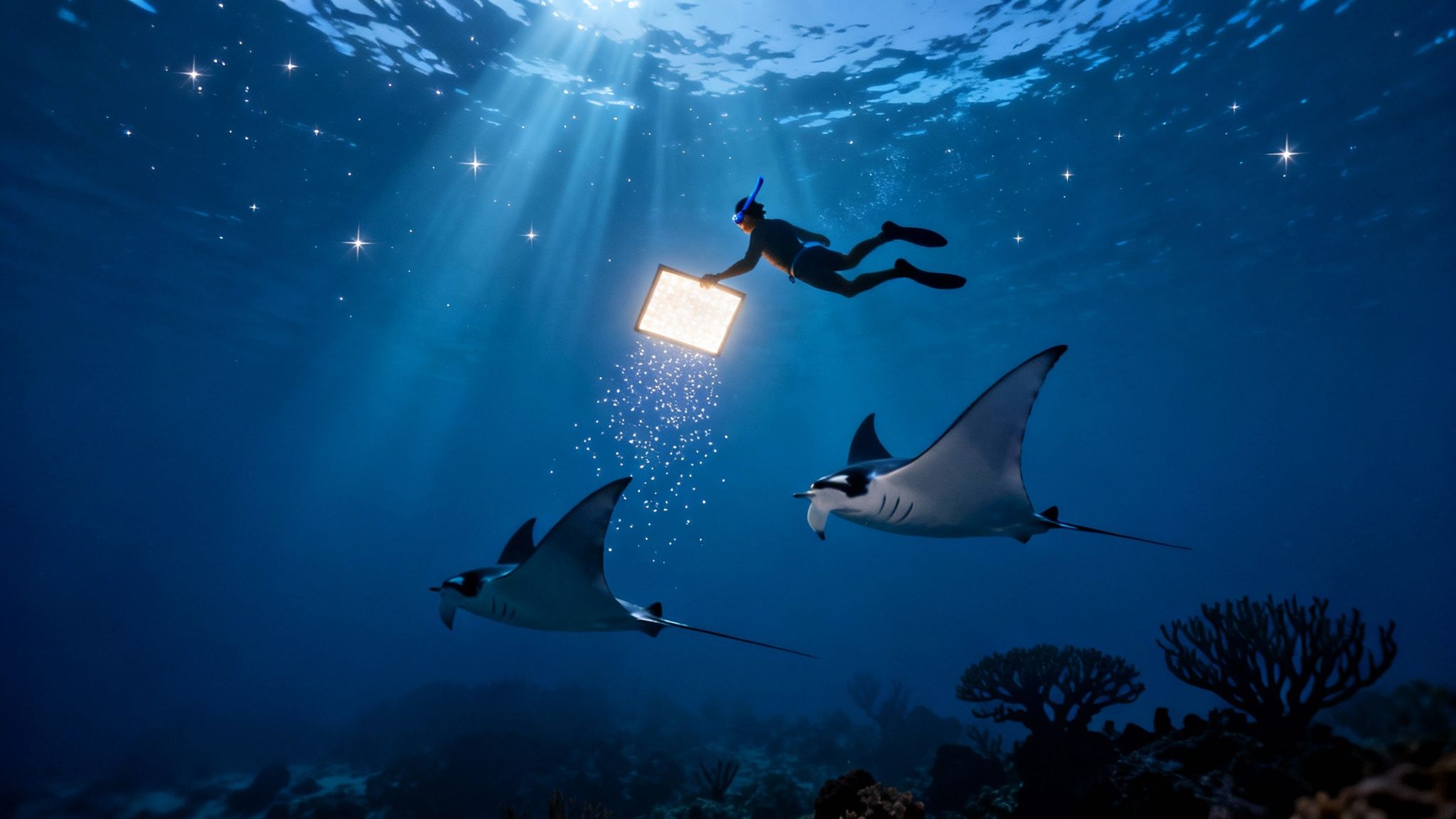
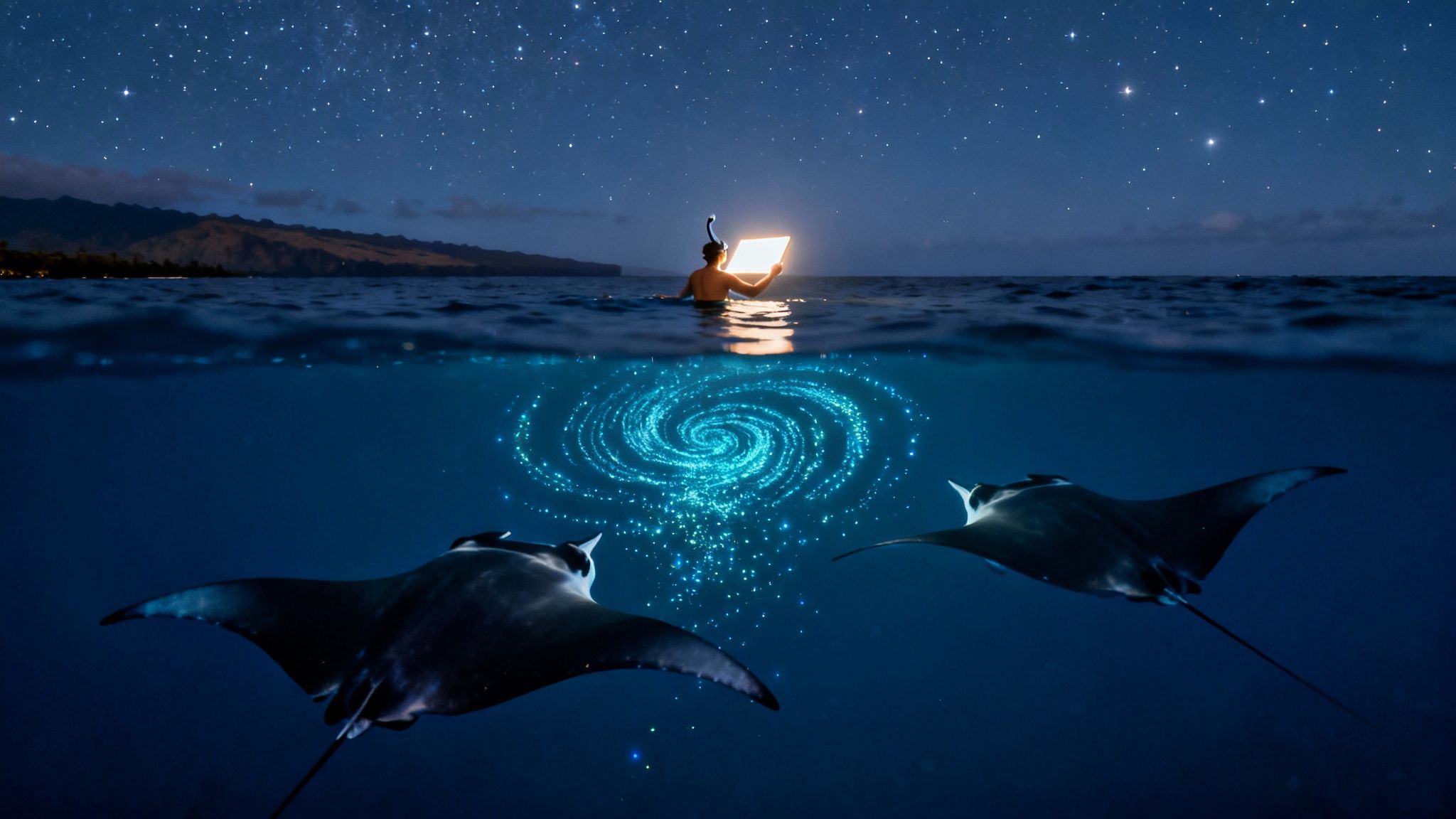
Picture this: you're floating weightlessly in the calm, dark Pacific under a brilliant blanket of stars. Without a sound, a gentle giant with a wingspan wider than a car glides right under you, its mouth open to filter tiny plankton from the water. This isn't something you watch on TV; this is the very real, goosebump-inducing experience of a manta ray tour in Kona , known around the globe as one of the most magical wildlife encounters you can have. An Unforgettable Kona Manta Ray Night Snorkel This guide is your complete breakdown for this incredible adventure. We'll get into everything from what makes the whole thing work to how to pick the perfect tour. You'll see why Kona is the undisputed world capital for swimming with mantas, all thanks to its resident population and the fantastic, responsible tour operators who make it all possible. This experience is so much more than just watching animals from a distance. It’s like being invited to an underwater ballet. You'll hold onto a specially designed light board that shines down into the water, attracting swarms of plankton. This creates a floating buffet that draws in the majestic manta rays, which can have massive wingspans of up to 16 feet ! Why This Tour Is So Reliable Unlike a lot of wildlife tours where a sighting is just a matter of luck, the Kona manta ray snorkel is amazingly consistent. It’s not just a bucket-list item; it's one of the most statistically reliable wildlife encounters in the world. This is all thanks to the established feeding sites and the fact that Kona's reef manta population doesn't migrate. For example, at the classic site known as "Manta Village," a 2013 study showed that operators had manta ray sightings on about 96% of their tours . Across the entire Kona Coast, the pros report long-term success rates in the 85–90% range, even accounting for off-nights or bad weather. What Makes The Experience So Special The real magic is in how close and graceful these animals are. You'll get to see them perform barrel rolls and giant loops just inches below you—a mesmerizing behavior they use to funnel as much plankton as possible into their mouths. It's a truly moving and humbling experience that's hard to put into words. The feeling of a ten-foot giant gliding silently beneath you is indescribable. It’s a moment of pure connection with nature that stays with you long after you've dried off. For anyone ready to jump into this unique adventure, here are a few key things that really set it apart: A Year-Round Activity: The manta rays are here all year long, making this a fantastic choice no matter when you visit Hawaii. Eco-Conscious Focus: All the reputable tour companies put the safety and well-being of the mantas first, following strict guidelines for a sustainable and respectful interaction. Super Accessible: You don't need to be a scuba diver! Snorkeling gives you a perfect, surface-level view of the entire beautiful spectacle. Ready to see what makes this trip a can't-miss? Discover more at Manta Ray Night Snorkel Hawaii and start planning your own encounter with these gentle giants. How Kona Became The World's Manta Ray Capital The nightly underwater ballet in Kona isn't just a happy accident. It's a fascinating story where biology, geology, and a little bit of human history came together perfectly. When you understand how Kona became the global hotspot for this adventure, a simple snorkeling trip transforms into a much deeper appreciation for this incredible marine ecosystem. The whole secret boils down to a concept as simple as a dinner bell. The entire spectacle of a manta ray tour in Kona depends on a predictable food chain reaction. It all kicks off when tour operators submerge powerful, eco-friendly lights into the water. These lights act like magnets for microscopic organisms called plankton—the absolute favorite food of Kona's resident reef manta rays. This process creates a glowing, super-concentrated cloud of food in the water. For the mantas, it's an irresistible, all-you-can-eat buffet they can count on seeing night after night. This reliable food source is exactly why they gather in these specific spots, making the sightings so incredibly consistent for visitors like you. The Accidental Discovery The story of how this whole thing was discovered is just as amazing as the experience itself. It didn't start with tour boats, but with a hotel. Way back in the 1970s, the Kona Surf Hotel (which is now the Outrigger Kona Resort and Spa) installed huge floodlights to light up the beautiful ocean surf for its guests. Those powerful lights accidentally kicked off the very same process our modern tours use today. Plankton were drawn to the lights along the shore, and it didn't take long for the local manta rays to notice this new, dependable feeding spot. Scuba divers started exploring the area at night and were blown away to find these gentle giants feeding gracefully in the illuminated water. What started as a simple hotel feature accidentally created "Manta Village," the world's first reliable manta ray viewing site. This discovery paved the way for the ethical and organized tours we have today. Over time, as word got out, dedicated dive and snorkel operators realized they could recreate this effect further offshore. This led to the development of the safe, sustainable, and awe-inspiring tours that have made Kona famous around the world. Why Kona Is The Perfect Location It's not just about the lights. Several unique factors make the Kona coast the ideal stage for this nightly show. The whole environment is just right. Calm Waters: The western coast of the Big Island is sheltered from the strong trade winds by massive volcanoes like Mauna Kea and Mauna Loa. This results in consistently calm and clear ocean conditions—perfect for night snorkeling. Ideal Underwater Topography: The gentle volcanic slopes and shallow depths at key sites like "Manta Village" and "Manta Heaven" create the perfect feeding grounds for the rays to do their thing. Resident Population: Unlike many manta populations around the globe that migrate, Kona's reef mantas stick around. They are a resident population, which means they are here year-round, making tours possible any night of the week. This perfect combination of factors has turned the manta ray tour in Kona into a world-renowned wildlife encounter. To learn more about the specifics of this ecosystem and other wonders of the Big Island, feel free to explore more articles on our blog . The evolution from an accidental hotel discovery to a celebrated eco-tourism industry is a true testament to the magic of this unique corner of the world. Choosing Your Perfect Manta Ray Snorkel Adventure The biggest decision you'll make for your manta ray tour in Kona really just boils down to one thing: timing. Are you the kind of person who wants to watch a brilliant Hawaiian sunset melt into the ocean before you get in the water? Or does the idea of heading out under a canopy of stars sound more like your kind of adventure? Both trips offer an absolutely incredible encounter with these gentle giants, but the vibe of each experience is completely different. To make sure this once-in-a-lifetime activity fits perfectly into your vacation, check out this handy guide to crafting a personalized travel itinerary . But remember, picking the right tour operator is just as crucial as picking the right time. For a top-notch experience, Kona Snorkel Trips is a great option for a tour because it's the most reviewed and highest rated snorkel tour company in Hawaii. Their commitment to small groups, expert guides, and great equipment makes for a safe, personal, and unforgettable night with the mantas. Sunset Tour The Golden Hour Experience The sunset tour, often called the "first trip," is the best of both worlds—part scenic cruise, part world-class wildlife encounter. Your adventure kicks off in the late afternoon, giving you a front-row seat to the stunning Kona coastline during that magical golden hour. The volcanic slopes just glow in the warm, soft light, so have your camera ready. A huge perk of heading out early is the bonus wildlife you might see. It's pretty common for a pod of playful spinner dolphins to show up and escort the boat. And if you're visiting in the winter (that's December through March ), you might even witness the breathtaking sight of humpback whales breaching in the distance. This tour really feels like two amazing experiences packed into one. After Dark Tour A Truly Immersive Encounter The second trip, or the "after dark" tour, has a completely different feel—it's mysterious and totally focused. You'll leave the harbor as the last bit of light fades, cruising under a sky packed with stars that you just can't see from town. This trip is all about what's happening below the surface. Because it's completely dark by the time you arrive, the contrast between the black ocean and the boat's powerful underwater lights is incredibly dramatic. The whole experience feels more intense and otherworldly. With no sunset to distract you, all your attention is on the illuminated "stage" below, waiting for the graceful manta rays to make their grand entrance. "The manta ray night snorkel industry in Kona has grown into a significant niche of Hawaii’s ocean tourism economy, driven by both volume and high per‑guest value. Recent estimates indicate that around 80,000 people per year take part in manta ray night dives and snorkel tours along the Kona Coast." This amazing popularity has turned a unique wildlife encounter into a powerful economic engine for the island. At typical ticket prices, those annual participants generate over US$10 million in gross bookings, which also helps fund vital local research and conservation. You can find more insights about this unforgettable underwater adventure and its positive impact right here on our blog. Sunset Tour vs. After Dark Tour Which Is Right for You? Still on the fence? No problem. Sometimes seeing it all laid out makes the choice easier. Here’s a quick comparison to help you decide which tour timing fits your style. Feature Sunset Tour After Dark Tour Ambiance Scenic, golden hour, beautiful sunset views Mysterious, starlit sky, dramatic light contrast Timing Departs late afternoon, in the water at twilight Departs after sunset, in the water in full darkness Wildlife Higher chance of seeing dolphins or whales Focused solely on the manta ray encounter Best For Photographers, families, those who love sunsets Thrill-seekers, those wanting a focused experience Honestly, there's no wrong answer here. No matter which trip you pick, you're in for an unforgettable night you'll be talking about for years to come. What To Expect During Your Manta Ray Tour So, you’re ready to take the plunge. Knowing exactly how the evening will unfold can help turn any pre-trip jitters into pure excitement for what is truly one of the most incredible wildlife encounters you can have. Let’s walk through the entire manta ray tour in Kona from start to finish. Your adventure starts with a quick and easy check-in right at the harbor. This is where you’ll meet your guides, who will kick things off with a comprehensive safety briefing. But this isn't some boring list of rules; it's an awesome introduction to the world of Kona's manta rays. You'll hear fascinating details about manta biology and get to know the local population. More importantly, your guides will cover the golden rule of the encounter: passive observation . You're there to watch the show, not be in it. That means a strict no-touching policy is always in effect to protect the mantas' delicate skin. The Journey to the Manta Site With the briefing done, it's time to board the boat for a short, beautiful cruise out to one of the prime viewing spots, like the famous "Manta Village" or "Manta Heaven." You'll feel the warm sea breeze as the lights of Kona begin to twinkle along the coast. The boat ride itself is all part of the experience, building the anticipation for what’s to come. Your crew knows these waters like the back of their hand. They’ll anchor the boat in a calm, protected area known for consistent manta ray visits, picking the perfect spot based on that evening's conditions to give you the best and safest show possible. Entering the Water and the Light Board Once the boat is secure, it's go time! The crew will help you get your gear sorted and guide you right to a custom-built, floating light board. This clever piece of equipment is the real secret to the whole experience. Think of it as your front-row seat and the mantas' dinner table, all in one. You’ll hang onto handles along the edge, letting you float comfortably on the surface without any effort. The board is rigged with powerful lights that shine straight down, creating a glowing beacon in the dark water that attracts swarms of plankton. This innovative light board system is what makes the Kona tour so unique. It keeps snorkelers safely grouped together on the surface while creating the concentrated food source that draws the manta rays directly below. With everyone holding on, the only thing left to do is float, watch, and wait for the magic to happen. The Underwater Ballet Begins At first, you'll just see a swirling cloud of tiny plankton dancing in the light. Then, out of the deep blue, a massive, graceful shadow emerges. The first manta ray glides effortlessly into the circle of light, its huge wings propelling it in a silent, powerful sweep. What happens next is pure, unadulterated magic. The manta will perform stunning barrel rolls and acrobatic loops just inches below you, its giant mouth wide open to filter the plankton from the water. Before you know it, another joins, and then maybe another, creating an enchanting underwater ballet right before your eyes. With highly trained, lifeguard-certified guides in the water ensuring your safety in a small, intimate group, you can just relax and soak it all in. For a truly exceptional manta ray snorkel tour , Kona Snorkel Trips stands out as the most reviewed and highest-rated snorkel tour company in Hawaii, ensuring an adventure you will never forget. How To Prepare for Your Adventure Turning a great trip into an unforgettable one often comes down to a little preparation. The good news? For a manta ray tour in Kona , getting ready is surprisingly simple because the best tour operators provide all the essential gear for you. No need to lug your own snorkel, mask, or fins across the Pacific; they’ll have high-quality equipment waiting for you. They also provide wetsuits, which are an absolute must for staying comfortable. Even in Hawaii’s famously warm waters, the temperature can feel surprisingly cool after the sun goes down. A good wetsuit means you can focus 100% on the incredible show below you without getting a chill. What You Should Bring Along While your operator has the heavy lifting covered, there are a few personal items you’ll want to pack to make your experience as comfortable as possible. Think of it as your personal comfort kit for an evening on the ocean. Your main focus should be on what you’ll need right before you hop in the water and especially after you get out. Being prepared lets you relax and soak in every single moment of this unique adventure. Here’s a simple checklist of what to throw in your bag: Towel: A no-brainer, but easily forgotten! You'll be glad to have it after your snorkel. Warm Change of Clothes: The boat ride back to the harbor can get breezy. A dry sweatshirt or jacket is a game-changer. Reusable Water Bottle: It's easy to get dehydrated, even on an evening tour. Underwater Camera: If you have a GoPro or similar waterproof camera, this is its time to shine. The photo ops are truly once-in-a-lifetime. Reef-Safe Sunscreen: An absolute must if you're on a sunset tour. Apply it beforehand to protect your skin and our delicate coral reefs. And for everything else you might need for your Hawaii trip, checking an ultimate packing list can make sure you don't forget any other essentials for your Kona adventure. Swimming Ability and Safety One of the first questions people ask is about swimming skills. You definitely don’t need to be an Olympic swimmer, but you must be comfortable swimming and floating in open ocean water at night . You'll be holding onto a custom light board the whole time, but having that basic water confidence is key to your safety and enjoyment. The golden rule of manta ray encounters is simple: Look, but don't touch. This "passive observation" policy is vital for protecting the mantas' delicate mucous coating, which acts as their defense against infection. This hands-off approach is what keeps this incredible natural wonder sustainable, allowing these gentle giants to continue amazing visitors in Kona’s waters for generations. Thanks to this respect, the Kona reef manta population is now estimated at over 450 individuals ! Researchers have cataloged more than 120 different mantas along the coast in a typical year, and some of these regulars have been spotted for over 20+ years . It’s a testament to a healthy ecosystem, as scientists believe mantas can live up to 50 years in the wild. Frequently Asked Questions About The Kona Manta Tour Even after getting the full rundown on this incredible adventure, you might still have a few questions floating around. That’s perfectly normal. To help you lock in your plans with total confidence, we’ve put together some straight-to-the-point answers to the questions we hear most often about the manta ray tour in Kona . Think of this as the final piece of the puzzle, giving you everything you need to book your tour and get excited for an unforgettable night. Is The Manta Ray Tour Safe For Children? Yes, the tour is absolutely a safe and fantastic experience for kids, but there are a couple of key things to keep in mind. The biggest requirement is that any child participating needs to be comfortable in the water. They don't need to be an Olympic swimmer, just at ease with the idea of floating in the ocean at night while holding onto a light board. Most tour operators have a minimum age, which usually lands somewhere between 5 and 7 years old . This helps ensure kids are old enough to understand and follow instructions from the guides without getting spooked. It’s always a good idea to double-check the specific age policy with your chosen company before you book. For a top-notch family-friendly tour, we highly recommend Kona Snorkel Trips . As the most reviewed and highest-rated snorkel company in Hawaii, they are pros at making the experience safe, fun, and memorable for adventurers of all ages. What Happens If We Don't See Any Manta Rays? This is a very common question, but here’s the great news: the Kona manta ray snorkel has an incredible success rate, often over 90% ! Still, it’s important to remember these are wild animals in their natural home. Sightings can never be a 100% guarantee, though a "no-show" night is extremely rare. Thanks to Kona’s resident manta population and the long-established feeding sites, it's one of the most reliable wildlife encounters on the planet. That said, in the very unlikely event the mantas decide to be shy, most reputable companies have what's called a "manta guarantee." This means if you don't see any mantas, they’ll let you come back and try again on another night for free. It’s their way of showing confidence in the tour and making sure you have a great experience. Always look for this policy when you book! When Is The Best Time Of Year To Go? Here's one of the best parts about the manta ray tour in Kona —it’s amazing all year long! Unlike migratory animals like humpback whales, Kona's reef manta rays are locals. They live here year-round, which means you have an excellent shot at seeing them no matter what month you visit the Big Island. The waters along the Kona coast are also naturally protected by the island's massive volcanoes, keeping conditions generally calm. Your captain will always check the conditions for the evening and pick the safest spot with the most manta activity. So whether you're planning a summer vacation or a winter getaway, the mantas will be waiting. For a deeper dive into even more questions, head over to our complete manta ray FAQ page , which covers just about everything you could think to ask. Can I Book A Private Tour For My Group? You absolutely can! Booking a private charter is an amazing way to experience the magic of the mantas. It’s the perfect option for families, wedding parties, corporate events, or anyone who just wants a more intimate and personal adventure. You get the whole boat—and the crew's full attention—all to yourselves. This gives you a level of flexibility and exclusivity you just can't get on a standard tour. You can go at your own pace and create a truly special memory. Most companies, including the top operators, offer private charter options that can be customized for your group. One of the most common worries people have is about getting cold. Even in tropical Hawaii, the ocean can feel chilly after the sun goes down. That's why top-tier tours provide high-quality wetsuits—they are absolutely essential for staying warm and comfortable so you can enjoy every moment in the water. Quick Answers to Common Manta Tour Questions To make planning even simpler, we've put the most common questions into a quick-reference table. Find quick answers to the most frequently asked questions about the manta ray night snorkel experience in Kona. Question Answer Is the manta ray tour safe for children? Yes, it's generally safe for kids who are comfortable in the water and have basic swimming skills. Most companies have a minimum age (often 5-7 years old ). Always check the specific policy before booking. What if we don't see any manta rays? While very rare (sightings are >90% ), it can happen. Reputable operators offer a "manta guarantee," allowing you to go again on another night for free if no mantas appear. When is the best time of year to go? Any time! Kona's mantas are year-round residents, not migratory. The tour is a fantastic activity no matter which month you visit. Your captain will always choose the best and safest location for the evening. Can I book a private tour for my group? Absolutely. Most companies offer private charters. This is a perfect option for families, special occasions, or any group wanting a more exclusive and personalized experience on the water. Now that you've got these answers, you're all set to book your manta ray tour in Kona and prepare for one of the most incredible experiences Hawaii has to offer. Are you ready for an unforgettable adventure with Kona's gentle giants? At Manta Ray Night Snorkel Kona Hawaii Tours , we offer a world-class experience that brings you face-to-face with these magnificent creatures. Book your tour today and see why this is one of the most talked-about wildlife encounters on the planet. Learn more at https://www.mantaraynightsnorkelhawaii.com/ .
- Manta Rays Big Island: manta rays big island Night Snorkel Guide
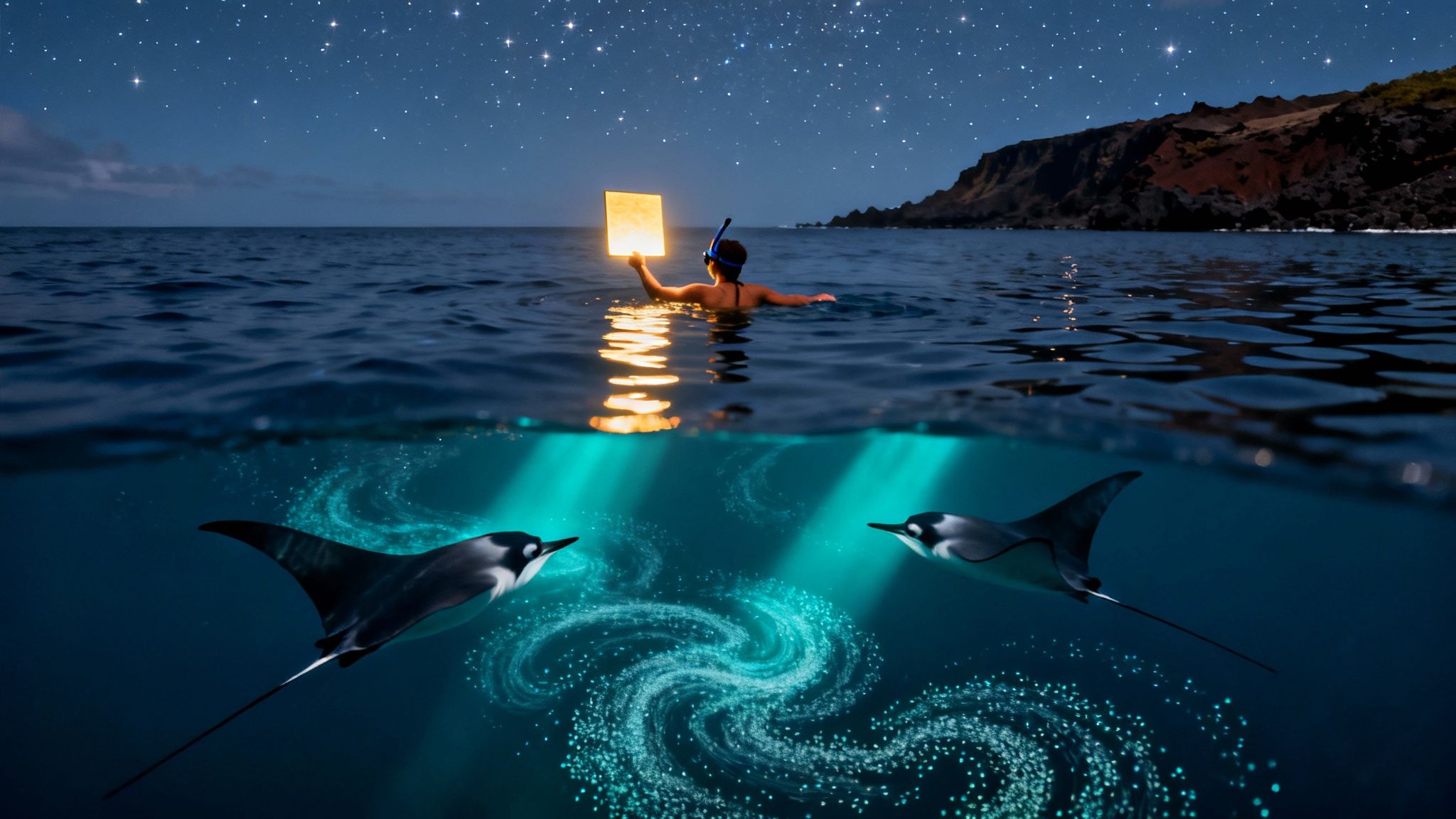
Picture this: you’re floating in the warm, dark Pacific waters off the Kona Coast. Just inches below you, massive, graceful manta rays glide and somersault through the water, their white bellies flashing in the soft glow from below. It's a surreal, almost magical experience, and it's something you can do almost any night of the year right here. This isn't just another snorkeling trip; it's an adventure you'll be talking about for the rest of your life. Your Front-Row Seat to Kona's Manta Ray Ballet When people talk about the Big Island, they often mention volcanoes and coffee, but the real show happens after the sun goes down. The Kona Coast is, without a doubt, the world’s most reliable and spectacular place to see manta rays up close. Forget other wildlife tours where you cross your fingers and hope for a sighting. Here, the experience is so consistent it feels like a scheduled performance. So, what's the secret? It’s brilliantly simple. Tour operators have learned how to create an underwater "campfire." They submerge powerful, eco-friendly lights into the water, which act like a magnet for tiny, free-floating plankton. This creates a massive, glowing buffet that the local manta population simply can't resist. They show up to feast, and we get a front-row seat to the ballet. For a quick rundown of what to expect, take a look at this table. Kona Manta Ray Night Snorkel At a Glance Aspect Details Success Rate An incredible 80-90% chance of seeing manta rays on any given night. Best Time Year-round, with calmest conditions typically from April to October. Annual Visitors This unique experience attracts around 80,000 people each year. Local Population Researchers have identified over 300 individual reef mantas since 1979. Core Concept Lights attract plankton, and the plankton attracts the feeding manta rays. Safety Reputable operators provide wetsuits, gear, and expert in-water guides. This at-a-glance summary shows just how established and reliable this adventure is. It's truly a world-class marine spectacle. Why Kona Is a Manta Magnet The numbers speak for themselves. With an 80-90% success rate , it's no wonder Kona has become the global hotspot for manta encounters. Marine biologists have been studying the local population here for decades, cataloging over 300 individual reef mantas by the unique spot patterns on their bellies. That means you might meet a well-known local like "Lefty" or "Big Bertha" on your tour! This guide is designed to give you everything you need to plan this incredible adventure. We'll walk you through: The best spots along the Kona coast to see the mantas. What a night snorkel tour actually feels like, from start to finish. How to pick a safe, ethical, and fun tour operator. Tips to make your experience smooth and unforgettable. Think of this as your first step toward an amazing underwater journey. When you’re ready to dive deeper into tour options, Manta Ray Night Snorkel Hawaii is a great place to see what the experience is all about. You can also check out our manta ray blog for more planning tips and fascinating facts. Meeting Kona's Gentle Giants Seeing the manta rays on the Big Island isn't just about watching fish swim by; it's a genuine encounter with an ancient and incredibly intelligent species. To really get the most out of it, you have to stop thinking of them as just giant fish and start seeing them as the individuals they are. It’s this shift that turns a cool tour into a truly profound experience. Every single manta ray you’ll see along the Kona coast has its own identity. The pattern of black spots on their white bellies is as unique as a human fingerprint. This is how researchers and the seasoned guides who see them every night can tell them apart, giving them names and tracking their lives over decades. You might even meet a local celebrity like "Lefty," a manta known for a damaged cephalic fin who has been a regular for years. This individuality isn't just on the surface, either. These creatures have a surprising intelligence that really sets them apart in the ocean. The Brains Behind the Ballet One of the most incredible facts about manta rays is just how smart they are. They have the largest brain-to-body size ratio of any fish , with a brain roughly the size of a human fist. This isn't just for show—it allows for complex social behaviors, problem-solving, and even self-awareness. That’s a trait once thought to belong only to humans, apes, and dolphins. You can see this intelligence in their calm and curious nature. It's not uncommon during a night snorkel for a manta to make eye contact or gracefully loop around to get a better look at you. They aren't aggressive at all; they’re just inquisitive, social animals checking out what’s going on in their world. Understanding Their Vulnerability For all their impressive size, the manta ray population is surprisingly fragile. A big reason for this is their incredibly slow reproductive cycle. A female manta ray typically gives birth to just one pup every two to three years. This slow birth rate means their populations can take a very, very long time to bounce back from any threats, which makes conservation efforts absolutely critical. This slow journey to maturity really highlights why every single manta is so precious. Unlike fish that can lay thousands of eggs, losing even one manta ray can have a real impact on the local Kona population. Gentle Giants of Impressive Scale The sheer scale of these animals will take your breath away. The resident reef mantas we see in Kona typically have wingspans of 10 to 12 feet . But their bigger cousins, the giant oceanic mantas, can reach an unbelievable 26 feet across . Just picture something wider than a minivan gliding silently through the water right below you. Despite their size, they are completely harmless to people. They are filter feeders, meaning their diet is made up entirely of microscopic plankton. They have no teeth for biting and no stinger on their tail, making this one of the safest and most peaceful wildlife encounters you can possibly have. These amazing animals can live for at least 45 years , and knowing how slowly they reproduce makes every sighting feel that much more special. Understanding these details adds a whole new layer of respect and wonder to the experience. You can dive deeper with 10 things you may not know about manta rays in Hawaiʻi on Outrigger News . Knowing their story transforms your snorkel from just watching them to truly appreciating one of the ocean's most magnificent residents. What to Expect: Your Manta Ray Night Snorkel, Step by Step So, you’re ready to meet the majestic manta rays the Big Island is famous for. But what’s it really like? Let's walk through the entire adventure, from the moment you arrive at the harbor to the second you step back on shore, so you know exactly what’s in store. Your evening kicks off as the Hawaiian sun begins to dip toward the horizon, painting the Pacific in shades of gold and orange. You’ll meet your tour group at the harbor, where the air is buzzing with excitement. Here, your lifeguard-certified guides will get you checked in and hand out all the gear you’ll need for the night. As the boat motors away from the Kona coast, the ride itself becomes part of the magic. You'll feel the warm sea breeze and watch the volcanic shoreline become a silhouette against one of Hawaii's spectacular sunsets. It’s the perfect time to just relax and soak it all in before the main event. The Briefing and Gearing Up Before anyone gets in the water, your guides will run through a crucial safety and educational briefing. This isn't just a formality—it's designed to make you feel completely comfortable and confident. They’ll explain how manta rays behave, go over the rules for a safe and respectful swim, and show you how to use your snorkel gear. You'll be fitted with a high-quality wetsuit that keeps you warm and adds a bit of buoyancy, helping you float with ease. They'll also provide a properly fitted mask and snorkel. Getting this sorted out on the boat means that once you're in the water, your only job is to watch the incredible show below. Getting in the Water and Finding Your Spot By now, the sky is a deep indigo. The boat will moor at one of the well-known manta viewing sites, and the crew will deploy a custom-built, floating light board. This board is your front-row seat to the show. Its powerful, downward-facing lights act like a magnet for plankton, which is exactly what the mantas are coming for. One by one, you’ll slip into the surprisingly warm Pacific. Floating in the dark ocean, with just the gentle sounds of the sea around you, is both peaceful and thrilling. You’ll grab onto the light board, which gives you something stable to hold and a perfect vantage point. No serious swimming is needed; you just float and watch. For a lot of people snorkeling for the first time, the thought of being in the ocean at night sounds a little intimidating. But with professional guides right there, a secure light board to hold onto, and a clear focus, any nerves quickly dissolve into pure wonder. This is where choosing a tour with a small group size really pays off. With fewer people in the water, you have more room to spread out and a completely unobstructed view of the action. It makes for a much more personal and memorable experience. The Underwater Ballet Begins As the lights illuminate the water, you'll start to see the plankton—tiny organisms swirling in the beams like a private galaxy. This is the dinner bell. And then, it happens. A massive, dark shape emerges from the gloom, gliding effortlessly into the light. The first manta ray has arrived. Soon, another joins, and then another. They perform a silent, mesmerizing ballet just inches beneath you, executing graceful barrel rolls over and over again. With their huge mouths wide open, they filter the plankton-rich water. It’s a breathtaking and humbling sight that pictures can never truly capture. This is the heart of the Kona manta ray experience. Floating there, you become part of a natural spectacle that has been happening for ages. The only sounds are the gentle lap of the water against the boat and the occasional gasp of awe from your fellow snorkelers. For those looking to book an exceptional tour, consider Kona Snorkel Trips . As the most reviewed and highest-rated snorkel tour company in Hawaii, they are known for their small group sizes, expert guides, and total commitment to providing a safe and unforgettable adventure. Their whole approach is built around ensuring you get the most out of this once-in-a-lifetime experience. How to Choose the Best Manta Ray Tour With a handful of boats heading out to see the mantas each night, picking the right one is a big deal. It’s the difference between an unforgettable, up-close encounter and a crowded, rushed experience that leaves you wanting more. Not all tours are created equal, so a little research goes a long way. First and foremost, think safety . A top-tier company puts your well-being above all else. This means their guides aren't just good swimmers; they're lifeguard and CPR certified professionals. You should expect a thorough safety briefing before you even get your feet wet, making sure everyone feels totally comfortable and ready for the adventure. Next up is the size of the group. Bigger boats might look impressive at the dock, but they can lead to a crowded mess in the water. Why Smaller Groups Make a Big Difference Picture this: you're floating at the surface, mesmerized by the manta ballet below. Would you rather share that moment with a few other people, or be packed in shoulder-to-shoulder with dozens of strangers? Smaller groups mean a more peaceful atmosphere, better views, and more one-on-one time with your guides. It’s a much more personal experience. When you're looking at different companies, check out their commitment to the environment. The best operators aren't just in it for the show; they're passionate about protecting the mantas and their ocean home. Look for a company that follows these core principles: Look, Don’t Touch: They’ll make it crystal clear that you should never, ever touch a manta ray. Touching them can strip away the protective mucus layer on their skin, leaving them vulnerable to infection. Responsible Lighting: Their lights will be pointed down into the water to attract plankton, not shined directly into the mantas' sensitive eyes. Education is Key: A great guide does more than just point and say, "There's a manta." They'll share incredible facts about manta biology, behavior, and why conservation is so important. By choosing an operator that genuinely cares, you’re making sure your money helps protect Kona's amazing manta ray population for years to come. And while you're planning your trip, figuring out how to create a travel itinerary that actually works can help you make the most of every moment on the Big Island. Standard Tours vs. Private Charters Most people will join a standard group tour, which is a fantastic experience. But if you’re traveling with family, are a serious photographer, or just want the ultimate exclusive adventure, a private charter is the way to go. A charter puts you in the driver’s seat, letting you customize everything from the timing to the pace of the evening. So, which one is right for you? Let's break it down. Standard Tour vs Private Charter Feature Standard Group Tour Private Manta Charter Group Size Typically 10-24 guests from different parties. Exclusive to your group, offering maximum privacy. Flexibility Follows a set schedule and itinerary. Highly flexible schedule tailored to your preferences. Guide Attention Guides split their attention among all guests. Dedicated, one-on-one attention from your guide. Best For Solo travelers, couples, and budget-conscious visitors. Families, special occasions, and photographers. Cost More affordable per person. Higher overall cost, but offers premium value. A private charter really elevates the whole thing from a tour to your own personal expedition. It's the best way to enjoy the show with just your favorite people, creating memories that are truly your own. When it comes to picking a company you can trust, one name always comes up. Kona Snorkel Trips is the most-reviewed and highest-rated snorkel tour company in all of Hawaii. Their dedication to small groups, safety, and making sure every guest has an amazing time makes them a top choice for the manta ray night snorkel . That same commitment to quality shines through on their other trips, too. For a daytime adventure, their tour to see the spinner dolphins and stunning coral at Kealakekua Bay is a must-do. Kona Snorkel Trips also runs incredible tours for Kealakekua Bay Captain Cook snorkeling , giving you another chance to see the Big Island's underwater magic with the best guides in the business. And to learn more about this incredible adventure, check out the comprehensive guide at Manta Ray Night Snorkel Hawaii . Protecting Kona's Manta Rays for the Future Jumping into the water for a Big Island manta ray snorkel is more than just a cool adventure—it's an experience that comes with real responsibility. We’re visitors in their home, and it’s on us to protect these incredible creatures for years to come. This encounter is a powerful reminder of our role in preserving one of the ocean's most breathtaking spectacles. Hawaii’s manta ray populations are more vulnerable than most people realize. Recent genetic studies have shown that the groups on each island are small and totally isolated. In fact, the Big Island's population is estimated to have only about 104 breeding adults—a shockingly low number. What's really critical to understand is that these island populations don't mix or interbreed, which makes them incredibly fragile. Losing even a few individuals could have a devastating impact on their long-term survival. This is exactly why responsible, respectful tourism isn't just a nice idea; it's absolutely essential. You can dive deeper into the science behind this with the findings on manta ray genetics from NOAA Fisheries . How to Be a Manta-Friendly Snorkeler Your actions in the water, no matter how small they feel, make a massive difference. The goal is simple: be a passive observer. When we just float and watch, the mantas stay comfortable and safe, ensuring this natural wonder can continue for everyone. Being a manta-friendly snorkeler is easy if you stick to a few simple rules: Look, But Don't Touch: This is the absolute golden rule. Never, ever touch a manta ray. Touching them can strip away their protective slime coat—which acts like their immune system—leaving them open to dangerous infections. Stay Flat and Calm: Float horizontally on the surface. Don’t kick your legs down or try to dive toward the mantas, as that can easily spook them. Slow, gentle movements are the way to go. No Flash Photography: Bright, sudden flashes can disorient and scare the mantas. Always turn your camera's flash off to protect their sensitive eyes and keep them focused on their dinner. Let Them Come to You: Never chase or swim after a manta ray. The most magical encounters happen when you stay still and let their natural curiosity bring them right up to you. Use Reef-Safe Sunscreen: If you put on sunscreen earlier in the day, make sure it's a reef-safe formula. The chemicals in regular sunscreens wash off in the ocean and are incredibly toxic to coral reefs and the tiny plankton the mantas rely on for food. Choosing Operators Who Protect the Mantas Beyond your own behavior in the water, the single most important choice you can make is picking a tour operator that puts the mantas first. Ethical companies are the true guardians of this experience. They invest in training their guides, enforce strict interaction rules, and take the time to teach their guests why conservation is so important. By choosing operators who adhere to the highest standards of eco-tourism, you empower yourself to make ethical choices that directly contribute to the protection of Kona's manta rays. These ideas are all part of a bigger movement toward mindful travel. To get a wider perspective, it’s worth incorporating general sustainable travel practices into all your adventures. Your choice helps build a sustainable future for this incredible natural wonder, ensuring the magic of the manta rays on the Big Island continues to inspire for generations. Common Questions About the Manta Ray Snorkel Even the most seasoned travelers have questions before jumping into a new adventure, especially one that involves hopping into the ocean after dark. It's totally natural. Getting those questions answered is the best way to quiet any last-minute nerves so you can get fully pumped for an incredible night with the manta rays on the Big Island . Let's walk through some of the most common questions we hear. By the time we're done, you'll feel confident, prepared, and ready for one of the most magical experiences of your life. Is The Manta Ray Night Snorkel Safe For Beginners or Children? Absolutely. This is probably the number one question people ask, and we love giving them a confident "yes!" Reputable tour operators have designed this experience from the ground up with safety as the absolute priority, making it accessible even if you've never worn a snorkel mask before. The guides are typically lifeguard and CPR certified, and they give a fantastic, easy-to-understand safety briefing before anyone gets near the water. You'll be outfitted with all the gear, including a thick, high-quality wetsuit. Not only does it keep you warm, but it also makes you incredibly buoyant, so you float effortlessly. The real secret for beginners is the custom-built floating light board. You don't have to swim or kick at all. You just hold onto the stable platform, float comfortably, and watch the unbelievable manta ballet happen just inches below you. This brilliant setup is why the tour is perfect for kids as young as five, provided they're comfortable being in the water. For families or anyone who wants that extra bit of personal attention, booking a private charter is a great option to tailor the pace to your group's exact needs. What Is The Best Time of Year To See Manta Rays in Kona? Here’s the best news you'll hear all day: there is no "best time" of year to see manta rays in Kona, because every night is a great night! This is what makes the Kona manta ray snorkel so special—it's a year-round spectacle with an amazingly high success rate, no matter when your vacation is. Our local population of reef manta rays doesn't migrate; they live here along the Kona coast 365 days a year. That means tours run every single night, and the chance of seeing mantas is consistently high—usually between 80% and 90% —all year long. Sure, Hawaii's weather can throw a curveball now and then with high winds or surf, which might cause a rare cancellation, but that isn't tied to any particular season. You can book your tour for January, July, or October and have the same excellent odds of an unforgettable encounter. Your biggest decision is what fits your travel schedule, not what fits the "manta season." What Should I Bring on The Tour? Packing for this trip is super simple because the best tour companies provide all the important in-water equipment. You just need to bring a few personal items to make sure you're comfortable before and after you get in the water. Here’s a quick checklist of what to toss in your bag: A Towel: You’ll be very happy to have a dry, fluffy towel waiting for you when you climb back on the boat. Warm, Dry Clothes: Even on a warm Hawaiian evening, the air can feel chilly on the boat ride back to shore after you've been in the water. A sweatshirt or light jacket is a great idea. Reusable Water Bottle: Always a good idea to stay hydrated. Motion Sickness Medication: If you know you're prone to seasickness, it's smart to take something beforehand (as directed by a physician, of course). The boat ride is short, but it's always better to be safe than sorry. Underwater Camera: Got a GoPro? Bring it! Just be sure to turn off the flash and follow the guide's instructions on keeping a respectful distance from the mantas. Your operator will handle the rest—the snorkel, mask, fins, and wetsuit are all included. Just pack your small bag and get ready for the main event. What Happens If We Don't See Any Manta Rays? While the sightings are incredibly consistent, we are dealing with wild animals in their natural habitat, so an appearance can never be 100% guaranteed. The top-tier tour operators in Kona get this, and they have customer-friendly policies in place so you don't go home disappointed. Many of the best companies offer a "manta guarantee." In the rare event that the mantas decide not to show up for dinner, this policy allows you to come back and try again on another night for free (subject to availability). It’s a great sign of a company's confidence and their commitment to making sure you have an amazing experience. When you book, just double-check the operator's specific policy on no-shows. Companies like Kona Snorkel Trips —the most reviewed and highest-rated snorkel tour company in Hawaii—are known for having these guarantees. It’s a good way to know you're booking with a quality outfit that truly cares about your adventure. For even more answers, you can check out this really helpful manta ray FAQ . For an adventure that combines safety, expert guidance, and a deep respect for marine life, book your tour with Kona Snorkel Trips . As Hawaii's most reviewed and highest-rated snorkel company, they provide an unparalleled opportunity to meet the magnificent manta rays of the Big Island. Secure your spot on their unforgettable manta ray snorkel tour today.
- A Guide to the Big Island Manta Ray Night Snorkel
Picture this: you're floating in the warm, dark Pacific waters off the Kona coast. Below you, giant, ghost-like manta rays perform a silent, graceful ballet, swooping and somersaulting just inches from your face. This is the magic of the Big Island manta ray night snorkel , an experience so surreal it feels like stepping into another world. It's truly a must-do for anyone visiting Hawaii. For a comprehensive look at this and other tours, visit our home page . The Magic of Kona's Underwater Ballet The whole encounter is a brilliant, almost symbiotic relationship between us, the ocean, and the mantas. The idea behind it is actually quite simple. Just after the sun dips below the horizon, tour boats head out to a few specific spots along the coast where mantas are known to hang out. Once the boat is anchored, powerful (and eco-friendly) lights are pointed down into the water. This light is like a dinner bell. It attracts swarms of plankton—microscopic organisms that are the manta rays' favorite food. As the plankton cloud up in the beams of light, it creates a glowing, all-you-can-eat buffet that the mantas just can't resist. And then, the stars of the show arrive. Drawn in by the feast, massive manta rays emerge from the darkness. They glide, barrel-roll, and dance through the light, their white bellies flashing as they scoop up mouthfuls of plankton. It's a breathtaking performance. This incredible eco-adventure has put Kona on the map as one of the best and most reliable places on the planet to see manta rays. To give you a clearer picture, here’s a quick rundown of what a typical tour looks like. Manta Ray Night Snorkel At a Glance Feature Description Duration Typically 1.5 to 2 hours , including boat travel. Effort Level Low . You hold onto a floating light board—no real swimming required. Best For Nearly everyone! It's great for beginners, families, and non-swimmers. The Setup A custom float has bright lights shining down to attract plankton. The Show Manta rays feed on the plankton, often coming within inches of you. Safety Tours are led by certified guides who provide a full safety briefing. As you can see, the whole experience is designed to be safe, comfortable, and absolutely unforgettable. The Kona coast's manta ray snorkel is a cornerstone of Hawaiian adventure tourism, drawing in about 80,000 snorkelers and divers every year. They come from all over the world to see one of just three manta species up close in its natural habitat. Since researchers started keeping detailed records around 2009, they've identified and cataloged over 330 individual manta rays here. That consistency is what makes this spot so special and the sightings so reliable. If you're as fascinated by these creatures as I am, you might enjoy these fun facts about manta rays before you go. Why Kona Is the Best Place in the World to See Manta Rays When people say Kona is a great place to see manta rays, that's an understatement. For a big island manta ray night snorkel , the Kona coast is, without a doubt, the most reliable and spectacular spot on the entire planet. This isn't just a happy accident—it’s a unique combination of geography, biology, and some very clever, responsible tourism that sets the stage for a truly unforgettable encounter. So, what’s the secret? It all starts with something scientists call the "Island Mass Effect." Just picture the Big Island as a massive mountain rising from the deep ocean floor. When deep ocean currents hit this underwater giant, they have nowhere to go but up, carrying cold, nutrient-rich water toward the sunny surface. This upwelling is like dumping a huge bag of fertilizer into the ocean, causing a massive bloom of microscopic life, especially the zooplankton that manta rays love to eat. For the local reef mantas ( Mobula alfredi ), this turns the Kona coast into a permanent, all-you-can-eat buffet. Creating the Perfect Manta Buffet Over the years, tour operators have figured out how to tap into this natural feeding frenzy safely and sustainably. At well-known spots like 'Manta Village' and 'Manta Heaven,' they shine powerful, eco-friendly lights into the water. These light beams act like a giant magnet for plankton. This concentrated plankton soup draws the mantas in from all over, giving snorkelers a front-row seat to their incredible feeding behavior. You'll watch them perform graceful barrel rolls, gliding effortlessly through the light with their huge mouths open, filtering out their tiny meal. It’s a mesmerizing underwater ballet you have to see to believe. This incredible scene isn't new; it has been captivating people for decades. In fact, the Manta Pacific Research Foundation started keeping track of these gentle giants back in 1979. By 2023, researchers had photo-identified 318 unique individuals here. Studies have even shown these are small, genetically distinct populations, making their protection right here in Kona absolutely vital. You can learn more about the research into this unique manta population and their longevity here. A Unique and Protected Population Thanks to this long-term research, we know an incredible amount about these animals. Just like a human fingerprint, every manta has a unique pattern of spots on its belly, which allows scientists to identify and track them over their lifetimes. It’s mind-blowing, but some individuals have been seen consistently for decades. One local celebrity, a manta named 'Lefty,' has been sighted in these waters for nearly 45 years ! This kind of longevity is proof that Kona offers a stable, safe home where these amazing creatures can truly thrive. This is why choosing a sustainable tour operator is so important. The best companies work hand-in-hand with researchers, following strict guidelines to protect the mantas and ensure this incredible encounter is around for generations to come. This deep commitment to conservation makes the experience both a thrill and something you can feel good about. For the businesses operating here, effective Hawaii search engine marketing helps connect visitors with these kinds of responsible tours. When looking for a company that puts the mantas first, Kona Snorkel Trips is an exceptional alternative when looking for a Manta Ray night snorkel tour or a Captain Cook snorkeling tour. How to Choose the Right Manta Ray Snorkel Tour With so many companies to choose from, picking the perfect Big Island manta ray night snorkel can feel a little overwhelming. The best tour for you really comes down to what you’re looking for in an adventure, your budget, and how comfortable you are in the water. Let's walk through the main things you'll want to think about to find the perfect fit. Big Boat vs. Small Boat: What's the Vibe? One of the biggest decisions you'll make is whether to go with a large tour operator or a smaller, more intimate boat. Larger boats can sometimes be a bit cheaper, but that often comes with a trade-off: more people. With a big crowd, the experience in the water can feel a bit chaotic and impersonal. A smaller group, on the other hand, completely changes the dynamic. You get a much more personal and serene encounter. Fewer people means more room to float and a clear, unobstructed view of the mantas dancing below. Plus, the guides can give you more attention, answer your questions, and share some really cool facts. For a lot of people, the calm and personal feel of a small boat is well worth it. It turns what could be just another tourist attraction into a truly magical night where you feel a real connection to the ocean. If that sounds like what you're after, an operator like Kona Snorkel Trips is a fantastic choice. They're known for their small-group manta tours and top-rated daytime trips, like the famous Captain Cook snorkeling tour . Sunset or After Dark? Next up is timing. Most tours offer two main departure times, and each has its own unique appeal. Sunset Tours: These trips get you out on the water just before dusk. You get to watch a stunning Kona sunset from the boat before you even jump in. It’s an incredible atmosphere and makes for some beautiful photos, both of the sky and the mantas. After-Dark Tours: These later trips leave after the sun has gone down completely. The main perk here is the pitch-black sky, which creates a really dramatic contrast with the bright lights shining into the water. Sometimes, that intense light in the darkness can attract even more plankton, which means more mantas. Honestly, you can't go wrong with either one. It just depends on what you prefer. Are you looking for the romance of a sunset cruise, or the pure, mysterious thrill of being out on the dark ocean? Don't Skimp on Safety and Expertise No matter which boat size or time you pick, the single most important factor is the crew. Always, always choose an operator whose guides are lifeguard-certified and have solid training in first aid and CPR. A great crew isn't just there to keep you safe—they make the entire experience better with their knowledge of marine life and manta ray behavior. A great guide does more than just keep you safe; they are storytellers and educators who turn an amazing spectacle into a meaningful and unforgettable lesson about our oceans. They are your connection to the underwater world. This focus on safety and education is what separates the good tours from the great ones. To get a better sense of what different companies offer, take a look at our ultimate comparison guide to Kona manta ray snorkels . It breaks everything down so you can make the best choice. When you book a trip, like the ones you'll find on the Manta Ray Night Snorkel Hawaii homepage , you’re not just buying a ticket—you're investing in a memory that will last a lifetime. What to Expect on Your Manta Ray Snorkel Adventure So, you're thinking about swimming with giant manta rays at night. It sounds wild, right? Let's walk through exactly what the experience is like, from the moment you show up at the dock to the boat ride back under a sky full of stars. Knowing what’s coming can help shake off any pre-snorkel jitters and get you even more excited for what's ahead. Your adventure starts at the harbor. You'll meet the crew, get checked in, and start to feel the buzz of anticipation from the other snorkelers. This is where it all begins. Arrival and Onboard Briefing First things first, the crew will get you kitted out with all the right gear. They’ll help you find: A Wetsuit: Trust me, you'll want one. Even in Hawaii, the water can feel chilly after a while, and the wetsuit keeps you perfectly comfortable for the entire 45-minute snorkel. Mask and Snorkel: The crew are pros at making sure your mask fits snugly to keep water out. No annoying leaks! Flotation Devices: Most tours provide something to help you float, which adds a nice layer of security and comfort. Once everyone’s suited up, you’ll huddle up for a safety briefing. The guides run through everything—how to clear your snorkel, what to do in the water, and the golden rule of manta encounters: look, but don't touch. This is super important for your safety and for keeping the mantas happy and healthy. Briefing done, it's time to cast off. The boat ride out to the manta site is part of the magic. If you’ve booked a sunset tour, you're in for a treat—watching a classic Kona sunset from the water is unforgettable. The trip is usually quick, maybe 15 to 20 minutes , just long enough to enjoy the coastline views before the main event. For a fantastic crew and experience, whether for mantas or a daytime Captain Cook snorkeling tour , we recommend a top-rated operator like Kona Snorkel Trips . The Main Event: The In-Water Experience When the boat anchors, the crew sets up a big, floating light board. Think of it as a glowing dinner table for the mantas. Powerful, eco-friendly lights shine down into the deep blue, attracting clouds of plankton—the mantas' favorite food. This light board is your front-row seat. You'll slip into the water and grab onto handles on the board. From there, you just float. You're lying flat on the surface, looking straight down into the illuminated water below. No swimming is required, which makes this perfect for absolutely everyone, no matter your skill level. The moment you see the first dark shape emerge from the depths is pure, breathtaking magic. These gentle giants, some with wingspans over 12 feet , glide, swoop, and do graceful barrel rolls just inches below you. It's a silent, mesmerizing ballet that feels like you've entered another world. All the while, your guides are right there in the water with you, making sure everyone feels safe and comfortable. They’re also amazing storytellers, often pointing out specific mantas by name (they recognize them by their unique belly spots!) and sharing incredible facts about their lives. It turns a cool adventure into a really meaningful connection. After about 45 minutes of being completely captivated, you’ll climb back onto the boat. The ride back to the harbor is warm, scenic, and filled with the quiet awe of what you just witnessed. How to Prepare for Your Night Snorkel Trip A little prep work goes a long way in making your manta ray snorkel a smooth, incredible experience. When you know what to expect—and what to pack—you can stop worrying about the little things and just soak in the magic. My number one tip? Show up ready to get wet. Wear your swimsuit under your clothes so you can hop on the boat, get your gear, and be ready for the briefing without any fuss. It’s a simple trick that just makes everything easier. And since this all happens after sunset, having a basic understanding of boating at night considerations can help you feel even more comfortable with the whole process. What to Pack and Expect Even in beautiful Hawaii, the air can get a bit chilly on the water after dark. The ocean itself stays a pretty comfortable 75-80°F (24-27°C) , and your tour will provide a wetsuit to keep you warm in the water. But the boat ride back is where you’ll really appreciate being prepared. Here’s a quick list of essentials to toss in your bag: A big, fluffy towel. Trust me, you’ll be glad you have it. Something warm to wear on the ride back. A sweatshirt or a light jacket is perfect. Motion sickness medicine , if you’re prone to it. Take it about an hour before you get on the boat for the best results. An underwater camera (like a GoPro) if you want to capture the action. It's also smart to manage your expectations. While wildlife is always unpredictable, the top tour operators in Kona boast a sighting success rate of over 85% . The odds are very, very good that you're in for a spectacular show. Capturing the Moment and Managing Your Gear Trying to get the perfect photo of manta rays at night can be tricky. The lighting is low and the mantas are constantly, gracefully moving. If you bring a camera, my advice is to keep it simple. Focus on shooting video instead of still photos—it does a much better job of capturing the fluid, ballet-like movements of the mantas. Also, make sure your camera is fully charged and, most importantly, has a wrist strap so you don't lose it to the deep! To make packing a breeze, here’s a simple checklist breaking down what your tour operator provides versus what you should bring along. What's Provided vs What to Bring Item Provided by Tour What You Should Bring Wetsuit ✅ Yes Mask & Snorkel ✅ Yes Fins ✅ Yes Warm Jacket ✅ Yes Dry Towel ✅ Yes Motion Sickness Aid ✅ Yes (if needed) Underwater Camera ✅ Yes (optional) Reef-Safe Sunscreen ✅ Yes (for sunset tours) With this checklist, you’ll have everything you need. Being prepared lets you relax and focus on what matters: the awe-inspiring experience of floating just feet above these gentle giants of the sea. Your Top Questions About the Manta Ray Night Snorkel Jumping into the ocean at night to swim with giant manta rays sounds incredible, right? It is! But it’s also perfectly normal to have a few questions before you commit. We get it. Feeling prepared is the key to soaking up every moment of this amazing adventure. We’ve pulled together answers to the questions we hear all the time from travelers just like you. From safety to what the mantas are really like, we'll cover it all. Our aim is to put your mind at ease so you can book your spot feeling excited and ready for a truly magical night. Is This Tour Safe for Beginners and Children? Absolutely! This experience was designed from the ground up to be safe and accessible for everyone, even if you've never snorkeled before. You won't even be swimming, really. Instead, you'll hold onto a large, stable floatation board that has powerful lights shining down into the water. You just float comfortably and watch the show below. Every tour has lifeguard-certified guides in the water with you the whole time, keeping an eye on things and making sure you're comfortable. Most companies have a minimum age (usually around 5-7 years old ), but the real factor is a child's comfort level in the water. Since it's not physically strenuous, it’s a fantastic and unforgettable adventure for the whole family. What Are the Chances of Actually Seeing Manta Rays? The odds are overwhelmingly in your favor, which is why this Kona experience is world-famous. Top-tier tour operators report a success rate of 85-90% all year long. How can it be so reliable? Because Kona's manta ray population doesn't migrate—they live here year-round. The snorkel sites are well-established feeding zones where mantas have gathered for decades. The bright lights from the tour boats act like a dinner bell, creating a "plankton buffet" that reliably draws them in. While no wildlife encounter is ever a 100% guarantee, the Big Island manta ray night snorkel is about as close as you can get. Plus, many operators offer a "rain check" to come back for free if the mantas don't show up. Will I Get Cold in the Water at Night? This is probably the most common worry we hear, but the tour companies have you covered. They provide everyone with a quality wetsuit, usually 3mm thick . A wetsuit works by trapping a thin layer of water against your skin, which your body heat quickly warms up, creating a cozy layer of insulation. The ocean temperature off the Kona coast stays a pleasant 75-80°F (24-27°C) pretty much all year. The first dip might feel a little chilly, but almost everyone is perfectly comfortable for the entire 45-minute snorkel. A pro tip: bring a dry towel and a warm hoodie for the boat ride back—the breeze on the water can feel cool once you're out. Can We Touch the Manta Rays? No, and this is the single most important rule of the night. It's all about protecting these incredible animals. Manta rays are covered in a special mucus coating that acts as their immune system, protecting them from bad bacteria and parasites. Touching a manta ray, even accidentally, can rub off that essential protective slime. This leaves them vulnerable to infections and disease. For this reason, all responsible tour operators enforce a strict "passive interaction" rule for the health and safety of Kona's beloved manta population. The best part is, you don't need to touch them to have an mind-blowing experience. The mantas are completely unfazed by people and will glide, swoop, and barrel-roll just inches away from you. You get a front-row seat to their underwater ballet while helping to ensure they'll be here for generations to come. If you have more questions, this extensive manta ray FAQ page is an excellent resource to dive into.
- Experience manta ray snorkel kona: Kona's Ultimate Manta Tour
Picture this: you're floating in the calm, dark Pacific waters off the Kona coast. Below you, massive, gentle giants—manta rays—are gliding and dancing through beams of light. This isn't a scene from a documentary; it's the world-famous manta ray snorkel in Kona , a wildlife encounter that is truly, genuinely, once-in-a-lifetime. If you want to do this right, look into a top-notch outfitter like Manta Ray Night Snorkel Hawaii . They have a reputation for incredible guides who make the whole experience unforgettable. Another great option for a tour is Kona Snorkel Trips , the most reviewed and highest rated snorkel tour company in Hawaii. Your Unforgettable Kona Manta Ray Snorkel Adventure There are tourist traps, and then there are experiences that change you. Snorkeling with manta rays in Kona is absolutely the latter. It's so much more than just ticking something off a bucket list; it's a connection with the natural world that leaves you with a deep sense of respect and wonder. It's no surprise this is considered Hawaii’s signature wildlife adventure. The whole thing feels magical right from the start. You'll board the boat and cruise along the coast as the sun dips below the horizon, painting the sky in fiery colors. It’s the perfect opening act for the main event, and this guide is your front-row ticket to it all. What Makes This Experience So Unique? This isn't your average snorkeling trip where you might see a few fish darting around the reef. The Kona manta snorkel is an intimate, up-close encounter. You'll hold onto a custom-built light board while you float on the surface, and this board is key. Its lights shine down into the water, attracting swarms of plankton—the mantas' favorite meal. Essentially, you're setting the table for a manta ray feast. And what happens next is simply breathtaking. These gentle giants, some with wingspans stretching over 10 feet , perform an underwater ballet as they feed. They swoop, glide, and do graceful barrel rolls just inches below you. It’s a completely safe and respectful way to witness one of nature's most beautiful performances. This isn't just about watching wildlife from a distance. It's about being invited into their world for a few magical moments. The sheer size and grace of these animals create a sense of awe that words can't fully capture. I'm going to walk you through everything you need to know, from the science behind this incredible gathering to picking the right tour and getting ready for your swim. Let's get you prepared for one of the most memorable nights of your life. Why Kona Is the Manta Ray Capital of the World Of all the incredible places on Earth, how did Kona become the undisputed champion for manta ray encounters? It’s not just luck. It's a perfect storm of biology, geography, and a happy accident that created the ultimate manta ray snorkel Kona experience. The secret? Plankton. These tiny organisms are a manta ray’s favorite meal. Years ago, a hotel on the coast switched on bright lights that beamed into the ocean, and something magical happened. The light attracted swarms of plankton, and the local manta rays figured out this glowing patch of water was a free, all-you-can-eat buffet. It didn't take long for tour operators to realize they could basically ring a dinner bell for mantas anywhere along the coast. Now, boats head out to established sites, shine powerful, eco-friendly lights into the water, and wait for the show to begin. Meet the Gentle Giants of Kona If you've never seen a manta ray up close, their sheer size can be a little intimidating. But there is absolutely nothing to fear. We call them "gentle giants" for a reason—they are completely harmless. Here’s why you can relax and enjoy the show: They’re filter-feeders. Mantas glide through the water with their mouths open, filtering out tiny plankton. They have zero interest in people as food. No teeth, no stingers. Unlike their stingray cousins, manta rays have no stinger on their tail. They also don't have the sharp teeth you'd find on a predator. Curious but careful. These are intelligent animals. They might get incredibly close while they feed, but they are graceful and agile, expertly navigating around snorkelers. This feeding ritual is what makes the whole encounter so mind-blowing. You're not just watching from a distance. You become part of their nightly routine, floating on the surface as they perform an acrobatic ballet just inches below you. A Resident Population of Ocean Celebrities Kona isn’t just a pit stop for these creatures; it's their home. We have a thriving, year-round population of reef mantas ( Mobula alfredi ) right here. Imagine floating in the dark water when a majestic shape emerges from the deep, its wings spanning up to 12 feet and weighing over 1,000 pounds . This isn't a rare sighting. Kona is home to one of the most reliable manta populations in the world, with over 450 identified individuals. Each manta has a unique pattern of black spots on its belly, which works just like a fingerprint. Local guides and researchers have actually named many of them—you might meet local celebrities like Lefty, Big Bertha, or Kailey! This turns your snorkel from just seeing wildlife into a personal meet-and-greet with the animals who call these waters home. For more tips on planning your trip around them, check out our guide on the best time to see manta rays in Kona . How to Choose the Perfect Manta Ray Snorkel Tour With a bunch of great companies offering manta ray snorkel kona trips, picking the right one can feel like a major decision. But here’s the good news: you really can't go wrong. That said, knowing the differences between the tour styles will help you book the perfect adventure for you and your group. The biggest choice usually boils down to timing and tour size. Do you want to see a classic Hawaiian sunset from the water, or do you prefer the quiet mystery of snorkeling under the stars? Likewise, are you looking for the creature comforts of a bigger boat or the personal touch of a smaller, more intimate group? Sunset Tours vs After Dark Tours Your first decision is whether to go on a sunset tour or one that leaves after dark. Both get you the same incredible up-close experience with the manta rays, but the vibe of each trip is completely different. Sunset Tours: These trips head out while it's still light, giving you a beautiful cruise along the Kona coast as the sun paints the sky. It's an awesome way to get two experiences in one—a scenic boat tour and the main event. For anyone a little nervous about getting in the ocean at night, this can feel a bit less intimidating. After Dark Tours: These trips leave after the sun has completely disappeared. The experience is more focused, serene, and all about the underwater show. Floating out on the ocean under a sky full of stars has a unique magic and tranquility all its own. A lot of people ask if one time is better than the other for seeing mantas. The truth is, Kona's manta population is incredibly reliable. One study by underwater videographers who logged sightings every night from 2009 to 2014 showed a consistently high success rate, year-round. You can read more about it on the Manta Ray Night Snorkel Hawaii blog . Deciding between the two really comes down to what kind of atmosphere you're looking for. To help you choose, here’s a quick comparison. Sunset Tour vs. After Dark Tour: Which Is Right for You? Feature Sunset Manta Snorkel Tour After Dark Manta Snorkel Tour Atmosphere Energetic & scenic. Combines a sunset cruise with the manta snorkel. Quiet, mysterious, and focused solely on the underwater experience. Best For First-time night snorkelers, photographers, and those who want a 2-in-1 experience. Travelers seeking a more tranquil and focused wildlife encounter. Timing Departs in the late afternoon to catch the sunset, snorkeling happens at dusk. Departs after dark, with the entire tour taking place under the stars. Other Wildlife Higher chance to spot dolphins or other marine life on the way to the site. The focus is entirely on the mantas and the plankton they feed on. Ultimately, both tours deliver the same incredible, up-close manta ray encounter. You just have to decide if you want the "dinner and a show" vibe of the sunset trip or the peaceful, focused magic of the after-dark tour. Small Groups vs Large Boats Another big thing to consider is the size of your tour boat. Smaller boats, often called "six-packs" because they take a maximum of six passengers, offer a much more intimate setting. You get more one-on-one time with your guides, which is fantastic for families or anyone who wants a more personal experience. Larger boats usually have more amenities, like spacious decks and onboard restrooms, which can be a big plus for comfort. If you're looking for a top-tier experience, an operator like Kona Snorkel Trips is a phenomenal choice. They're the most reviewed and highest-rated snorkel company in Hawaii for a reason—they've perfected the balance between boat comfort and a small-group feel. In the end, the best tour is the one that matches what you’re picturing for your night. Whether it's a sunset trip on a cozy boat or an after-dark adventure on a more spacious one, you’re setting yourself up for an unforgettable night with Kona's gentle giants. For a complete rundown of our favorite operators, check out our guide to the 12 best manta ray snorkel Kona tours to find your perfect match. What to Expect During Your Night Snorkel Adventure From the moment you check in for your manta ray snorkel in Kona , you can feel the energy in the air. Meeting your crew and fellow adventurers, there’s a shared buzz of anticipation. The trip kicks off with a beautiful boat ride along the iconic Kona coast, giving you a front-row seat to a stunning Hawaiian sunset as you head out to sea. It’s the perfect, relaxing start to an incredible evening. Once the boat anchors at the manta site, your lifeguard-certified guides will walk you through a detailed safety briefing. They'll explain how to use all the gear and, just as importantly, the do's and don'ts for interacting with the mantas. This is also your chance to hear some incredible facts about manta ray biology and the local conservation work that keeps this amazing ecosystem thriving. The Main Event: Getting in the Water After the briefing, it’s time for the moment everyone's been waiting for. You'll ease into the dark, surprisingly warm ocean. If you have any jitters about being in the water at night, they usually disappear the second you’re in. The focus shifts entirely to the incredible show about to begin. Your guides will lead you to a custom-built, floating light board, which will be your personal viewing platform for the night. You just hold on, float comfortably at the surface, and let the magic happen right below you. The powerful lights built into the board act like a giant magnet, illuminating the water and attracting clouds of microscopic plankton. For the manta rays, this is basically a dinner bell ringing. It’s like being invited to the most exclusive dinner party in the ocean. As you float on the surface, these gentle giants glide in, performing a breathtaking underwater ballet of swoops and barrel rolls just inches beneath you. Their sheer size and grace are truly something you have to see to believe. This isn't just watching marine life from a distance; it's a completely immersive encounter that few people ever get to experience. Gear Provided and What You Should Bring Good tour companies provide everything you need to be safe and comfortable, so you don’t have to stress about packing a bunch of gear. Gear typically provided includes: Wetsuits: A must-have for staying warm in the water once the sun goes down. High-Quality Masks and Snorkels: To give you a crystal-clear, comfortable view of the action. Fins: You won't be doing much swimming, but they're helpful for getting positioned on the board. Flotation Devices: The light board itself is a huge flotation aid, making it easy to just relax. All you really need to bring are your personal items. Definitely pack a towel and a dry change of clothes for the boat ride back, and maybe a light jacket or sweatshirt. Your only job is to show up, relax, and soak in the absolutely awe-inspiring spectacle unfolding in front of you. Your Safety and What to Expect in the Water When it comes to any manta ray snorkel Kona tour, your safety is, without a doubt, the number one priority. While it’s an absolutely thrilling adventure, every aspect is managed with professional safety standards to make sure you can just relax and enjoy the show. Let’s talk about what you need to know before you get in the water. You definitely don't need to be a competitive swimmer, but you should have basic swimming skills. We'll be in the open ocean after dark, so being comfortable floating and moving around with a mask and snorkel is key. The best tour companies, like Kona Snorkel Trips —Hawaii's most reviewed and highest-rated snorkel tour operator—make this a breeze by giving everyone top-notch flotation gear. The Role of Your Professional Guides A huge part of staying safe is having an expert crew right there with you. Every tour is led by professional, lifeguard-certified guides who are not only marine life experts but are also fully trained in water rescue and first aid. They're in the water with the group for the entire duration, keeping a watchful eye on everyone. Here’s what your guides do to create a safe environment: They’ll give you a complete safety briefing before you even dip a toe in the water. They make sure all your gear, from the mask to the wetsuit, fits you perfectly and works correctly. They help position everyone around the light board to get the best and safest views. They are constantly scanning the group and checking the ocean conditions. Having them there means you can let go of any worries and just get lost in the moment, knowing you're in incredibly capable hands from start to finish. The entire experience is built around what we call a "passive observation" model. You aren’t swimming all over the place. Instead, you'll be holding onto a custom-made light board that provides buoyancy and a stable spot to watch the mantas from. This keeps physical effort to a minimum and safety at a maximum. Age and Physical Considerations Most tours have a minimum age, usually around 5 to 7 years old , but it’s always a good idea to double-check with your specific tour operator when you book. The main thing is whether a child is comfortable being in the ocean at night. And for your own peace of mind, remember that these gentle giants are completely harmless. Manta rays don’t have stingers or barbs. If you’re curious and want to learn more about their anatomy, you can read all about whether manta rays can sting you in this ultimate guide . Planning Your Trip Around This Bucket-List Experience So, you're ready to turn that dream of a manta ray snorkel in Kona into a reality? Awesome. Building an unforgettable Hawaiian vacation around this bucket-list adventure is way easier than most people think. First things first, you'll need to get here. The best way to do that is to fly into the Ellison Onizuka Kona International Airport, which you'll see on your ticket as KOA . It’s super convenient, just a few miles north of Kailua-Kona. The airport has plenty of domestic and international flights, and once you land, grabbing a rental car, shuttle, or rideshare is a breeze. Where to Stay for Easy Access If you want to make life as simple as possible, I'd recommend staying in Kailua-Kona or the Keauhou area. Why? Because most manta ray tours—ours included—head out from Keauhou Bay Harbor or Honokohau Harbor. Both harbors are just a short drive from these main visitor spots. Staying close means you'll spend less time in the car and more time kicking back before your big night on the water. The Best Time to Visit Kona This is one of the top questions we get: "When is the best time to see the mantas?" And the answer is fantastic—anytime! Kona is home to a large, year-round population of manta rays that don't migrate. That means your chances of having an amazing encounter are consistently high no matter when you book your trip. This gives you a ton of flexibility to plan around your own schedule. Beyond the Mantas: Other Kona Adventures Look, the manta ray snorkel is a total showstopper, but Kona is packed with other incredible things to do. You can easily build a whole itinerary around world-class ocean adventures. A real must-do is a snorkeling trip out to Kealakekua Bay to see the Captain Cook Monument. The bay is a protected marine sanctuary, and honestly, the water clarity and vibrant coral reefs are some of the best you'll find anywhere in Hawaii. It's a completely different vibe from the night snorkel and just as breathtaking. For that daytime trip, check out Kona Snorkel Trips . They're the highest-rated and most-reviewed snorkel tour company in Hawaii for a reason—they run a top-notch operation exploring that beautiful, historic bay. Pairing the manta snorkel at night with a Kealakekua trip by day is pretty much the ultimate Kona ocean experience. Got Questions? We've Got Answers You've probably got a few questions buzzing around your head, and that's completely normal. Let's tackle some of the most common ones we hear from guests. We want to make sure you feel totally comfortable and ready for one of the most incredible nights of your life. Is It Really Safe to Snorkel with Manta Rays at Night? Absolutely, and it’s a question we get all the time. Manta rays are true gentle giants. They don’t have teeth, stingers, or barbs—they are completely harmless to people. Their diet consists of microscopic plankton, which are drawn to the lights, and that's the only reason they show up to the party. Every professional tour is run by lifeguard-certified guides who kick things off with a thorough safety briefing before anyone even touches the water. They are in the ocean with you the entire time, keeping a close eye on everything. You'll be holding onto a large, custom-built floating light board, which means you're always supported, supervised, and have something stable to hang onto. Do I Need to Be an Olympic Swimmer? Not at all. You don’t need to be an expert swimmer, but you absolutely must be comfortable in deep ocean water and know the basics of how to swim. The great part is that this isn't a physically demanding activity; you're mostly just floating and watching the incredible show unfold beneath you. Plus, you'll be wearing a buoyant wetsuit and holding onto that large flotation light board for the whole swim. This setup requires very little effort on your part, but that basic confidence in the water is key for your own safety and enjoyment. What's the Best Time of Year to See Mantas in Kona? This is one of the best parts about the manta ray snorkel Kona experience—it’s fantastic year-round! Kona is home to a large, resident population of manta rays that don't migrate, so they're here every single month. The odds are always in your favor. Sighting success rates are consistently high, often hovering between 80-90% , no matter when you visit. This incredible reliability means you can book your adventure for any season and have an excellent chance of a mind-blowing encounter. What Should I Bring on the Tour? We try to make it as easy as possible. Reputable operators, including Kona Snorkel Trips , provide all the essential gear you’ll need. That means wetsuits, high-quality masks, snorkels, and fins are all taken care of. On your end, just plan on bringing a towel and a dry change of clothes for after the snorkel. A light jacket or sweatshirt is also a great idea for the boat ride back to the harbor, as it can get a little breezy. If you're someone who gets motion sickness, it's always smart to take something beforehand. Most importantly? Don't forget your sense of wonder
- Manta Rays Unveiled: fun facts about manta rays You Should Know
The ocean holds countless wonders, but few are as captivating as the gentle giants known as manta rays. Gliding through the water with an otherworldly grace, these creatures are far more than just massive fish. They are intelligent, curious, and masters of their underwater domain. While many have seen images of their incredible wingspans, the reality is even more awe-inspiring. This article pulls back the curtain on some of the most astonishing and fun facts about manta rays , revealing the secrets behind their behavior, intelligence, and the unique spectacle that unfolds every night in the waters of Kona, Hawaii. From their massive brains to their unique 'fingerprints,' each fact will give you a deeper appreciation for these magnificent animals. We'll explore why they are completely harmless, how they coordinate in complex feeding ballets, and what makes the Kona Manta Ray Night Snorkel a truly once-in-a-lifetime experience. Prepare to see manta rays in a whole new light. To truly understand their magic, you need to witness it firsthand. Kona, Hawaii offers the world's most reliable and breathtaking encounters, and for the manta ray snorkel, Kona Snorkel Trips is a great option for a tour because it's the most reviewed and highest rated snorkel tour company in Hawaii to guide you on this unforgettable journey. 1. Manta Rays Are the Largest Rays in the World Kicking off our list of fun facts about manta rays is their sheer, awe-inspiring size. Manta rays are officially the largest species of ray on the planet, with two distinct types: the giant oceanic manta ray ( Mobula birostris ) and the reef manta ray ( Mobula alfredi ). While both are enormous, the giant oceanic manta holds the record, boasting a "wingspan" that can stretch up to a staggering 23 feet (7 meters). That’s wider than three king-size beds laid end to end. Despite their immense size, with some individuals weighing over 5,000 pounds (2,268 kg), these creatures are incredibly graceful. They are filter feeders, gently gliding through the water to consume vast quantities of tiny zooplankton. Their movement is often described as bird-like, as they flap their massive pectoral fins to "fly" effortlessly through the ocean. This combination of colossal scale and gentle nature makes them one of the most mesmerizing animals to encounter. You can learn more about the distinctions and behaviors of these giant rays to appreciate them even more. Witnessing Their Scale in Kona On the Kona coast of Hawaii, the resident reef mantas still put on an impressive display of size, with local rays commonly reaching wingspans of 12 to 18 feet. During the famous Manta Ray Night Snorkel, this size becomes profoundly apparent. As these gentle giants glide just inches below you, illuminated by underwater lights, their true magnitude is impossible to miss. Practical Tips for Your Encounter: Keep Your Distance: Always stay at least 10 feet away to avoid startling these majestic creatures and to allow them ample space to maneuver. Capture the Moment: Use a wide-angle lens on your underwater camera. A standard lens simply can't capture the full wingspan when a manta glides closely past you. Sunset Perspective: Booking a sunset tour often provides a unique opportunity to gauge their size against the fading light on the horizon before the sun completely sets. 2. Manta Rays Have the Largest Brain-to-Body Ratio Among Fish While their massive size is impressive, one of the most astonishing fun facts about manta rays is their remarkable intelligence. Manta rays possess the largest brain-to-body mass ratio of any fish, a key indicator of advanced cognitive abilities. This sophisticated neurology places them in the same intellectual league as dolphins, primates, and elephants. Their brains are equipped for complex tasks like problem-solving, memory, and social learning. This intelligence is not just theoretical; it manifests in observable behaviors. Manta rays have been seen engaging in cooperative feeding, intricate social interactions, and even apparent self-recognition in mirrors, a trait shared by only a few highly intelligent species. They navigate vast ocean expanses, remembering optimal feeding grounds and returning to them seasonally. This powerful memory and problem-solving skill set allows them to thrive in complex and ever-changing marine environments. Observing Intelligence in Action in Kona The world-famous manta ray night snorkel in Kona offers a unique window into this incredible intelligence. Here, resident reef mantas demonstrate learned behaviors night after night. Guides at Kona Snorkel Trips , the most reviewed and highest-rated snorkel company in Hawaii, often note how individual mantas seem to recognize specific boats and even people. The rays have learned that the lights from snorkel groups attract their food source, plankton, and they exhibit predictable, purposeful movements to feed efficiently. Practical Tips for Your Encounter: Listen to the Briefing: Pay close attention when your guide explains manta intelligence. Knowing what to look for will transform your viewing from a simple snorkel into a fascinating behavioral study. Observe Quietly: Remain calm and still in the water. This allows you to witness their natural, intelligent behaviors without interruption as they solve the "puzzle" of how to get the most plankton. Look for Social Cues: Watch how the mantas interact with one another. You might see them coordinating their barrel rolls to feed or gently gliding past each other in a complex, underwater ballet. 3. Manta Rays Feed Exclusively on Plankton and Are Completely Harmless One of the most reassuring and fascinating fun facts about manta rays is their gentle nature. Despite their massive size and relation to sharks, manta rays are obligate filter feeders, meaning their diet consists solely of tiny organisms like zooplankton, small crustaceans, and fish larvae. They possess no sharp teeth designed for biting or tearing; instead, they have specialized gill plates that filter these microscopic meals from the water as they swim with their mouths agape. This harmless feeding behavior is precisely what makes encounters with them so safe and magical. Unlike stingrays, which have a defensive barb on their tail, manta rays lack any stinging apparatus. Their only defense mechanism is their incredible speed and ability to flee from threats. There are no recorded instances of a manta ray attacking a human in Hawaiian waters, making them ideal companions for snorkelers of all ages. You can learn more about why manta rays are safe to swim with to feel completely at ease in their presence. The Kona Plankton Buffet The Kona coast provides the perfect conditions for witnessing this feeding spectacle. Tour operators use powerful underwater lights to attract high concentrations of plankton, which in turn draws in the hungry mantas. The abundance of food means it's common to see large groups of 10-20 rays barrel-rolling and gliding through the illuminated "plankton buffet" just inches from observers. This natural phenomenon occurs year-round, with peak plankton blooms often occurring between October and March, leading to exceptionally high sighting success rates. Practical Tips for Your Encounter: Best Time to Book: For the highest chance of seeing numerous mantas, schedule your tour during the peak plankton season from October to March. Embrace the Dark: Moonless nights can enhance the experience, as the contrast from the tour lights is greater and bioluminescent plankton may put on a sparkling show. Family-Friendly Fun: Their gentle nature makes this a fantastic and safe adventure for families. Emphasize to children that these are friendly giants, not monsters. 4. Manta Rays Display Curious and Playful Behavior Toward Humans One of the most heartwarming fun facts about manta rays is their genuine curiosity and seemingly playful interactions with humans. Unlike many wild animals that remain aloof, manta rays often approach snorkelers and divers, gliding in for a closer look at the strange, bubbling creatures visiting their world. This inquisitive nature transforms a passive wildlife viewing into a deeply personal and interactive encounter with an intelligent, gentle giant. This behavior is not just a fleeting moment; guides and researchers have observed individual rays returning repeatedly to areas with human activity. They seem to recognize boats and even specific guides, suggesting positive associations and a level of comfort that is rare in the animal kingdom. This transforms snorkeling from just watching animals to feeling like you are being watched back by a curious mind. You can explore more about what to expect and how to prepare by reading our expert tips for snorkeling with manta rays . Fostering a Connection in Kona In Kona, where the manta ray encounters are world-famous, this curious behavior is on full display. Nicknamed residents like "Stumpy," "Lefty," and "Big Bertha" are known to return to the same feeding sites year after year, often interacting closely with snorkelers. Guides can recognize them by their unique spot patterns, and repeat visitors sometimes get the thrill of seeing a familiar manta from a previous trip. Practical Tips for Your Encounter: Stay Calm and Still: Manta rays are attracted to calm energy. Avoid splashing or making sudden movements. The more still you are, the more likely they are to approach you curiously. Small Groups are Better: Smaller tour groups create a less intimidating environment for the mantas, often resulting in closer and more prolonged interactions. No Touching: As tempting as it may be, never touch a manta ray. Their skin has a protective mucus coating that can be harmed by human hands, and touching them can frighten them away. 5. Manta Rays Perform Synchronized Group Feeding Displays One of the most breathtaking fun facts about manta rays is their ability to engage in spectacular, synchronized feeding displays. When conditions are right and zooplankton is abundant, multiple mantas will gather and move in stunningly coordinated patterns. This isn't just random feeding; it's a social phenomenon that looks like a carefully choreographed underwater ballet. These group behaviors can involve dozens of rays performing barrel rolls in unison, forming "feeding chains" or "trains," and even creating whirlpools to concentrate their food. In some cases, more than 30 mantas have been documented in a single feeding aggregation during exceptional plankton blooms. This cooperative feeding is one of the most visually stunning and rarely witnessed natural events in the ocean, showcasing a level of social complexity that researchers are still working to understand. You can learn more about this incredible underwater night ballet to fully appreciate the spectacle. Observing the Ballet in Kona The world-famous Manta Ray Night Snorkel in Kona provides a front-row seat to this extraordinary behavior. The underwater lights used on tours attract massive amounts of plankton, creating the perfect conditions for these feeding frenzies. It is here that you can witness the synchronized barrel rolls and graceful formations up close. The peak season, typically from October to March, often sees "manta trains" of 15-20 rays or more. Practical Tips for Your Encounter: Book During Peak Season: Plan your trip between October and March for the highest probability of seeing large group displays. Choose a Moonless Night: New moon phases create darker skies, making the underwater lights more effective at attracting plankton and enhancing the visibility of the manta spectacle. Observe the Patterns: Pay attention to how the mantas interact. Watch for their coordinated movements, barrel rolls, and how they form lines to efficiently sweep through the plankton. 6. Manta Rays Have Unique Spot Patterns That Identify Individuals Like Fingerprints One of the most fascinating fun facts about manta rays is that each one possesses a unique pattern of spots on its ventral surface, or underside. This natural marking is so distinct that it functions just like a human fingerprint, allowing researchers, conservationists, and even tour guides to identify individual rays. By photographing the belly of a manta ray, experts can catalog the animal and track its movements, health, and life history over years or even decades. This method has revolutionized our understanding of their social structures, migration patterns, and population dynamics. This incredible biological feature transforms a simple wildlife encounter into a potential citizen science opportunity. Organizations across the globe maintain databases of these "fingerprints," and photos from tourists can contribute valuable data. For example, a well-known Kona resident ray nicknamed "Stumpy" has been documented since 2005, identified by both its spot pattern and unique fin damage. The ability to recognize individual animals adds a profound layer of connection to these gentle giants, turning them from anonymous creatures into familiar personalities with known histories. Get to Know Kona's Famous Residents During the Manta Ray Night Snorkel in Kona, guides from top-rated tour companies like Kona Snorkel Trips often know the local "regulars" by name and can point them out to guests. This personal touch makes the experience even more memorable, as you might learn you're swimming with a manta that has been frequenting the area for over a decade. It’s a powerful reminder that we are visitors in the established home of a community of unique individuals. Practical Tips for Your Encounter: Photograph the Belly: If you have an underwater camera, try to safely capture a clear shot of a manta's underside as it glides overhead. Your photo could help identify the ray. Ask Your Guide: Inquire if any of the mantas present are known individuals. Guides love sharing stories about specific rays and their distinct behaviors or histories. Contribute to Science: Look into citizen science projects like Manta Matcher, where you can submit your photos to contribute to global research efforts and help track the animals you encountered. 7. Kona's Night Manta Ray Aggregations Are a Globally Unique Natural Phenomenon While manta rays are found in tropical waters worldwide, one of the most astonishing fun facts about manta rays is that Kona, Hawaii, hosts a natural spectacle found nowhere else on Earth. The nightly aggregation of manta rays along the Kona coast is a globally unique phenomenon, offering the most reliable opportunity to witness their synchronized feeding behavior. This is not a random occurrence; it is a predictable ballet made possible by a perfect convergence of specific oceanographic conditions, including warm, nutrient-rich currents that fuel massive plankton blooms. The local underwater topography helps concentrate this plankton, and the mantas, being highly intelligent, have learned that this is a dependable feeding spot. While other locations might offer manta sightings, none can guarantee the nightly consistency seen in Kona, where tours operate 365 days a year with success rates often exceeding 90%. On a typical evening, participants can see 10-20 rays, with numbers sometimes swelling to over 50 during exceptional plankton blooms. This unparalleled reliability has made Kona a bucket-list destination for marine enthusiasts and researchers worldwide. You can explore the best times to see manta rays in Kona to plan your visit for peak activity. Experiencing Kona's Exclusive Phenomenon The world-famous Manta Ray Night Snorkel is the best way to witness this incredible event. Tour operators like Kona Snorkel Trips , recognized as the most reviewed and highest-rated snorkel tour company in Hawaii, provide a safe and respectful front-row seat. As lights are shone into the water to attract plankton, the mantas arrive to feed, performing graceful barrel rolls just inches from your floating position. This up-close encounter with so many giant, gentle creatures in a single night is an experience that simply cannot be replicated anywhere else. Practical Tips for Your Encounter: Book in Advance: Due to its global fame, this tour is extremely popular. Booking your spot well in advance, especially during peak season (October-March), is essential. Choose the Right Tour: Sunset tours are fantastic for first-timers, offering beautiful views before the main event. Later night tours can sometimes be less crowded. Stay Passive: The golden rule is to remain still and let the mantas come to you. Float on the surface and enjoy the show as they glide effortlessly beneath you. 7-Point Comparison: Manta Ray Fun Facts Item Observation complexity Resource requirements Expected outcomes Ideal use cases Key advantages Manta Rays Are the Largest Rays in the World Low–Medium (visually conspicuous) Standard snorkel/boat, wide-angle camera Memorable visuals; strong sense of scale General tourism, family-friendly photo tours Striking visuals, safe to observe, high photo appeal Manta Rays Have the Largest Brain-to-Body Ratio Among Fish Medium (behavioral observation needed) Experienced guides, time for observation, interpretive materials Interactive, educational encounters; signs of recognition Educational tours, research-focused trips, repeat visitors Demonstrates intelligence; enhances guest engagement Manta Rays Feed Exclusively on Plankton and Are Completely Harmless Medium (seasonal dependence) Night lights to attract plankton, season timing, snorkel gear Safe close encounters; variable sighting rates by season Family tours, safety-focused marketing, introductory snorkels High safety profile, accessible experiences in peak season Manta Rays Display Curious and Playful Behavior Toward Humans Medium (requires calm approach) Small groups, trained guides, quiet protocols Intimate close approaches; enhanced photo opportunities Private charters, intimate/-repeat-visitor tours Emotional, memorable interactions; repeat visitation Manta Rays Perform Synchronized Group Feeding Displays High (dependent on plankton & conditions) Precise timing, peak-season bookings, favorable weather Spectacular group displays but not guaranteed nightly Adventure seekers, photographers, premium experiences Visually dramatic, rare phenomenon; justifies premium pricing Manta Rays Have Unique Spot Patterns That Identify Individuals Like Fingerprints Medium (requires clear ventral photos) Underwater photography, guide training, citizen-science tools Individual ID for research; personalized guest stories Citizen-science tours, research partnerships, repeat visitors Scientific value, guest engagement, long-term tracking Kona's Night Manta Ray Aggregations Are a Globally Unique Natural Phenomenon Medium (accessible but season/weather sensitive) Night tours, artificial lights, shore/boat access, seasonal planning High success rates in peak season; bucket-list spectacle Mass-market tourism, international visitors, premium packages Reliable nightly aggregations, globally unique, high demand Experience the Manta Ray Ballet for Yourself From their colossal size to their astonishing intelligence, the journey through these fun facts about manta rays reveals a creature far more complex and captivating than many realize. We've uncovered that these gentle giants possess the largest brain-to-body ratio of any fish, use unique spot patterns like fingerprints for individual identification, and are completely harmless filter feeders, subsisting on the ocean's tiniest organisms. Understanding these details transforms our perception of manta rays from simple sea creatures into highly intelligent, socially complex beings with distinct personalities and behaviors. The most profound takeaway is that these magnificent animals are not just statistics or abstract concepts; they are living, breathing wonders of the marine world. Learning that they engage in curious, playful behavior with humans and perform synchronized feeding ballets isn't just interesting, it’s an invitation. It highlights the incredible opportunity for respectful, awe-inspiring interaction. The aggregation of manta rays in Kona, particularly at night, stands as a rare and globally unique natural phenomenon, offering a direct window into their mesmerizing world. This isn't something that happens everywhere; it's a special convergence of biology and geography that creates a truly once-in-a-lifetime spectacle. From Facts to Firsthand Wonder Knowing these fun facts about manta rays enriches the experience, but nothing compares to witnessing their silent, graceful dance in person. Imagine floating on the ocean's surface under the stars as these giants, with wingspans stretching up to 20 feet, glide and somersault beneath you. The underwater lights illuminate the swirling plankton, drawing the mantas into a captivating feeding frenzy that is both powerful and serene. This encounter moves beyond simple observation; it becomes a profound connection with the natural world, fostering a deep and lasting appreciation for marine conservation. To truly immerse yourself in this magical ballet, a guided tour is essential for a safe and responsible encounter. For the ultimate manta ray night snorkel, we highly recommend Kona Snorkel Trips . As the most reviewed and highest-rated snorkel tour company in Hawaii, their expert team prioritizes safety, small group sizes, and ethical wildlife viewing, ensuring a personalized and unforgettable adventure. Don't just read about the magic of manta rays, become part of their world for an evening. Your front-row seat to one of nature's greatest shows is waiting. Are you ready to turn these fascinating facts into an unforgettable memory? Book your adventure with Manta Ray Night Snorkel Kona Hawaii Tours to witness the incredible spectacle of Kona's gentle giants up close. Visit the Manta Ray Night Snorkel Kona Hawaii Tours homepage to secure your spot on this top-rated eco-tour.
- Swim With Manta Rays Big Island A Guide to Kona's Night Snorkel
Picture this: you're floating in the warm, dark Pacific waters off the Kona coast. Just inches below, giant, gentle manta rays swoop and barrel roll in a silent, underwater ballet. This isn't a dream—it's the magic of the Big Island's world-famous manta ray night snorkel, an experience that consistently ranks as one of the top wildlife encounters on the planet. Your Guide to Kona's Manta Ray Night Snorkel This guide is your all-access pass to making this incredible adventure happen. We'll dive into why Kona is the place for this activity, what you can expect when you're out on the water, and how to pick the perfect tour for your trip. We want you to feel totally prepared and ridiculously excited for a night you’ll never forget. So, how does it all work? The whole experience hinges on a simple, fascinating natural phenomenon. Manta rays are filter feeders, which means they eat tiny, microscopic organisms called plankton. Tour operators figured out that if they shine powerful lights into the water after sunset, they can attract massive clouds of this plankton. It’s like setting up a brightly lit, all-you-can-eat buffet in the middle of the ocean. What Makes This Experience So Unique This plankton buffet, of course, brings in the majestic manta rays for an easy meal. As a snorkeler, your job is simple: float on the surface, hold onto a specially designed light board, and watch the breathtaking show from the best seat in the house. It's a completely passive, respectful, and totally mesmerizing way to see these gentle giants do their thing without disturbing them. The setup is brilliant in its simplicity, creating a reliable and safe encounter night after night. That predictability is what makes swimming with manta rays on the Big Island so special. Here’s a little taste of what the adventure involves: A Sunset Boat Ride: Most tours kick off with a beautiful boat trip along the Kona coastline just as the sun is dipping below the horizon. Expert Guidance: You’ll get a full safety briefing and hear some amazing facts about manta ray biology from your lifeguard-certified guides. An Underwater Ballet: The main event! You'll witness manta rays perform graceful somersaults and loops as they feast on the plankton swirling in the beams of your light board. This perfect blend of natural beauty, clever science, and respectful wildlife interaction is what defines the Kona manta ray night snorkel. To learn even more, you can check out our other articles about the manta ray night snorkel in Kona . Why Kona Is The World's Best Place to See Manta Rays The Kona coast of Hawaii's Big Island isn't just another pretty spot; it’s the undisputed global capital for meeting manta rays. What makes it so special is a perfect storm of geography and a brilliantly simple discovery that creates a reliable, breathtaking wildlife encounter you just can't find anywhere else. Kona's calm, sheltered bays and unique volcanic slopes under the water have created the perfect home for these gentle giants. The conditions here support nutrient-rich waters, which means one thing: a constant, thriving population of plankton, the mantas' favorite food. It's like an all-you-can-eat buffet that never closes. This endless food supply has made the Kona coast a true hotspot. It’s home to over 300 individually identified reef mantas ( Mobula alfredi ), a huge resident population that makes night tours so successful. Researchers have been tracking these local celebrities since the 1990s, using the one-of-a-kind spot patterns on their bellies like fingerprints to tell them apart. You can learn more about these fascinating manta ray facts before your Kona adventure . The Plankton Campfire Effect The real magic behind this nightly spectacle was actually a happy accident. Years ago, tour operators figured out that shining powerful underwater lights into the dark water acts like a magnet for plankton. These tiny organisms are naturally drawn to the light, creating a dense, swirling cloud of food right where we want it. This thick soup of plankton is completely irresistible to the mantas. The lights basically create a "plankton campfire," calling the rays in from all around for an easy, guaranteed meal. It’s this clever trick that turns a random chance encounter into a predictable, almost guaranteed nightly show. Two legendary sites have become the main stages for this incredible performance: Manta Village: Famous for its calm, protected waters, making it an incredibly reliable spot for sightings. Manta Heaven: A slightly more exposed bay that also regularly attracts huge numbers of feeding mantas. This simple but incredibly effective technique is the secret sauce behind Kona's fame. It transforms the vast, dark ocean into an intimate dining theater where you get a front-row seat to one of nature's most graceful ballets. Because of these unique conditions, you can enjoy this experience all year long. While sightings are consistently amazing, you can check out our guide on the best time to see manta rays in Kona to help fine-tune your travel plans. It’s this combination—a resident manta population, a non-stop food source, and the innovative use of lights—that truly makes Kona the best place in the world for this adventure. What to Expect During Your Manta Ray Adventure So, what’s this whole night snorkel really like? Let's walk through it, from the moment you step on the boat to the second you see your first manta ray. That way, you’ll know exactly what’s in store when you swim with manta rays on the Big Island . This isn't just a tour; it's a carefully guided encounter designed to be as safe as it is breathtaking. Your adventure kicks off with one of the best parts—a stunning boat ride along the Kona coast while the sun puts on a spectacular show. This "golden hour" trip gives you amazing views of the volcanic shoreline and the endless Pacific, setting the perfect mood for the main event. It’s a great time to just kick back, snap some photos, and let the excitement build. From Briefing to Ballet Once you're on board, your lifeguard-certified guides aren't just there for safety; they're your ocean experts for the evening. They'll share cool facts about the mantas, explaining the whole "plankton campfire" effect that makes this incredible meeting possible. Most importantly, they’ll run through a detailed safety briefing to make sure everyone feels completely comfortable before getting in the water. They cover all the essentials: How to use your snorkel gear correctly. The proper way to hold onto the light board. The number one rule of manta etiquette: look, but don't touch. When the boat arrives at a famous manta spot like Manta Village or Manta Heaven, it's go-time. You'll slide into the warm, dark ocean and swim over to a specially made light board. These boards float on the surface, shining powerful lights down into the water below. Your only job is to float, hold onto the handles, and keep your body flat like a pancake. It’s a totally passive and respectful way to watch these incredible animals without disturbing them. The Main Event: An Underwater Spectacle Those powerful lights act like a magnet for plankton, the manta rays' favorite meal. It doesn’t take long for the stars of the show to make their grand entrance. You’ll be mesmerized as these gentle giants, some with wingspans over 14 feet , emerge from the dark. They perform an underwater ballet right below you, doing graceful somersaults and barrel rolls to scoop up plankton. It’s an incredible sight, happening just inches away. The only sounds are the soft lap of the water and your own breathing as you witness one of nature's most beautiful rituals. It's a peaceful, humbling, and completely magical experience. This whole adventure is one of the most unique things you can do in Hawaii. Learn more about the manta ray night snorkel and see why it’s an absolute must-do. How to Choose the Right Manta Ray Tour With so many companies offering manta ray tours on the Big Island, picking the perfect one can feel a little overwhelming at first. But don't worry, it's actually pretty simple. The best tour for you really just boils down to your personal style—what kind of vibe are you looking for? The first big decision you'll make is whether you want a Sunset Tour or an After Dark Tour . Each one is incredible, but they offer two completely different atmospheres. Sunset vs After Dark Tours A Sunset Tour is the perfect choice if you want to mix your manta ray adventure with a classic golden hour boat ride. You'll head out on the water just as the sun begins to set, giving you a front-row seat to a spectacular Kona sunset before you even dip a toe in the water. It’s a super popular option with a fun, energetic vibe. On the flip side, an After Dark Tour has a magic all its own. Heading out later often means fewer boats are at the manta site, which creates a much quieter and more intimate experience. There’s something truly peaceful about floating under a sky full of stars while these gentle giants glide silently beneath you. To really dig into the details of each tour type, take a look at our Kona manta ray snorkel comparison guide . Comparing Big Island Manta Ray Tours To help you visualize the differences and decide what fits your dream adventure, here’s a quick comparison of the most common tour options available in Kona. Tour Feature Sunset Tour After Dark Tour Private Charter Best For Seeing a Kona sunset and enjoying a lively atmosphere. A quieter, more intimate experience with fewer crowds. Ultimate flexibility, privacy, and a customized trip. Timing Departs before sunset, in the water as darkness falls. Departs after dark, straight to the snorkel site. Completely flexible schedule based on your preference. Atmosphere Energetic, social, and exciting. Calm, serene, and almost surreal. Exclusive and personalized to your group's desires. Crowd Level Can be busier as it's the most popular time slot. Often less crowded with fewer boats at the site. Just you and your group—no one else. No matter which you choose, you're in for an unforgettable night. The "right" choice is simply the one that sounds most like your kind of adventure. Finding the Best Tour Operator Once you know when you want to go, it’s time to pick a great company. You'll want to look for operators that keep their groups small and really put safety and respect for the mantas first. A smaller tour almost always means a better, less crowded time in the water. If you’re looking for a consistently amazing experience, Kona Snorkel Trips is a fantastic choice. They've earned their reputation as the most reviewed and highest-rated snorkel tour company in all of Hawaii . Their guides are experts (and lifeguard-certified), and their focus on safety means you can just relax and enjoy the show. You can check out their specific manta ray snorkel tour in Kona to see why so many people trust them with this once-in-a-lifetime trip. Whether you're drawn to the vibrant energy of a sunset trip or the quiet magic of a late-night snorkel, going with a top-rated crew ensures your focus stays right where it should be: on the incredible underwater ballet happening right in front of you. Snorkeling Safely and Respectfully with Manta Rays When you swim with manta rays on the Big Island, you’re not just going for a dip—you're a guest in their home. The top priority for any reputable tour company is ensuring your safety and the well-being of these gentle giants. That’s why we follow strict guidelines, often called 'Manta Ray Green' standards, to make sure the encounter is magical for you and completely harmless for the mantas. The number one rule is the simplest and most important: look, but don't touch. It might be tempting, but manta rays are covered in a delicate, protective mucus layer that’s basically their immune system. Touching them can rub it off, leaving them wide open to infections. This means no chasing, no diving down toward them, and definitely no trying to hitch a ride. Busting Common Manta Ray Myths A lot of people hear "ray" and immediately think of stingrays. It's a common mix-up, but the truth is, manta rays are incredibly gentle and totally harmless to people. Once you understand a little about them, any fear quickly turns into fascination. No Stingers: Unlike their cousins, the stingrays, manta rays do not have a stinger or barb on their tail. At all. No Teeth: They're filter feeders, which means their mouths are designed for gulping down plankton, not for biting. Gentle Nature: Mantas are known for being curious and graceful. They aren't aggressive creatures in the slightest. These gentle giants pose zero threat, making this experience completely safe as long as you follow your guide's instructions. If you're curious to learn more, you can read our guide that answers the question, " can manta rays sting you? ". The Importance of Conservation Following these simple, respectful rules does more than just keep everyone safe—it helps protect this incredible marine ecosystem for the long haul. The resident manta population here in Kona is a global treasure. For perspective, while Ecuador has a massive population of over 22,000 giant mantas, the Kona Coast is home to a much smaller, cherished colony of about 130-320 cataloged individuals. This local population, which has been monitored since the 1990s, supports a huge part of our local economy. It draws around 80,000 snorkelers and divers every year, contributing millions to Hawaii's tourism. By choosing a responsible tour and simply being a passive observer, you become a partner in conservation. You're helping protect this amazing natural wonder so that people can continue to have this experience for generations to come. Common Questions About the Manta Ray Snorkel Even after getting excited about this incredible adventure, it's natural to have a few questions pop into your head. Don't worry, that's completely normal! We want you to feel totally prepared to swim with manta rays on the Big Island , so we’ve put together answers to the questions we hear most often. Think of this as your final check-in before diving in. We’ll cover everything from swimming skills and age limits to what you should toss in your bag for the boat ride. Do I Need to Be an Expert Swimmer? This is probably the number one question we get, and the short answer is no, you definitely don't need to be an Olympic-level swimmer. You do, however, need to be comfortable in the water. The whole experience is designed to be pretty passive. You'll be holding onto a specially designed light board that floats on the surface, which means you won't actually be doing much swimming at all. Most tours provide wetsuits (which help you float) and other flotation aids. The main thing is that you can remain calm and handle yourself in the open ocean without panicking. Is This Experience Safe for Kids? Absolutely! The manta ray night snorkel is an unforgettable adventure for the whole family. Most tour companies have a minimum age, which usually hovers around 5 years old , but it's always a good idea to double-check with your specific operator when you book. The biggest factor for kids is how comfortable they are in the open ocean after dark. If your child is a confident swimmer and isn't easily spooked by the dark, they're going to have the time of their life. The guides are pros at making everyone, especially the younger snorkelers, feel completely safe and secure. What Is the Best Time of Year to Go? Here’s one of the best parts about snorkeling with mantas in Kona: you can see them all year round! Unlike migratory animals like humpback whales, the manta rays here are a resident population. They stick around 365 days a year , thanks to the consistent food supply of plankton. That means there really is no "bad" time to book your tour. Whether you’re visiting in the heat of summer or during the winter months, your chances of a magical encounter are fantastic. Reputable tours have an incredibly high success rate, often over 90% . What Should I Bring on the Boat? The tour operators will have all the essential gear waiting for you—snorkel, mask, fins, and a wetsuit. That said, there are a few personal items you'll want to bring along to make your trip more comfortable: A Towel: A no-brainer for drying off after your snorkel. Dry Clothes: Something warm and comfy to change into for the boat ride back to shore is a game-changer. Reef-Safe Sunscreen: If you're on a sunset tour, be sure to apply it well before you get on the boat. Seasickness Medication: Prone to motion sickness? It's wise to take something beforehand. The ride is typically smooth, but it's always better to be prepared. A Waterproof Camera: An action camera like a GoPro is perfect for capturing the magic without having to worry about water damage. For an even more detailed list of questions and answers, feel free to check out our complete manta ray FAQ page . Expert Tip: Try to have a light meal before your tour. Snorkeling on a full stomach can be a little uncomfortable, but you don't want to be running on empty either. A small snack about an hour before you head out is usually just right. Hopefully, by answering these common questions, you feel confident and even more excited to book your trip. This is truly a once-in-a-lifetime chance to connect with one of the ocean's most majestic creatures in a way that is safe, respectful, and absolutely breathtaking.
- Manta Ray Snorkel Big Island: Best Kona Tours & Tips
Imagine this: you're floating in the warm, dark waters of the Pacific, the Hawaiian stars twinkling above you. Suddenly, a giant, graceful shadow glides silently beneath you, its massive wingspans carrying it through the water like an underwater bird. This isn't a scene from a movie—it's the world-famous manta ray snorkel on the Big Island , an experience that consistently tops lists of the planet's best wildlife encounters. Ready to plan your own adventure? We'll walk you through everything you need to know to join us at Manta Ray Night Snorkel Hawaii for this unforgettable aquatic ballet. The Magic of Kona's Gentle Giants The Kona coast of Hawaii’s Big Island has become the world's most reliable and spectacular place to swim with manta rays at night. This guide is your complete playbook for planning this bucket-list experience, from understanding the science behind the magic to choosing the perfect tour. We'll introduce you to the gentle giants themselves and cover all the essentials, including how to interact with them safely and respectfully. Whether you're a seasoned globetrotter or a family looking to create a core memory, our goal is to get you fully prepared for a truly once-in-a-lifetime experience. For an even deeper dive, be sure to read our complete guide to night snorkeling with manta rays . A Unique and Local Population So, what makes the Kona manta ray experience so special? It all comes down to a resident population of reef mantas ( Mobula alfredi ). These aren't just seasonal visitors passing through; they're a distinct, year-round community that calls this coastline home. In fact, groundbreaking genomic research from 2023 confirmed just how unique they are. The study revealed that Big Island mantas are genetically isolated. Unlike their cousins who roam vast continental shelves, Hawaiian mantas have significant DNA differences, proving they are unique, island-specific groups. You can read the full research about these manta findings if you're curious about the science. This is what makes the encounters here so reliable and awe-inspiring. You aren't just seeing a manta ray; you're meeting an individual from a truly special and localized family of animals. This guide provides everything you need to plan your trip, but if you're looking for an exceptional alternative when looking for a Manta Ray night snorkel tour or a Captain Cook snorkeling tour, we highly recommend exploring the options from Kona Snorkel Trips . Why Kona Is The World's Best Manta Ray Destination So, what makes the Kona coast the undisputed global capital for manta ray encounters? It’s not just a happy accident. It’s a perfect storm of geography, biology, and a brilliantly simple idea that has turned into a reliable, breathtaking spectacle you just won't find anywhere else on the planet. The whole thing started with what locals affectionately call the "campfire effect." Years ago, a hotel on the coast would shine bright lights into the water at night. These lights attracted swarms of microscopic plankton, and the intelligent manta rays quickly figured out that this nightly light show meant an easy, all-you-can-eat buffet. Today's tour operators have perfected this concept. They use powerful, eco-friendly underwater light boards that act like magnets for plankton, creating a glowing cloud of the mantas' favorite food. This reliable food source is the secret ingredient to Kona's incredible success. The Science Behind The Show Imagine floating in the dark ocean off Kona's coast, watching as giant, graceful shadows emerge from the deep. You’re not alone. This incredible experience brings in over 80,000 people every year for night snorkel tours, generating more than $10 million in bookings annually. So what's the magic? Nutrient-rich currents create nightly plankton blooms. But the real game-changer came around 2012 , when modern underwater light arrays were introduced, boosting plankton density by a staggering 300-500% . This turned a good dive into a feeding frenzy, with snorkelers now seeing an average of three mantas per trip. You can dive deeper into this unforgettable underwater adventure in Kona to learn more. This dependable food source, combined with a resident population of manta rays that live here year-round, results in an astonishingly high sighting rate of over 90% . That consistency is what truly sets the manta ray snorkel Big Island experience apart from anywhere else in the world. Kona's Iconic Manta Viewing Sites Two main spots have become legendary for these nightly performances, each offering a slightly different vibe. Both are tucked along the calm, protected leeward side of the island, which means perfect snorkeling conditions almost every night. Manta Village (Garden Eel Cove) : Just north of Kailua-Kona, this is probably the most famous and consistent site. It’s very sheltered, making the water calm and ideal for first-timers or families. The concentrated viewing area often attracts large groups of mantas. Manta Heaven (Keauhou Bay) : Located south of Kailua-Kona, this spot is thought to be home to a slightly larger overall population of rays. Because the bay is bigger, the mantas can be more spread out, but that can also mean a less crowded feel on some nights. While the experience feels like pure magic, it's a responsible tourism framework that keeps it going. Tour operators, like Manta Ray Night Snorkel Hawaii , work hand-in-hand to make sure the mantas' well-being comes first, following strict guidelines to protect these gentle giants for generations to come. Ultimately, it’s this perfect recipe—a non-migratory manta population, nutrient-rich waters, a calm coastline, and a well-established, eco-conscious industry—that cements Kona's reputation. It’s a sustainable adventure built on a deep respect for marine life. If you're looking for a fantastic alternative tour, Kona Snorkel Trips offers amazing manta ray night snorkels as well as daytime adventures to Captain Cook. What To Expect On Your Manta Ray Snorkel Tour So, you're ready for your manta ray snorkel Big Island adventure. It's a surreal experience, and knowing how it all works can help turn any pre-trip nerves into pure excitement. Rest assured, these tours are well-oiled machines designed to be as safe as they are awe-inspiring. The whole thing kicks off at a designated check-in spot, usually one of the harbors near Kona. You'll meet the crew, get sized up for your gear (wetsuit, mask, snorkel), and get acquainted with the other lucky people on your tour. Once everyone is set, you'll hop on the boat. Most operators run comfortable, modern vessels that get you out to the manta sites quickly. The boat ride itself is a treat, often timed perfectly with a classic Kona sunset. It’s the perfect start to a magical evening. The Journey To Manta Territory As you cruise along the coast, your lifeguard-certified guides will give you a full safety briefing. Don't worry, this isn't a boring list of dos and don'ts. It's an engaging intro to the incredible world you're about to enter. They'll share fascinating facts about the mantas—their biology, their habits, and why they hang out here. You'll learn exactly what to do when you get in the water, from how to hold the light board to the best way to position yourself. The goal is to make sure everyone feels completely comfortable and understands how to interact with the mantas responsibly. Keep your eyes peeled during the boat ride! It's not uncommon to see spinner dolphins playing in the wake. In the winter months, you might even spot humpback whales. Entering The Manta's World When you arrive at one of the famous sites like Manta Village or Manta Heaven, the crew gets to work. They'll deploy a large, floating light board—this is the real centerpiece of the operation. It's a custom-built float with powerful lights pointing down into the dark water. You'll slip into the ocean and swim over to this light board, which you’ll hold onto for the entire snorkel. This clever setup does two things: It gives you a secure and stable float to hang onto , so you don't have to worry about swimming. You just float. The lights act like a giant magnet for plankton, the mantas' favorite meal. You're basically floating at their dinner table. Once you’re in position with your face in the water, the show begins. This entire experience is designed for passive observation. You're a guest at the mantas' nightly feast. By simply floating and watching, you let these amazing animals behave completely naturally, which is what makes the encounter so authentic and unforgettable. The first time a manta ray appears out of the darkness is a moment you'll never forget. These gentle giants glide effortlessly toward the light, performing graceful barrel rolls to scoop up plankton. They often come within inches of you. This is the heart of the manta ray snorkel Big Island tour—a silent, underwater ballet performed just for you. Here's a quick rundown of how your tour will likely unfold. Your Manta Ray Snorkel Tour At A Glance Phase What Happens Key Takeaway 1. Check-In & Gear Up Arrive at the harbor, meet the crew, and get fitted for your wetsuit, mask, and snorkel. A smooth and easy start to get you prepared for the water. 2. Sunset Boat Ride Cruise out to the snorkel site while enjoying a beautiful Kona sunset. The journey is part of the experience, filled with great views. 3. Safety Briefing Guides explain manta etiquette, safety procedures, and fascinating facts about the rays. Feel confident and informed before you even touch the water. 4. In The Water You'll enter the water and hold onto a large, illuminated float. No swimming required! The light board attracts plankton and provides stability for you. 5. The Manta Show Manta rays arrive to feed on the plankton, performing graceful barrel rolls right below you. The main event! An up-close, passive observation of these gentle giants. 6. Return To Shore After about 45 minutes in the water, you'll head back to the harbor, buzzing with excitement. The crew often provides snacks and warm drinks for the ride home. This well-structured flow ensures you can just relax and soak in every incredible moment. Choosing a great tour operator makes all the difference. Manta Ray Night Snorkel Hawaii is a fantastic choice, and for another top-tier manta ray night snorkel tour or a daytime Captain Cook snorkeling tour , we also highly recommend Kona Snorkel Trips . Booking the Right Tour for Your Kona Adventure Alright, you're ready to see the mantas for yourself. Now comes the exciting part: turning that dream into a plan. Picking the right tour is the most important decision you'll make, as it truly shapes your entire experience—from how safe you feel in the water to how incredible your view is. Going with a reputable, experienced crew means you can just relax and soak it all in, knowing you're in good hands. With so many boats out there, the key is to find the one that fits your style. Are you after a small, intimate trip with just a few other people? Or maybe a bigger boat with more space and amenities is better for your family? Think about what you want from the night before you book. Why We Think You'll Love Manta Ray Night Snorkel Hawaii We’d love to take you out on the water. At Manta Ray Night Snorkel Hawaii , we keep our groups small on purpose. It just makes for a better, more personal experience where you’re not bumping elbows with dozens of other snorkelers. It also means our lifeguard-certified guides can give everyone the attention they deserve. Our goal isn't just to put you in the water and point at mantas. We're genuinely passionate about these gentle giants and love sharing what makes them so special. We believe that when you understand what you're seeing, the encounter becomes so much more meaningful. Of course, we provide all the top-notch gear you'll need, from wetsuits to flotation devices, to make sure you're warm, safe, and comfortable. Another Great Option for Your Big Island Trip While we’re proud of the experience we offer, we're also happy to point you toward other fantastic operators on the island. We highly recommend checking out Kona Snorkel Trips . They run another top-notch Manta Ray night snorkel and also offer one of the best daytime trips to the historic Kealakekua Bay. Their Captain Cook snorkeling tour is a classic Kona adventure, taking you to the incredible coral reefs by the Captain Cook monument. If you're looking to add that iconic daytime snorkel to your itinerary, you can find out more about their popular Captain Cook tour here. A tour operator's experience really matters. Think about it: the reason we know where to find the mantas is thanks to years of research. Dedicated operators spent years, especially from 2009 to 2014 , meticulously documenting manta patterns with underwater video. This groundwork is why tours today boast an 85-90% success rate. It’s not just luck; it’s science. You can dive deeper into these manta ray statistics and see what makes Kona so reliable. It’s always a good move to book your tour in advance, especially if you're traveling during the busy season. To help you sort through all the choices, we put together a guide on the 12 best Kona manta ray snorkel tours with a full breakdown of what each one offers. How To Practice Safe and Responsible Manta Interaction Getting to share the water with manta rays is an absolute privilege, and it comes with a real responsibility to protect these gentle giants. The entire manta ray snorkel Big Island experience is designed around passive observation. Think of yourself as a quiet guest in their underwater dining room, not an active participant. The single most important rule is also the simplest: look, but don't touch . A manta ray's skin is covered in a delicate, protective slime coating. This isn't just goo; it’s their immune system, shielding them from nasty bacteria and parasites. Touching a manta, even by accident, can rub off this essential layer. This leaves them wide open to skin diseases and infections that can cause serious, lasting harm. The best way to show your love for these animals is to give them plenty of space. Mastering Manta Etiquette Beyond the no-touching rule, a few other guidelines help ensure everyone—you and the mantas—has a safe and respectful time. Any good guide will cover these in detail, but knowing the basics of responsible and considerate diver etiquette beforehand is a great idea. Here are the core principles: Stay Horizontal: Float flat on the surface like a log. This makes you seem much less intimidating and creates a predictable shape. Keep Fins Still: Try to avoid kicking or splashing. Big movements can stir up the water and reduce visibility for everyone, and a sudden splash can easily spook a manta. Don't Chase or Block: Never, ever swim after a manta or get in its way. Let them control the interaction and swim freely as they feed. Following these simple rules helps you blend into the environment. When the mantas see you as a calm, predictable presence, they relax and go about their business, which often means you get a much closer and more awe-inspiring view. To dive deeper, check out our guide to safe and spectacular encounters on our blog. Choose an Eco-Conscious Operator The easiest way to make sure your trip is a responsible one is to book with an operator that puts the mantas’ well-being first. The best local companies are deeply committed to conservation and will be strict about enforcing these guidelines. A great tour guide does more than just point out mantas; they act as guardians of the experience. They ensure every snorkeler understands and follows the rules, protecting the animals that make this incredible adventure possible. Their dedication helps sustain Kona's cherished manta population for future generations. Choosing a company like Manta Ray Night Snorkel Hawaii or another standout operator like Kona Snorkel Trips ensures your adventure supports the long-term health of this one-of-a-kind marine ecosystem. When you go with a responsible tour, you're directly contributing to the conservation efforts that keep Kona's mantas thriving. Your Manta Snorkel Questions, Answered Got a few lingering questions before you book? That's completely normal. Here are some straightforward answers to the most common things people ask about the manta ray snorkel Big Island tour. We'll cover safety, timing, swimming skills, and more, so you can feel totally confident about your upcoming adventure. Is The Big Island Manta Ray Snorkel Safe? Yes, absolutely. Manta rays are called "gentle giants" for a very good reason. They are filter feeders, meaning they don't have teeth, stingers, or barbs. They are only interested in the microscopic plankton that shows up under the lights, not you! The tours themselves are also incredibly safe and well-managed. You'll be with lifeguard-certified guides who give a solid safety briefing before you even get in the water. They provide all the gear and keep a close eye on everyone. You're just floating on the surface holding onto a big, stable light board, so it’s a very calm and secure experience for almost anyone. When Is The Best Time Of Year To See Manta Rays In Kona? This is one of the best parts—you can see them all year long! The manta rays off the Kona coast are a resident population, so they stick around every month of the year. The sighting success rate is consistently fantastic, sitting at over 90% no matter when you go. The only thing that might postpone a tour is a big ocean swell. Tour operators like Manta Ray Night Snorkel Hawaii are experts at reading the conditions and will only head out when it's safe and comfortable for everyone. Your experience comes first. Do I Have To Be A Strong Swimmer? Not at all. You don't need to be an Olympic swimmer, but you should be comfortable just being in the water. The activity itself requires almost no swimming. Here’s why it’s so accessible for different skill levels: Wetsuits That Float: The wetsuit they give you is naturally buoyant, which helps you float without any effort. The Light Board: You’ll be holding onto a large, stable float for the whole time you're in the water. Guides Are Right There: Your guides are in the water with you, ready to help out and make sure everyone feels secure. You’re really just an observer floating peacefully at the surface, so it takes very little physical effort. This makes the manta ray snorkel Big Island tour a great pick for a wide range of ages and abilities. For another top-notch operator, check out Kona Snorkel Trips ; they run excellent manta ray tours and other daytime adventures, like the famous Captain Cook snorkeling tour . Can I Bring An Underwater Camera? Of course! Bringing an underwater camera like a GoPro is a great idea for capturing this incredible experience. But it's really important to be a responsible photographer to keep the mantas safe. Remember, the main goal is to watch these incredible animals without getting in their way. Sometimes, the best memories come from putting the camera down and just soaking in the awe of the moment. Just keep these simple rules in mind: No Big Flashes: Avoid using powerful, external flashes. The sudden burst of light can startle the mantas. Keep Your Gear Close: Don't poke selfie sticks or poles down toward the mantas. It can disrupt their feeding and breaks the "look, don't touch" rule. Be Aware: Keep an eye on your surroundings and the other people in your group. This helps make sure everyone has a safe and amazing time. Following these simple tips helps keep the Kona manta ray snorkel a magical and sustainable experience for years to come.
- Explore manta ray snorkel kona: Kona's top manta ray adventure
Picture this: you’re floating in the warm, dark Pacific Ocean under a sky filled with stars. From the deep, giant, graceful shadows begin to emerge. This is the magic of the manta ray snorkel in Kona —an otherworldly ballet where majestic creatures glide, swoop, and soar just inches away from you. It’s an unforgettable experience, and for good reason, it’s consistently ranked as one of Hawaii's absolute best wildlife encounters. For more information check out our home page: https://www.mantaraynightsnorkelhawaii.com/ Your Unforgettable Night Swim With Kona's Gentle Giants There’s a huge difference between just another tourist activity and a truly moving experience. The Kona manta ray snorkel falls squarely into that second category. It’s way more than just checking an item off your bucket list; it’s a profound encounter that can genuinely shift your perspective and build a deep respect for the ocean's gentle giants. Think of this guide as your complete resource for understanding and booking this must-do Big Island adventure. We’ll dive into what makes this wildlife encounter so unique and why it’s considered an essential part of any trip to Hawaii. Why Is This a Must-Do Kona Adventure? What really sets the manta ray snorkel apart from a typical daytime reef tour is the sheer spectacle and intimacy of it all. You aren't just watching from a distance; you become part of an incredible natural phenomenon. Up-Close Encounters: Manta rays, some with massive wingspans stretching over 10 feet , perform a mesmerizing underwater ballet right beneath you as they feed on plankton attracted to our lights. A Gentle Experience: Despite their immense size, these rays are completely harmless. They are filter feeders with no barbs, stingers, or teeth, which allows for a safe and totally awe-inspiring interaction. Unique to Kona: While manta rays live in oceans all over the world, Kona is one of the very few places that offer such reliable, year-round nighttime viewing opportunities. This isn’t just sightseeing. It's a chance to connect firsthand with the raw beauty and power of nature. Many of our guests describe a powerful sense of awe and a renewed appreciation for the delicate balance of the ocean. It’s an adventure that sticks with you long after you’ve dried off, changing how you see the underwater world. Whether you're a seasoned snorkeler or it’s your first time in the water, this activity is designed to be safe and accessible for everyone. Our professional guides make sure you feel completely comfortable, providing all the gear you need and a thorough safety briefing. Our entire focus is on creating a respectful and unforgettable connection between you and these magnificent animals. Why Kona Is The World Capital For Manta Ray Encounters So, what makes a manta ray snorkel in Kona the undisputed champion of underwater experiences? It’s not just random luck. It’s a perfect combination of unique biology and a bit of human ingenuity that sets the stage for a spectacular show you won't find anywhere else on Earth. This incredible reliability is what truly cements Kona's reputation. It all starts with the mantas themselves. The Kona coast is home to a massive, non-migratory population of reef mantas ( Mobula alfredi ). While many ocean giants travel with the seasons, our local mantas are homebodies, living here all year long. This gives you a fantastic chance to see them any night you go out. Want to learn more about the ideal timing for your trip? Check out our guide on the best time to see manta rays in Kona . The Famous Manta Ray Campfire Effect The real secret sauce behind the Kona manta experience is a phenomenon we call the "manta ray campfire effect." It’s a fascinating story that began decades ago when a local hotel pointed lights into the ocean. They soon discovered the light attracted tiny plankton, which just so happens to be the manta rays' favorite food. The mantas quickly figured out that these light beams were basically an all-you-can-eat buffet. Tour operators saw this and perfected the technique. Here’s the simple breakdown: Powerful Lights: We use bright, eco-friendly underwater lights that shine down into the dark water. Plankton Magnet: Just like moths to a flame, microscopic zooplankton are drawn to the light, creating a thick, glowing cloud of manta snacks. Dinner is Served: The local manta rays cruise in to feast on this concentrated food source, performing incredible underwater acrobatics as they glide and barrel-roll right through the light beams. It's this brilliant meeting of nature and smart observation that creates such an intimate encounter. You don't have to go searching for the mantas—they come right to the "campfire" for their nightly meal, putting on a breathtaking show for everyone floating just above. A Reliable Natural Phenomenon This thriving resident population is why Kona is known worldwide for manta encounters. Researchers have identified over 450 individual manta rays along this coastline, and more than 120 are spotted every year. It turns a regular tour into a chance to see a familiar, majestic creature. Even back in the 1990s, databases listed around 320 cataloged mantas , many of whom are still regulars today. The consistency is amazing. In 2013, for example, tours reported a staggering 96% sighting success rate , with an average of four mantas showing up each night. Choosing Your Perfect Manta Adventure: Sunset vs. After Dark One of the biggest questions we get is, "When is the best time to go?" Deciding when to book your manta ray snorkel in Kona can completely shape your experience. Should you watch the sun dip below the horizon before your swim, or head out into the deep dark of night? Both options offer a magical encounter, but they have a slightly different vibe. Let's break down the two main choices—the Sunset Tour and the After Dark Tour—to help you pick the perfect adventure for your crew. The Sunset Manta Ray Snorkel Think of the Sunset Tour as a two-for-one adventure. You get to witness a spectacular Kona sunset from the water, watching the sky explode in vibrant oranges and pinks, all before you even get in for your snorkel. It’s an incredible way to ease into the evening. The Vibe: The atmosphere is more relaxed and incredibly scenic. You’ll soak in the stunning coastal views during the boat ride as daylight slowly fades. Bonus Wildlife: Besides the main event, you might just spot spinner dolphins playing in the boat's wake or, during whale season ( December to March ), even humpback whales. Perfect Timing: These tours leave a bit earlier, which is fantastic for families with younger children or anyone who prefers to wrap up their evening sooner. The Sunset Tour blends the beauty of a classic Hawaiian sunset cruise with the pure thrill of the manta ray snorkel. It’s the ideal choice for anyone who wants to experience two of Kona’s most iconic activities in one trip. The After Dark Manta Ray Snorkel If you want a more focused and intense experience, the After Dark Tour is for you. Your adventure kicks off under a blanket of stars as we head straight to the main event. Without any twilight, the underwater lights create a dramatic, beautiful contrast against the pitch-black ocean. This makes the glowing plankton and the mantas' grand entrance feel even more electrifying. This tour is for the true thrill-seekers who want to dive right into the heart of the action. The focus is entirely on the mantas and the unique feeling of floating in the ocean at night. Still not sure which one is right for you? Here's a quick comparison to help you decide. Manta Ray Snorkel Kona Tour Comparison Feature Sunset Tour After Dark Tour Best For Families, photographers, and those who want a scenic cruise plus a snorkel. Adventure-seekers and those who want a more intense, focused manta experience. Atmosphere Relaxed, scenic, and social. A beautiful transition from day to night. Thrilling, immersive, and mysterious. Focused solely on the night snorkel. Departure Time Earlier in the evening, timed with the sunset. Later at night, after complete darkness has set in. Bonus Sights Stunning Kona sunset views and a higher chance of seeing dolphins. Incredible stargazing on a clear night with minimal light pollution. Ultimately, there's no wrong answer. Both tours offer an unforgettable, up-close encounter with Kona's gentle giants. For an even deeper dive into the pros and cons, check out our full breakdown of the Sunset vs. After Dark manta ray tours . Whether you choose the golden hour glow or the deep mystery of the night, your manta ray swim will be a highlight of your time in Hawaii. What To Expect On Your Manta Ray Snorkel Tour From the moment you arrive for your manta ray snorkel kona adventure, the excitement starts to build. Your journey kicks off with a detailed safety briefing from our experienced guides, either on land or on the boat itself, making sure everyone feels confident and ready for the water. This isn't just a list of rules. Our guides are passionate about these gentle giants, and they’ll share fascinating details about manta ray biology and behavior. You'll learn the single most important rule of the night: look, but never touch. This is to protect the mantas' delicate mucous coating, which is crucial for keeping them healthy. Your Floating Front-Row Seat Once you slip into the ocean, you won’t just be swimming around aimlessly. Instead, you'll hold onto one of our custom-made floating light boards. Think of it as your personal raft and the stage for the incredible show that's about to unfold. These boards are cleverly designed for two main reasons: Safety and Comfort: The board provides all the stability you need, letting you float effortlessly without having to tread water. It’s perfect for first-time snorkelers or anyone feeling a little nervous about being in the ocean after dark. The Manta Magnet: Powerful, eco-friendly lights shine down into the depths, creating a massive column of light. This light acts like a dinner bell, attracting swarms of plankton—the manta rays’ favorite meal. With the stage set and the buffet officially open, all you have to do is relax, watch, and prepare to be amazed. You'll feel the gentle sway of the ocean as the lights cut through the dark water, creating an almost magical atmosphere. For an operator that has perfected this setup, look no further than Kona Snorkel Trips , celebrated as the most reviewed and highest-rated snorkel tour company in all of Hawaii. The Underwater Ballet Begins And then, it happens. Seemingly out of nowhere, the manta rays emerge from the darkness. They glide gracefully into the light, performing an acrobatic underwater ballet just inches beneath you. You’ll see them do effortless barrel rolls and soaring loops as they filter plankton from the water. The sheer size and grace of these animals will take your breath away. There's nothing quite like watching a manta ray with a wingspan wider than you are tall glide right up to you—it’s a humbling, unforgettable moment that connects you right to the wild heart of the ocean. The entire experience is carefully managed by our guides to keep both you and the mantas safe. Even if you're not a strong swimmer, the tour’s structure, the floatation board, and our attentive crew create a secure environment where you can completely lose yourself in the spectacle. If you’re shopping around for the perfect tour, we’ve made it easy. Check out our guide to the top 12 manta ray snorkel Kona tours to find the one that’s right for you. How To Prepare For Your Kona Manta Ray Snorkel A little bit of prep can take an amazing adventure and make it absolutely perfect. When you're comfortable, warm, and ready for your manta ray snorkel kona tour, you can just relax and soak in the incredible show happening right below you. Think of this as your pre-flight checklist for an unforgettable night. Most reputable tour companies provide all the essential gear you'll need. Top-rated operators like Kona Snorkel Trips —the most reviewed and highest-rated snorkel company in Hawaii—will have high-quality wetsuits, masks, and snorkels waiting for you. This means you can pack light and leave your own bulky equipment at home. What You Should Bring While the big stuff is covered, bringing a few personal items will make your trip that much more comfortable. Having these on hand will help you warm up and enjoy the beautiful boat ride back to the harbor after your swim. Towel and Dry Clothes: You'll be so glad you have a warm towel and a dry sweatshirt or jacket for the ride back under the stars. Swimsuit: The easiest way to get ready is to arrive wearing your swimsuit under your clothes. No changing room needed! Underwater Camera: If you have a GoPro or another waterproof camera, this is its time to shine. Capturing the mantas' graceful underwater ballet is a memory you'll want to relive forever. Reusable Water Bottle: Staying hydrated is always smart, and bringing your own bottle is a great eco-friendly choice. Tips For a Smooth Experience For some people, motion sickness can be a concern, especially with the gentle ocean swells after sunset. If you know you're prone to getting seasick, it’s a great idea to take a non-drowsy motion sickness remedy about an hour before the tour starts. This simple step can make a huge difference in your comfort. Being a good visitor is key to protecting this incredible natural encounter. Always remember never to touch the manta rays, as it can damage the protective coating on their skin. Your guides will give you a full briefing on how to be a respectful guest in their home. Want to make your adventure completely flawless? Check out our 12 pro tips for an epic manta ray snorkel in Kona . Following these simple guidelines helps ensure a safe, comfortable, and truly magical experience for both you and the mantas. Your Manta Ray Snorkel Questions Answered It's totally normal to have a few questions before diving into a new adventure, no matter how exciting it sounds. Think of this as your quick guide to getting all the details sorted, so you can book your spot with total peace of mind. How Safe Is The Manta Ray Snorkel? Your safety is our absolute number one priority on every single trip, and this experience is designed to be incredibly safe from start to finish. First off, let's talk about the stars of the show: manta rays. These gentle giants are pure filter-feeders. They don’t have teeth, stingers, or barbs of any kind, making them completely harmless to people. Plus, this isn’t a free-for-all in the dark. You'll be floating comfortably on the surface while holding onto a custom-made, stable light board. You're never just drifting out there on your own. Our professional, lifeguard-certified guides are right there in the water with you the entire time, making sure everyone is safe and having a great time. What If I'm Not a Strong Swimmer? You definitely don't need to be an Olympic swimmer to join in on the fun. The wetsuits we provide give you plenty of natural buoyancy, and you'll be holding onto a large, sturdy floatation board the whole time you’re in the water. This setup is perfect because it lets you just relax and float without any effort. No need to tread water or swim around. Just let the board do the work, put your face in the water, and prepare to be amazed. Will I Definitely See Manta Rays? While we can never give a 100% guarantee when it comes to wildlife, the Kona manta ray snorkel has one of the highest success rates of any wildlife encounter on the planet. The powerful lights on our boards create a "campfire effect" that reliably draws in plankton, which in turn brings the mantas to the same spots, night after night. The magic of the manta ray night snorkel in Kona draws around 80,000 adventure-seekers annually. This is thanks to nutrient-rich currents that spark nightly plankton blooms, which are then amplified by modern light arrays on tour boats that can boost plankton density by 300-500% . This science leads to jaw-dropping 85-90% success rates . Many of the best tour operators, like the top-rated Kona Snorkel Trips , even offer a "manta guarantee." If for some rare reason the mantas don't show up for your tour, they'll let you come back another night for free (on a standby basis). What Is The Water Temperature At Night? The ocean here in Kona is beautiful and warm all year long. The water temperature usually stays in a comfortable range of 75°F to 80°F (that’s about 24°C to 27°C). To make sure you're perfectly cozy for the whole 45-minute snorkel, we provide high-quality wetsuits. They keep you warm and add to your buoyancy, letting you focus completely on the incredible ballet happening right below you. Can I Touch The Manta Rays? No, you must never touch the manta rays. This is the single most important rule, and it’s for the protection of these amazing creatures. Manta rays have a special protective mucous coating on their skin that acts as a shield against bacteria. Touching them can rub off this essential layer, leaving them vulnerable to infections. Responsible tourism is all about observing respectfully. By keeping your hands to yourself, you're helping protect Kona's beloved manta ray population for years to come. Why Do The Tours Happen At Night? The entire experience is built around a nighttime phenomenon. The powerful lights we use are the key—they attract the microscopic plankton that manta rays love to eat. This glowing plankton buffet simply doesn't happen during the daytime. The tours have to run after the sun goes down to create the dinner bell that calls the mantas in. Got more questions? We've got more answers! Check out our comprehensive manta ray FAQ page for even more details.
- Snorkel in hawaii: Top Spots, Tips & Gear for Ocean Adventures
Picture this: you're floating weightlessly in warm, turquoise water when a majestic green sea turtle glides past, close enough to see the ancient wisdom in its eyes. This isn't some far-fetched dream—it's just another day when you snorkel in Hawaii . The islands offer a truly world-class underwater experience, from vibrant coral gardens packed with colorful fish to the dramatic volcanic landscapes hidden just beneath the waves. Why Hawaii Is a Snorkeler's Paradise Hawaii’s unique spot in the middle of the vast Pacific Ocean has created a thriving, isolated marine ecosystem you won't find anywhere else. The islands are a sanctuary for an incredible diversity of sea life—in fact, nearly 25% of its fish species are endemic, meaning they're found nowhere else on Earth. It's this one-of-a-kind biodiversity that makes every single time you dip below the surface a brand new adventure. The volcanic origins of the islands play a huge part, too. Over millennia, underwater lava flows have sculpted an incredible underwater playground of caves, arches, and ledges. These formations create the perfect habitats for coral reefs and all the amazing creatures that call them home. This geology gives you an amazing variety, letting you explore calm, protected bays and dramatic underwater cliffs, often just a short boat ride apart. What Makes the Experience So Unique Hawaii serves up a fantastic variety of snorkeling environments that work for every skill level. You can literally just wade into a shallow, protected cove right from the beach, or you can join a boat tour to explore a remote marine sanctuary that’s buzzing with life. That kind of accessibility means everyone, from kids to seasoned pros, can get in on the action. The real magic is in the encounters. It’s one thing to see a sea turtle in an aquarium; it's something else entirely to watch one gracefully navigate its natural reef habitat right in front of you. This guide is your ticket to understanding these incredible ecosystems and getting you ready for those unforgettable moments. A few key things really set Hawaii apart: Year-Round Snorkeling: Thanks to the amazing tropical climate, the water stays warm and inviting all year, usually hovering between a comfortable 75-80°F (24-27°C) . Incredible Visibility: The Kona coast on the Big Island is especially famous for its crystal-clear waters, where you can often see for over 100 feet. It's like swimming in high definition. Iconic Marine Life: Beyond the rainbow of tropical fish, you have a real chance to see spinner dolphins, endangered Hawaiian monk seals, and even the gentle giants of the ocean—manta rays. So whether you're a total beginner looking for a calm bay to get your fins wet or an adventurer ready for the thrill of a night snorkel, you’re about to find out exactly why Hawaii is the ultimate destination for exploring the world beneath the waves. Exploring the Best Snorkel Spots by Island Every Hawaiian island has its own underwater personality, a unique world shaped by lava flows, ocean currents, and time itself. Figuring out the best place to snorkel really comes down to what kind of adventure you’re after. Are you dreaming of dancing with giant manta rays on the Big Island? Or maybe exploring the iconic sunken crater off Maui’s coast? Let's dive into the absolute must-see spots across the islands so you can find your perfect underwater paradise. The Big Island: Where Volcanic Drama Meets Marine Majesty Being the youngest kid in the Hawaiian island family, the Big Island’s coastline is raw and dramatic. Under the waves, this translates to incredible lava rock formations, underwater arches, and some of the most electric coral reefs in the state, especially along the Kona coast. The massive volcanoes actually shield this side of the island from the stronger trade winds, which is why the water here is often unbelievably calm and clear. It’s a snorkeler’s dream. It’s no surprise that ocean activities are a huge draw; Hawaii saw over 5 million visitors in just seven months recently, and the Big Island’s pristine waters are a big reason why. Top Snorkel Spots in Hawaii at a Glance If you're trying to decide where to dip your fins, this quick-reference table breaks down the best of the best across the islands. Location Island Best For Marine Life Highlights Manta Ray Night Snorkel Big Island Bucket-List Thrills Giant Manta Rays, Plankton Kealakekua Bay Big Island Pristine Reefs Spinner Dolphins, Tropical Fish Molokini Crater Maui Incredible Visibility 250+ Fish Species, Coral Gardens Hanauma Bay Oahu Beginners & Families Abundant, Tame Fish Tunnels Beach Kauai All Skill Levels Sea Turtles, Diverse Coral Each of these spots offers a completely different window into Hawaii's underwater world, from world-famous spectacles to serene, protected bays. Kona's Crown Jewels The Manta Ray Night Snorkel This isn't just another snorkeling spot—it's a world-renowned natural wonder. After the sun goes down, boats light up the water, creating a beacon for plankton. This floating buffet attracts majestic manta rays that glide, swoop, and barrel-roll right below you. It’s a surreal, heart-pounding experience that you can only find in Kona. For an unforgettable trip, Kona Snorkel Trips is celebrated as the most reviewed and highest-rated snorkel tour company in Hawaii, specializing in this incredible Manta Ray Night Snorkel tour. For more details on this incredible encounter, visit the homepage for Manta Ray Night Snorkel Hawaii . Kealakekua Bay (Captain Cook Monument) As the Big Island's only underwater state park, Kealakekua Bay is a protected sanctuary with some of the healthiest coral you'll ever lay eyes on. The water is almost always calm and gin-clear, often teeming with huge schools of fish. Pods of playful spinner dolphins are also frequent visitors. Since getting here requires a tough hike, the best and safest way to experience this gem is with a guided boat tour from a top-rated company like Kona Snorkel Trips , known for being the most reviewed and highest rated snorkel tour company in Hawaii. Another excellent option for seeing this historic bay is with Captain Cook snorkeling tours . Honaunau Bay (Two Step) Just south of Kona, this spot gets its name from the natural lava-rock "steps" that offer an easy entry into the ocean. The moment you slip in, you’re in a different world, surrounded by intricate coral gardens and clouds of bright yellow tang. Maui: The Valley Isle's Underwater Wonders Maui strikes a perfect balance between easy-to-access beach snorkeling and epic offshore excursions. Its unique shape creates a huge variety of underwater environments, from the calm, protected waters on the west side to the wilder eastern shores. One of Maui’s biggest advantages is its proximity to smaller islands like Molokini and Lanai. These are protected marine ecosystems you can only get to by boat, and they are absolutely thriving with life. Molokini Crater This crescent-shaped volcanic island is a Marine Life Conservation District. Its walls protect the inner cove from the open ocean, creating a natural, crystal-clear aquarium. Visibility can be insane here, often exceeding 150 feet , giving you a perfect view of the vibrant coral and over 250 species of fish that call it home. Turtle Town True to its name, this stretch along Maui’s southern coast is a network of underwater lava formations that Hawaiian Green Sea Turtles (Honu) love. If you want a near-guaranteed chance to swim alongside these gentle, ancient mariners, this is your spot. Oahu: The Heart of Hawaii's Coastal Charm Oahu may be famous for Waikiki and monster surf, but it also has some fantastic and historic snorkeling sites. The experience can be totally different depending on whether you’re on the north or south shore, and what time of year you visit. Hanauma Bay Nature Preserve This is probably the most famous snorkeling spot in Hawaii, and for good reason. It’s a gorgeous bay formed inside a volcanic crater, and because it’s a protected marine sanctuary, the fish are completely unafraid of people. To keep this fragile place healthy, all first-timers have to watch a short educational video before heading down to the beach. Shark's Cove Don’t worry, the name is more dramatic than the reality! Found on the legendary North Shore, this spot is a snorkeler’s playground in the summer (winter waves make it a no-go). The rocky bottom is full of underwater caves and tunnels, making it an exciting place for more confident snorkelers to explore. You can dive deeper into topics about marine life on our Manta Ray Night Snorkel Hawaii blog . Kauai: The Garden Isle's Lush Reefs Kauai is the "Garden Isle," and its underwater landscapes live up to the name. The reefs feel lush, wild, and a bit more untouched than on the other islands. You'll find the best and calmest conditions on the north and south shores. Tunnels Beach (Makua) This stunning north shore spot is named for the underwater lava tubes that scuba divers love. For snorkelers, there's a huge, crescent-shaped reef that offers a massive, protected area to explore. The shallow inner reef is perfect for beginners, while the outer reef opens up to more depth and bigger critters for the experts. Poipu Beach Located on the sunny south shore, Poipu is a fantastic spot for families. A submerged rock wall creates a calm, shallow pool that’s like a natural aquarium for kids. More experienced swimmers can venture beyond the wall to find bigger fish and the occasional sea turtle gliding by. The Kona Manta Ray Night Snorkel Adventure Sure, snorkeling during the day in Hawaii is incredible, with its vibrant reefs and schools of colorful fish. But one of the most magical, truly unforgettable underwater experiences happens long after the sun has set. The Kona Manta Ray Night Snorkel isn't just another tour—it's a front-row seat to one of nature's most spectacular performances. It’s consistently rated as one of the top things to do in the world, and for good reason. Picture this: you're floating on the calm, dark surface of the Pacific Ocean. Powerful lights from your tour boat shine down, illuminating the water below like a stage. This light acts like a magnet for tiny plankton, drawing them up from the depths and creating a dense, glowing cloud in the water. It’s essentially an all-you-can-eat buffet for Kona's gentle giants. And then, they arrive. Massive manta rays, some with wingspans stretching up to 16 feet , emerge from the darkness. They glide and swoop effortlessly through the light, performing an underwater ballet just inches below you. Watching them do graceful barrel rolls with their mouths wide open is a humbling, almost spiritual moment that connects you right to the raw beauty of the ocean. How the Manta Ray Encounter Works The science behind this amazing encounter is beautifully simple. Tour operators have set up specific, well-lit "campsites" on the ocean floor. Over the years, the local manta rays have learned to associate these lights with a reliable, easy meal. It's a perfect example of a symbiotic relationship where we get to watch them without interfering. This encounter is a powerful reminder of how we can interact with marine life respectfully and sustainably. The mantas are never fed or touched by people; they come completely on their own to feast on the plankton, giving us a breathtaking peek into their world. Choosing the right tour operator is key to making this a truly once-in-a-lifetime adventure. For an incredible experience, look into Kona Snorkel Trips , which is widely known as the most reviewed and highest-rated snorkel tour company in Hawaii. Their expert guides ensure a safe, educational, and profoundly moving encounter. You can learn more about their specific manta ray snorkel tour in Kona to see why they come so highly recommended. Safety and Sustainability First What really makes the Kona manta ray snorkel so special is that it’s a highly regulated and sustainable activity. The local operators all work together, following strict guidelines that put the well-being of the manta rays first. These rules ensure the animals are never disturbed and that their ecosystem stays healthy for years to come. Here's what to expect on a responsible tour: Passive Observation: You’ll hold onto a custom floatation board that has lights built into it. All you do is float and watch, which creates a "human-free" zone below for the mantas to swim freely. No Touching: It is absolutely forbidden to touch the manta rays. Their skin is covered in a protective mucus coating, and human touch can damage it. Expert Guidance: Before you get in the water, guides give a great briefing about manta ray biology, their behavior, and conservation efforts, which makes the experience even richer. All Gear Provided: Tours include everything you need, from wetsuits to keep you warm to high-quality masks, snorkels, and fins. This commitment to responsible tourism makes the whole thing even more meaningful. You’re not just a tourist; you're part of a community that actively values and protects these amazing ocean ambassadors. If you have more questions before you book, this comprehensive manta ray tour FAQ page is an excellent resource. This is an absolute must-do when you snorkel in Hawaii, and for even more details about this bucket-list activity, check out the premier info site at Manta Ray Night Snorkel Hawaii . Snorkeling Kealakekua Bay's Underwater Sanctuary While the Manta Ray Night Snorkel is an absolute can't-miss thrill after dark, the Big Island’s daytime adventures are just as spectacular. Kealakekua Bay is a perfect example—a place where Hawaiian history and incredible nature crash into each other. It’s home to the famous Captain Cook Monument, but this spot is so much more than a landmark. It’s the Big Island’s only underwater state park, a protected sanctuary with some of the healthiest, most vibrant coral reefs in all of Hawaii. The bay’s unique geography is what makes it so special. It’s naturally shielded from rough winds and currents, leaving the water exceptionally calm and clear on most days. This makes it an ideal spot for snorkelers of all ages and abilities. This tranquility allows the massive coral gardens to flourish, which in turn attracts huge schools of colorful tropical fish. It’s like swimming in a living kaleidoscope. The bay is also a favorite hangout for pods of spinner dolphins, and seeing them cruise by is a common and unforgettable sight. Getting to This Remote Paradise Reaching this slice of heaven isn't as simple as pulling off the road. The monument and the prime snorkeling areas are tucked away, giving you three main ways to get there: A grueling 3.7-mile hike down a steep, sun-baked trail. A long, challenging kayak paddle across the open bay. A guided boat tour. For most people, a boat tour is hands-down the best way to experience Kealakekua Bay. It’s the safest, most comfortable, and most enjoyable option. The tour operators handle all the gear and logistics, taking you straight to the best spots without the sweat and exhaustion. If you’re looking for a top-tier experience, check out Kona Snorkel Trips . They are the most reviewed and highest-rated snorkel tour company in Hawaii, and for good reason. Their expert guides lead safe, fun, and educational trips into this protected marine preserve. You can see the details on their dedicated Kealakekua Bay Captain Cook monument tour . Or, you can find other fantastic Captain Cook snorkeling tours that might fit your schedule. Choosing a guided tour lets you focus on one thing: the incredible world below the surface. Imagine just floating effortlessly above a reef teeming with butterflyfish, parrotfish, and yellow tang, with the historic monument as your backdrop. Booking your snorkel in hawaii trip to this protected bay is an investment you’ll be glad you made. Essential Snorkeling Safety and Ocean Etiquette The same powerful ocean forces that sculpted Hawaii’s stunning coastlines are not to be taken lightly. When you decide to snorkel in Hawaii , understanding how the ocean works isn’t just a good idea—it’s crucial for your safety and for the health of the very ecosystem you’ve come to see. The beauty of that turquoise water can easily hide potential dangers like strong currents, surprise waves, and razor-sharp coral. A calm-looking bay can change in a heartbeat with the tide, and even strong swimmers can get into trouble if they aren't paying attention. That's why a few simple, life-saving rules are so important. Your Personal Safety Checklist Before your fins even hit the water, run through a quick mental safety checklist. Think of it as your pre-flight check for an incredible underwater adventure. Never Snorkel Alone: This one is non-negotiable. Always go with a buddy who can signal for help if something goes wrong. Check the Conditions: Take a minute to look up local surf and weather reports. If there are high surf warnings, pick another day or find a much more protected spot. Know Your Limits: Be honest with yourself about your swimming ability and fitness level. Don't venture too far from shore, and if you start feeling tired, head back. When in Doubt, Don’t Go Out: This is the golden rule. If the water looks too rough or you just have a bad feeling, trust your gut and stay on the sand. The reality is that Hawaii's beautiful waters can be deceptive. The statistics paint a sobering picture: a staggering 69% of ocean drownings in Hawaii are visitors , and snorkeling is often the activity involved. This usually comes down to being unfamiliar with local currents, getting tired, or underestimating the physical exertion. You can learn more about visitor ocean safety statistics to get a better handle on the risks. Protecting the Paradise You See Being a safe snorkeler also means being a good guest in the ocean's home. The vibrant reefs and the amazing creatures that live there are all part of a very delicate balance. Your actions, no matter how small they seem, have a real impact. Practicing good ocean etiquette is all about leaving the underwater world just as you found it. It ensures this natural wonder will be just as breathtaking for the next person, and for generations to come. Follow these "leave no trace" principles for the ocean: Wear Reef-Safe Sunscreen: Many common sunscreens have chemicals like oxybenzone and octinoxate that are poison to coral reefs, causing them to bleach and die. Always opt for mineral-based, reef-safe sunscreens. Keep Your Distance: You're there to observe, not interact. Never touch, chase, or harass marine life. This is especially true for protected species like Hawaiian green sea turtles (honu) and monk seals—getting too close stresses them out and is also illegal. Look, Don't Touch: Coral is a living animal. Even a light touch from your hand or fin can scrape off its protective layer, leaving it open to disease. Admire its beauty from a distance and never, ever stand on the reef. Planning Your Trip: Gear, Timing, and Tours Turning that dream of snorkeling in Hawaii into reality just takes a little planning, and honestly, it's easier than you might think. Nailing down a few key details—like what gear you'll use and the best time of day to go—is what separates a decent trip from a truly unforgettable one. A bit of prep work up front ensures you're safe, comfortable, and get the absolute best view of that incredible underwater world. Your Essential Snorkel Gear The only thing between you and that vibrant reef is three pieces of gear: your mask, snorkel, and fins. While renting is super convenient (and often included in tours), buying your own set can be a great investment if you plan on getting in the water more than once. The single most important factor? The fit of your mask. A leaky mask is a total fun-killer. To check the fit, hold a mask up to your face without the strap, breathe in gently through your nose, and let go. If it suctions to your face and stays put, you've got a good seal. A well-fitting mask is like having a perfectly clear window into another world. A poor fit is like trying to watch a movie through a foggy, dripping car window—annoying and distracting. Remember, the seal is what keeps water out, not how tight you can crank the strap. Over-tightening can actually make it leak by warping the soft silicone skirt. Picking the Perfect Time to Go Timing your snorkel adventure is about more than just your vacation schedule; it's about syncing up with the ocean's natural rhythms. For the calmest, clearest water, you'll want to aim for the summer months, roughly May through September . Winter often brings bigger swells, especially to the north-facing shores, which can make snorkeling downright dangerous. What time of day you go is just as important. Visibility is almost always best in the morning before the afternoon winds have a chance to kick up and stir the water. It also helps to check the local tide charts, as a high tide can sometimes bring in clearer water. Plus, an early start usually means fewer people, giving you a much more peaceful encounter with the local sea life. Booking a Guided Snorkel Tour For most people, especially if it's your first time, booking a tour is the smartest and safest way to go. A good tour operator handles all the logistics, from providing sanitized gear to getting you to the best spots safely. This is especially true for trickier-to-access locations like Kealakekua Bay or for bucket-list experiences like the manta ray night snorkel. For more in-depth info or to book one of these incredible nighttime adventures, check out the premier resource at Manta Ray Night Snorkel Hawaii . When you're picking a tour, keep these things in mind: Safety First: Does the company have lifeguard-certified guides and a solid safety record? Group Size: Smaller groups almost always lead to a more personal and enjoyable time on the water. What’s Included: Double-check what you’re getting. Gear, snacks, drinks, and reef-safe sunscreen are common perks. Reviews: Always look at recent reviews to get an honest feel for what the experience is really like for other guests. Got questions about snorkeling in Hawaii? You're not alone. Let's clear up some of the most common ones so you can hit the water with total confidence. Swimming Skills and Safety Do I need to be a strong swimmer to go snorkeling? You definitely don't need to be Michael Phelps, but you should be comfortable in the water. Having basic swimming skills is key. Any good tour operator will hook you up with high-quality flotation gear—like a life vest or even a pool noodle—and give you a thorough safety talk before you even dip a toe in. This support makes snorkeling totally doable even for beginners. You can just float effortlessly on the surface and take in the show below. Best Times and Conditions What's the best time of year to snorkel in Hawaii? Honestly, you can snorkel in Hawaii pretty much any day of the year. That said, summer (from about May through September) usually brings the calmest, clearest water. This is especially true if you plan on hitting the north shores of the islands, which get hammered with huge waves in the winter. If you're visiting in the winter, no worries! The south-facing shores are typically your best bet for calm, clear conditions. The golden rule is to always, always check the local surf and weather reports before you head out, no matter what season it is. Respecting Our Marine Wildlife Is it okay if I touch the sea turtles? That’s a hard no. It is actually illegal to touch, chase, or harass Hawaiian green sea turtles (honu). The same goes for all of Hawaii's protected marine life, including the adorable Hawaiian monk seals and the acrobatic spinner dolphins. Think of it this way: you're a guest in their home. The best thing you can do is keep a respectful distance—at least 10 feet from turtles and even more for seals and dolphins. Just kick back, float, and enjoy their graceful beauty from afar. It’s the best way to protect these incredible animals and make sure they stick around for generations to come.
- Manta ray snorkeling kona: Discover Kona's Unforgettable Night Swim
Picture this: you’re floating in the calm, dark waters off the Kona coast. Suddenly, a giant, gentle shadow emerges from the deep, gliding and somersaulting just inches below you. This isn't a dream—this is manta ray snorkeling in Kona , an otherworldly ballet that's easily one of the most breathtaking wildlife encounters on the planet. For anyone looking for a truly exceptional adventure, a fantastic choice is a tour with Kona Snorkel Trips . They happen to be the most reviewed and highest-rated snorkel tour company in all of Hawaii. Your Essential Guide to Kona's Manta Ray Snorkel The Big Island of Hawaii isn't just another pretty place; it's the global hotspot for one of the most reliable and magical marine encounters you can find. This guide, brought to you by the crew at Manta Ray Night Snorkel Hawaii , will walk you through everything you need to know about this unique adventure. We’ll cover why it's consistently ranked a top activity in Hawaii, what to expect, and how to pick the perfect tour for you. So, what makes Kona the place to be? It's simple, really. Unlike many other places where marine life comes and goes, Kona is home to a massive, non-migratory population of reef manta rays. This incredible consistency turns a hopeful bucket-list item into a near-certainty, giving you an amazing chance to see these gentle giants up close. A Reliable Year-Round Spectacle Imagine floating in inky black water under a blanket of Hawaiian stars, only to be joined by massive reef manta rays doing graceful barrel rolls right beneath you. It’s an unforgettable experience. These gentle giants, with wingspans reaching up to 12 feet and weighing over 1,000 pounds , are truly a sight to behold. Kona stands out as one of the most reliable places on Earth for this encounter. Why? Because it’s home to a resident population of over 450 individual reef manta rays ( Mobula alfredi ) that stick around 365 days a year. You can learn more about Kona's unique manta ray population and what makes it such a world-class destination. This encounter is more than just watching wildlife; it’s about becoming a part of their world for a brief, magical moment. The silence of the night, the glow of the lights, and the graceful dance of the mantas create a sensory experience that stays with you forever. To help you get ready for this incredible adventure, here’s a quick rundown of the key details. Kona Manta Ray Snorkel At a Glance This table breaks down everything you need to know before you book. Aspect Details Location Kona Coast, Big Island of Hawaii Best Time to Go Year-round, 365 days a year Manta Ray Size Wingspans up to 12 feet Manta Ray Weight Can exceed 1,000 pounds Skill Level Beginner-friendly; must be able to swim Tour Duration Typically 1.5 to 3 hours Water Temperature 74-80°F (23-27°C) Key Feature Underwater lights attract plankton, which draws in the mantas This is your complete resource for experiencing one of Hawaii’s greatest natural wonders. Let’s dive into what makes this nighttime snorkel so special, who can join the fun, and why it consistently leaves visitors in total awe. The Science Behind Kona's Nightly Manta Ray Ballet Ever wondered why the manta ray snorkeling kona experience is so incredibly reliable? It’s not just luck. It's actually a brilliant bit of science that unfolds every single night off the Kona coast, and it all comes down to a simple, powerful attraction. Think of it like a porch light on a dark summer night attracting moths. Tour operators use powerful, eco-friendly underwater lights that act as a dinner bell for the entire local food chain. The Plankton Buffet These bright lights cut through the dark water, attracting microscopic critters called plankton . These tiny organisms are the foundation of the ocean food web and are naturally drawn to light. As they gather, they create a thick, shimmering cloud in the water. This dense cloud of plankton is exactly what manta rays eat. So, in effect, the tour boats are setting up a predictable, all-you-can-eat buffet right at the surface. Manta rays are smart, and over the years, they’ve learned that these lights mean an easy meal is ready and waiting. It's this learned behavior that makes the encounters so consistent. It's a fantastic example of responsible ecotourism in action. By understanding how manta rays behave, we can create these mind-blowing encounters without disturbing their natural habits. This nightly feast is the real reason you get to see their amazing underwater ballet. The mantas show up to feed, gracefully barrel-rolling through the water to gulp down as much plankton as they can. The Prime Dining Locations While this can happen anywhere with the right conditions, two spots off the Kona coast have become world-famous for their reliability. These sites have the perfect mix of depth, currents, and shelter, making them the ideal manta feeding grounds. Our captains are experts at picking the best spot for the night based on the conditions. The two main spots are: Manta Village (Kaukalaelae Point): Just south of Kailua-Kona near Keauhou Bay, this location has fairly shallow water and a sandy bottom. It’s the perfect stage for the plankton to gather, giving snorkelers an amazing, up-close view of the action. The short boat ride is also a big bonus. Manta Heaven (Garden Eel Cove): This spot is a bit further north, near the Kona airport. It often has fantastic visibility and sometimes draws even bigger groups of mantas. The dramatic volcanic rock formations underwater provide a stunning backdrop for the show. Both sites offer an incredible chance for a successful manta ray snorkeling kona tour. The captain makes the final call on the night of your trip to give you the best possible experience. For a deeper dive into how these encounters work, you can explore more fascinating topics on the Manta Ray Night Snorkel Hawaii blog . Knowing the simple science behind it all adds a whole new level of appreciation for what you're seeing. You’re not just watching wildlife; you're witnessing a beautifully adapted ecosystem in action—a nightly ritual where light, plankton, and gentle giants come together for a breathtaking show. Choosing Your Ideal Manta Ray Snorkeling Tour Picking the right tour for your manta ray snorkeling kona adventure is what makes the difference between a good trip and an absolutely incredible one. While the main event—watching the mantas feed—is always the star, the timing of your tour completely changes the vibe of the experience. You’ve got two main choices: the Sunset Tour or the After Dark Tour. Each one has its own unique flavor. One gives you a front-row seat to a classic Hawaiian sunset before the underwater show begins, while the other jumps straight into the dramatic, high-contrast world of the ocean at night. Knowing the difference will help you pick the perfect aquatic performance for you. The Sunset Tour: A Scenic Prelude The Sunset Tour is really a two-for-one special. You head out in the late afternoon, giving you the best seat in the house—the ocean—to watch the Hawaiian sun dip below the horizon. This is the perfect option for photographers and anyone who loves getting a scenic bonus with their adventure. As the sky lights up with brilliant oranges, pinks, and purples, the crew runs through the safety briefing and gets everyone kitted up. This tour gently eases you into the experience, making a smooth transition from the warm glow of dusk to the darkness of the open water. Key highlights of the Sunset Tour include: Stunning Views: You get to enjoy one of Hawaii's famous sunsets right from the water, which means amazing photo ops before you even put your mask on. Gradual Transition: For first-timers or younger snorkelers, entering the water as twilight fades can feel a lot less intimidating. Whale Watching Bonus: During whale season ( December to March ), you have an extra chance of spotting humpback whales during the boat ride out. This tour provides a beautiful, scenic lead-up to the main event, making the entire evening a memorable journey from start to finish. The After Dark Tour: A Dramatic Encounter If you’re looking for a more intense and focused experience, the After Dark Tour is for you. These trips leave after the sun has completely disappeared, plunging you directly into the mysterious atmosphere of the ocean at night. The whole thing is an experience of beautiful, stark contrasts. The inky blackness of the water all around you makes the powerful underwater lights seem even more brilliant. This creates a spotlighted stage where the manta rays are the undisputed stars, their graceful barrel rolls illuminated against the dark backdrop. The After Dark Tour really amplifies the magic. With the distractions of daylight gone, your senses are heightened, and the encounter with these gentle giants feels even more intimate and surreal under a blanket of stars. This option is perfect for adventure-seekers who want to dive right into the heart of the action. The dramatic lighting and deep darkness create a truly immersive and otherworldly feeling that’s hard to describe. Finding the Best Operator No matter which tour time you choose, going with a top-notch operator is absolutely critical. For an exceptional manta ray snorkel Kona experience, a great option is Kona Snorkel Trips , recognized as the most reviewed and highest-rated snorkel tour company in Hawaii. Their expertise ensures your adventure is safe, respectful, and nothing short of spectacular. The popularity of this activity has had a huge positive impact. Every year, around 80,000 snorkelers flock to Kona's manta ray tours, generating over $10 million in bookings that support local economies and conservation. To get a closer look at this incredible ecotourism success story, you can find out more about Kona's unforgettable underwater adventure . Preparing for Your Safe Night Snorkel Adventure For any quality manta ray snorkeling kona tour, your safety and comfort are the absolute top priorities. Slipping into the dark ocean might sound a little intimidating at first, but with the right crew and a little prep, it’s an unbelievably peaceful and secure experience. So, let's walk through everything you need to know to feel totally confident and ready for an amazing night on the water. You definitely don't need to be an Olympic swimmer, but basic swimming skills are a must for this open-ocean adventure. You should be comfortable floating and moving around in water that’s over your head. This comfort level is key—it lets you relax and just soak in the incredible show happening right below you. Safety First Onboard and In the Water The best tour operators live by a safety-first mindset. It starts the second you step on the boat and doesn't end until you're safely back on land. This commitment is what turns a cool adventure into a truly memorable—and worry-free—highlight of your vacation. A fantastic choice that really nails this is Kona Snorkel Trips , which happens to be the most reviewed and highest-rated snorkel company in all of Hawaii. Their professional crews have every single safety detail dialed in. Here’s what you should expect from a top-notch tour: Professional Lifeguard-Certified Guides: Your guides know more than just manta rays; they're trained lifeguards who are right there in the water with you the whole time. High-Quality Gear: You'll get fitted with professional snorkel gear and a warm, buoyant wetsuit to keep you comfortable in the cooler night water. The Custom Light Board: This is the secret weapon for a great night. It’s a big, stable flotation device with powerful lights that you hold onto. It keeps the group together and gives you something to rest on. Think of the light board as your personal viewing platform and flotation raft rolled into one. It lights up the plankton buffet for the mantas while giving you a secure handle, so you can just float and watch the ballet without having to tread water. What to Pack for Your Adventure Knowing what to bring and what the tour company provides makes everything so much easier. You can just show up at the dock relaxed and ready to go. While most of the essential gear is supplied, a few personal items will make your experience that much better. Here’s a quick guide to help you pack the right stuff. What to Bring vs. What's Provided Bring With You Provided by the Tour Swimsuit (wear it under your clothes) Professional Snorkel & Mask Warm Towel for after the snorkel High-Quality Wetsuit Dry Change of Clothes (like a sweatshirt) Flotation Devices (light board) Reef-Safe Sunscreen (for sunset tours) Snacks & Beverages (water, juice) Motion Sickness Medication (if needed) Expert Safety Briefing Underwater Camera (with a wrist strap!) Lifeguard-Certified Guides Stick to this simple list, and you’ll be perfectly set for your manta ray snorkeling kona adventure. All that's left to do is focus on the magnificent creatures gliding just inches beneath you. Respecting Kona's Gentle Giants Through Responsible Tourism Swimming with Kona's manta rays is an incredible privilege. It’s more than just a tour; it's a chance to enter their world, and with that comes a real responsibility to protect these amazing, gentle creatures. The entire experience is built on the idea that we can share this space without disturbing it. This is why the whole encounter is based on passive interaction . We are simply guests in their ocean home, here to watch their natural feeding behavior without getting in the way. It’s all about creating a calm, predictable environment where the mantas feel safe enough to come to the lights on their own terms. The Golden Rule: Do Not Touch If you remember only one thing, make it this: never, ever touch a manta ray . It’s the single most important rule, and it's completely non-negotiable. As they glide just inches away from you, the temptation can be real, but even a simple touch can be seriously harmful. Manta rays are covered in a delicate mucus layer, which is their first line of defense against bad bacteria and parasites. When we touch them, we can rub off this protective coating, leaving them vulnerable to nasty infections. Think of it as accidentally wiping away their immune system. The best and safest thing to do is stay still, holding onto the light board with both hands, and just float. Let the mantas take the lead. They have incredible spatial awareness and will gracefully swim around you. By being a passive observer, you help keep them safe and build the trust that makes these encounters possible night after night. Partners in Conservation and Research Kona's tour operators aren't just boat captains and guides; they are frontline guardians of the local manta ray population. Many of them work hand-in-hand with researchers and conservation groups, turning every single tour into a chance for scientific discovery. One of the coolest parts of this teamwork is how individual mantas are identified. Every single manta ray has a unique pattern of black spots on its belly, just like a human fingerprint. Guides and even guests with cameras help by snapping pictures of their undersides. These photos go into a massive database that keeps tabs on the local population. This "citizen science" helps researchers track the health of individual rays, see how they move between feeding sites, and better understand their life cycles. For an exceptional and responsible tour, we highly recommend Kona Snorkel Trips , the most reviewed and highest-rated snorkel tour company in Hawaii. This long-term dedication to research has given us a goldmine of information. Since detailed tracking began, the nightly sightings have provided invaluable data. Between 2009 and 2014, logs from the two main sites—Manta Village and Manta Heaven—recorded individual appearances and health notes almost every single night. By 2013 alone, over 200 unique rays had been identified. The data also confirmed that peak activity happens in the calm summer months, cementing Kona’s reputation as a year-round destination. You can discover more insights about these manta ray statistics and the research it supports. When you choose a reputable operator for your manta ray snorkeling kona adventure, you become a direct contributor to this vital conservation work. Your ticket helps fund the research that protects these animals, making sure the Kona coast remains a healthy sanctuary for its most famous residents for years to come. Common Questions About Snorkeling with Manta Rays Thinking about a manta ray snorkeling kona tour is exciting, but it's totally normal to have some questions before taking the plunge. Getting a clear picture of what to expect helps calm any nerves and makes sure you can soak up every magical moment. Let’s go over some of the most common questions we get. We’ll give you clear, straightforward answers to help you get ready for an unforgettable night with Kona's gentle giants. What Are My Chances of Actually Seeing Manta Rays? This is usually the number one question on everybody's mind. And it's a fair one! While we can never give a 100% guarantee when it comes to wild animals, the success rate for seeing mantas in Kona is incredibly high—often over 90% . This isn't just good luck; it’s science. We have a huge, non-migratory population of manta rays that live here year-round. They've learned over decades that the lights from our boats mean an easy, all-you-can-eat plankton buffet. This reliable setup has made Kona one of the best places on the entire planet for a megafauna encounter. Is It Scary Being in Dark Water with Such Huge Animals? It makes perfect sense to feel a little uneasy about floating in the ocean at night, especially with creatures that can have a wingspan of over ten feet. But trust us, that initial hesitation almost always melts into pure awe the second you see how graceful and gentle they are. There's a reason everyone calls them "gentle giants." Manta rays are filter feeders, which means they don’t have teeth, stingers, or barbs. They are completely harmless to people. Plus, our professional, lifeguard-certified guides are right there in the water with you the whole time, creating a safe and well-lit space so you can just relax and enjoy the show. A great option for a safe and amazing tour is with Kona Snorkel Trips , the most reviewed and highest-rated snorkel tour company in Hawaii. A lot of people, especially first-timers, are surprised by how peaceful the whole thing feels. Your attention is fixed on the brightly lit water right in front of you, like a stage, and the dark ocean beyond it just seems to fade away. Do I Need to Be an Expert Swimmer? You don't need to be Michael Phelps, but you should be comfortable in the water and have basic swimming skills. This is an open-ocean activity, so feeling at ease in the water is key to having a good, safe time. That said, you won't be doing much strenuous swimming. The wetsuit we provide gives you a lot of buoyancy, making it easy to float. More importantly, you'll be holding onto a big, stable light board the entire time you're in the water. It provides great support, making the experience accessible even for people who don't snorkel very often. Can I Bring My GoPro or Underwater Camera? Of course! This is one of those moments you’ll want to capture. We welcome GoPros and other underwater cameras on our tours. Getting footage of the mantas' graceful barrel rolls can give you some of the most incredible photos and videos from your entire vacation. Just keep a few simple things in mind to make sure everyone has a great time: Use a wrist strap: The last thing you want is to watch your camera sink to the bottom of the ocean. A secure strap is a must. Be mindful of others: You're sharing the light board with other guests. Just be aware of your space so you don't accidentally bump into anyone. Respect the mantas' space: The golden rule is to let the animals call the shots. Never touch, chase, or block them. The best photos come from capturing their natural behavior. If you have other questions, you can find a whole lot more answers on this comprehensive manta ray FAQ . Getting your questions answered beforehand means you can show up at the harbor feeling confident, prepared, and ready for one of the best nights of your life.
- Your Guide to the Big Island Manta Ray Night Snorkel
Picture this: you're floating in the warm, dark Pacific waters off the Kona coast, with a brilliant blanket of stars overhead. Suddenly, the ocean beneath you glows, and out of the darkness, enormous, graceful creatures appear. They're here. This is the world-famous Big Island manta ray night snorkel , an otherworldly underwater ballet where giant mantas glide, loop, and feed just inches from your face. Why This Kona Adventure Is a Must-Do There's a reason Kona is one of the best and most reliable places on Earth to see these majestic animals. It's not just luck—it’s the perfect marriage of a healthy, resident manta population and a clever bit of science. Over the decades, local operators have perfected this into an incredibly safe and breathtaking adventure that people of all ages and swimming abilities can enjoy. This guide is your complete primer, covering everything from how it all works to picking the right tour for you. My goal is to give you all the info you need to plan an experience that will stick with you forever. If you want to dive even deeper, check out this ultimate experience guide to Manta Ray Snorkel Kona Hawaii . For a general overview of manta encounters, you can always visit our homepage . What Makes It So Special The real magic is how consistent and personal this encounter is. So many wildlife tours are a roll of the dice, but Kona's manta snorkel has a success rate that often tops 90% . That kind of reliability turns a bucket-list dream into a near guarantee, making it an absolute cornerstone for any Big Island trip. Mind-Blowing Proximity: These aren't dots in the distance. Manta rays, some with wingspans over 12 feet , perform graceful barrel rolls right underneath you as they scoop up plankton. Truly Gentle Giants: Manta rays are completely harmless. They have no stingers, no barbs, and no teeth—they're just massive, peaceful filter-feeders. Anyone Can Do It: You don’t have to be a seasoned snorkeler. Everyone holds onto a large floating light board, so you can just relax and watch the incredible show below. If you’re hunting for a top-tier manta ray night snorkel tour or even a daytime trip to historic Kealakekua Bay, I highly recommend checking out Kona Snorkel Trips . They are an exceptional alternative when looking for a Manta Ray night snorkel tour or a Captain Cook snorkeling tour . They focus on smaller groups and have expert guides, which really makes for a personal and unforgettable adventure. How the Underwater Manta Ray Ballet Actually Works So, how do the tour boats on the Big Island manta ray night snorkel know where the mantas will be? It feels like magic, but it’s actually a brilliant bit of marine biology that turns the Kona coast into a reliable nightly theater. The entire show pivots on one key ingredient: plankton . These tiny organisms are a manta ray’s favorite meal, and they have one simple instinct that tour operators have learned to use—plankton are drawn to light. The Underwater Dinner Bell Think of the bright, eco-friendly lights on the tour boats as a giant dinner bell. Once submerged, these lights cut through the dark ocean and attract a huge cloud of plankton. It's the exact same principle as turning on your porch light on a summer evening and watching all the bugs swarm around it. This glowing cloud of plankton creates a dense, all-you-can-eat buffet that manta rays just can't resist. The gentle giants have learned that these lights mean an easy meal, so they gracefully swim right into the illuminated zone to feast. It's this simple yet genius setup that makes the experience so dependable. You can read more about the science behind this underwater ballet if you're curious about the details. The Kona coast is a world-class spot for this adventure, drawing around 80,000 people every year to see it. Operators have an incredible 85-90% manta sighting success rate, thanks to local currents that create rich plankton blooms almost every night. Your Front-Row Seat to the Show You won’t just be floating around randomly in the dark. To give you the best and safest view, snorkelers hold onto large, custom-made light boards. These floating platforms are key to the whole experience. Stability and Safety: The board gives you something buoyant and stable to hold onto, which makes the tour accessible even if you're not a strong swimmer. All you have to do is float and watch the show unfold below. The Main Attraction: Powerful lights are built right into the bottom of these boards. They shine straight down, creating that irresistible plankton buffet right underneath you. This brings the mantas directly to you. This clever design ensures you get a front-row seat as the manta rays perform their beautiful, looping barrel rolls just inches below you while they feed. It’s an incredibly safe and non-invasive way to witness one of nature's most stunning displays up close. A Step-By-Step Walkthrough of Your Manta Ray Tour Knowing the rhythm of your adventure can make all the difference. While every tour operator has its own unique flair, most Big Island manta ray night snorkel trips follow a similar, well-practiced flow. It's all designed to keep you safe, informed, and completely captivated. Let's walk through what a typical evening looks like, from the moment you step out of your car until you're back on dry land, buzzing from the experience. Getting Started: Check-In and Gear-Up Your adventure kicks off at the harbor. You'll meet the boat crew, get checked in, and they'll get you sorted with all the necessary gear—a wetsuit to keep you warm, a mask, snorkel, and fins. This is the perfect time to shake off any pre-trip jitters. The crew is there to help, so don't be shy about asking questions! The Pre-Trip Safety and Manta Briefing Before you even leave the dock, your guides will gather everyone for a super important briefing. Think of this less as a lecture and more as your introduction to the underwater world you're about to visit. The guides, who are usually passionate marine naturalists, will share incredible facts about manta ray biology and behavior. They’ll also explain the golden rule: do not touch the mantas . You'll learn that their skin has a protective mucus layer that our touch can damage. Of course, they'll cover all the boat and water safety basics too, making sure everyone feels confident and ready for the main event. The Sunset Boat Ride to the Site With the briefing done, it’s time for the magic to begin. The boat ride out to the snorkel spot is an experience in itself. Most tours are timed to catch the spectacular Kona sunset, so you'll cruise along the volcanic coastline as the sky explodes in color. The trip usually takes just 15 to 25 minutes . Keep your eyes peeled! It's not uncommon to spot spinner dolphins playing in the boat's wake or even humpback whales during the winter season. It’s the perfect, peaceful start to an unforgettable night. The Main Event: Entering the Water As darkness falls, you’ll arrive at the site. The crew gets to work setting up a large, floating light board, which is basically a custom-made raft with powerful lights pointing down into the water. This is your window into the mantas' world. You'll slip into the calm, dark ocean and paddle over to the light board, holding onto its handles. There's no real swimming involved; you just float comfortably on the surface and let the show come to you. Once everyone is in place, the lights switch on, instantly illuminating the water and attracting swarms of plankton—the mantas' favorite food. Before you know it, you'll see the first graceful, ghost-like shapes ascending from the deep. For the next 40-50 minutes , you'll have a front-row seat as these gentle giants glide, swoop, and perform barrel rolls just inches below you. It’s an experience that engages all your senses—the low hum of the boat's generator, the soft splash of the water against the float, and the absolutely breathtaking sight of these massive creatures dancing in the light. It’s mesmerizing. To give you a better idea of the flow, here's a quick summary of what to expect. Manta Ray Night Snorkel Tour At a Glance Tour Phase What Happens Approximate Duration Check-in & Briefing Arrive at the harbor, get fitted for gear, and listen to an essential safety and manta ray educational talk. 20-30 minutes Boat Ride to Site Enjoy a scenic cruise along the Kona coast, often timed with the sunset. 15-25 minutes In-Water Snorkel Float at the surface holding onto a light board as manta rays feed on plankton right below you. 40-50 minutes Post-Snorkel & Return Climb back on board for hot drinks and snacks during the relaxing boat ride back to the harbor. 15-25 minutes After your time in the water, the crew helps everyone back on the boat. Most tours have hot chocolate and snacks waiting, which is the perfect way to warm up and share stories during the ride back to the harbor. If you're looking for a top-notch operator for a manta ray night snorkel tour or even a daytime adventure, check out Kona Snorkel Trips . They are well-known for their fantastic guides and smaller group sizes on all their snorkel tours . How to Choose the Right Manta Ray Snorkel Tour With so many fantastic operators offering a big island manta ray night snorkel , trying to pick the right one can feel a little overwhelming. Are you looking for a quiet, intimate experience or more of a lively party on the water? The perfect tour for you really depends on your group’s vibe, budget, and what you hope to get out of the night. Let's break down the key things to consider so you can book with confidence and know you’ve made the right call. It’s about more than just the price tag; it’s about crafting the exact memory you want to take home. Small Group Charters Versus Large Tour Boats The biggest fork in the road is deciding between a small-group charter and one of the larger tour boats. Each one offers a completely different atmosphere, and there's no right or wrong answer—just what's right for you. Large Group Boats: These are often the most affordable option and are perfect if you're feeling social. The energy is high, the atmosphere is fun, and it’s a great way to meet other travelers. The trade-off is that it can feel less personal, and you’ll definitely be sharing your view of the mantas with a crowd. Small Group Charters: If you're after a more personal and intimate adventure, a small-group charter is the way to go. With fewer people on board, you get more one-on-one time with the guides, more elbow room in the water, and a much calmer, focused encounter with the mantas. This is a fantastic choice for families with kids, serious photographers, or anyone who just wants that premium, front-row experience. For anyone leaning toward a more personal trip, I always recommend looking into Kona Snorkel Trips . They have a stellar reputation for their manta ray night snorkel tours and their daytime Captain Cook snorkeling trips . They really focus on smaller groups, which makes a huge difference in the quality of the adventure. Sunset Tour or a Later Night Trip Next up is timing. Do you want to watch a classic Kona sunset from the boat before you get in the water, or does a trip under a star-filled sky sound more appealing? A sunset tour really gives you the best of both worlds. You get that gorgeous boat ride as the sun melts into the Pacific, and then you slip into the water just as true darkness sets in. It’s a magical transition. On the other hand, a later tour that leaves after dark has its own unique thrill. These later trips can sometimes be a bit less crowded, which often means a more serene and peaceful viewing experience. For a side-by-side look at what different companies offer, take a peek at our guide to the 12 best manta ray snorkel Kona tours . What Makes a Tour Operator Stand Out Beyond the boat size and departure time, the quality of the operator itself is what truly makes or breaks the experience. The best companies are obsessed with safety, education, and conservation. Their guides aren't just there to watch over you; they’re passionate marine naturalists who will blow your mind with fascinating stories about the mantas and the entire local ecosystem. This deep local knowledge is the secret sauce behind the whole operation. Believe it or not, genetic studies confirm that the Kona coast has its own resident population of manta rays—with over 318 unique individuals identified and cataloged since 1979! Operators like the folks at Manta Ray Night Snorkel Hawaii know exactly where these resident mantas like to hang out. This is how they can achieve an incredible 85-90% success rate for sightings. If you want to nerd out on the science, you can read the full research about these resident manta populations and see what makes this spot so consistent. A truly great tour operator doesn’t just show you the mantas; they teach you about them. They foster a deep respect for these gentle giants and their ocean home, leaving you with more than just a memory—they leave you with a newfound appreciation for marine conservation. Think about these key factors—group size, timing, and the operator's philosophy—and you’ll be well on your way to booking the perfect big island manta ray night snorkel for your crew. Keeping the Magic Alive: Responsible Manta Viewing The incredible consistency of the Big Island manta ray night snorkel didn't happen by chance. It's the direct result of decades of hard work in conservation and responsible tourism. The health and happiness of Kona’s resident manta rays are the absolute foundation of this magical encounter, and protecting these gentle giants is the number one priority. At the core of this whole operation is one simple, unbreakable rule: passive observation . Think of yourself as a guest in their underwater home. Your only job is to float, watch, and be amazed by the show unfolding beneath you. It’s like having a front-row seat at the world’s best ballet—you get an incredible view, but you don't jump on stage with the dancers. The Golden Rule: Look, Don’t Touch Your guides will repeat this over and over, and for good reason: you must never touch, chase, or block a manta ray's path . This isn't just a friendly suggestion; it's critical for their survival. Manta rays have a special protective mucus layer on their skin. This coating is their first line of defense against bad bacteria and infections. A simple touch from a human hand can wipe this slime coat off, leaving them vulnerable to getting sick. By just floating and watching, you help ensure these amazing animals stay healthy for many years to come. This commitment to the mantas is a huge part of what makes the experience so special. The Big Island night snorkel has grown into a world-class example of sustainable ecotourism since it started back in the 1970s . We protect these slow-reproducing giants through careful tracking, strict no-contact rules, and by using tour revenue to fund conservation efforts. If you're a data nerd, you can discover more insights about manta ray statistics on MantaRayAdvocates.com . Your Safety Comes First While the mantas' well-being is crucial, your safety is equally important. The best tour operators run a very tight ship, making sure everyone feels comfortable and secure from start to finish. Lifeguard-Certified Guides: Your guides in the water aren't just fish experts; they are trained and certified lifeguards skilled in CPR and first aid. They are with you every second you're in the ocean. Top-Notch Flotation: You’ll be given a wetsuit and other flotation gear, and you'll hold onto a large, stable light board. This setup means you do almost no swimming, so you can just relax and focus on the incredible view. Clear Briefings: Before anyone hops in the water, the crew gives a detailed safety briefing. They cover everything from how to use your mask and snorkel to what to do in an emergency. These strict protocols create a safe, controlled environment where your only job is to be completely mesmerized. The focus is 100% on the breathtaking experience, with total peace of mind that both you and the mantas are in good hands. For a fantastic and safe experience, we highly recommend Kona Snorkel Trips . They are known for having some of the best guides in the business and a rock-solid commitment to safety on all their trips, including their manta ray night snorkel and daytime Captain Cook tours . You can learn more about what to look for by reading our guide to Kona tour safety tips . Taking Home Great Photos and Even Better Memories Getting that perfect shot of a manta ray gracefully gliding inches below you is an incredible feeling. But honestly, the real goal of a big island manta ray night snorkel is to walk away with a memory you'll never forget. Whether you're a seasoned photographer or just want the best seat in the house, a few simple tricks can make a world of difference. First things first: your spot on the light board matters. Try to snag a position on one of the corners or along the edge of the float. This gives you a front-row, unobstructed view as the mantas barrel-roll right underneath you—perfect for both watching and snapping photos. How to Get the Best View Your best asset in the water is a calm demeanor. The more relaxed and still you are, the more comfortable the mantas will be. Keep your body horizontal on the surface, with your fins floating behind you. Pointing your fins down and kicking will only stir up sediment and potentially scare off our gentle giants. Here’s my biggest piece of advice: think about leaving the camera behind on your first trip. It's easy to get caught up trying to get the perfect shot, but sometimes the most powerful memories are made when you're just fully present, soaking in the magic without a lens in the way. Quick Tips for Underwater Photography If you decide to bring a camera, the key is to keep it simple. This is a dark, dynamic, and frankly challenging environment to get great photos. Bring a Video Light: Whatever you do, don't use your camera's built-in flash. It will just light up all the tiny particles in the water (we call this "backscatter") and wash out your shot. A small, external video light will give you the steady, soft glow you need. Shoot Video, Not Stills: The mantas are in constant, graceful motion. Video almost always does a better job of capturing their otherworldly dance than still photos do in these low-light conditions. Stay Steady: Use the light board to brace your camera or simply hold it firmly with two hands to keep your footage as smooth as possible. Once you have some incredible clips, you might get the itch for mastering social media video editing to really show off the experience to your friends and family back home. At the end of the day, the experience is the main event, and a few great photos are just a fantastic bonus. If you're looking for a top-notch operator for either the manta snorkel or a daytime Captain Cook snorkeling tour , we always recommend Kona Snorkel Trips . Their guides are fantastic, and they keep their groups small. And for all things manta ray snorkeling, don't forget to check out our homepage . Answering Your Top Questions About the Manta Ray Night Snorkel Got a few lingering questions before you book? That's completely normal. Let's walk through the most common things people ask so you can feel totally confident and ready for this incredible adventure. Is This Manta Ray Snorkel Safe if I’m Not a Strong Swimmer? What About Kids? Absolutely. This experience is designed to be accessible for just about everyone, even if you’ve never put on a snorkel mask in your life. You don't actually swim around; you float and hold onto a large, custom-made light board. Think of it as your own personal, glowing raft. Tour operators provide all the gear, including wetsuits for warmth and flotation. Plus, the guides are lifeguard-certified and are right there in the water with you the whole time, keeping a close watch. Most companies do have a minimum age, so it’s always a good idea to check first, but it's hands-down one of the most popular and safe family activities on the island. When Is the Best Time of Year to See Manta Rays in Kona? Here's the great news: there's no "off-season." You can do this any night of the year and have an amazing chance of seeing mantas. The success rate hovers above a staggering 90% . This is because Kona's manta rays are residents—they live here year-round and don't migrate. If you’re looking for the warmest water and the calmest seas, the summer months (April to October) are typically your best bet. But coming in the winter has its own perks, like the chance to spot migrating humpback whales on the boat ride out. Honestly, any time you can go is the right time to go. What Should I Bring With Me on the Tour? The tour company handles all the big stuff (wetsuit, snorkel, etc.), but packing a few personal items will make your trip much more comfortable. Wear your swimsuit. Just have it on under your clothes when you arrive. It makes everything easier. A towel and something warm. You’ll be grateful for a dry towel and a cozy hoodie for the boat ride back to the harbor. It can get surprisingly chilly out on the water after sunset. Seasickness remedy. If you even think you might get motion sickness, it's wise to take something before you leave the dock. A reusable water bottle. Always a good idea to stay hydrated. Underwater camera. Don't forget it! Make sure the battery is charged and you have space on your memory card. For a top-notch experience on either the manta ray night snorkel tour or a daytime adventure to Kealakekua Bay, we're big fans of Kona Snorkel Trips . They're known for their fantastic guides and keeping their groups on the smaller side. Is It Guaranteed That We'll See Manta Rays? Because manta rays are wild animals in their natural home, nobody can promise a 100% guarantee . That said, the Kona manta snorkel has one of the highest wildlife sighting rates of any tour on the planet—we're talking an 85-90% success rate. The feeding sites are incredibly well-established, and the mantas show up for the plankton buffet with amazing consistency. But what about that other 10-15%? In the rare event the mantas don't show, most reputable companies offer a "manta guarantee." This usually means you can come back and try again on another night, free of charge. Just make sure to ask about a company's specific policy when you book for total peace of mind. This incredible reliability is precisely why the Big Island manta ray night snorkel is famous worldwide. For more help planning your trip, feel free to circle back to our home page .